We woke up this morning to a clear blue sky, so it is time to get going. The plan for the next couple of days involves lots of driving through the valleys, over mountains, and across the steepe. Prepare to be overloaded with photos.
Our first stop of the day was at a local cemetery where we were given a test to see whether we could spot what was unusual about most of the graves (tests make us all better learners remember). Suffice to say, we failed miserably, but see if you can work it out before reading on…
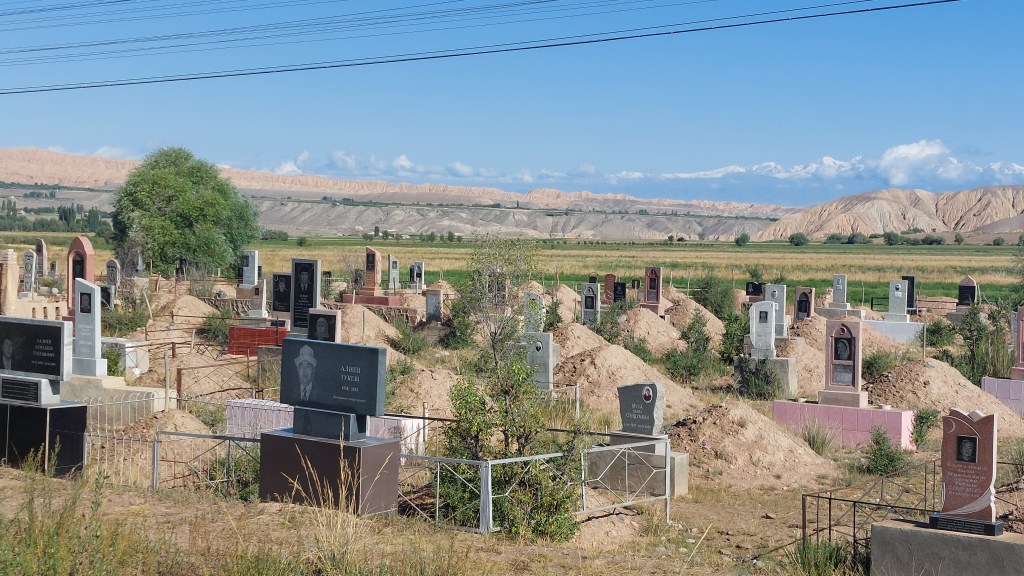
You may have spotted that the tops of some of the graves are decorated with both a crescent and a star. The crescent represents Islam (and 90% of the population is muslim), and the star represents the Soviet Union. Both symbols were used pre-1991, but some people continue to use both even today.
We also made a quick stop at a supermarket before we headed into the wilderness – vodka and chocolate were purchased, i.e. the essentials. The supermarket had its own piano, which was a very out of tune, but a nice idea.
The photographs I have taken on route do not capture just how beautiful it is here, and there are only so many superlatives one can use – but it is simply stunning.

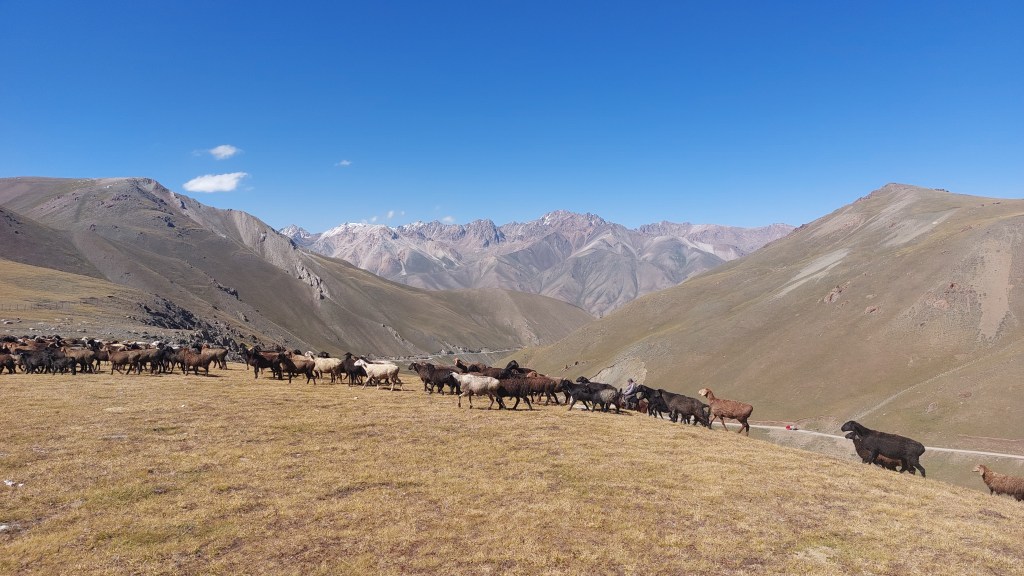

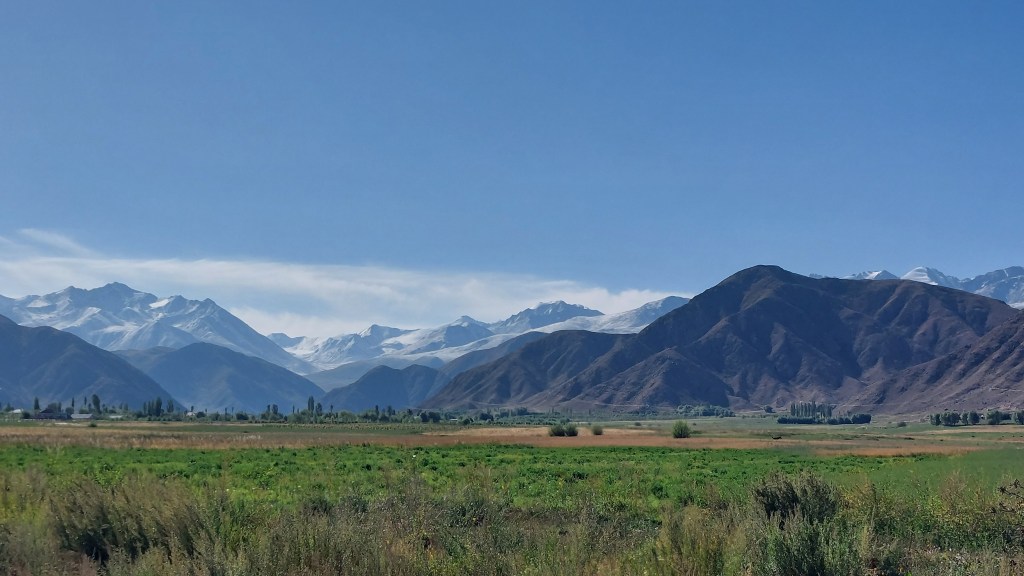
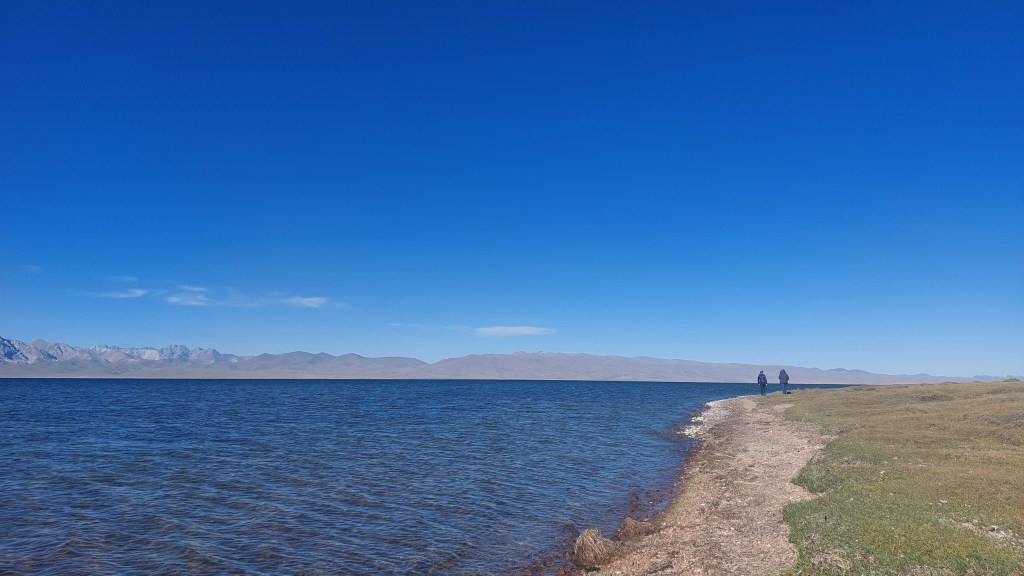
It took us longer than expected to reach Song Kul and we are now at an elevation of 3,000m (which I was certainly aware of on my 4am trip to the toilets when I was out of breath and with frost on the ground). Song kul means “end lake” as it literally is the lake at the end of the valley, and it was just beautiful: clear water with uninteruppeted miles of steepe, mountains, and sky.
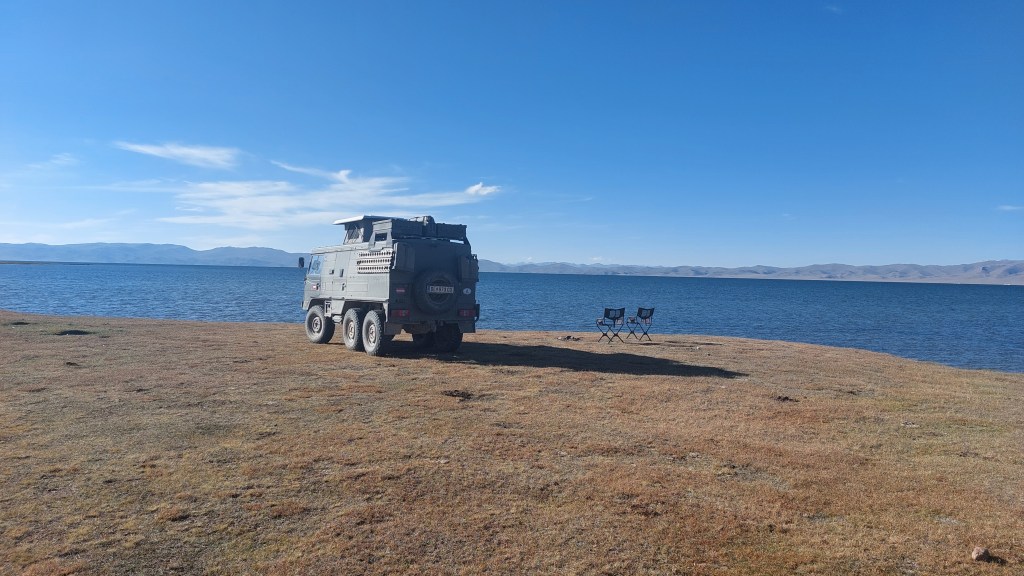
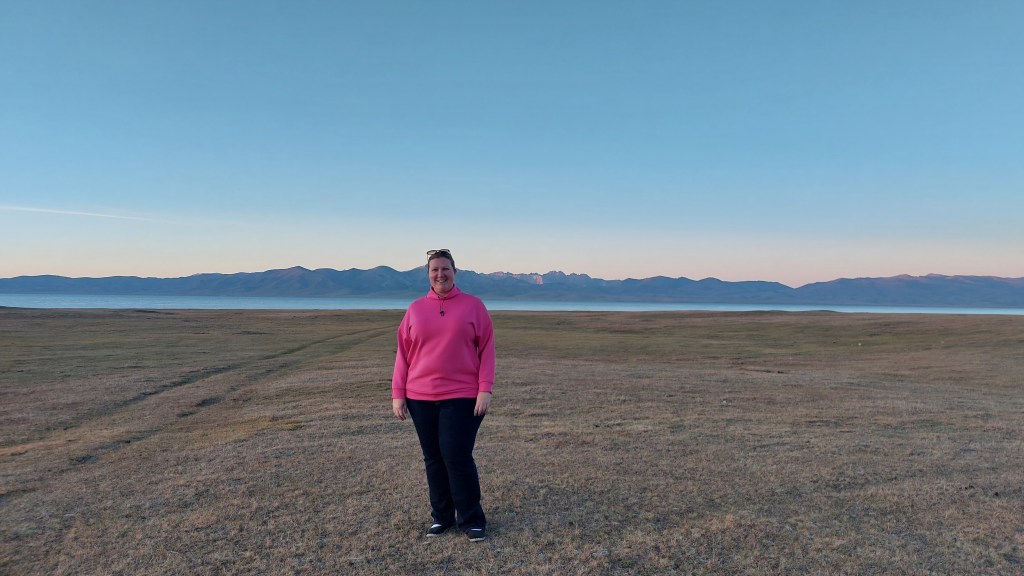
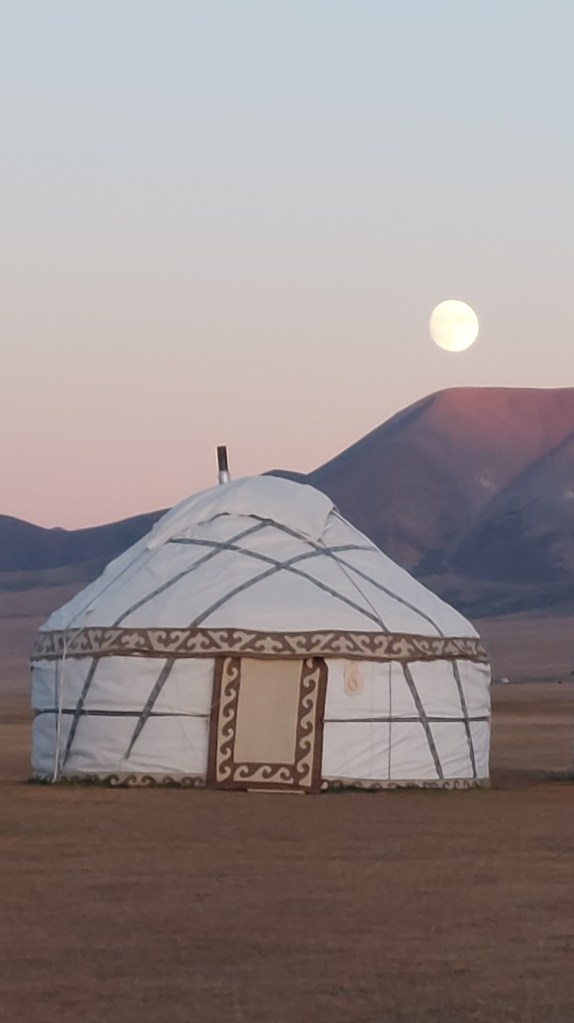

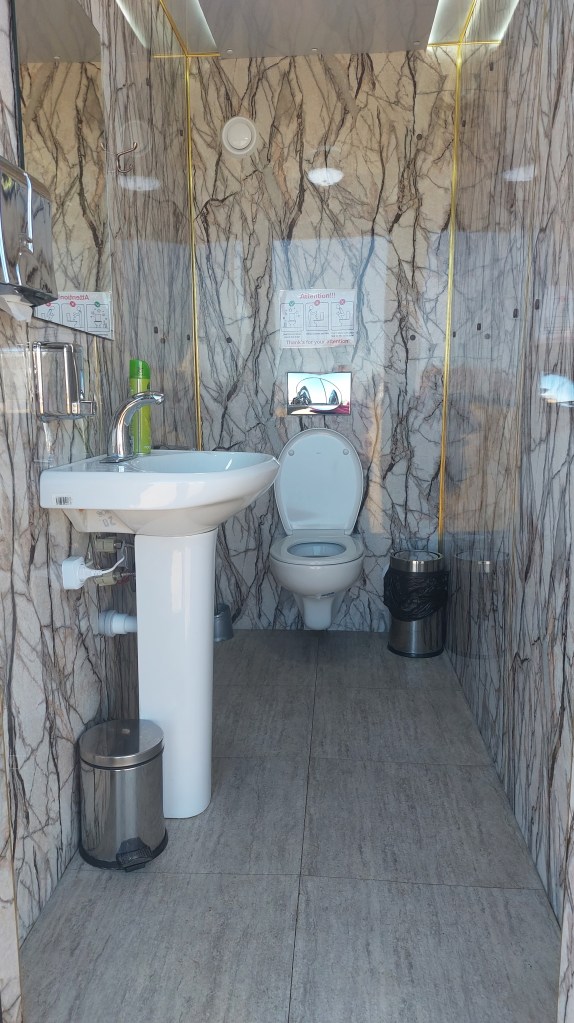
As I mentioned in my last post, I have been pleasantly surprised by the non-basic nature of yurt campting. Well, tonight is a definite upgrade – bigger yurts, real beds (it was pallets and mattresses last night), and marble bathrooms (see below). These yurts and the experience of staying in Song Kul was simply magical, and I can not recommend it highly enough – I would love to come back and stay for longer.
The next morning, we were promised a visit to a shepherd’s home. In my naivity, I had expected this to be a pe-arranged experience for the tourists. Well, picture this – you’re at home and 10 random foreigners turn up at your house, not speaking your language, and expecting a tour and to be invited in for homemade local delicacies. Knowing me, I’d be in my pyjamas and have to start de-frosting cake and hunting out tea bags! But it was fascinating, local shepherd’s and their families come up for the summer months (living in yurts) to give the animals access to fresh pasture. They have their own animals (obviously), but also take other animals for ridiculously low prices (something like 20 som per sheep per month which is about 20p) and the family we invited ourselves into had 100 horses, 100 sheep and 50 cows being looked after by husband, wife and one grown up son. Obviously it is a very hard life, and easy to romanticise, but not sure I would want to be doing milking every 2 hours (of most of the horses and cows) and then making cheese, sour cream and butter whilst living up a mountain in the middle of nowhere AND then the tourists arrive.
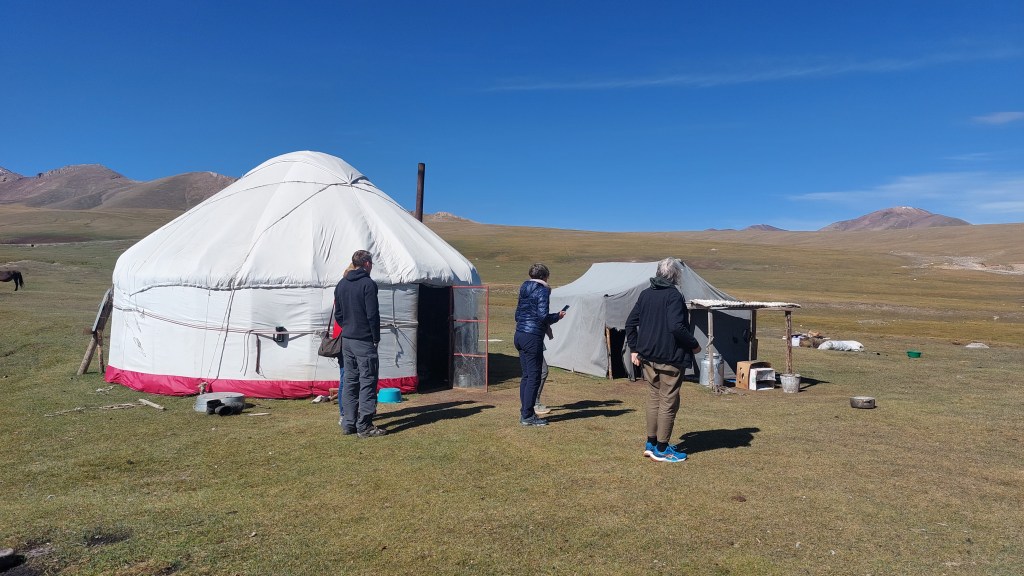

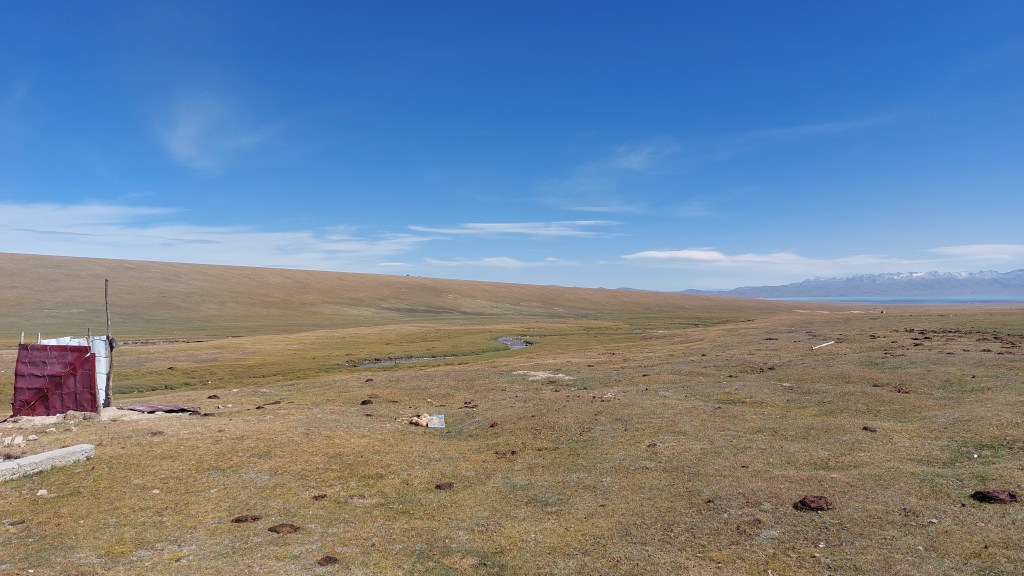
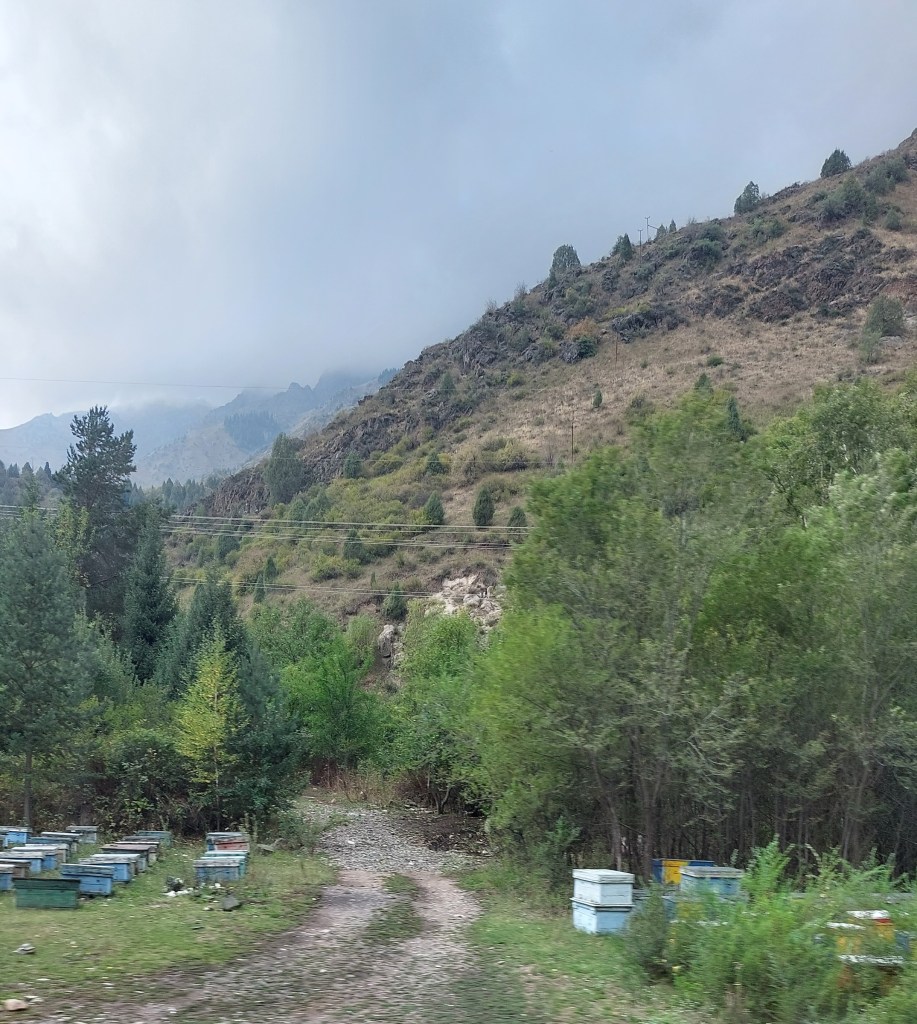
Having imposed ourselves for quite long enough, we continued our journey over the mountains and along the valley. Whilst the views are wonderful, the road was less so. It is an unsealed, rutted gravel track stretching for many kilometres. I would understand if we were in really remote, but this is a key route used by locals ad tourists and even includes the main road to the country’s largest mine – and yes, coal laden trucks bumped along the same roads. To give you an example, people in the group with fitbits are averging around 15,000 steps from the amount of bouncing! Our driver Anatoly is excellent, I would have broken the van by now.

As we were driving through such beautiful scenery, we had been promised a picnic lunch. I had expected to be given a (perfectly nice) sandwich and maybe some fruit whilst sitting on the floor. However, Kyrgyzstani hospitality runs deep and our guide (Miko) and the aforementioned Anatoly produced folding chairs for everyone, a picnic table, a BBQ and mountains of food and proceeded to present us with a feast eaten on said chairs beside a beautiful river in the shade. Delightful.

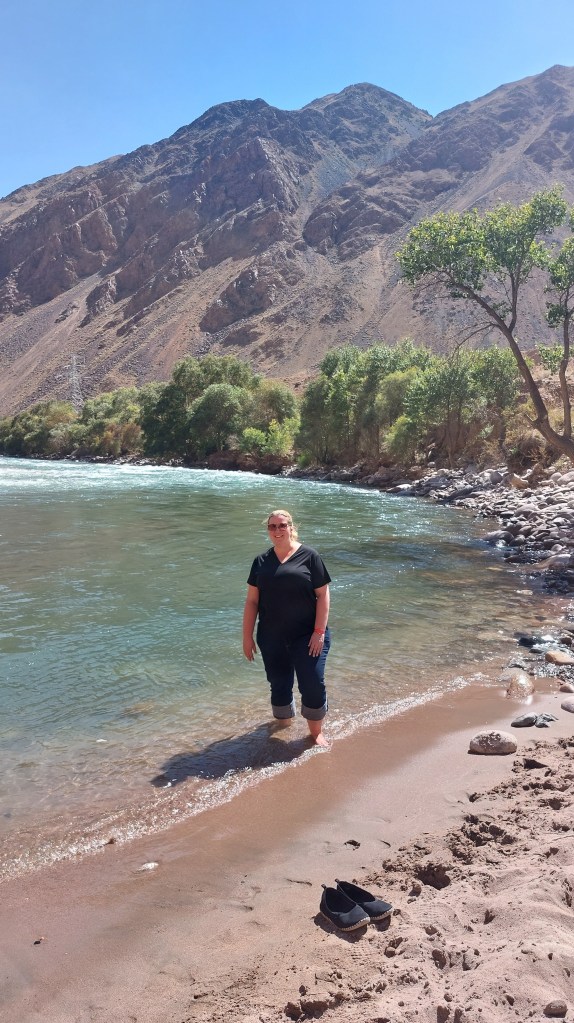
That evening, we arrived at the tiny village of Kyzyl-Oi where we were staying in a homestay. These are part of CBT (Community Based Tourism), and this umbrella organisation is springing up all over Kyrgyzstan as they expand more for tourists as they want to do so in a sensible and managed way. I would highly recommend it. Rather, embasrringly though, one of the nicest things about staying in a homestay (with real walls and everything) was wifi and an opportunity for me to wash out some undies. Although one of the puppies did steal one of my shoes, which had to be searched for this morning (obviously, it likes a smelly shoe!)
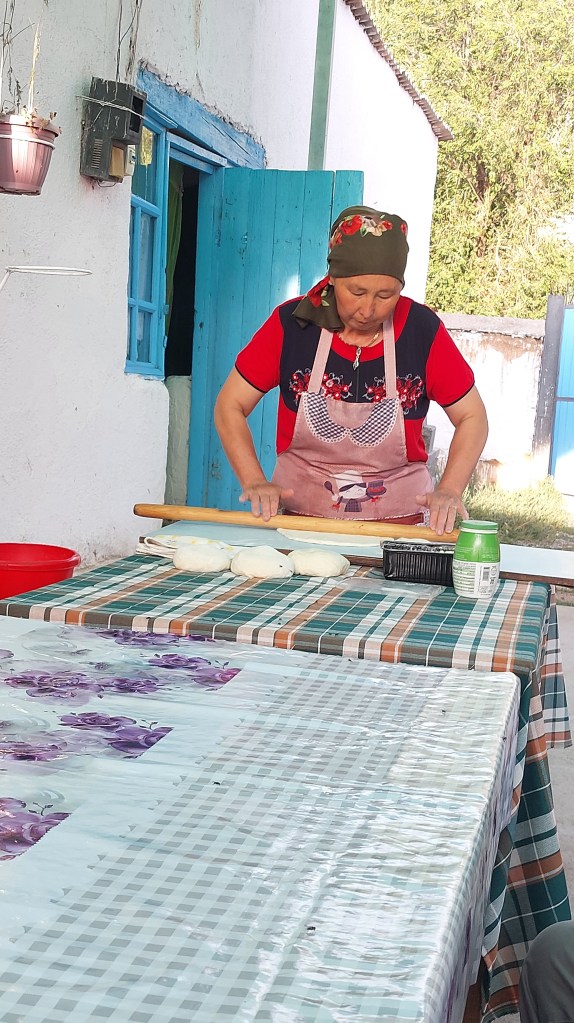
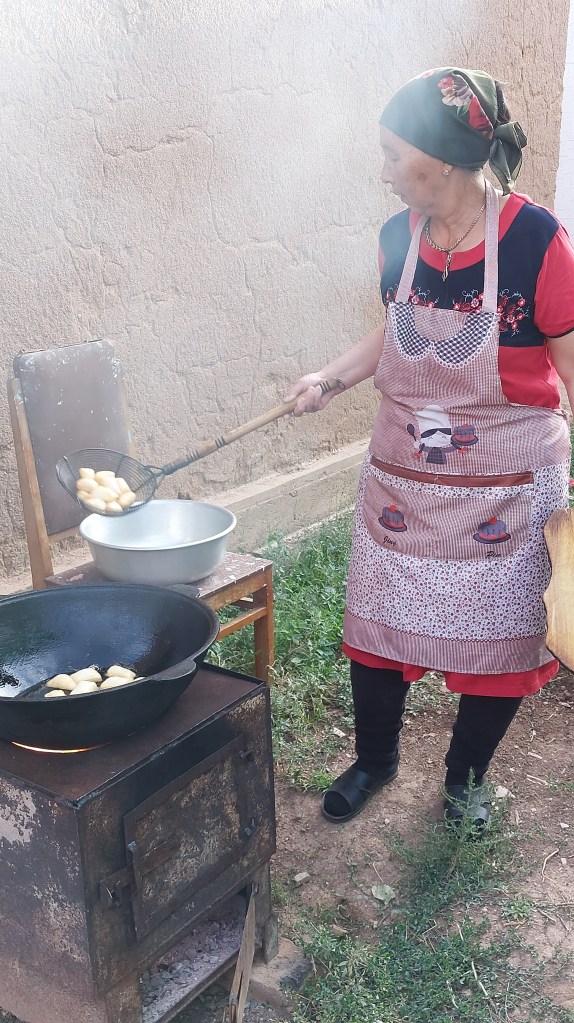
We were also treated to a demonstration on how to make borsok which are small puffed breads and part of the spread one is presented with at every meal, and are utterly delicious (maybe something to do with the deep frying part) so:
- Make a basic white dough flour and leave to prove for an hour.
- Roll out the dough until it is about 0.5cm thick.
- Cut into trapezium shapes around 2cm long.
- Fry in very hot oil for a couple of minutes and serve.
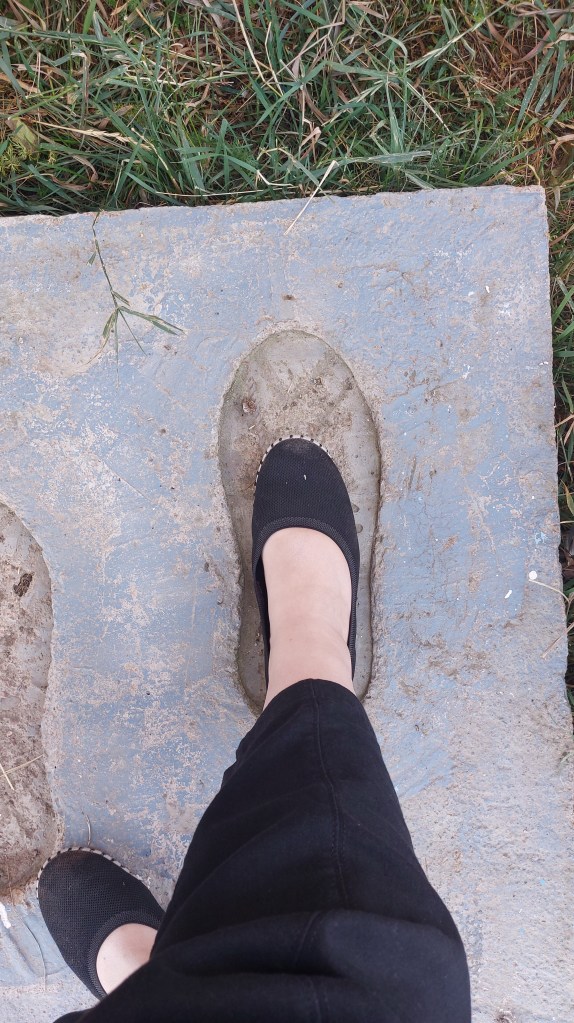
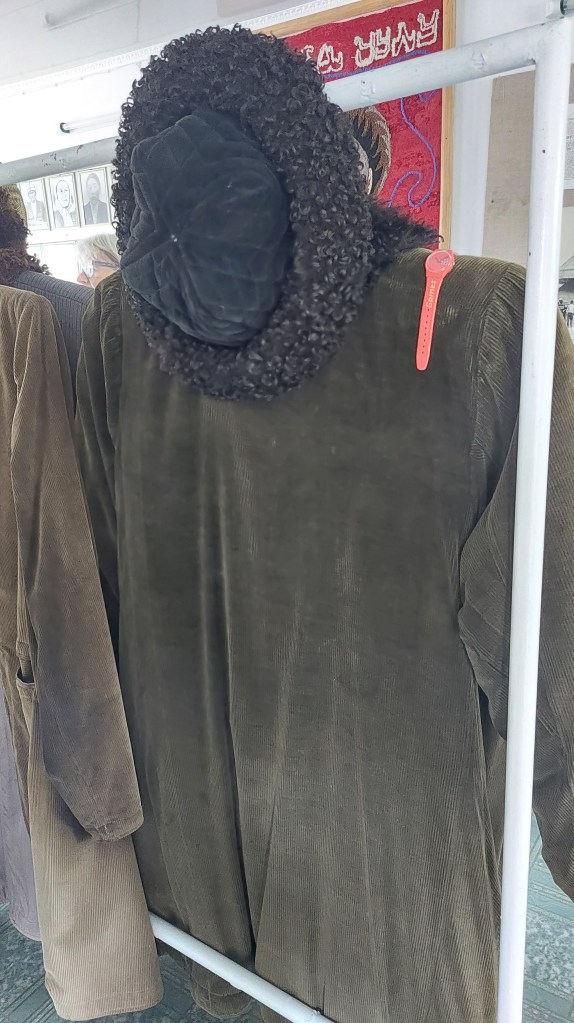
The next morning, it was back in the van for another day, enjoying Kyrgyzstani roads and heading through the valley. However, an early stop was a visit to the museum of a famous Kzygzystani strongman. This was one of these wonderful weird things one sees as a tourist, but absolutely worth the stop. Kaba Uulu Kozhomkul was a very big and strong man over 2.2m tall and with a palm measuring over 30cm (makes my brother seem somewhat petite). Much loved in his village, he was auseful man to have around if one needed some rocks or the odd horse moving. See photos below:
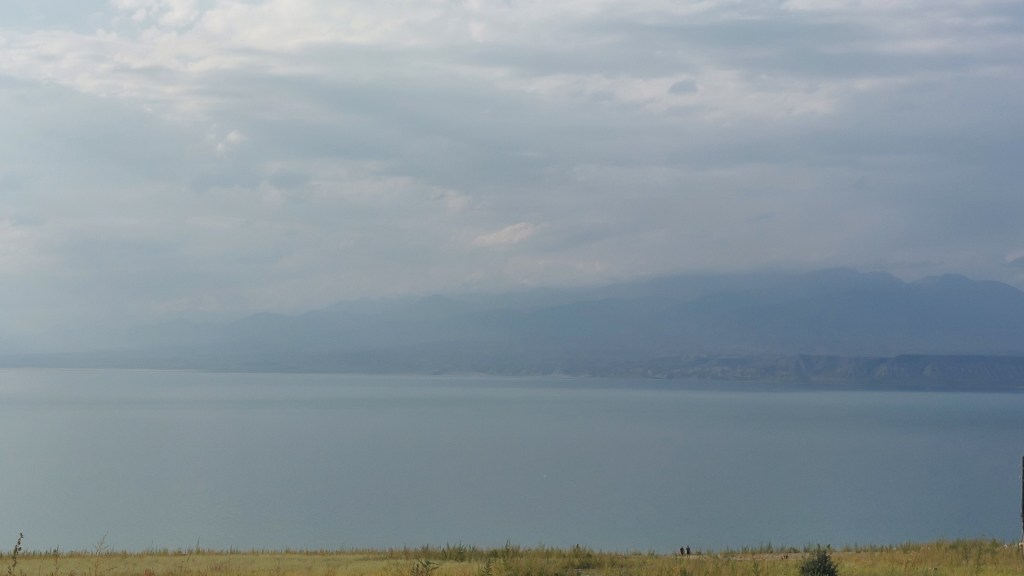
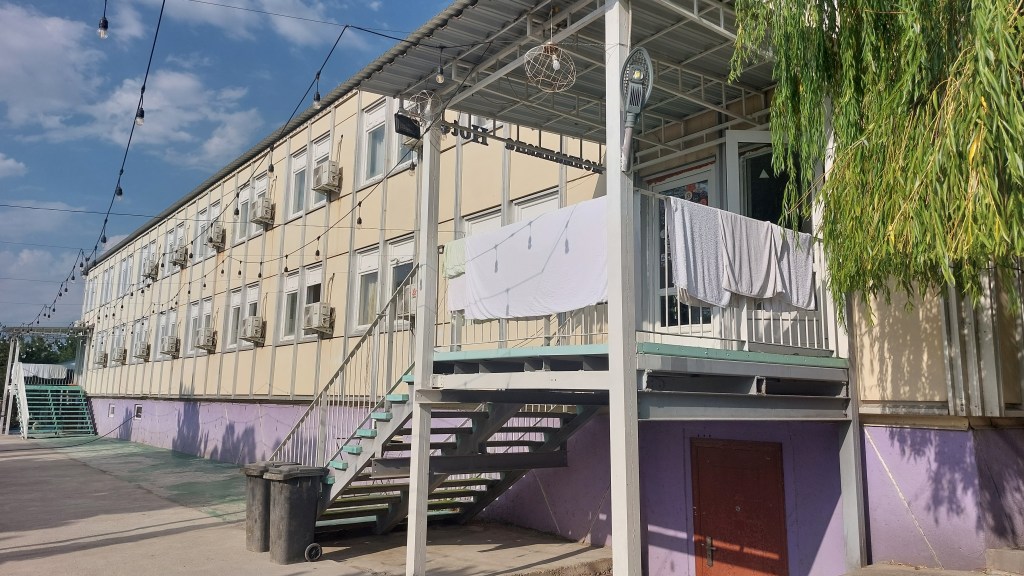
Today was another long drive and in very different but still beautiful scenery. Tonight, we are staying in a Soviet holiday camp, which is actually rather nice if one overlooks the architecture of the building and focuses on the view of the Naryn reservoir. This is the largest reservoir in Kyrgyzstan and feeds the dams, which produce 75% of Kzyghastn’s energy (more on this tomorrow).

Tomorrow, we have a full day of driving to reach Osh, and it will be strange to be back in a city again, but I am sure I shall cope.
2 responses to “Stage 1.3 – Issy Kul to Song Kul to Kyzyl-Oi to Naryn”
-
-
I know what you mean about the sky – I keep referring to Land of the Big Sky
LikeLike
-


 Travels with Kathryn
Leave a comment