For many people, you say The Silk Road and the place that will sping to mind is Samarkand. As this trip has been some years in the planning, Samarkand has taken on an almost mystical aura, and I was concerned that it would never live up to my expectations. I could not be more wrong…
We left Tashkent on the fast train to Samarkand along with all the other tourists. It is very strange to see all these foreign types, and whilst there are lots of (very old) Europeans (mainly Germans) and Russians I have heard very little English voices, which is always nice. We arrived into Samarkand at 11am and I am not sure what I was expecting, maybe to suddenly be overwhlemed by ancient sites, but of course, Samarkand is a modern city so from the road it looks much like Tashkent i.e. modern buildings, wide streets, and lots of trees. However, one difference is that even in the “new” city as it is called, buildings are not allowed to be over 10 stories to preseve the views of the more historic elements of the city.
Samarkand is 3,000 years old (so around the same age as Rome) and is made up of three parts: (i) the new city built by the Societs in the 19th and 20th centuries; (ii) the old city built by Tamerlaine (see Uzbekistan page for more details) in the 14th and 15th centuries as his capital; and (iii) the historic city which is all that remains after the city was destroyed by Gengis Khan (and his hoard of merry men) in the 12th century. Unsprisingly, the majority of Samarkand’s economy is dependent on tourism, and most residents speak Uzbek, Tajik (as many of the cities’ habitants are actually from Tajikistan), Russian and English. It is the old city that forms the UNESCO World Heritage Site.
I think to try and not get us too Samarkanded out, our first stops were a handicraft centre and a carpet workshop (with shopping opportunities). To be fair, though, it was all very interesting and absolutely no pressure to buy anything (unlike similar places I have been taken to in other countries). We started by learning how to make paper.
Samarkand was a centre for the production of silk paper (see my post: https://travelswithkathryn.blog/2023/08/28/what-is-the-silk-road/ for more information on Silk Road paper.
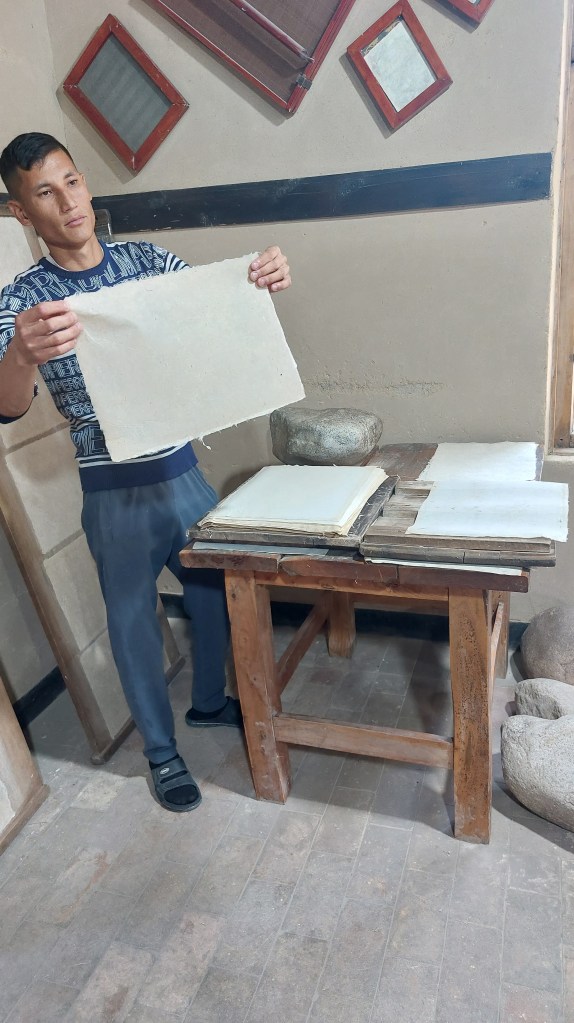
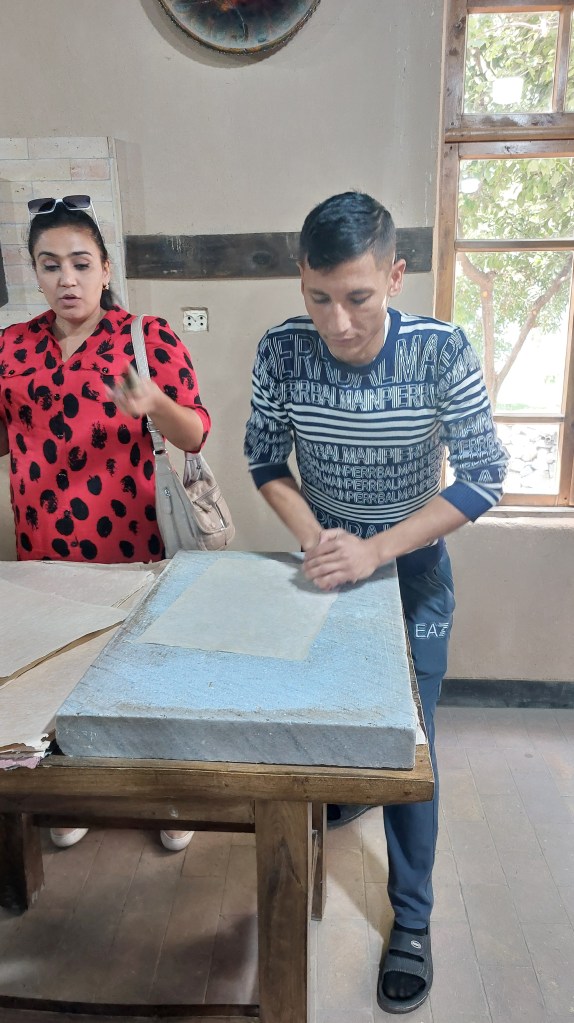
To make paper:
- start with wood taken from the mulberry tree, and soak it for 3 days until it softens;
- take off the bark and clean – the strips will feel soft;
- boil these strips for 8-10 hours until they can be seperated;
- the strips are then “melled” which is a mashing and mixing process for 10 hours;
- this is mixed with water and then a frame lined with a net is dipped into it and pulled out so the water drips out – this will become 1 sheet of paper;
- these wet silk sheets are stacked up in between sheets of cotton paper and then pressed for 24 hours; and
- once pressed, each sheet is dried in the sun for 24 hours and then polished with a stone.
Paper made from silk lasts up to 1000 years and is impervious to insects, rodents, and other pests. Now, all I need is a mulberry tree, and then I m sorted.
We also watched how to make ceramics (less interesting for any avid watcher of The Great Pottery Throwdown) and linseed oil which is used for making plov (rice pilaf) which is simply the seeds being pressed (which I reckon you could have worked out for yourselves).
Our final demonstration was carpet making:

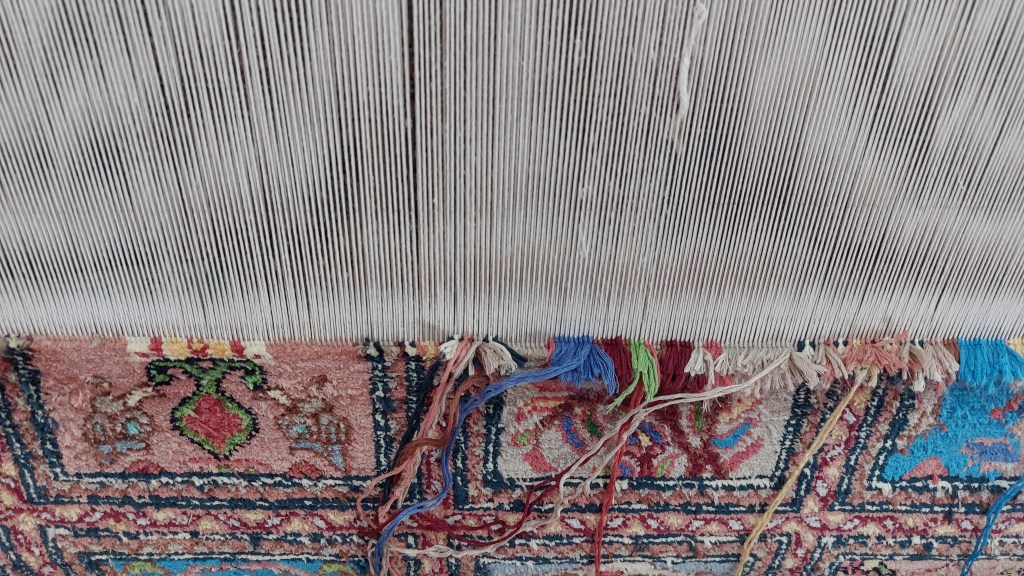
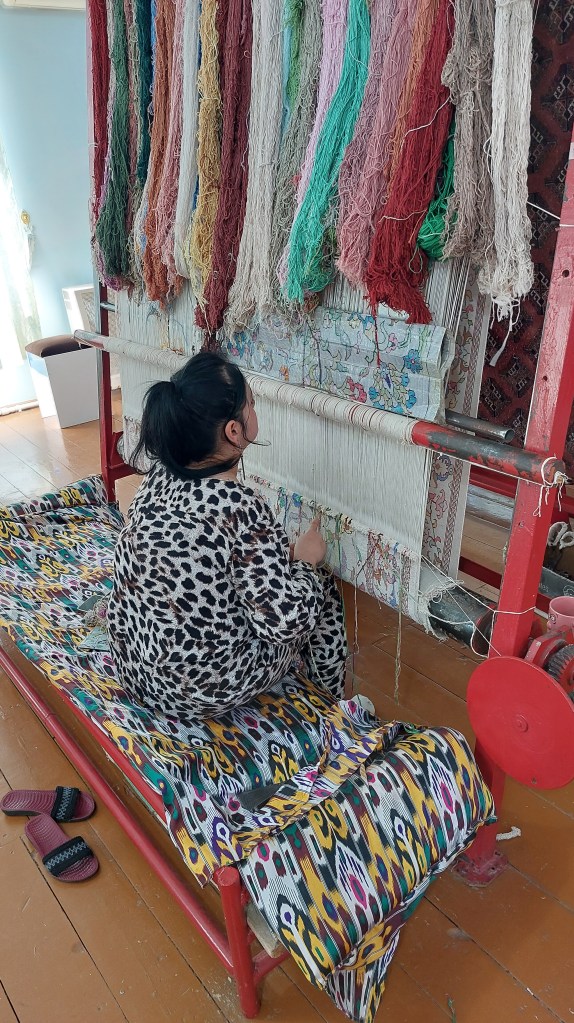
The carpets are always made by women and in either silk or wool. Using a hook, a short thead is passed in front of the first vertical thread, then behind the next, knotted and cut. Most interesting for me was trying to work out how to follow a pattern (see above) as although the design was usually the same, the colours were often different. The worksop offers free training for any woman that wants it, and it only takes 3 months. I think for now I shall stick with being funemployed.
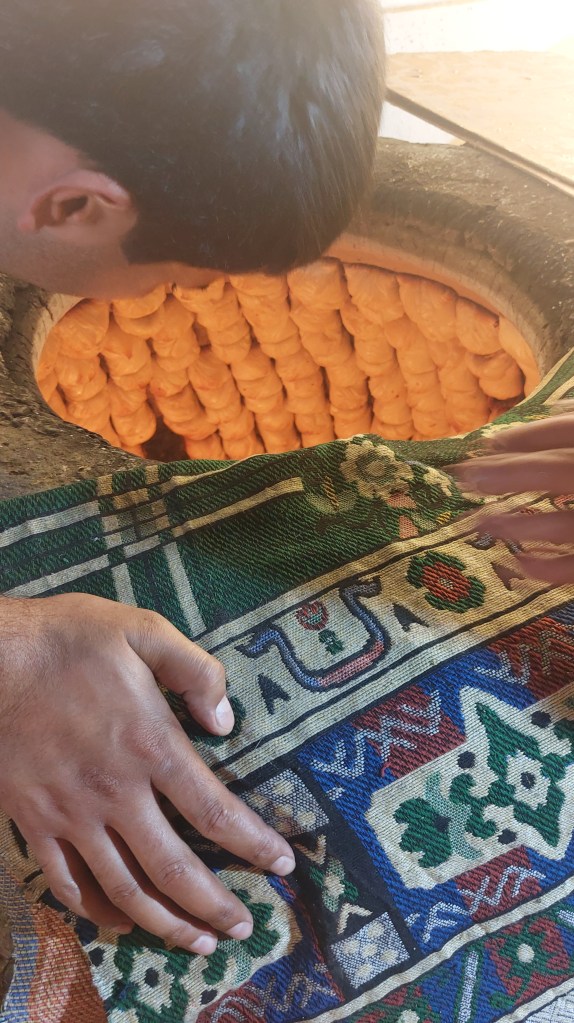
Having satisfied our tourist obligations, we were then allowed to have lunch. We went to a local place and watched the samsas being made. Samsas are the Central Asian version of an Indian samosa and are flaky pastry pockets filled with chunks of lamb, onions, and pototes; and these were a most delicious example of them for just 53p each:


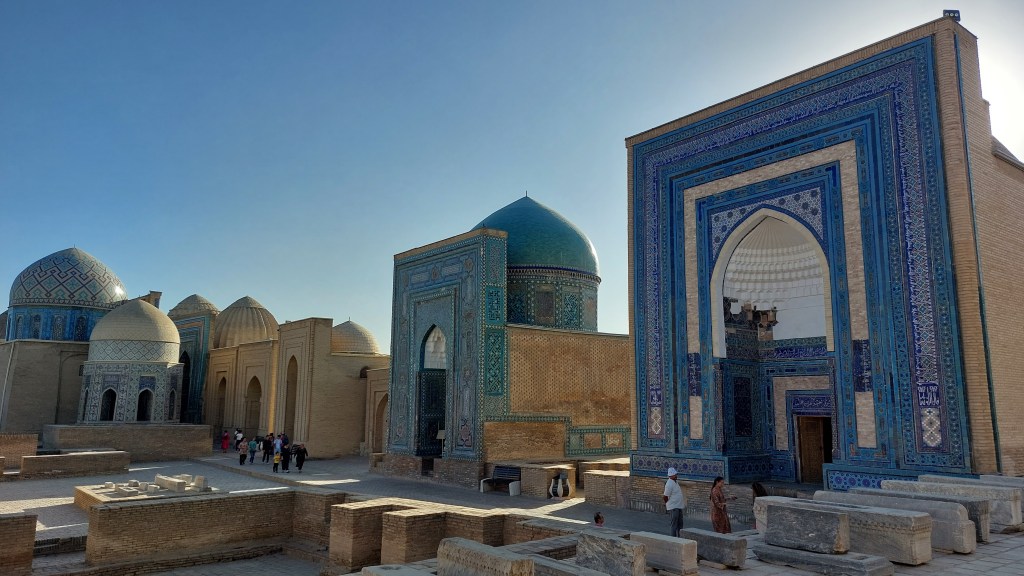
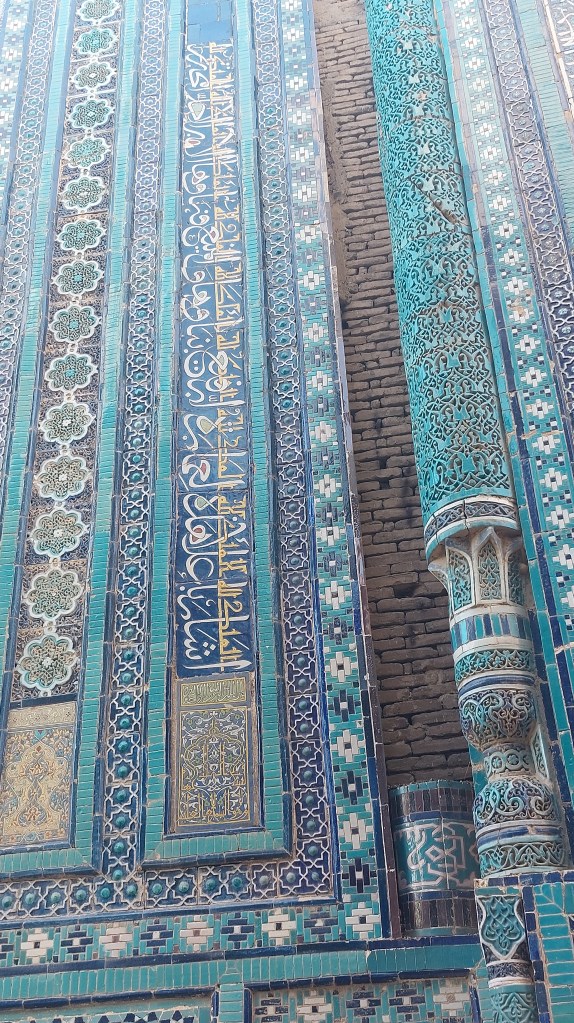
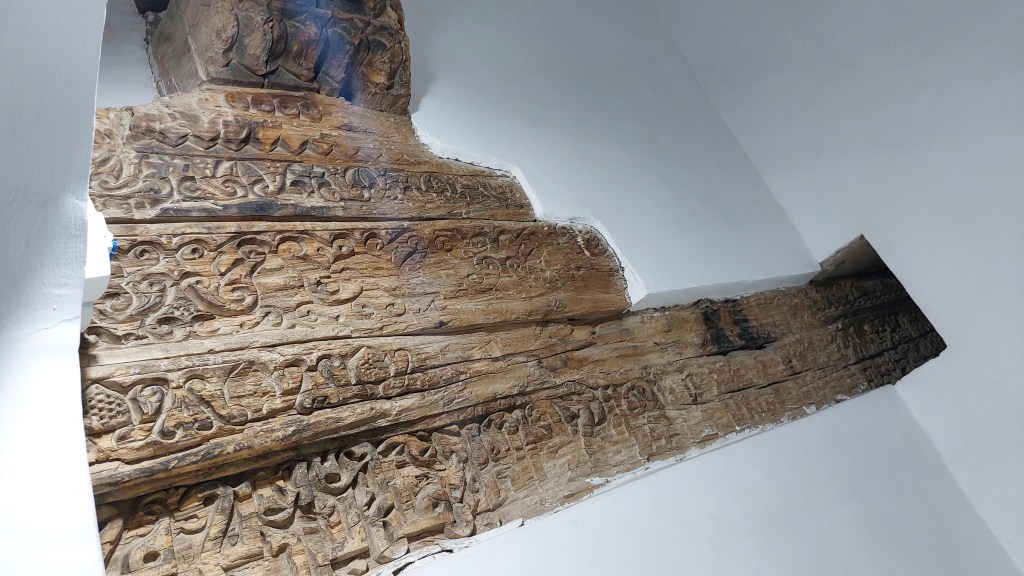
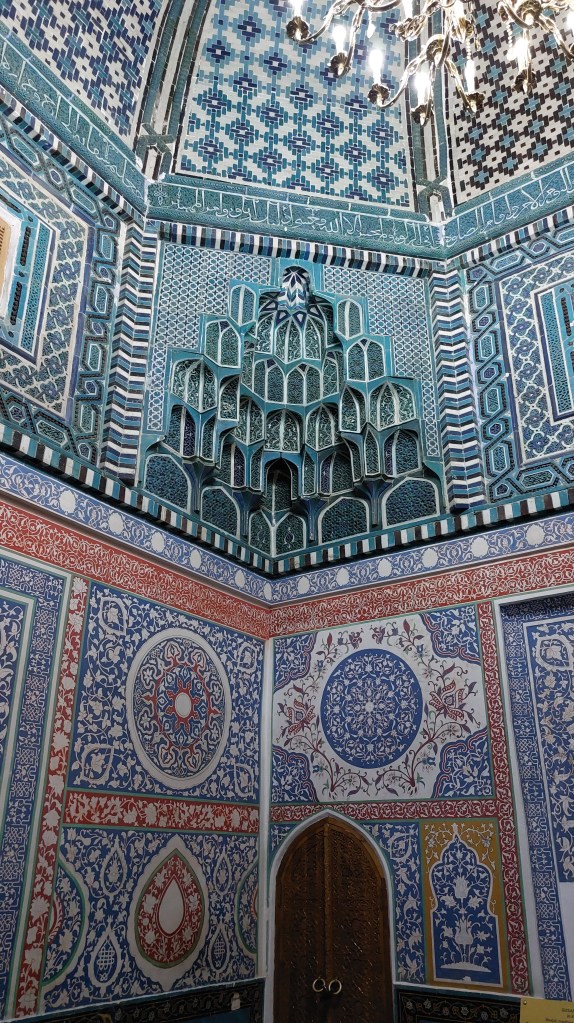
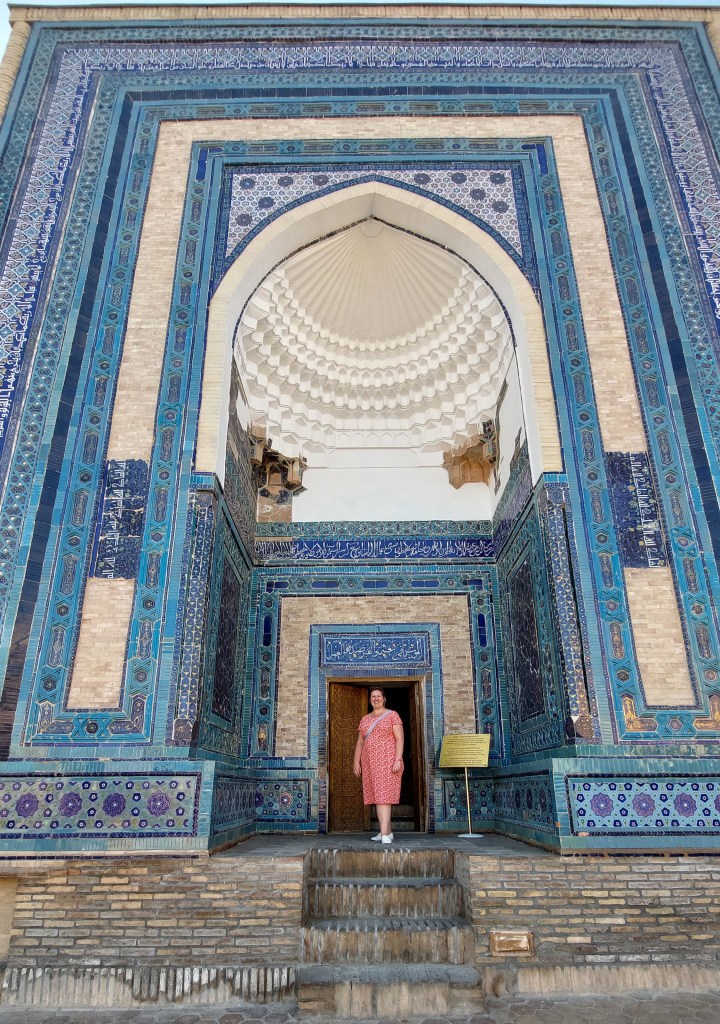
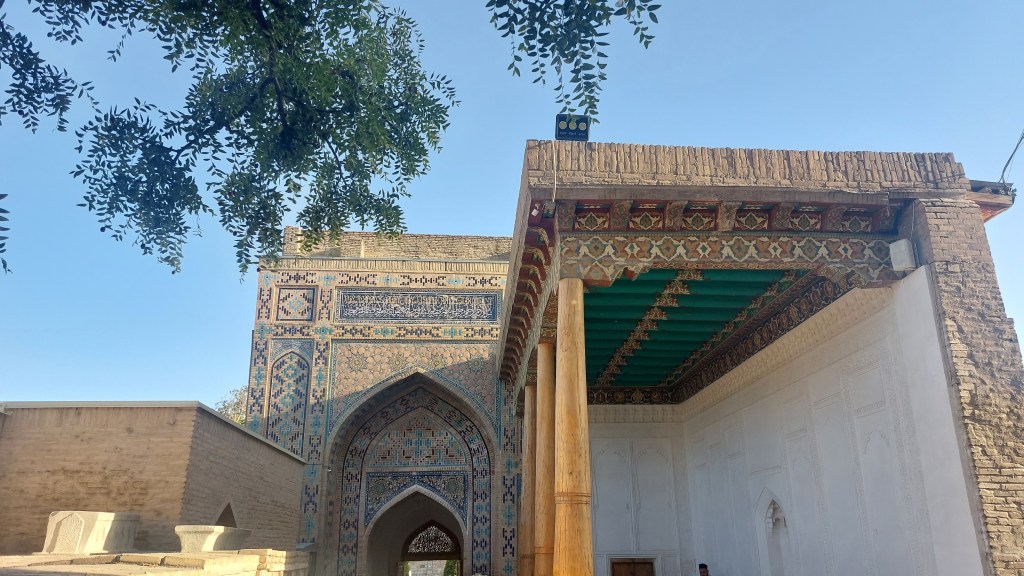
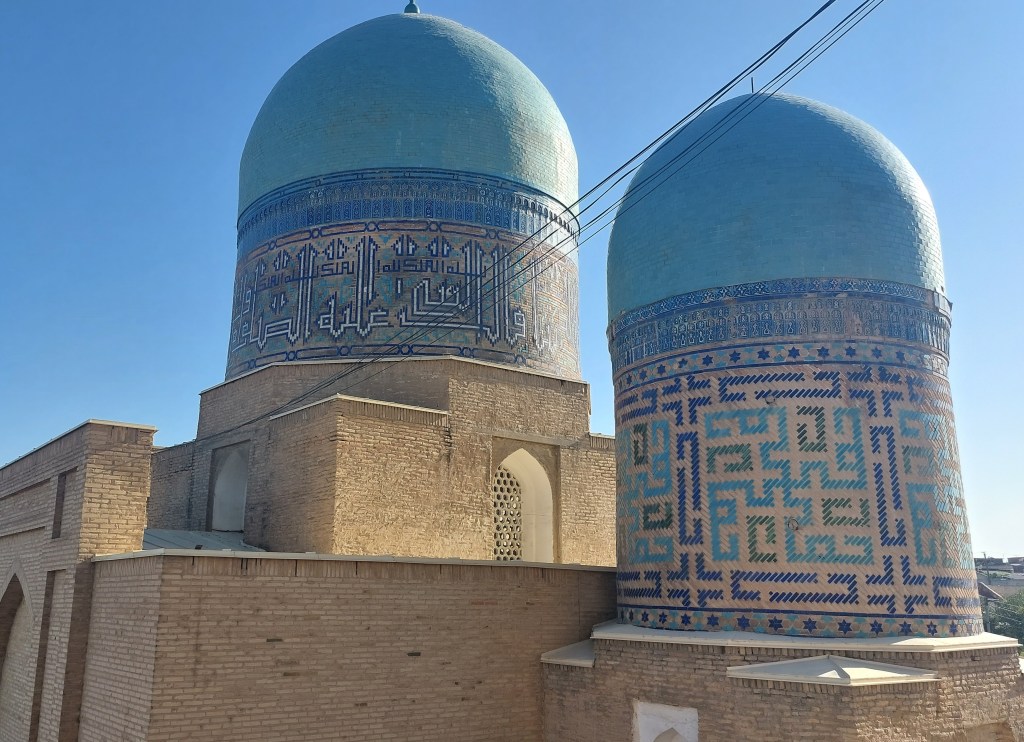
Finally, with tourist obligations satisfied and having had an ample sufficiency of pastry parcels of deliciousness, we visited our first site in the old city. The Shah-i-Zinda is a complex of masoleoums and wow, just wow. It’s hard to describe, but I shall try: imagine a narrow street lined on each side with the most beautiful decorated buildings in blues, turquoise, green, and gold. You go up a couple of steps and inside there will be even more deocation lining the walls and domed ceiling. Most of the masouleums were built for Timur’s female relatives (I am going to create an Uzbekistan page for more information on Timur along with other things, so await the link), and particularly fine ones belong to one of his sisters and niece. Also in the complex is a mosque, which includes more unusual red decoration and a tiny fragment of a previous wooden structure (which formed part of the historical city) still burn marks from fires lit by Gengis Khan.

When it went dark, we got our first glimpse of The Ragistan. This is the most famous site in Samarkand and is a square with 3 huge madrassas and mosques which we will be visiting properly tomorrow. I thought the Shah-i-Zinda was wow, but now I know what a real wow is. There is no doubt in my mind that this should be one of the wonders of the world. Every evening, a light show is projected onto the buildings of The Registan (there is a fancier one which tells a story, but we got the far more elegant colour show), and it was amazing. I got proper goosebumps and just feel so privileged that this is something I have been able to see (and I have not even seen it properly yet!). And yes, there are quite a few tourists, but there should be many, many more…

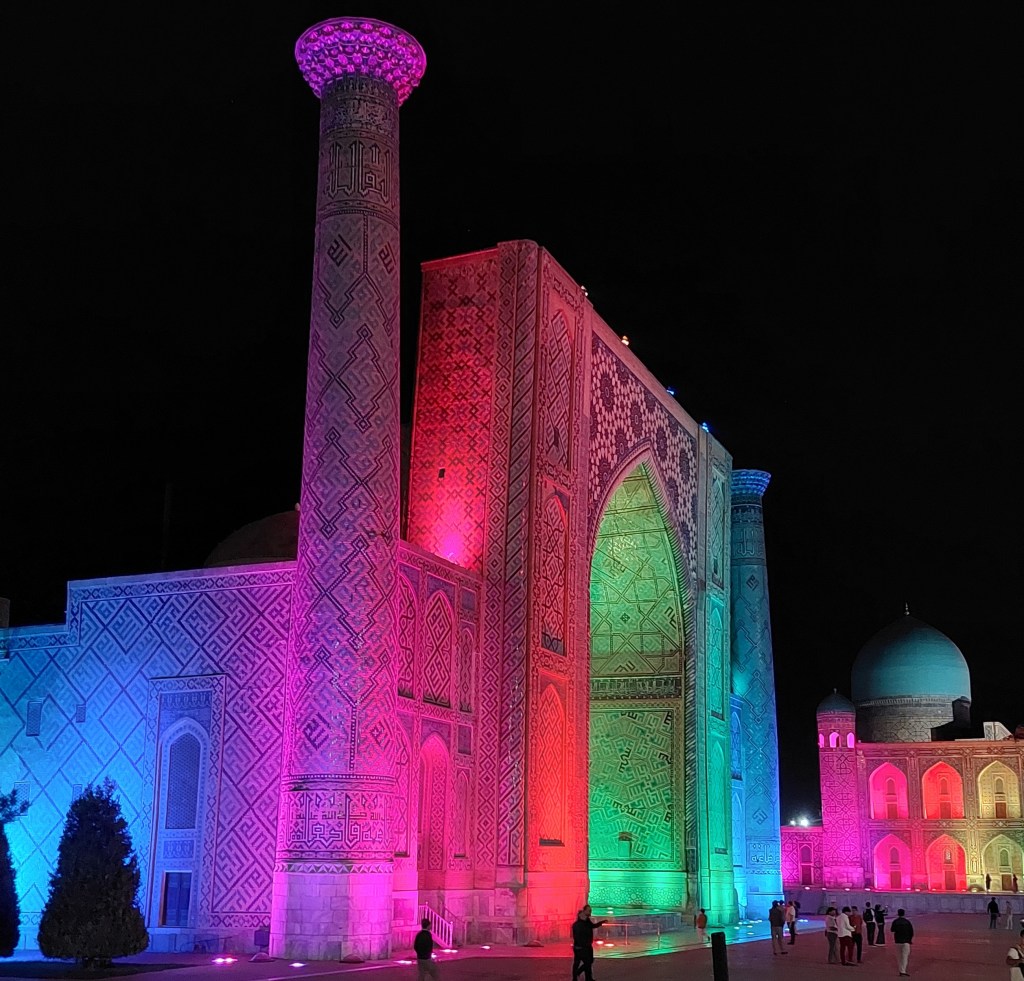
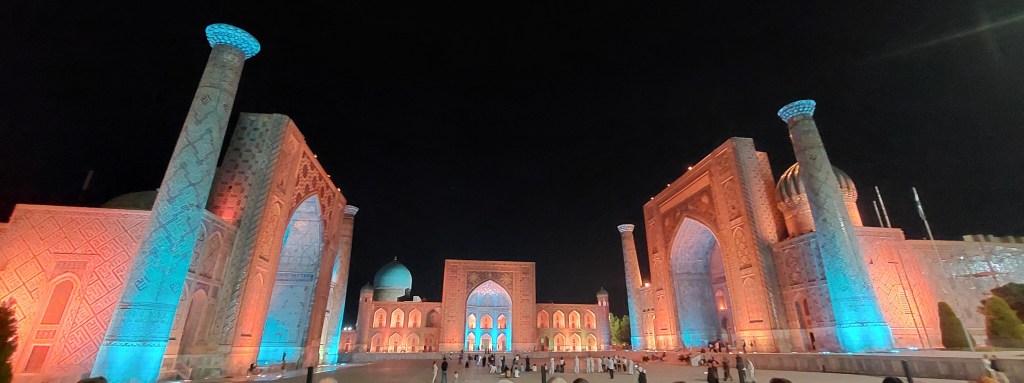
So, that was day 1, and it was pretty overwhelming, and we have really only seen 1 of the big ticket items. However, some groups we overheard were here for just 1 day, and that is not enough time as it’s so aweinspring. I am really pleased we split it over the 2 days.
Day 2 started with a tour of the Gur-i-Amir complex, another amazing site. This includes the masuoleum of Timur, his sons, and grandsons. The layout is lightly different to that of the Shah-i-Zinda complex, as where the women have single smaller (but still very impressive mausoleums), the men are buried in one single mausoleum and the complex has a bigger entrance facade (which would have originally formed the front of a gallery surrounding an inner courtyard connected to the mausoleum itself). The two remaining minarets would orignally have been 30m taller (a bit of a recurring theme on his trip). The inner masuoleum has a beautiful interior, and again, it is not really captured by these photos:
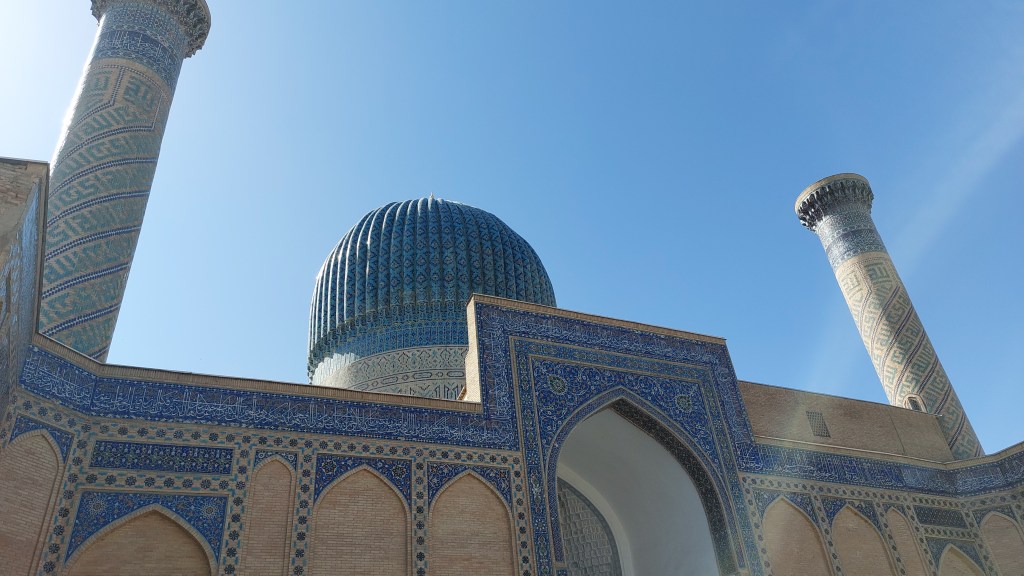

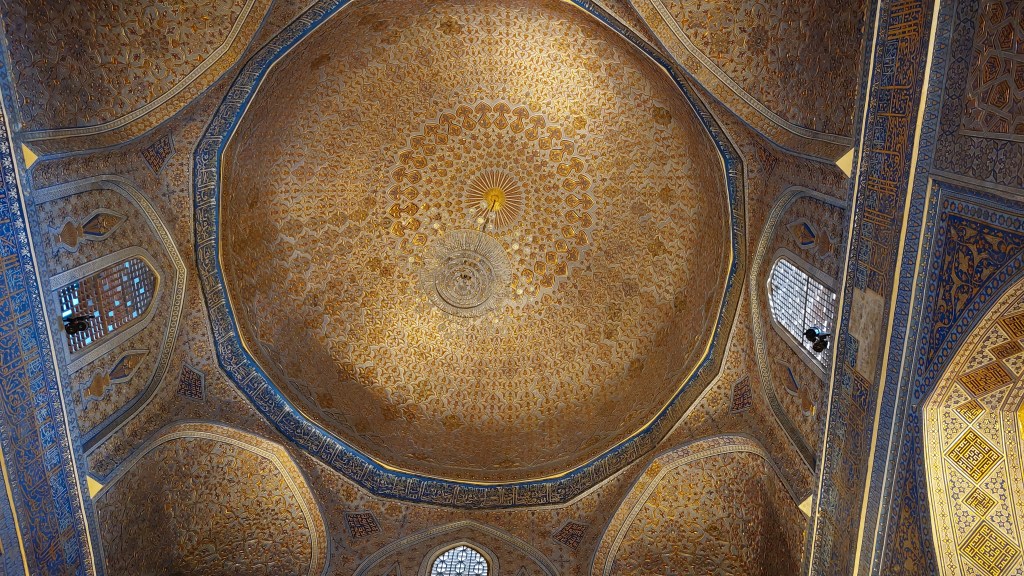
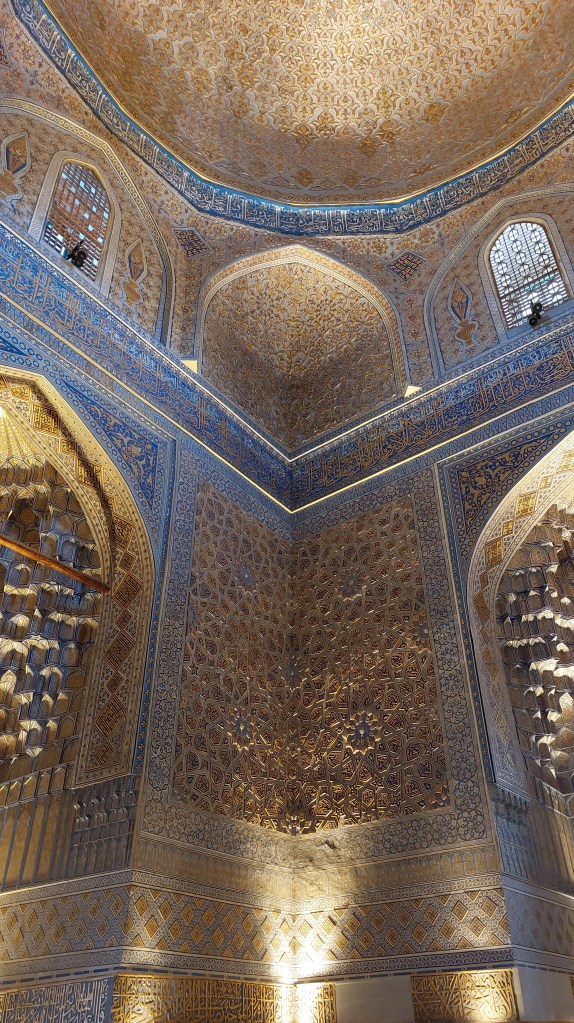
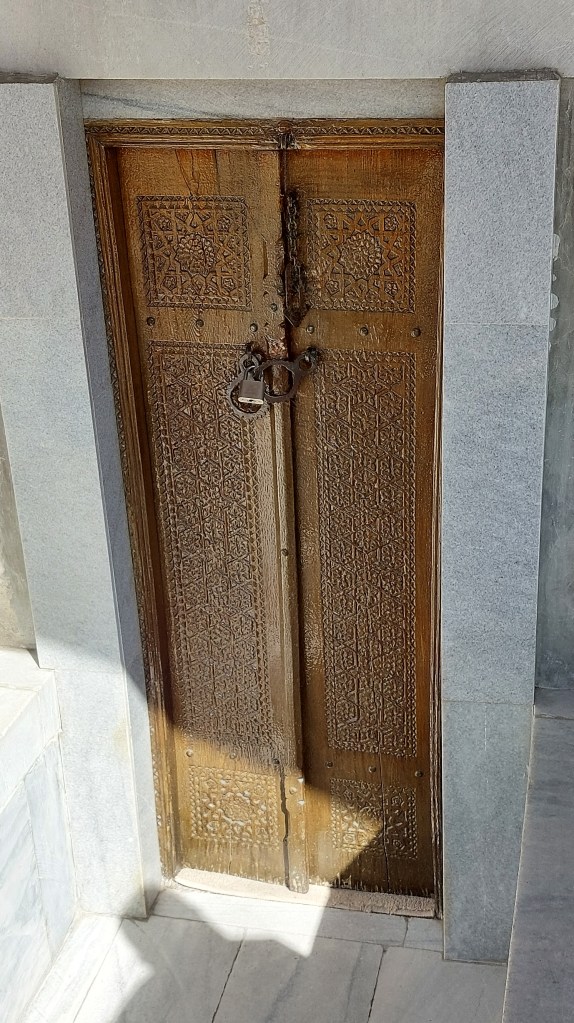
The actual graves of Timur (and his sons, etc) are located beneth the gravestones shown above and can be accessed via the door above. A fun fact is that the graves were apparently protected by a curse on anyone that disturbed them – in 1941 Stalin ordered the opening of the grave and the sending of Timur’s remains to Russia, the same year, Germany invaded Russia. Whether you believe it or not, evidently someone decided it was not worth risking the curse, and in 1944 Timur’s body was returned, the grave sealed and the equivalent of $1 million given to restore the complex. World War 2 ended for Russia the same year.
Now for the big one, the main event, the if you are only going to see one thing on the Silk Road this is it: The Ragistan Square.
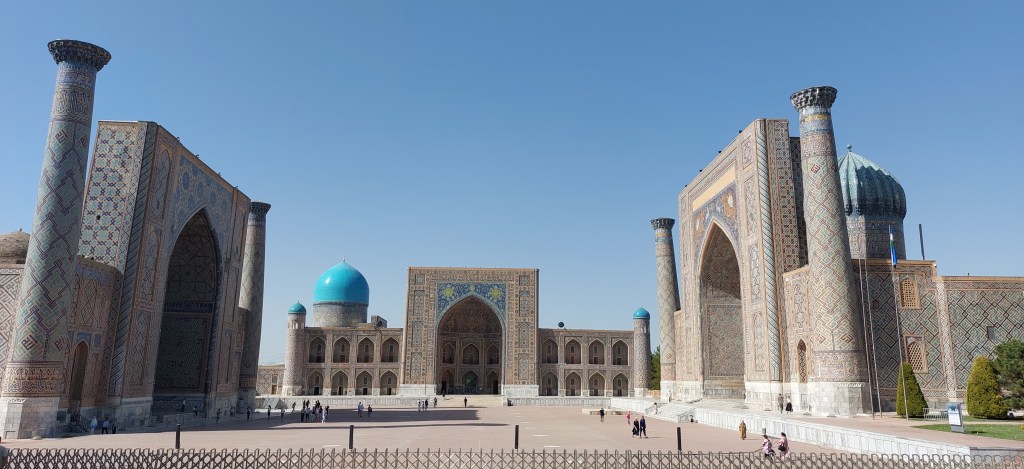
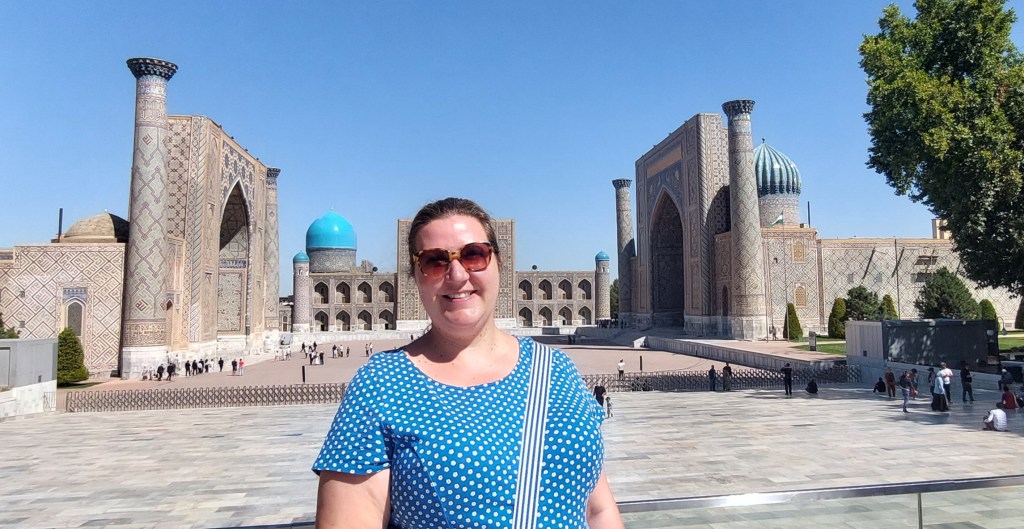
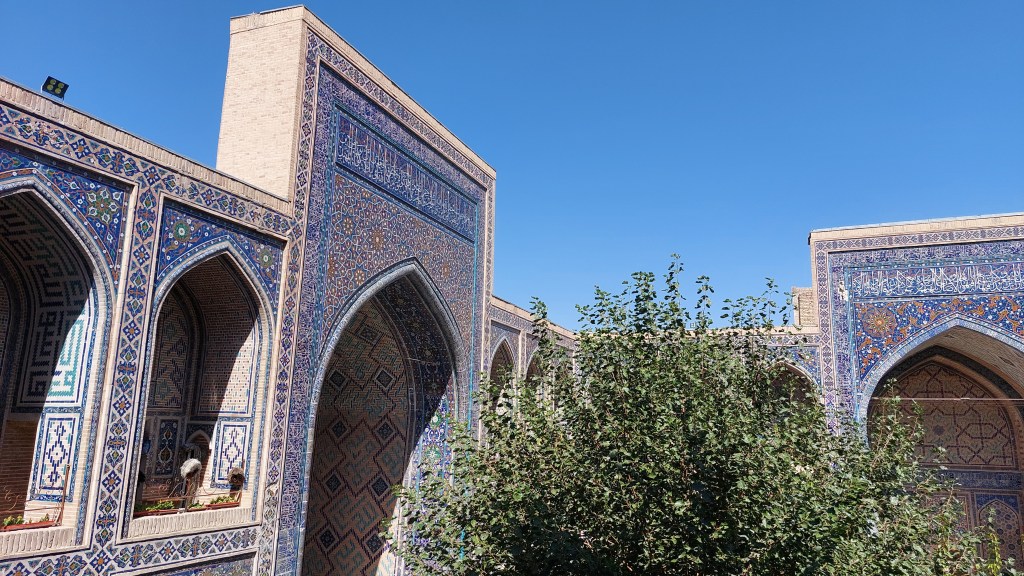
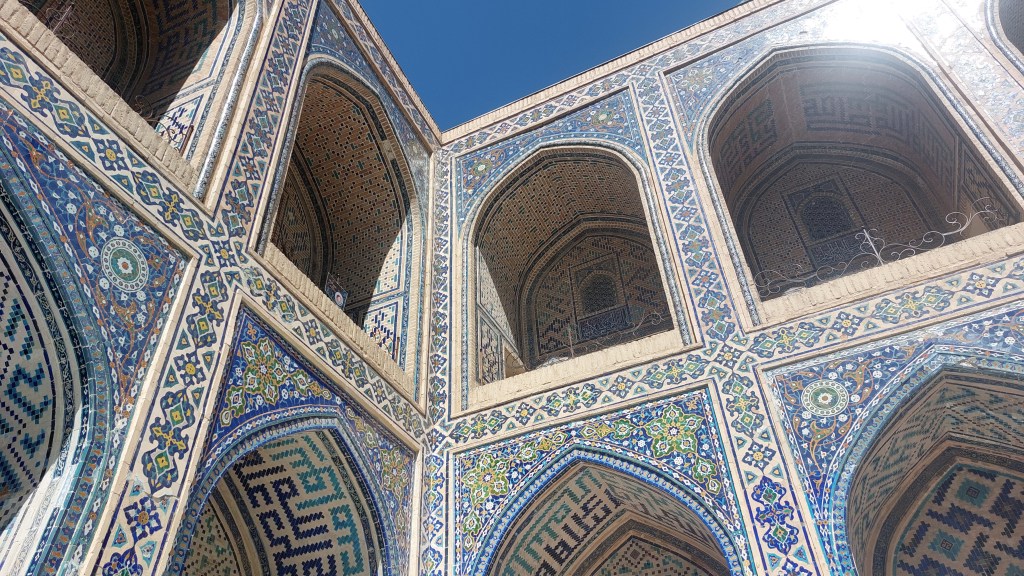
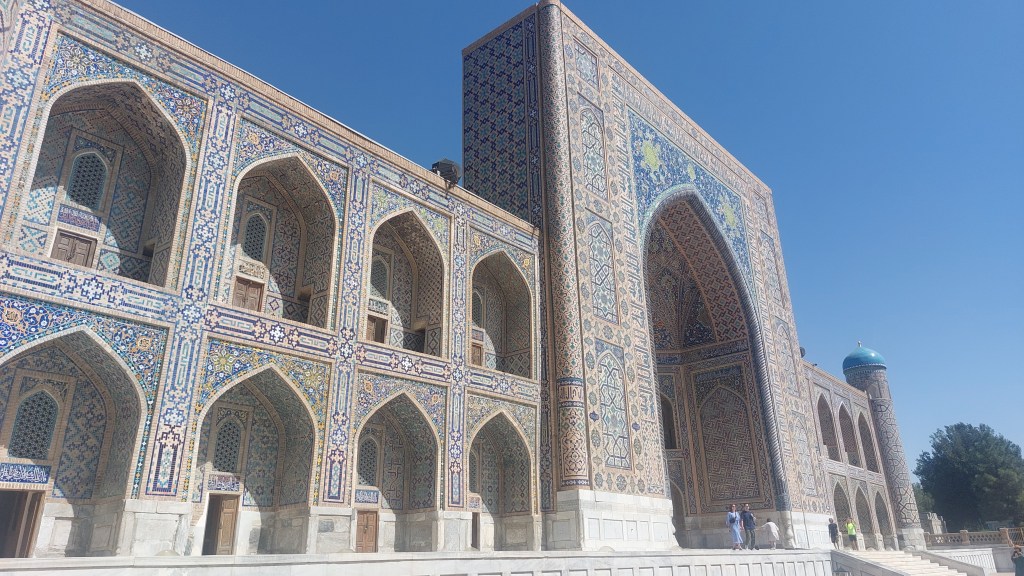
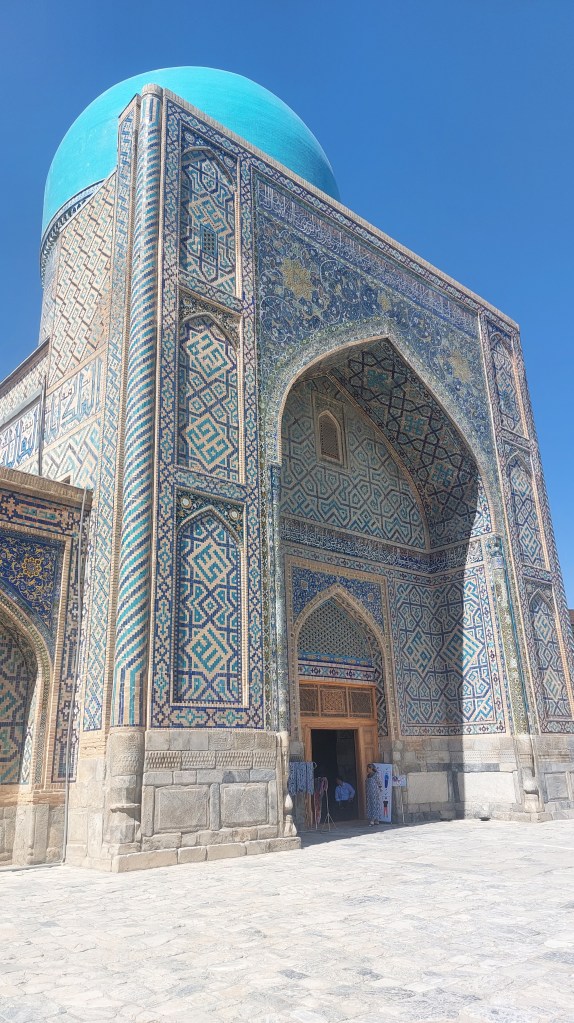

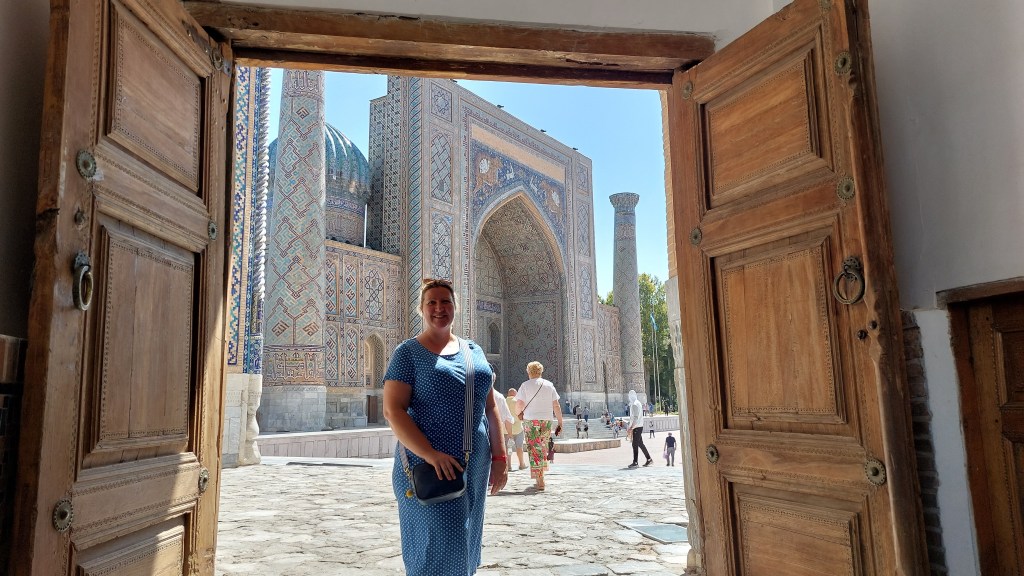
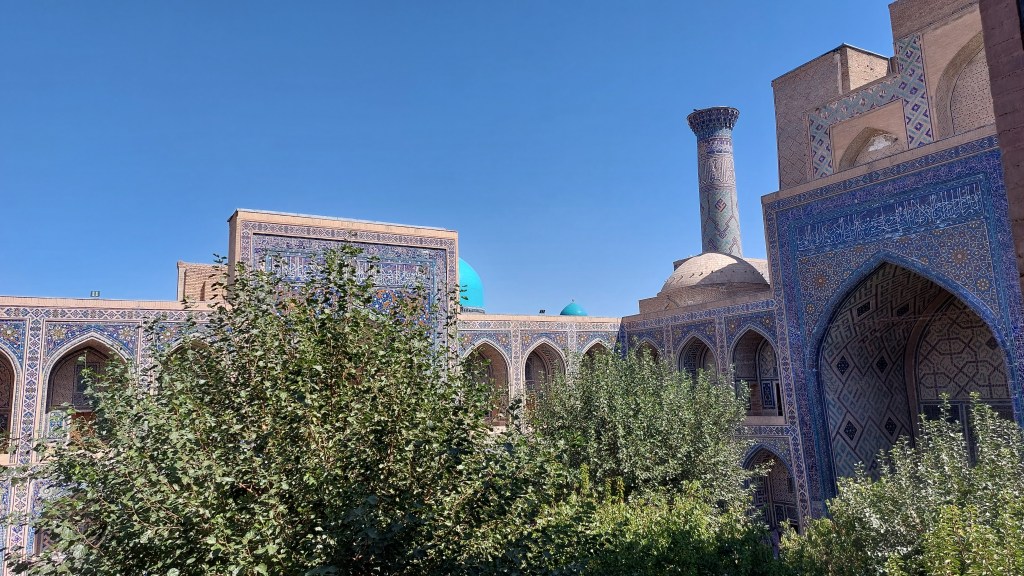
Its (again) difficult to describe the scale and impressiveness of these buildings, and the photographs do not really capture it, but you can read, look and imagine:

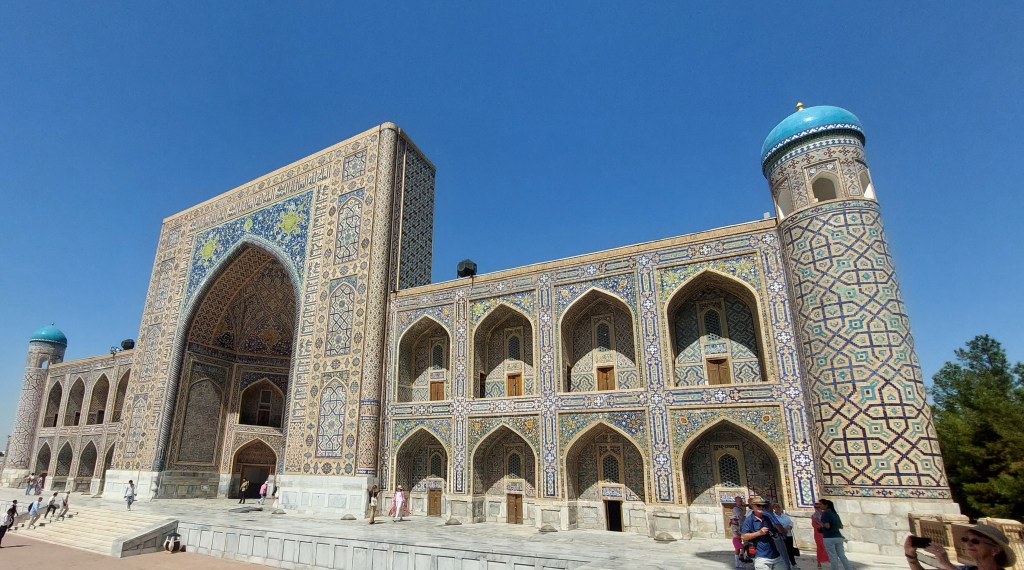
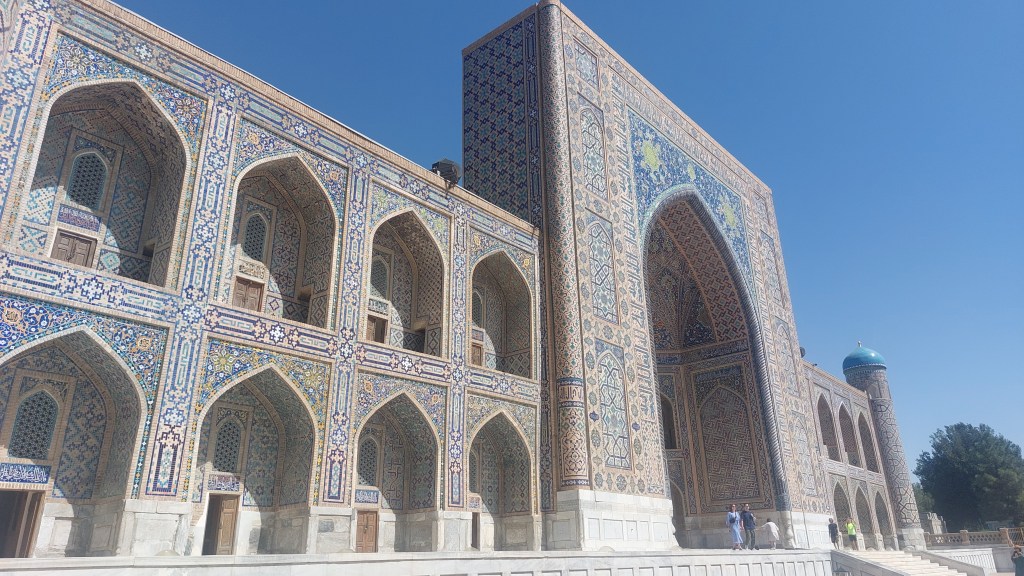

Ragistan means sandy place and was a baazar during the time of the Silk Road. As I said above, each building is a madrassa with 2 also containing a mosque, the right building (the Sher Dor Madrassa) does not contain a mosque as the facade depicts lions (from which it is named, although quite frankly, these are rather tigery looking lions) and faces and neither can be used in Islamic buildings. The structure of each is the same: you enter through the huge doorway facade and come through a corridor, which then opens out onto a huge garden with trees surrounded by the rooms of the madrassa. When they were built, these madrassa’s were the universities of their day with an excellent ration of 2 teacher to every 1 student. The madrassas taught all subjects and students were expected to study all subjects, whether it be maths, science, astronomy, philosophy, or religion (its lucky they had access to good quality paper! Students were expected to study for around 20 to 30 years and could not “graduate” until they demonstrated their knowledge of all subjects and the final question was that the student had to teach the teacher something new, thus advancing the madrassas wealth of knowledge. As much as every day is a leaning day, I think this is where I may have struggled (and with the maths – I still can’t work the money!).
Of the three madrassa’s, the most impressive is the Ulug Bek Madrassa. Ulug Bek was a grandson of Timur who, after trying his hand at conqering, decided instead to dedicate his rule to learning and advaning knowledge. As well as this madrassa, he also built a huge observatory for which he was able to (accurately) plot over 1000 stars and the actual length of a year to with around 14 seconds, so not bad at all. He was ultimately murdered by his son (along with the army) he wanted to focus on conquering and a little light plundering, but history remembers Ulug Bek’s name.
It is worth noting that much of what you can see in these photos has been restored, but some examples below are what it looked like in the 1930s. The Soviets did much to restore and maintain what was still standing (this being an earthquake prone area) and generally speaking, restoration has been sympatheic, whereby tiling and colours were only added when some of the original was still visble.
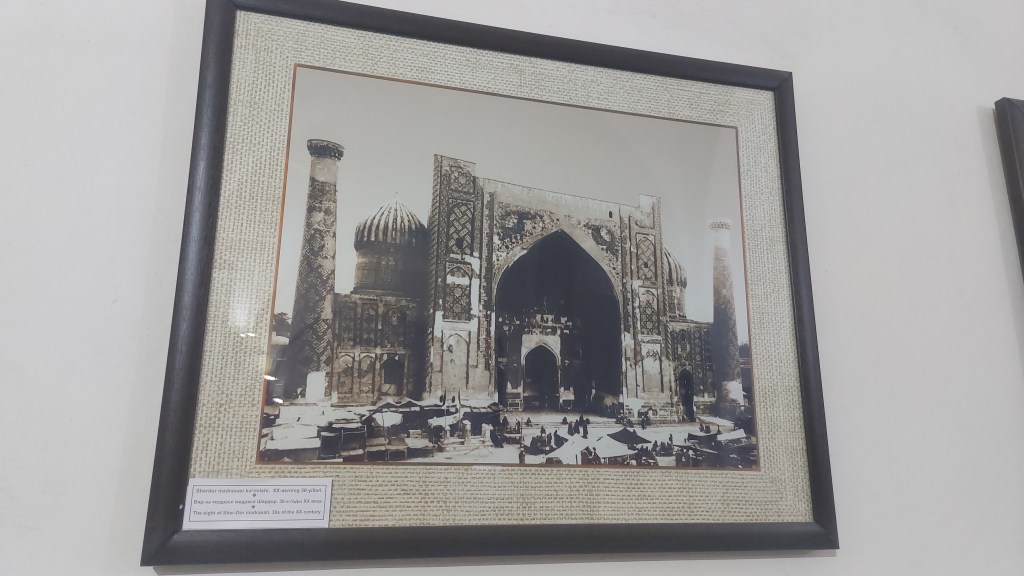
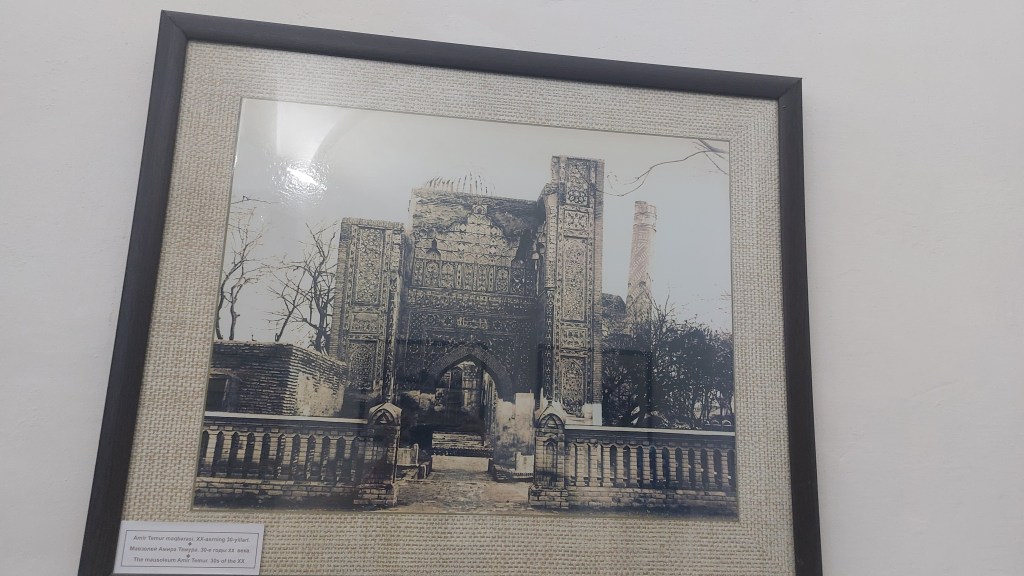
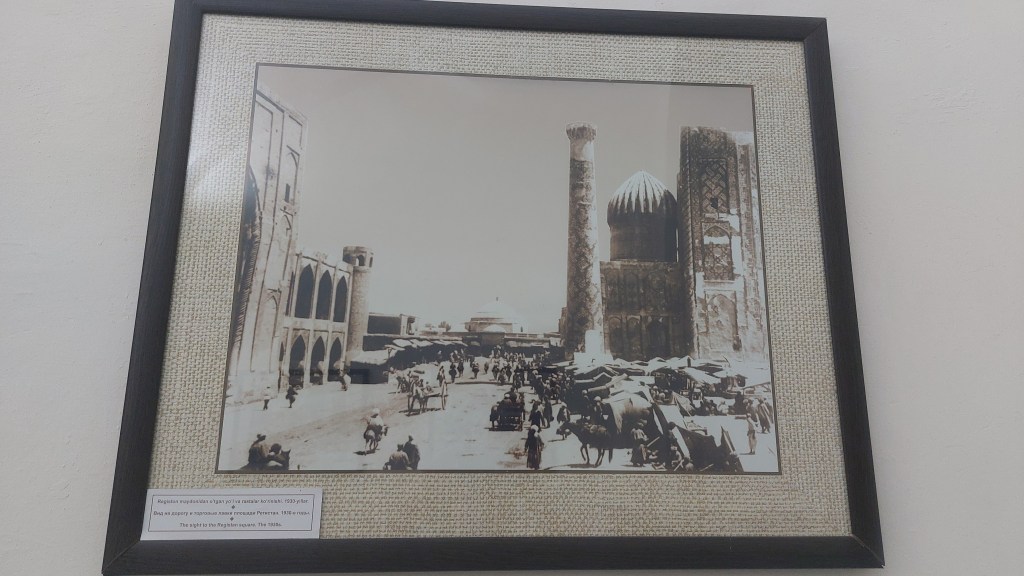
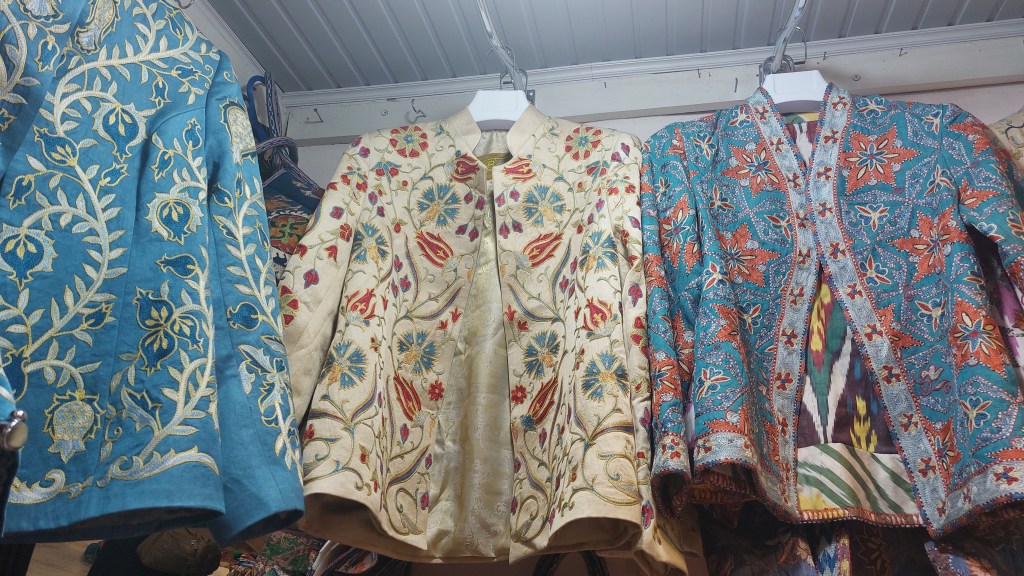
A final comment on The Ragistan is that all the madrassa’s are filled with souvernier shops. This is not something we are used to seeing, particularly in Kyrgzystan where there is very little to buy, and the vendors are pushy, which is not something we have experienced at all on this trip. Although it seems overly touristy it does kind of make sense to both use these buildings and to concentrate the tourists in one place and not have them wandering about where normal people are trying to shop (particularly given the age and mobility of many of the tourists!). There are many lovely things, and I am doing well to resist, but again, if anyone sees anything they like, just let me know:
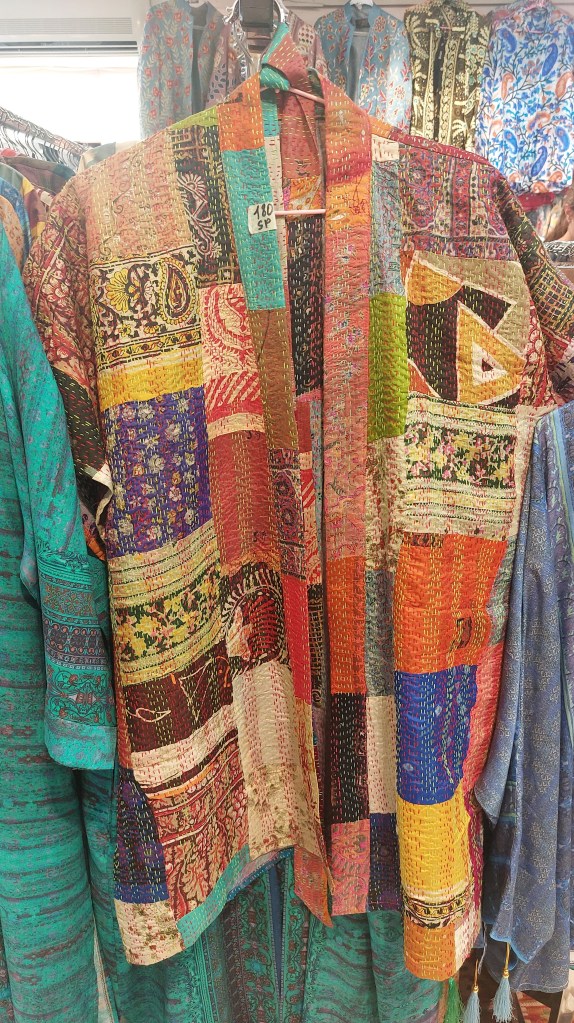
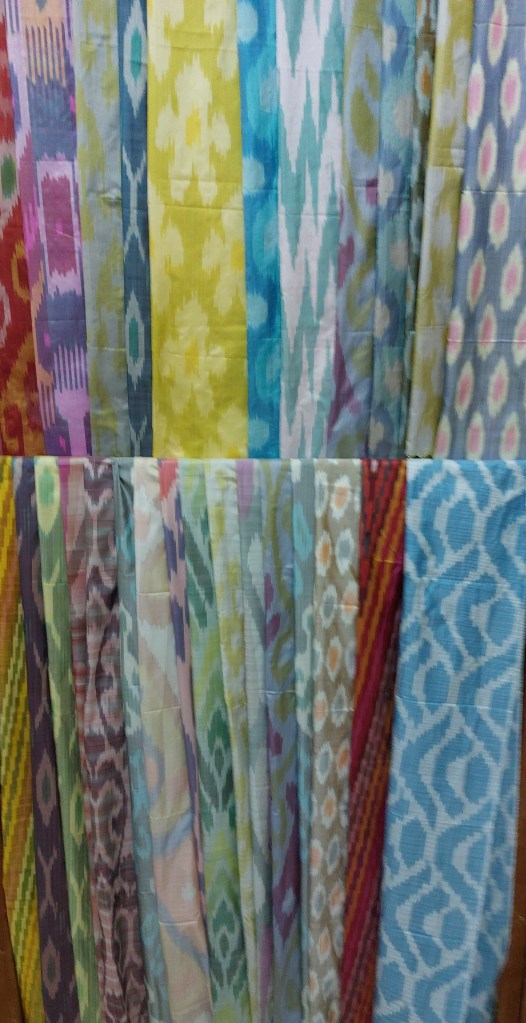
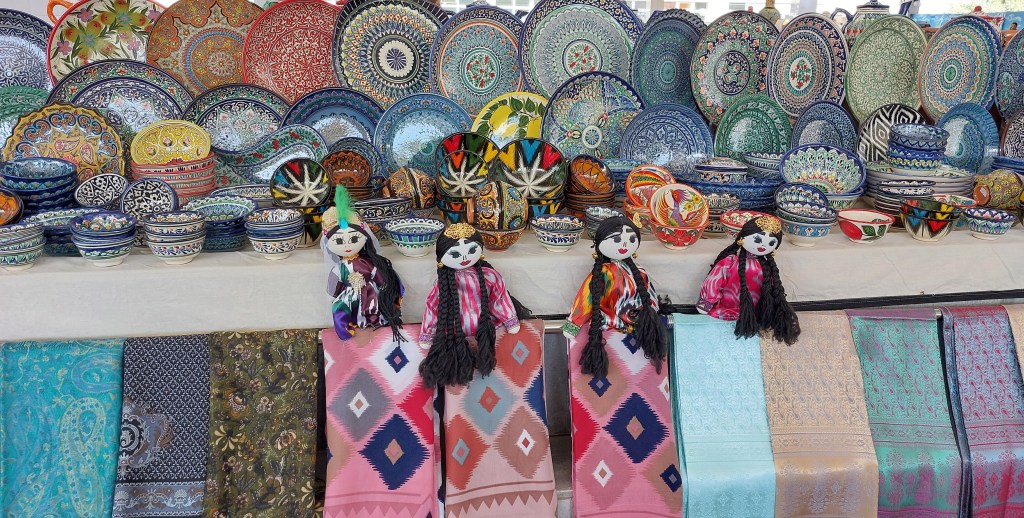
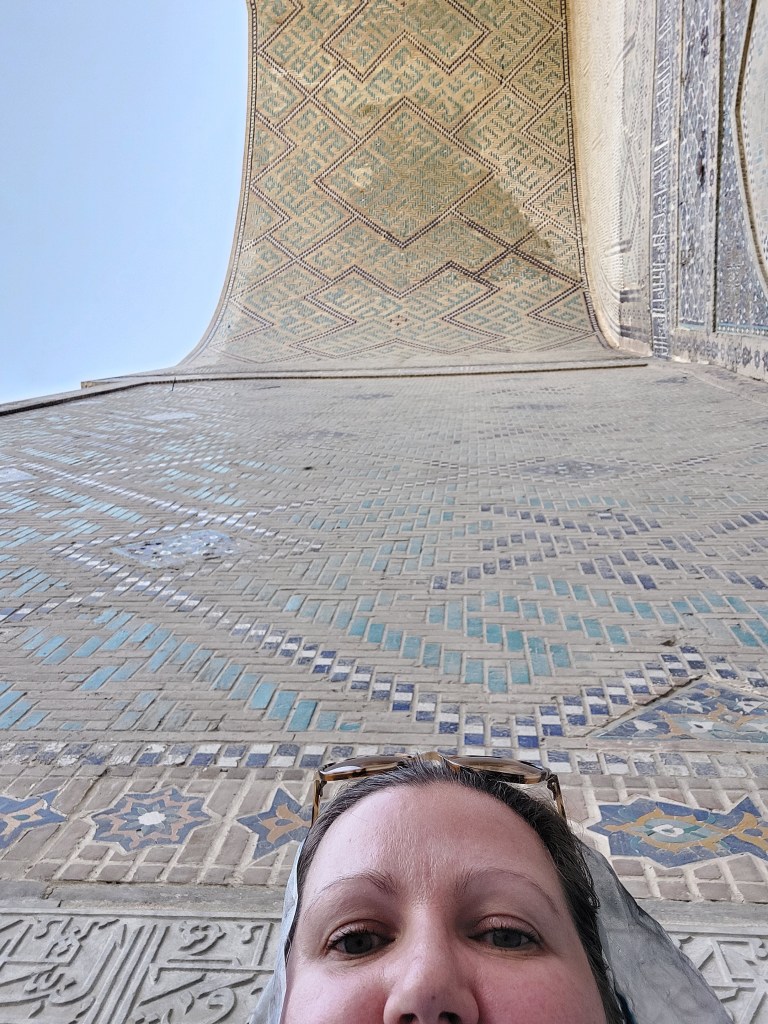
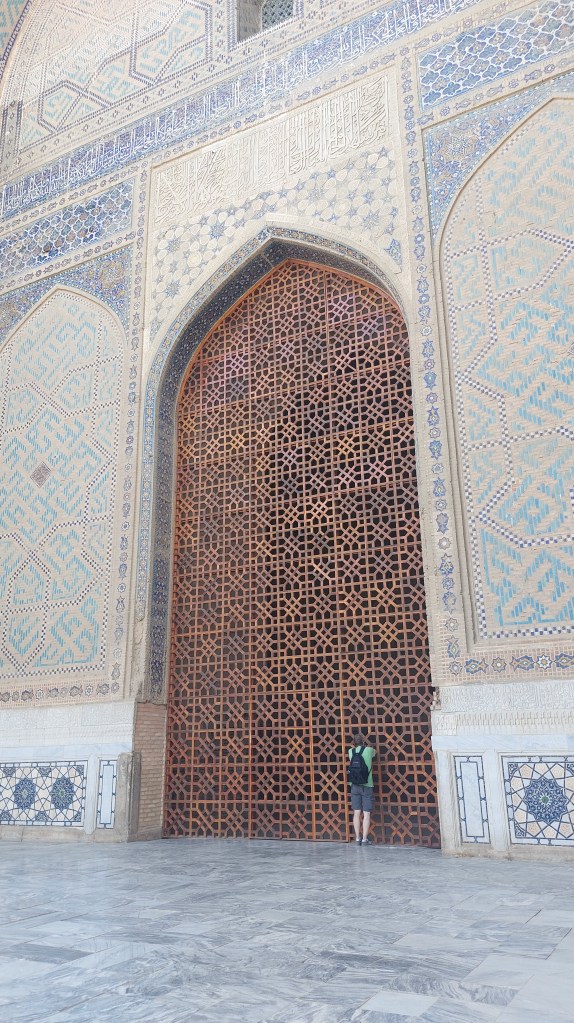
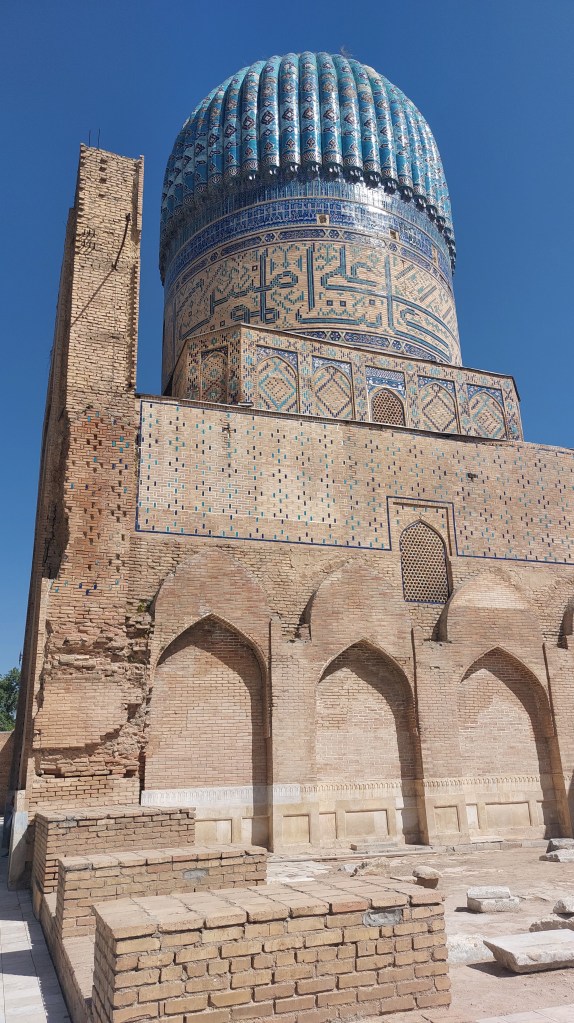
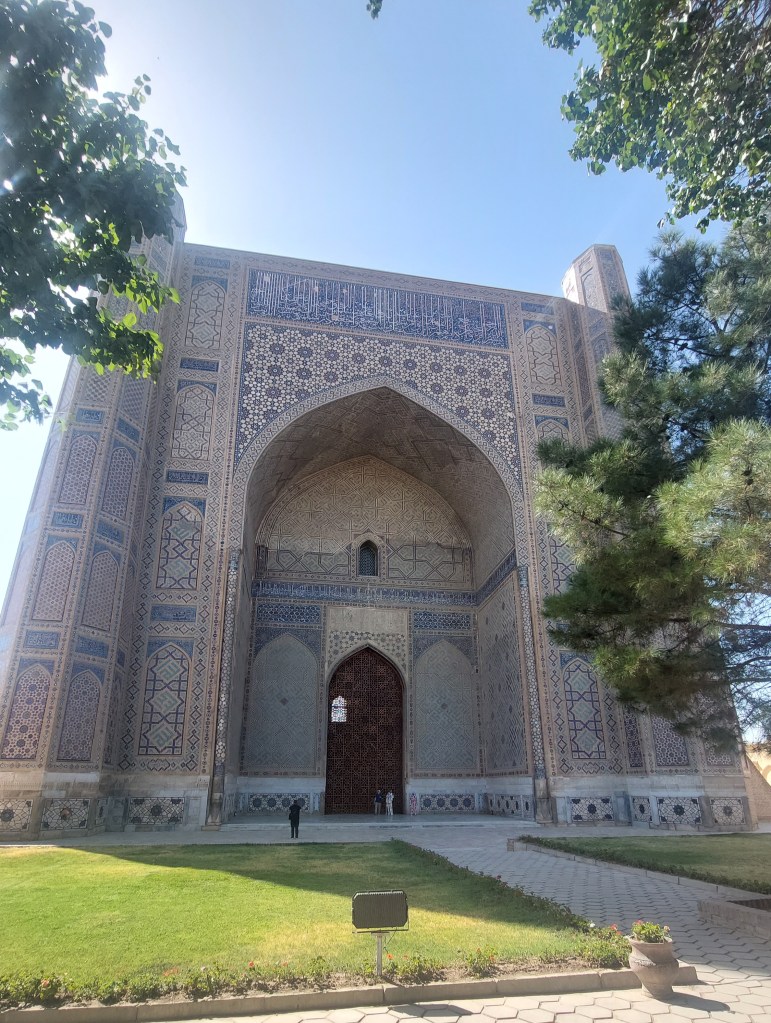
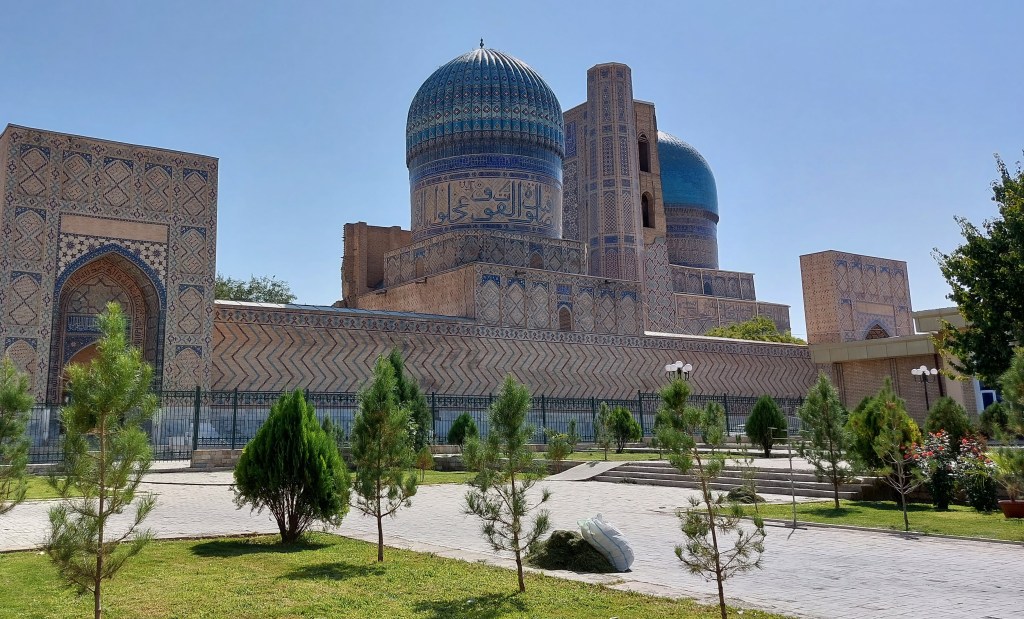
A short respite from the heat (its been around 35 degrees) for lunch and onto our penultimate “big” site of the day the Bibi Khanum mosque. It is simply HUGE and it actually used to be eve bigger: the current entrance facade is 30m high, but was orginally 64m high and is 46m wide. I did attempt to capture the scale (with using humans in photographs) below, but not sure I quite managed it. The mosque was originally built in the 17th century, but little remains of the original (other than the entrance facade and mosque) as the gallery was built in marble which was not very earthquake proof! As so much of it has now been restored (round 60%) much of it modern by Karimov’s government, the mosque no longer makes the UNESCO list which is a shame, as you really do get a sense of scale from it.

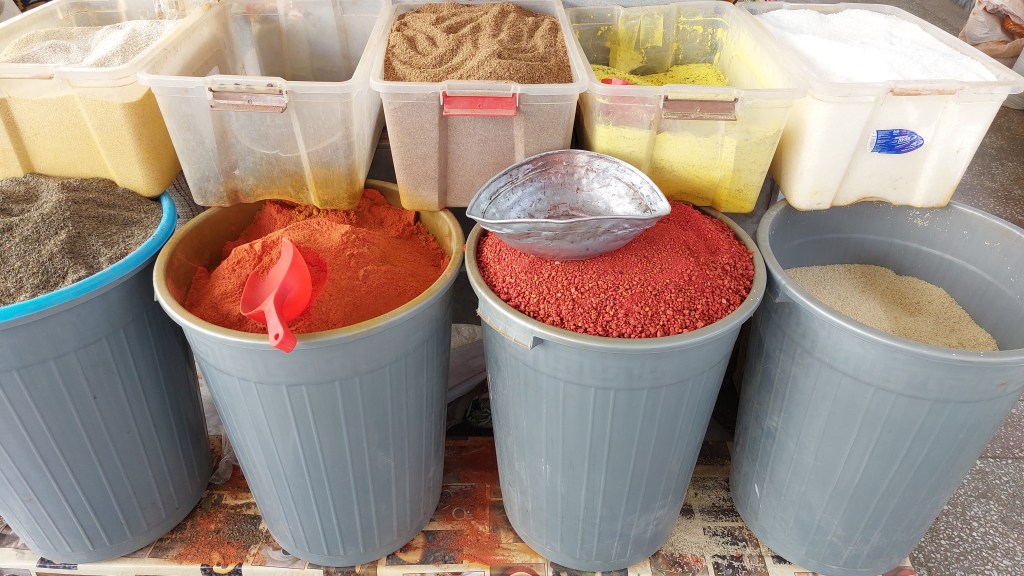
What would be a visit to a Silk Road city without seeing the bazaar? I am slightly concerend I might be getting bazaard out even though the Siyob Bazaar is a particualrly nice one, with a wide seleection of stuff and a lovely view back at the mosque:
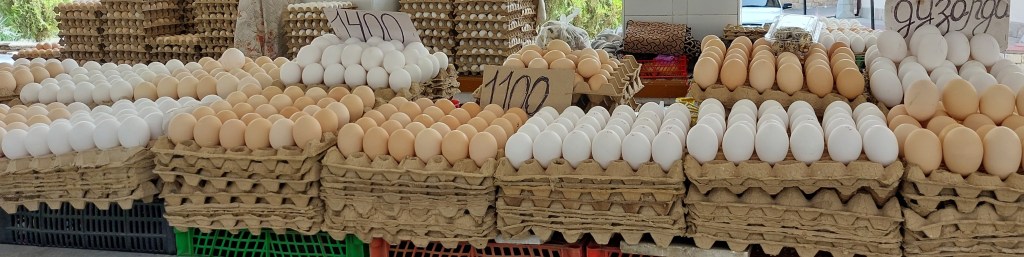
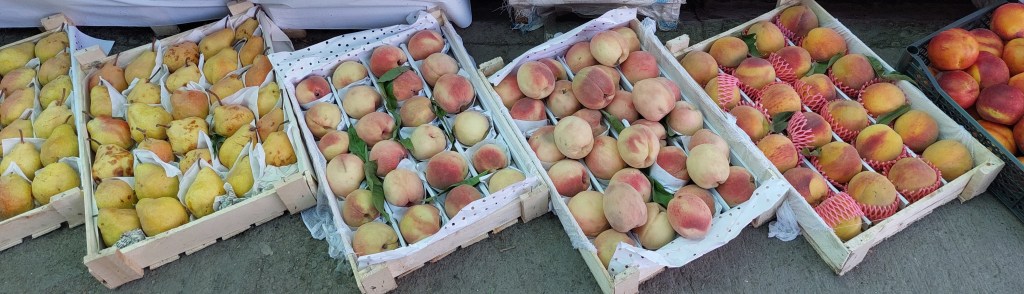
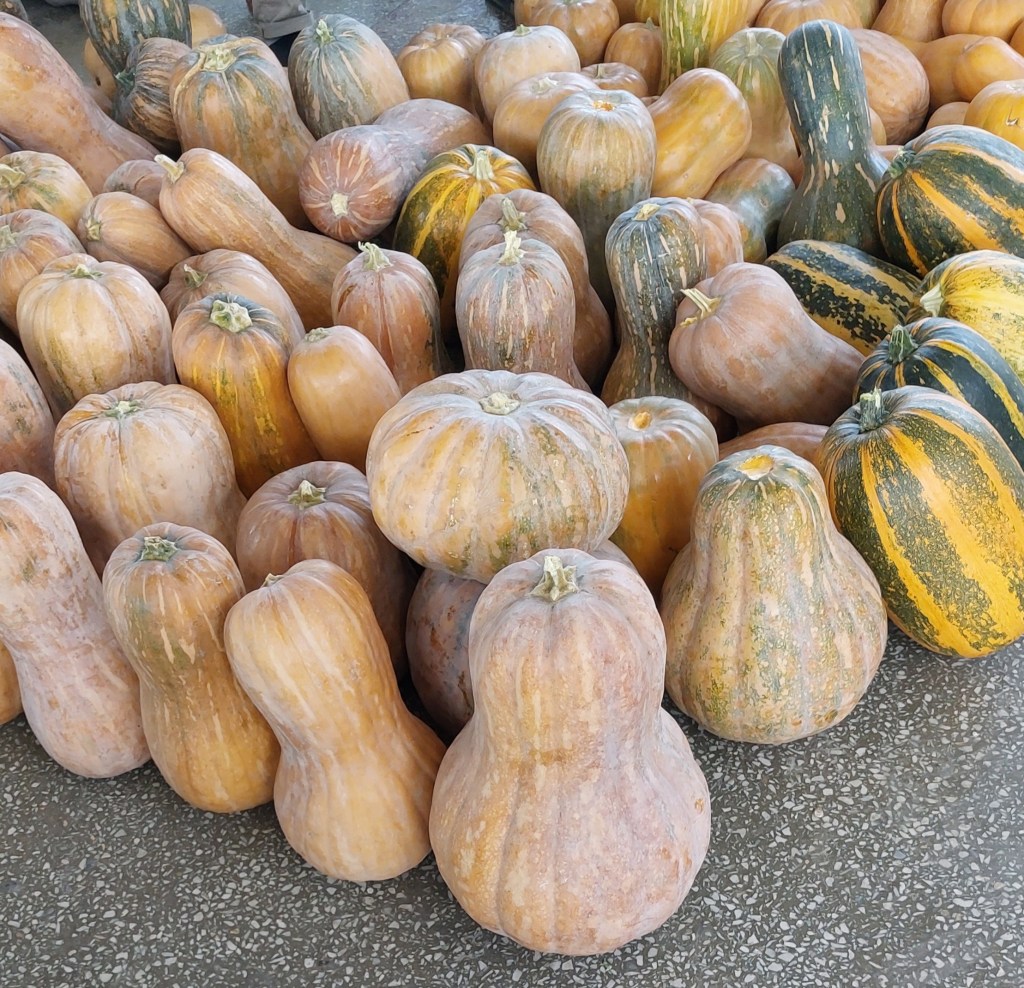
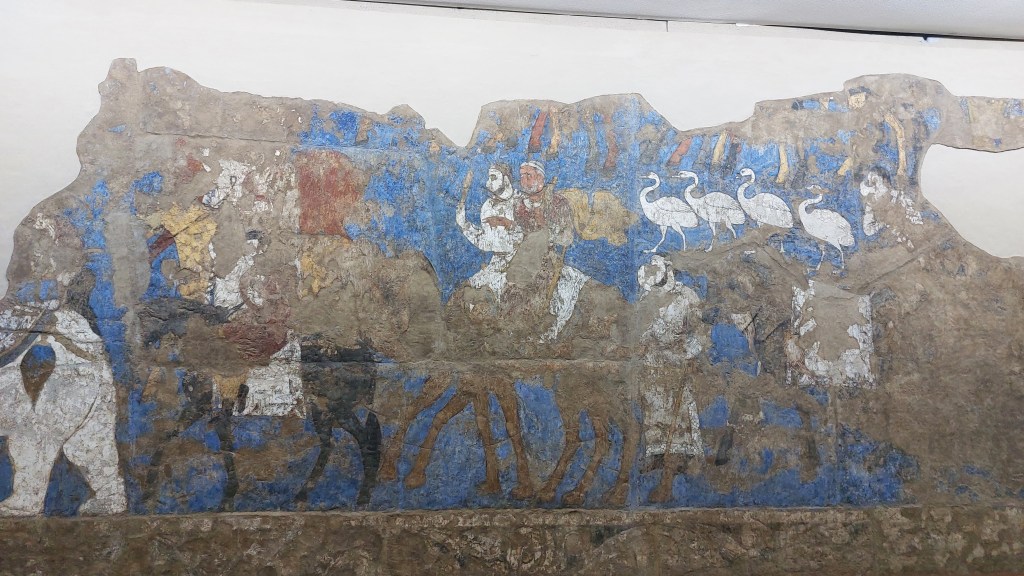
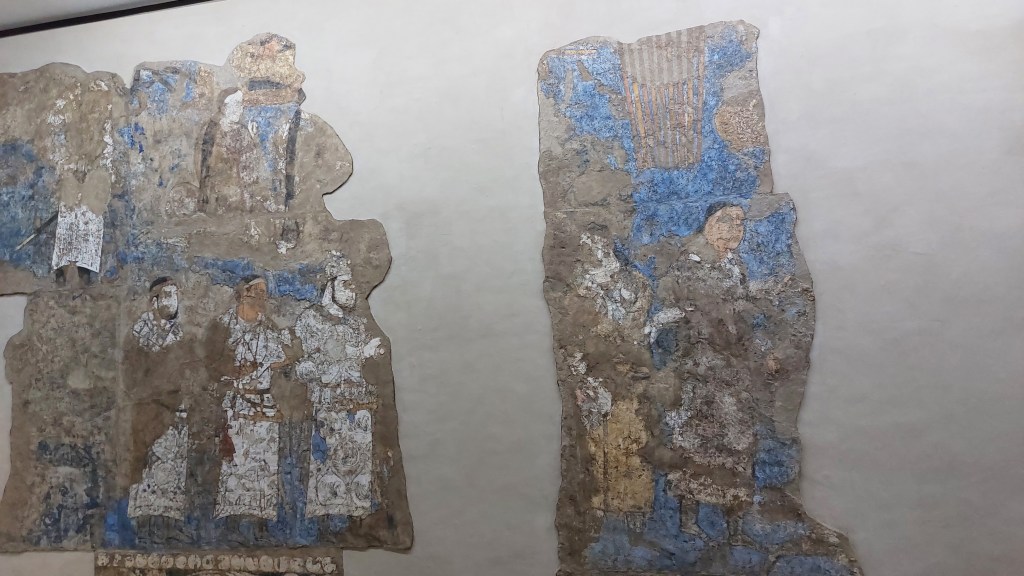
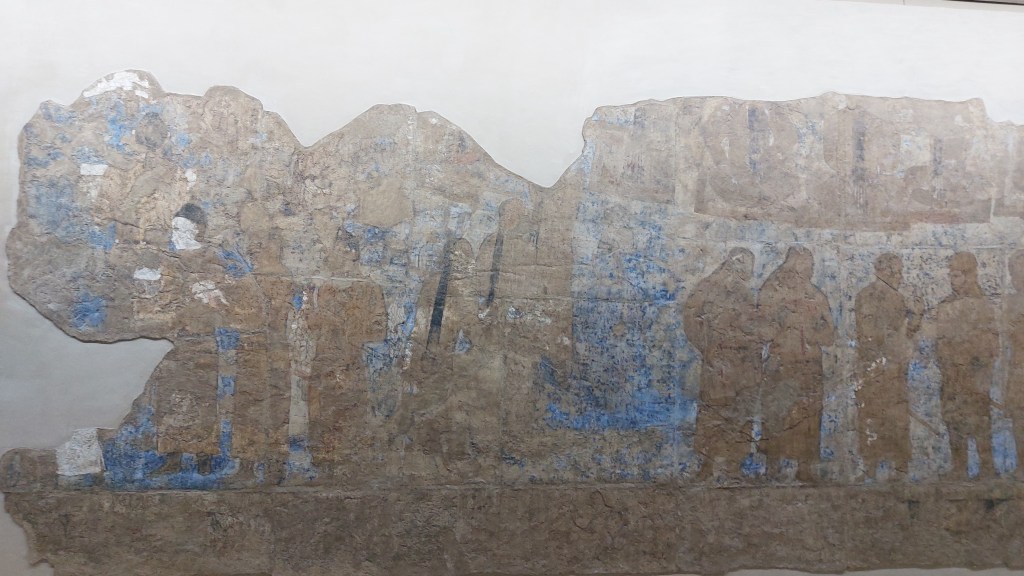
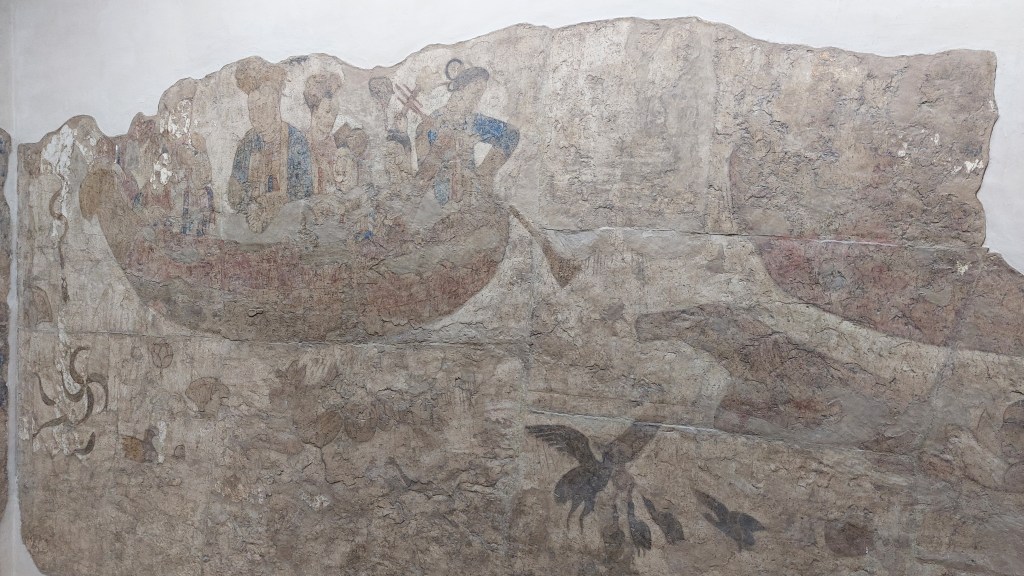
Having now seen everything of the “old” city, we made a trip to the Afrosiab museum to see some of the historical remains. Afrosiab is an area to the northeast of old/new Samarkand where they have been ecavating the remains of the historical city of Marakanda (not quite Wakanda). This was the city conquered by Alexander the Great and items have been found dating back to 7th century BC. However, the most impressive is a chipped 3m high 7th century fresco from the palace of King Varkhuman discovered in 1965 and somewhow managed to survive Gengis Khan rampaging horde. This fresco is interesting as it shows the king receiving foreign dignatories the east (Tibet, China and Korea) and west (Turkmen and nomadic tribes) just showing the significance of this region even that long into the past.
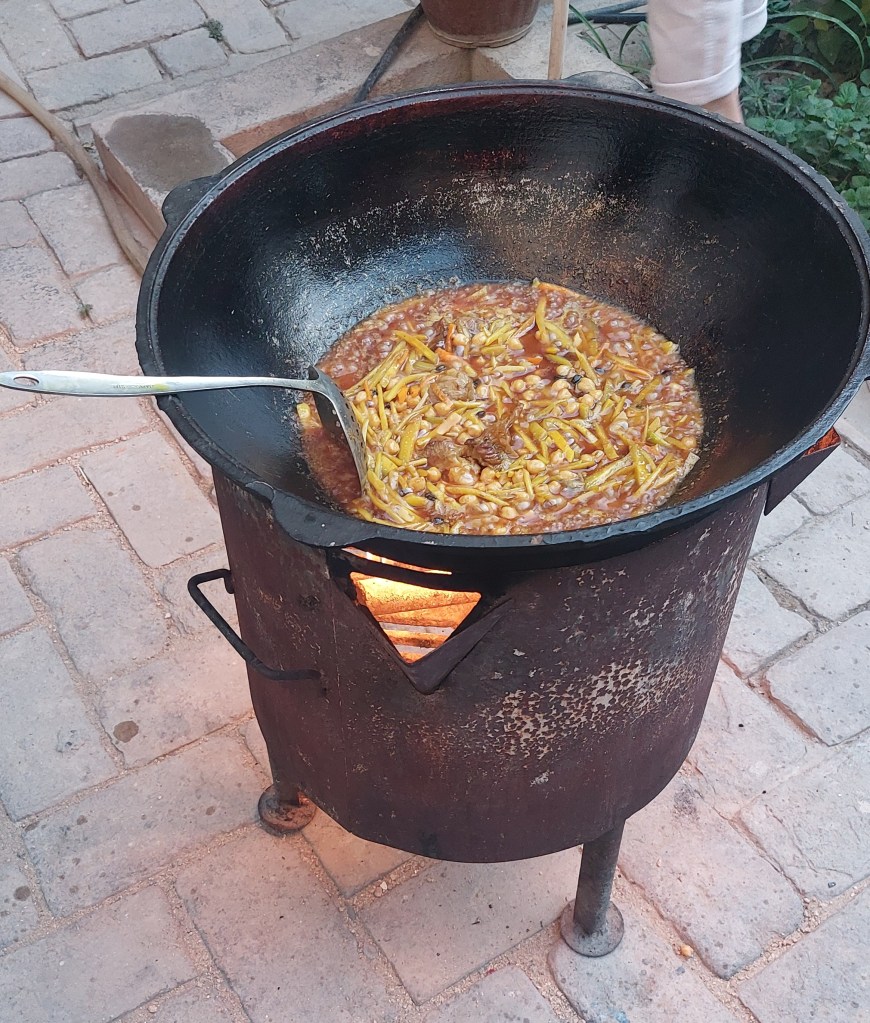
We ended the day with a visit to a local family to learn how to make plov. Plov is found all over Central Asia, but it is probably most popular in Uzbekistan. The following recipe will feed 15 people:
- heat 600ml of vegetable oil in a large flat bottomed dish (this is already controversial for Miko our Kyrgyzstan guide who ecommended more like 300ml, in my humble opinion, this still seems overly oily and I would start with a light coating).
- slice 1 big onion and caramlise, then add 1.5kg of carrots (here were a mixture of orange and yellow) cut into sticks (Miko again, had an opinion here that this should be 1kg i.e. a 1:1 ration between vegetables and meat).
- Add 1kg of meat cut into chunks (here was a mixture of beef and lamb as apparently chicken does not count as real meat in Central Asia), chickpeas, cumin and black barberrys (optional) and cook until basically done.
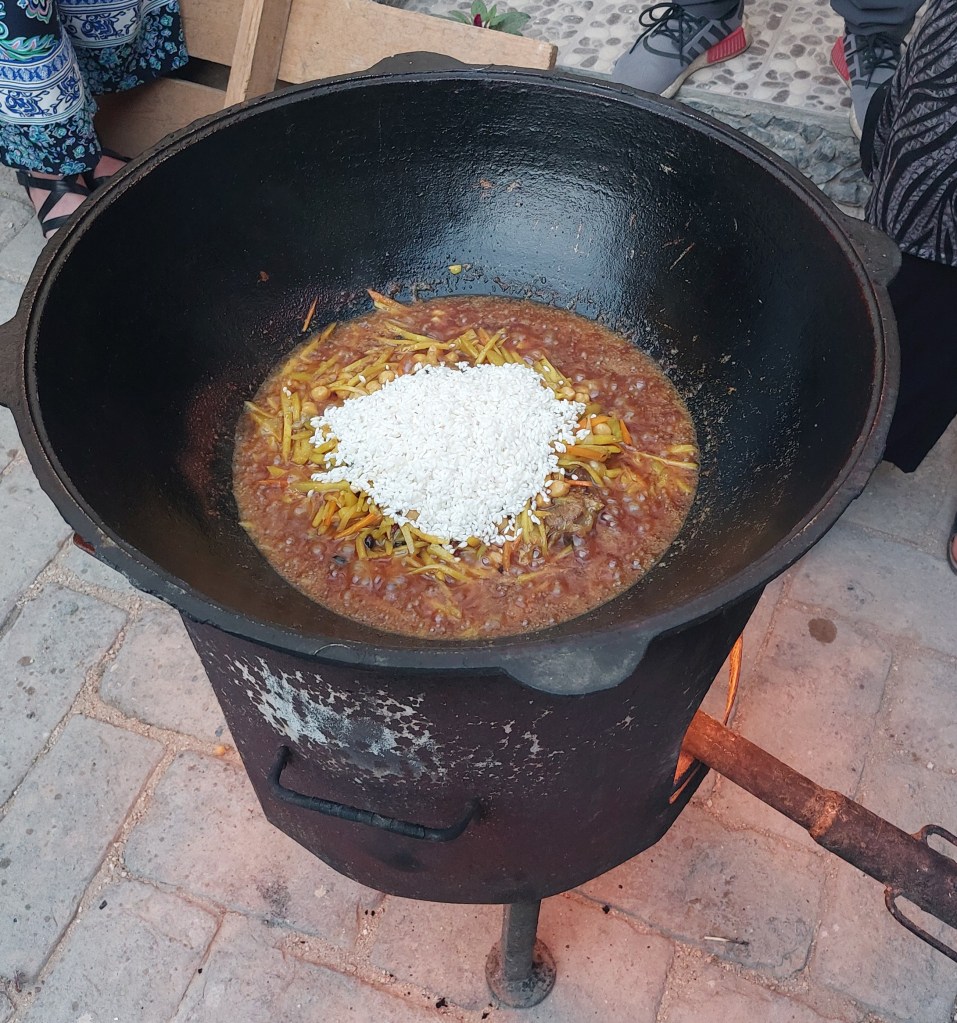
- Add 1.5kg of long grain rice, 1tbsp of salt and 1 or 2 garlic bulbs (unpeeled) with enough hot water to cover. Cook on a heat until all the water has evaporated.
- Turn the heat down to low and cover. Cook for around 30-40 minutes and then tip out to serve (in Uzbekistan the meat and vegetables will be distributed throughout the rice, whereas in Kyrgyzstan the meat, vegetables and rice will be layered)


So, there you have it, a massively long post from me trying to convey everything I have seen and experienced over the last 2 days. I can not describe in either words or photographs how amazing, awe-inspiring, unbelievable, overwhelming (add superlatives here) Samarkand is. All I can say to people, is its somewhere that really should be considered a wonder of the world and should be on everyone’s bucket list.
11 responses to “Stage 1.8 – Samarkand”
-
I like the curse fun fact! Looks amazing, thanks for sharing all the pictures, I feel like we don’t build anything on that scale anymore and certainly not that beautiful!
The food looks amazing, especially those little samsas, great picture of them being cooked in the tandoor thing. How many did you eat of them? I reckon I could do about 10. Did they have a veggie version or is that not a thing?! Is anyone in your group vegetarian? If so how has the food been for them?
Speaking of food I am just enjoying a brownie of the mycock recipe!
Looking forward to the next installment, xx
LikeLike
-
I only ate 2, but they’re bigger than they look! There is a vegetarian version, although you would struggle being veggie – lots of salad though. See: https://travelswithkathryn.blog/country-page-kyrgyzstan/ for what you’d be eating (will get updated!).
Yay for brownies.LikeLike
-
-
Also, 600ml of oil, eeek
LikeLike
-
Wowzer the mosques and buildings look AMAZING!
The Plov oil volumes do sound controversial but it also looks really tasty (meat aside…)
Very much enjoying the blog xx
LikeLike
-
I agree – very controversial. However, it is the chunks of lamb what helps yo make the deliciousness 😉
LikeLike
-
-
Amazing the amount of details you remember! I actually remember photographing you a few times 🙂
/TrineLikeLike
-
So thoughtless of me to wander into your photos 😉
LikeLike
-
-
Hi Kathryn. Just started reading your blog. Wonderful recall and photos are amazing. Am loving revisiting our travels in Samarkand through your eyes. Can only access this on Samarkand and Baku and Merv and Ashgabat, the latter 3 which I will read at leisure. Is that all that’s available to me? Chris 🙂
LikeLike
-
Thanks Chris!
I have tried to show all the posts on the homepage, but I suspect I have failed. If you go to the earliest post shown, scroll to the bottom of that post, you can click on “previous” – you can then read in reverse order. Hopefully 🤞LikeLike
-


 Travels with Kathryn
Leave a comment