So, yesterday I said goodbye to most of my group (this is sold as a combination trip and only 3 of us (including my room mate Diane) are going onto Khiva and Turkmenistan), including our excellent guide Miko. As many of you know, I have very high tour guide standards from my multiple Intrepid trips, and he has truly been amazing! A true ambassador for Kyrgyzstan and Uzbekistan, and we (basically our whole group) are now ready to go and spread the word about how wonderful these countries are. I would like to come back, so I’ll come with you when you come.
Anyway, the combination trip meant that today, I had a much needed rest day in Tashkent. I did do some culturing by visiting the State Museum of History (which thankfully re-affirmed much of what I have learnt on this trip so far) and then laundry, packing and repacking, and then meeting my new group at the 6pm welcome meeting. This was something of an anticlimax as it turns out we 3 are the whole group!
After our “welcome” dinner we followed the sound of music (mainly classics such as Backstreet Boys and Spice Girls) to a fenced off park where they were holding something called Pepsi Fest. As we went to enter a gap in said fence (which was all of 30cm high), the multiple police said no one could enter. Well, this was taken to mean just walk past them when they were looking the other way or step over the fence. Considering Uzbekistan is meant to be a tightly controlled state where the police have wide-ranging powers, this was somewhat surprising. The police started to realise they had lost control, and it turned into a farce of them looking to the person next to them as to why they have allowed people in?!
Anyway, our new guide Johnny (an Uzbek with a distinctive Australian accent) had broken the news to us that we would be on a 6am flight to Khiva which meant a 4.15am departure so early to bed. Even so, I was not enjoying it the next morning. However, there are no complaints regarding Uzbekistan Air and their excellent safety video featuring a man on a camel wearing a lifejacket.
It was only a short flight (1.20h) to Urgench (the nearest airport to Khiva) and on arrival we deplaned (an excellent phrase) and then ambled towards the building which we assumed was the terminal. None of this busing you 50m. There was also only 1 baggage carousel with 2 flights landing it was something of a scrum, this is where a bright yellow rucksack has its advantages. It was then a short drive to Khiva.
As you approach Khiva, the first thing you can see is the fortress wall surrounding the city. Khiva is not particularly large, so this includes the tourist locations, i.e., the palace, mosques, and madrassas, but also where most of the 3,000 population of Khiva live. The city you can see in the photos below is the 8th city it having been destroyed and rebuilt that many times, but the original dates back to the 5th century (that was then destroyed by Cyrus the Great and his Persian Merry Men). The walls are made of mud and straw, which gives them their distinctive pale brown colour (and apparently get refreshed every 4-5 year). At some point, the walls would have been surrounded by a 20-meter moat, and originally, the only gate would have been to the East. Today, there are four 4 gates, and our hotel (the first in Khiva apparently) was just inside the West Gate (bottom of the map).
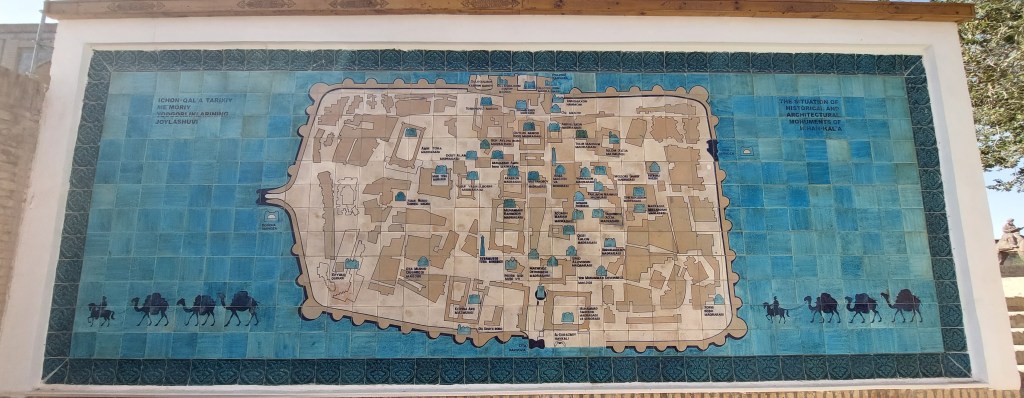
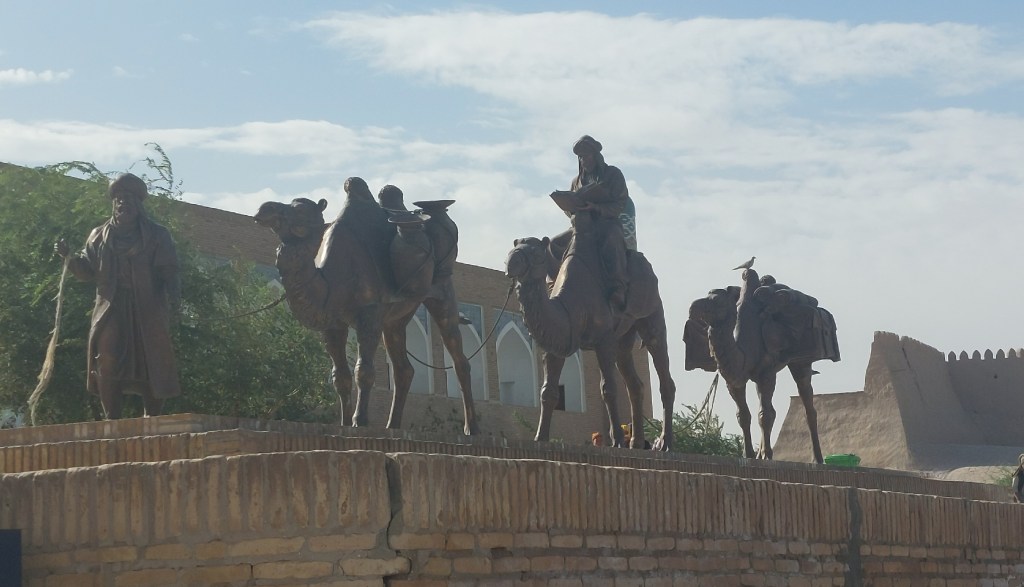
Khiva is sometimes criticised for being a living museum, and this is probably true. However, of all the cities I have seen in Uzbekistan this where I have had the strongest sense of being in a Silk Road City – entering through gates, narrow streets lined with shops, and a huge Caravanserai.
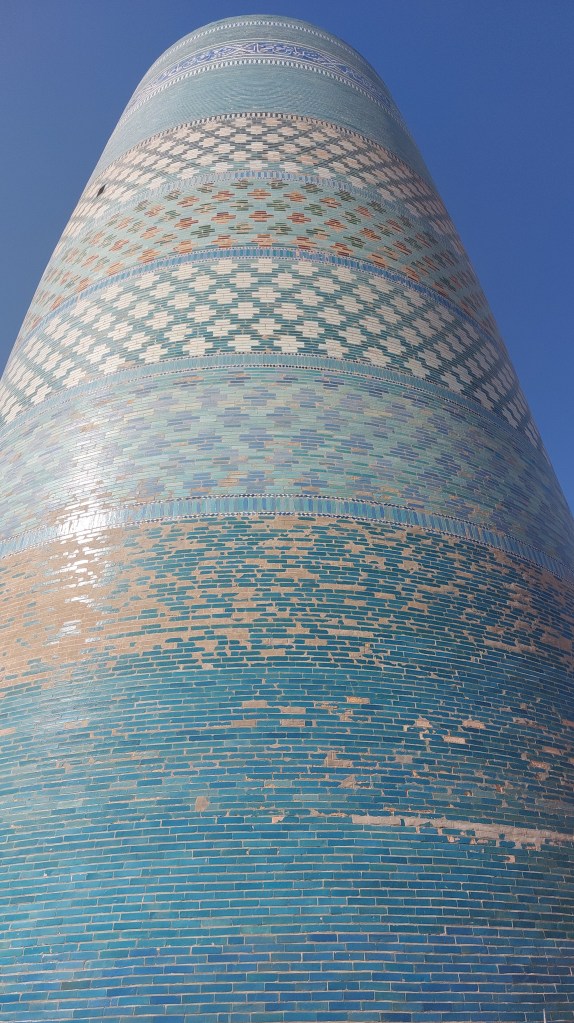
The most memorable site of Khiva is the unfinished short (30m) and fat Kalta Minor Minaret. It was built in 1851 by Mohammed Amin Khan, who wanted to build a minaret tall enough so he could see all the way to Bukhara. However, he died in 1855, and it was left as it is (possibly due to a lack of funds). It is covered in beautiful tiles, so even though it be stumpy, it be beautiful.


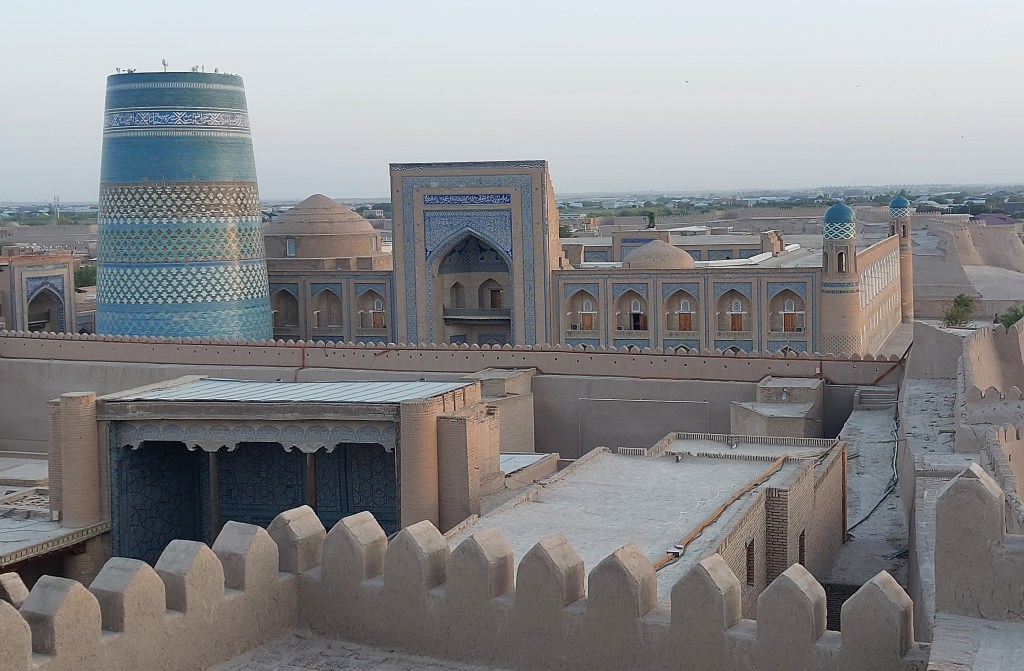
Our next stop was The Ark (which, as we have learnt, means fortress), which was effectively the palace and administrative centre for the Khan’s of Khiva who ruled until 1924. The Ark is much smaller than the Ark at Bukhara but more decorated. It is also further along in its restoration, which is why whole rooms have been recreated for the tourists to enjoy.


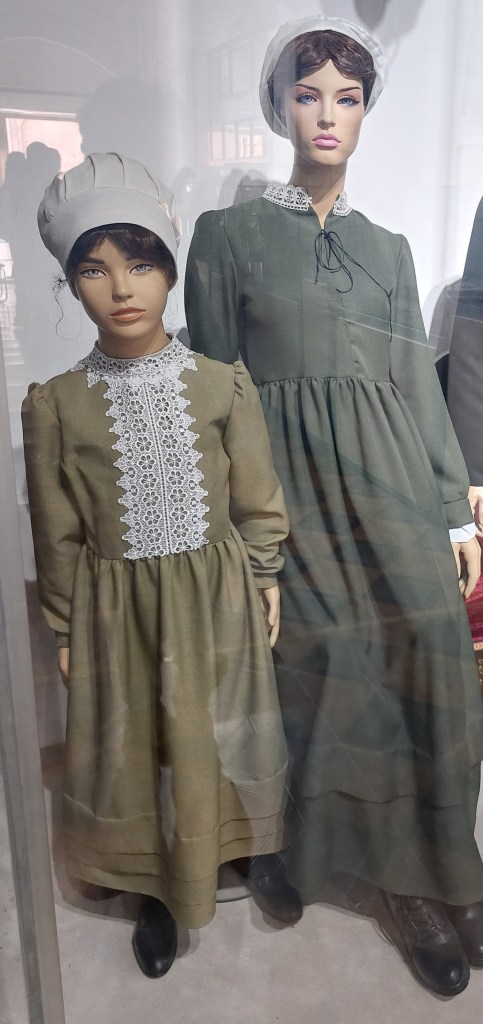
We next visited a small museum dedicated to the Mennonites, who are a religious group similar to the Amish. Originating in German speaking Switzerland their history is one of being pushed from country to country and a small group were invited by the Khan of Khiva to settle in a small village in the Khanate in 1884 called Ak-Metchet to the South of Khiva. Not simply a benevolent gesture, but the Khan was particularly interested in their woodworking skills, which he then employed in his own palace. My favourite part of the museum was the use of “fashion” models to show typical Mennonite dress. I suspect the original owners of these outfits would have been appalled:
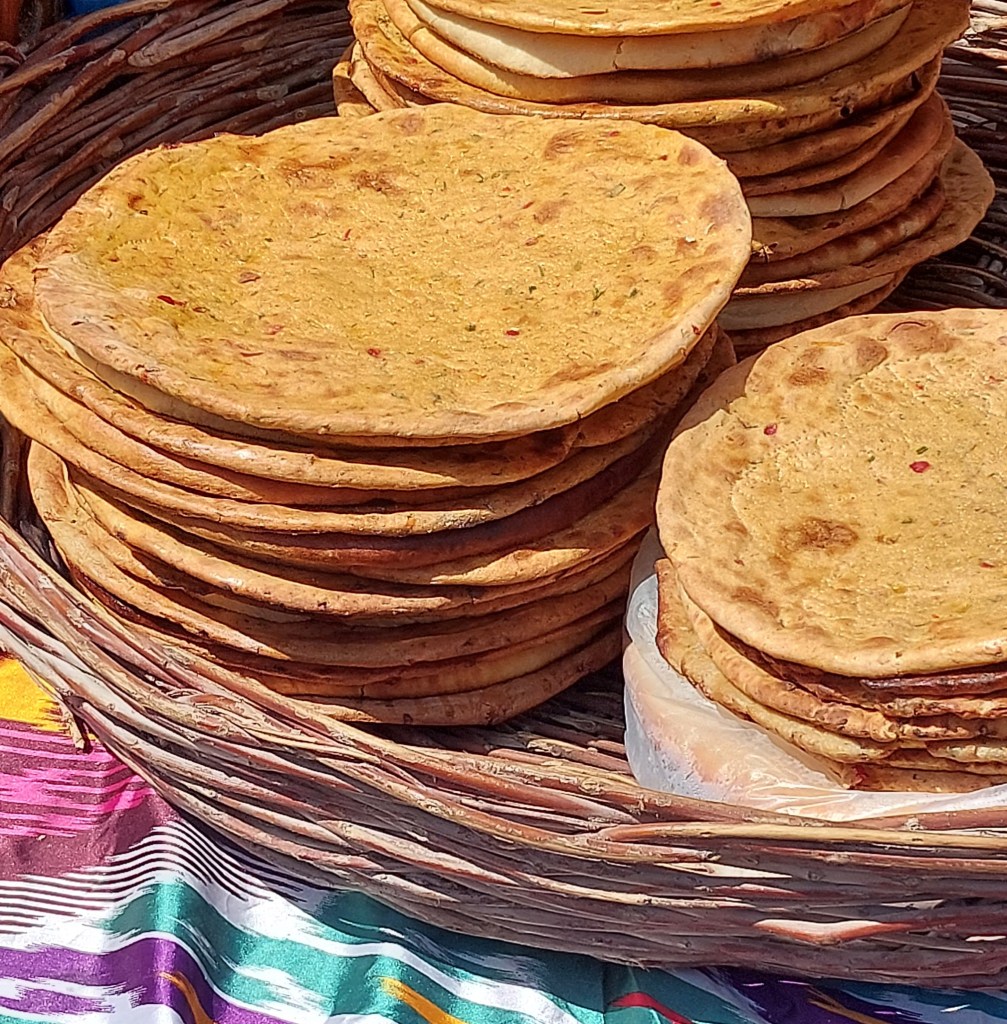
A quick stop for some Khivan bread (as we had been up since pre-4am) and coffees for the rest of the group before moving on. Khiva has its own very different style of naan than the rest of Uzbekistan. It is more like a flattened Indian naan, made of a white dough and cooked in a tandor, but comes filled with either vegetables (and chilli) or lamb.
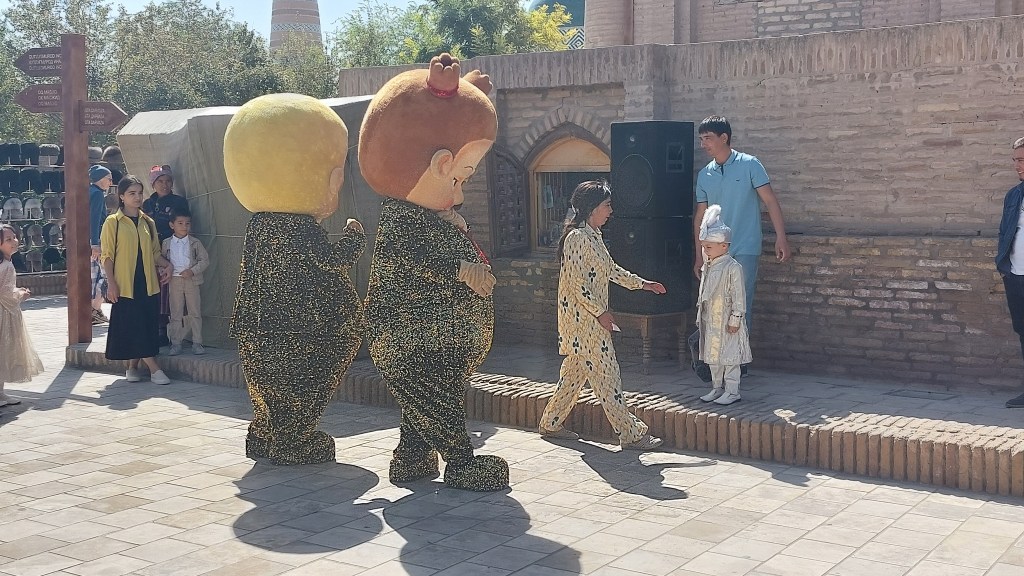
As we walked along the street, we were passed by two wierdly dressed characters (I suspect there is some IPR infringement going on somewhere) and a small boy dressed in a very fancy suit. This was apparently his “treat” for getting through his circumcision. He did not look very happy:
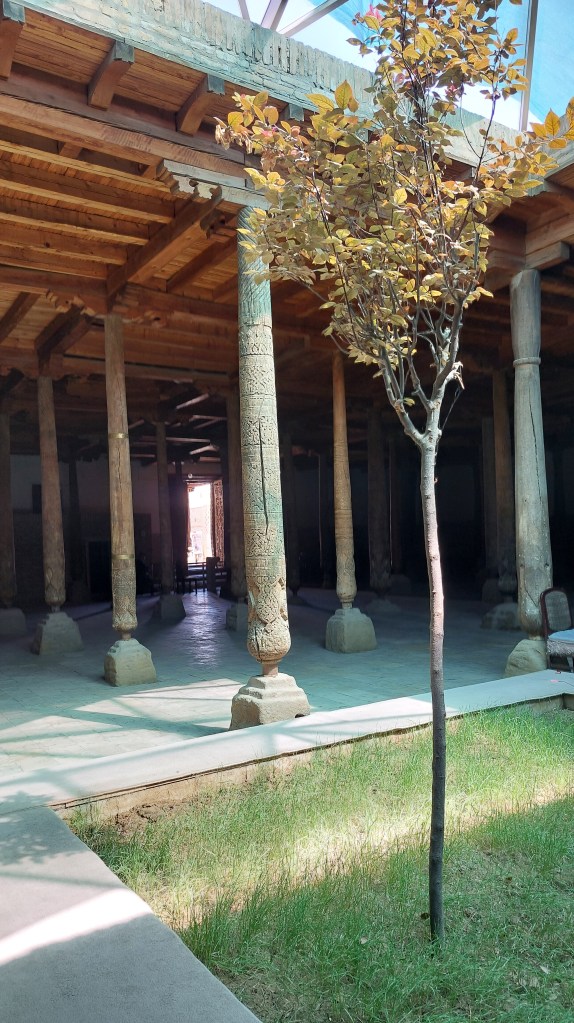
Finally, we visited the Juma Mosque, and don’t worry if you thought I was getting mosque-d out, as this was something different. This mosque dates back from the 10th century and avoided destruction by Gengis Khan and his merry men as they decided the 218 wooden columns would prove very useful stables! Over time many of the columns have been replaced, but generally the thicker columns are earlier and these are the only decoration as otherwise the building itself is very plain compared to the other mosques we have seen on this visit.
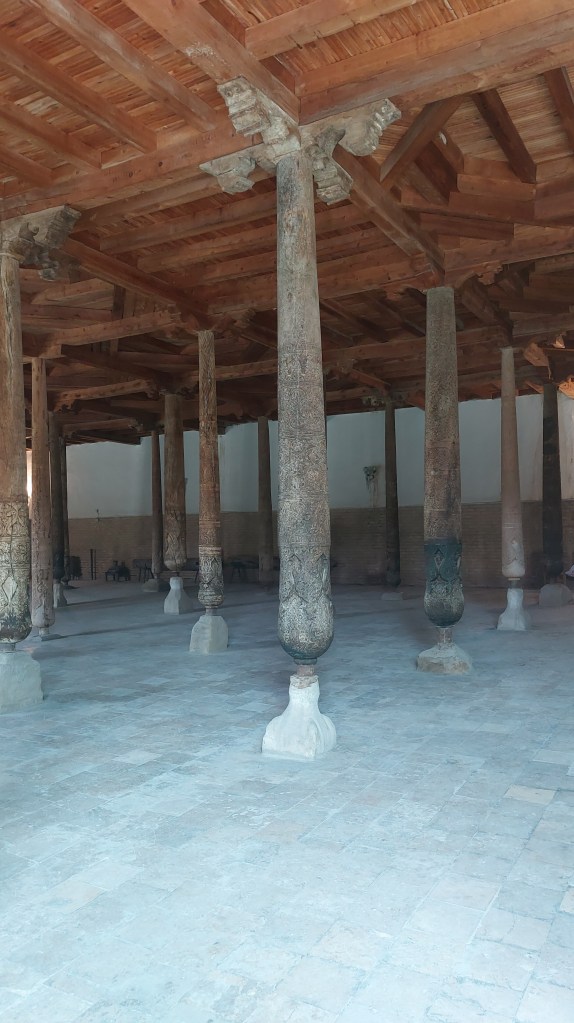
By now we were flagging somewhat, so lunch and then a return to the hotel for a little rest. We headed out again later to enjoy the sunset from the Ark’s watchtower.
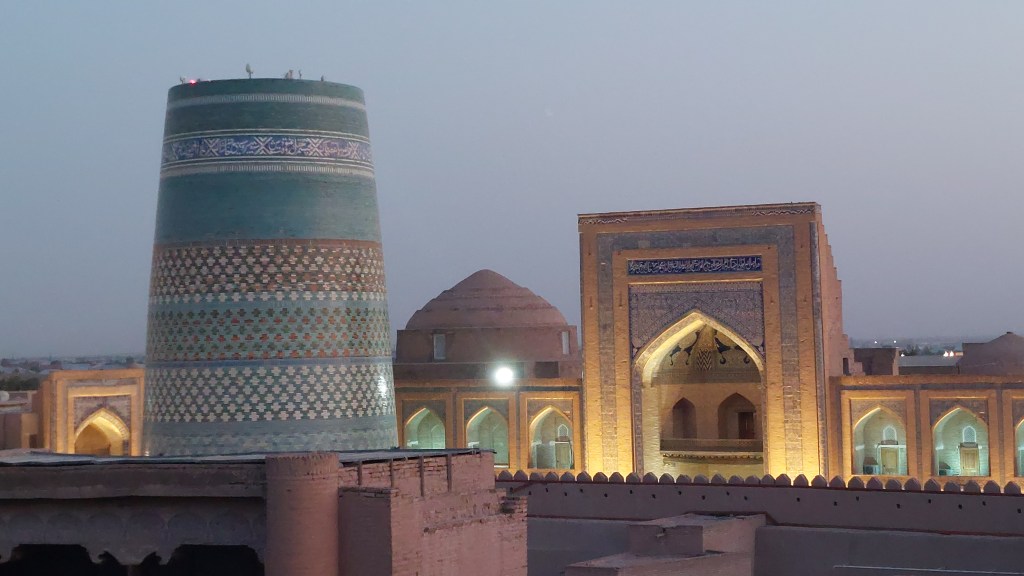

So, there we were at sunset in one of the best viewpoints (apparently) in Khiva, and we were all of about 15 people. There are tourists/tour groups here, but you can be on a street with no one, turn a corner, and suddenly, in a throng of 30 people, turn another corner, and it’s empty. I have commented before that not enough people are coming to Uzbekistan, but because of the nature of the city (small streets and smaller sites) 1 single group can make it look full quickly, but then they soon disappear…
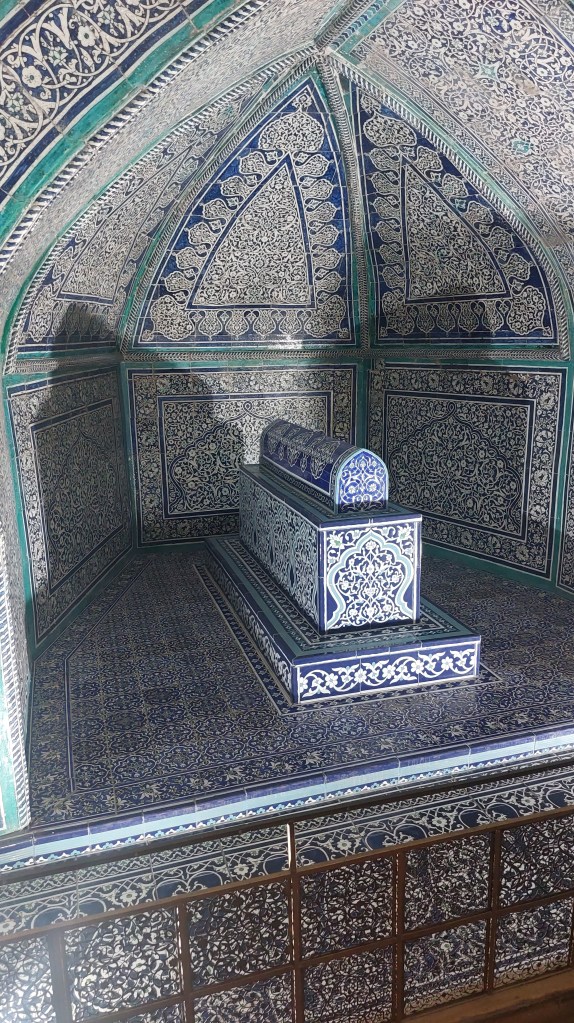
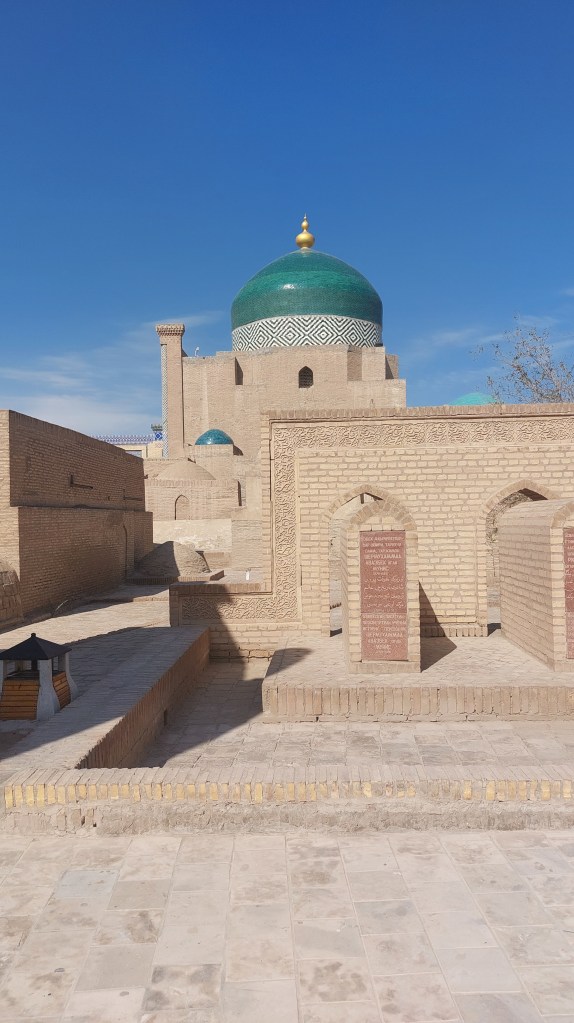
Early to bed so we were fully rested for our second (and final) day in Khiva. Our first stop was the Pahlavon Mahmud Mausoleum, which was a truly beautiful building. Pahlavon Mahmud was a poet, philospher, and wrestler who is something of a patron saint of Khiva following his death in 1326. He was a furrier by trade, and alongside teaching his students this trade, he also taught people philopsphy, Islamic law, and poetry. Only part of the structure dates back to the time of his death (as he wanted to be buried in his workshop), and the rest was added in the 18th century. This is also where a number of Khan’s of Khiva are buried. However, it is Pahlavon Mahmud who gets top billing. This is something we have seen across Uzbekistan where the fanciest/grandest mausoleums and gravestones are always those belonging to teachers rather than, say, royalty as you would have expected (little thought for you there Mum).
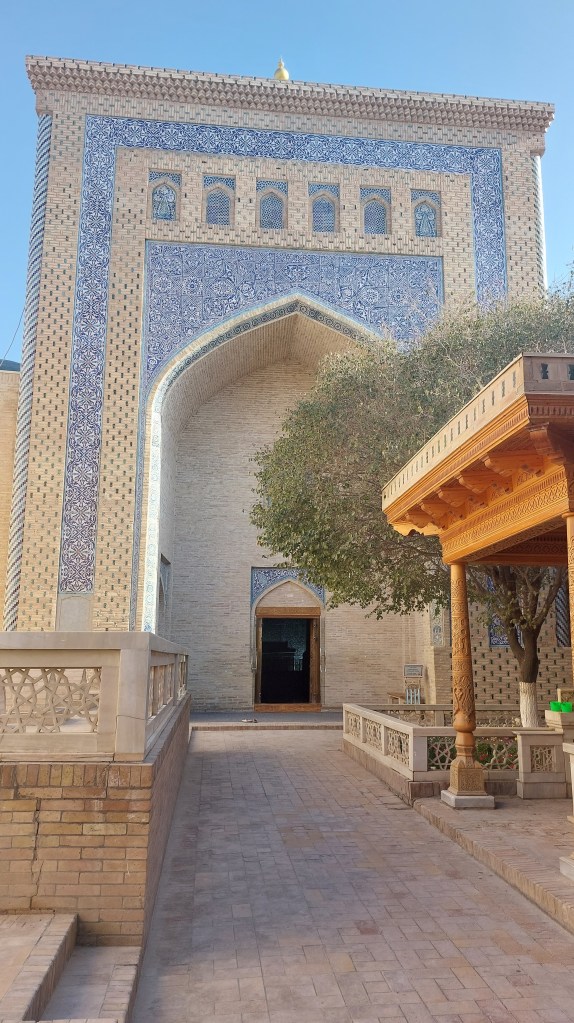
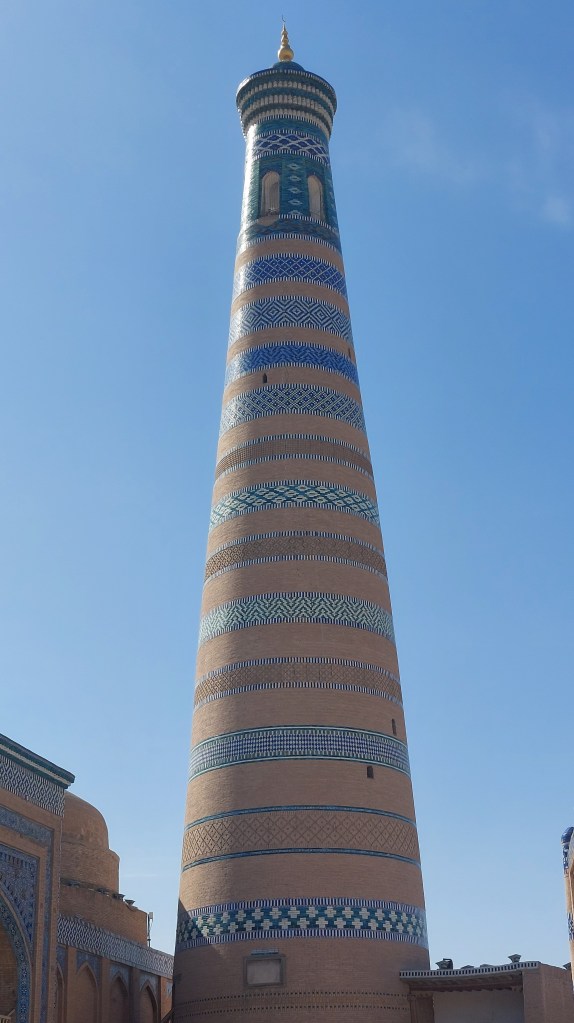
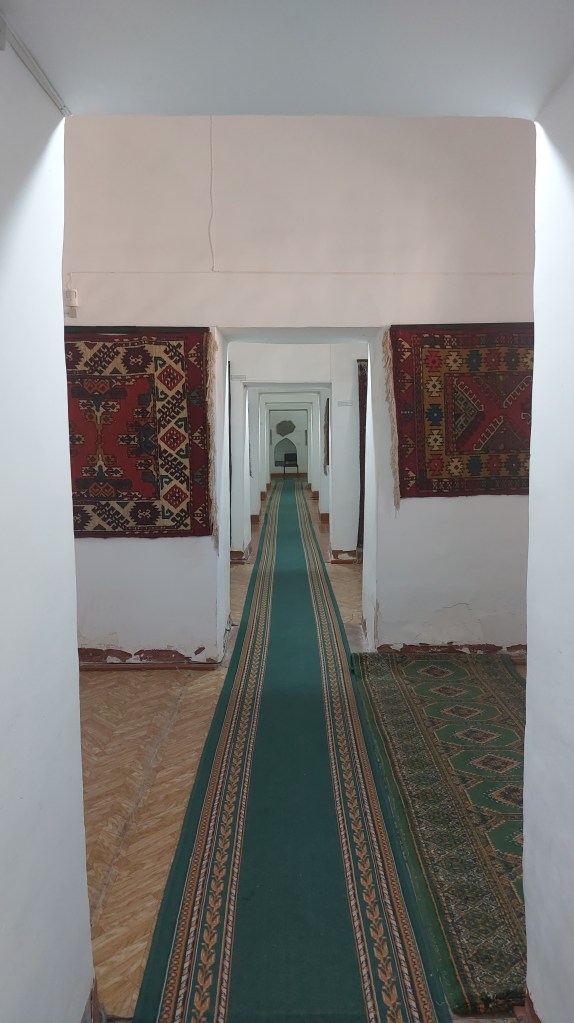
Next was the Islom Hoja complex, which includes Khiva’s tallest minaret at 52m tall (built in 1910) and a former Madrassa, which was converted into a hospital by the Soviets in the 1930s. It actually looks like quite a sensible reuse by adding a corridor between the rooms of the madrassa. This hospital was a huge benefit for the local population, which has been rather ignored as a feudal state by Tsarist Russia.
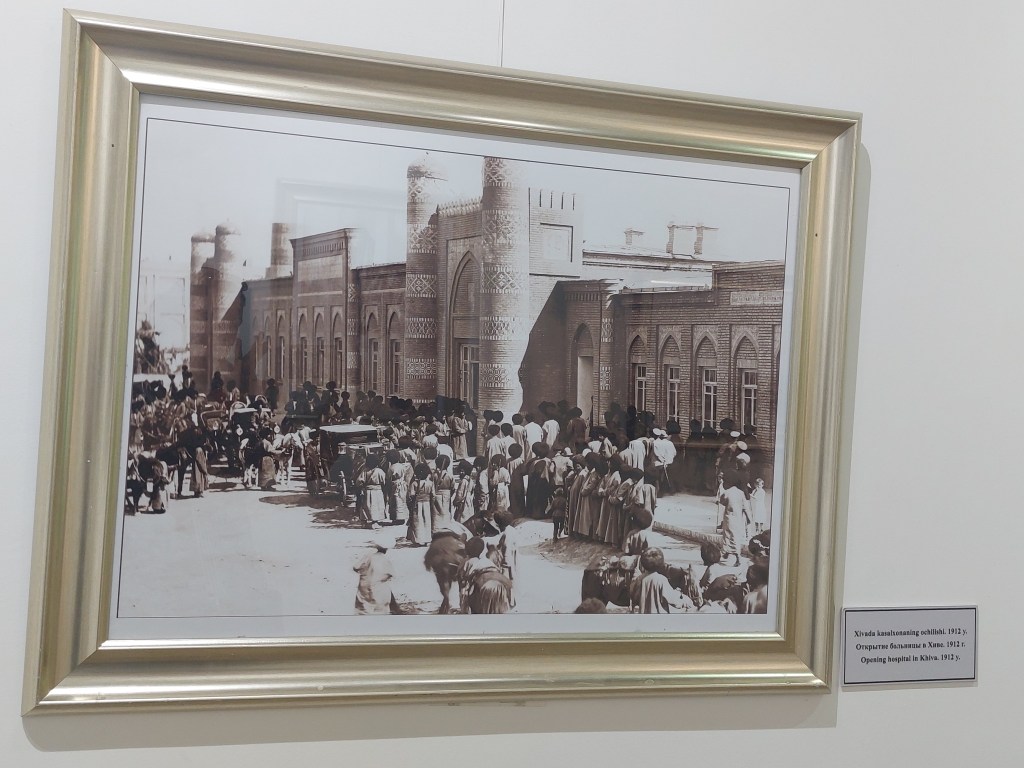
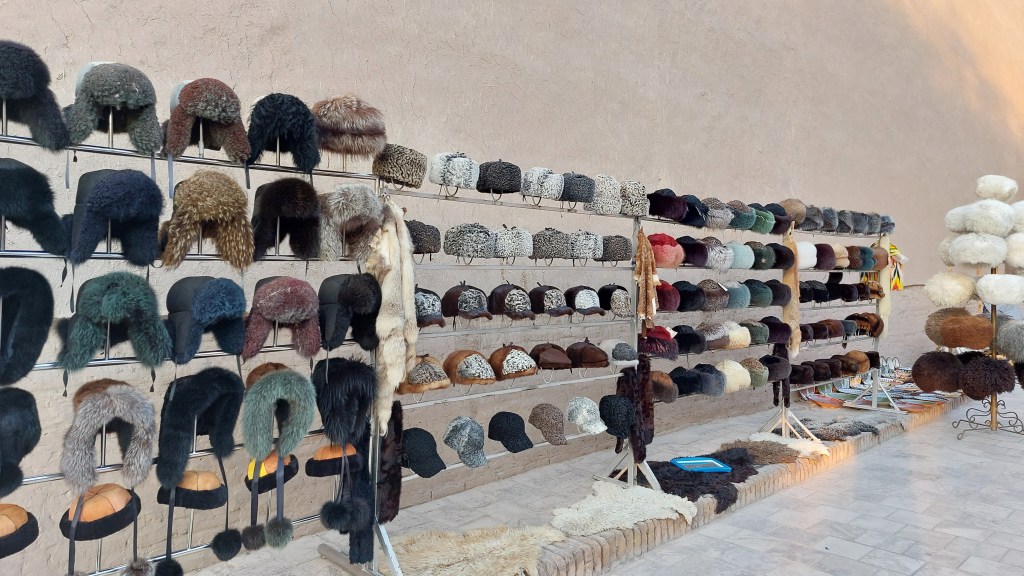
You may have noted the hats. These big furry hats are widely available across Khiva, and this is the only place we have seen them. During the days of the Khanate, they were compulsory, and a disgraced man would have to remove his hat. I have resisted the need to own one.
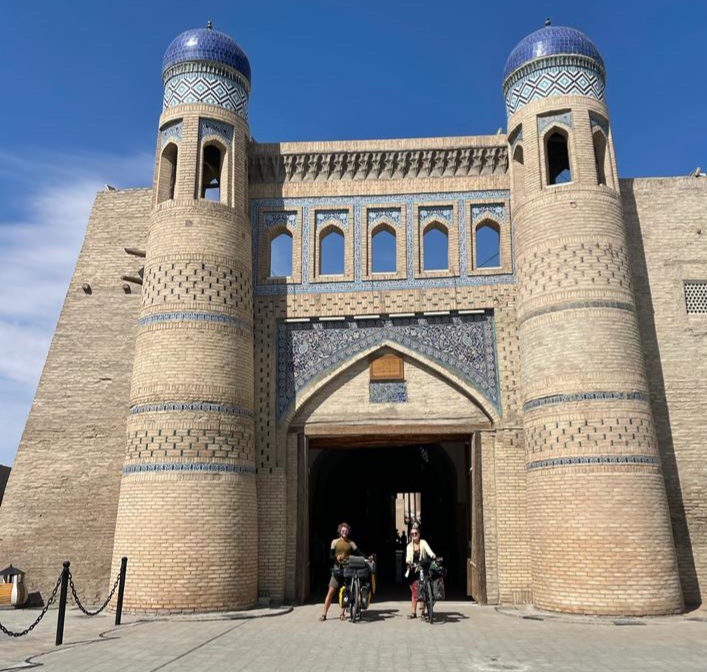
We carried on along the main road and out the East gate. This was the original gate into the city and there are three gates within it. Just outside the city walls is the site of what was once one of the biggest slave markets in Central Asia. Khiva ws a big centre for slaves as most enslaved people were captured in Persia or Russia by Turkmen, and this was the closest city they could be traded on. Today, nothing remains.
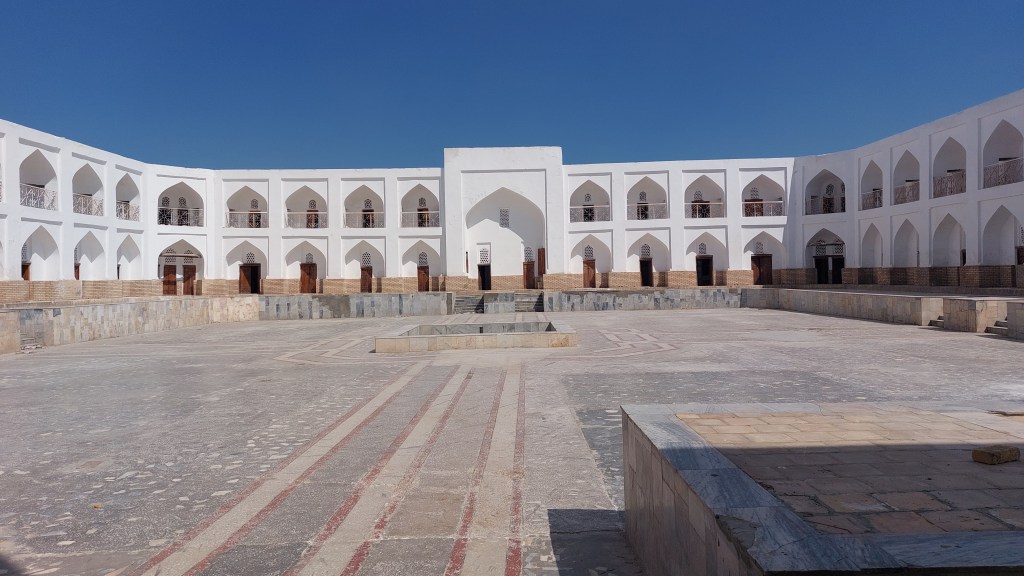
We reentered the city and turned into a cravanserai much larger than the one we saw in Bukhara and calling out to be redeveloped as it’s currently empty. We came up with an excellent plan whereby the ground floor rooms would be turned into shops and workshops, and the upper floor into hotel rooms. There would be shared bathrooms, so it would need to be sold as an “experinence” hotel, but it would be amazing. Imagine sitting in your original caravanserai room overlooking the city watching sunset. Apparently, the building (as its owned by the government) is only about $100,000 per year, so it needs to happen. The only slight issue is that currently, the government will only grant 5 year leases, so we would need to do a deal. I just need to finalise my business plan (which I have mostly written in my brain), and then there is just the tiny matter of financing!
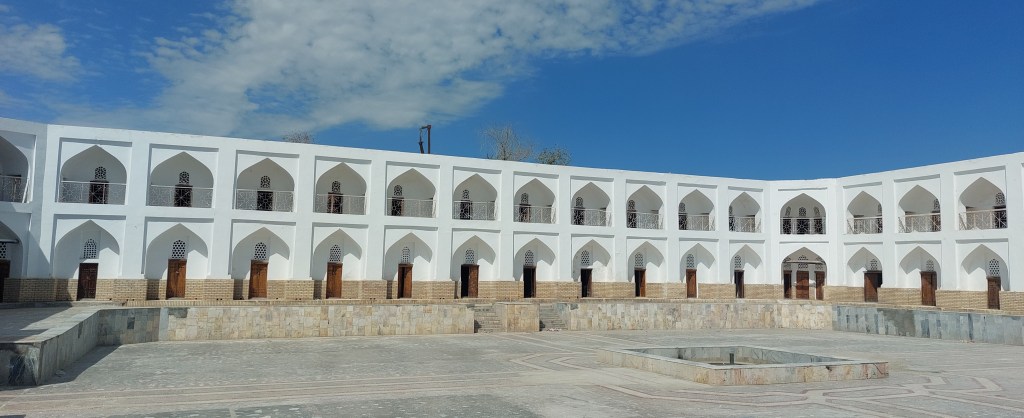
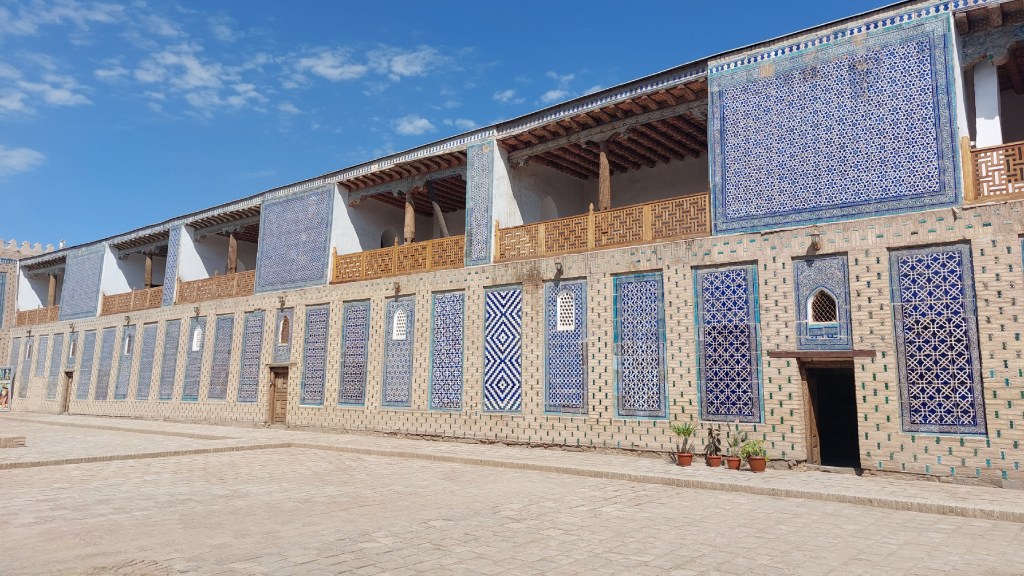
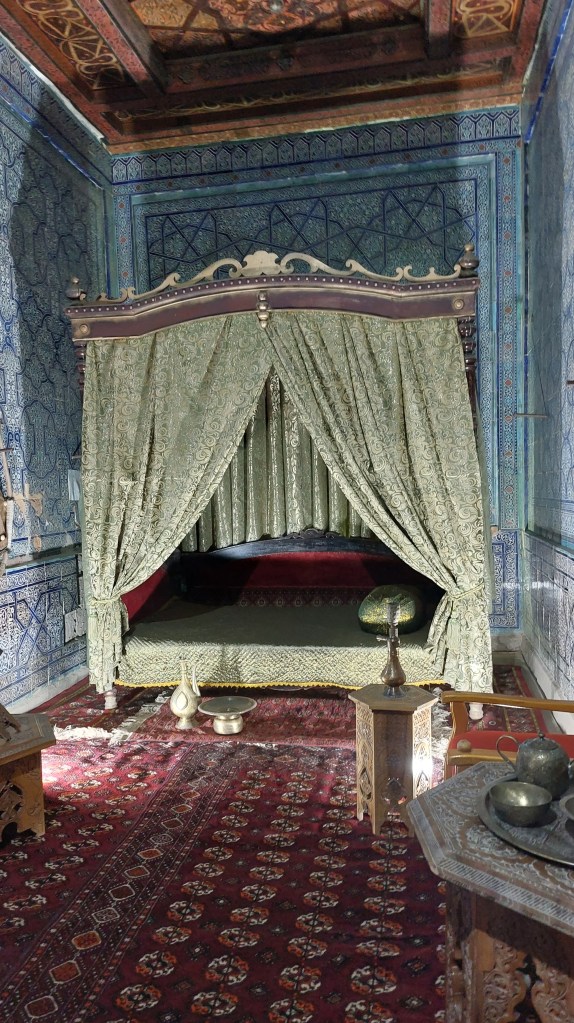
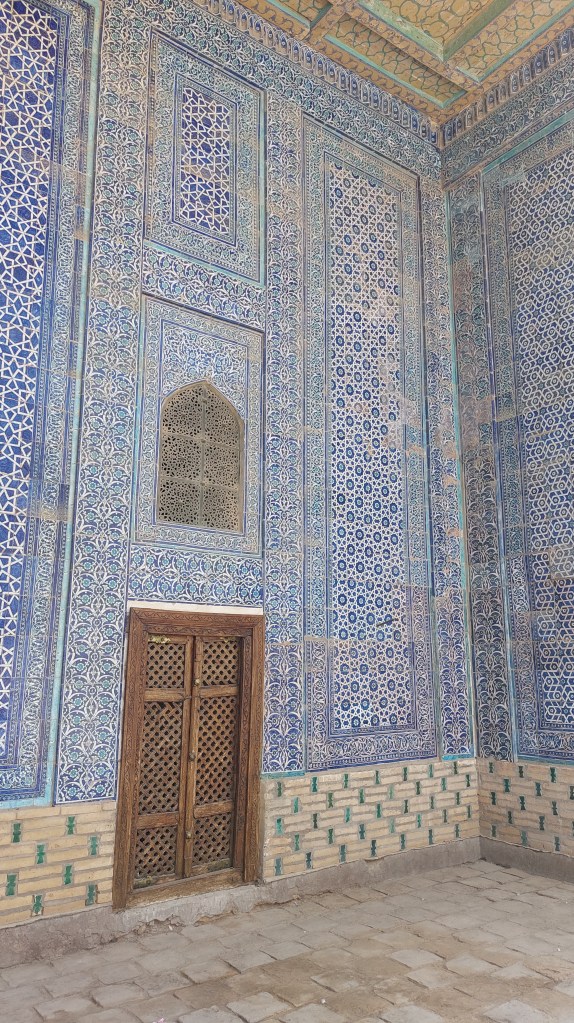
Our final stop was the Tosh-Hovli Palace, which was built in the 1830s as a home for Khan, his harem of 4 wives, and numerous concubines. The rooms are actually quite nice, but I am not sure I would have enjoyed my lot in life either being a wife or a concubine.
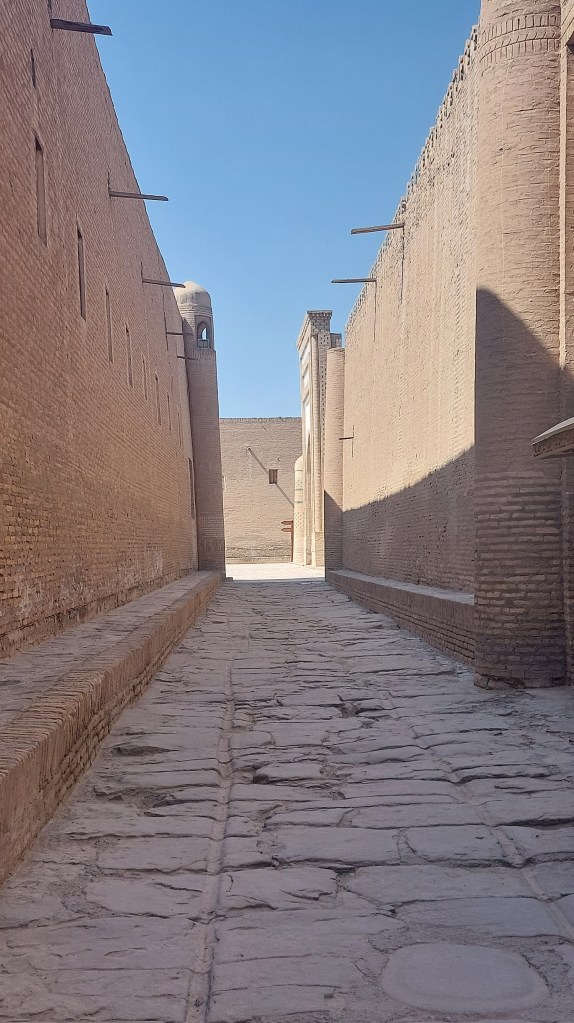
We then had a little time to wander:
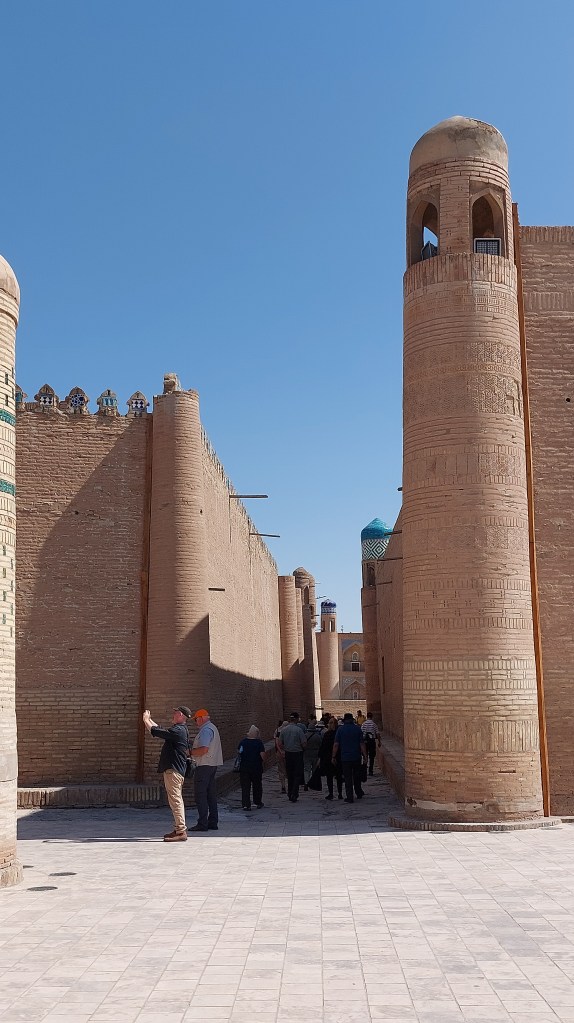
Tomorrow, we are (attempting) to leave Uzbekistan and cross the border into Turkmenistan. If you haven’t realised it by now, I would truly recommend that everyone come to Uzbekistan. The cities of Samarkand, Bukhara, and Khiva are a must-see and bring together a part of the world that not even a history nerd like me really knew very little about. This trip (so far) has just been amazing, Kygzystan has the nature (the mountains, the steepes), and Uzbekistan has the architecture and history. However, the people of Central Asia could not be more welcoming, and tourism is only just getting started. I really do hope to come back and experience it all over again in a few years’ time.
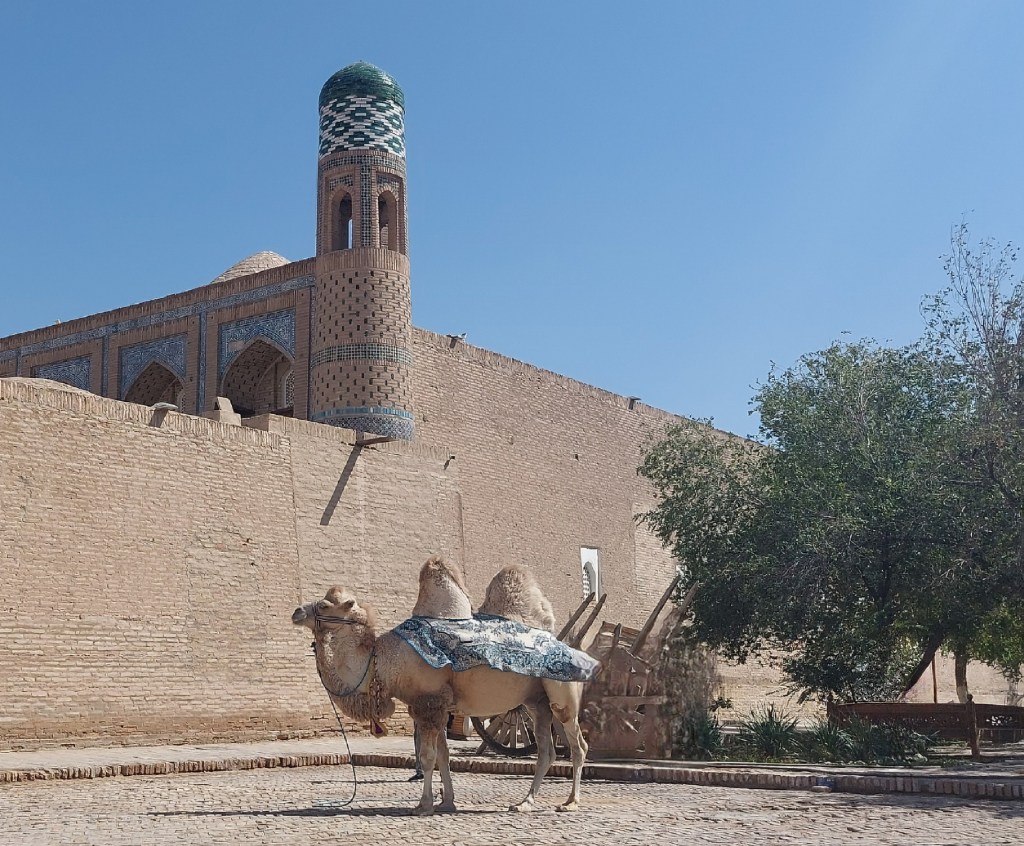
A note for my fellow travellers to Uzbekistan: Yes, you do need to come to Khiva as well. However, I would recommend doing it in reverse order – start in Khiva where you get a sense of a city layout and how the Silk Road would have operated, then onto Bukhara with its trading domes and then big finish in Samarkand where those huge buildings would be more relatable into the city plan. So fly into Tashkent and then domestic flight to Khiva (or a single train journey), then work your way back to Tashkent by train. For when you do it all again too obviously.
A final note, hopefully, tomorrow I wil be allowed into Turkmenistan and if I am the blog may be taking a short break (just for a week until I get to Azerbaijan) as I understand that internet access and most sites that could allow discussion (social networks, emails etc) are blocked. So do not panic when I go quiet. In similar news, the sale of my flat is meant to exchange and complete in 2 days, so I may have some good news in my next post PROVIDED everyone keeps their fingers crossed.
5 responses to “Stage 1.10 – Tashkent to Khiva”
-
Def have my fingers crossed for house selling success! Lovely to hear about your travels – it looks like you’re having the best time! Thank you so much for Henry’s birthday present
Jen xLikeLike
-
Glad it arrived safely and sorry I missed yours!!
i am having an amazing time 🙂LikeLike
-
-
Simply fascinating.
LikeLike
-
-
I think you can do it if you sign in? Its usually an option at the bottom of the post.
LikeLike
-


 Travels with Kathryn
Leave a comment