Well, this is weird. But I am jumping ahead of myself and should probably start with the joruney to get to Ashgabat.
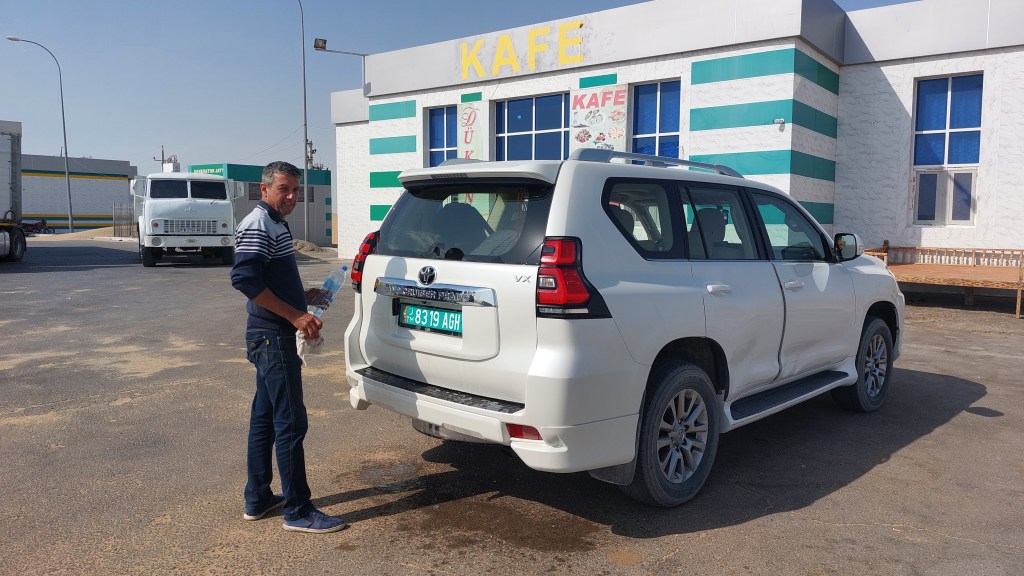
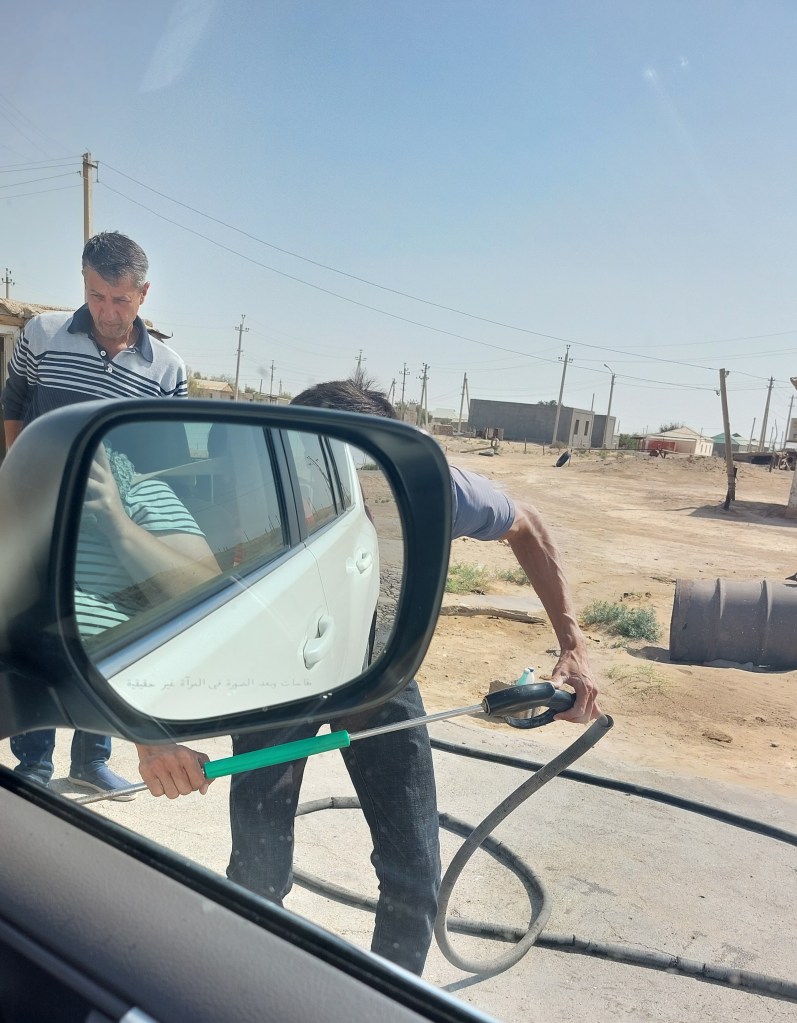
The road did improve as we got closer to Ashgabat, but once we were off the desert road, we had a pitstop where the driver proceeded to extract cleaning materials and give the car a thorough clean. This seemed somewhat odd, but we were told that cars in Ashgabat are fined if they are deemed to be “dirty,” and this fine is higher than that for drink driving! About 10 minutes later, we stopped again at a small village, which had set itself up as the place of the high pressure hose, and the car was blasted all over and wheels given a thorough clean. Evidently, this is taken very seriously.
As we approached Ashgabat, I was just not prepared for it. I knew it was a new, fancy city, but having spent much of this trip in the middle of nowhere or small towns at most, and having crossed the Karakum desert of Turkmenistan, this is like arriving in a Middle Eastern City (think Dubai/Doha meets Disney’s Tommorrowland). I have tried, but I am not quite sure the photos capture it. I mean, it’s amazing, but it’s weird.
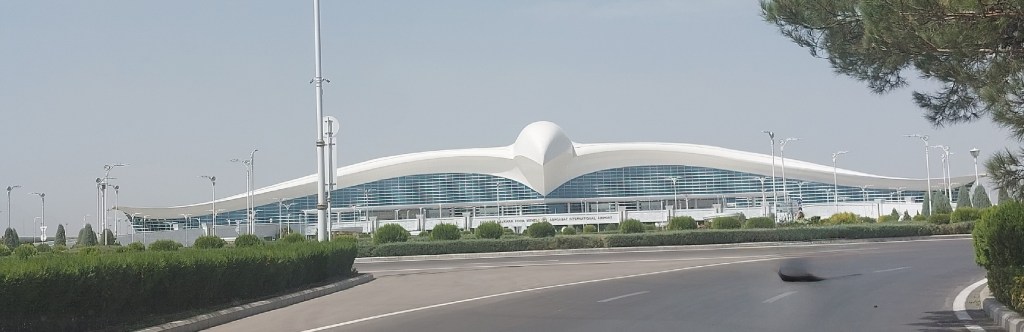
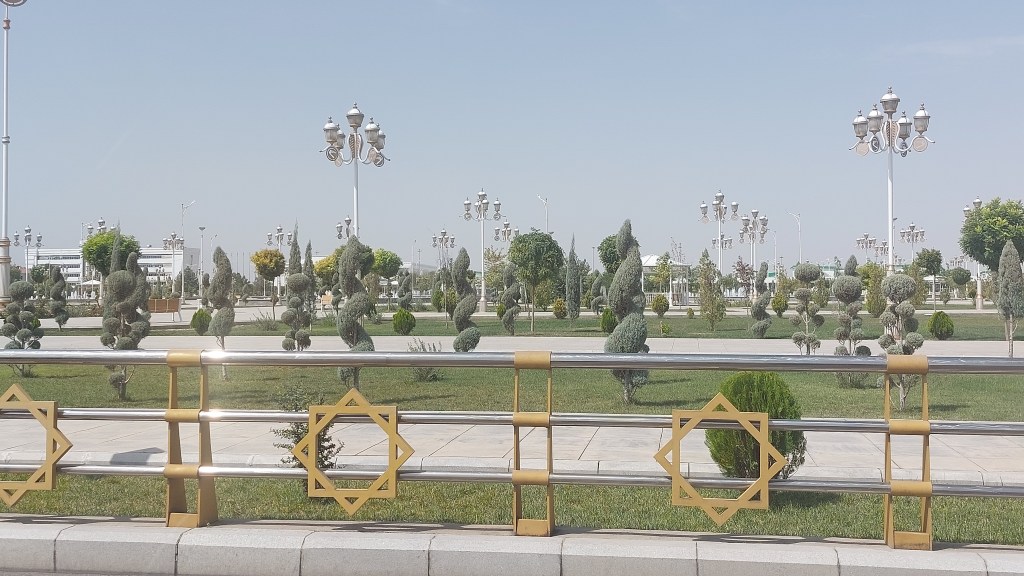
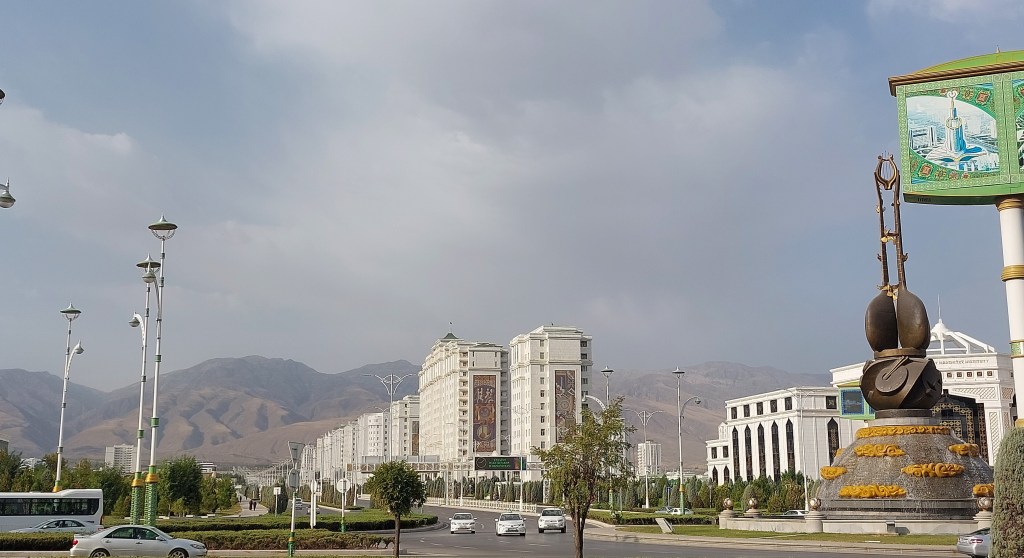
Almost everything you can see was built after the 1948 earthquake, which destroyed the city completely. There are some parts which date back to the Soviet reconstruction, but certainly where we were staying and much of the city that we saw, is the ultimate design of the first president of Turkmenistan, Saparmurat Niyazov who evidently loved white and gold (in the city cars are white, gold and very occasionally silver) and HUGE buildings. I have written more about Saparmurat Niyazov or Turkembashy (always referred to by either his full name or nickname) on my Turkmenistan page (here: https://travelswithkathryn.blog/country-page-turkmenistan/), and he did a wonderful job, apparently.
After transferring vehicles, we had lunch in a restaurant in a mall (where essentially all the restaurants in Ashgabat are). This is evidently what one does here which I think gives the Dubai vibes, and whilst the food was lovely, prices have suddently dramatically increased (think £15 for a meal, as opposed to the £3-5 we have been used to paying). Luckily, after lunch, we were able to change some money, pay Ali back, and feel like we wouldn’t starve!
Our only real “stop” this afternoon was the History Museum. This huge building (modelled on Caser’s Palace in Las Vegas if you ask me) was opened in 1998 and contains multiple museums. We had a (very) speedy tour of the History museum (no photos allowed) with the first item on the agenda being the “independence” Hall which features a GIANT portrait of the current president Serdar Berdimuhamedow riding an Al-Teka horse, with his hunting dogs and mountains behind. This is very typical of much of the “art” we see in buildings and available for purchase. We then moved on to the actual history floor, which did give us a helpful overview – particularly of sites at Nisa and Merv, which we will be visiting later on this trip.
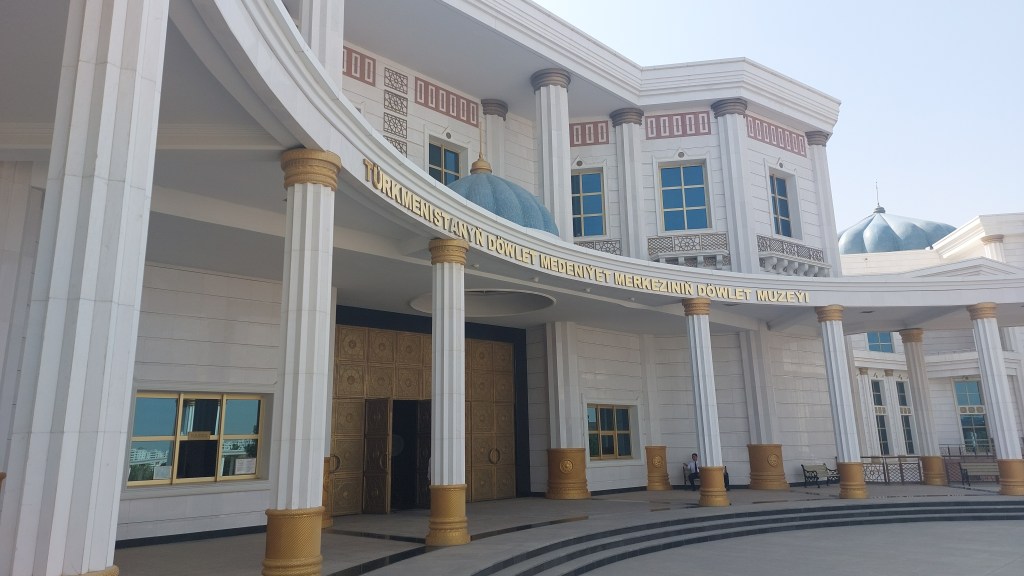

As I mentioned, Turkmenistan is tightly controlled, and entry into the country as a foreigner is only possible as part of an organised tour. I understand that you had to be with your guide at all times, which was not quite the case and we were occiasionally given some flexibility on this (such as being allowed to wander around a supermarket) you are kept on a bit leash. This leash lengthened during our trip, and we did have free time (for example, I wish I’d had the extra day in Ashgabat). At the museum, you have a museum guide, your actual guide, and they were watched by (we think) another 2 watchers.
Another erm, treaure, of the museum is a giant carpet. It was made as a single piece in silk and wool by 28 people working at the sma etime and is the traditional design of this region with “Turkembashy” across the top in big letters. It is truly horrible.
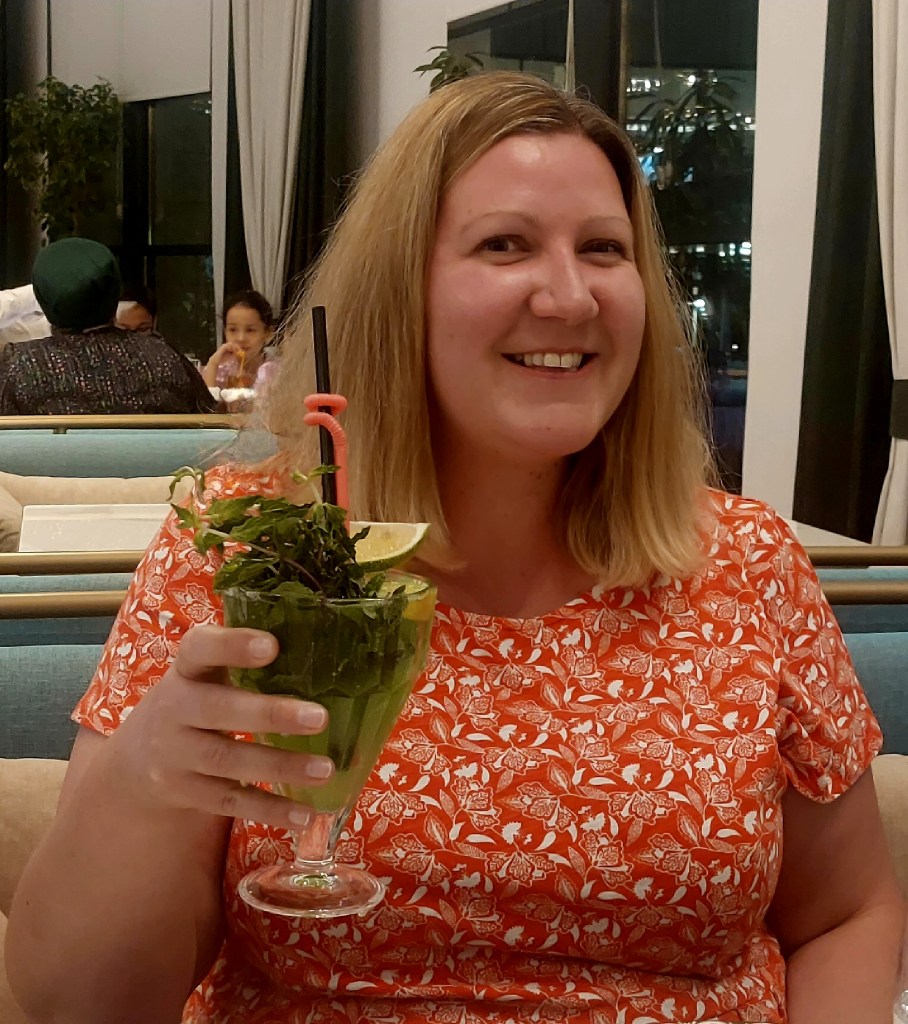
We retired to our hotel (more gold and white) for some much needed showers. Diane and I both felt that to fit in with the glitz of Ashgabat, cleanliness was required and perhaps a more elegant outfit than we had been wearing until now. This also allowed us to connect to the hotel wifi, and I was pleasantly surprised to find that I could access my emails and: ANNOUNCENT TIME I completed on the sale of my flat today! I am officially homeless but somewhat wealthier. I hope that when I am able to access a banking app (although it’s not real money, it will be used to buy somewhere else eventually) I will have actually received the money (and to confirm, I did)! A celebratory beverage was in order:
I also got some great news about my former employer, but that is a story for another day…
The next day, we embarked on a day tour of Ashgabat. This involves having buildings pointed out to you and not being told what you can and can not take photos of. Turkmenistan is understandably very proud of Ashgabat and what they have achieved here, and really want you to see and appreciate all their shiny buildings. However, we tourists do occasionally like a nice ruin.
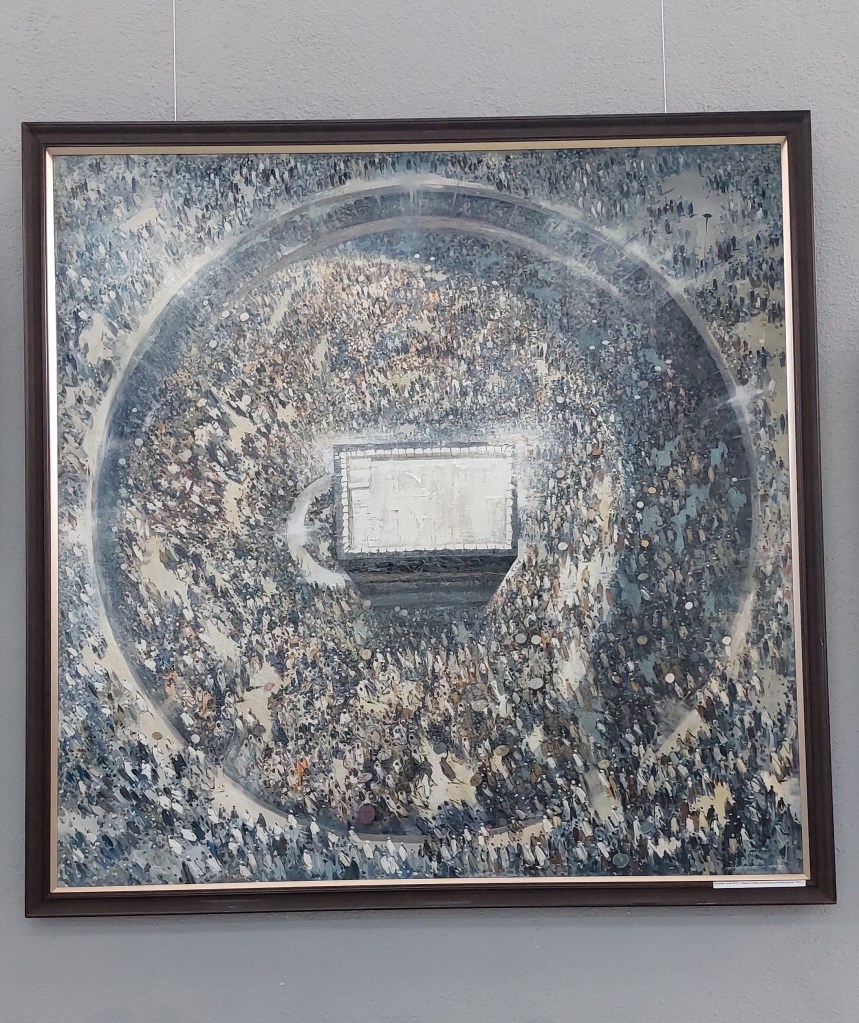
Our first stop was an art gallery that had any number of pieces I would not have given house room to – my taste differing from Turkmen’s, I suspect. Although I quite liked this one:
Our next stop was the Russian bazaar, so named as traditionally Turkmen sold on the floor, but this was Russian style, i.e., from shops – display cases and ask what you want. I wandered around taking photos until I got shouted at by a man in a white coat who then followed me around and out. This was after a nice lady posed and tried to speak to me in Russian.
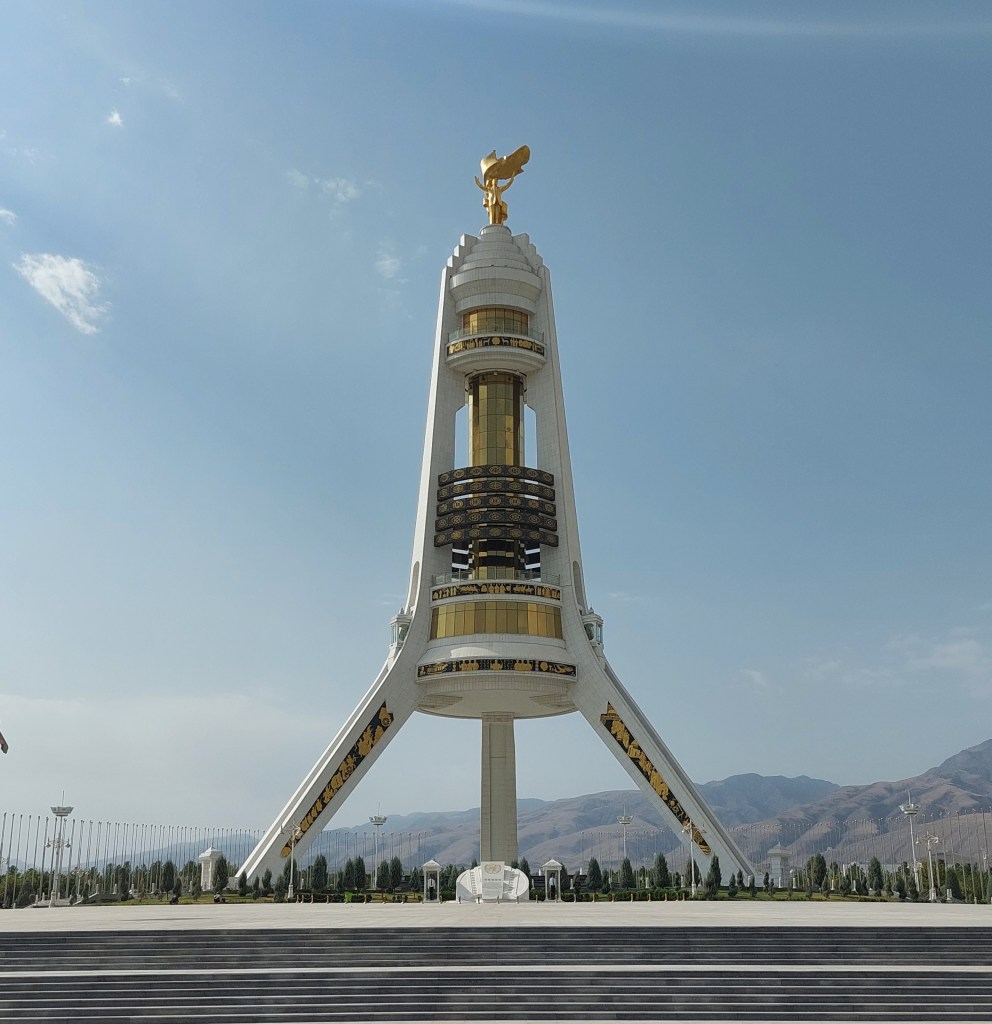
Then, on to the Arch of Neutrality. This 95m tall (as 1995 being the year Turmenistan declared its neutraity in conjunction with the UN) and on top is the 1st president “greeting the sun.” Apparently, this monument was originally something of a love monument from the president to the president. However, after his death, it has been repurposed to have more meaning. Photos had to be taken quite careflly here as you can not photograph the watchmen or any army personnel (this applies everywhere in Turkemenistan) I am probably giving an unfair impression here, as there is a lot you can photograph (and are encouraged to photograph), but you do have to be careful.
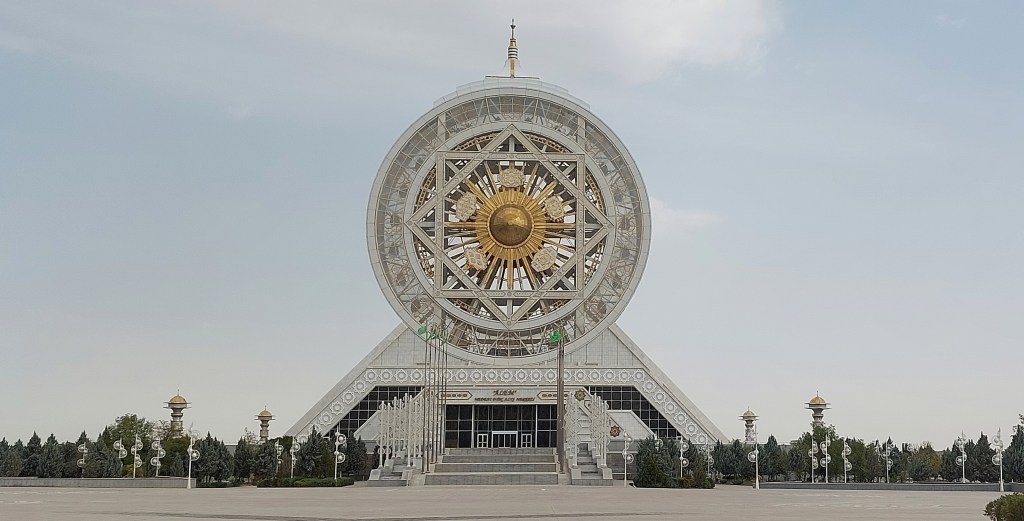
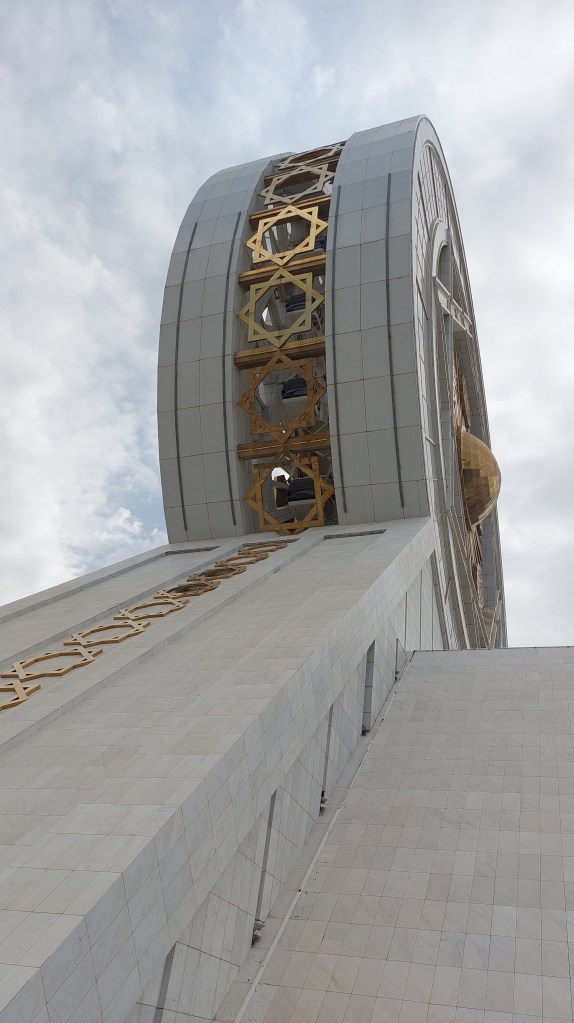
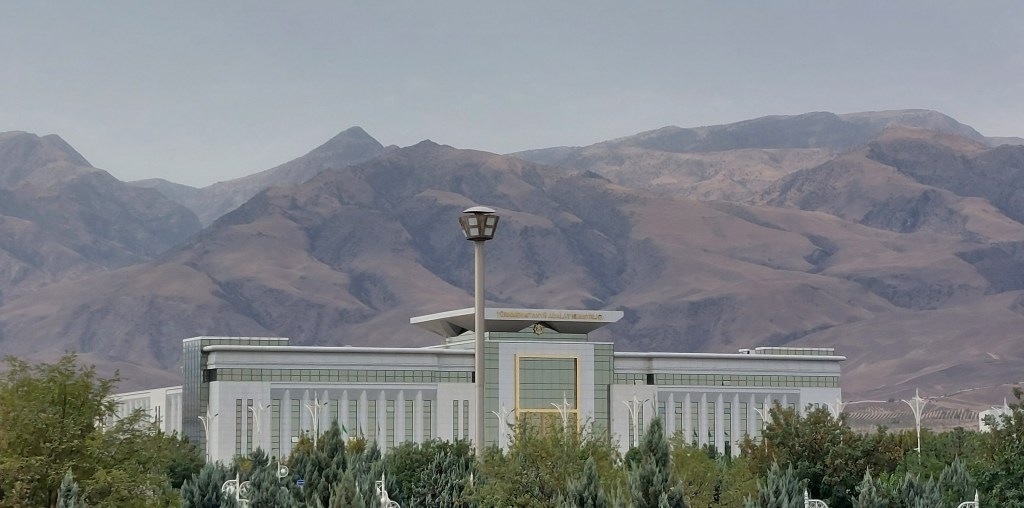
Next on to the biggest indoor ferris wheel (at 95m tall – sensing a theme anyone?) and I was rather excited to ride it as: (i) it is very big; and (ii) it would have cost 50p. I was to be disappointed as apparently it was closed for “cleaning” which we suspect meant they did not want to turn it on for 3 people as we were the only people there – where is your large geriatric tour group when you need them? I did get some nice photos (and of the Ministy of Justice opposite).
Now, onto the ancient capital of Parthinia, Nisa. The original city was built by the Persians but then conquered by Alexander the Greek. On his death, this part of the empire was owned by a General of Alexander and became the Selucid Empire, it was later captured by the Parthianians it the 5th century and what we can see dates to that period with only minimal restoration. We know that Nisa was the capital and the rulers lived here, but little else. What little survived was then destroyed by the 1948 earthquake. For example, the walls used to be over 20m high, but they’re only about 2m today.
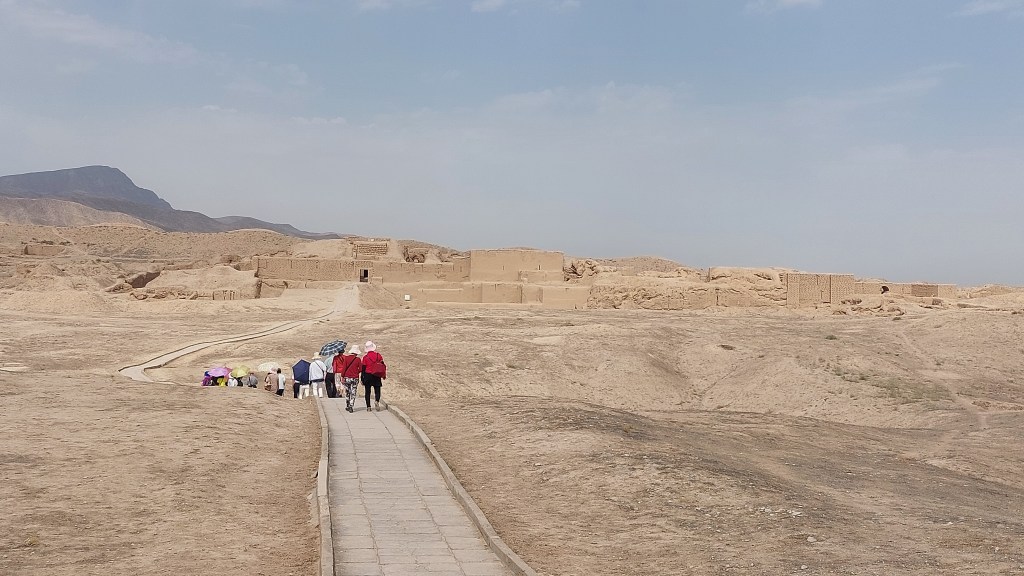
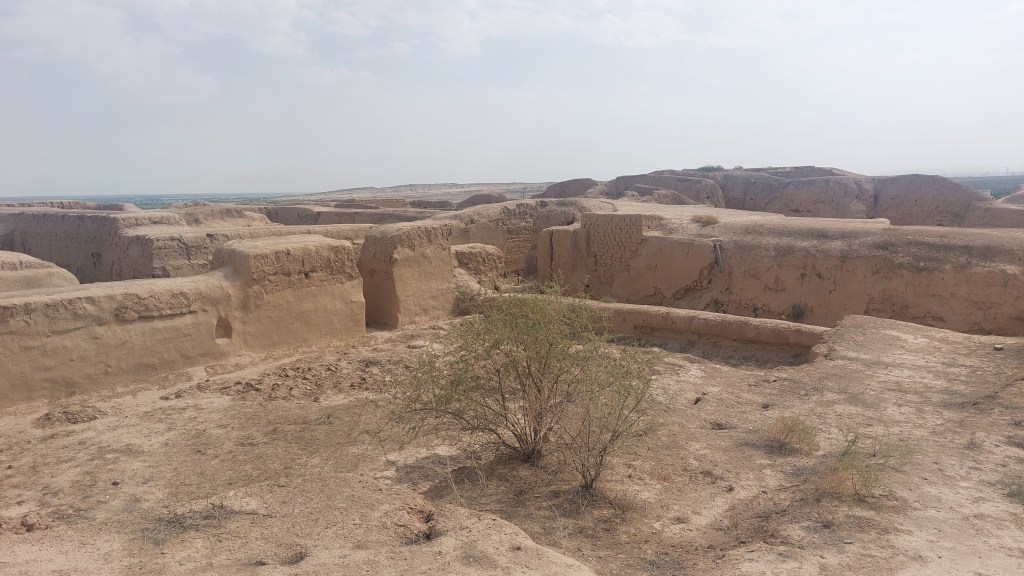


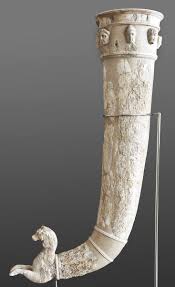
The most important artefacts discovered at Nisa are ivory drinking vessels known as rythons. We saw these in the History Museum yesterday, and they were all found in 1 house in NISA. These were not actually used to drink from – wine would be poured into the top of the horn with a finger placed over a small hole at the bottom and smaller vessles filled from this larger rython. They were generally made/given to celebrate some military victory, so obviously, the owner of this house did rather well for himself.
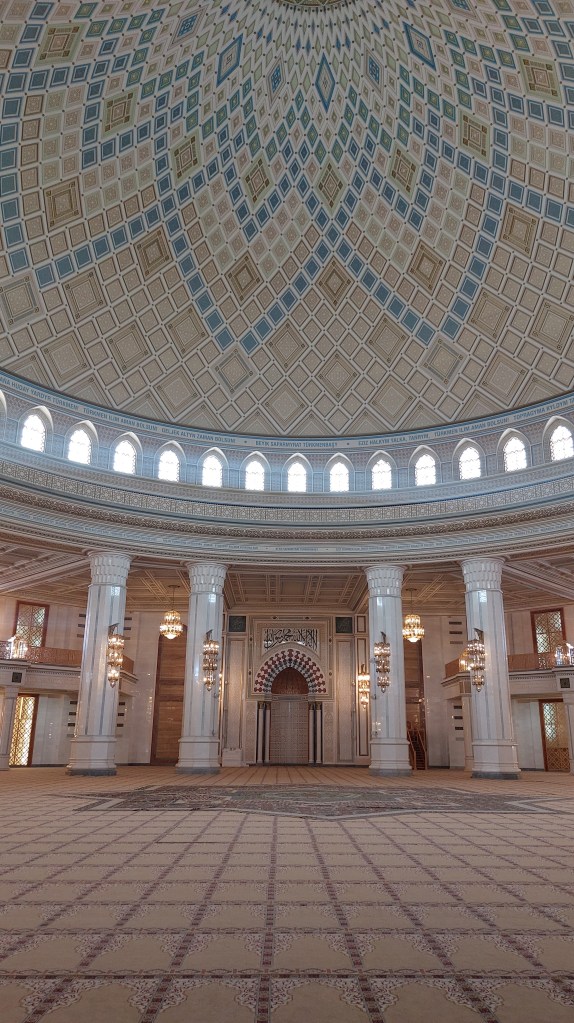
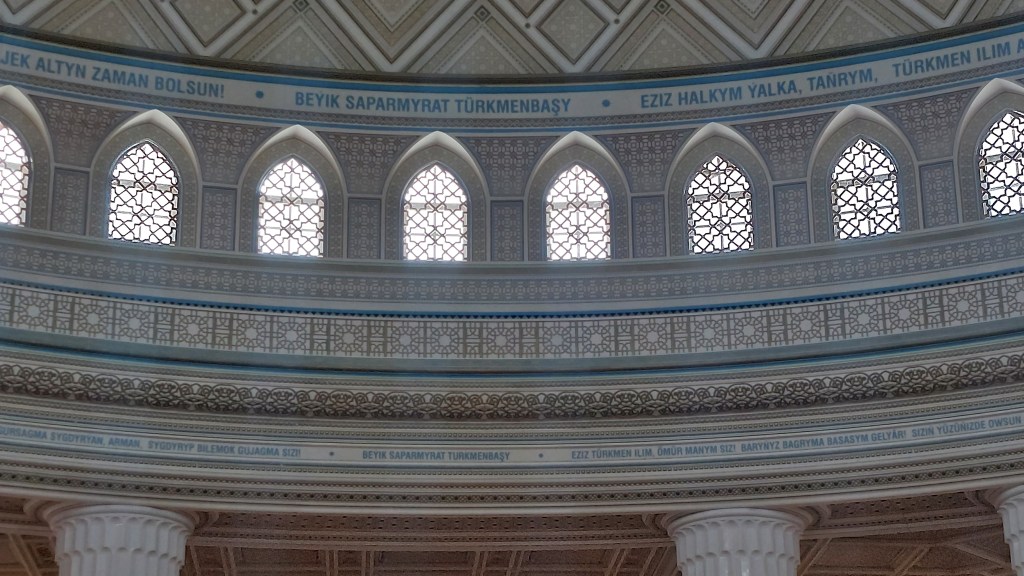
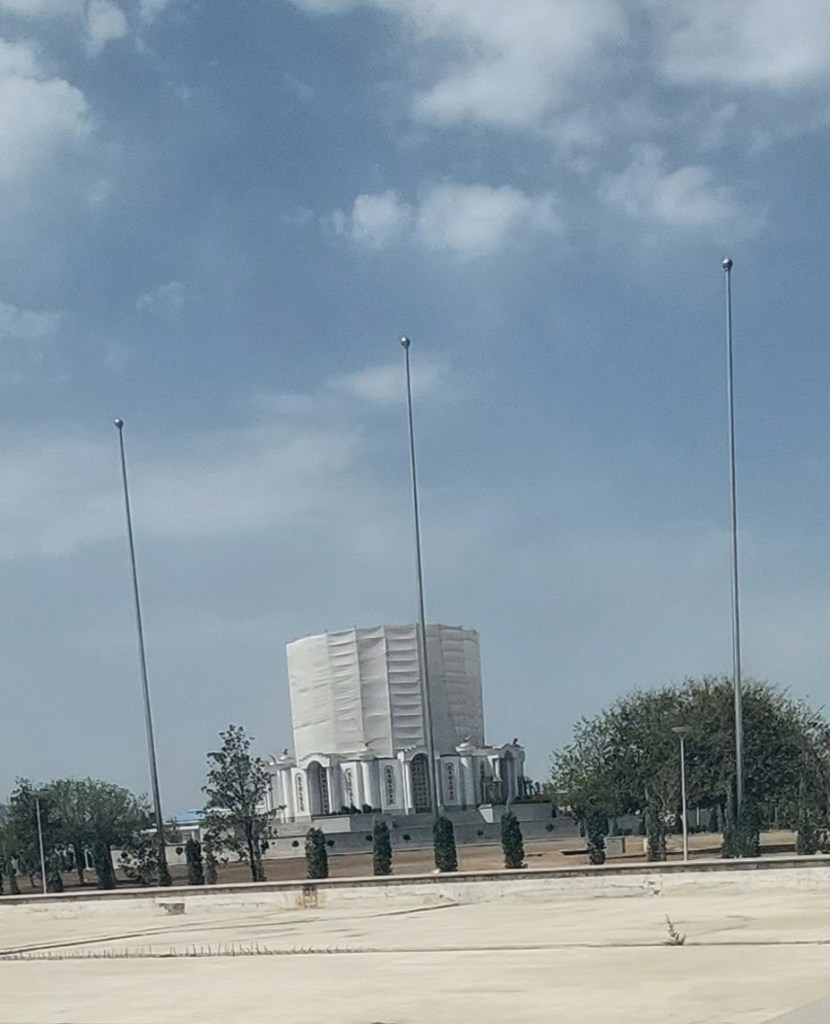
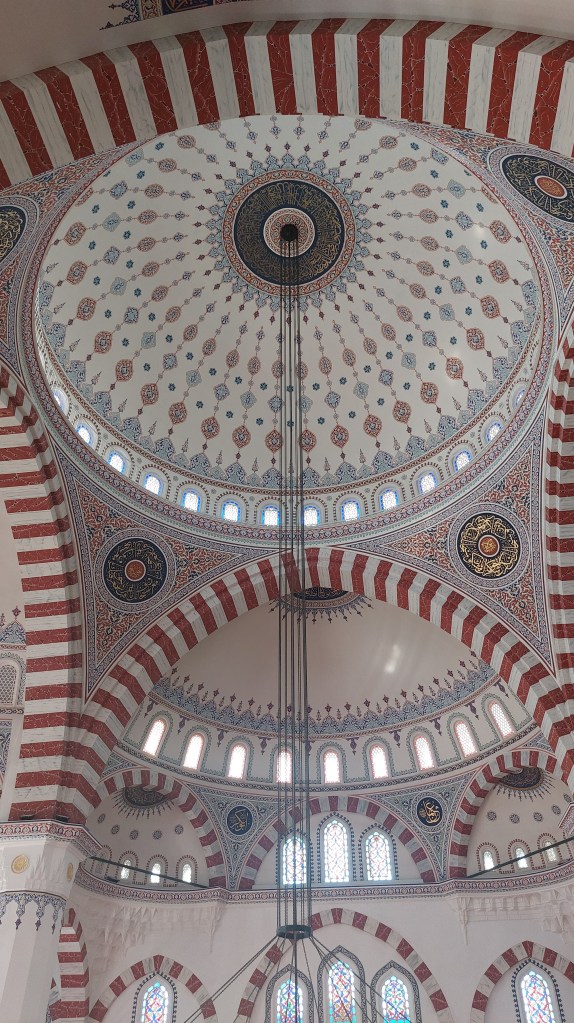
Our next stop was, according to Turkmenistan, the largest mosque in Central Asia, and next to it is the masoleum complex of Turkembashy. Those Islam experts amongst you, will be saying that it cannot be a mosque as it has latin (Turkmen) script on it – quotes from the Rumnana (more on this below) are printed around the inside of the dome. From the outside, the mosque certainly looks the part with 91m tall minarets (year of independence) and 48 windows around the dome (to commemorate the 1948 earthquake). Photos were discouraged here outside, as they do not want tourists taking photos of anything being reconstructed, and work is currently taking place, but hopefully gives you a sense of the scale:

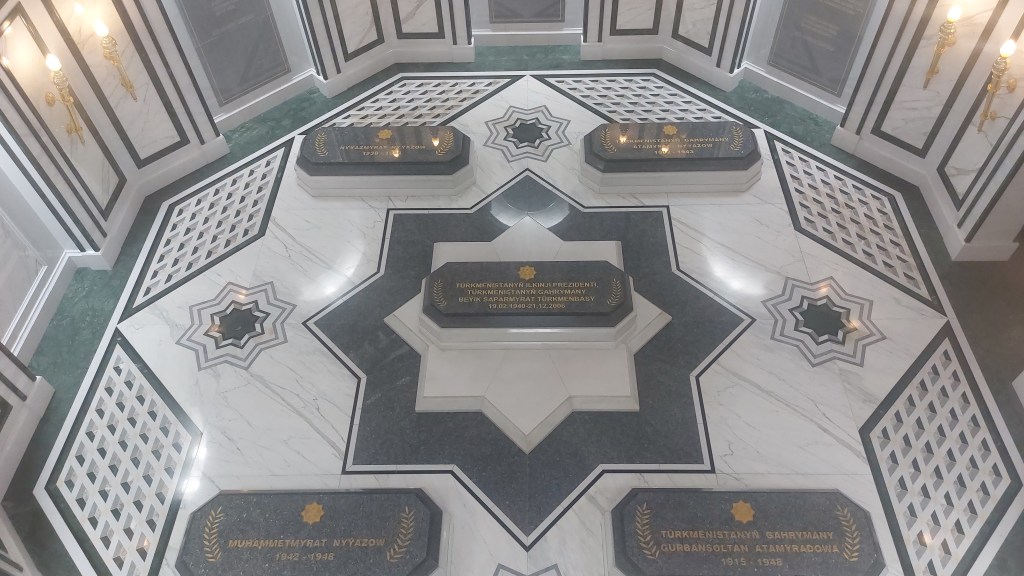
On the same complex is the masoleum of Turkembashy, his brother, and his mother. You can see from the dates that he was orphaned and alone from a young age (by the war and the earthquake) so considering this, he did well for himself become the First Secretary during Soviet times and than staying on as the first president of Turkmenistan. Whist I suspect we get a sanitised view of recent history, and I do think he took his cult of personality a wee bit far in later life (using his book as a school text book, insisting it be read in mosques, re-naming days of the week for family members), but he did strengthen Turkmenistan ensuring state (as opposed to foreign) ownership of mining rights and continuing free education for all. Generally, Turkmens seem to have accepted the restrictions stll imposed on them, but I think the picture painted externally fails to take into account the shades of grey. Also, he is not buried alongside his wife, and little is known about her publically. This is not unusual in Turkmenistan, and people are generally private when it comes to their wives and children. Even our guide, who I suspect, did not use his real name with us.
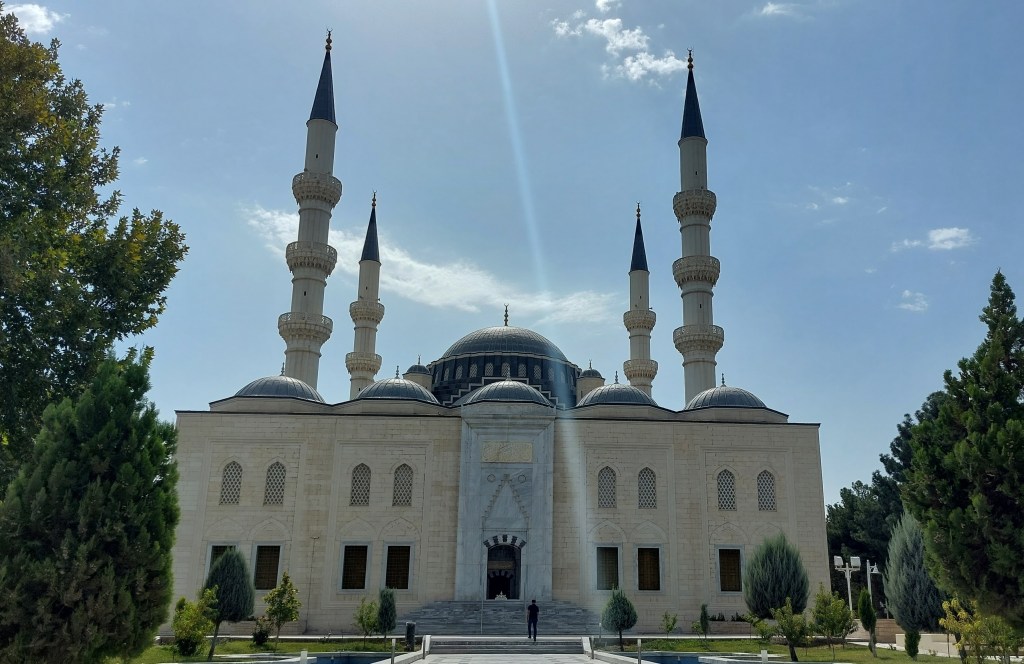
We went on to visit the Turkish mosque (as it was paid for by Turkey and located behind their embassy), which was built in 1998. It is another copy of Istanbul’s blue mosque (like all the way back in Bishkek), and later in the trip, I shall be able to compare the accuracy of this copy.
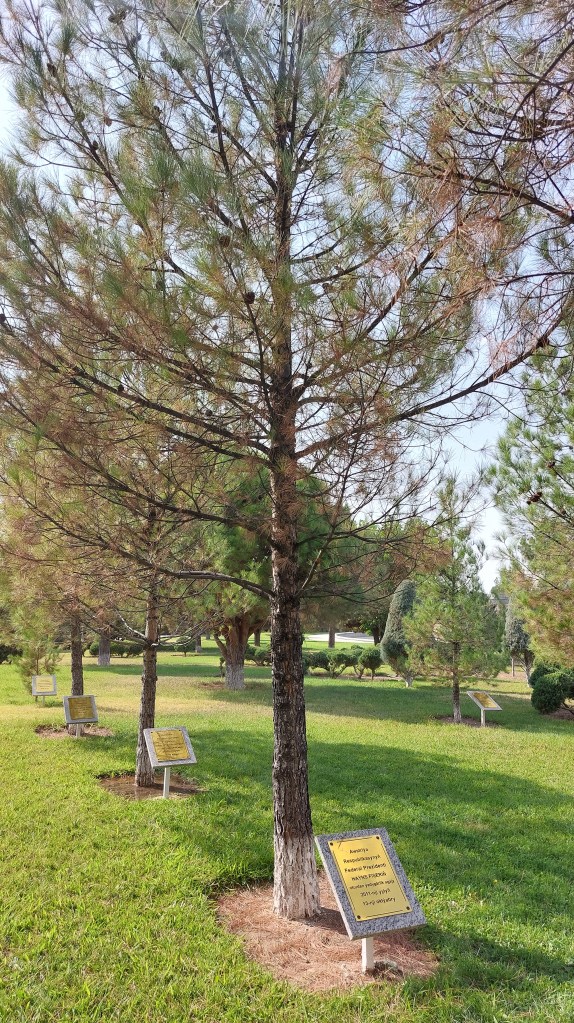
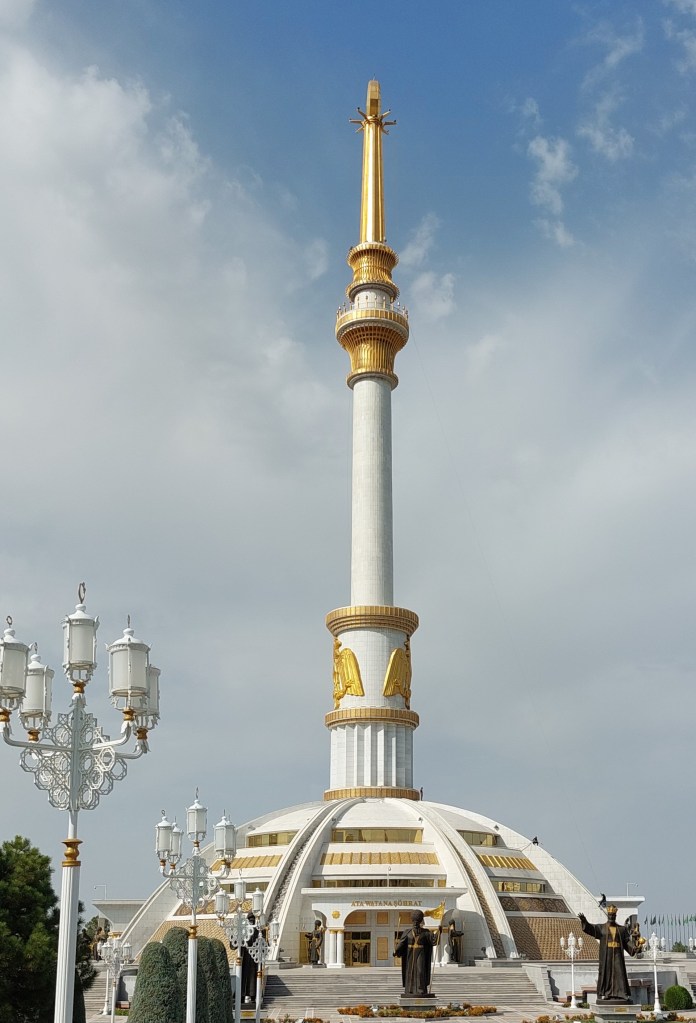
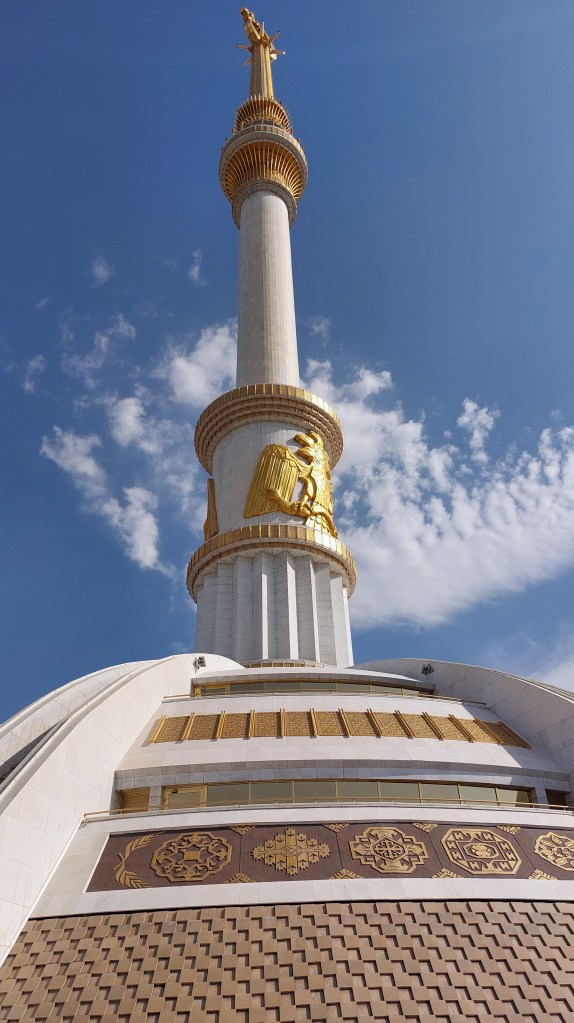
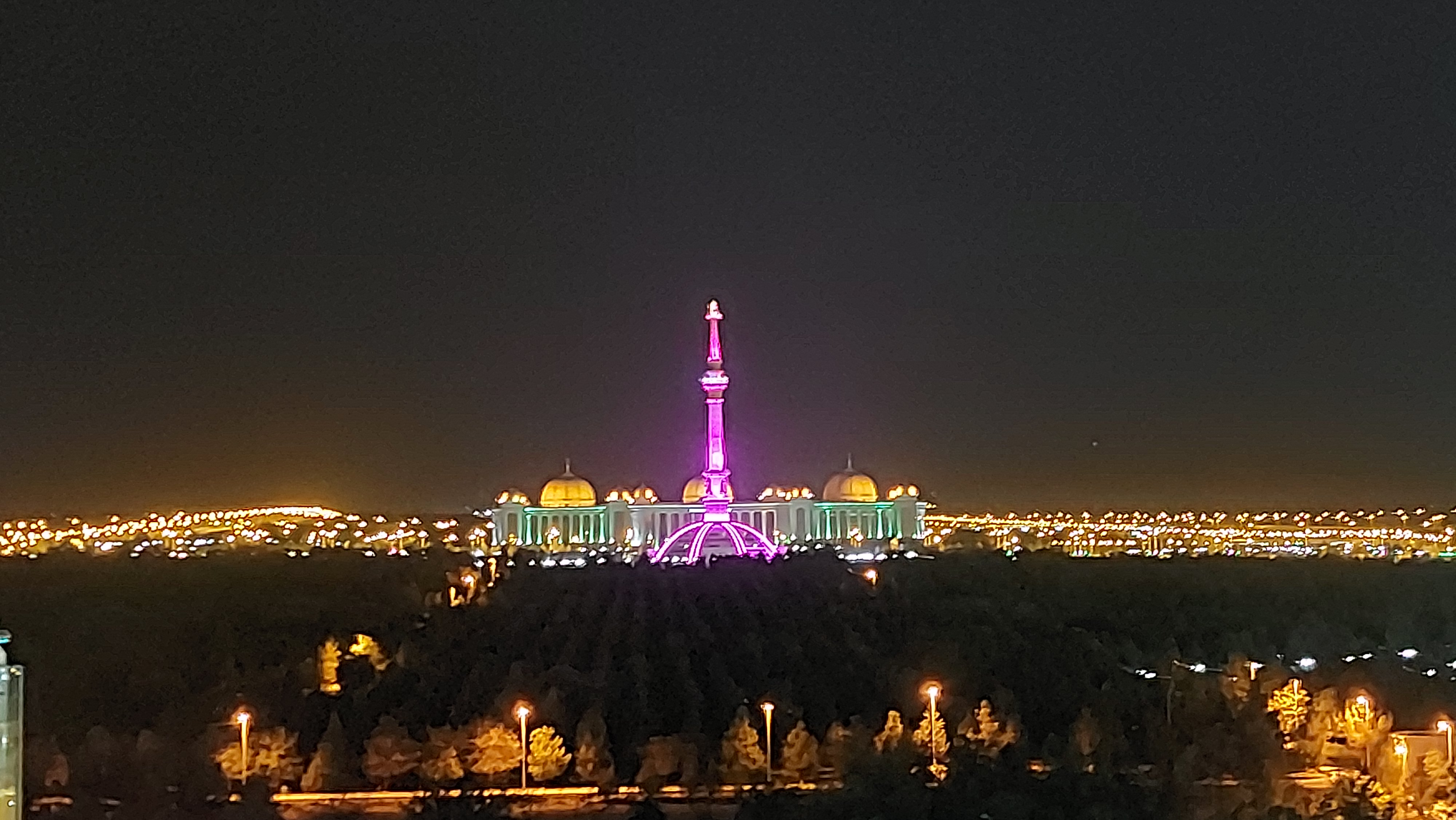
Our final real site of the day was the Independence Monument. This is (again) 91m tall, i.e. the year of independence, and there is a small collection of trees planted nearby, which are gifts from various nations commemorating Turkmenistan’s independence – I note that Austria’s is looking a little bedraggled… The design of the monument is that of a traditional Turkmen ladies hat and surrounding it are men from Turkmenistan history and tradition.
Just down the hill from the Independence Monument is a monument to the first president – solid gold, obviously (see photo and explanation on my Turkmenistan page: https://travelswithkathryn.blog/country-page-turkmenistan/)
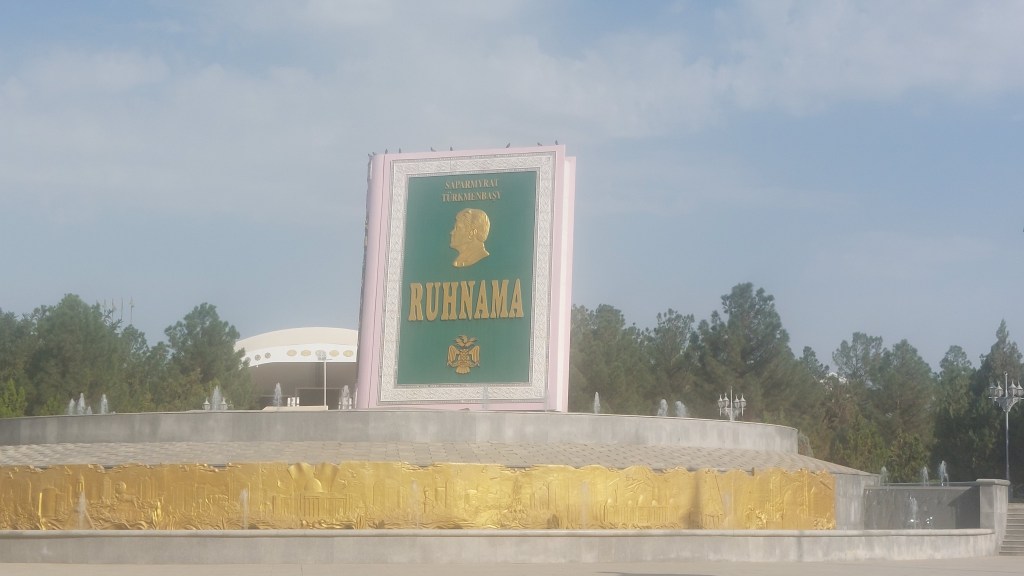
Then a short walk to a monument that really symbolises the cult of personality surrounding Turkembashy. It is a huge edifice of his book Ruhnama, which used to open and inside was a large screen that would project state approved media. Thankfully, this does not happen anymore…
I get the impression that the second president and current president (his son) are working hard to remove some of the crazier legacies of the first president. Whilst this is still a very controlled state, and Ashgabat is amazingly weird, improvements are happening. For example, our hotel is part of a huge sporting complex built for the 2016 Asian Games and whilst there is a certain white elephanty feel about the place, this allowed international visitors and the faciliies are still being used.
We popped into a mall on the way back, and we spent some happy time browsing – so long in fact that Ali had to come looking for us! But the prices were horrendously expensive, making even Switzerland look cheap. I am not sure how people manage here, but there is evidently a material difference between Ashgabat and the rest of the country. I brought a £1.50(!) banana.
As we went to a rather fancy restaurant, I had something of a celebratory “Kathryn has sold her flat” £12 Cosmopolitan (which I very much enjoyed) with a fabulous view over the city:



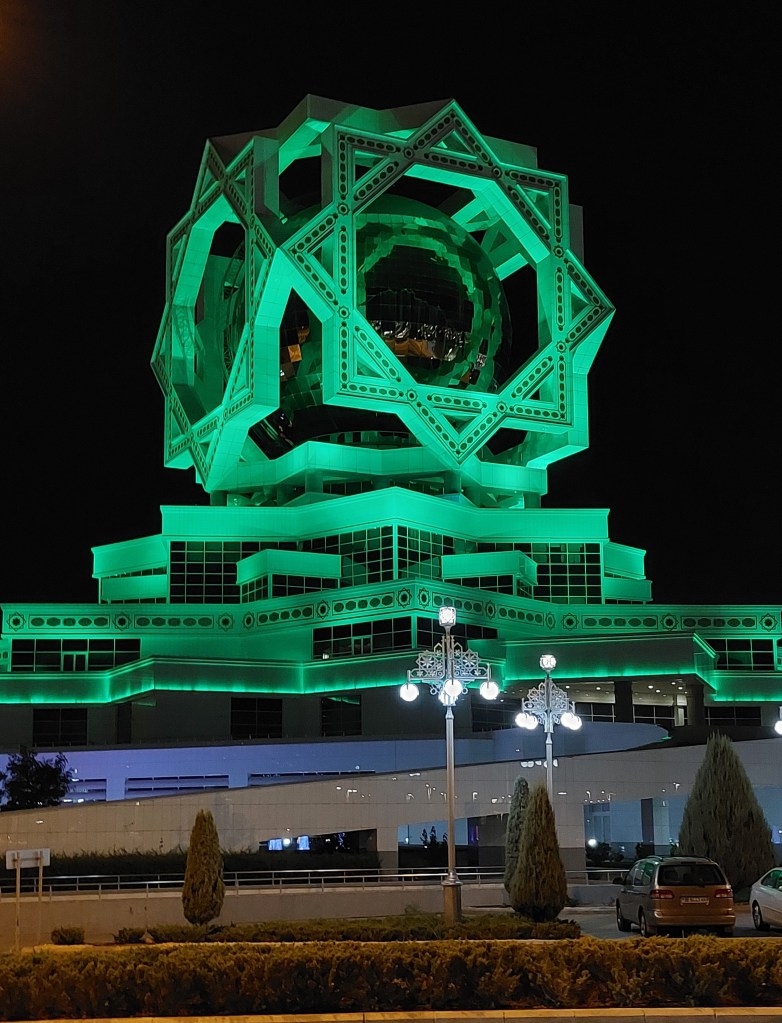
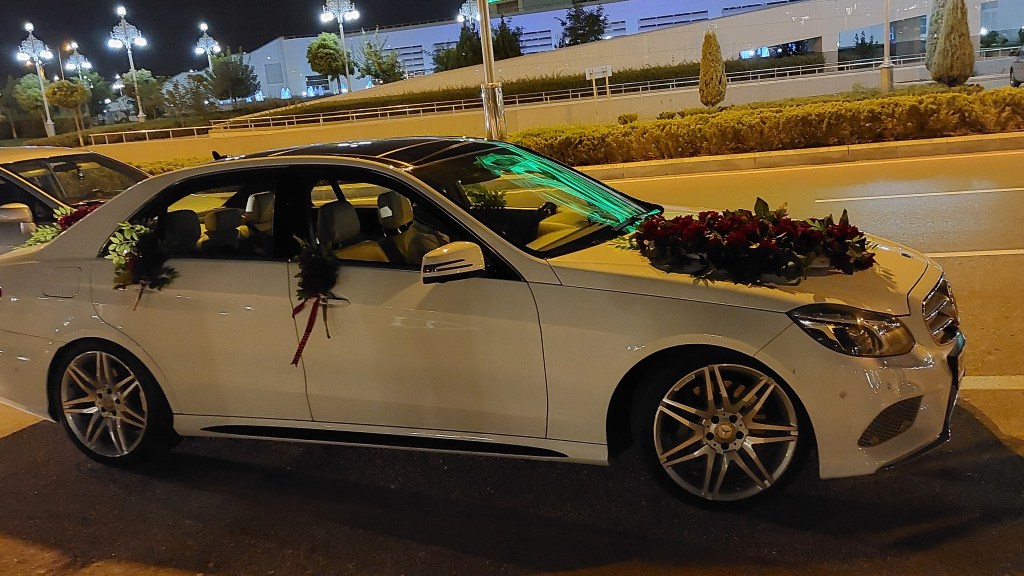
We did a bit of a drive around at night, and drove uphill to the wedding pavillion, we were able to see a newly married bride and groom taking some wedding photos. The bride was a stunningly beautiful 20 year old, and the groom had a more average looking 25 year old. This reflects on Turkembasy’s decree banning makeup on television as Turkmen women didn’t need it! Today makeup is very much in evidence, but generally speaking, the Turkmen people are an attractive bunch with an interesting mix of European/Greek (descendents of Alexander the Great), Persian and Central Asian features.
Tomorrow, we leave the bright lights and big city of Ashgabat and back on the Silk Road trail at Merv.


 Travels with Kathryn
Leave a comment