
Today (I am up to date!) we headed into Southern Armenia (let us not mention proximity to the border with Turkey) including through the Azerbijani enclave of Kaki (internationally recognised as part of Armenia) and in the shadow of Mount Ararat.
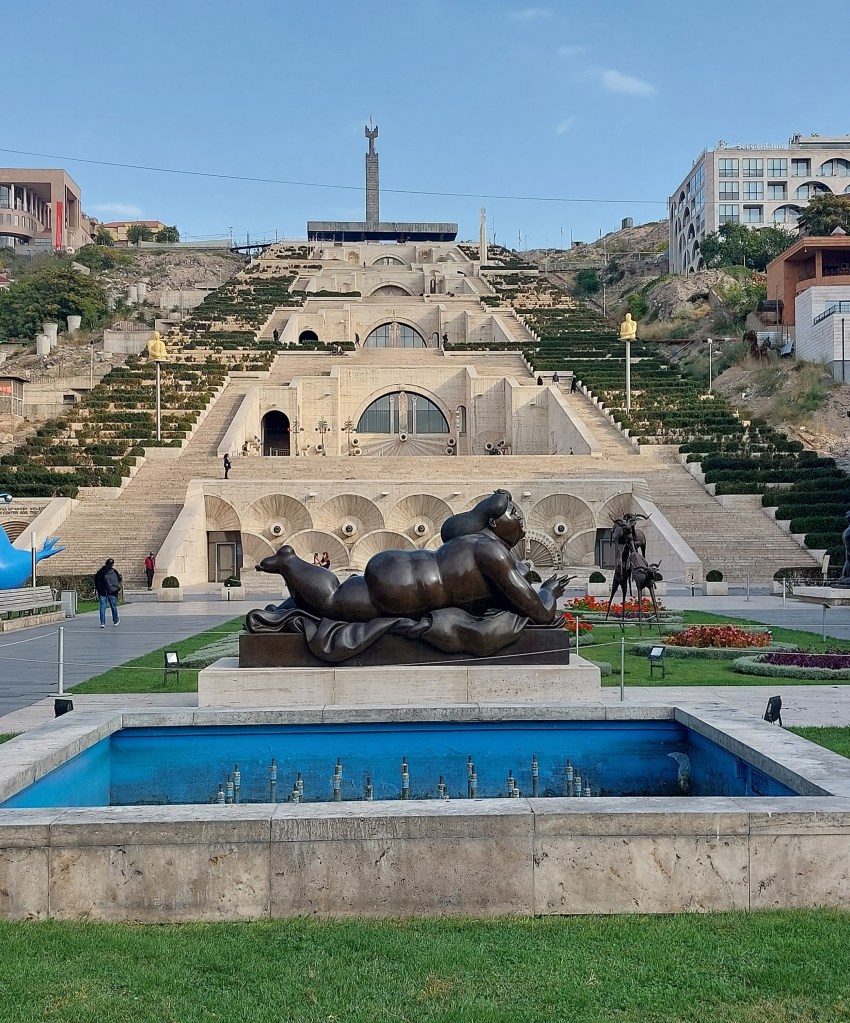
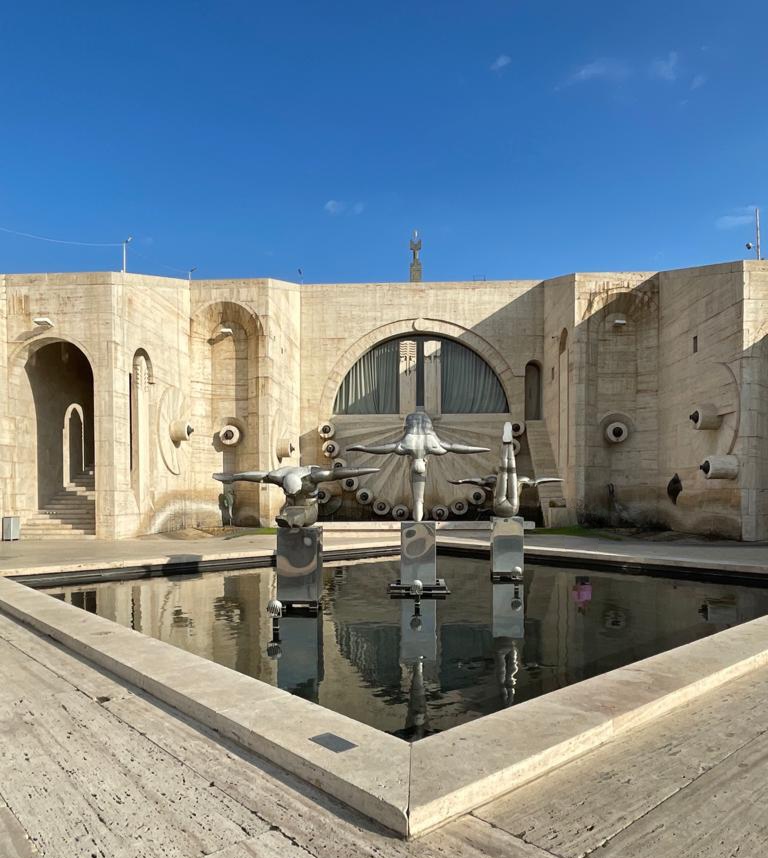
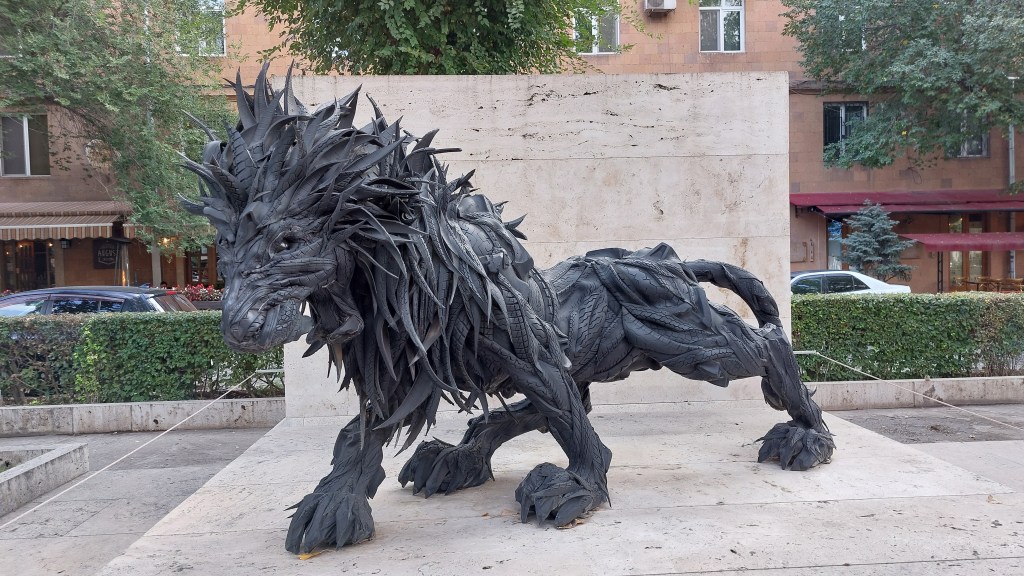
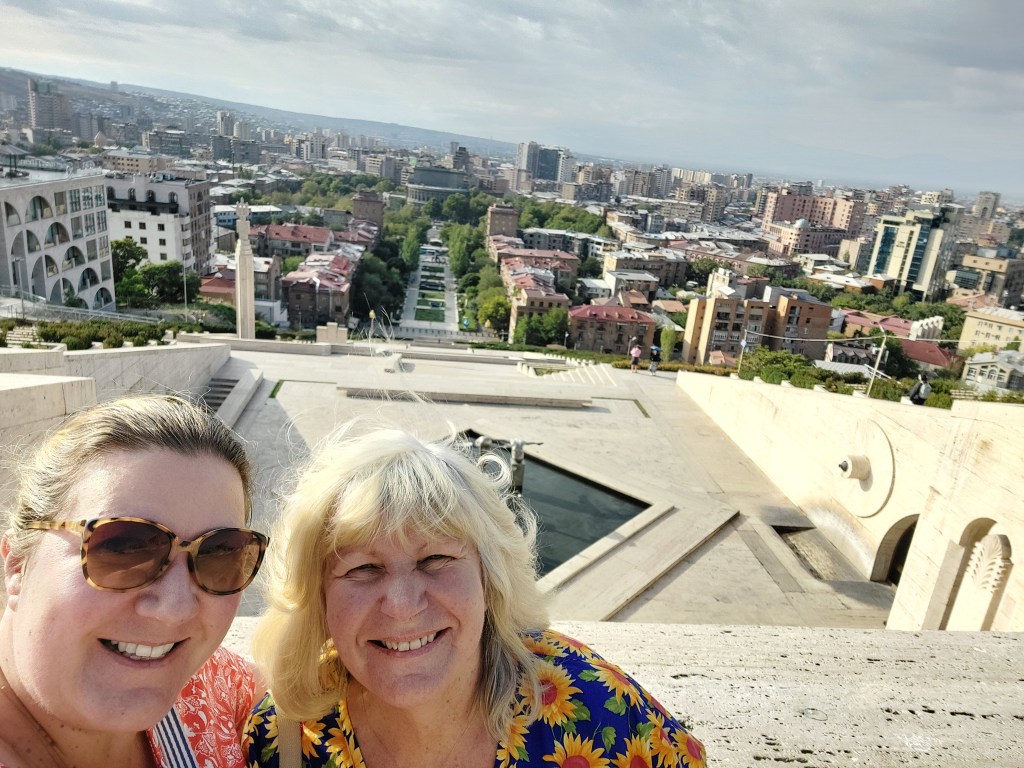
However, we started with a visit to the Cafesjian Centre for the Arts in Yerevan. This (clue in the name) is an arts centre built in the 1980s, but the building itself is really what we are coming for. Known as the Cascade, it is housed in a vast flight of stairs (luckily with escalators inside!) with various installations at each stage and features a sculpture garden in front of it.

Driving out of Yerevan, we got our first glimpse of Mount Ararat. I realise I have mentioned this a number of times in my blog without explaining (for those who did not have a Christian education) why it is relevant. This is one of the mountains which features quite heavily in the bible, but most notably after the flood (which rid the Earth of the first wave of humanity who were not behaving well – according to the classic primary school hymn!) this is where Noah’s Ark ended up, and from here, Noah and his animals went off to re-populate the earth. So, Mount Ararat is a big deal! Anyway, what we were going to see was the Khor Virap monestary.
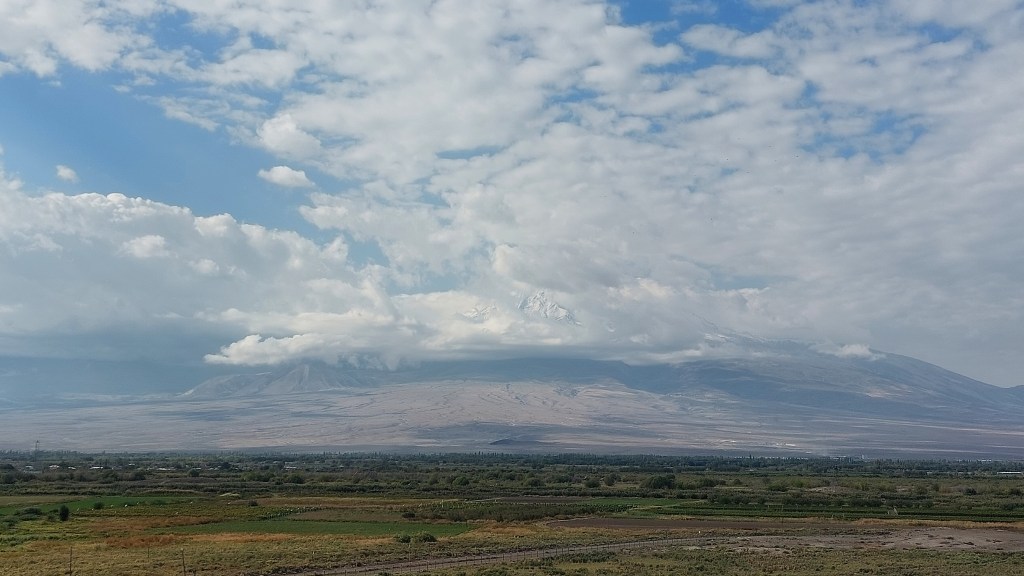

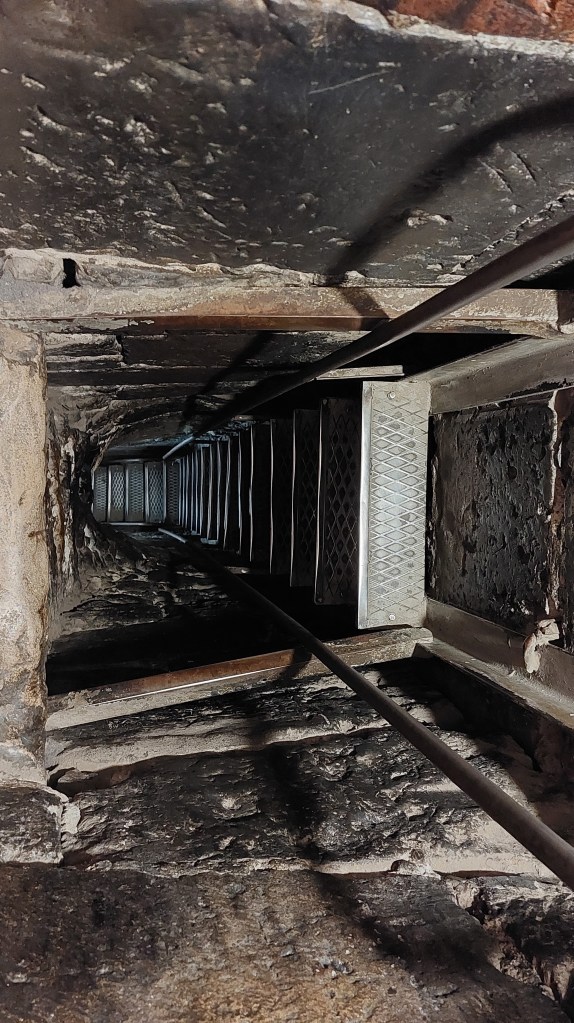
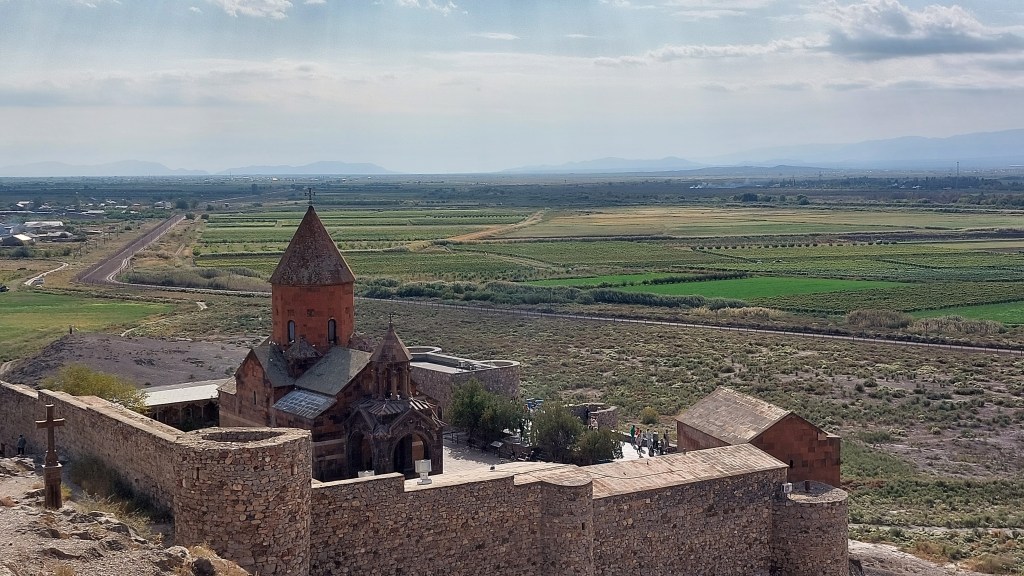
Mainly, we were going for the views of Mount Ararat (and the border with Turkey) above, but also to see the pit in which St Gregory was held by King Trdat III during the 2nd century. This is an important step in the story of Armenia embracing Christianity. St Gregory had been preaching Christianity and attempted to convert King Trdat III, but he was having none of it, and threw Gregory into a pit and forgot all about him for 12 years. At this time, the king became ill, and his sister had a vision that Gregory could cure him – Gregory was released, and that is exactly what he did. King Trdat III converted to Christianity (along with his nation) in 301 AD as a result. Now, that is a lovely story, but most historians believe that this conversion was an attempt to forge national unity whilst fending off the Persians and Romans. Anyway, the pit which features in the story is in this monestary. I did not go down, but I did have a good look:
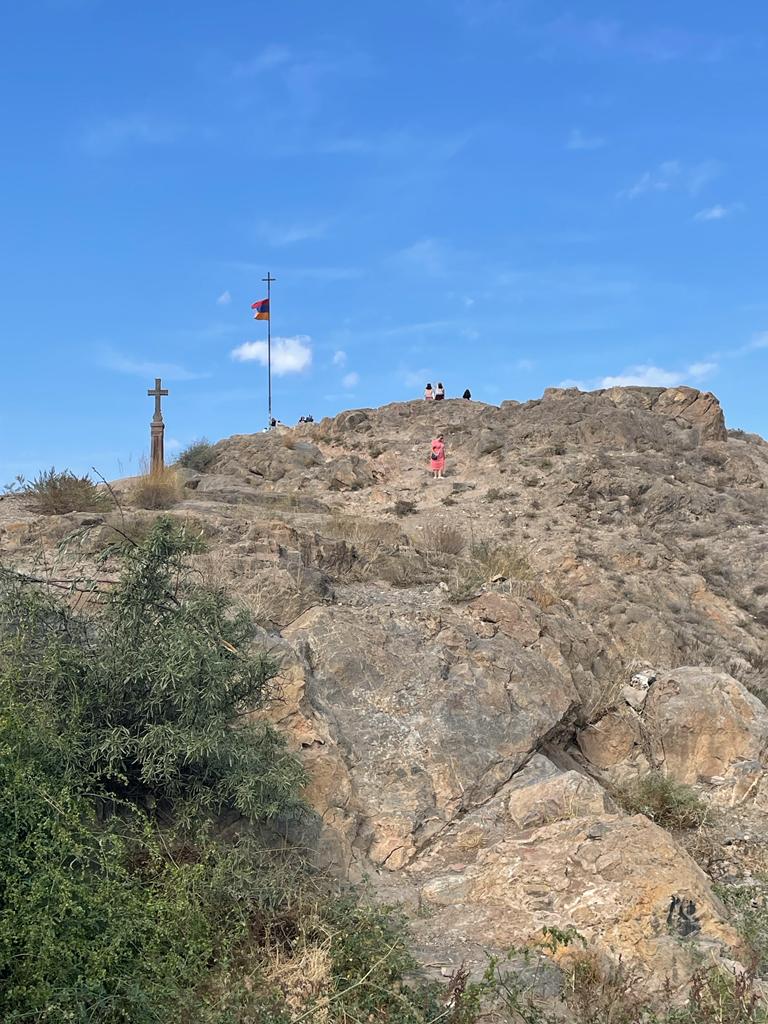
Behind the monestary, there is another hill which I duitifully climbed to try and get a better view of Mount Ararat, but unfortunately, we were thwarted by clouds. I blame myself for doubting the “piece of the ark” in the museum yesterday!
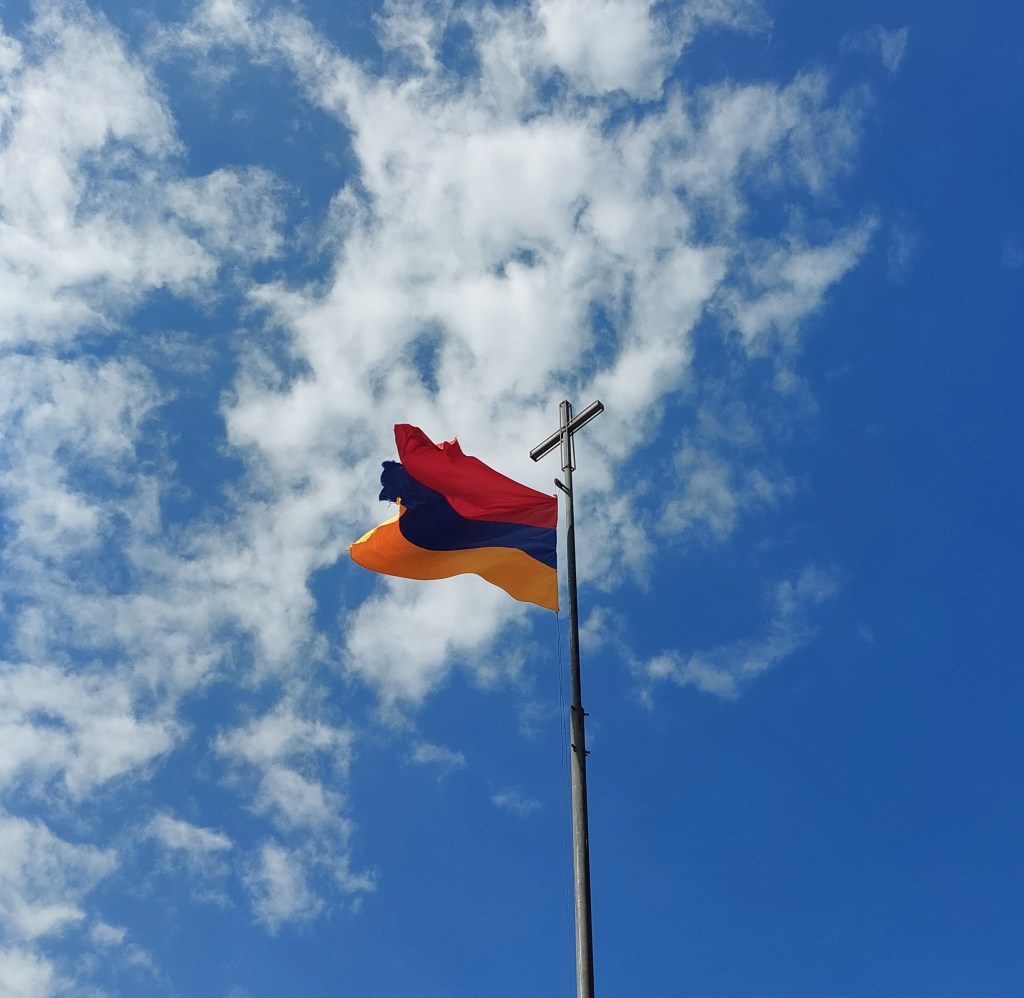

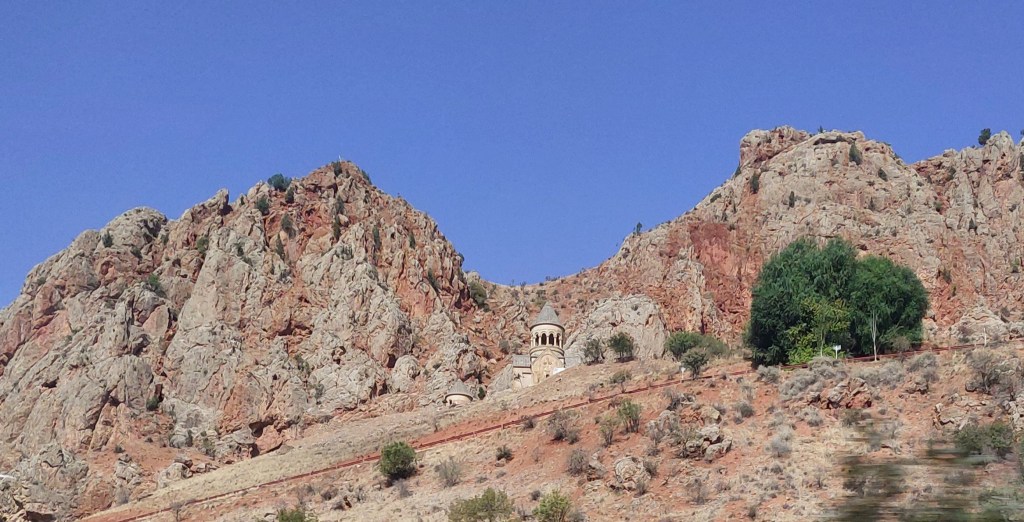
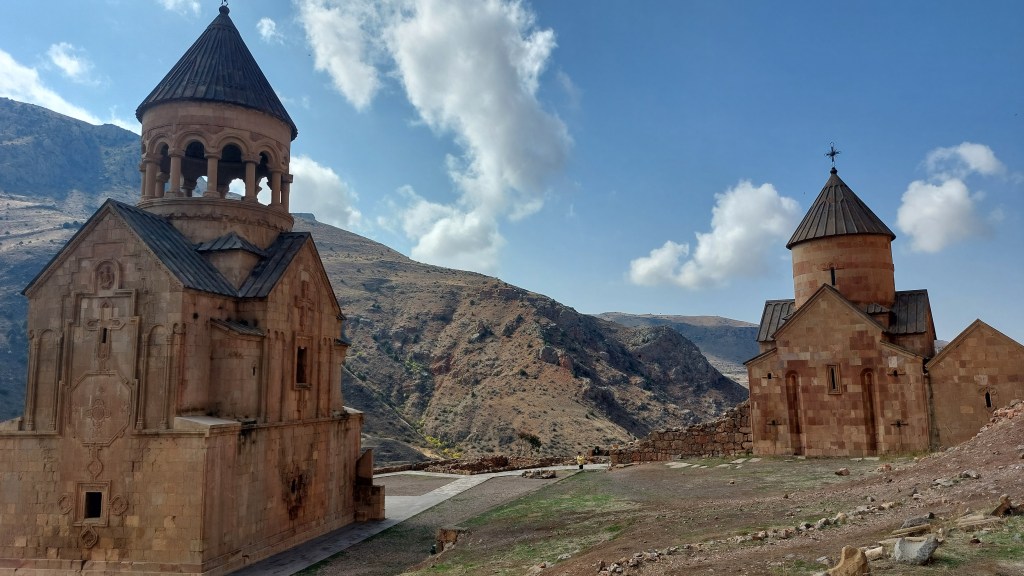
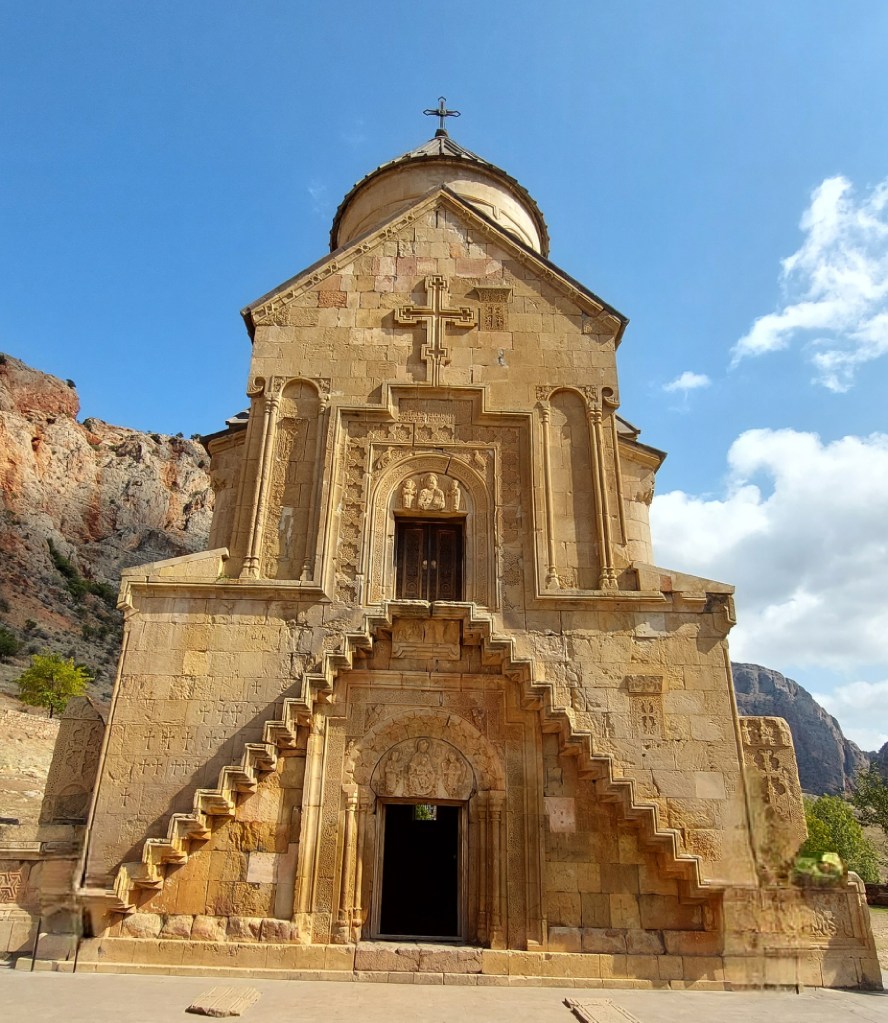
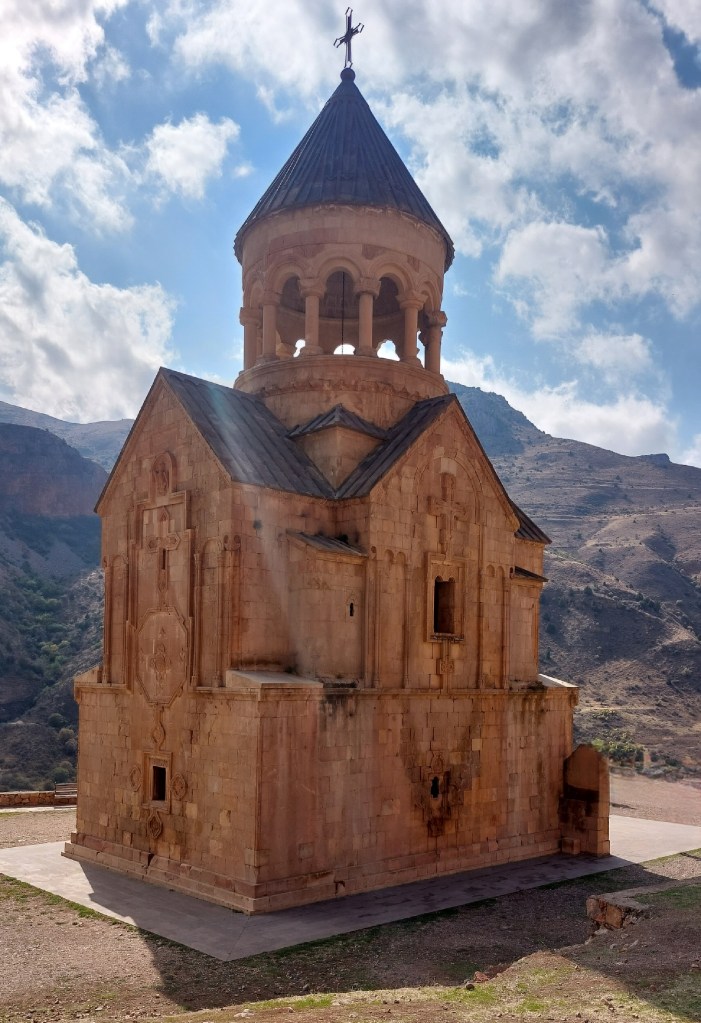
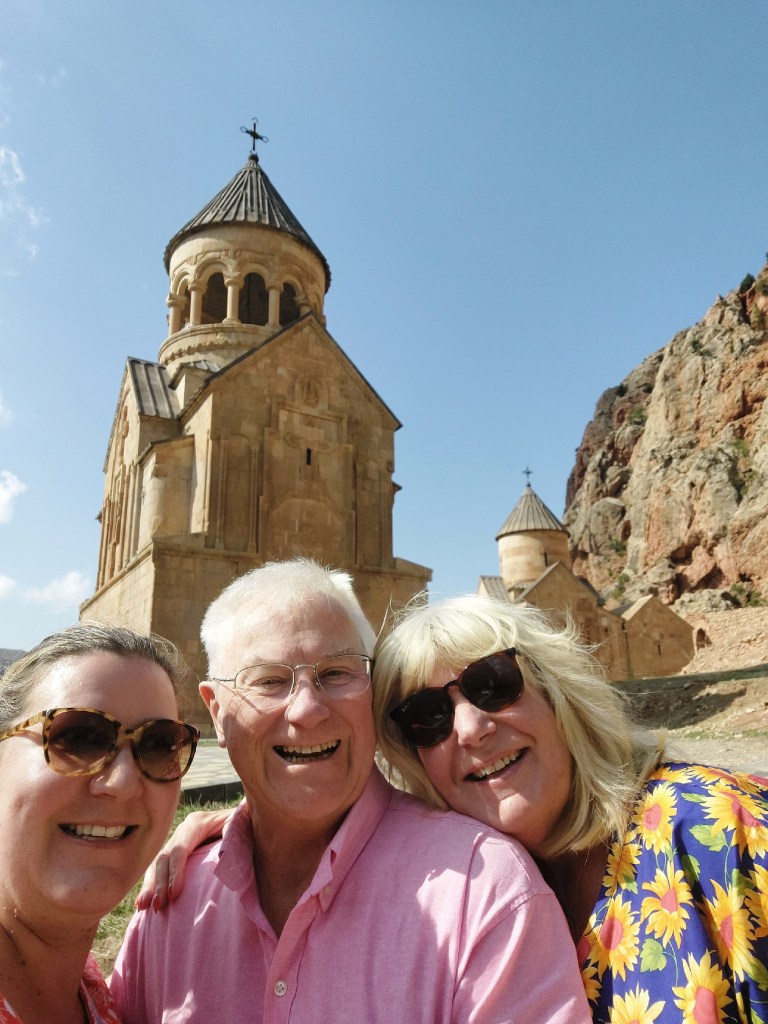
We drove into the mountains to see the Noravank Monestary (the imaginatively named “new” monestary in Armenian). Perched on a side of a clff, the complex includes 3 churches and was built after recovering this region from the Seljuik Turks in the 13th century. This is billed as one of the most spectacular sites in Armenia and a must-see, and I feel it lived up to this description and tried to capture it in the photos below:

Having satisfied our monestary obligations for the day, we called in to the Areni wine factory to allow the members of the group in need (you know who you are!) to taste some Armenian wine. Armenia also claims to be the oldest wine making country in the world(!), and as well as using the clay pot method, they also make a range of fruit wines. This winery is family owned and opened in 1994 (with support from the US) and produces 250,000 bottles a year of which nearly half are exported to Russia – maybe this is the USA’s way of trying to get Russia drunk? I tried 8 wines and didn’t really like any of them (sorry Armenia) – too many sweet reds. I also tried their homemade apricot vodka and was then drunk…
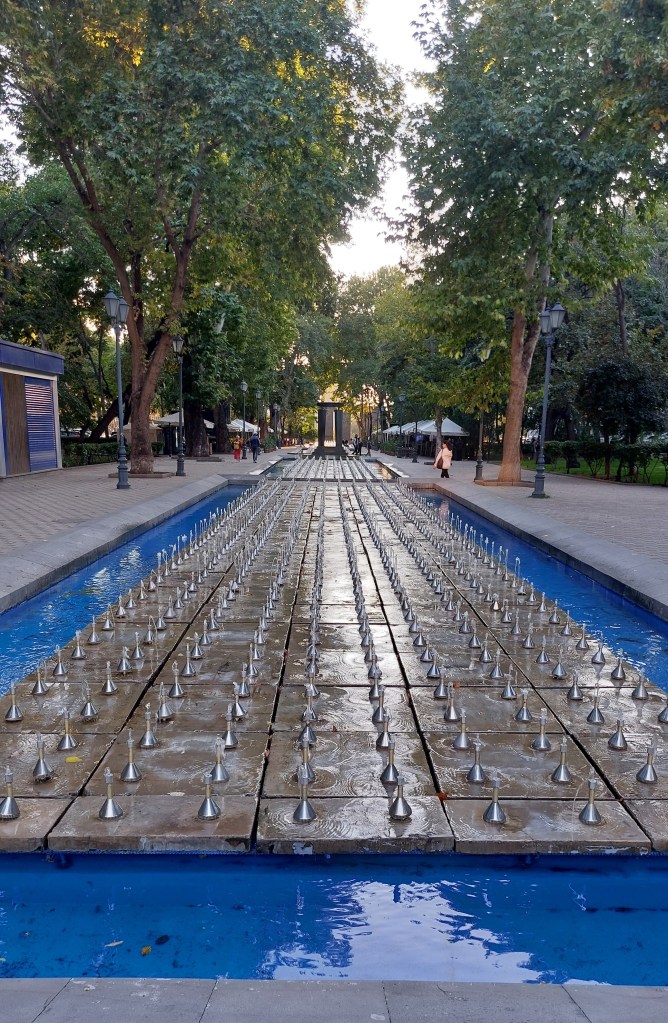
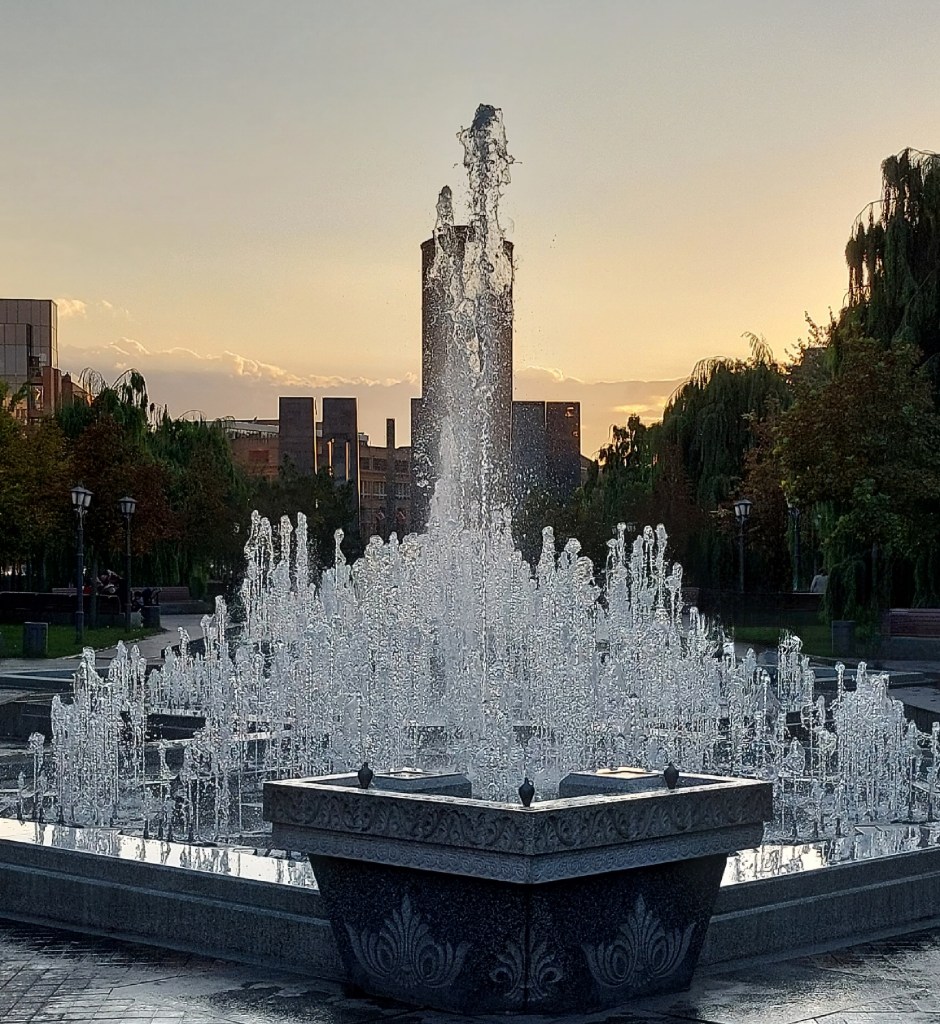
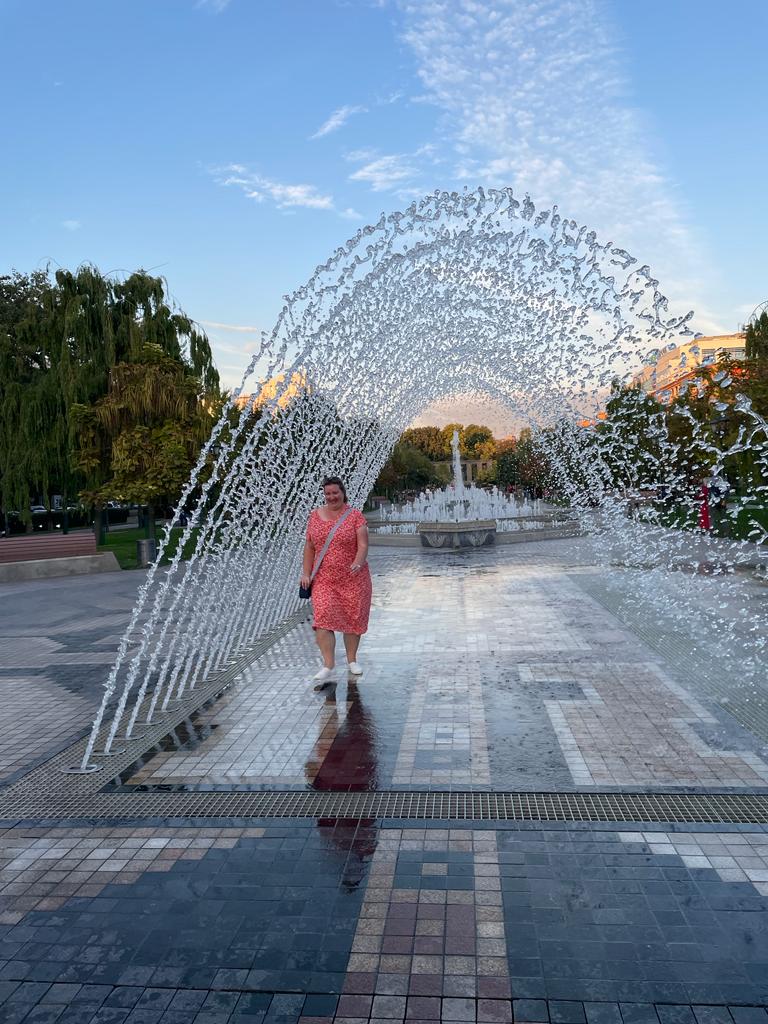
We drove back to Yerevan, and Mum and I decided to have a little walk around some of the sites of the city. We have had a slight change of plans by FlyOne cancelling our flight on Saturday (which would have given us an extra day in Yerevan) and after some logistical re-planning, we are now leaving for Istanbul on Friday morning. Therefore, we decided we needed to tick off some sites and walked via Republic Square (but in daylight) through the 2800th Aniversay Park, which celebrated (in 2018) the 2800th year of Yerevan by installing 2800 fountains with various spurting programmes. We took many photos:


Tomorrow is our last day in Yerevan/the Caucasus, and time really has flown by. We have packed A LOT into these 2 weeks, and it will take some time to digest, but I am still having a fabulous time and certainly not feeling any need to go home and seek gainful employment…


 Travels with Kathryn
Leave a comment