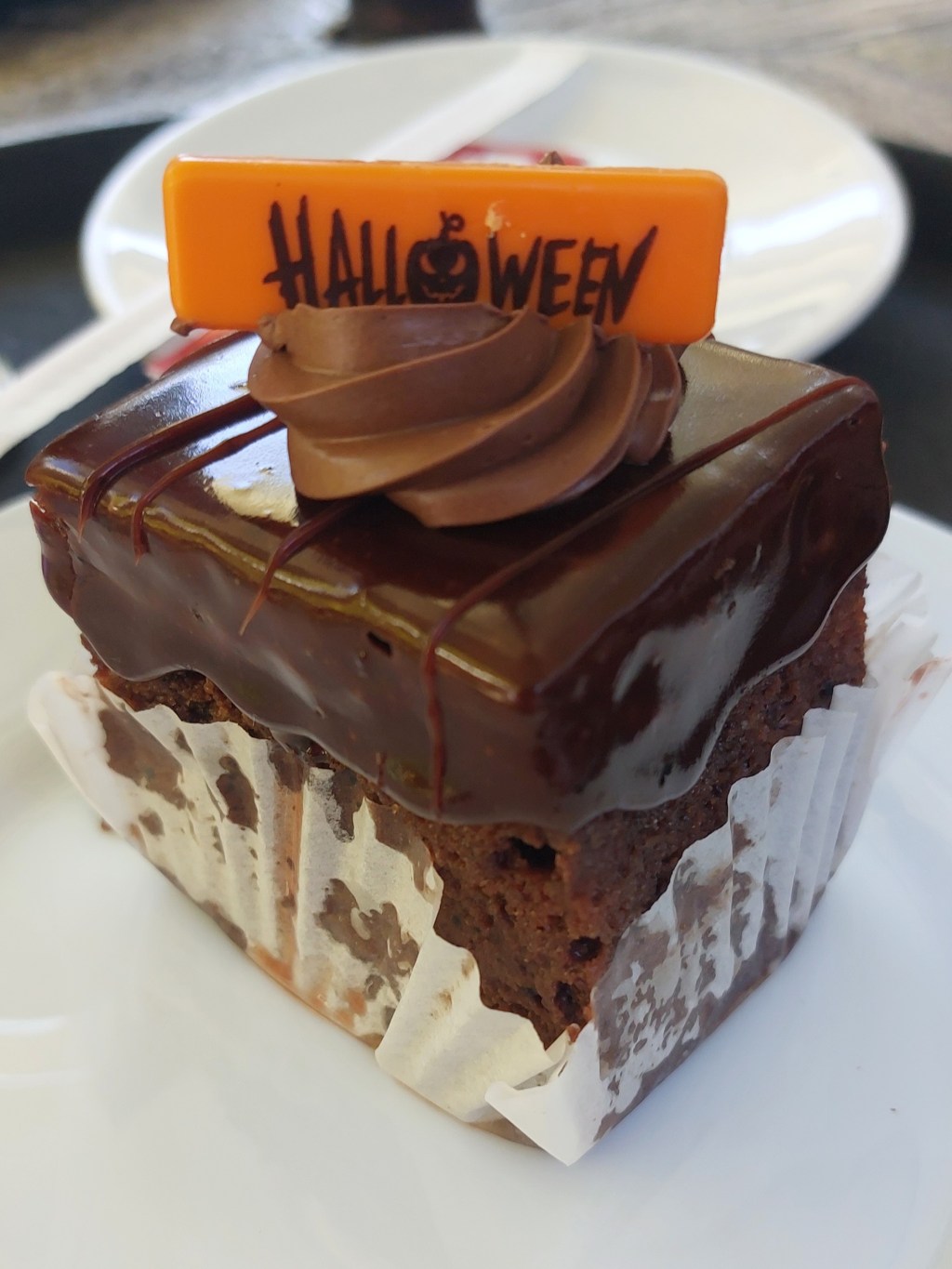
Today (well, on Monday), I caught a train to Brasov, no problems at all finding my train, although it was a little more challenging finding my seat in a packed (obviously Transylvania is a Halloween desitination, who’d have guessed?!) and overheated train. However, everyone was very sensible about it (not as they would have been in the UK) and I eventually did find my seat which was opposite a mother and son who were pleased to practice their English, which as you can guess, was flawless. In return, they helped with how to actually pronounce Brasov (Brasshov) and some other key phrases.
The scenery is utterly beautiful, and Brasov looks like a town created by Disney. It was the 14th century capital of Transylvania, and only Austro-Hungarians were allowed to live within its walls (hence the rather Germanic style of houses).
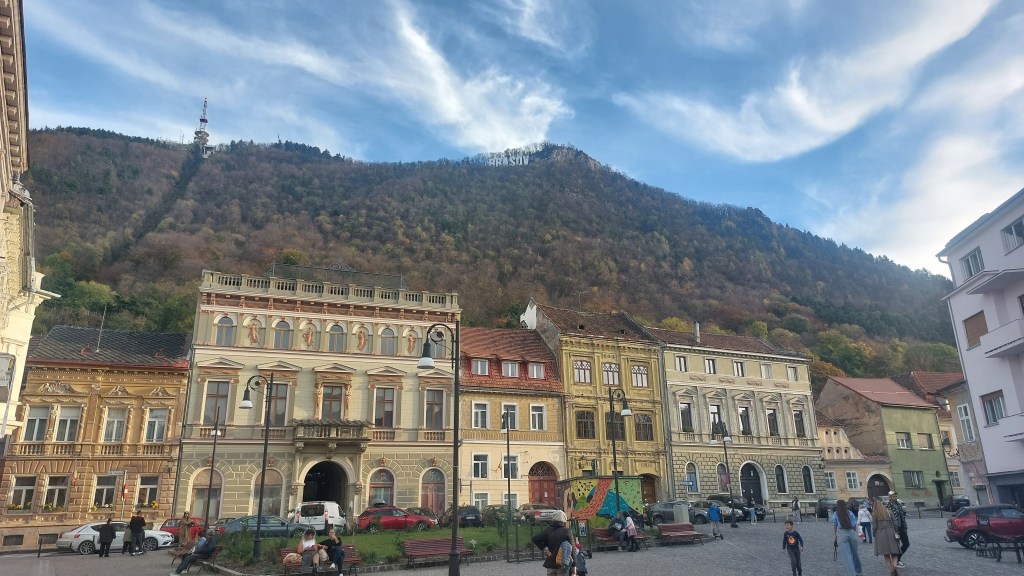
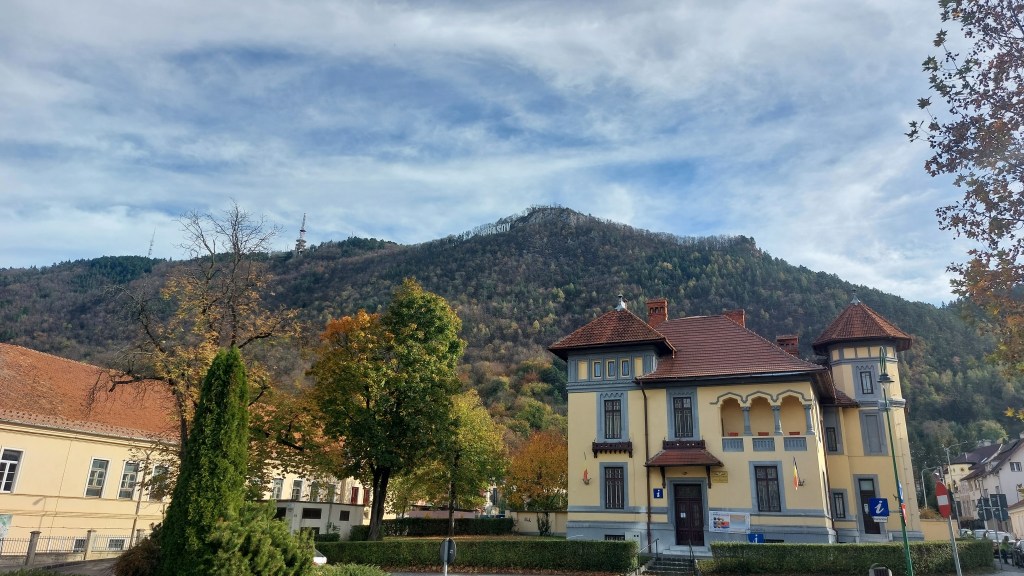
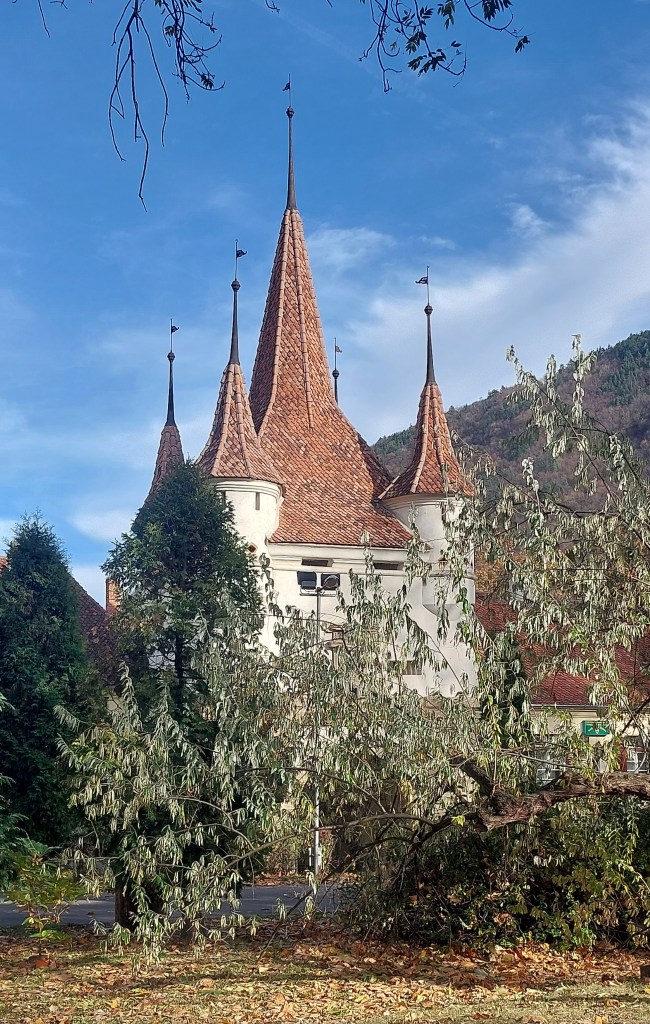
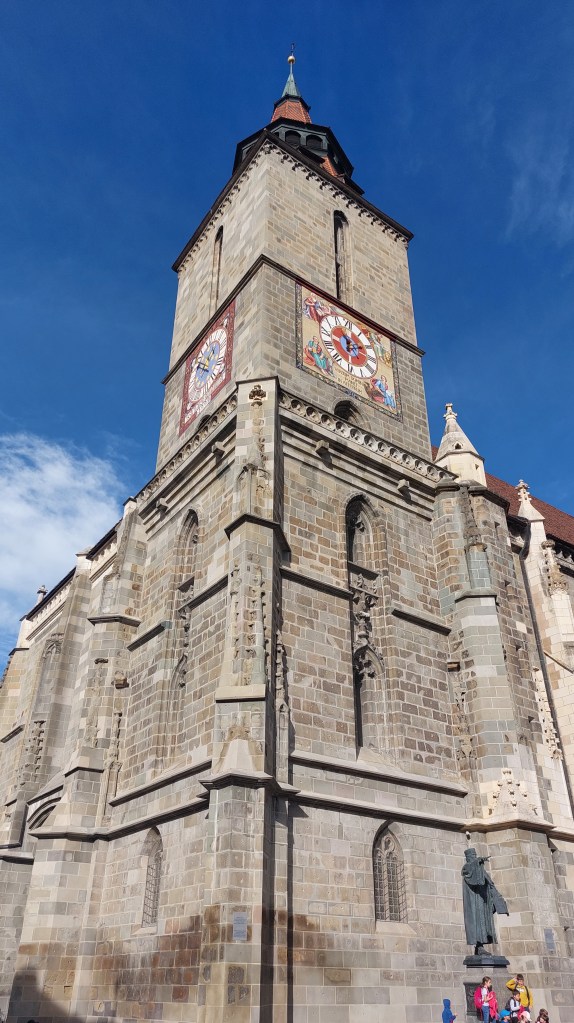
As well as having a general look around, I was keen to visit Brasov’s 3 key tourist attractions: (i) the black church (closed for cleaning); (ii) the cable car (closed on Monday’s) and (iii) St Nicholas’ cathedral (OPEN!). I did visit the black church from the outside, and in any event, its name is a little misleading as it is not actually black – it got its name from the town’s great fire in 1689. It is, however, Romania’s largest Gothic church, and it did look pretty big from the outside.

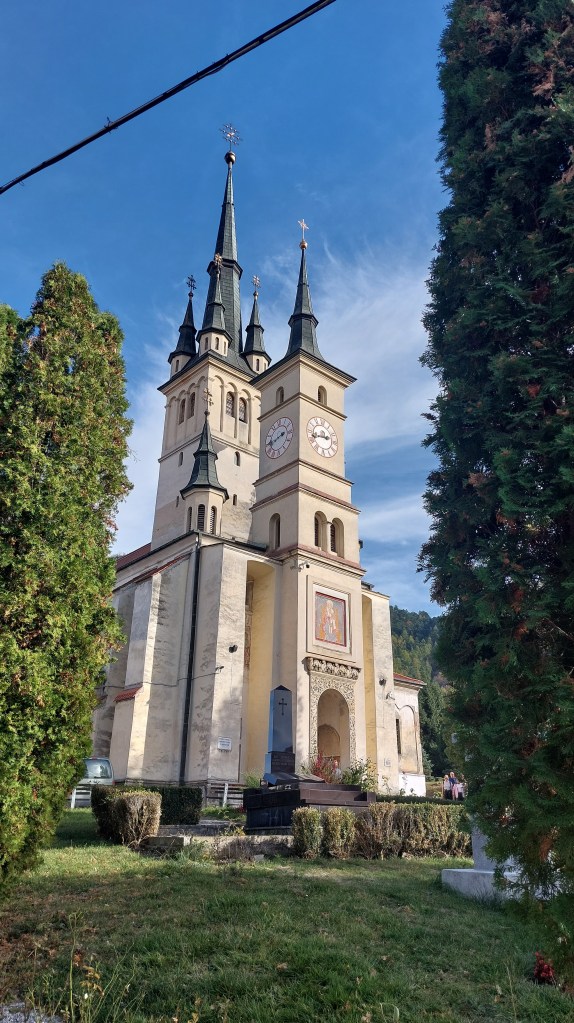
I then walked the 15 minutes to the edge of town for St Nicholas’ cathedral. The interior (no photos allowed) is covered in Byzantine images – Bulgarian Orthadox is evidently a fan of maximalist church decoration as they really do cover every inch.
After my walkies, I treated myself to a Romanian classic dish- you would never get what this is. Clue: it includes trout, polenta , cheese and garlic. Actually, rather delicious.

I had an early night in readiness for a full day of castles and heading into deepest, darkest Transylvania. Well, into Transylvania anyway…
Rather than rely on public transport, I had booked a small group tour to see Peles and Bran (perhaps the inspiration for Dracula) Castles and was rather surprised that my tour consisted of me, 2 friends living in London (who I was able to have London chat with – like how lovely it is when people scowl at you on the tube) and then, rather oddly in our opinion, a women and her 5 year old son. For context, this was a long day driving around in a car, waiting in lines, and they had actually started by driving from Bucharest (which is around 2 hours!). Far be it from me to judge, but I do not think this was a good parenting decision, and it was quite obvious that even when we started at 9am, the child had already had enough. Now, you all know that I am not a kid person (unless they are children who have been properly trained by my friends/relatives) so they would not have been my first choice of tour companions…
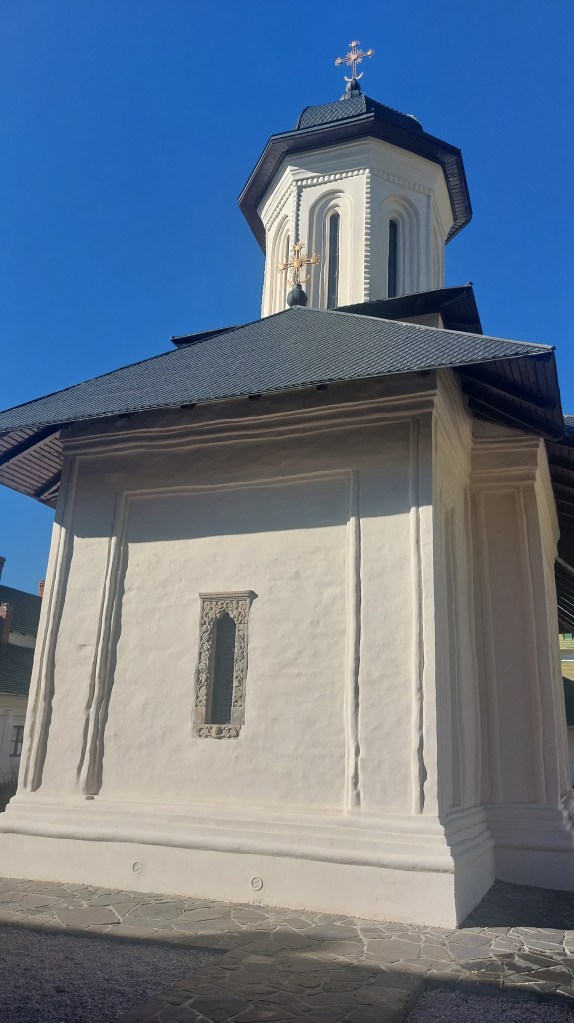
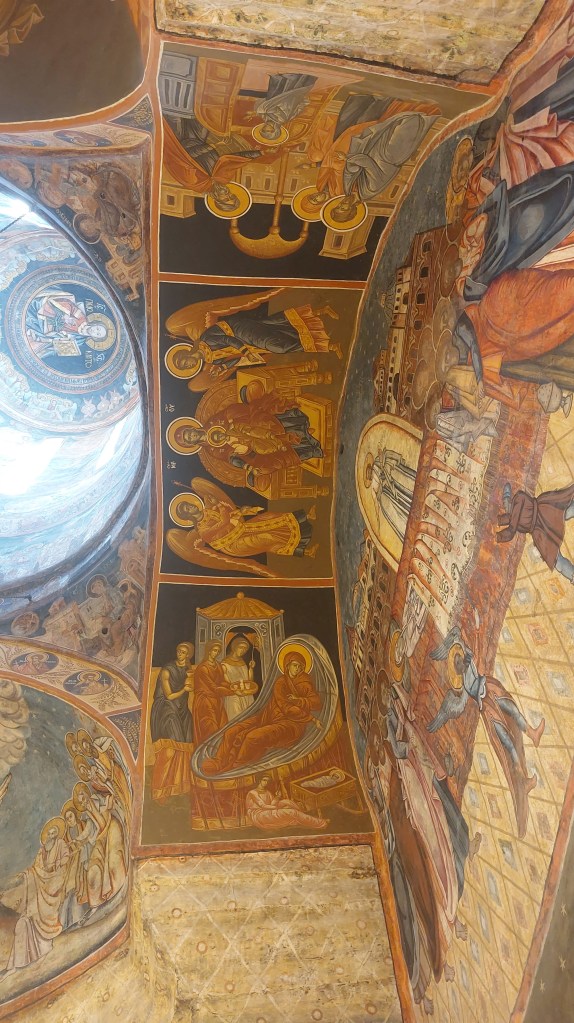
Anyway, we headed off into Transylvania for a visit to Sinaia Monestary. This was a little stop on route to the bigger attraction of Peles Castles (as it is about a 10 minute drive away), but has both a modern church (Romania’s first church to be fully electric) and small Byzantine church dating back to 1695. The interior paintings of the old church were restored in 2016 back to how they would have been in the 17th century. I have visited a number of churches in the last few weeks, but I do have to give Romania credit for the commitment they put into covering the whole of a churchs interior with paintings. Also, you do see a range of images (both relgious and of leaders/kings), as well as a range of styles (some more realistic than others), bu it is not really like anything I have seen anywhere else in the world.

Up the hill we went to the Peles Castle complex. This is one of the most visited sites in this part of Transylvania and is made up of 3 castles. The main castle, Peles Castle was the summer residence of King Carlos I and building commenced in 1877 – the lower part of the castle was built by an Austrian architect, and then after 10 years Carls decided he wasn’t happy and employed a German architect to finish it and it was completed in 1914 at a total cost of around $120 million in today’s money. Unfortunately, its interior is closed to visitors on Mondays and Tuesdays, which is a shame as its 170 rooms are decorated in a range of styles (Florentine, Turkish, Moorish, French, French, etc) and often themed by a world culture. For now, I can use my imagination (I am thinking lavish and over the top!), but I am pleased that I did get to see it from the outside at least, and I did spend some time considering myself living in it, I would need to get rid of the tourists obviously!
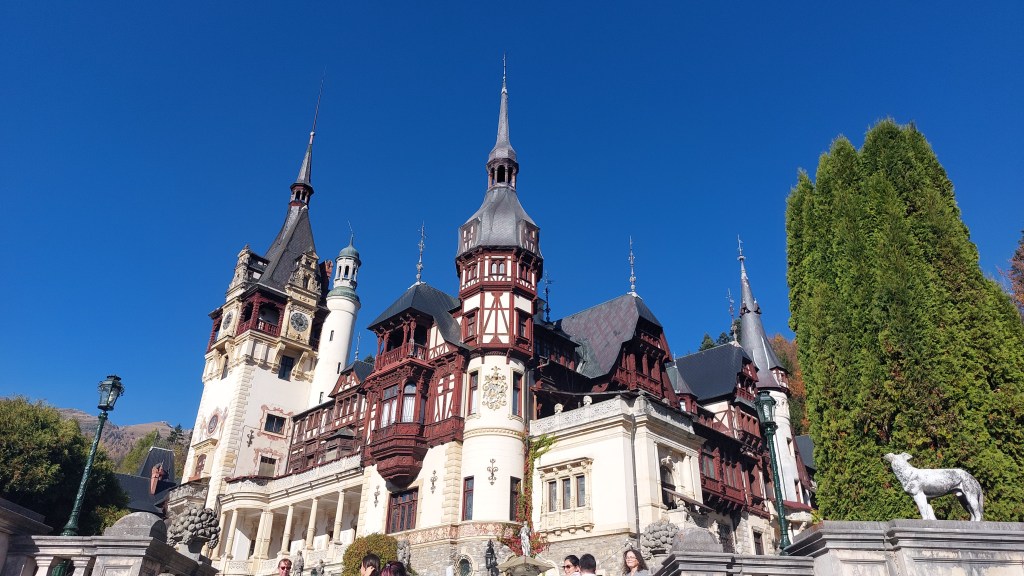
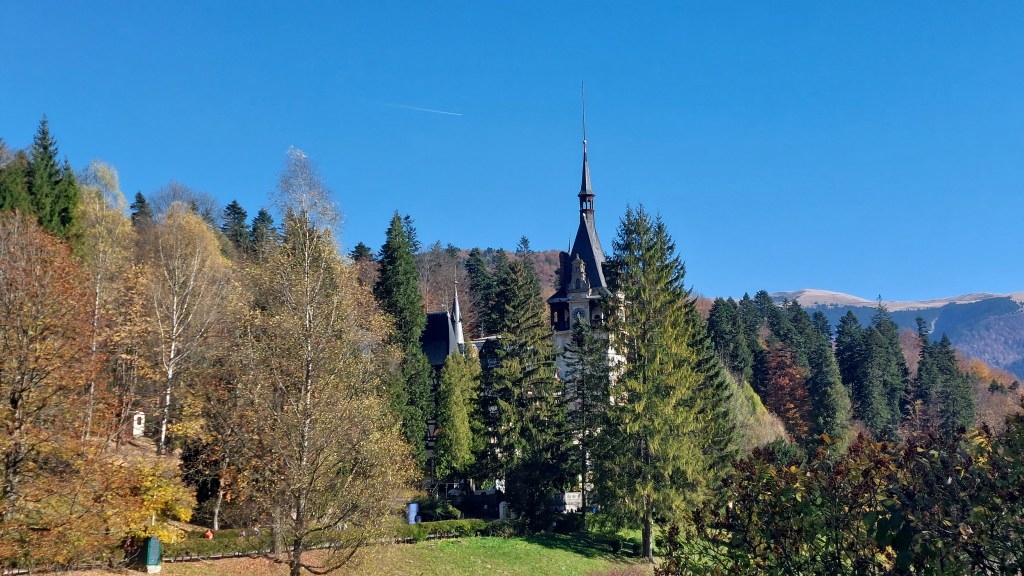
An interesting fact about Peles Castle is that it was originally the personal property of the royal family, so after the fall of the communists (when King Micheal I had been forced to abdicate) Micheal took the government to court for return of their “personal ” property. The case finally concluded in 2007 in their favour and the castle was returned to Micheal who agreed that it should continue to be operated as a museum, but it is used for the odd “Royal” occasion such as receptions and public events – Michael died in 2017 (having spent most of his life in Switzerland – well, it is neutral) and his body lay in state at Peles Castle. His daughter Margareta (who has the fabulous title Custodian of the Romanian Crown) has continued to use the castle for public events. As I learnt in Bucharest, lots of people are seeking return of property confiscated by the communists, probably easier to prove ownership when one spent that much on a castle!
As I mentioned above, the complex includes another 2 castles (as 1 is never enough) – Pelisor Castle and the Foisor Hunting Lodge. Pelisor castle was built by King Carlos I as a residence for his nephew and heir, the future King Ferdinand (and I judged Ceausescu for having a 3 room suite for each of his teenage children in Palace Ceausescu!). This was unfortuantely also closed, but its interior is a mix of Romanian style and art noveau specifically designed by Princess Marie (wife of King Ferdinand).
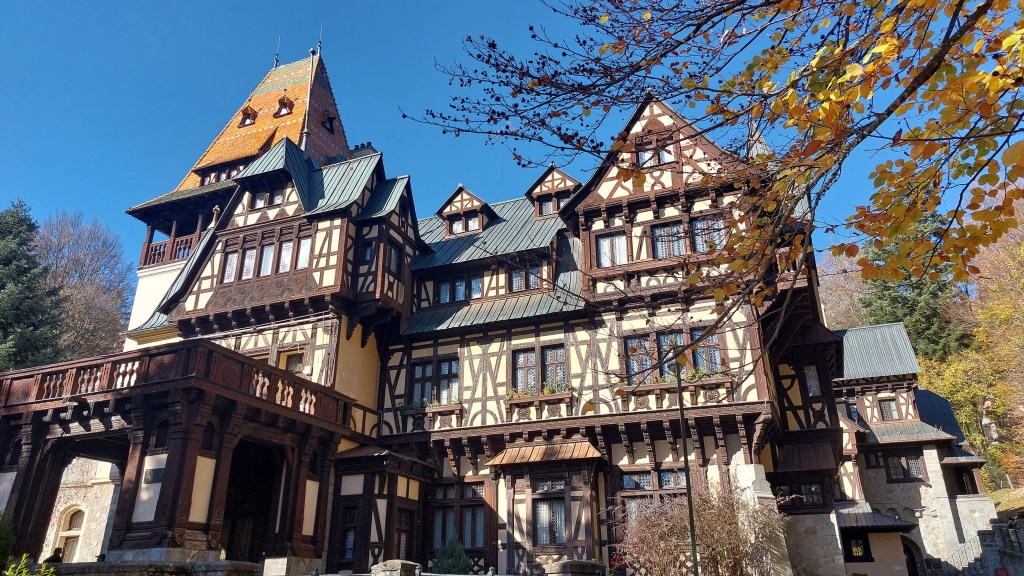
So whilst Peles Castle is the far more impressive, today being Halloween, the main attraction was Bran Castle:
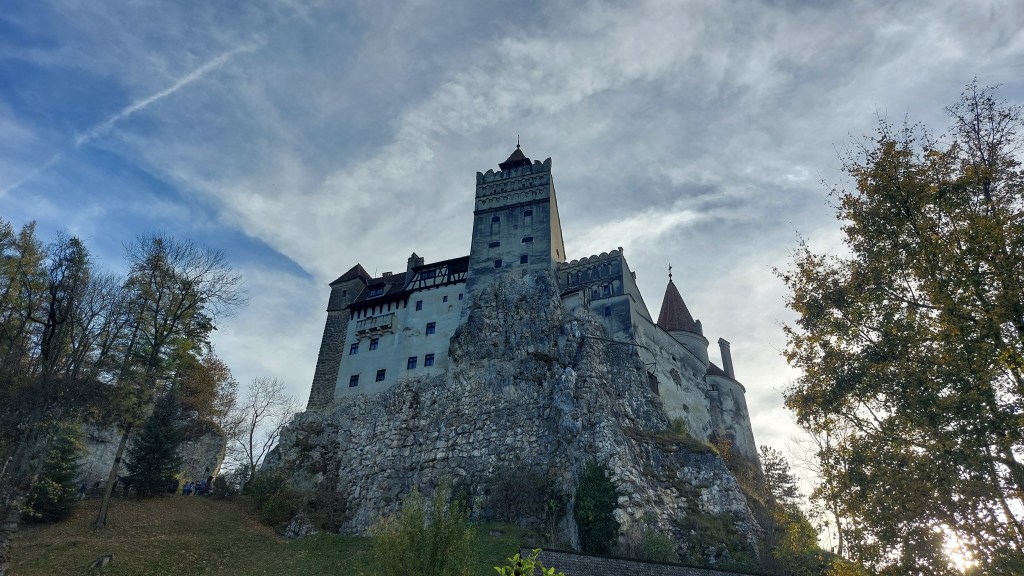
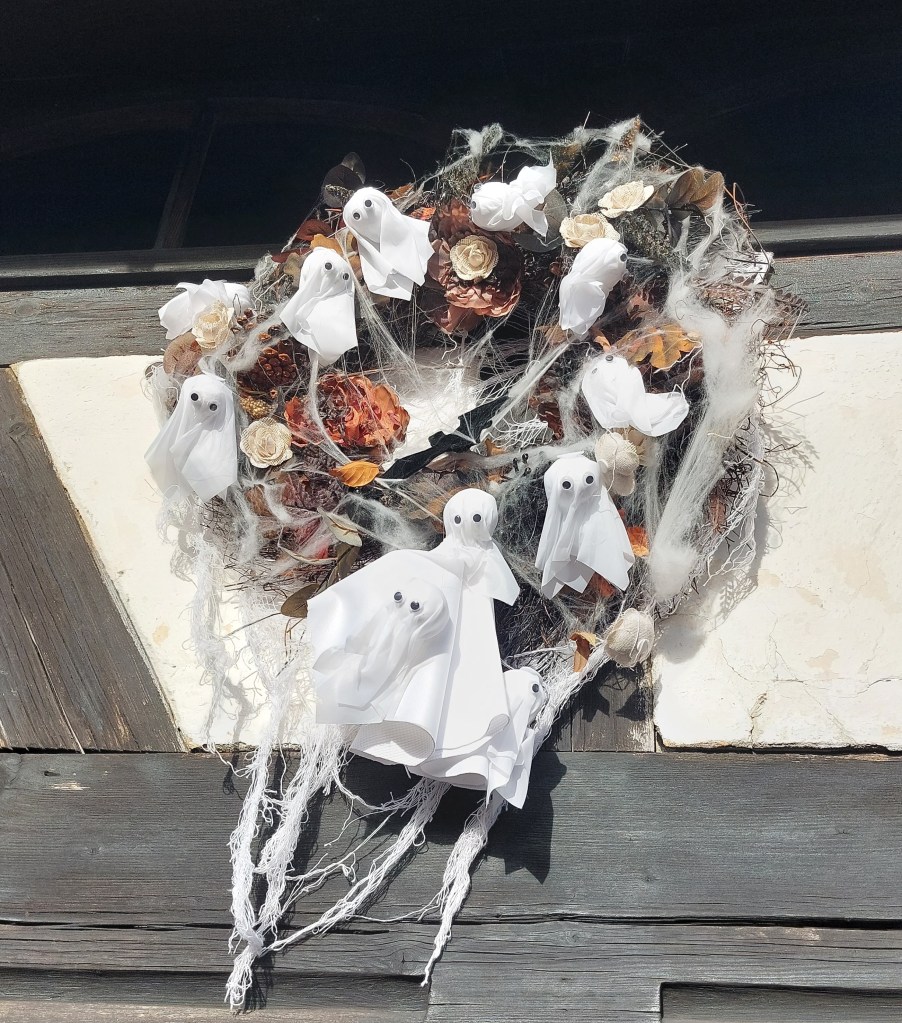
For the uninitiated, Bran Castle is famously “Dracula’s Castle” and heavily marketed as being the home of Bram Stoker’s Dracula. However, this really is all marketing as Bram Stoker never visited, he seems to know nothing about the castle, and it doesn’t look anything like the description in Dracula. One should never let truth get in the way of a good story, and due to the castle’s minimal associations with Vlad the Impaler (more on him below), people have run with it. Perhaps today was not the best day to visit the castle as it meant waiting in a huge queue, but I did rather enjoy the Halloween decorations throughout the castle!
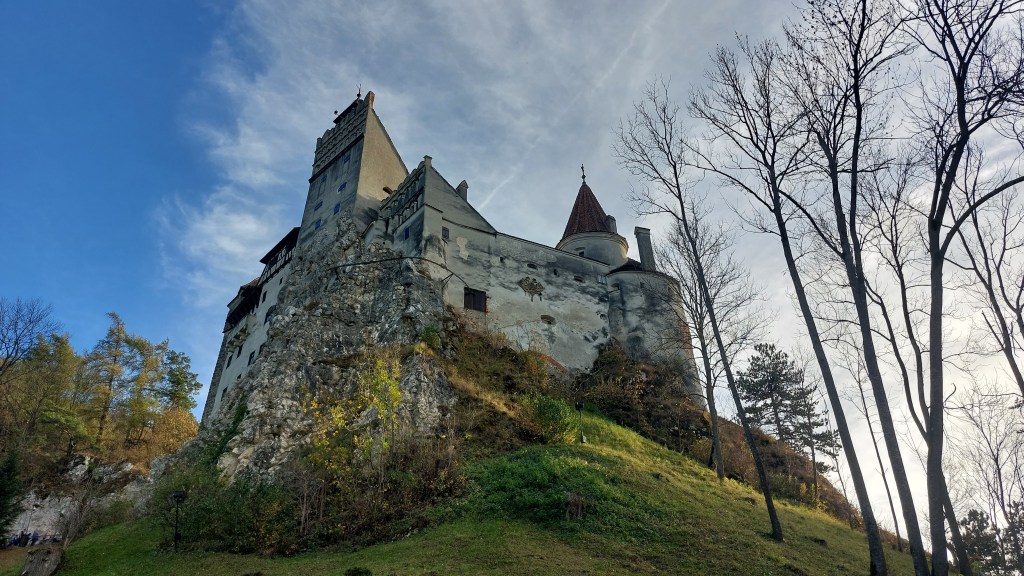
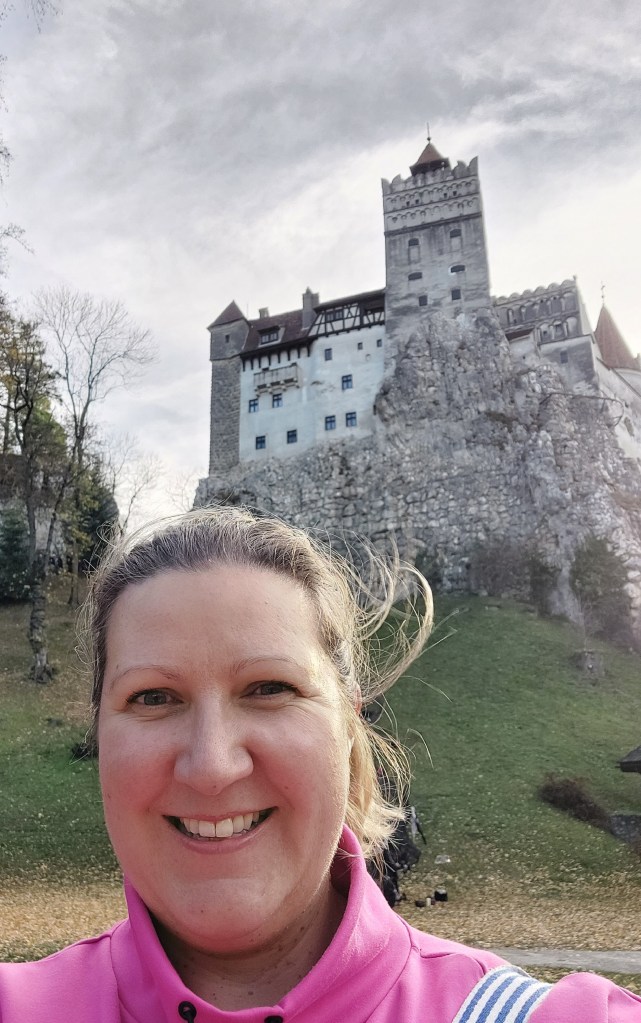
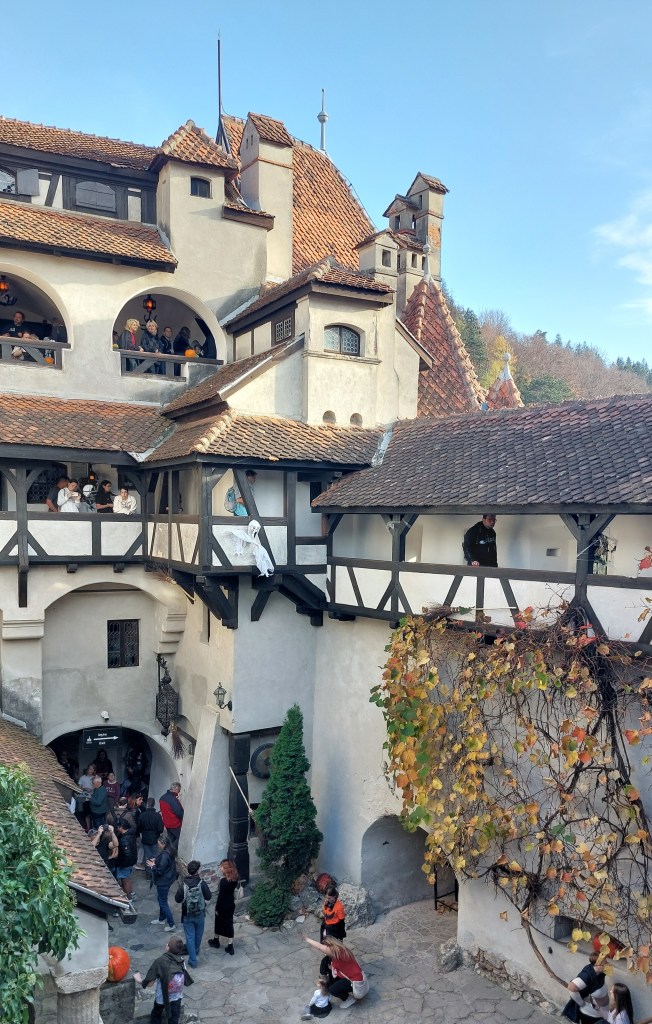
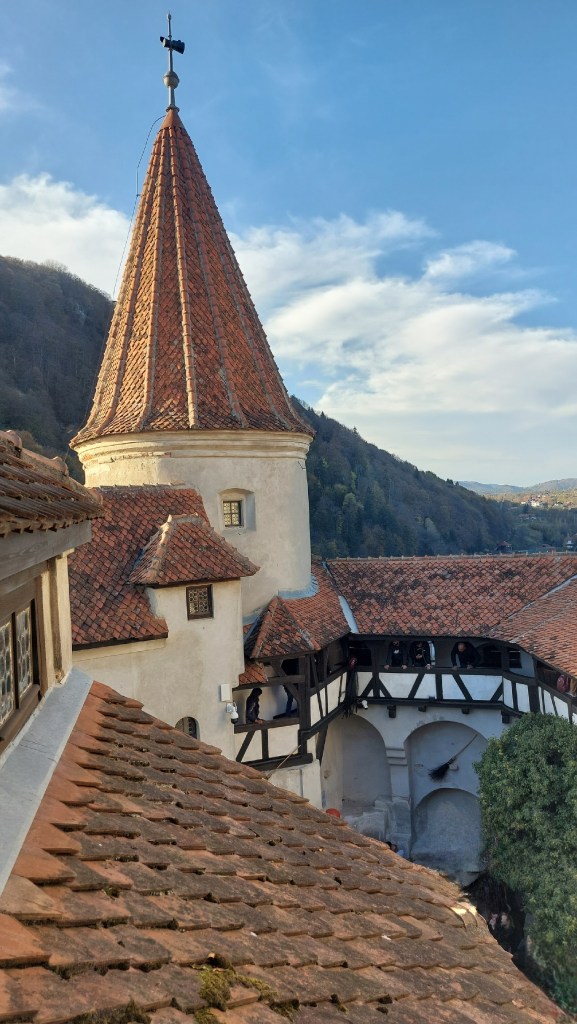
Anyway, back to real life – there has been a castle at this location since 1212 when a wooden castle was built by the Teutonic Order as it is on the Transylvanian side of the historical border with Wallachia (and a small section of the ancient wall is visable from the castle). This structure was destroyed by Gengis and his band of Merry Men – it has been so long since we have heard about them, I was almost starting to miss them – but just shows us how far the Mongol Hoard penetrated, and how much further they might have conqured had it not been for Gengis Khan’s early death. Anyway, the castle ww see today started to be built in 1377 and interestingly, this castle was built by and at the expense of the local Saxon community as a dfense against the Ottomans (this being the border between Ottoman controlled Wallacia, and Transylvania ). The castle was added to over time, which gives it its rather mixed appearance.
As promised, I shall have to mention the castle’s association with Vlad Tepes/Vlad the Impaler/Vlad Dracula, who was the ruler of Wallacia at various points between 1448 and 1477. You can probably guess from his nickname that he was rumoured to have some slight violent tendancies (some light impaling, torturing, mass murdering etc.), but modern historians have been kee to emphasise his status as perhaps the greatest Roaman ruler by his fight for the independence of Romanian. As ruler, he did pass through the castle a number of times but never lived here. As the stories of Vlad circulated widely in Europe both during his lifetime and later centuries, it was Dracula that made the connection between Vlad Dracula (the house name was Dracul) and vampires although probably not by Bram Stoker himself…
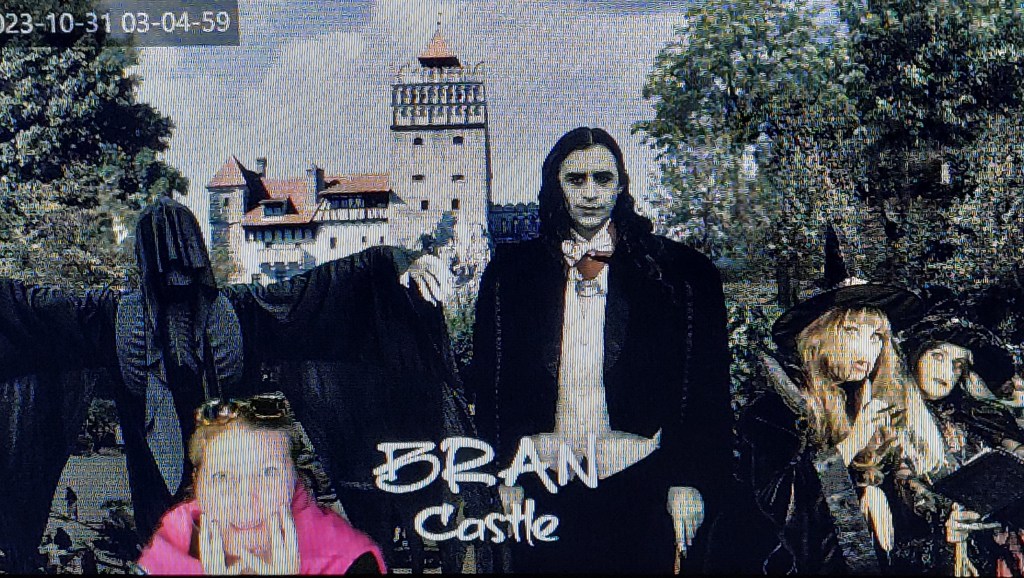
Back to reality – perhaps its proximity to Peles, but Bran Castle became a favourite residence of Queen Marie (who had a lift down to the garden installed which I enjoyed rather than battling against the hoards), and after her death, her daughter Princess Ileana (who later became a nun) ran a hospital here during WW2. Bran Castle was similarly litigated after the fall of Communism, and after a rather complicted back and forth, it was restored to Ileana’s son Archduke Dominic of Austria who opened the refurbished castle (nothing inside is original) in 2009 as a “joint strategic concept in collaboration with Bran vilage to maintain their prominent role in the Romania tourist circuit”. Well, it has certainly maintained that!
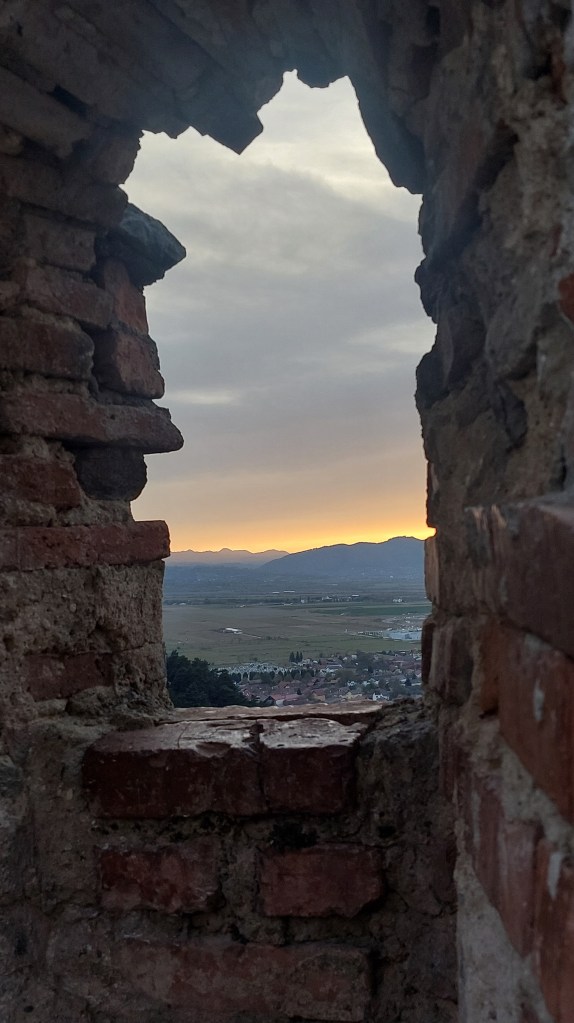
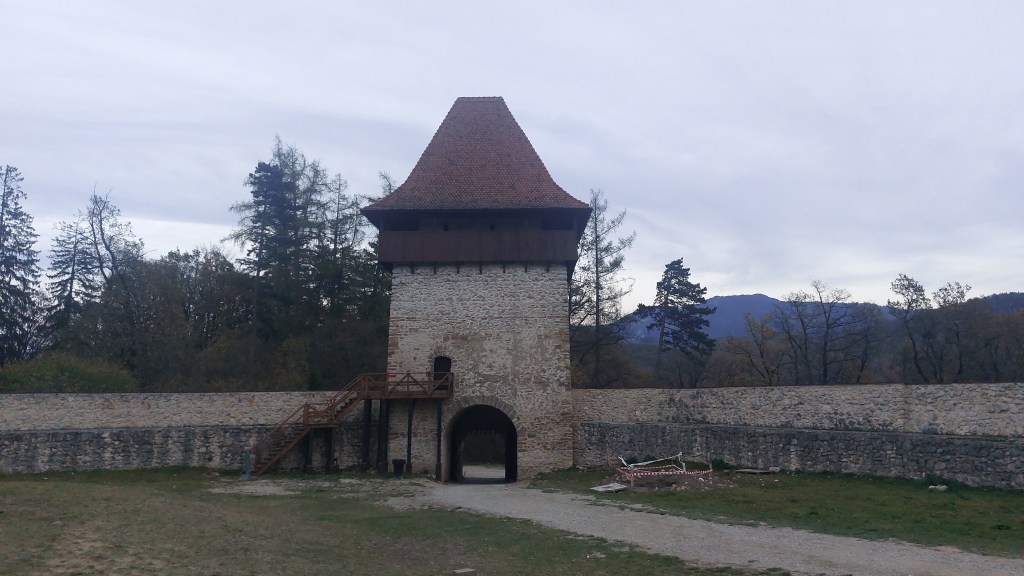
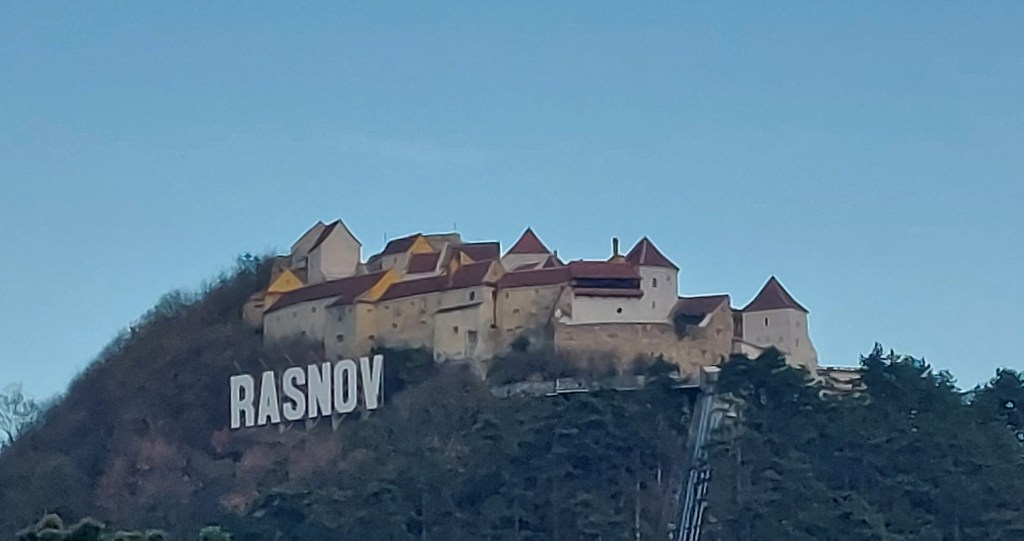
Our final stop of the day was Rasnov Fortress. A fortress has been at this location since the 1st century, but what you can see below dates to the 14th century (evidently a key time to protect Transylvania from the Ottomans based on what we have seen today). It is the strongest fortress in Transyvania due to its strategic location on the route of invading armies coming from the Bran pass heading south. It was not only a fortress, but at various times in history, it actually became a village with inhabitants of the surrounding area seeking refuge inside its walls for often for decades at a time.
We arrived back into Brasov at 5.45pm too late for me to try and visit the interior of the Black Church, but I was reassured by my tour companions that I was not missing much other than a big white church – I looked at a photo on Google and that shall have to do.
We had dinner together (again questioning the sanity of bringing a 5 year old on an all day tour!) and I was again unsuccessful in my hunt for Romanian filled cabbage leaves (its like they put it on menus just to play with me), but I had a rather nice alternative of pork medalions. We were also treated(!) to a performance of a local music and dance group – it was a sort of loud yelling type singing accompanied by average trumpet playing and loud drumming. I was not a fan. It was also not improved after a little shot of palinkia (the local 40% spirit).
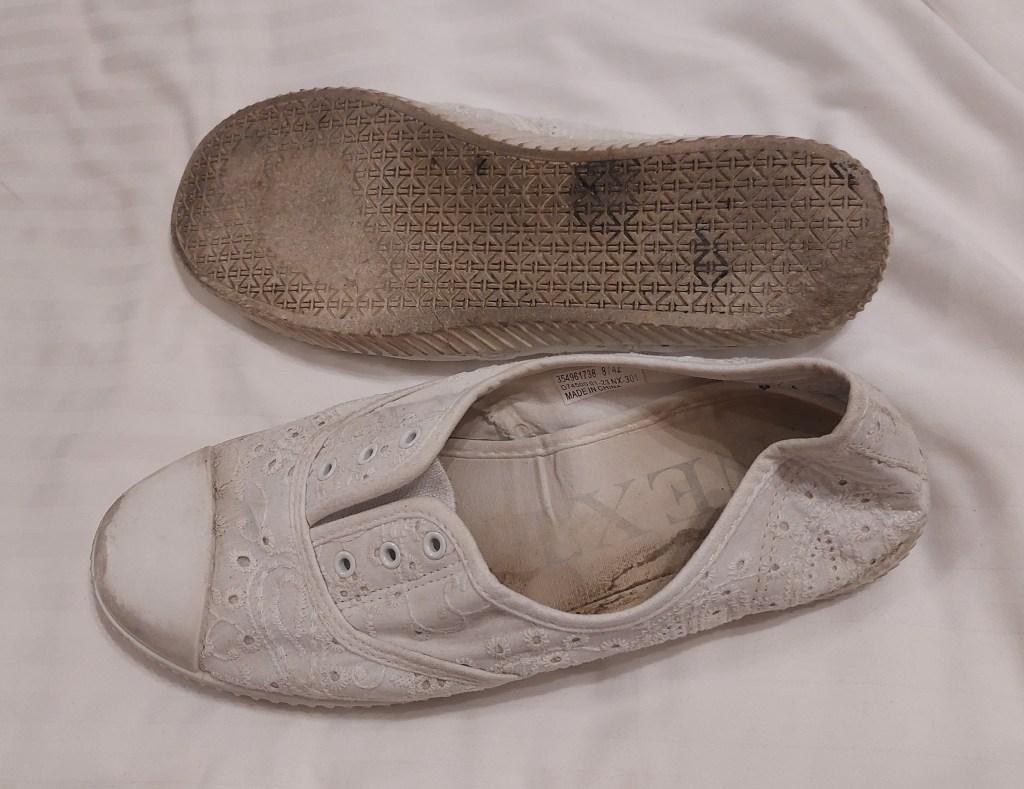
A final word on today’s post must go to my white pumps. They were new on in Krygzystan and have walked many miles, they are now dead. So, along with my last dress (temperatures are forecast to be no higher than 21 degrees from here on) these have been left in Brasov. They have served me well.
Tomorrow I am leaving Romania, I shall have to return as I feel I’ve barely scratched the surface. Along with its very interesting recent history, Transylvania in particular is so beautiful. I feel I write this a lot, but its somewhere I would recommended everyone visit – I’ll come with you!

 Travels with Kathryn
Leave a comment