Yesterday morning, I packed up and caught the train back to the airport for my flight to Tirana.
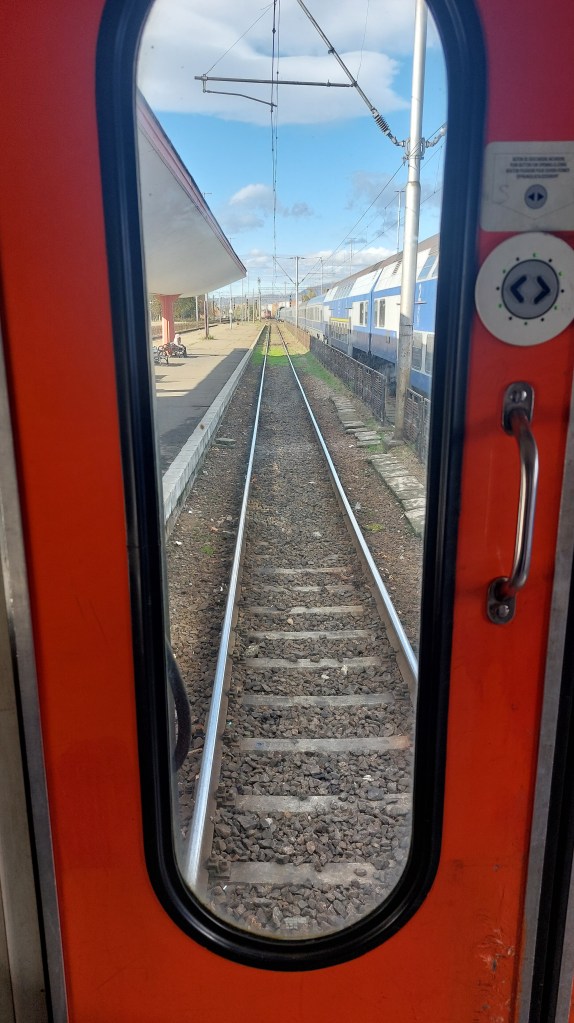
I had a very easy journey back to Bucharest, and then I changed trains to take the express out to the airport (which was packed, hot but a much fancier train than I am accustomed to). My flight to Tirana, Albania, was my first experience of Wizz Air, and I was pleasantly surprised – it felt more Easyjet than Ryanair (in the world of budget airlines). I landed in Tirana at 8.15pm (bang on time), a bus to the terminal, then an automatic passport gate (which meant I did not get my passport stamped which was rather concerning as Albania is not in the EU/Schengen!?), my bug was then 3rd off, and I was in my taxi within 15 minutes of landing. This may be a record!
It was a short drive to my hotel, which is fine, but it loses points for having the worst mattress of my trip – very elderly and squishy. However, they do have hotel slippers and a bidet, so they evidently think they are fancy!
So, Albania is another country I know very little about and shall endeavour to absorb as much as I can whilst I am here. Therefore, this morning, my first actiity was my usual walking tour. Tirana is the capital and largest city in Albania, but a relatively new city only became the capital when Albania became independent in 1912. Our guide started with a very fast potted history of Albania, so here goes: in ancient times Illyrians and Epirotes lived in the area, but annexed by the Roman Empire in 2nd century BC and after the division of the Roman Empire became part of Byzantium. In the 12th century, an autonomous principality was established as well as various kingdoms across the country. In the late 15th century Albania became part of the Ottoman Empire until 1912 when it declared independence and after WW1 the borders were settled by the Treaty of London which left a lot of Albanians outside Albania (much like Armenia, there are more Albanians outside the country than in it). One of the best named leaders of Albania was Ahmed Muhtar Zogoll, who ultimately declared himself as King Zog I between 1928 and 1936. Independence lasted until 1939 when Italy invaded, and then Albania became a protectorate of Nazi Germany. Following the war, the Communists rose to power led by Enver Hoxha (more on him and Albanian Communism below) and remained in power until the 1991 revolution. And breathe…
We started the tour in Skanderbeg Square:
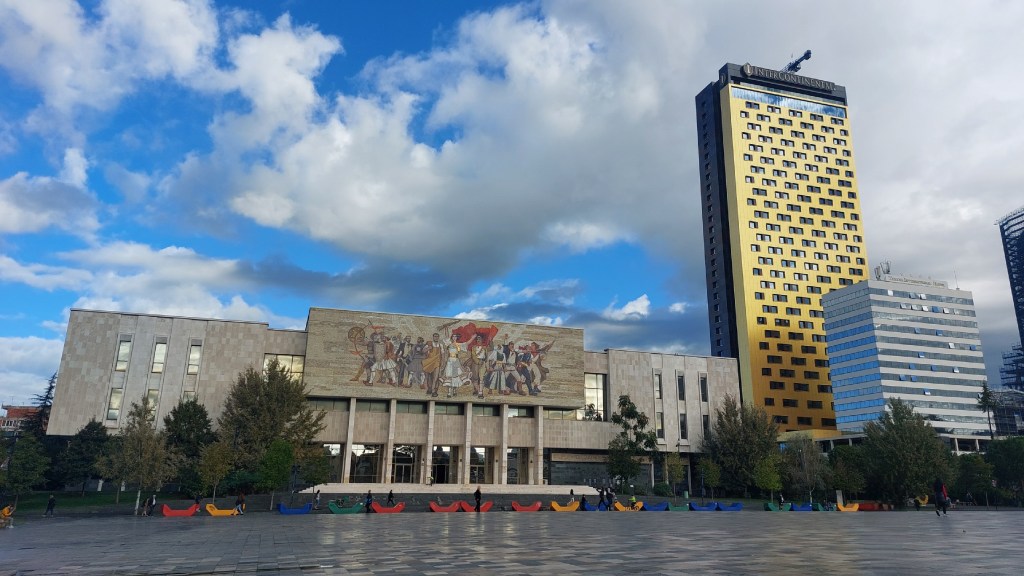
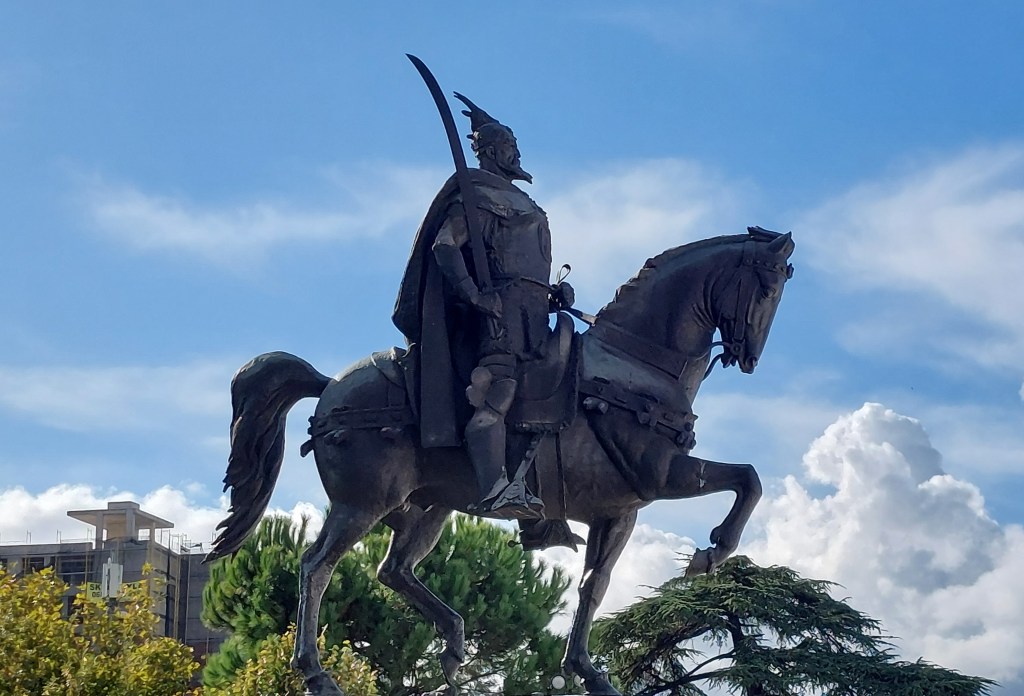

Skanderbeg Square (and the centre of Tirana surrounding it) was all built only 8 years ago. After the revolution with the opening up of Albania, there has been a huge program of building (often relying on foreign investment) and you can see in the background one of the 10 towers projects which is a project to build 10 unique skyscrapers in the city centre. Tirana is not a pretty city, but it avoided the Soviet building projects (Hoxha being more focused on totalitarian power and control), so it has a compact city centre, thus a walking tour is an excellent idea. Anyway, back to Skanderbeg Square, this is named for Skanderbeg who was a lord and military commander who led successful rebellion against the Ottoman Empire in the 15th century (his son was less successful, and later in the 15th century Albania fell back into Ottoman hands). As a child, he had been sent to the Ottoman court as a hostage and he was trained for the military and went on to serve in the Ottoman Empire for the next 20 years. However, in 1443, he deserted the army becoming ruler of an Albanian province and unified a number of other Albanian principalities. For the next 25 years, he fought the Ottomans many times and is considered one of the most successful opponents of the Ottoman Empire as he never lost a battle. His flag has become the flag of Albania – the double headed eagle being a symbol of the Byzantine Empire.
Anyway, we covered the main sites of Tirana:
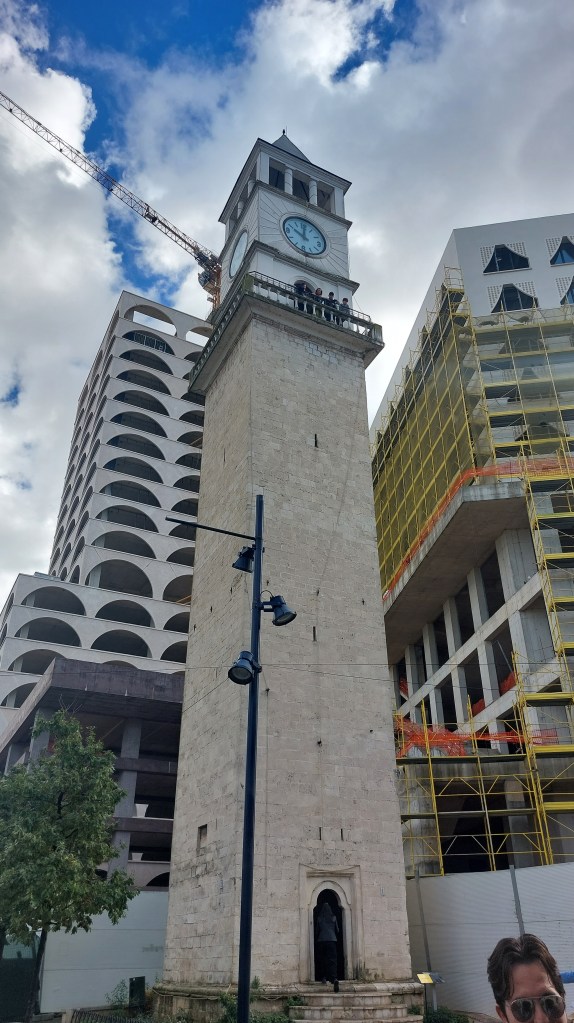
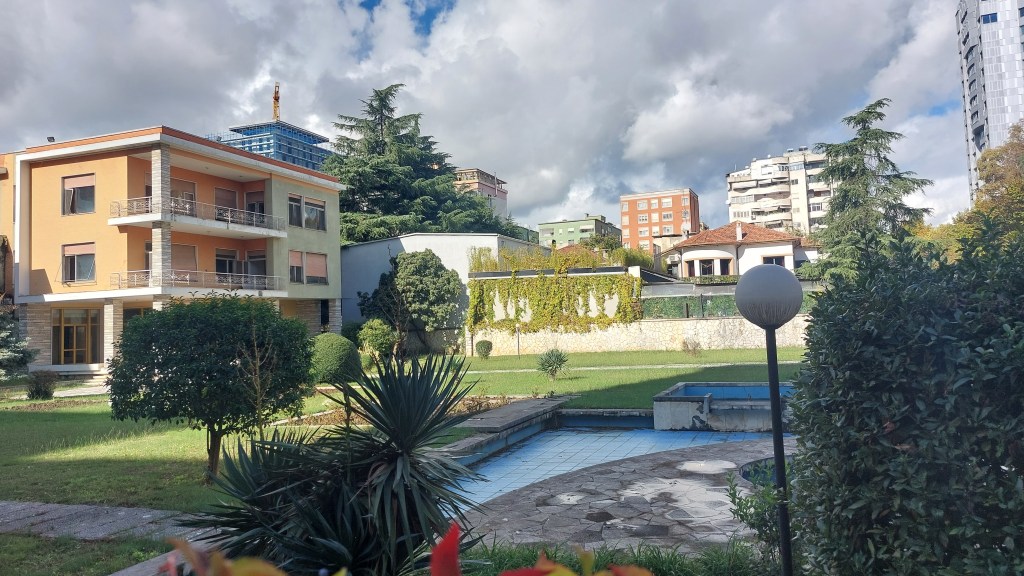
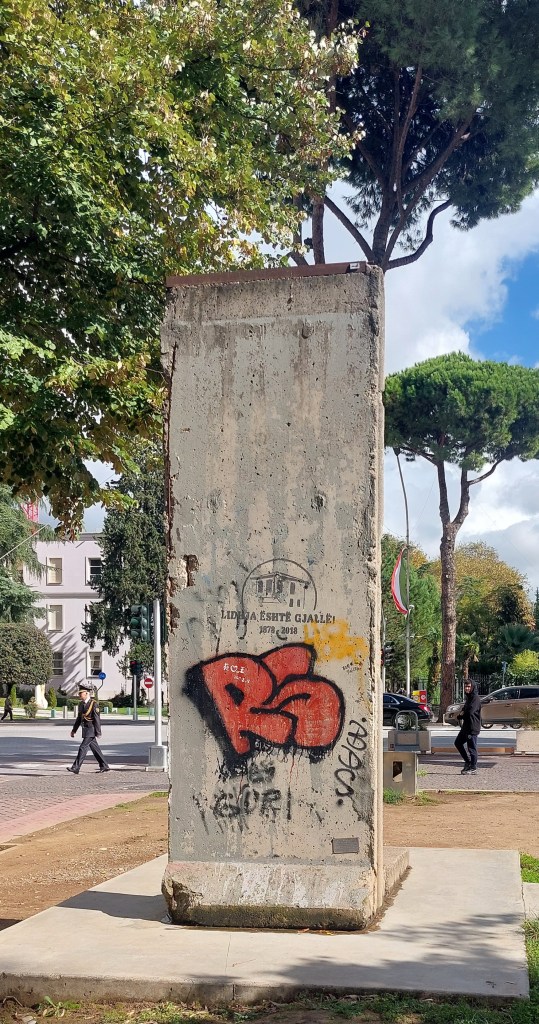
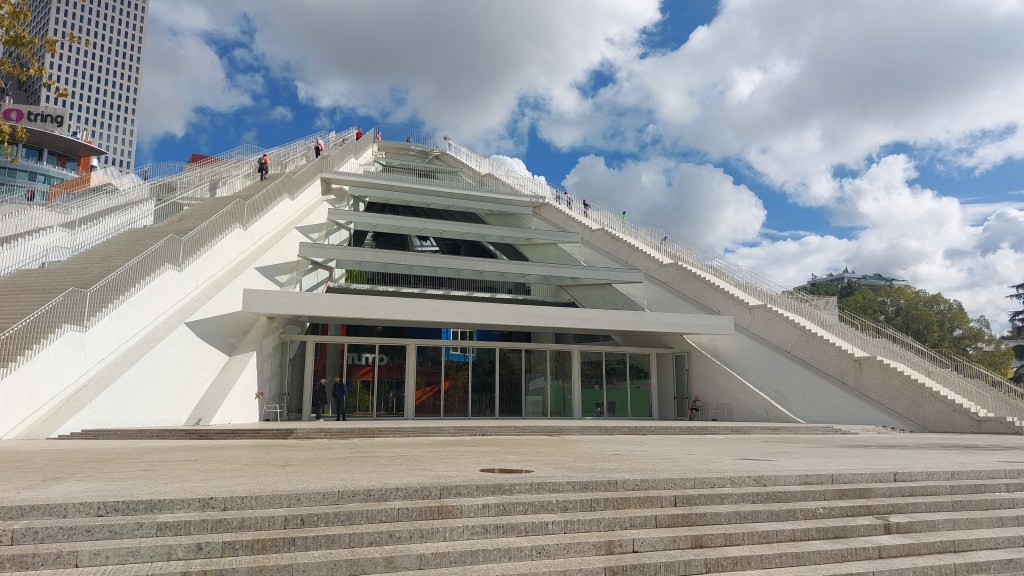
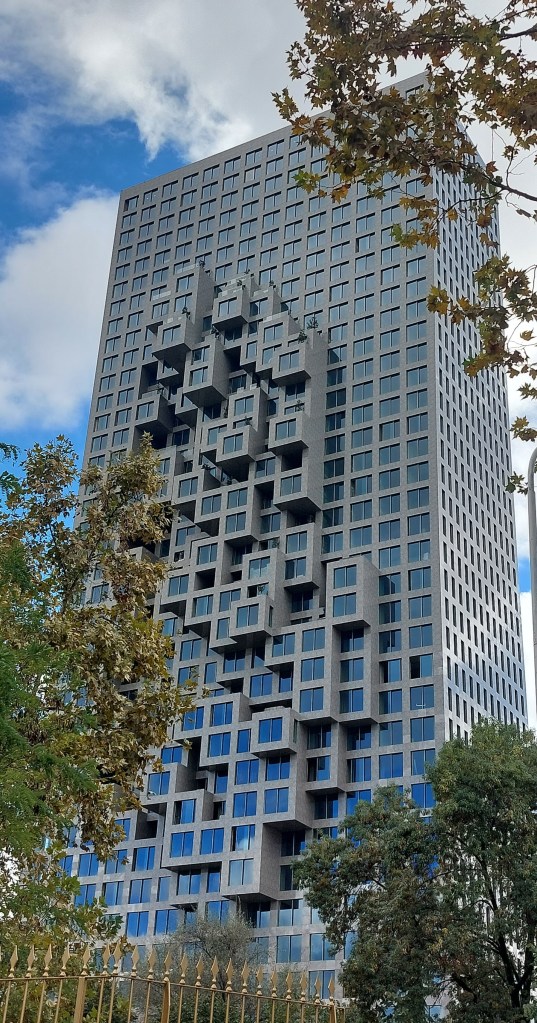
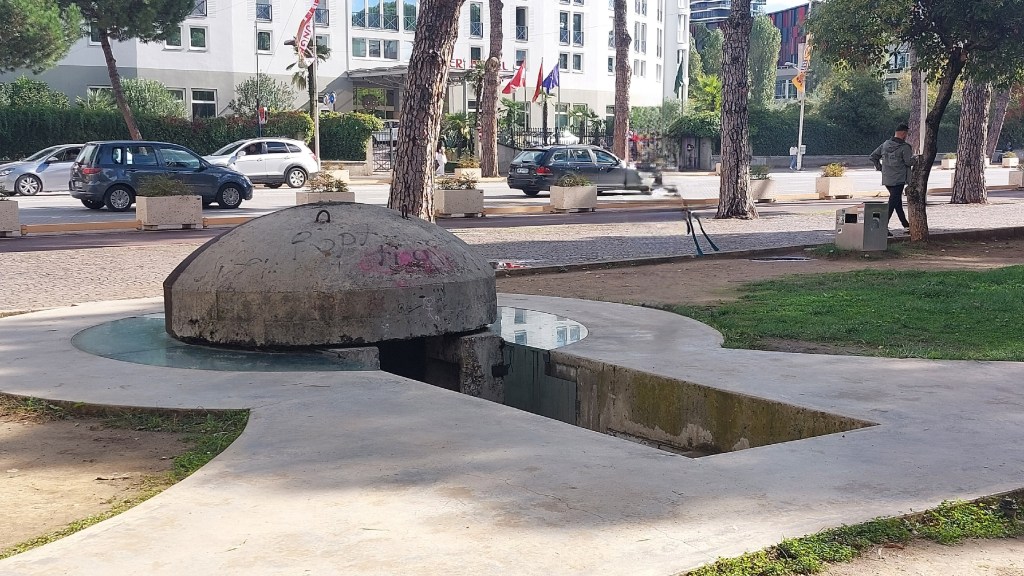
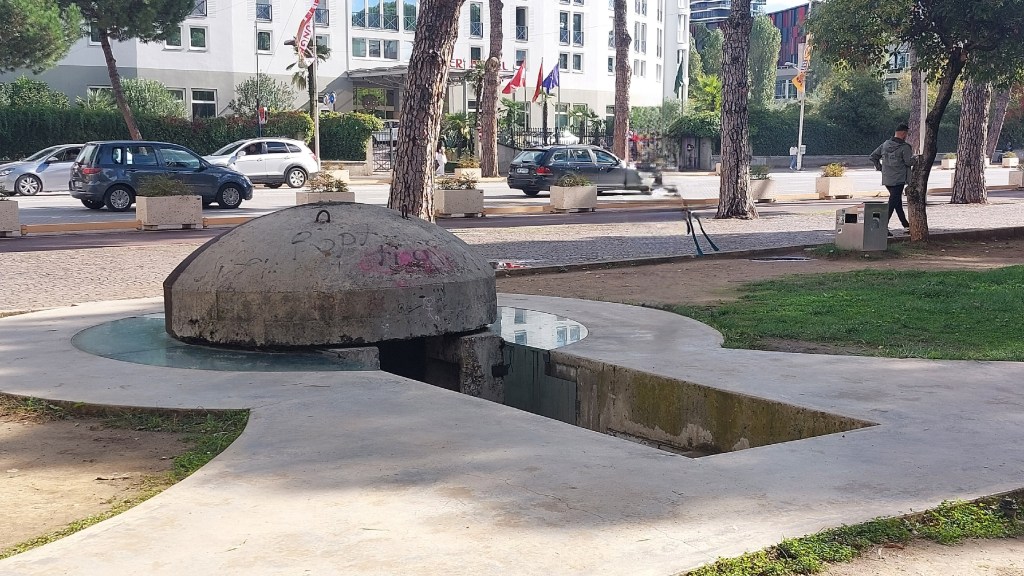
Something interesting you see all over Tirana are bunkers. There are some 750,000 across Albania built between 1967 and 1986 which the Communist leadership believed were going to be needed should Albania need to fight a war against Yugoslavia, NATO and all other countries which Hoxha believed would attack! Enver Hoxha was a hardline leader and he had fallings out with the USSR, China, the USA as well as their immediate neighbours (Greece, Yugoslavia etc) and withdrew from the Warsaw Pact so maybe his fear was not completely irrational, but imho this many bunkers was not the way to go – particularly as they cost a huge amount of money and manpower which could have been far better spent…

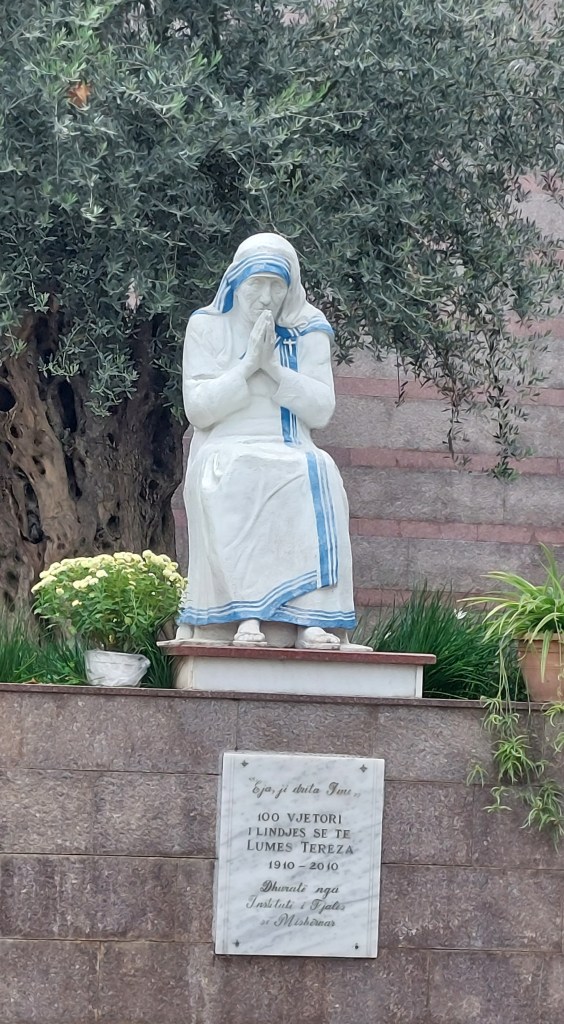
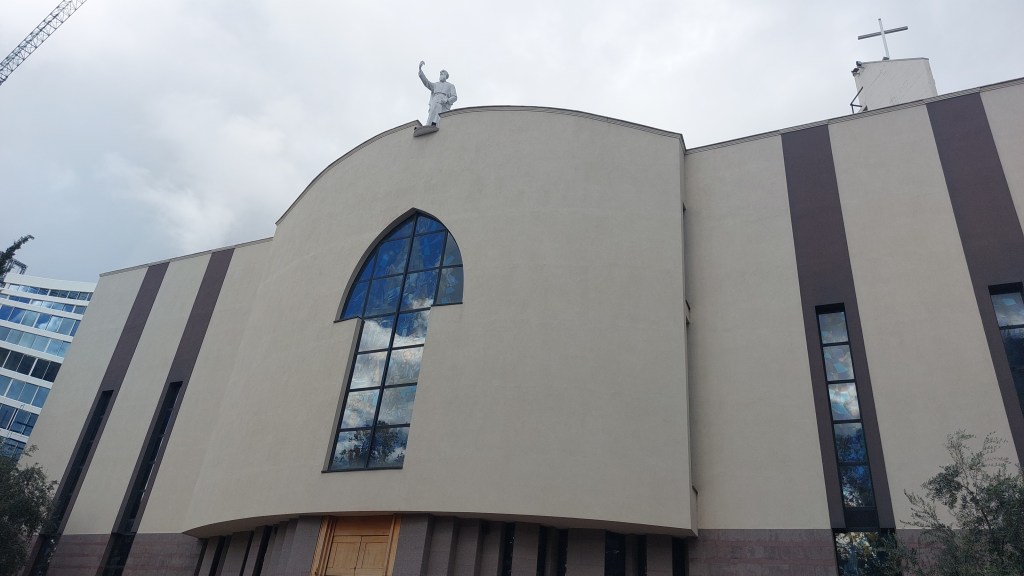
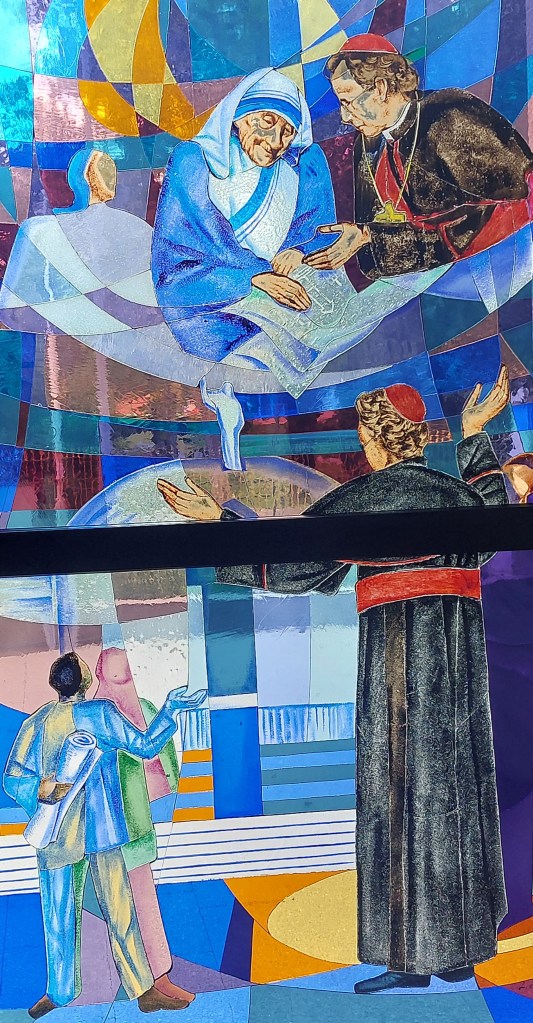
Now, I may not know many famous Albanians, but I did know one – Mother Theresa. Although she was born in modern-day Skopje (capital of North Macedonia), her parents were Albanian, and she considered herself to be Albanian, and the Albanians are keen to make sure everyone is aware of this. She helped to fund the building of the cathedral below, although due to the restrictions in Commnist Albania was never allowed to see it.
After the tour, I decided to visit a museum in a bunker (pictured above), which reconstructs the history of the Albaian Ministry of Internal Affairs and the policital police/Sigurimi between 1912 and 1991. Having travelled a little in this region, I have become familiar with Balkan style Communism, but it is becoming clear that the Albanian regime was the harshest and Enver Hoxha, a brutal leader. For Hoxha, the protection of the external borders was essential, as was the suppression of any internal opposition. Attempts to escape abroad resulted in the death penalty, and an estimated 9,220 people and 4,472 of their relatives were caught and murdered. The Sigurimi executed over 6,000 Albanians between 1944 and 1992 and many, many more Albanians (including their families) were held and tortured or sent to internment camps (which were styled on Nazi internment camps) during this period. It was a pretty shocking read. However, even by doing just a small amount of research online it is clear than some people did benefit under his regime (45% of Albanians have a positive image of Hoxha) and he did raise the literacy rate from 15% to 90%, brought electricity across the country and did a lot for women’s rights in Albania. However, putting aside some of this, he was another leader imposing his cult of personality and some of his wackier ideas included banning of beards (which he saw as unhygienic and too religious) and anything he consideed “too Western” such as long hair, pop music, Western clothes… Like many former Communist countries I have visited on this trip, there are definitely people who look back fondly and others who see it as a time of horror. I have downloaded The Albanians: A Modern History and will try and get a sense of both sides.
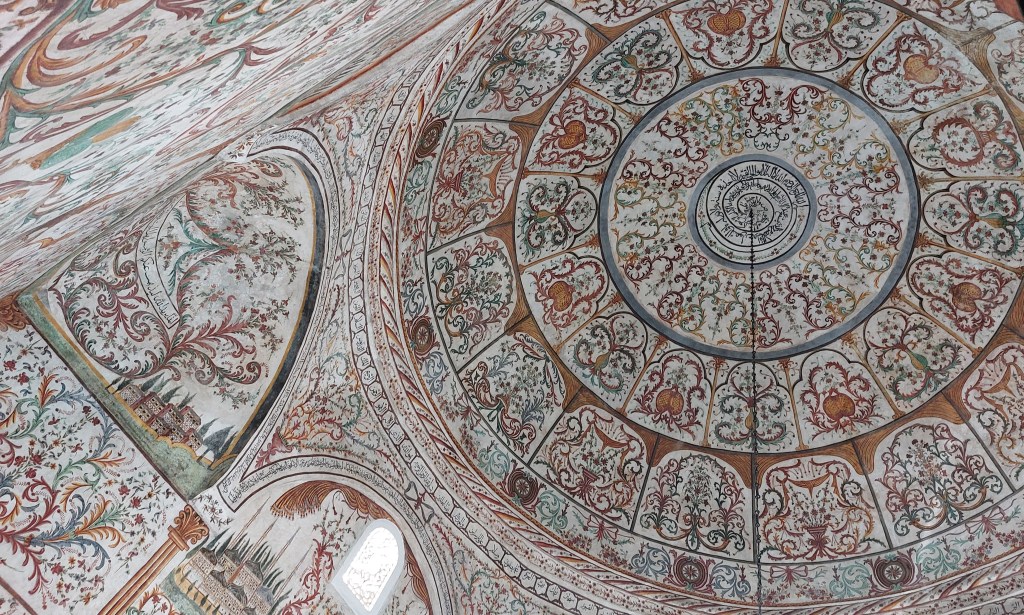
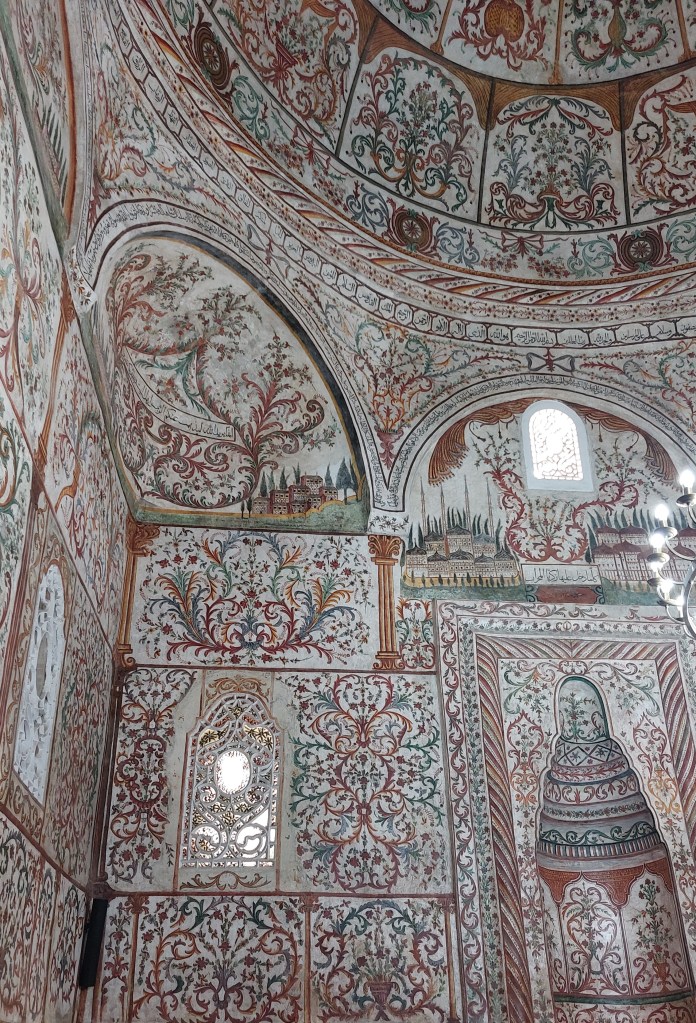
In order to recover from the museum, I visited the Et’hem Bej Mosque, which was built in 1791 and survived communism (when all religions were banned) by being used as a storage building. This also protected its original decorations, which have been recently restored:
I then went for a traditional Albanian restuarant and had a lovely meal of byrek (a filo pastry pie filled with greens, white cheese and pinenuts – think spanakopita) and speca te mbushura (peppers stuffed with rice and spices). Being now somewhat stuffed myself, I waddled back to the hotel to pack as tomorrow I am off on a 4 day trip to see the “cultural pearls” of Albania, Kosovo, and North Macedonia. I wonder if I will get my passport stamped at any point?
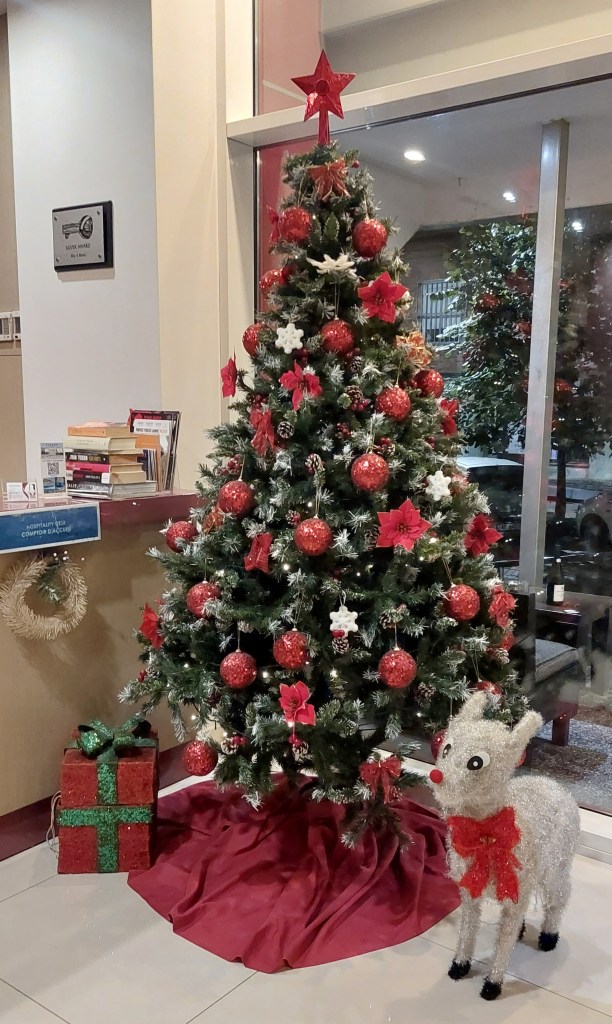
And today’s final thought. I was very confused on arrival at my hotel last night to see:

 Travels with Kathryn
Leave a comment