What a difference a day makes. So, yesterday it was a beautiful sunny day in Belgrade and I decided to make the most of it by having a delightful breakfast outside (a Serbian pancake filled with egg and cheese so huge I could not finish it) and joining a walking tour. My plan for Belgrade is to do 2 walking tours, downtown (today) and then the 20th century (tomorrow) after my brother arrives, and I will re-do the highlights for him (which I did, and you can see photos from both days – you can tell which ones by the weather!) I had intended to do both tours with the same company, but as I happened upon another (also free) tour setting off 30 minutes earlier I decided to join that one.
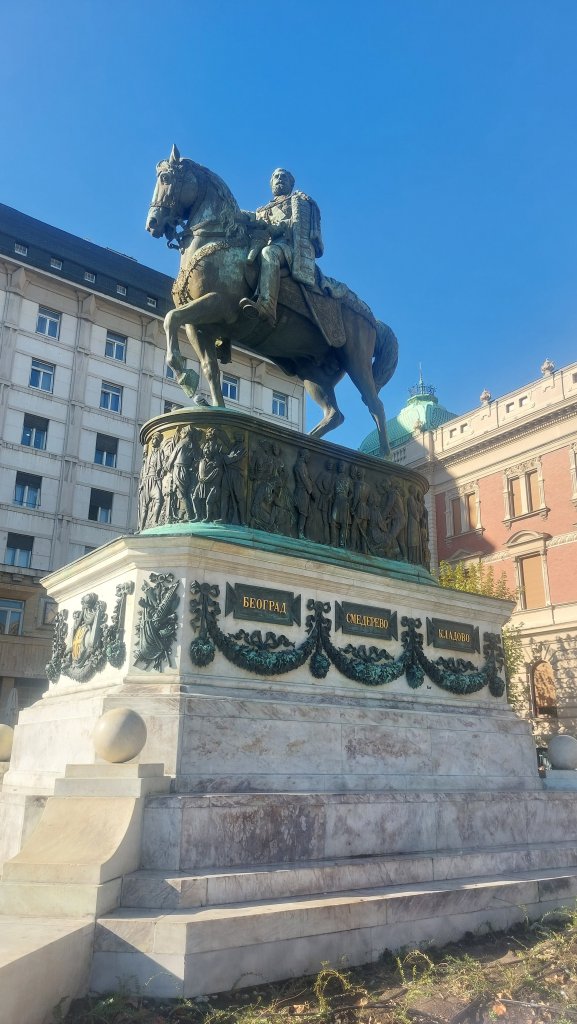
We started in Republic Square, which also happens to be where my hotel is, and you can actually see my hotel room in the background of this shot. As I mentioned, it is not a fancy hotel, but it probably is the best view I have had of my whole trip! Republic Square also has the National Museum and the Opera House.
As is their want, the guide started with a canter through the history of Belgrade. We also have another “oldest continuously inhabitated cities” in Europe, with the city being first inhabited since 6th millennium BC. The region fell to the Romans in the 2nd century, and then in 520, it passed between the Byzantine, Franks, Bulgarian, and Hungarian Empire before being conquered by the Ottoman Empire in 1521. Following the Serbian Revolution in 1835, Belgrade became capital of the country of Serbia, although Northern Belgrade remained the southernmost point of the Austro-Hungarian Empire until 1918. After WW1, Belgrade was the capital of Yugoslavia, and then after its dissolution, became capital of (let’s say for ease of reference) Serbia. From this potted history, you may be able to gather than Belgrade is in a particularly strategic position and as a result the city has been battled over in 115 wars, razed 44 tmes and bombed 5 times. This leaves the city we have today, and therefore, it does not have beautiful old buildings, as there just were not any left. However, our guide was keen to point out that Belgrade is much more archtictually advanced than the rest of the country.
Now, on to actually what we could see before us, the statute of Prince Mihalio. This statue errected in 1882 was the first public monument in Serbia with the representation of a ruler on a horse. He ruled (twice, having been ousted 3 years in, before being allowed back when he ruled from 1860-1868) when Serbia was an autonomous principality within the Ottoman Empire. However, his family fell to the Karadordevic dynesty who, if Serbia/Yugoslavia still had kings, would be rulers today.
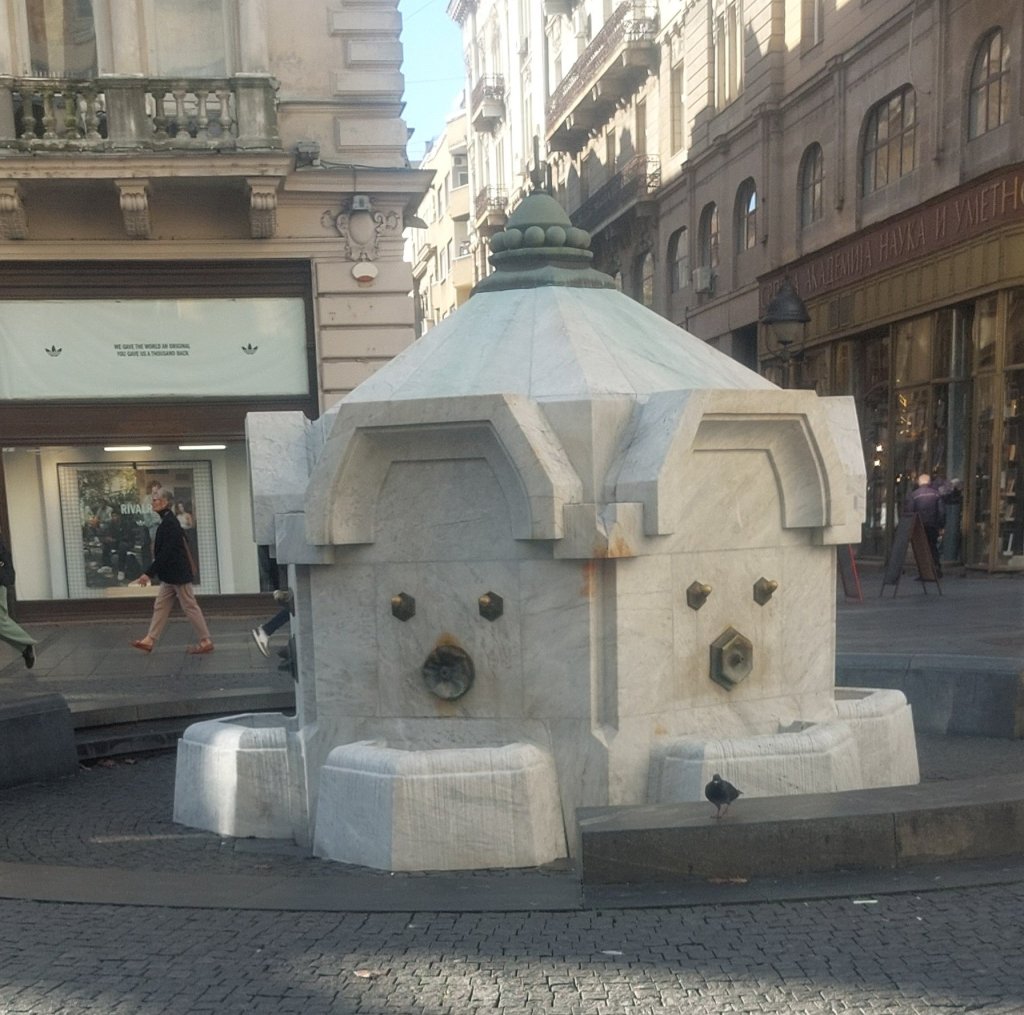
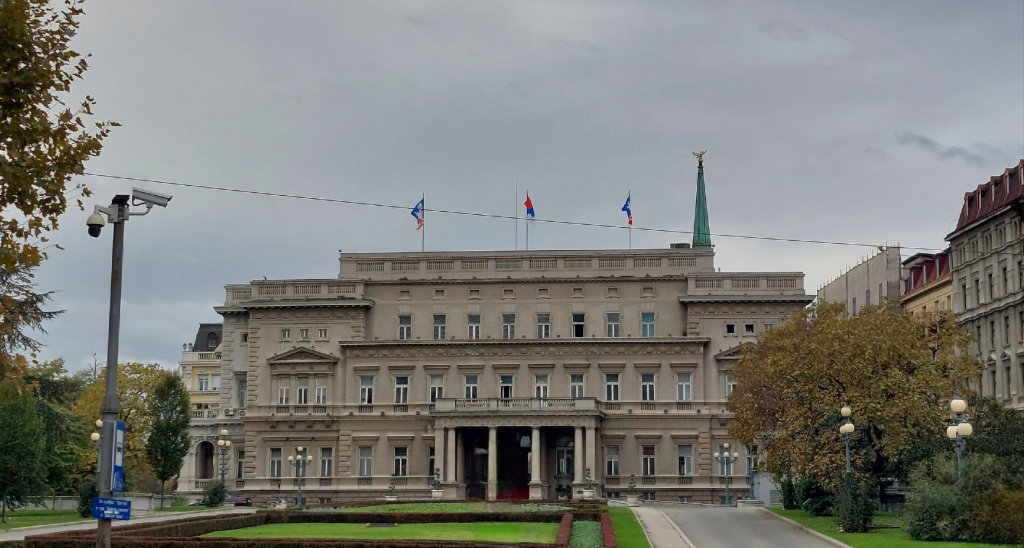
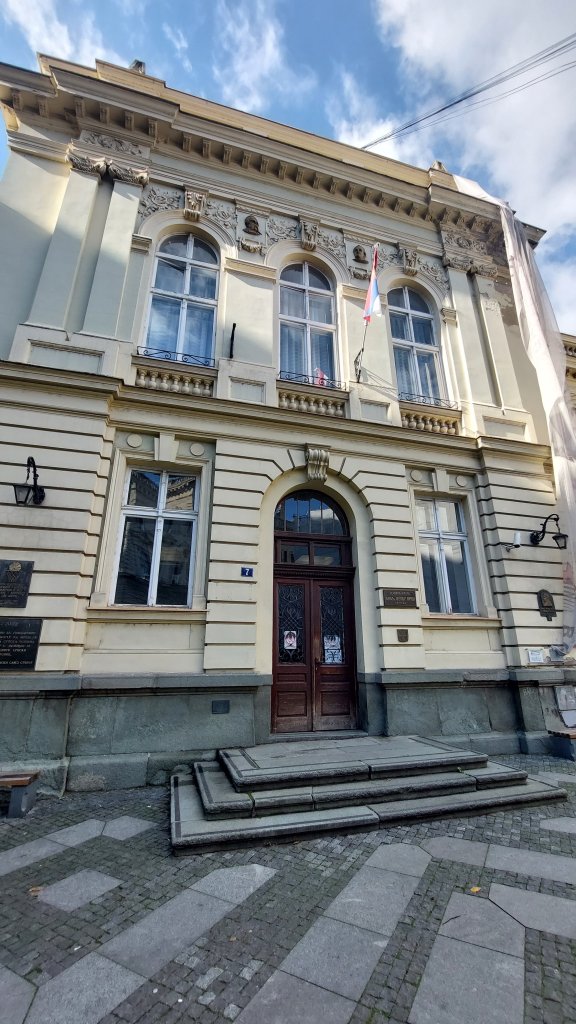
We started our tour by walking around some of the pedestrianised streets and seeing a number of refurbished buildings. A small selection below, including the Petar I Elementary School, which is where the first ever basketball match in Belgrade was played in 1923. Today, Serbians (Serbians are very tall) are basketball enthusiasts.

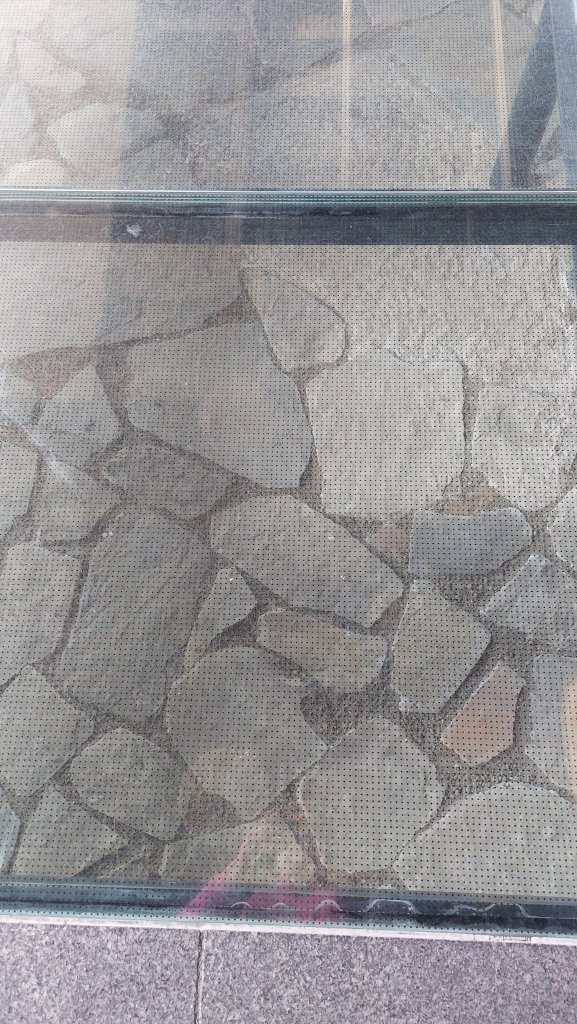
Belgrade has one of the best preserved sections of the ancient Roman road linking Istanbul/Constantinople to Rome. However, this is not really promoted or even labelled and is on the floor under some glass in the entrance to a shopping centre. An opportunity wasted, perhaps?
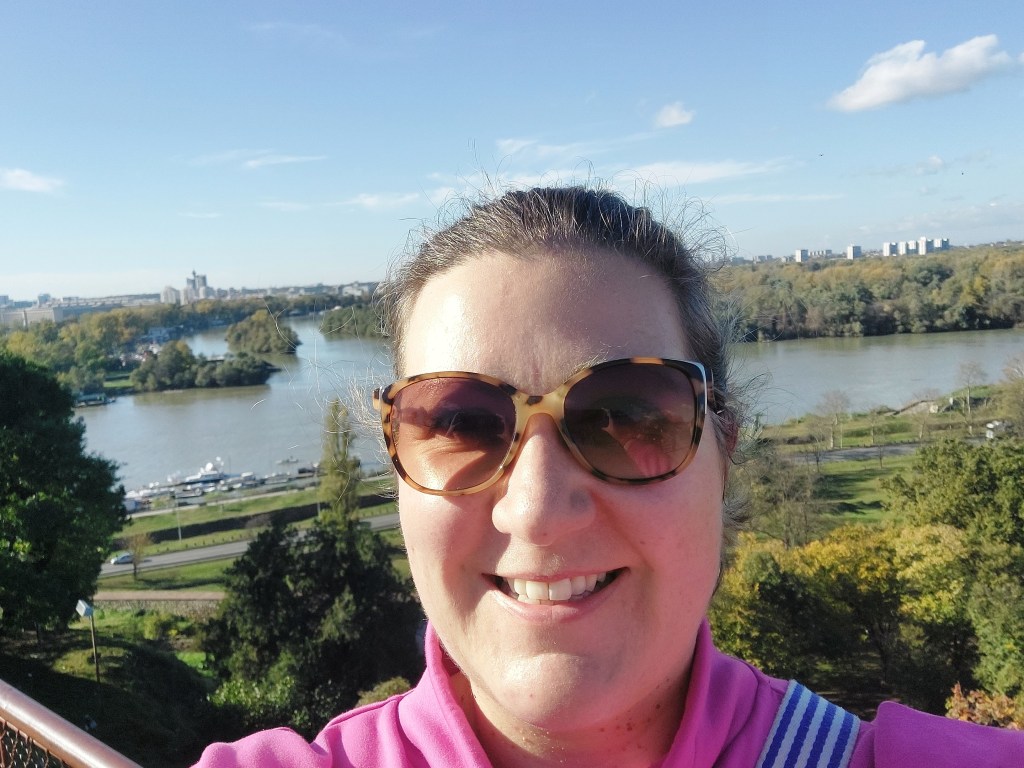
Our final stop was exploring Belgrade’s fortress. When I took him here the next day, my brother was somewhat disappointed to find it doesn’t have a castle/fortress. What it has instead are walls, a few buildings and a great view over the rivers:
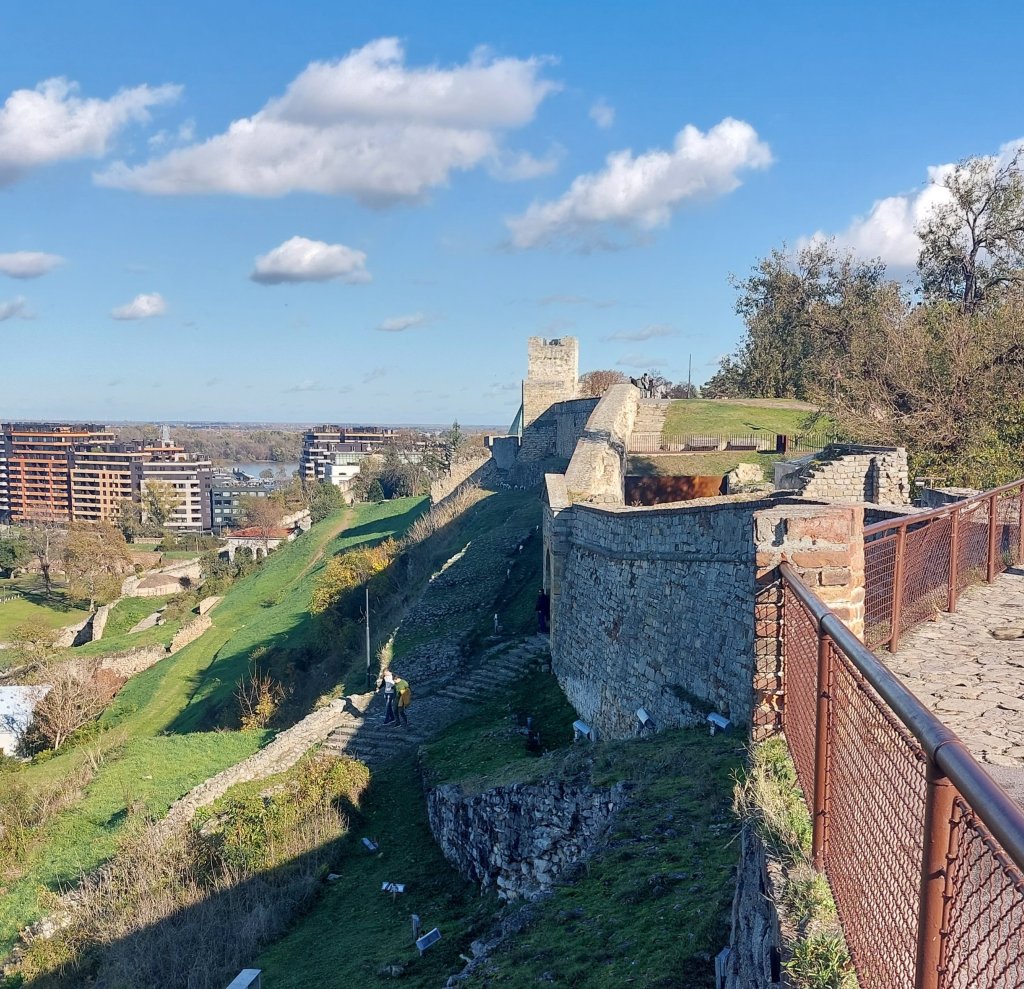
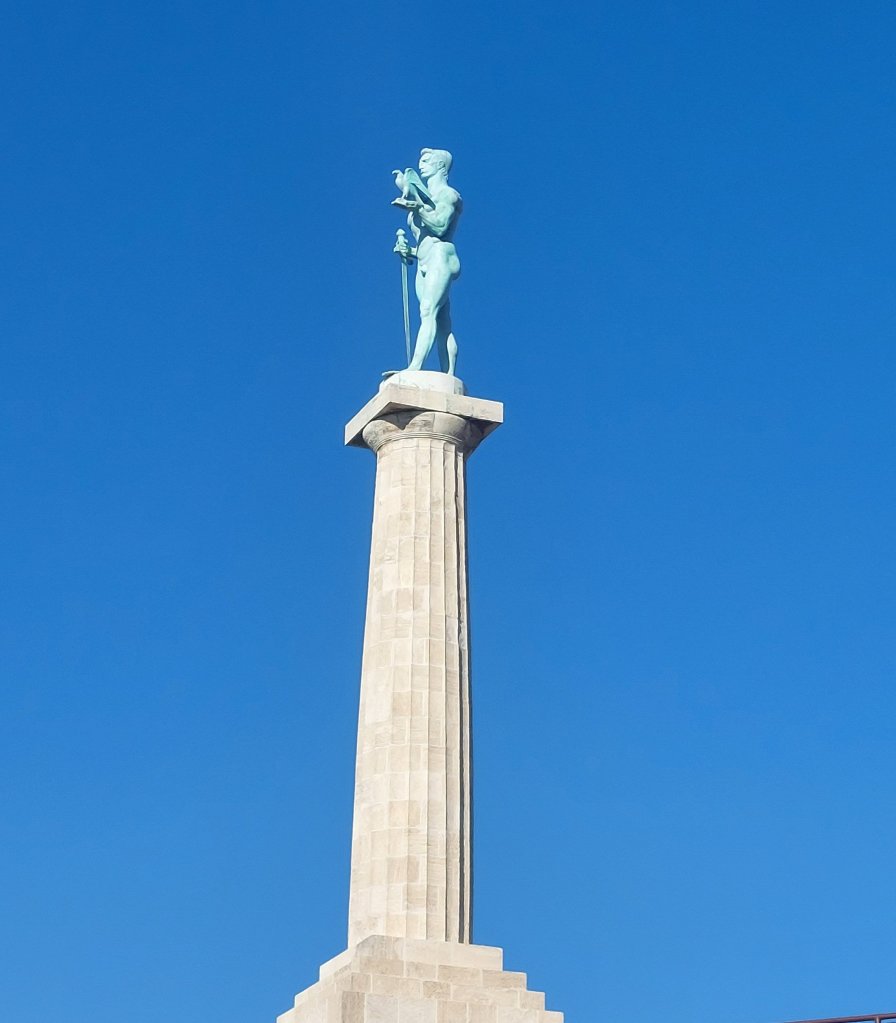
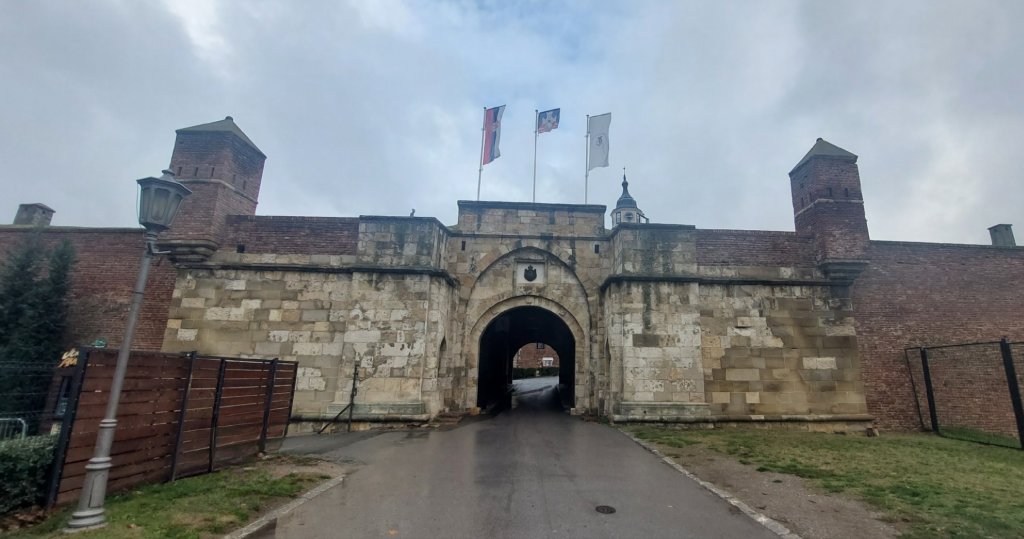
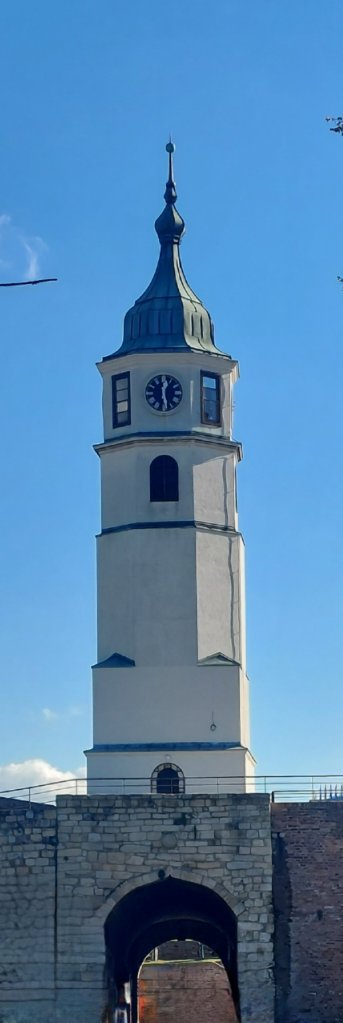
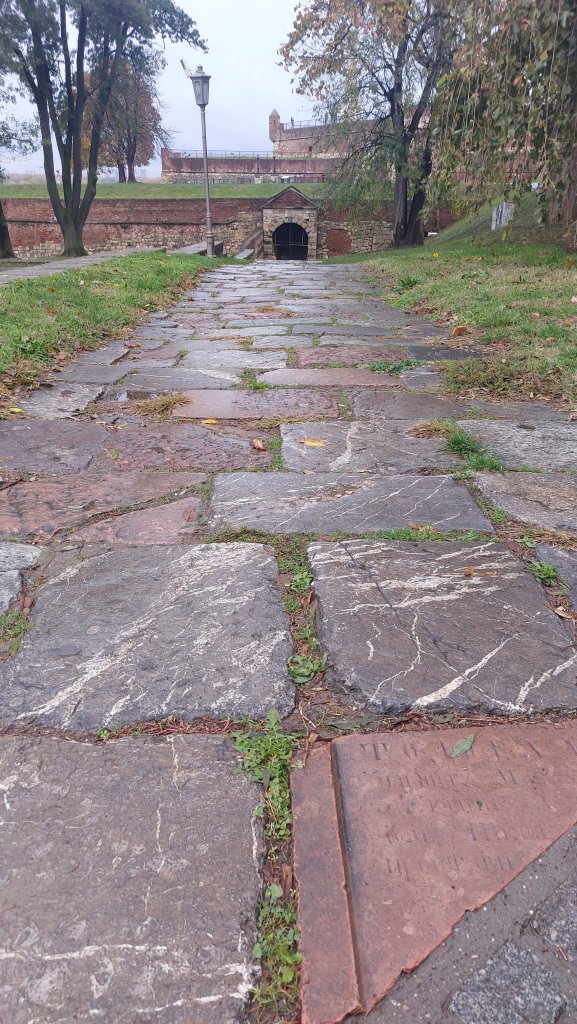
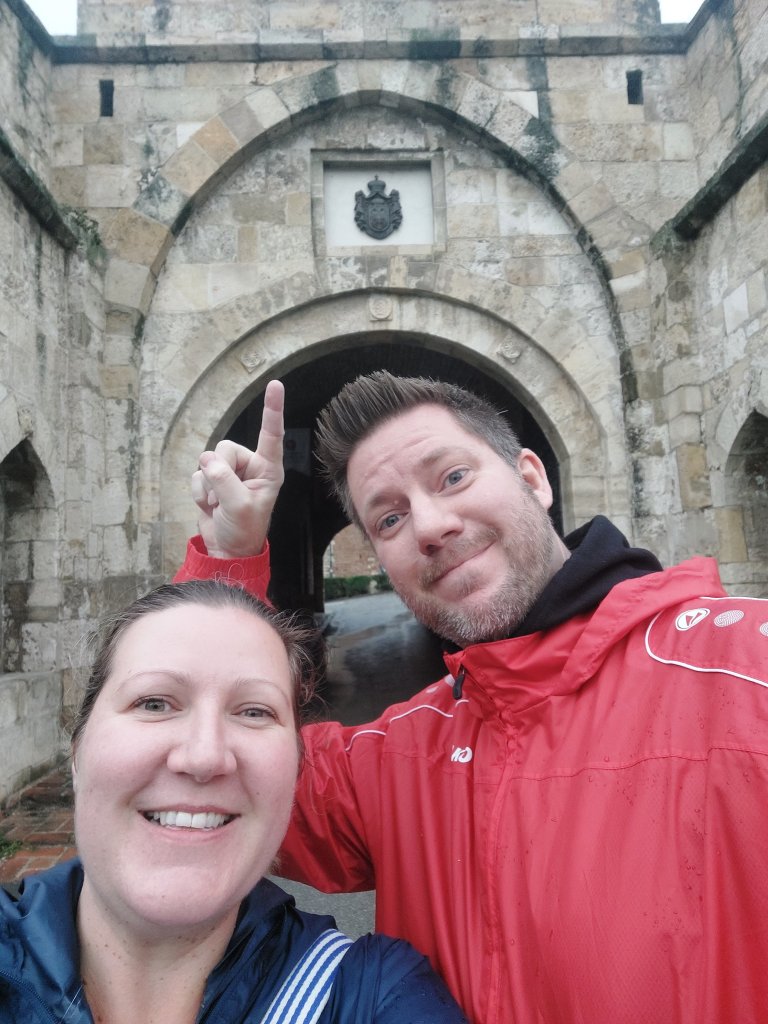
Belgrade fortress is the core and oldest section of Belgrade and for centuries, the entire population would have lived inside its walls. Some kind of fortress existed in the 3rd century BC and continued to be added to, and was used, including during WW1. I got the impression that no one is really sure to do with what is here, and over time there have been lots of suggestions as to what to do with it from an amusment park, to a lake, a zoo and even an Olympic staduim. Currently, it is a perfectly nice green space to wander around in. Done.
Belgrade fortress unsurprisingly has a stategic position at the confluence of the Sava and Danube rivers, but more than this, for a long time, it was the border between the Ottoman and Austro-Hungarian Empires. In the photo below, you can just see the top of Zemun Fortress, which was held by the Austro-Hungarians:
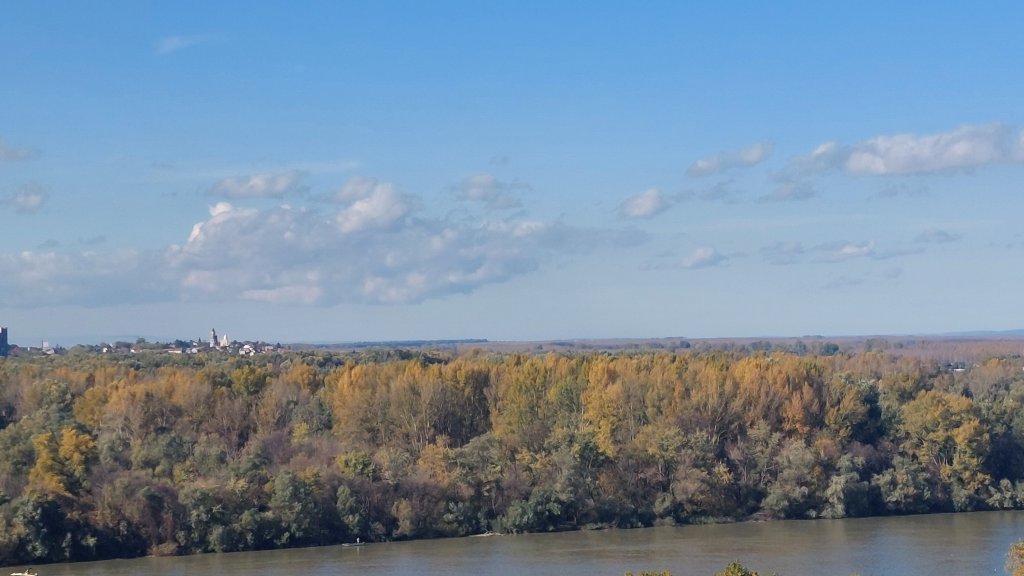
Eventually, the Austro-Hungarian Empire did succeed in taking Belgrade, but ultimately, Serbia became independent in 1878 with the rule that they could not unite with other “Serbian” nations occupied by Austria-Hungary i.e Bosnia and Herzegovina. This was something an issue, and the plan to assassinate Archduke Franz Ferdinand (heir to the empire) was made in Belgrade and carried out by a Bosnian Serb in Belgrade. When the Austro-Hungarian Empire found out about Serbia’s involvement, they decided to take action against Serbia and demanded their army investigate the assasination, Serbia refused, so Austro-Hungaria invaded (the first nation invaded during WW1), Russia came to assist Serbia, and the rest is history…
By now, it is mid-afternoon, so after a quick hotel stop (to find out my brother’s flight was delayed by 1.15hr), I caught the bus (which took FOREVER) to collect him from the airport. Usually as he is rather on the tall side, I have no problems in spotting him in a crowd, however, he came into arrivals at the same time as a Berin basketball team so was somewhat midgety in comparison! Anyway, I retrieved him, we dropped his bags off in the hotel (I am now the proud owner of new thermals and waterproof trousers, even if they are all rather on the big side!) and headed to Skadarska for dinner and authentic (if not rather loud) musician-ing.
We both slept well (earplugs were firmly in!) and were greeted by a grey, rainy day – we started with breakfast (second breakfast for James who insists on getting up in the middle of the night) and my second walking tour. This tour was focussed on the 20th century, and although the guide was incredibly enthusiastic (bless him) he was perhaps trying to give us too much information in too little time -less than half of the people made it to the end of the tour, but we (me being the history nerd of the party) did! A few highlights:
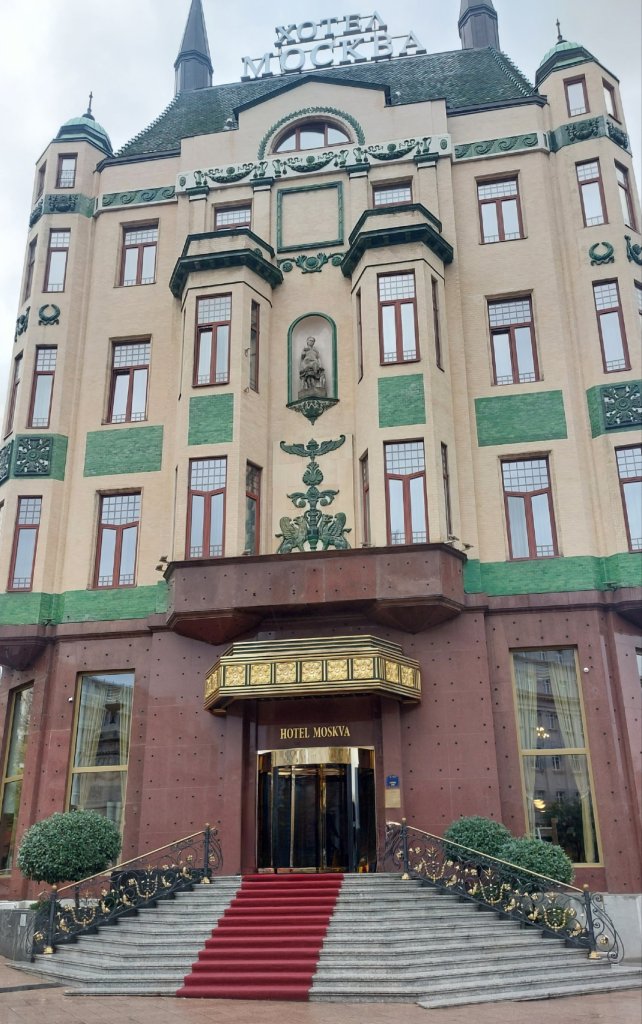
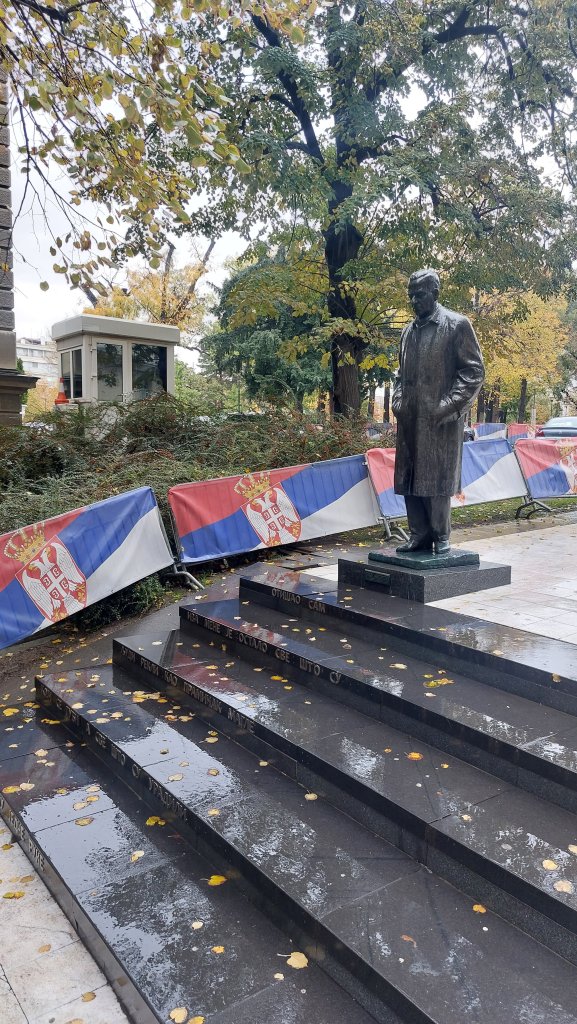
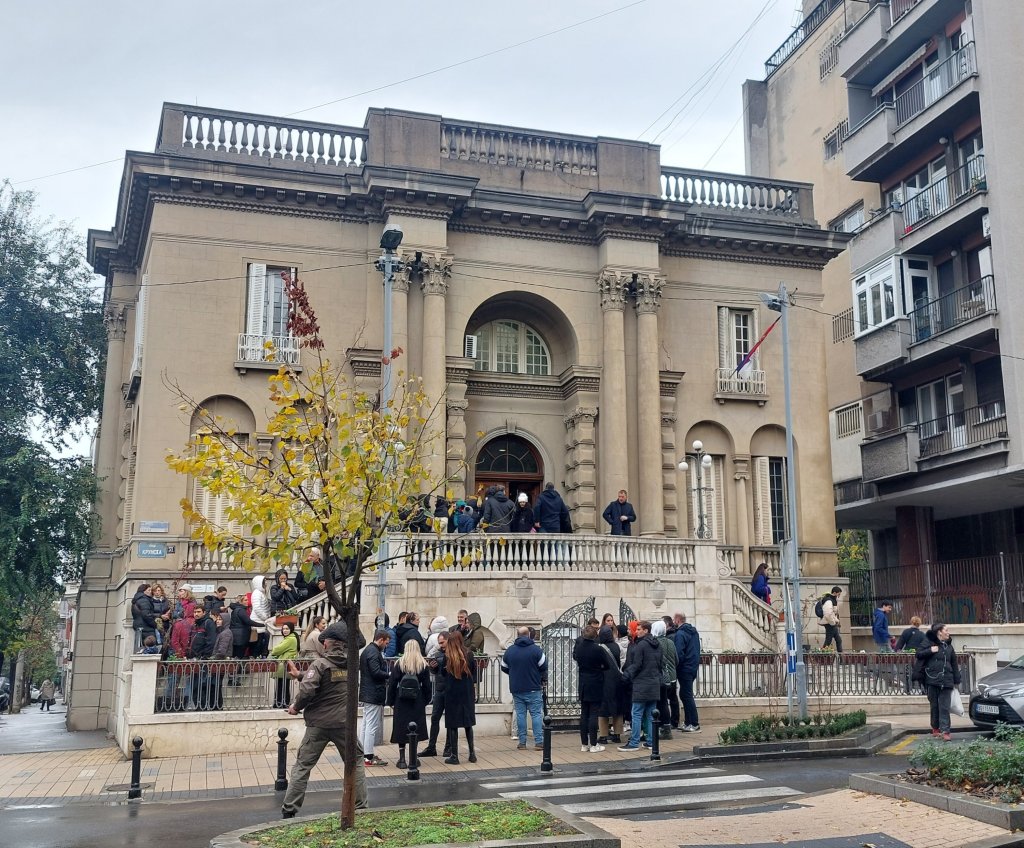
Hotel Moscow is the oldest still functioning hotel in Belgrade, just outside it (about where I took the photo) was the place of the last fight of WW2 between Germany (who had occupied Belgrade) and Serbia/Russia who “won”.
Below is, imho, an excellent sculpture. This is Patriach Paul, who was head of the Eastern Orthodox Church between 1990 and 2009. He was considered to be a “walking saint” based on his simple lifestyle. For example, he refused to own a car/be driven in a car until every household in the region could also afford their own. His statue is here with him waiting for his number 6 tram home.
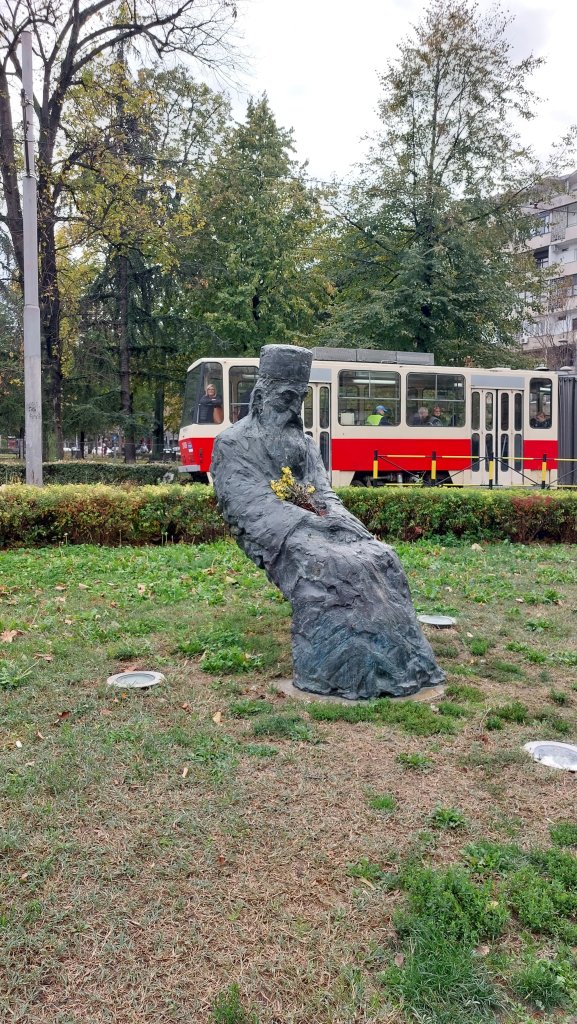
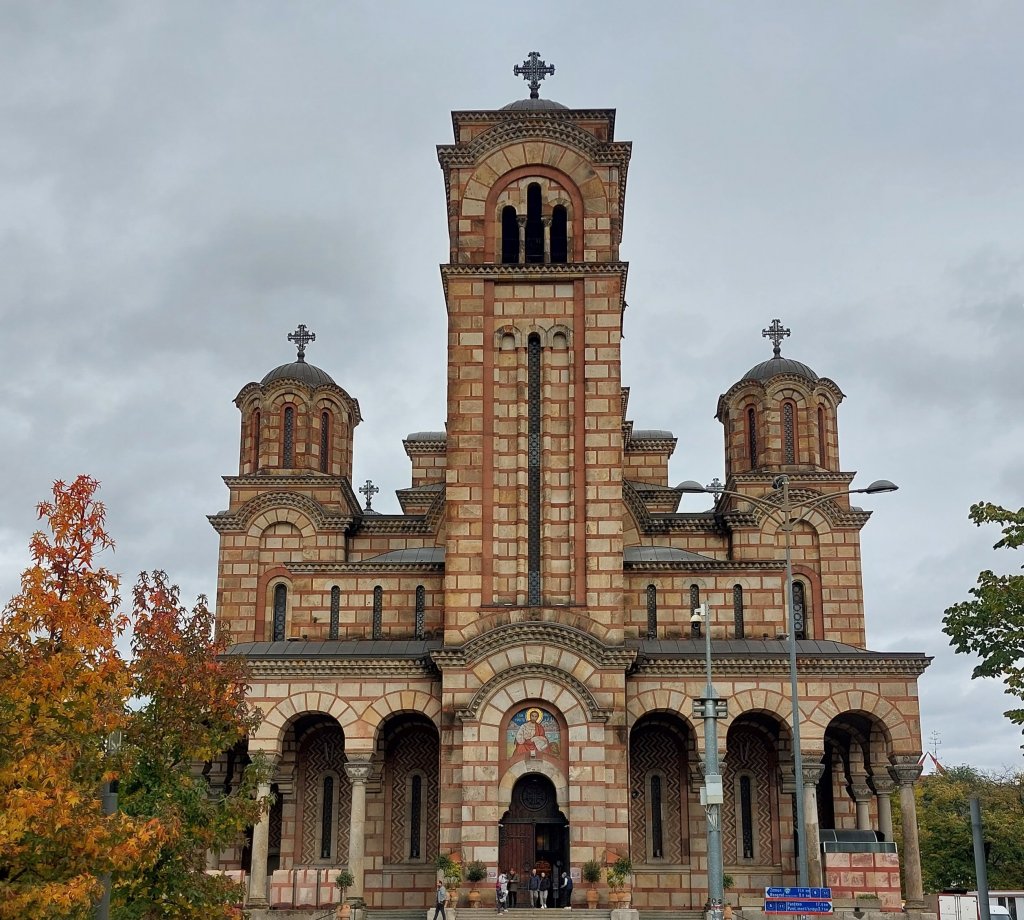
Behind St Mark’s (and where this statue is located) is a semi-destroyed building and a monument to it. This site is what were the Headquarters of Radio Television of Serbia which was bombed on 23 April 1999 as part of the NATO’s aerial bombing campaign against Yugoslavia (seeking withdrawl of Yugoslav forces from Kosovo) and 16 people were killed. Our guide would only have been 4 years old when this happened, yet he was filled with such hatred and anger against NATO for this “illegal” action. The NATO bombing in Yugoslavia is still a very controversial topic, particularly this bomb, as it was a non-milliary target. I have now heard two Serbians explain that they support Russia’s position for invading Ukraine because of Ukraine threatening to join NATO. I heard a very different story in Kosovo.


We ended our tour at Saint Sava Temple (see yesterday’s entry) and then walked back to the fortress (see photos above). By this time, we were both ready for a sitdown and dry out from the rain. We then headed out for a delightful dinner including (SO EXCITING):

Back to the hotel where I have typed this up, and James is watching season 2 of How I Met Your Mother. I shall encourage him to read the relevant section of the guidebook for tomorrow’s day trip to Novi Sad. I shall also be reading it as well as continually checking a much important weather forecast. Hurrah.

 Travels with Kathryn
Leave a comment