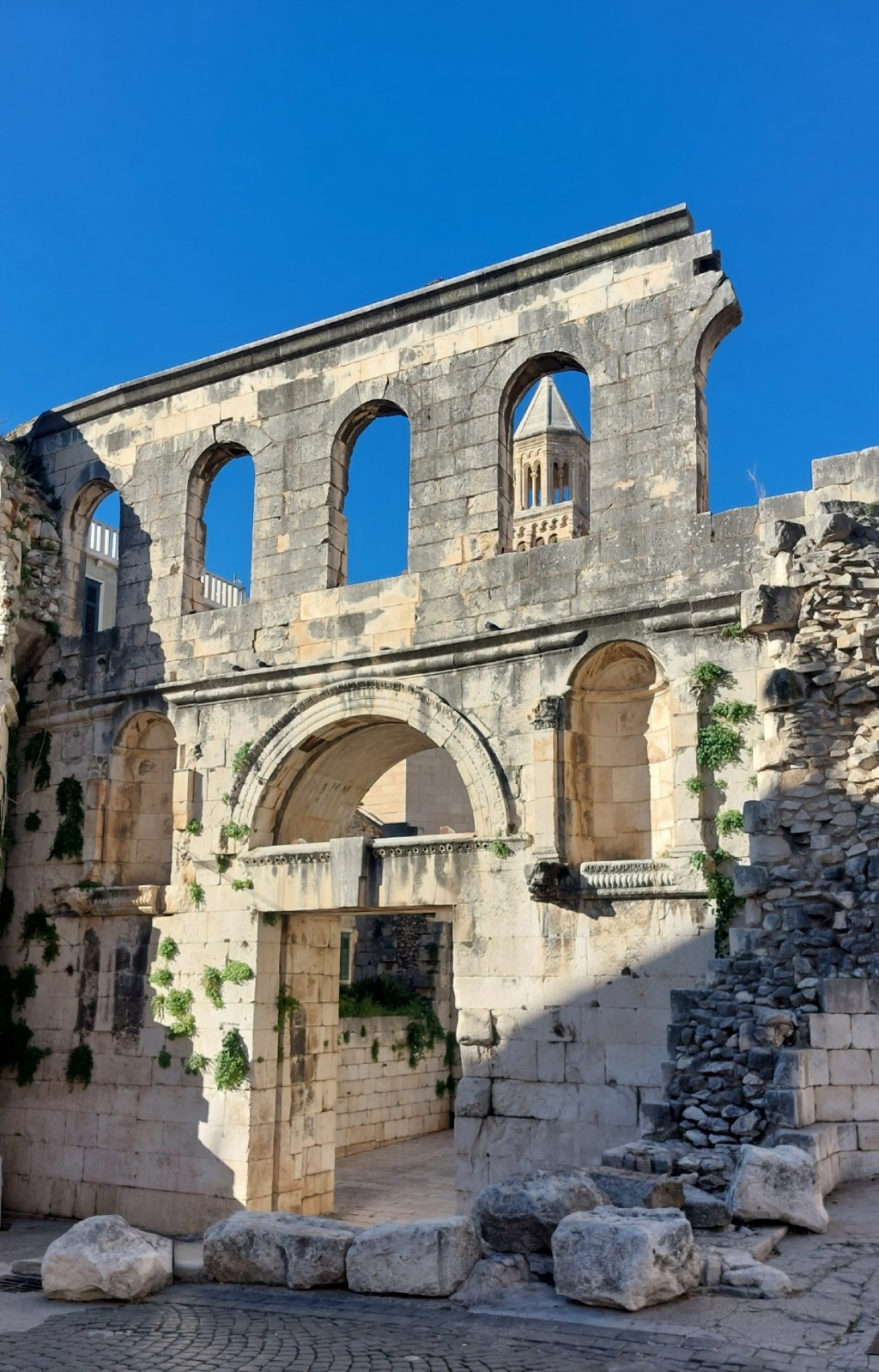
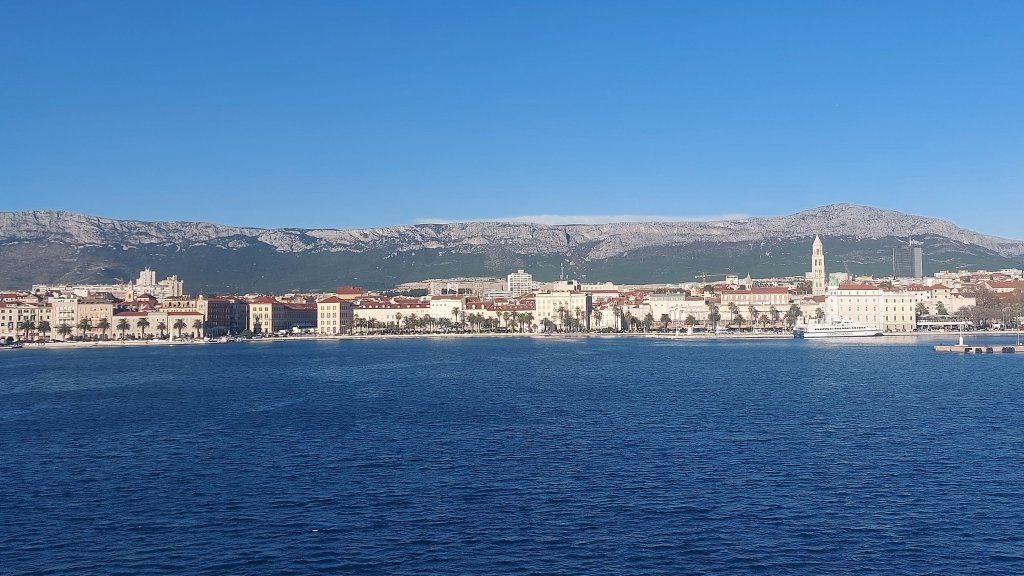
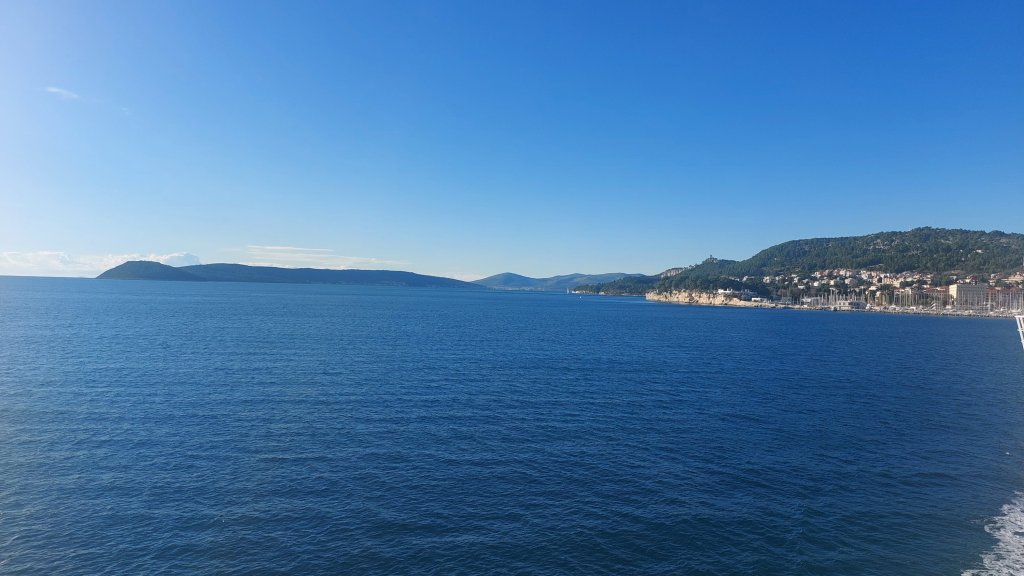
So, I awoke this morning (yesterday) to a beautiful vista from my “sea view” room (with balcony no less):
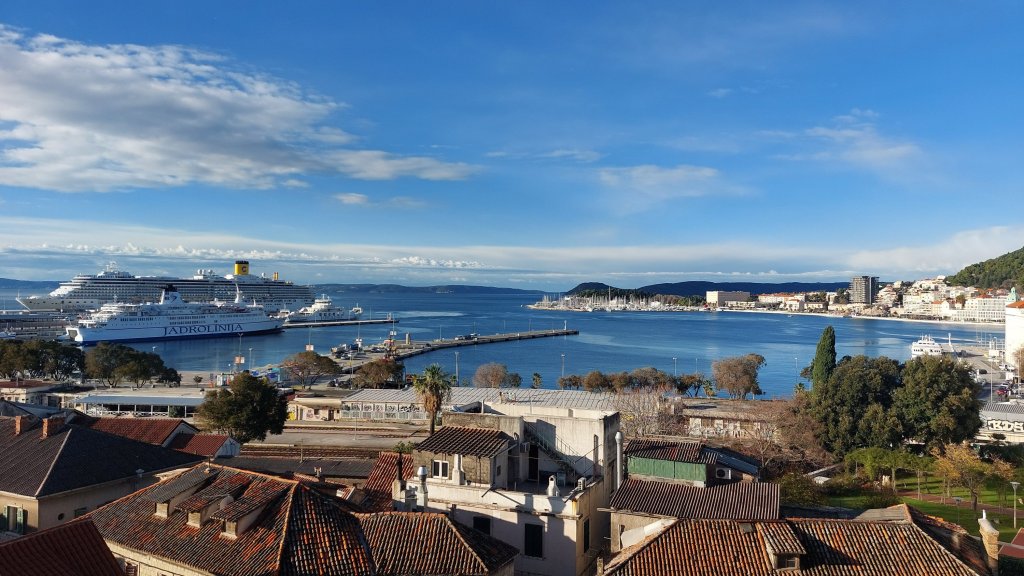
As usual, our day in a new city started with a walking tour. Split is the second largest city in Croatia and dates back to late Roman times. However, for much of the Roman era there was only a very small settlement here, and the nearby much larger city of Salona (home to 60,000 people and capital of the province) was the far more important place. During the civil wars between Ceaser and Pompey, Salona sheltered Caeser, and after his victory, he rewarded the city, and it grew to be one of the largest Roman cities. The story of Split really only begins with Emperor Diocletian. Diocletion is something of a Roman phenomenon. He was born in Salona into an ex-slave Christian family who joined the Roman army and progressed through the ranks. He ultimately became Emperor and ruled for 21 years before retiring (this was VERY unusual for Rome when most Emperors expected to, and were, murdered!) and he built himself a retirement palace at Split where he lived from 305AD until his death in 315AD. Split today still has the ruins of this palace, and also (mainly) medieval buildings built on top of and connected to the palace. After the fall of Rome, Split became part of the Venetian Empire until Napolean attacked (and did much damage to the walls), then the Austro-Hungarian Empire until WW1 before becoming part of Yugoslavia. During Yugoslav times as apartments were allocated by the communist government, the old city became something of a ghetto (which ultimately preserved it) as only poor and “bad” communist families were allocated housing within the palace area.
The palace contained the royal apartment complex (complete with sulphur baths for Diocletian’s back problems – he was 60!), a military area, and a relgious area surrounded by a wall with a watchtower at each corner, and 4 gates in the middle of each wall (the gold, silver, bronze and iron gate).
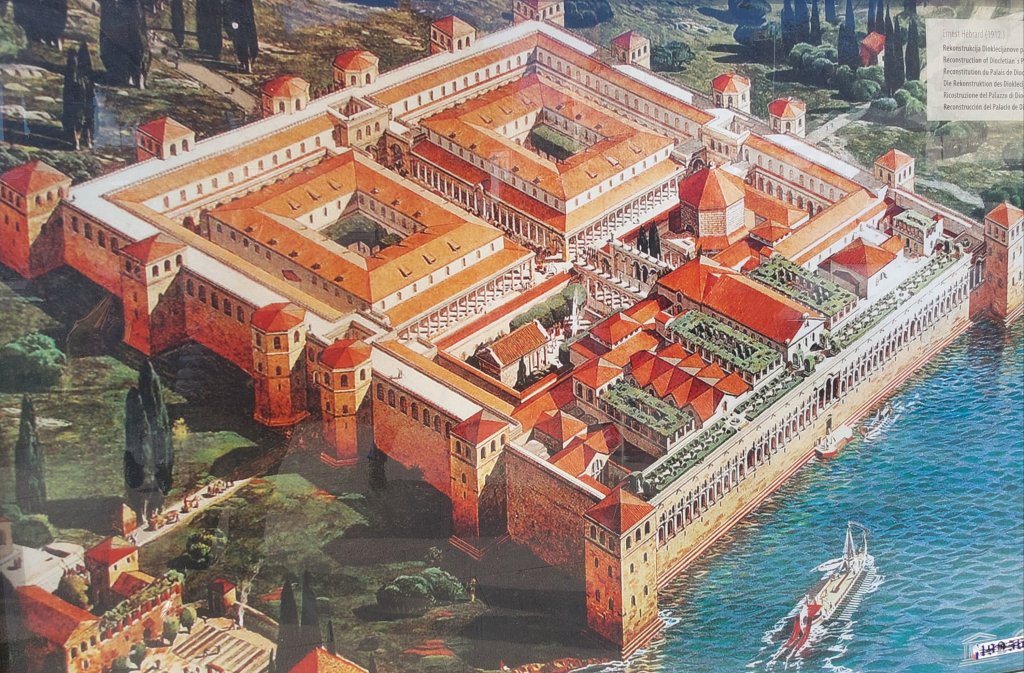
We started our tour at the sea wall (today, the land in front of the palace has been reclaimed and now has a (rather delightful) promanade) and entered through the silver gate. From the silver gate, you can actually see the iron gate opposite, which does give the sense that this was a retirement home, not a ruling palace, which one would expect would be somewhat more massive!
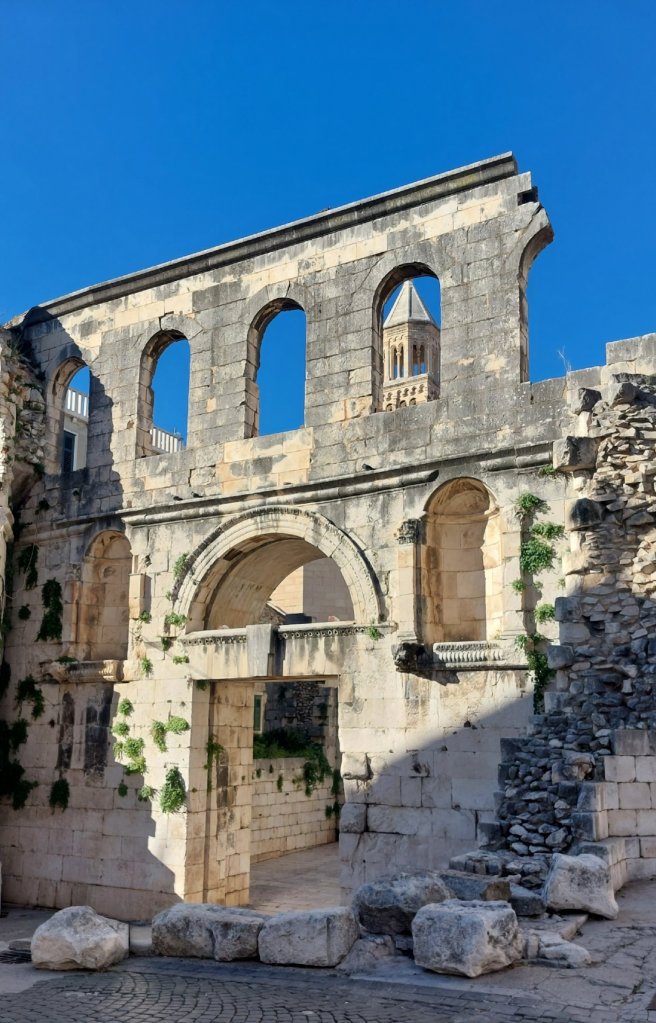
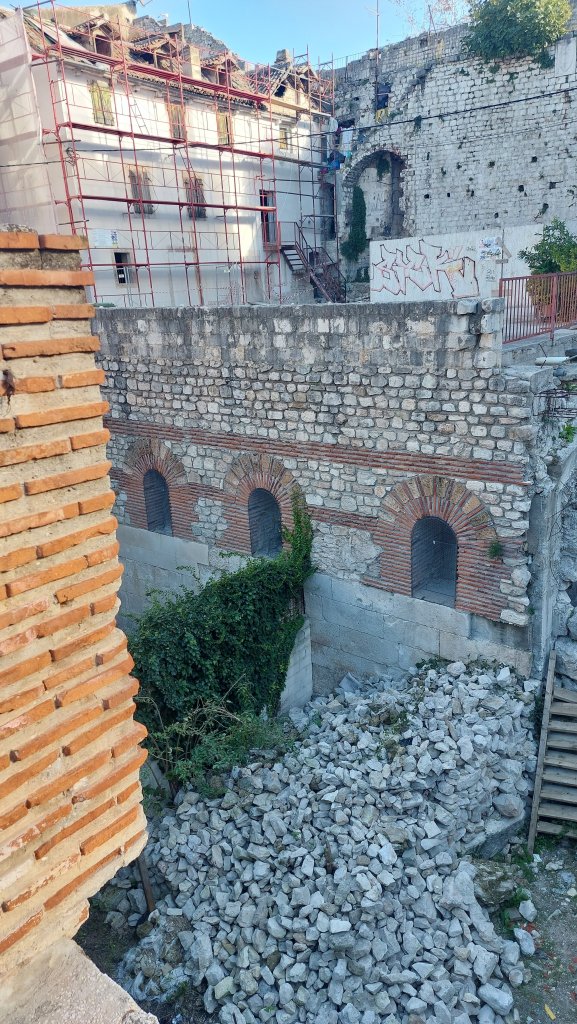
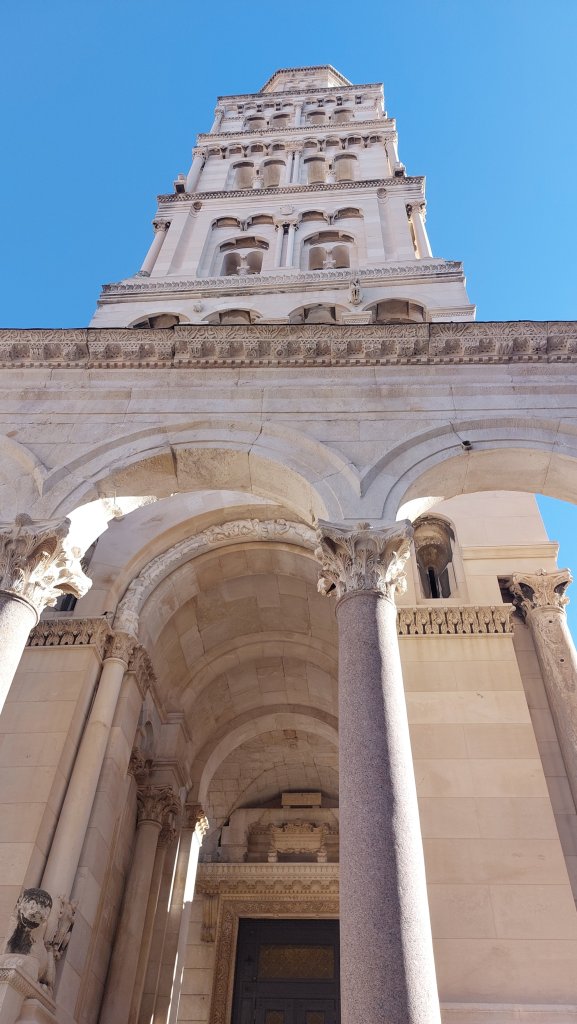
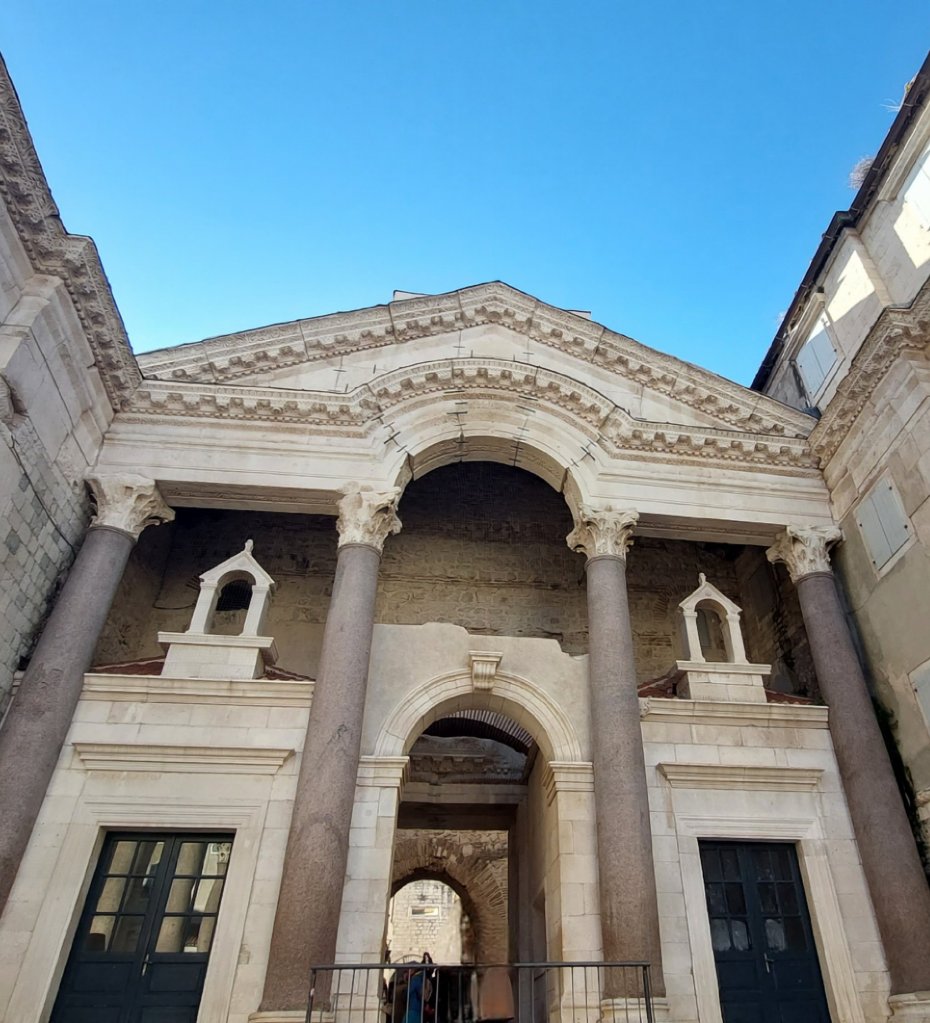
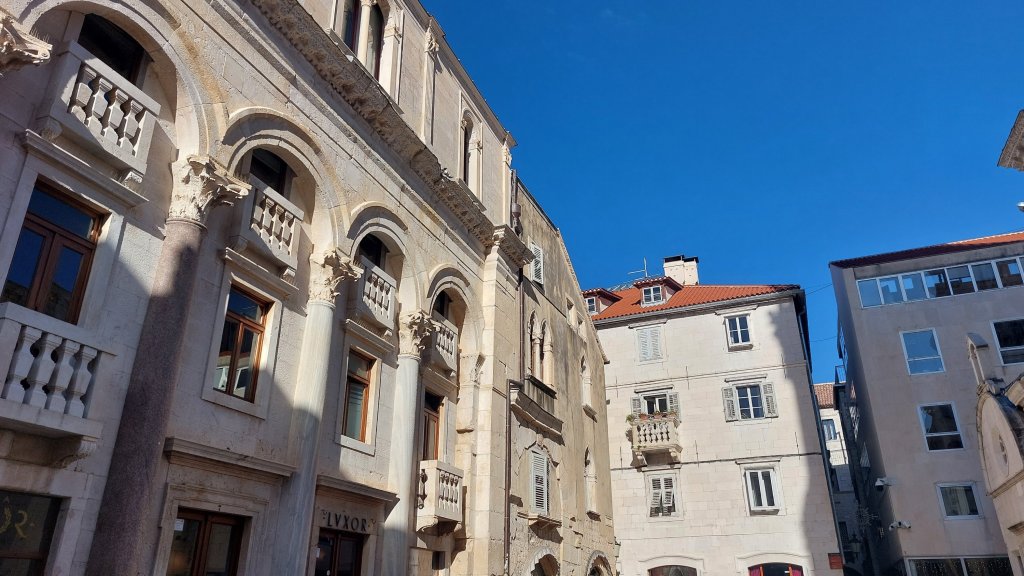
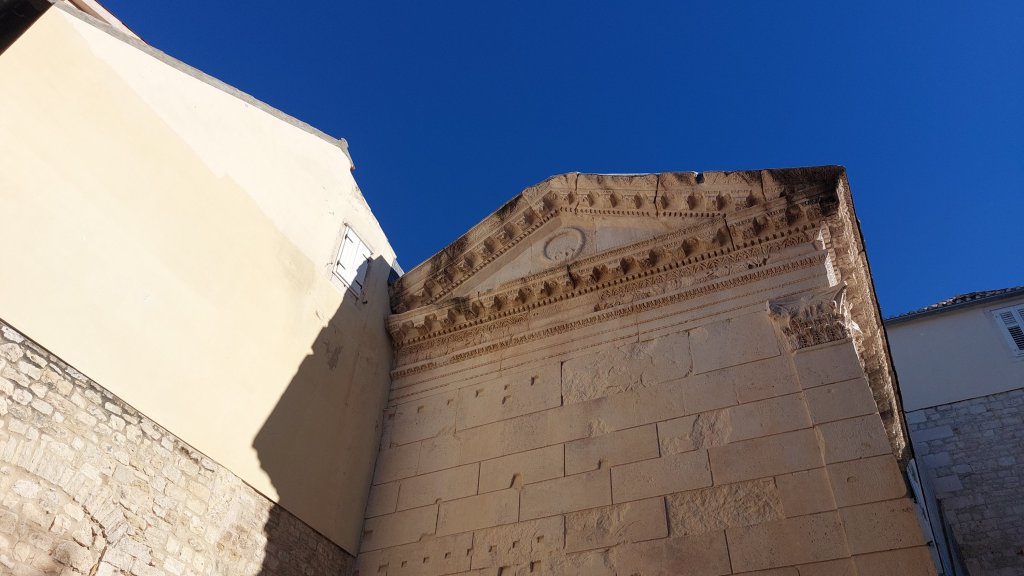
Diocletian had divided the Roman Empire into 4 parts (the Tetrarchy), and he was the last pagan Emperor. After his death, the palace was mostly abandoned, but later, as Salona was attacked multiple times, people fled to Split and the nearby islands. They built inside the palace, on top of the palace, and next to it. This leads to an amazing city today:
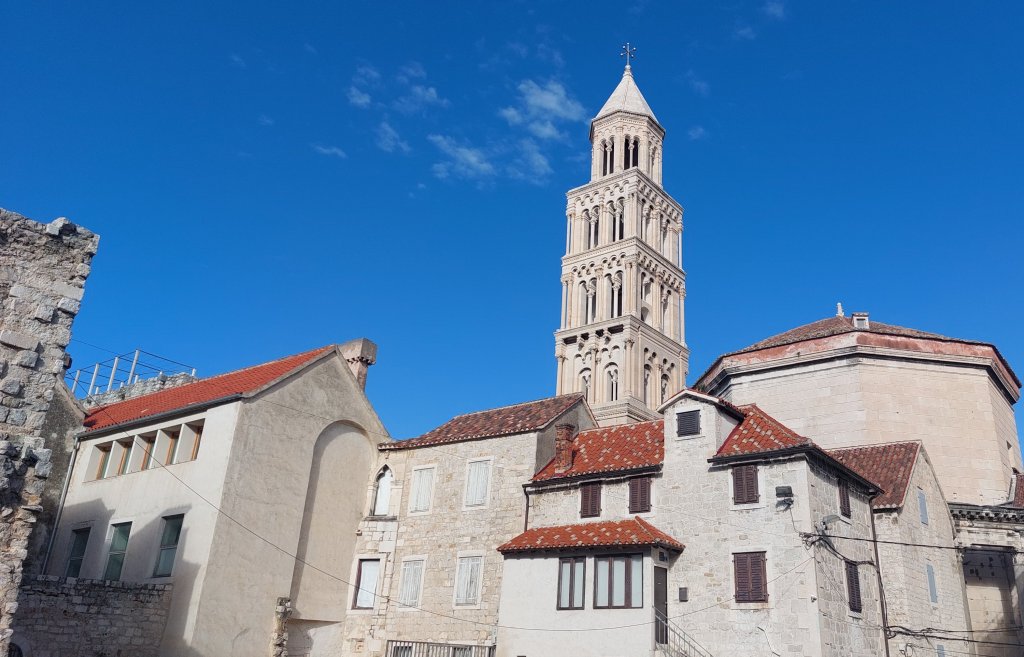
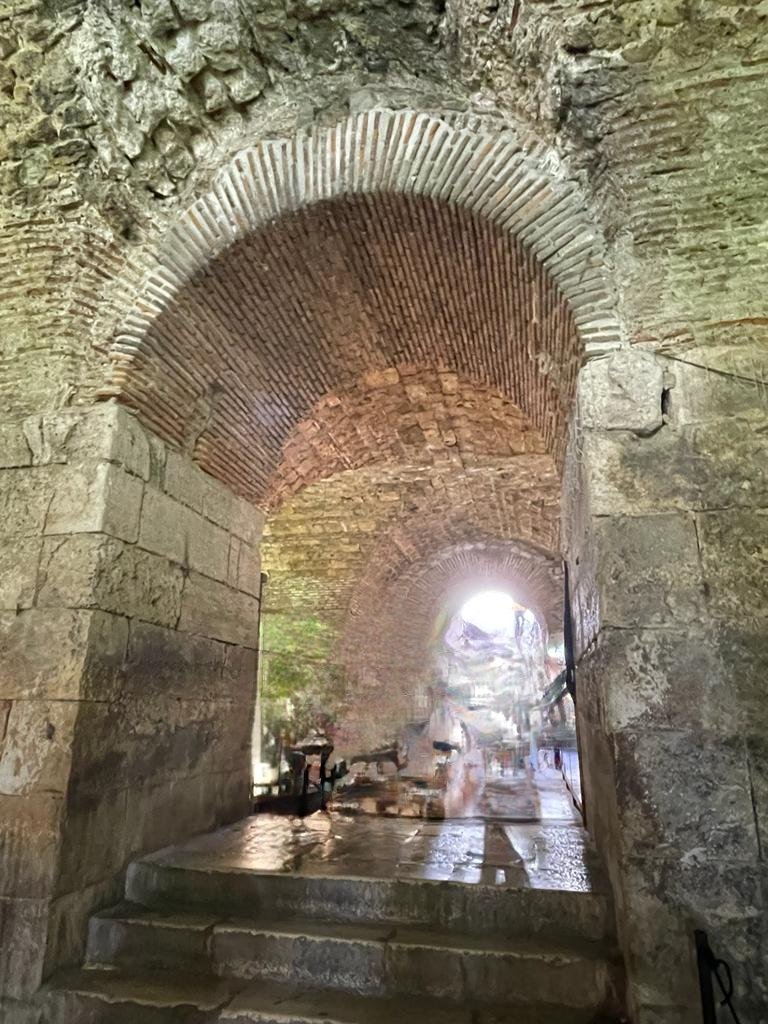
A particularly interesting structure is the sub-terranian complex below. This was built as support for the palace to ensure it was all one level and was used as a storage basement during Diocletian’s times. However, when medevial people moved in and the Roman sewage system had been abandoned, toilets were just dug as holes in the floor. They were unaware of this underground structure, and over time, it was filled with sewage(!) – this continued until the 1970s when it was finally discovered. I should say it has been extensively cleaned before we visited it, but this sewage preserved the structure, and it is now one of the best preserved Roman buildings in the Balkans as well as giving lots of very interesting information about the local diet over these years. A side room (not open to the public) was used in Game of Thrones to imprison the dragons…
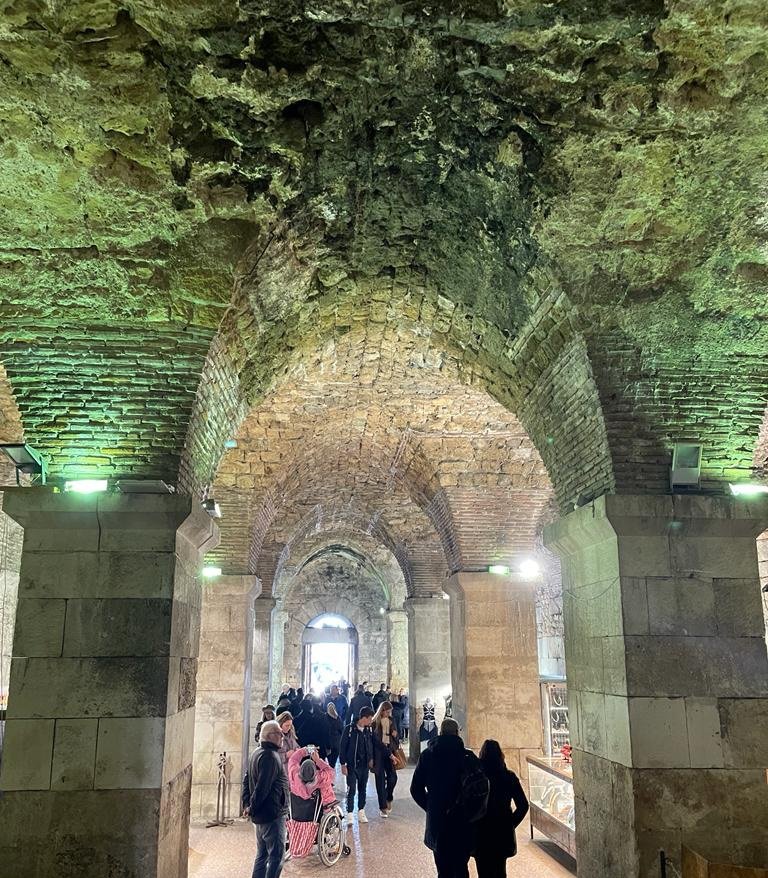
What you can not see from these photos is the number of tourists in Split – I have not seen this many tourists since Istanbul! It may be something to do with the fact that there is a cruise ship in port, or maybe it is just that Split is very popular? Capitalising on this, perhaps, in the palace vestibule, we were treated to a quartet performing excellent Italian opera. As it was a Sunday morning and they had a couple of wine bottles with them, I got the impression they do this as a nice little earner before then heading back to their womenfolk who will have prepared dinner. It’s not a bad way to spend a morning.
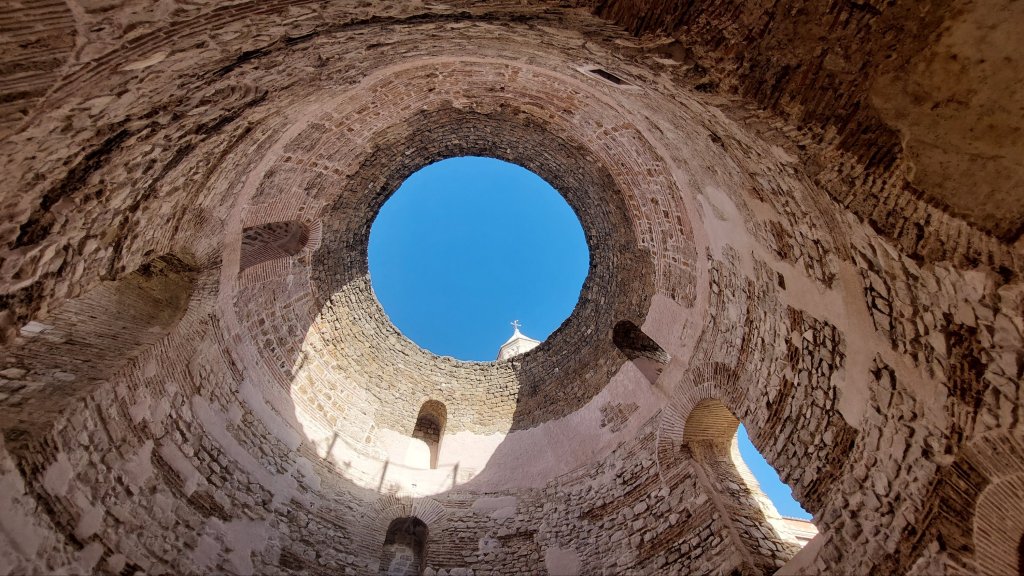
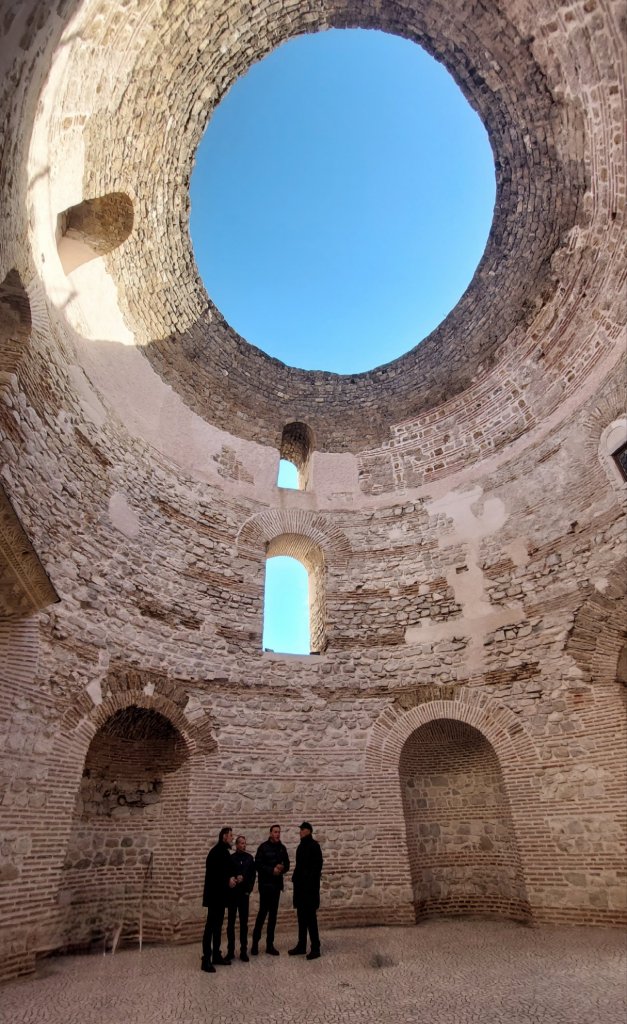
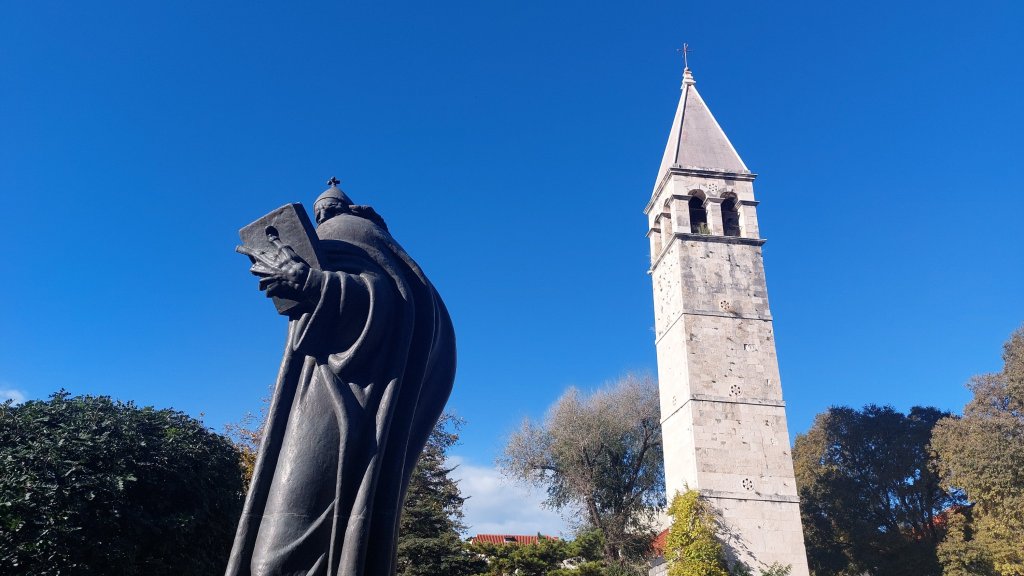
Just outside the palace walls, you enter a clearer Venetian arhictecture. As well as a HUGE statute of Gregory of Nin who was a 10th century priest and great advocate of the Croatian languagae and Craoatian nationism. He petitioned the pope to be able to distribute the bible in Croatian so that people could read it for which he was exiled – he was way ahead of his time… It is considered lucky to rub his big toe, so we both gave it a good rub!
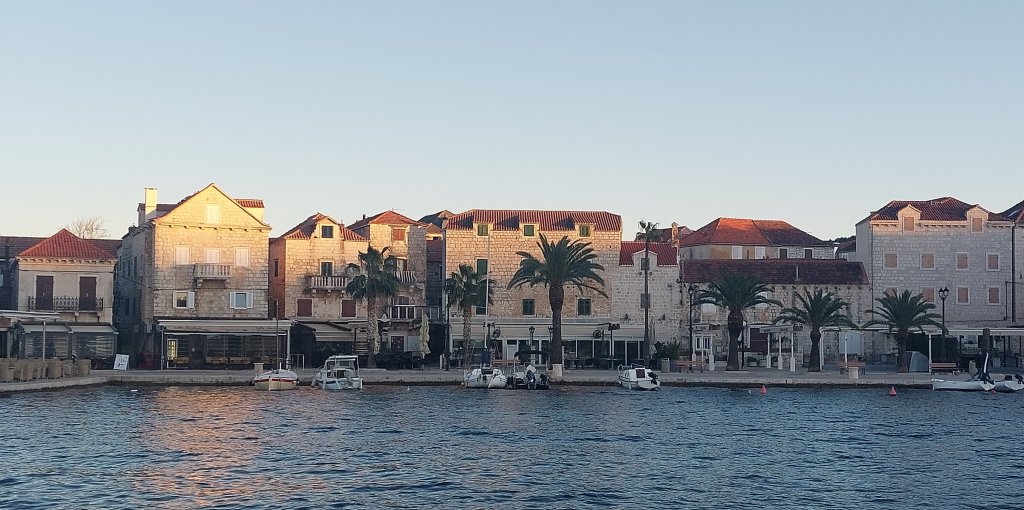
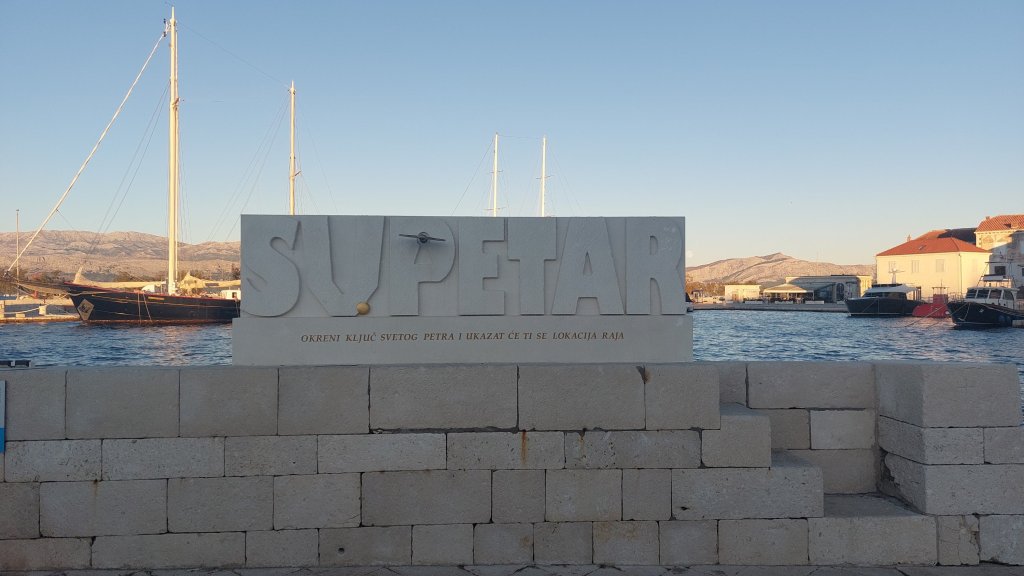
We then headed to the harbour to see what were our options to go to an island on a boat this afternoon. Split has a number of islands all within a short ferry distance, however, this being off-season, there are limited options for us to be able to do a round trip. Luckily, we had one option, so hopped on a ferry to Supetar on the island of Brac.
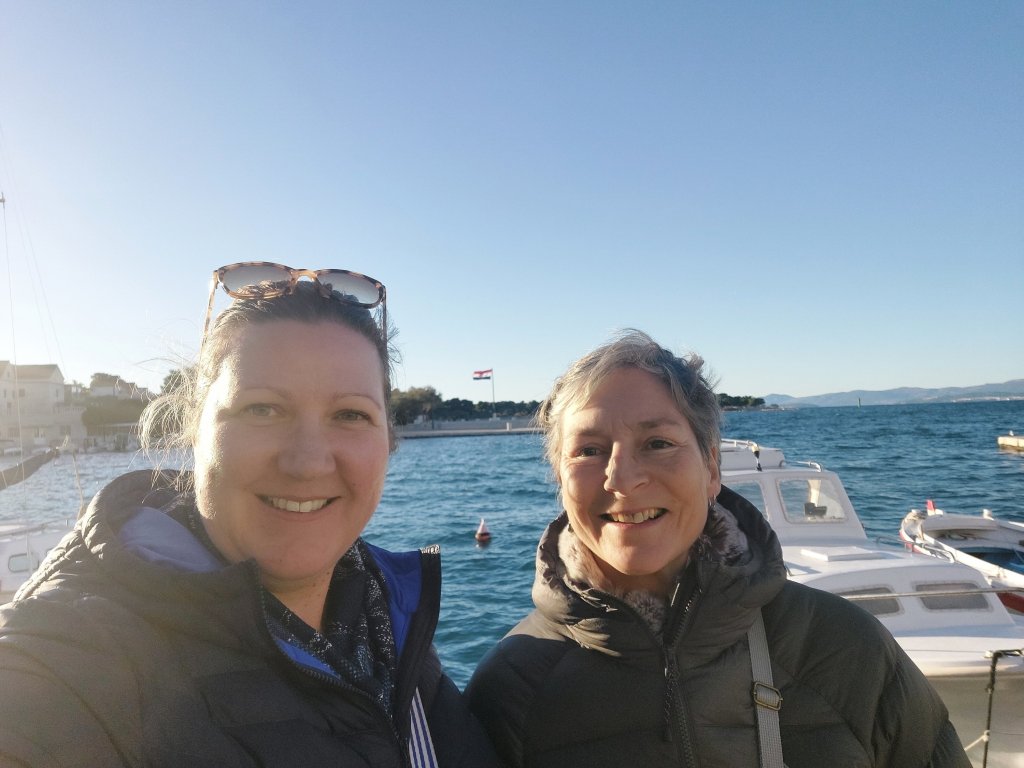
Brac is the birthplace of the famous Croatian sculpter Ivan Rendic so we did the walk around Supetar spotting places linked to him, and also discussing whether it would be acceptable to pick oranges, lemons, pomegranates, kiwis from people’s gardens – probably not we agreed.
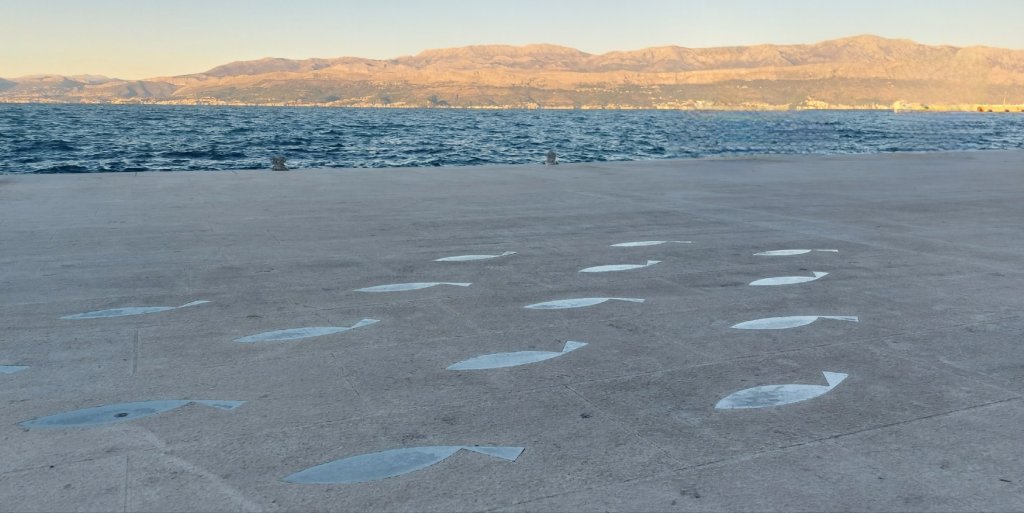
We had dinner on the island (getting our fill of available seafood) before heading back to the mainland, and an early night as we had a train at 8.14am the next morning.
I can wholeheartedly recommend a day trip to Split – it is a beautiful place (yes, helped by today’s beautiful weather) and often skipped over by people heading straight to the Hvar or for island hoping. However, you would be missing out on all this lovely history, architrecture, food etc as well as perhaps the town with the most public toilets I have seen anywhere on this trip – you would never be caught short! Just in case you need another reason to come…

 Travels with Kathryn
Leave a comment