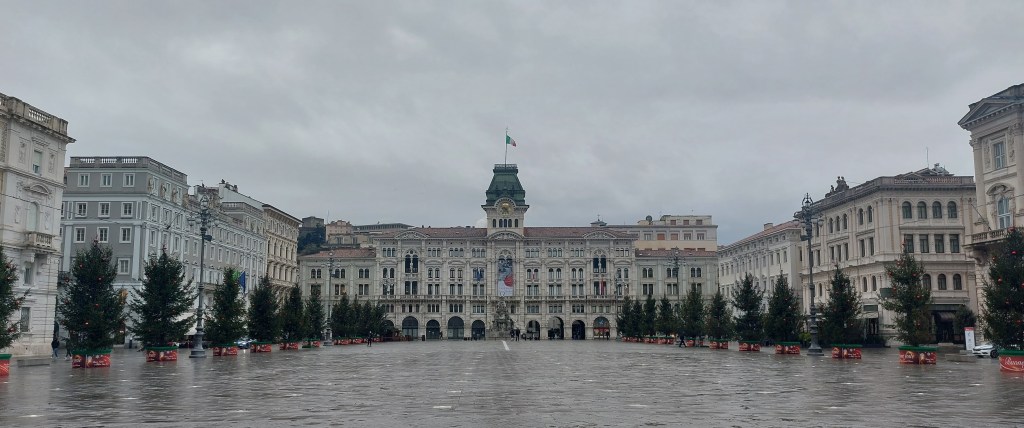
Yesterday we awoke to an absolutely beautiful day, so beautiful that Briony (having done some research) worked out that she did not need to travel back to Ljubljana as the airport is actually between the two places. Therefore, she had time to climb up to Castle Bled and around the lake, and here we have proof:
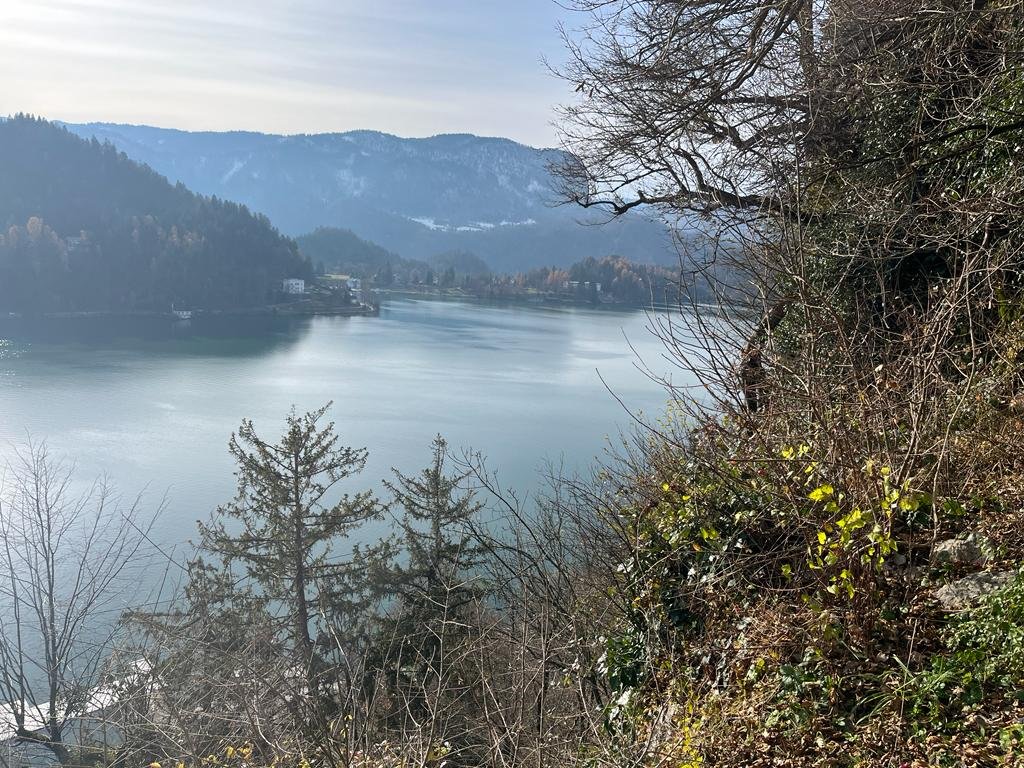

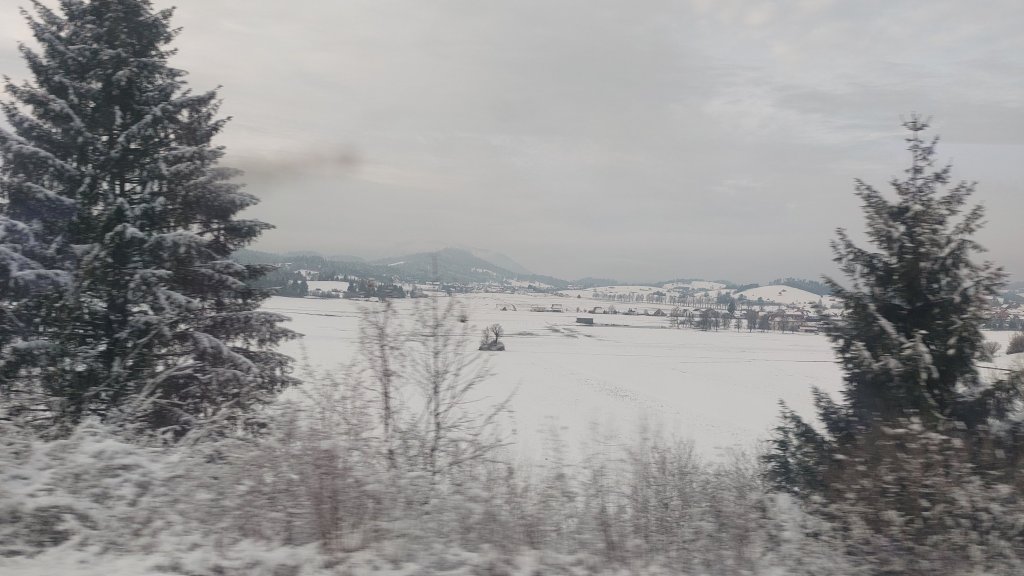
So, yes, I am back on my own (although not for long) and boarded the 11.20am bus back to Ljubljana before transferring onto a direct train bound for Tieste. The train (much like the border) does not really follow a direct line – this is because the border was settled after WW2 between the allied powers. The geography also plays a part as trains can not directly climb up the steep incline directly inland from Trieste, so instead, we had a sharp right turn before Trieste and then approach. from the coast (passing by the small closed station of Prosecco).
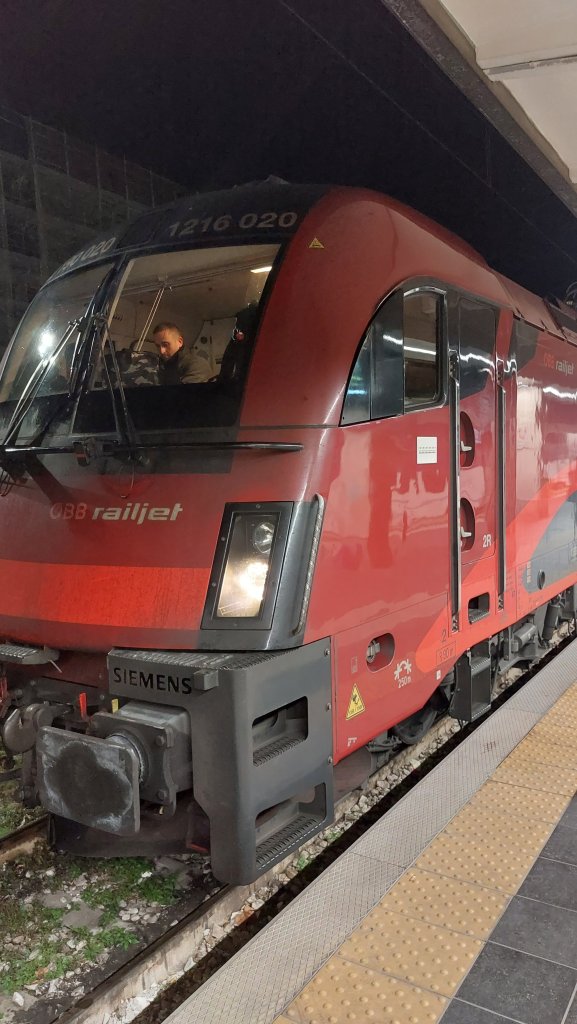
I arrived in Trieste at 5.30pm where it was noticeably less cold than Slovenia, and it was a short walk to my hotel for the next 2 nights.
The next morning, I started my day with a walking tour where I was the only person which was slightly disconcerting… However, she was an excellent guide, and we covered a lot in 2 hours. So, Trieste started its life as a small fishing village before becoming conquered by the Romans. After the collapse of the Roman Empire, Trieste was fought over and in 1381 when Venice rennounced its claim on Trieste, the city applied to Leopold III of Hapsburg, Duke of Austria to make Trieste part of his domains. Trieste remained part of the Austrian (and later Austro-Hungarian) Empire from 1382 until 1919.
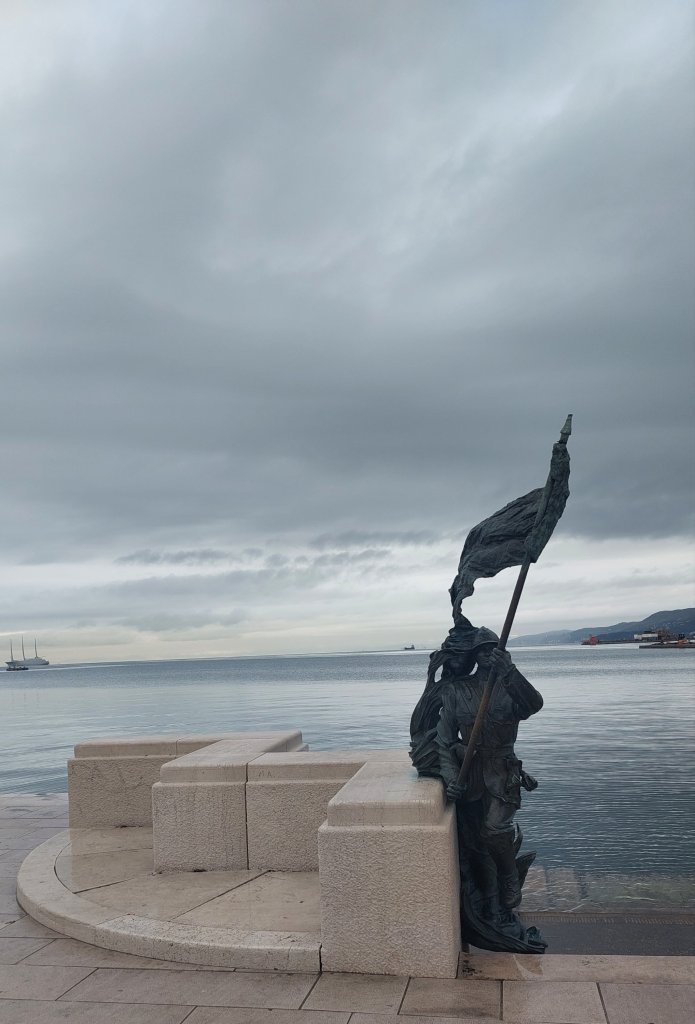
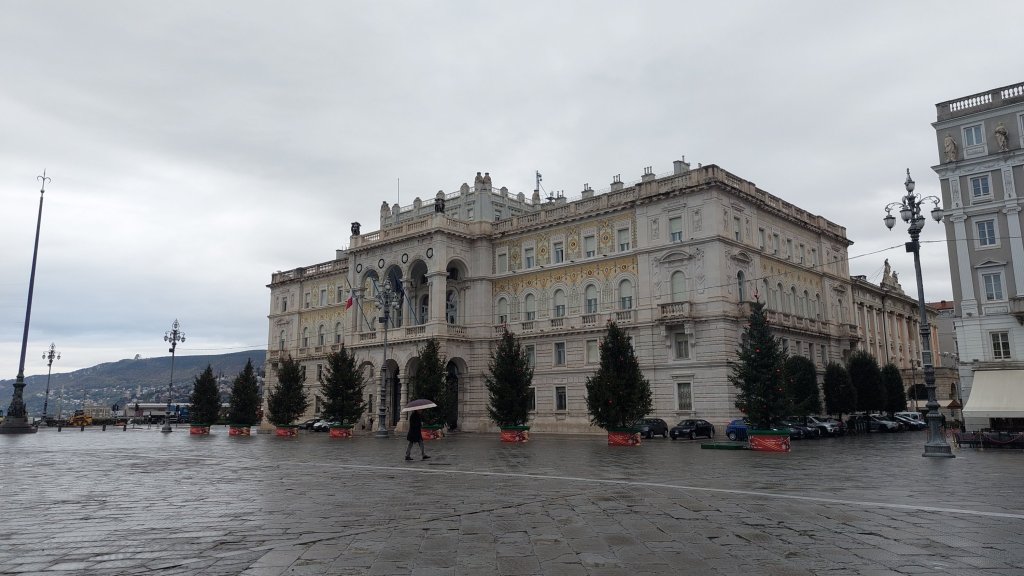

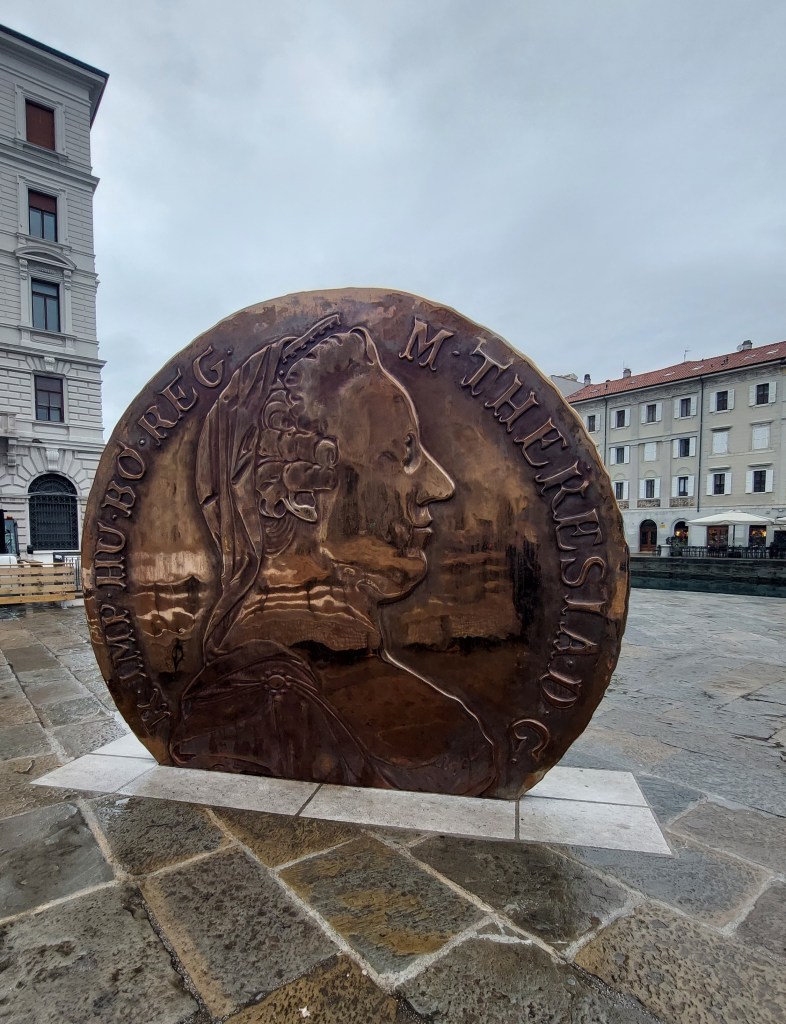
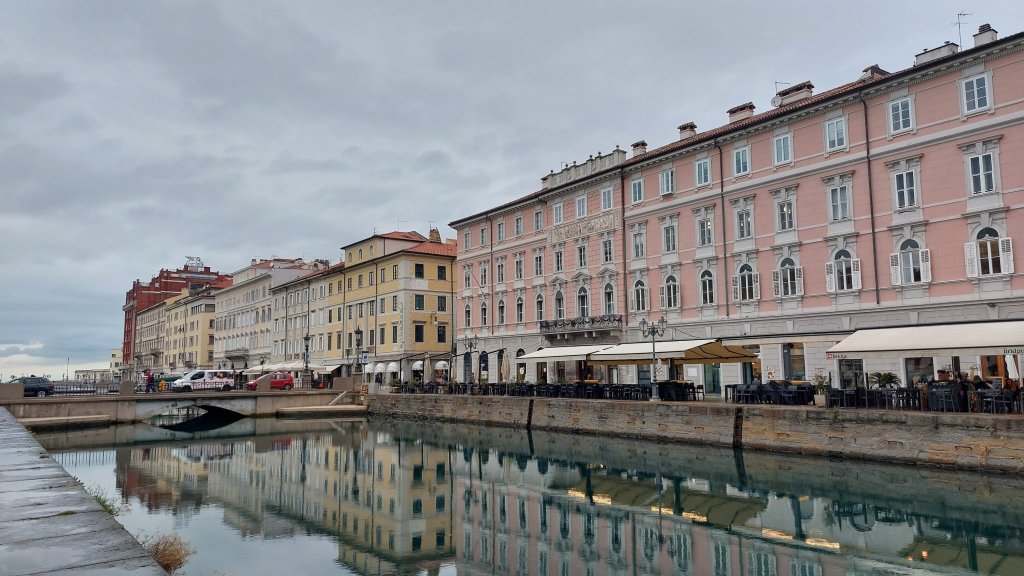
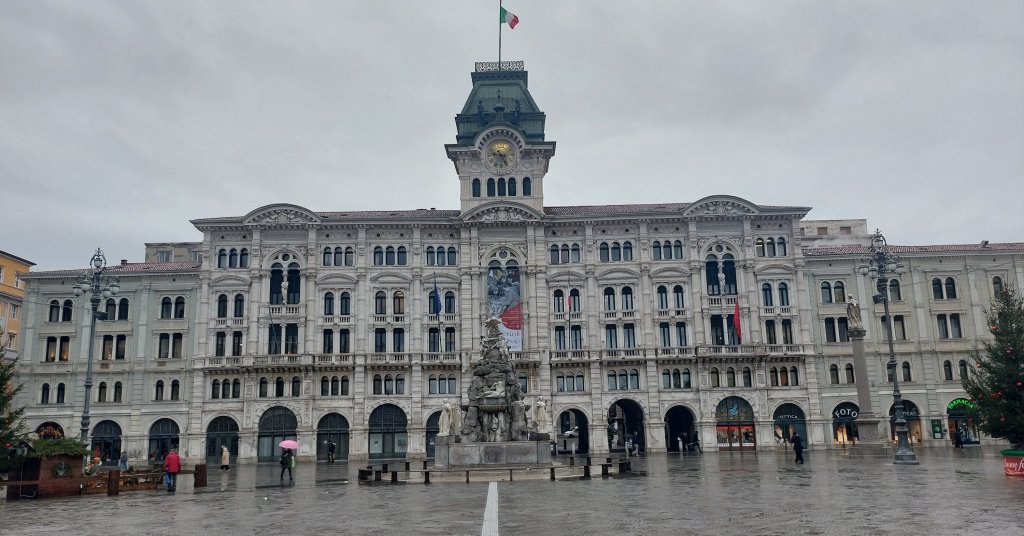
The city as it looks today was designed by Maria Theresa (although she never visited) and is a city of wide streets and Austrian style buildings. In the early 19th century, Trieste became the Austrian Empire’s most important seaport and the 4th largest city in the Austro-Hungarian Empire. Whilst the style and architecture of the streets look very Austrian, there also seems to be a cake shop on every corner – sensible people, the Austrians. Its importance resulted in a multi-cultural, multi-ethnic city, and perhaps because of this, on 18 September 1938, Mussolini chose the balcony of the town hall in the Piazza Unità d’Italia to announce his new anti-Jewish laws.
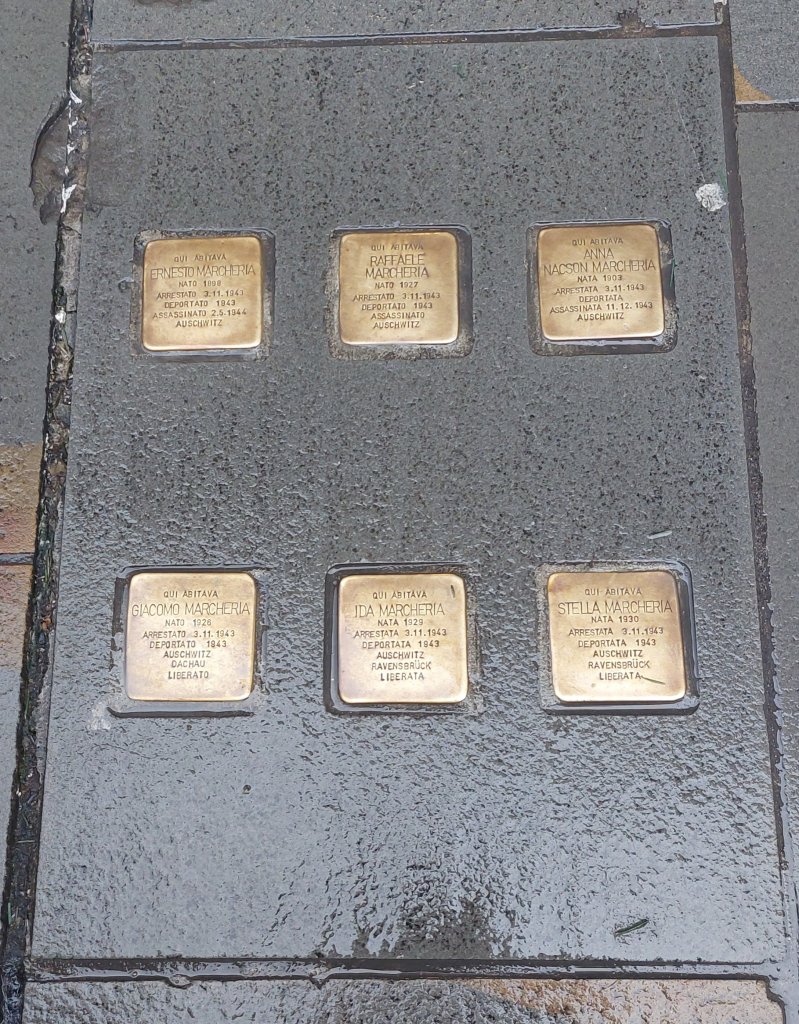
We also visited the former Trieste Jewish ghetto. This was constructed in 1684, and all Jews had to reside within its walls. However, at the beginning of the 18th century Trieste was declared a “free port” inviting people of “any religion or nationality” to both trade and settle and the population increased from less than 100 to 1,800. In 1784, the gates of the ghetto were opened, although many jews continued to live in the ghetto. After Mussolini’s announcement, over half of the Jewish population left. On 19 October 1943 and 29 January 1944, the Nazis dealt with the remaning Jews. Former Jewish homes have plaques outside detailing their fate under the Nazis:
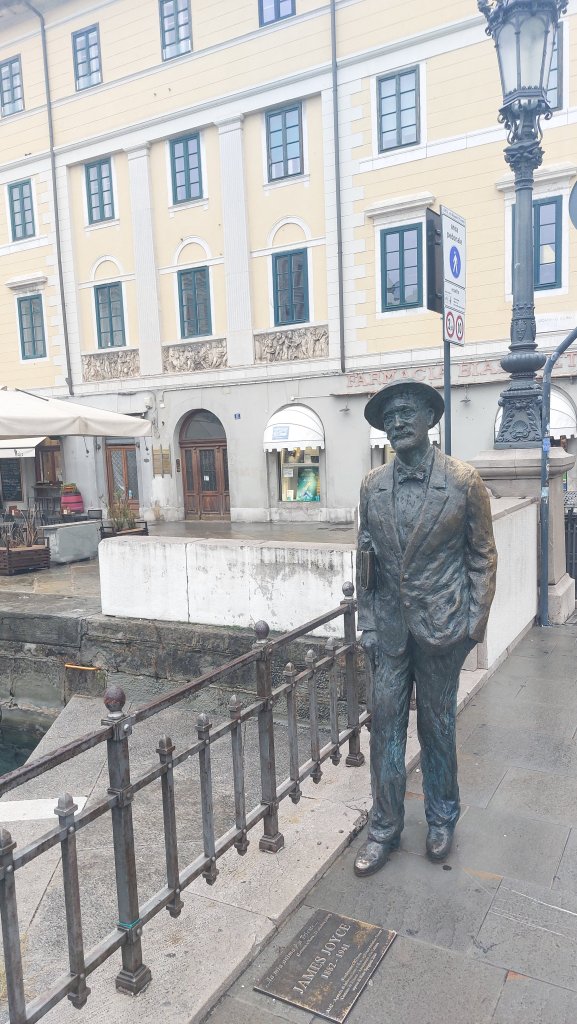
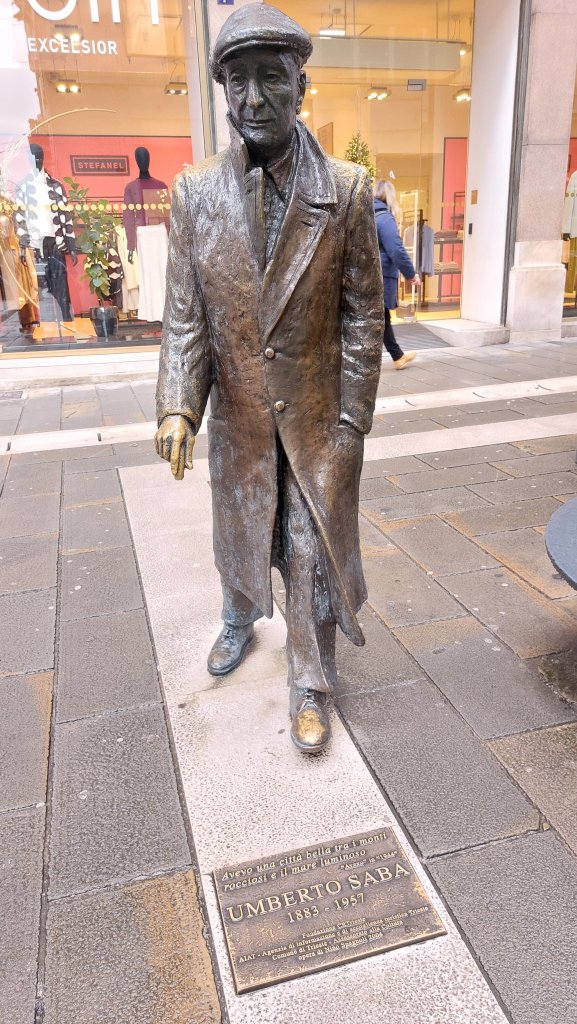
On to lighter topics, in the early 20th century, Trieste was a cosmopolitan city and attracted writers, including James Joyce, who lived here between 1904 and 1915. The Dubliners (which I have never managed to finish!) was written here, and he was also highly influential on Italian writers, including Italo Svevo and Umberto Saba. In between writing and influencing, he seems to have had time to make a number of local cafes and drinking establishments his “favourite.”
After my tour, I took a bus the short 10-minute journey to Miramere Castle. This was built from 1856 to 1860 by the Austrian Archduke Ferdinand Maximilian and his wife, Charlotte. Maximilian (as he was known to his friends) was the younger brother of Franz Joseph Emperor of Austria and a keen sailor (as well as being Commander in Chief of the Imperial Navy) and legend has it that he was caught in a sudden storm and took shelter in the little harbour of Grignano and then decided to buy it to build Miramere.
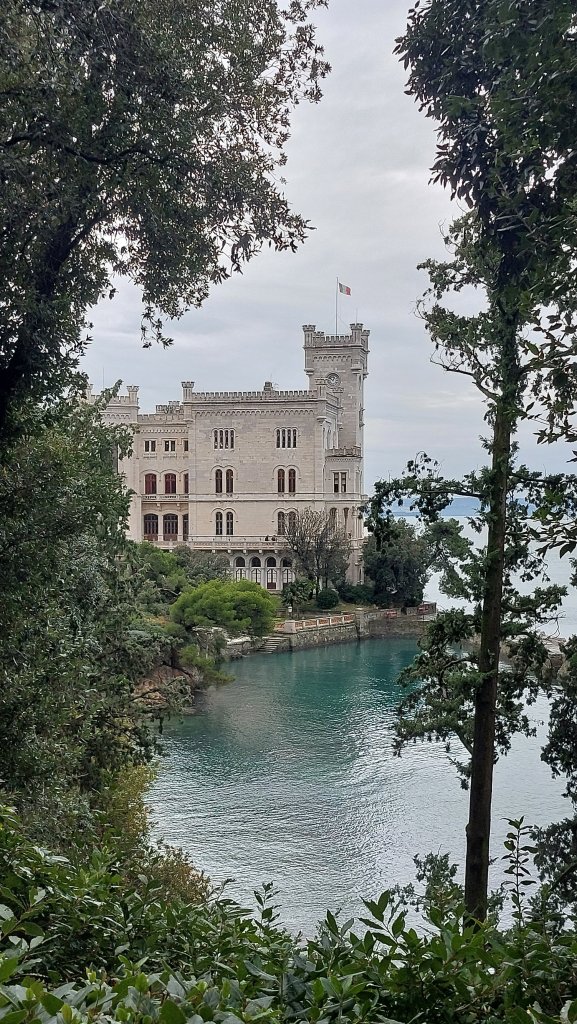
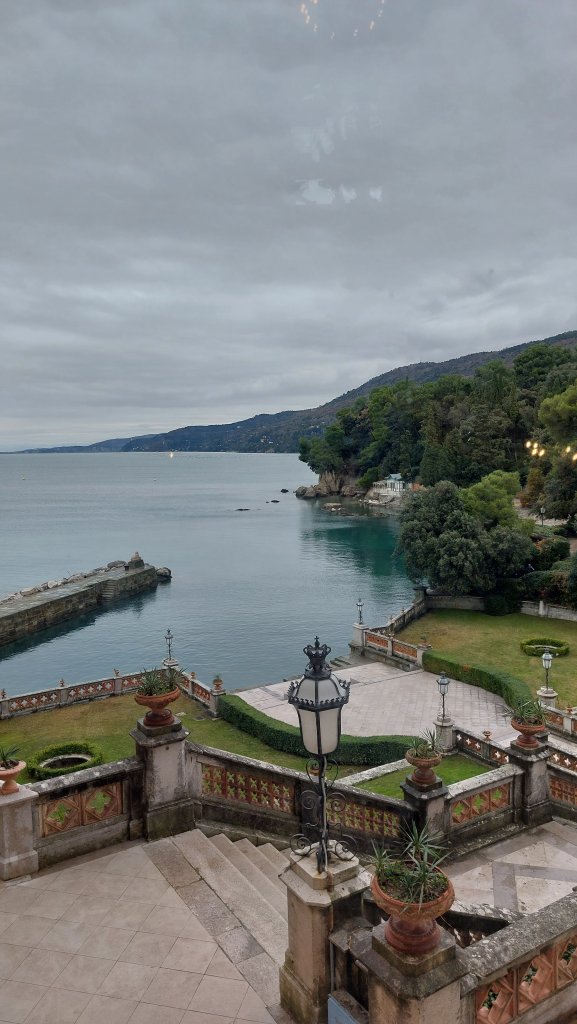

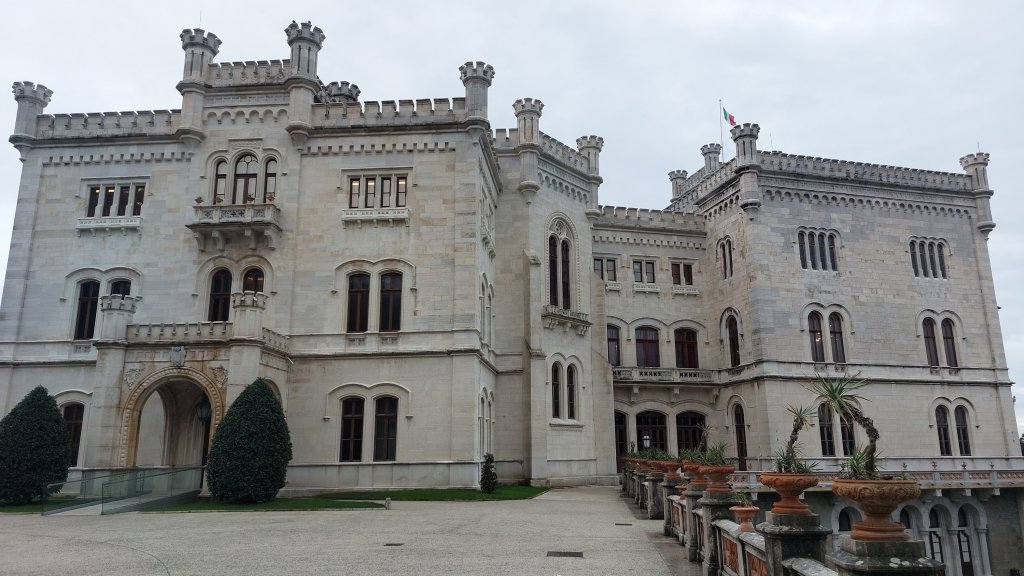
Having toured the castle, what I particularly enjoyed was the fact that the ground floor was built to be homely (albiet in a palace-y) way. One can imagine the rooms were designed to be lived in, whereas the first floor are the public reception rooms. I also thought what a good example of how a “spare” can forge a useful life (let’s ignore that he later became Emperor of Mexico and was then assinated…) by building a nice home for himself and his family. He was also a keen botanist, and there is a huge library and collection of books, drawings, and specimens.
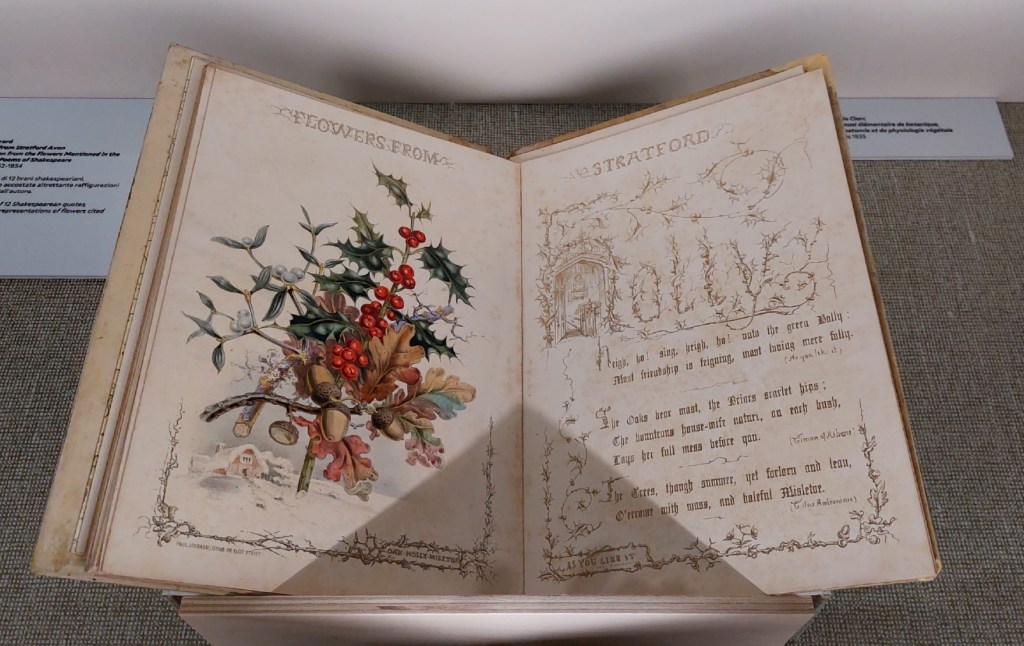
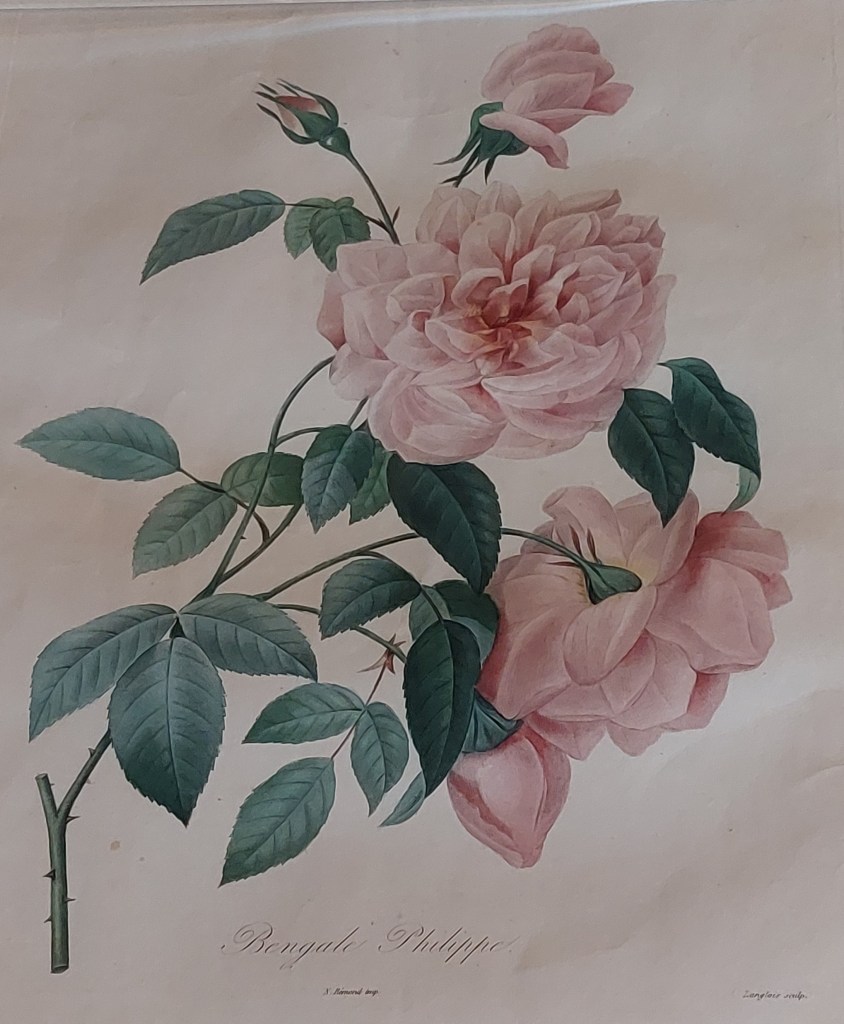
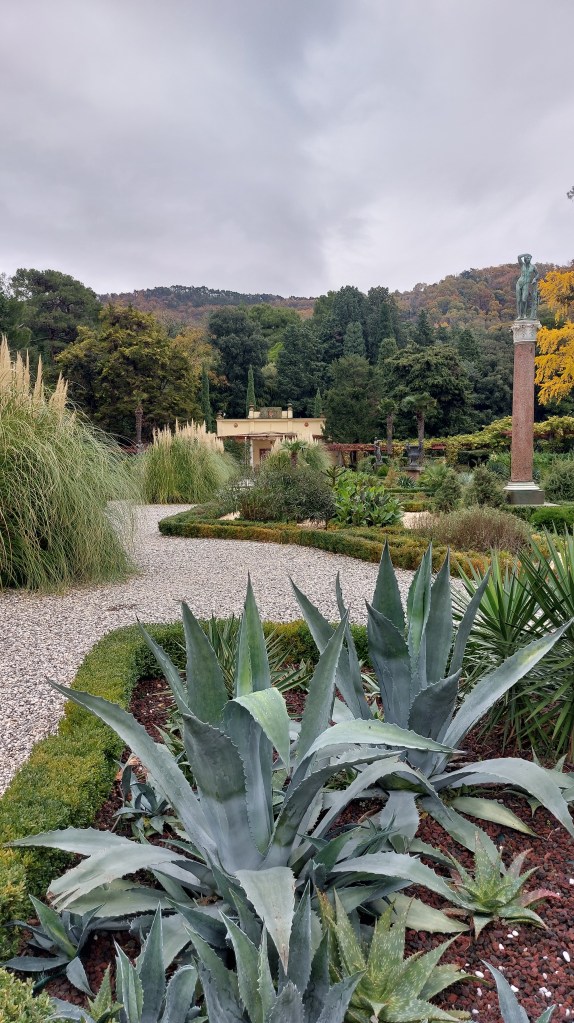
Inspired by this hobby, there are also extensive gardens as well as a Castello/guesthouse with perhaps an even better view over the sea:
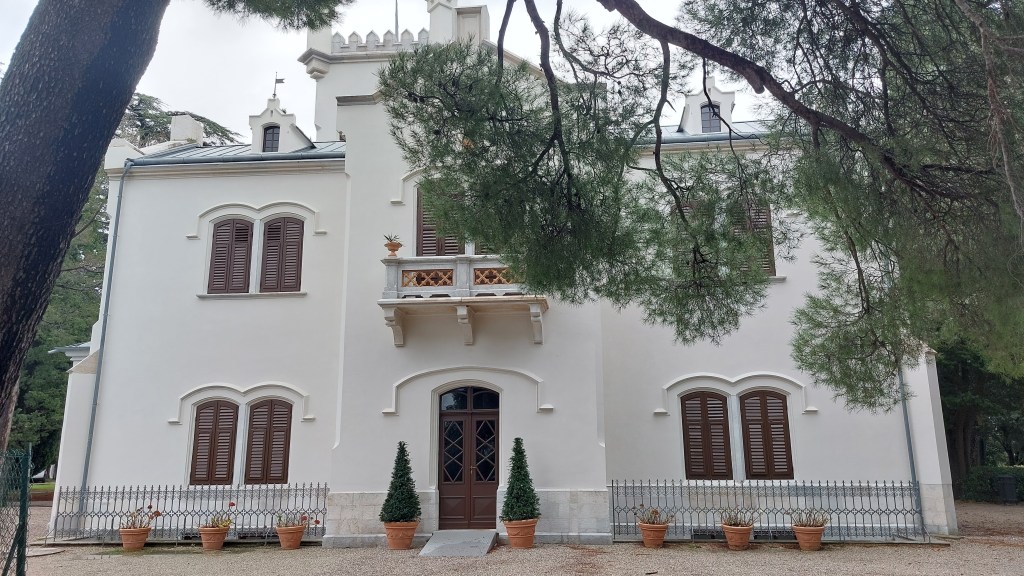
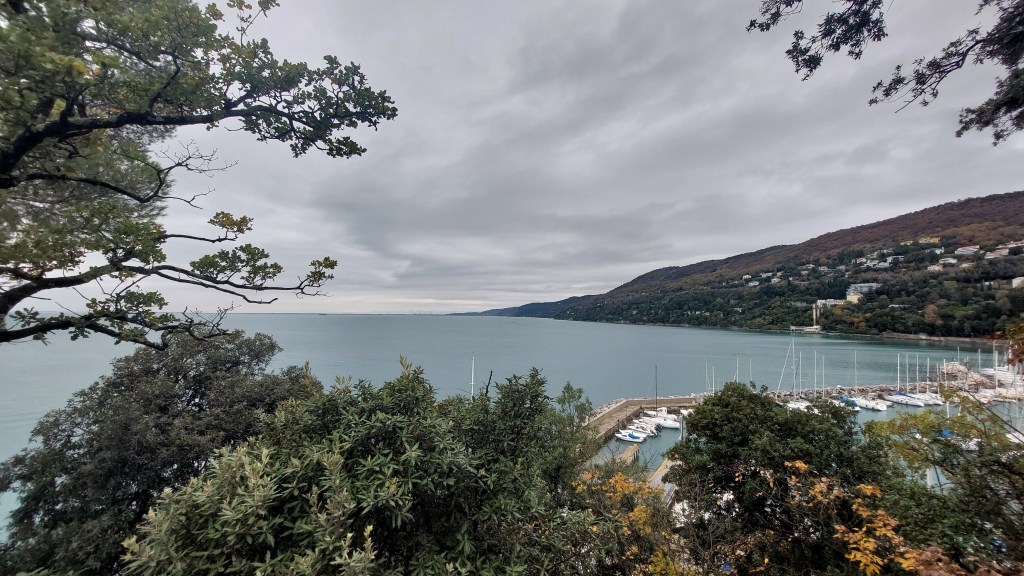
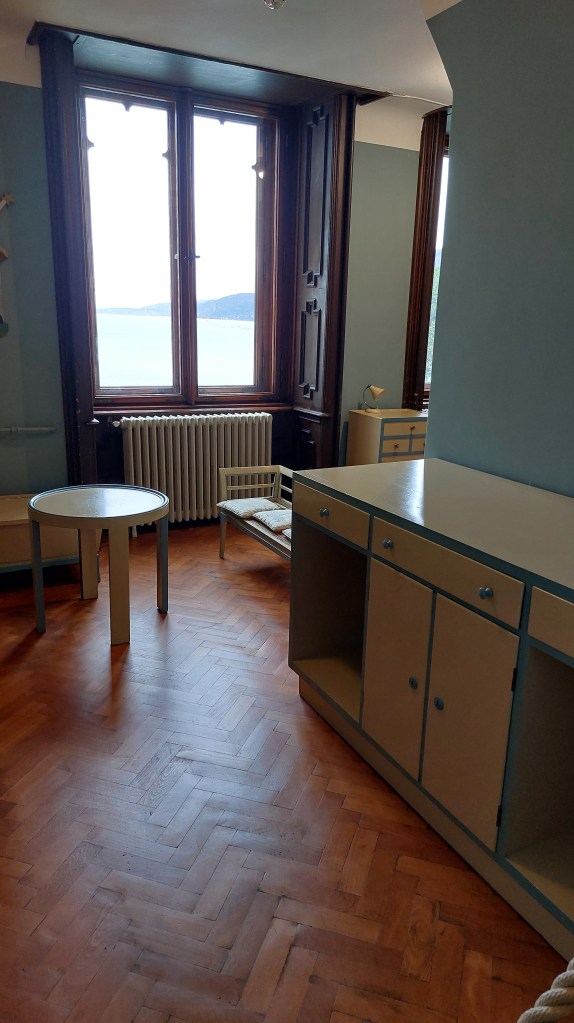
After Maximillian’s death in 1867, Charlotte returned to Belguim, and the house was only occasionally used by other members of the Hapsburg family. During WW1, all the furniture and art were sent to Vienna, and after the war, the castle itself passed to Italian ownership, and Vienna agreed to return all furnishings. The last people to make the castle a home was Duke Amedeo of Aosta between 1931 and 1943 – they redecorated one side of the 1st floor in fashionable Rationalist style which in my view looks a little odd across the landing from a red royal dinning room. Later, it was opened as a museum, retaining each eras’ style.

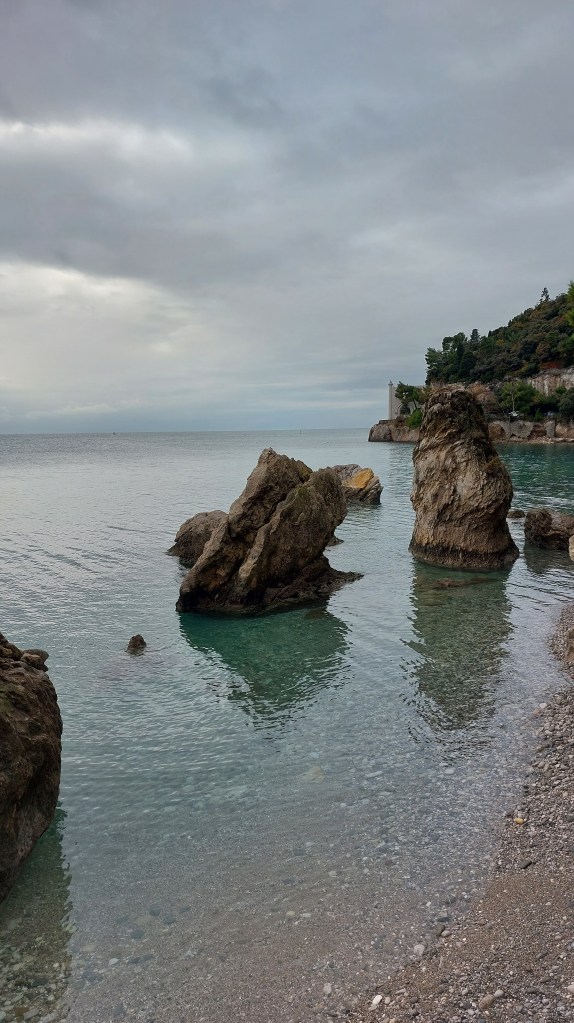
I walked part of the way back to Trieste, taking many, many photos of the coast – I can see why Maximilian decided to build a home here:
Back in the city for a lovely meal of pumpkin gnocchi (a revelation) and a dish of chicken, black rice, and vegetables, which was also amazing. Then, I went back to my room for some laundry and packing before heading onto Venice – my next destination.
An interesting little side fact for my Silk Road journey, Trieste, is considered the end-point of the maritime Silk Road connecting to Suez Canal and Turkey. Trieste often gets overlooked, probably because it is not one of the beautiful Italian cities. However, it really is worth at least a day trip, even if just to visit Miramare Castle and an afternoon around the city. You can tell they do not get as many visitors as I struggled to buy a magnet (A MASSIVE CRISIS) but managed one in the end from a small tobacconist near the train station. The relief!

 Travels with Kathryn
Leave a comment