Maurane arrived on Wednesday evening, and the hotel receptionist believed her that she was staying with me and that she could come straight up to the room. Whilst you may ask questions about their security procedures, this meant I could be in my pyjamas (for the last time, as she has brought me a new, less holey set which are bright green with pandas on them – tres chic) and I did not need to get up and wander the streets to find her.
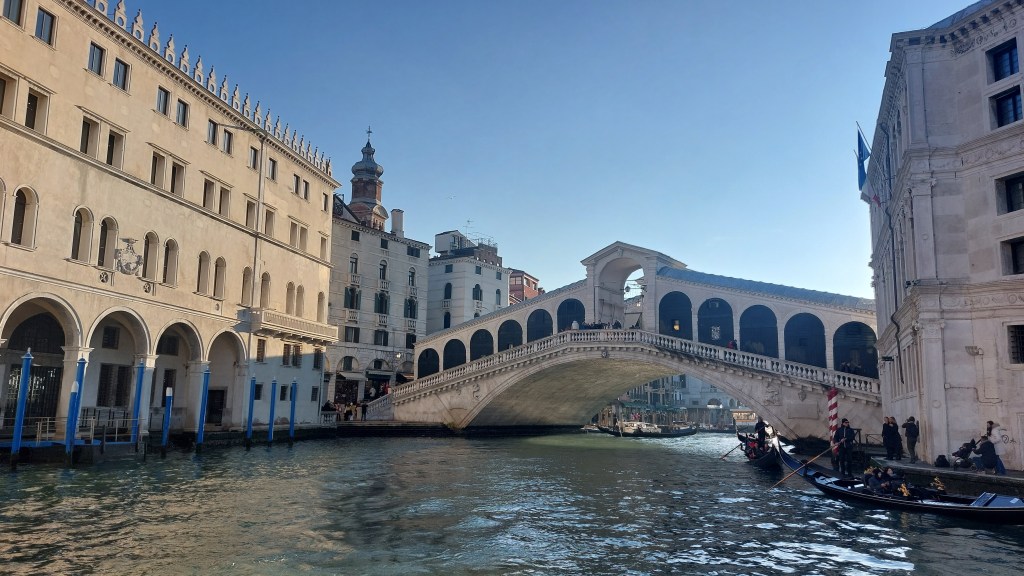
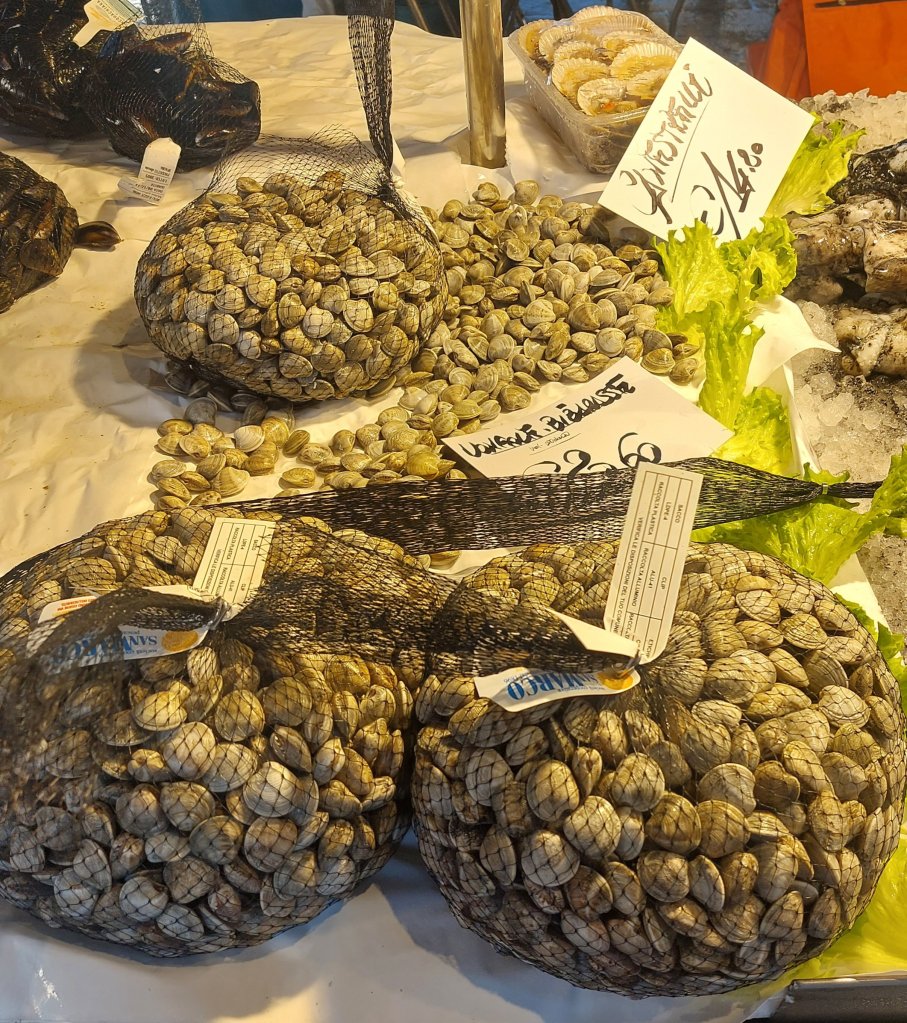
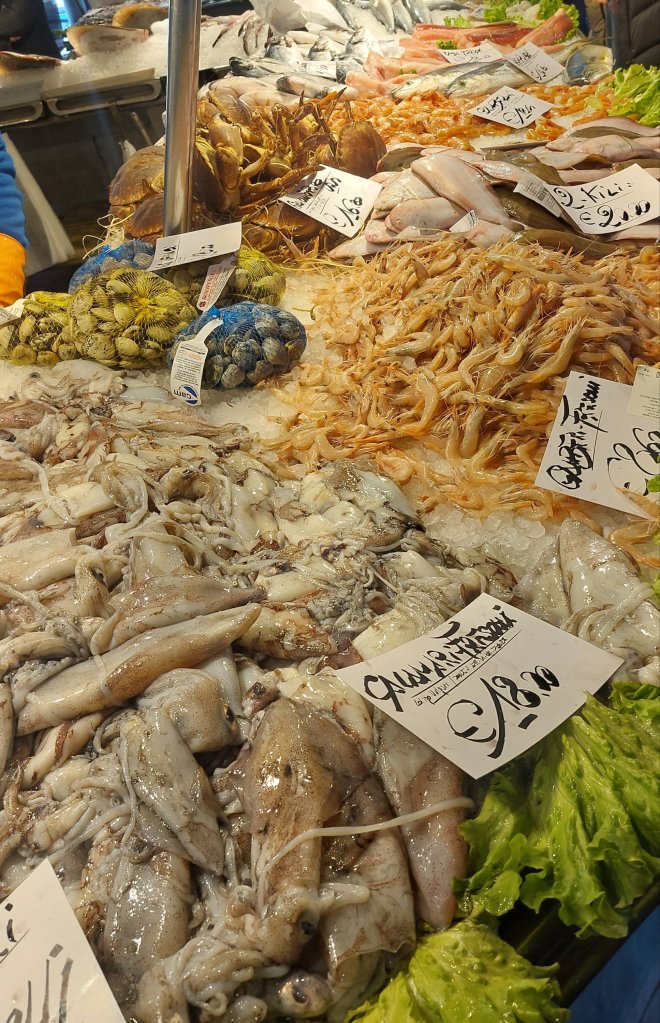
Our first full day in the beautiful sunshine started with a little walk to our walking tour via the Rialto Bridge and the Rialto market fish section (amazing):
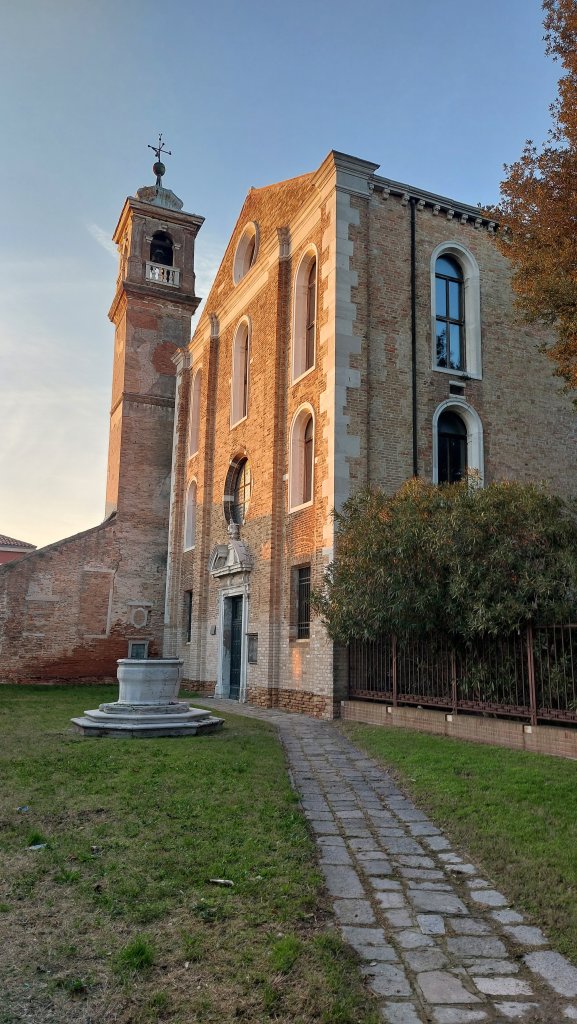
I was interested as to how a walking tour would work in Venice as it is very narrow streets as I finally realised the actual streets are the canals (duh!) and I suspect groups are something of a nightmare. However, the emphasis was more on history (yay for me) and stories explaining how Venice came to be the way it is. Obviously, some of this we covered in my last post, but a context that I should add is the fact that the Venetian economy was different than usual European economy as it was founded by merchants on trade, rather than more traditional land ownership. This is why the city was built over small islands, why its government was a (sort of) democracy, and why public works were also focussed on enterprise and cost efficiency. For example, as islands surrounded by salt water, Venice does not have natural access to clean drinking water. Therefore a wealthy home owner in a locale (in addition to building their own) would also pay for a public cistern – these collect rain water in a brick lined cistern, and then have a public tap ontop for anyone to use:
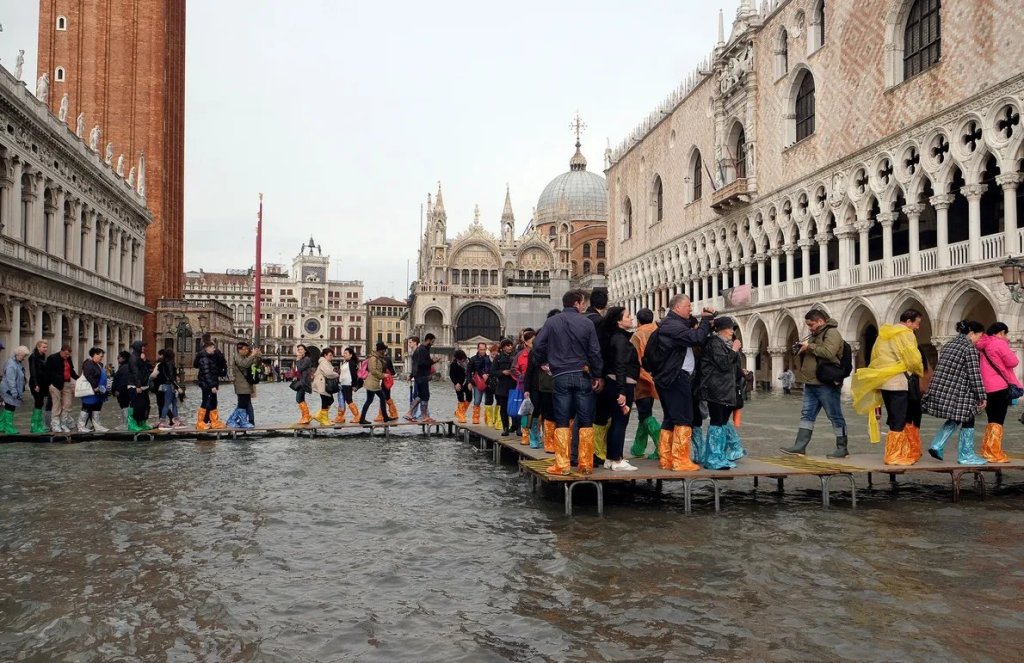
We also learnt a little about how the city was built – so it was built on swamp land by sinking larch trees into the squidgy ground, which over time petrify, and then building the city on top of this. As we all know, Venices sinking, but apparently, this has only been an issue after the 18th century. Some of this is to do with the fact that over time the city has started sinking into the swamp (30cm since they started measuring) as well as the rising sea level (yes, global warming is true). Venice does regularly flood, hence the photos like the one below, and this is considered normal, but there are concerns that this will continue to get worse…
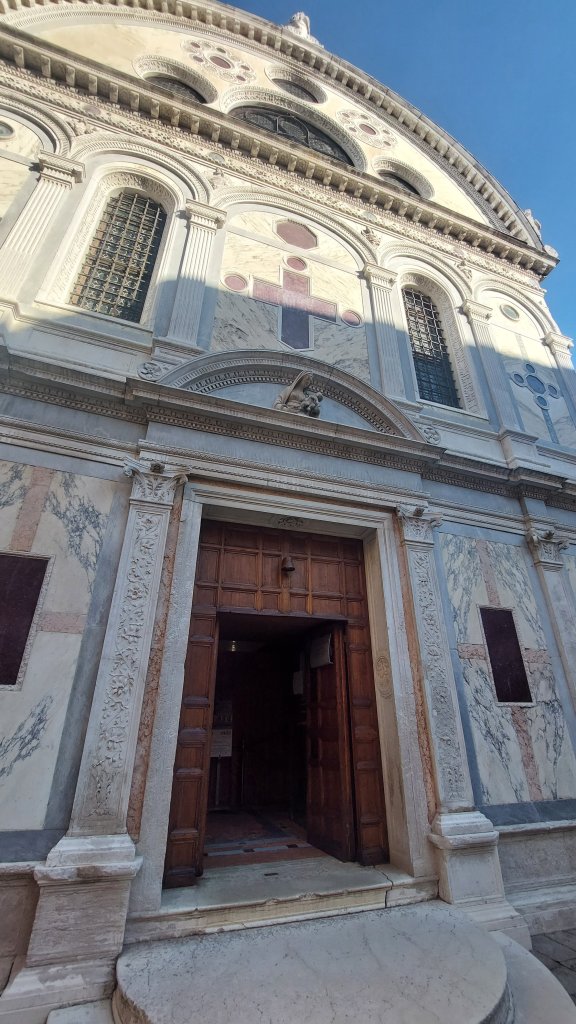
So, Venice has 140 churches (as every small community or island obviously needed its own church) and below is the Santa Maria of Miracles church which is of the best examples of early Renaissance style and is made entirely of marble. It is very fancy and thus very popular for weddings.
I also learnt that the only square is St Mark’s Square, whereas the squares are actual “campos” – they were effectively a piece of land between houses and canals used for agriculture. Today, these are paved squares in the more traditional Italian sense, i.e., they usually have a church, a cistern, maybe a nice bench.
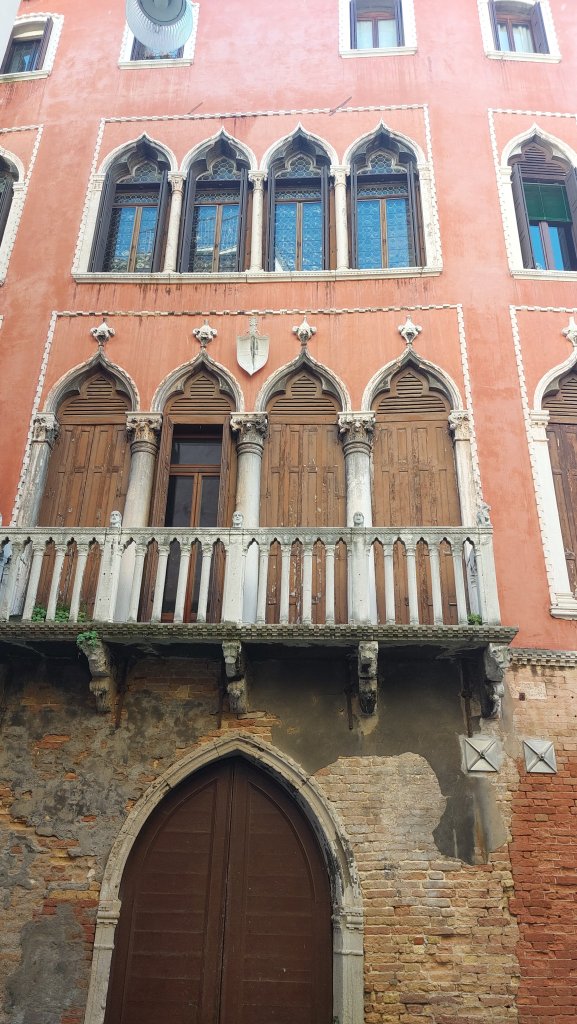
If you have to name a famous Venetian (there were a number of quizzes on the tour, and tests make us all better learners), you would probably come up with either Casanova or Marco Polo. Marco Polo (or rather, the Polo family) did own a nice house in Venice, although nothing is left today. Casanova did not come from a wealthy family, but he had a way about him (yes, I am sticking to euphemisms) and managed to get himself adopted as an adult by a wealthy family and he lived briefly in this house:

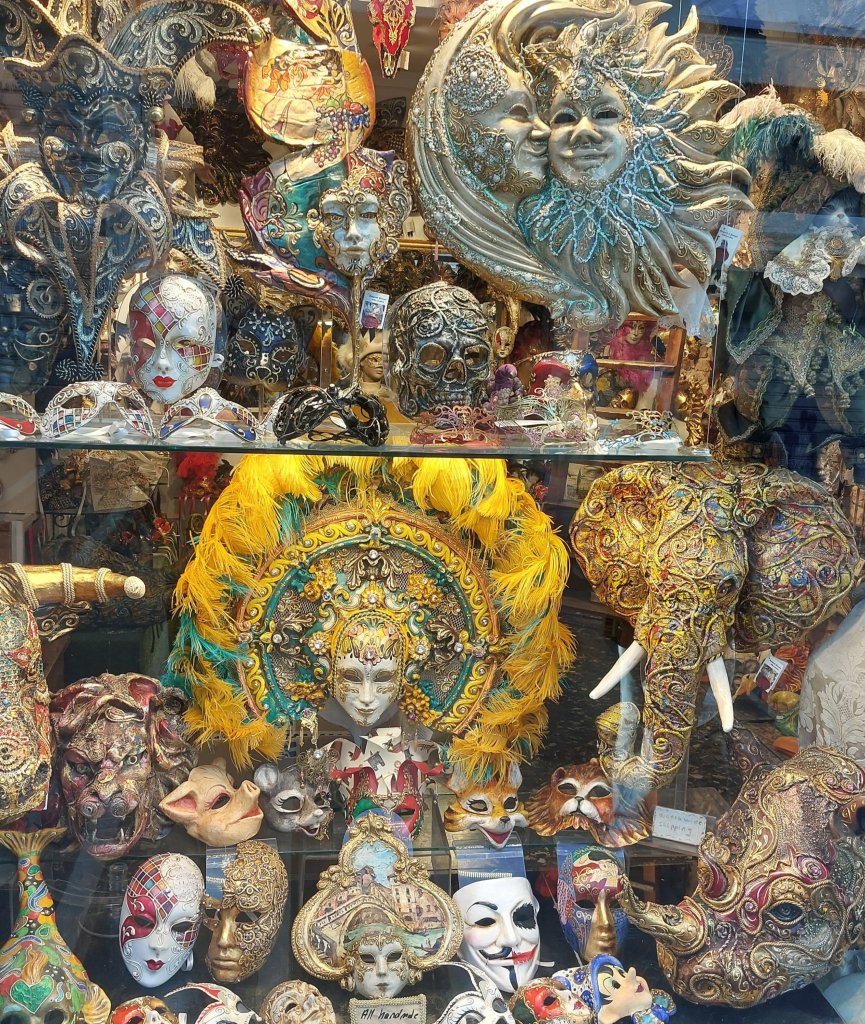
Our final stop on the tour was to see some of the masks. So, these started to be used in the 12th century simply for privacy – say, if someone wanted to meet someone, perhaps they shouldn’t (euphemisms continue…) or wanted to go gambling, etc, they were used. Back then, all masks were the same. Later, other masks became popular, including the inconic plague mask with the long noses to filter odors, which they believed spread the plague – perhaps these could come back into fashion in these times of global pandemics…
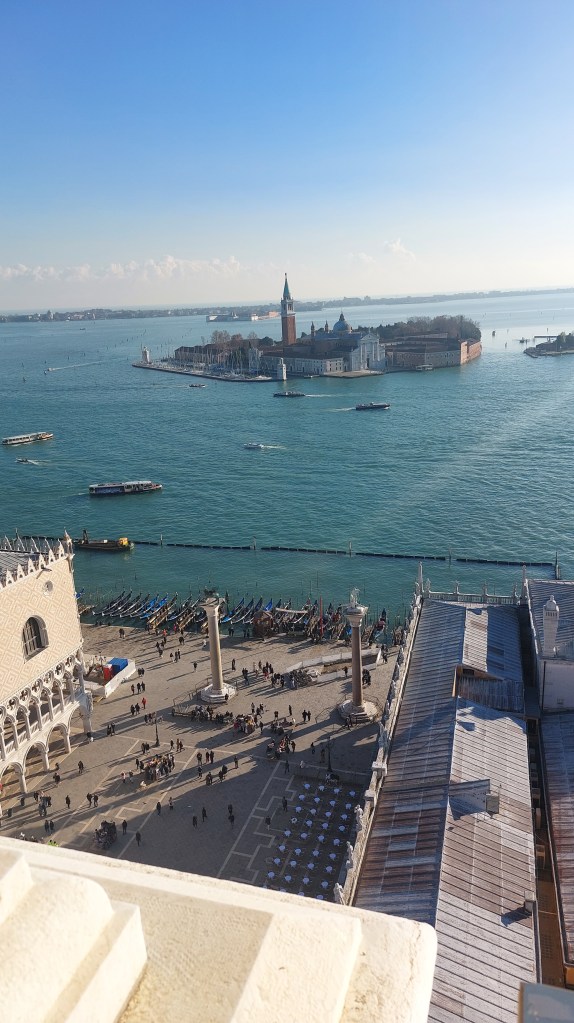
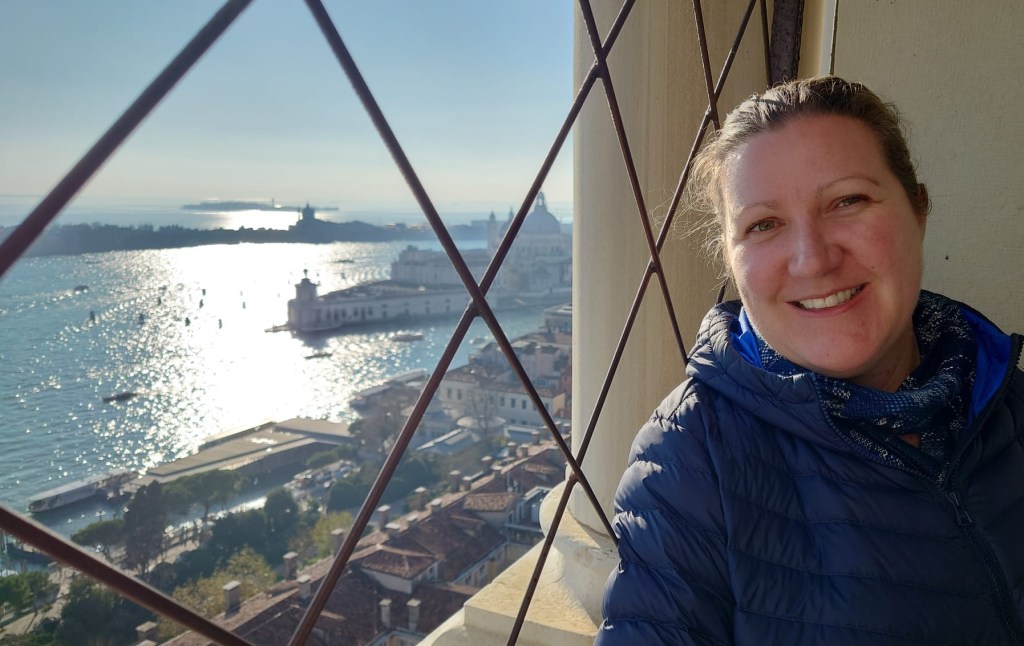
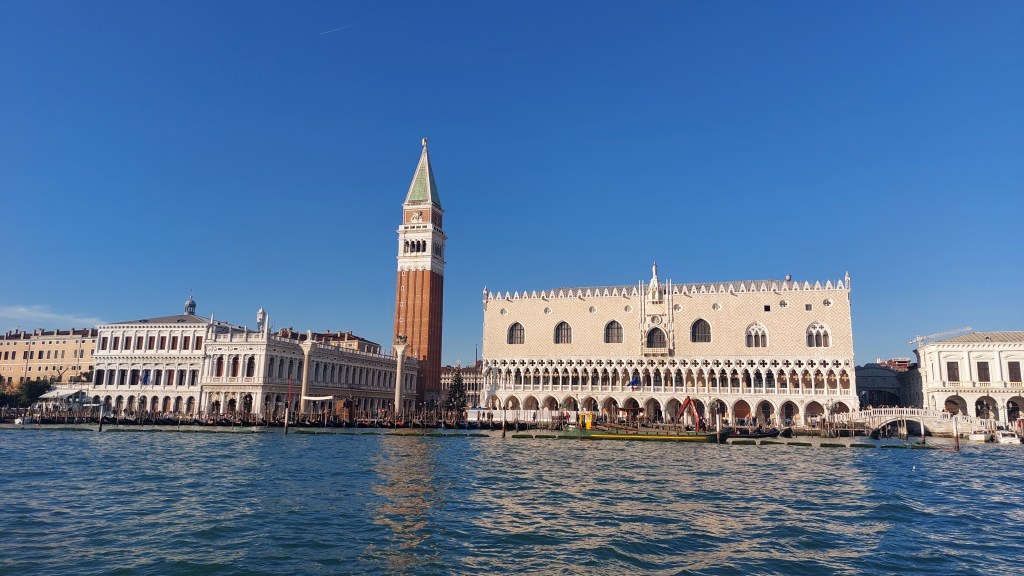
Following our tour, we went up St Mark’s Campanile (again, not waiting at all!) to see the amazing views over St Mark’s Square and the rest of Venice:

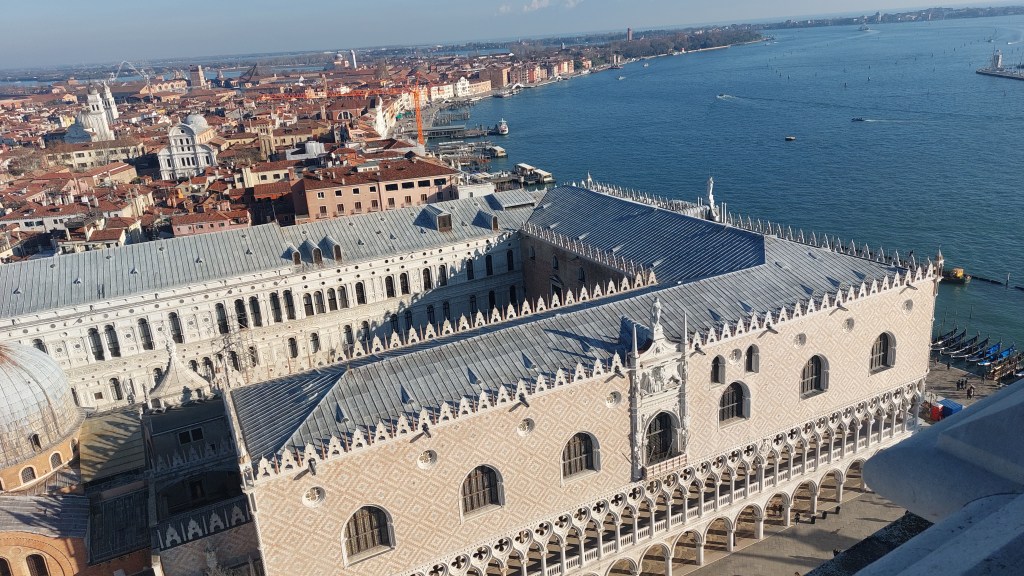
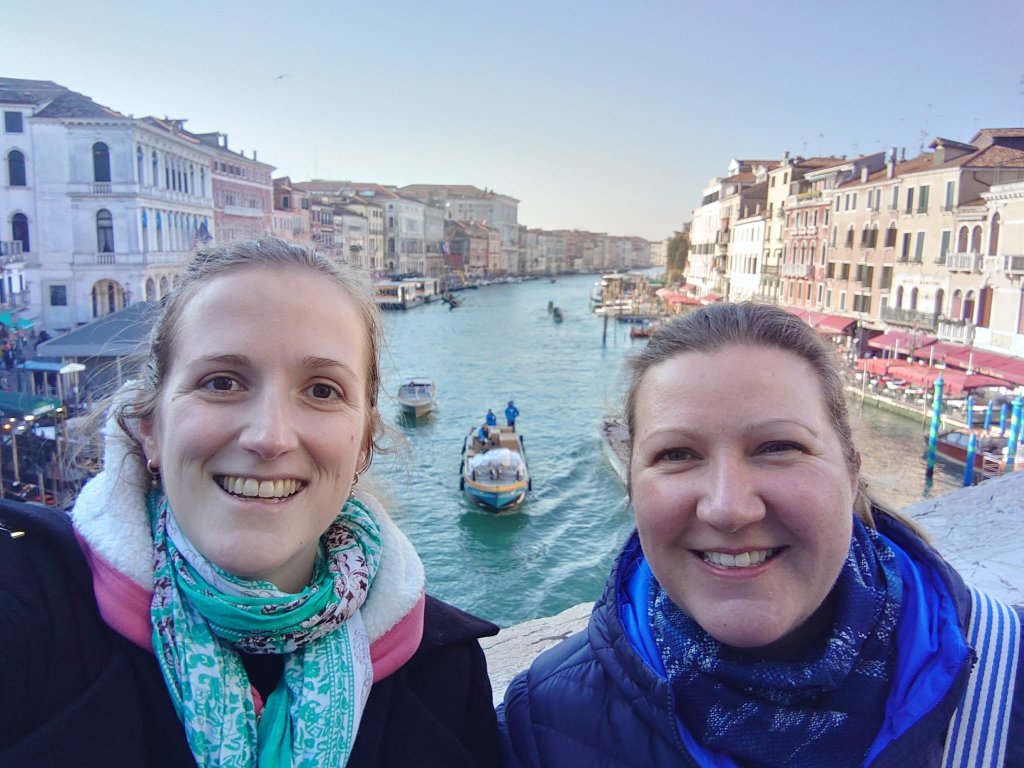
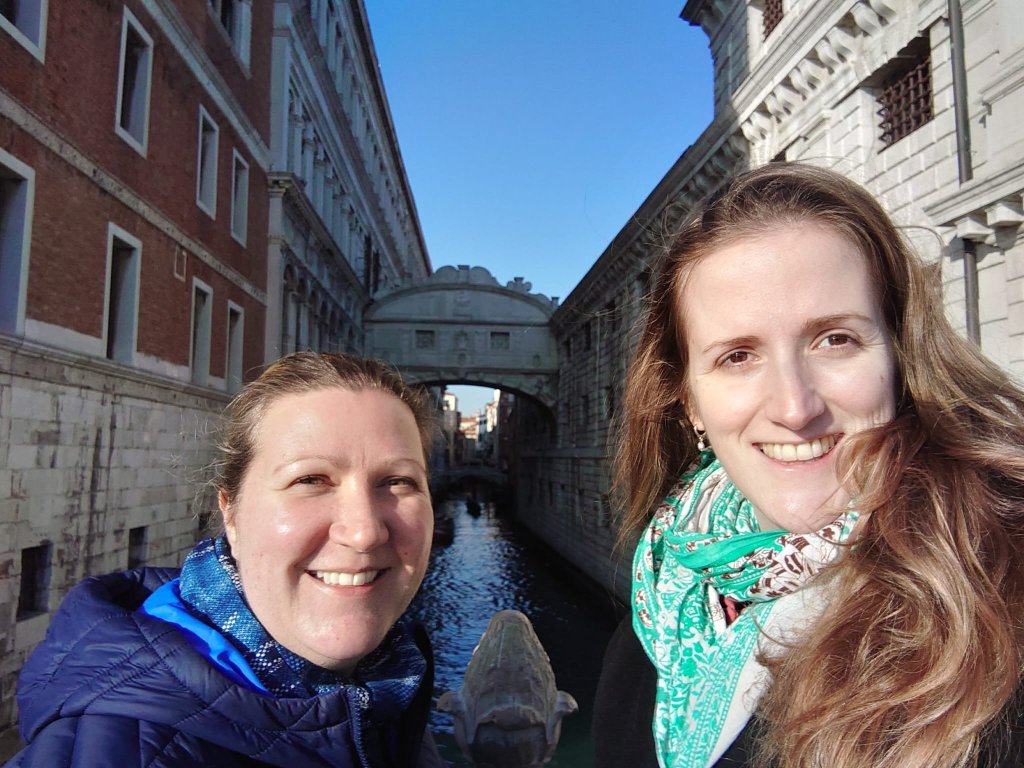
We also did a quick stop (again for me) at the Bridge of Sighs as it is one of the few places Maurane could remember from her visit to Venice some 20 years ago – but today she got the fun history as well (lucky girl!):
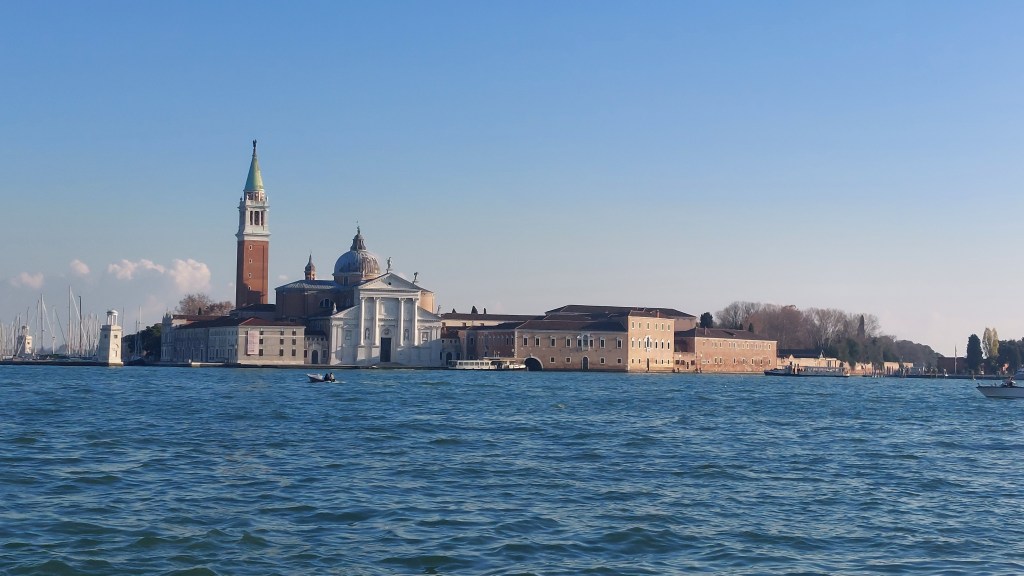
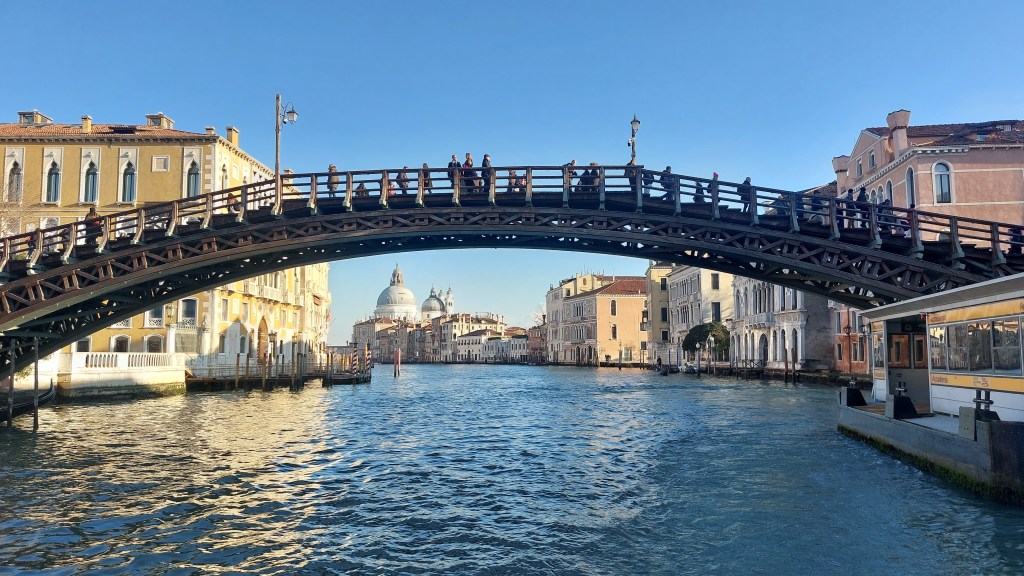
Having both agreed that we were not prepared to pay the extortionate amount for a gondola, we instead took the water bus all the way through the grand canal for €9.50 for 75 minutes. Ok, we did miss on seeing the smaller canals of Venice, but we did have amazing views and a far more reasonable amount of money.
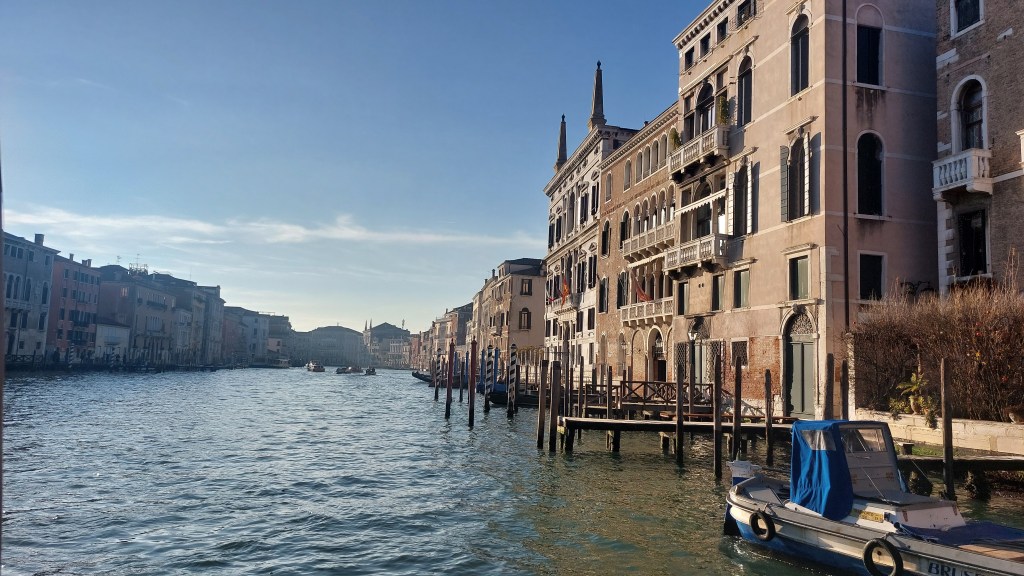
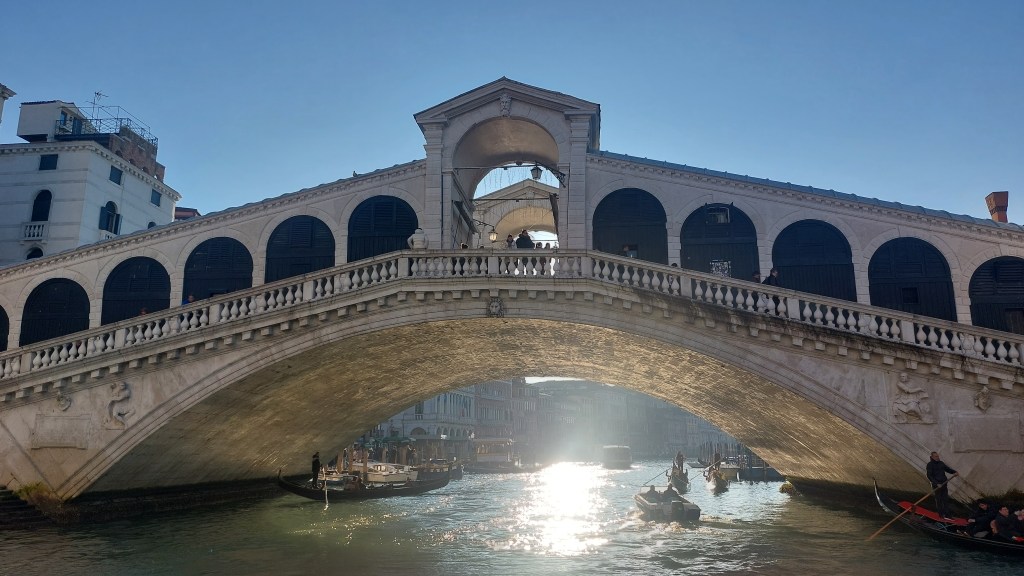
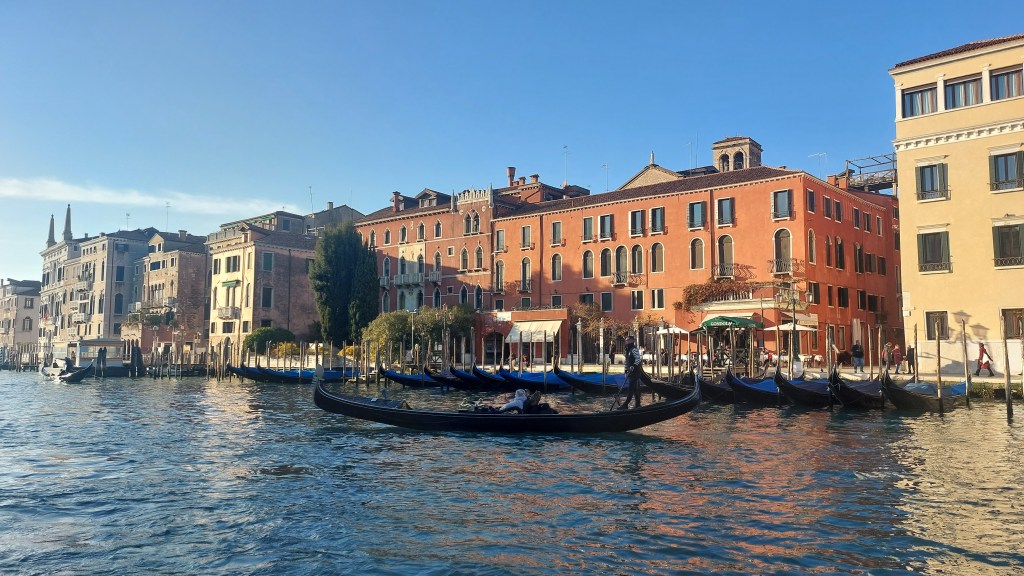
We then (within our 75-minute ticket – hurrah!) took another water bus over to Murano. In 1291 all glassmakers in Venice were required to move to the Murano islands (in order to remove the risk of fire from the main Venice islands) and the island became famous initially for glass beads and mirrors, later chandeliers. It is a beautiful place to visit and has a far calmer vibe than Venice, with few tourists bothering to make the 30-minute boat trip. Well, they are missing out!
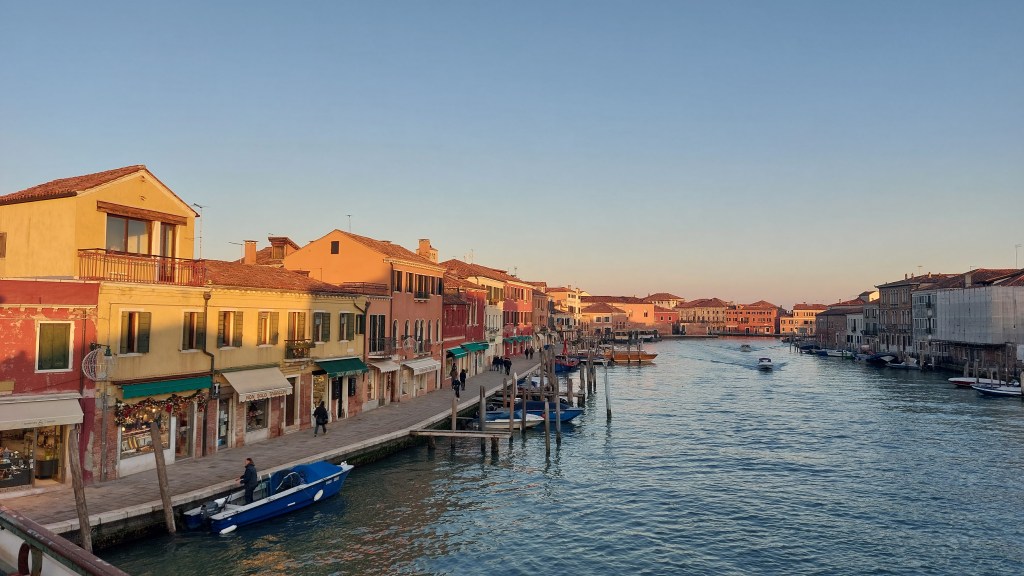
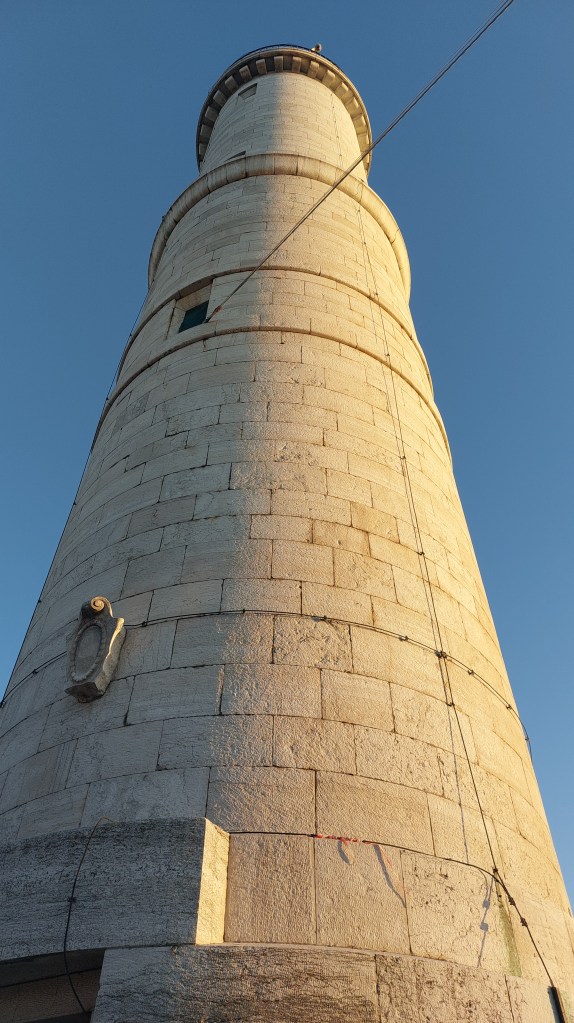
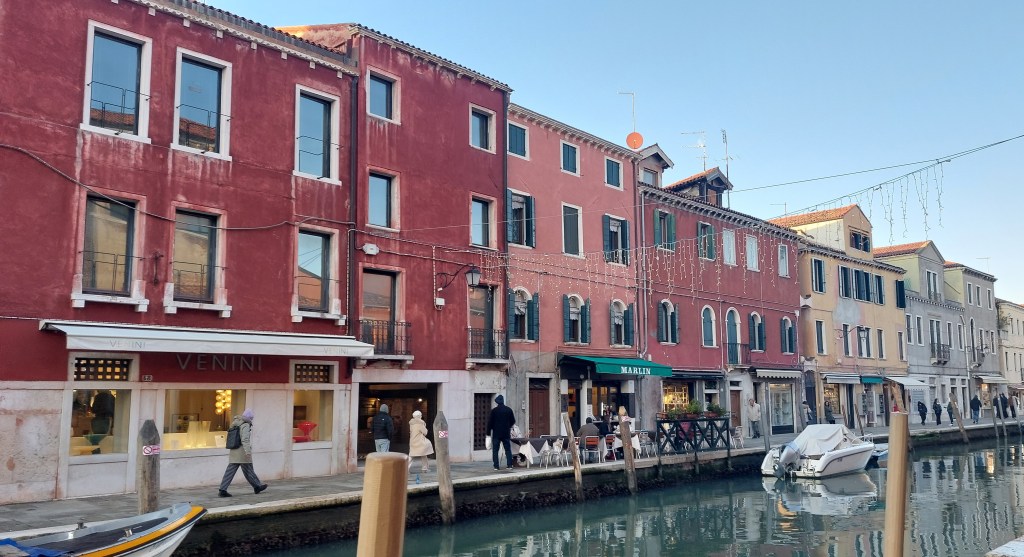
As well as walking around and admiring the scenery, we also enjoyed the many shops. I had seen a lovely pair of Murano earrings in Montenegro and then remembered I was coming to Venice, so I did not buy them. I did purchase a similar pair here for just €4, and also these AMAZING earrings:
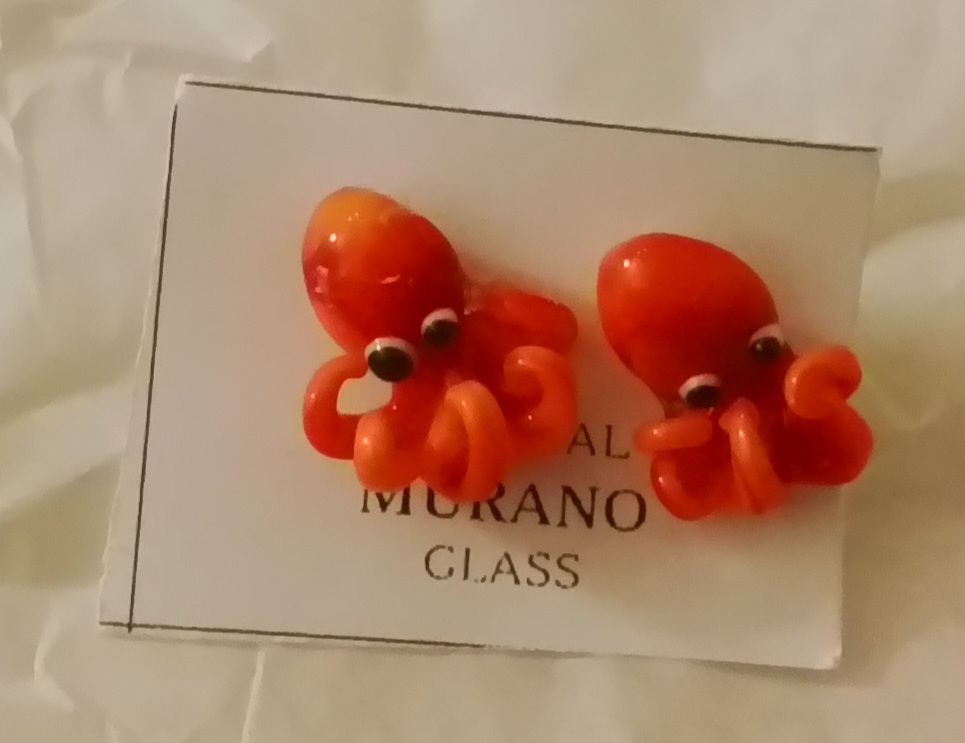
It was getting late, so I had a few last photos before heading back to Venice for food (my seafood theme continues with cuttlefish black spaghetti – delicious) and a much needed bedtime.
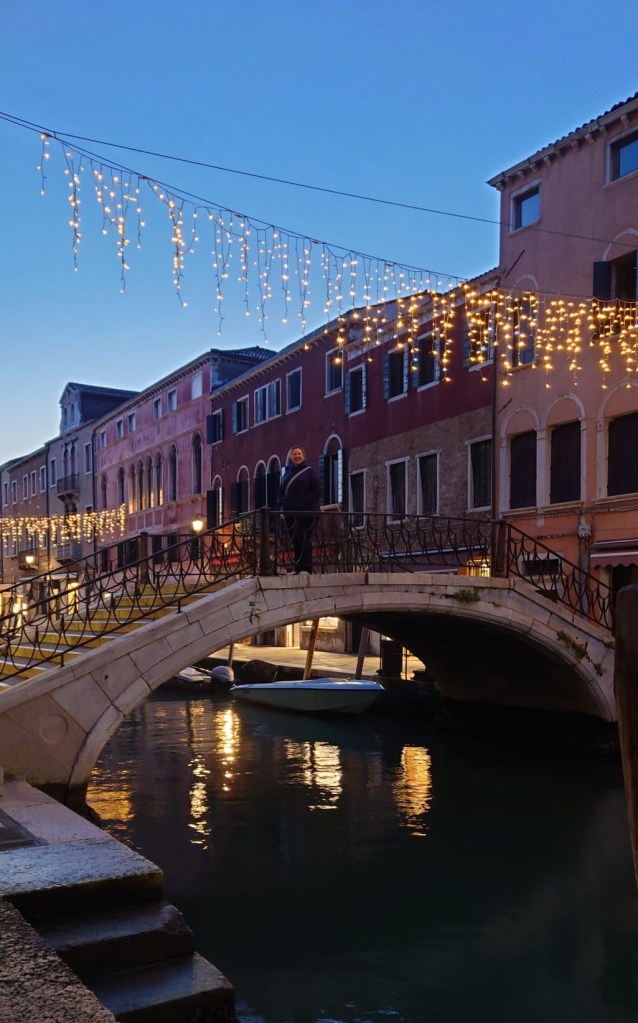

Tomorrow, we are leaving Venice and heading to another “City of Love” Verona. I have loved my time in Venice and would recommend people resist the worries (like I had) as actually whilst it is a beautiful city and certainly lives up the images you have in your head, it is a real place where real people live and that is great to see. One day, I may come back, but whether I ever ride a gondola remains to be seen…

 Travels with Kathryn
Leave a comment