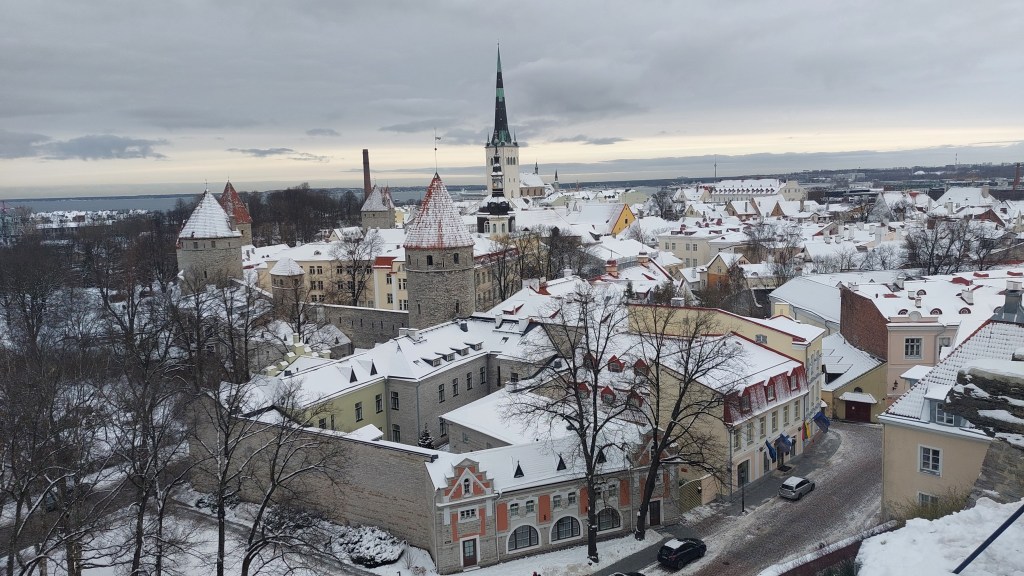
On my travels, I have taken many forms of transportation, but Wednesday was my first international ferry. I started my journey in Turtu on my first packed Finnish train (something of a culture shock), then a quick tram transfer to the ferry terminal. Boarding the ferry was an interesting experience, it is when all sense of Finnish proprietary and it was simply a hoard – however, I am London trained so I shuffled to relatively near the front and having consulted a ships map in advance, headed straight for the “bistro” and a seat with a view. Hurrah!


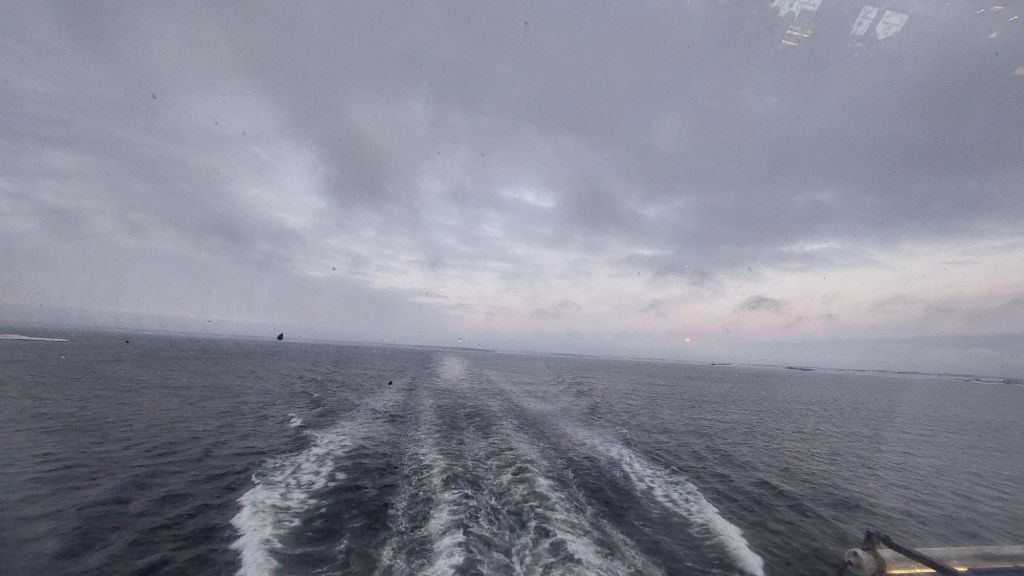
I arrived ontime into the port of Tallinn and it was a short walk to my hotel (with the same bun fight disembarking as embarking!) and my small, but very cheap room for the next 3 nights. Early to bed in time for tomorrow’s exploration.
My day started with a walking tour. Today’s guide was either an amateur dramatic enthusiastic or practising children’s TV presenter – she was very good, but a bit “much”, even for me! Now, let us begin with a quick history, Tallinn is the capital and most populous city in Estonia (500,000, which is a lot considering the total population of Estonia is only around 1.5 million). Human habitation began around 5,000 years ago, but it was not until 1248 that Talinn was granted city rights. The country was conquered by Denmark in 1290, which then set about building the city walls (so as to prevent any similar east conquerings), which still stand today (the longest best preserved medeival walls in Europe apparently) and Toompea (a fabulous word) Castle. At the time, Tallinn was considered one of the last “pagan” civilisations and in an effort to bring christianity to such heathens, a papal Livonian crusade was sanctioned in the territory – from this time government alternated between the Livonian Order and the Danes. During the 14th to 16th centuries, Tallinn became a significant trading hub (due to its strategic location on the Baltic Sea), and in 1561, Sweden aquired Estonia from Denmark. They held the territory until the 19th century when Tallinn fell to Imperial Russia, then there was a brief period of indpendence (betwen 1918 and 1941) until being occupied by Nazi Germany (which was much celebrated at the time as seen as being a better alternative to the Russians). After WW2, Estonia became part of the USSR until its collapse in 1991. Today, there is still a sizable Russian speaking Estonian population who are descendants of Russians moved west, in exchange for Estonians who were sent east (in an effort to make the land of Estonian fully “Russian”). According to our guide, even today, these two populations are relatively separate for no reason other than language (as Estonians speak Estonians, secondly English and Russian-Estonians speak Russian, secondly English). interestingly, though, the war in Ukraine has actually brought the two communities closer in Tallinn where no one supports the war…
Anyway, Tallinn today is considered one of the best preserved medevial cities in Europe. This is probably because the medevial centre escaped much of the bombing during WW2 (which focussed on the port area) and due to the fact that it is quite a small city. There is an upper city (which is not really that upper as Estonian is not a hilly place) and a lower city and we started our tour heading up (I counted 37 stairs) for a view over Freedom Square which was built in 2009 over a former car park! The statute is rather controversial as it cost €6 million to build and €3 million a year to maintain.
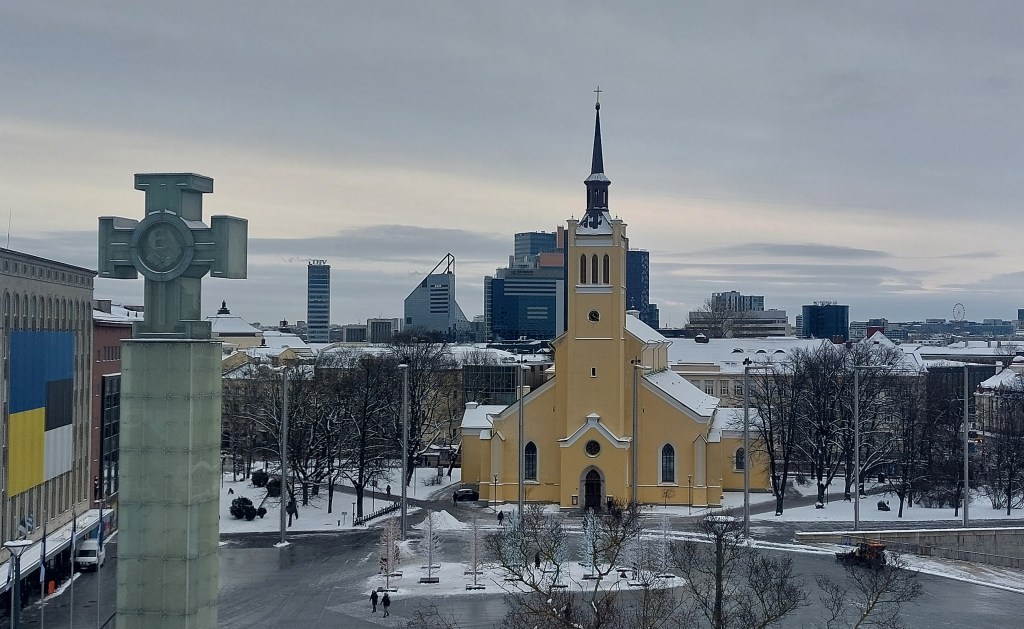
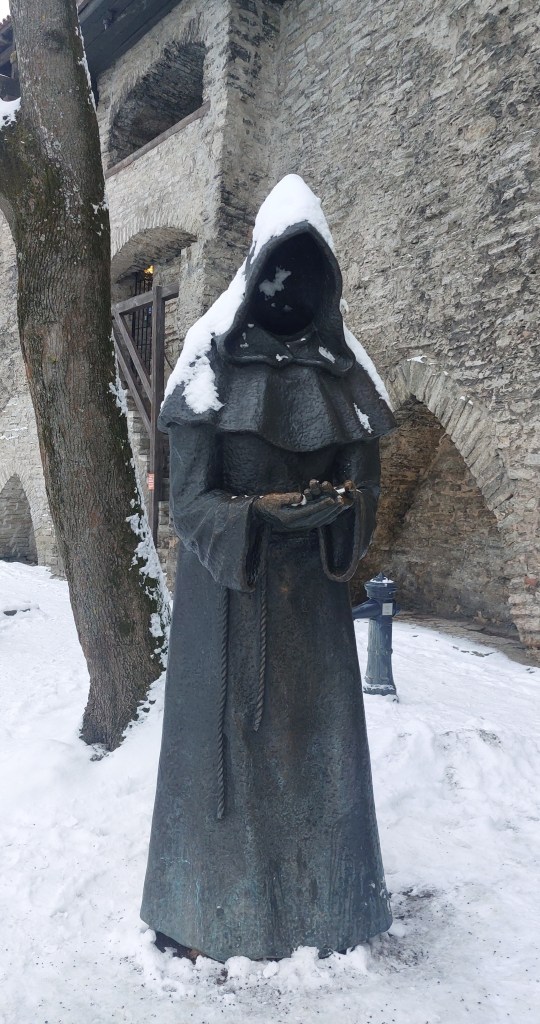
Having reached the Upper Town, we visited the Danish King’s Garden. It is not really a garden, but more of a viewing point over the city. There were also some creepy statutes, supposedly of monks, but definately Dementor inspired (they were errected in 2015) if you ask me!
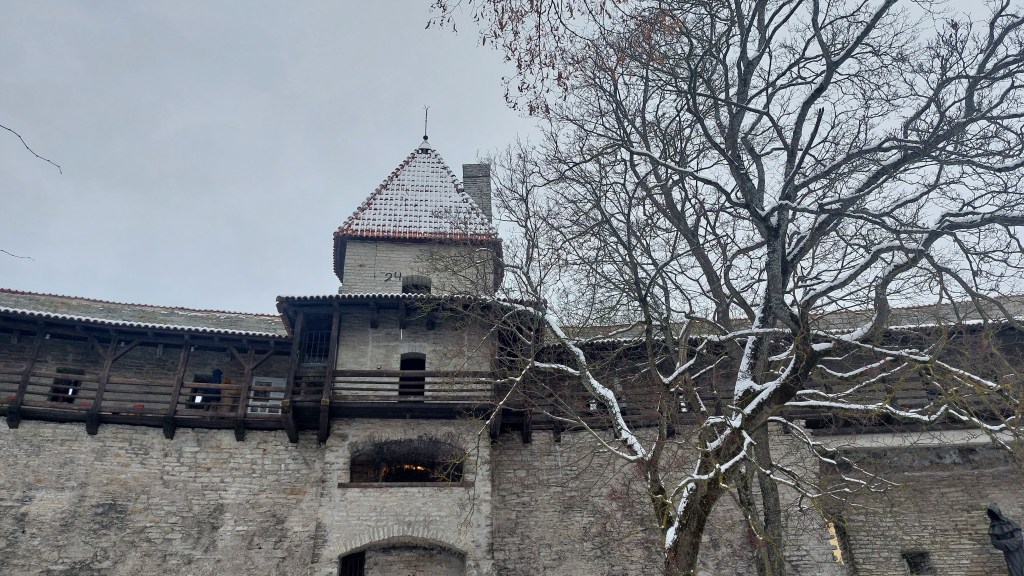
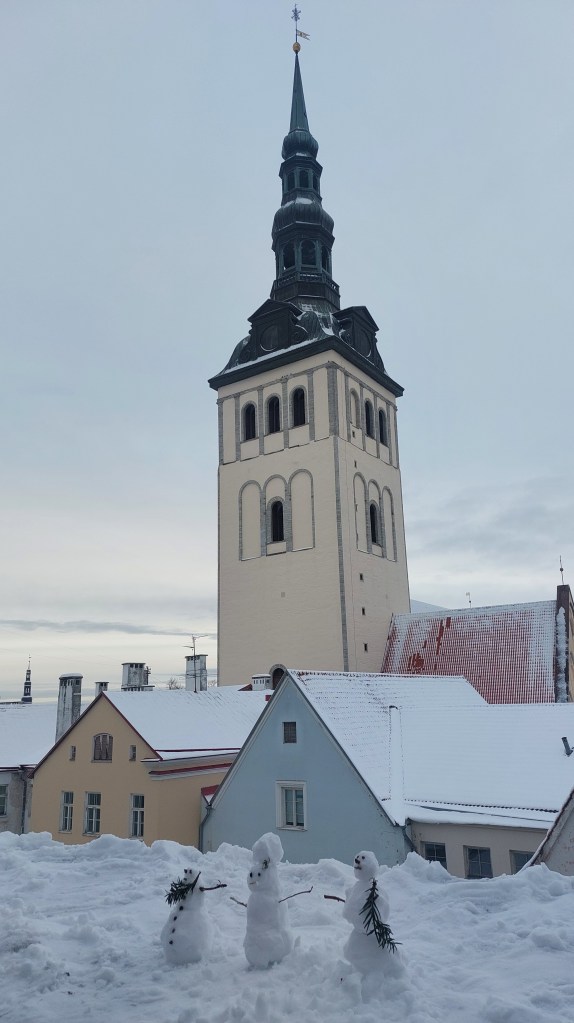
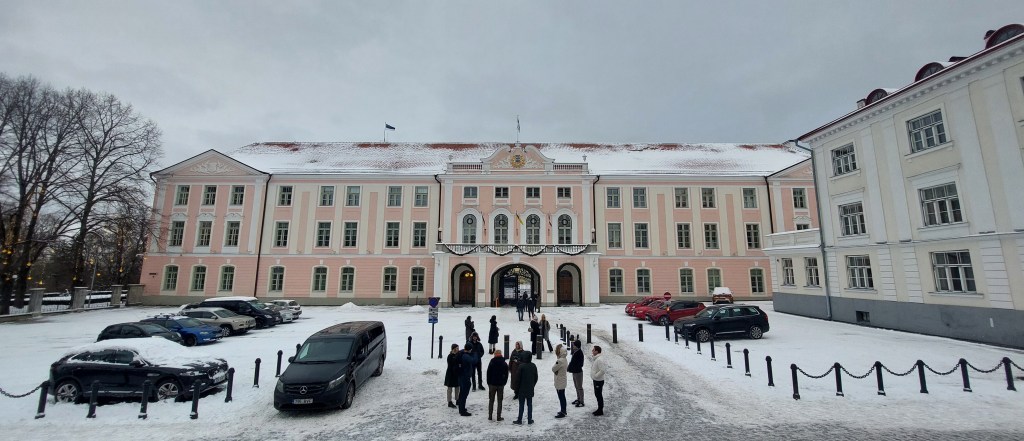
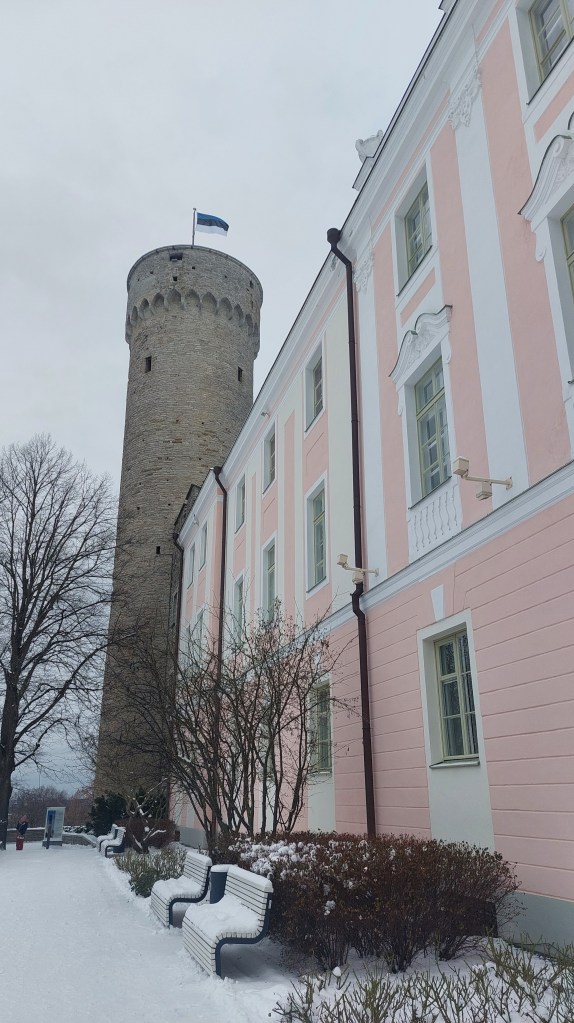
Our next stop was Toompea Castle (which today is the parliament building) and another bit of the wall and its tower. Many of the fortress towers have fun names (I am hoping to visit Fat Margaret’s tower tomorrow!), and this is no exception, Tall Herman is the only remaining part of the original castle.
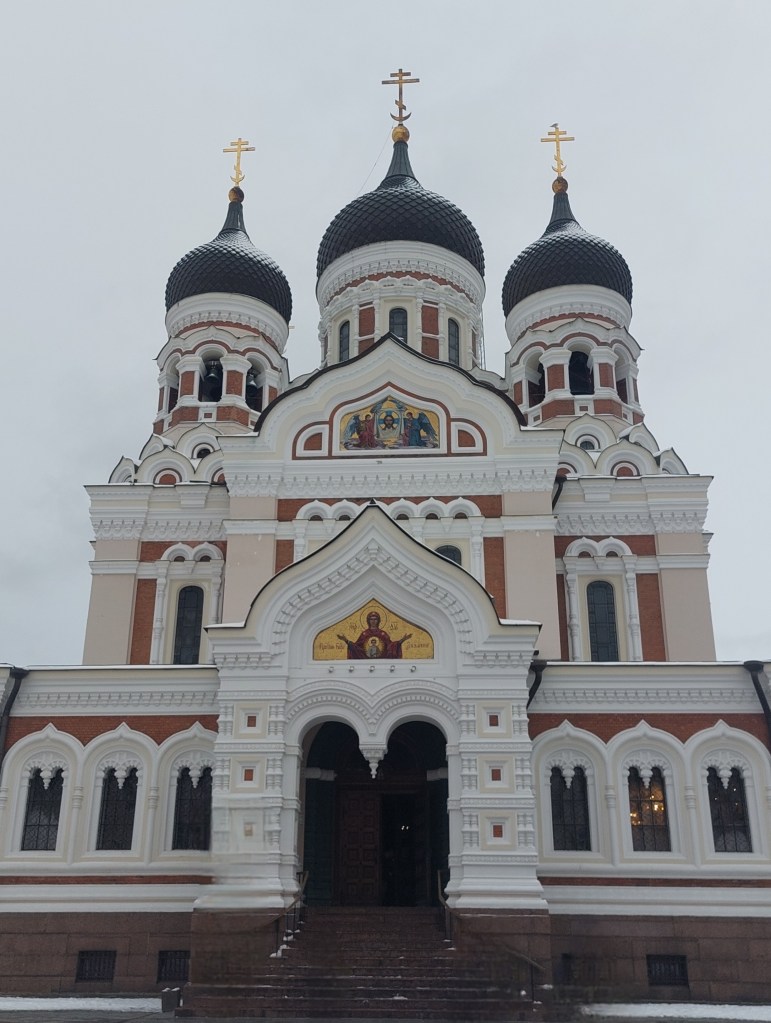
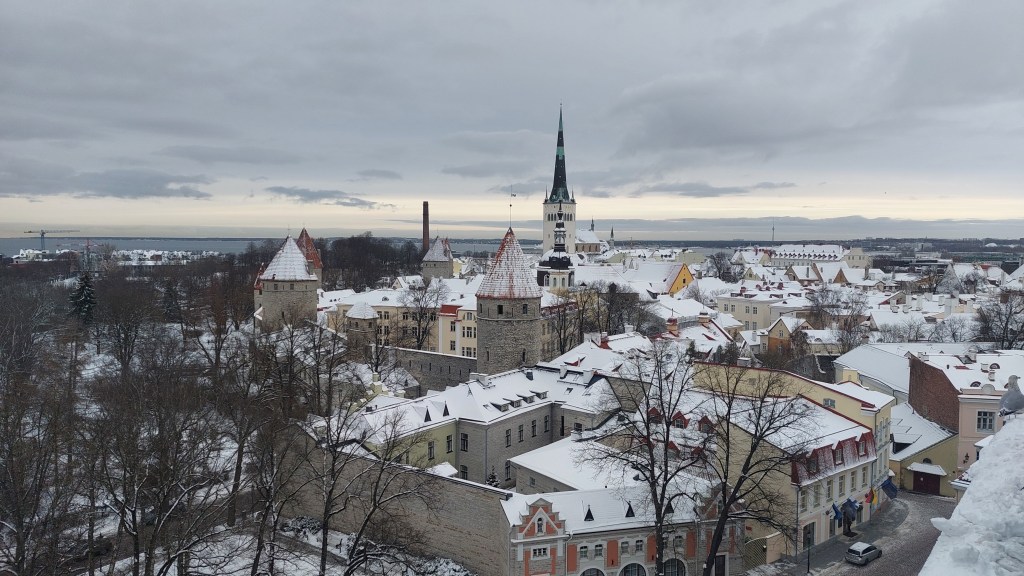
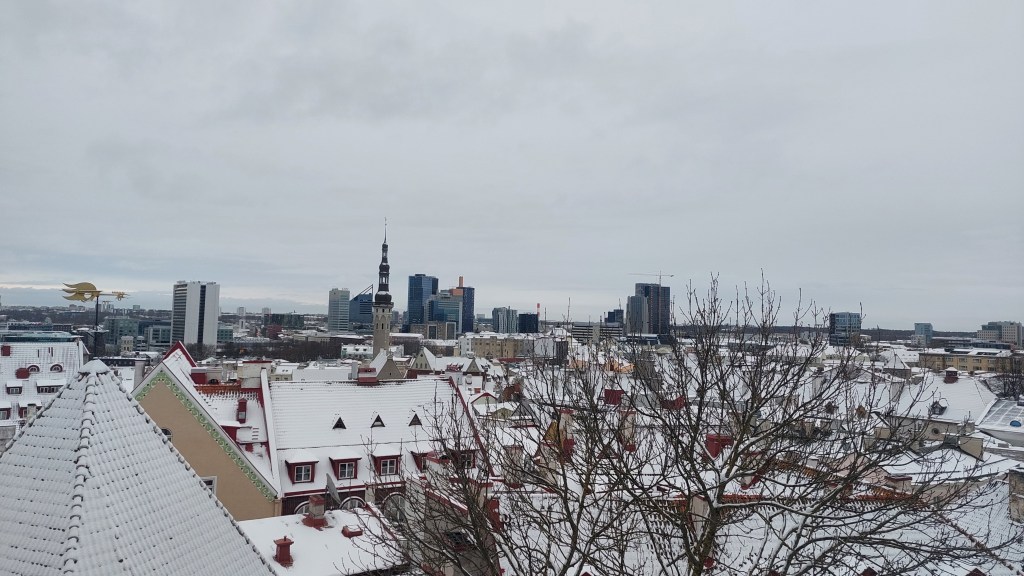
Throughout the Upper Town, there are a number of “viewing platforms” giving excellent views over Lower Town. We also went along what is colloquially known as “Blood Street” this is he narrowest street in Tallinn and ladies in their wide skirts apparently came to blows over who should be able to pass without smooshing themselves against the wall. This is what happens when you do not educate women, they commit murder in the street. I’m just saying.
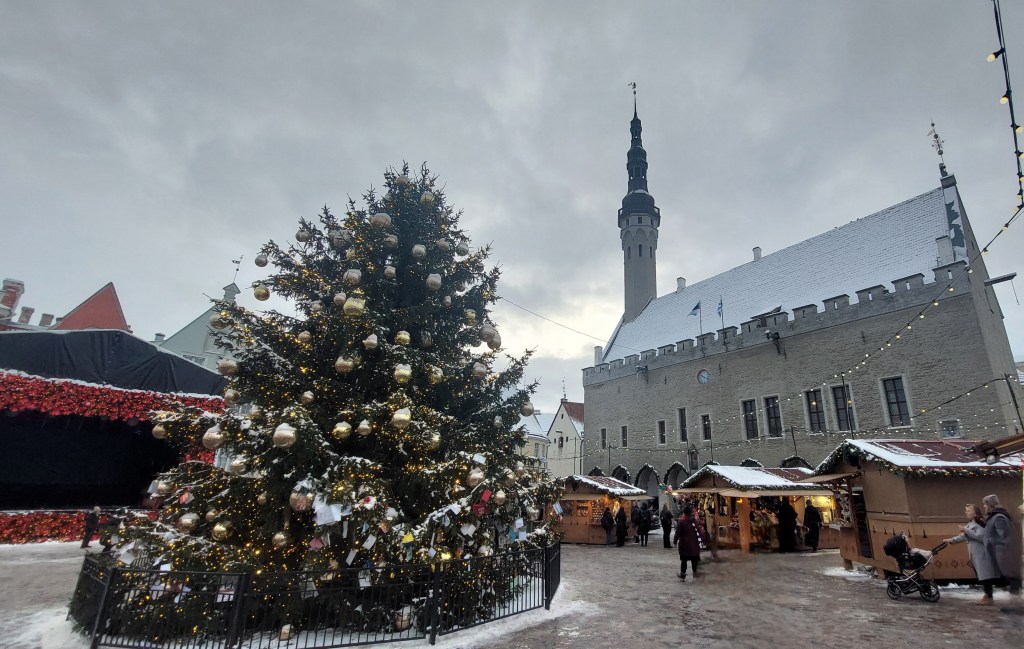
Our final stop was Market Square. This is the centre of Tallinn and all roads lead here and as the main trading square of the city and also the location of the town hall. On top of the tower is a gold statute of “Old Thomas” – this was the town’s 15th century watchman and a very popular man as he gave sweets to children (back then this was in no-way frowned upon!), so much so, that when he died, the city wanted him to continue to watch over the city. Excitingly for me, the Christmas market is still running, so I have definite designs on a few things tomorrow (including soup in a bread bowl!).
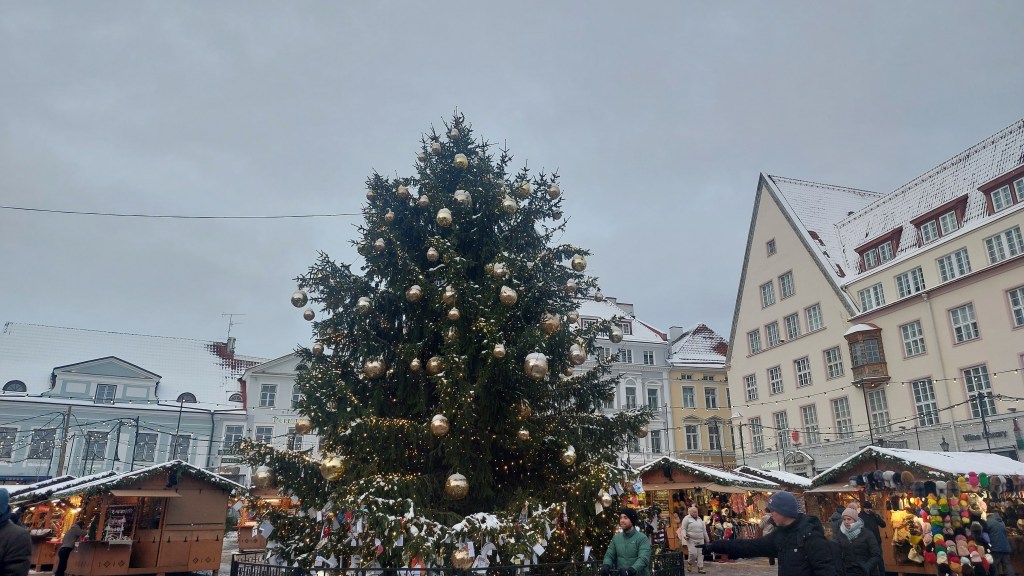
Having now been outside for a couple of hours, I was rather cold and in Tallinn the snow/slush is melting which makes walking quite hard going (when one is trying to avoid having a fall – I’m nearly 40, old enough to have a fall as opposed to simply falling over!). Therefore, I headed to (the wonderfully named) Balti Jaama Market, which is a cool food market for lunch. I had a very Estonian burger, but I went for the stall with the longest queue of people speaking Estonians. It was the right decision.
From here, I headed to Kalamaja. This neighbourhood is known for its colourful wooden houses. These were built in the 1920s and 1930s built to accomodate harbour workers, and are today known as “Tallinn Houses” – a classic example of what was once a poor area, and now the most desireable and expensive part of town to live in!
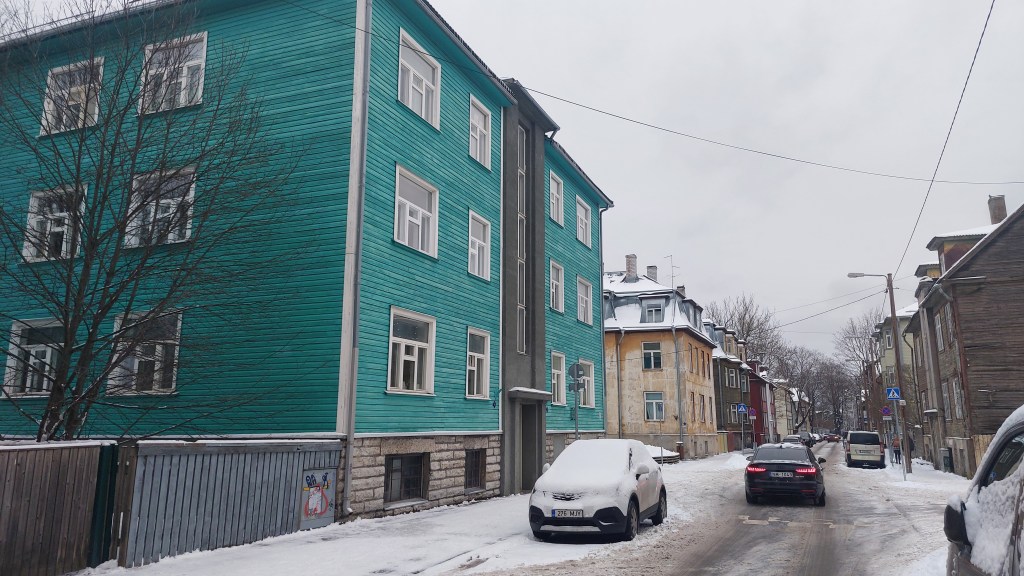
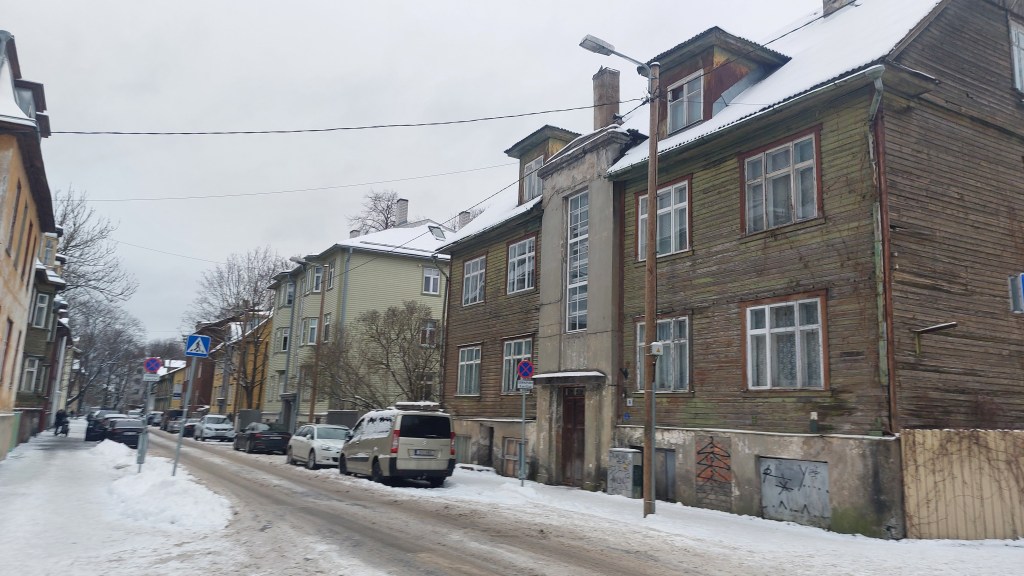
By now it was starting to get dark (it being 3pm!) so I headed in the direction of my hotel with a quick stop at supermarket for snacks/breakfasts (hurrah for normal non-Finnish prices) as well as a new pair of gloves. I lost my right glove in Lapland, and they are an essential item of clothing in this part of the world – and they were on sale (€3). I am now in my hotel, in my pyjamas, and settled down for a quiet evening. Tomorrow I am planning to walk the fortress walls (particularly fun named towers), visit the Estonian History Museum (and make any corrections to the above as needed) and see the oldest continually operating pharmacy in Europe. Well, when one is in Tallinn…

 Travels with Kathryn
Leave a comment