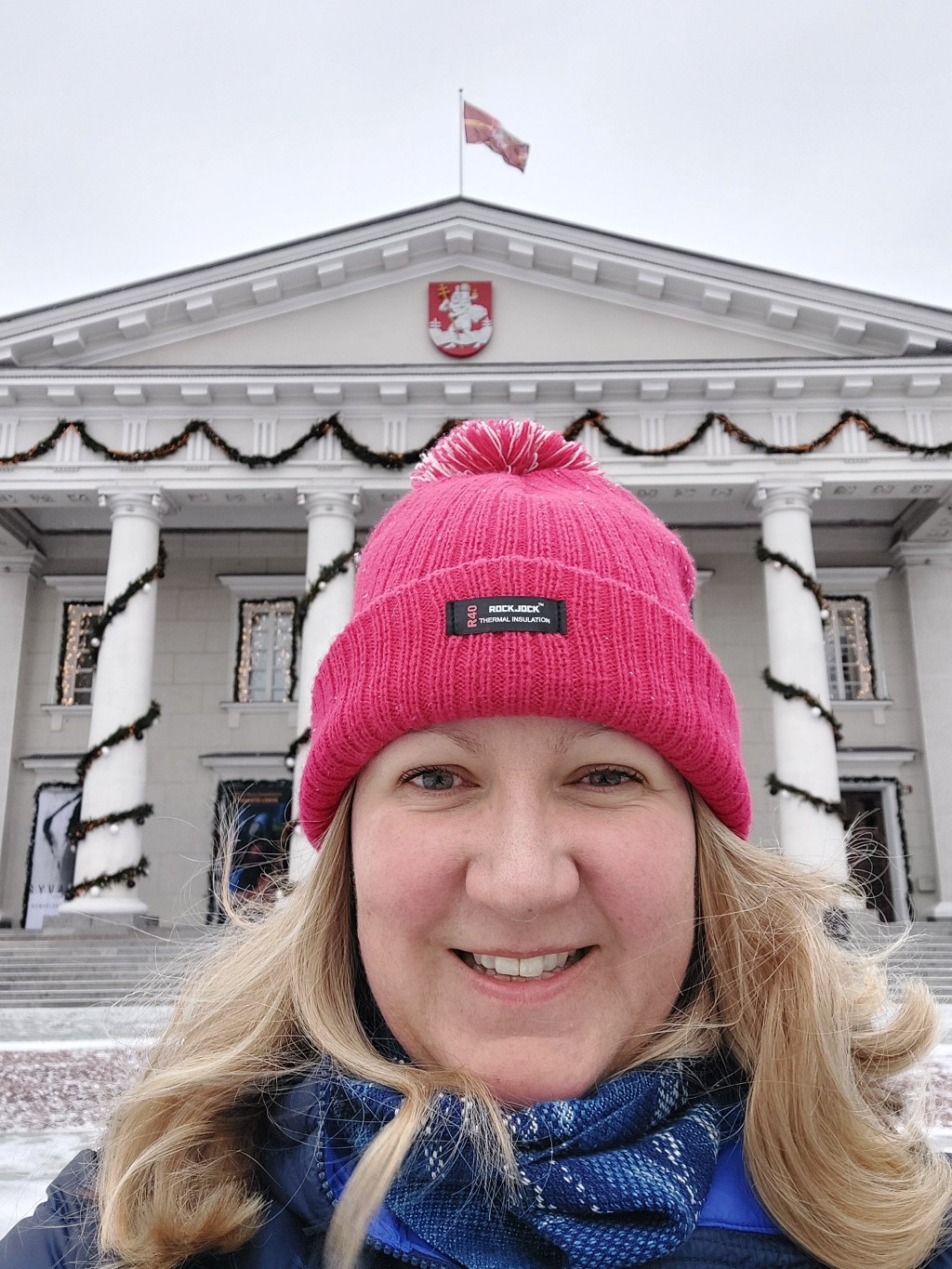
I may be in the Baltics (so named for a reason), and I may have been Lapland trained, but OMG, it’s FREEZING! The weather forecast says its been -10 but there is also some kind of arctic wind going on so although I wore basically all of my clothes, I was still extremely cold by the time I headed back to my AirBnb each day.
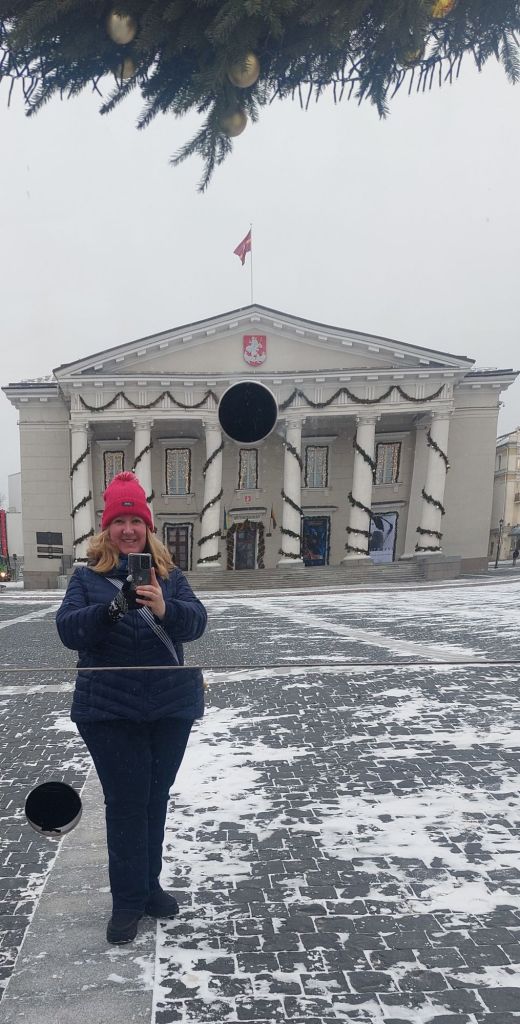
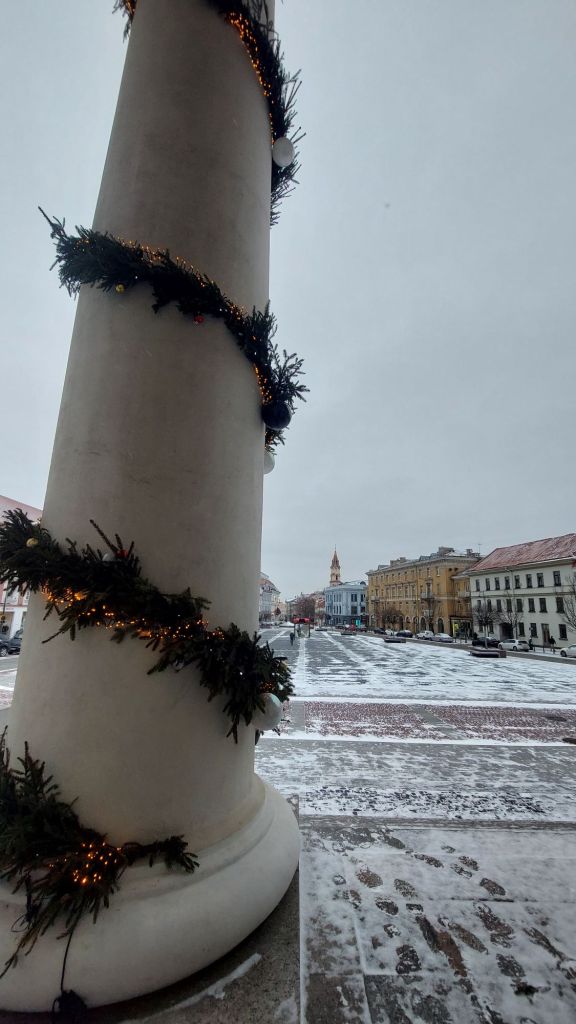
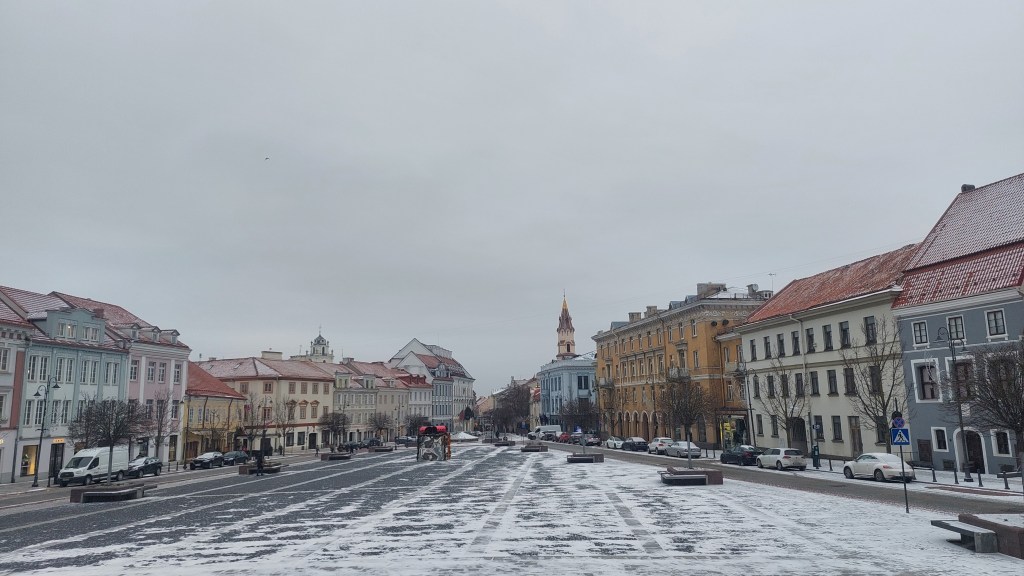
Anyway, I am getting ahead of myself. I started my touristing of Vilnius with a walking tour and I would highly recommend this particular one is (called Vilnius with locals) as it was excellent and the guide had a Harry Potter vibe going on which I very much enjoyed! Having assembled at the town hall, I used the time waiting for the tour to start to take some photos:
As usual, let us begin with a brief history lesson. It was not until the 13th century that the tribes in the area of Lithuania came together and established the Kingdom of Lithuania (more on this later) for a short time until becoming a Grand Duchy. The Grand Duchy was a very successful state and became the largest state in the Europe in the 15th century spreading from the Baltic Sea to the Black Sea. Interestingly, Lithuania also considers itself to be the last pagan country not adopting christianity until the 14th century – the story goes that baptisms became popular as you were given a wool shirt when you converted. Some people even converted more than once! In 1385, the Grand Duchy fored a union with Poland, which turns out to be a bad idea as Lithuania very much became the junior party losing much territory and importance to Poland. Unable to obtain support from Sweden, by 1795 the last of the partitions of Poland (between Russia, Prussia and the Hapsburgs) erased independent Lithuania (and Poland) and Lithuania effectively came under the rule of the Russian Empire. Lithuania (like many other countries in this region) had a brief period of independence after 1918 that lasted until WW2. There had been a rather crazy/genuis idea in the run up to WW2 that all Lithuanians emigrate to Madagascar, but unfortunately, no one went for this plan… In 1940, the Soviets arrived and deported over 100,000 Lithuanian teachers, professionals, and land owners to Siberia. In 1941 Nazi Germany arrived (which was celebrated by many in Vilnius other than the jewish population), and then in 1944 Lithuania was re-taken by Russia who (to quote the museum I visited later) “forgot to leave” until 1991 when Lithuania finally became independent again.
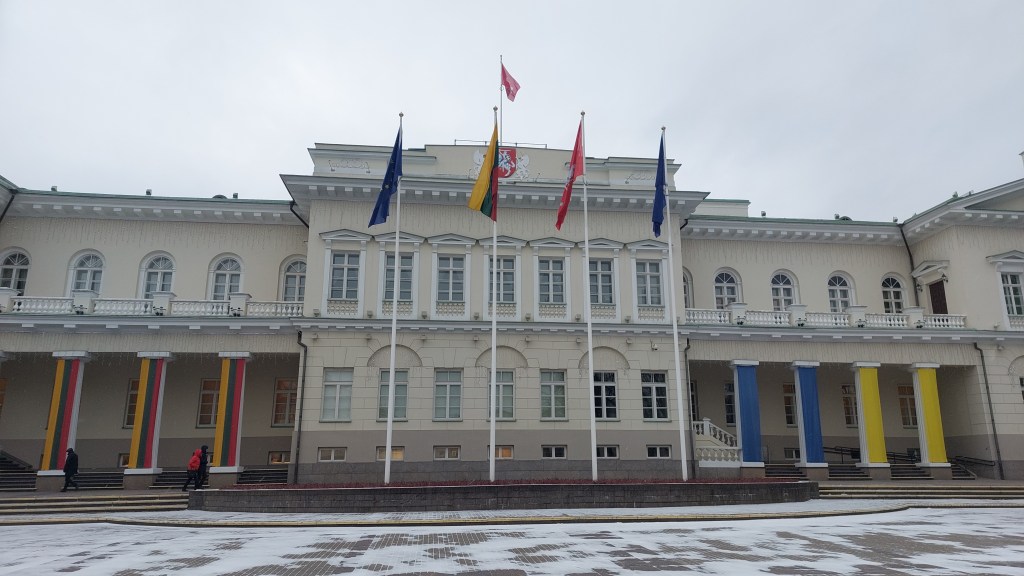
One of the things that is very noticeable in Vilnius (and also in Riga and Talinn) is the number of Ukrainian flags (as per the above). This is to show support for Ukraine against Russia and Lithuania as well as taking in Ukrainian (and Belarusian and Russians who are against the fighting) refugees, which is also providing money and arms to Ukraine. The fear here is that Russia has started what may turn into World War 3 and that they will be next once Russia has either “won” in Ukraine or decides to retaliate against the other countries in this region. This is one of the reasons why Lithuania is keen to emphasise that it was a kingdom back in the 13th century, i.e. Lithuania is not a historical part of Russia, and there is no argument that it needs to be re-incorprated into Russia…
We started our walking tour in the Old Town, the whole of which is on the UNESCO list as it has 1,200 16th -18th century buildings and yes its beautiful, but what for me made the difference, is the fact that (unlike say Riga which is also lovely) this Old Town is part of the city and full of real people going about their business.

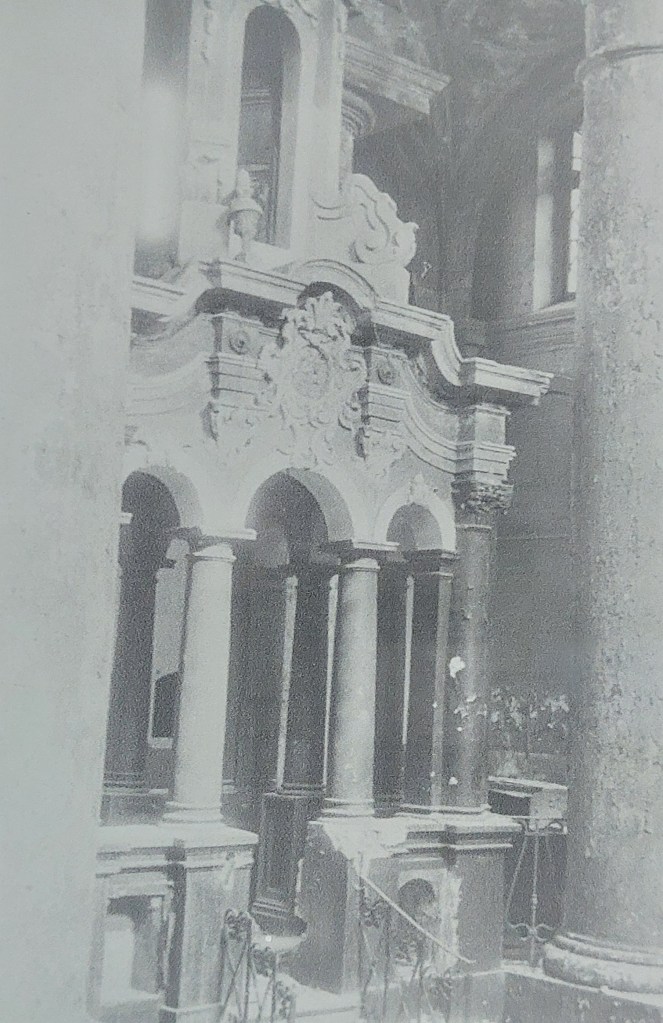
Below is a photo of a primary school. This may not seem particularly interesting, but this was built on top of the former “Great” Synagogue of Vilnius. Before the Holocaust Lithuania was home to around 250,000 Jews and during Nazi occupation, around 90% were murdered which is one of the highest rates of any European country. When Nazi Germany took over Vilinus, an initial massacre took place, and then the remaining 40,000 Jews were moved into two ghetos – the big ghetto for the 30,000 jews who were considered “useful” to the regieme and could be forced to work, and the small ghetto for the 10,000 Jews who were not useful i.e. children and the elderly. By 1943, as the Soviets approached, the ghettos were liquidated, the surviving Jews marched into the forest and shot. Before 1940, there were 106 synagogues in Vilnius, and today, there is just one. This is considered a dark period in Lithuanian history as many Lithuanians collaborated with the Nazis as they were seen as a better alternative to the Soviets…

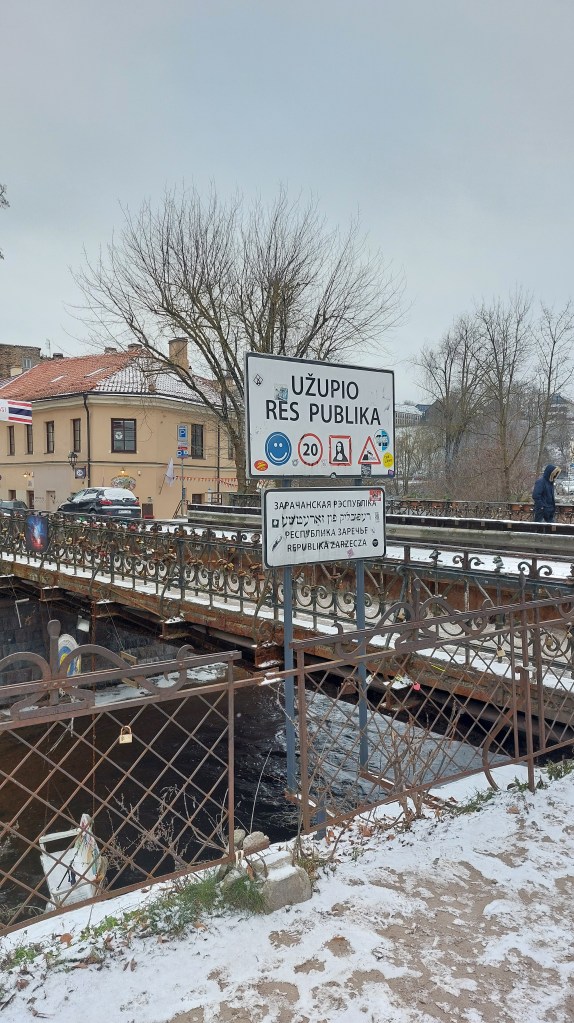
We then (technically) left Vilnius and entered the Republic of Užupis. This is a sort of independent republic formed by artists, but it has its own president and parliament (located in a bar). Note the rules of the Republic:
They also have their own constitution (also written in the bar – beer may have been involved):

We then exited the Republic of Užupis (it is not very big!) and returned to the Old Town. A few stops along the way:
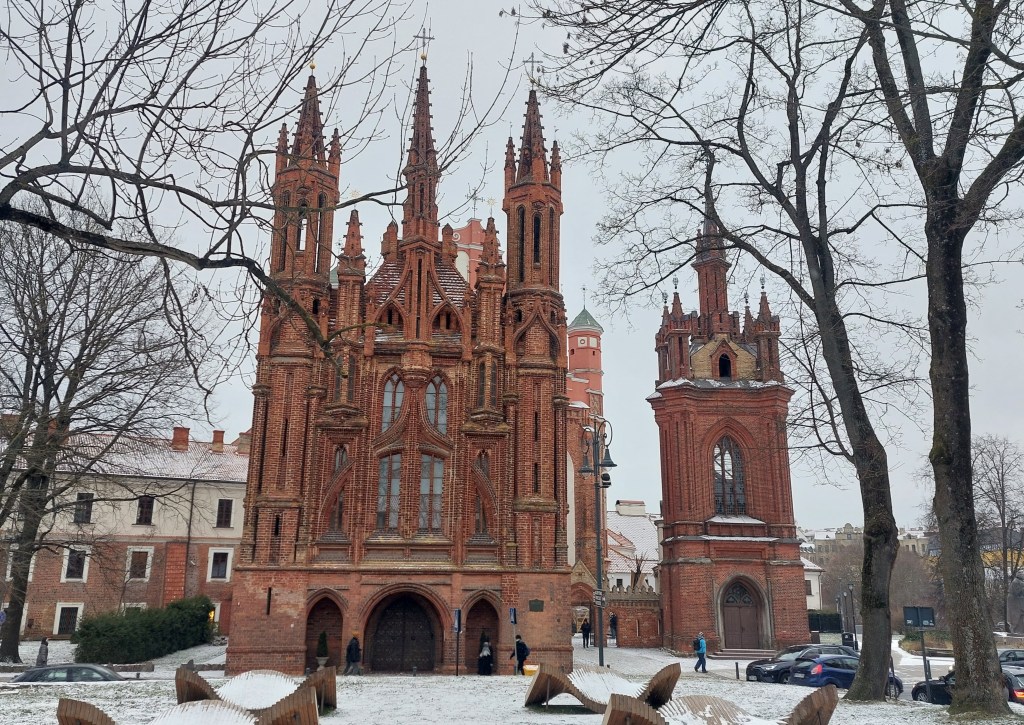

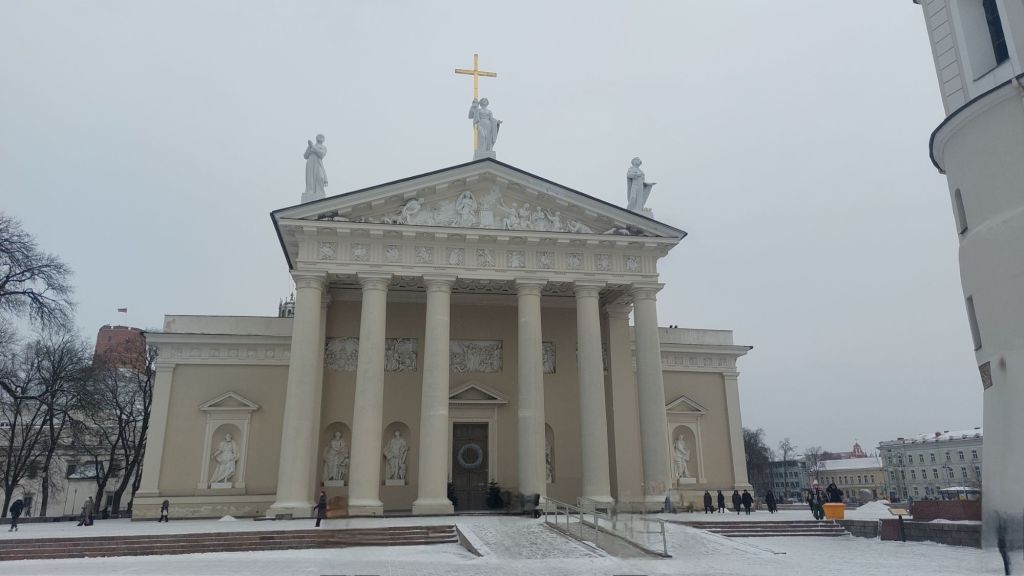
Our final stop was Cathedral Square, which (as one might guess) is the location of Vilnius Cathedral. The cathedral is the main Catholic cathedral in the city and is the last of many churches on this first (the first dating back to 1251), and this is a renovated 17th century creation. Inside, it’s not overly Catholic, and there was some organ rehearsing going on, which made it a delightful place to defrost slightly.

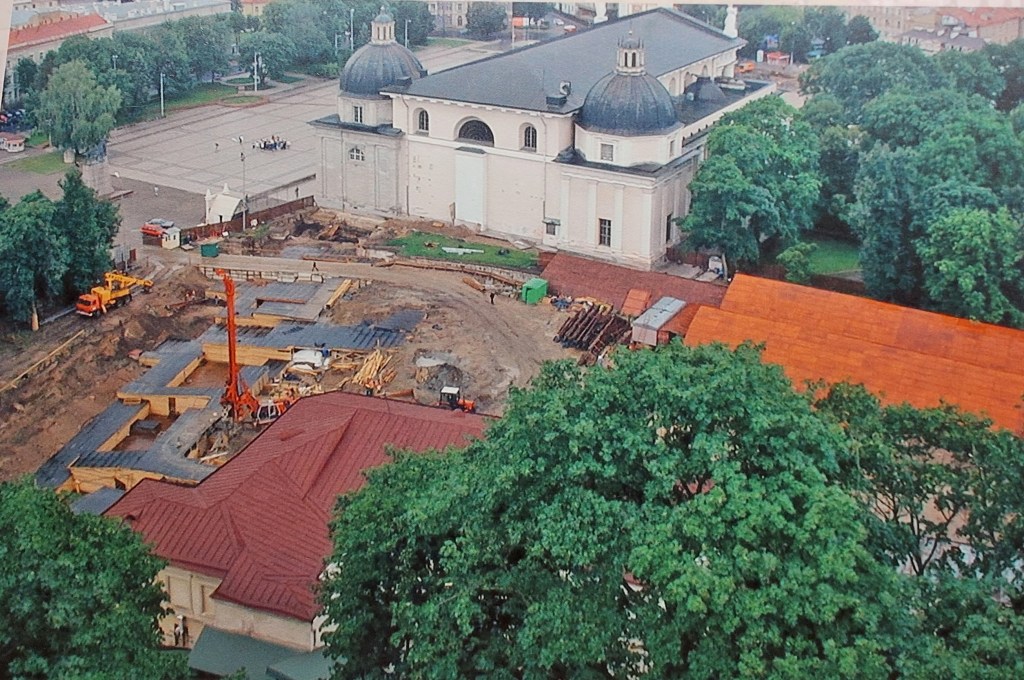
After the tour, I decided to visit the Palace of the Grand Dukes of Lithuania. This is actually a completely modern reconstruction of the former palace and contains a number of excellent museums. Usually, I would eskew such reconstructions, but I am glad that I did not, as I spent 3 fascinating hours following tours 1,2,3, and 4 around the Palace. Tour 1 is a detailed history of Lithuania around the orginal foundations of the palace, tour 2 is around the reconstructed rooms which have been set up in rooms of each key era, tour 3 is the story of rebuilding of the Palace and tour 4 is (albiet the weakest) focussed on Renaissance Life.
A few highlights were:
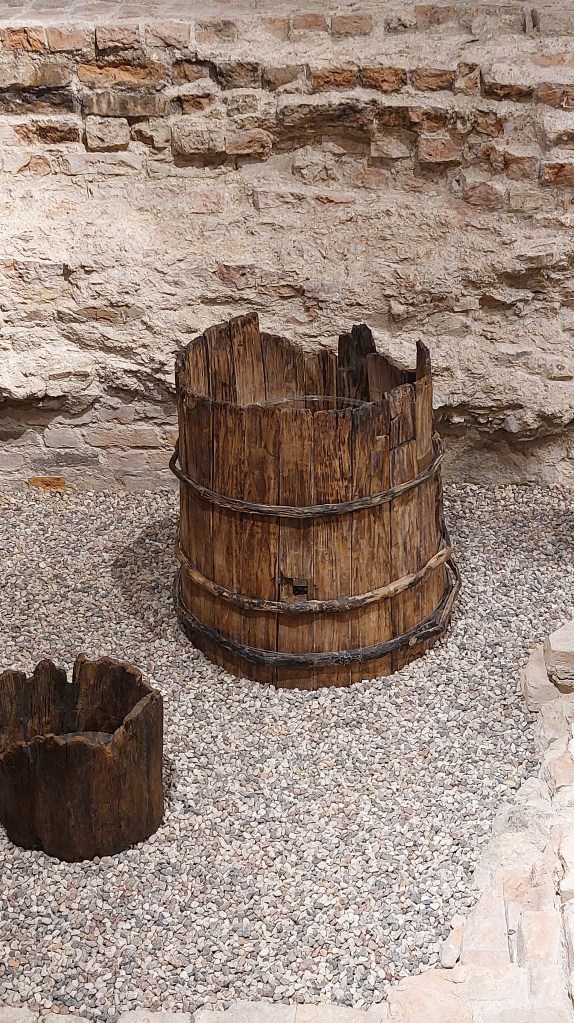
- A 15th century vat (stay with me here!) – This was found inside a wooden dwelling dating back to the early 15th century and was lowered into a hole without a base to collect and drain ground water. Interesting, the volume of the vat (a little over 400 litres) was a unit of measurement widespread in the 4th century known as the Vilnius barrel which was the main unit for measuring grain in Lithuania until the 16th century.
- Princess Catherine – Catherine Jagiellon married the Duke of Finland, and having visited the castle she was imprisoned in (Tartu), I enjoyed learning about her early life here and more about this dynesty.
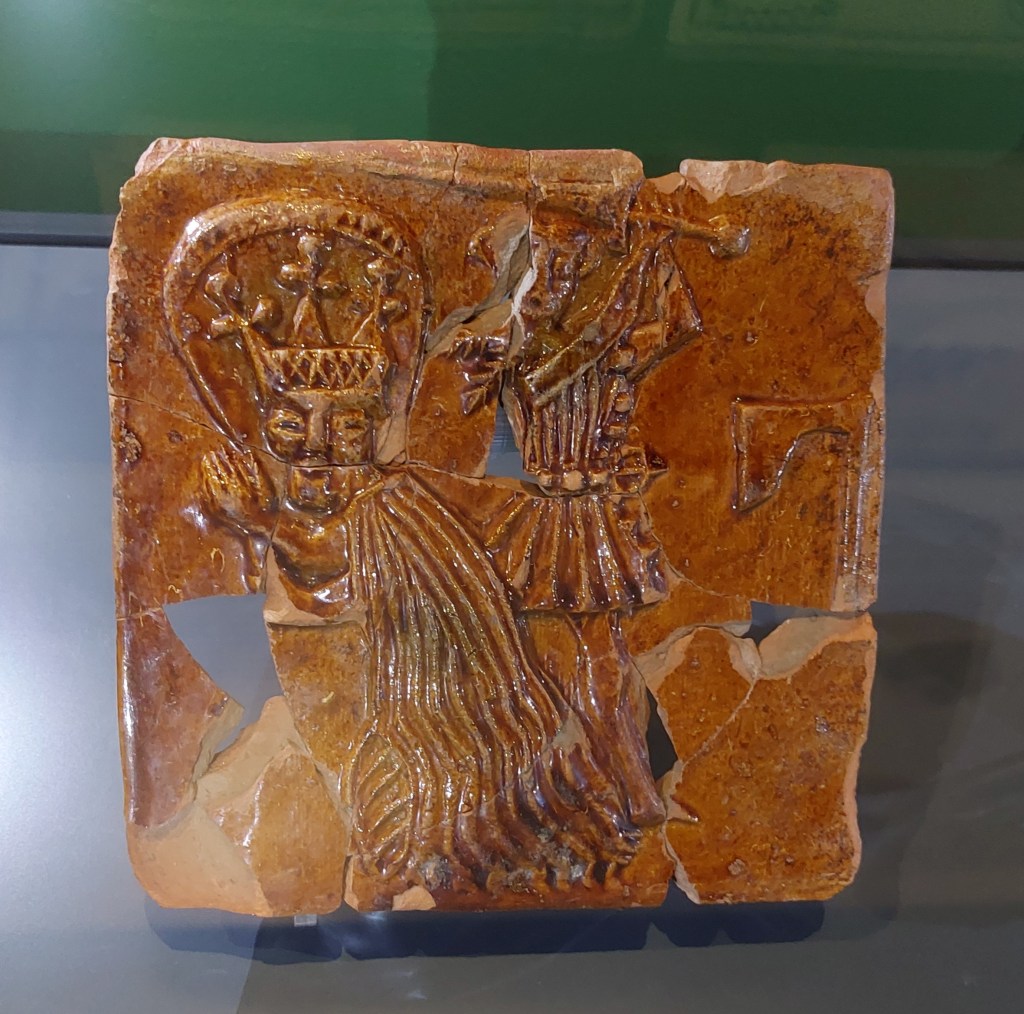
- Stove Tiles – this was a temporary exhibition of how people decorated their stoves, and there was a particularly delightful tile showing various female saints being decapitated. Not what I consider to be appropriate decor, but what do I know?
I was now very, very cold, so I decided to head back to my AirBnB for a hot bath (old people like a bath, I understand), dinner, and a relaxing evening in my pyjamas.
So, I had planned to spend my second day (Thursday) in Vilnius by taking a day trip to Trakai. However, I did not see everything I wanted to see yesterday so I decided to spend another day here, and as I suspect I may come back at some point (as Vilnius is so delightful!) it can go onto my next time list. Anyway, my plan for today was the Museum of Occupations and Freedom Fighters (formerly the headquarters of the KGB). I briefly covered the events of the Holocaust above, but this museum also covered the Soviet period.
During the Soviet occupation (1940-41 and 1944-1990) 200,000 Lithuanians were arrested, interrogated or imprisoned, 132,000 were deported, 20,000 died in prison, 28,000 died in deportation and 21,500 partisans (and their supporters) were killed. During the Nazi occupation (1941-1944) 30,000 Lithuanians were imprisoned and deported to concentration camps, 240,000 were murdered and 60,000 were deported to Germany for forced labour. The museum tells their story. I think most of us are aware of the horrific history of the Holocaust, but probably less is known about the Soviet deportations during the Stalinist period. Entire families (often without their allocated 100kg of luggage) were sent to remote parts of Russia without basic necessities such as warmth or adequate clothing. The people who were sent were farmers (who refused to join collectives), solidiers, teachers, priests, jews and anyone supporting the resistance or seen as a “traitor” to the state. In summary, I can be pretty sure that given my profession, I would have been on route to Siberia. Many sentances were for periods of 10-15 years, but in 1956, commissions were set up in Moscow, and certain deportees were allowed to return (not that they were given any assistance in returning home).
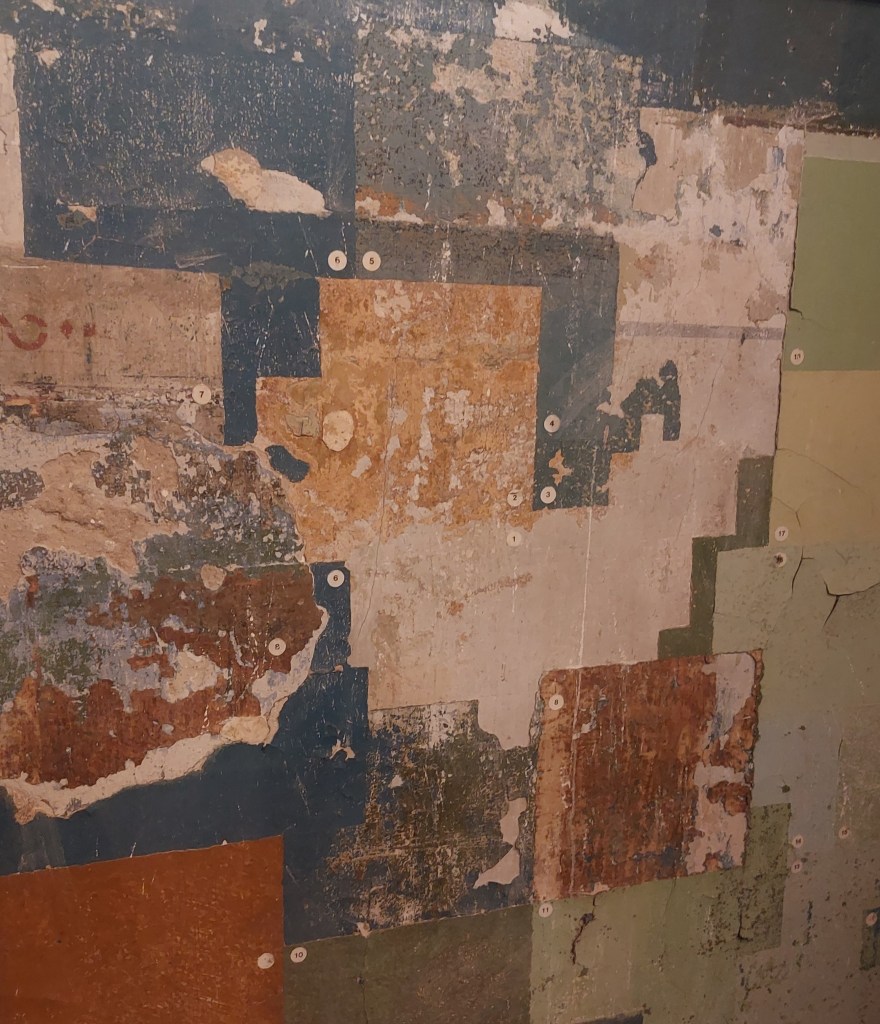
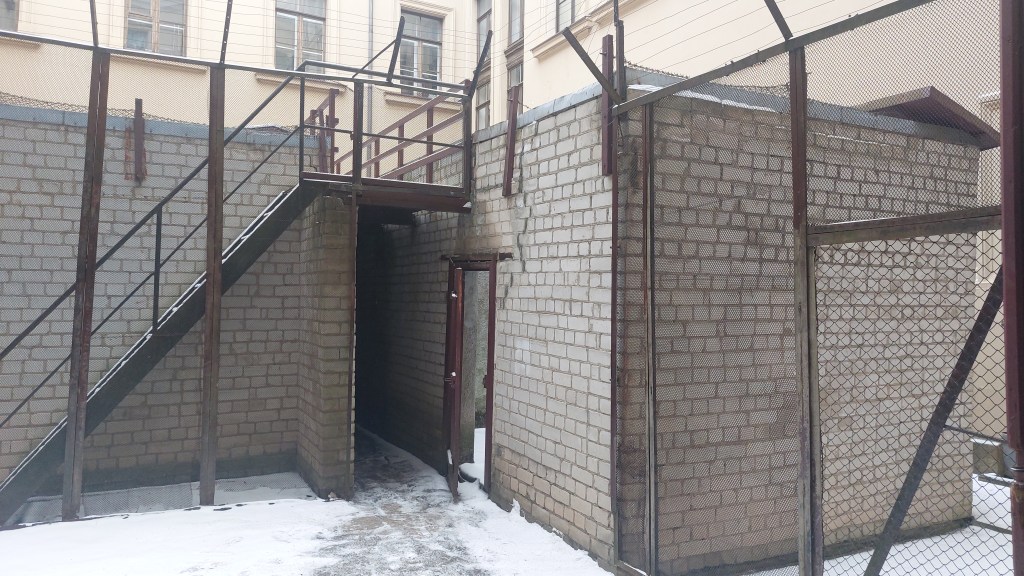
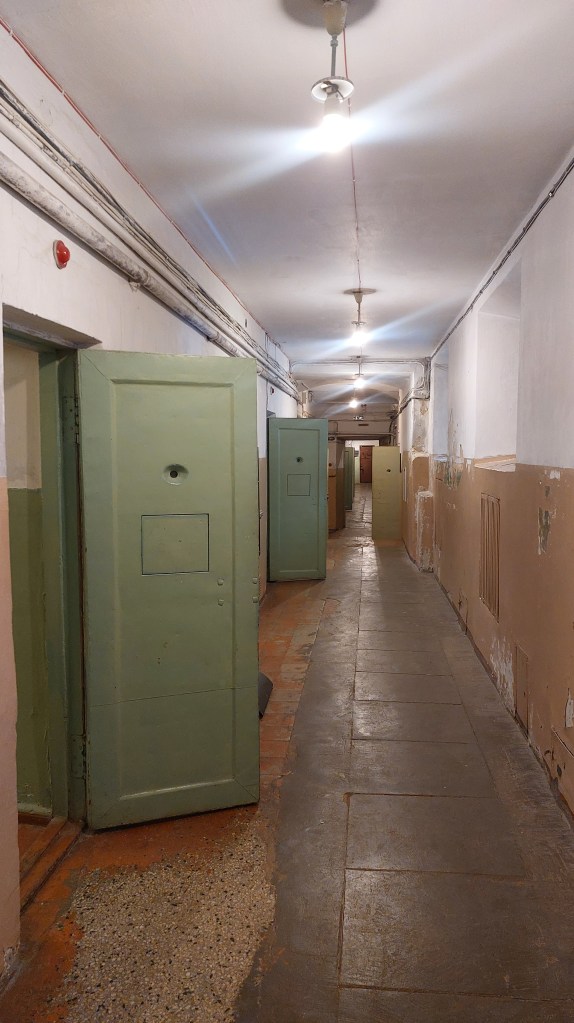
The basement of the museum contains the original cells, exercise yard, interrogated cells, and execution chamber of the KGB headquarters. This was an unnerving experience as I had much of the space completely to myself, and the rooms have been left as they were when the building was abandoned.
If you want to learn more about the Holocaust and the Soviet deportations, I would very much recommend reading “Hitler, Stalin, Mum and Dad” by Daniel Finkelstein which details the story of his parents and is incredibly moving (as well as being incredibly informative): Available on Amazon Here.
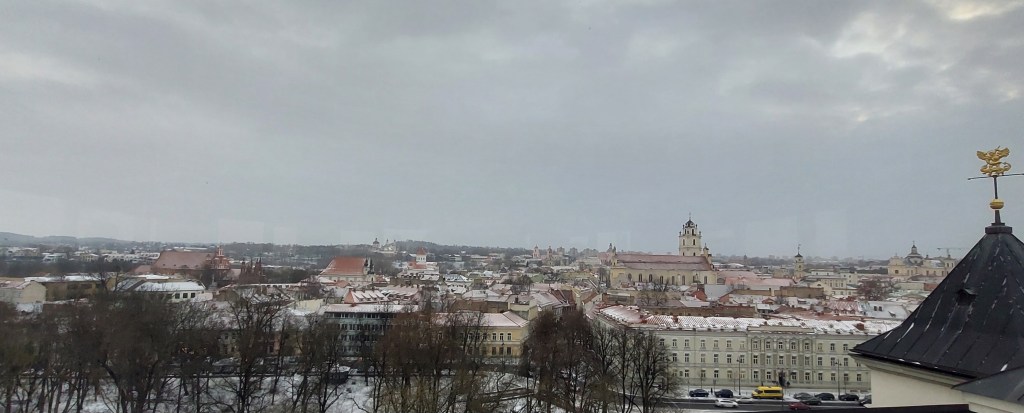
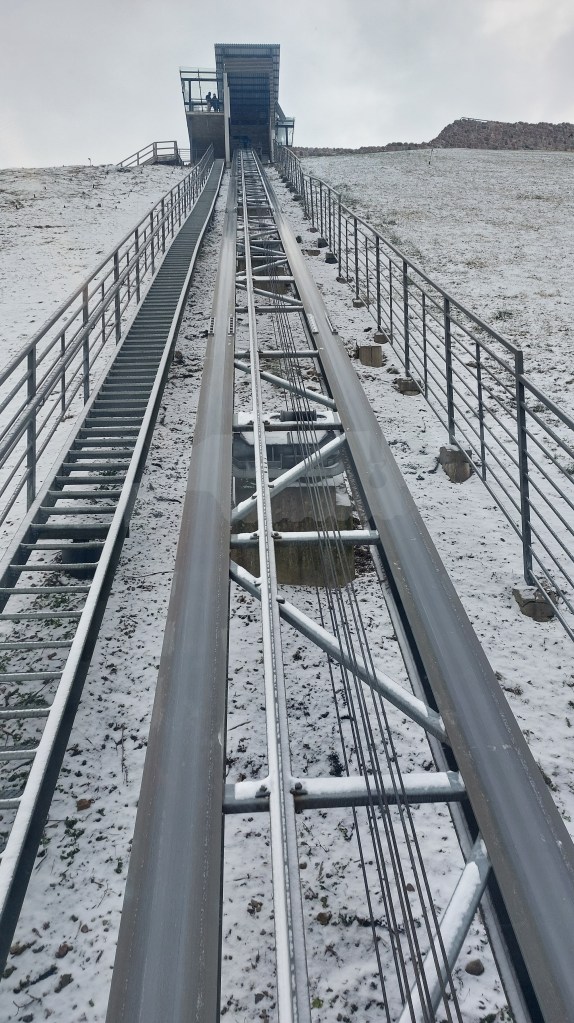
After the museum, I headed back into the centre of Vilnius to climb Gediminas Tower, which is part of the upper complex of the Palace of the Grand Duchy. I did consider climbing the stairs/hill, but it was cold and slippy, so at my age, I thought the safer option would be €2 return on the funicular. You know I love a funicular!
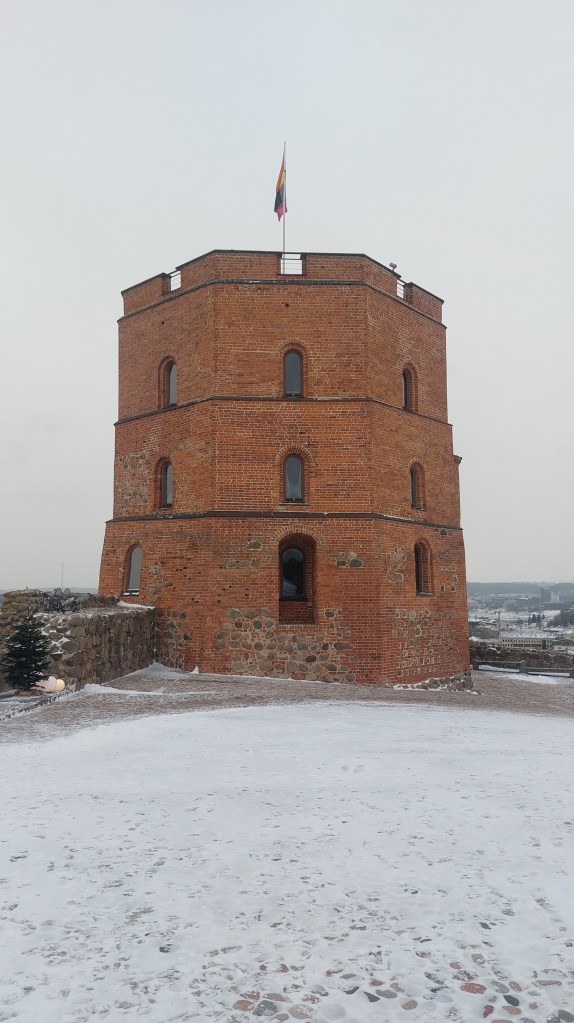
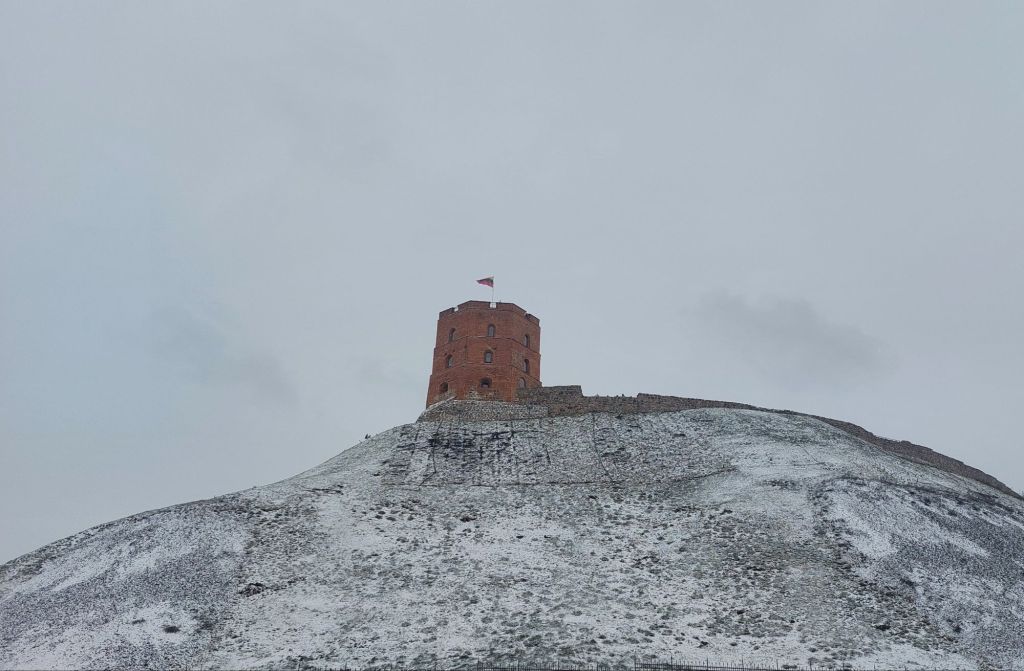
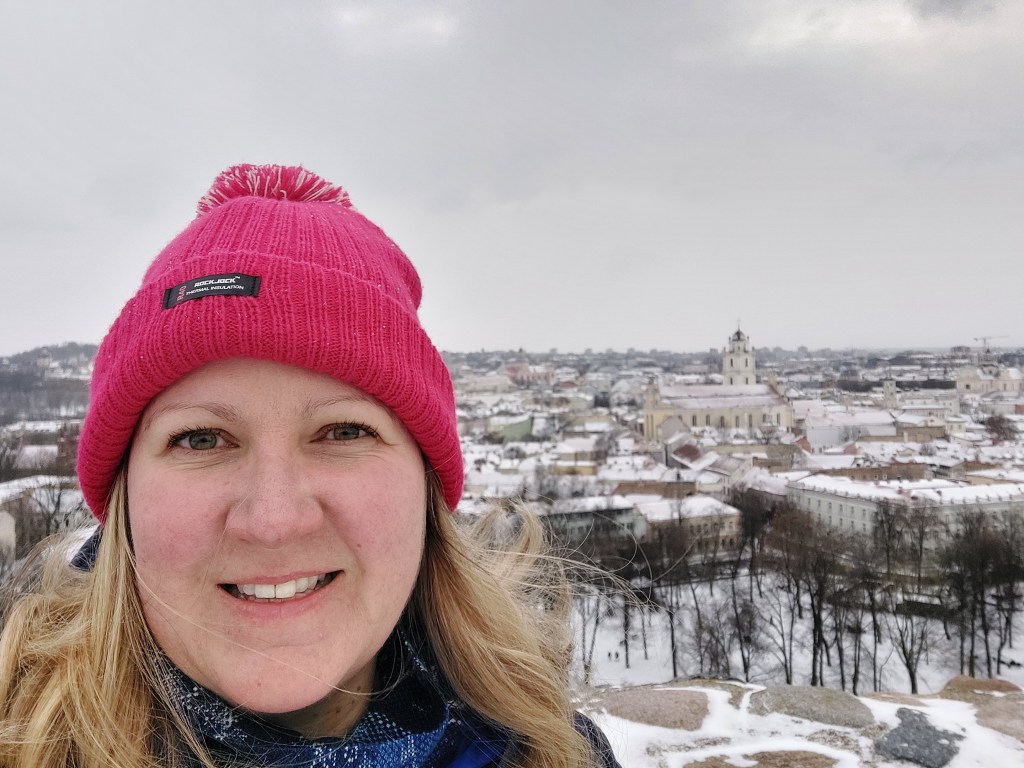
A little last sightseeing, a magnet purchase (having finally found a souvernier shop – there are not many), and a trip to a supermarket to stock up for my journey tomorrow.
Well, that was Vilnius, and it was utterly lovely – I shall have to return. In fact, it is going on my list of must-see places, so I shall come with you, perhaps, when it is a little less freezing! I would certainly recommend a week long trip through the Baltic capitals, there is such an amazing history here, the old towns are beautiful, its very cheap and there are easy connections between all 3/4.
Tomorrow, I will be spending many, many hours on the train heading to Warsaw. I have wanted to visit Poland for a number of years to experience so much of its interesting history. However, I have to admit a slight apprehension of Polish people. I know a few, some I really like and some I really hate, so I am hoping that the majority are more in the more positive category! We shall see…

 Travels with Kathryn
Leave a comment