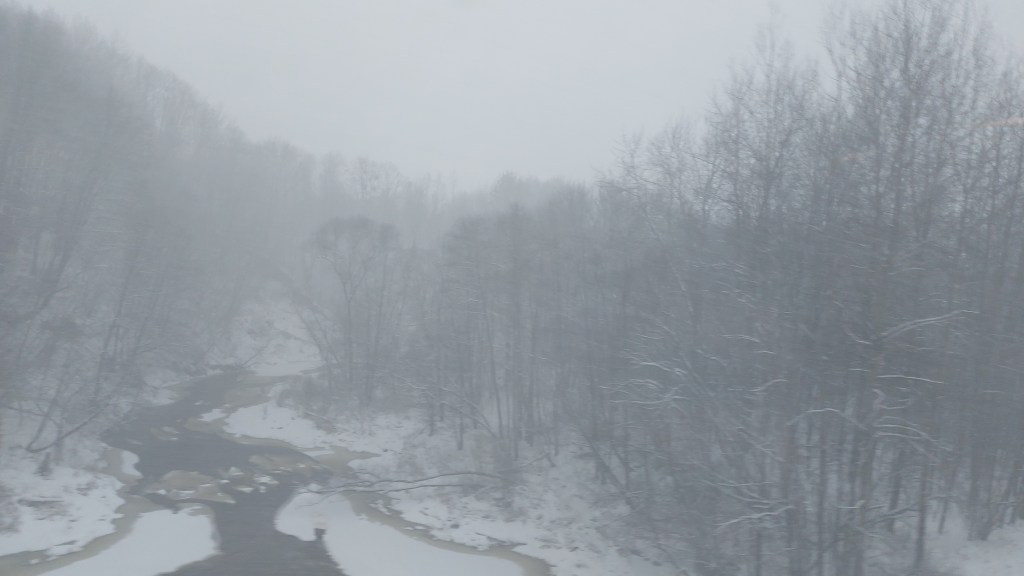
I am at hour 4 into an 8.5 hour train journey and I thought that to change things up a little (and as I am nearly at the end of my cross stitch so will shortly be craft bereft for the remainder of my trip) I would do a “final” Baltics post.
My journey began in Vilnius on the 12.30 train to Mokova (where we change trains as that is where the gauge changes – more on this below) before onward travel to Warsaw. The Lithuanian train was well posh:
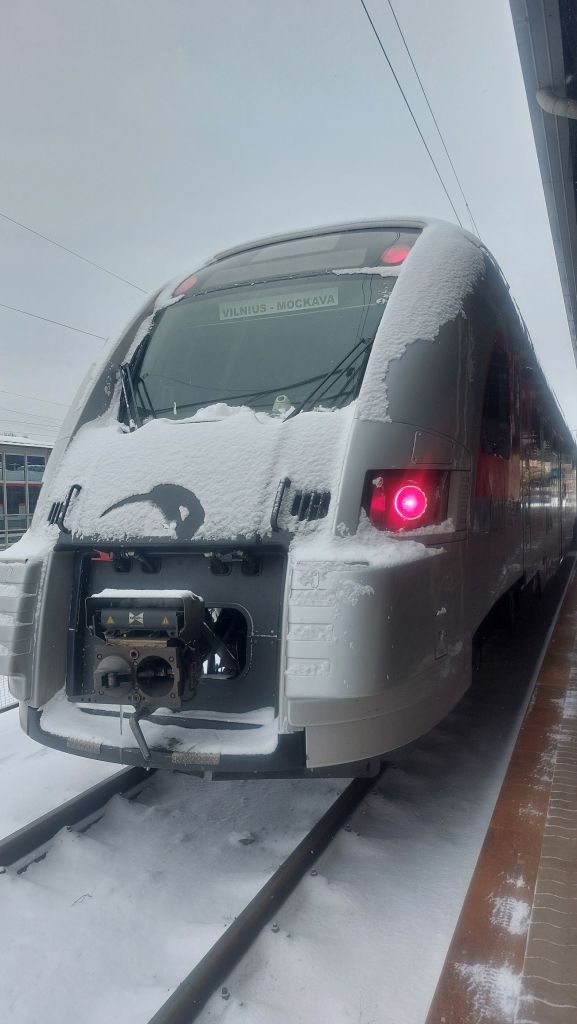

On reaching Mokova at 3.57pm, you simply step off the platfrorm onto the waiting Polish train. This was something of a bun fight as although it is a 5 carriage train, they seem to have reserved everyone seats in 1 carriage which meant that people had to find seats, put luggage somewhere, take off layers as said carriage was BOILING. Now, let me begin my thoughts of the Polish – the majority so far are lovely and I had a rather acted out conversation with a lady who asked which direction we would travel in to try and explain that it changes a couple of times on route but it would start that way which was amusing for everyone. However, I was genuinely pushed out of the way when trying to board by a lady who decided she needed to get on before me. It then seemed she could have used some help with her 3 large, heavy suitcases, but not I nor the other lady she pushed past were willing to assist. Karma right there.
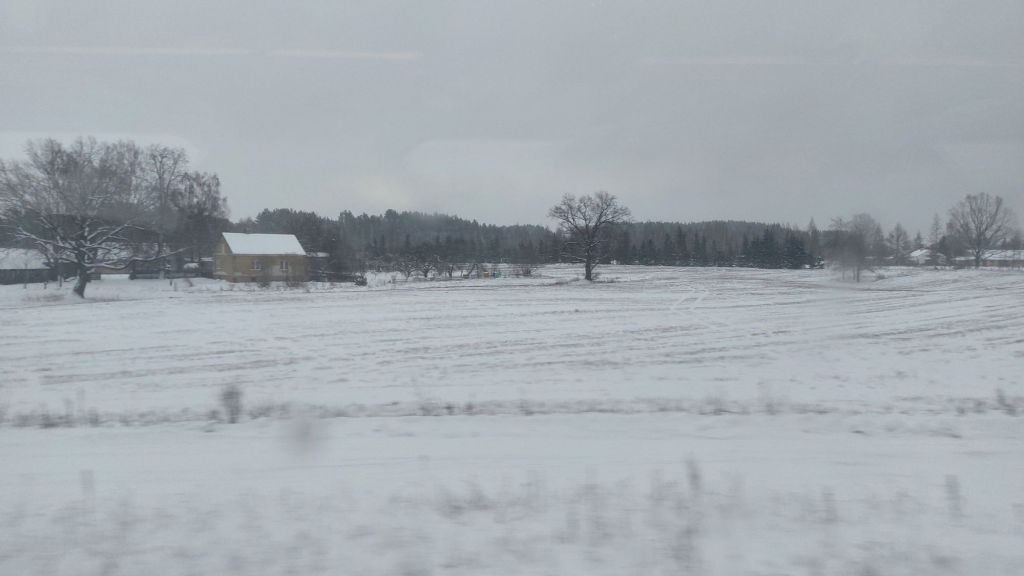
Now, as promised, let us talk gauges (the excitement). So, Lithuania uses the broad guage (1520mm) and the standard gauge (1435 gauge), but the route between Vilnius and the border with Poland is on the board gauge. However, Poland (like the rest of Europe) uses the standard gauge – hence the need to change trains. So, in 1851, the Russian Empire began construction of a railway linking St Petersburg to Warsaw using the broad guage. However, when the German army occupried Lithuania during WW1 they replaced a significant proportion of the track with the standard gauge and the Lithuanians carried on building based on the standard gauge until the Soviet army arrived in 1940 and changed the gauge back to broad gauge, then Nazi Germany arrived in 1941 and changed it back to standard, and then in 1944 the Soviets changed it (yet again) back to broad gauge. It does make one wonder if they didn’t all have better things they could have been getting on with/spending money on! There is a Rail Baltica ongoing which began in the 1990s intending to link the Baltic States with Europe, and this requires the Baltic states to switch (AGAIN) to the standard gauge and if this does finally finish in 2028 (as planned) then you will be able to get 1 train linking Warsaw to Lithuania, Lativia, Estonia and terminating in Helsinki. Maybe I should plan this trip now…
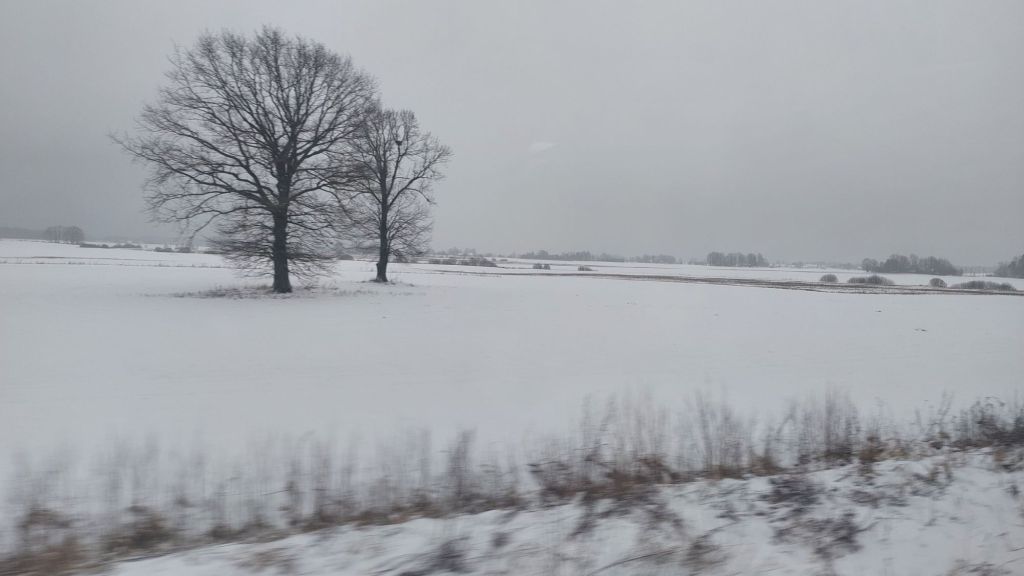
Given the amount of travel time I have today, I have also had a chance to reflect on my time in the Baltics (and the end of stage 5). I have had a magical time, and I have really enjoyed being in “proper” wintery weather. I would certainly recommend this region to everyone – go to Finland for Christmas (as per my plan provided in Stage 5.3/) and then have a week travelling through the 3 capitals. You will have a wonderful time, and yes, Finalnd is expensive, but the rest of the Baltics are not, so you can balance out your spending that way.
Anyway, it’s now 4.45 pm and I have another 3.5h to go… It might be time for a walk around the train for fun/guard against DVT.

 Travels with Kathryn
Leave a comment