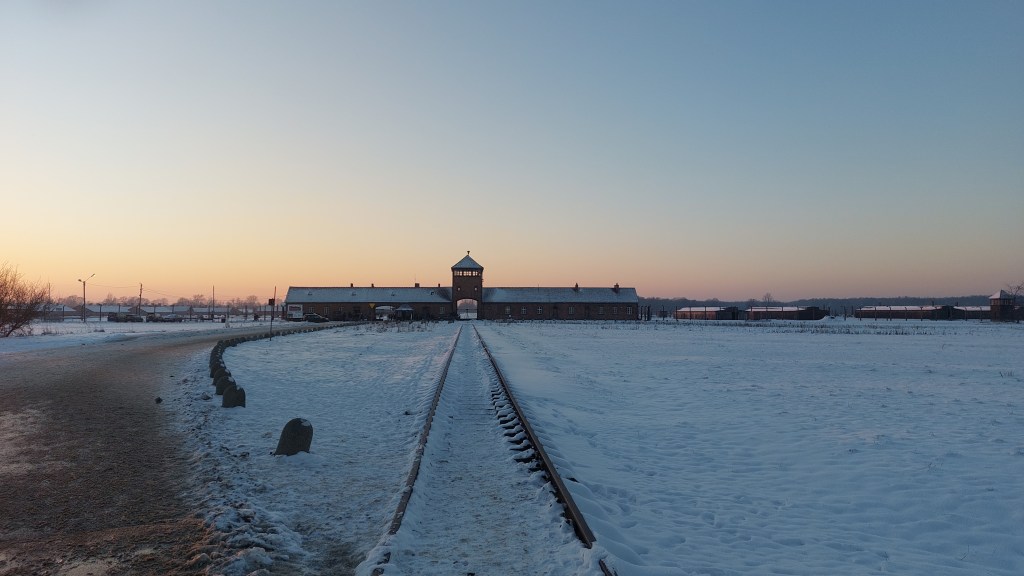
According to a 2017 survey, 41% of American adults and 66% of millennials did not know what Auschwitz was, while 22% said they did not know what the Holocaust was. These are very worrying statistics. I am sure that none of you would be in these groups, and therefore surely Auschwitz needs no introduction.
As I mentioned previously when visiting Srebrenica, I am never fully sure that visiting sites of mass murder is quite the “right” thing to do. However, I feel that it is an important thing to do so today (Tuesday) we were collected for a day trip (with a guided tour) to Auschwitz.
Auschwitz concentration camp was a complex of over 40 concentration and extermination camps. We were visiting main camp Auschwitz I, and the much larger death camp Austwitz II-Birkenau. After Nazi Germany invaded Poland in 1939, the army barracks of Auschwitz I were converted into a prisoner-of-war camp. Initial transports were almost solely political detainees totalling around 150,000, and for the next 2 years, the vast majority of the inmates were Polish. In May 1940, German criminals were brought to the camp as functionary prisoners who had better conditions and duties over the other prisoners. Whilst prisoners were beaten, tortured, and executed for the most trivial of reasons, the first gassings (of Soviet and Polish prisoners) took place in August 1941. Construction of Auschwitz II-Birkenau began in September 1941, and from 1942 until late 1944, trains delivered (mainly) Jews from all over German-occupied Europe becoming the main extermination camp for Europe. Most were not processed but selected for immediate death in the gas chambers. Of the 1.3 million people sent to Auschwitz, 1.1 million were murdered making this the largest mass murder in the history of mankind. The victims included 960,000 Jews (430,00 from Hungary, 300,00 from Poland, 69,000 from France, 60,000 from the Netherlands, 55,000 from Greece, 45,000 from Czech, 27,000 from Slovenia, 25,000 from Belguim, 23,000 from Austria and Germany, 10,000 from Yugosavia, 7,500 from Italy, 690 from Norway and the rest from other concentration camps), 74,000 non-Jewish Poles, 21,000 Roma Gypsies, 15,000 Soviet prisoners of war and 15,000 others. Those not gassed were murdered via starvation, exhaustion, disease, inidvidual executions, or medical experiments.
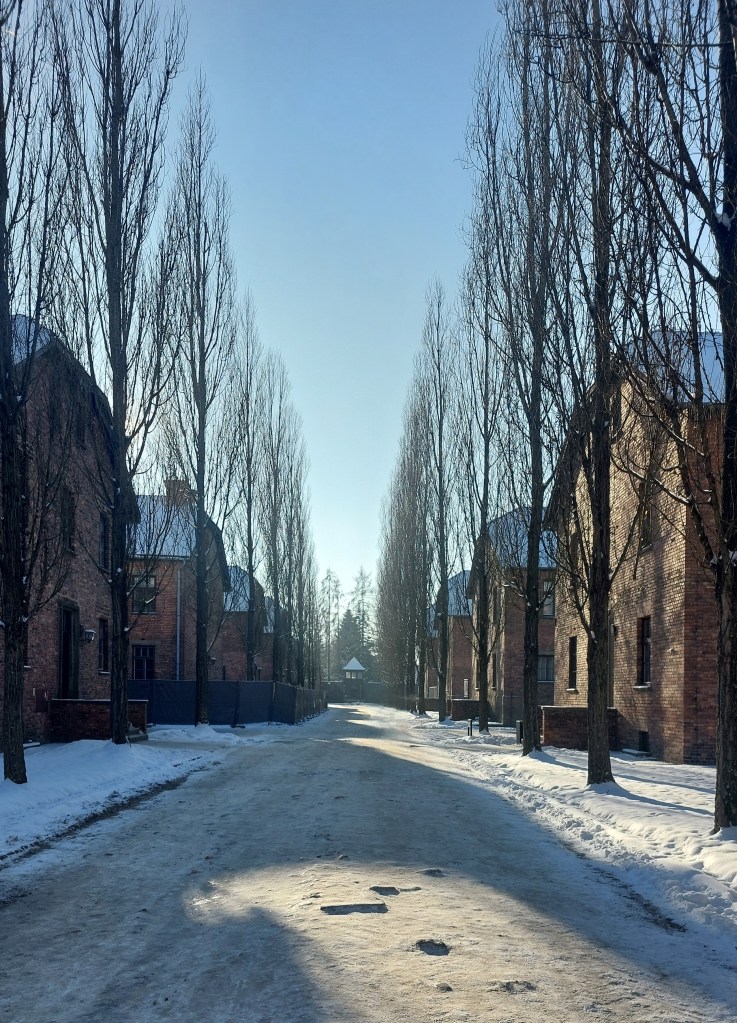
The first thing that struck us when visiting Auschwitz I was how organised and efficiently it was run. The blocks are in neat rows, on arrival the selections (for death or registration for hard labour in the camp) were done swiftly, belongings were confiscated and sorted for transport to Germany etc. Throughout this period, the Nazis continued to streamline processes and develop ever more efficient ways to kill people on mass.
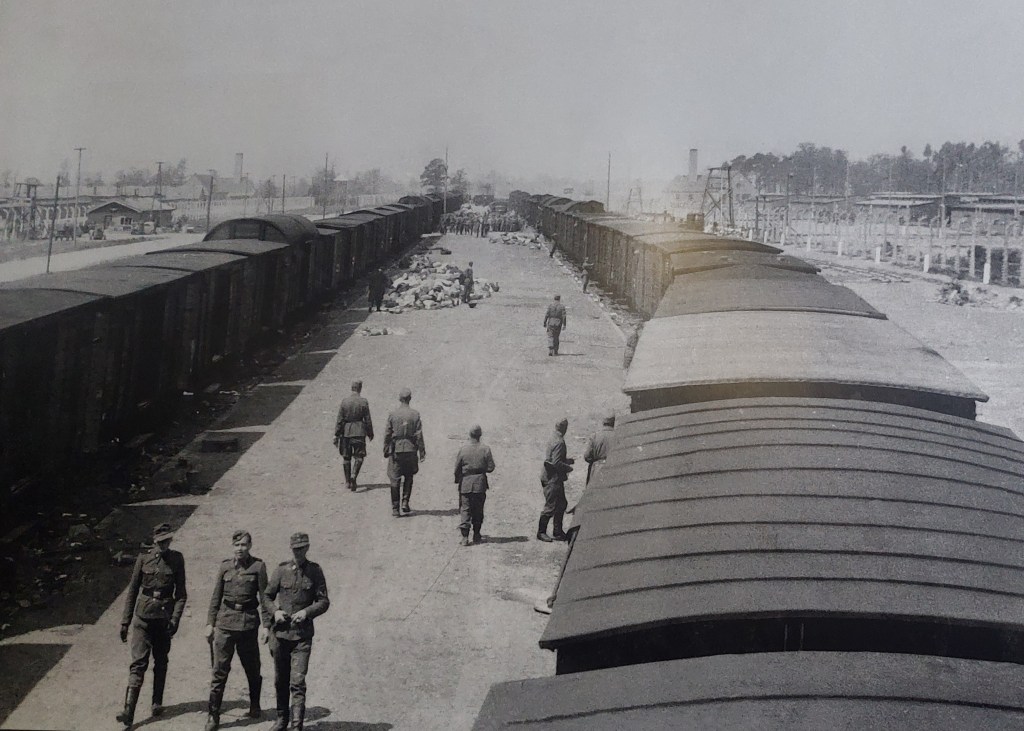

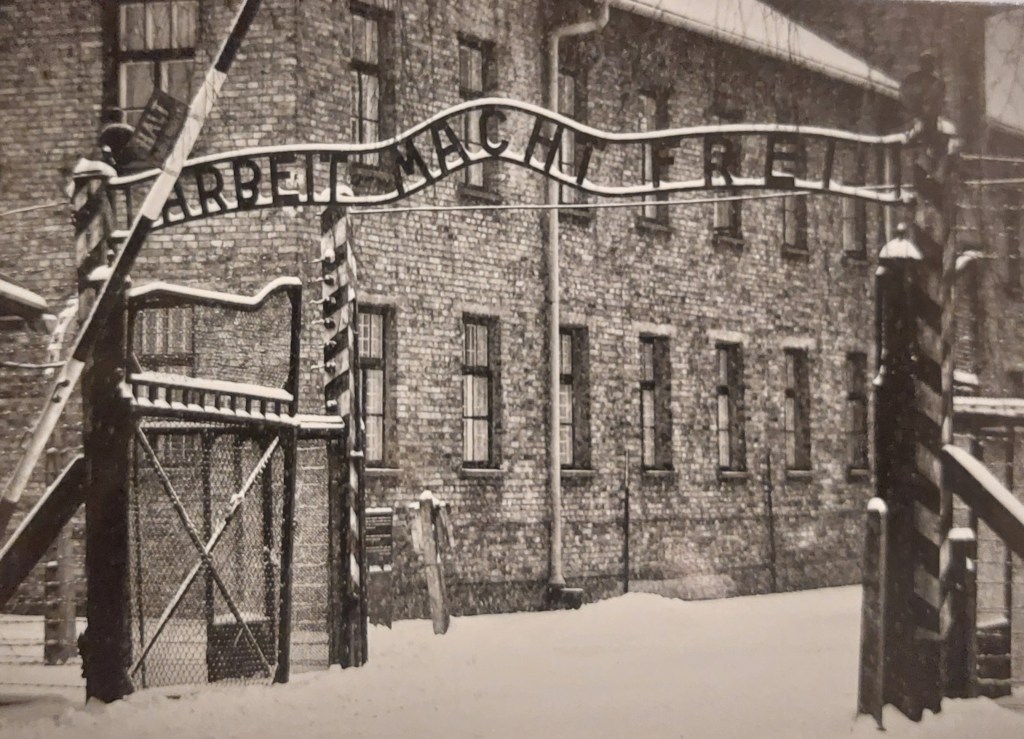
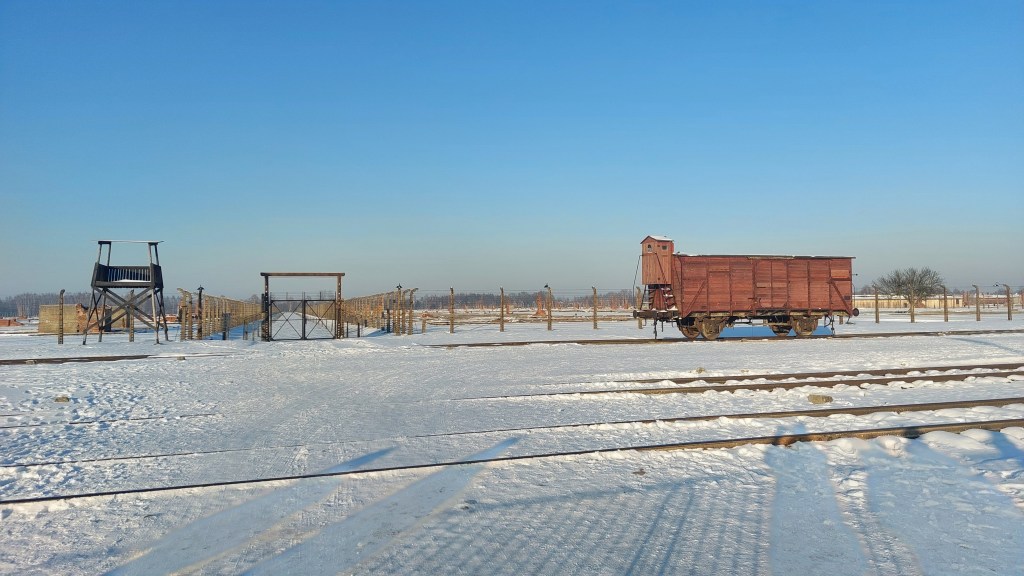
When people were transported to Auschwitz, they were told that they were being moved east to be re-settled and were allowed to pack 25kg of belongings. For many people, this included the items that they thought they might need, such as cooking pots and pans in suitcases labelled with their names (but no addresses as what would have been the point?). On arrival, a selection (taking around 3 seconds per individual) was made, and only those individuals who looked healthy enough to work hard would be saved – only around 20-25% of deportees survived this first selection. Those who were selected would be registered at the camp, their hair shaved, and their belongings were confiscated. It was then that the horreurs began. Also selected were individuals who were of particular interest for the SS doctors performing medical experiments, including twins, dwarfs and pregnant women – the final stage of any experiment was the autopsy.
Those selected for death were usually the old, the disabled, women with young children and these children. As these people were not processed, often there are no records of their name or date or death. Auschwitz, I has a single gas chamber. They would be forced to remove their clothes before entering a large room, which they were then sealed in and the gas pumped in. It took around 10-20 minutes for everyone to die. The bodies were then removed by other prisoners via a lift, and the bodies burned in cementation ovens. I had not fully appreciated the size of the gas chambers, and the chamber at Auschwitz I is one of the smallest, in order to improve efficency 4 more larger gas chambers were built in Auschwitz II-Birkenau (complete with underground changing rooms and signs in many languages to shower before processing). The crematoria in Auschwitz could despose 4,500 bodies per day.
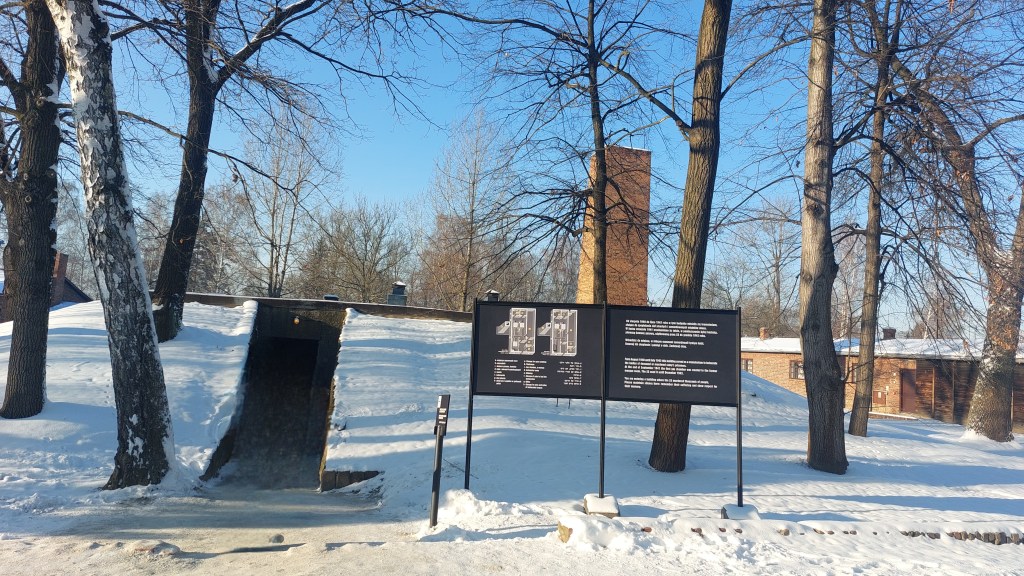
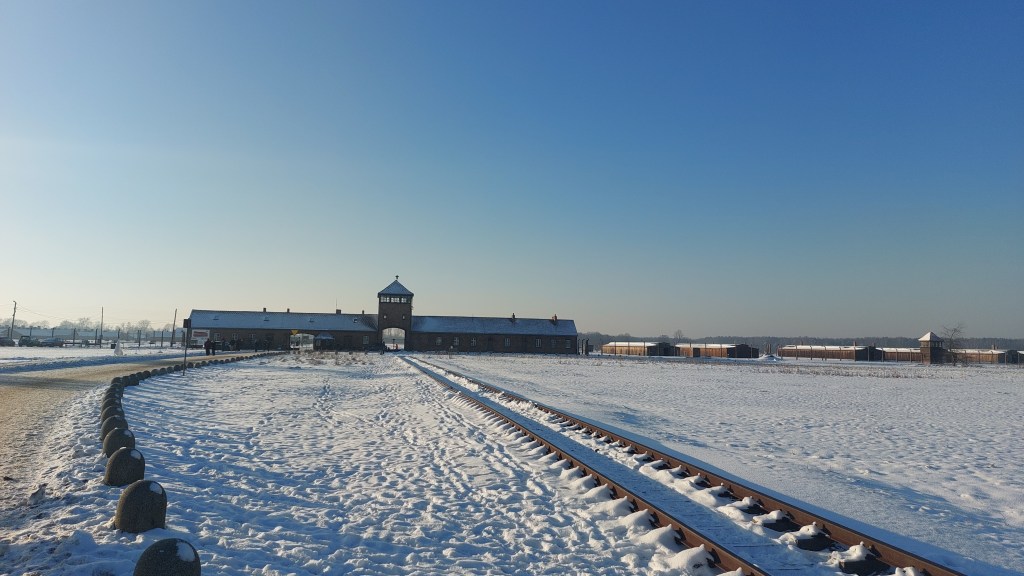
Auschwitz I is horrifying. However, I was more disturbed by Auschwitz II-Birkeanu. As this was built later, the Nazis had learnt from Auschwitz I how to make a bigger and more efficient death camp. Auschwitz II-Birkeanu is huge, so much bigger than I had imagined and is the image we have seen in many books, films, and photographs of the horreurs of the Holocaust.
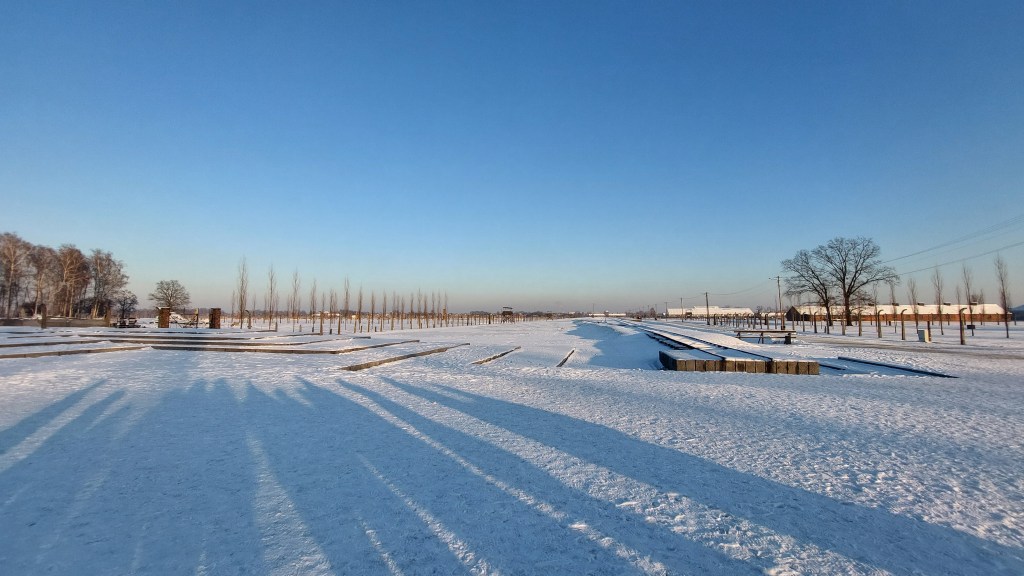
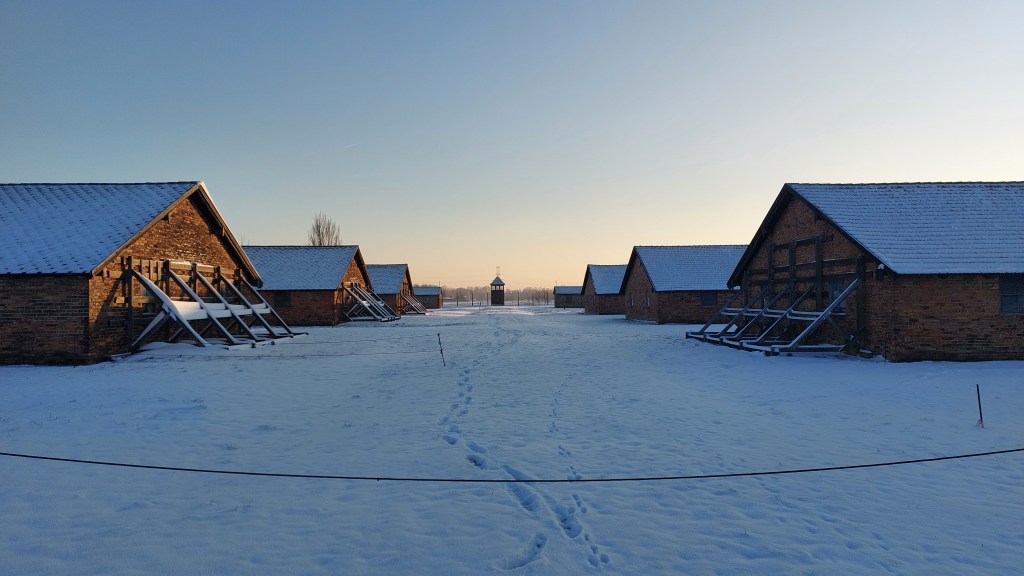

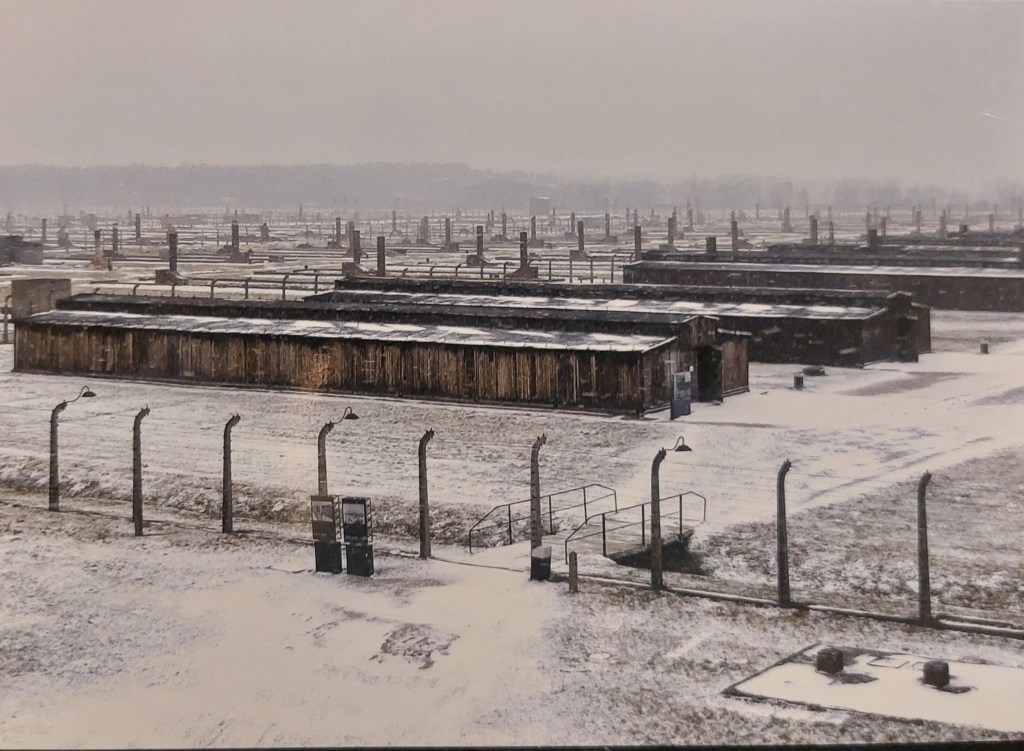
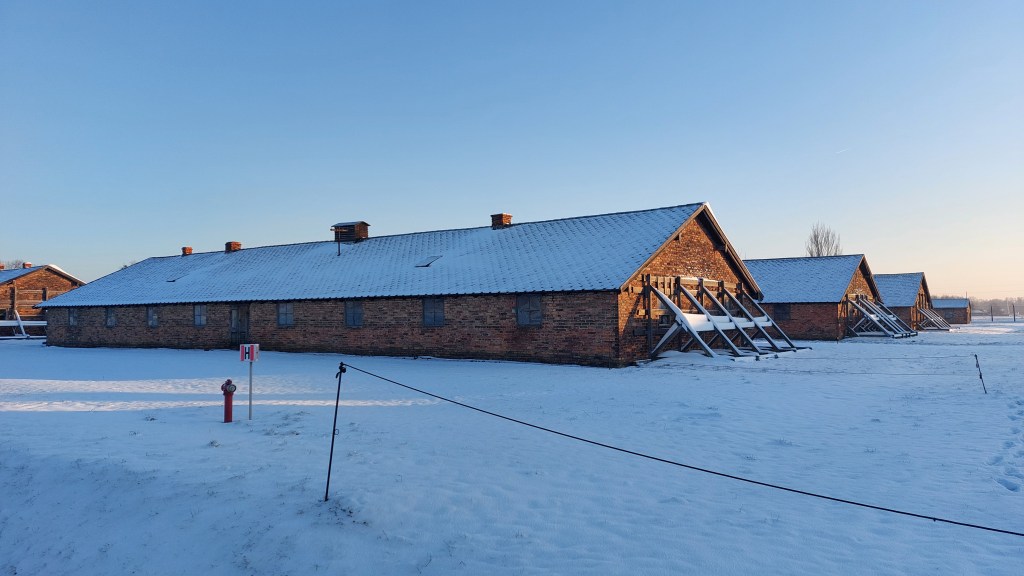
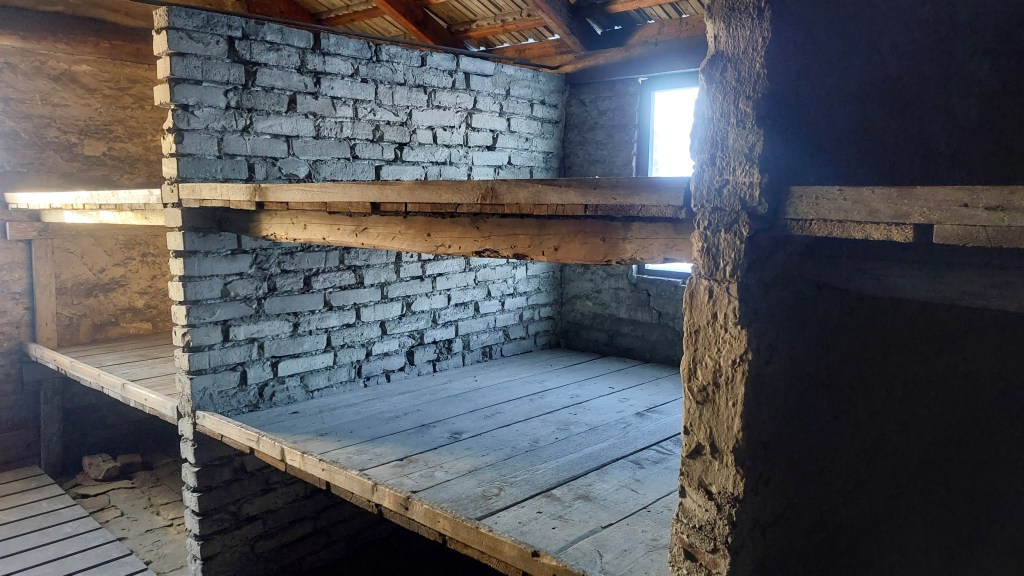
If an individual survived selection, they were housed in these barracks (mostly made of wood). Around 400 prisoners lived here with no running water or toilets, no floors (just mud), and 4-6 were assigned to each bunk with shared blankets. Today was indescribablely cold, and I was properly dressed. It is amazing that anyone survived – but of course, the plan was that they did not. After selection, the odds of survival were 2.2% for men and 3.5% for women.
As the Soviets approached, the SS authorities made plans to evacuate the camp west and destroy evidence of the Holocaust. Between August 1944 and January 1945 65,000 people were evacuated west in the death marches. 7,000 people were left behind as being too weak to move, and it was these prisoners who were finally liberated by the Soviet army on 27 January 1945.
There are places you visit which will stay with you, and Auschwitz II-Birkenau will be that for me. The scale of organisation of the mass extermination of people, who another group of people had decided were not allowed to exist. I thought I knew what to expect, but even I was not prepared by the efficiency and sheer size of the Auschwitz complex.

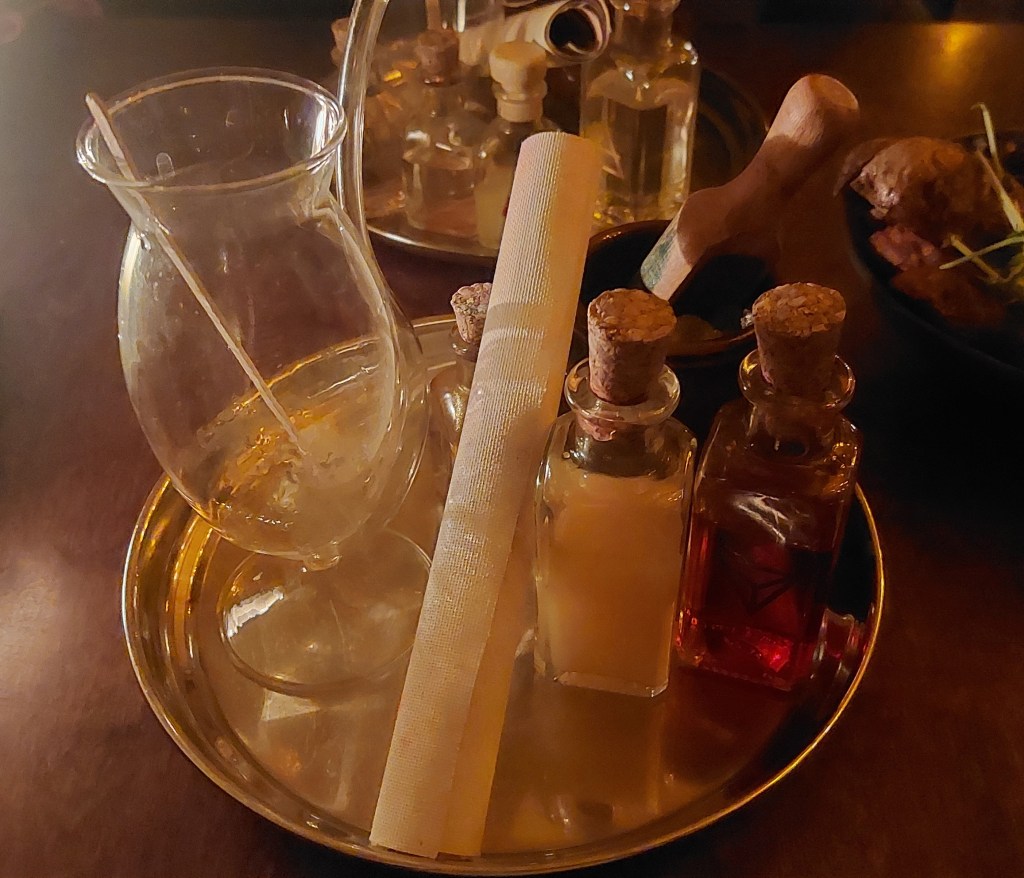
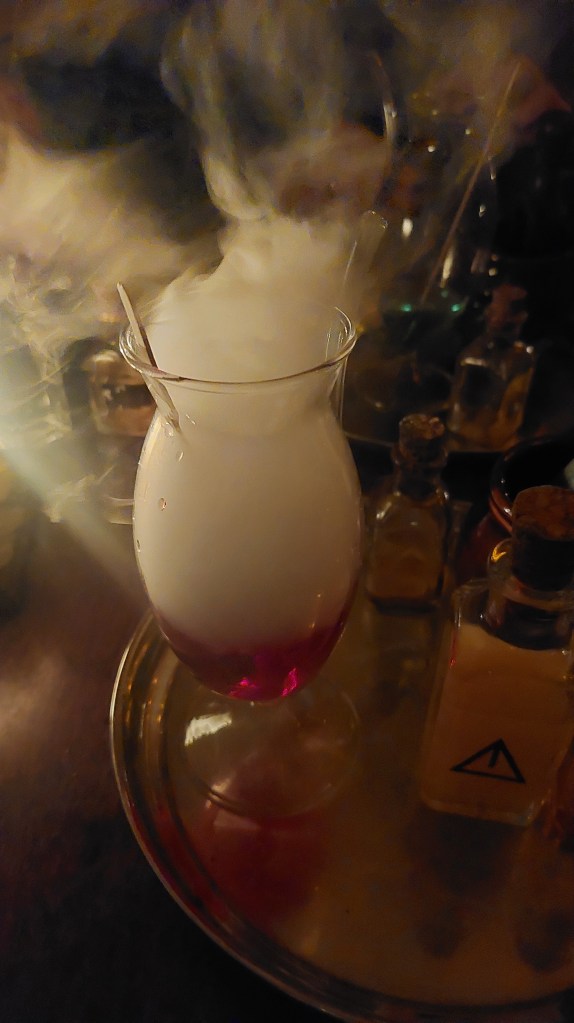
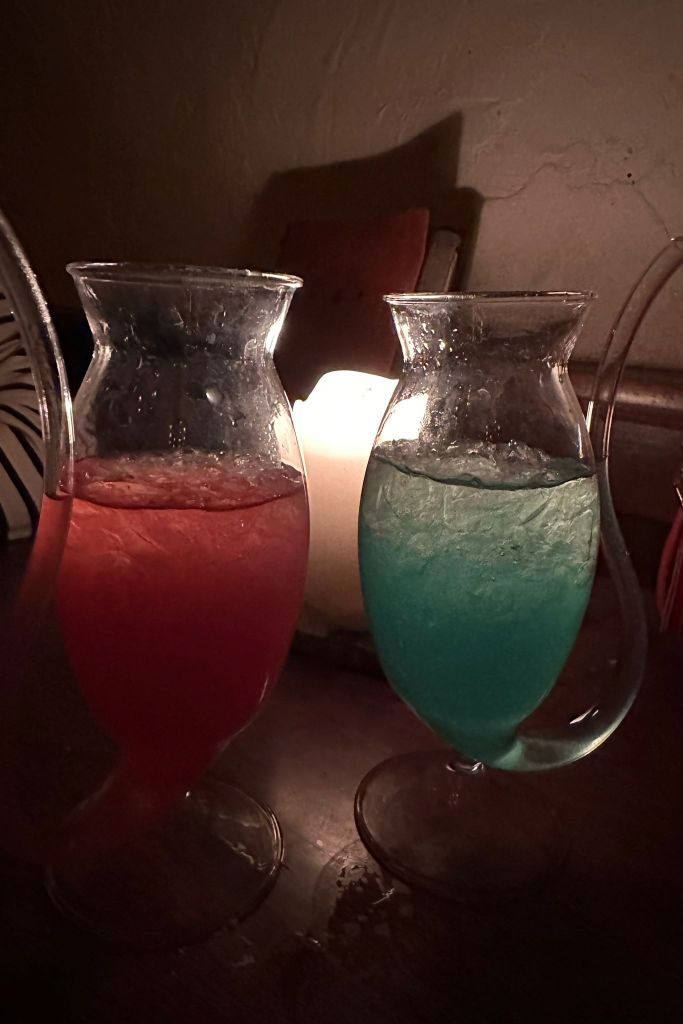
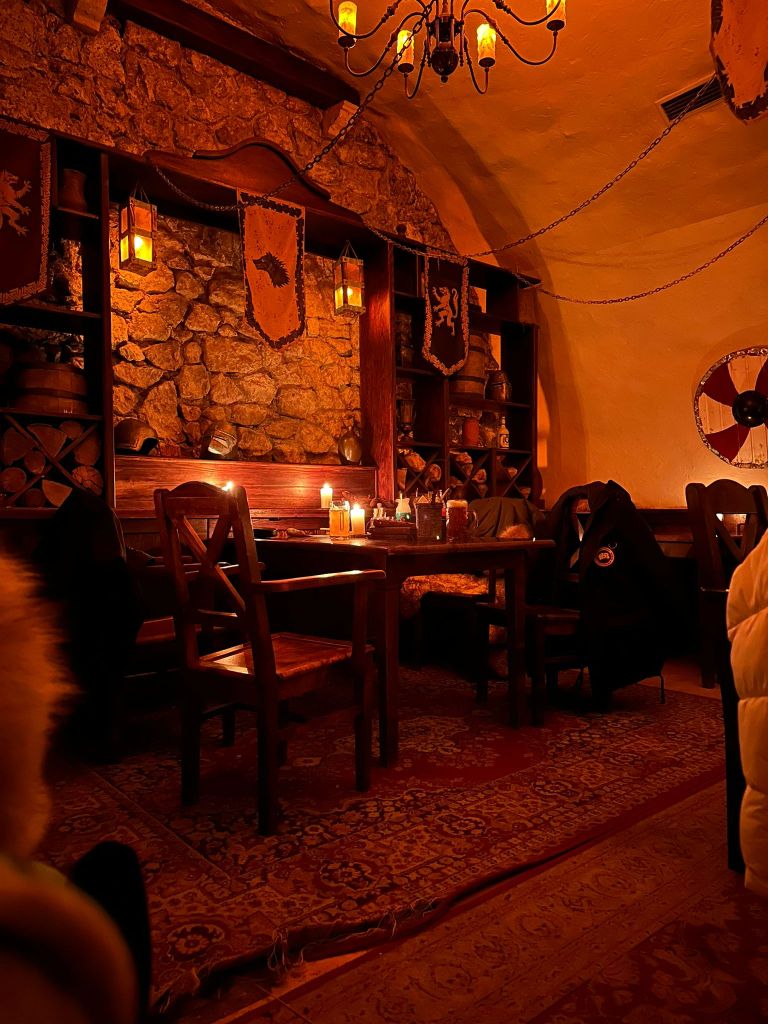
Now, I would have saved dinner for another post to give us all time to reflect, but I did not want to leave Krakow without regaling you with our dinner that evening in a Witcher themed underground hostelry called Tawerna Wilczy Dot. For those of you not familiar with The Witcher (such as Steph!), these are a world of fantasy novels by Polish author Andrzej Sapkowski, which gave birth to a video game and now a Netflix series. We started our evening with a mix-your-own potion (cocktail). As I am aware of my increasing age, I went for one promising youth, whereas Steph selected wisdom and then some added courage. For a themed restaurant, the food was also excellent!
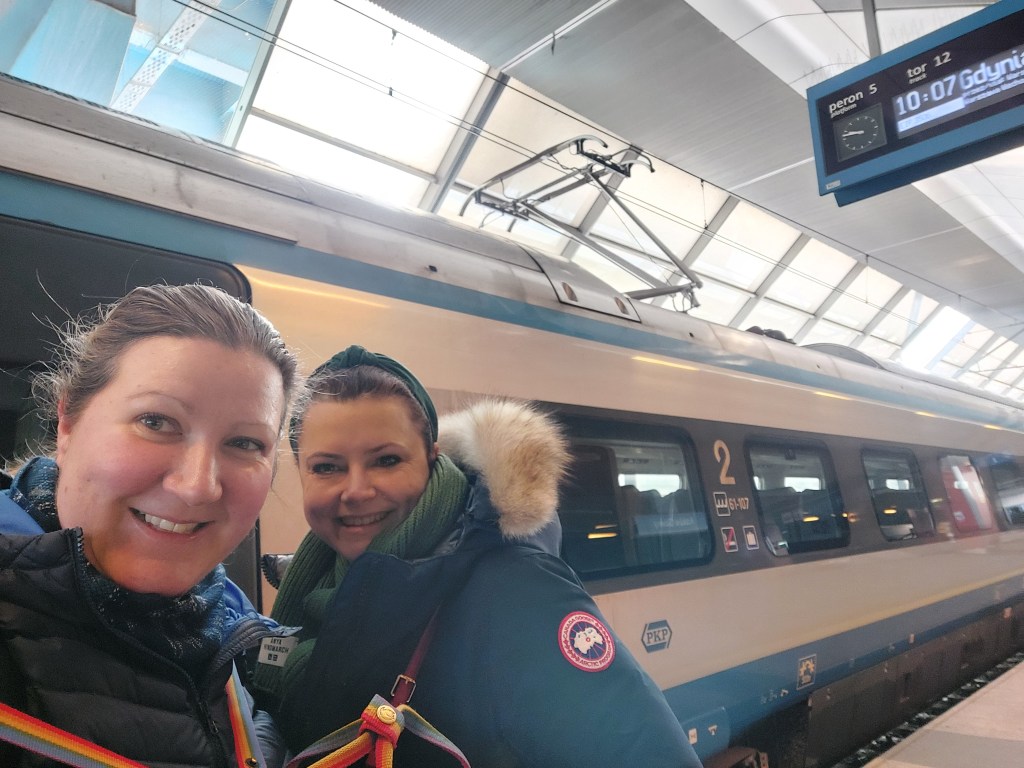
So, that really was Krakow. I am still on route to Gdansk (somewhere near Malbork), enjoying the empty train (Polish intercity trains are fabulous and very cheap), and lovely wintery views. Bring on the next post from Gdansk!

 Travels with Kathryn
Leave a comment