
Another straightforward arrival in Gdansk and then a short walk to our hotel. It is noticeably warmer here than it has been almost everywhere else during our travels in Poland – the heady heights of -1. An easy walk to our hotel (and perfectly acceptable though it was, the 2 star Ibis did feel like a little bit of a comedown compared to our other hotels.
We started with a little walk, and Gdansk certainly lives up to its pretty reputation, whilst also being very clearly a Hanseatic League country in terms of its architecture, i.e., we could have been in Amsterdam (or, according to Steph, Hamburg). We followed this up with a nice dinner and then sleep.
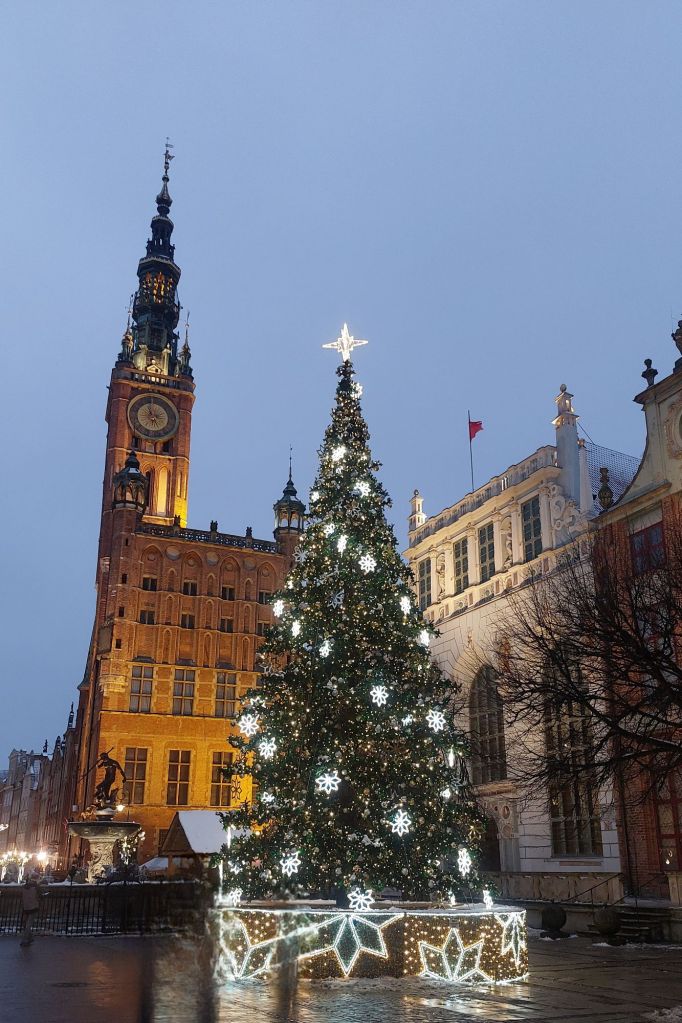
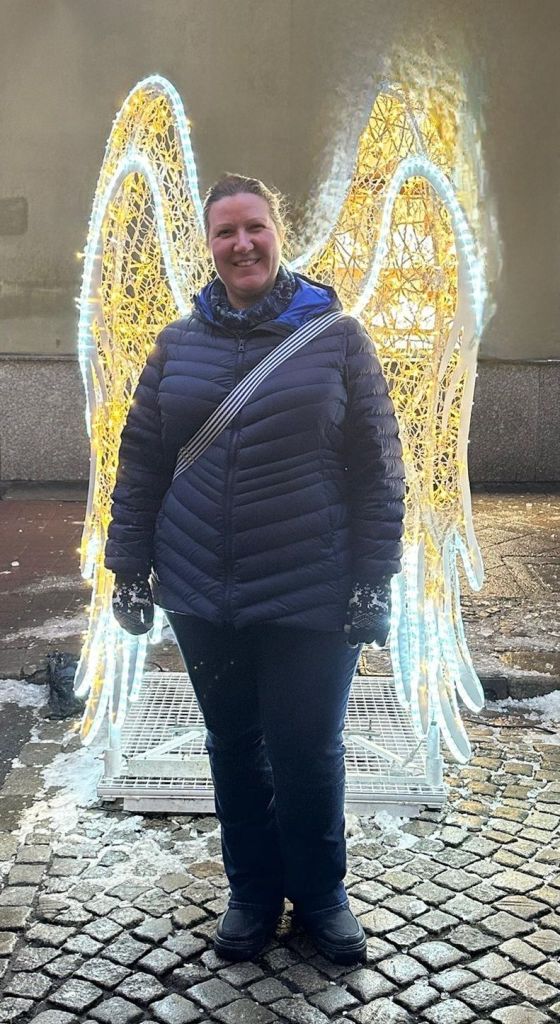
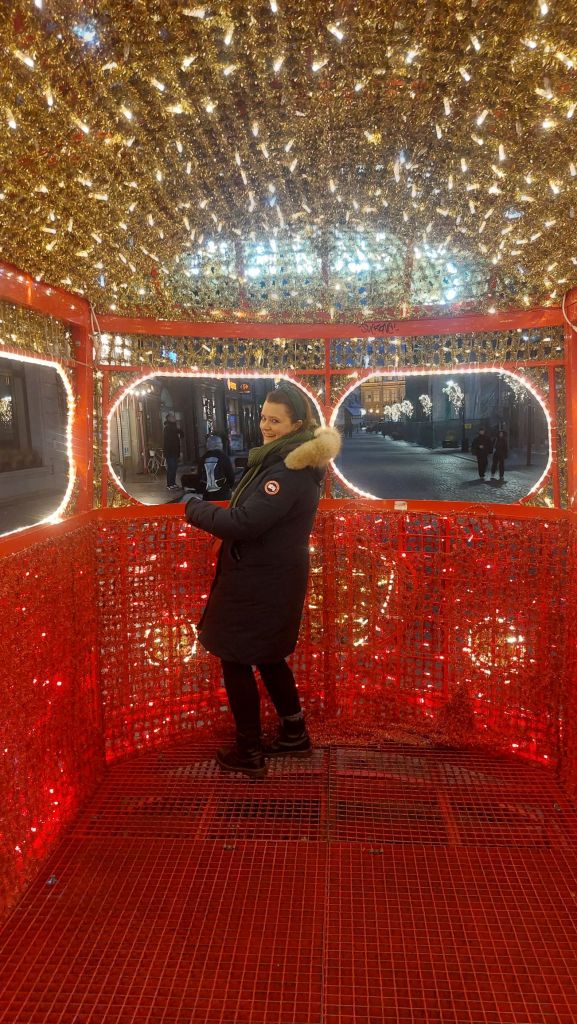
The next morning, we had intended to join a walking tour. However, I received a text message from the organiser that due to “an emergency at home,” the tour was cancelled. It was a Thursday out of tourist season, so there were no other free walking tour options for today, so we went crazy and did a self-guided tour.
Let us all pretend it was a traditional tour, so I shall open with a short history of Gsdansk, which is far from straightforward, having had periods of Polish, German, and self-rule. The city was founded in the 980s by the Piast dynesty to connect the Polish state to the trading routes in the Baltic Sea. At the end of the 11th century, Poland lost control of the area (Pomerelia), and the Pomerelian duchies remained under the control of stewards from the Samborides dynsety appointed by Polish Dukes. However, this enabled Gdank to increase it autonomu as it became the main stronghold of the Samborides. In 1235, Gdansk was granted Lubeck city rights and merchants from the Hanseatic cities began to settle in the town. By 1224, Gdansk was granted a city charter and became one of the most important trading and fishing posts on the Baltic Sea coast. In 1294 the last duke of Poerelia ceded all of his lands (including Gdansk) to the Kingdom of Poland, but this was not to last and at the beginning of the 14th century Gdansk was captured by the Teutonic Knights and in 1361 Gdansk became a member of the Hanseatic League, but its merchants were resentful at the barriers to trade inland to Poland as well as the lack of politcal rights in a state ruled in the interests of the Order’s religiously motivated knight-monks and in 1454 Gdansk was reincoporated into the Kingdom of Poland. By the 16th century, Gdansk was one of the largest and most influential cities in Poland with a predominantly German speaking population. When Poland was partitioned in 1793, Gdansk became part of Prussia and remained as such until the end of WW1 when it became a Free City under the protection of the League of Nations. A customs union was created with Poland giving Poland rights, including free use of the harbour, a Polish post office, and garrison in the Westerplatte district. On 1 September 1939, the first clash of WW2 took place at Westerplatte, and by 2 September 1939 Nazi Germany officially annexed Gdansk. After WW2 Gdansk was returned to Poland, the old city rebuilt, the port modernised and by the 1980s was the birthplace of the Solidarity movement which helped to precipitate the collape of the Eastern Bloc and fall of the communist domination in Poland and across the Baltics.
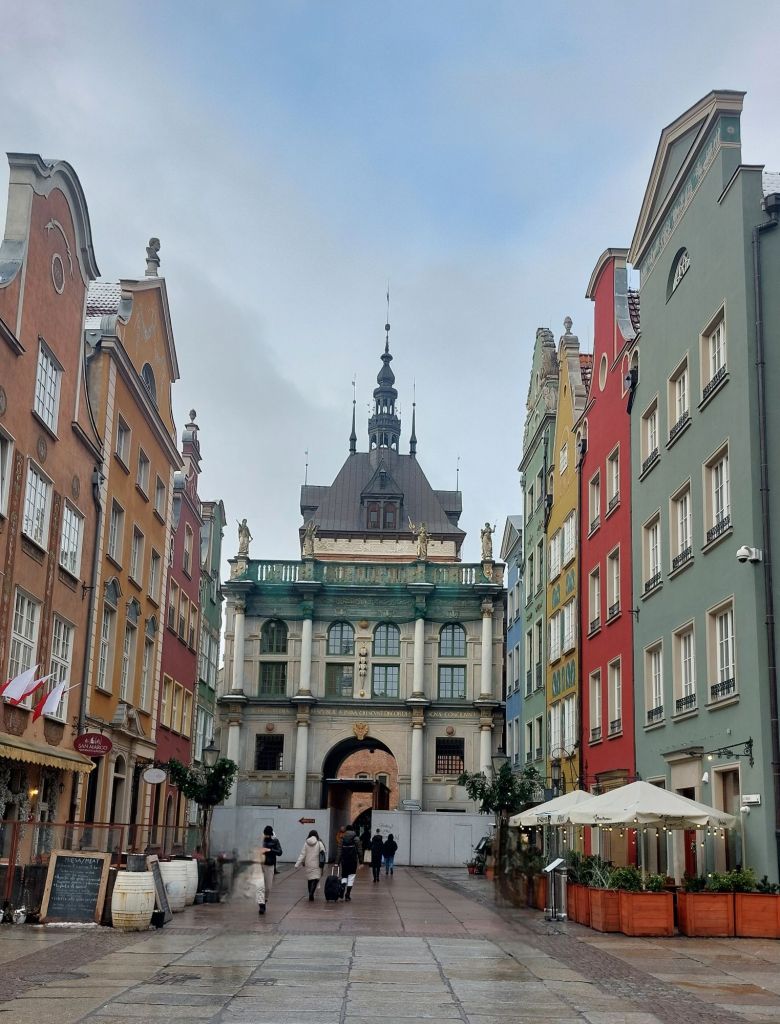
Ok, now clear on the background we can commence our tour beginning at the Green Gate which is the entrance to the city from the water, then into Long Market ending at the Golden Gate. Note that the Green Gate is not green other than its windows, and it is not really a gate, but rather the formal residence (built in 1568) of the Polish monarchs and hence is also the start of the Royal Route.
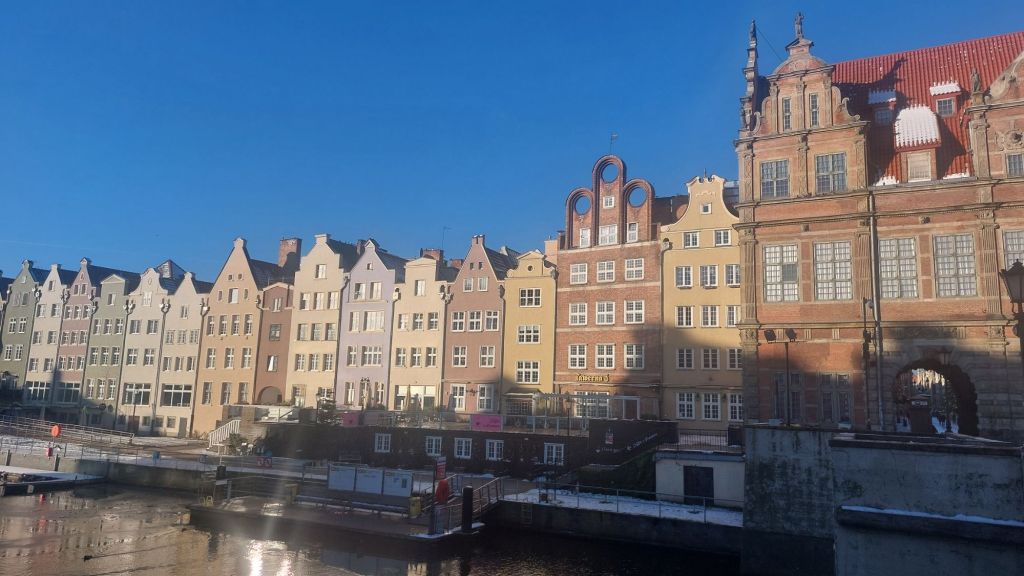

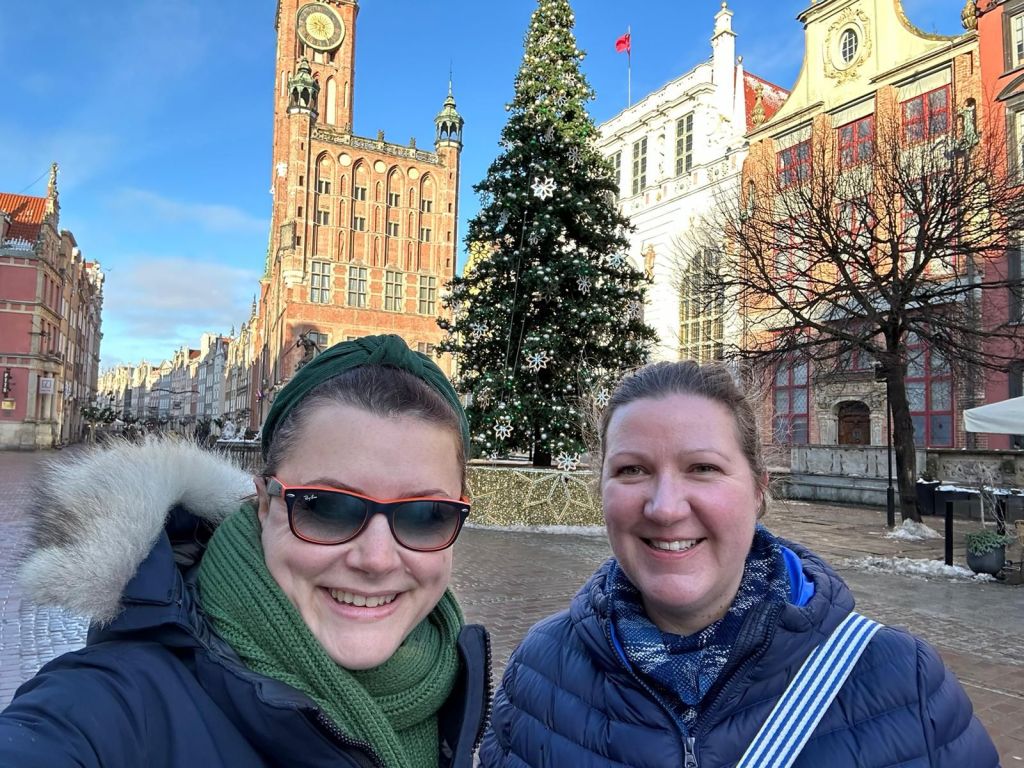
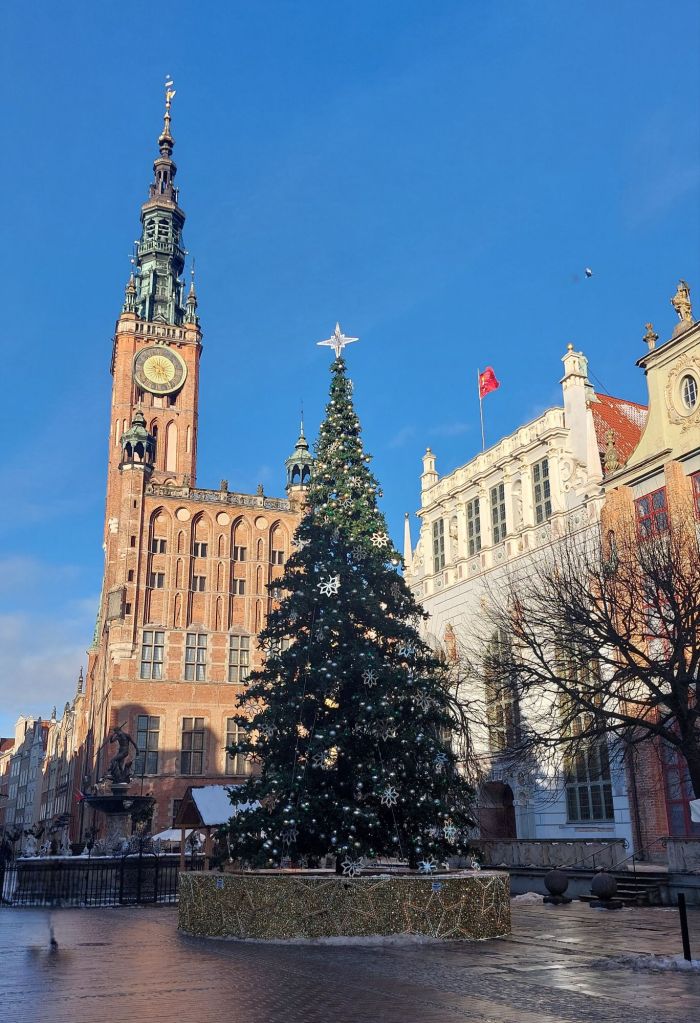
The Long Market (or Dlugi Targ in Polish) was established in the 13th century initially as a merchant road leading to the oval market place, however, after the conquest by the Teutonic Knights it became the city’s main artery and was the Royal Route used by the Polish Kings. During monarch’s visits to Gdansk, they were entertained in the tenement houses along the route as these were the homes of the most prominent and wealthy cititzens.
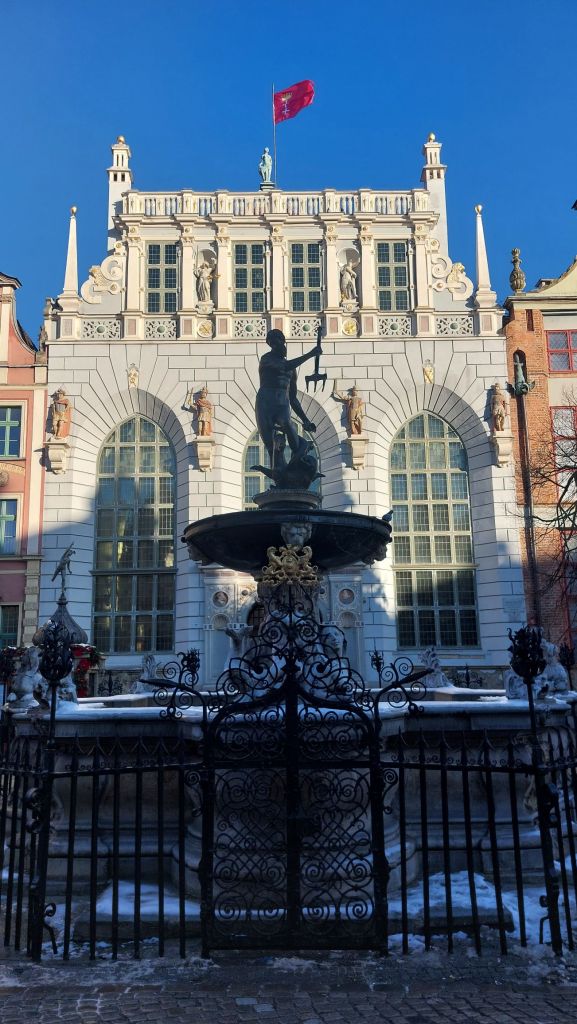
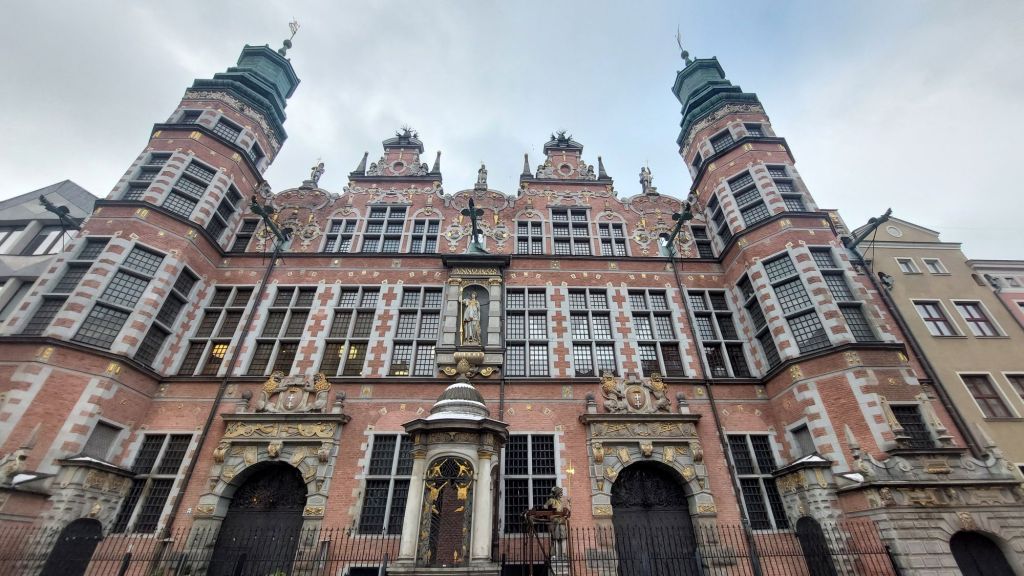
Long Market is the closest thing Gdansk has to a city square, and hence it is also the location of the Town Hall, Artus Court (which was the meeting hall of the city’s merchants) and the place of execution for witches, heretics and criminals (how delightful). In 1549, the local authorities of Gdansk, together with the mayor, wanted a metal decoration for the well in front of Artus Court. In 1615, a bronze statue of the God Neptune was cast weighing 650kg stading on a stem of black tuff. He faces the townhouses, which were the residence of the Polish kings with his head slightly bowed in their direction. In 1634, the fountain was encompassed by a fence decorated with gilded Polish Eagles. Neptune had been depicted in all his glory until a fig leaf was added in 1988…
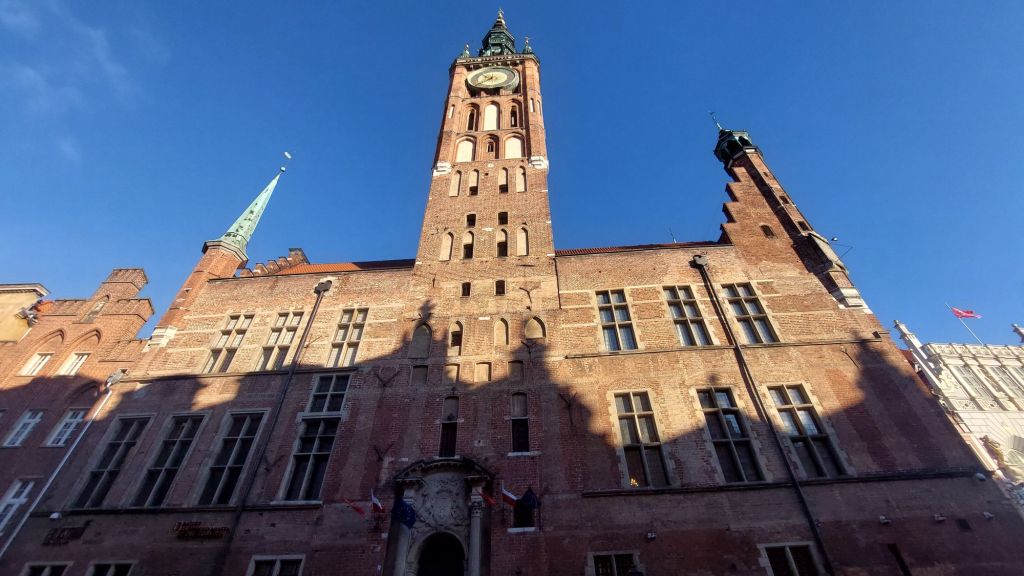
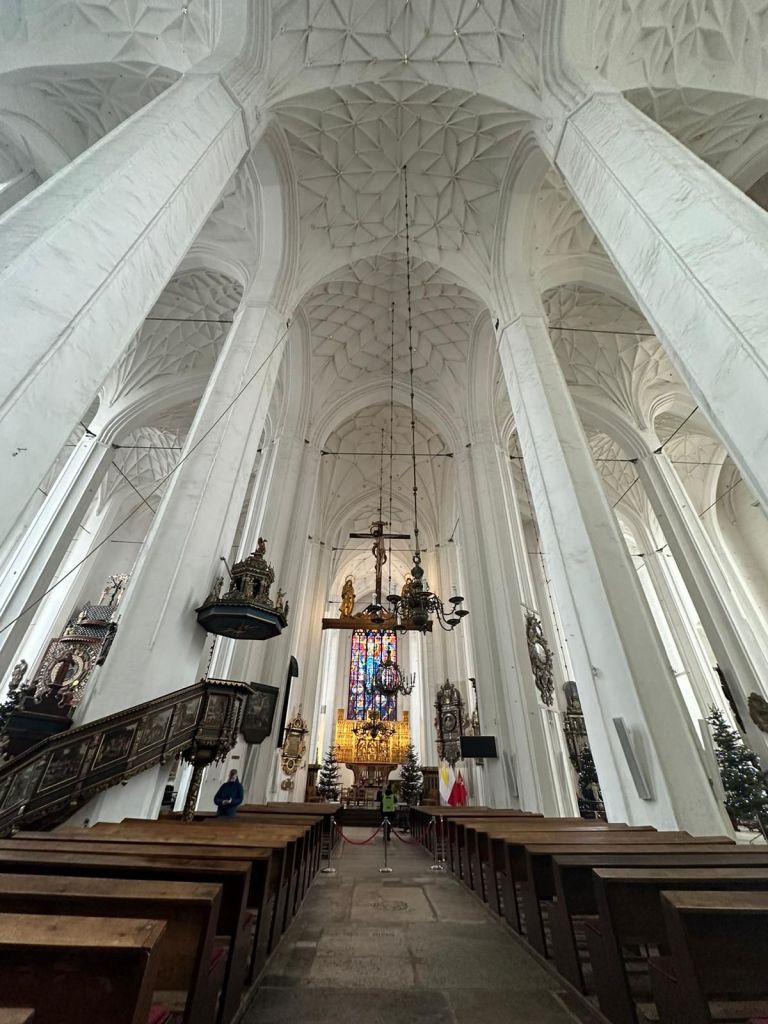
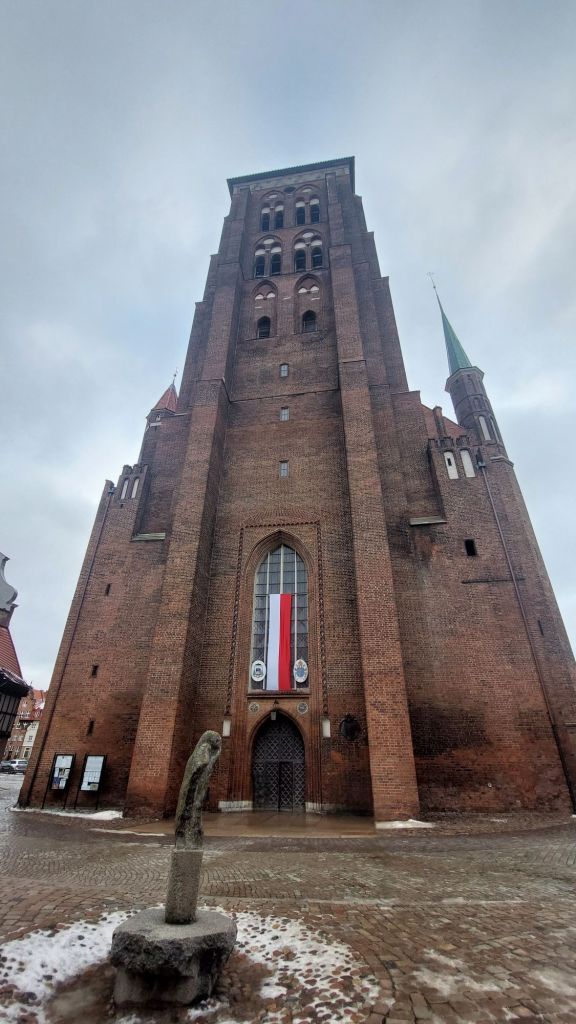
We continued up Long Market ticking off the main sights as we went reaching St Mary’s Church (formerly the Basilica of the Assumption of the Blessed Virgin Mary) which is one of the largest brick churches in the world and until 1945 had been the 2nd largest Lutheran church in the world. It is massive – 102.5m long with a nave 66m wide and a capacity of 25,000.
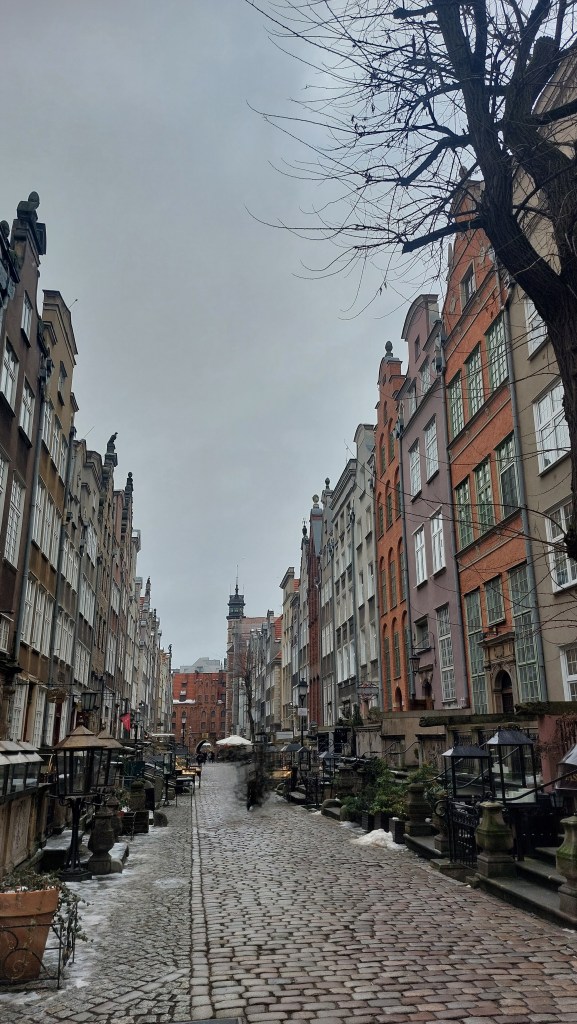
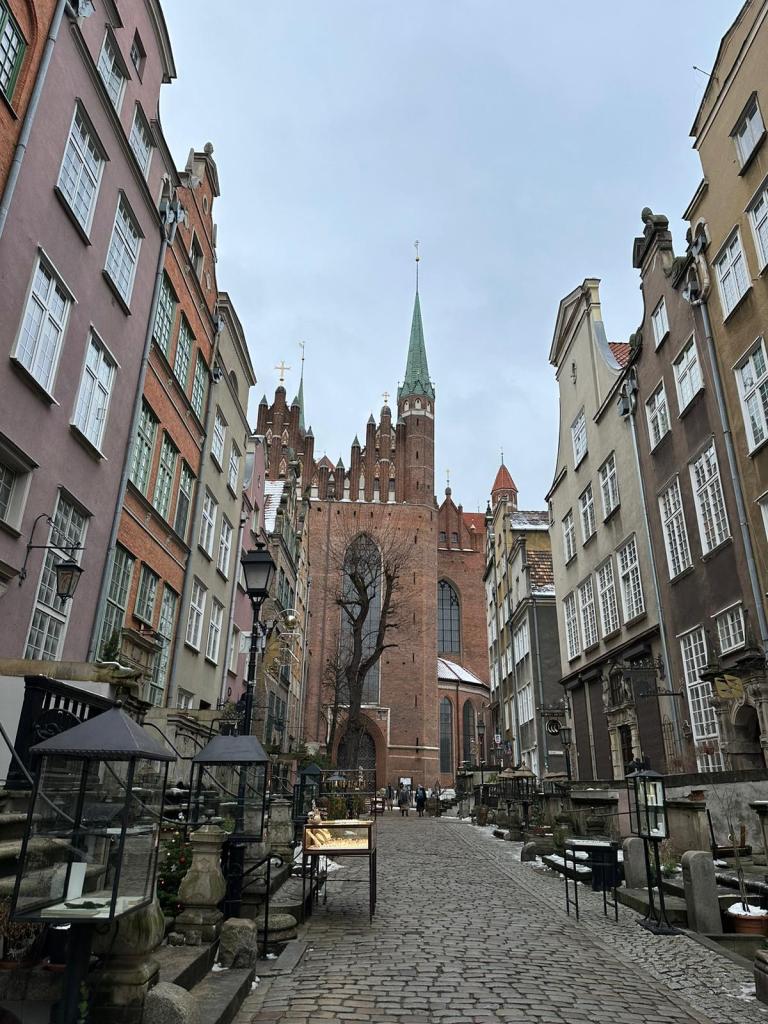
From here, we headed to “the prettiest street in Gdansk” – Mariacka Street. The first mention of Mariaka sreet dates back to the 14th century, and in the Middle Ages, the street was the home of shoemakers and butchers. However, from the end of the 15th century, gothic tenement houses replaced more modest half-timbered until these were displaced by Renaissance and early Baroque architecture. Bombing raids in 1945 destroyed almost all the buildings other than number 1 (see photo below). However, the street was rebuilt between 1955 and 1970 as an exact replica of the street before WW2. Perhaps the most noticeable feature (particularly on a day when the snow is melting) are the gargoyle rain gutters featuring the heads of animals and mythaligocal creatures. These are known as Rzygacze (literally meaning “spewers” in English).

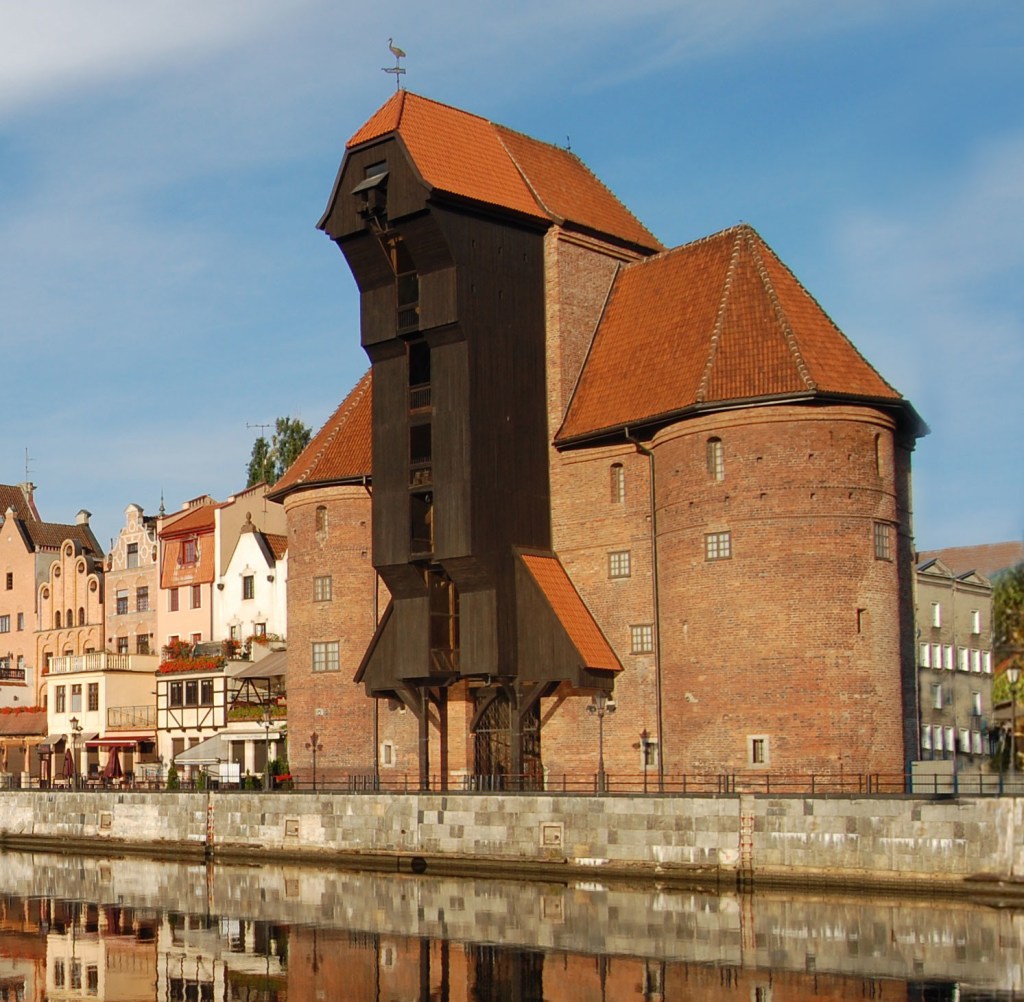
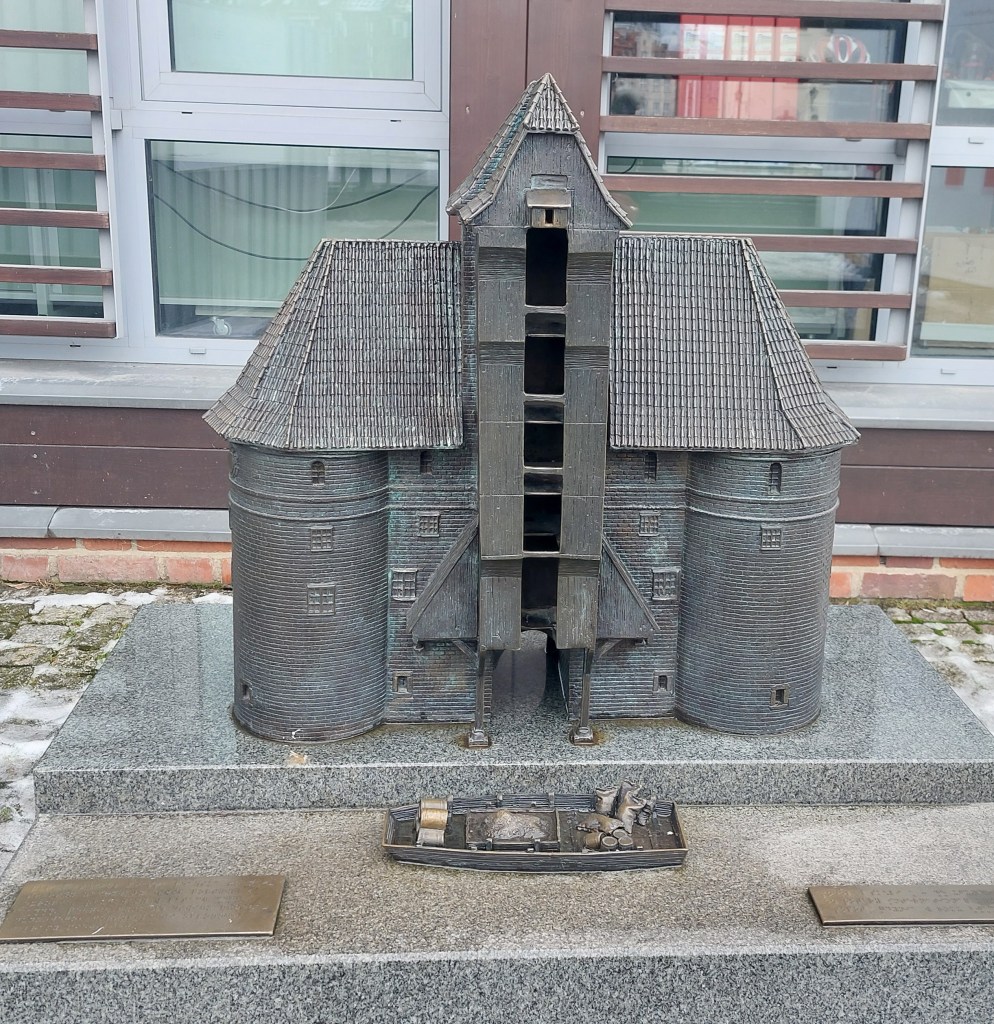
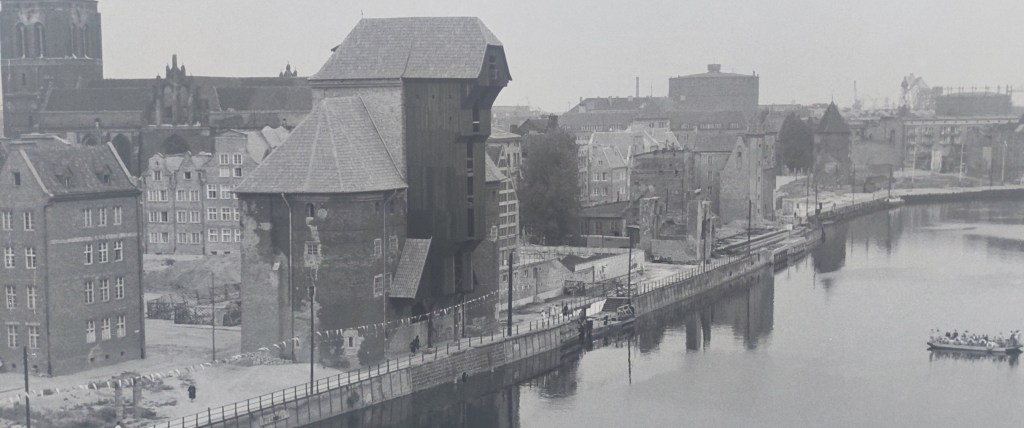
At the end of the street, we were again reunited with the Motlawa River, and we walked along it to “the Crane,” which is medeival port crane. The first mention of a wooden crane tower and gate located here dates back to 1367, but this was replaced by a brick and wooden structure in 1483, making it the largest water gate in Gdansk. The crane mechanism consisted of a set of treadwheels, which were powered by 4 crane worked worked inside the tredwheel (like a hamster wheel!), and could lift 2 tonnes up to a height of 11m. Although decreasing in signifiance, it continued to be used until 1944 when it was destroyed by a fire. The crane was rebuilt in 1957-1969 and is currently undergoing further restorations.
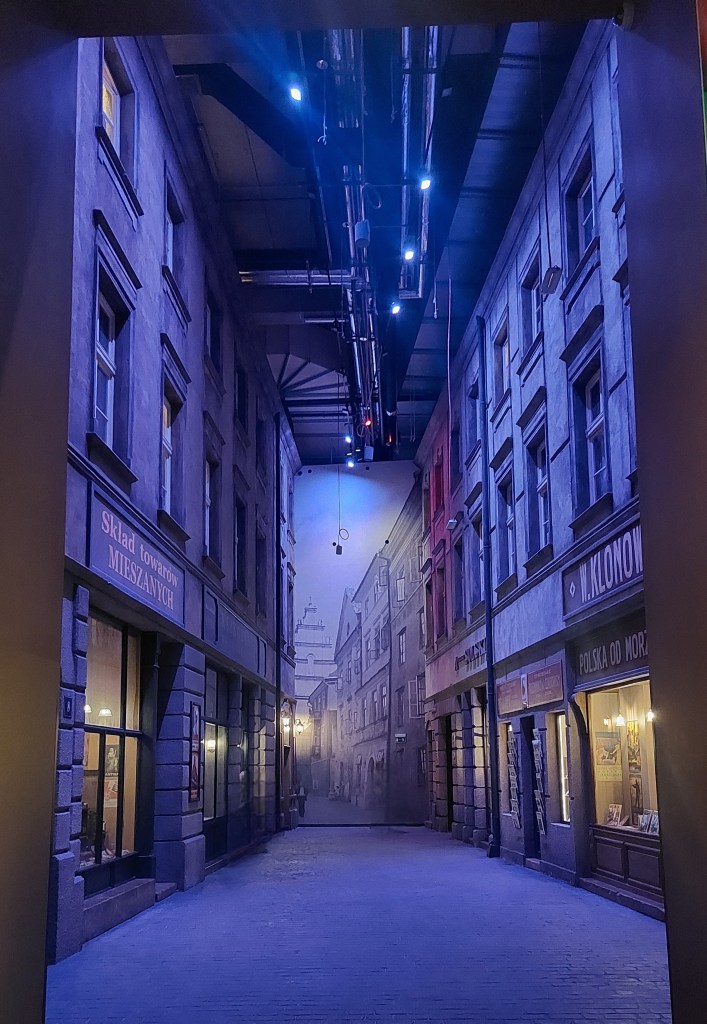
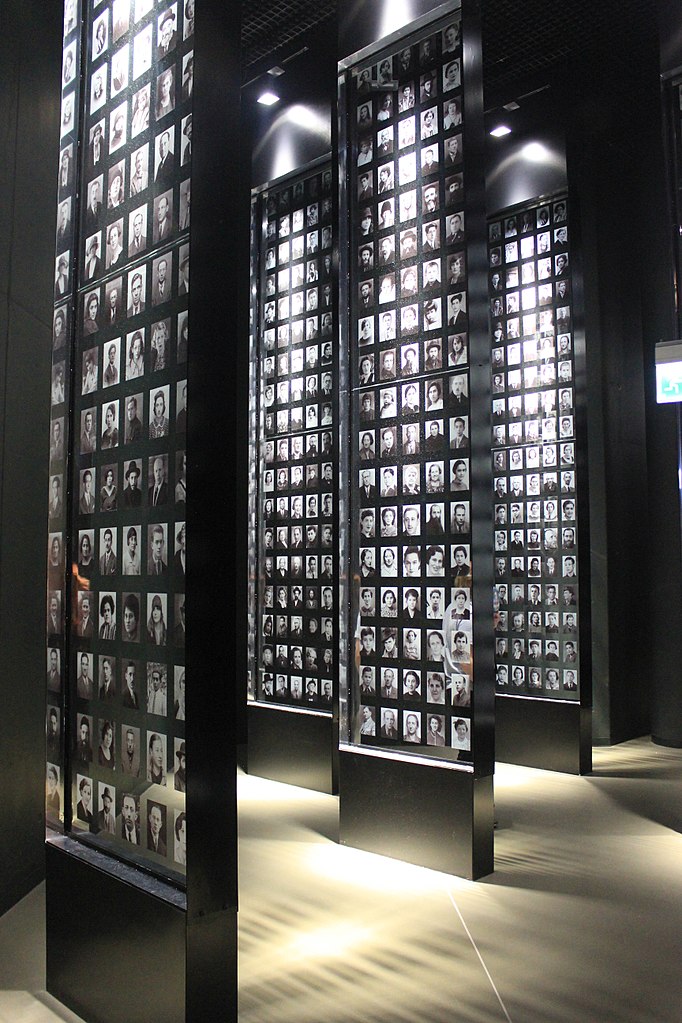
Our walking tour completed, we continued along the river (commenting about how warm it was at +3!) to the Second World War Museum (as it had started raining by that point). Now, I love a history museum anyway, but this comes very highly rated and only opened in 2017. I would say that I am (as we all are), pretty familar with the history of the Second World War and we were a little unsure on entry as it is very concrete and you have to descend to level -3 to reach the permanent exhibition. Also, it starts with a video from the death of King George V to the Treaty of Versailles, and then a few small rooms displaying the feelings of Germany and Russia to the Treaty of Versailles i.e. not particularly innovative or interesting. However, it then opens to a recreated Polish 1930s street, and from there is an amazingly curated story telling the history of WW2 from almost every perspective. This is a must-see museum.
The Second World War was the most tragic conflict in the history of humanity. It was launched by the totalitarian regiemes of Germany and the Soviet Union, which cooperated with each other. They committed acts of unimaginable cruelty and crimes in the name of lawless ideologies. In these times of contempt for human life, to act honourably was heroic, and people paid the highest price for defiance. Everyday life was transformed into a battle for survival and a space in which dramatic decisions needed to be made… The war’s experience remains meaningful today as it can affect the most important choices we make individually and collectively. Now, just as then, freedom, dignity, and life, for which millions of people made sacrifices in 1939-1945, are universal values.
Introduction to the Museum of the Second World War, Gdansk.
We spent much longer than we had anticipated in the museum, so after went in search of a late lunch/early dinner (lunner?) and then to revisit a shop we had spotted on our first day for magnet purchasing as well as me attempting to soend the last of my zloty.
On return to the hotel, to celebrate my 40th and a successful trip, we had a little champagne – ingeniously chilled by Steph (this is not her first rodeo!):

Whilst drinking, we were able to reflet on our time in Poland – it has been excellent! I take back my reservations as to my experience of Polish people as I would say people have been pretty universally helpful (as well as almost all speaking perfect English!) and the transport has all gone swimmingly. You could have an amazing long weekend/short week visiting the key cities emersing yourself in the fascinating (albiet often horrifying) history of this country. It is also incredibly cheap.
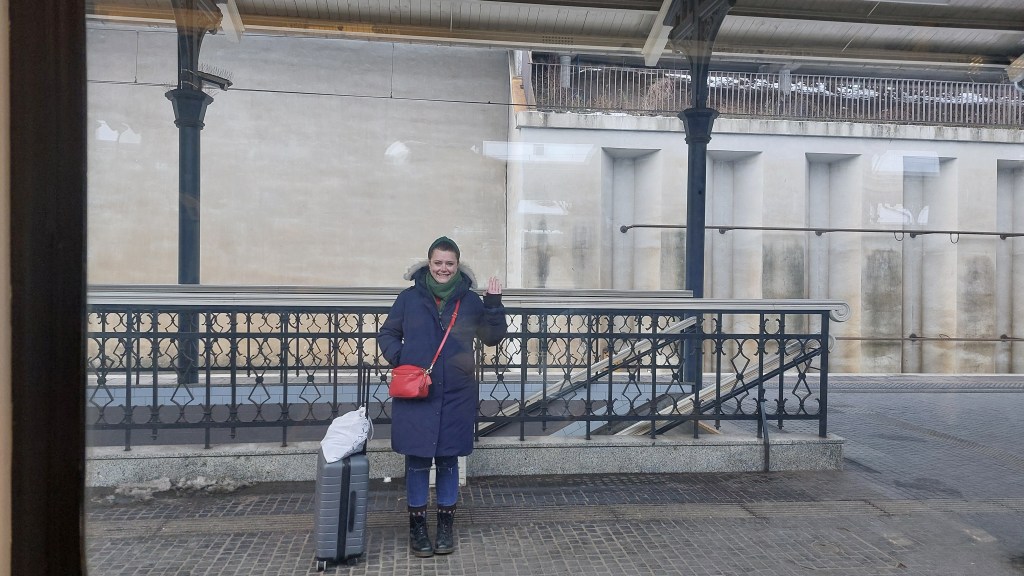
So, today (Friday), we were up early to the train station where, after waging war, opening a bottle of yogurt and failing(!), I waved off Steph to board my train. Now, my train is from Gdansk to Berlin, where I then change to Hamburg. This all sounds, however, Deutsche Bahn train drivers are on a 3 day strike which contiues today as I had some concerns as to whether my train would be even running – and according to the DB website, it isn’t! However, as it is a EuroCity train, evidently someone has come up with a plan, and the train arrived on time to Gdansk. Now, my understanding is that we will de-train at Rzepin (the Polish side of the border) and take a rail replacement bus to Frankfurt an der Oder (the German side of the border), where a train should be running as this section of line to Berlin is not operated by DB. From Berlin, my 15.38 to Hamburg is showing as running, but if not, the strike is scheduled to end at 5pm, and then a normal timetable will be running. FINGERS CROSSED EVERYONE!

 Travels with Kathryn
Leave a comment