Well, I made it eventually. When I wrote the last post it was all going rather swimmingly, however, our train stopped at the station before Rzepin (where I knew I had to get off and take the rail replacement bus across the border) and we were told we would be there for an hour. News then came down the train that we would be better to get off, change platforms, and wait for another train and then get on that to Rzepin. This was also a train saying it was going to Berlin, but I knew better… At Rzepin, I (and everyone else) de-trained and boarded our bus which drove across the border into Germany:
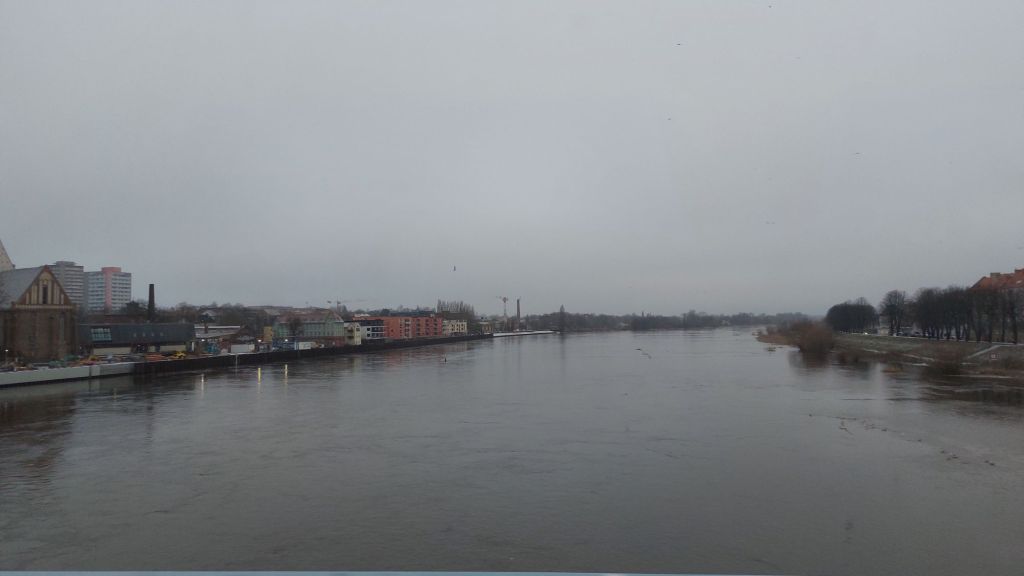

I (and some of the other confused international travellers) were quite speedy on arrival in Frankfurt an der Oder (the other Frankfurt) as we had worked out that we had 7 minutes until the next train to Berlin, but we made it! Interesting experience on this train where the girl opposite me fully changed clothes (including bra) semi-under her hoodie and then redid her already rather heavy make-up. I was kind of fascinated – evidently, one doesn’t need the privacy of a train toilet to do such things? Anyway, arriving at Berlin was quite an eerie experience as it was almost empty because of the strike (and accompanying Farmers Strike which has also gridlocked city centre roads) but I did manage to board a train to Hamburg, finally arriving in Hamburg only 10 hours after leaving Gdansk. I then had to wait to check in to my hotel (which was almost the last straw), but I had made it!

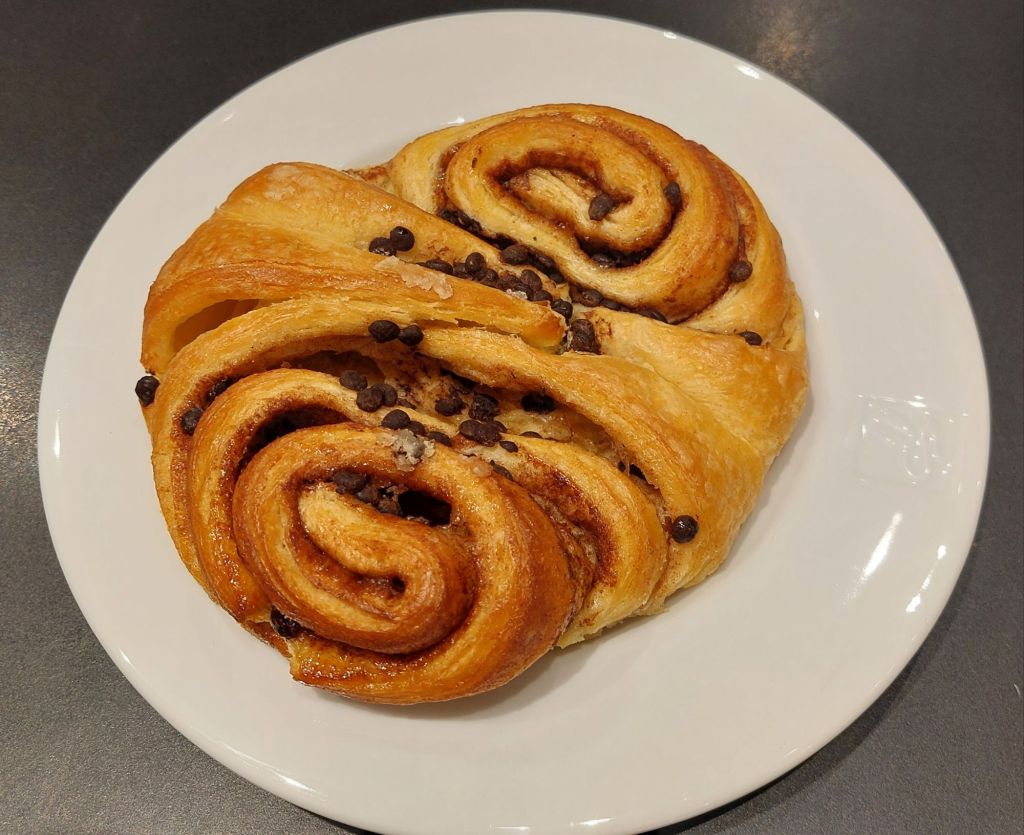
The next morning, I was up and off for the last (probably) walking tour of the whole trip (a big moment). However, to sustain me, I stopped for a Franzbrotchen, which is a cinnamon pastry from Hamburg made popular when Napoleon’s troops occupied Hamburg between 1806 and 1814. I felt it was an excellent form of sugary goodness:
So, I shall start with (the usual) short history. Hamburg was first settled in Neolithic times, and in 808AD, Emperor Charlegmagne ordered a castle built here to defend the River Elbe from Vikings raids. This was at the highest part of the city, which is a mere 9.6m above sea level (my kind of maximum incline). Around the same time, the first Archbishop of Hamburg was consecrated as a mission settlement to convert the pagans to Christianity. This was not particularly successful, and in 1066, the bishop permemantly moved to Bremen. In 1188, Hamburg formerly adopted Lubek law, and in 1189, Hamburg was granted the status of a free imperial city, which gave the city tax-free status and thus made it wealthy. In 1241 Hamburg and Lubeck became the two founding member of the Hanseatic League (in which cities I have spend quite a bit of time in on this stage of the trip!) which allowed it to continue to prosper as an indepenent city state. From 1815-1866, Hamburg was part of the German Confederation and then Empire. However, it retained its independent sovereign status. In 1842 about a third of the city was destroyed by the great fire (more on this below), but the city continued to grow as by the second half of the 19th century the population had quadrupled and Atlantic trade helped make it Europe third-largest port. During WW2, Hamburg suffered a series of devastating airraids, and 39,000 tons of bombs were dropped on the city. Much of the city has since been rebuilt, and today, it is Germany’s largest mulipurpose port generating an annual gross value of around €20 billion.
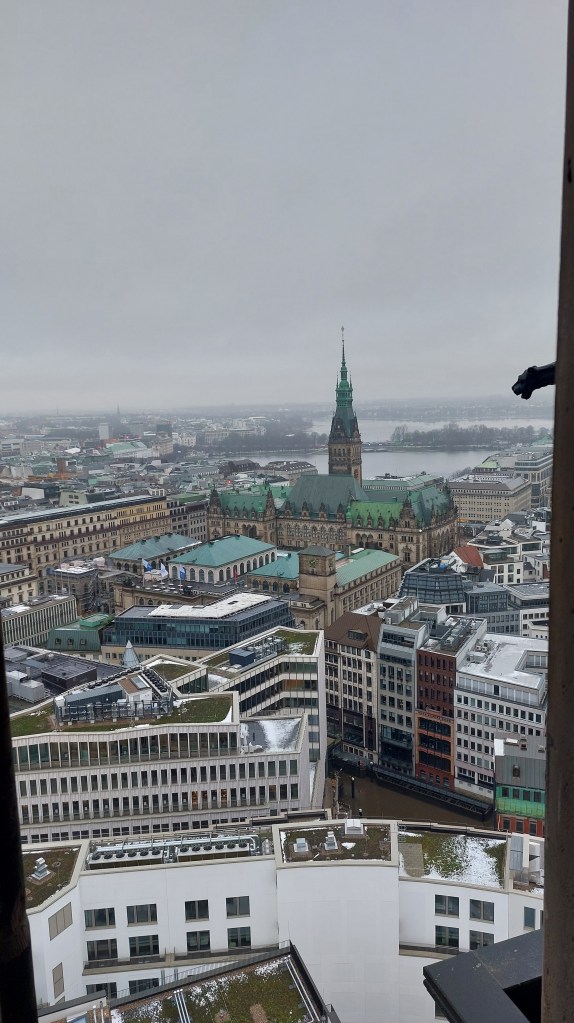
With that background, we started our tour at the Town Hall:
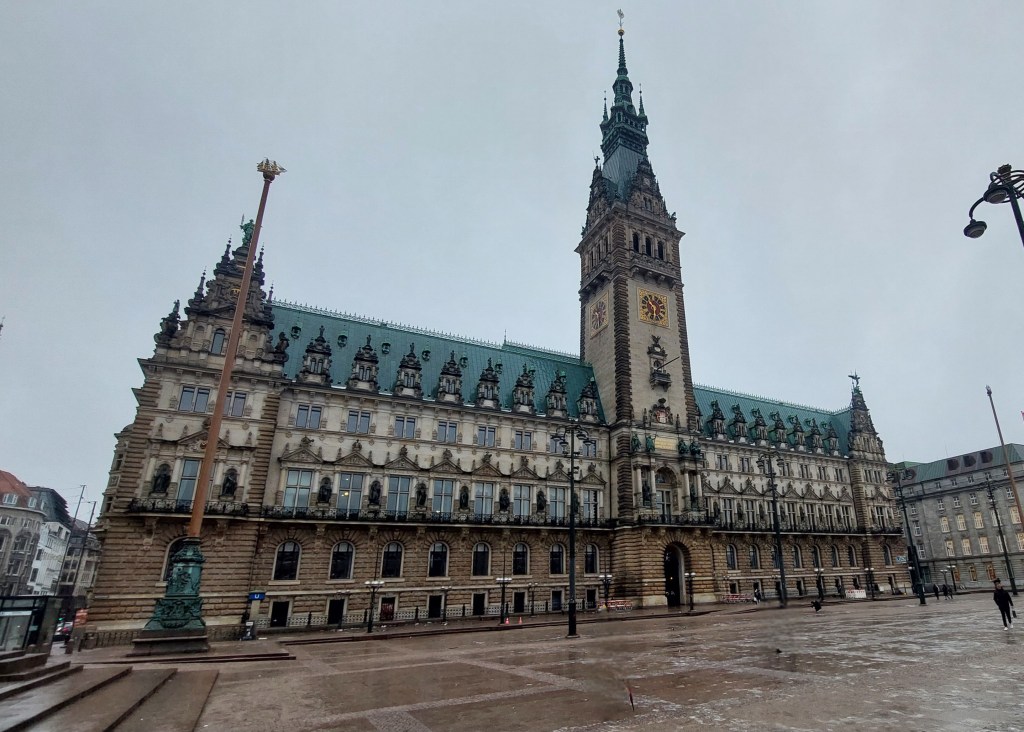

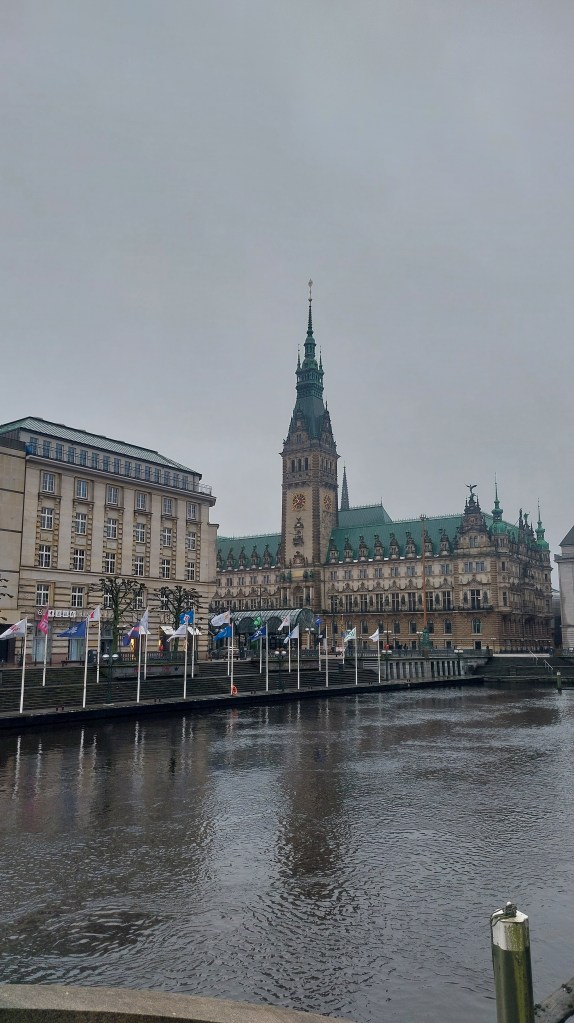
After the town hall was destroyed in 1842, private donations (amounting to around €800 million!) were raised to rebuild it. It was finally finished in 1897 and is the seat of state government and has 600 rooms, i.e., It’s massive. However, I should note that representatives all have other jobs/are retired, and it is seen as a privilege to serve rather than a way to earn a living. If only all politicians could have this outlook…
You may also notice a lack of swans in the photo above of the River Alster basin. Swans are protected by “the Swan Father” (official title) as the legend gpes that as long as there are swans in the city, it will remain free. There are laws forbidding eating, harming, or swearing at swans. In winter, they are moved to the northern part of the city, as this area is an arificial water basin the water may freeze which the swans do not like…
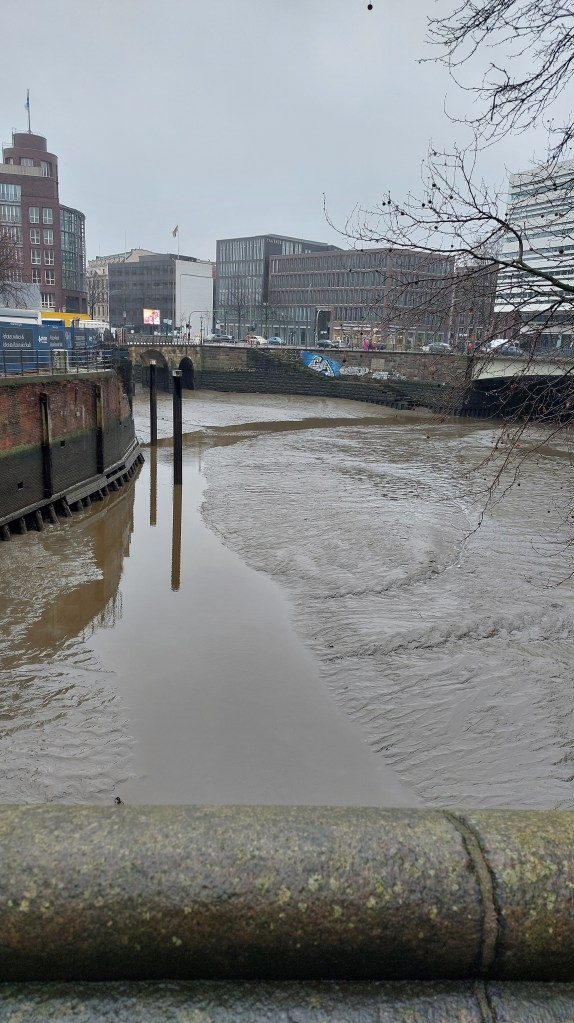
The entirely of the city of Hamburg is built on marshland, but (as in Venice) prior to building, oak posts were inserted into the land and these are still what the city rests on today which you can just see in the photo below:
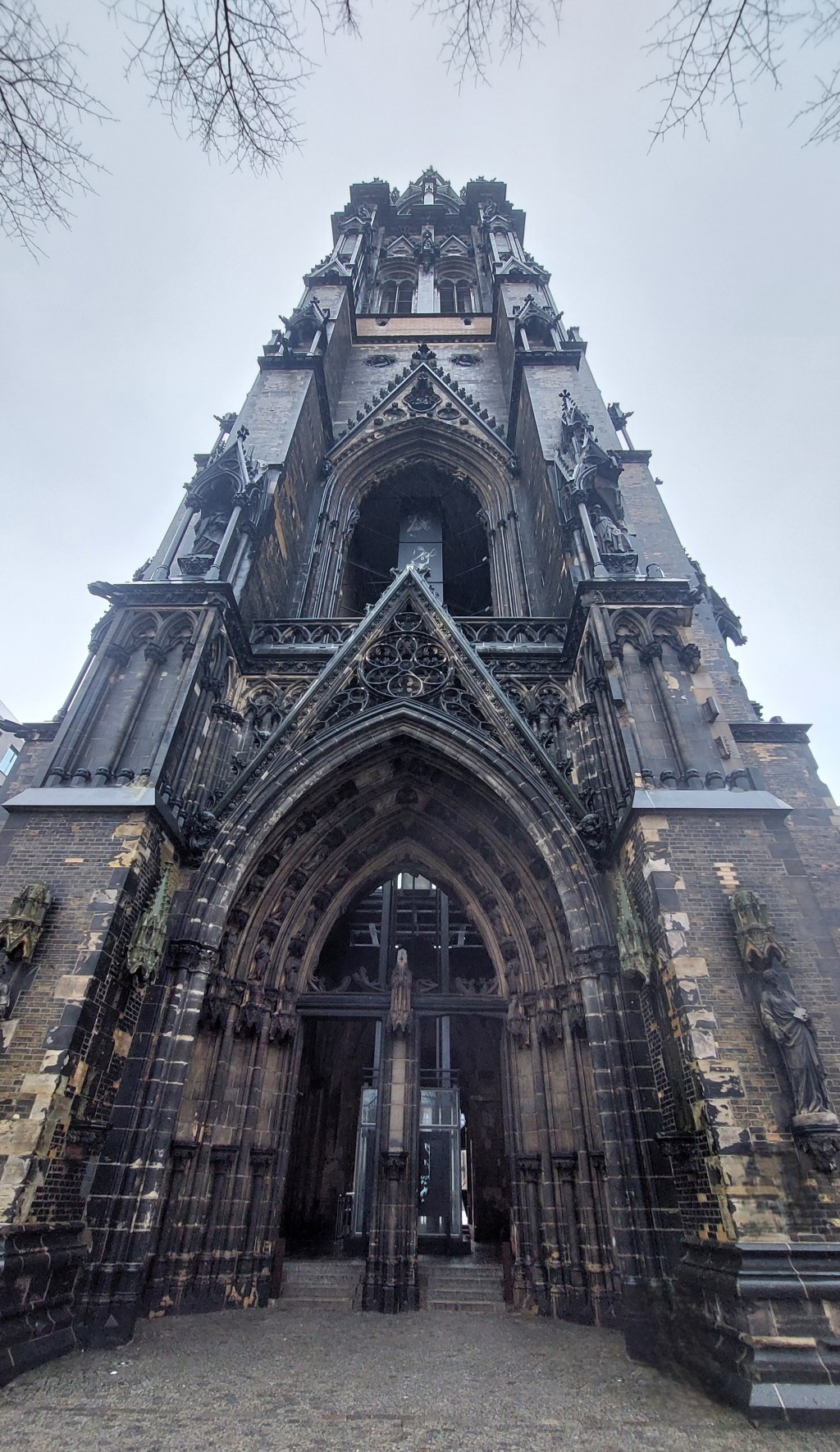
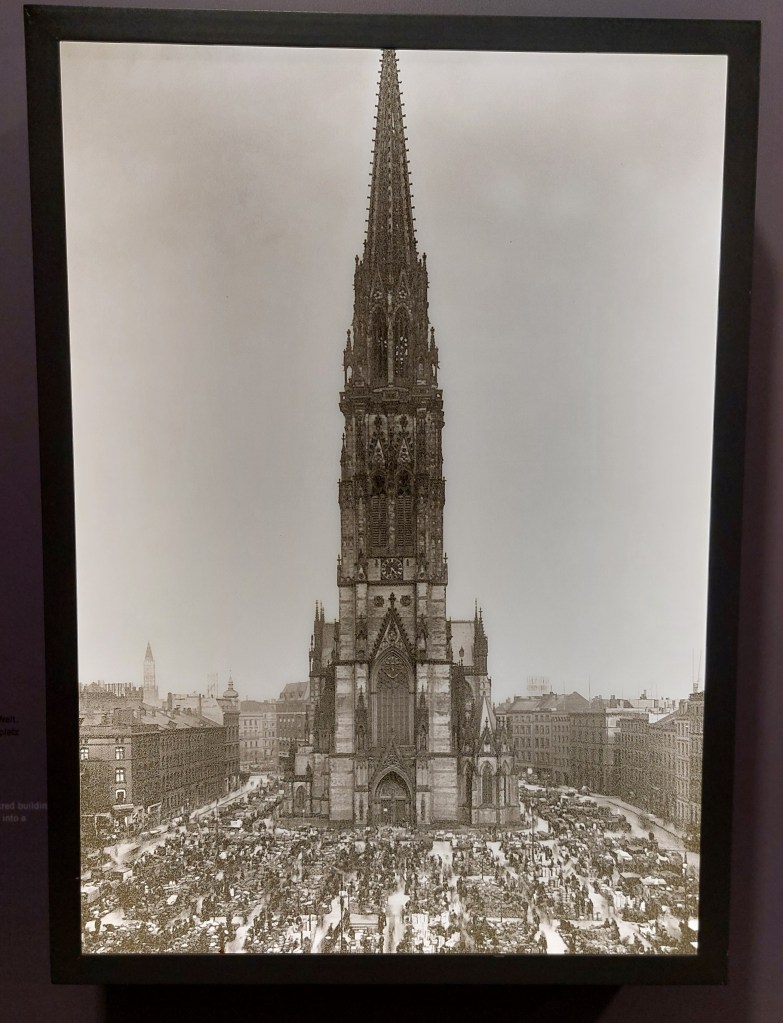
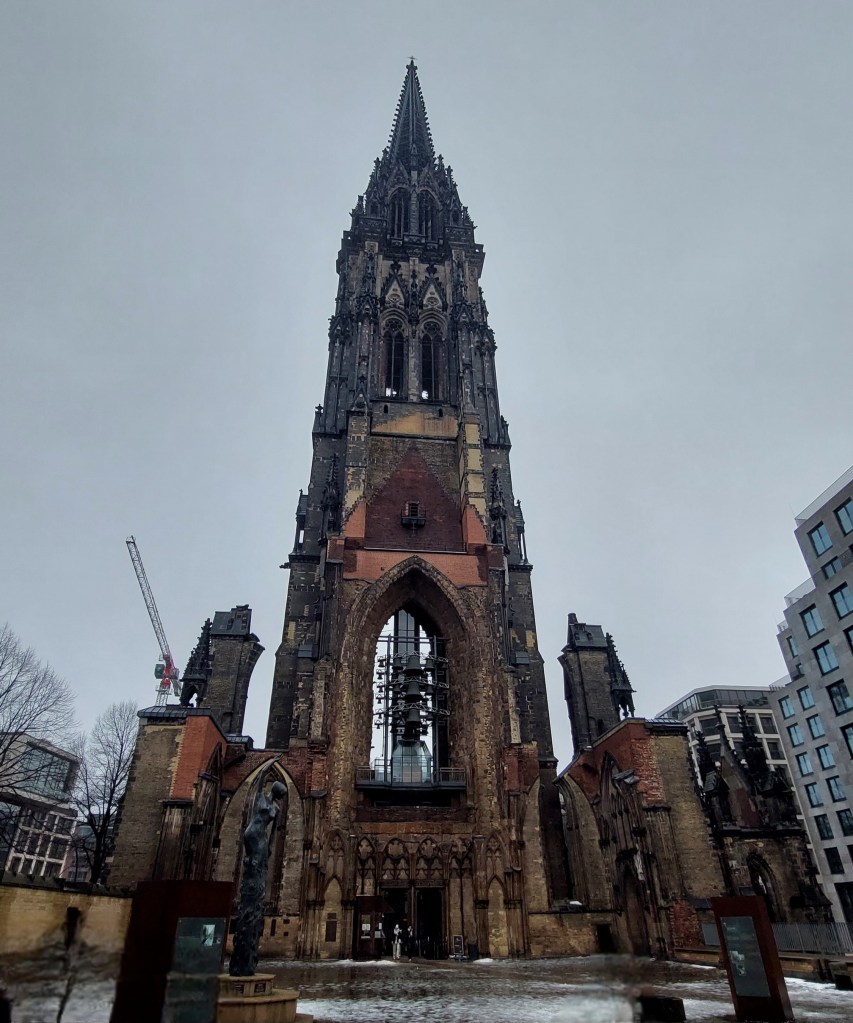
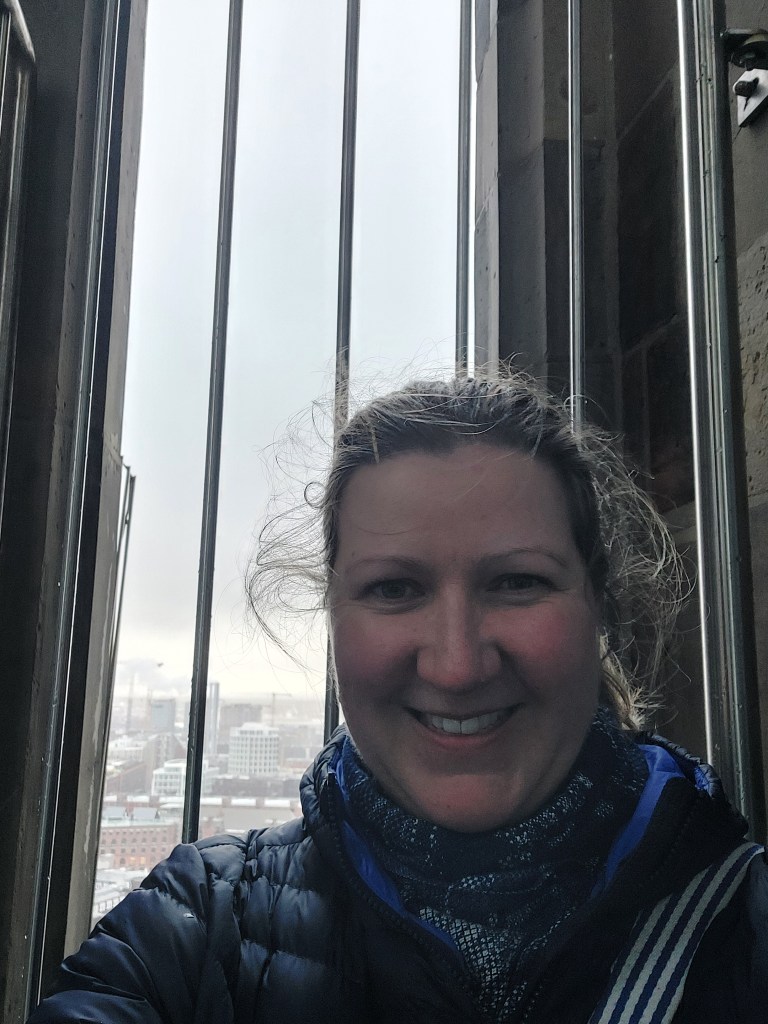
Today, Hamburg has five main churches, and their towers are very visible on the skyline. However, our next stop is St Nikolai’s Memorial, whose steeple has been left as a memorial to all those killed by the Nazis in WW2. The original church was built in 1195, and it burnt down a couple of times, most notably during the 1842 fire. After the Great Fire a new cathedral George Gilbert Scott (who also designed the Albert Memorial in London) designed a new church and when it was finished in 1882 its 147.3m steeple made it the highest church in the world (even today, it would still make the top 5). In 1943, Hamburg was a key target for allied bombing. Operation Gomorrah was the first time civilian targets (the port and factories) were specifically bombed. Around 35,000 died, and by 1945, over 35% of the city’s remaining population had fled the city. Today, there is a lift up the tower and an exhibition focussing on the bombing of Hamburg, Warsaw ad Coventy. Having visited a number of WW2 sites and museums recently, this was without doubt the most anti-German commentary I have seen in any written descriptions, which I found particularly interesting given that this was destroyed by allied bombing. However, the commentary is clear that the bombing of Hamburg was completely deserved after Nazi German destruction of Warsaw and Coventry. I would be very surprised if a Polish or British museum would make this statement without balance.
Note: I returned to the memorial after the walking tour, but I am covering it all here to hopefully make a more logical reader experience.

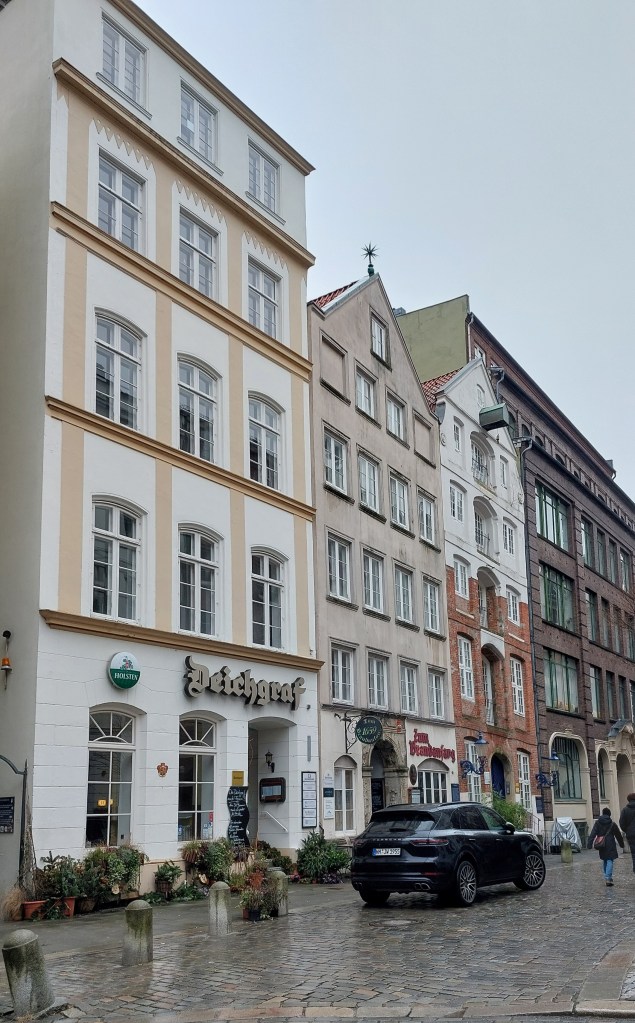
Our next stop was Deichstrasse, which is where the Great Fire of 1842 started in Eduard Cohen’s cigar factory (more obvious than a bakery perhaps?). The fire burned for 4 days and destroyed 3 churches, the town hall, 100 warehouses, and 4,000 homes. Reconstruction took more than 40 years but allowed the city to build a more modern city, and Hamburg was the first city in Europe to have a sanitation system. Due to how the city spread, these few buildings below are some of the only surviving pre-1842 architecture in the city.


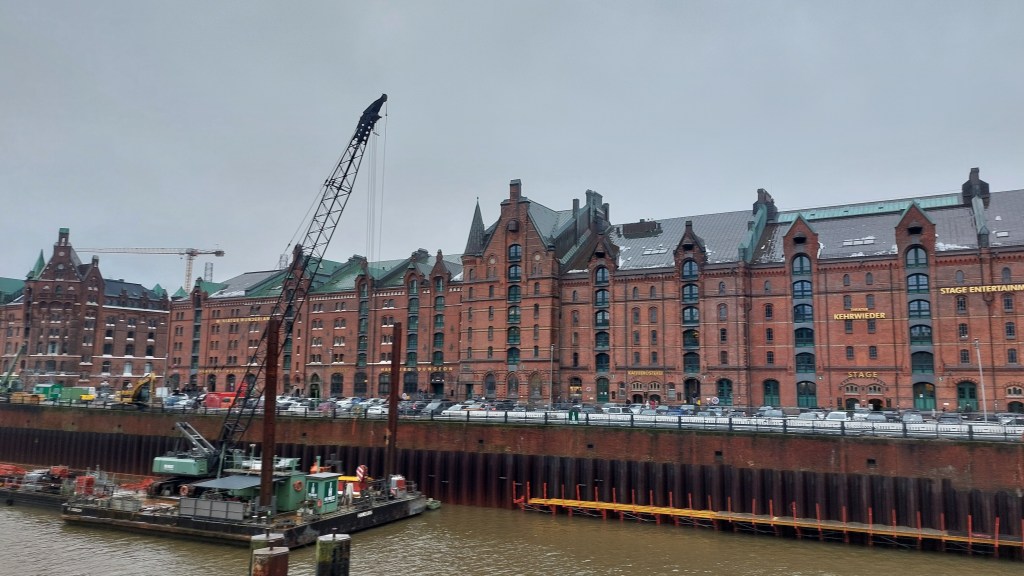
Originally, there was no separate warehouse district as merchants operated out of their own buildings/homes on the water (such as those above). However, in 1883 the expansion of the Prussian Empire started putting pressure on Hamburg and a deal was reached that if Hamburg would join the empire it could retain its toll exception for the next 100 years, but only if a centralised warehouse was built. Hamburg accepted and built what is today a protected district.
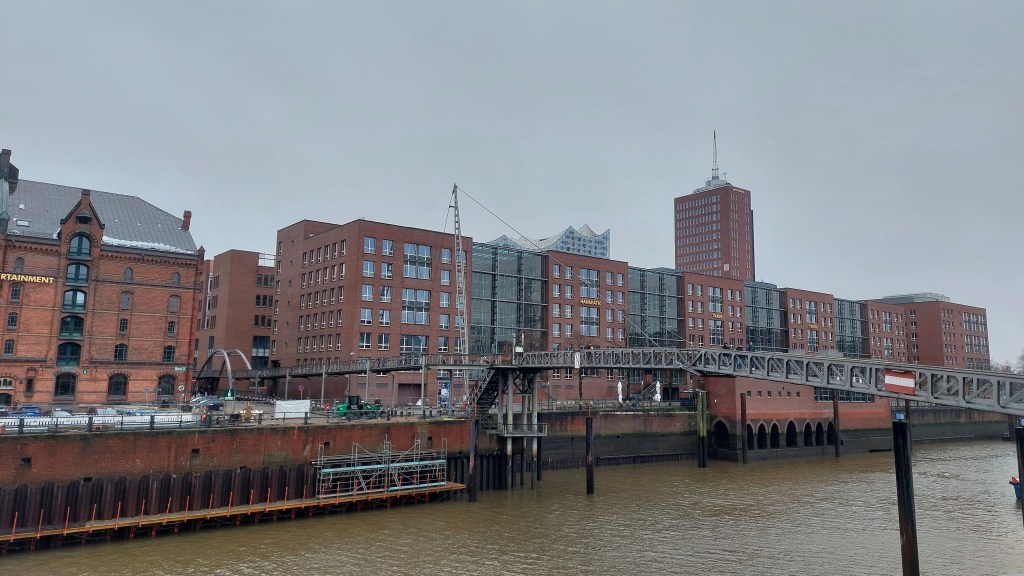
Our final stop was a viewing of Hamburg’s Elbphilharmonie. Construction began in 2007 and was scheduled to be finished by 2010 and cost €241 million, in 2012 costs were re-estimated to be over €500 million and when it was inally completed in 2016 it had cost €866 million. As well as these costs, there is also some controversy over the acoustics, which are described as “too good” as you can hear everything, the music, pages turning, musicians shuffling in their seats!
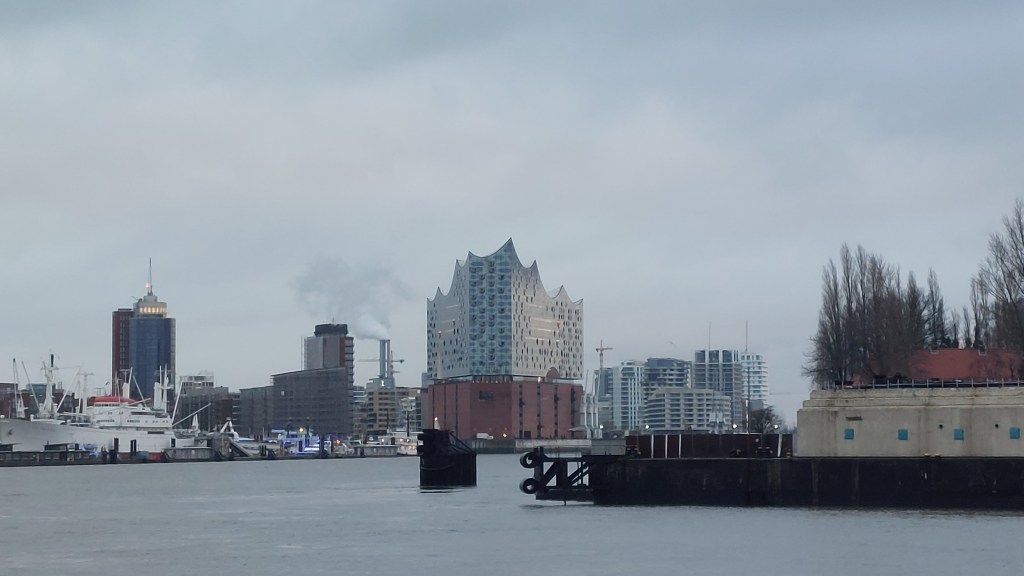
At the end of the tour, and after my visit to St Nikolai Memorial, I returned to my hotel predominantly to dry out. The weather today has been what the Scottish would describe as dreich – grey, drizzlely, wetness. Most depressing. However, once dry, I headed back out for a trip to Miniatur Wunderland.
Miniatur came highly recommended by my last travel companion (Steph), so I decided to risk the child levels in order to visit the world’s largest model railway. Well, it was amazing! Currently spead over 2 floors, there are trains (yay trains!), miniature German, Swiss, Italian cities, a Las Vegas, a working miniature airport and so much more. What is really clever is the level of detail, you can actually spend ages (and I did) staring at all the little details – for example, the Elbphilharmonie has people living in the apartments including a bride being carried over the threashold. There is also a lot of opportunities for interacti, i.e., button pressing, for example, to send fire engines to deal with a hotel fire or make dolphins jump in the sea (I only occasionally swatted children out of the way so I could press buttons). I absolutely loved it! My only criticism was the very poor gift shop on exit, I was all ready to buy merchandise, and there was nothing specifically Miniatur branded, so I was easily able to resist.
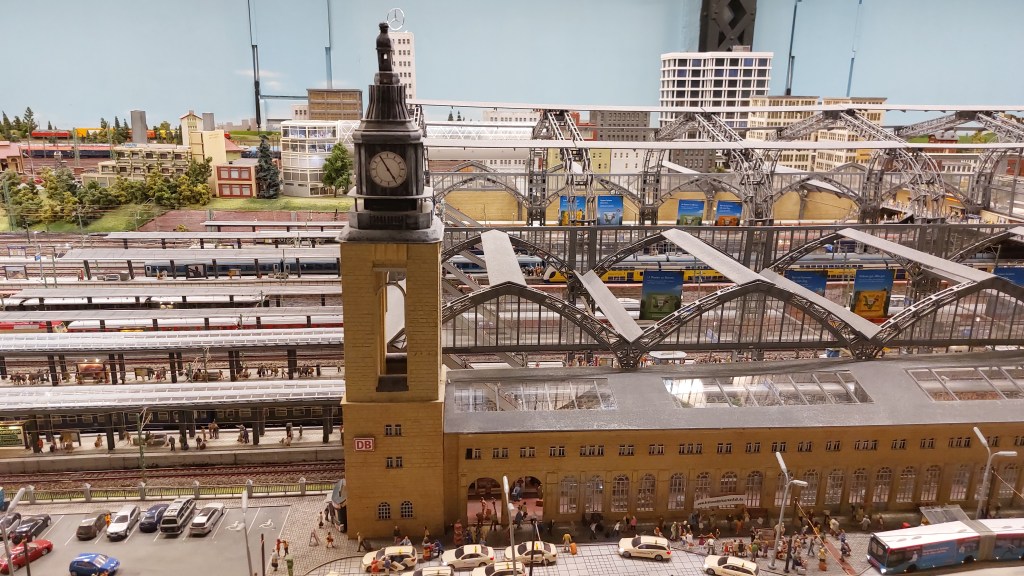
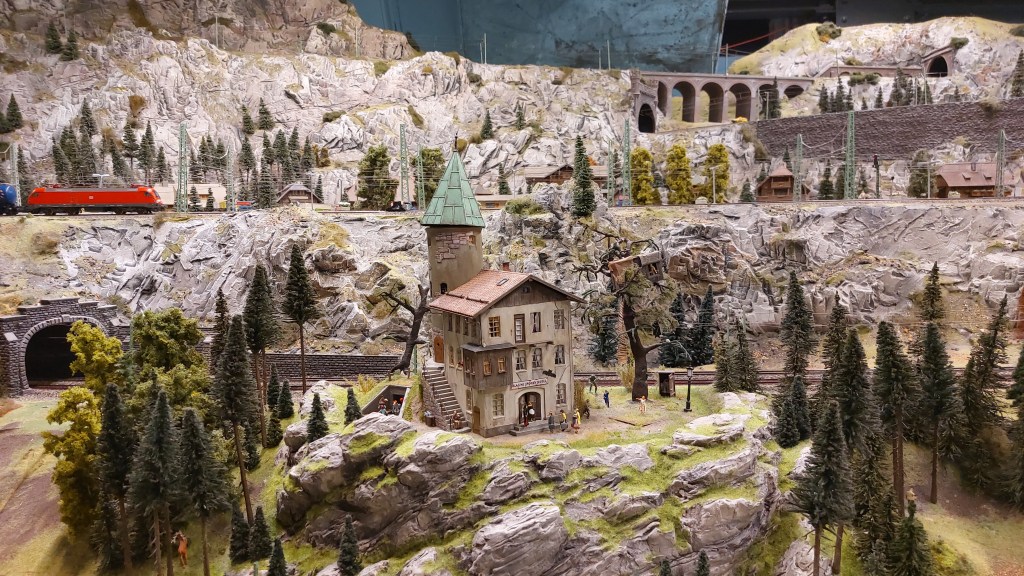

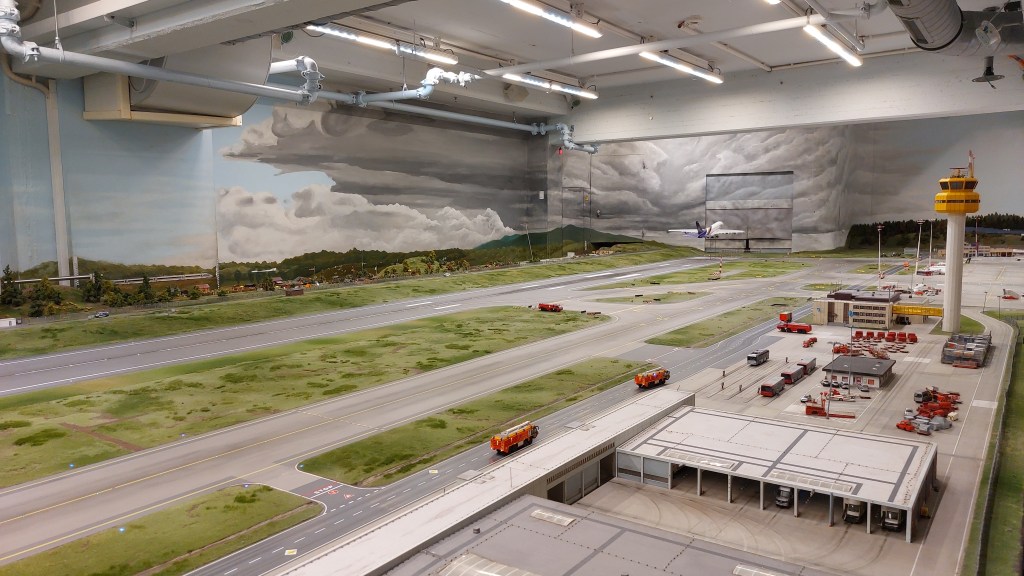
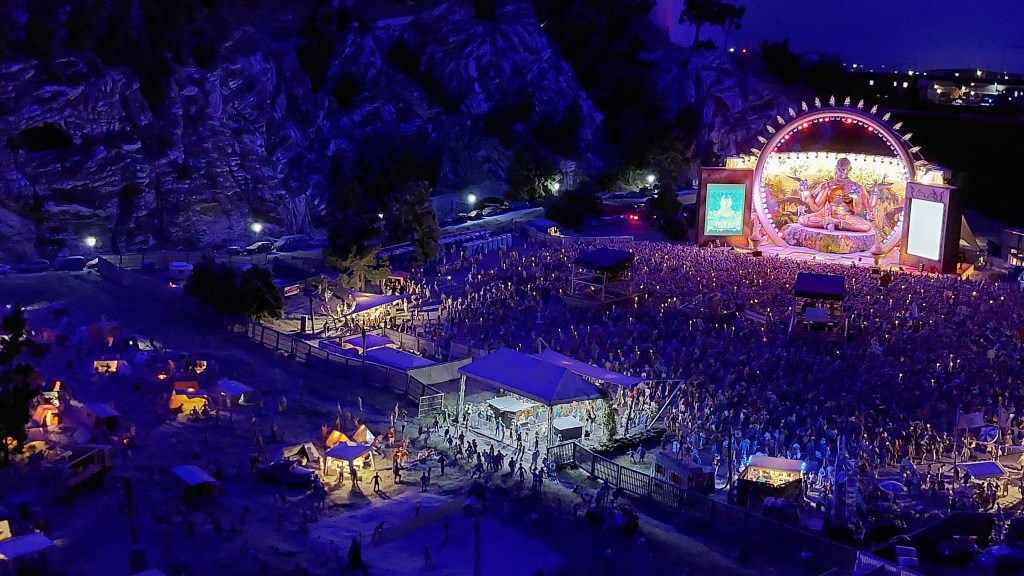
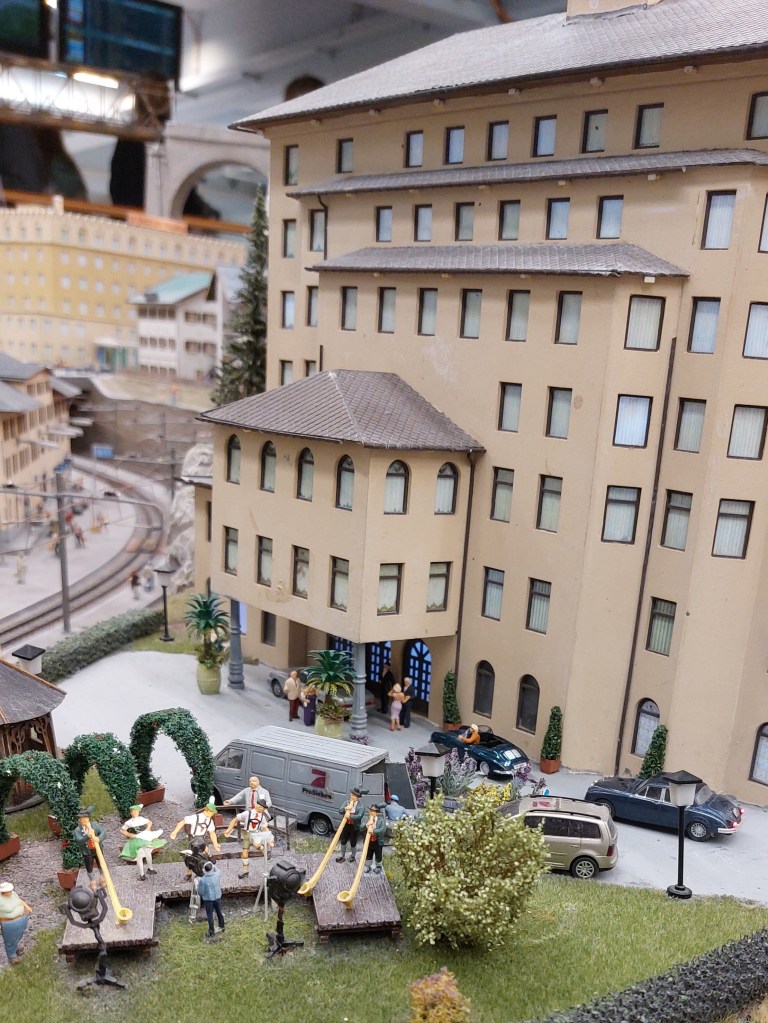
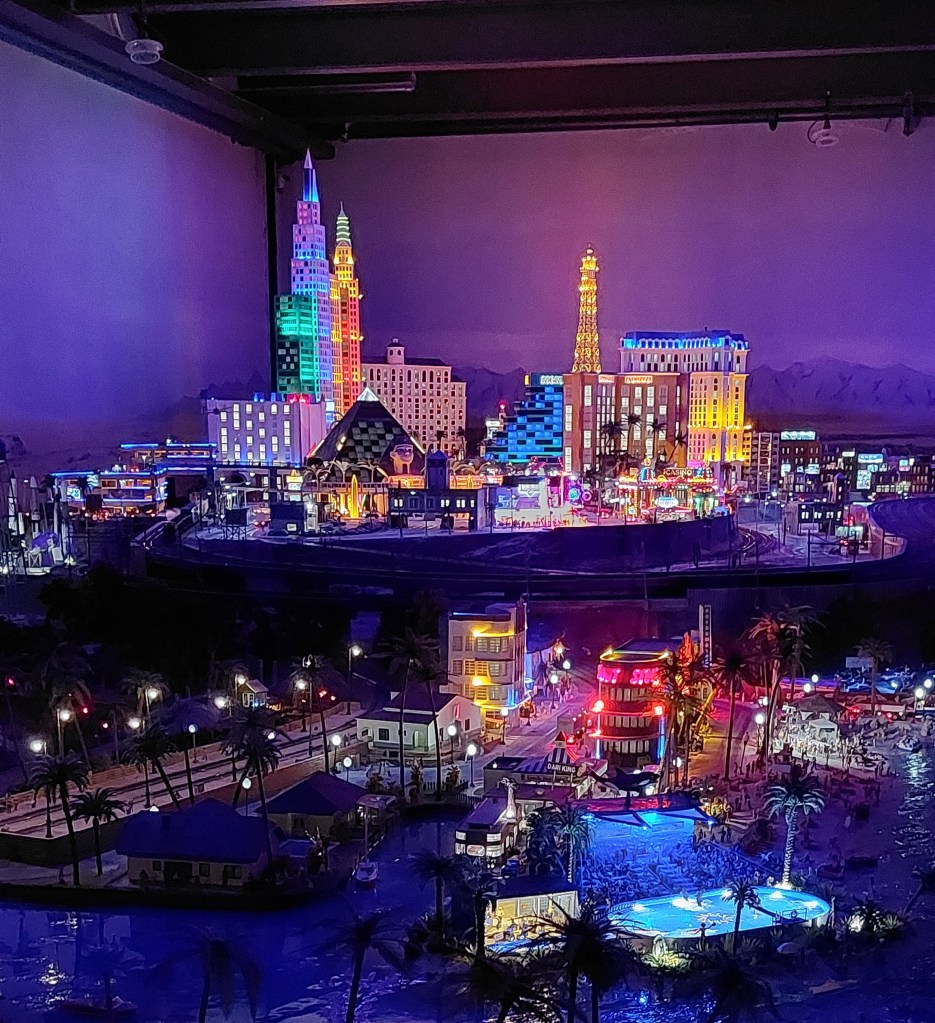

All in all, it was a very successful day. Hamburg is probably my penultimate touristing, as I have a daytrip to Bremen tomorrow (Sunday) and am then heading to Amsterday to stay with Susan, and: (i) I have been there before; and (ii) I am staying with Susan. It is definitely worth a visit, but maybe when the weather is likely to be a little nicer, perhaps? You can have a great short weekend, and in 2028, the UK section of Minatur will be completed, so I shall return.
I set my alarm for 7am on Sunday and did (hopefully) my last hand washing of the trip (in order to have a clean pair of socks for Monday!) before heading to bed.


 Travels with Kathryn
Leave a comment