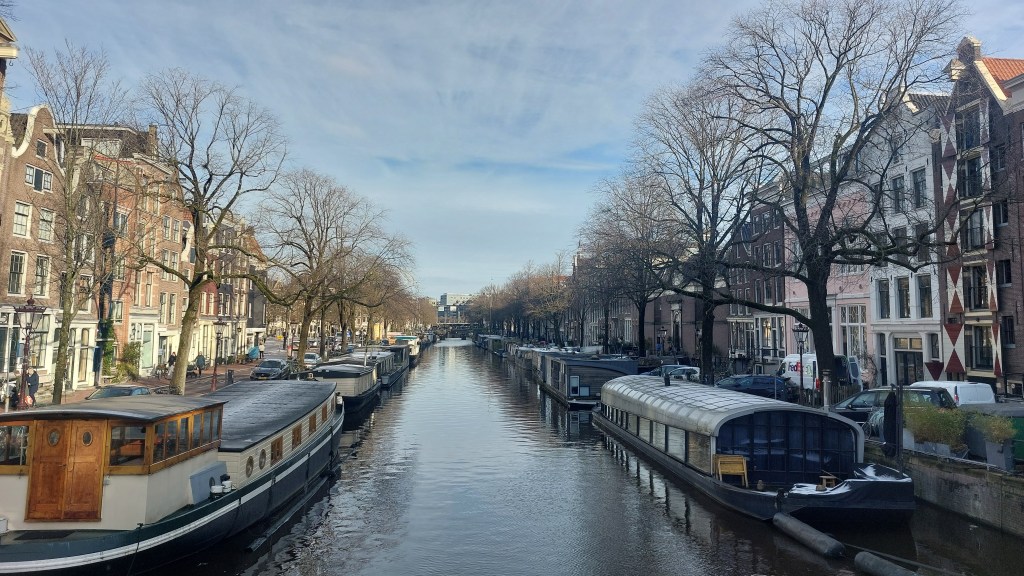
As I head into my last week, I may have fallen a little behind on the blog – I was too busy having a delightful time in Amsterdam with Susan which you shall be hearing more of in this/the next entry to ensure I am up to date before this is all over on Monday. Cue crying.
However, let us return to bringing you up to date. On Monday morning I departed my hotel in Hamburg, popped into a small supermarket for provisions (which was heated to almost the temperature of a Finnish sauna) and then to my platform to board my train to Amsterdam. I was booked on a train from Hamburg to Ostabruck, where I would change for direct travel to Amsterdam. Most civilised. However, this was not too be – as my train was going to be 10 minutes late (train delay due to: “the train being delayed”) I checked the connection and found out that my onward train had actually been cancelled. An email to tell me this would have been nice… Anyway, I came up with an alternative route that would get me into Amsterdam only an hour later and take only(!) 4 changes: Hamburg-Ostabruck-Hengelo-Utrecht-Amsterdam.

When I had been thinking about this trip, I had tentatively planned a stop in Hanover, and as this journey is as close as I shall get, so let me explain why. I knew I would be visiting many cities that were heavily bombed during WW2, and I have a small connection to the allied bombing. My Grandad’s brother Sergeant William Mycock (aged 22) was a flight engineer on a Lancaster Bomber aircraft in squadron 619 and on 31 August 1943, heading out on an early phase of the bombing of Berlin, his plane was shot down in Hoxter and all crew were killed other than the flight gunner Hugh Watkins who became a POW, but managed to survive the war and died in 2012. Great Uncle Bill is buried in the Hanover War Cemetary. This photo of Hamburg gives you just a glimpse as to what a bombing raid looked like from the air:

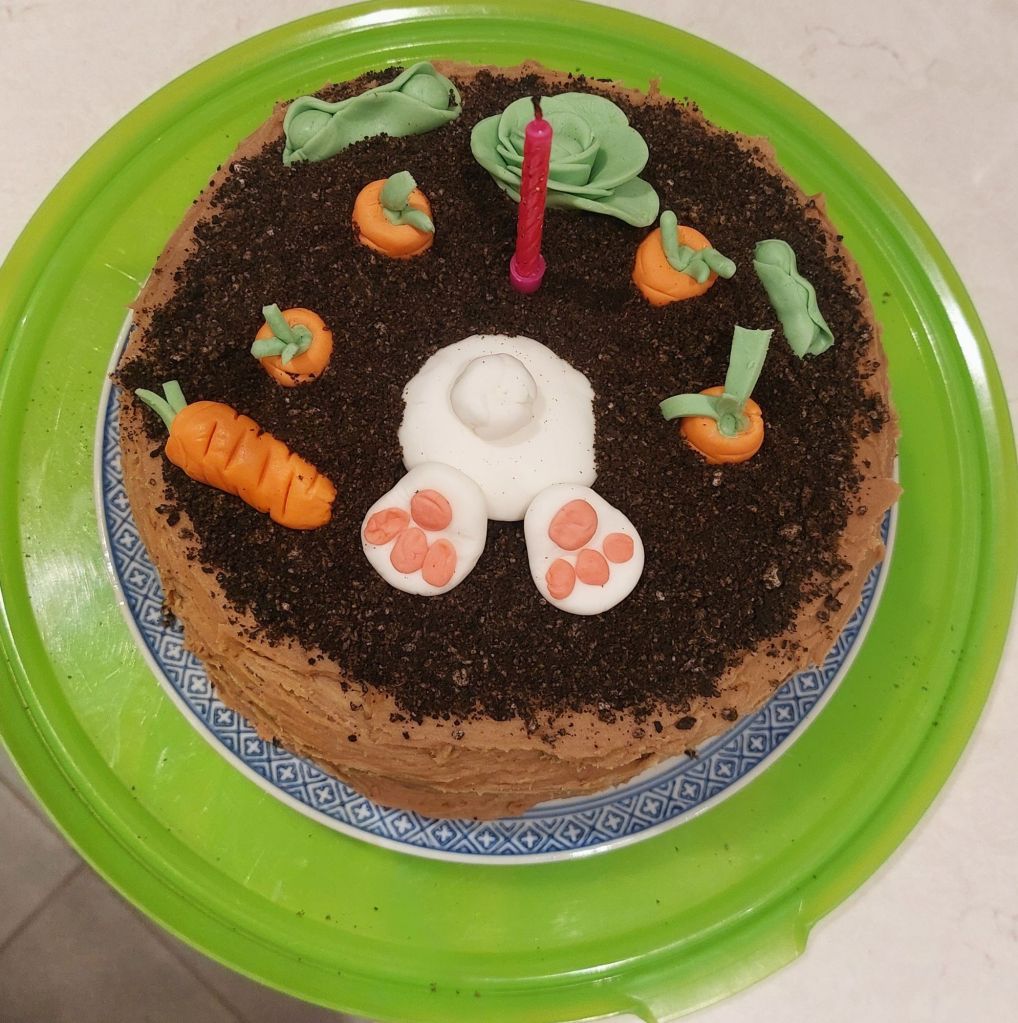
So that was how I spent my journey to Amsterdam, and I did make all my revised connections (including a 7 minute change at Utrecht which included RUNNING up stairs- who have I become?) so I arrived at 5pm to be greeted by Susan who escorted me into her home, allowed me access to her washing machine and tumble drier (she is fancy like that) and showed me into her lovely spare room and the last “foreign” place of my trip. That evening, we (including Susan’s partner Jim, who had managed to be allowed out of work at a semi-reasonable time) went out for Rijsttafel. This literally translates to “rice table” and is an Indonesian elaborate meal adapted by the Dutch consisting of many (there were many) side dishes served in small dishes including satays, currys, rices, vegetable etc. It was delightful – oh, the joy of spicy food again! She had also made me a beautiful birthday cake and, along with a most unexpected (but much appreciated) gift, a card singing Happy Birthday in Dutch. Something you need to hear to believe…
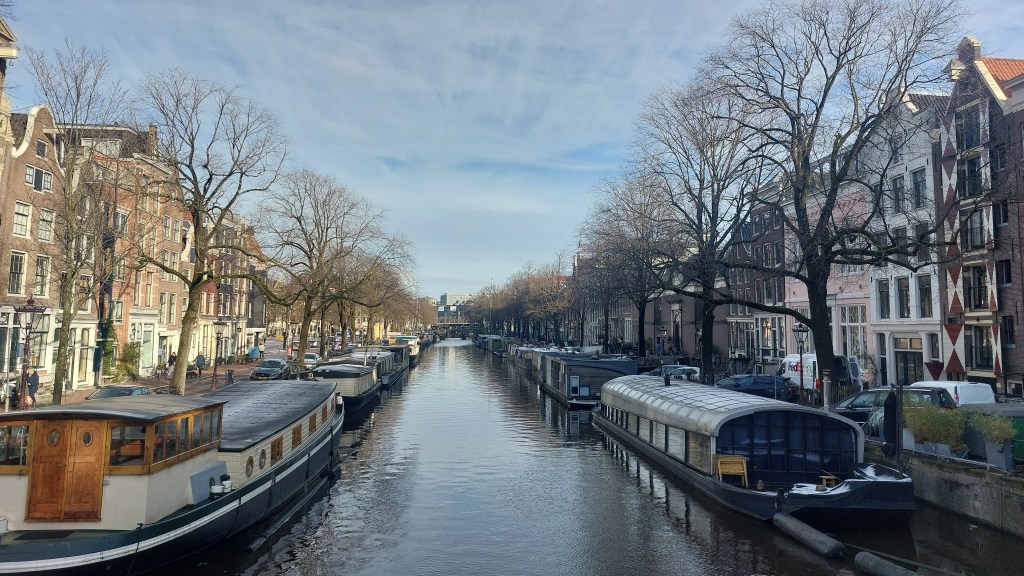
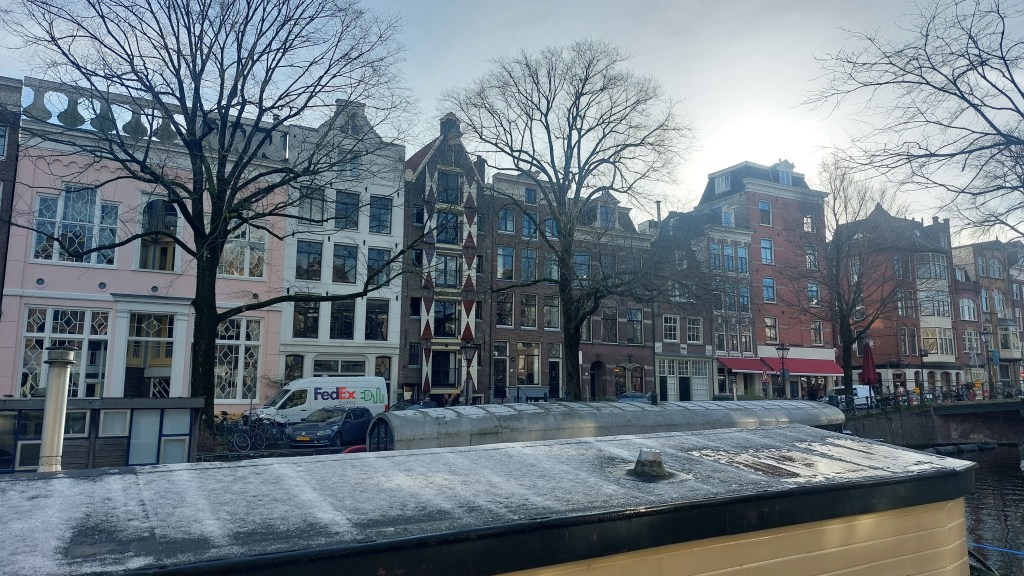
I should note here that this is by no way my first trip to Amsterdam (particularly because Susan lives here) so I actually did not feel the need to join a walking tour, go to the Anne Frank Museum, visit the Red Light district or other typical tourist behaviour here. However, we had looked into a few things and made a plan. Today (Tuesday), we had decided, after a leisurely morning, to have a walk around Jordaan and 9 streets (De Negen Straatjes). Until the end of the 16th century, Amsterdam encompassed a much smaller area and then began to expand in stages. In 1612, the third expansion of the city created these areas. However, the majority of the buildings date from the 18th century, and there are more than 140 national monuments. In 1996, the Association of The 9 Streets was founded to promote the area by growing businesses and attracting tourists. These neighbourhoods are incredibly pretty and now stuffed with tiny shops and restaurants, as well as plenty of tourists, so mission successful! A small selection of photos:
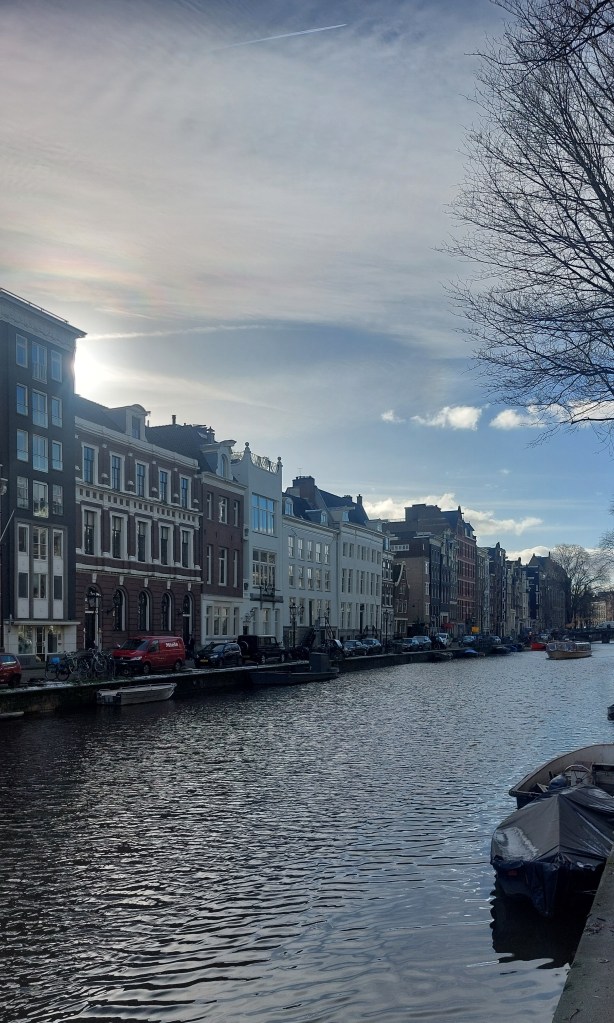
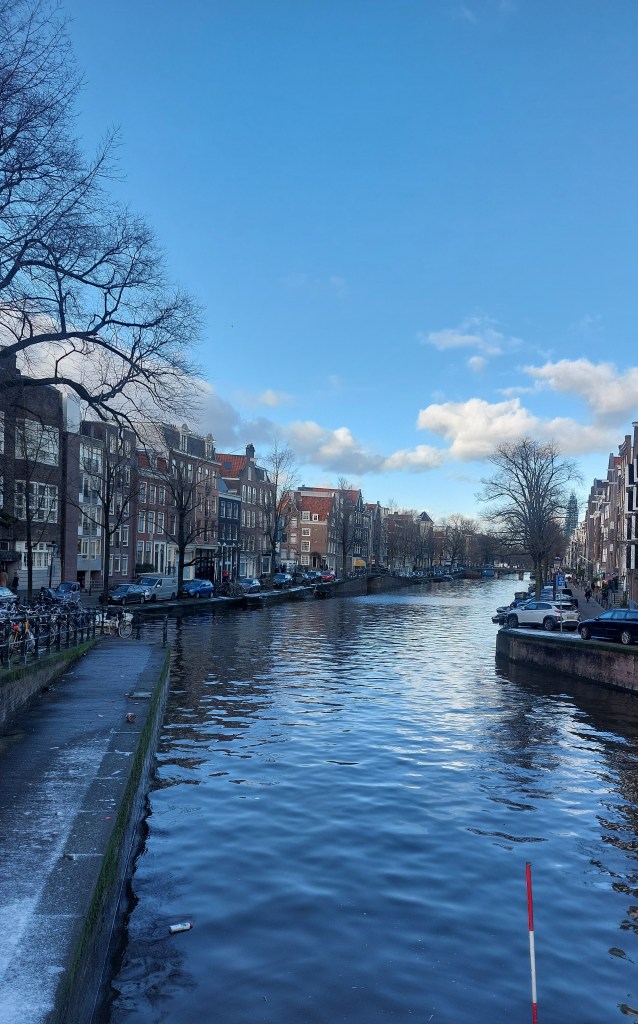

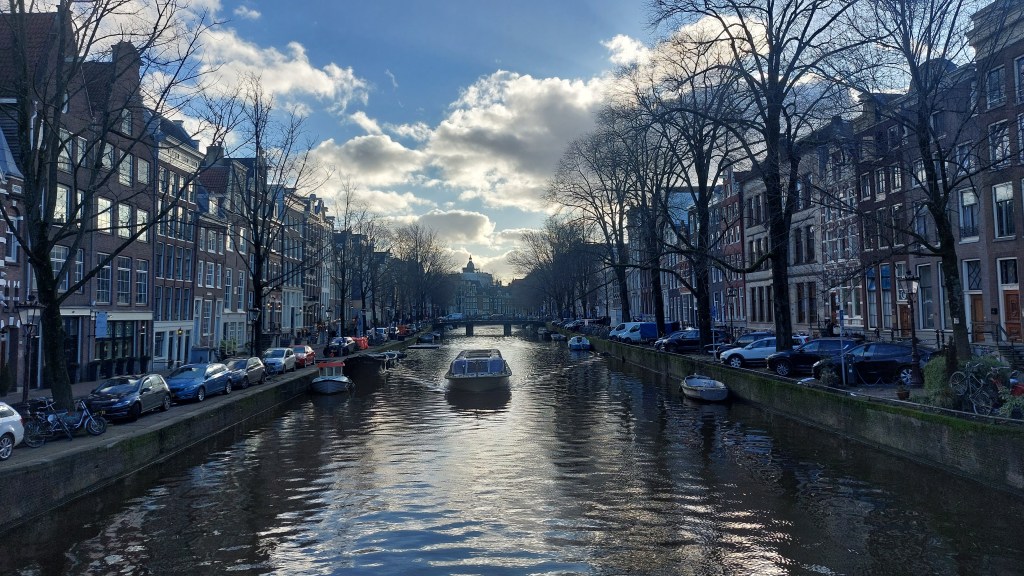
After covering a substantial distance, mocking some of the young people queuing up for heavily Instagramed fries (standard potatoes imho) and we ended up in a local establishment for a drink and dinner. A most successful day.
On Wednesday, we headed off on a day trip to Delft. Delft was founded around 1075 as it was a slightly elevated place (its the Netherlands, so take elevated as to mean not very) where the canal crossed the creek wall of the silted river Gantel. Due to this location, it became an important market town. In 1389, Delft was granted a city charter, and trade flourished, becoming one of the major cities in Holland. The city’s association with the House of Orange began in 1572 when William of Orange moved to Delft and became the leader of the successful Dutch resistance against the Spanish occupation. After the Act of Abjuration in 1581, Delft thus became the de facto capital of the newly independent Netherlands and the seat of the Prince of Orange. When William was assassinated in 1584, he was buried in Delft’s Nieuwe Kerk (New Church), which started a tradition (which has continued today) for the House of Orange. In the 17th century, Delft experienced another resurgence thanks to the presence of an office of an office of the Dutch East India Company and the manufacturer of Delft Blue china (more on thid below). The Delft Explosion of 12 October 1654 destroyed much of the city when a gunpowder store (containing 30 tonnes of gunpowder) exploaded, and much of today’s city is dated from shortly after this incident.
We started (after a pitstop for a most excellent hot chocolate, it being very cold – the Netherlands is very flat and the wind seems to whip across!) in Markt Square. One side has the City Hall, and the other has the Nieuwe Kerk. The old City Hall burned down in 1618 and was rebuilt in Renaissance style around the original gothic tower, which was the only part of the building to survive the fire.
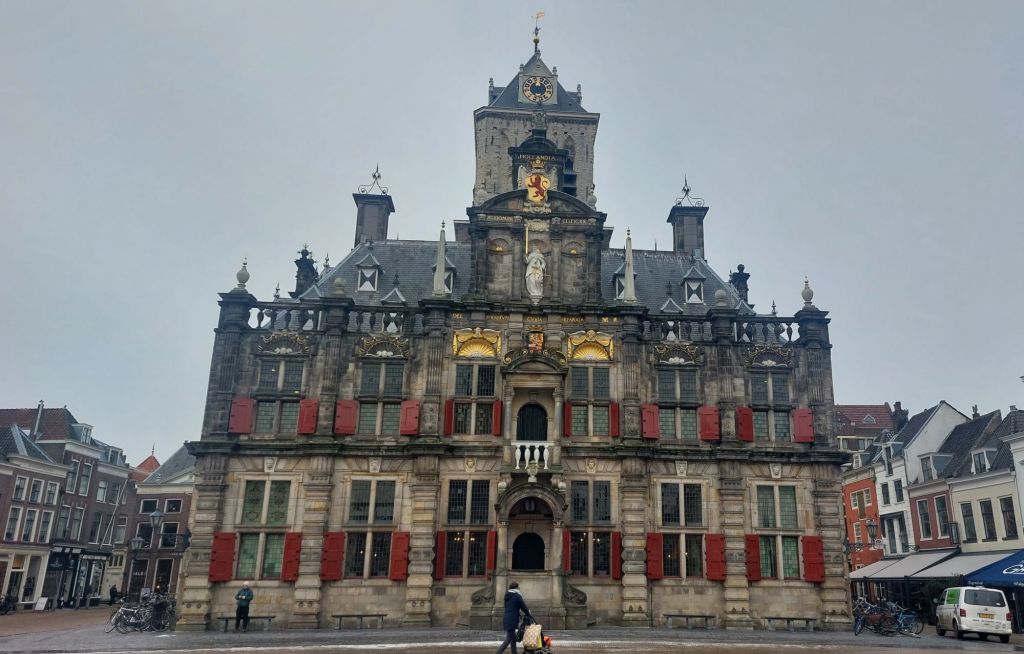
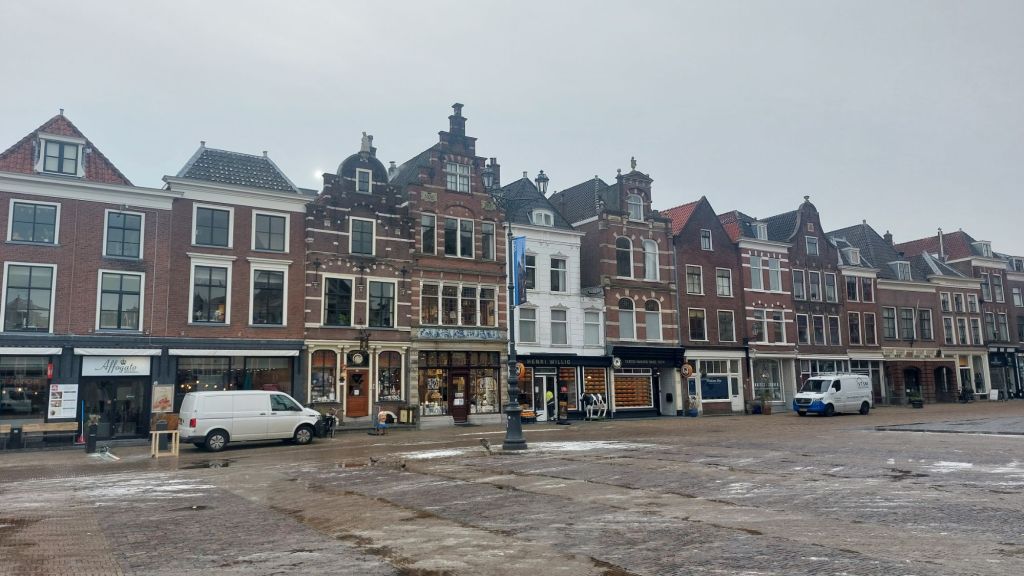
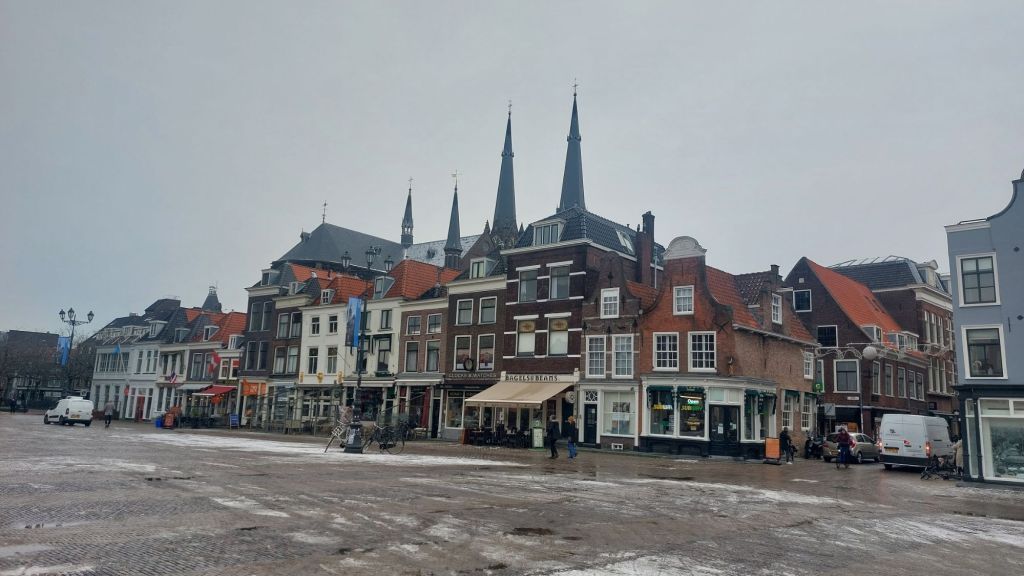
The Nieuwe Kerk was built between the 14th and 17th centuries (oh so new!) and is the final resting place of the Dutch Royal family ever since Willam of Orange was buried there in 1584.
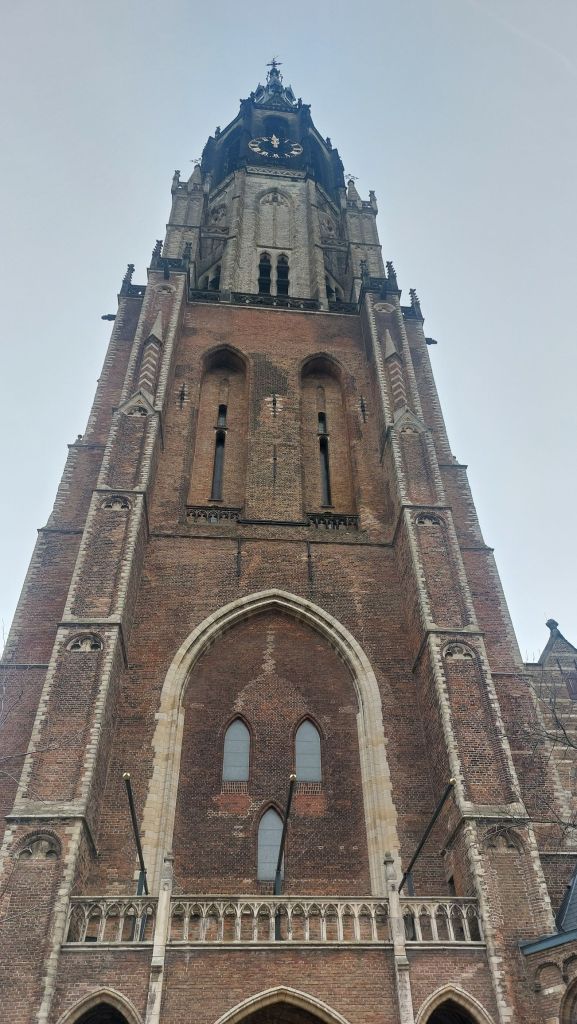

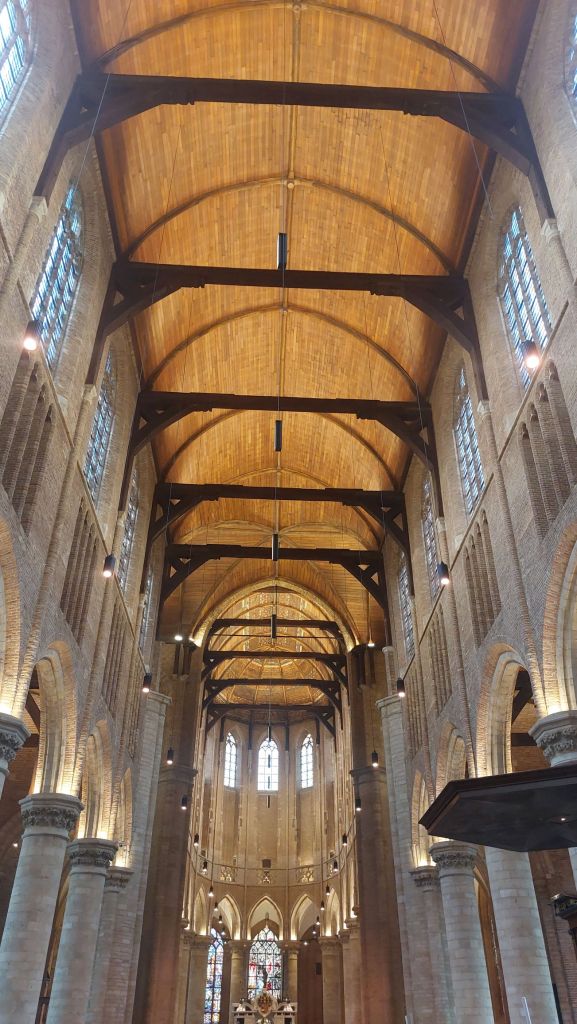
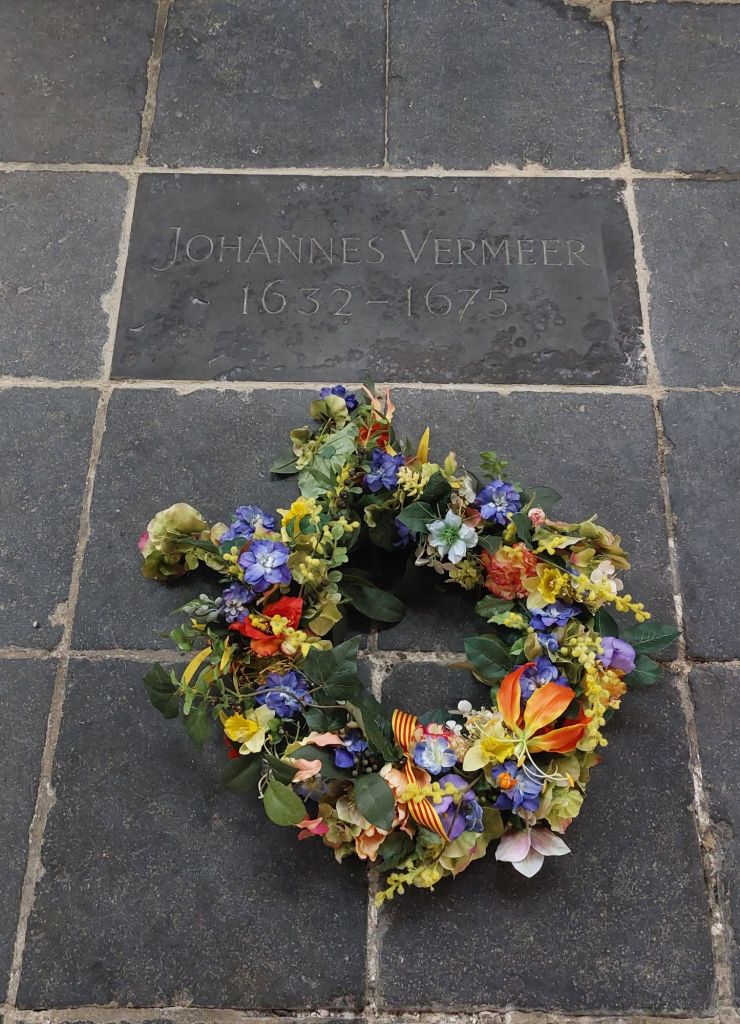
From the New Church, we then visited the Old Church. A tuff stone church was built here in 1050, measuring just 12x30m, but over time, a much larger stone church was expanded, and it is huge. It is also the resting place of 400 Dutch, including Johannes Vermeer. Johannes Vermer was born in Delft in 1632 and lived here all his life using Delft’s streets and home interiors as the subject or background in his paintings. He died in debt (leaving his family in poor circumstances) as he worked slowly (producing only 43 paintings in his lifetime) using expensive pigments and although modestly successful in his lifetime, not enough to earn a proper living from painting. It was not until the 19th century that his fame exploded – such that last year’s Vermer exhibition at the Rijksmuseum was almost impossible to get tickets to! He was buried in his Mother-in-Law’s family tomb, but in 2007, a new commemorative stone was laid.

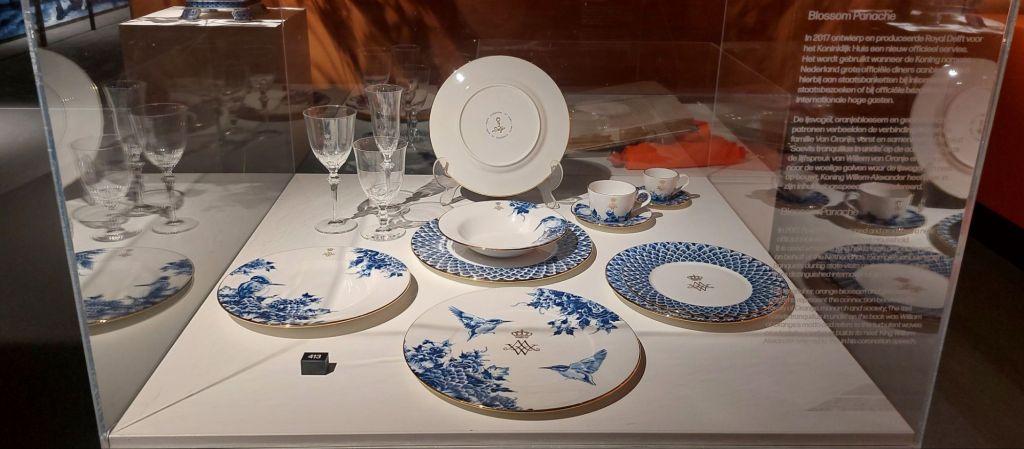
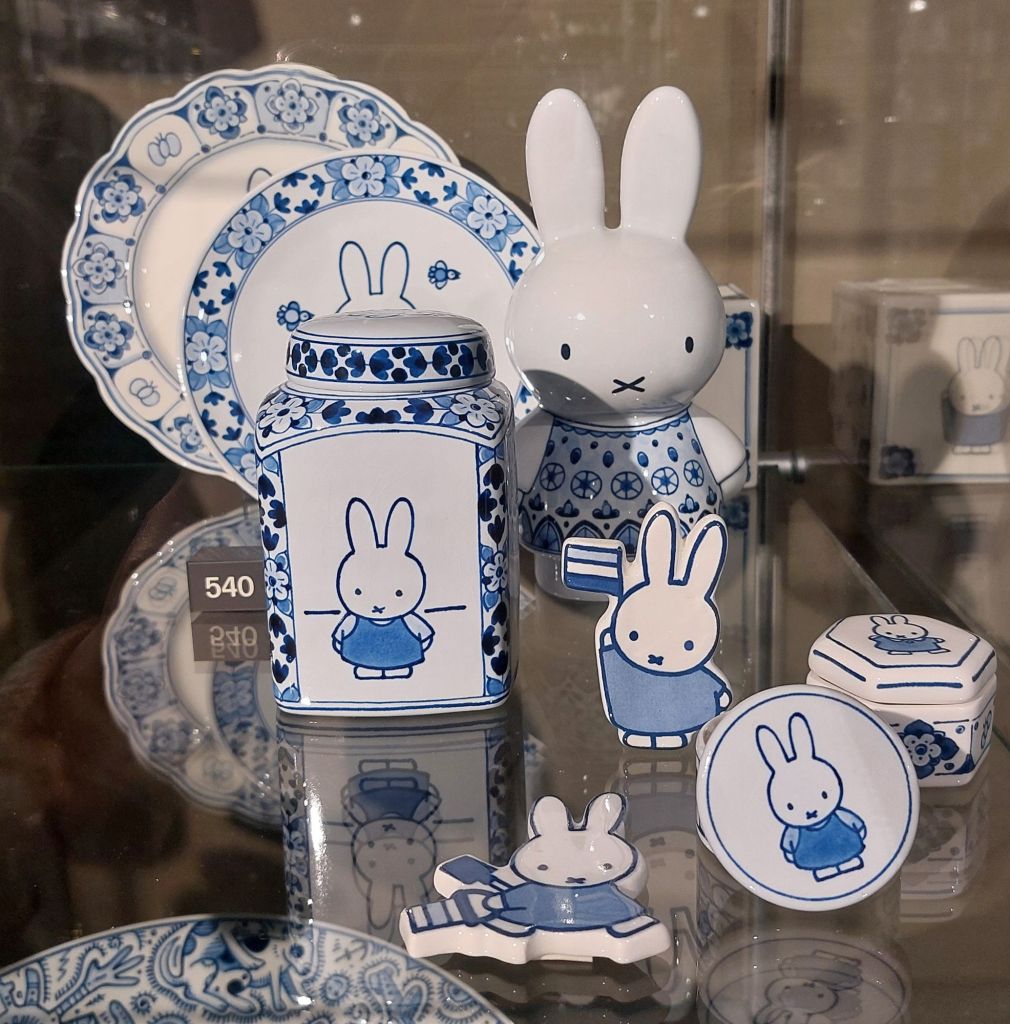
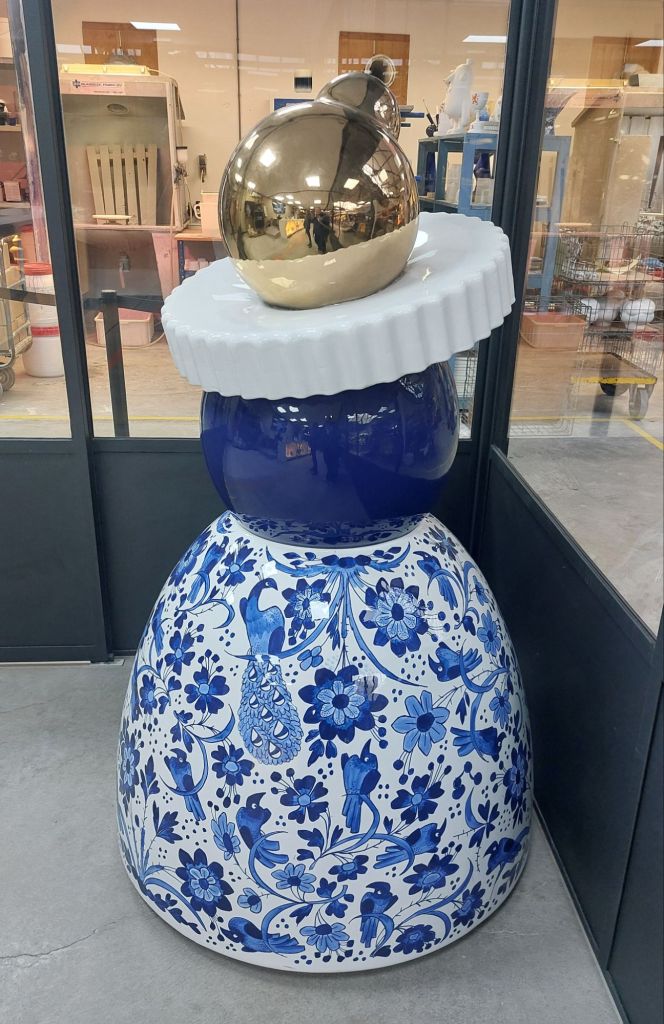
We then walked along the canal to the Royal Delft factory (and museum). The earliest tin-glazed pottery in the Netherlands was made in 1500 by an Italian immigrant to Antwerp. The manufacture of painted pottery spread from Antwerp to the Northern Netherlands, and Delft became the centre for the finest work, and from 1640, Delft potters began using personal monograms and distinctive factory marks. The gunpowder explosion of 1654 destroyed many breweries in Delft, and as the brewing industry was in decline, they became available to pottery makers looing for larger premises. From 1615 Delft potters began to use a complete white tin glaze (replacing clear ceramic glaze) which gave more depth to the fired surface and the smoothness to cobalt blues, making the pots look more like far more expensive poreclain which sold well as the supply of Chinese porcelain had been interupted. The industry declined from 1750 onwards, losing their business to British porcelain and new white earthenware. However, a few survived, including Royal Delft, which continues to produce hand painted ceramics today and is the supplier to the Dutch Royal family. After the museum we, as one does, exited through the gift shop which has many lovely things at rather high prices – I managed to leave with only a Miffy fridge magnet, and Susan and I made plans to recreate the famous tiles using a tile marker and a stencil as opposed to paying anything from €30 upwards for a single tile…

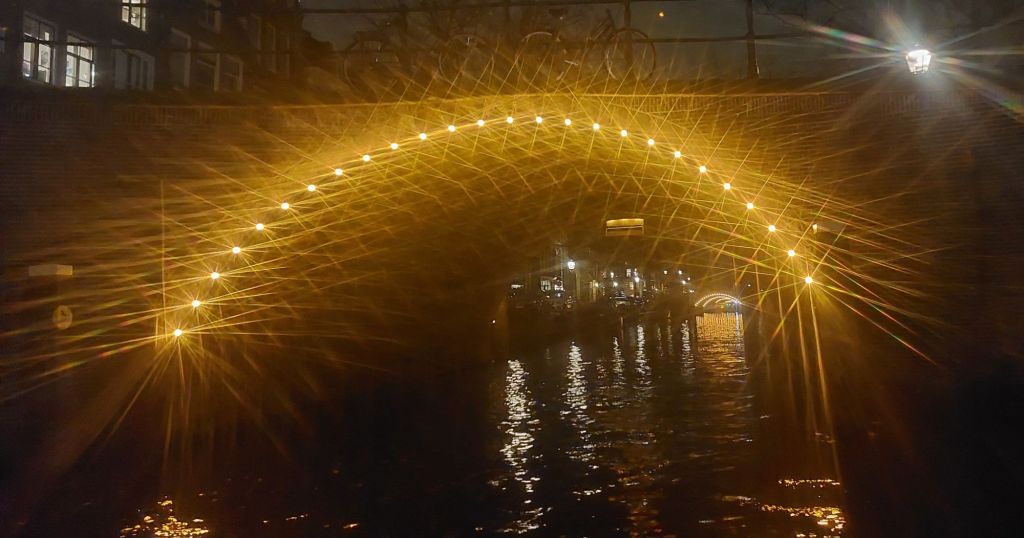
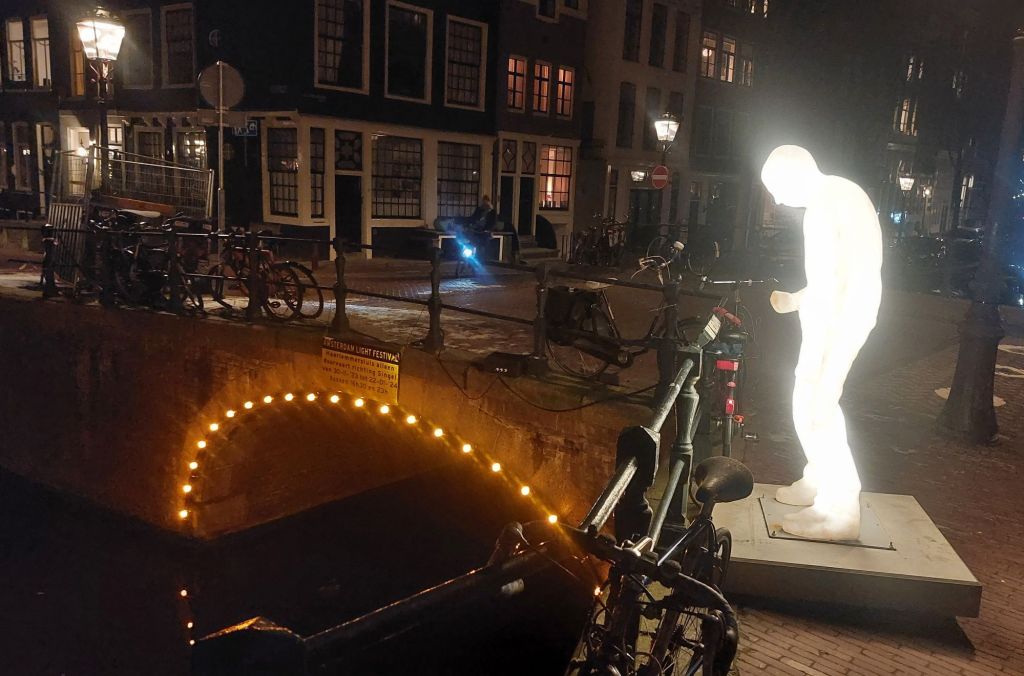
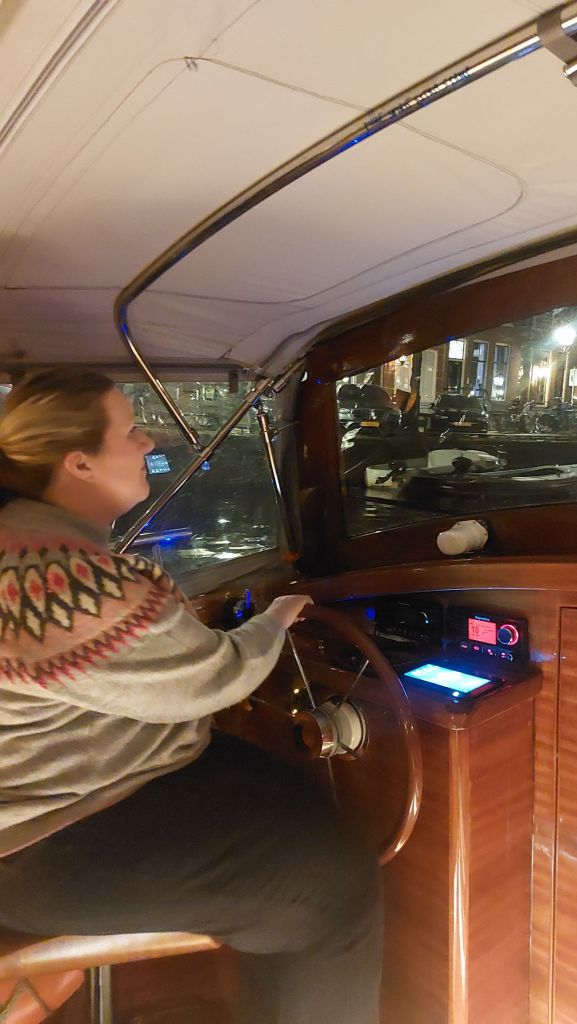
After all this successful sightseeing we went in search of sustenance and warmth (I mentioned it was very cold!), and then caught the train back to Amsterdam for our canal tour to see this year’s light installation on the theme of AI and Technology. We were somewhat sceptical regarding this theme, but actually, there were a number of though provking installation, e.g., a bench of people hunched over their phone rather than enjoying Amsterdam’s best view of the 7 bridges, an installation that become individual seats when someone sits in them to try and encourage social interaction. We were also crusing on an incredibly fancy electric boat, including a range of snacks and beverages. I may have enjoyed a couple of glasses of bubbly as we cruised along the canals, and even though the sealed boat meant my photos are not great, it did keep us toasty:
We decided to have another drink after such a delightful boat ride. This may have ended in several cocktails, a slight moment of lost-ness attempting to walk home and then some deep, deep sleep… What a great day!

 Travels with Kathryn
Leave a comment