
I am actually writing this in Jiayuguan, having done my first overnight train of the trip, but more on that later…
Yesterday, it was another beautiful morning as we left Xiahe, so we stopped to climb a BIG hill (I nearly died) to get a view over Labrang Monestary. This gives you some insight into how big it actually is:

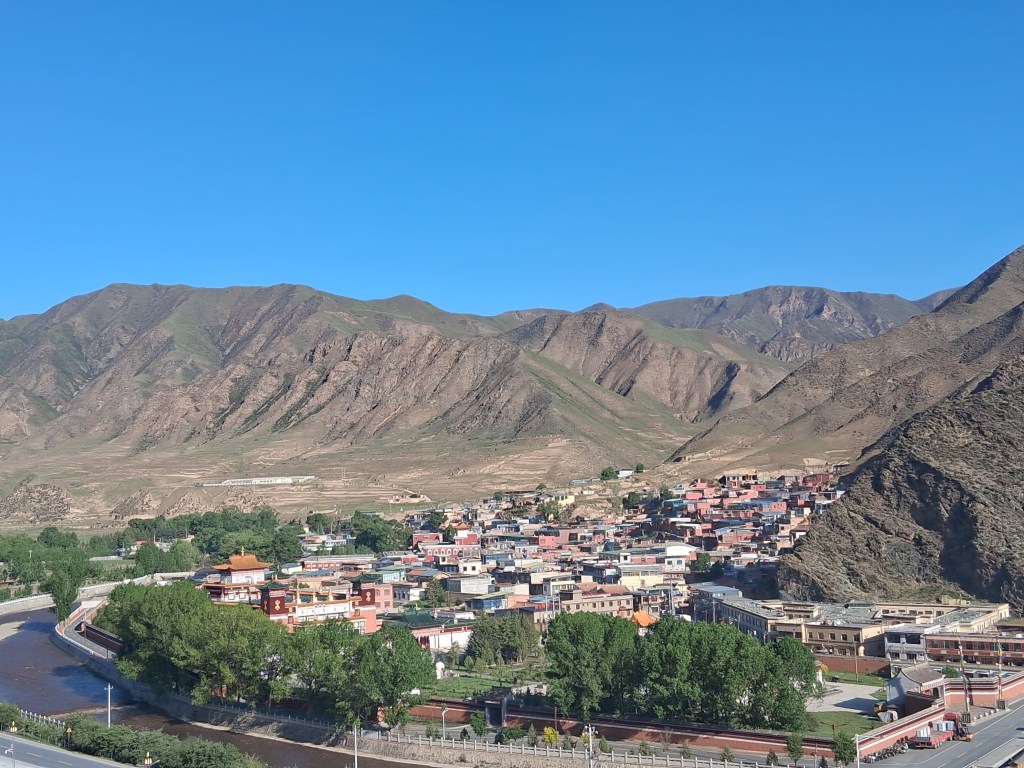
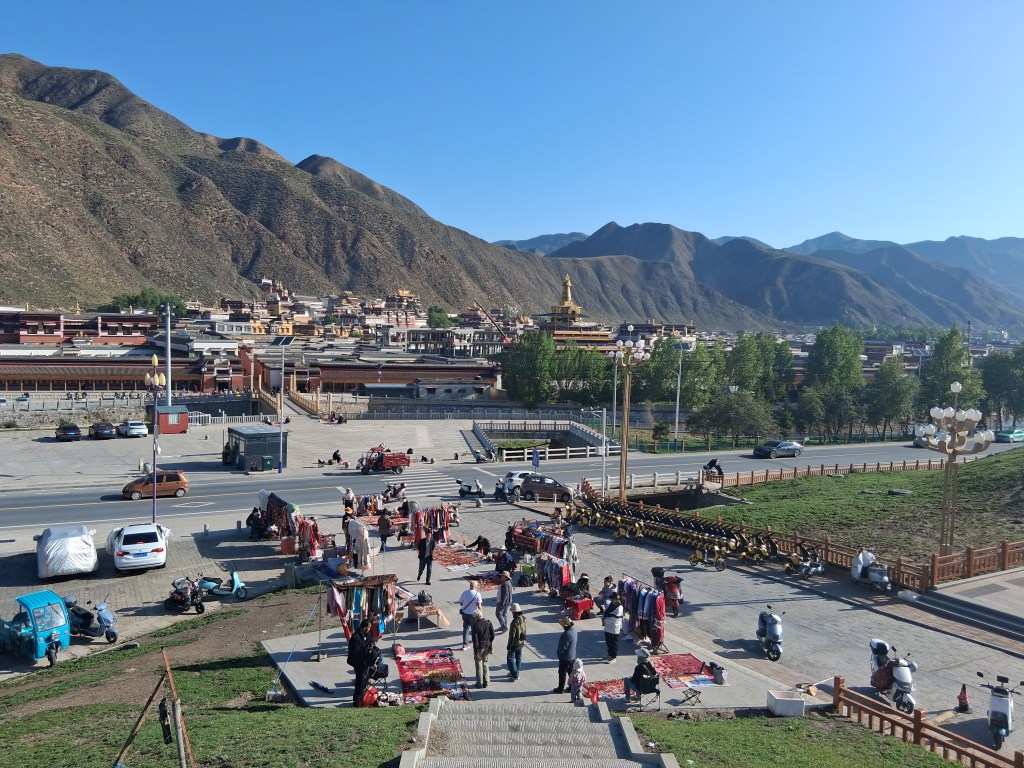
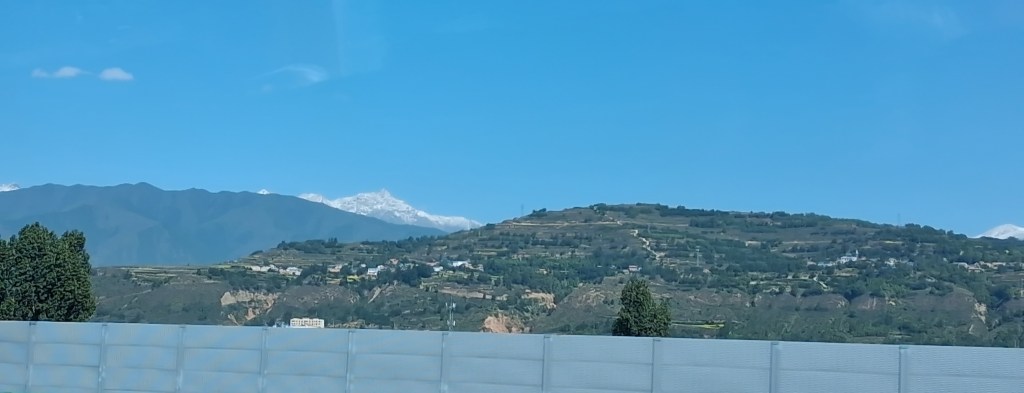
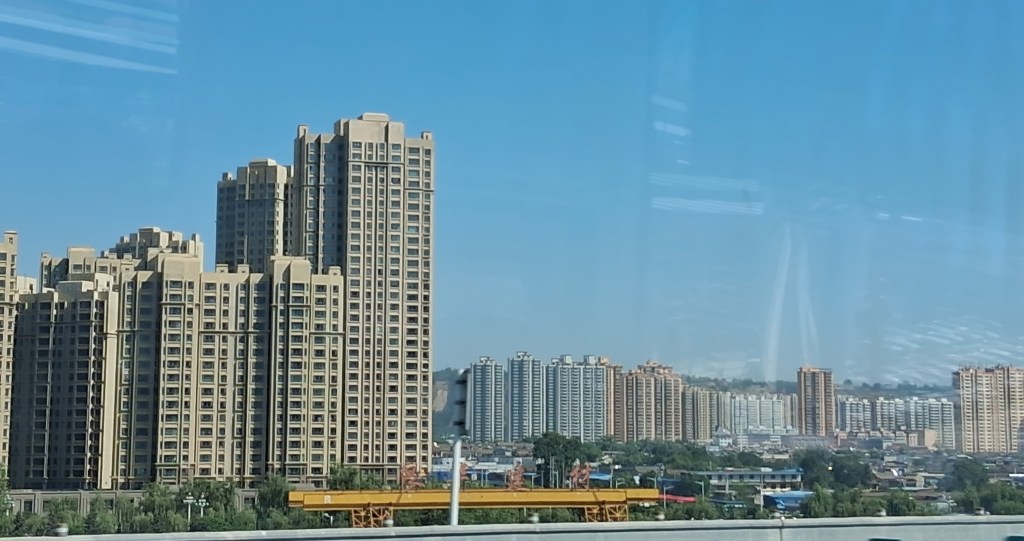
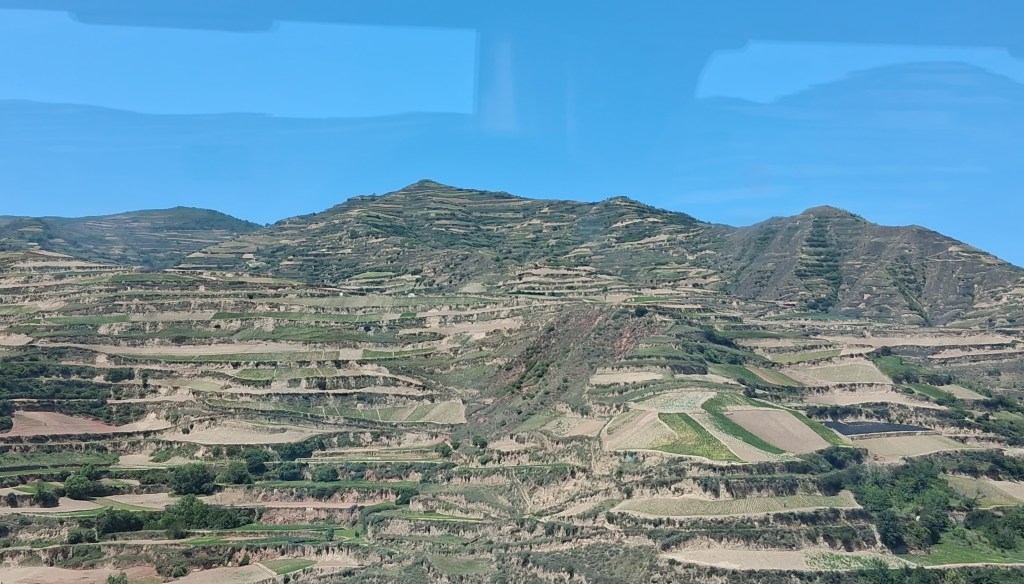
It was then a long 3.5 hour drive back to Lanzhou. One of the things I really do love about China is the changing landscapes from mountains to fields to what seem like huge cities of tower blocks springing up in the middle of nowhere. We were also serenaded by out local guide Lu – and I confess he said he wanted to sing I did have horreurs of Chinese opera or tuneless karaoke, but he’s a natural tenor with a love of mongolian folk songs. Most impressive. We also had a few quiz questions, which I will add to the bottom of this post.

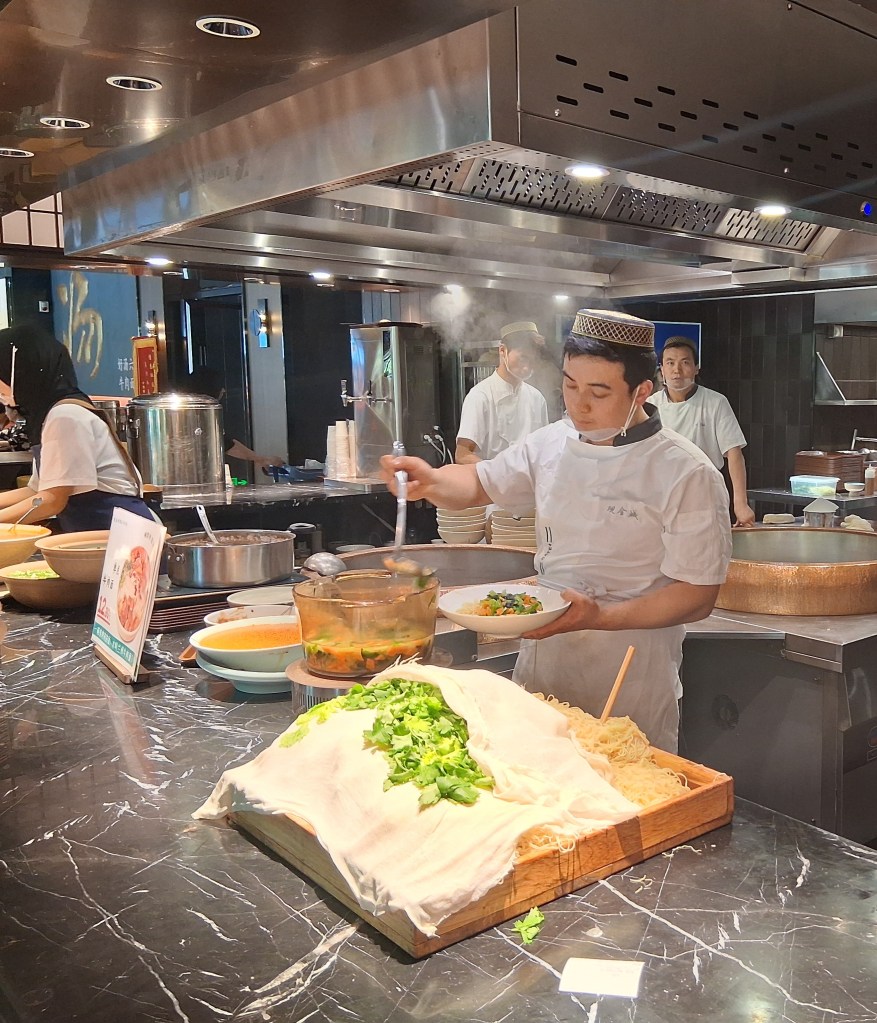
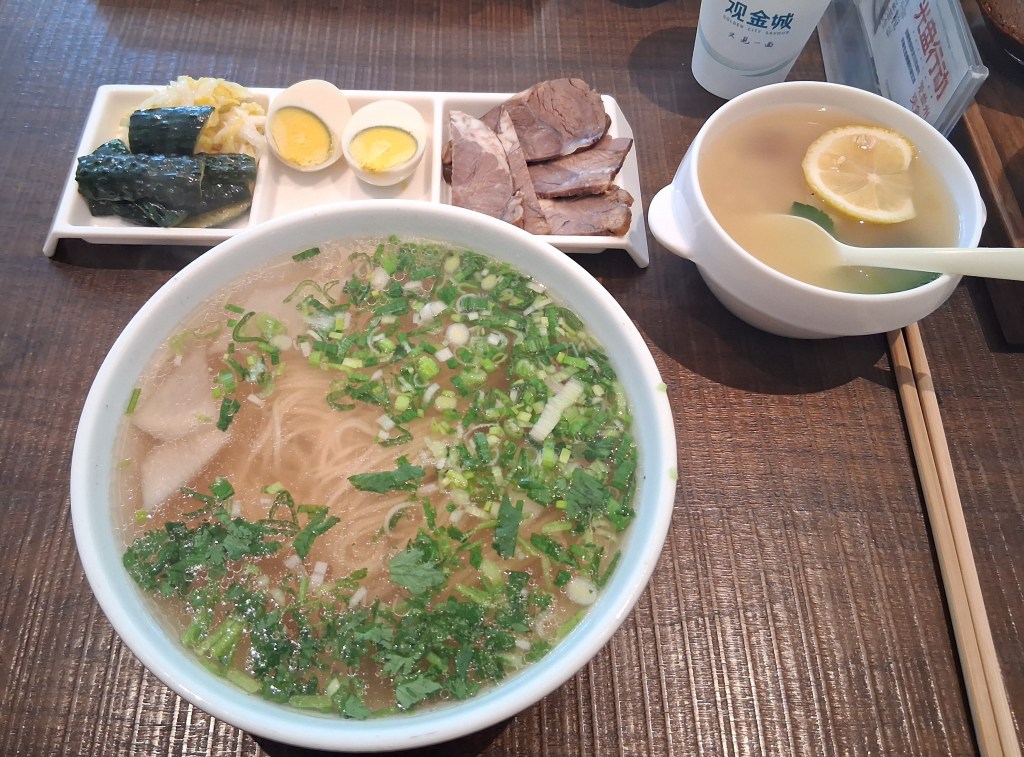
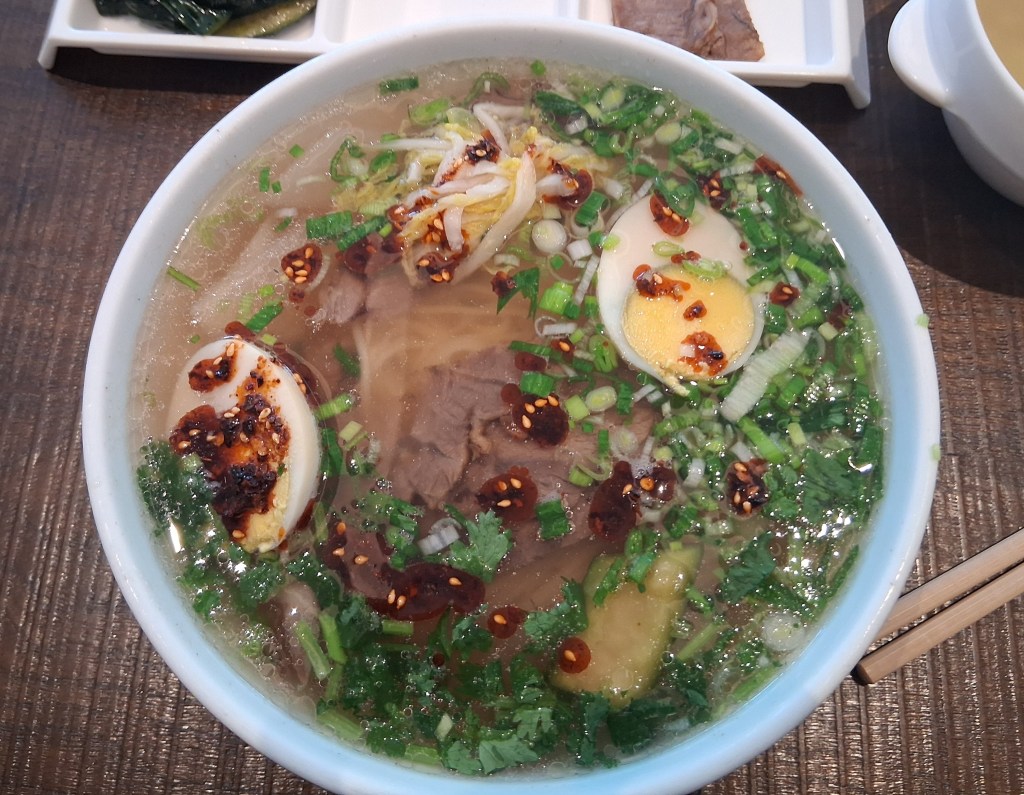
On arrival to Lanzhou, which has been improved grately by some sunshine even if it is swealtering(!), we stopped for lunch of Lanzhou beef noodles. These are generally eaten for breakfast, but we managed an early lunch. They are a beef broth with noodles and lots of fun stuff to add in (including copious amounts of flavourful rather than spicy chilli sauce) much like Vietnamese pho. We also had a little starter of fermented oats and fruit (also pictured):
Our “activity” of today was a trip to the Gansu Provincial Museum which has a fantastic collection of Silk Road artefacts (as promised), a Han Dynasty bronze horse and the earliest painted pottery in the world.
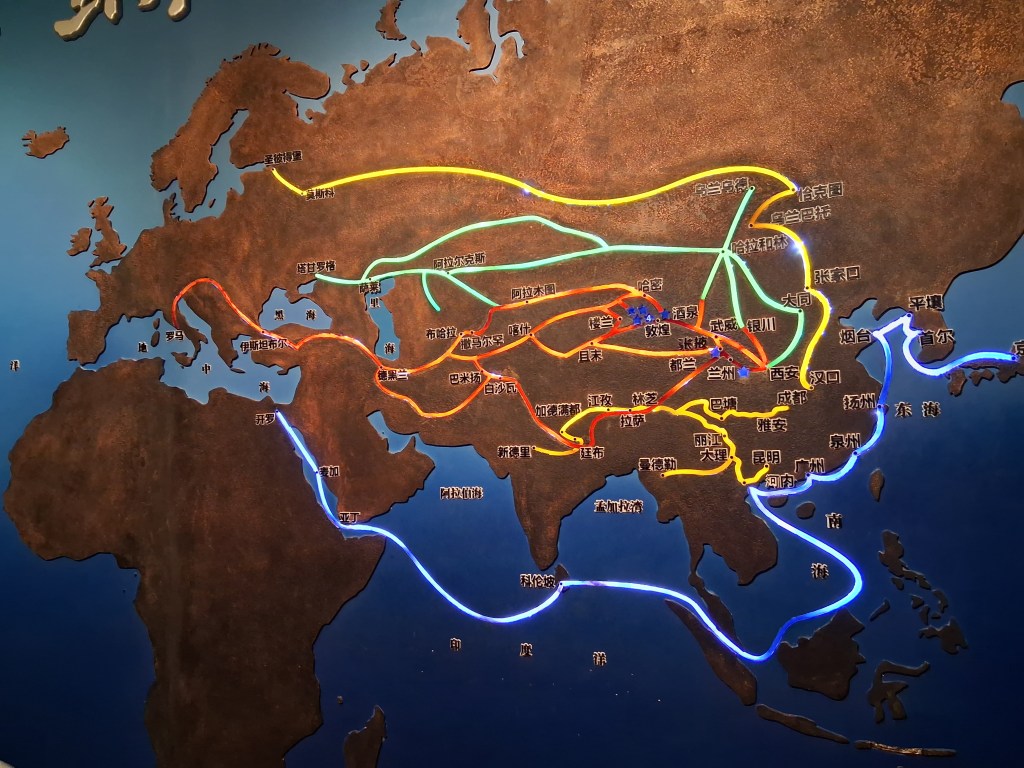
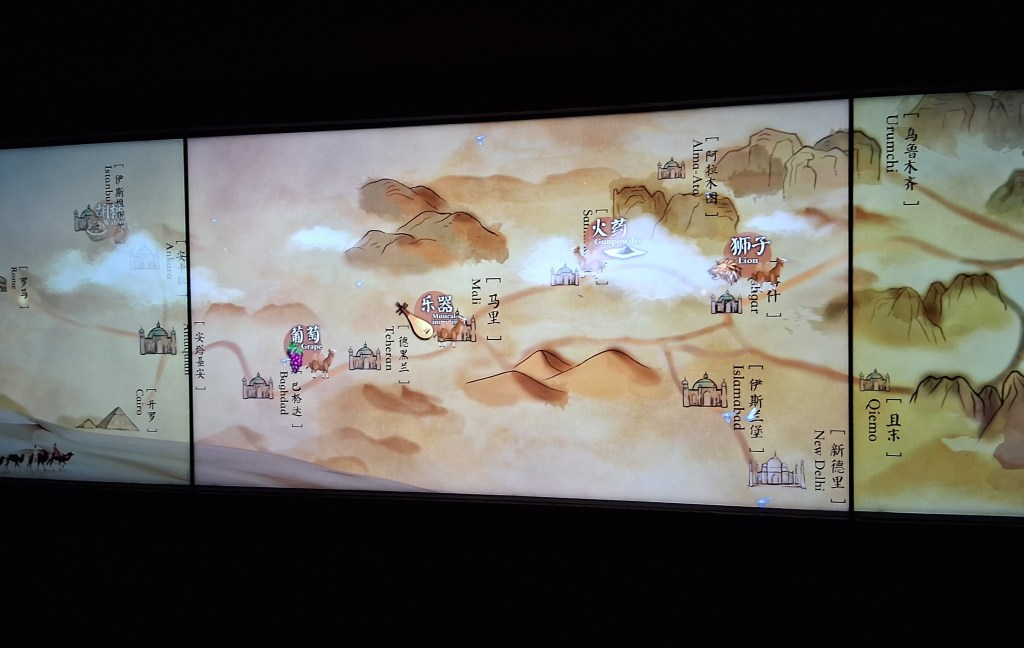
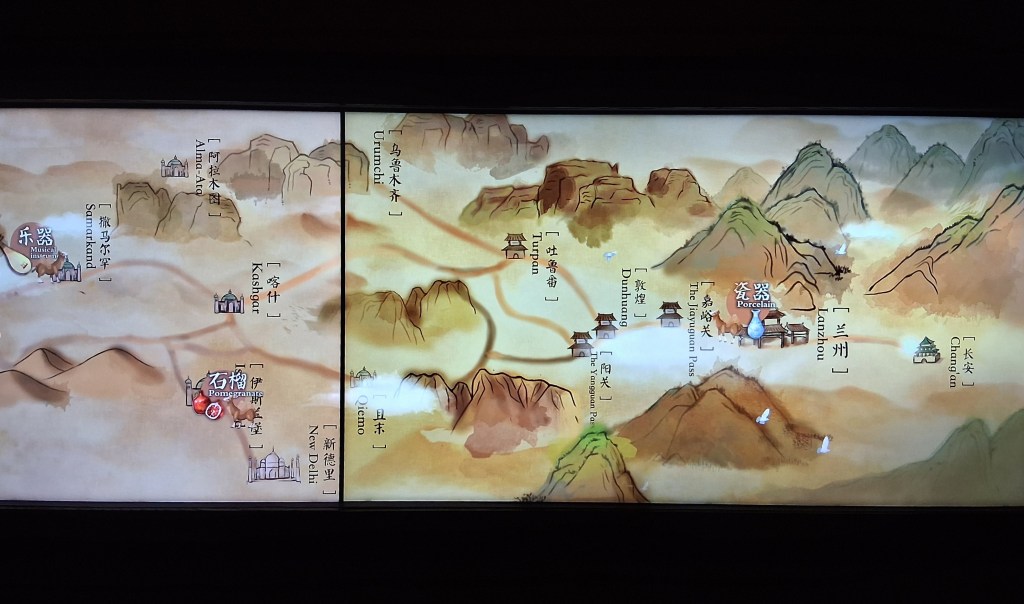
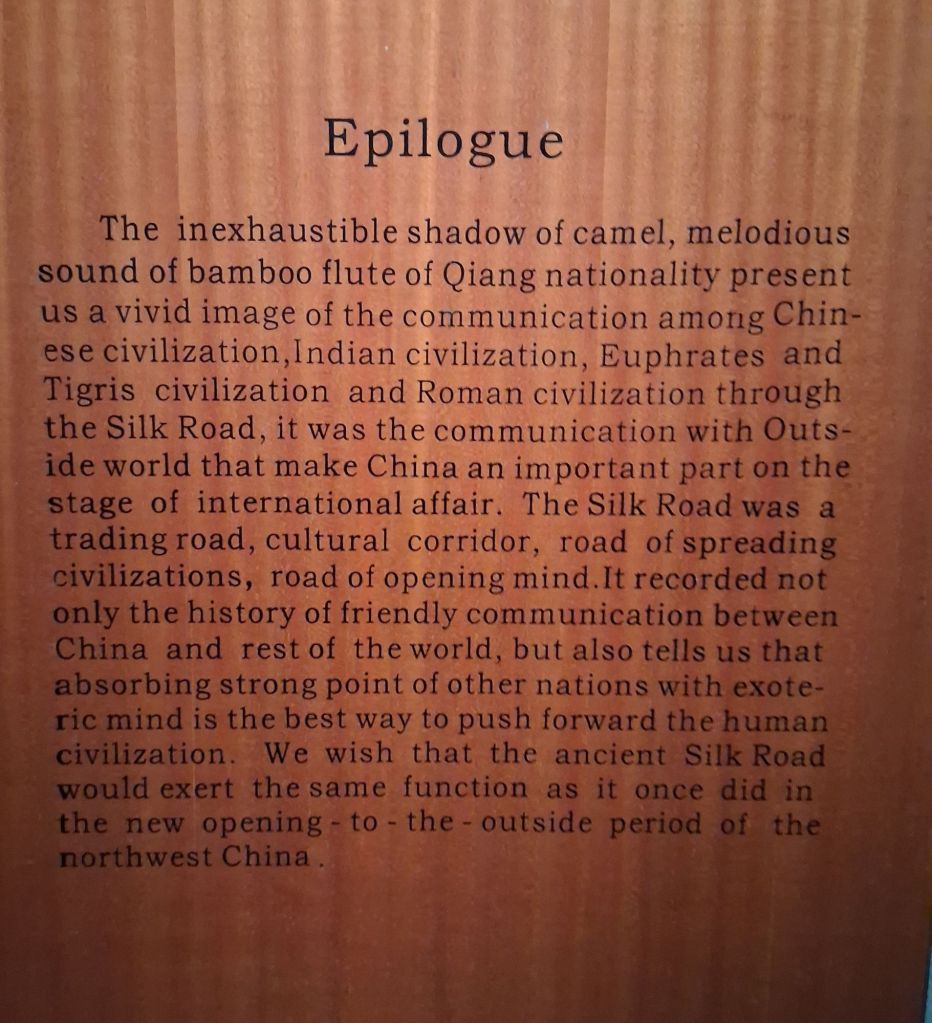
The reason the “provincial” museum includes such a large collection of Silk Road artefacts is because Gansu province has 7km of silk road. This is the Hexi corridor, and as the sensible gap between the Qilian Shan mountains to the south and the Longshou mountains to the north, it was the nomadic trading route long before the Silk Road. The various routes which we now consider to be the Silk Road (and you know it wasn’t one route from my previous post and reminder) started to take shape in the 2nd century AD following the conquest of Alexander the Great into central Asia, and China defending itself against the Xiongnu. In 138BC, Emperor Wudi of China sent an envoy named Zhang Qian to negotiate an alliance with a neighbouring power, the Yuezhi against the Xiongnu who were driving his people westwards. On his return, he brought with him stories and souvenirs he had picked up along the way, including fruit and horses. This started the flow of goods eastwards, and in return, Chinese silk was traded westwards (more pictured below). Later knowledge, religion also travelled along the Silk Road. The peak of Silk Road trade was the 6th century during the Tang dynasty, and it was at this time that Xi’an became one of the most important cities in the world. Gansu was the front door of China open to the West, the major channel, and one of the most active regions of communication between East and West.
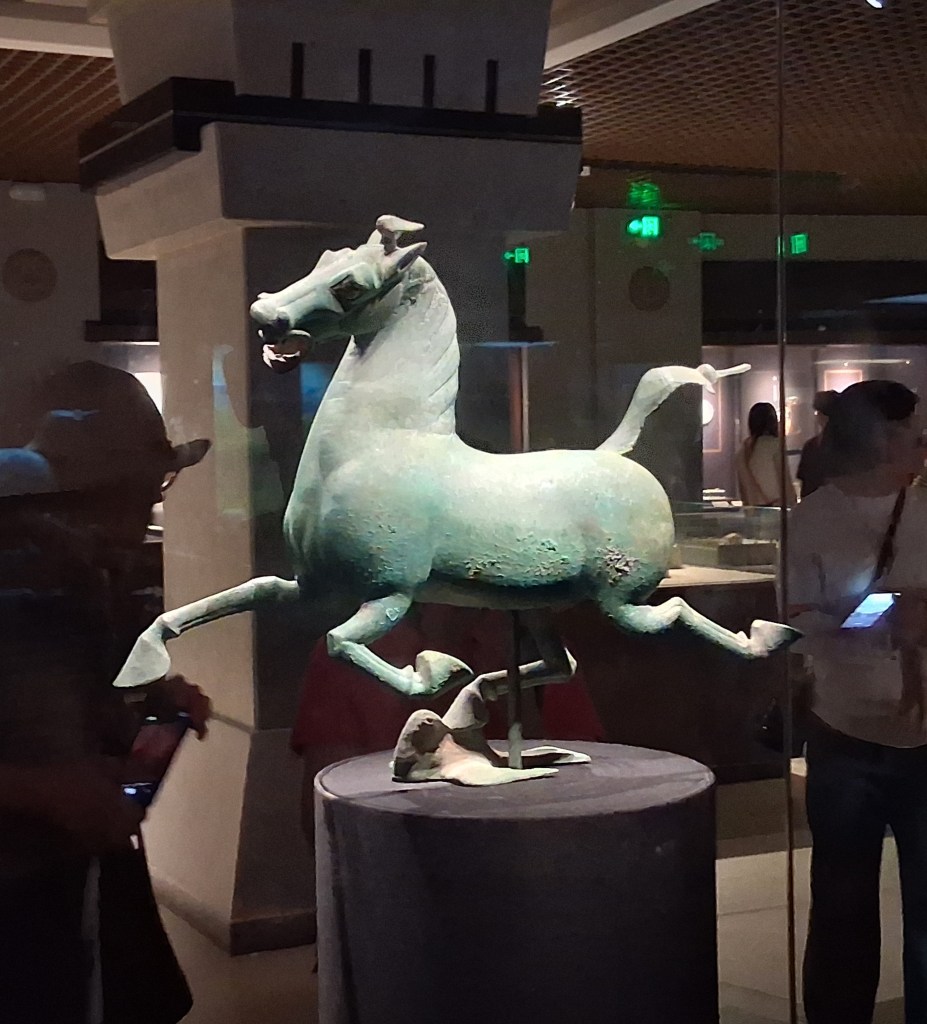
The main draw of the museum for the non-Silk Road nerd is the Bronze galloping horse, which appears to be flying on the back of a swallow. This dates back to sometime between 25BC-220A (Han Dynasty) and is considered one of the ten treasures of China (including the image used by the Tourist Board).
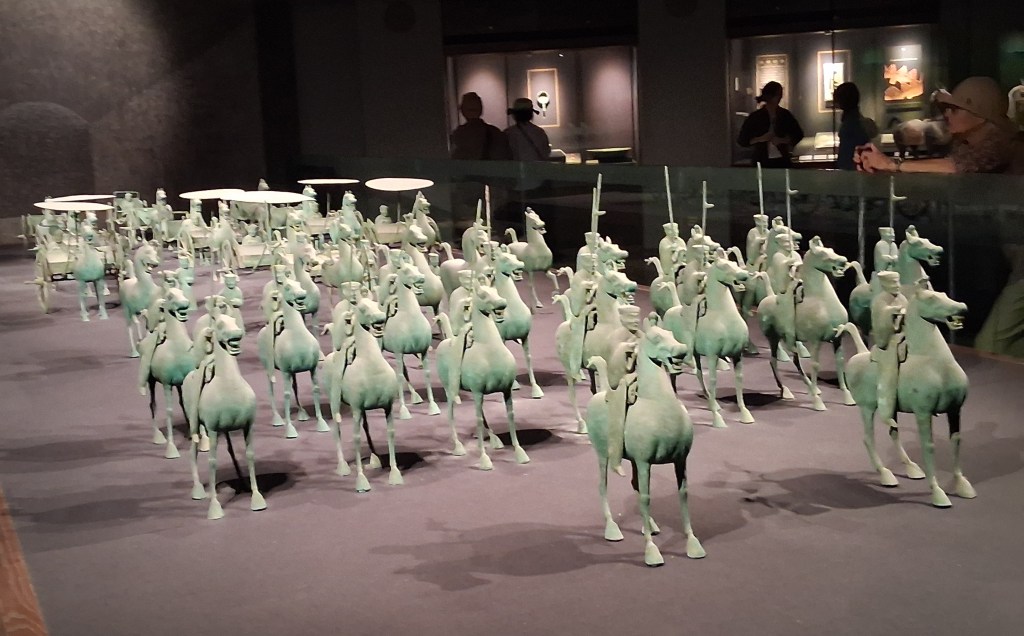
Just some of the treasures of the collection include:
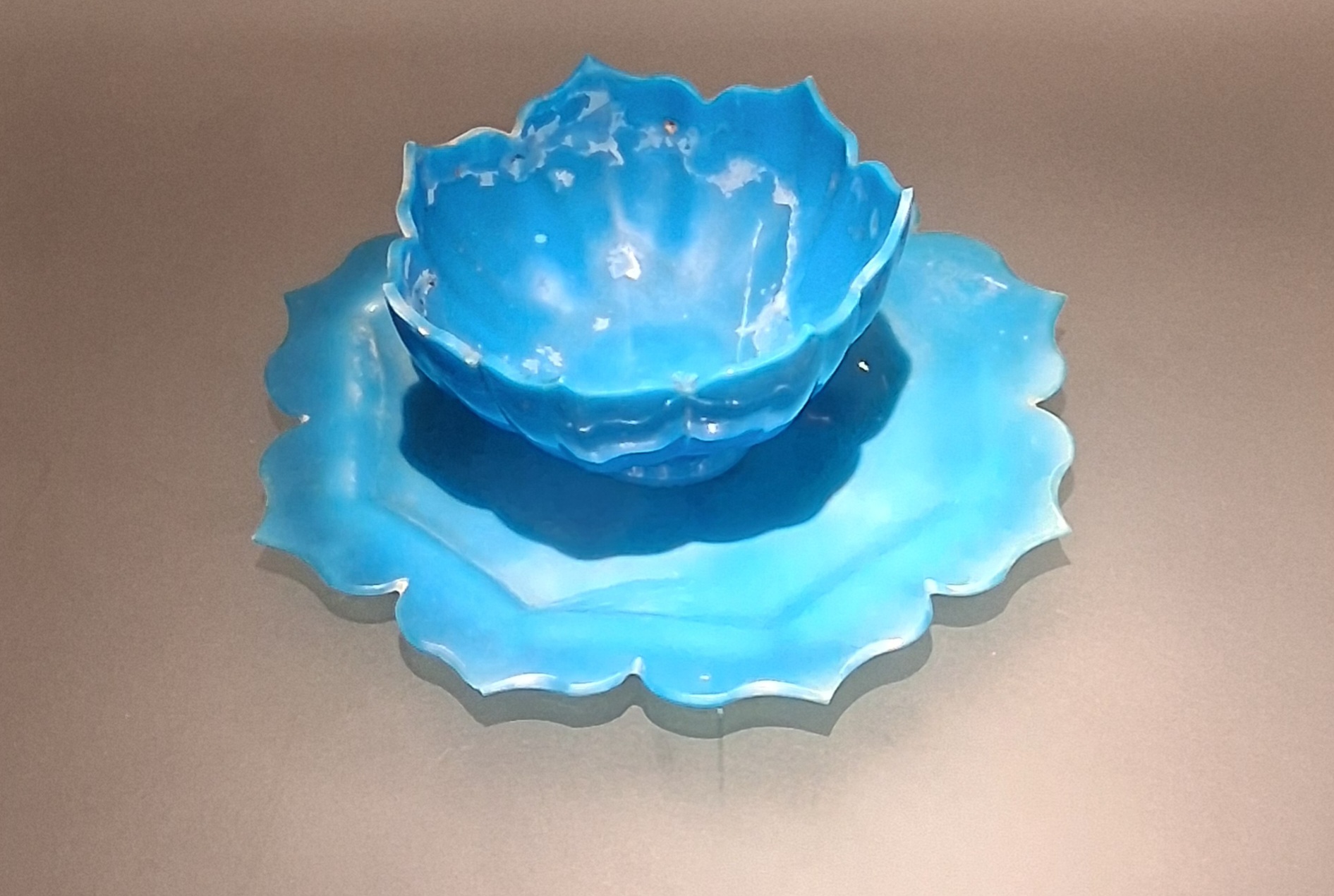

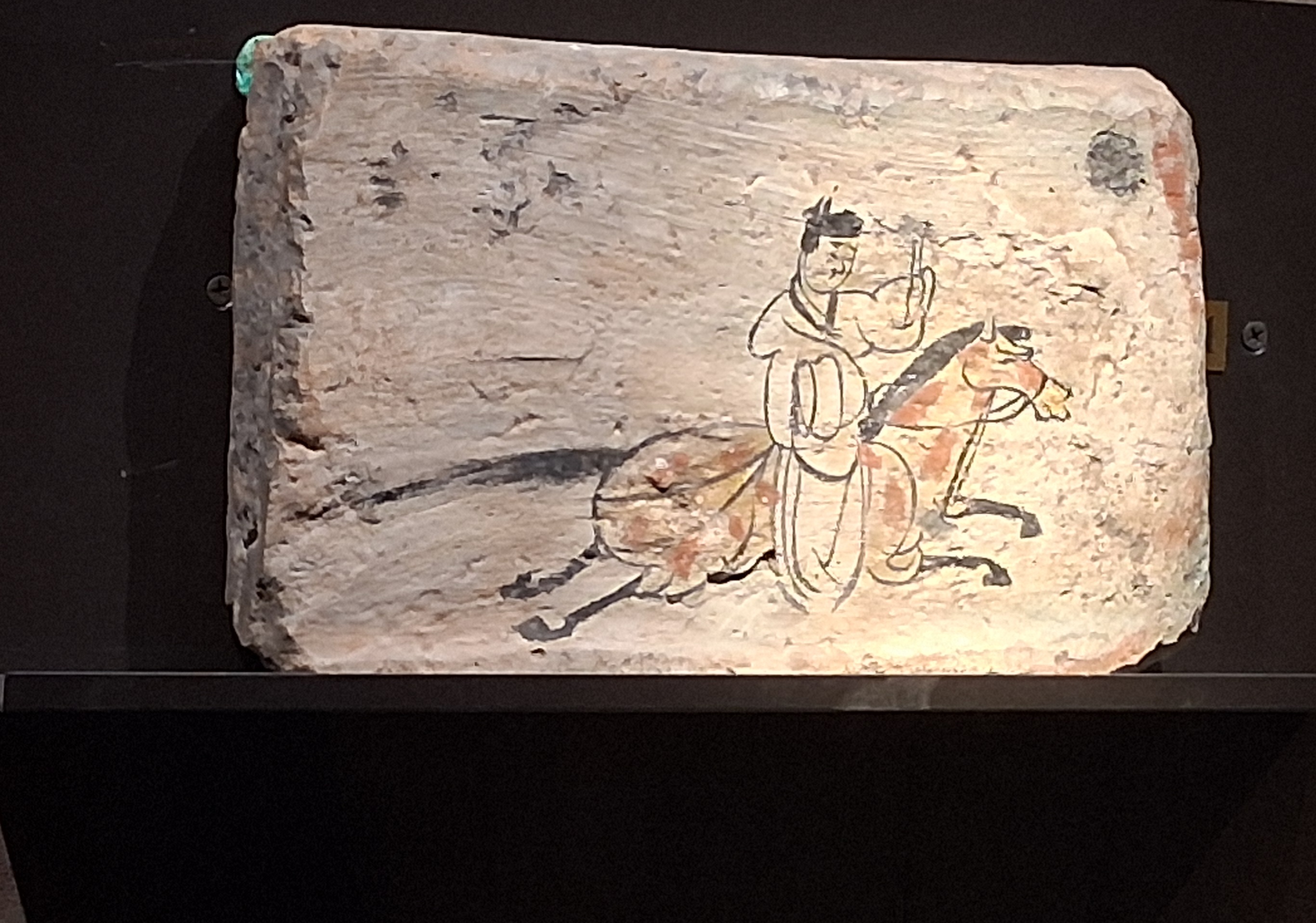

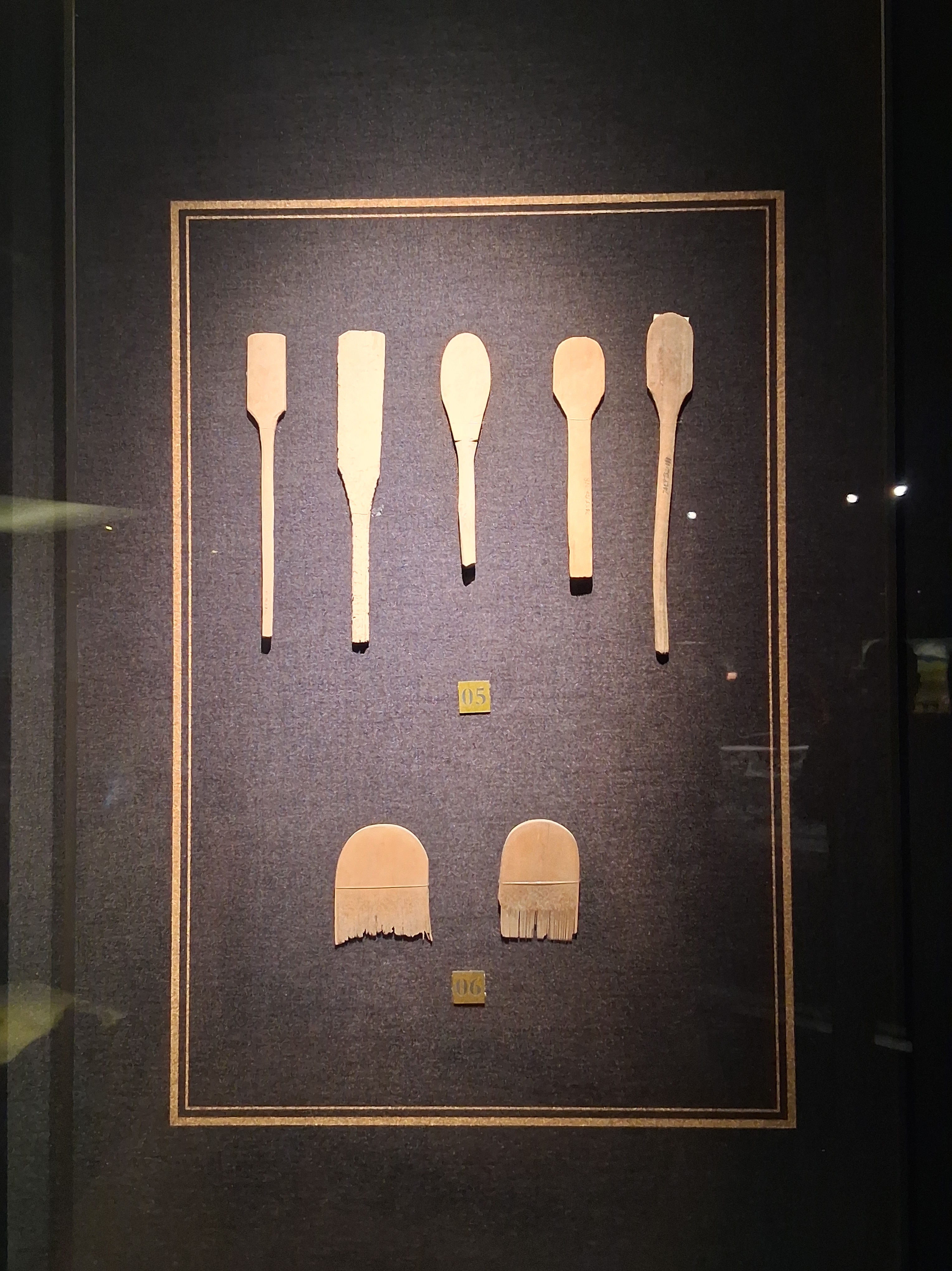
Yes, you do spy a unicorn (so they must be real!) and a Han dynasty wooden tablet representing the first known image of a postman.
The other main draw of the museum is the vast number of pots found in and around this area. Gansu pottery is the earliest source of painted pottery dating back to 8,000-7.000BC.
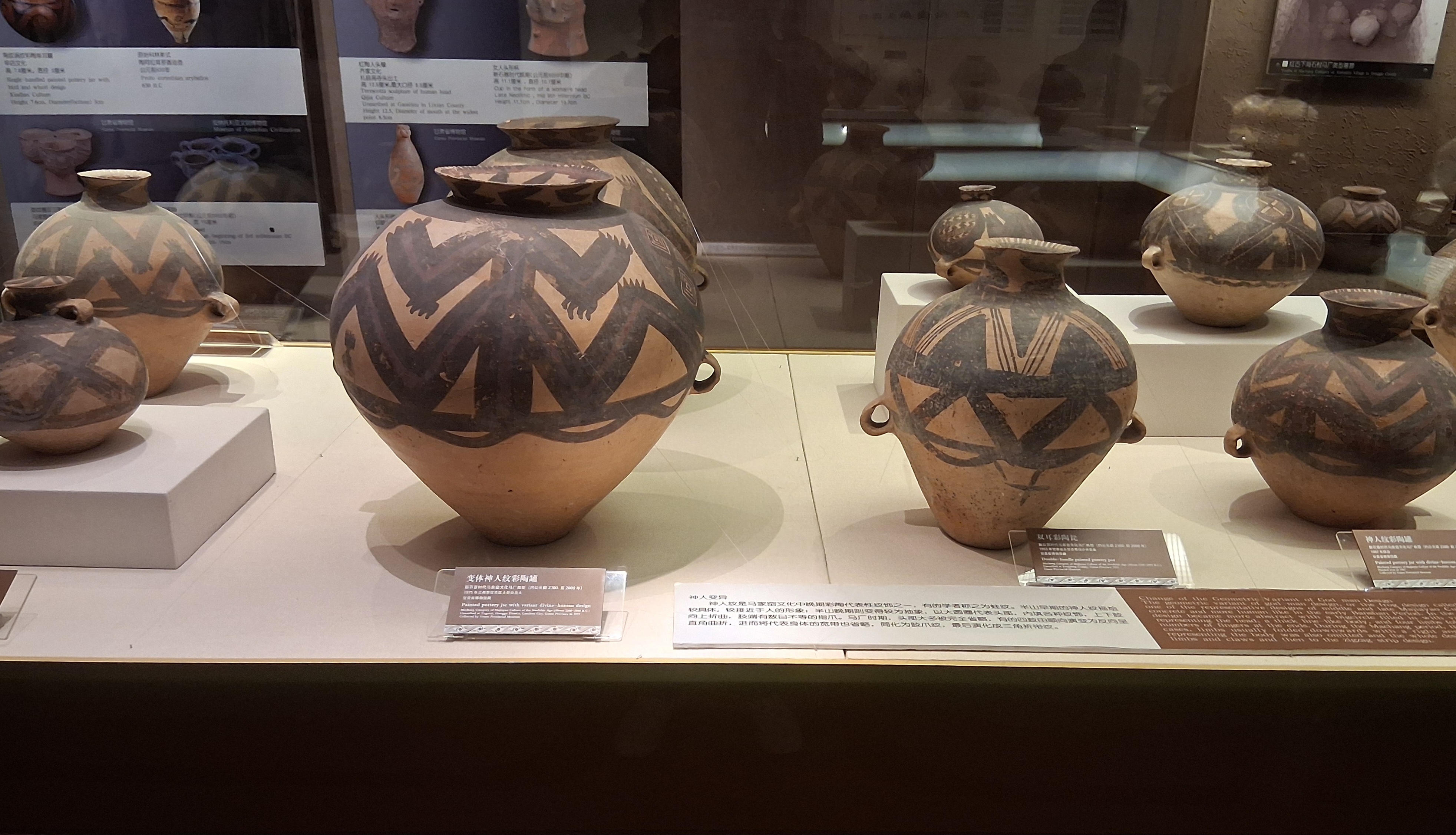
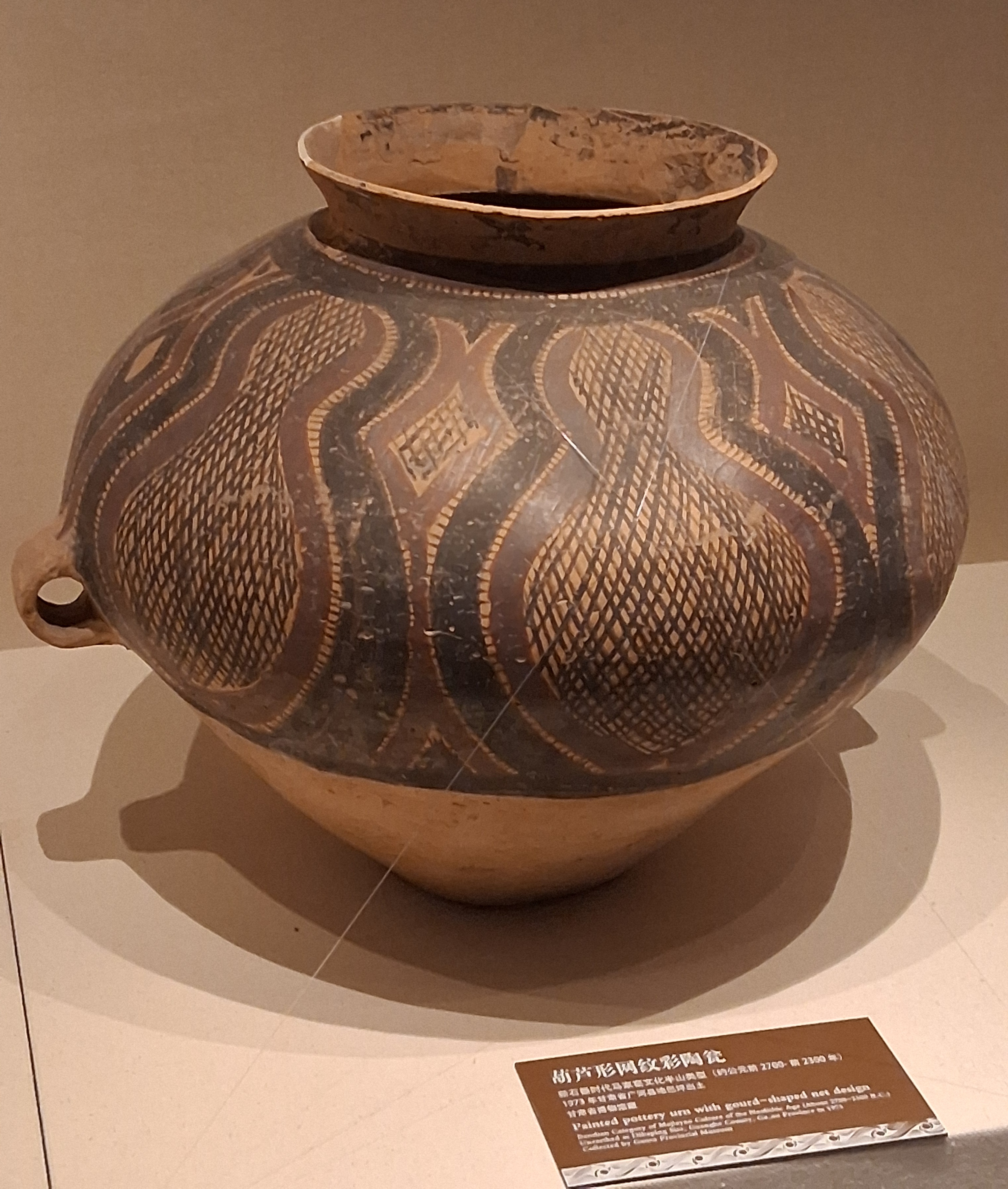

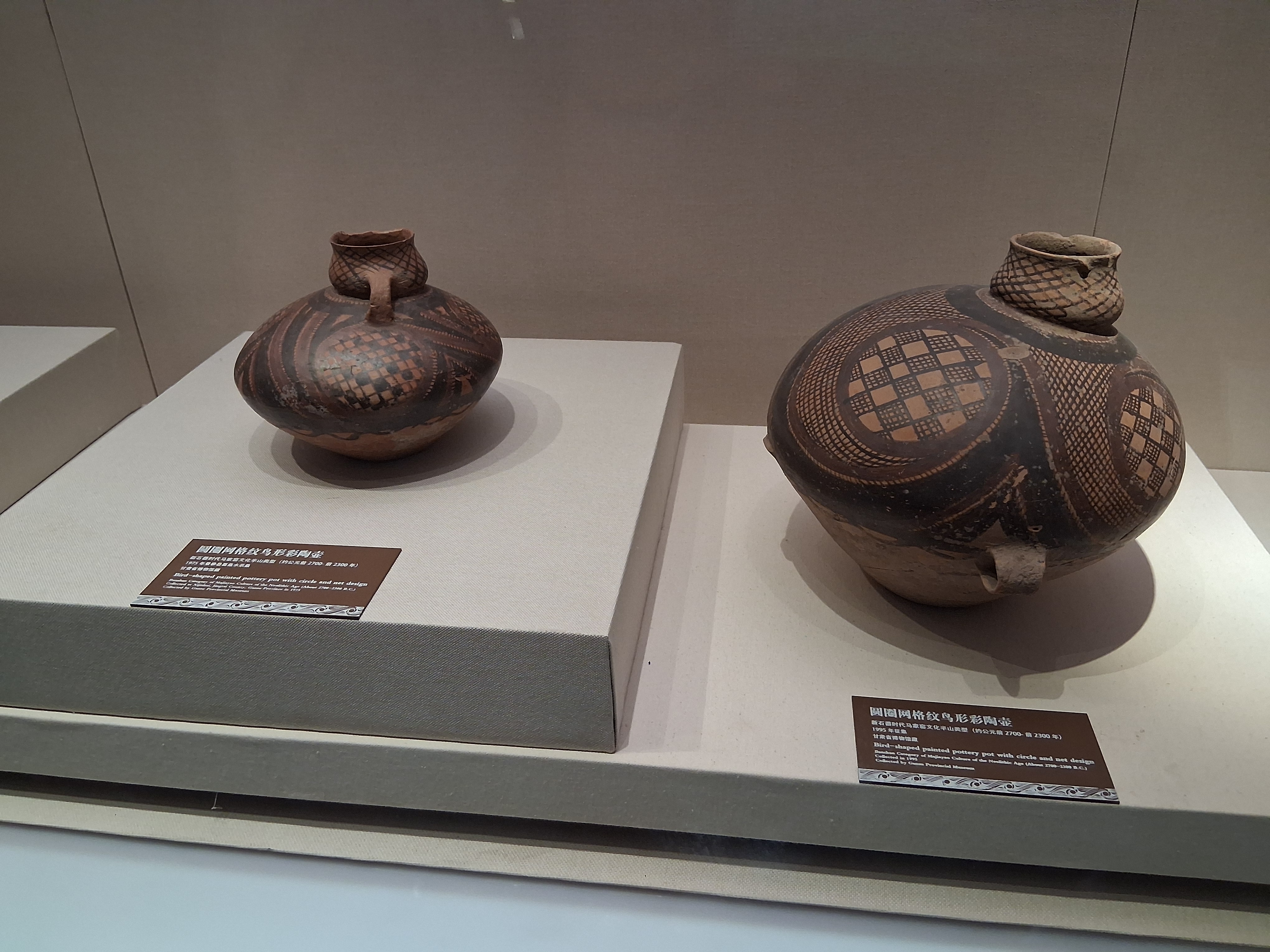
Today’s visitors to the museum included a number of school groups who were fasciated by this group of weird looking “big noses.” We were followed around, and at one point, an intrepid group of girls nominated a spokesperson to come and speak to me. However, on exiting the museum, we were absolutely mobbed. I have never experienced anything quite like it in my life – surrounded by hoards of children wanting photos and autographs. I felt somewhere between Beyonce and the Queen.
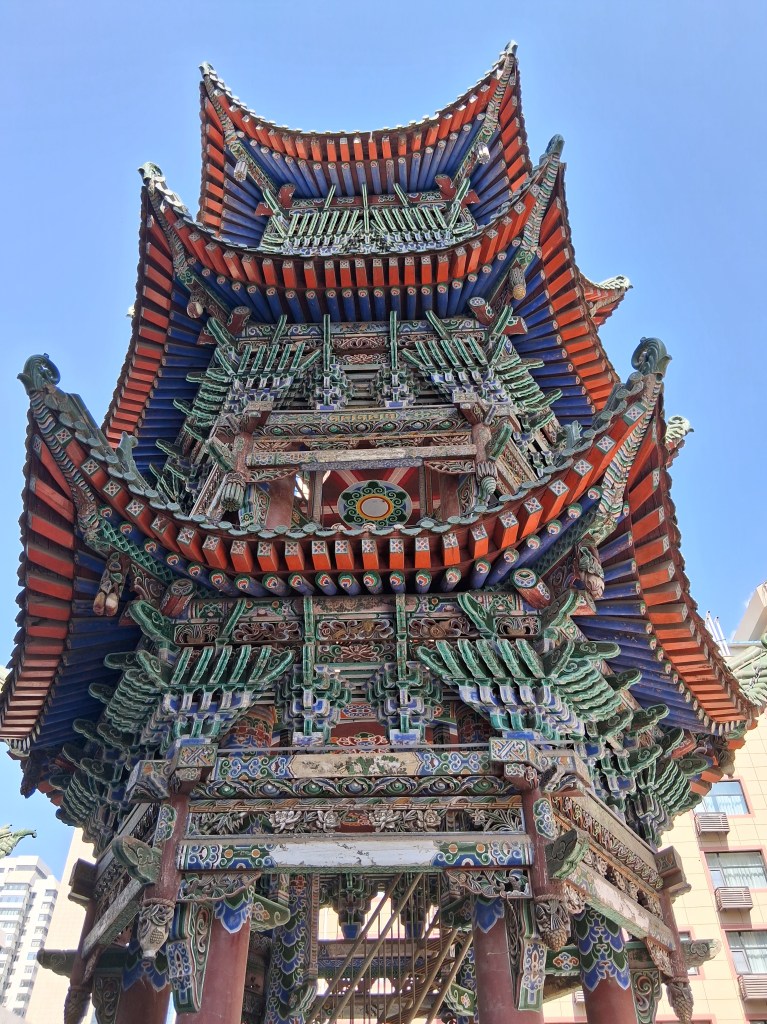
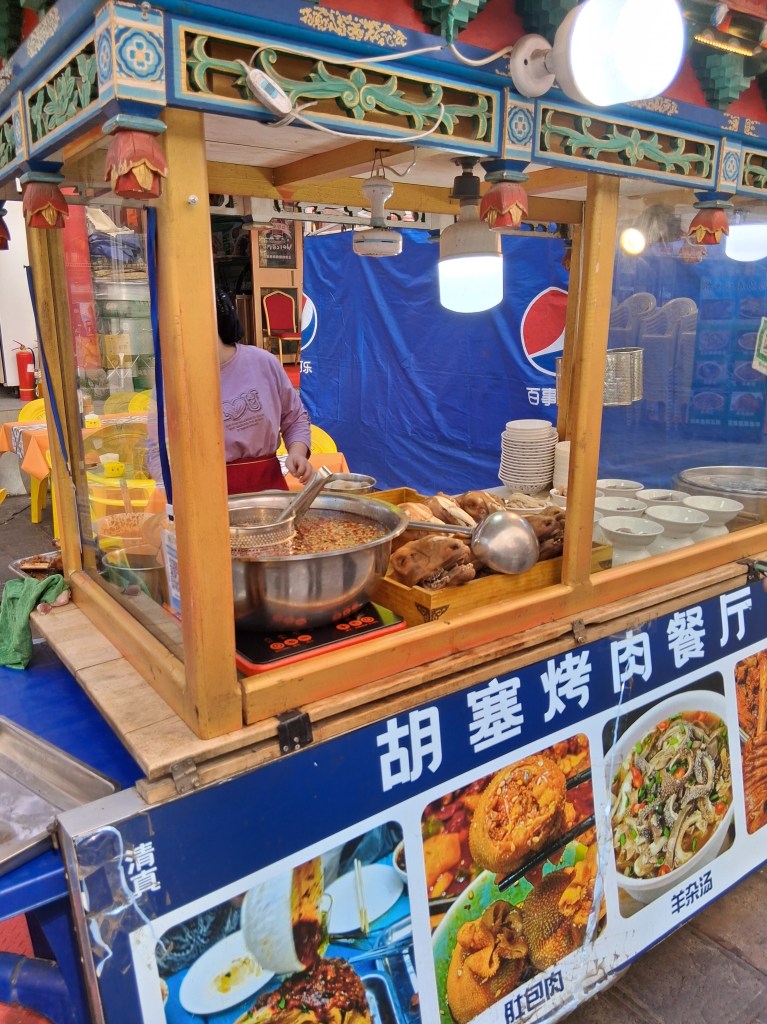
We did manage to extricate ourseves eventually (with some assistance from their teachers) to go and visit Langzhou’s Muslim quarter. Interestingly, in China, “Muslim Quarter’s” are much like Chinatowns in the rest of the world with a set street, entrance gate, and food options. We had specifically asked to visit the very unique style of Chinese mosque – this particular mosque was destroyed during the cultural revolution and rebuilt in the 1980s.
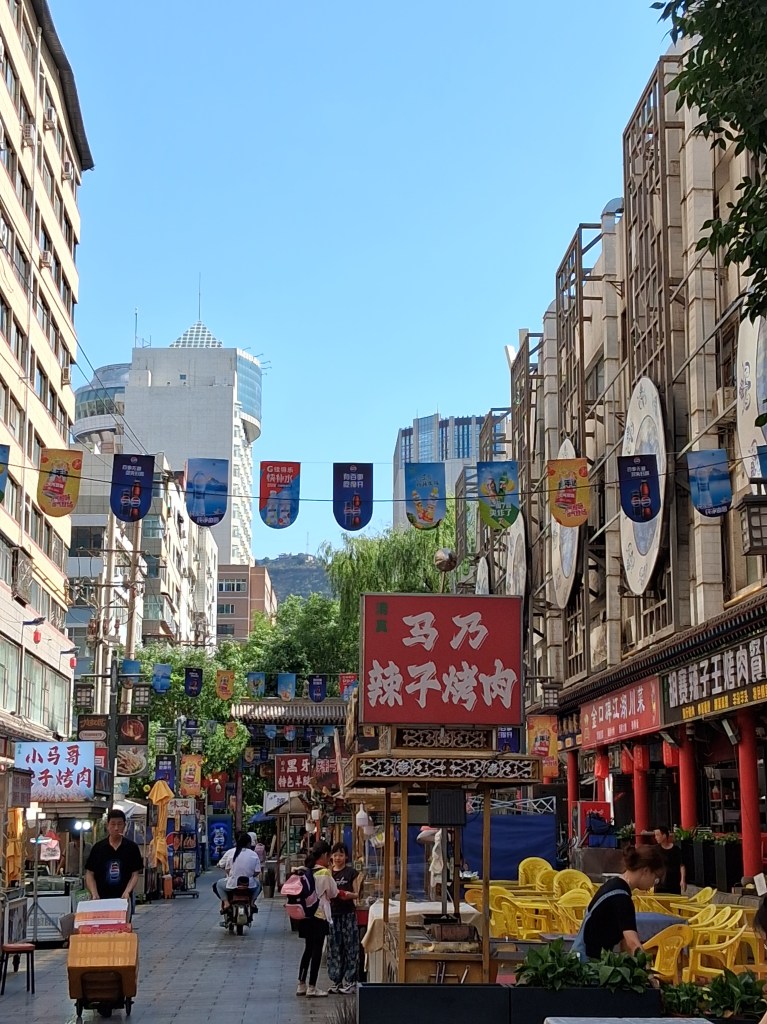
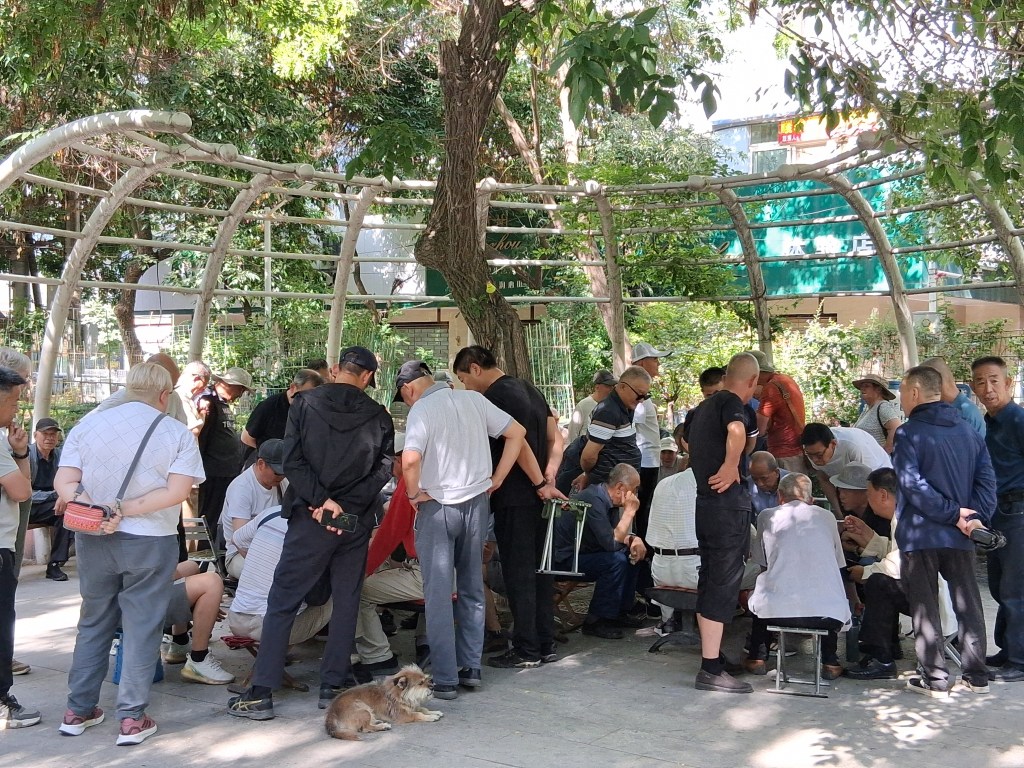
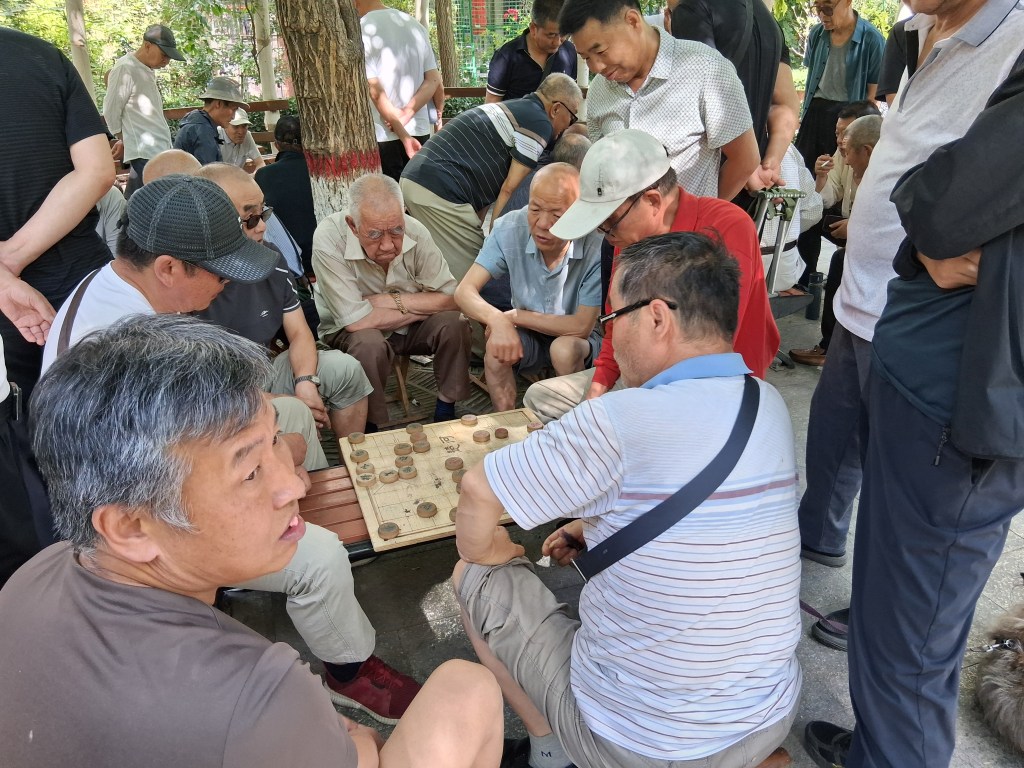
You can see a little park life above. It being around 5pm, I got the distinct impression that older local women (wanted to focus on cooking, grandchild supervision, perhaps some quiet time) send out their husbands to the park where they play very competitive Chinese checkers. I can honestly say I had no idea what was going on, but it was obviously high stakes play.
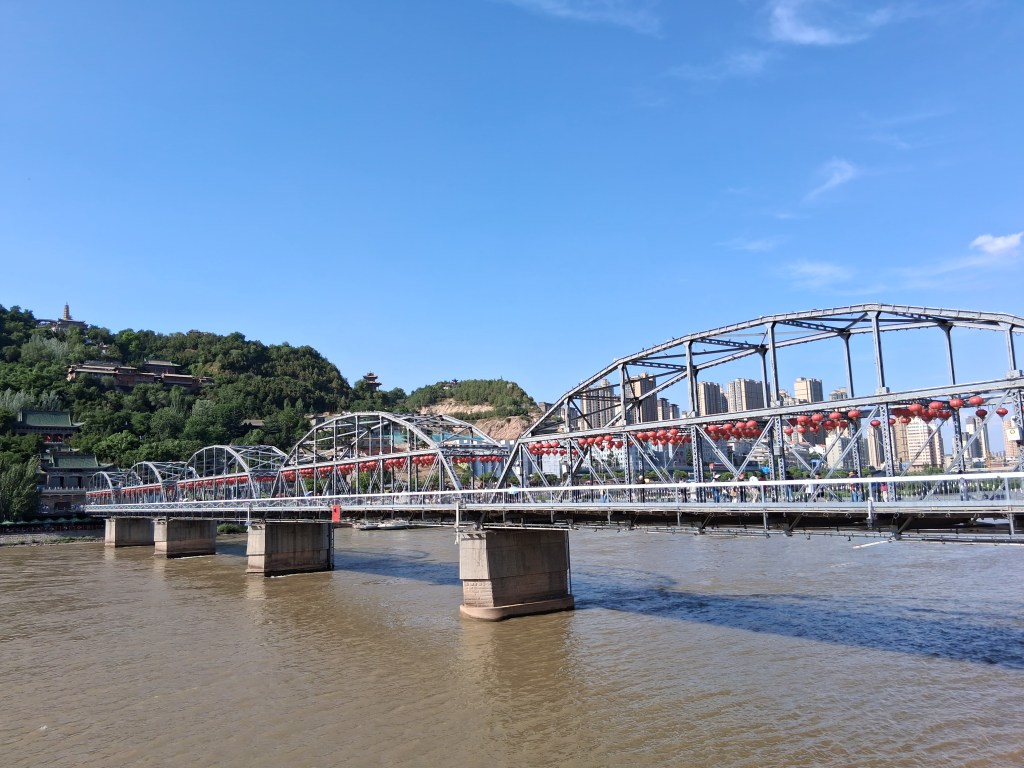
Our final stops where the key sites of Langzhou. Firstly, the Zongshan/Iron bridge. This was the first bridge over the Yellow river and dates back to 1909. It was actually designed by a US firm, made in Germany and than shipped to China where it travelled in pieces by train from Beijing to Xi’an, and then finally to Langzhou by cart. On the other side of the river you can just about make out the white pagoda.

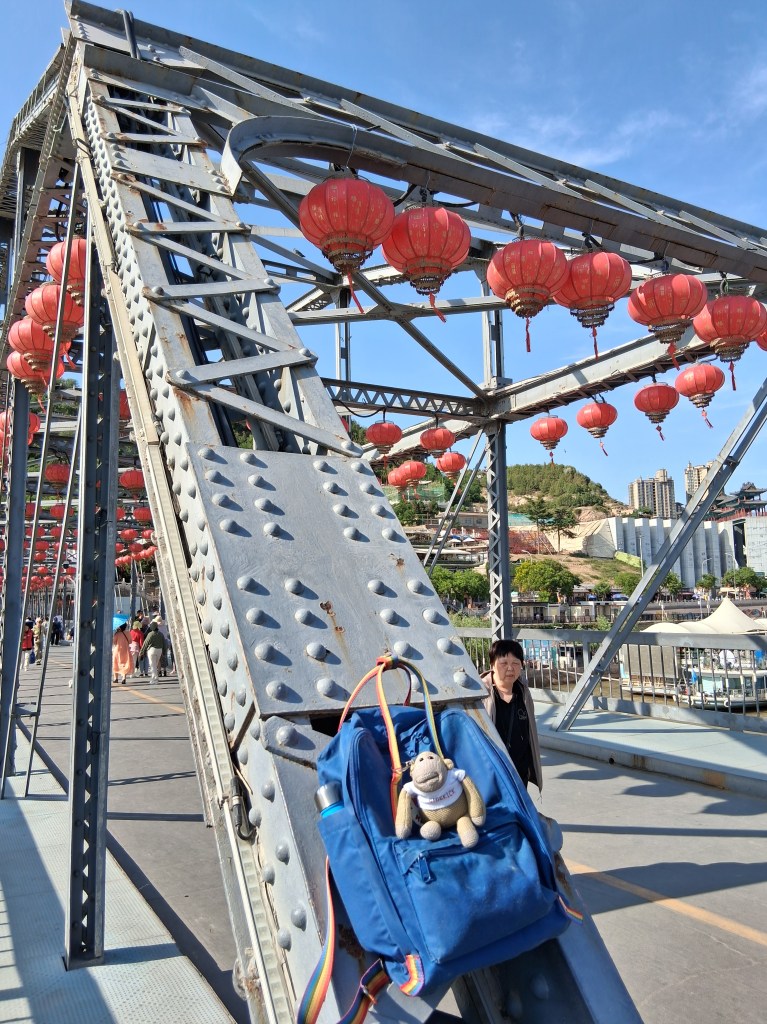
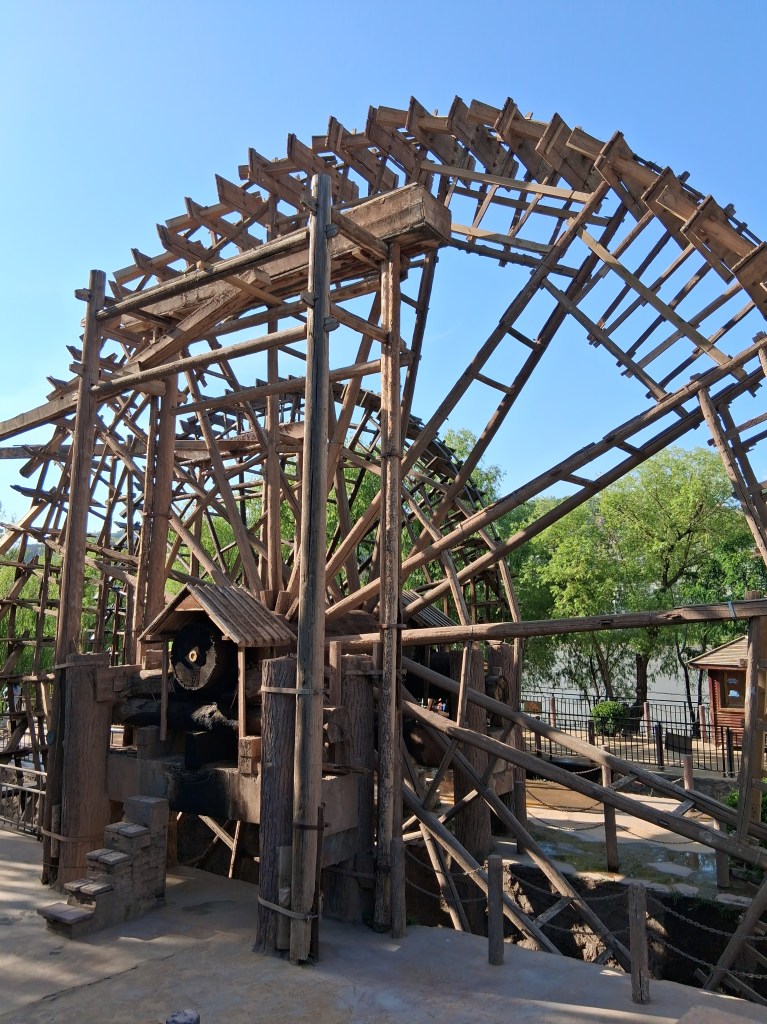
We then schleped (it being about 36 degrees and sunshine) for miles (about 10 minutes) up river to the waterwheel. At one time, these would have lined the river. However, this is a modern reproduction and not turning. But, it turned out the HIKE was worth it to see some traditional local rafts made inflated sheep skins…

Efectively, we now had to kill time until our 10pm sleeper train. This included dinner. So far, most of the time, we are allocated private rooms to eat in – probably because this makes it easier for the restaurants, and usually, you do see larger groups/parties tucked away. However, we entered via a lift, where then walked across a HUGE ballroom which looked like it was set up for a wedding, down in another lift and then along to a suite of private rooms – another included a group of businessmen who got increasingly raucous. We then had to have a number of photos taken with the staff. I think it’s fair to say that Langzhou does not get the numbers of foreign tourists as other parts of China…
We then headed to the train station – waving goodbye to our driver of this leg (most impressive. He parked a coach in places where I could not have reversed my old renault clio) and local guide. We are certainly seeing a range of local guides, and unfortunately Lu (lovely man and excellent singer though he was) although obviously very knowledgeable in some areas did not quite have the English skills or knowledge of Tibetan culture to really communicate this leg. I was lucky with the Tibetan guide I had on my previous trip, as without this base of knowledge (and the great tour at the Labrang Monestary) I feel I would be missing out.
So, I think I may have unfairly judged Langzhou which is much nicer in the sunshine. However, it cannot really complete with the sweeping landscapes of other parts of China or the historic stops along the Silk Road.
I will save the delights of the sleeper train for my next post (suffice to say I survived), but for now I leave you with the following: there are 5 countries in the world when spelled in capital letters would not include any enclosed spaces (i.e. no As, Os, Ps, Rs etc). Please name them.
2 responses to “Stage 7.5 – Xiahe to Lanzhou”
-
Keith here – excellent blogs as usual, keep up the good work, and please avoid expiring…
I have identified the five countries, but I will not spoil anyone else’s fun by listing them. I was amused to see that one has recently adopted a new name but it and the old name both fit the puzzle criterion!
LikeLike
-
If you think one has a new name/changed names, then you’re incorrect (I am the quiz master and thus my word is final).
LikeLike
-


 Travels with Kathryn
Leave a comment