
Turpan is the second lowest point in the world at 154 meters below sea level – and as I alluded to in my last post, this means it is very, very hot. I am writing this at 12.30 on Monday where we have retreated inside into darkened (air conditioned) rooms in order to escape the worst of the sun and heat.
We have also entered the Uygur Autonomous Region (otherwise known as Xinjang by mandarin speakers) which is a huge area (covering an area roughly the same size as Europe). It is the homeland of the Muslim Uighurs and of turkic people of Central Asia rather than Han Chinese. China considers this area part of China as in the 2nd century this was part of Han China, however, Chinese rule ebedded and flowed over the centuries and during the 8th century this was a thriving Uygur kingdom which transformed people from nomads to farmers. Islam took hold in the 12th century and this area was controlled by the Mongols (the mongol hoard is back!) until the 18th century. There was a short lived independent “Turkestan” in 1865 and further attempts in the 1930s and 1940s, but these were soon dealt with by China .
Today, the region has born the brunt of attempts by the Chinese government to “Chinese-ify” this whole area. Migrations by Han Chinese were very much encouraged as part of the “Develop the West” strategy, particularly as the region floats over most of China’s oil and gas deposits (it currently provides 60% of China’s oil and gas power) as well as (because of all that sunlight) transporting its solar generated power into China. However, this has led to ethnic clashes and an area that was once 90% Uygur is now a melting point of different ethnicities.
To us, Turpan looks as though it belongs in Central Asia – the archtiecture, the people etc. However, I have also seen more police and more police checkpoints (where everyone is required to provide ID and have their faces scanned) than anywhere else so far on my journey. Our new local guide is himself Uygur and when he is able to be, is open about what being part of China means – there are advantages, for example, education is free to 21 and the investment has meant that there are jobs for everyone. However, since 2007 Uygur is no longer the language of education, and is not even allowed to be taught in schools. No one is allowed to own books written in Uygur. The headscarf has been banned. If you break the rules, you disappear into a Uygur detention centre never to be heard from again. I am sure I will learn more as I travel across the region.
Anyway, Turpan. Turpan sits ontop of an oasis which is why it was first inhabited due to the access to water and fertile soli on otherwise a city which sits between two deserts. Historically, Turpan was an important city on the Silk Road as this route was controlled by the Khans who would grant licences giving safe passages to merchants who travelled through this area – if they were attacked, their attackers would face the wrath of the Mogol army (which I suspect most would want to avoid!).
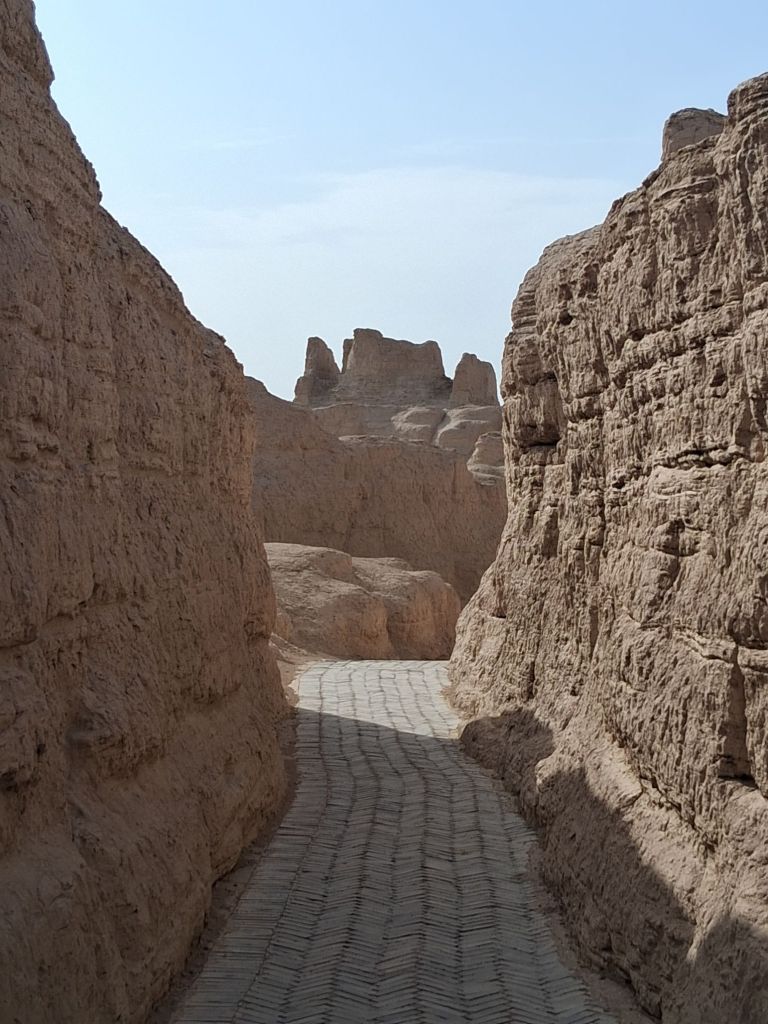
Our first stop today is the ancient city of Jiahoe which is one of the world’s largest (6,500 residents once lived here), oldest (nearly 2,000 years old) and best-preserved ancient cities. That last statement may surprise you based on the photos below, but the city was destroyed by the Mongol Army (Tamerlaine is back Blog readers!) in 1336 and what is left is simply the ruins…
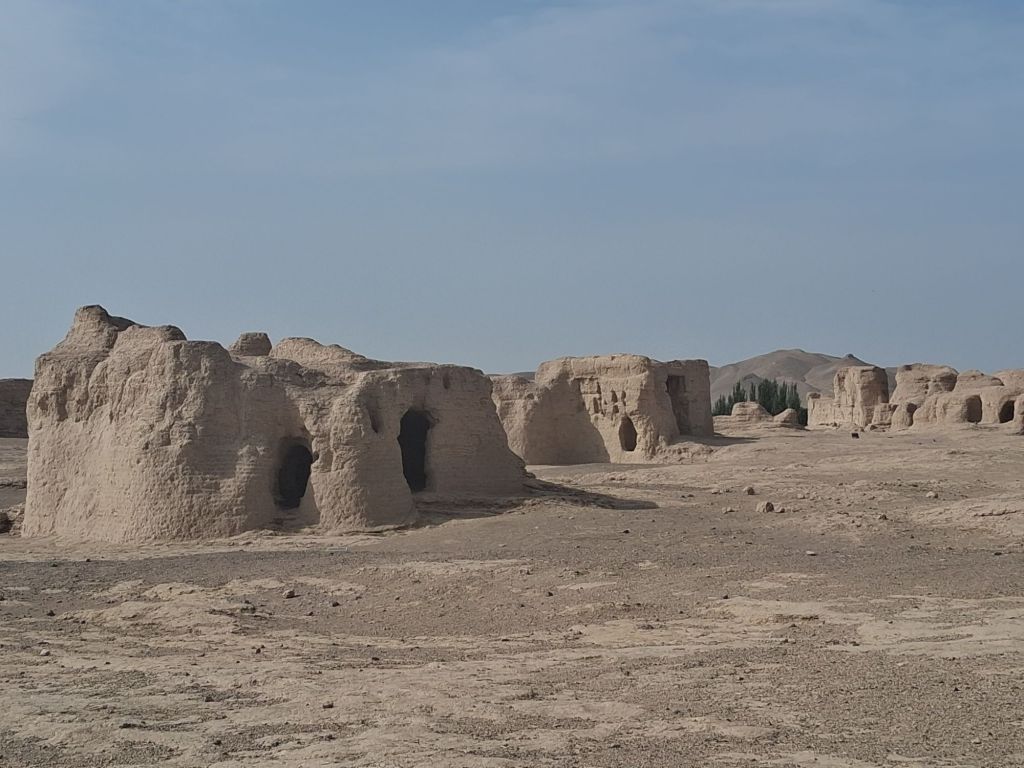
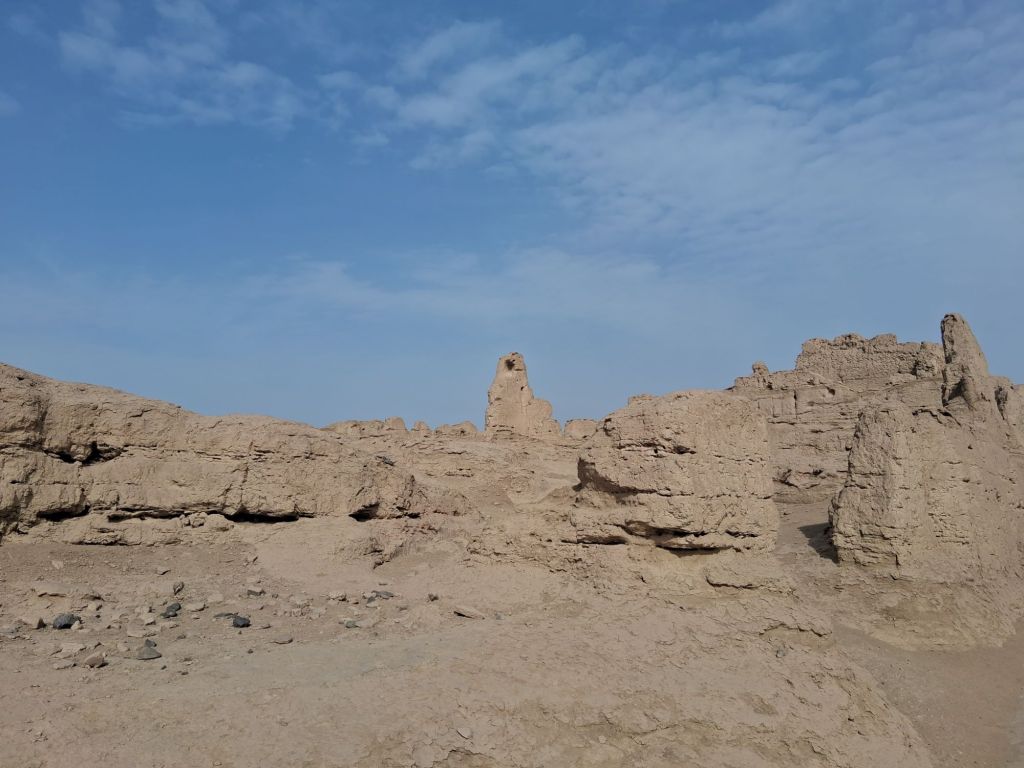
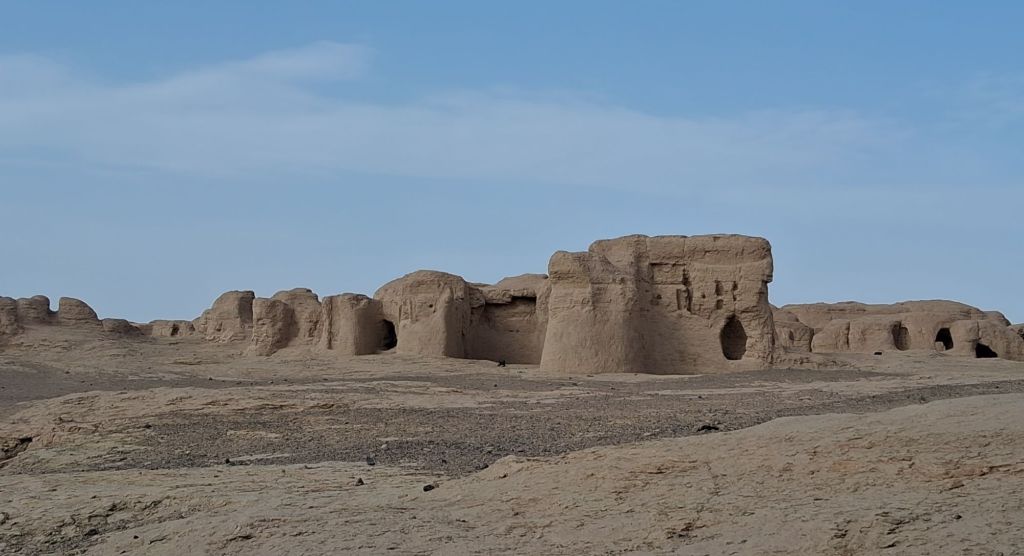

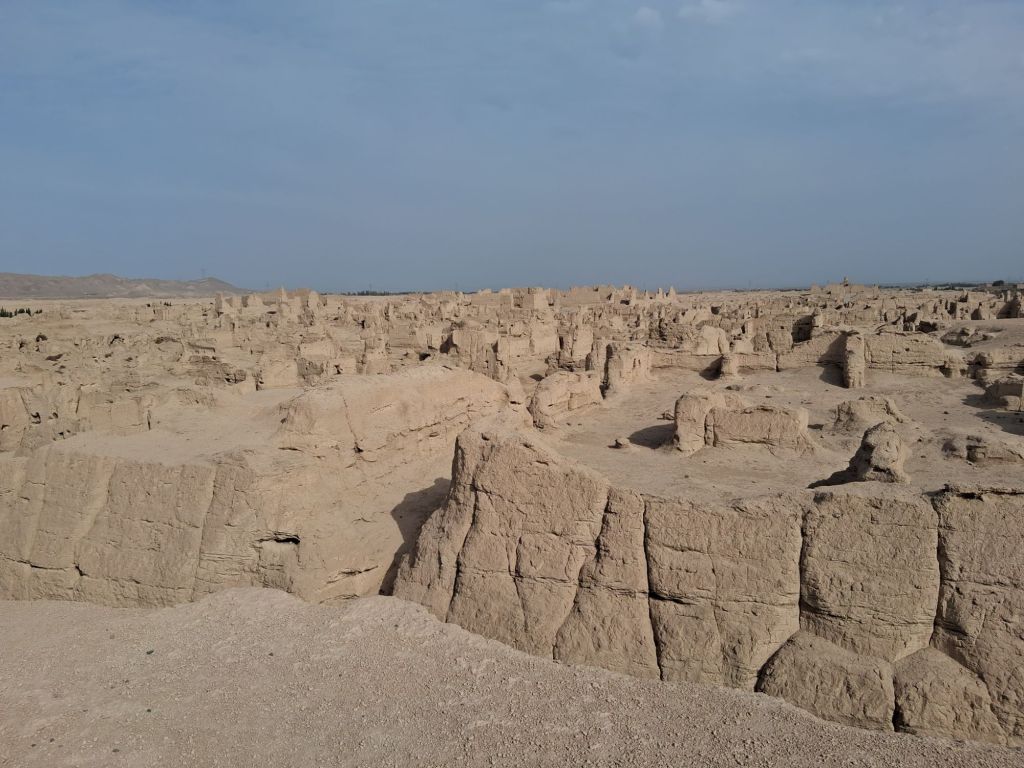
The city was established by the Han Chinese (who had taken over from the local Cheshi people who lived around the area) by deverting the river into 2 to make an island and could then be protected militarily. It is unusual in that it only has 2 city gates (South and East), there were no city walls, and the fact that all buildings were created by digging down rather than building up using wood or other materials. Today you can walk over the structures, and down some streets (I ended up in the warehouse district) and try and get a sense of the city that was once here, and I am certainly getting many reminders of variuos sites across Central Asia which where destroyed by the Mongol hoards…
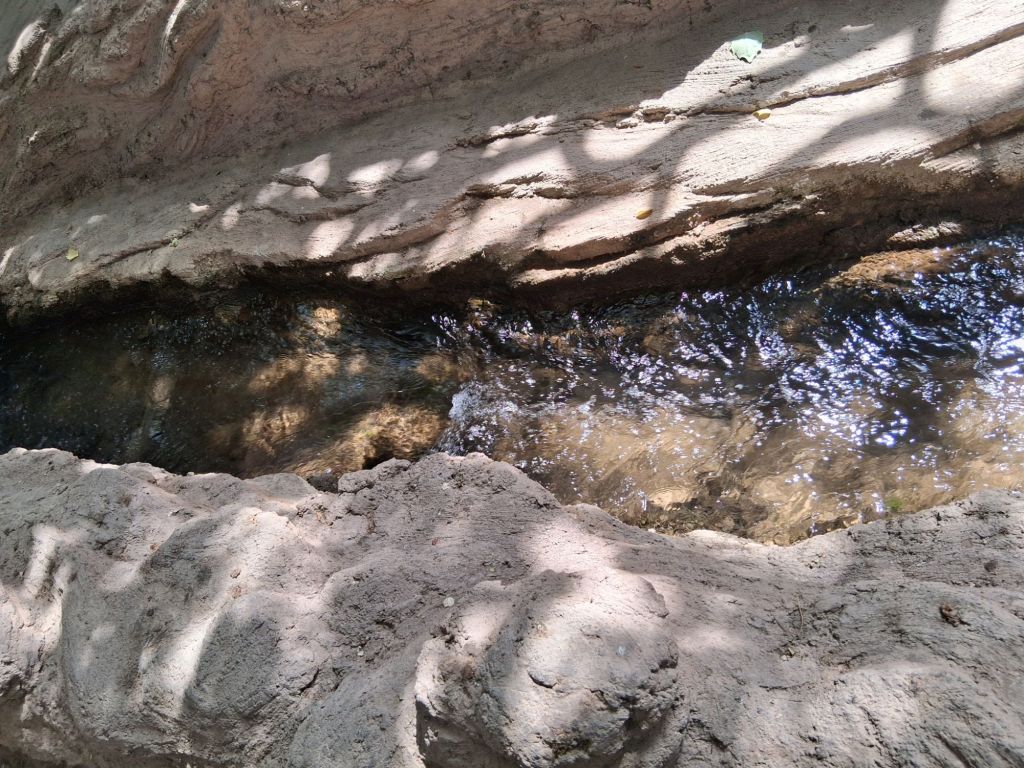
We then (possibly as this is a mostly indoor shaded attraction) went to visit the Karez System Museum. Karez systems are what make Turpan so green, and have been used in this area since 103BC. Effectively it is a system of underground channels which allowed water to be transported from the Tien Shan mountain range into Turpan as its blocked by the Flaming Moutain (more on this below). The channels were dug up to around 90m deep (to prevent evaporation) at the furthest point and shallower as they got closer to the city. Today, there are still more than 1,000 karezs in Turpan, 500km of channels which bring in in 30% of Turpan’s water.

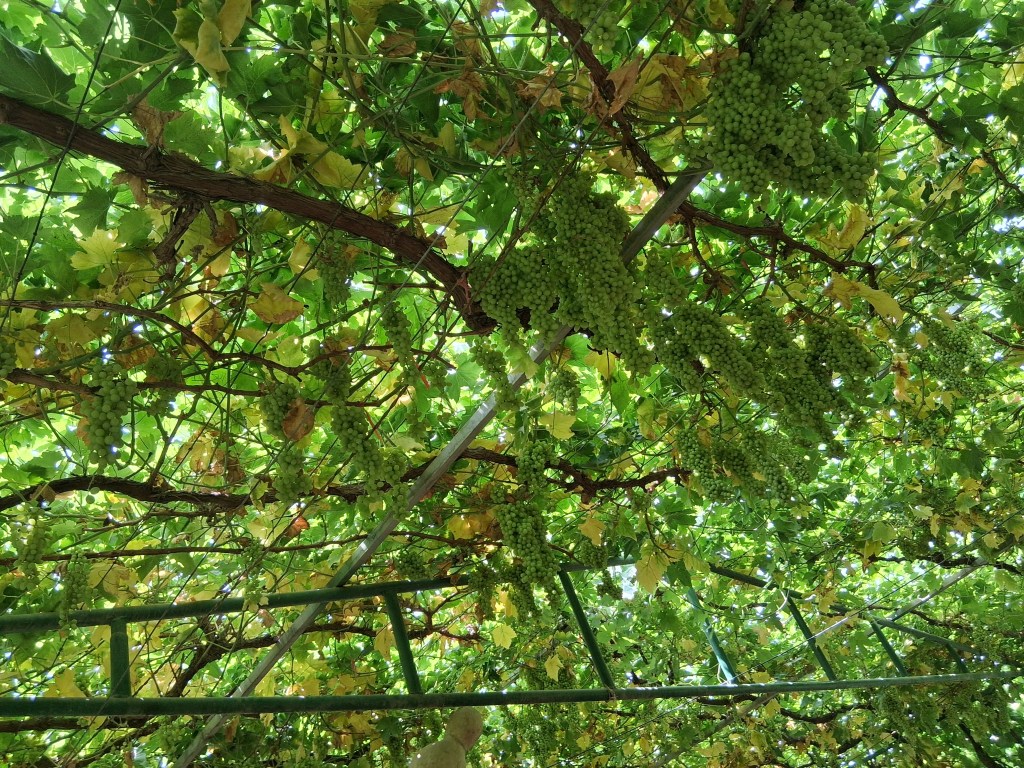
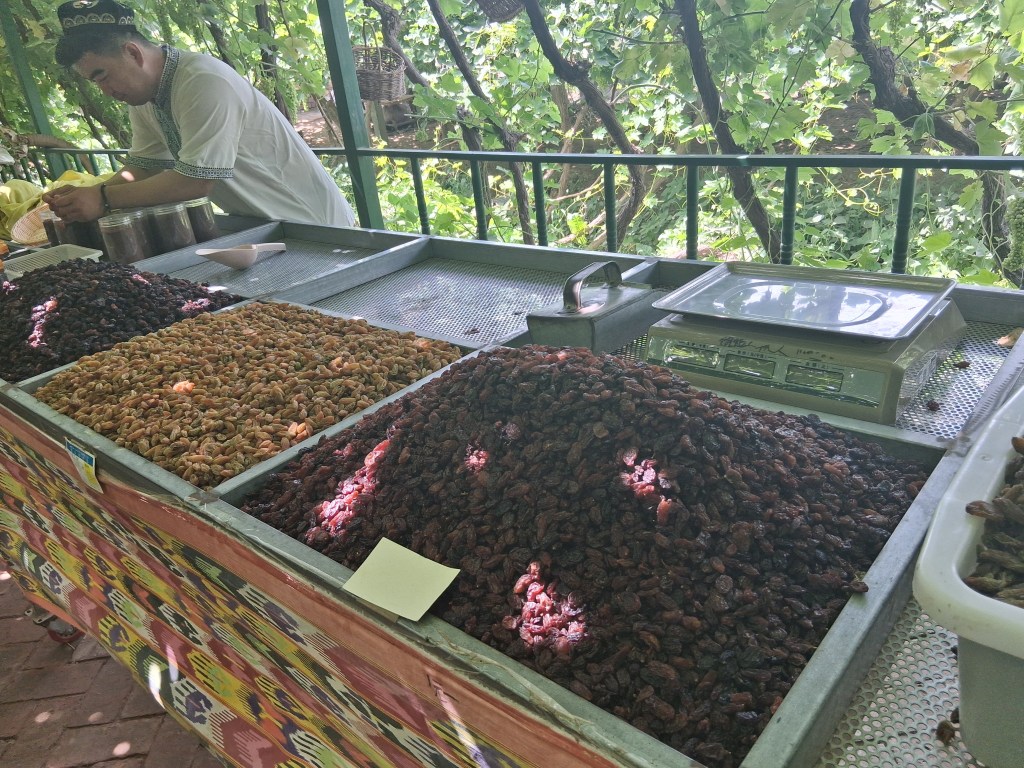
It is also an opportunity to learn about the fruit that this city is known for – grapes. The Uygur Autonomous Region produces some of the best grapes in China, and 60% are grown in Turpan. It seems that everyone we have met so far, in addition to their day job, has a vine patch of their own. The (incredibly) high temperatures give the grapes a very high sugar content and as we know, nothing can ever be too sugary. Once picked, the grapes are hung on wooden frames and covered with sand to protect from insects. After 7 days the grapes will have dried into raisins and the sand is sieved (a process known as dry washing). We have been promised some later today…

Now lets be honest, this was a very touristy thing to do and there is a certain level of staging for the tourists. However, one can choose to ignore this as well as the exiting through gift shop and just feel that one has learnt a little about irrigation and wine making which may come in useful at some point…
Having retreated inside for people to have siestas and me to write my blog, we headed out for a late lunch. This was with a local Uygur family who obviously have set up a little business where they feed tourists, do a quick demo of local dance and then offer them raisins to buy. Yes – it is touristy, but it is a pretty easy way to give money to local/Uygur people and it very much reminded me of my time in Central Asia in terms of the sitting area, food and general ambience.
I also thought you may enjoy another option of a vehicle I think might suit my London lifestyle. Scooters, with armchairs. Very sensible.
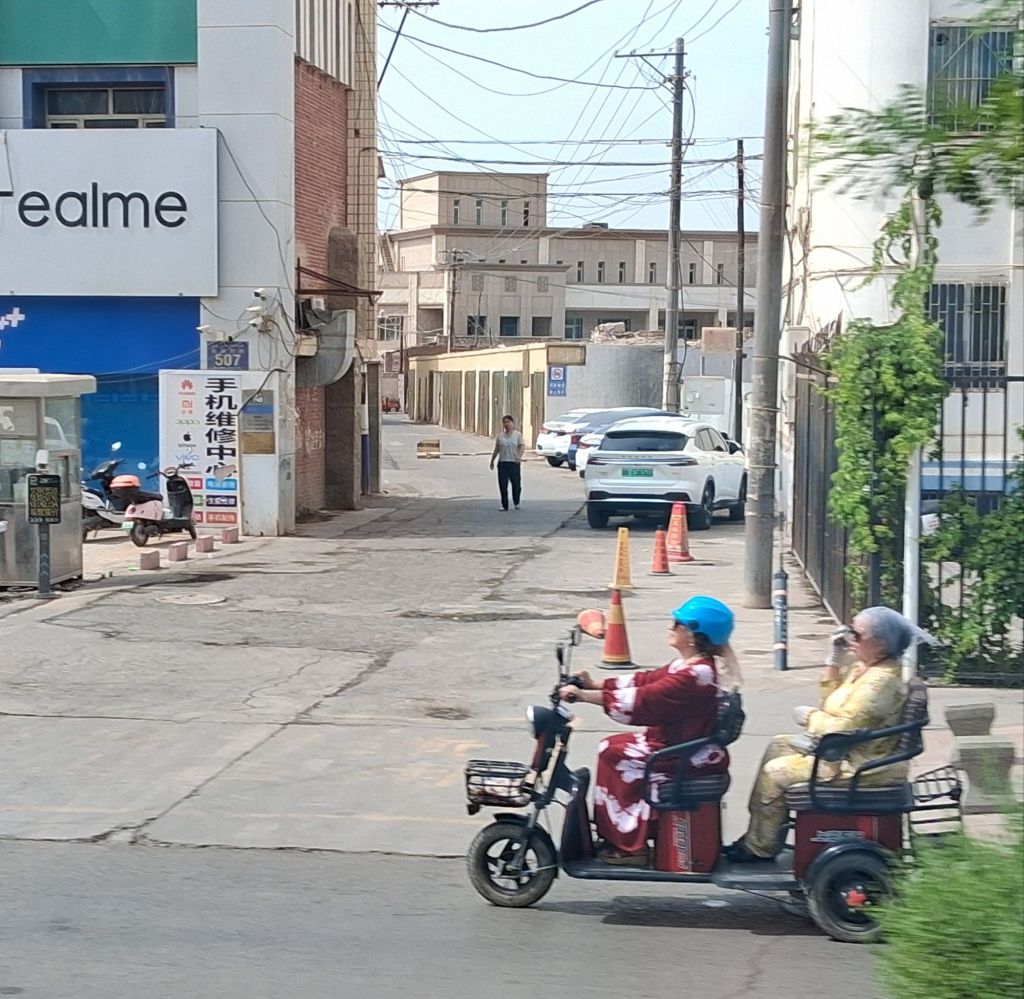
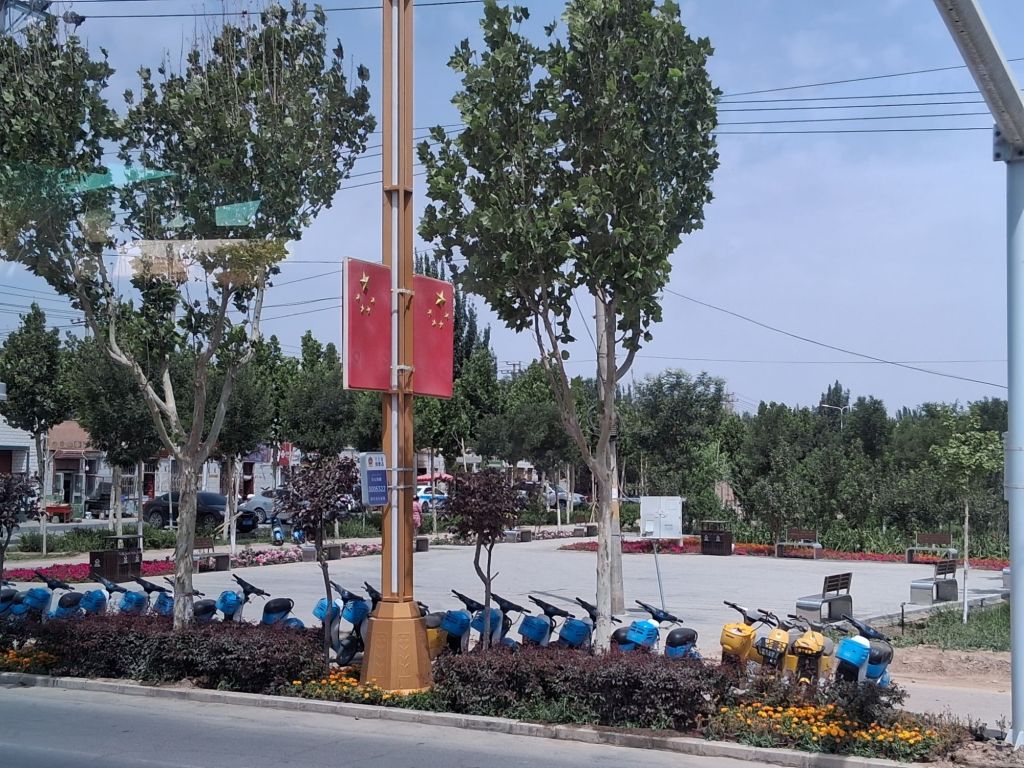
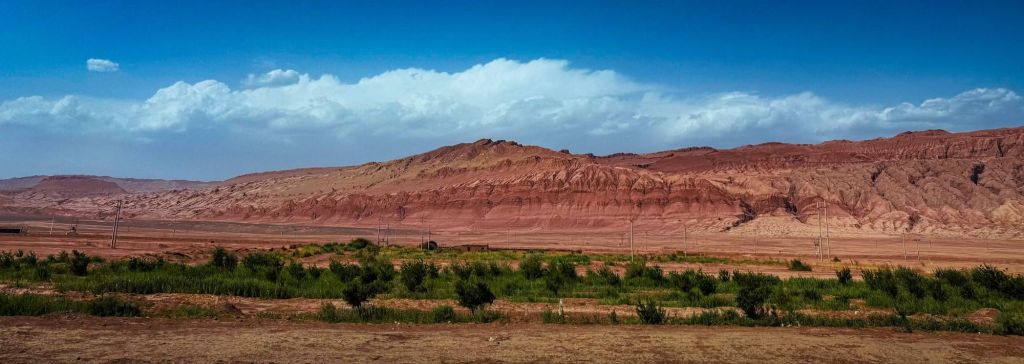
We then were planning a driveby at the Flaming Mountain which is about 30 minutes outside Turpan. This is the Flaming Mountain, which features in the classic (Ming Dynasty) novel : “The Journey to the West” by Wu Cheng’en. In the story, the Monkey King sirred up trouble in heaven and kicked out the heavenly oven, which made immortal pills. Charcoals fell from the sky onto what is now called the flaming mountain, making it red and hot all year round. Hundreds of years later, on Monkey King’s journey with Tang Sanzang ( a Buddhist monk) they are stopped at the mountain, and Monkey King uses a magic palm-leaf fan to stop the flames in order to pass over the mountain. Apparently, its actually to do with the spontaneous combustion of an underground coal seam, but that is a lot less entertaining. However, given the extreme heat (it was showing as 51 in the shade) we jus pulled up and exited the bus in the entrance to the tourist trap/viewing area (thus avoiding paying entry fee and other tourists) to take some photos – note the diference with a little photo shopping:
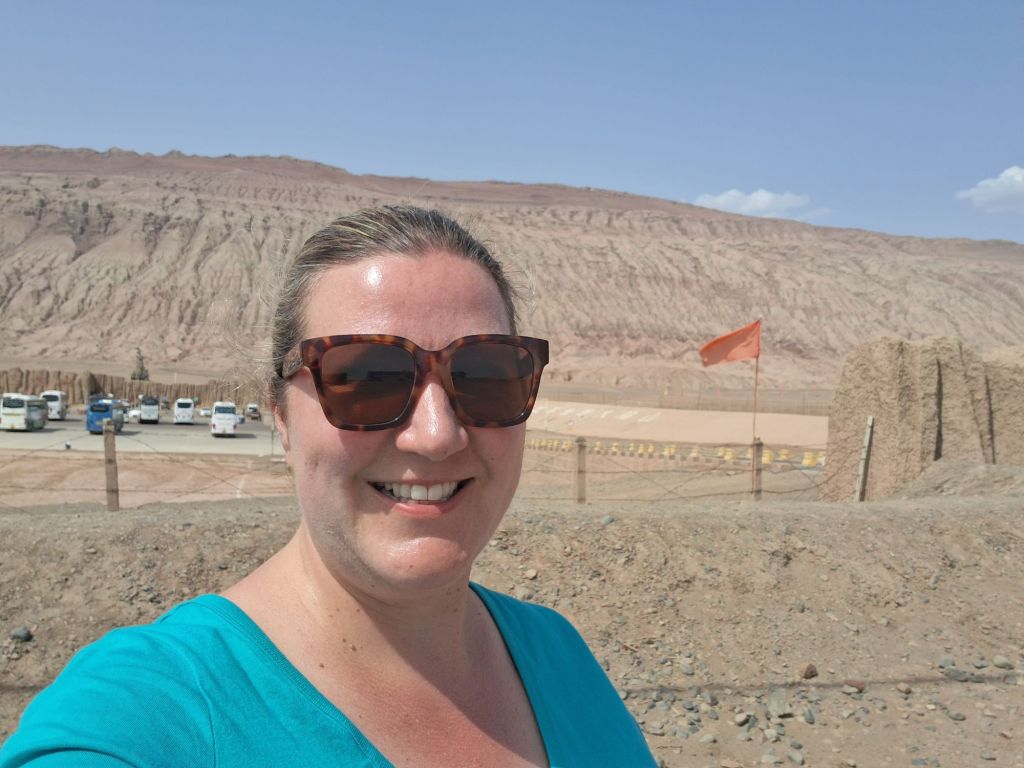
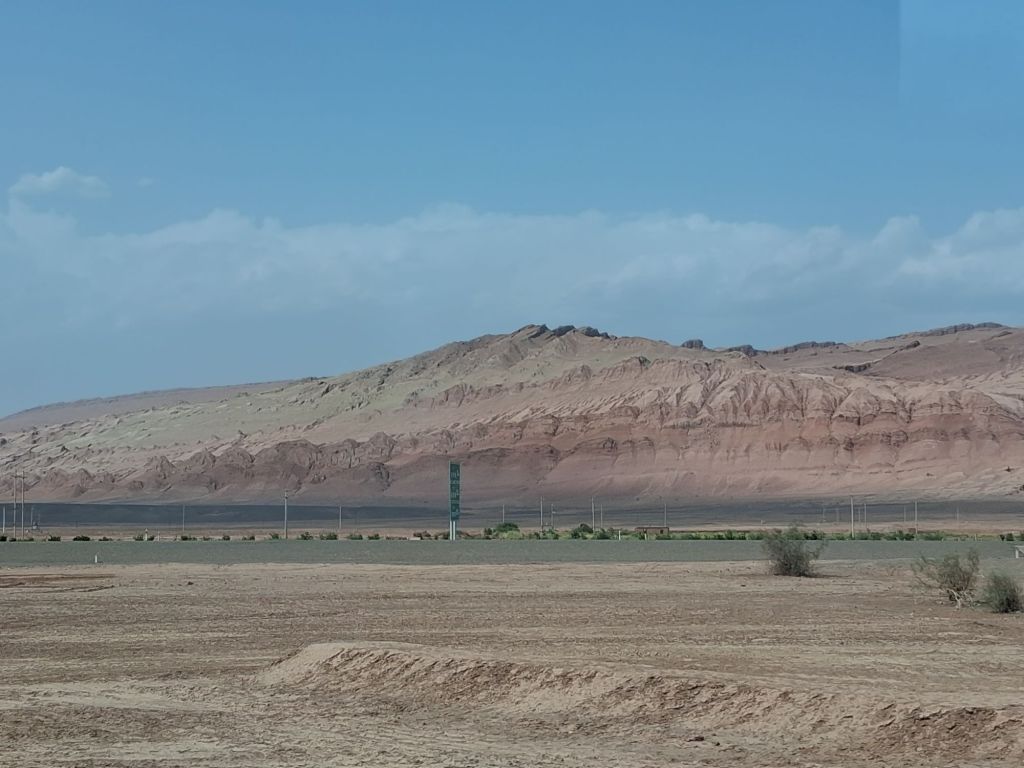
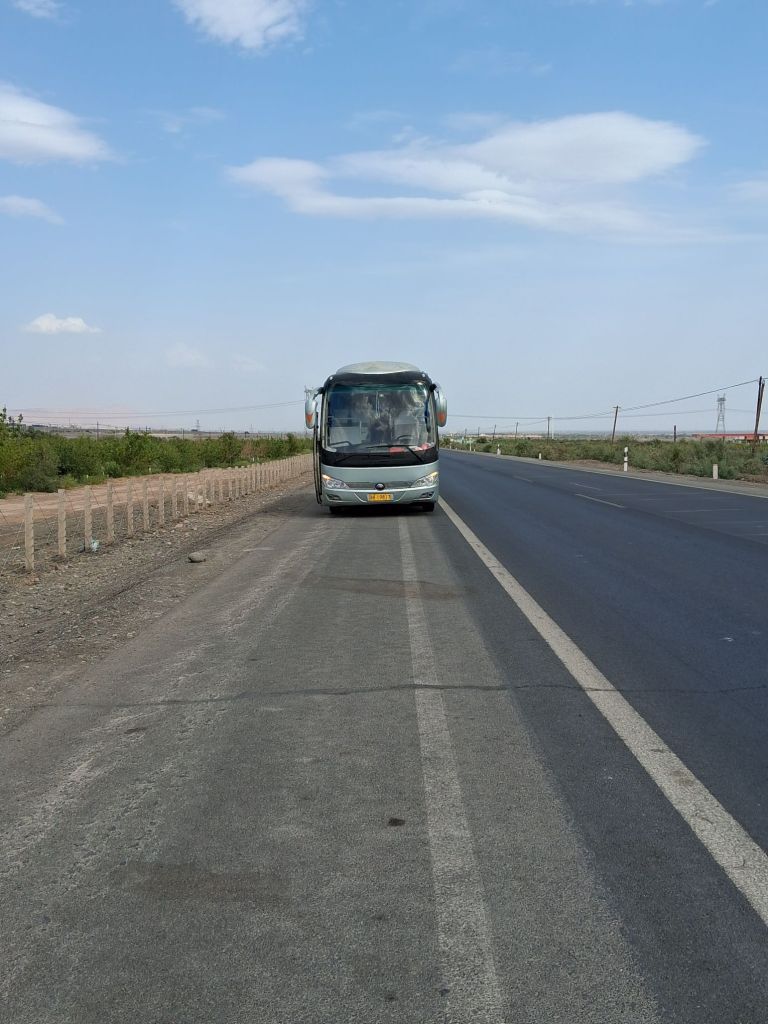
I have not yet mentioned the bus. It is not the finest I have even been on, it absolutely reeks of cigarettes, doesn’t like to go above third gear, and the front seems to be held on with parcel tape. Well, the drive to the Flaming Mountain killed it – about 100m from a police checkpoint (one of oh so many) the bus gave up. These things happen, not a big problem – well, it is as it means that the air-conditioning dies along with the bus, and we are now sitting in a warming bus in 52 degrees… After some fast distraction from our tour leader (There are eight countries in the world that have another country’s name in them- please name them? I will give you a start, Guinea and Guinea Bissau) we were going to walk to the police checkpoint and wait there whilst taxis arrived. Well, as the first couple of people headed out a passing taxi/mini bus stopped and picked us up, and drove us into town. THE RELIEF.

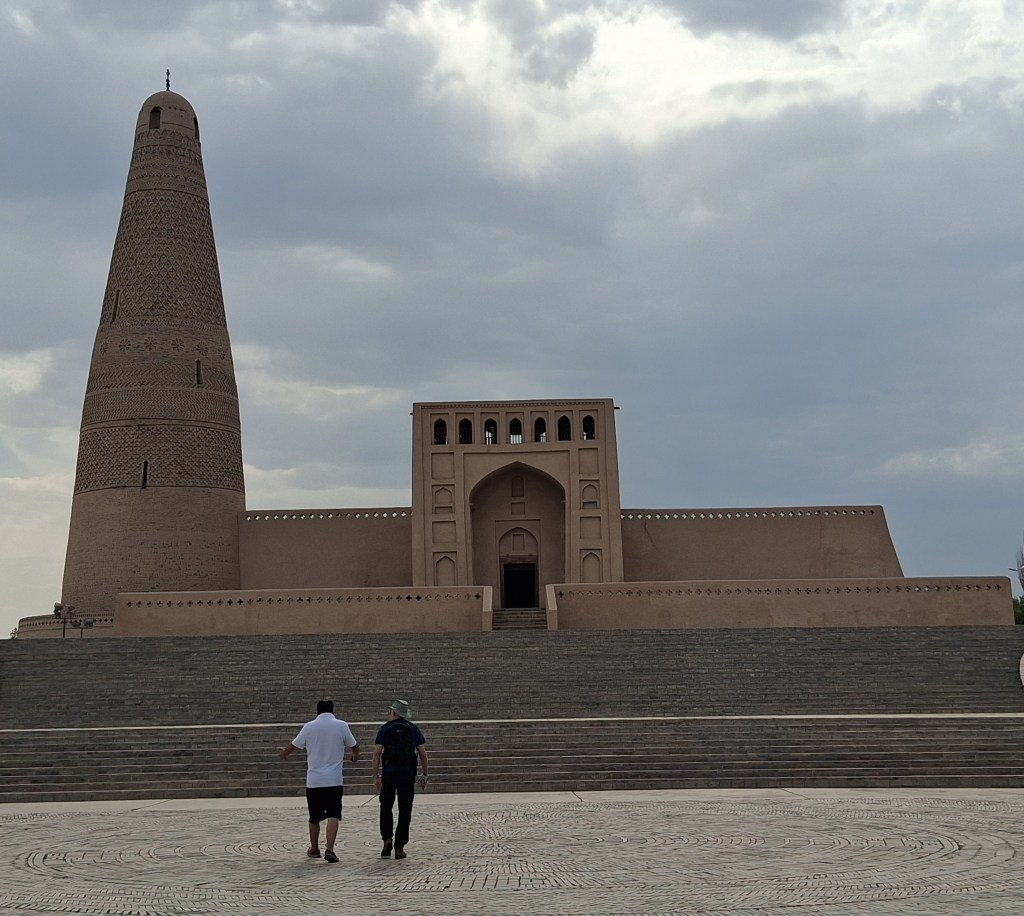
To recover, we visited the Emin mosque. As I mentioned, this is the muslim part of China and are yet to see a working mosque – they all appear to be tourist attractions… This mosque was originally built in 1777, then destroyed during the Cultural Revolution, and rebuilt in 1988 and yes, it does have a very nice 44m high minaret, but its somewhat santisied.

Tonight we would be taking the 10.52pm train to Kuqa, and after the stress of the broken bus and the general oven like temperatures, we deposited ourselves in a small cafe for drinks and air conditioning. Rather surprisingly, the bus was revived and came (still containing our luggage, although not accelerating out of third gear) to pick us up, drop us for a quick dinner, then onto the train station. I did fear at one point it as not going to make it up the final slight incline to the station, but it did!
This is our second and last overnight train and I really feel I have it down now. Perfor ablutions/teeth cleaning in the station, board train, find carriage, elegantly ascend to the upper bunk (much better this time), change, liberally use a body wipe (and offer to bunk mates), then sleep. The sleep proved somewhat elusive as it was a very bumby journey, and we had to get up at 6am anyway to get off the train in Aksu.
Anyway, this seems a long post so I shall stop now, but in summary: Turpan is very, very, very, very, very hot.


 Travels with Kathryn
Leave a comment