
Well, here we are, I have now completed the Silk Road (whoop!). I am in Kashgar which is the most Westerrn city in China, closer to Tehran and Damascus than it is to Beijing and if only international border crossings (and time) allowed for it, from here I could cross the Torugart Pass to Bishkek where I started my travels all that way back in August 2023.
Anyway, I am jumping a little ahead of myself. We left Markit this morning and drove 2.5hrs along the edge of the Taklamakan desert to Kashgar, and you can certainly tell you have left the small towns and have arrived “somewhere”. Kashgar means “bank of the river” and the Kashgar Prefecture borders 5 countries and has a population of 4.7 million people. The original Kashgar was first inhabited over 1,600 years ago, but that has now been observed into the Taklamakan desert. The old city of today’s Kashgar has been mostly destroyed (it would have been completely been destroyed had there not been an international outcry), but even so, today it is very much a rebuilt and santisied version of what one would expect from a Central Asian city. For example, my 2019 guidebook stars “the Grand Sunday Baazar” which disappeared in 2022…
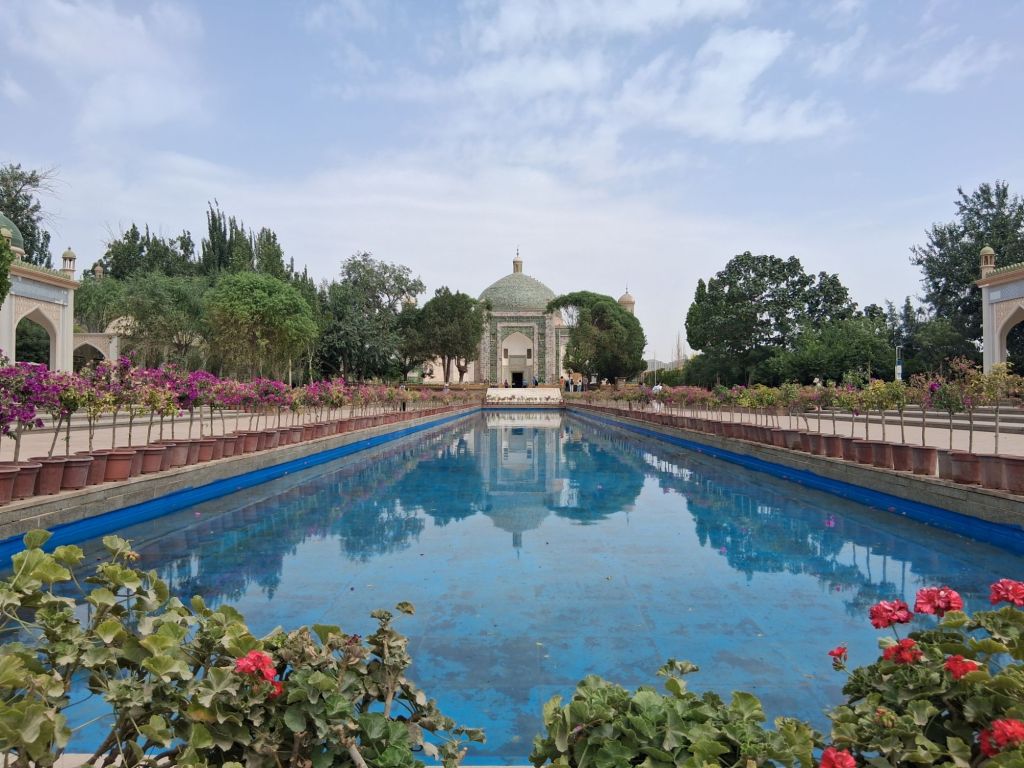
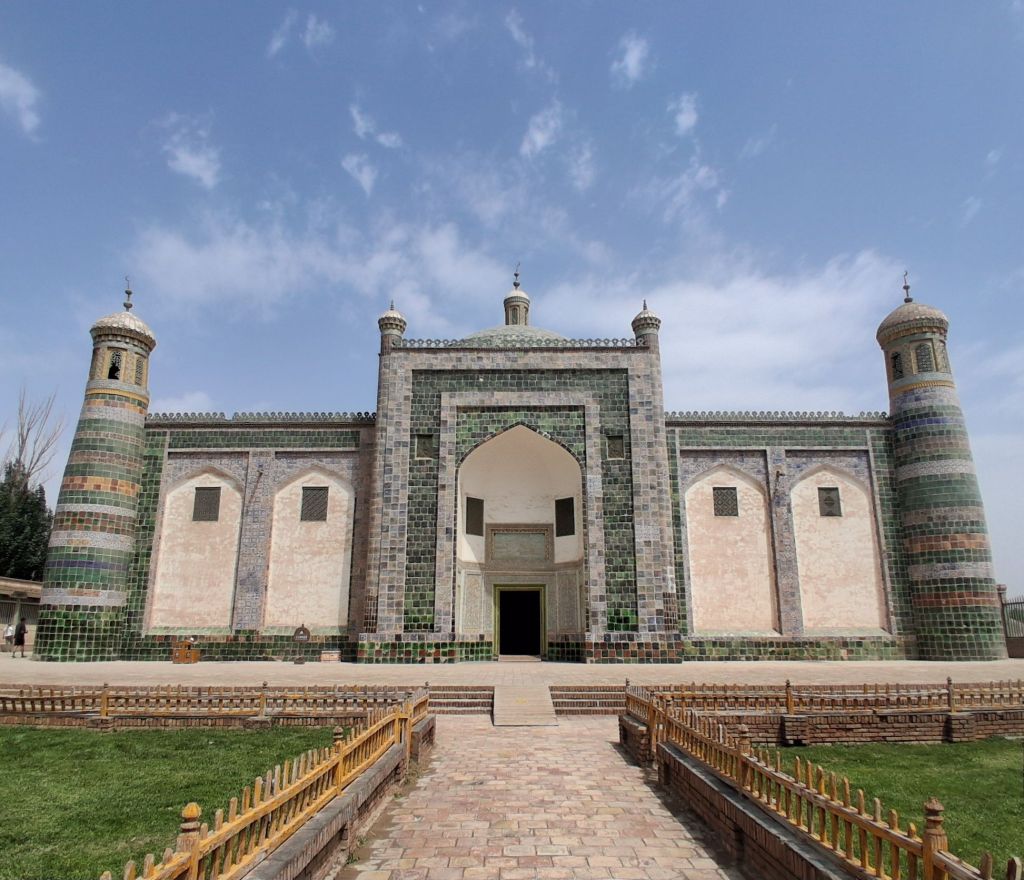
We started with the Abakh Hoja Masuoleum which was built by and for the Khoja family who ruled over this region in the 17th and 18th centuries and dates back to 1640 AD and contains 72 family members. This is considered one of the holiest pilgrimmage sites in Xinjiang for Muslims – therefore obviously what has been done is an odd welcome centre has been built infront, a garden planted and the focus shifted from Abkah Hoja to “The Most Fragrant Concubine” (as opposed to those less than favourite concubines one assumes?) who was a favourite of Emperor Qianlong during the Qing dynasy and is also buried here. However, it is a beautiful building and only had minor updates in the 1950s. In particular, it’s lovely to see some Central Asian architecture which really reminds me of Stage 1 of travels with Kathryn.

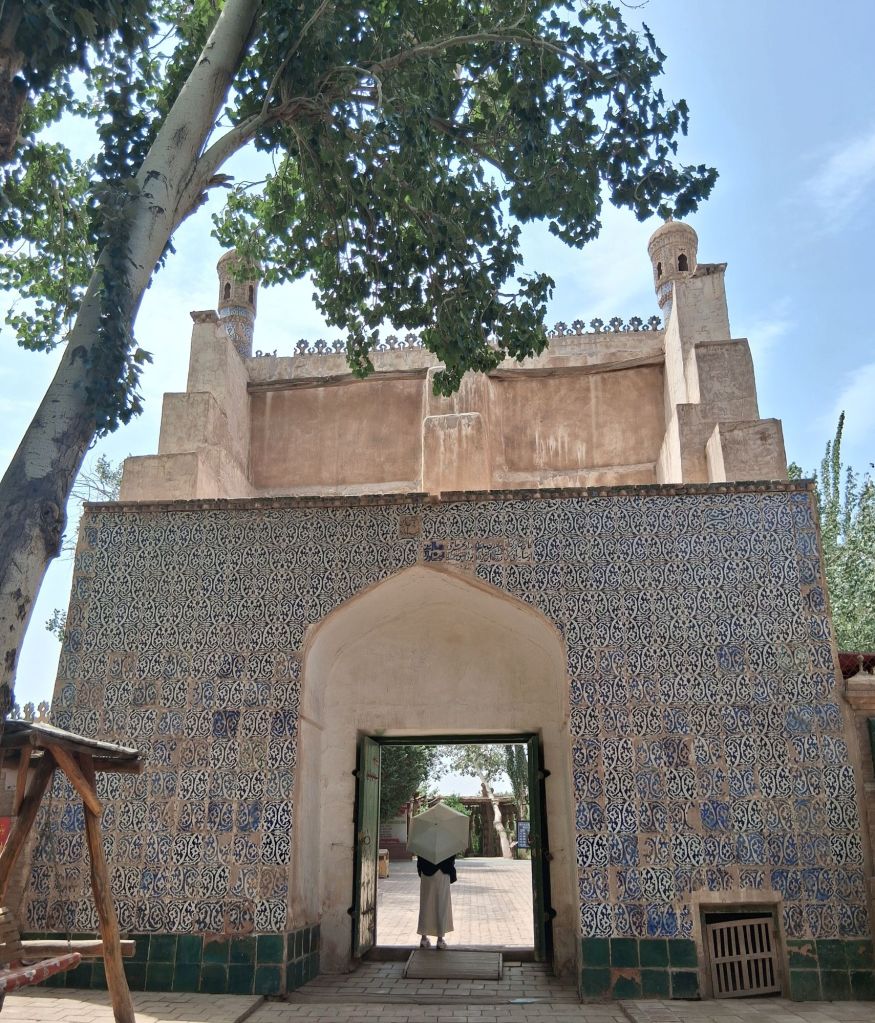
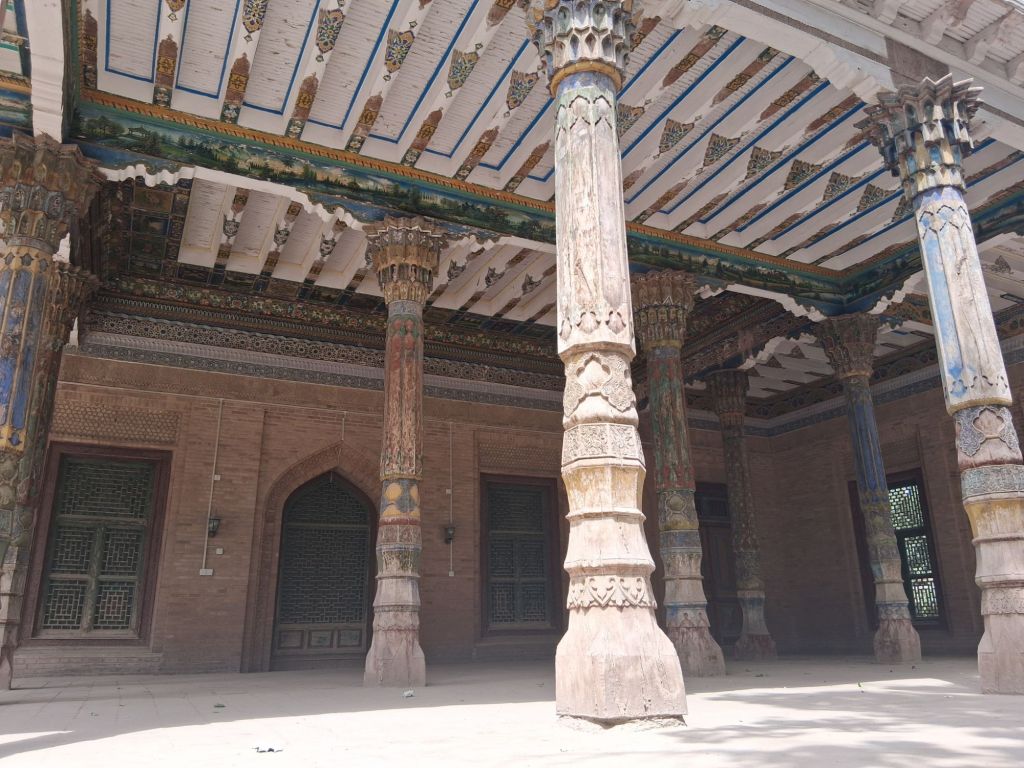
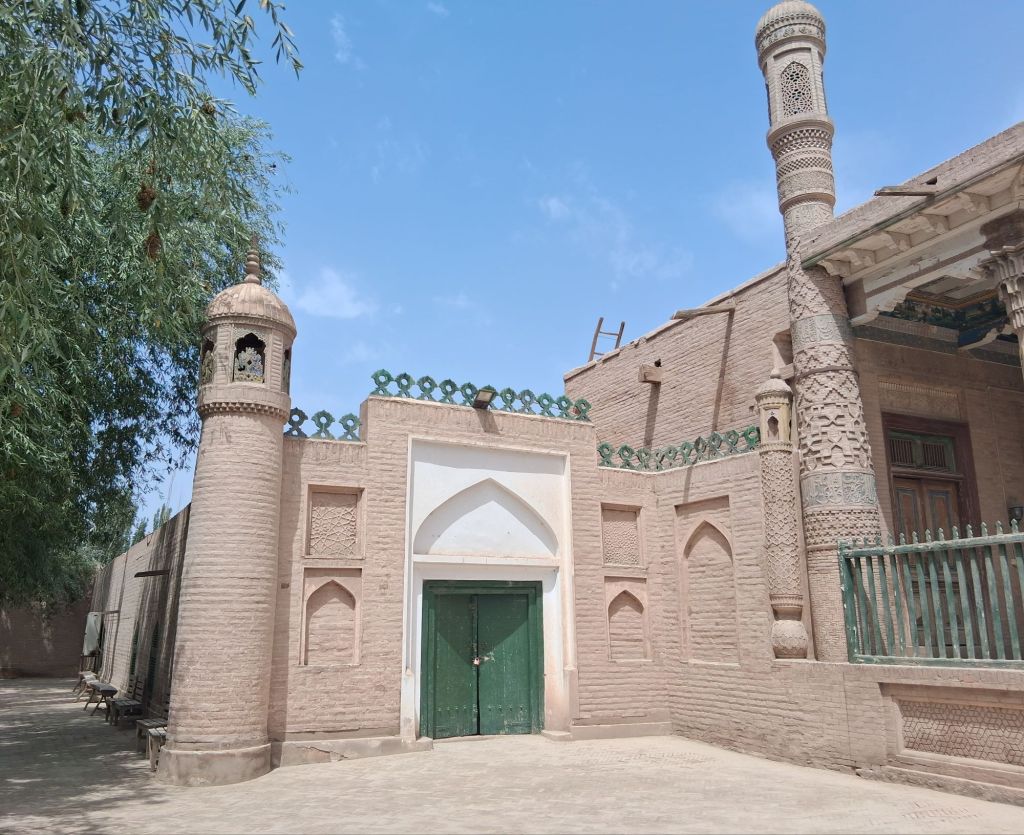
The site also includes the Big/Summer Mosque and Small/Winter mosque. Obviously, they are no longer for visitation, but you can look from the outside:
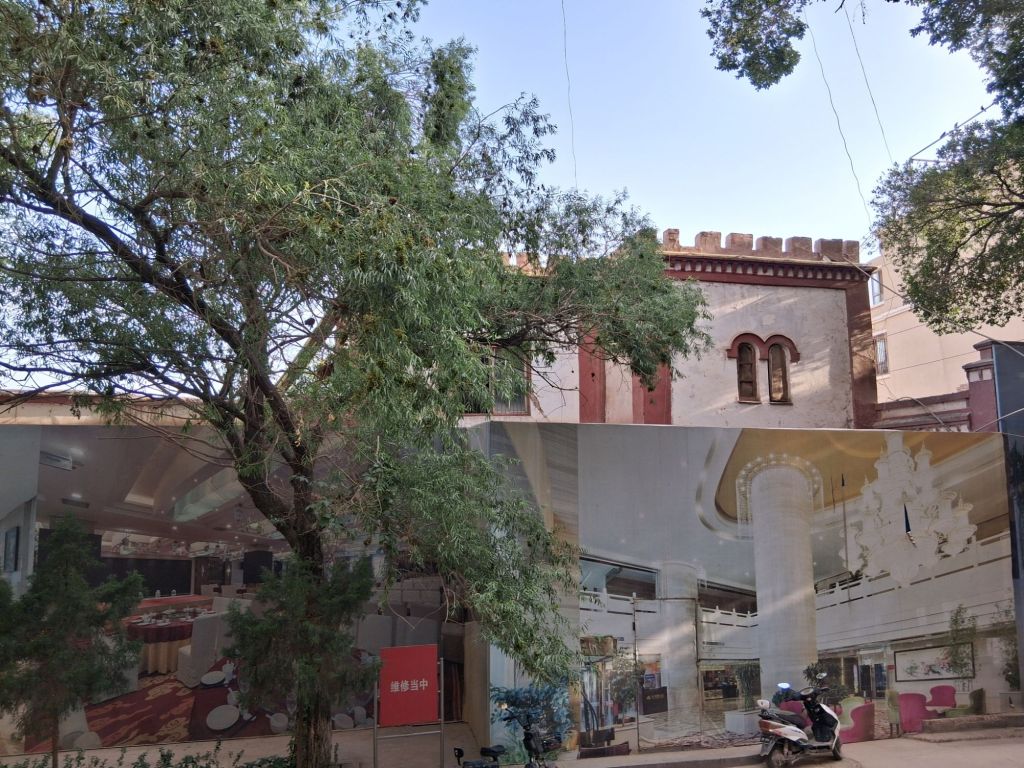
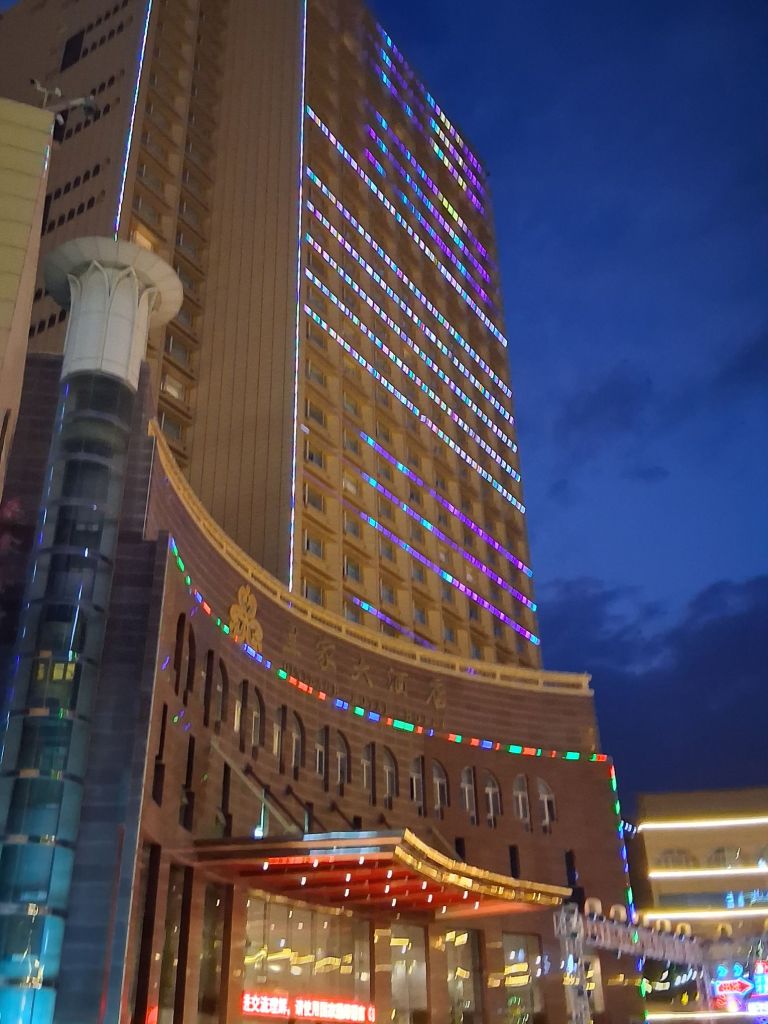
After lunch, we were dropped off at our hotel which is the original British Consultate General in Kashgar which was established in the 1908 as a diplomatic outpost during the Great Game between Britain and Russia over the region between India and Russia. After WW2 the Consulate General was revoked and moved to India-Pakistan and this hotel was built in 1953. Obviously, this is not history that China is particularly interested in, so they have built a huge hotel in front of it and “protected” it with hoardings. They have left the tree though…

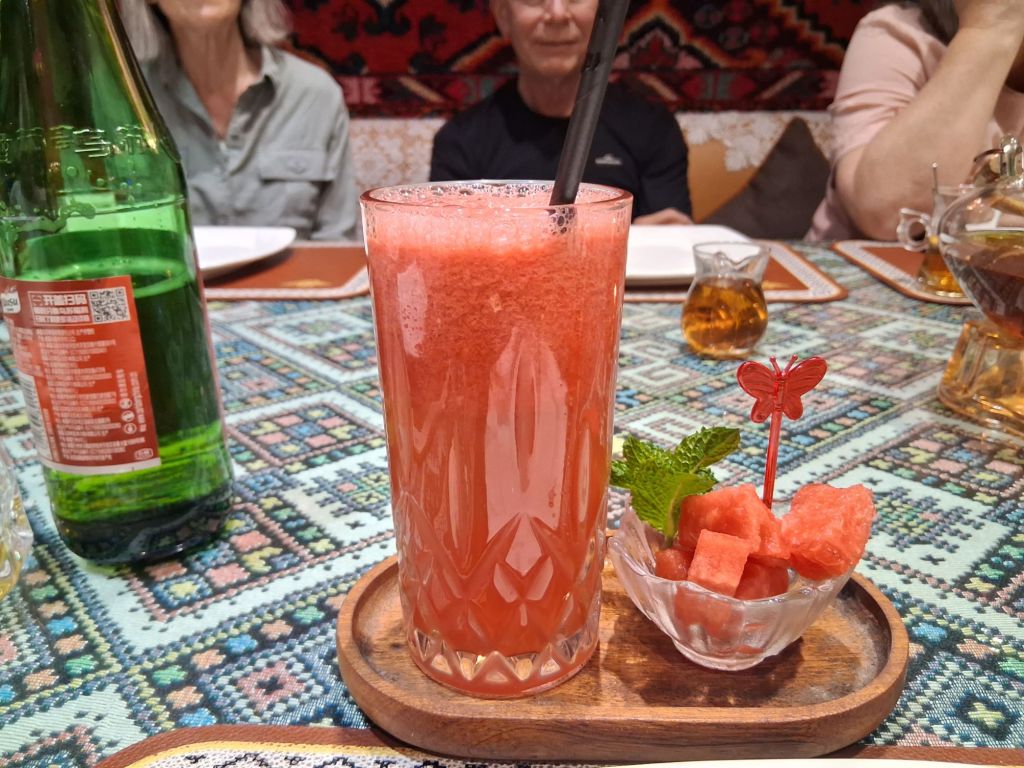
I spent my afternoon having a little wander around the old town (but more on this once I have had my official tour of the old town) and then a little relax before dinner. Disappointing this hotel room’s toilet does not even have an automatic flush, I feel we have been downgraded… Anyway, we went for a Turkik dinner (which I failed to photograph), but I think you all know what a lamb kebab and pide looks like? I did photograph my watermelon juice, though:
Today, according to the official itinerary we were going to visit Shipton’s Arch, which is one of the tallest on earth, but unfortunately, it is currently closed for safesty reasons, so we driving 2 hours to Oytag Glacier Park to go look at the glacier. A slight hiccup by our guide Osman being unapologetically 30 minutes late – there was nearly a coup (not led by me!), so we are starting the drive in some very awkward silence. I suspect a complaint may be being made…
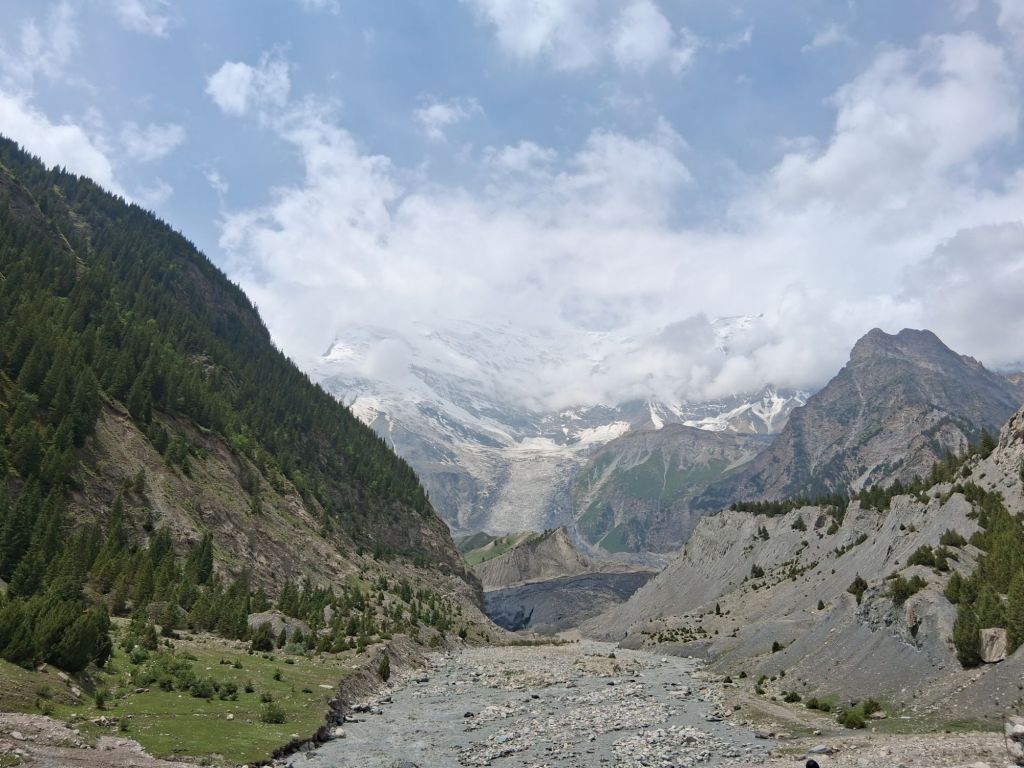
As we approach the Chakragil mountains, the scenery is absolutely stunning:

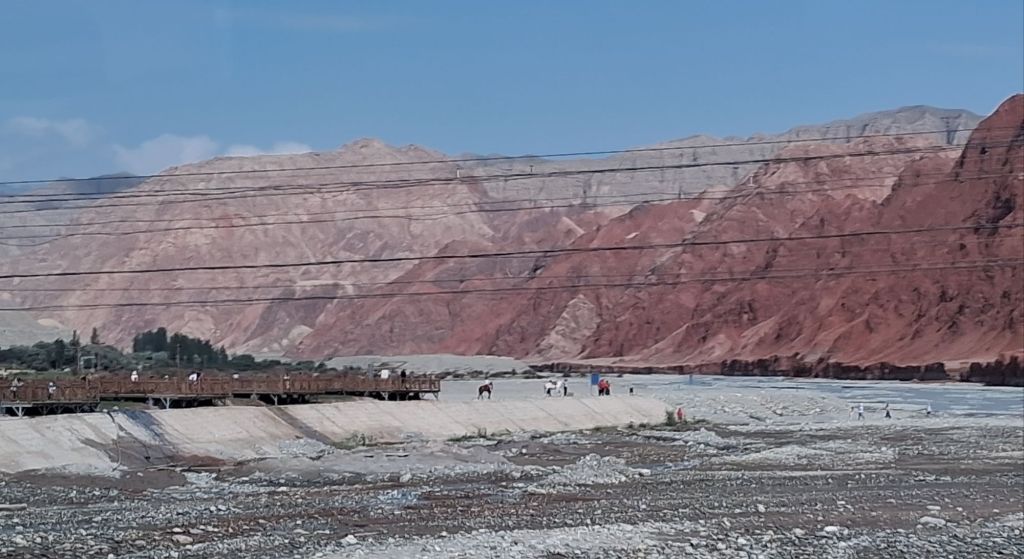
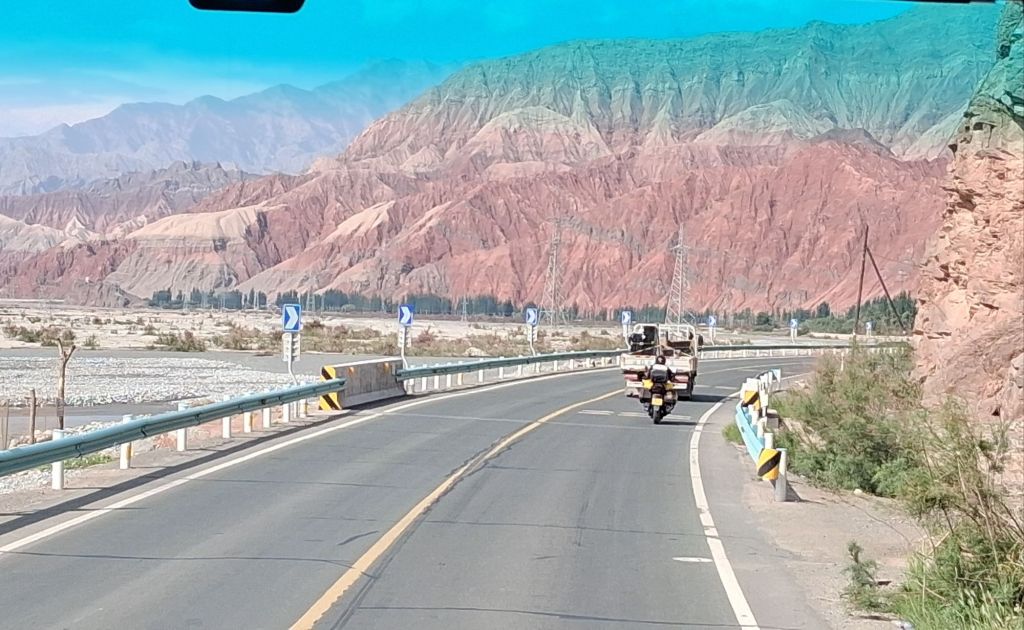
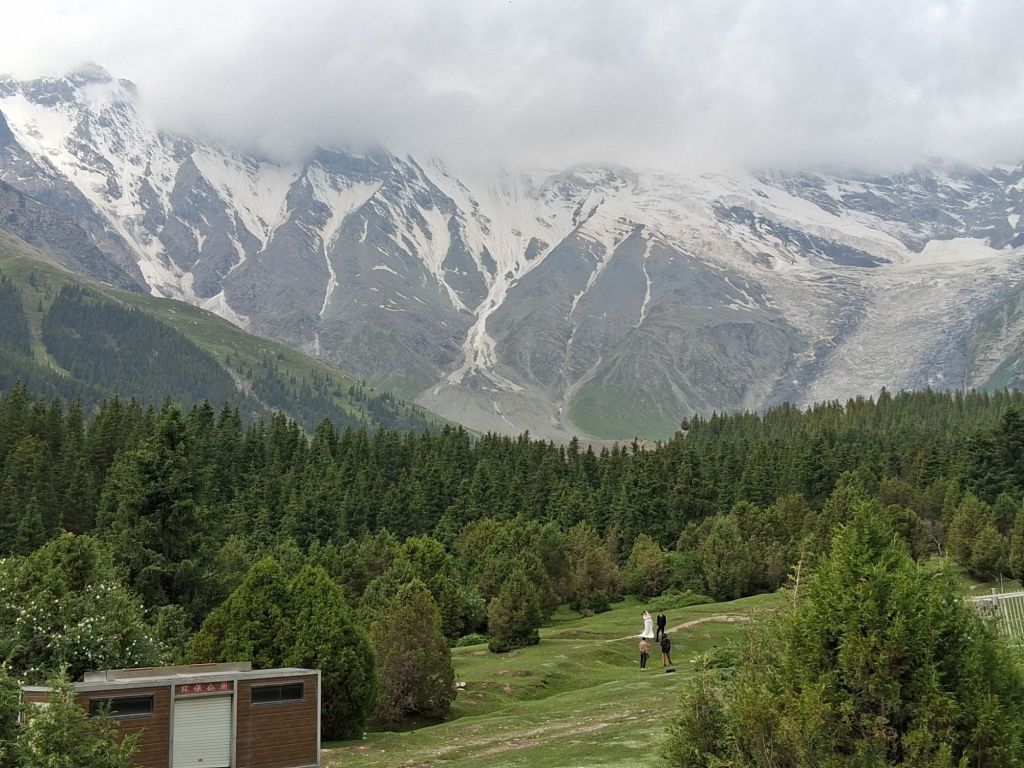
The Oytag glacier is on the south side of the Chakragil mountain. Legend has it that a brave warrior called Kul Coro from the Epic of Manas is buried here having been betrayed by his friends,and deciding rather than give in, he would kill himself. Apparently his head floated out of the ground after burial and joined with the mountain peaks.
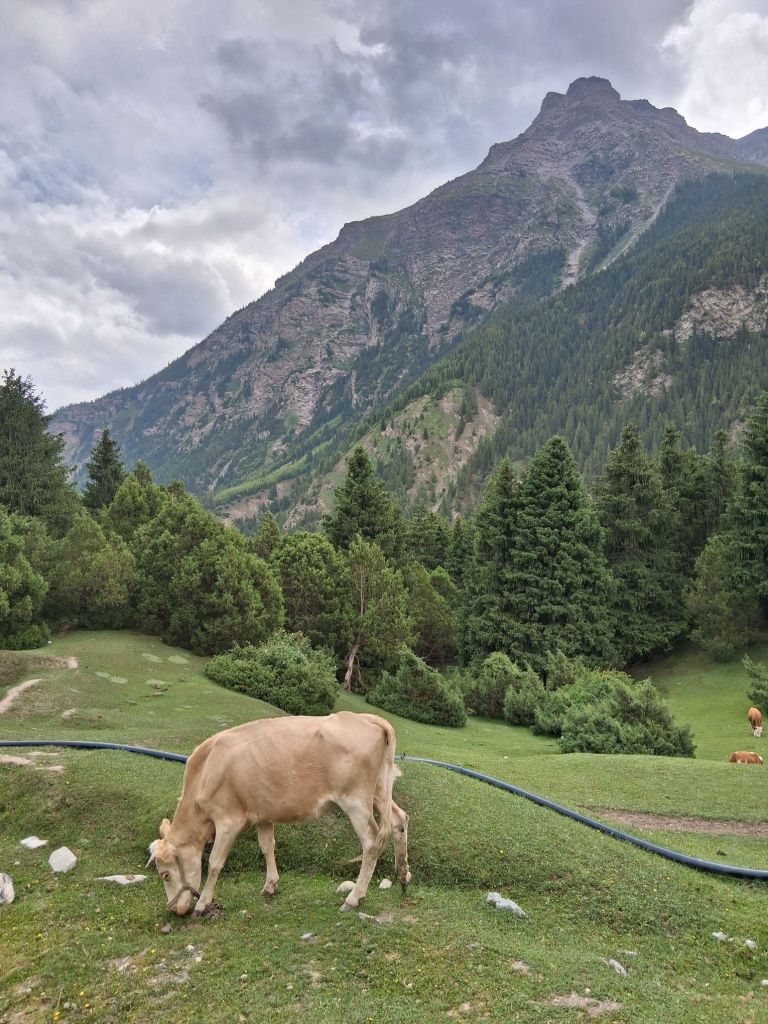
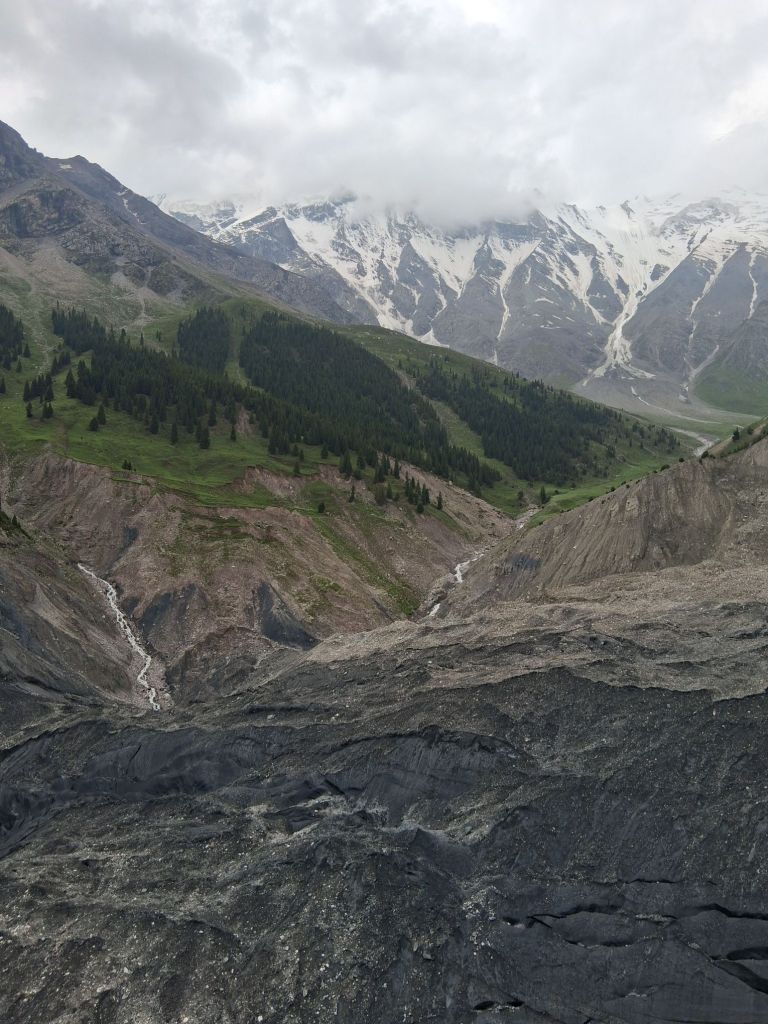
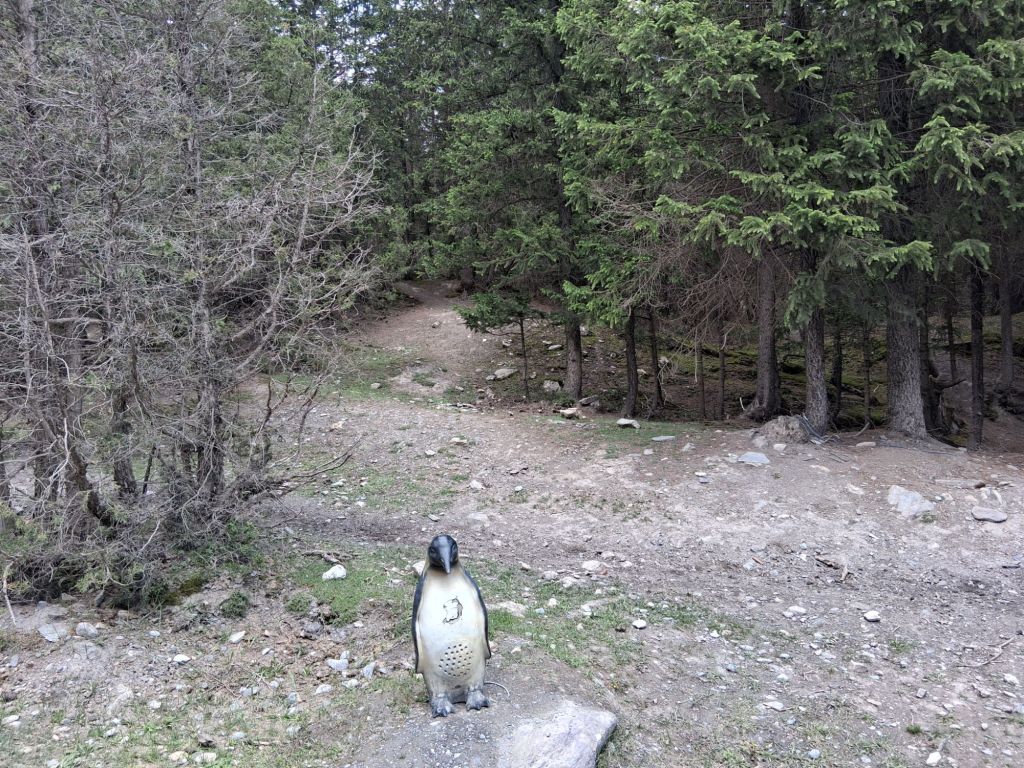
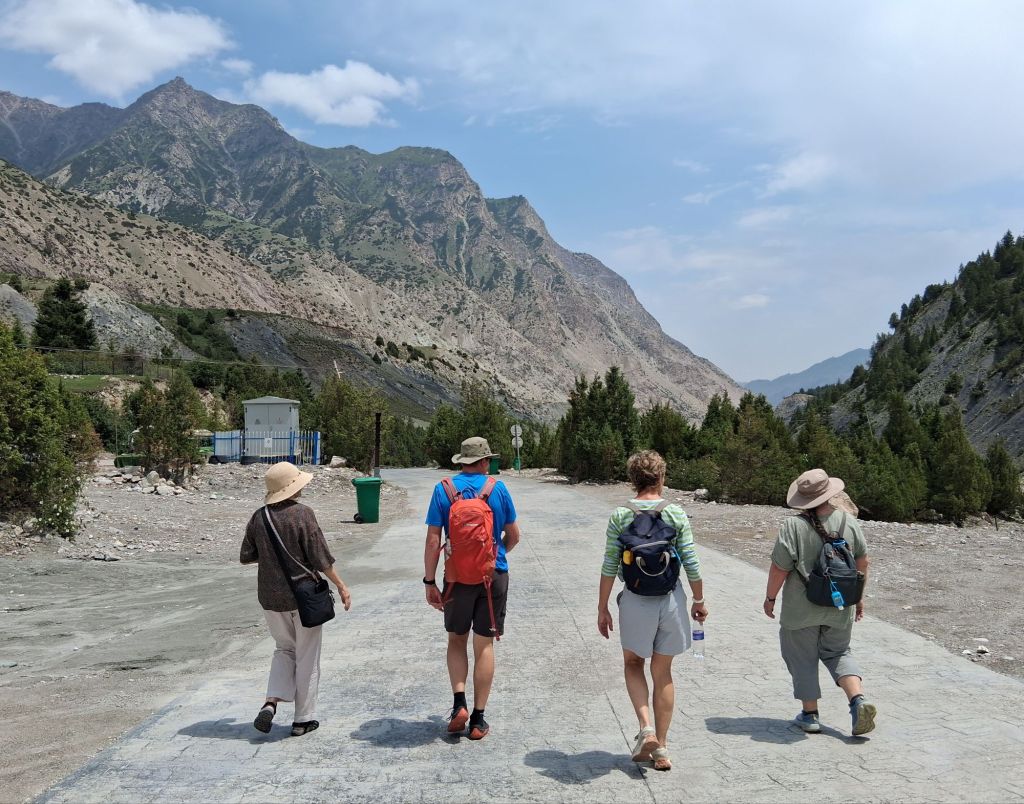
This being China, there was a shuttle bus most of the way and then a 20 miunte walk up to the viewing area (which took me 35 – there was the combination of altitude and steps!). I am going to be honest, it looked a lot like Switzerland (there were even cows) and a rather disappointingly small glacier.
We are now on route to lunch which was a perfectly acceptable, albiet non-photogenic noodles (same as on the train) and a lamb kebab. This afternoon we are visiting another (we suspect closed/only tourist destination) mosque and having a walk around the old town. However, as this post is getting bit slow to load as I type, I shall end it here as we speed back to Kashgar…
One response to “Stage 7.13 – Kashgar (Part 1)”
-
Sadly, I assume that you will not actually be taken to see the border with Kyrgyzstan. And that soon you will fly home via Beijing. But at least you will have lots of wonderful memories.
Keith xXxLikeLike


 Travels with Kathryn
Leave a comment