You know me, I love a morning and what would one rather be doing at 5.30am than going to a fish market? When on holiday…
So the Negombo Fish Market is the only thing detailed in my guidebook as a must see in Negombo. This is the second largest fish market in Sri Lanka with around 400 boats unloading their catch here. Well, I am pleased that I went. It starts at around 2am when trawlers come in, and runs until all the trawlers are in and the fish is sold. This is the wholesale market and I had expected fish, but was not really prepared for the massive sharks, piles and piles of fish and seafood and the number of trawlers. Tuna are really big – who knew?

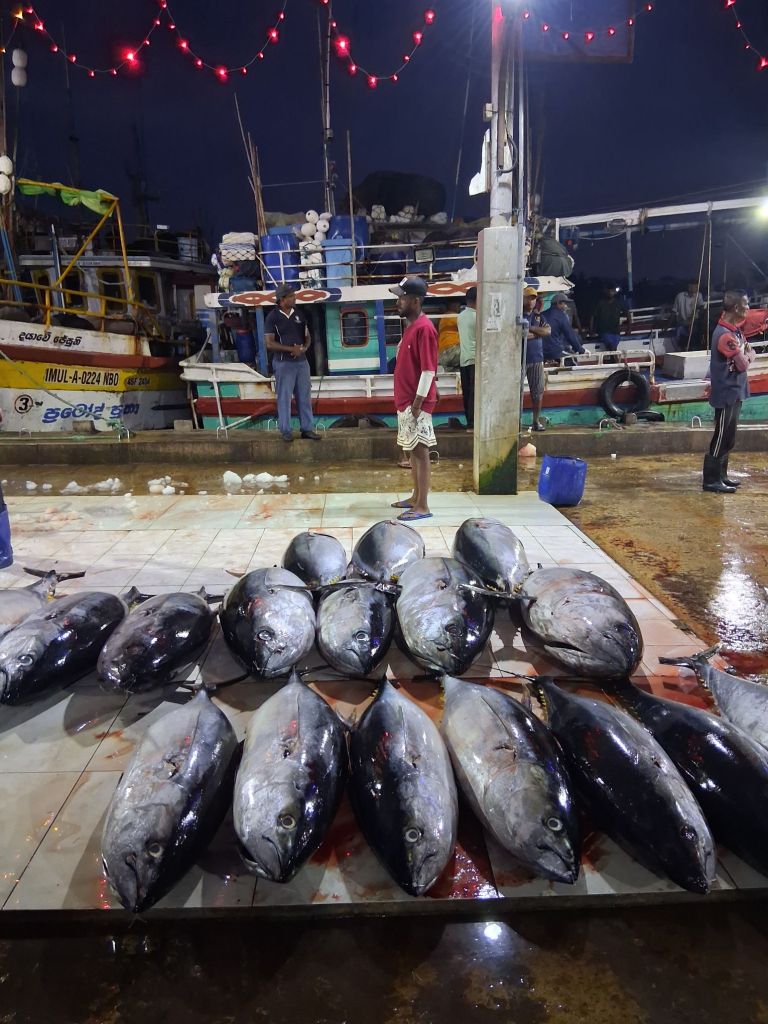

Some of the fish is sold locally, but the majority have their heads and tails cut off, are frozen onboard and then either taken inland or exported. In terms of prices, tuna is around $8.50 a kilo but the more impressive catches (such as the shark and really big fishes) go to auction.
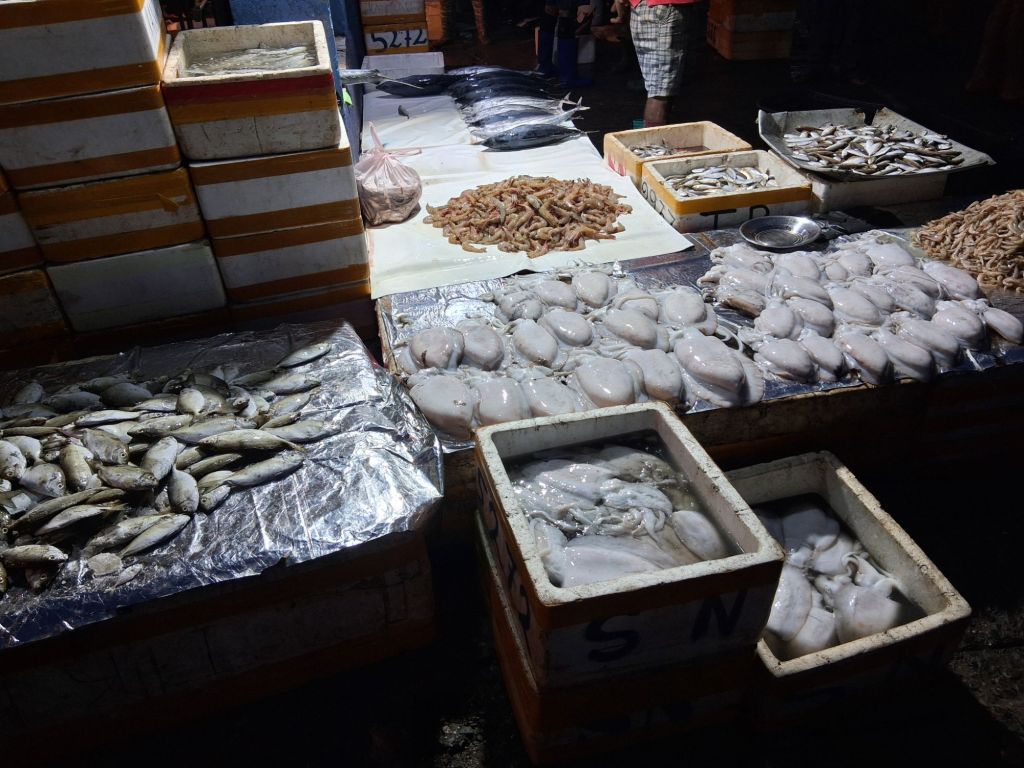
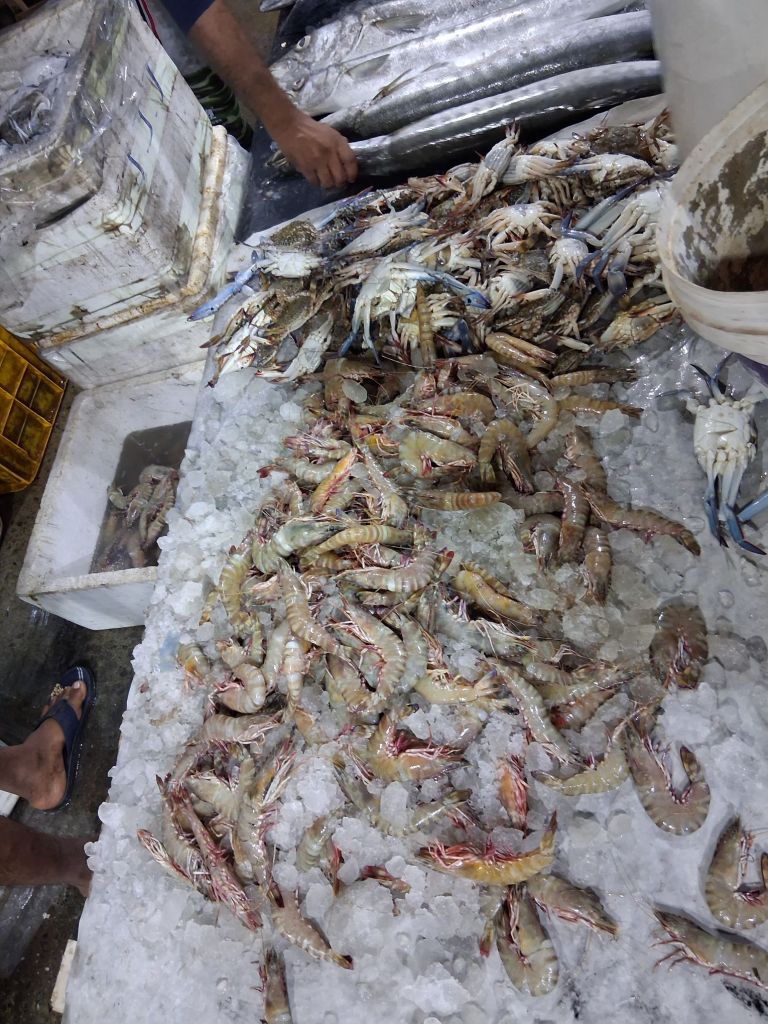
There was also a wide selection of seafood which I was far more interested in being sold in the market across the road. This included locals and smaller fish sellers coming armed with their own buckets for transportation, and you could even get it sliced infront of you very precisely with very big knives:

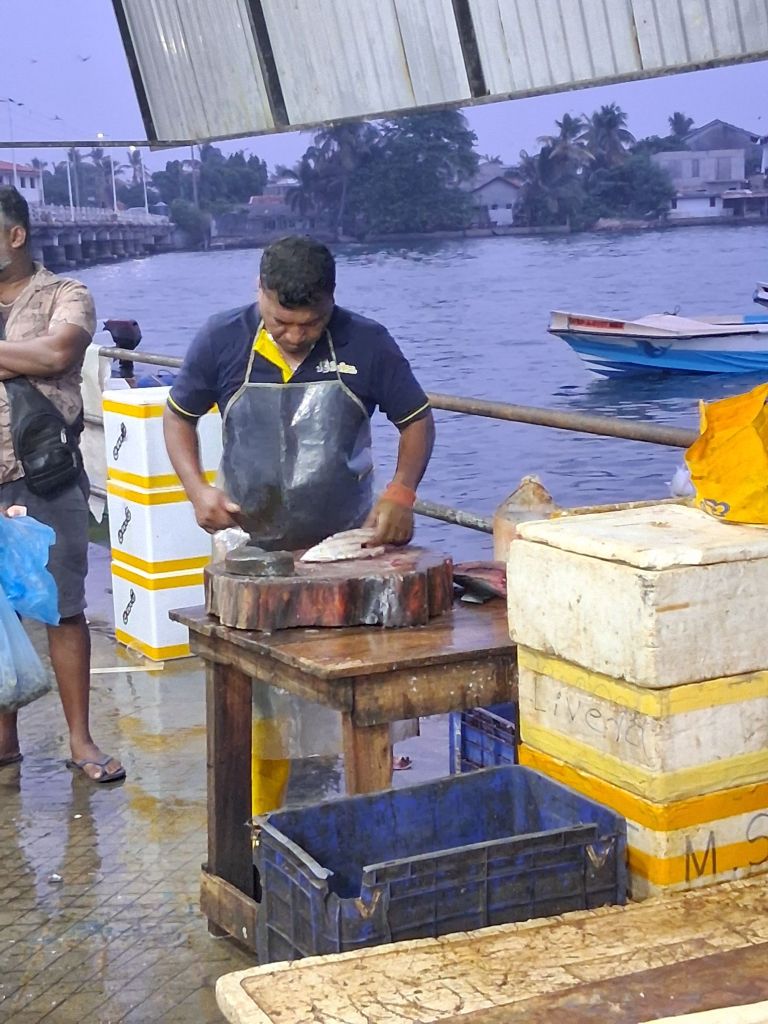
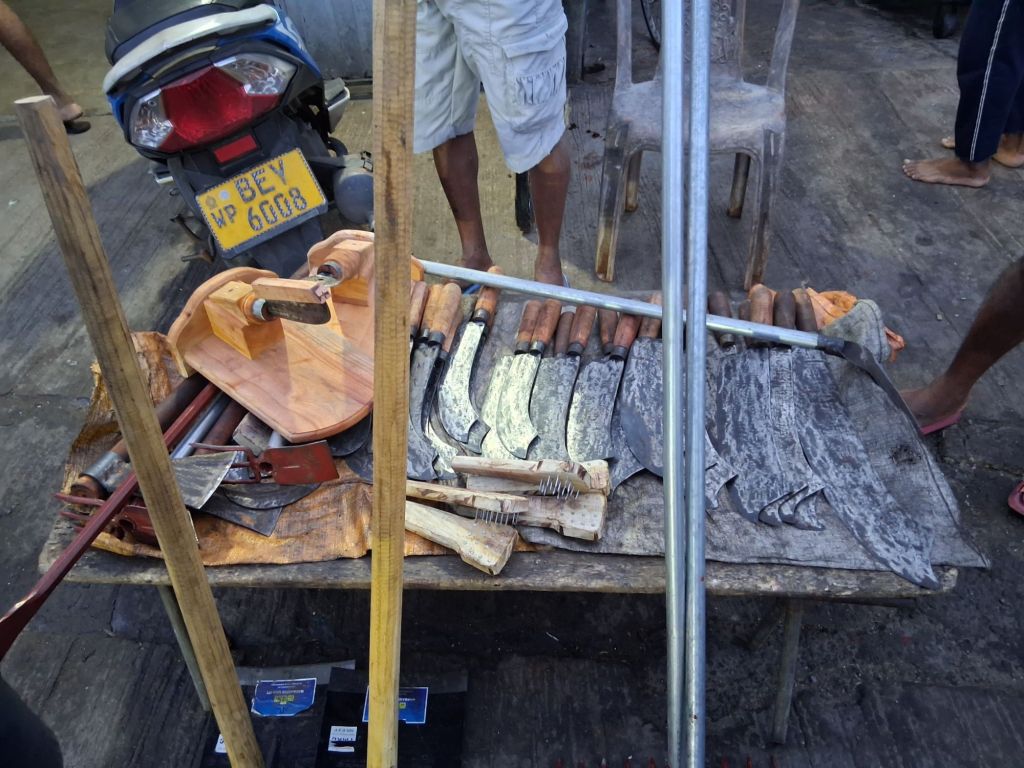
By 6.30am the sun had risen on a rather overcast day:

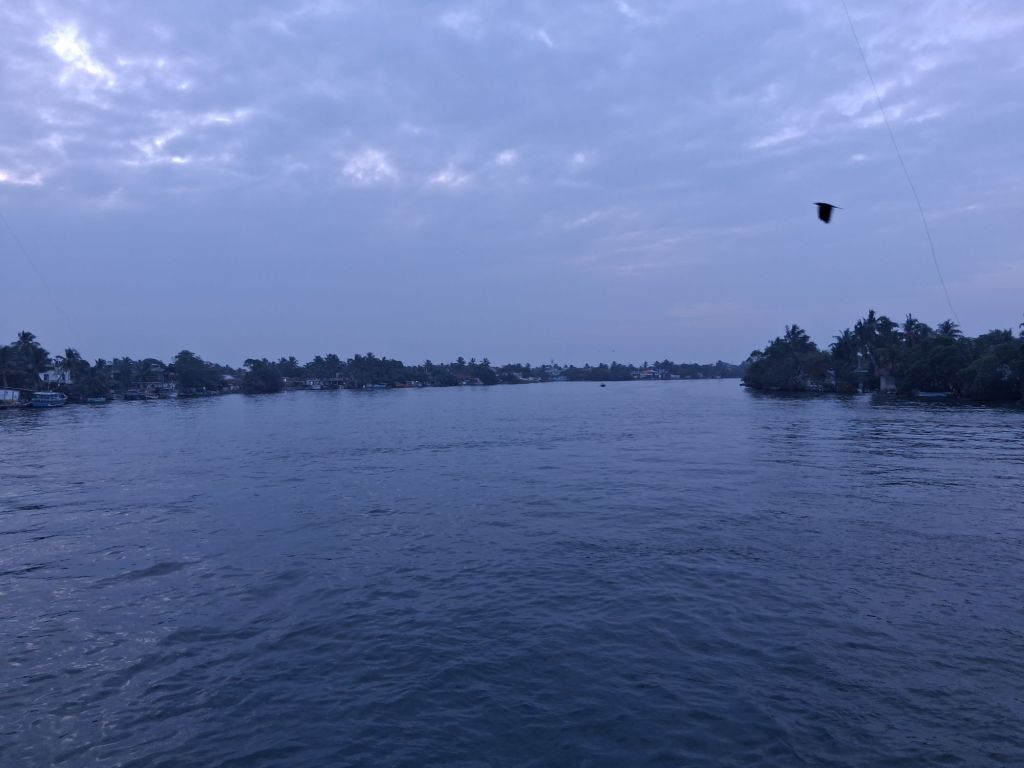
We returned to the hotel around 7am and were leaving at 8.30am. I considered going back to bed, but as smug morning people (you know who you are!) would encourage me to make the most of the day I went for a swim – 30 minutes of laps up and down the pool. Impressive no? After showering I even had time for breakfast, this is so unlike me.

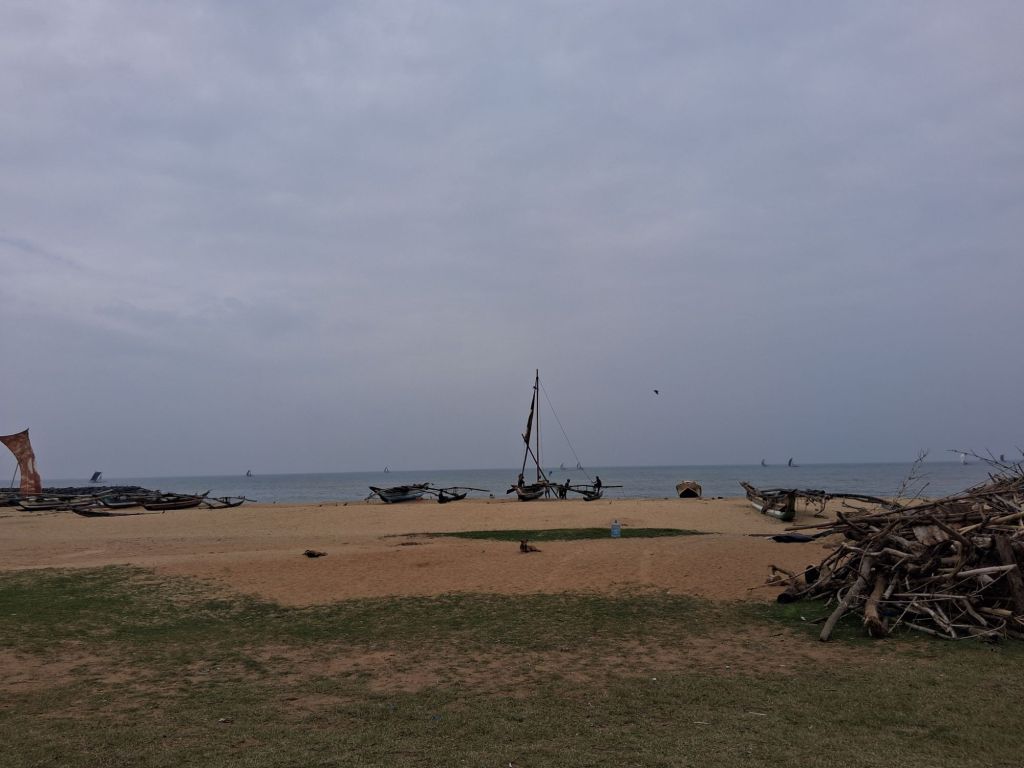
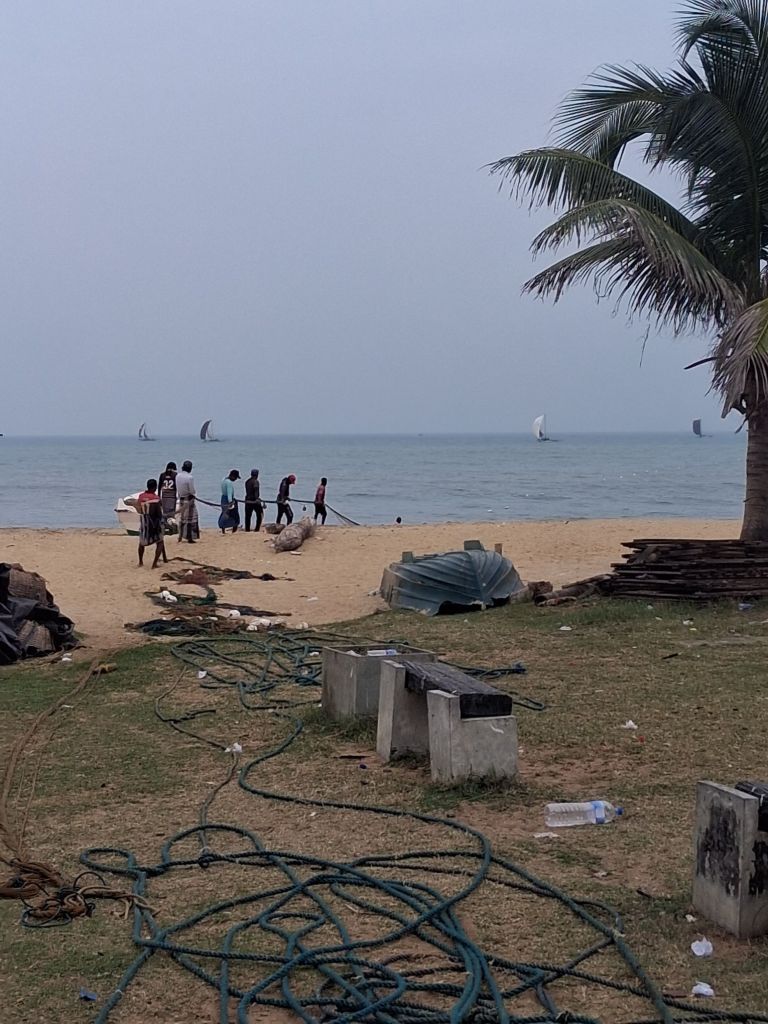
We are now leaving Negombo and driving north-east to Anuradhapura. This will take around 4 hours, but we started with another fish related photo opportunity. These are the traditional fishing boats which go out at night as the winds blow away from the shore, and come in in the mornings when the winds change direction. The people pulling the rope are pulling a huge net which had been dropped by the boats and waiting to see what they catch.
One of the things I love about a guided tour is that every journey represents a learning opportunity (hurrah). But unusually for Travels with Kathryn, I will not be starting with the history of Sri Lanka as this was not today’s topic. Well, maybe just to say that Sri Lanka has had many names having been colonised by the Portugese (in 1505), Dutch (specifically the East Indian Trading Company in 1640) and the British in 1850. The British were the first to fully occupy the whole of island, bringing with us milky tea and cricket (for which the Sri Lankans are thankful) but also creating lot of problems (particularly when we left, but that is a story for another day…)
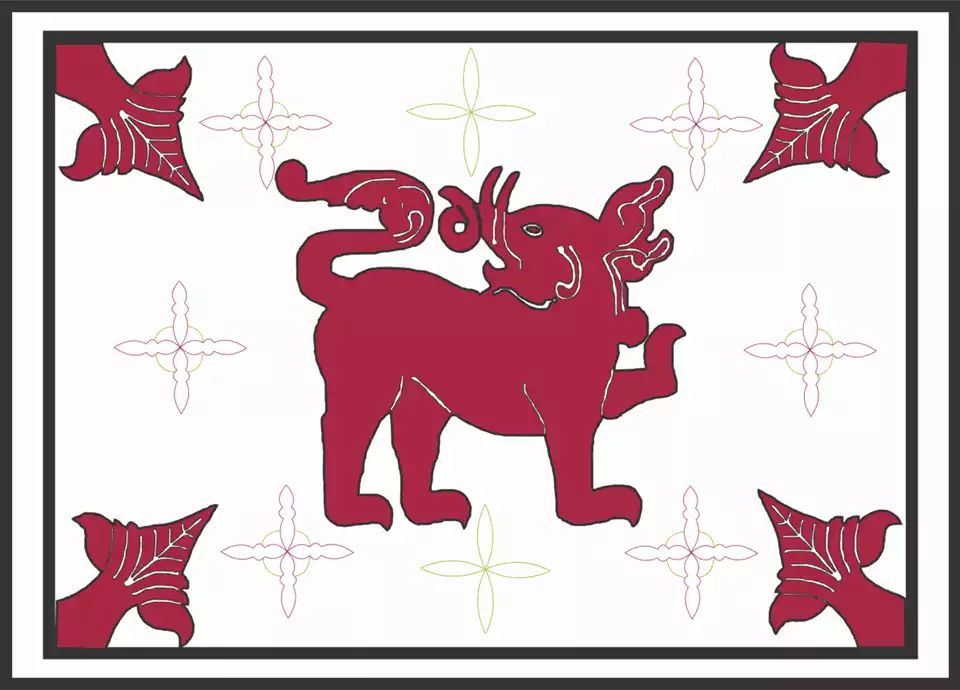
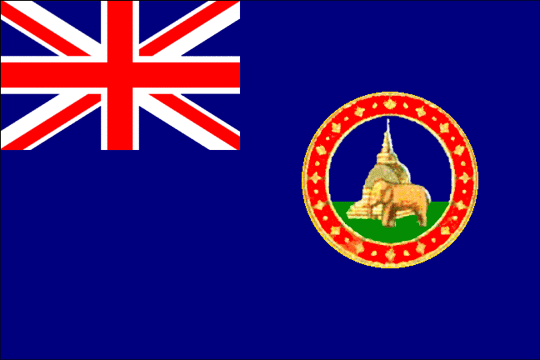
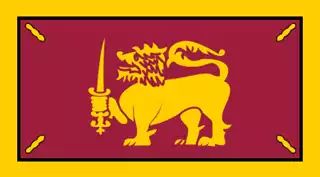
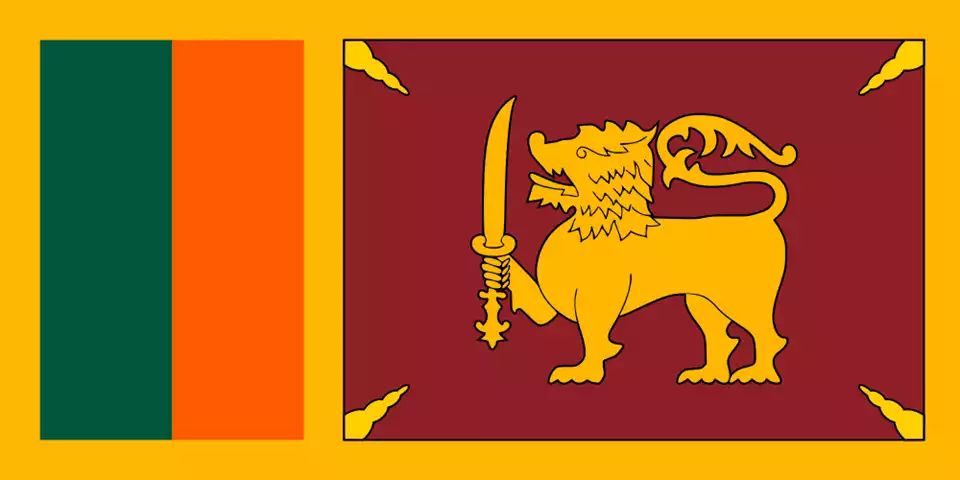
Fun with flags: Sri Lanka has had 6 national flags pictured below. The first was pre-colonisation when Sri Lanka had a monarchy and included the lion holding a sword. This symbolises strength, but also the story goes that Sri Lankans are descended from lions after a princess and a lion got together. As someone in my group said, that was probably rather uncomfortable. The lion has been shown on all the flags other than the British flag – none of this strength of the people malarky, and obviuosly we had to include the Union Jack! The current flag shows the lion – the red background is the Singhalese people (who make up around 75% of the population), the green stripe represents muslims (9% of the population) and orange stripe represents the Tamils (15% of the population). In the answer to yesterday’s question, in each corner of the flag are the leaves from the Bodhi tree, this is the tree under which Buddha sat to achieve enlightenment i.e this represents Buddhism (the national relgion of Sri Lanka). Together, this shows all the groups living together in harmony- more on the civil war to follow…
Now I shall list the national things of Sri Lanka:
- National tree – Ceylon ironwood
- National flower – blue waterlily
- National bird – jungle fowl (basically a chicken with ideas of grandeur)
- National animal – giant squirrel (looks cute, actully vicious. The honey badger of Sri Lanka perhaps?)
- National gem – blue sapphire
- National sport – volleyball (not cricket for some unknown reason).
Sri Lanka has two national languages – Singhala (which is very swirly) and Tamil. Before 1947 English was the national language and is still widely spoken. Until quite recently, Tamil was only spoken by Tamils, whereas now both languages are taught in schools alongside English.
So that took us most of the way to Anuradhapura were it has continued to be overcast. There was even some light rain, but we shall pretend that didn’t happen. Driving along, I am very much reminded of southern India but more tropical. I tried to take photos on route to show you what I mean, but nothing came out whilst moving at speed.
Auradhapura first became Sri Lanka’s capital in 380 BCE, but it was 307-267 BCE when Buddhism reached Sri Lanka that it rose in importance with its golden age in the 1st century BCE. It was the capital until 1017 when the city was sacked by the Cholas and the capital was moved to Polonnaruwa.
On arrival we stopped off for a bit of a tourist lunch buffet. It was all very nice, but very much put on for the Westerns who are frightened of local cusine – however they get points for a really great pumpkin curry.
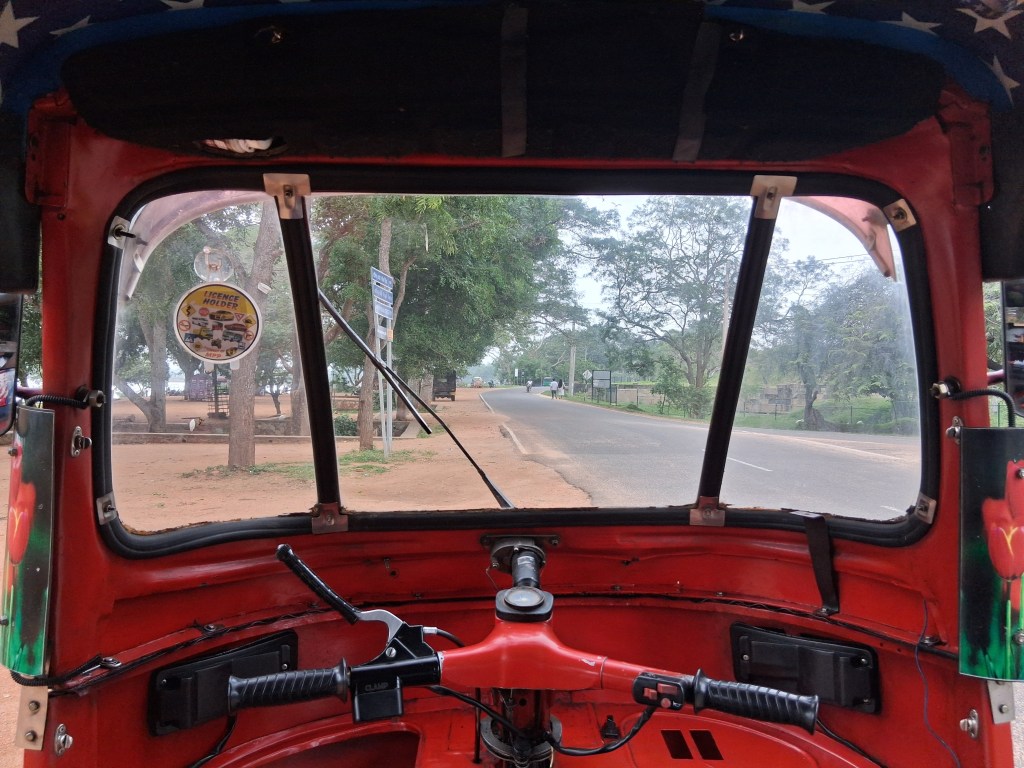
By now it was 2.30pm and we checked into our very fancy hotel (shame we are only here for one night), a quick faff and then it was back in the bus for our tour of the monestary complexes of Auradhapura. So, this was a bike tour so I had to be very clear that my riding a bike was not an option (I really can’t) and luckily there was a solution! The bike tour comes with a support vehicle (a tuktuk) which I, like an elderly invalid, rode in. As you will see from the photos below as the bike riding continued into the dark I was incredibly relieved I wasn’t expected to ride a bike.

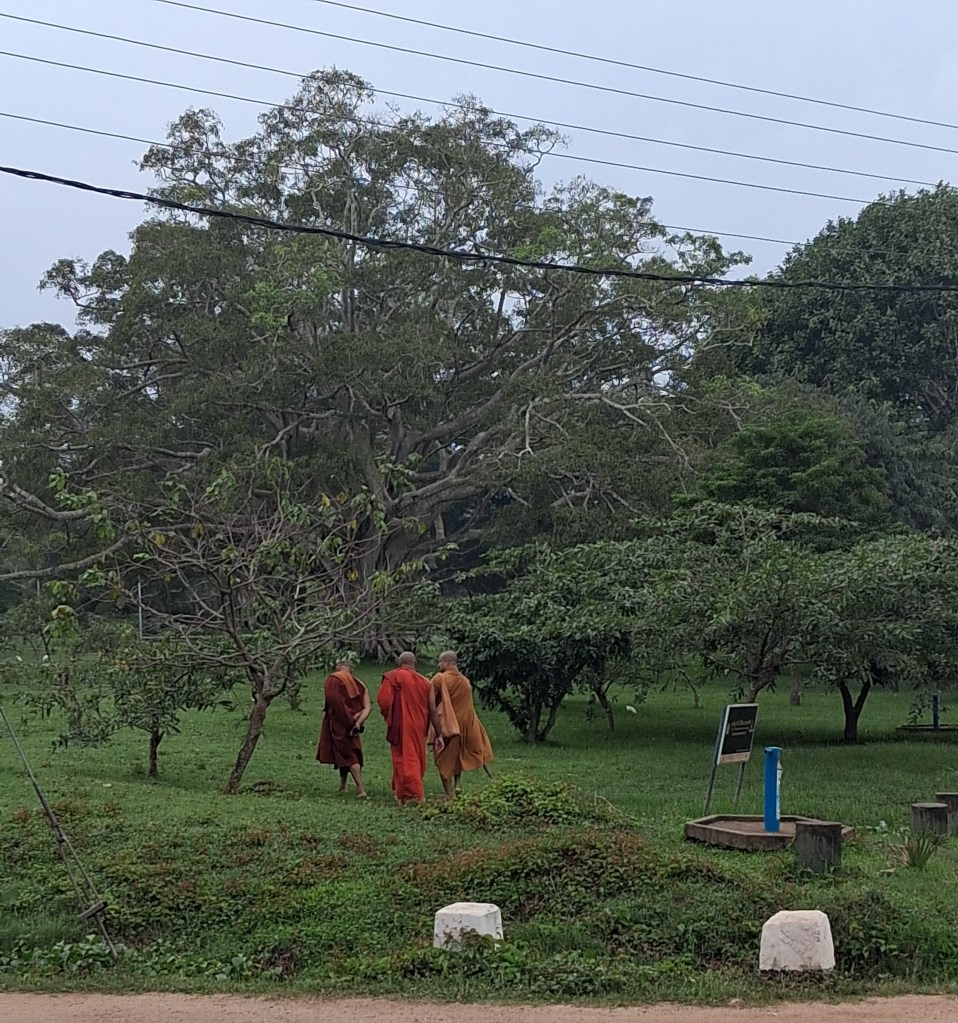
Anuradhapura is a sprawling site of archaelogical ruins as over 2300 years ago it was a major Buddhist monastic centre with (at the time) some of the world’s largest buildings. For those of you that have been to Ankor Wat it is a similar experience, only with more stupas. Today it is a major pilgrimmage centre and most of the people we saw were sri Lankan locals (dressed in head to tow white) with only the odd tourist group mixed in.
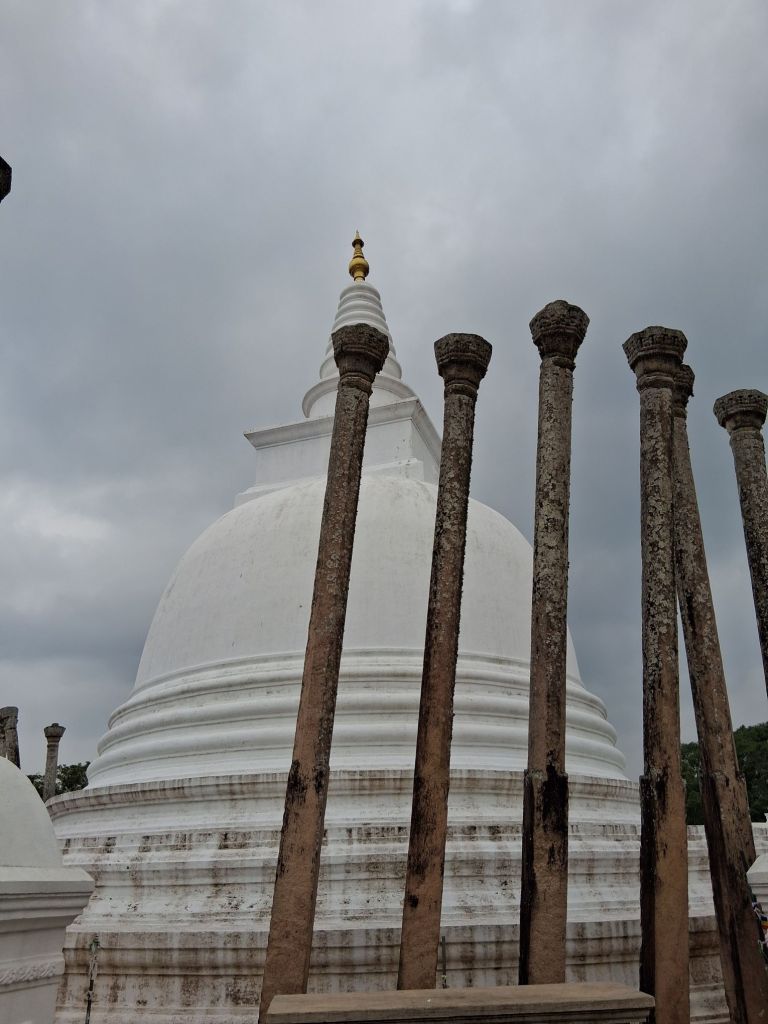
Our first stop was the Thuparama Dagoba which is the oldest in Sri Lanka and was built in the 3rd century BCE to enshrine the right collarbone of Buddha. Pictured below you can also see pillars – these would have supported the Vatadage which was a canopy over the stupa. There would have originally been 176 pillars but only 41 remain.


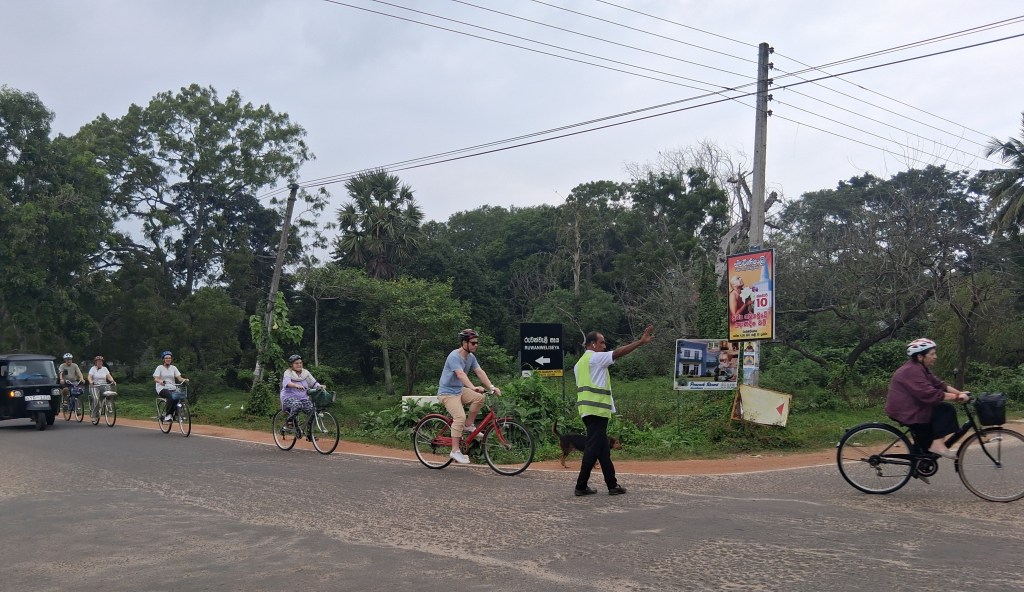
It was then back in my tuktuk for our next stop. I should probably add that I did perform a very valuable service by not riding a bike. I was able to take photos and also assist my driver when acted as crossing monitor.

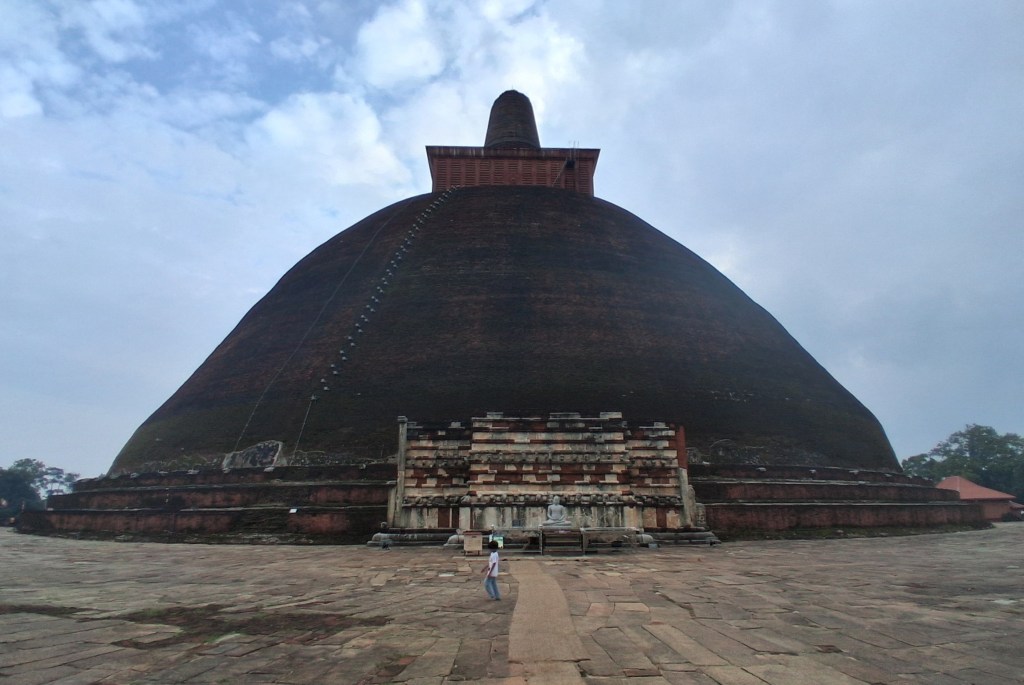
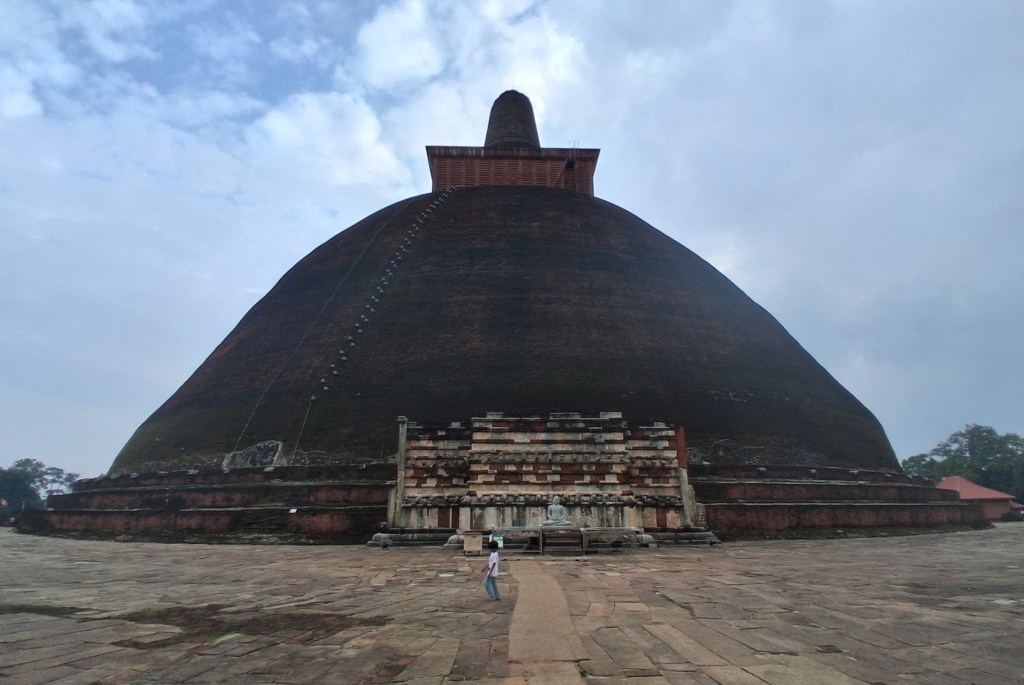
Next was the Jetvanarama Dagoba. This was bult 2300 years ago and at the time of construction was the third tallest building in the world (the first two being the pyramids at Giza) at 121m tall. Today it is a mere 73m tall up to its broken stupa.
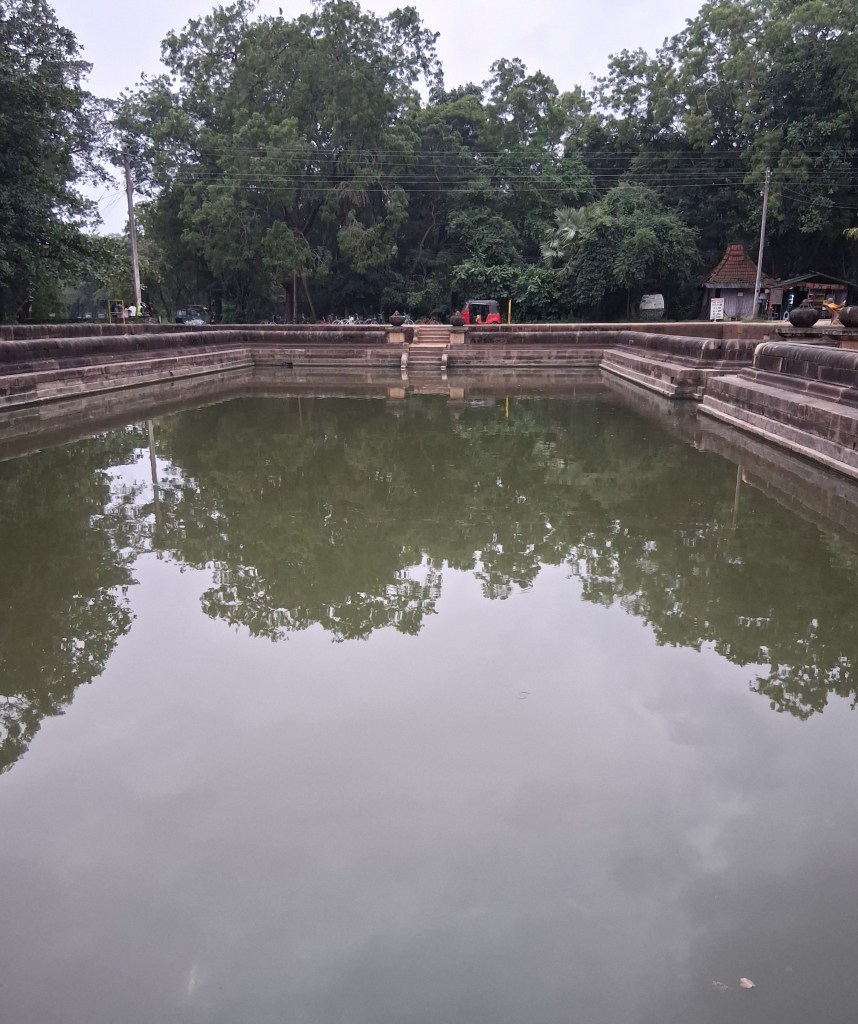
We then visited the Twin Ponds which are two massive bathing pools (deep as swimming pools) for the monks to use.
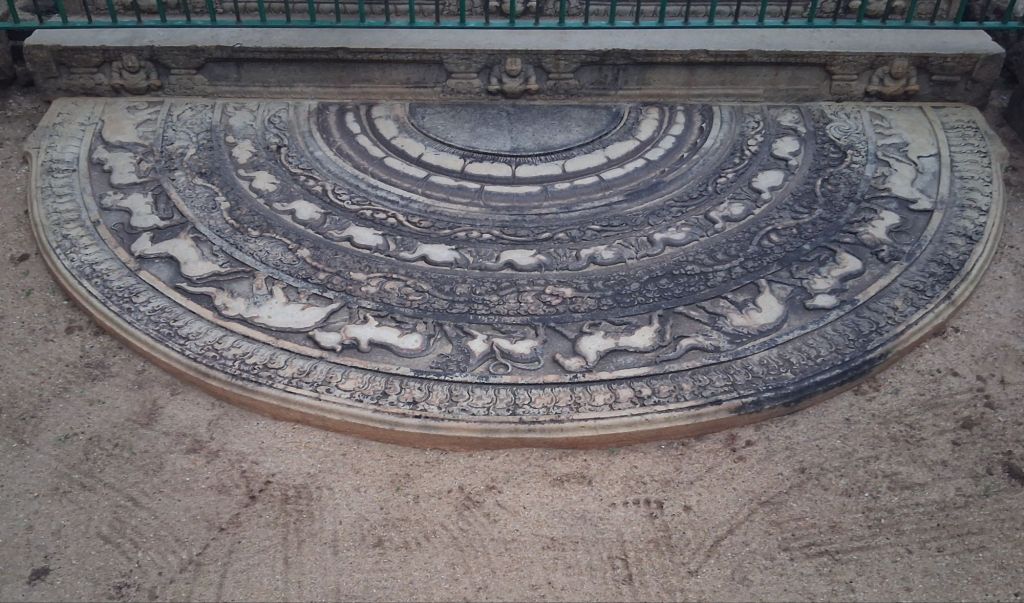
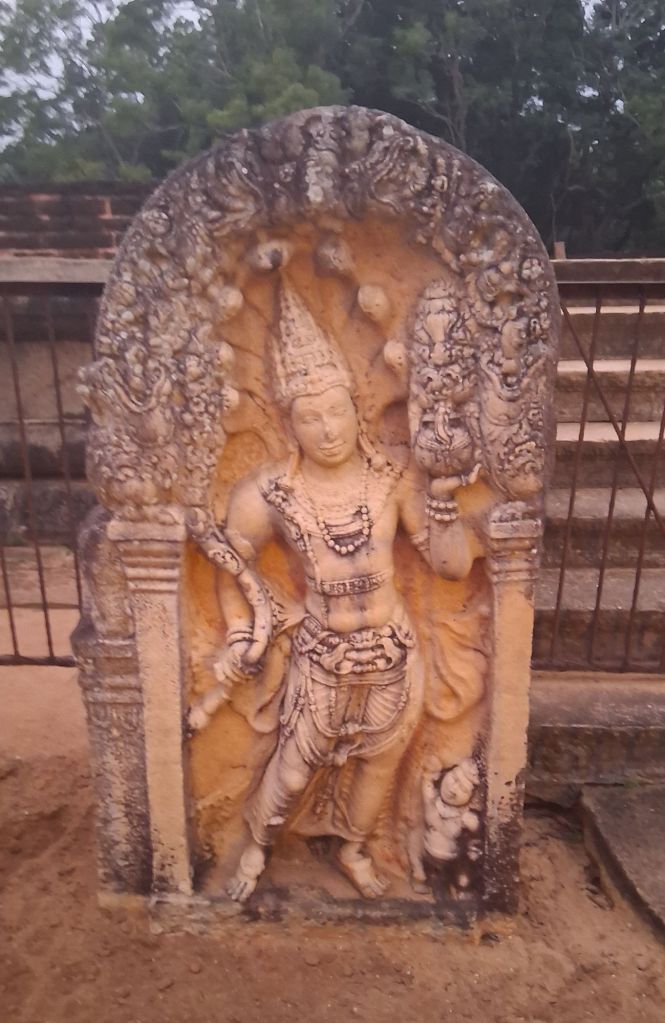
Our final daylight stops were to see the finest carved moonstone and Guardstone across the complexes. The Moonstone is a half moon stone which is always placed at the bottom of the stairs into a buddhist building, and either side of the stairs will be two Guardstones depicting Buddha. The Moonstone dates from 7/9th century AD. If you start at the outer layer of the moonstone you can see flowers which represents human lust, then a ring of animals from elephant (life) to bull (death) representing life and these repeat showing reincarnation, there is then deep flowers representing life’s complexities, then swans who can seperate milk from water (apparently) demonstrating that a wise man can seperate the good from the bad, then lighter flowers representing problems becoming lighter and the final layer are waterlillies depicting nirvana.
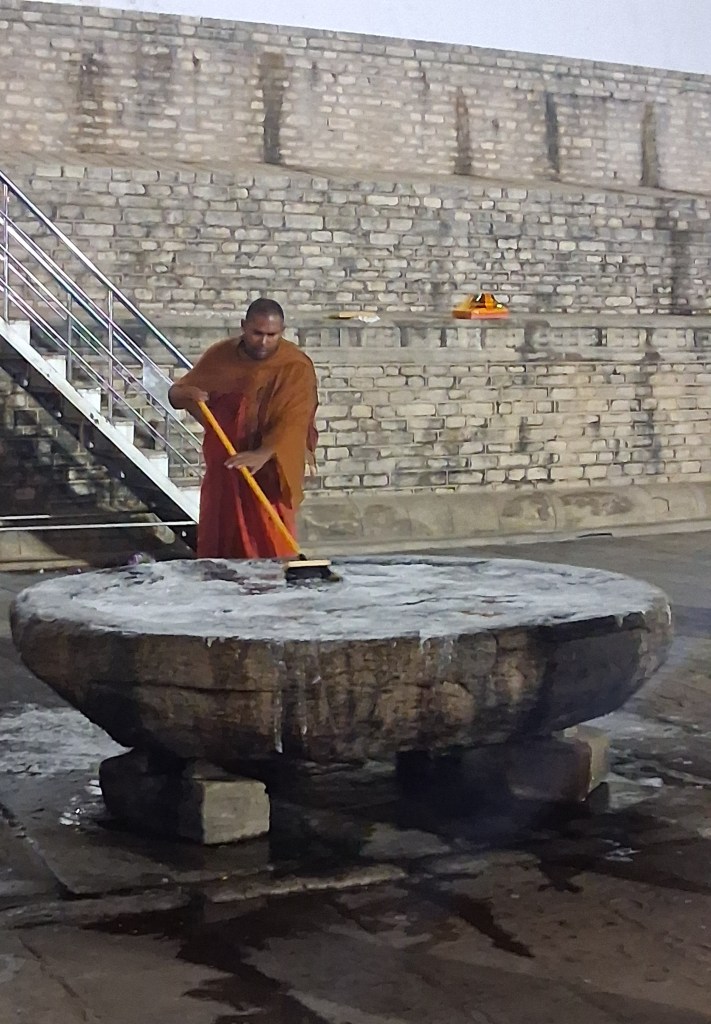
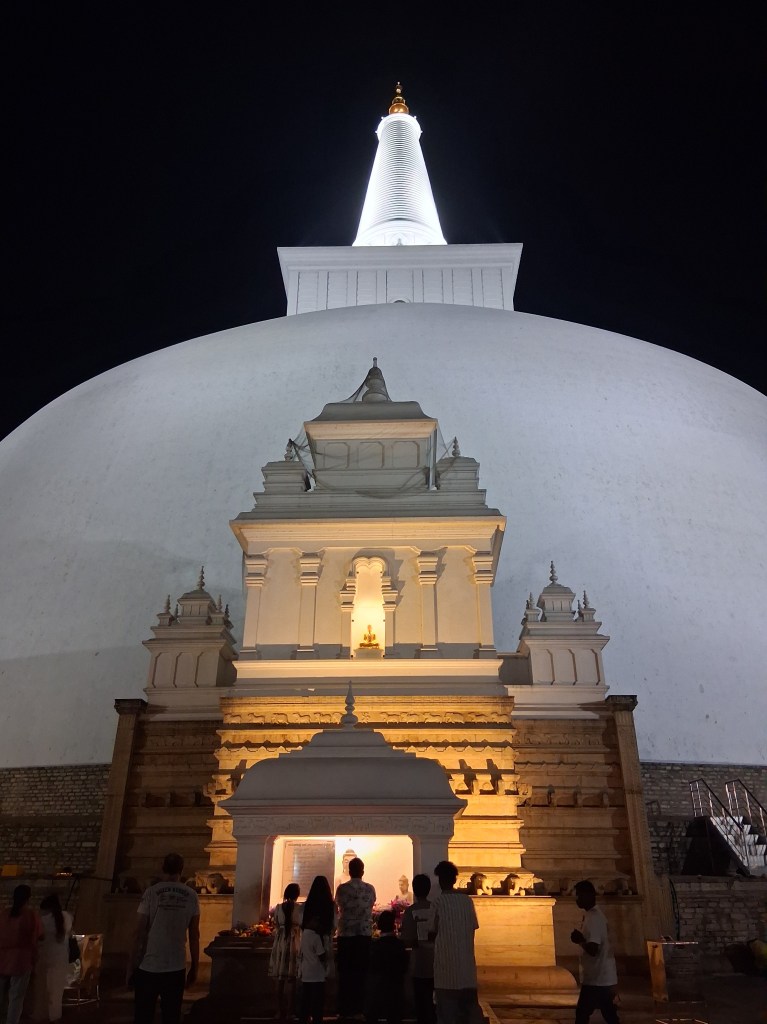
By now it was after 6.30pm and properly dark, therefore the intrepid cyclists had to ride back to return their bikes (we he support vehicle provided additional lighting) and our final stop was the most sacred Ruvanvelisaya Dagoba. This dates back to 3rd century AD and was constructed to enshrine portion of Buddha’s ashes. This was by far the busiest site we visited and was thronging with pilgrims and you could really smell the incense, flowers, and coconut oil (the traditional offerings made by devotees).


By now it was 8.30pm and I was certainly flagging (I was not alone in his) so a quick dinner of hoppers was decided upon which I shall write more about in my next post as this one is now rather long and keeps crashing. I may have also lost some readers along the way… On the short drive back to the hotel, our guide Janith asked for our highlights of the day, and I said the last dagoba, forgetting about the fish market as it felt so long ago! I shall sleep well tonight.

 Travels with Kathryn
Leave a comment