
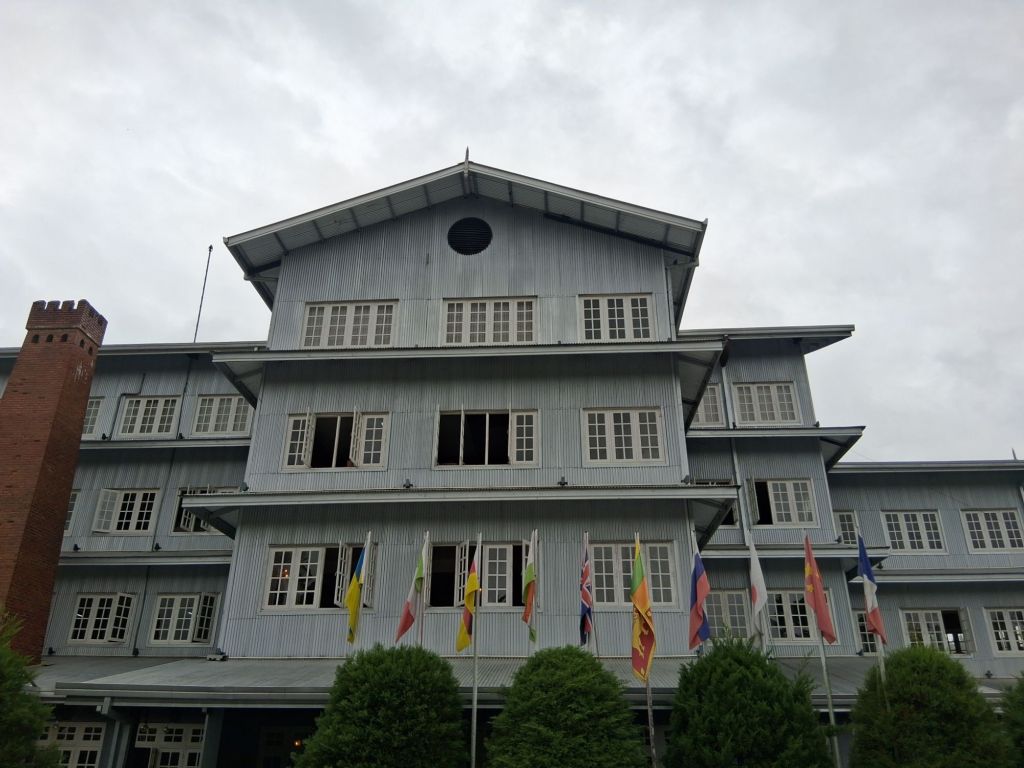
I woke up this morning to a sound a didn’t quite recognise, the sound of rain beating down on the metal roofs of the balconies. Very upsetting. However, as it had been forecast to rain throughout my whole trip I have actually been very lucky. I donned my long trousers, socks and trainers and off we went to a tea factory.
It was actually the British that brought tea to Sri Lanka. Previously this was a coffee growing country, but in the 1860s there was a coffee blight and a Scottish man called James Taylor brought over tea from Assam in India and he is considered the father of Sri Lankan tea. In the early 19th century tea plantations made up 5% of the total landmass, and Sri Lanka was the world’s second largest exporter of tea. I had expected Sri Lankan tea to be the same as Indian chai and actually that is not very popular here, people preferring a black tea with lots of milk and usually a little sugar. Also popular is black tea made with ginger infused water, then milk.
Today tea plantations are privately owned, and we visited Giragama plantation. In Sri Lanka, tea must be processed near to where it is picked, so this included a factory tour and exit through gift shop (yes, I brought some tea). Tea is picked every 7 days throughout the year, and this factory produces 500-1,000kg of black tea per day. Whilst I have been to tea plantation tourist experiences before, this was the first that gave me an insight to an industrial process, including a very fancy modern machine which can grade tea by colour.
The process is as follows:
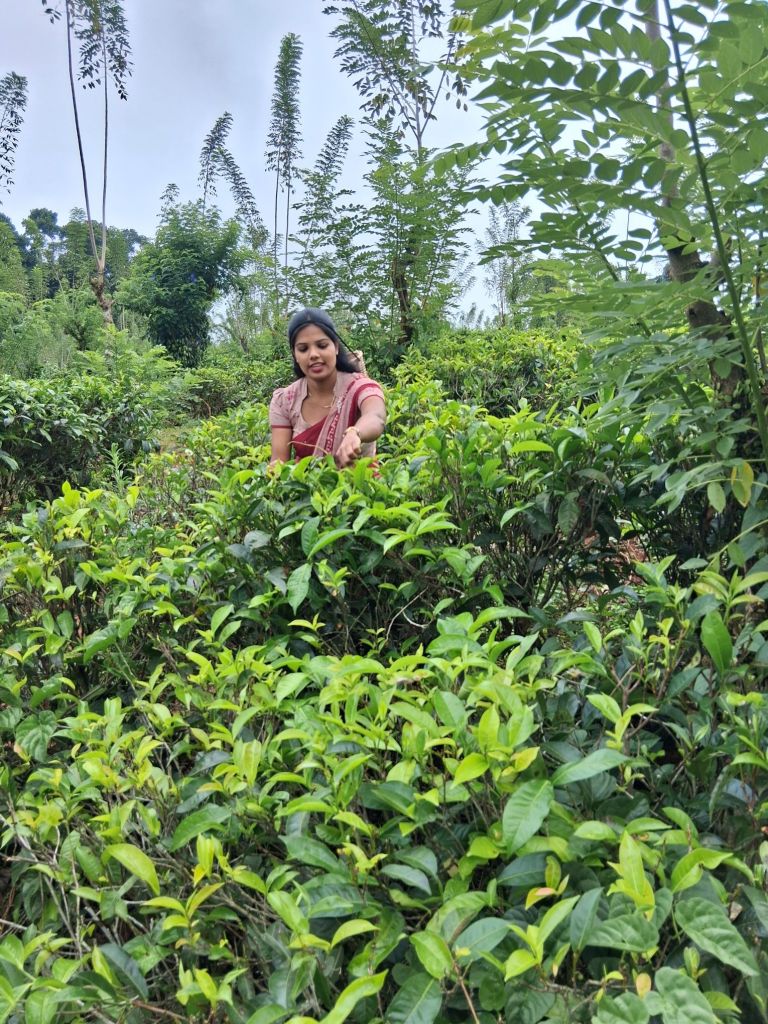
- Picking- the leaves are picked by only female pickers and they can pick around 20-25kg of tea leaves per day.
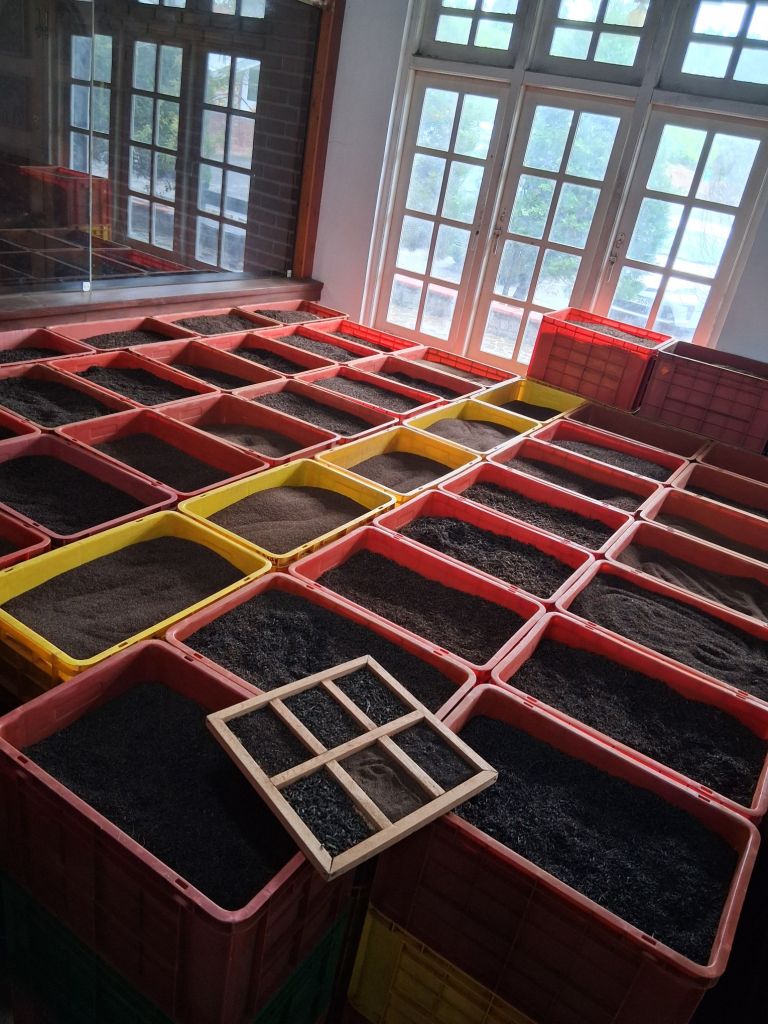
- Withering – this is to remove the water from the leaves and a fan is blown under them for 18-20 hours being turned regularly.
- Rolling- first the tea leaves are rolled for 20 minutes with no pressure, and then depending on the strength of tea additional rollings with more pressure is applied.
- Fermentation – this is only needed for black tea. The leaves will be left in moist air for 2.5 hours.
- Drying – a furnace (fired with the wood of rubber trees) then dries the leaves for 20 minutes at 120 degrees celsius.
- Rolling – the leaves are then rolled to separate the leaves from the stems.
- Grading/Sifting- different sizes are different tastes.



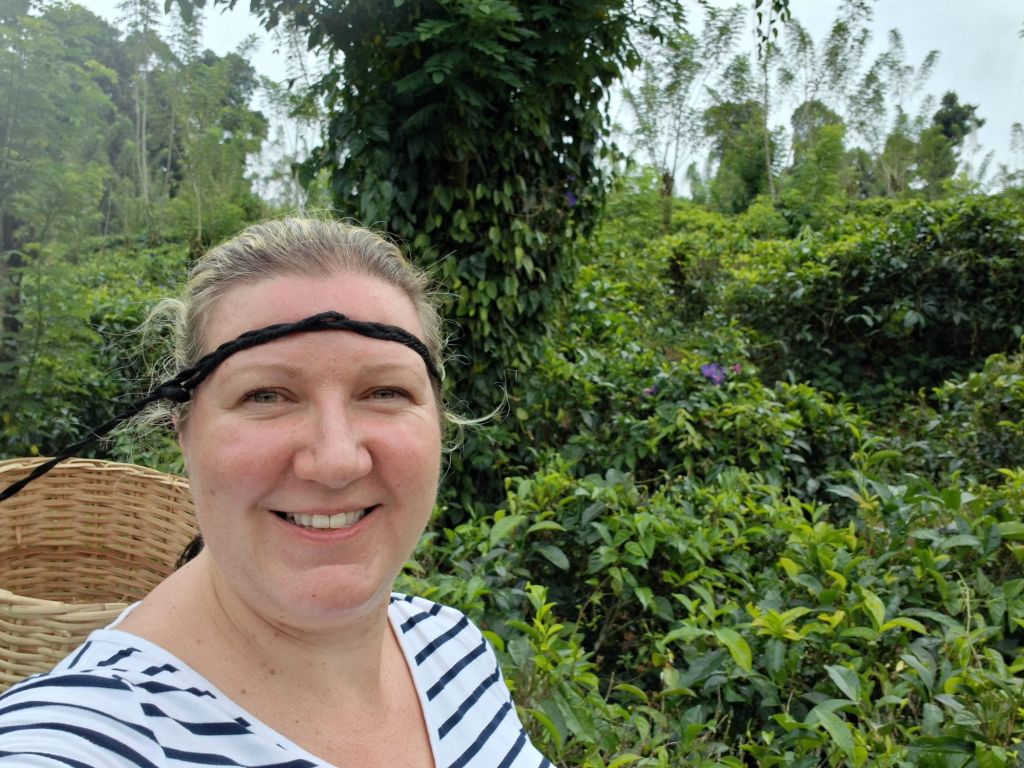
We were the offered the opportunity to pick some tea. As readers of Travelswithkathryn know, this was not my first time tea picking, therefore I felt that I did not need to push myself to hit the 25kg daily target…
On the way back from the tea plantation, we visited Kandy War Cemetary. Buried here 203 British, Canadian, Indian, Sri Lankan, East African, French and Italian service personnnel who were killed by the Japanese airforce during WW2 – most during the attacks of April 1942.
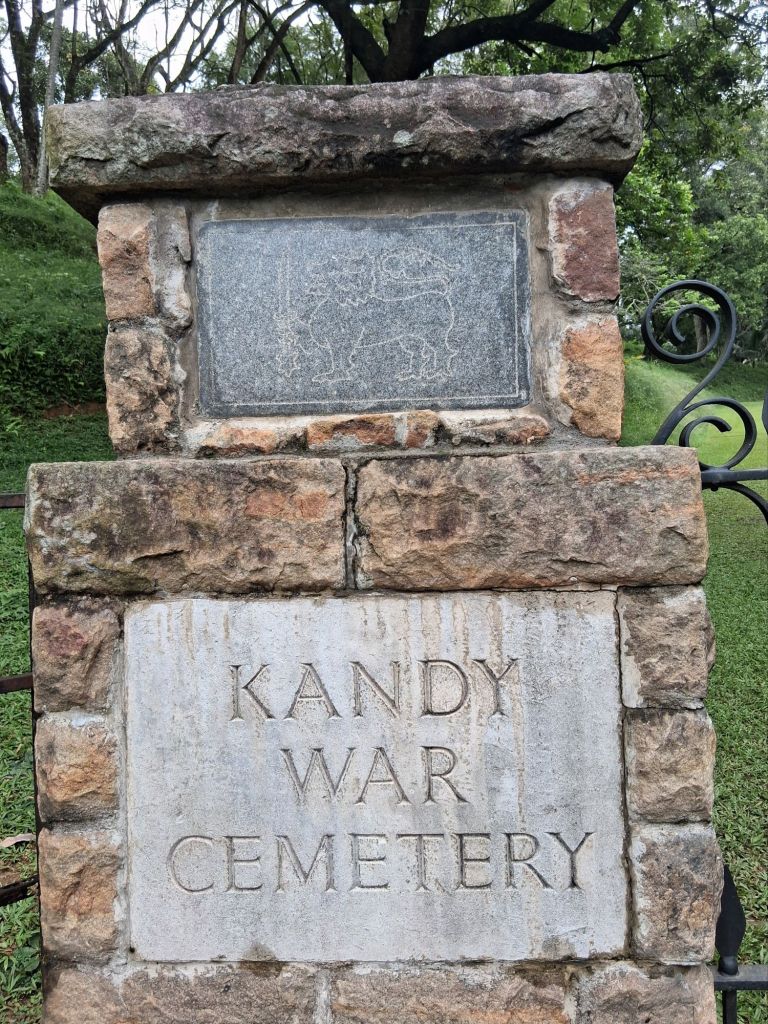
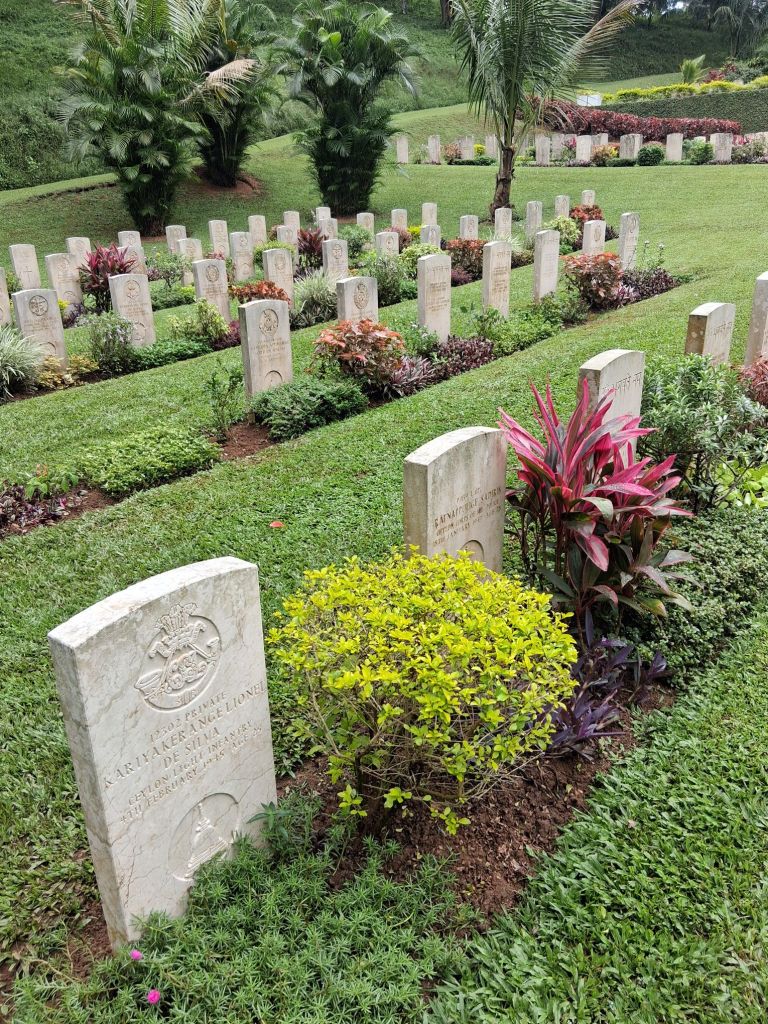
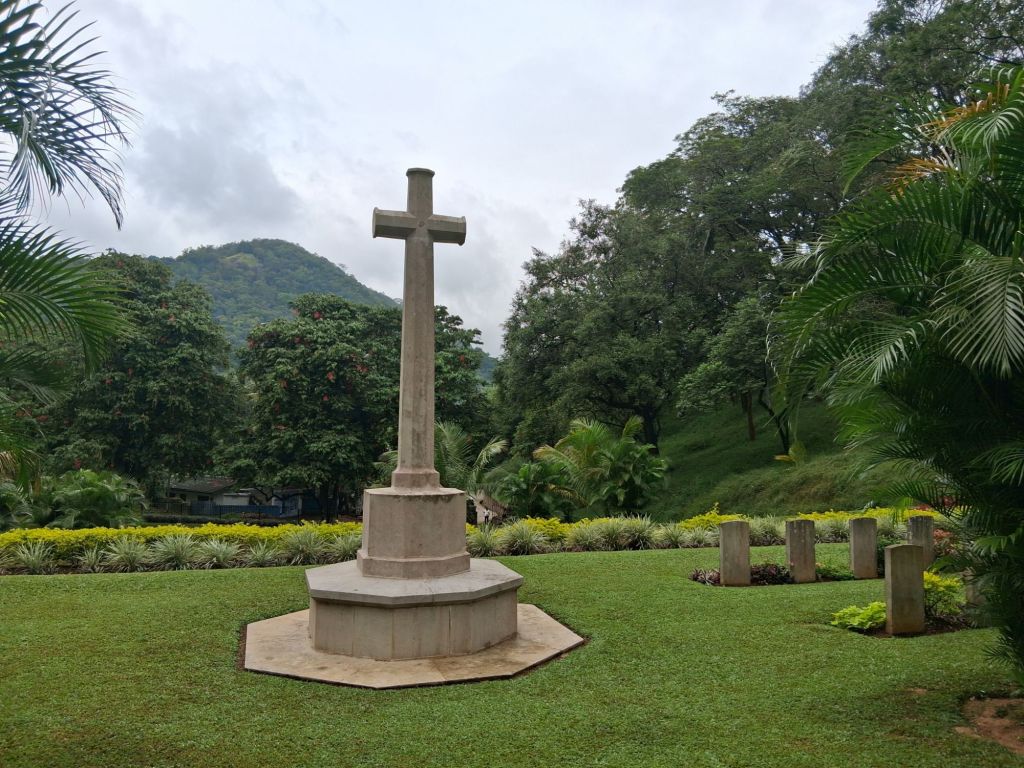
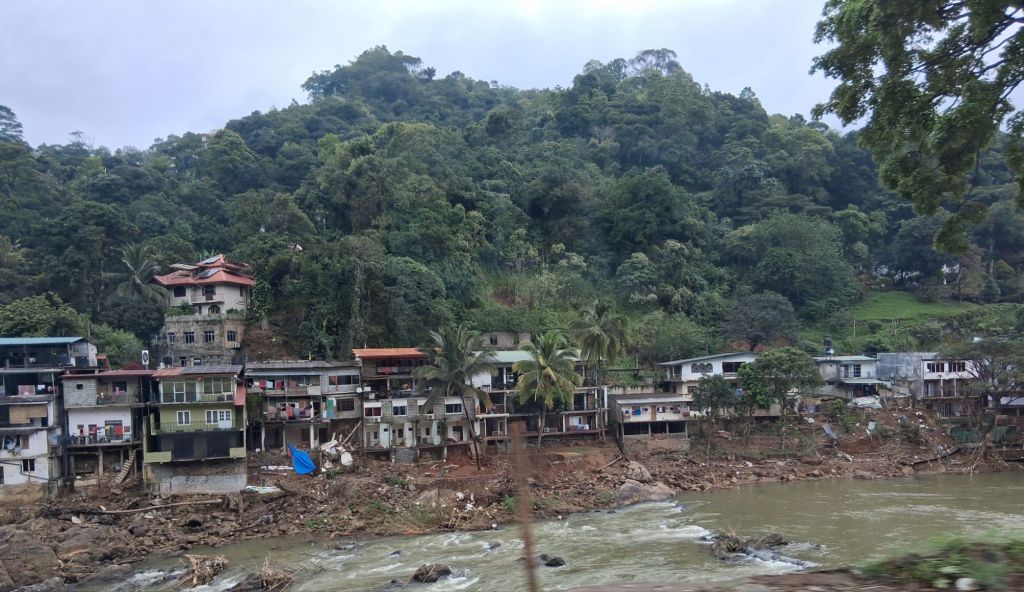
Driving through this central region, the effects of the recent cyclone are evident. In the photo below you can see the level of the flood waters, and although roads have been cleared we are seeing many landslides and debris pilled up at the side of the road.
We headed back into Kandy to visit the Temple of Tooth. Built on the site of the fomer royal palace in 1792, the temple was built to protect Sri Lankan’s most sacred Buddhist relic, one of Buddha’s teeth which surived his cremation. The story goes that of the four teeth that surived burning one was taken by the Naga people, one to heaven, one to another land in this world (near Persia) and one to the king in India. Over time, as Buddhism in India came under pressure, it was decided that in 312AD, the tooth was to be taken to Sri Lanka for safety, and it was taken by an Indian princess (hidden in her hair). The Sri Lankan kings have continued to protect the tooth ever since, and a temple for the tooth was always built beside wherever the palace was located. Hence, Kandy being the last capital, this is also the location of the temple.
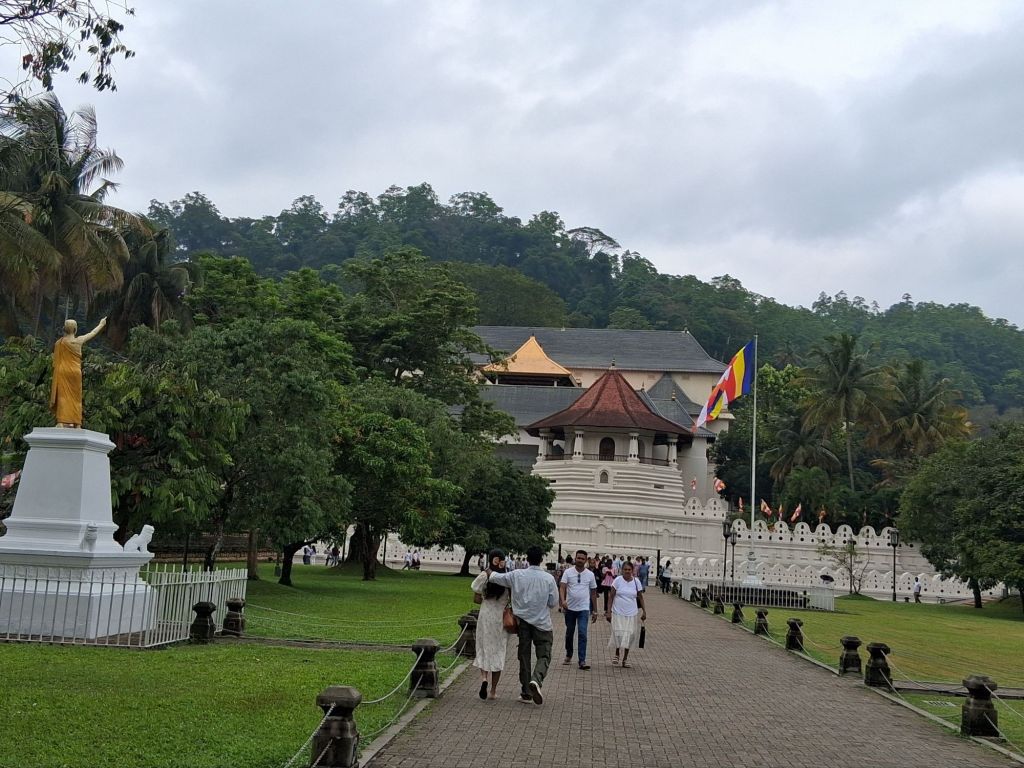
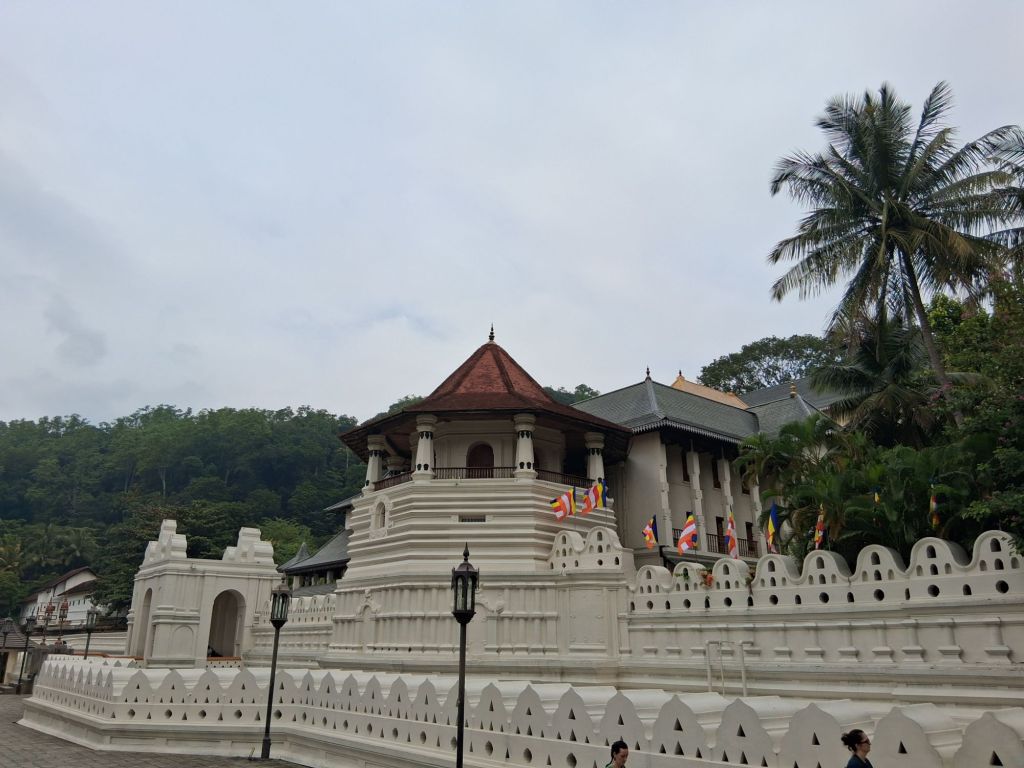
The temple (pictured above) was built in 1792, and no building in the old town is allowed to be taller than where the tooth is located. Foreigners have a seperate entrance so as not to get in the way quite so much of the many, many pilgrims wanting to commune with the tooth. The relic is located in the inner sanctum behind a curtin and is contained in a casket of 7 boxes and the tooth itself is on a gold lotus leaf (apparently).
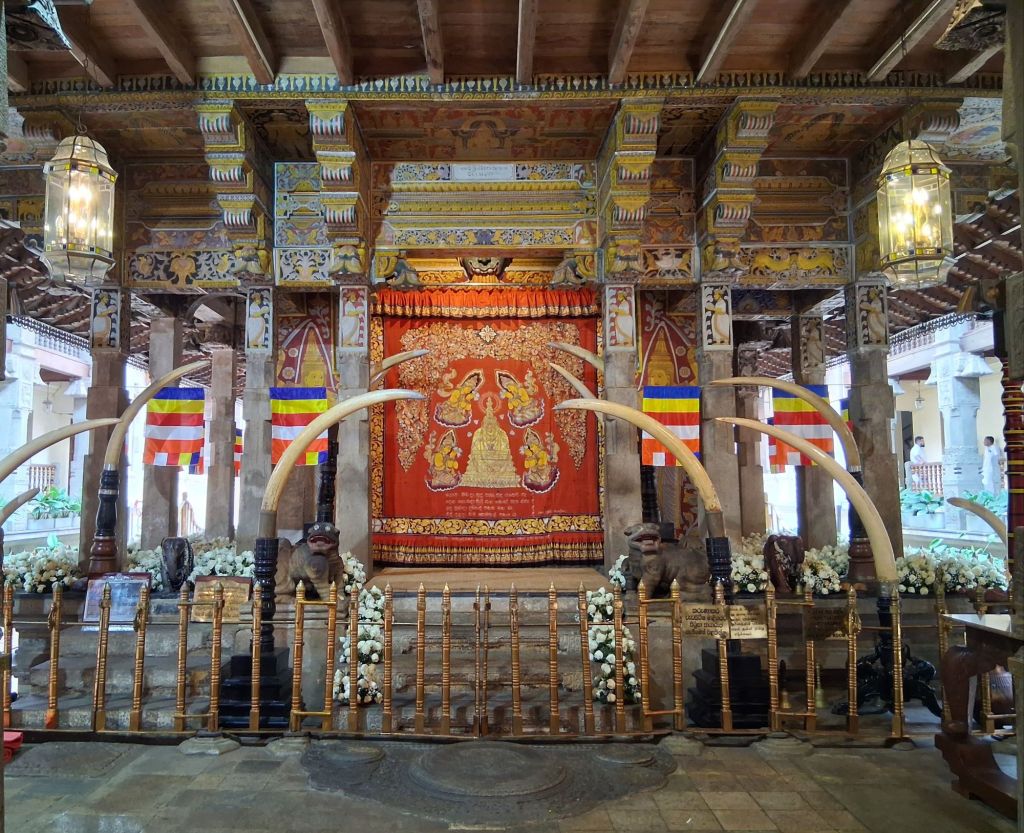
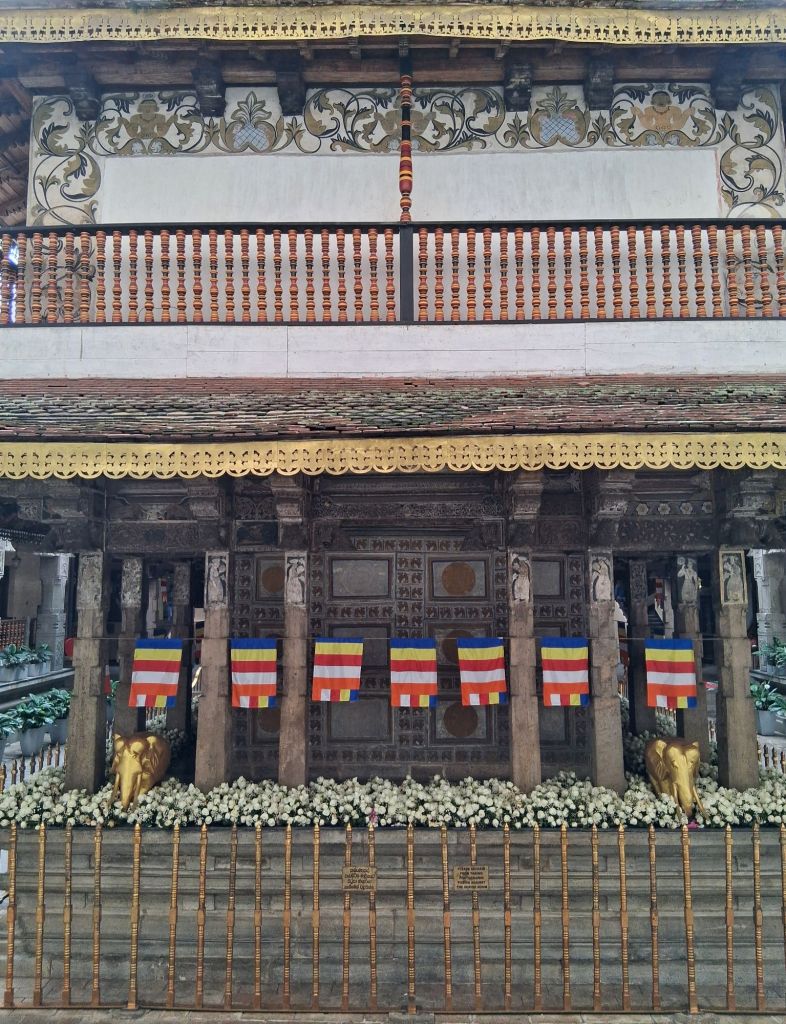

The curtain is only opened twice a day for offerings, and it is a great honour to do this. A traditional meal is prepared of 32 currys and rice which is called the King’s meal, and the first serving is offered to the relic allowing the people to enter the inner sanctum. There is a one year waiting list to do this, and generally a village or large family will club together have the honour.
Upstairs is where the offerings are given, and the smell was absolutely amazing, and so many flowers:


Next to the temple is the King’s audience hall (made of Ceylon Ironwood – can we remember why this tree is important?) and this is where the British signed the treaty in Kandy ending the last independent Kingdom in Ceylon, and having complete colonial rule.

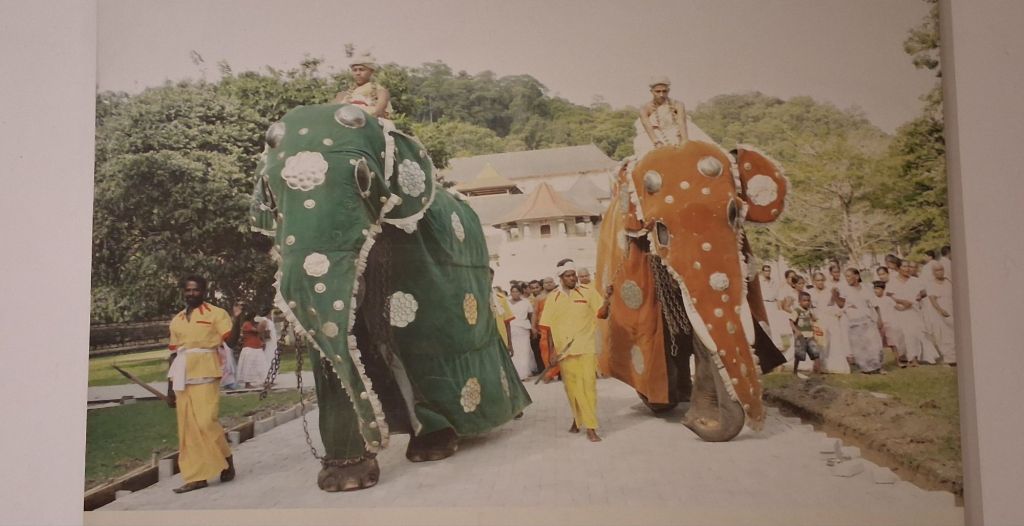
The complex also includes the Raja Tusker museum. This is a small room built to house a huge taxidermy elephant. Every July/August the Esala Perahera takes place which is a celebration of parades, drumming, music, dance, fireworks and includes the temple’s elephants who carry the caskets which contain the tooth (not the inner casket with the tooth itself for safety reasons). The temple still uses domesticated elephants (although there is some chat that this should be reviewed) and only elephants which meet the following criteria can become a temple elephant – they must be big, have tusks, a head above their body and have seven points of their body touching the ground (4 legs, 1 tail, 1 trunk and 1 penis!). Raja the elephant was a great favourite, and when he died in 1988 he was stuffed and placed on display. Probably not how he would have chosen to end his days.


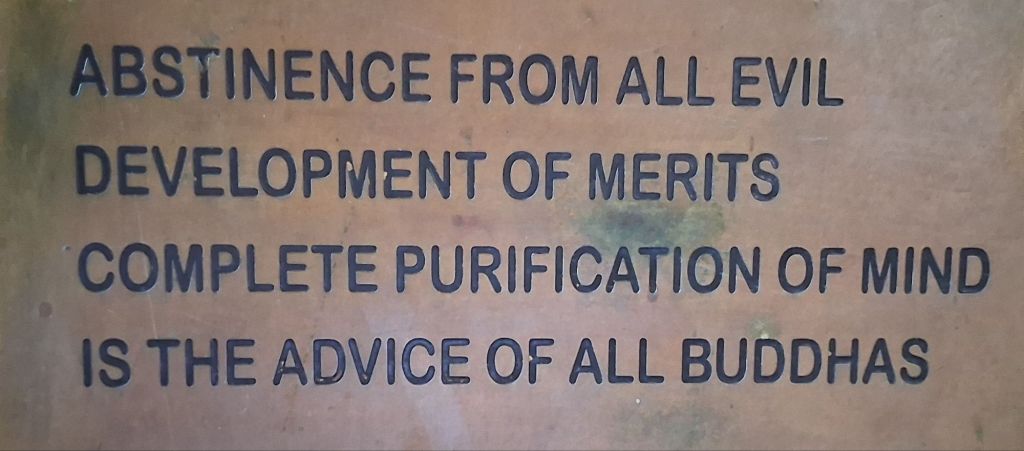
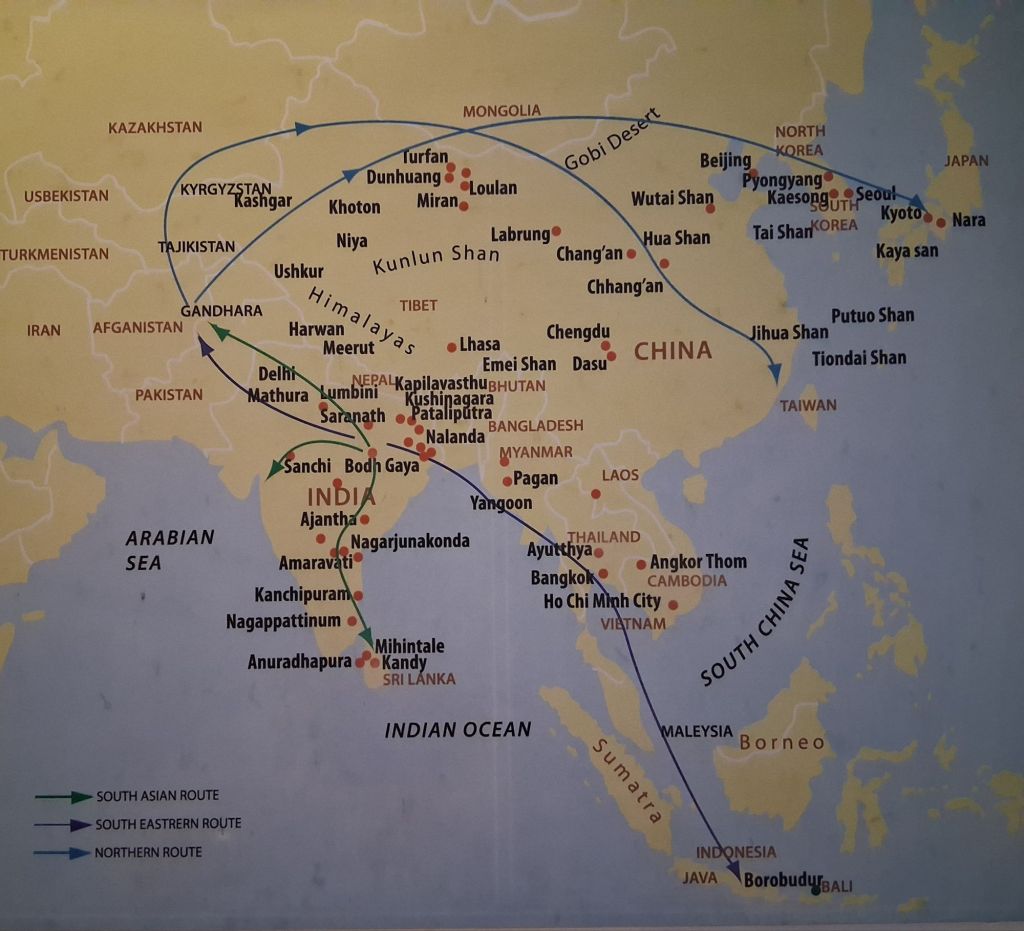
Finally, I visited the International Buddhist Museum which was a nice wander until I found I could not get out. This did not feel very Buddhist.
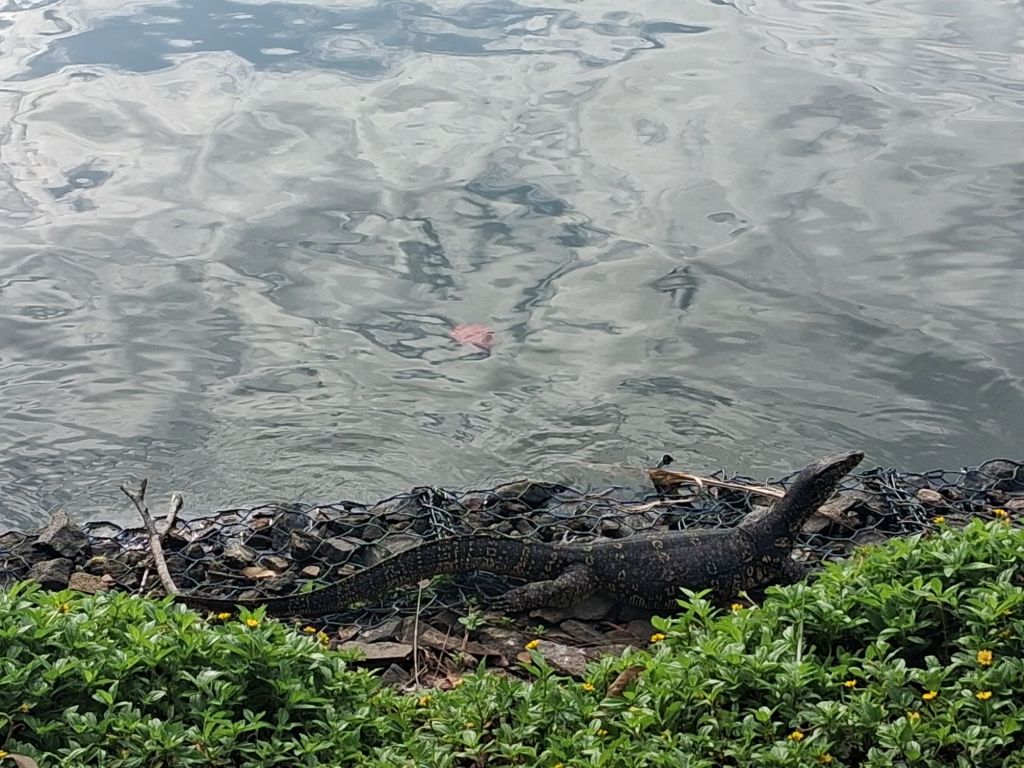
By now, it was 2.30pm and we were let loose on the city. As I have said, this is a fast paced tour, and this was really the first opportunity we have had to wander around in daylight in a town. Most exciting. I had a few locations on my list, including the Garrison War Cemetary which was unfortunately closed. I have included photos below, and it was lovely to just amble about being a tourist


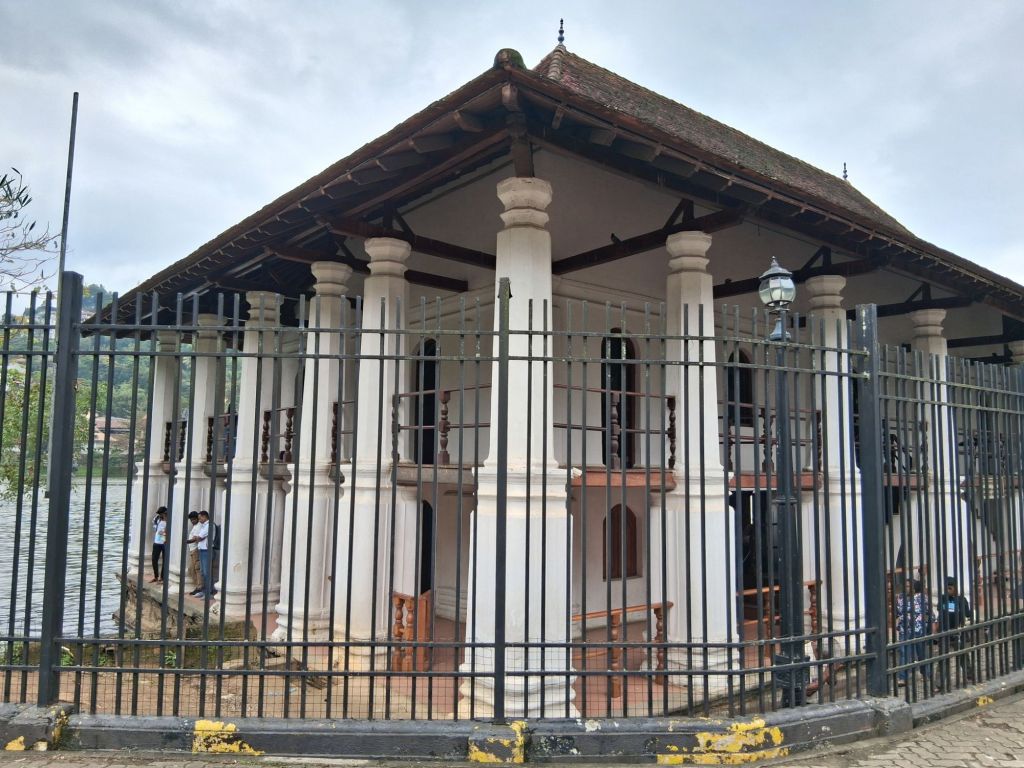

This was also a most excellent (and perhaps my only) shopping opportunity. I may have brought a few things… Many of which are elephant related. So much so, that I returned to the hotel to drop my first bag off before returning and picking up a few more things. I then even took members of my group back to one particular shop, and they didn’t even pay me a commission!

I walked back down the hill via the viewpoint and a group of us went out for a drink (arrack, lime and mango juice – amazing. I shall try and buy a bottle tomorrow) and dinner in a local restaurant that was utterly delicious, but a classic Sri Lankan experience. One cannot rush service in restaurants and menus are merely a suggestion of what may or may not be available, e.g. kottu was not listed, but we could hear it being cooked, and mango lassis often feature but are rarely available. I think it took about 1.5hr to get our food, and I was getting a wee bit hangry. However, totally worth it as when we left just after 10pm thr streets of Kandy were deserted and 4 grown adults managed to squeeze into a single tuktuk which barely made it up the hill to our hotel. But we got there in the end!
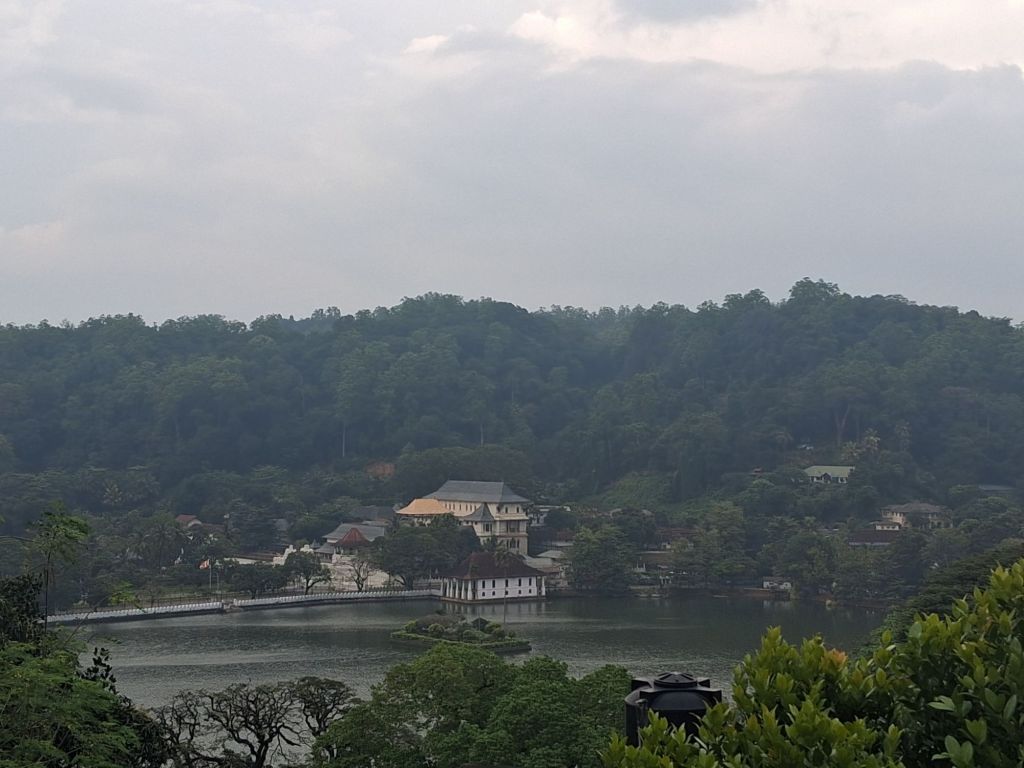
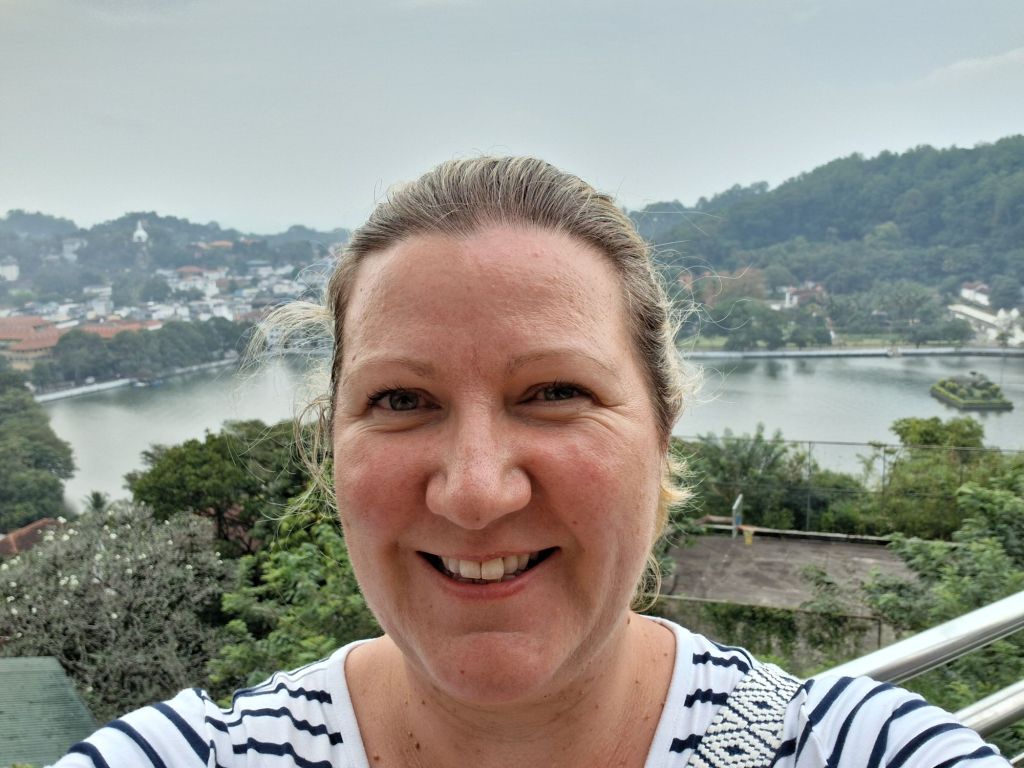
So that is it, tomorrow is the final day of my trip (travelling back to Colombo and a brief tour), and then I fly home. I shall be very sad to be leaving, and I shall have to return. Might need to do some leave calculations…

 Travels with Kathryn
Leave a comment