And so that was goodbye to Azerbijan. It was a short drive to the border as the scenery got greener, and then we left our guide and bus at the border and entered through the exit gates. We then climbed up, and up, and up – I was fine with my rucksack (and being firmly of the belief that one has to manage ones own luggage!), but did have concerns that some of the group were not going to make it! We then left Azerbijan and thought it would be a short stint across no-man’s land to Georgia. However, there was a corner, and much like a Disney queuing system, we went up, and up, and up again. Luckily, I had Mum and Keith ahead of me, so I knew I would have been able to pick them/their luggage up if they expired on route…
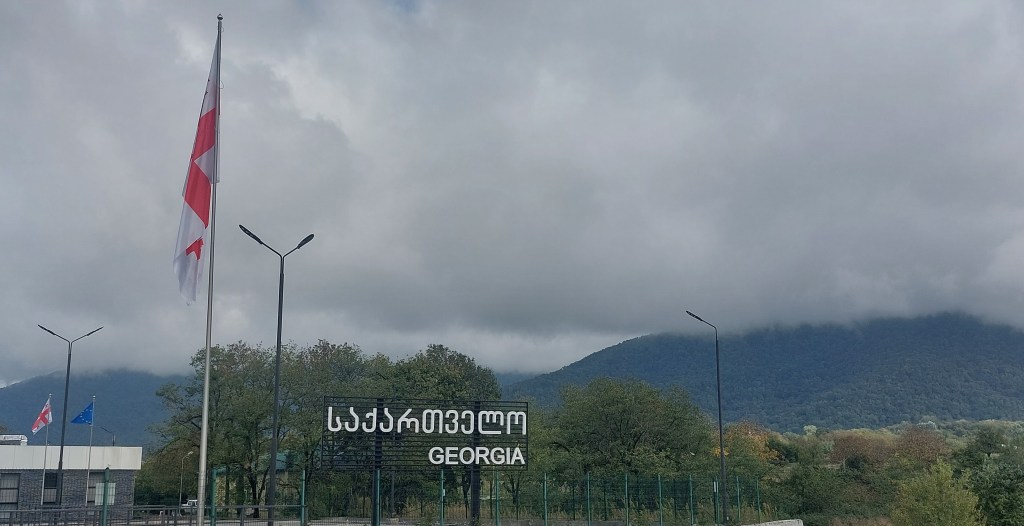
We made it to Georgia and were greeted by a lovely flat surface. It then took a little time for the rest of the group to make it, but it allowed the rest of us to introduce ourselves to our new guide Sophie.
On first impression, Georgia feels like entering Europe (there was even the flag of the European Union at the border), and it is certainly very green and hilly. I could also tell that we are getting closer to Europe as the first time on this trip my data roaming add-on is working. To be fair, I could have had data in Azerbijan, but it would have cost £45.71 a day!! So, Georgia is only Georgia to us foreigners that can not speak their language – in Georgian, it is Kartvelebi, their land is Sakartvelo, and the language is Kartuli and they even have their own alphabet. The official language of Georgia is Georgian (shocking revelation), but also English. Most of the population lives in Tblisi, but there are decent size cities across Georgia, so it does not have the emptiness outside of the capital that I saw in, say, Tukmenistan. This is also the first Christian country of my trip with 89% of the population being Christian – of this, the majority are orthodox and it is also a very practising country with around 45% of the Christian population regularly attending church.
As we drove from the border, there was an ENORMOUS queue of lorries waiting to cross, which went on for miles! Commercial vehicles are allowed to cross from Georgia to Azerbijan, but the border is closed for private vehicles because of Covid, apparently, as Azerbijan still has cases and Georgia does not. It’s a likely story…
Our first proper “site” in Georgia was the tiny village of Sighnaghi, which is a beautifully preserved 18th/19th century village pearched on hilltop surrounded by a fortress wall. My first impression was, yes, this is beautiful, but also ah, the tourists have found Georgia… As well as being a tourist attraction, it is known to Georgians as the city of love as the village hosts a 24/7 wedding pavillion. I politely declined the opportunity to visit.
We did take the opportunity to walk part (not the full 5km circuit) of the defensive towers. These towers were built by King Erekle II to repeal invading Muslim armies (which apparently they had a tendency to do) and give amazing views across the Alazani valley.
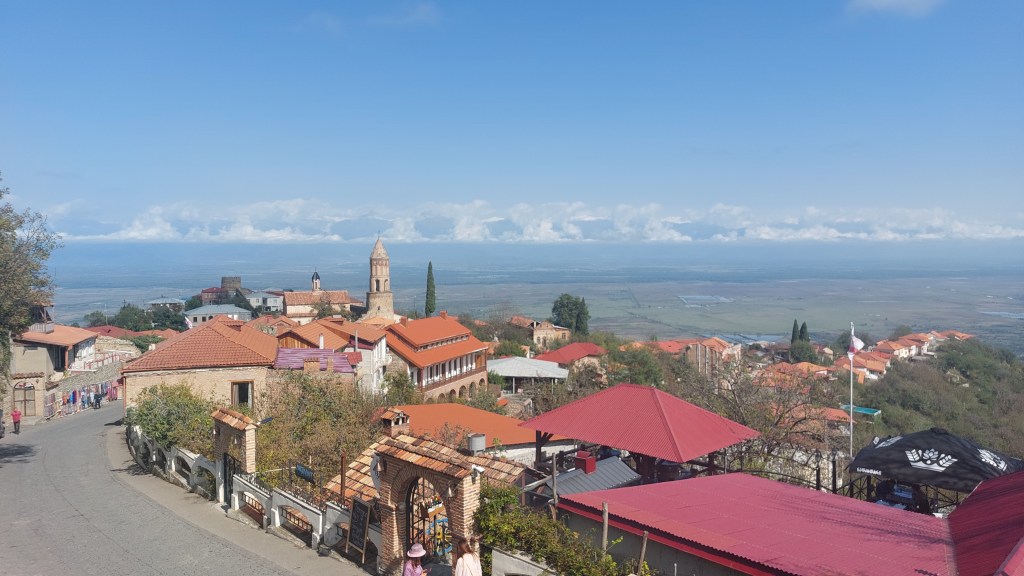
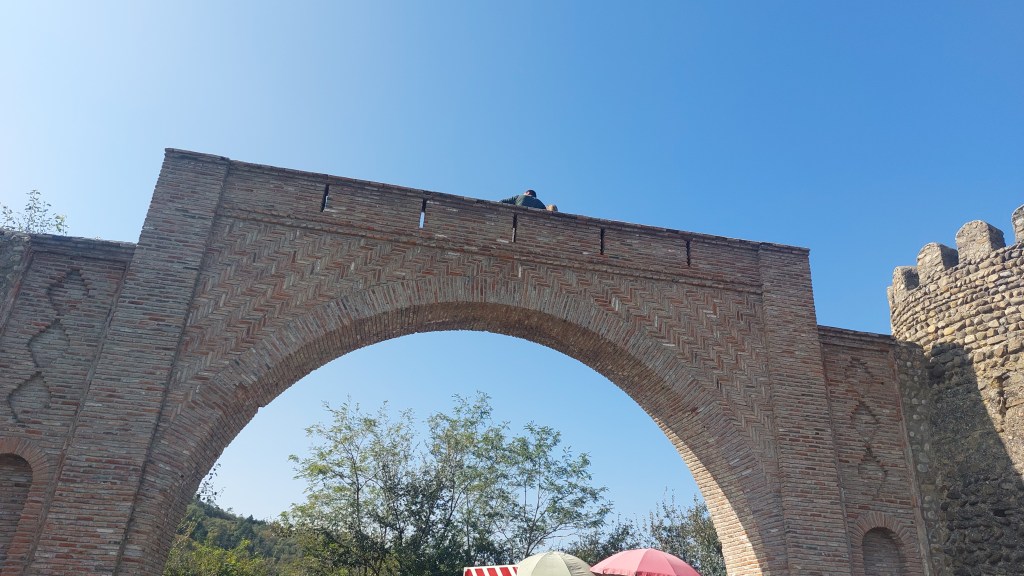
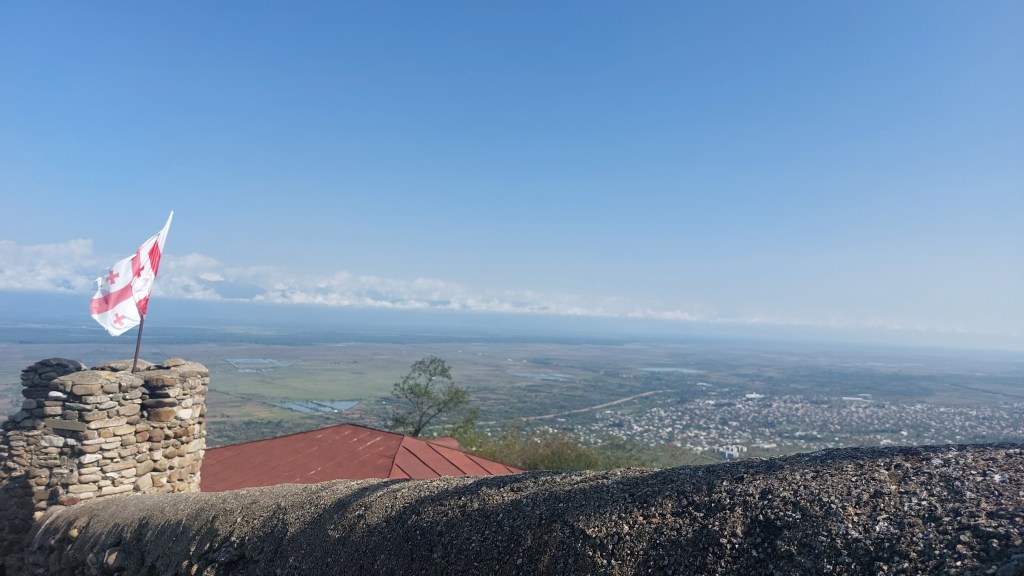
After the walk, there was a brief stop as people needed wine (they have been in a wine producing country for at least an hour without being given any). I had a lemonade.
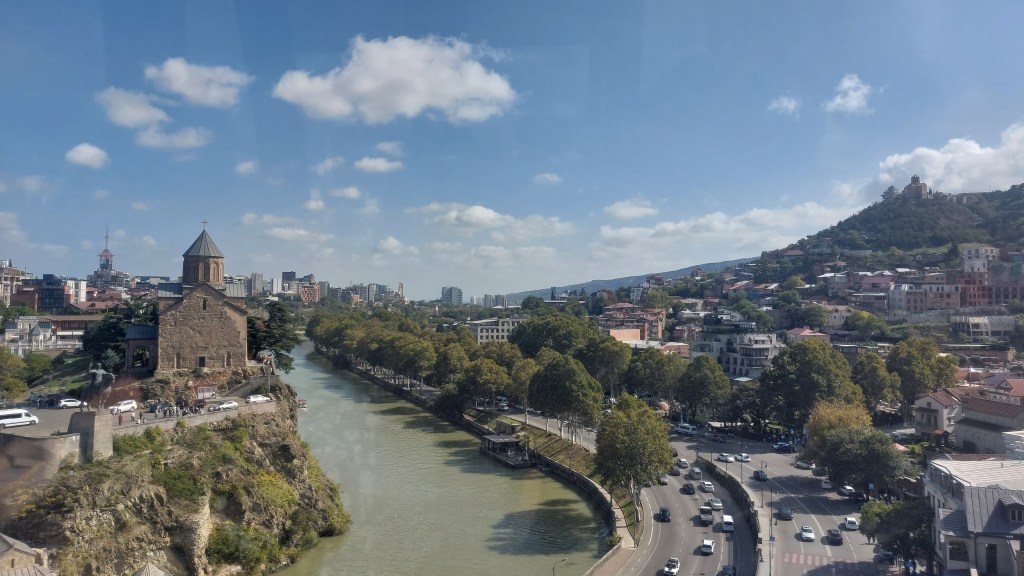
We then drove to Tblisi. Tbilisi has been the capital of Georgia since the 5th century when a sulphur spring was discovered, and the royal family decided to move the capital from Mtskheta to take advantage of it. Much of the city was built in the 18th/19th century and feels very European and cosmopolitan. Our hotel is central, but on the opposite side of the river to the Old Town, which means a VERY steep walk down to the nearest restaurant/crossing the river. We took it very steady in the dark on the uneven pavements with cars shooting past us. Sometimes it’s good to travel with old people…
Yesterday, we loaded into the bus to drive the short distance to the old capital Mtskheta. As well as being the capital from the 3rd to the 6th century, it is considered the spiritual heart of Georgia with Christianity being established here since 327. Our first stop was the Jvari Church, which is perched on a hill overlooking the confluence of Aragvi and Mtkvari rivers. The current church was built in the 6th century, but a small temple exisited before then.
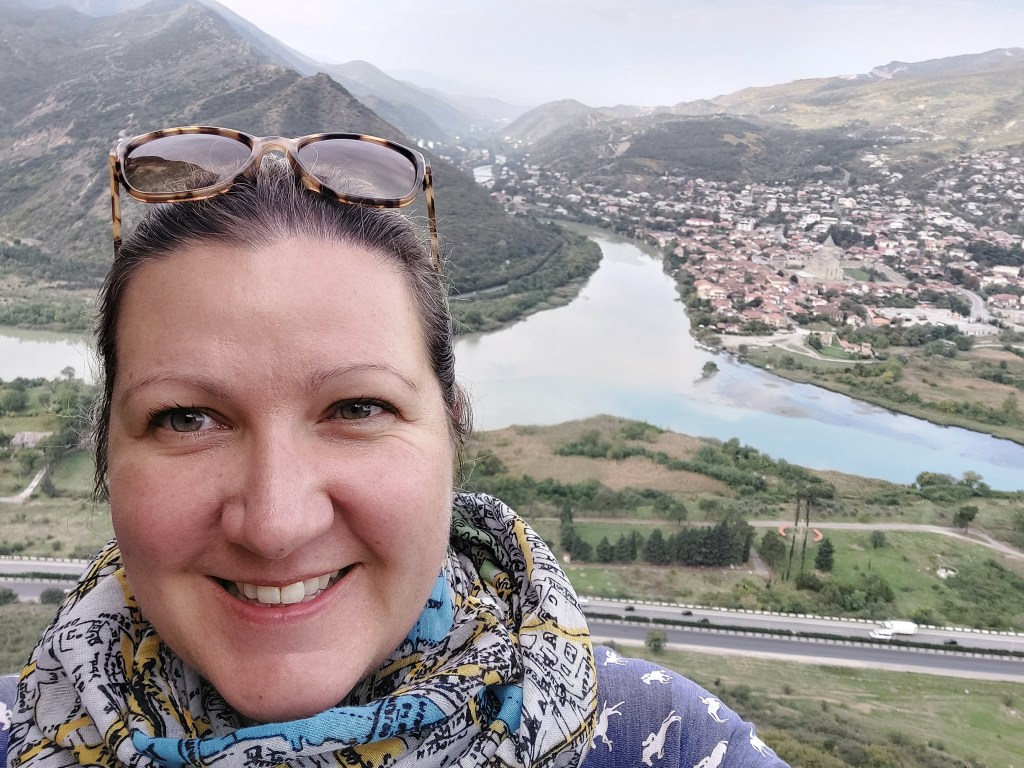
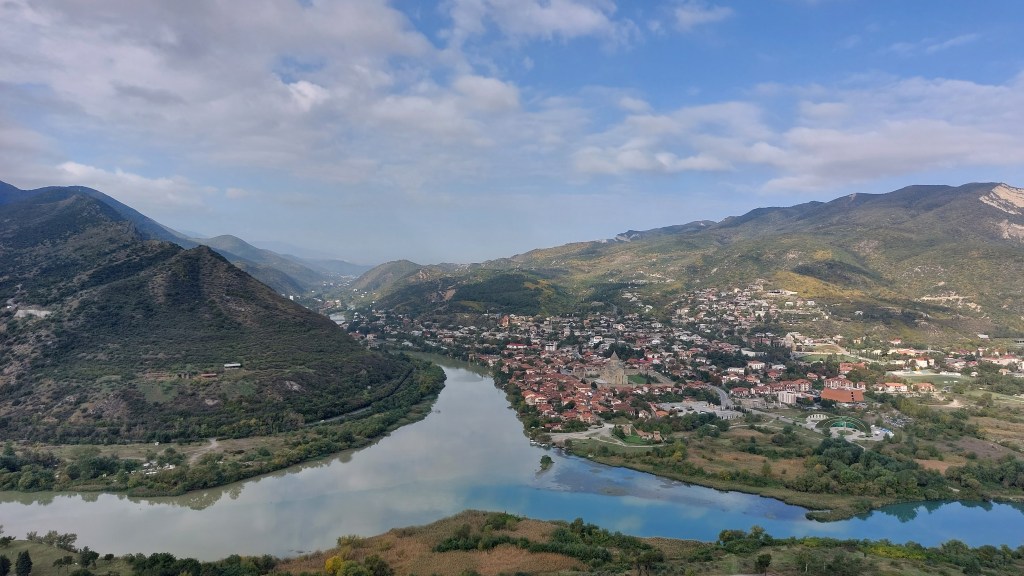
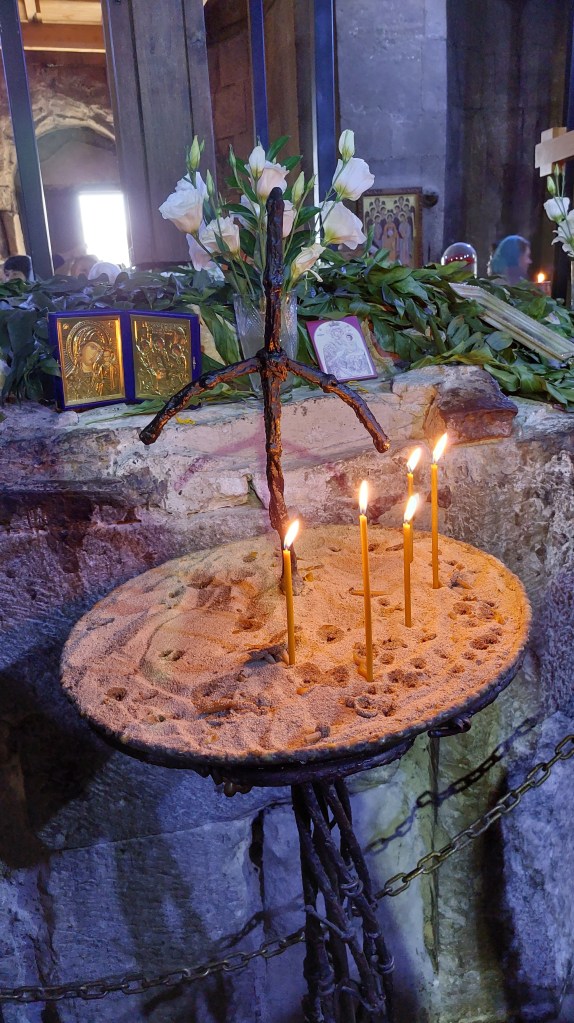
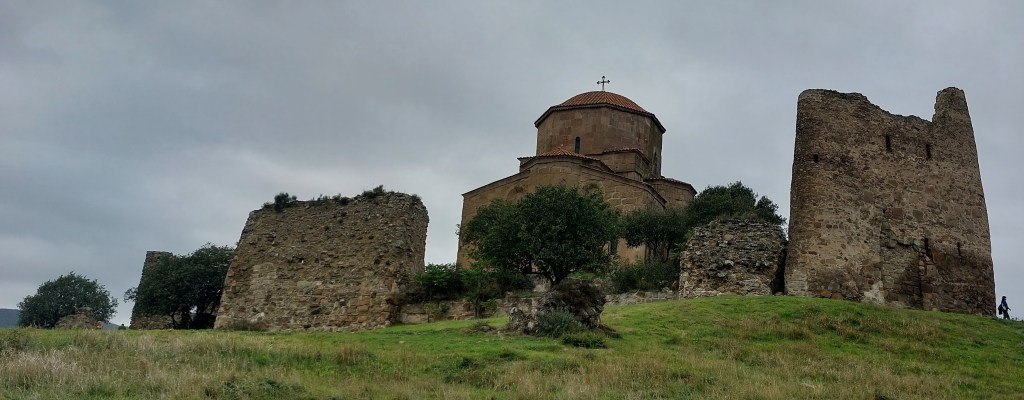
The church includes a replica of the famous wooden cross of King Mirian, which was apparently tied together with the hair of Sidona (more on her below). It occupies a lovely spot, but it was hard to get a sense of the spirtitally of the place with the hoads of Russian and Chinese tourists…
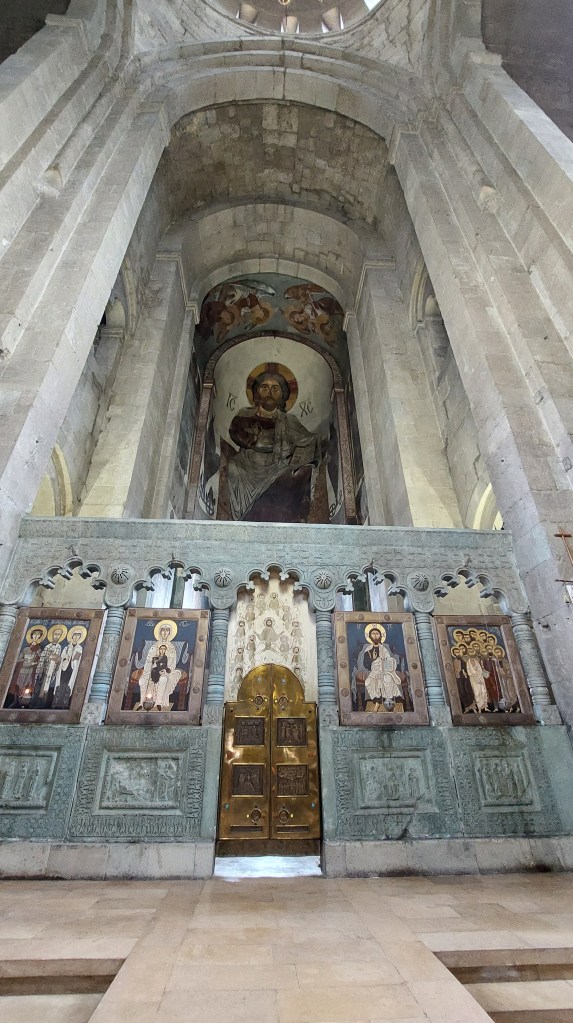
We then drove down the hill into Mtsheka itself to visit the Svetitskhoveli Cathedral. Until 2004, this was the largest church in Georgia, but then a huge modern church was built in Tblisis (very close to our hotel), which has taken over. However, for Georgians, it is still one of the most important in the country. The first church was built in the 5th/ 6th century, but what you can see below dates from the 11th century.
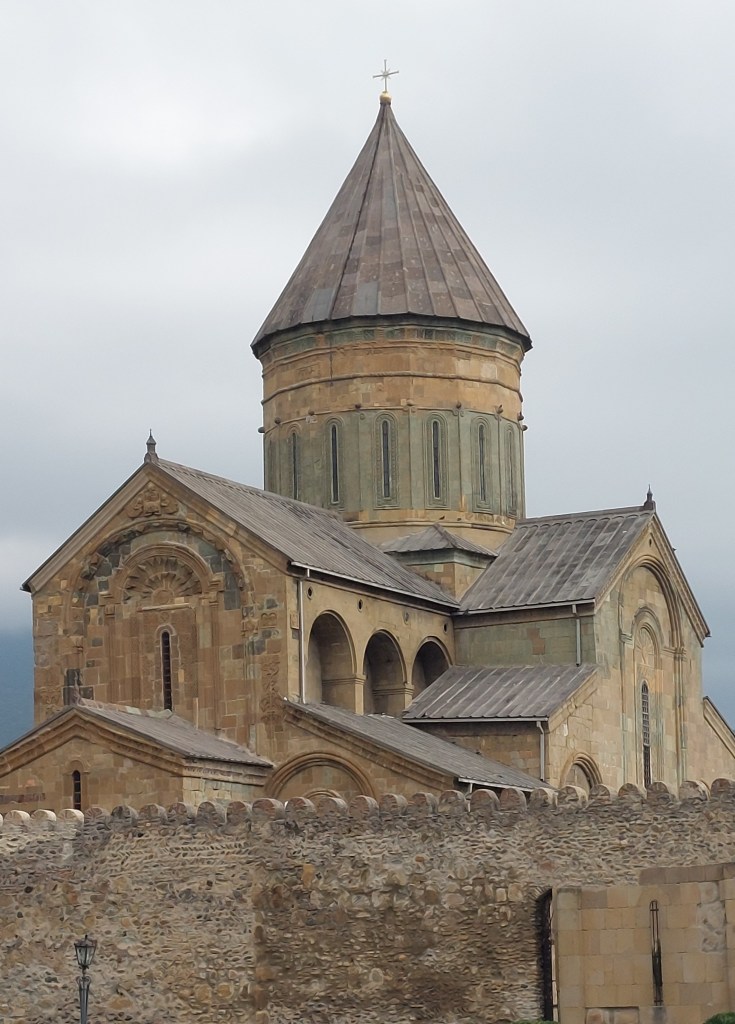
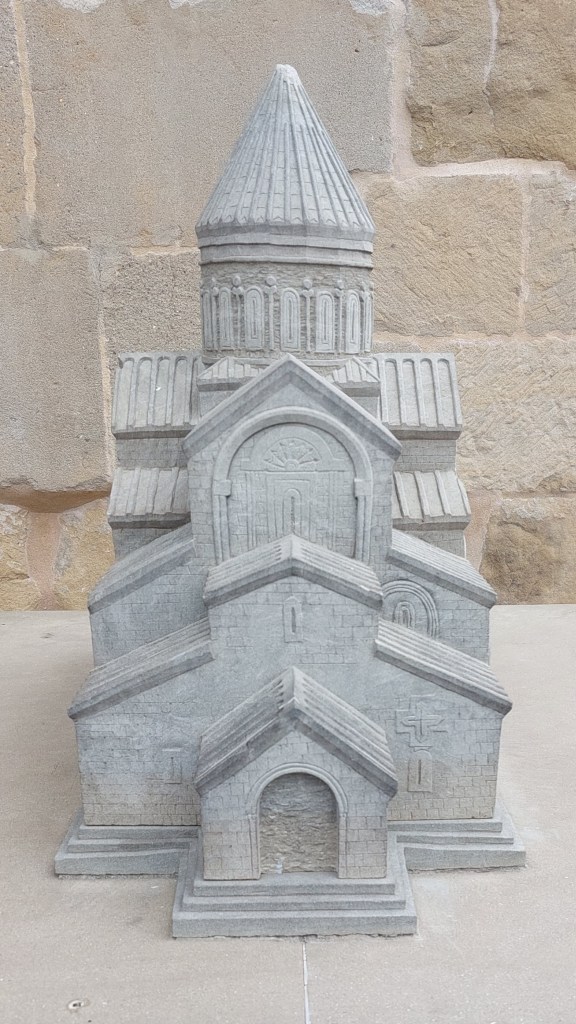
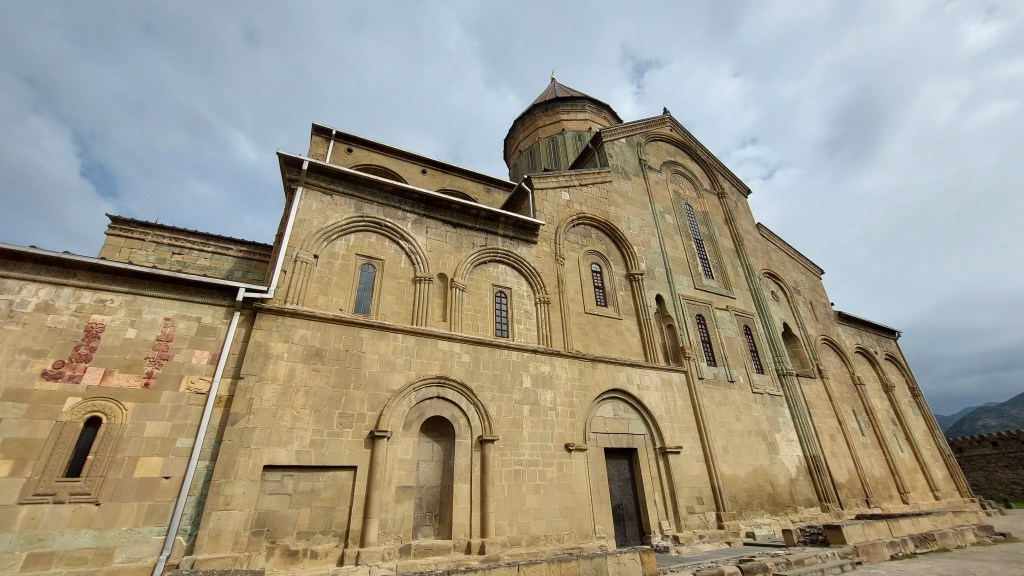
The church contains the robe that Jesus Christ was wearing when he was crucified (we shall not mention all the other churches who also claim to hae this) which was brought home to Georgia by Jewish man called Elioz who happened to be in Jerusalem at the time of the crucifixion. On return to Mtsheka, he gave the robe to his sister Sidonia, and she was so overcome by emotion that she died holding it. Over her grave grew a cedar tree, which was cut down by St. Nino to build this church. the church still includes a colum made of this cedar tree, which is called the life-giving column.
The original 5th century church was destroyed by the Pesians, rebuilt in the 6th century and again destroyed by the Persians. The 11th century church survived further attacks but was always a target because of this holy relic (the Muslims not being a fan of Jesus and all that).
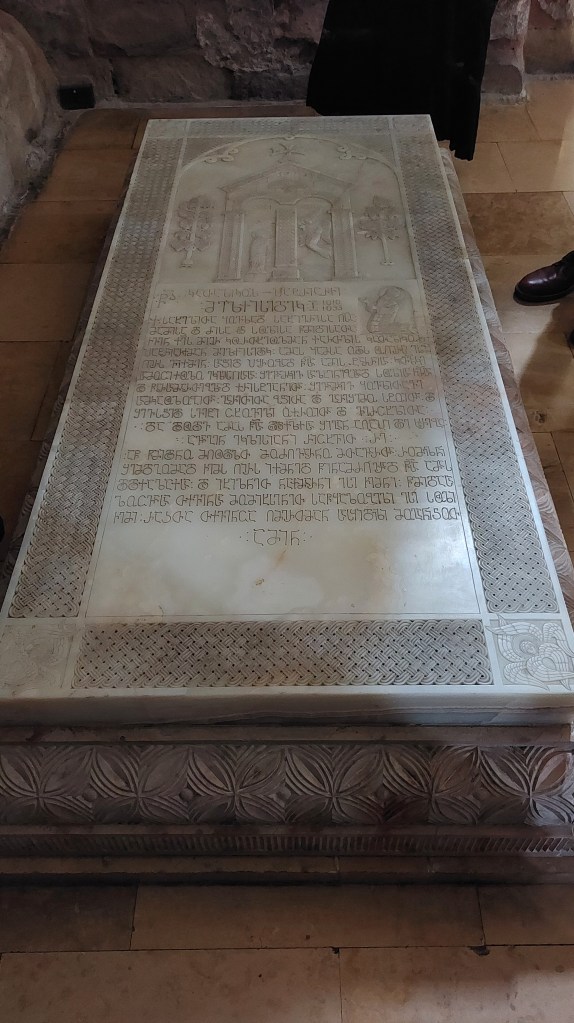
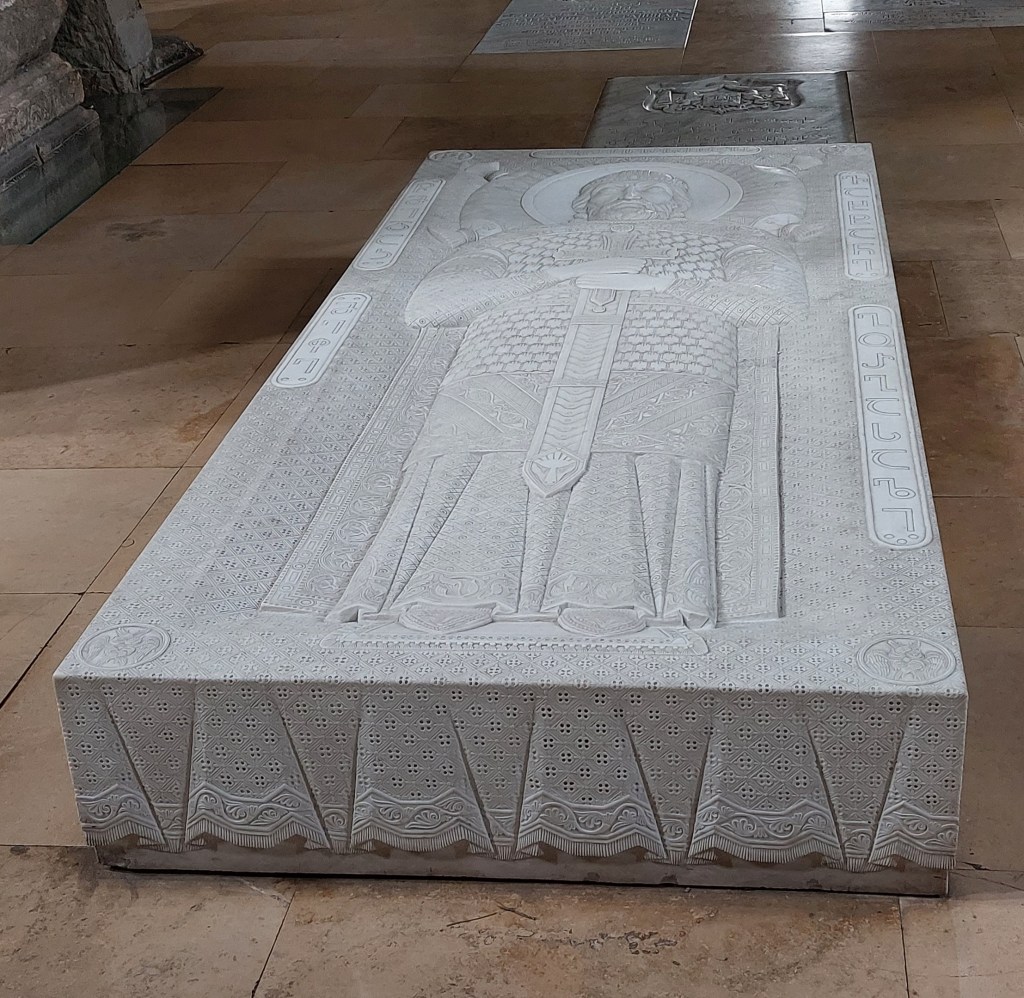
Many of the kings of Georgia during the 17th century (who were installed by the most recent Persian conqueror to rule Georgia as a semi-independent state) are buried here. Some of these graves are written in the original Georgian alphabet (they are currently on their third iteration) including King Erekle II who had 24 children from 3 wives (his last wife had 19 of these chidren). This dynesty ruled until the Russians arrived in 1770, and Erekle II accepted their rule for protection against his muslim enemies (all Christians together and all). Ultimately, Russsia had annexed all of Georgia by the 19th century.
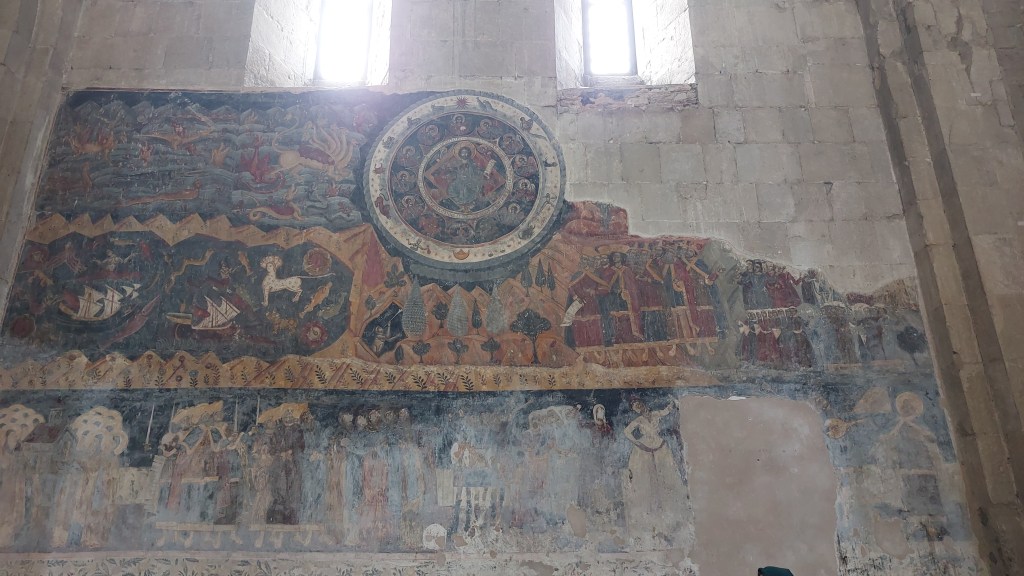
The interior of the church has some rather impressive frescos, and Georgian churches are famous for their 11th and 13th century frescos. One thing I particularly enjoy is that all countries have their own interpretation of what Jesus and the Apostles looked like, this version looks very Georgian imho.
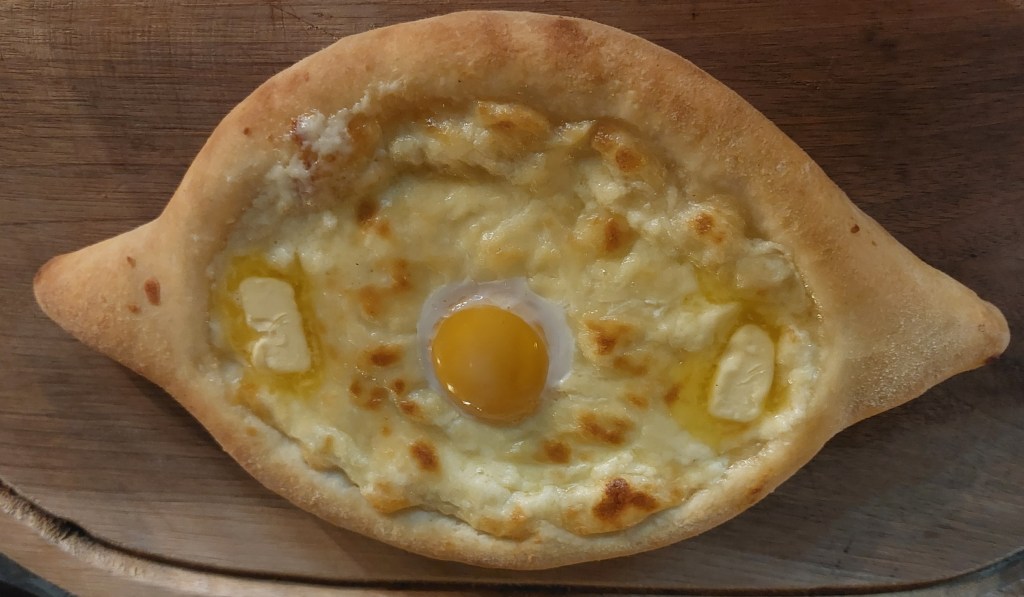
All of this was the morning of day 1 in Georgia, and we have agreed to skip lunches in order to fit more sightseeing in (of which we are trying to see a lot!), but we did have a quick pit stop to buy khachahpuri which are cheesy bread pies in order to keep us going. These cheesy breads will appear a number of times whilst we are in Georgia.
We then drove back to Tblisi and started with a viewpoint opportunity:
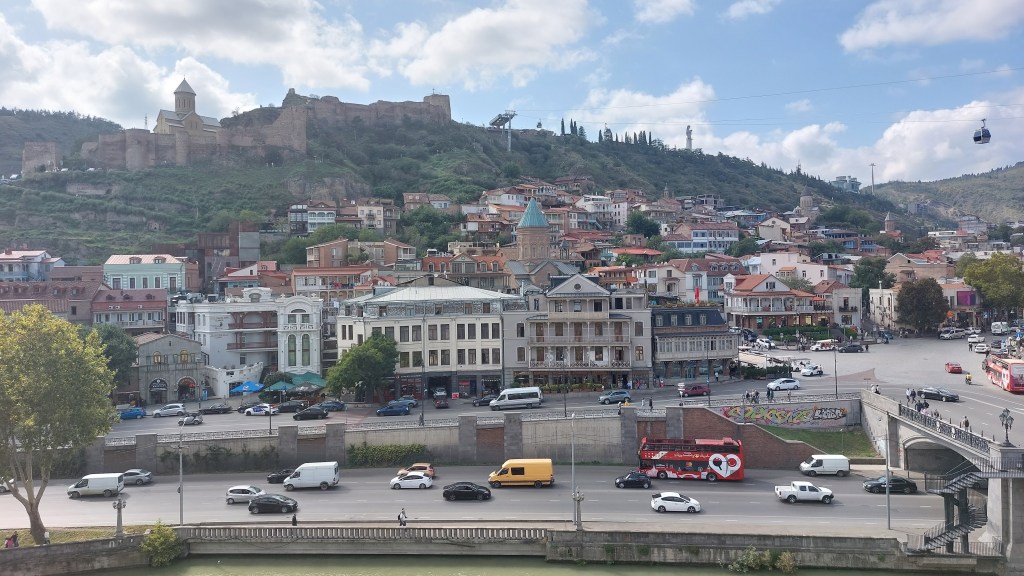

From here, we took a trip on the cable car up to the Narikala Fortress. As many of you know, I do not like cable cars, but as my options were either to woman-up or climb many, many stairs, I suvived the cable car!
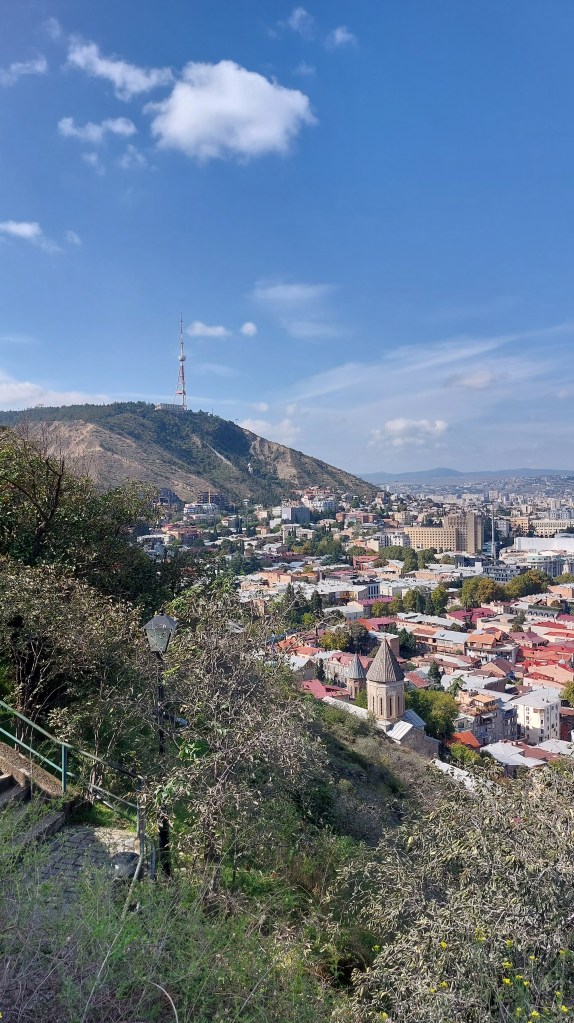
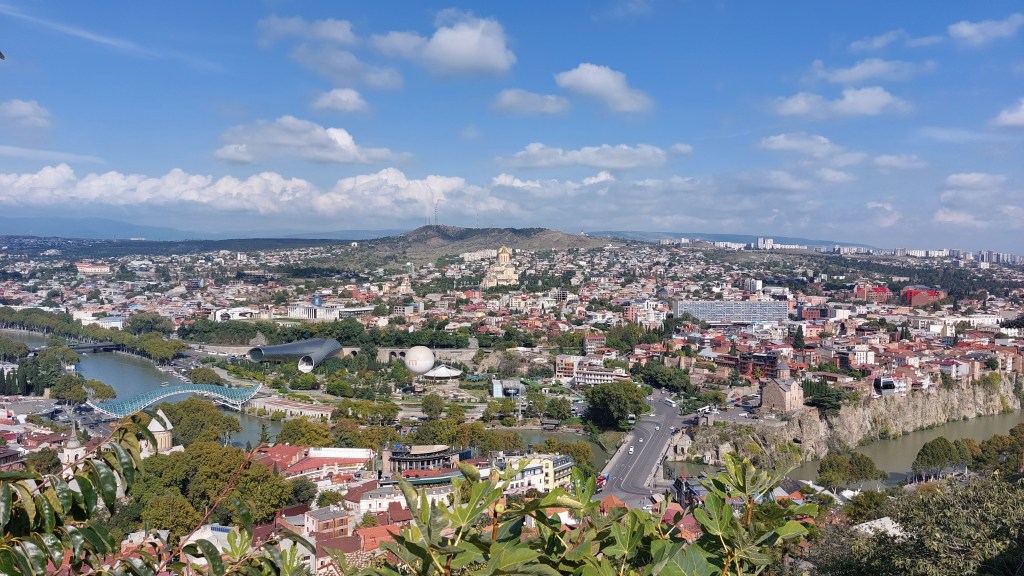
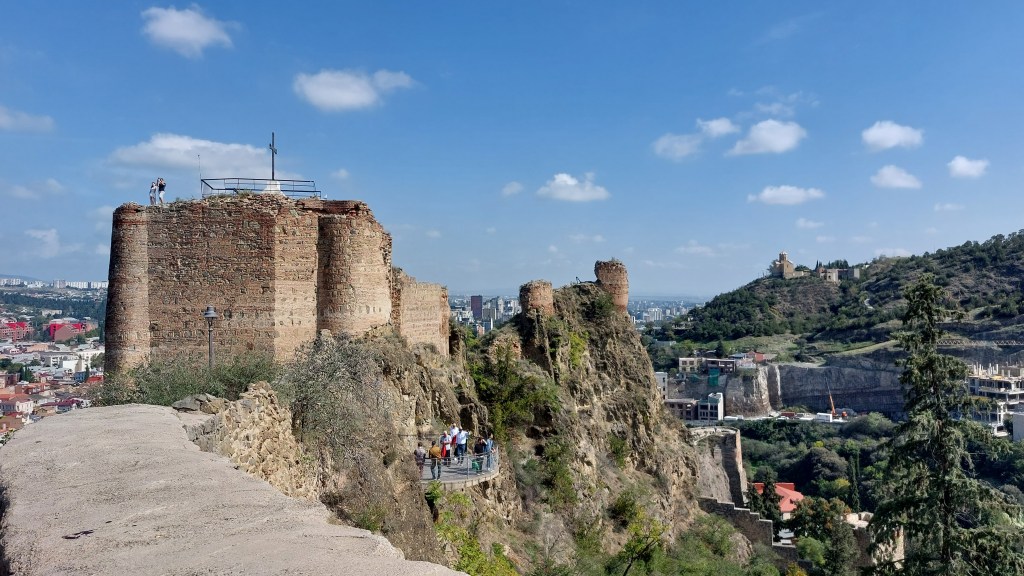
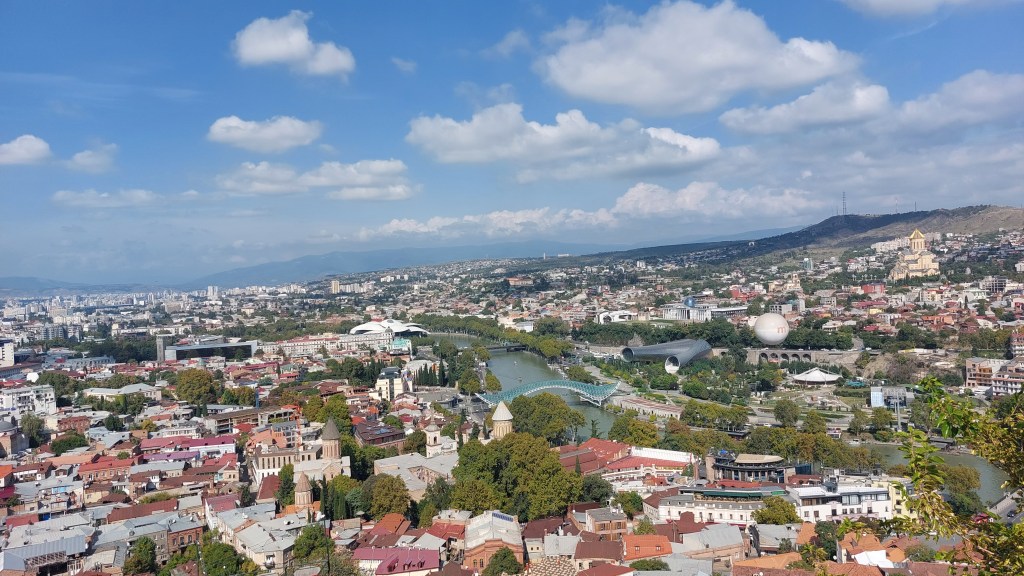
The Narikala Fortress dates back to 4th century when it was a Persian citadel, but all that has survived are the 8th century walls and we did a little walk along these (as we do like walking along a fortress wall) up to Kartlis Deda or Mother of Georgia:
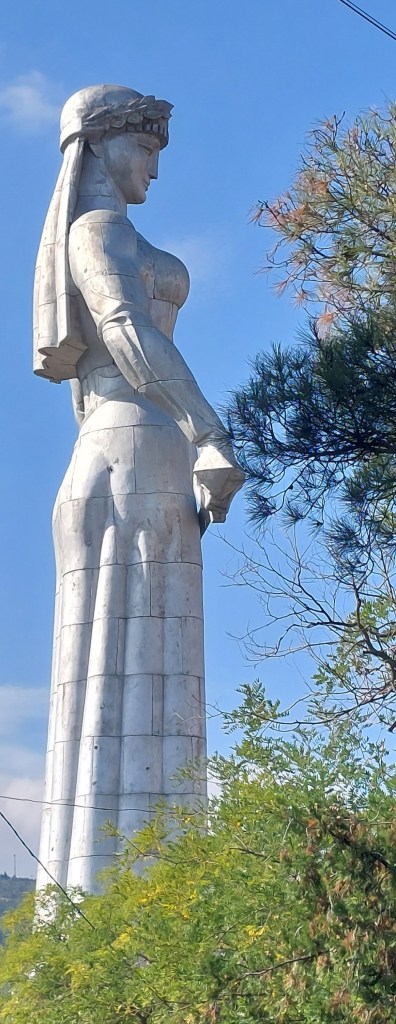
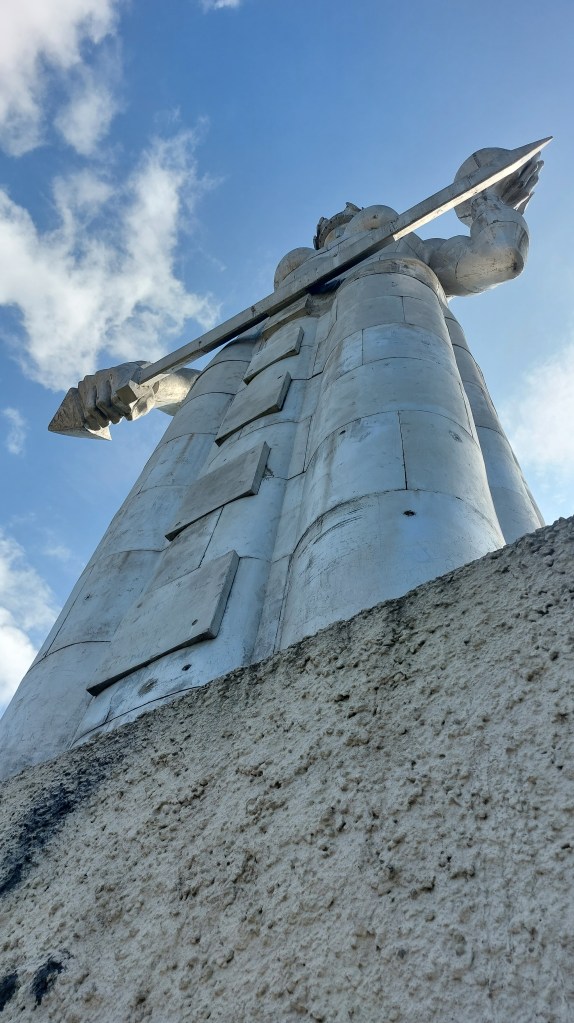
She is a 20m tall aluminin symbol of Tblisi representing the strong women in Georgia’s history. In one hand, she carries a cup of wine and, in the other, a sword representing either Georgia’s welcoming hand of friendship or sword for its enemies. I felt her proportions were a little off and something of a smaller, less impressive version of Christ the Reedeemer in Rio, but I like what they were aiming for.
Back down on the cable car, and we walked across the Peace Bridge. this is a modern Italian desined bridge built in 2010 and at the time of building disliked by many Georgians as not being inkeeping with the rest of the city, however, people have subsequently warmed to it and it is now a popular hang out.
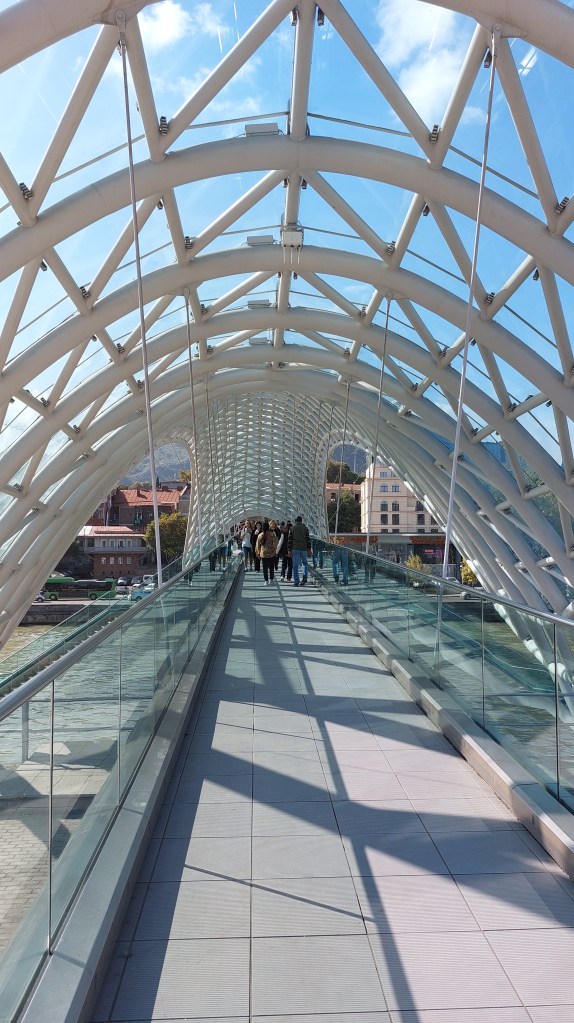
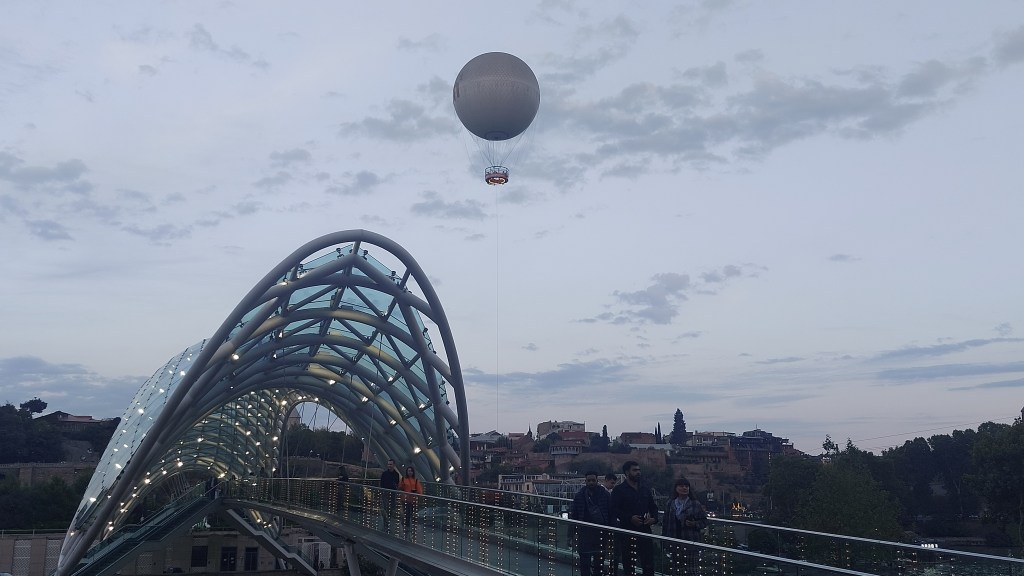
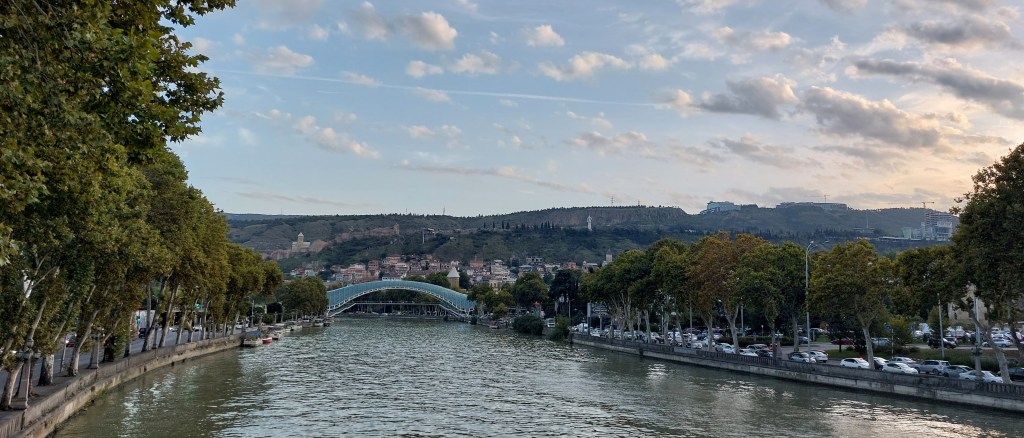
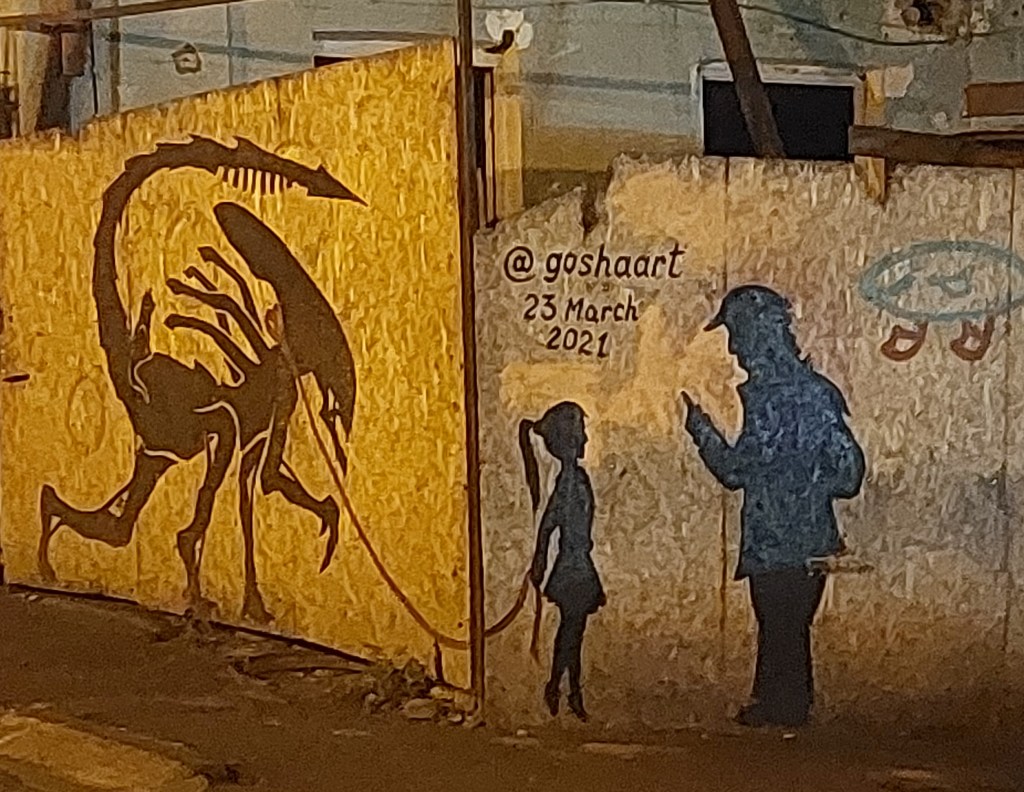
By crossing this bridge, we then arrived in the Old Town. This was heavily rennovated in the 2010s and is a warren of small streets lined with cosy restaurants, cool bars, steam punked installations, street art, and churches.
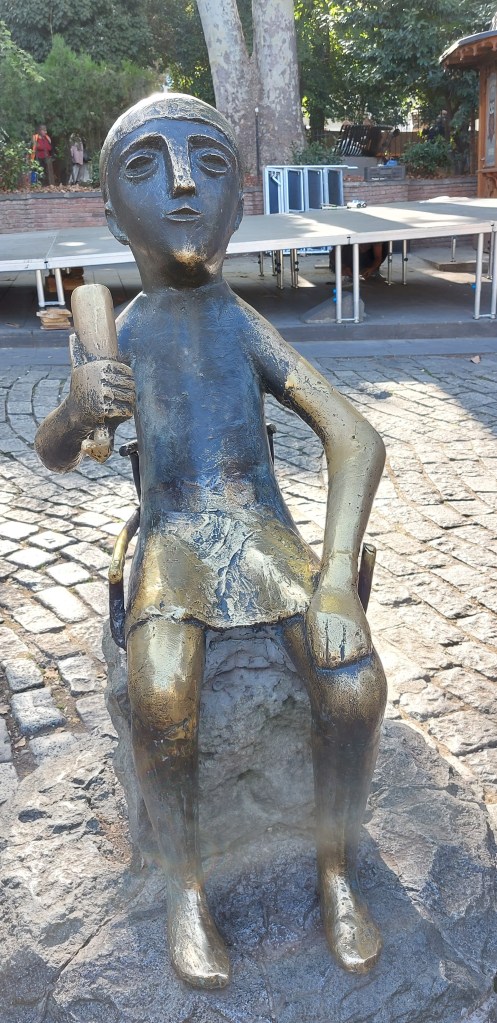

Our final stop on the tour was the site of the sulpher baths (which made Tbilisi the capital)
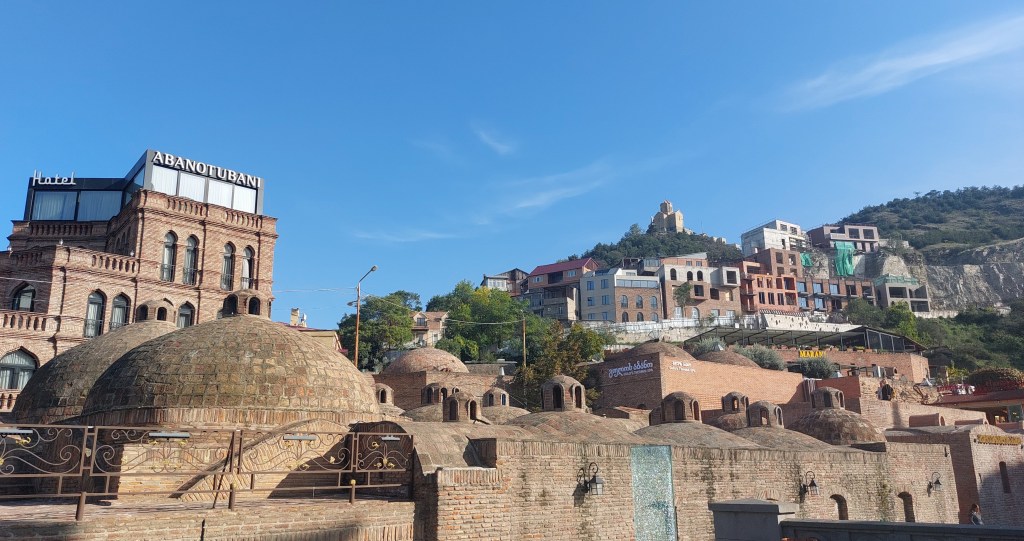
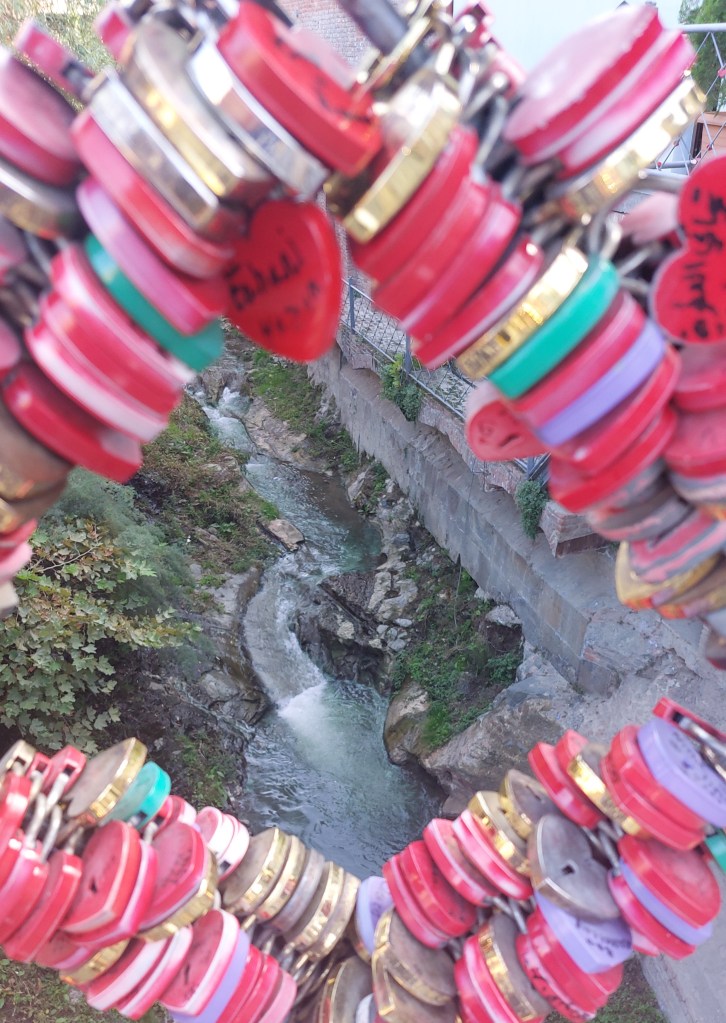
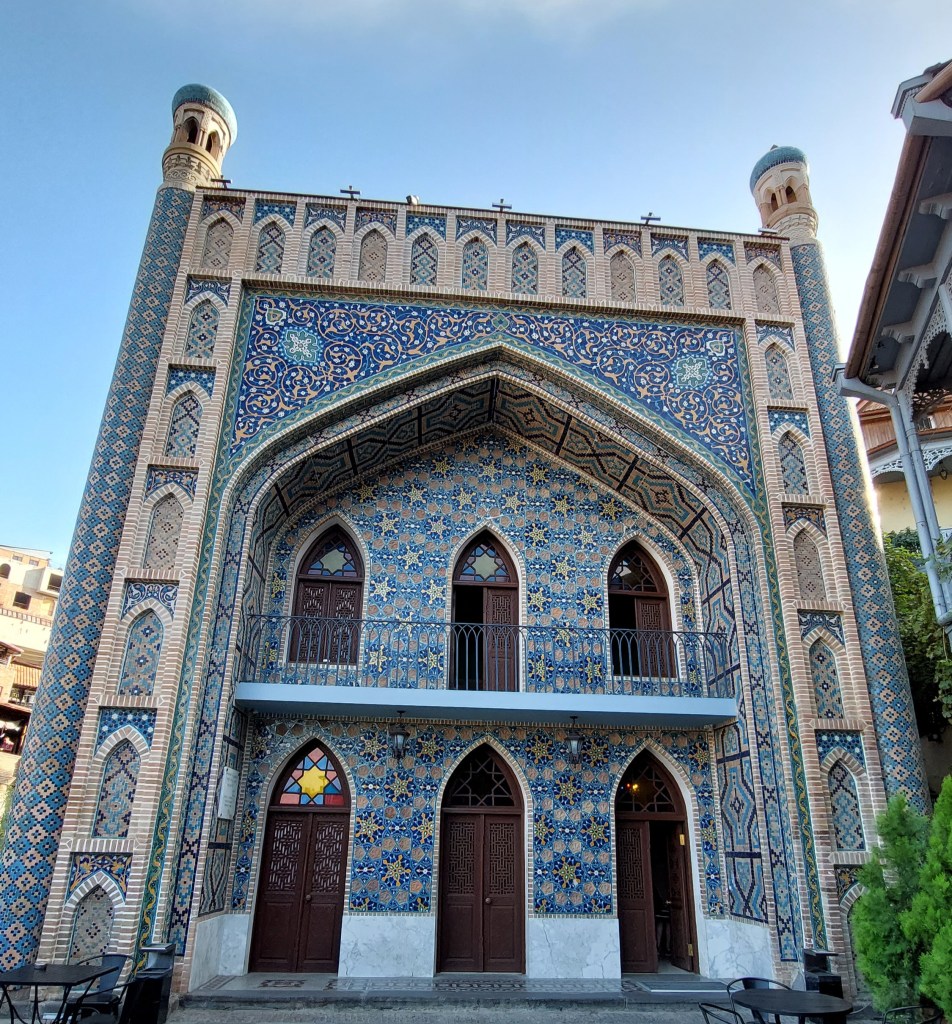
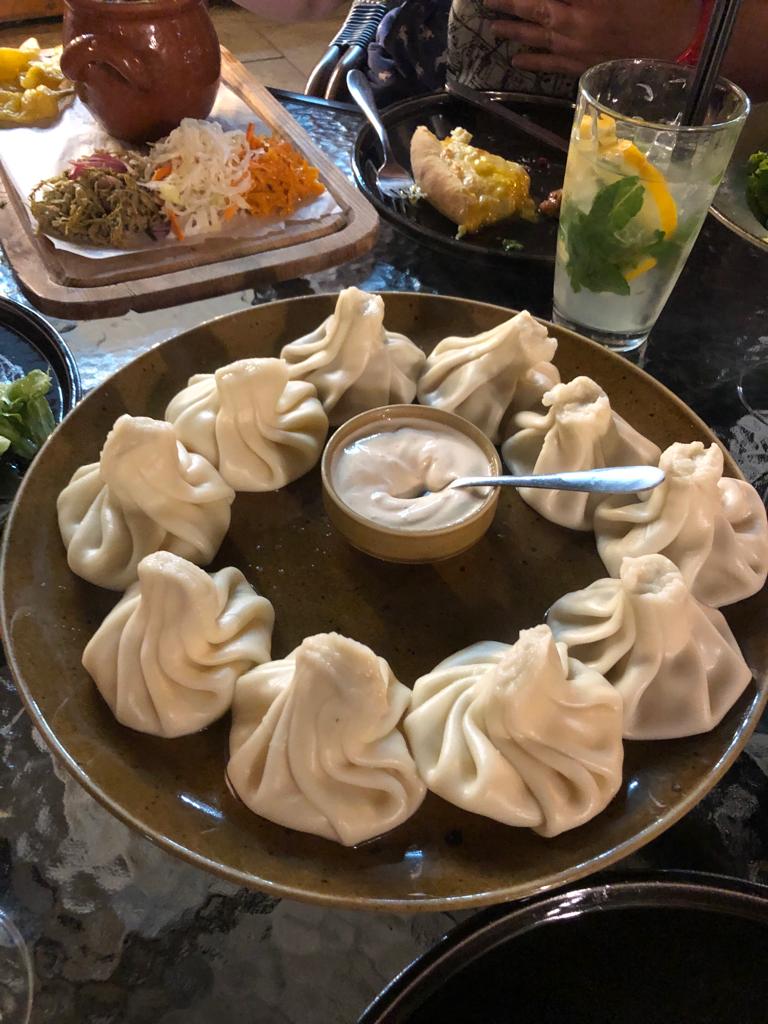
So that was the end of our first day of sightseeing in Tblisi and it was a full day. We ended it with a meal of all the Georgian classics: more cheesy bread (khachapuri acharuli), dumplings filled with meat or cheese (khinkali), aubergine/cheese thingys, bean pot (which I will find the recipe for because its delicius!) and a desert of something fruity, sweet and spongy. Lovely. We had a taxi home, so to avoid climbing the hill – totally worth the £1.87 it cost!
Tomorrow we have been promised wine tasting. I dread to think what will happen…


Leave a Reply