Today (well yesterday) we drove the short distance to the Georgian-Armenian border and joined the long queue of people waiting (firstly) to be given our exit stamps, it was then a few minutes walk across no man’s land to the Armenian border. Thankfully, for those in the group unable to manage their luggage, this walk was all flat, although it did smell rather strongly of urine, which I suspect is something to do with the long line of lorries… We had been briefed on how to answer questions about our recent trip to Azerbijan (tensions running high at the moment which is understandable), but we were asked no questions – they obviously assumed we were tourists.
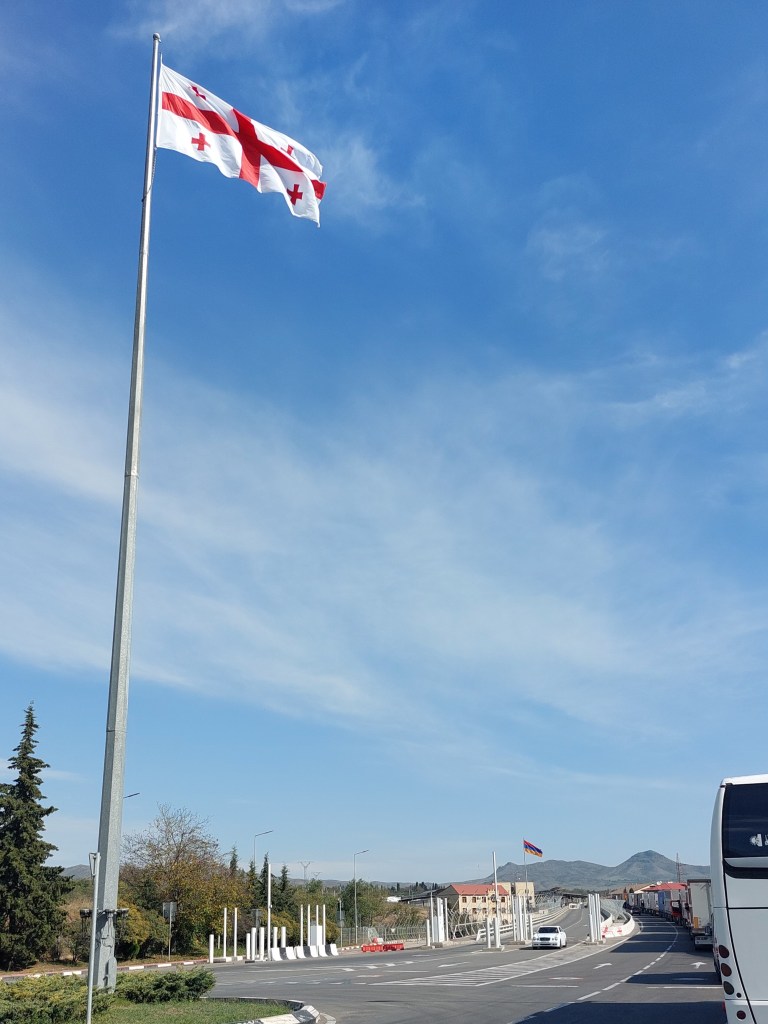
We were met by our new guide, Raffi, and we headed off. Armenia is the smallest of the 3 countries I am visiting on this stage of the trip and its population is less than 3 million people (of which 45% live in the capital Yerevan – our eventual destination for today). It is very green and mountainous, and they are particularly proud of Mount Ararat (even though its in Turkey as they consuder it part of Greater Armenian and they get the best views) and we shall be hearing much of this over the next few days as Armenia is a predominantly Christian (Armenian Orthodox) country and. Not only are we now emersed in another language, but we are also facing another new alphabet (which dates from 405 AD).
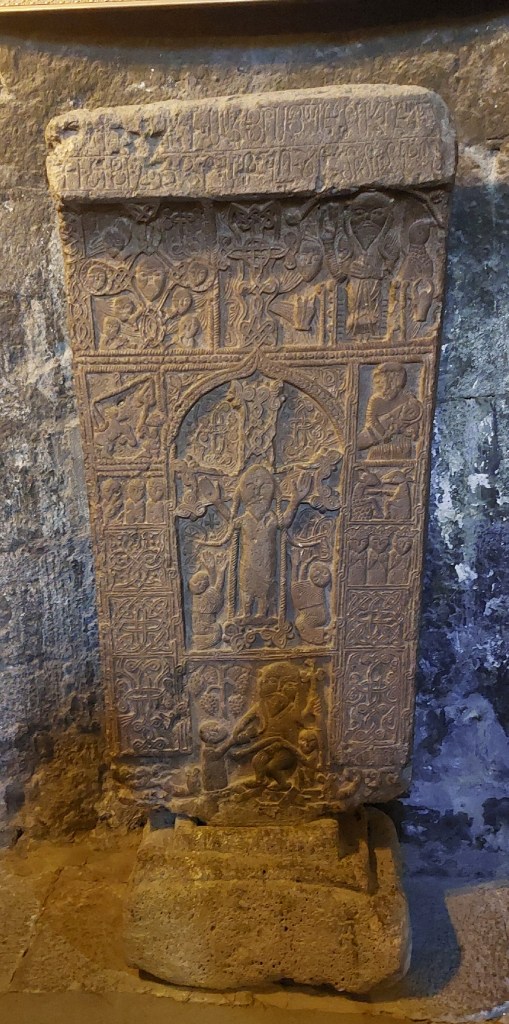
We winded up through the mountains to Goshavank (which means the Monastery of Gosh), which is a 12th century monesrary containing one of the finest Armenian cross-stones (or Khackar) in the world. Mkhitar Gosh was an 11th century priest who is also famous of having written the first Armenian civil code (full of sensible statements like – women should not collect taxes, wealth should be shared amongst all children etc.) but rather unfortuantely named, as Gosh means bald in Armenian.
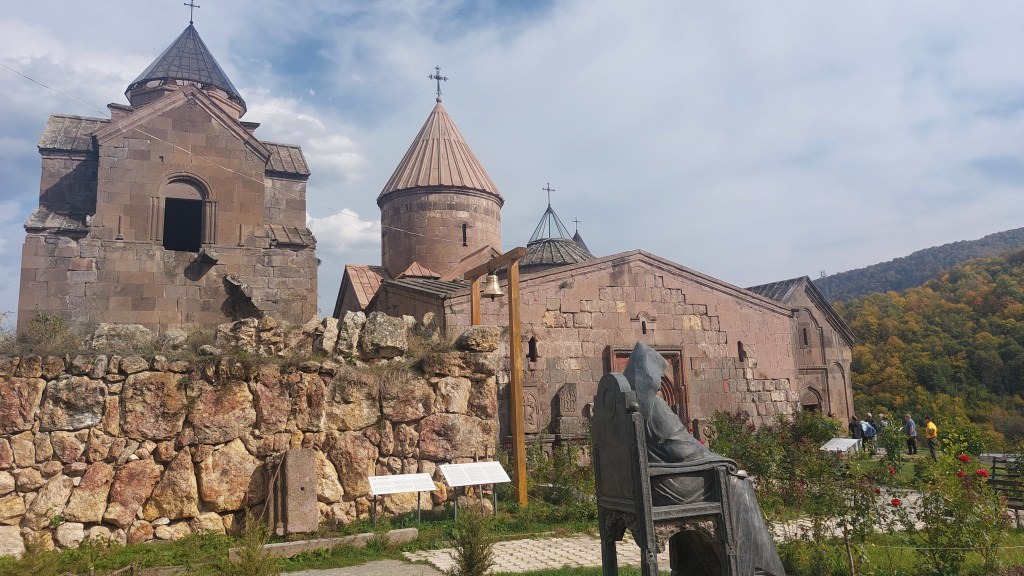
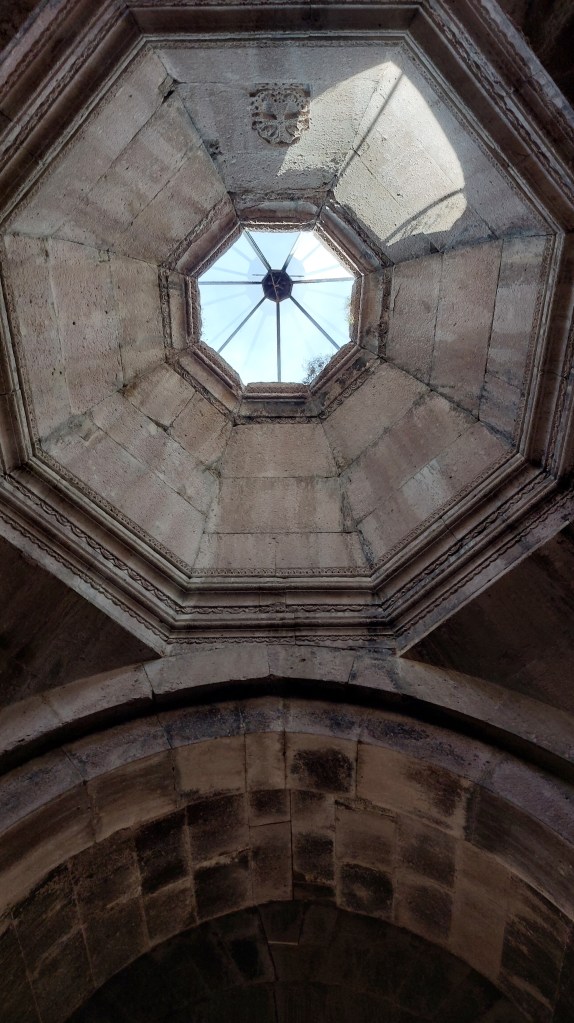
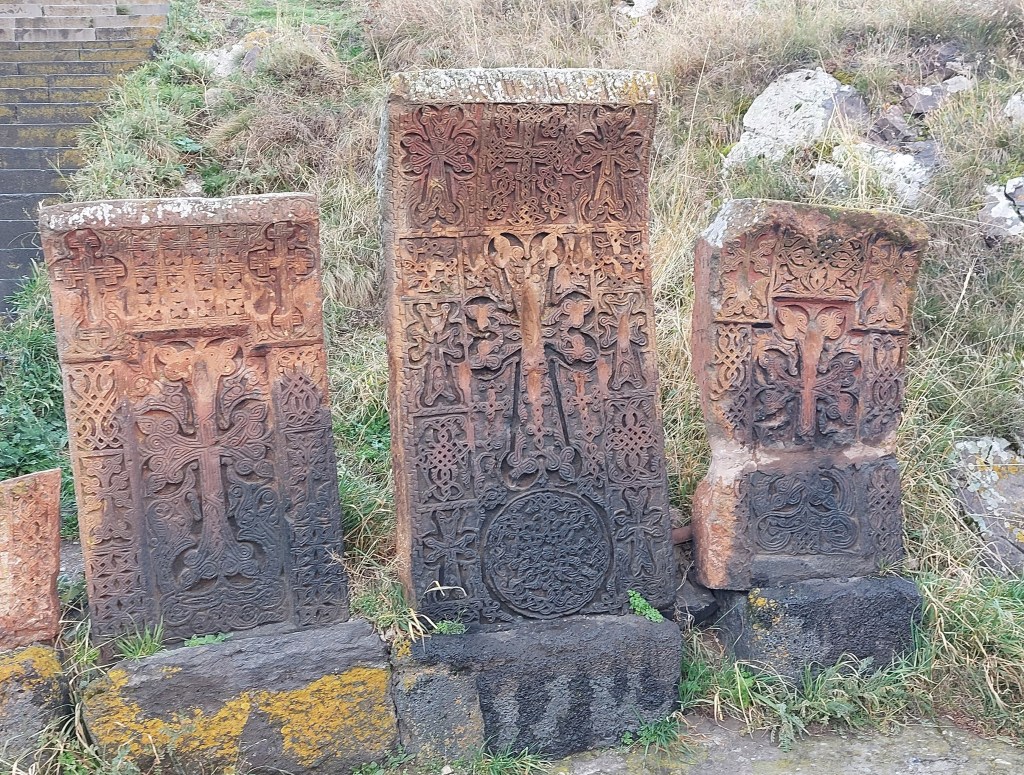
Armenia considers itself to be the first Christian country in the world, having adopted Christianity in 301 AD. We shall be seeing many churches on this trip… We shall also see many Armenian crosses. In the Armenian Orthadox church, a cross is a symbol of new life as opposed to the cruficixion and is often decorated with blooming plants.
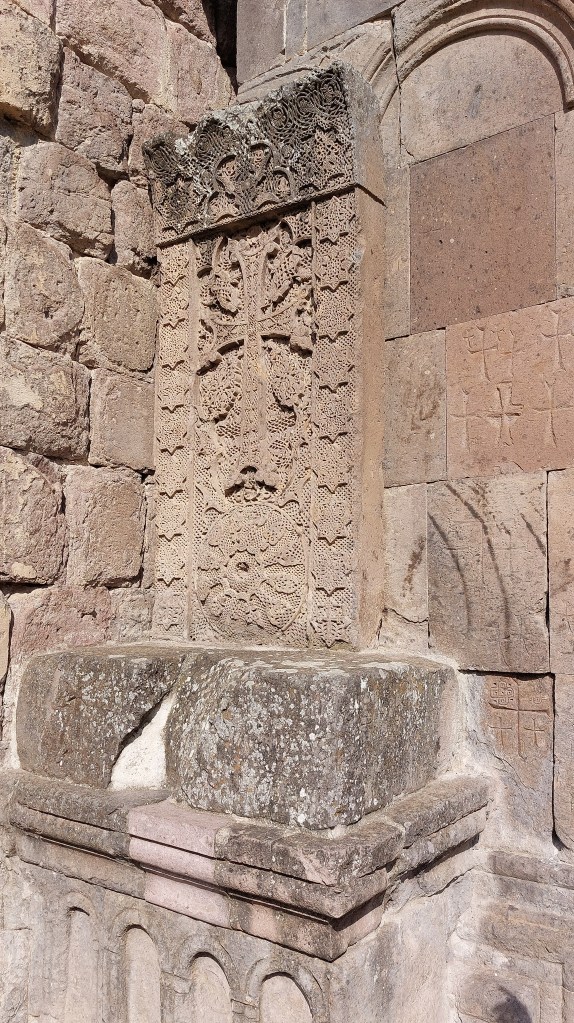
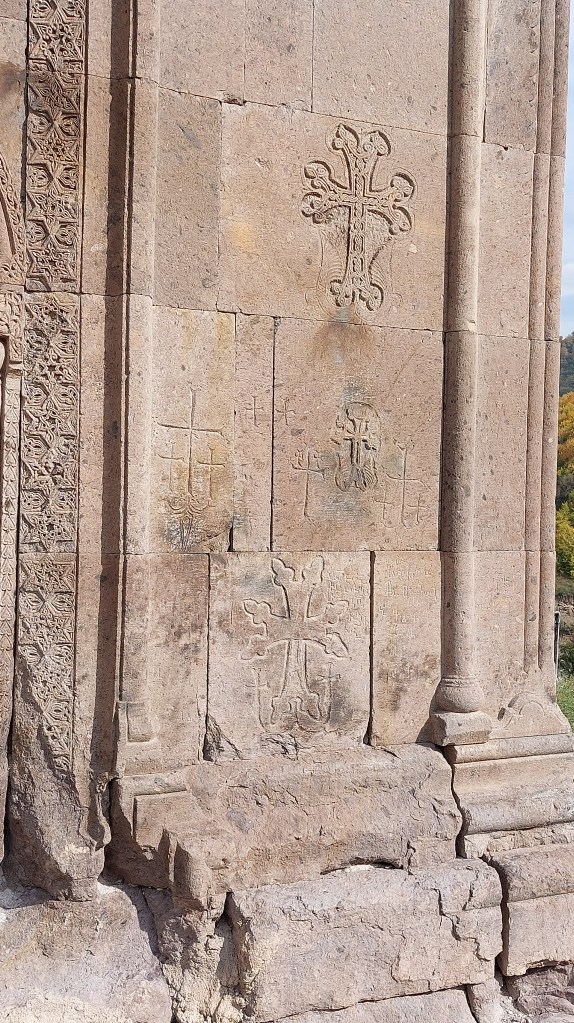
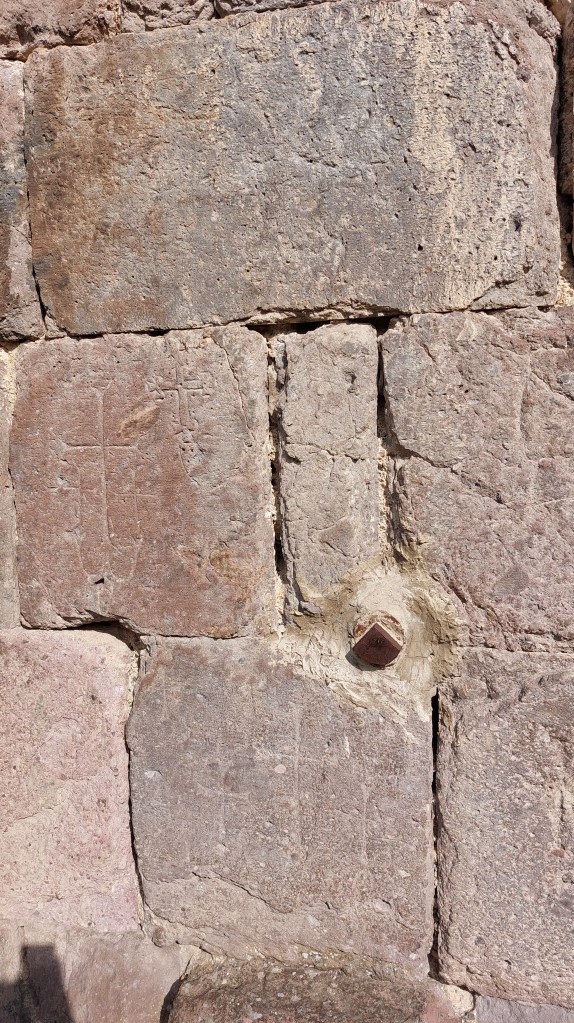
The 14th century cross is “fully needled,” which refers to how it is carved out. The bottom is the earth, the top is the kingdom of heaven, and you have to go through the cross (i.e., belief) to get there.
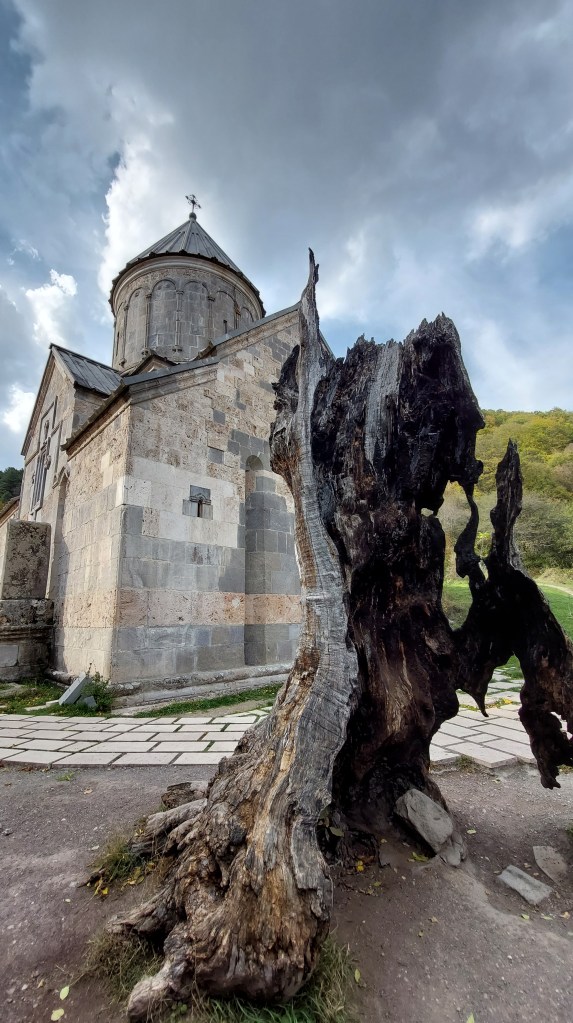
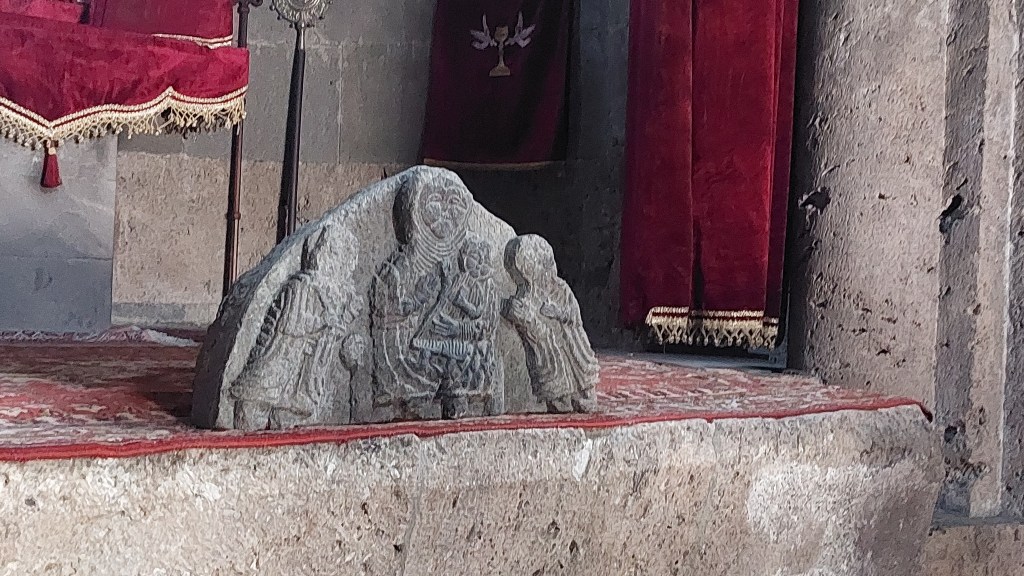
Our next stop was the 10-13th century Haghartsin Monestary (meaning Dance of the Eagles). The monestary includes 3 churches, 1 for St Gergory the Illuminator (more on him later), 1 for the Virgin Mary, and 1 for St Stephen. A recent restoration was funded by the Sheikh of SharJah in the UEA, who visited the site after an earthquake and donated funds for its restoration. This is one of the only instances I could find where a muslim ruler has paid to rennovate a non-muslim site. Gives hope to us all.
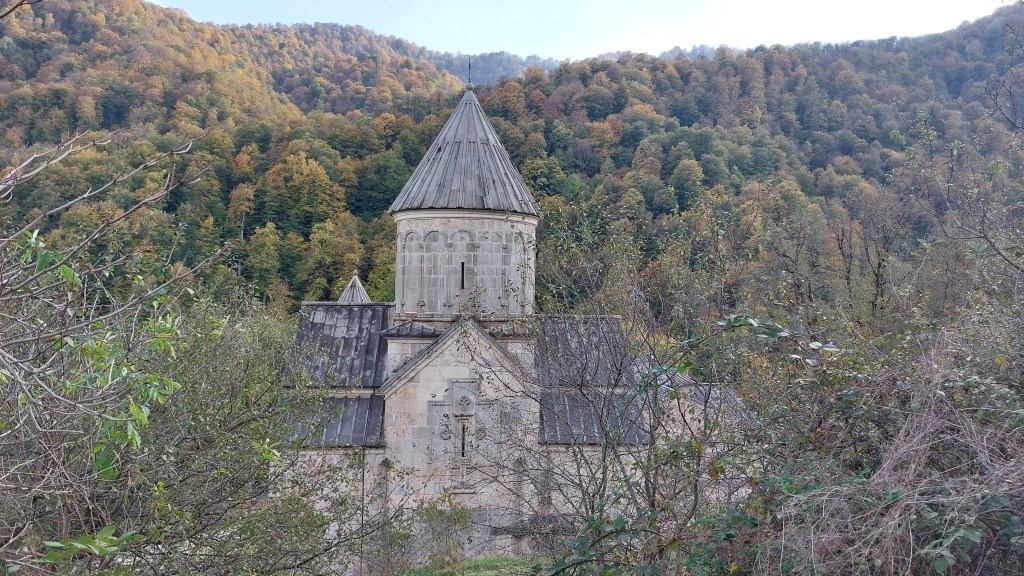
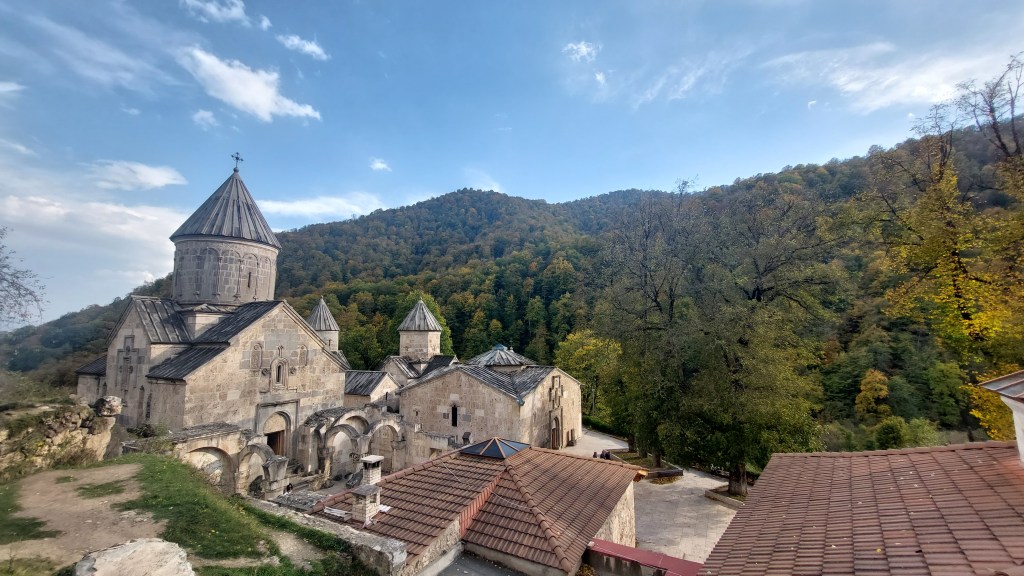
As we drove through the mountains, I had the front seat so was able to really enjoy the beautiful view (oh the colours of Autumn and all) and this continued until we went through a mountain, and all changed:
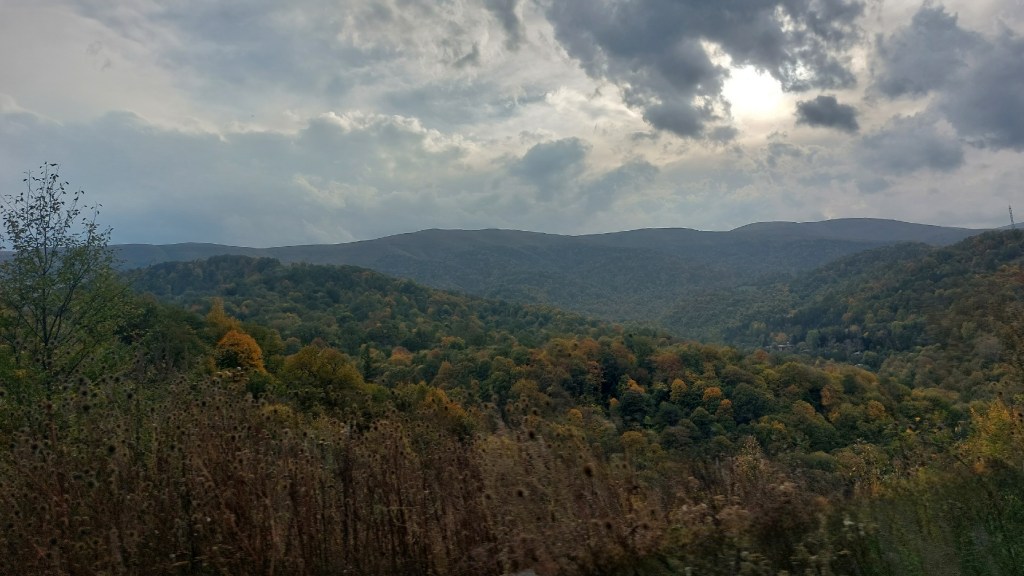
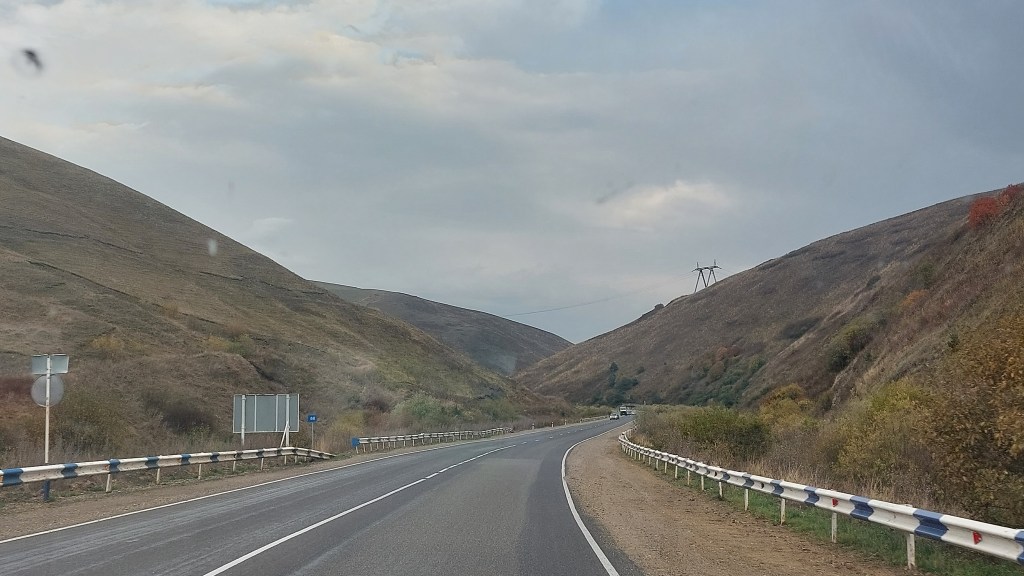
We had now entered Dilijan, which bills itself as the “Switzerland of Armenia,” and I am not quite sure I agree… It was raining by this point that did not help, but I think this description is pushing it!
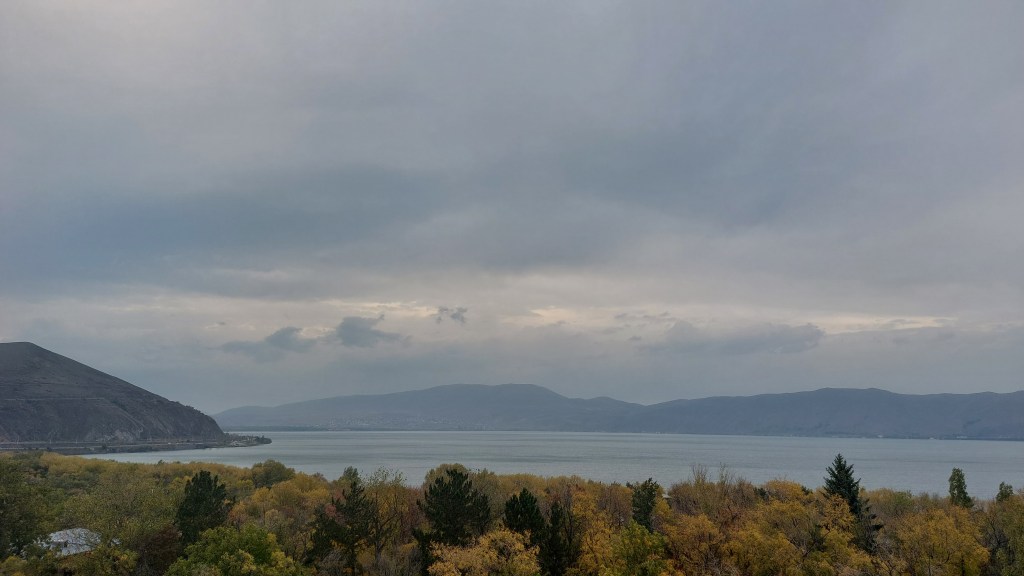
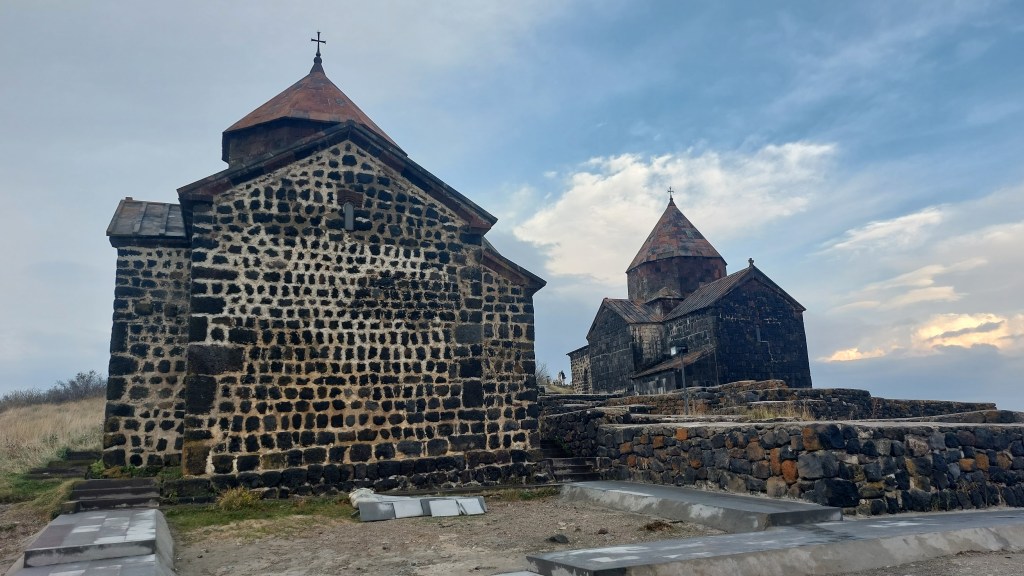
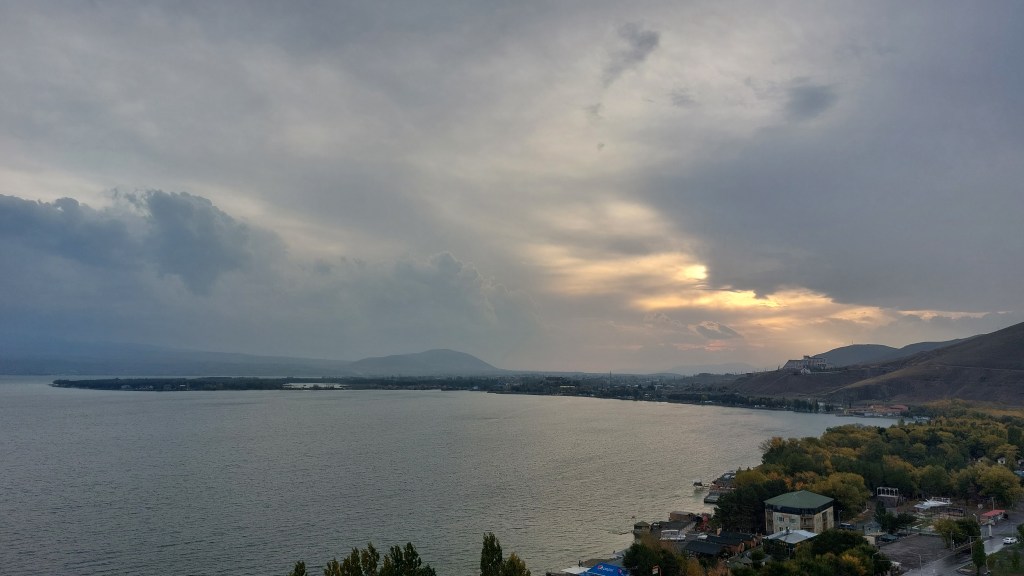
We drove to Lake Sevan, which is 1,900m above sea level and is the largest lake in the Caucasus and one of the largest fresh water high-altitude lakes in the world. It used to be bigger, but in the 1950s, the Svoiets decided to irrigate a nearby river, and as a result, the water level dropped by 20m. In the cold wind (I was not dressed appropriately!), we stopped on the peninusla and climbed up to the Astvatsatsin and Arakelots churches. Really, you are climbing up to see the beautiful view (which I am sure would have been approved by some sunshine) and their khachkars.
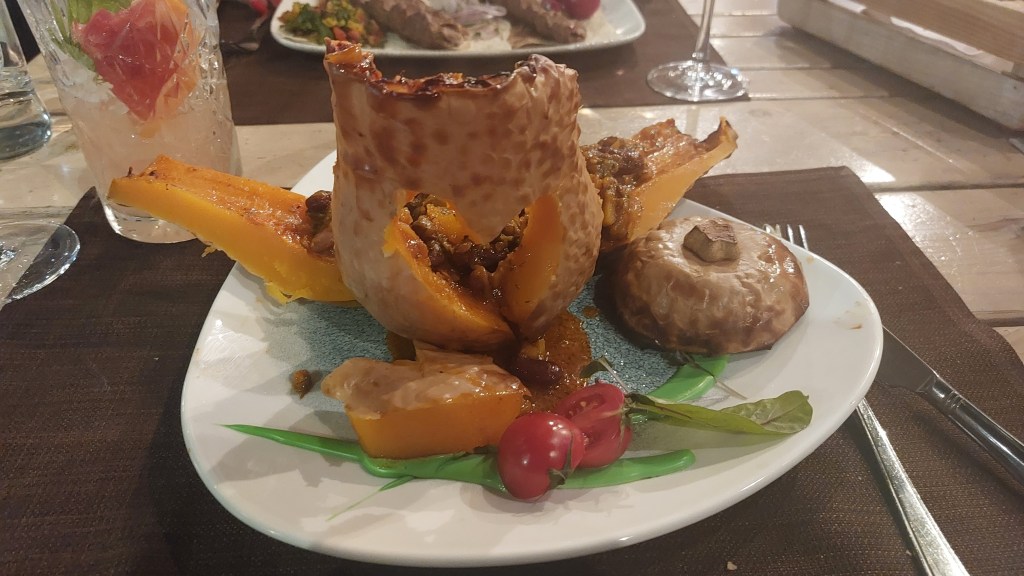
It took us about 1h30 to drive to Yerevan which (if we ignore the rain and distinct drop in temperature) looks like a rather nice place. We are exploring properly tomorrow, but we did go out for dinner at a well reviewied restaurant and I had ghapama which is a roasted butternut squash filled with lamb, red kidney beans, aubergine and tomato-iness – absolutely delicious!


Leave a Reply