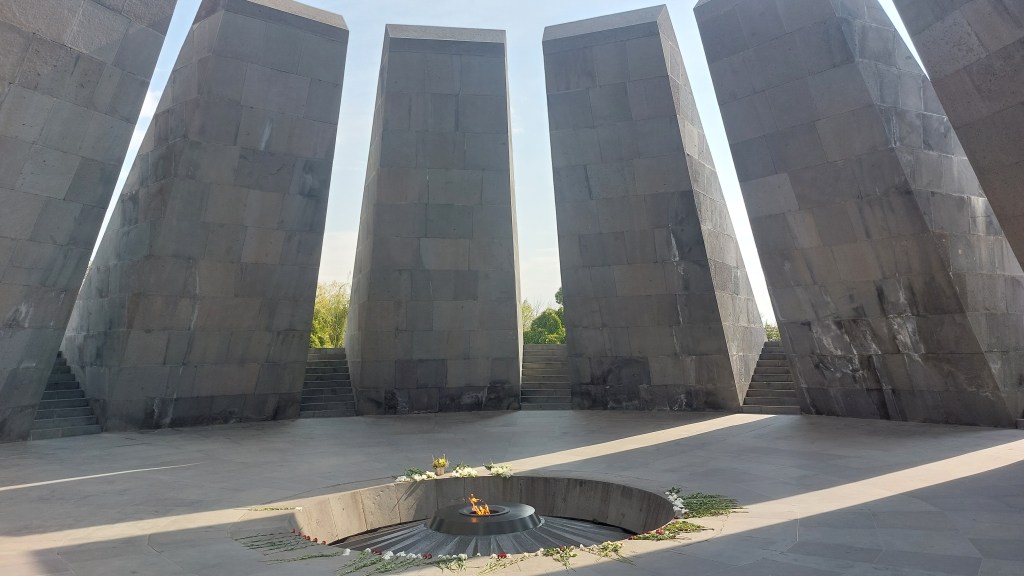
Yesterday, we started our day in the capital of Armenia, Yerevan. Yerevan is known as the pink city (or to be more accurate, pinkish) as much the city is made from tufa and basalt (types of limestone), often in a patchwork pattern. It is also relatively small, with an inner circle (surrounded by a ring road) containing a block layout that is all navigable on foot. The outside of the ringroad is much higher (practically cliff height above the inner gorge), and in the distance, you can see the mountains.
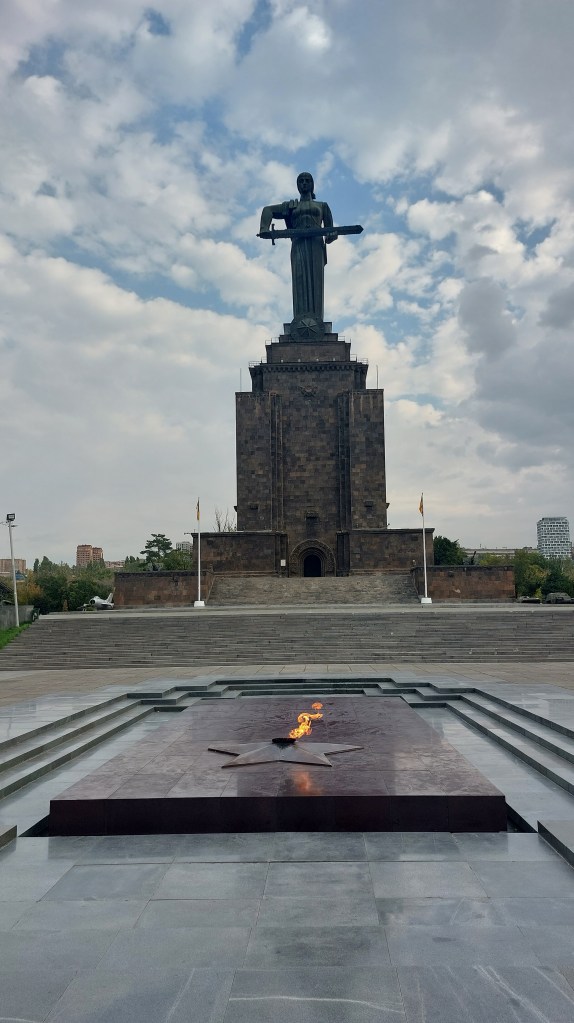
Having driven up one side of the gorge, we went to see Mother Armenia. I get the sense that Georgia and Armenia shared notes here, as she dates from the same time-ish as Mother of Gerogia (1967) in Tblisi, or more likely it was some bright idea of Soviet leadership.
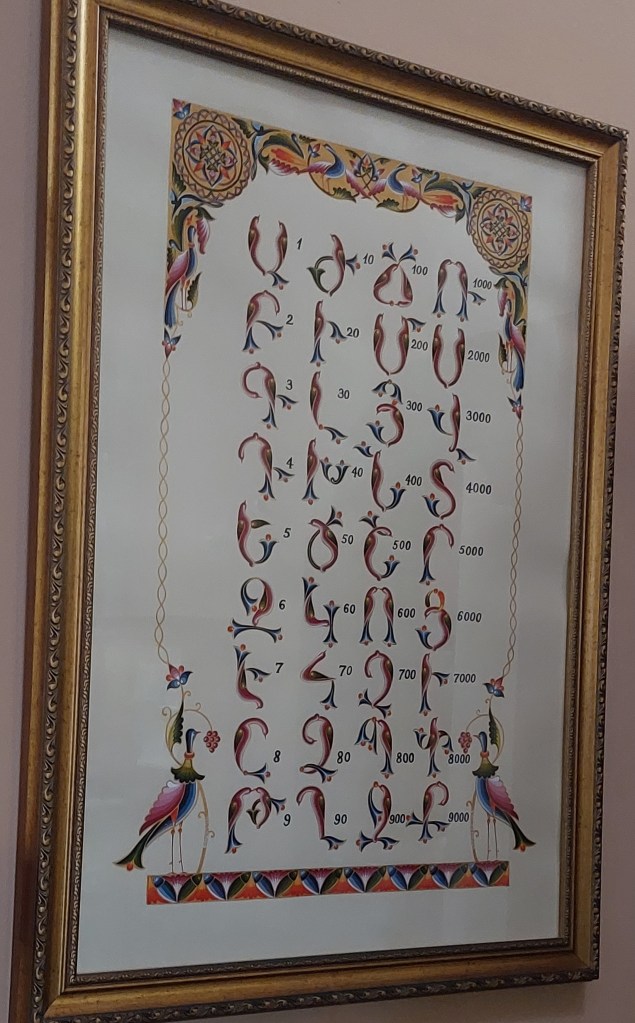
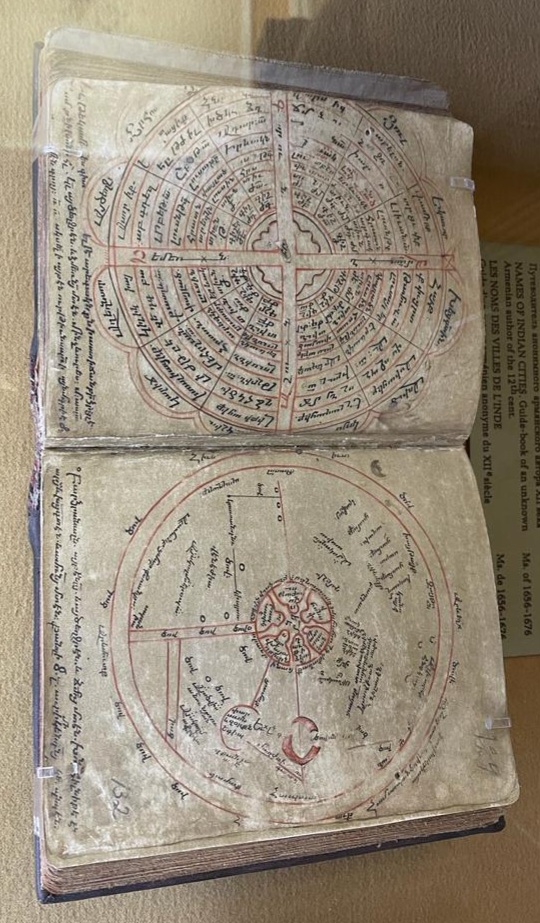
We next went to Matenadaran/The Museum of Manuscripts. I approached this with a light air of interest, but it is an amazing museum and full of fascinating things. There are books and manuscripts dating from the 5th century onwards collected together by Mesrop Mashtots, who invented the Armenian alphabet. The Armenian alphabet includes 39 characters and origially had no numbers (and did not add them until 16th century), so numbers were written out in words – the museum contained a mathematical formula which looked even more horrendus than a usually find mathematical formula!
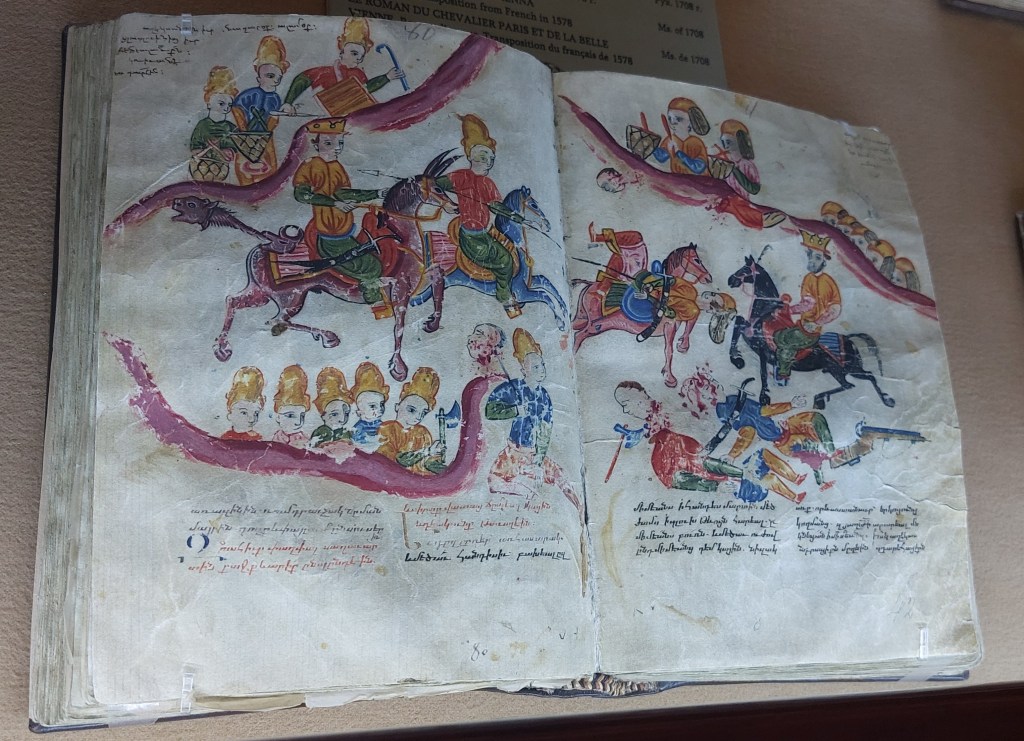
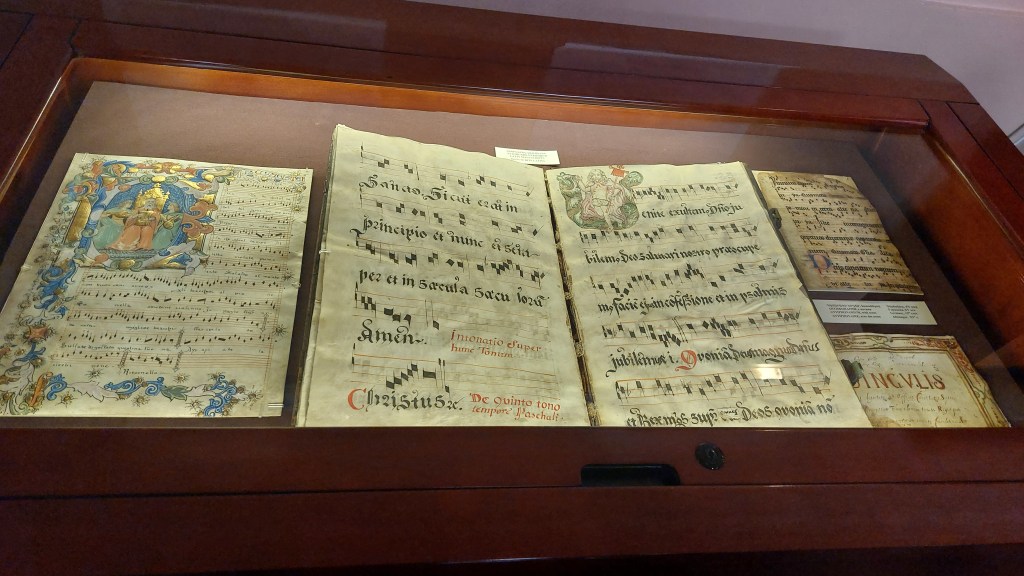

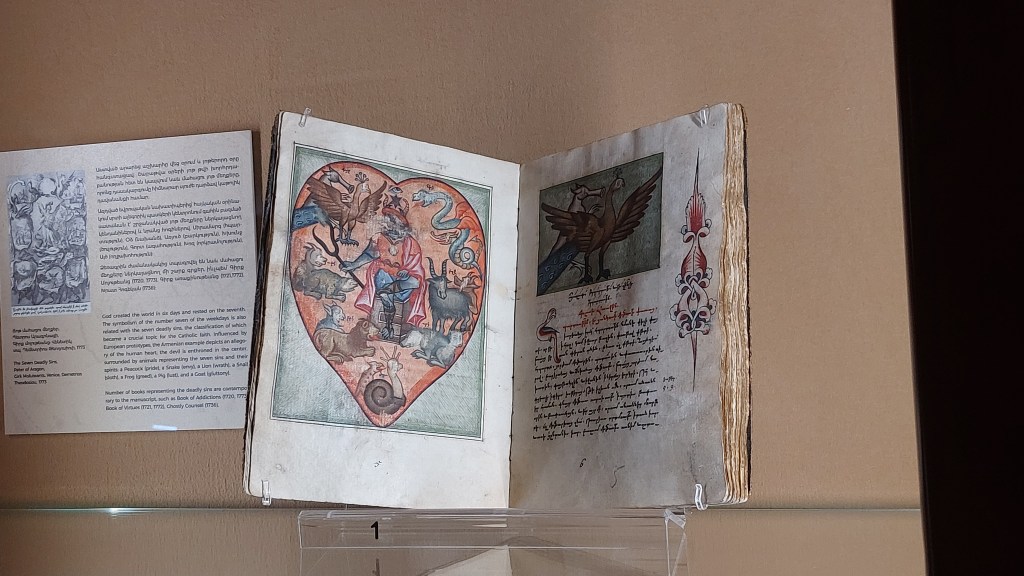
Armenia created the 3rd oldest paper in the world and, as a result, got an early start on writing books. We saw books that have survived from the 4/5th century, including the first Armenian language bible. There is also a collection of maps collected together by an Armenian 4th century scholar and traveller who visited (and made notes at) libraries all over the world – including at Babylon, which was soon thereafter destroyed. Armenia had a distinct style of illustration, but over time this changed – for example, to try and prevent the Mongol hoards burning books (we know what Gengis is like) they started to give images Mongol features to try and convince Gengis’ merry men that the books were about them! Also, it was not until the 16th century that illustrations started to look more European.

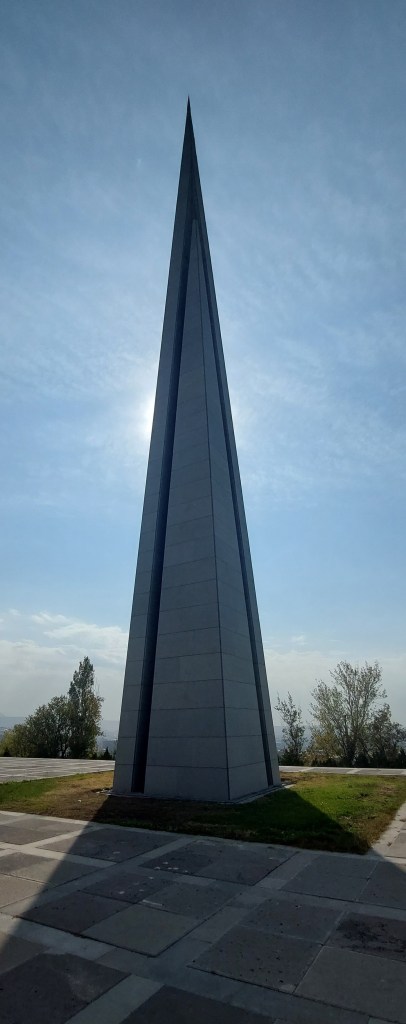
Onwards, and up Tsitsernakaberd Hiill (Fortress of Swallows) across the Hrazdan Gorge from central Yerevan to the Armenian Genocide Memorial and Museum. This commemorates the genocide of Armenians by Turkey. Much has been written on this, and Turkey continues to deny that it was a genocide (and blocks UN resolutions to this effect), but there is evidence to support that it was a genocide and it is agreed that some 2.5 million Armenians died between 1915 and 1922.
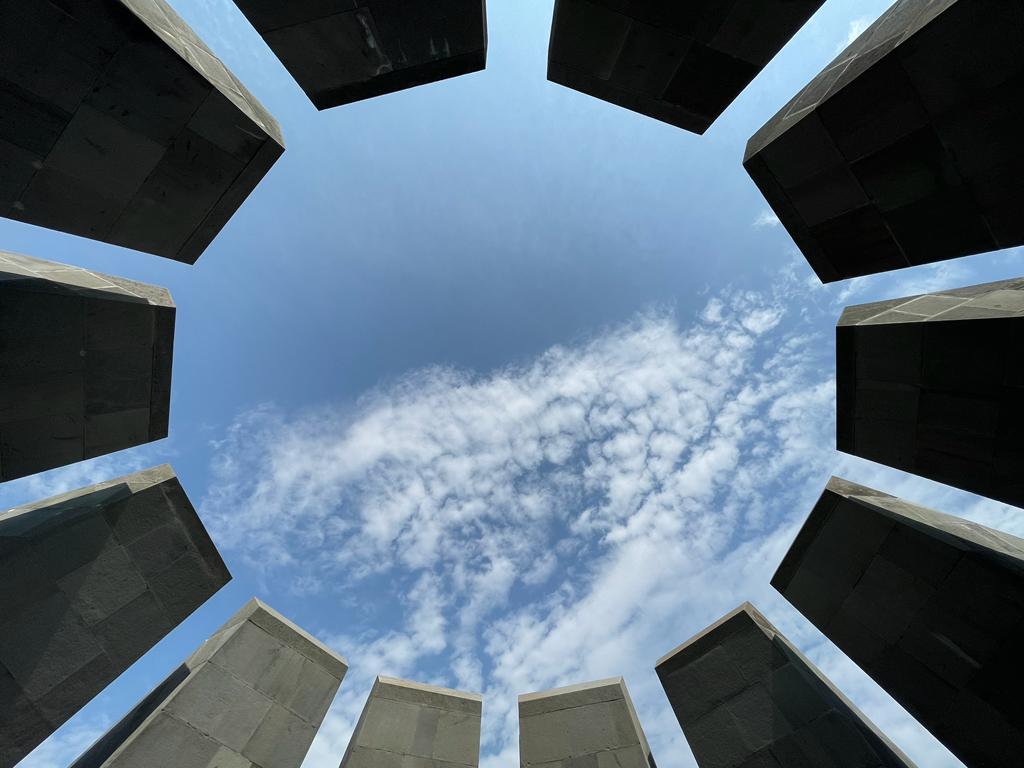
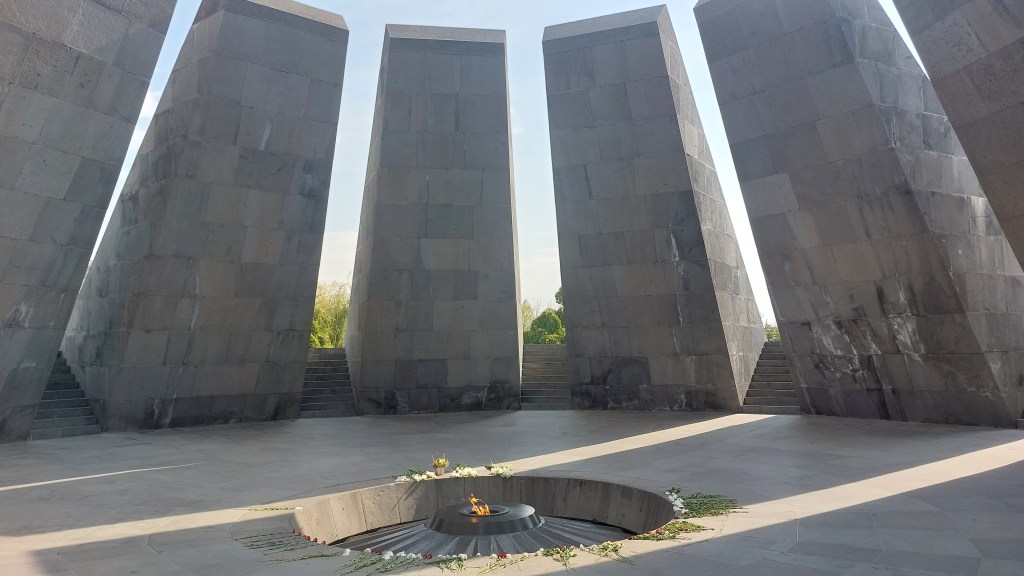
At the turn of the 19th century, a large number of ethnic Armenians lived in the Ottoman Empire (part of today’s Turkey) and from 1915 the government undertook a number of actions intended to remove Armenians from these provinces. The first stage was to consrcipt ethnic Armenian men into the Ottoman army and disarm any remaining people. The second stage was to arrest (and usually execute) Armenian leaders, intellectuals, lawyers, religious leaders, etc. Stage three was to forcibly deport Armenians east to the deserts of Syria/just out of Turkey. This is why Turkey is able to argue it was not a genocide, rather, mass deportation. However, foreign diplomats and international press, even at the time, widely reported the scale of what was going on:
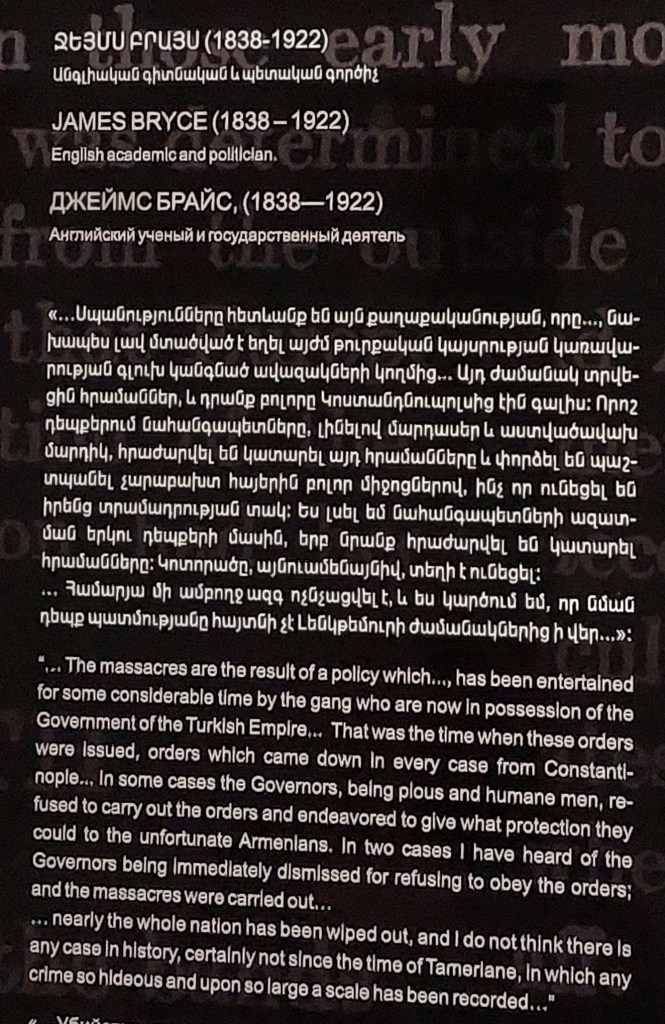
From a Turkish perspective, the matter was resolved by the 1922 Treaty of Lausanne which settled the border between Armenian and Turkey (giving up Armenian territory to Turkey) and which failed to recognise the genocide, return property to deported Armenians, pay reperations etc. From an Armenian perspective, the genocide is still fresh in their minds and since the 1920s much has been done to try and trace families, including children who were kidnapped and enslaved by Ottoman families (we have been recommended the story of Aurora Mardiganian) or orphaned, as well as to try and support these children, and their children. It was an incredibly moving memorial and museum, and a moment in history I shall be learning more about.
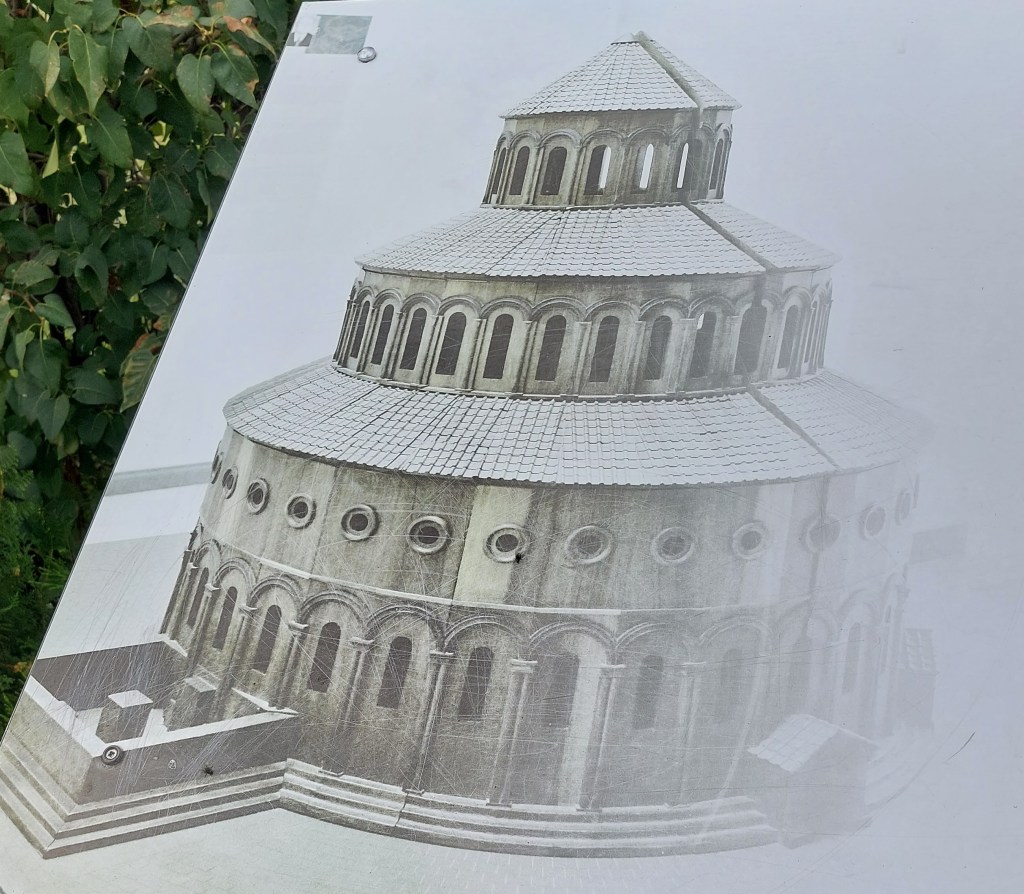
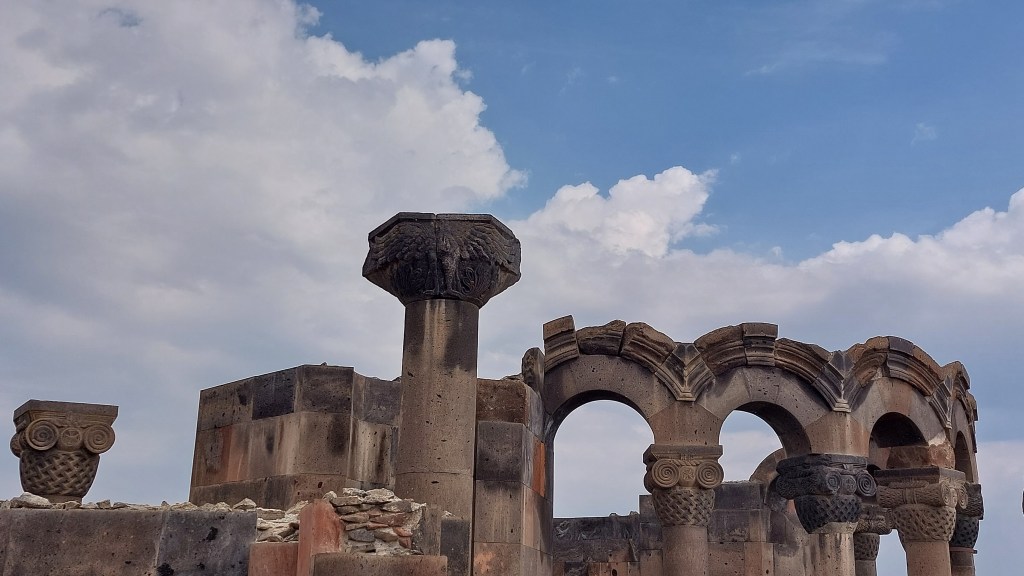
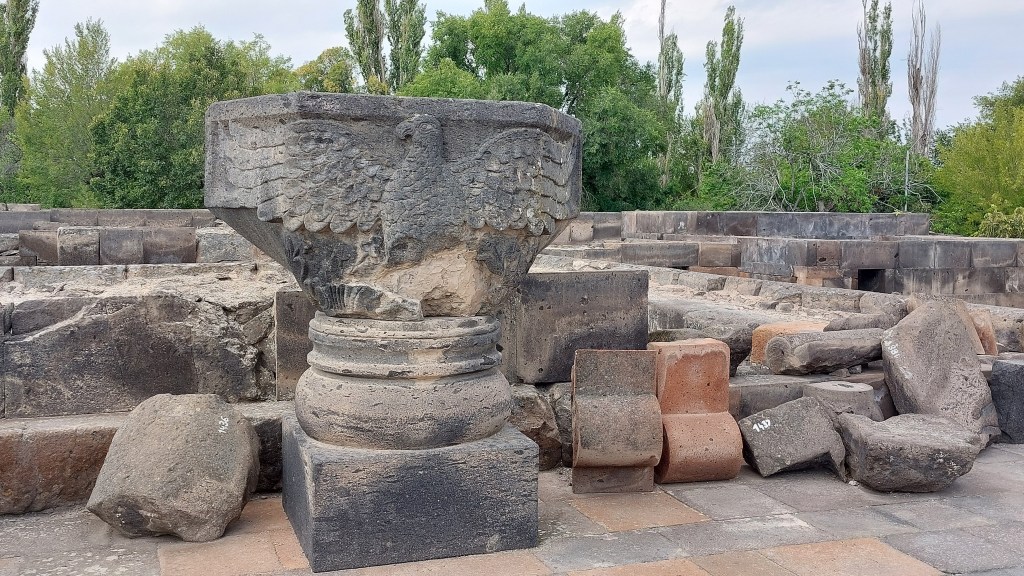
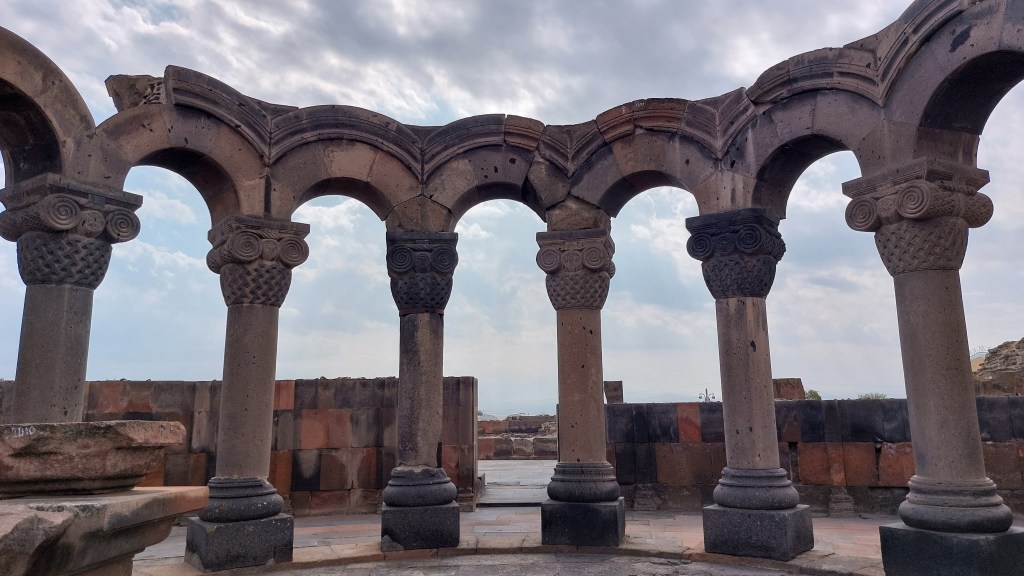
Little time to reflect, and on to the ruins of the circular Zvartnots church. This was a Byzantine 7th century church that was destroyed (initially) by an earthquake in the 10th century. The ruins lay buried until the 20th century when they were excavated and reconstructed. It made something of a change from the Armenian style we are becoming familiar with:
Our final stop of the day was Etchmiadzin, which is the Mother See of the Holy Etchmiadzin, i.e., the Vatican of the Armenian Church. This is the place where St Gregory saw Jesus in a vision, and he banged the ground with a stick and told him to build a catherdal here, so he did. Unfortunately, the main cathdral is closed for renovation, but we were able to visit the cathedral museum, which includes a number of (so we were told) very holy relics:
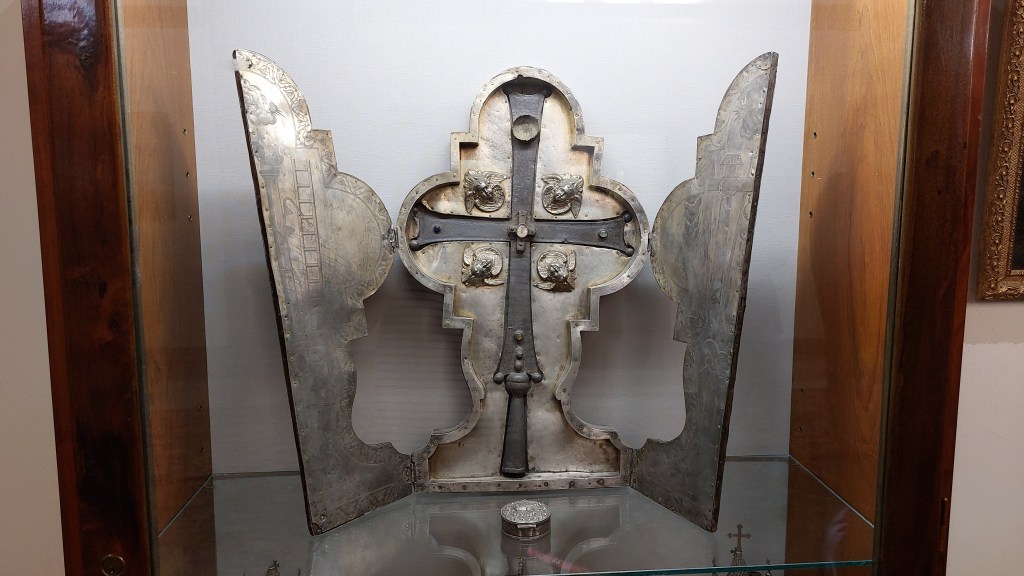
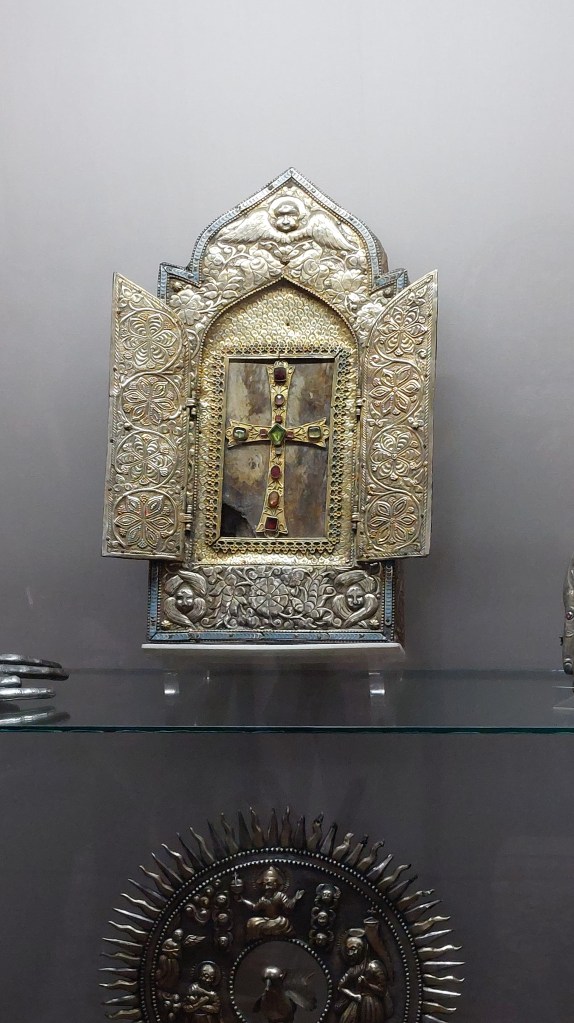
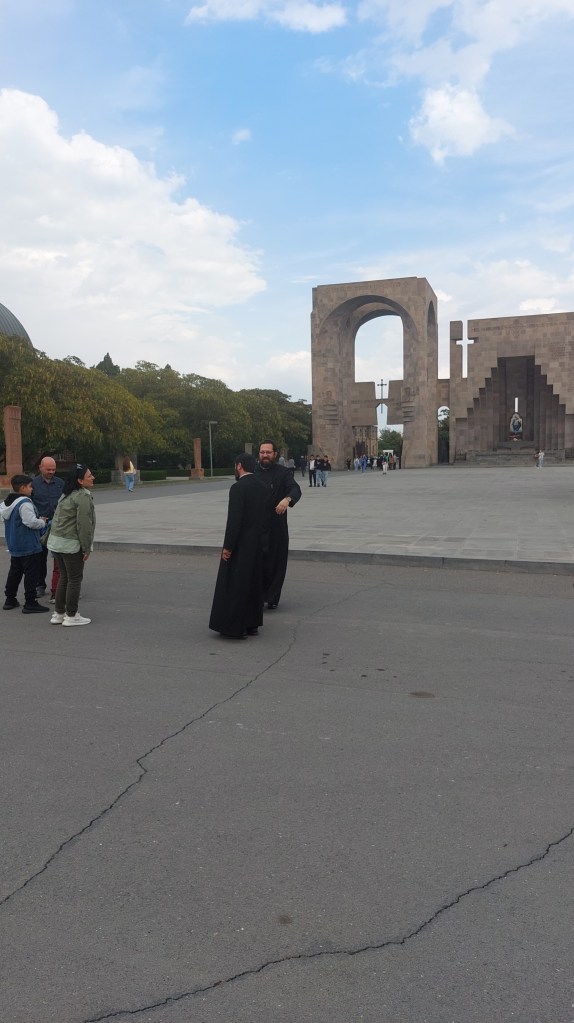

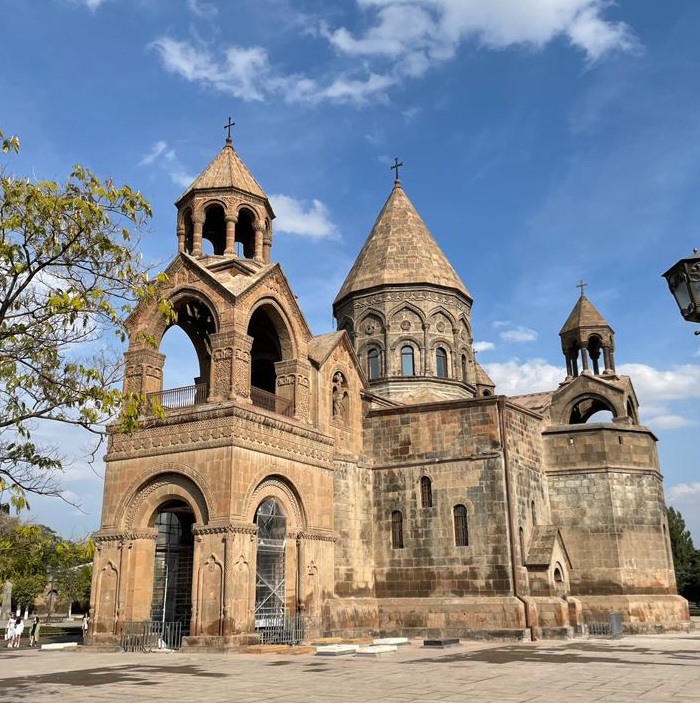
As a non-believer, I question the authenticity of all of these relics. However, the Holy Lance (which is said to be the weapon used by a Roman soldier to pierce the side of Jesus when he was nailed into a cross) is one of three claiming to be said holy spear – but independent tests conducted in the UK have dated it as being old enough to be true, so at least they are trying… I have less hope regarding the piece of wood from the Ark. I suspect it was a bit of wood from a random tree on Mount Ararat!
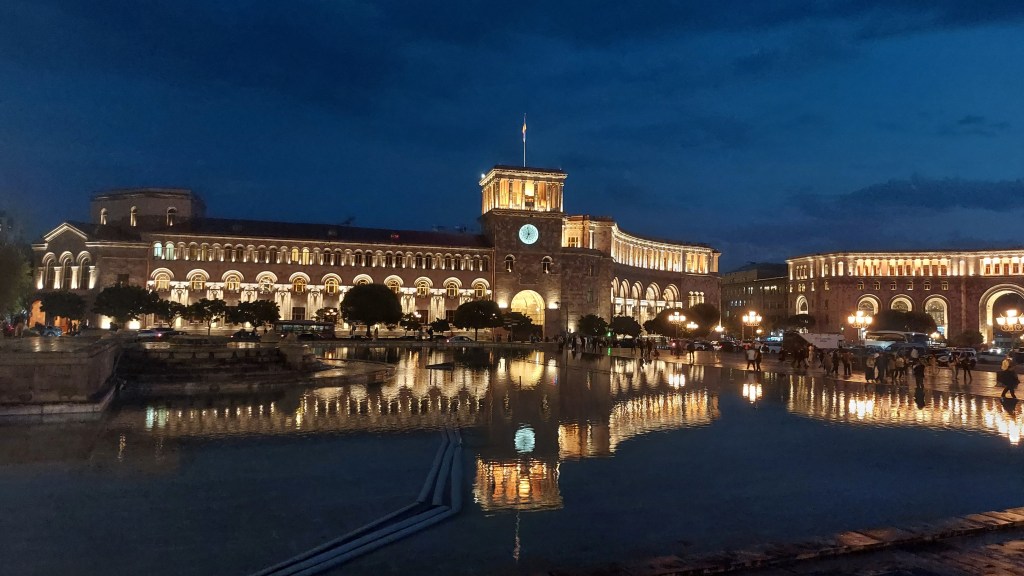
So, another successful day of sightseeing, which we finished off with a walk to Republic Square, and another opportunity for delicious Armenian food (and wine for Mum and Keith).

 Travels with Kathryn
Leave a comment