So yesterday (I started writing this on Tuesday) I packed up and left my AirBnB (which was lovely), but I think I may have broken the hob by excessive cleaning as it would not turn on last night! Oh well, luckily I had an emergency pot noodle which I could have for dinner and this morning I had my last memen (the deliciousness) which made up for it.
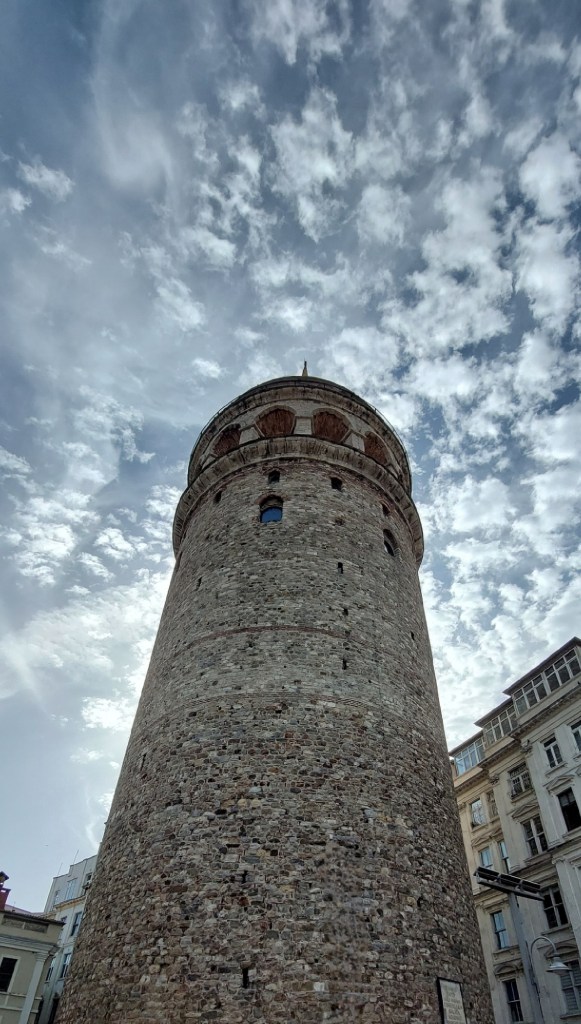
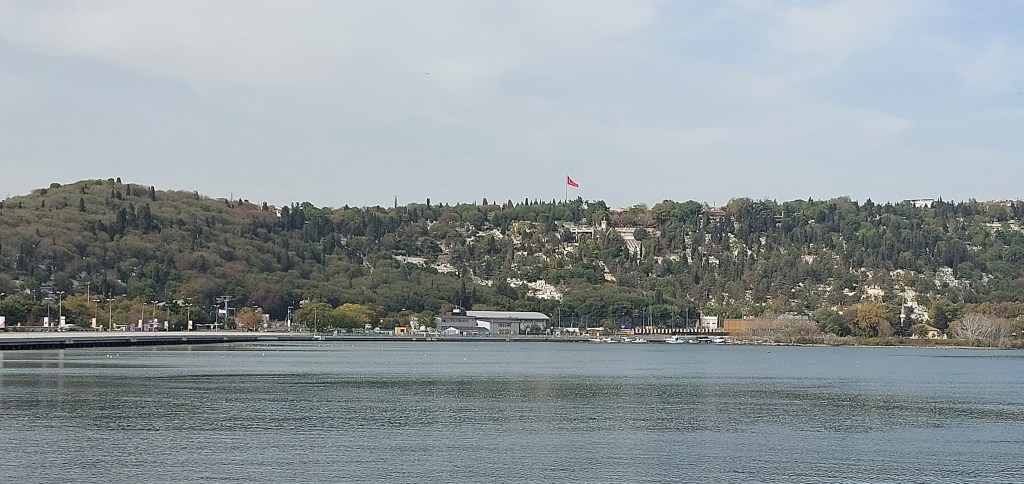
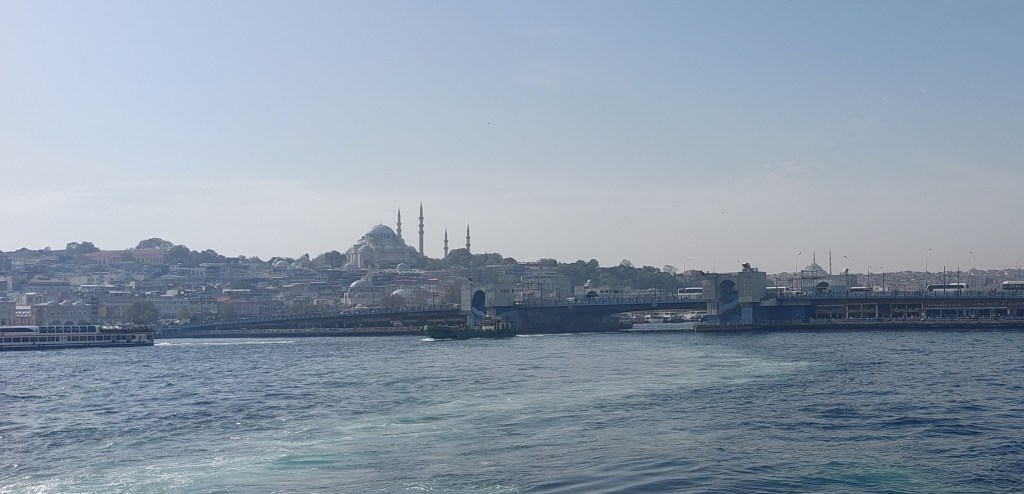
As my train was not leaving until 8pm I had a last wander around my neighbourhood (including the Galata Tower) and then took a ferry up and then down (or down and then up?) the Golden Horn to the wonderfully named Eyupsultan station (yes, you can pronounce this with a Yorkshire accent).
Halkali station is perhaps the most lacking in facilities train station I have ever been in. Yes, there are trains and platforms, but there is not so much as a shop, vending machine, or entrepreneurial person selling drinks and snacks. Luckily, I have some, but I should have brought more with me… For some reason Istanbul has decided to no longer use its main station (which is right in the centre of the city just by the Spice Bazaar) and instead all long distance/international trains leave from Halkali which is a 45 minute metro ride from this central station.
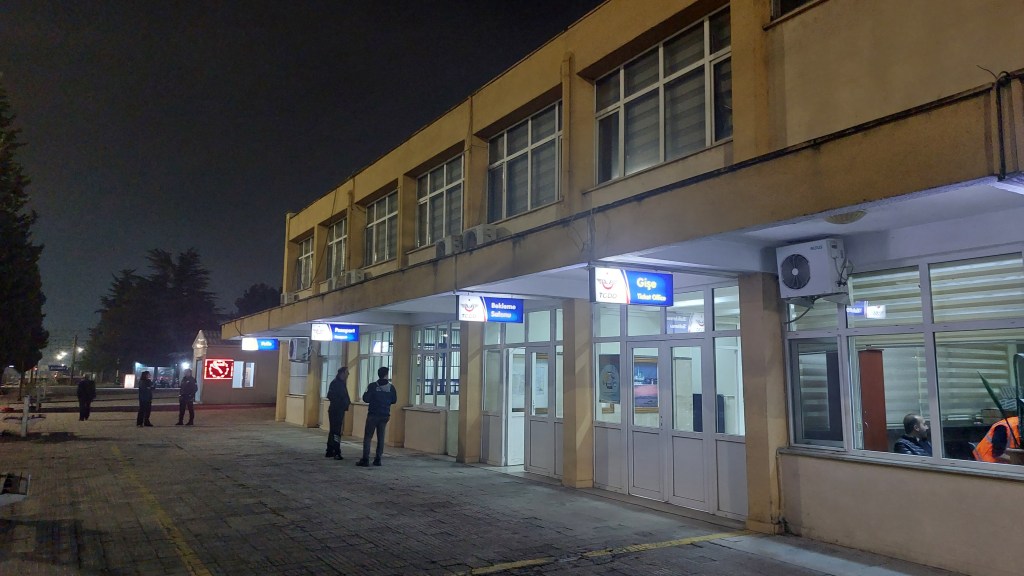
Anyway, at about 7.15pm, an official looking man came into the waiting room and summoned us to board. It was all very straightforward, and I have a delightful sleeper compartment to myself:
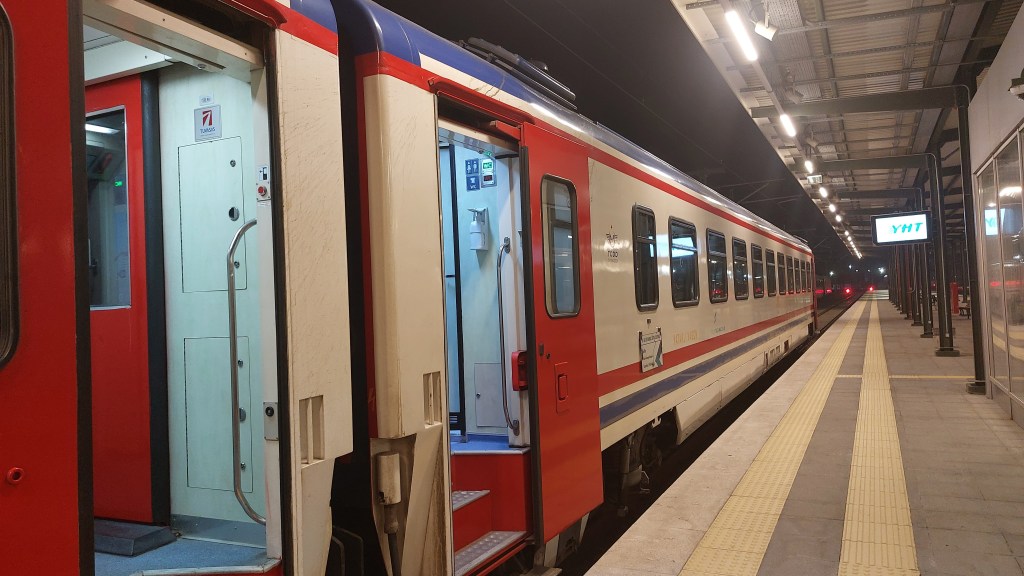
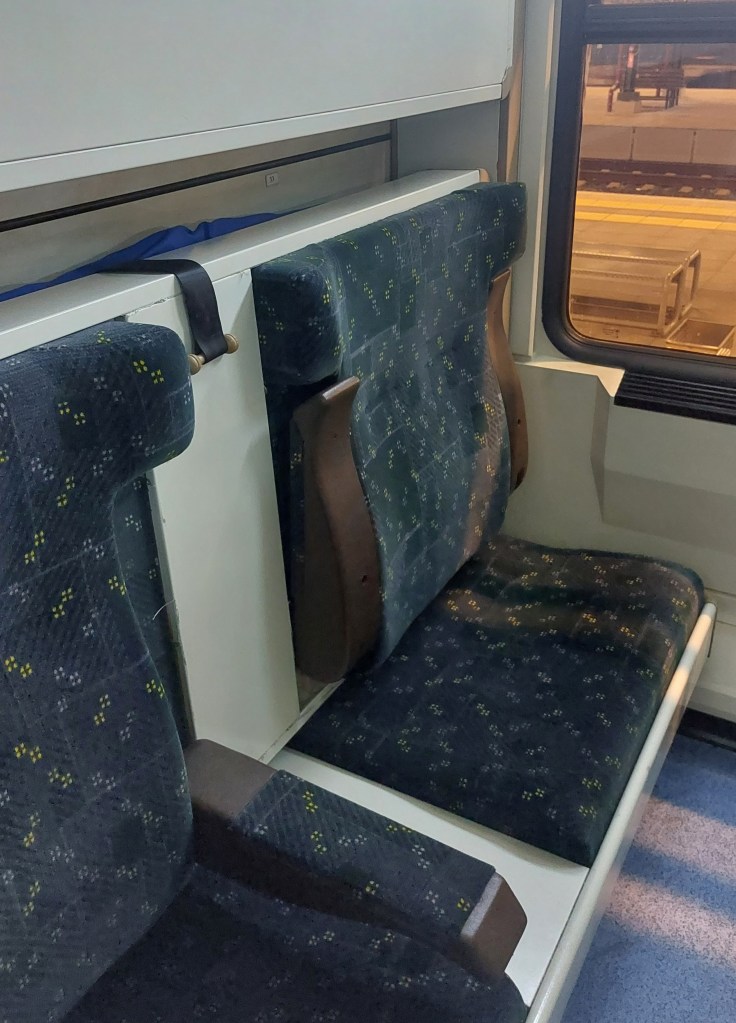
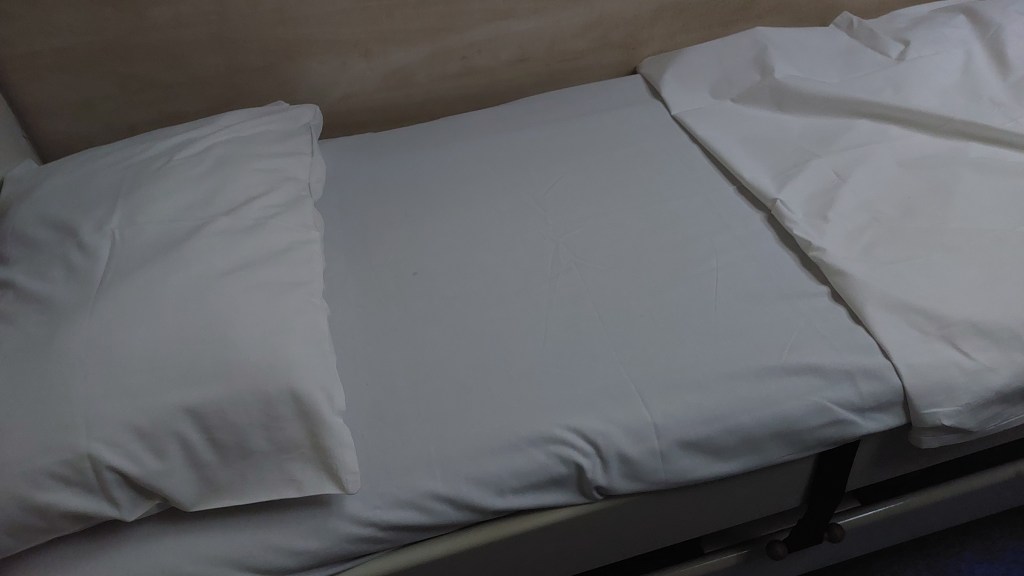


As we set off (bang on time at 8pm), it seemed to me that we were going rather slowly, and it turned out that we were. I had made-up my bed and changed into pyjamas with the plan being to set an alarm, get dressed and be ready to be the first off the train when we reached the border at Kapikule at 1am – I had consulted http://www.seat61.com (for the uninitiated, this is the BEST source of all train journey information pretty much everywhere in the world!) so knew what the proceudre would be. My alarm went off, and I checked location mapping on Google maps, and we were nowhere near the border. I decided to get dressed anyway and wait, and wait… I did entertain myself by realising quite how close to Greece I was – you may have noticed its not on my itinerary, unfortunately, this is mainly because its technically not on the classic Orient Expess route and because I felt that I would need more (in season) time to do it justice. I shall return.
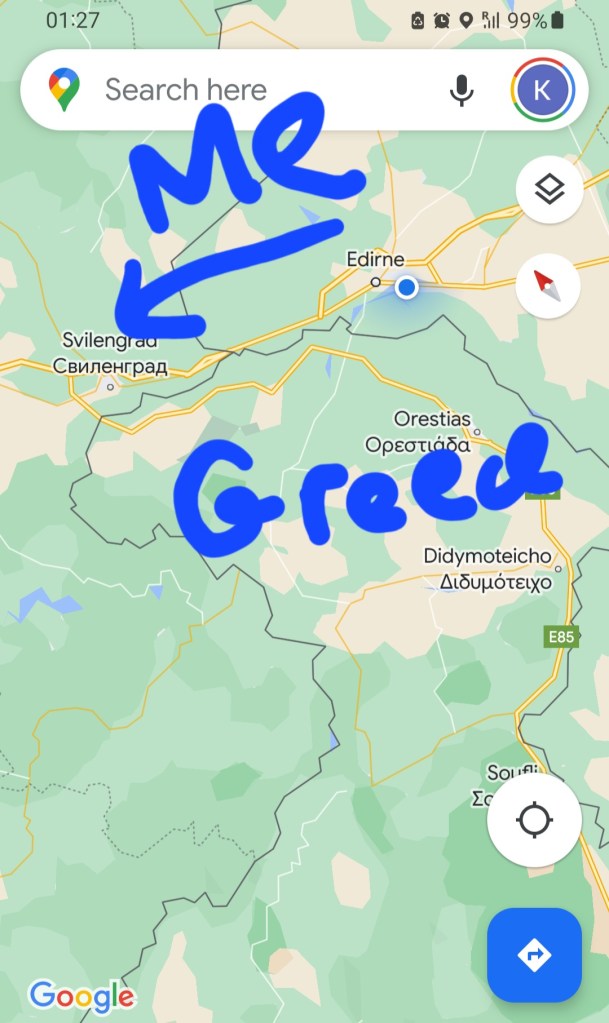
At 2.10am, we pulled into Kapikule, and I was ready, passport in hand to get off the train – only to be told by the train attendant that it would be an hour yet! I was confused, and then it all made sense when the the train going the other way (Buchaest – Sofia – Istanbul) pulled in and evidently you get priority when entering the country as opposed to when you leave. Anyway, I read for a bit and at 3.05am we were let off and I was the first one through passort control and I was back on the train, in my pyjamas, in bed by 3.12am Hurrah!
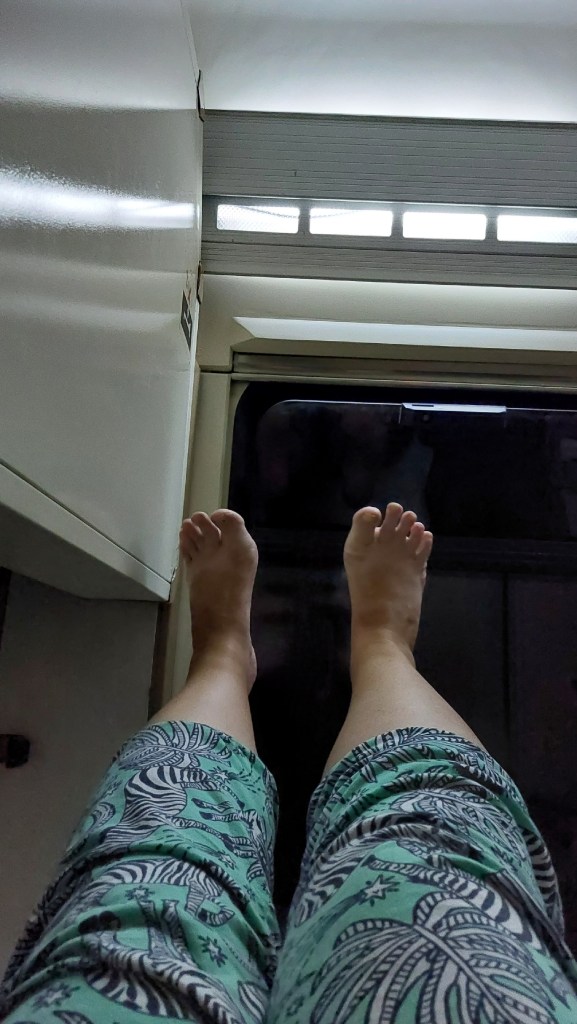
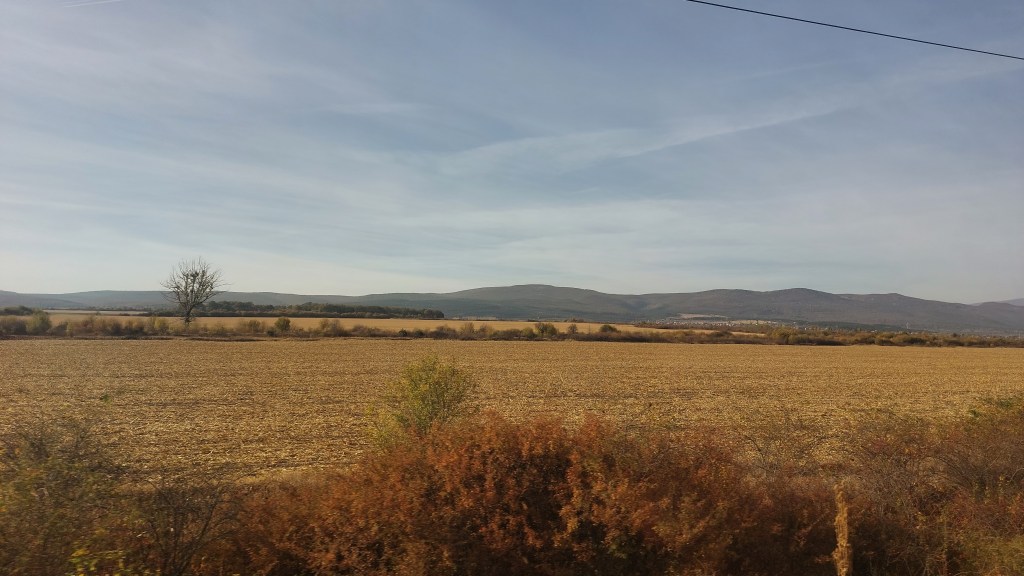
I am not sure what time we left the station, but at about 4am there was a knock on the door for the sniffer dog to do a little inspection (he found nothing of interest in my cabin) and later (not sure when) we had evidently reached the Bulgarian border as the train stopped. No need to rouse myself or get dressed as the Bulgarians have a fabulous system where a border guard comes on the train and collects your passport from you, checks that your face matches and asks your reason for travel (I went with tourist as opposed to just being a huge Victor Krum fan – the only famous Bulgarian I can name!) and then when they have finishd it is returned to you duly stamped – welcome (back) to Europe! By now, it was about 5am, and I was free to get some proper sleep in. I awoke at around 9am to a message that I could use data for only £2.29 a day (getting closer to home) and this view:
My train had been due to arrive at 9.37am, and although we managed to make it some time, we did not pull into Sofia until 11.15am by which time I was up, dressed and ready to face the day. Sofia station is pretty horrible (think underground communist tunnels with a slight smell of stale urine), but my nearby hotel was far nicer than its convenient location. They also get bonus points for checking me in straight away (rather than waiting for the 2pm check-in) so I was able to dump my stuff before heading into the city.
Sofia centre is far nicer than the area around the station (not unusual), and whilst it has certainly retained an air of communism and is a bit grungy, this is in a cool/young way. It is also much greener than many capital cities with lots of park and being in the shadow of the Vitosha mountain (about a 30 minute drive away or you can walk all the way along a green route (through a huge park) with your skis (in winter obviously).
Sofia was first founded in 5000BC by the Thracians (Spartacus anyone?) but only became the capital of Bulgaria in 1879. In the 4th Century the city fell to the Romans who called it Serdica and it became a very popular spa resort (as the city has thermal waters running under it), and a halfway point between Constantinople (as it was then) and Rome. After the fall of Rome, the city was held by various nomadic groups before becoming part of the Ottoman Empire in the 14th century. The Ottomans are not remembered with much, if any, foundness by the Bulgarians and tomorrow I am visiting the site of the beginning of the 1876 uprising (which although technically unsuccessful, started the Russo-Turkish war which resuted in Bulgarian independence (briefly) when Bulgaria had its own Royal family. This lasted until the Soviets arrived in 1944 and stayed until 1988 with Bulgaria becoming a satellite state of the USSR (but with the Bulgarian Communist Party in charge). Regardless, the communist style has left a definite mark on Sofia and its architecture.
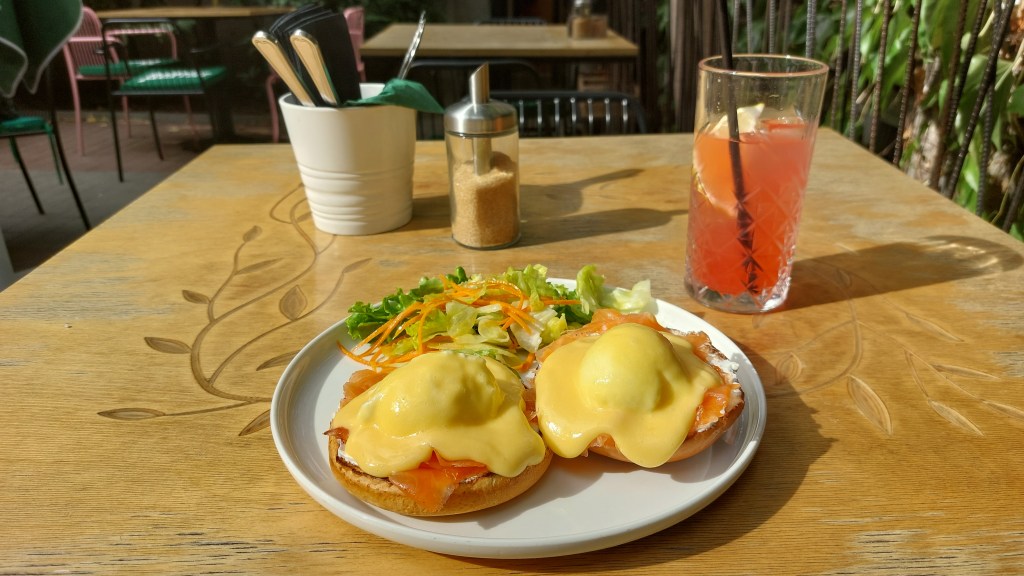
However, with a walking tour planned for 2pm, my first priority was food (proper food as opposed to snacks), and Sofia did not disappoint:
I am not going to cover everything on the walking tour in this post, simply because we only saw buildings from the outside and I intend to return to many of them and then I can give you the full explanations (lucky you).
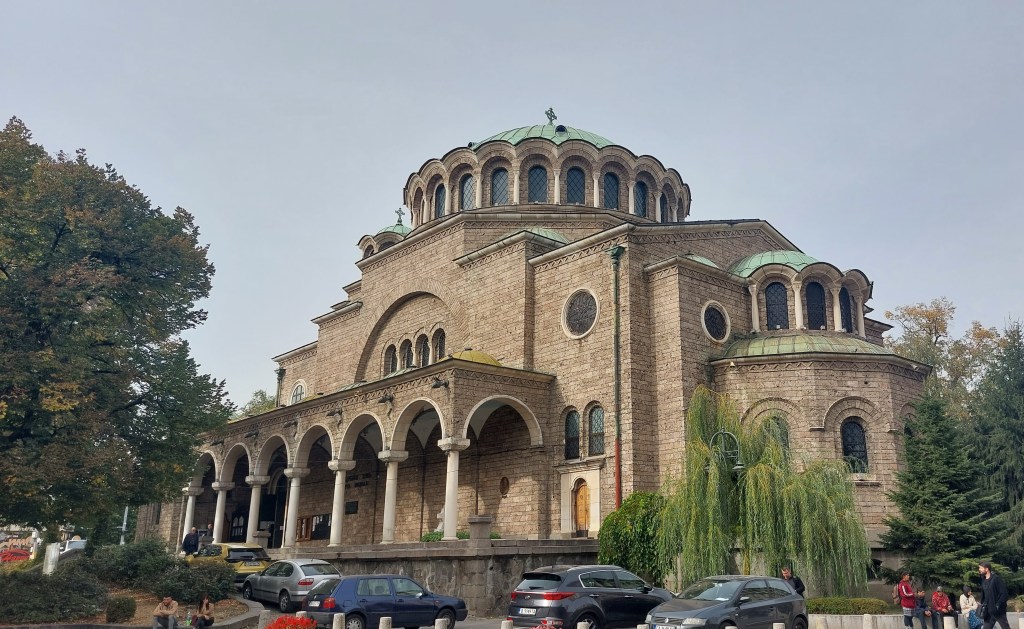
Our first stop was St Nedelya/Holy Sunday Church, which was rebuilt in 1925, but on the site of many earlier churches. The mot recent church was destroyed by a terrorist attack carried out on 16 April 1925 by militant communists. This was a time of political chaos between the ruling classes (and particularly the Tsar) and the Bulgarian Communist Party (which had been banned in 1923). Militants within the party assasinated General Konstntin Georgiv, knowing that he would receive a huge state funeral, which would be attended by many members of the country’s political and military elite, including the Tsar himself. A large bomb was detonated at the beginning of the ceremony, killing 150 people and injuring 500 others. The Tsar was not kiled as he was not actually there, as he was arriving late due to attending another funeral. Note to self: sometimes it’s good to be late (I shudder at the thought).
Nearby this church is a statute of Saint Sofia – there is no connection between Saint Sofia and the name of the city. Sofia is named for its Hagia Sofia (same as in Constantinope) which was just outside the city walls of Serdica and became known by travellers on this route as the “other Hagia Sofia” which was over time shortened to Sofia. This statute remains somewhat controversial for this reason, and because she is “too sexy” which means that it has not been officially approved by the Bulgarian Orthadox Church (they pretend their main objection is that she is holding pagan symbols, but I suspect its the cut of her neckline/fact that she’s evidently a wee bit cold!):

Sofia is a city built in layers, the bottom layer is the ancient Serdia complex and various Roman remains have been uncovered (more on these another day) and above this, some 15th century buildings have remained, but much of today’s street level was built during the Tsarist period (and later).
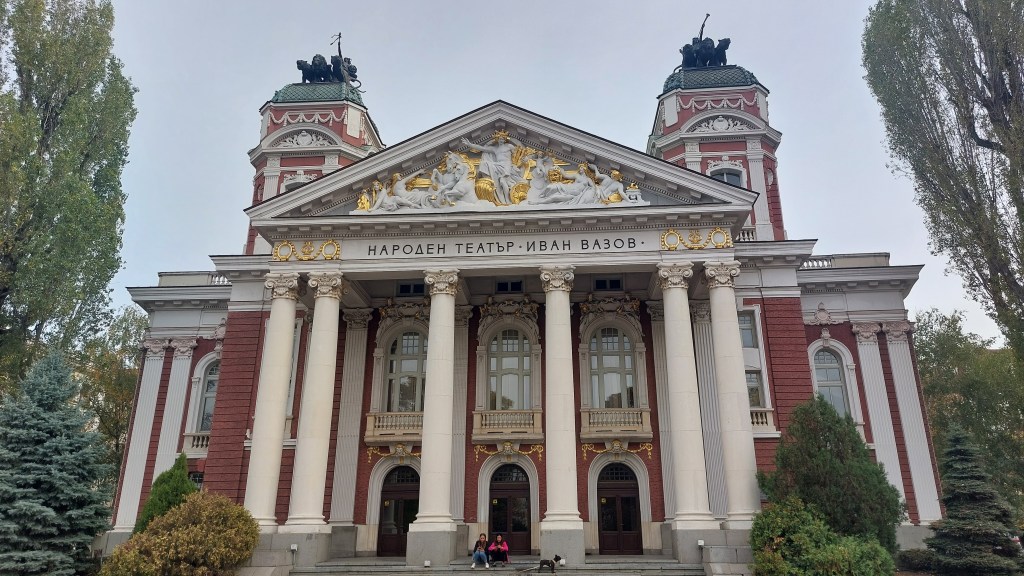
We then stopped off to take the waters – Sofia has a number of public fountains where you can sample for free (I hope Bath is noting this!) the hot mineral waters. They are meant to be very good for you, apparently curing almost any ailment you can consider. I drank a bottle’s worth, so I shall report back! We also walked through various streets, giving a sense of the Tsarist architecture:



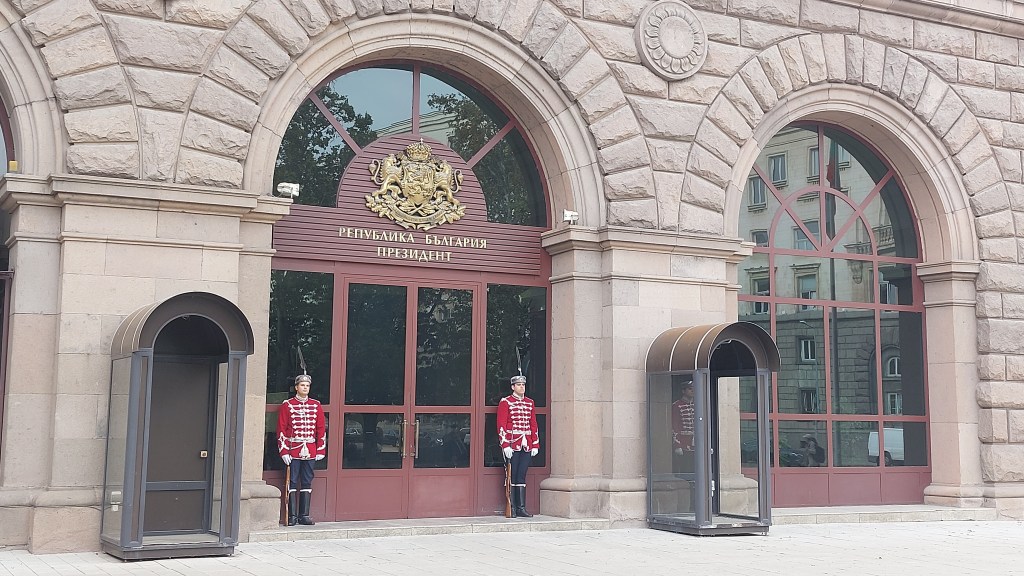
We then visited the Presidential Building, which is guarded by 2 Presedential Guards. As we stood there, having it explained to us that they had to remain still and could not wriggle, both of them, continually wriggled. They would not have made the cut in London! Originally, to become a member of the Presedential Guard, you had to be between 175-185cm tall (thats people like my brother out!), blond haired, and blue eyed. Remind you of anyone elses’ requirements? You will note their fancy uniforms and hats topped with an eagle feather – this must be obtained by the guard themselves and was the final part of their training/initiation. Apparently, most nowbjust take a little excursion to Sofia Zoo (most sensible).

Behind the Presidential Building you may be surprised to come across Sveti Georgi Rotunda/St George’s Church. This was built during the early years of the Ottoman Rule (which it was its below ground level as the Ottomans would not allow any non-muslim place of worship to be higher than the height of a man on a horse). It also does not look too-churchy, again, so as to go unnoticed by the Ottomans. When the Soviets came to power, to dissuade people away from religion/attending church, it was hidden behind 4 walls of government buildings.
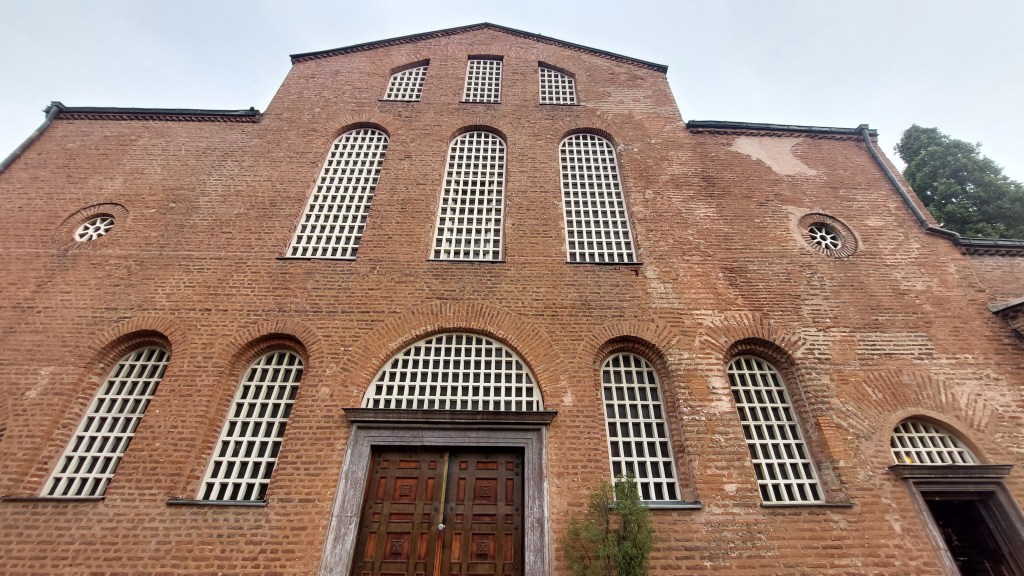
Our penultimate stop was the Hagia Sofia. It is somewhat less impressive than Istanbul’s version, but it is still an operating church and is one of the city’s oldest.
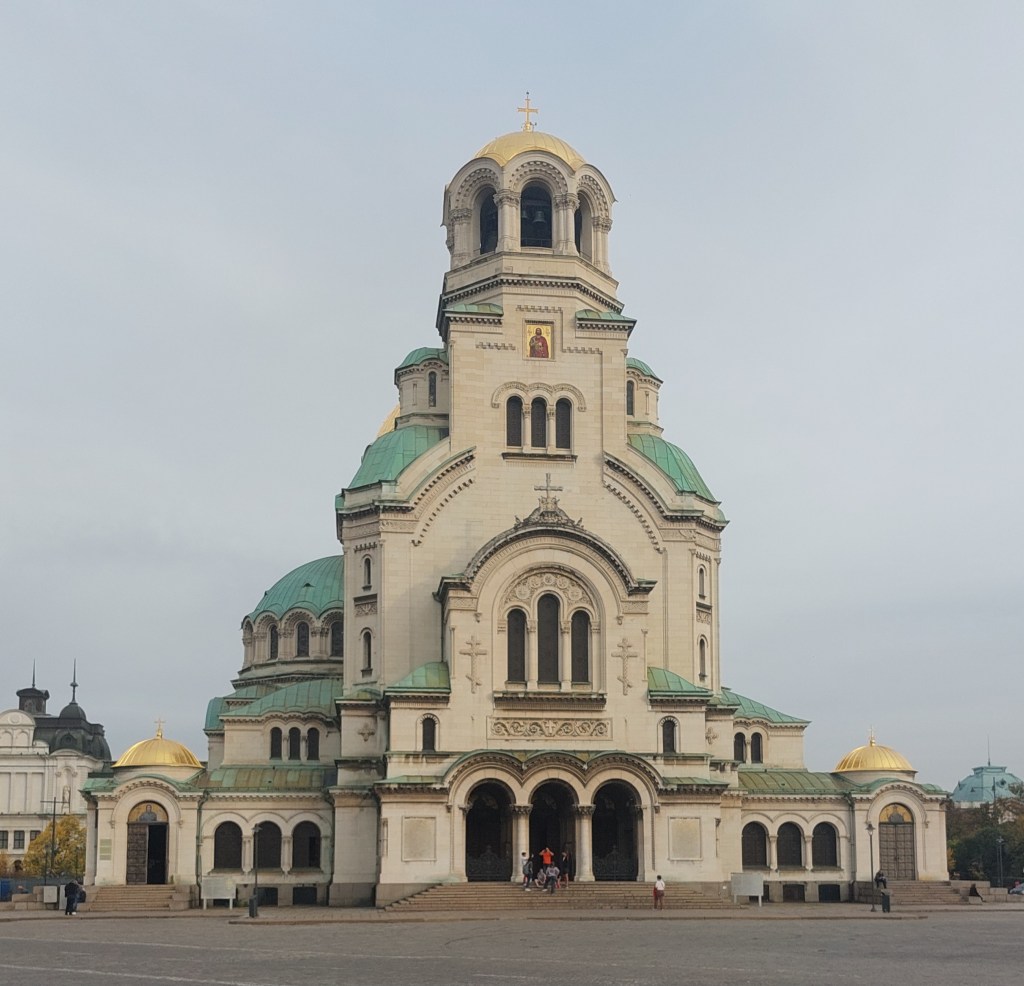
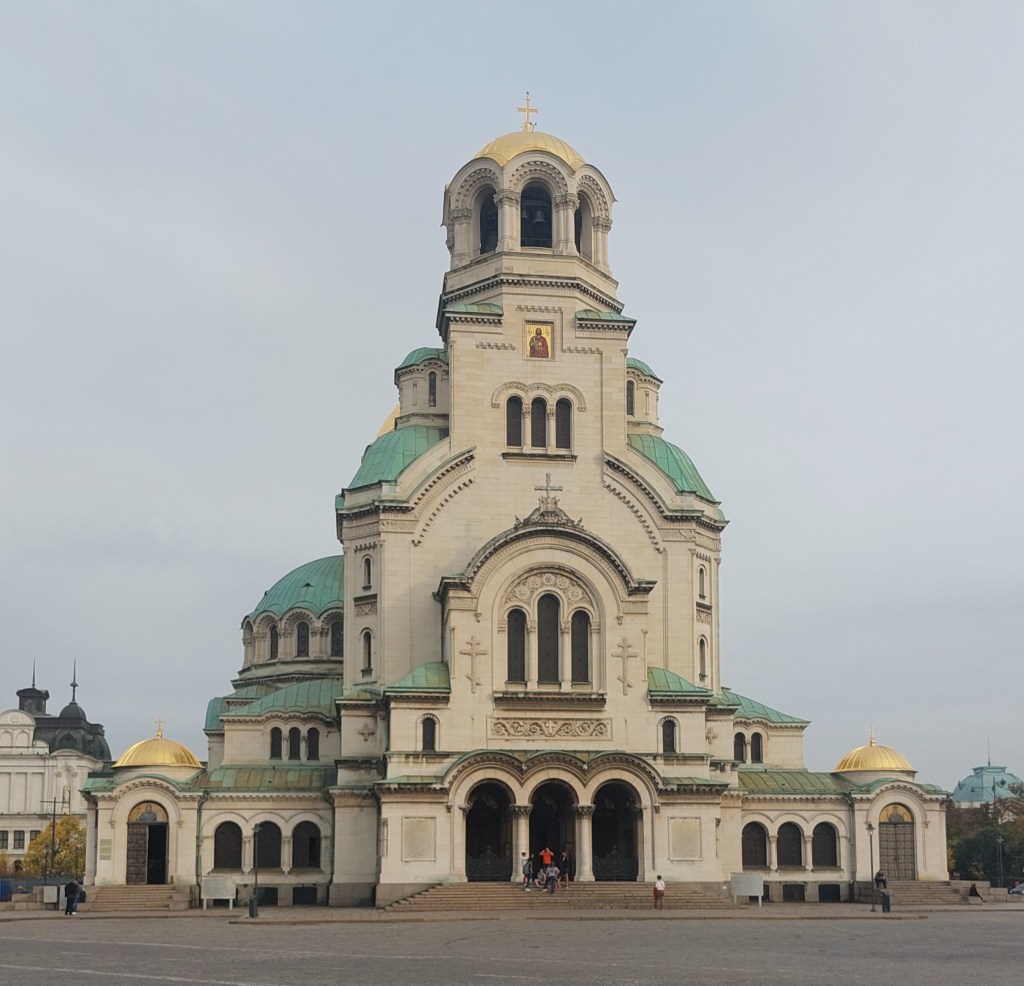
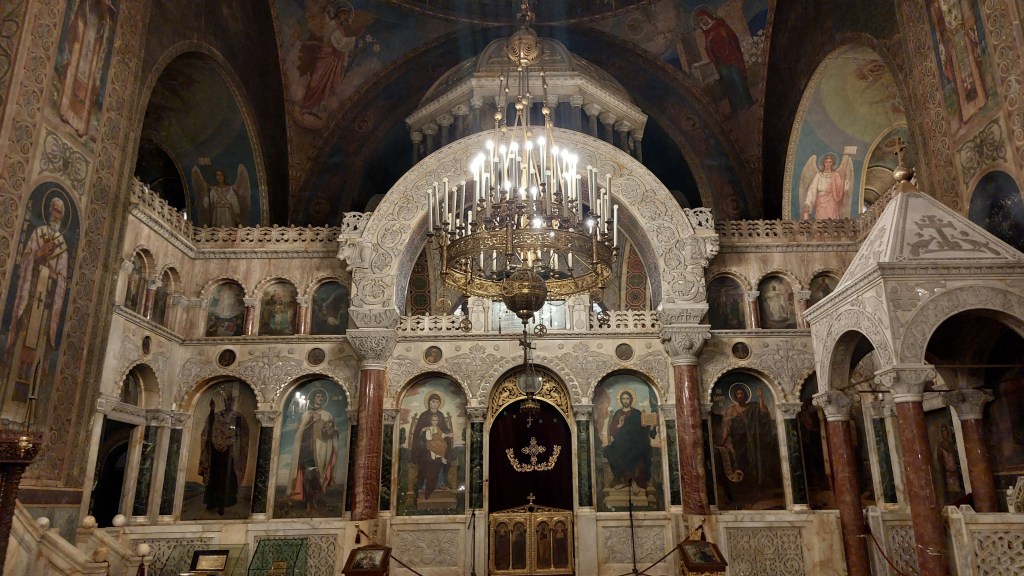
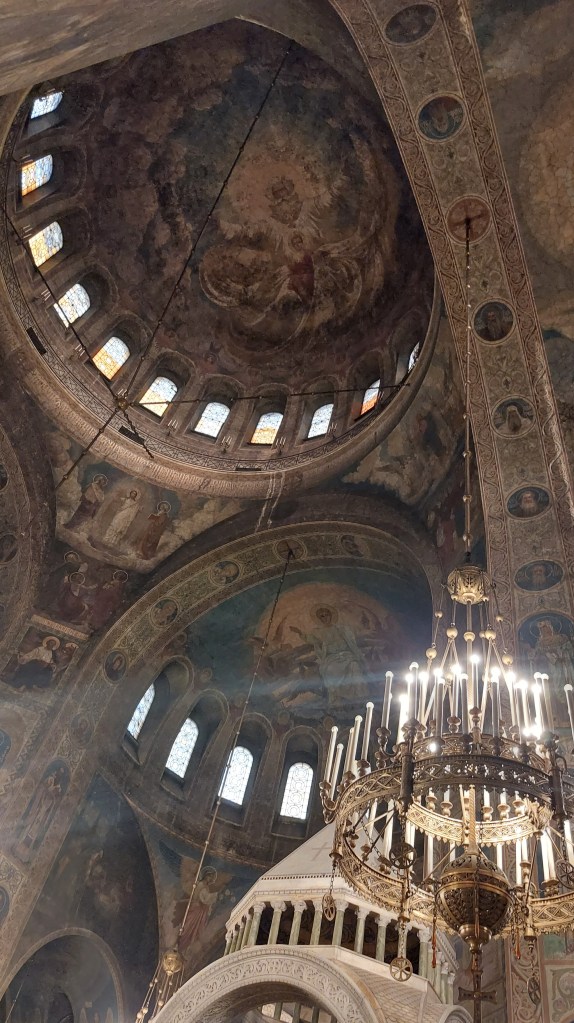
Finally (and I will admit I was flagging a little by this point) we reached the Alexander Nevski Cathedral which is the largest church in Bulgaria (it used to be the largest in the Balkans, but Serbia has recently built a bigger version). It was built between 1882 and 1912 in memory of the 200,000 Russian soldiers who died fighting for Bulgaria’s independence during the Russo-Turkish war (1877-78). It took so long to build to bring all the international materials to Bulgaria, including gold, marble, etc. Inside, the interior is covered with fantastic frescos, but in my humble opinion, it could do with a little more lightning (particularly if they are going to charge the equivalent of £5 to allow photos).
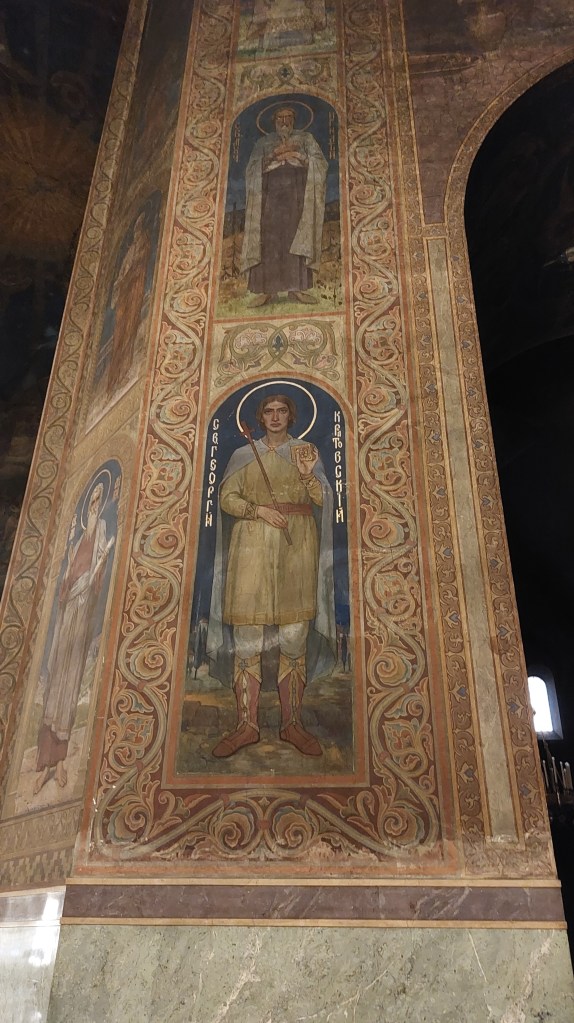

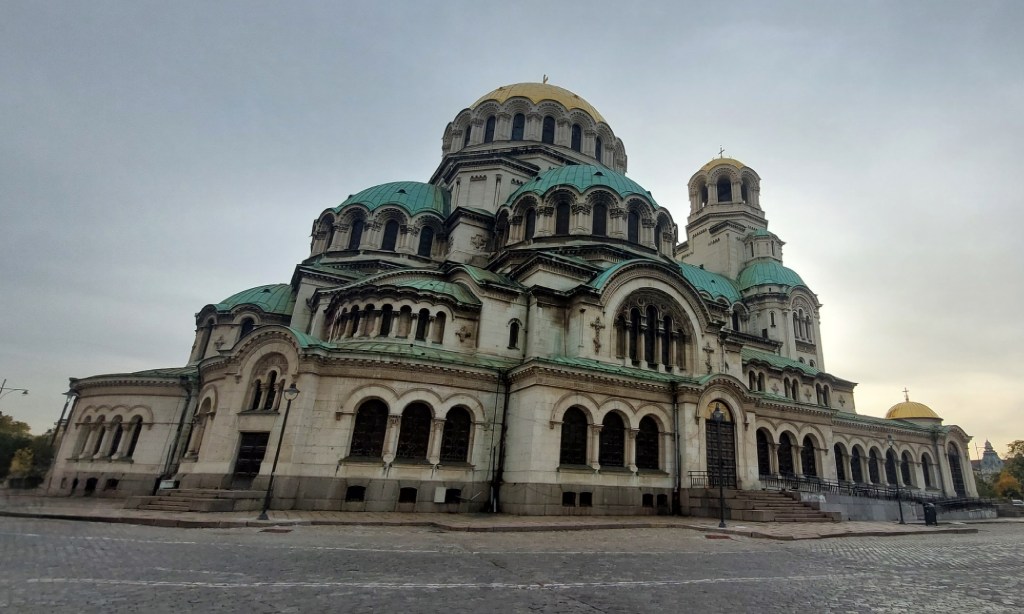
So, that as the end of the tour and feeling just a little tired but rather proud of what I’ve mamaged to squeeze out of today, I headed back to my hotel to dine on a not very traditional Bulgarian meal of noodles and I think I was asleep by 9pm (as I knew I had to be up for my trip to Plovdiv and Koprivshitsa at 6.45am tomorrow). Bring it on!
3 responses to “Stage 3.5 – Goodbye Istanbul, Hello Sofia (Bulgaria)”
-
Love a night train!
LikeLike
-
Who doesn’t? 😁
LikeLike
-
-
Whilst a bed on a train seems a welcome idea, the effect is somewhat dulled by having to get up several times during the night!. Particularly if the timings have all gone to pot.
However, I do admire your stamina in completing the walking tour after your disturbed night.LikeLike


Leave a Reply