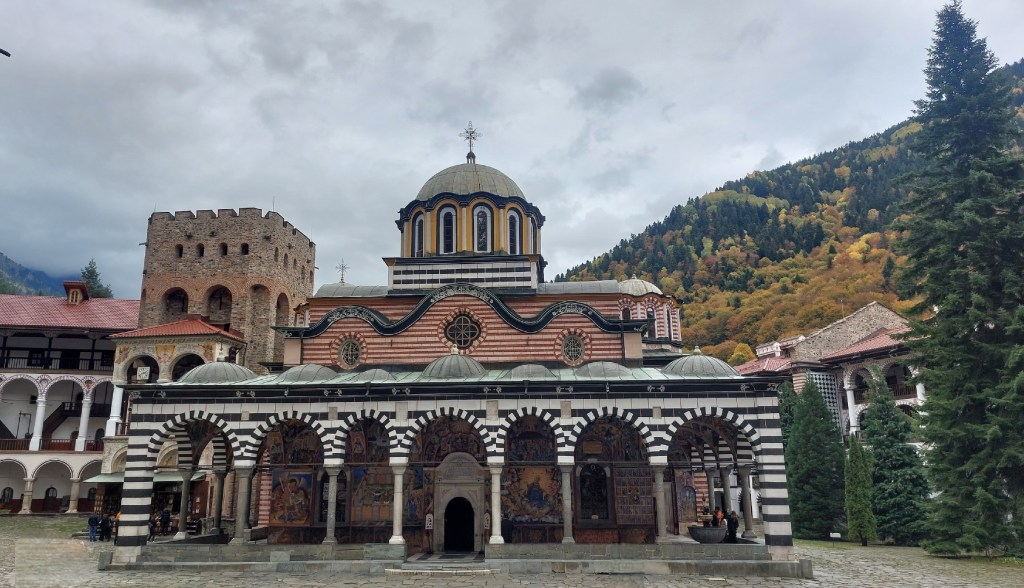
Today, I joined another tour to Rila Monastery and Boyana Church.
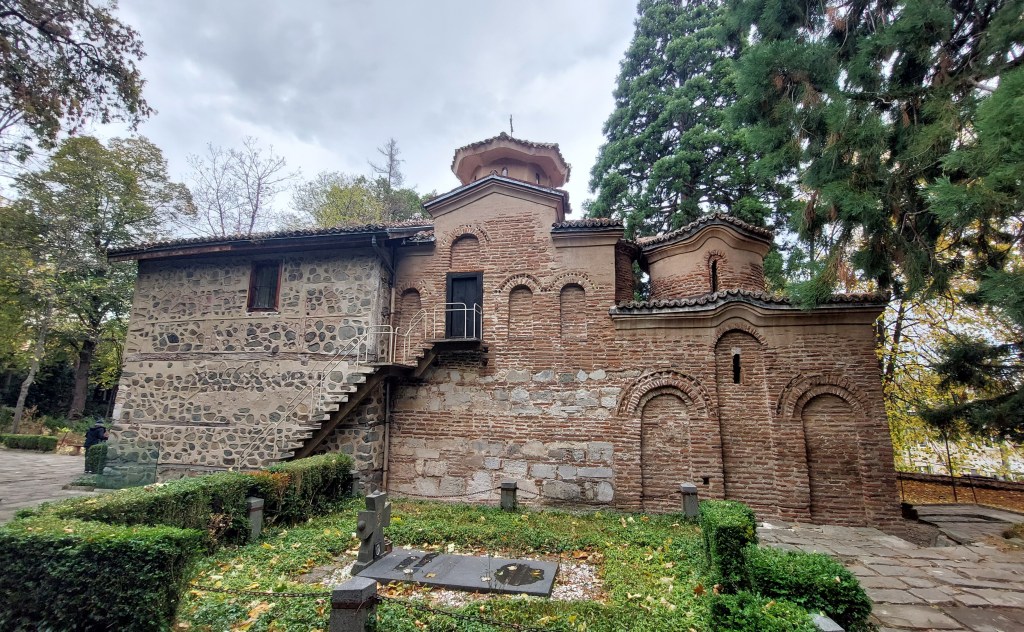
Boyana is a suburb on the outskirts of Sofia where the fancy people live as it’s in the foothills of Mount Vitosha. Boyana Church was built in 3 sections in the 11th, 13th, and 19th centuries, and the interior of these 2 earlier sections is covered in frescos. The church is very small, and people can only enter in groups of 10 for 10 minutes and no photos allowed. However, I did find a few to give you the idea (both from the Bulgarian National History Museum’s website, so thank you):
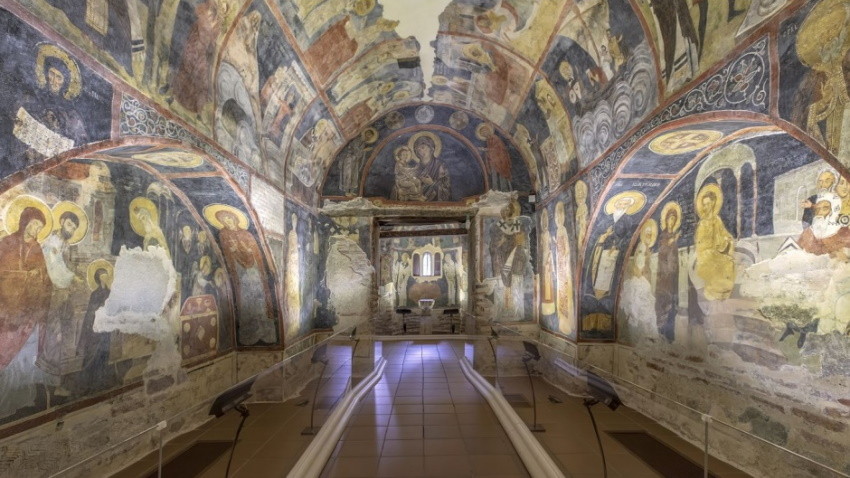
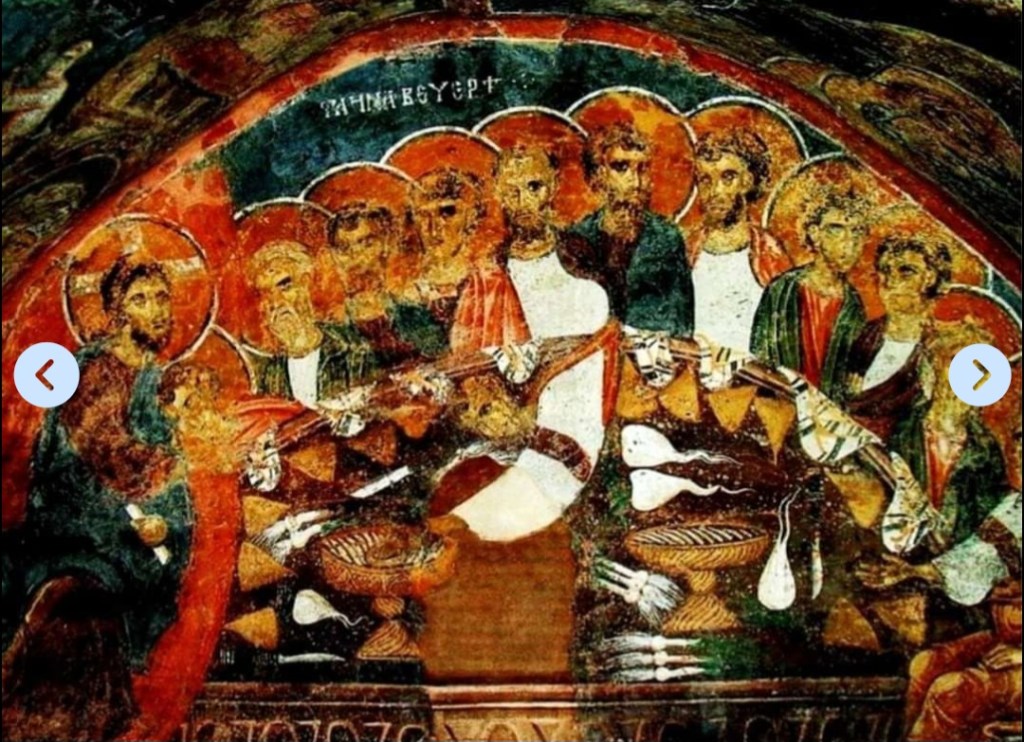
The oldest section of the church actually has 2 layers of frescos as when the 2nd section was added in the 13th century, they also covered over what was there previously. You can hopefully see on the images before the sophistication of the painting in that they actually look like 3D people – having seen a few frescos on my trip so far, believe me, this is unusual. Both the images above are from the 11th century, but in the 13th century section there are also frescos depicting the life of St Nicholas (before he only concentrated on his Christmas duties), the aristocratic couple who paid to build the church and King Constantine.
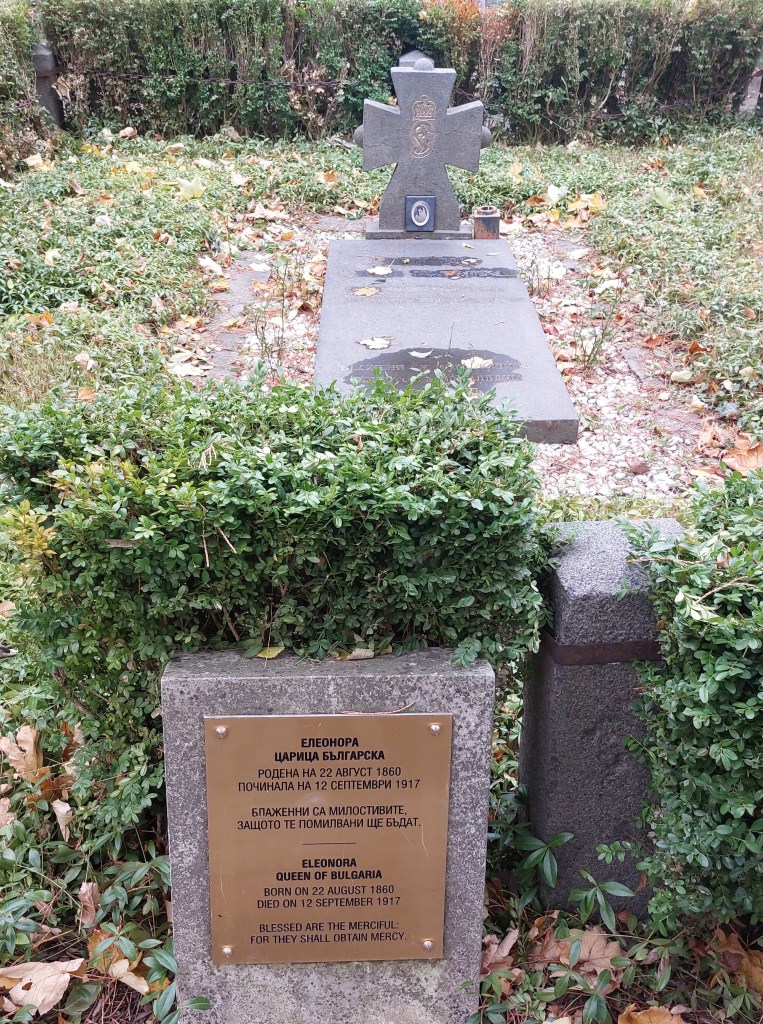
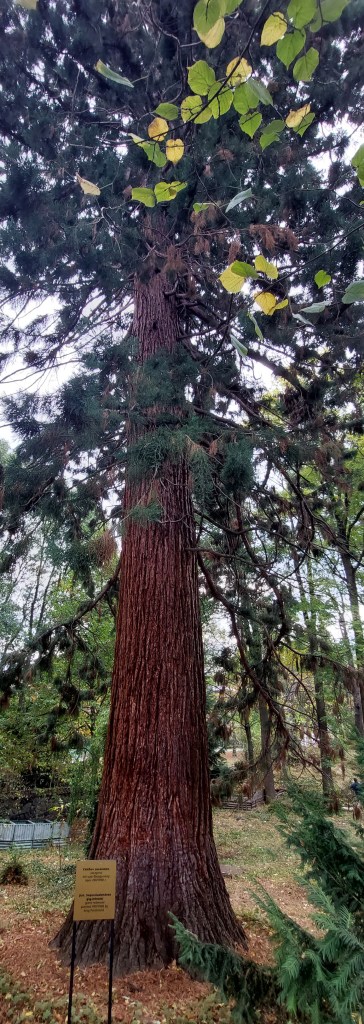
Outside of the church is the grave of Queen Eleanor (second wife of King Ferdinand). She is buried here as she is credited with saving the church when local people wanted to destroy it to create a bigger church. In order to save it, she organised an alternative piece of land to be donated to the village where this new church could be built. King Ferdinand also planted a couple of giant redwoods in the churchyard.
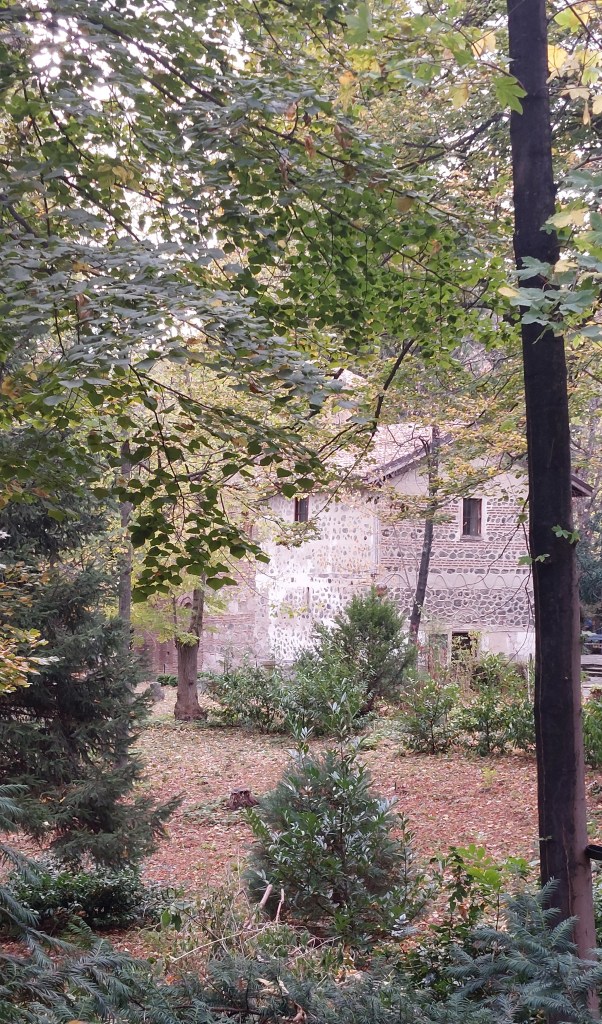
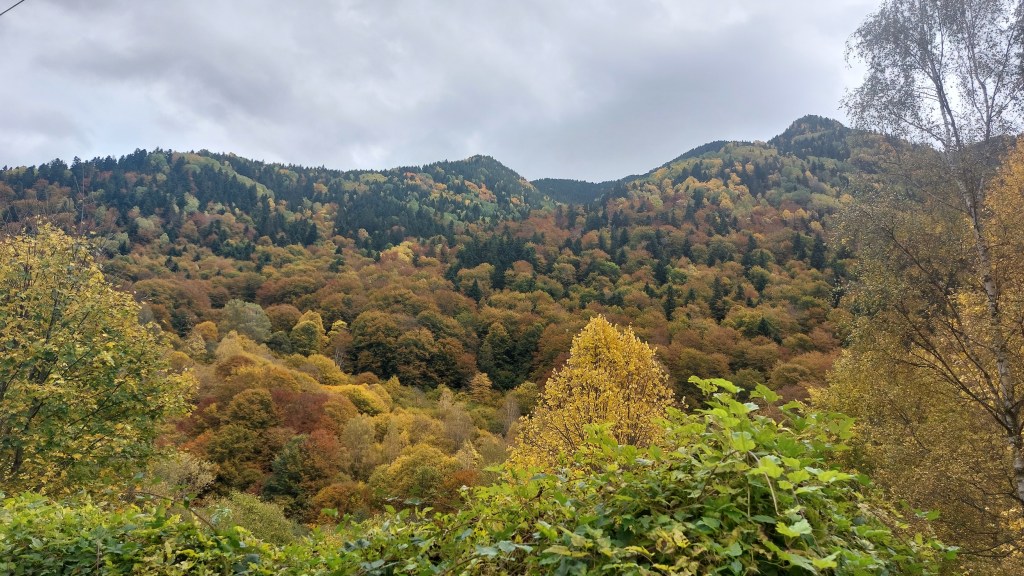
We then set off over Rila mountains to visit the Rila Monastery, which is 120km south of Sofia and is the largest and most famous monastery in Bulgaria set deep in the mountains 1147m above sea level. Before I start talking about the monastery itself, I just want to take a moment to talk about how beautiful autumn in Bulgaria is. I do not consider myself to be an autumnal person, but there are so many colours in the trees, and Rila really does have a stunning location – almost makes one consider the monastic life. Although not really…

Anyway, Rila Monastery was founded in 927 and inspired by the powerful spiritual influence of a local hermit monk: St John of Rila. St John of Rila is Bulgaria’s greatest saint. He was born in 876 and died in 946 and was revered as a saint even during his lifetime as he, apparently, performed many miracles. The original church was built on the site of a smaller church, and what you can see today is mostly the 15th century (although the watchtower dates back to the 14th century). During the Ottoman times, the monastery was raided may times but became a stronghold of Bulgraian culture and language, and donations were given from all over Bulgaria for its restoration. It has continued to be restored and is in pristine condition.
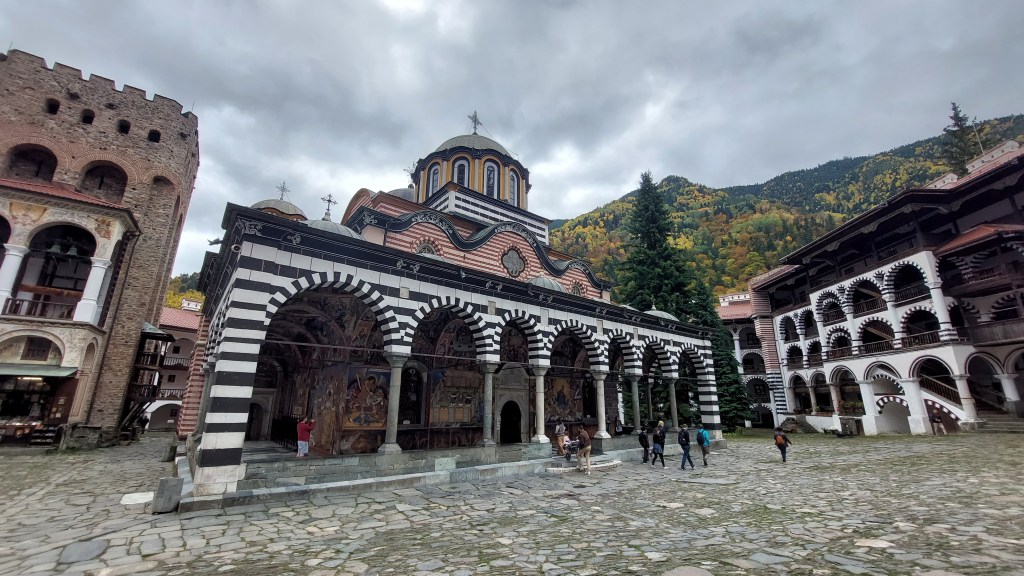
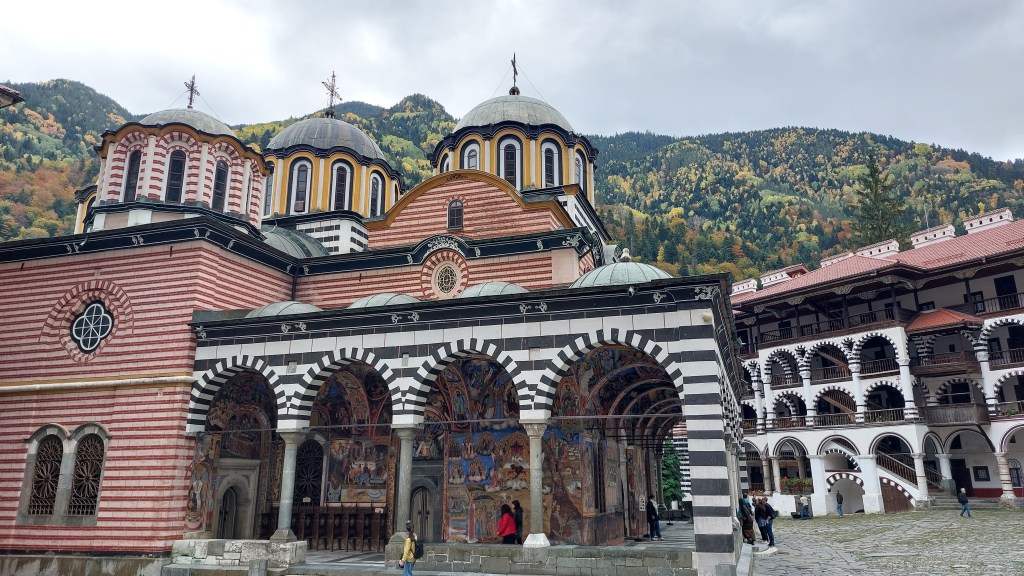
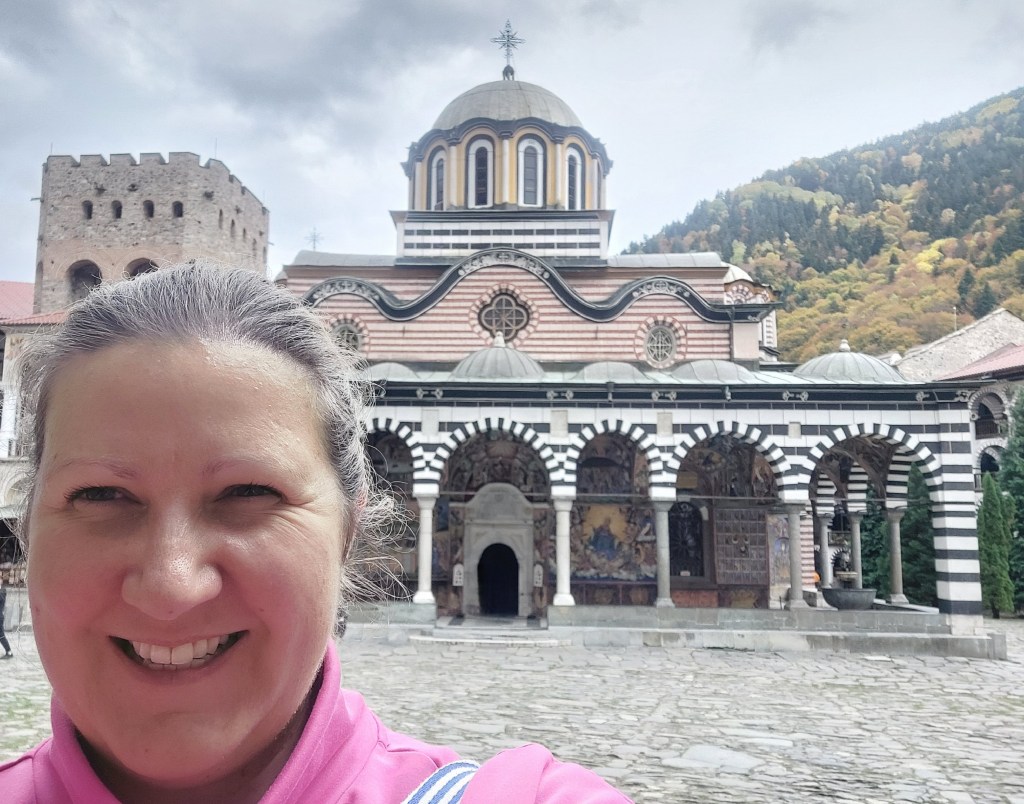
As you can see, from the outside its all very pretty and in a stunning location, but the real attraction is the fact that every inch of the church both around it, and inside, is covered in frescos. We could not take photos inside the church (as it is a working church), but we could of the outside ones. Just a small selection of the 1,200 pieces of artwork (some are religious, some not) here below:
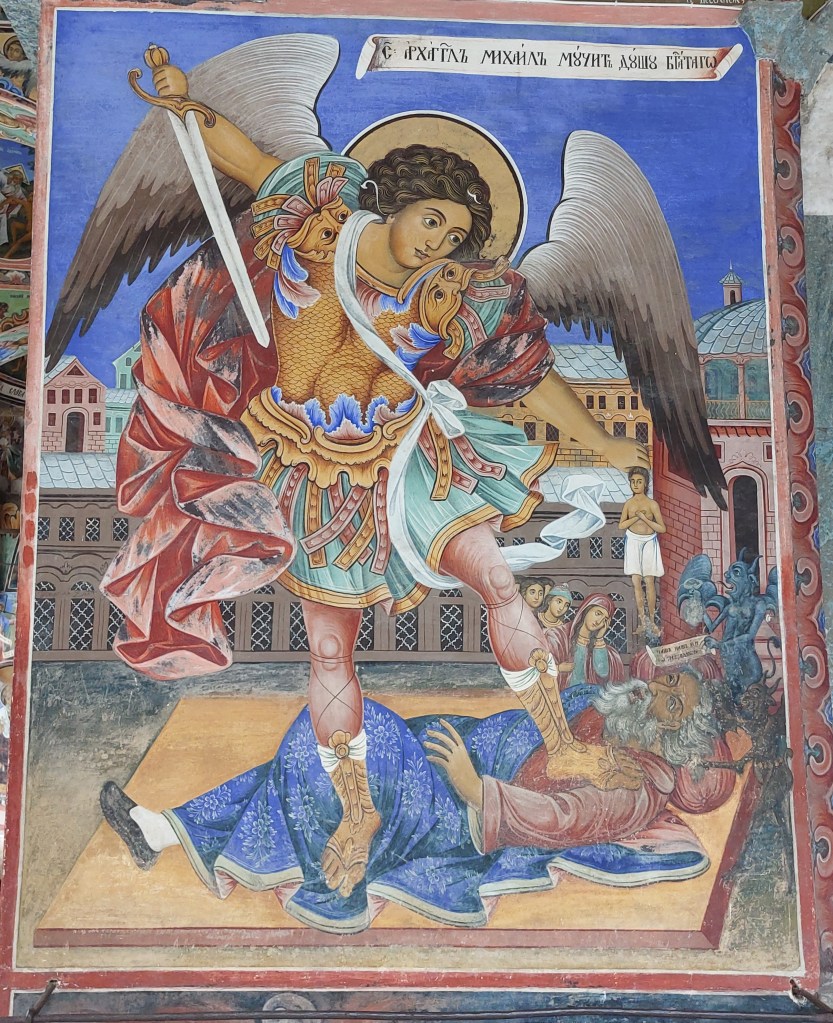

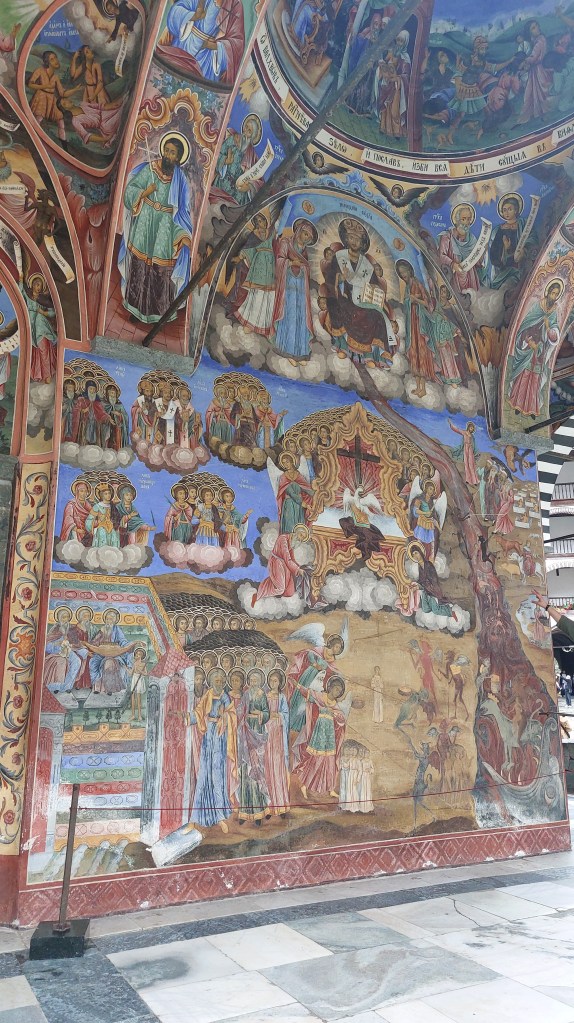
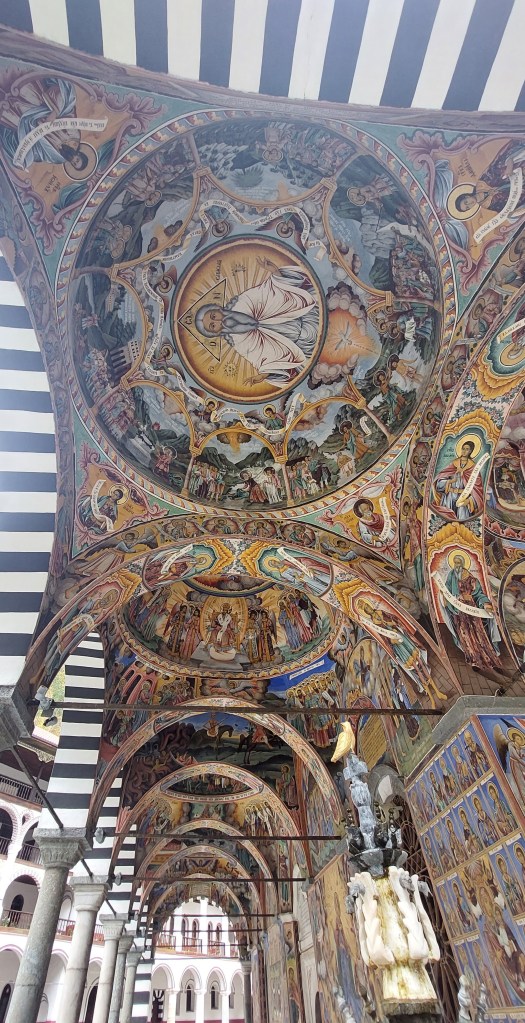
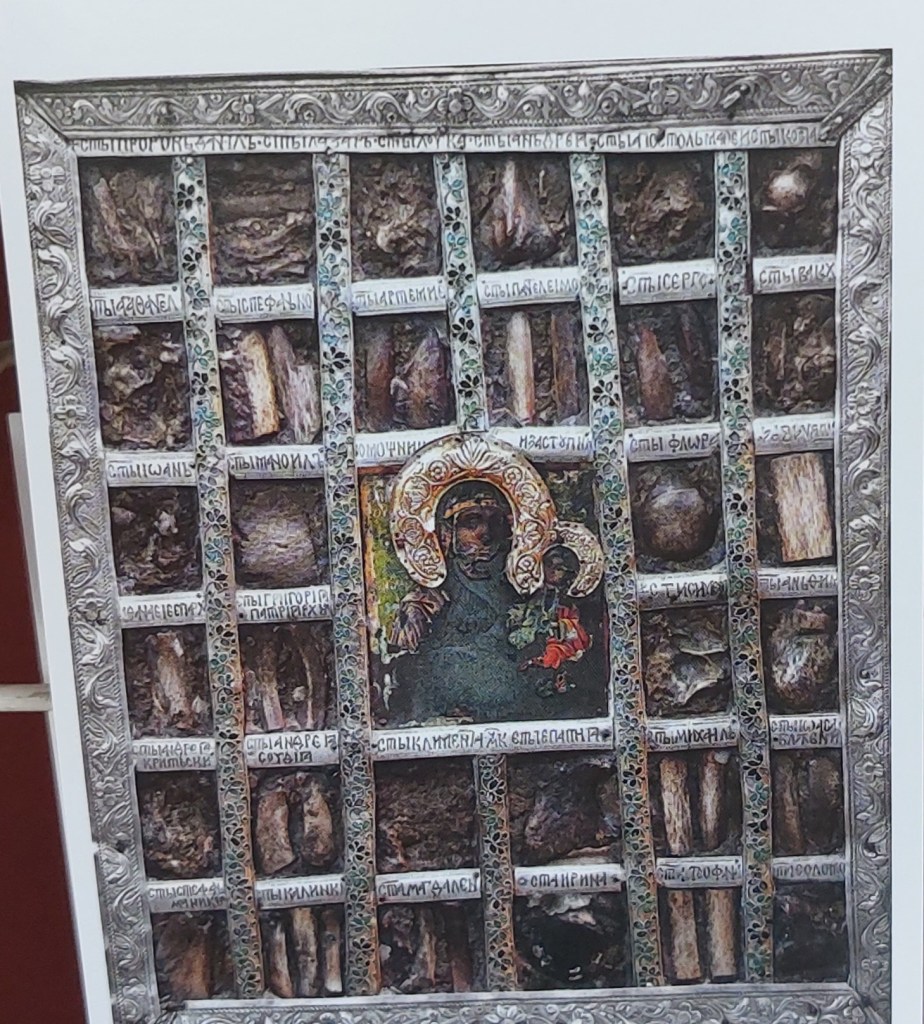
In addition to the frescos, the churches’ main treasures are a puzzle icon containing “bits” of various saints and the grave of Tsar Boris III (who we learnt about yesterday).
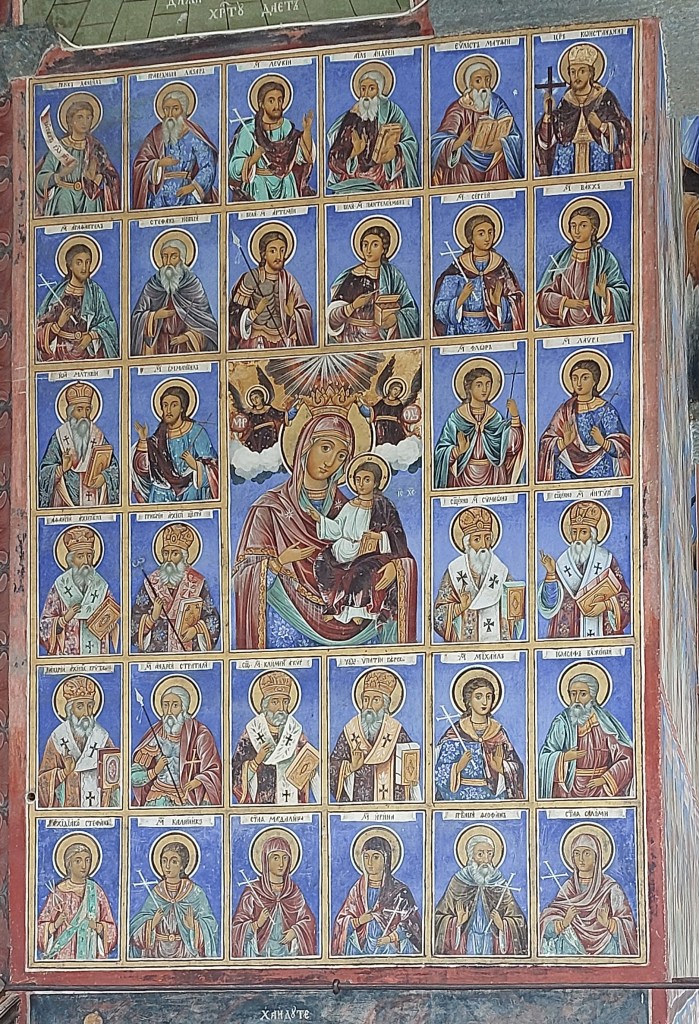
The current monestary is home to 9 monks (for the 199 rooms!), so rather than just being kept for them and administrative staff, the upper floors of the monastic building are offered out as rooms for the night – for around 12 euros you can overnight in a monastic cell including wooden bed and no running water. It’s probably somewhat more luxurious than my overnight bus tonight…
Behind the monestary there is a small collection of souvenier shops and an enterprising bakery who for the equivalent of about £3 sold me a giant “monastic” loaf, some homemade sheep cheese and 3 mekitsa (which is a deep fried dough made with yogurt), so that was lunch sorted which I ate, appreciating the colours of autumn (I’m at it again!).
We returned to Sofia at about 5 pm, and I headed back to my TMaP’d hotel room to shower, pack, and ready myself for my 11.30pm departure to Bucharest. As a quick aside, this tour had much better behaved people on it – I think that it helped one could either pay for transport only, an audio guide, or a phyiscal guide, so those of us who had paid for the physical guide (round 15 out of 31) actually listened to him. Hurrah!
Before I leave and whilst waiting for the bus, I had a chance to write this on reflect on my brief time in Bulgaria. To be completely honest, I knew almost nothing about this country (I’m embarrassed to say I did not even realise it was in the EU. I feel so ignorant, but I’m learning!) and it is certainly somewhere more people should come to. Sofia is a great weekend destination (just close your eyes on arrival as the areas around the airport and stations are not nice, but once you are in the centre, its all good) and it is easy as its in the EU, but cheaper than maybe all the other obvious EU choices. I also think that the scenery here is stunning and can see why it is popular both as a summer sun holiday (beautiful resorts on the black sea anyone?) and winter (skiing anyone?). It also has an incredibly interesting history, with its journey from independence to Ottoman rule, to independence, to the rise and fall of communism. So yes, not only would I recommend Sofia for a short break, I would recommend keeping an eye out for summer/ski holidays as I suspect your money will go much further here (and its lovely).
Hopefully, I’ll make it to Romania safely, and I can then enlighten you as to my views on overnight buses as an option.


 Travels with Kathryn
Leave a reply to Keith Black Cancel reply