Well, I survived the overnight bus. Just. I ambled to the bus station at about 11.10pm, and the bus was there (looking all lime green and obvious – bless FlixBus), so I loaded and was pleasantly surprised by the space:

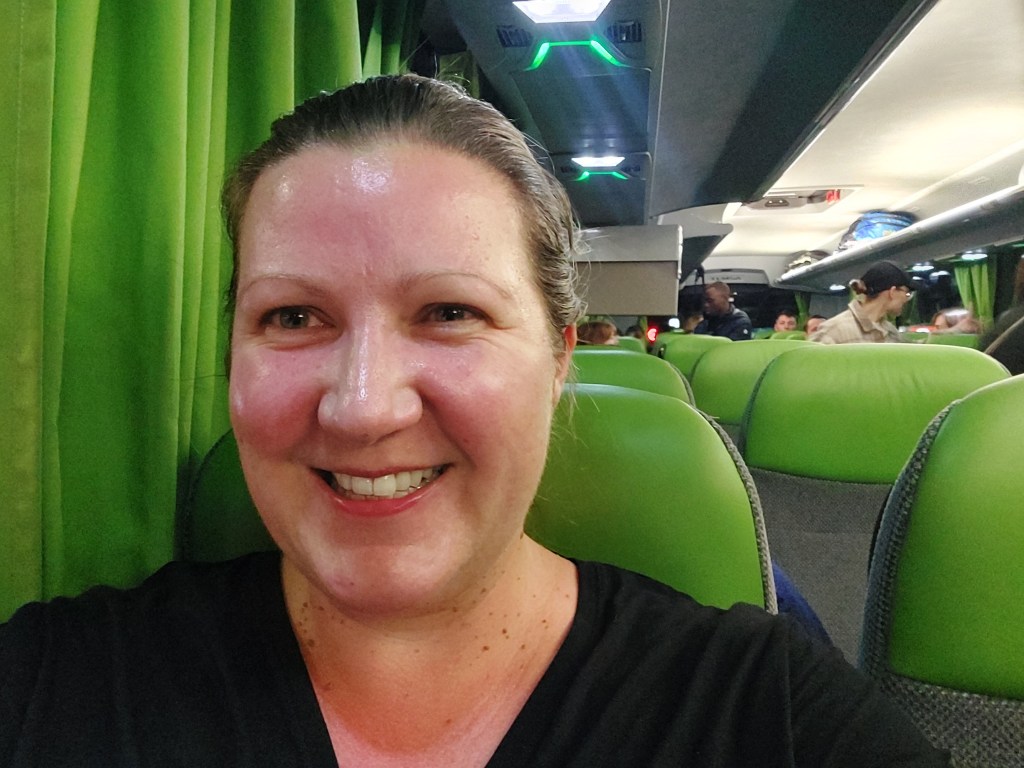
Now, having seen the above one would have assumed that I would have slept well. No. My learning point here is that should I be forced to take another overnight bus, I need a longer journey… I am sure otherwise I would have slept well, there was plenty of space (see above), it was relatively quiet, a pretty good temperature. However, I had not factored in that on the 7 hour journey how much time would be spent with lights on/having to be alert! We stopped at 2am for 30 minutes, it was then an hour at the border (4.15am-5.15am) with me being slightly concerned that although my passport was the first batch to be handed over, it was one of the last to come back – as were all non EU passports (Brexit again!) and we pulled into Bucharest bus station at 6.25am. I suspect I had about 2 hours sleep so I was not at my best, although good enough to get asked out for a date (I think!) by my taxi driver so I evidently held up well.
I was able to drop off my bags at the hotel and have breakfast, but evidently, it was too early to check in. I then came up with a plan of where would be somewhere suitable to attempt a light nap – I rode the equivalent of the circle line on the Bucharest metro for a couple of hours with intermittent napping and felt much better for it.
Having now arrived in Romania, I do have a small confession to make. I am rather embarrassed to say that 2 days in Romania have shown me that I know nothing about modern history and, certainly, nothing about Romanian history. It turns out that whilst my history nerd knowledge is, if I do say so myself, excellent, when talking about early modern Europe (thank you, Mr Barnes, for inspiring me here!), I have limited knowledge of anything that happened in the last 100 years or so. I will endeavour to rectify this, and you will see that I am getting started by improving my knowledge of Romanian history since WW2.
Eager to make the most of my limited time in Bucharest, and having had my little nap time, I decided to walk to the “old town” to have a look around.
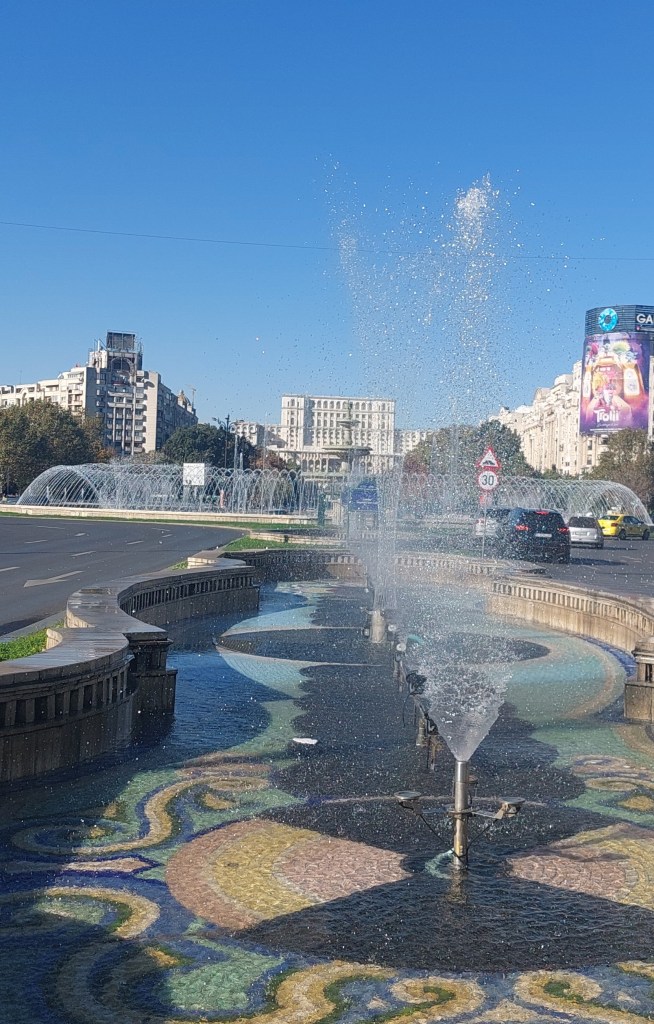
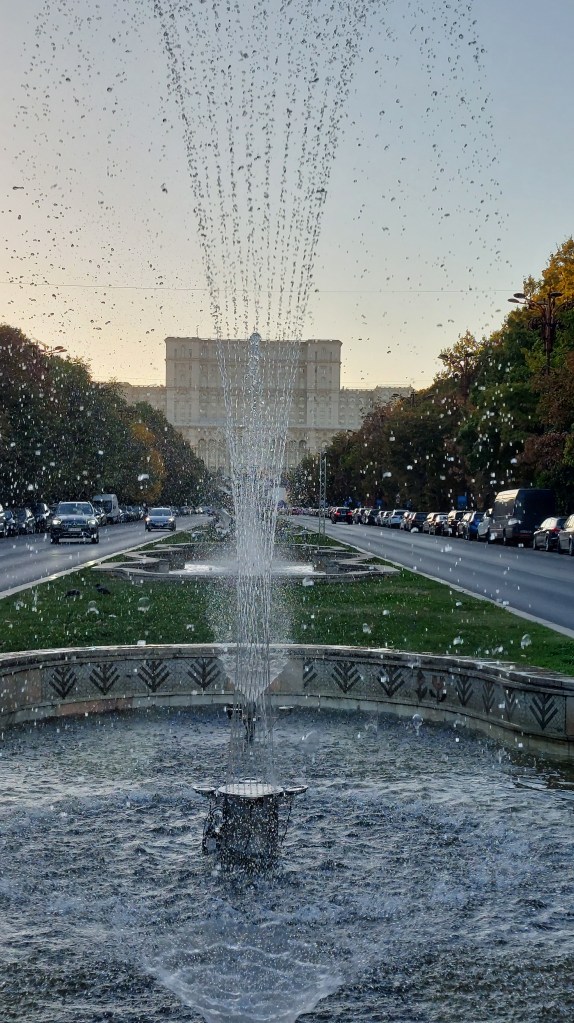
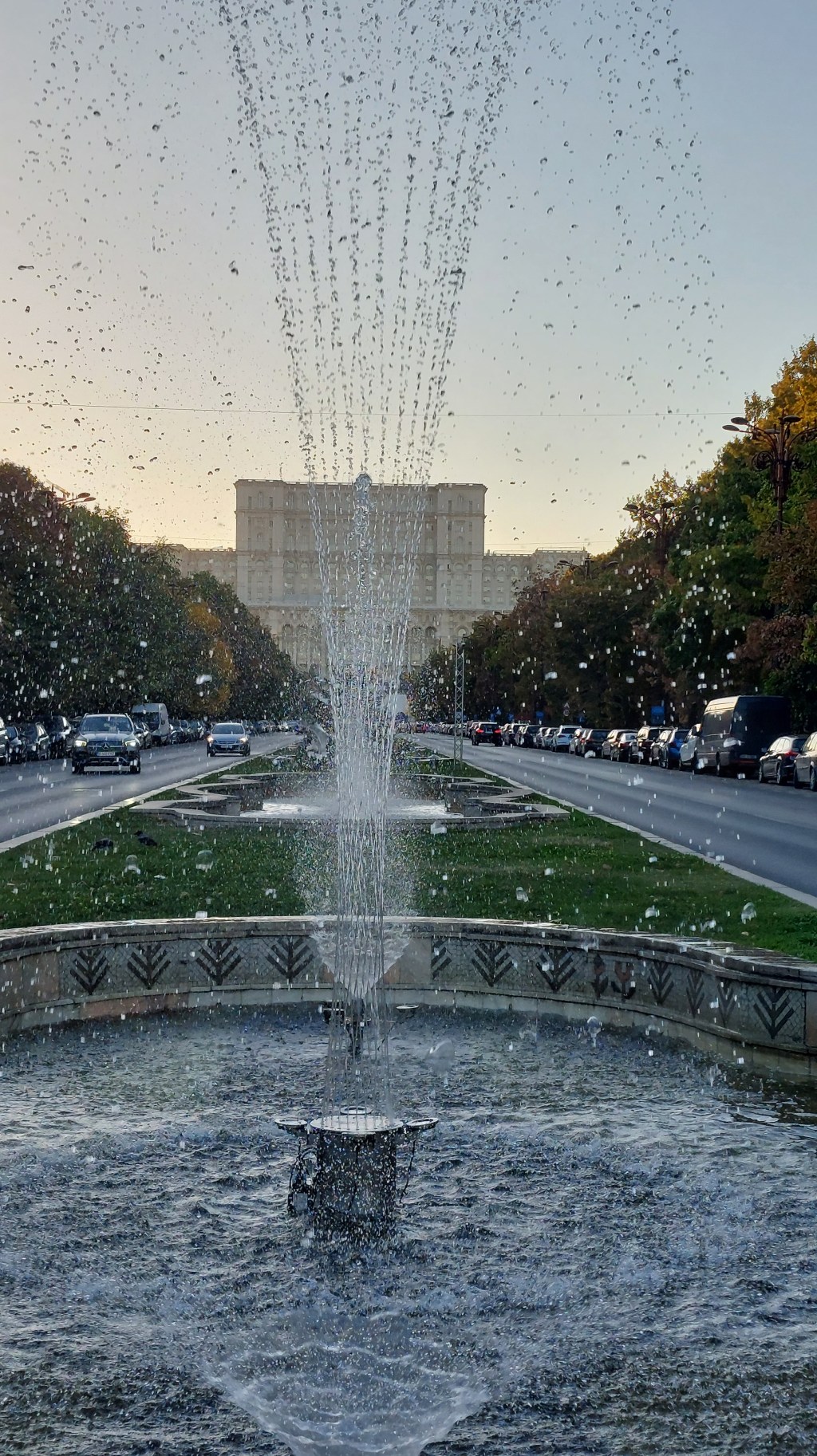
None of the old town is actually that old, having been heavily bombed in WW2 (for switching sides) and as the result of a big earthquake in 1977. However, of the few older buildingsthat survived, many were cleared out by Ceaușescu’s administration (we are going to hearing a lot about him) when he decided to build the largest, heaviest (it sinks 2mm every year) and most expensive parliament building in the world (it is also the 2nd largest administrative building in the world after the Pentagon). You don’t really get the scale from the photos above, and also more than half of its height (93m) is underground (looking 86m tall from ground level). Why one might ask, did Romania need such a big parliament? It didn’t. In the 1970s Ceaușescu had visited North Korea and decided that he really needed to the space for big parades to be held in his honour (we are dealing with another cult of personality here) so a section of the city was cleared (and a wall of large appartment blocks errected to hide anything which didn’t meet his ideals), and the paliament and area rebuilt to his specifications. Karma struck, and Ceausescu never got to use the parliamnt (or the balcony he insisted on having installed) as he was overthrown prior to its completion – and although it was pretty much universally hated, it was cheaper to finish it than demolish it. Unfortunately, I was not able to visit on this trip, but one day, I may return.
So, we are now going to have a bit of background on recent Romanian history. As much as anything, this is to help me on my path of learning. Romania is a relatively young country, and today’s Romania is made up of Moldavia and Wallachia, but this was only created in 1859 as these states gained independence from the Ottoman Empire. At the end of WW1 other areas joined (with the fall of the Austro-Hungarian Empire), but after WW2 Romania was left with just one if these original states (Moldova becoming independent) and Transylvania (having first joined the war on the side of the Axis powers, before switching sides in 1944 – hence the bombing). In 1947, Romania became a Soviet Republic but separated from the USSR, and it was during this period that Nicolae Ceausescu came to power.
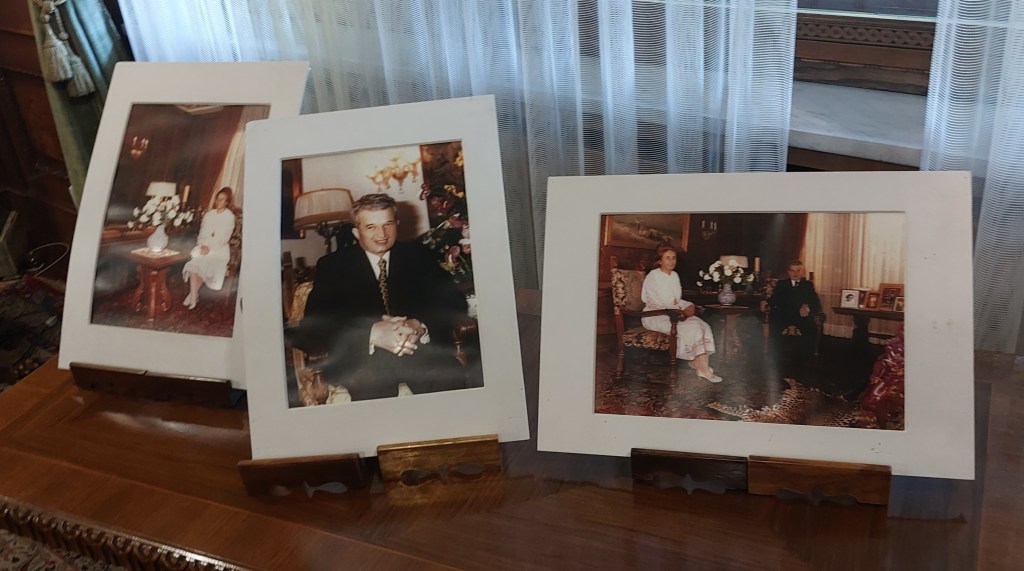
Nicolae Ceausescu was the leader of the Romanian Communist Party from 1965 to 1989 and head of state from 1967 to the revolution on 25 December 1989. He pursued a policy of complete independence – this meant more independence from Moscow and the influence of any foreign power. When he first came to power, he was seen as a reformer and welcomed both at home and abroad. However, this was not to last. The policy that probably had the greatest (and worst) impact on the country was his decision to repay national debt (which was at that point around $11 billion). This involved banning all imports and exporting most of what Romania produced, and everything was rationed, including heating (2 hours a day) and food (500g cheese every 3 months). The national debt was repayed in 1989, but without any improvement for normal people. He ran an autarchic regime, allowing no opposition and using the secret police to tortue information out of any person or groups he felt were being anti-Ceausescu. All foreign travel (other than in organised groups to other soviet countries) was banned, TV was limited to 2 hours a day of propaghanda programming and (in a decision to make Romania a bigger country) all contraception and abortion was banned and an additional tax levied at adults over the age of 27 who did not have children (that’s me scuppered then). So, in summary, these were not good times and by 1989 huge protests (and his violent respose to them) started the Romanian Revolution and on 25 December 1989 Nicolae Ceaucescu (along with his wife) was tried and executed. I joined a walking tour on my second day (the highly recommended Alina at WalkAbout Free Tours) to really get into the details of the above. Alina is a similar age to me and spoke with first hand knowledge of many of these events (which is what made me realise how little I knew about events in my own lifetime), and felt that it would take a few generations for Romania to really move on although with each president things are getting better.
Anyway, I am skipping ahead. I did manage to have my wander and did see a few sites including:
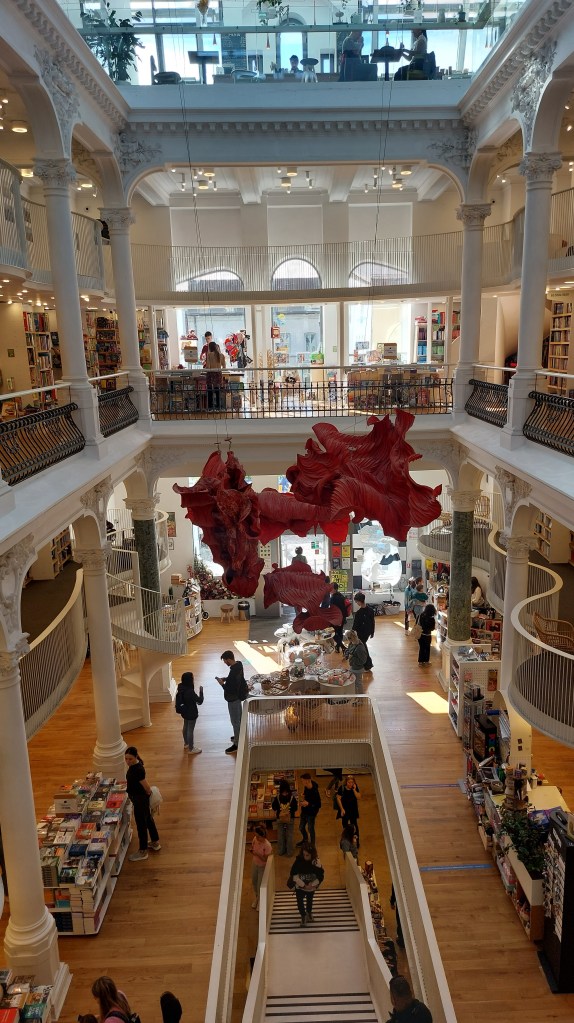
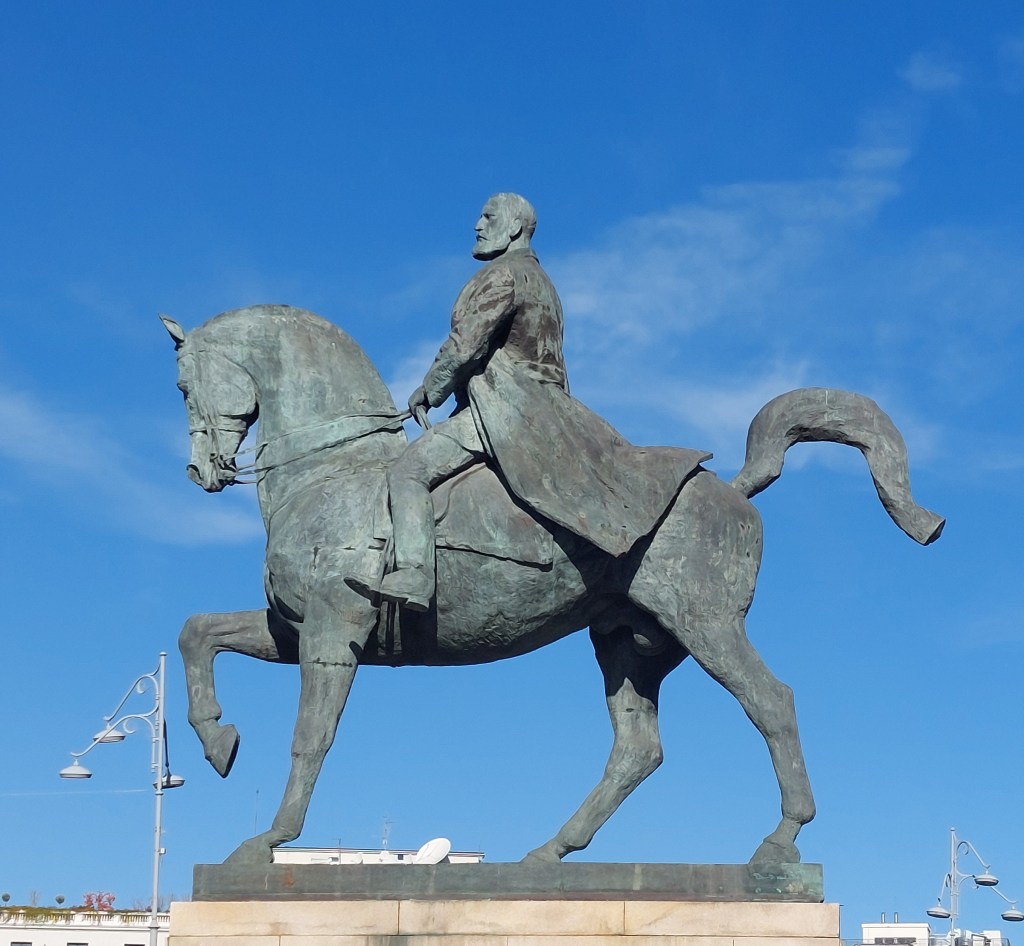
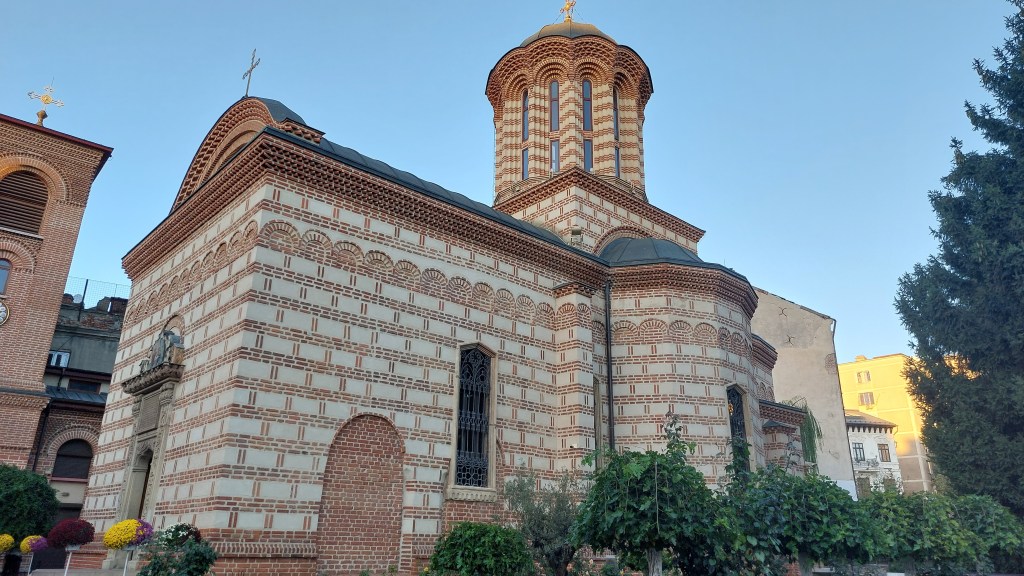
Legend has it that if a single woman visits St Anthony’s Church on 9 consecutive Tuesdays, her true love will be revielled to her. Oh well, shame it was a Saturday, but I did pop in to quick look in case he was hanging about – no sign.
I retreated back to my hotel and was able to check in at 3pm, showered, a bit of organisation and I suspect I was asleep by 8pm…
After 10 hours of sleep, I was feeling refreshed and ready to make the most of my day in Bucharest, and as I mentioned above, I started with a walking tour. I now understood from the context above why Bucharest looks as it does – it is a city of many architectural styles with no clear centre.
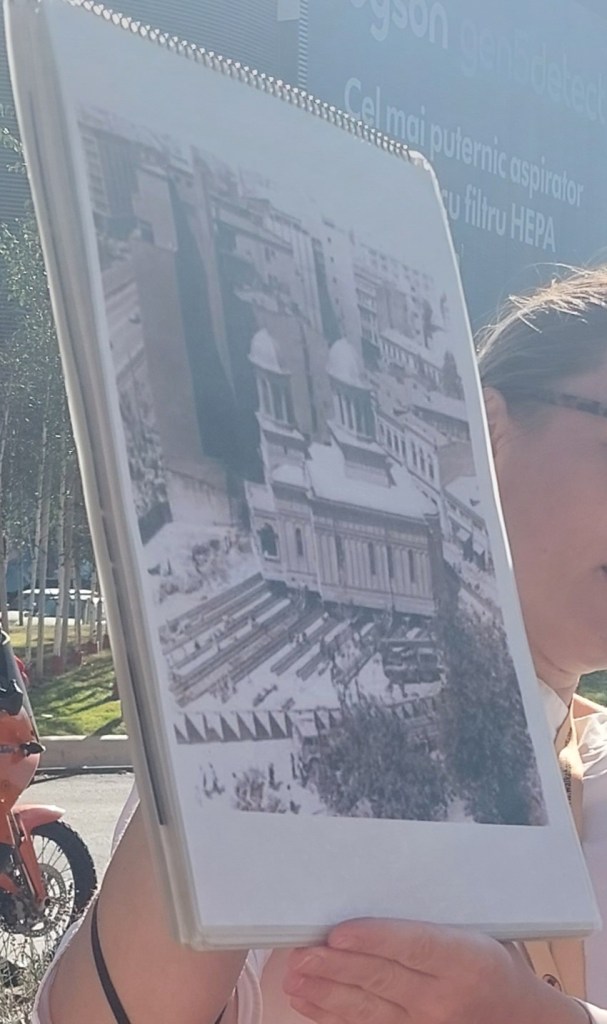
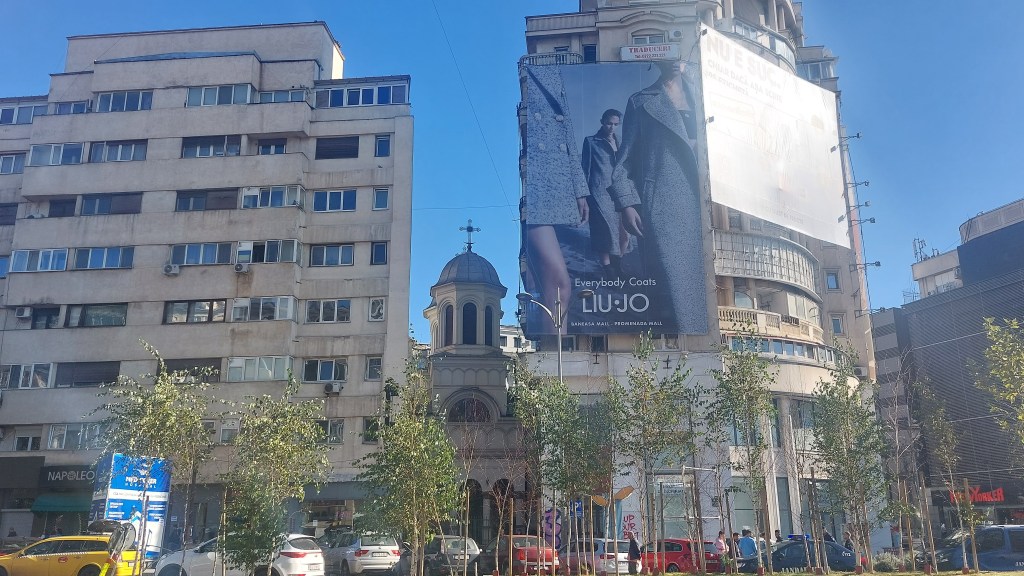
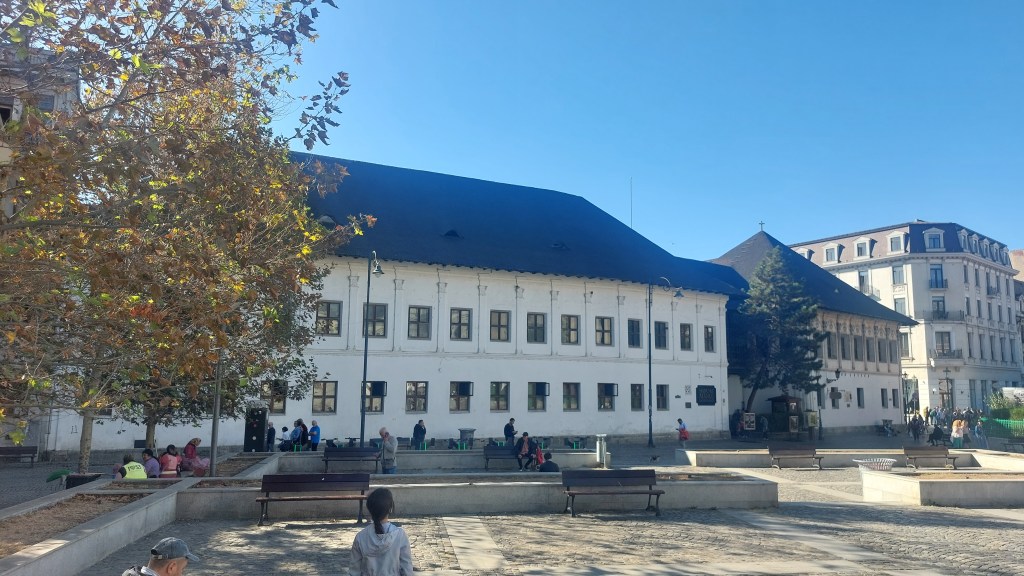
The church above was moved in the 1980s to save it from demolison by Ceausescu. The government allowed people to raise the money to move it, and to execute the move, because they did not believe it could be done. Well, they did. You can also see in this photo the soviet style appartment “walls” created by Ceausescu to hide anything behind which could spoil the image he was trying to create.
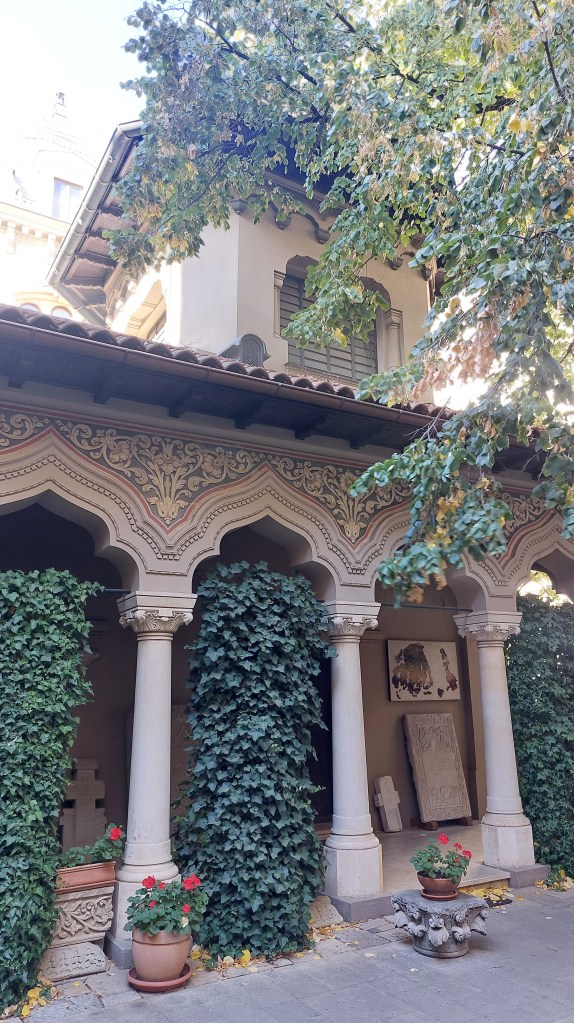
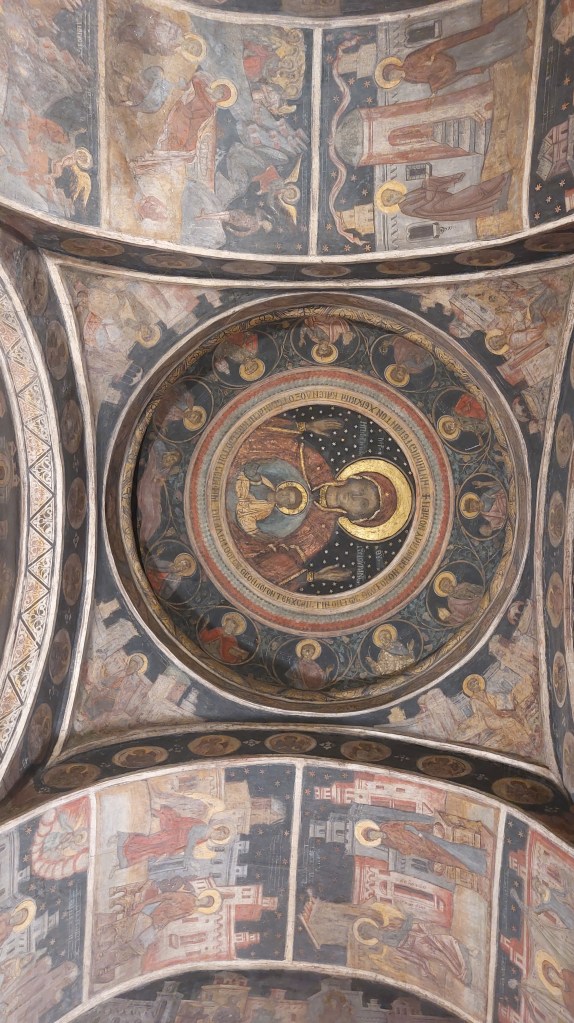
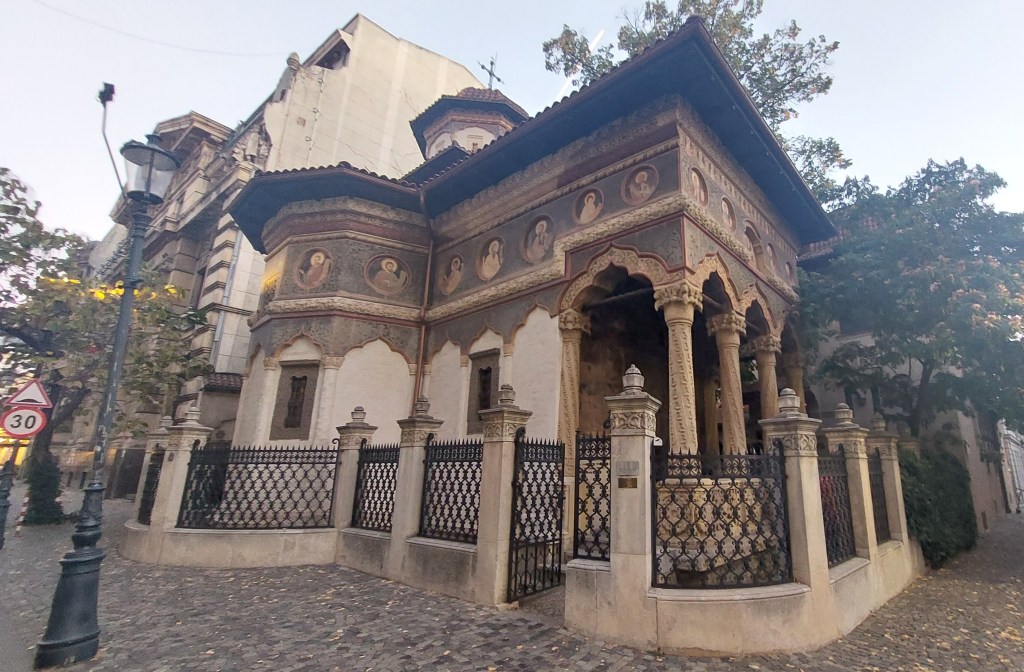
Below is, I think, my first nunnery of this trip! Stavropoleos monestary is home to 6 nuns and is a mix of Byzantine and Ottoman styles. In the churchyard, various stones (including gravestones and part of the churches themseves) that were destroyed by the communist regiume have been preserved as a memorial. I came back in the evening as this monestary uses the Gregorian chant, which I do not think I have ever heard sung by women. Well, now I have. The Romanian Orthdox church is undergoing something of a resurgence post 1989 – our guide put this down partly to the fact that the Romanian Orthadox was seen as a collaborator with the government, with some 80% of priests informing the secret police on their parishioners (although there is a strong belief that many were forced to do this). But I also think this follows a similar trend to other countries on the other side of a totalitarian regimes.

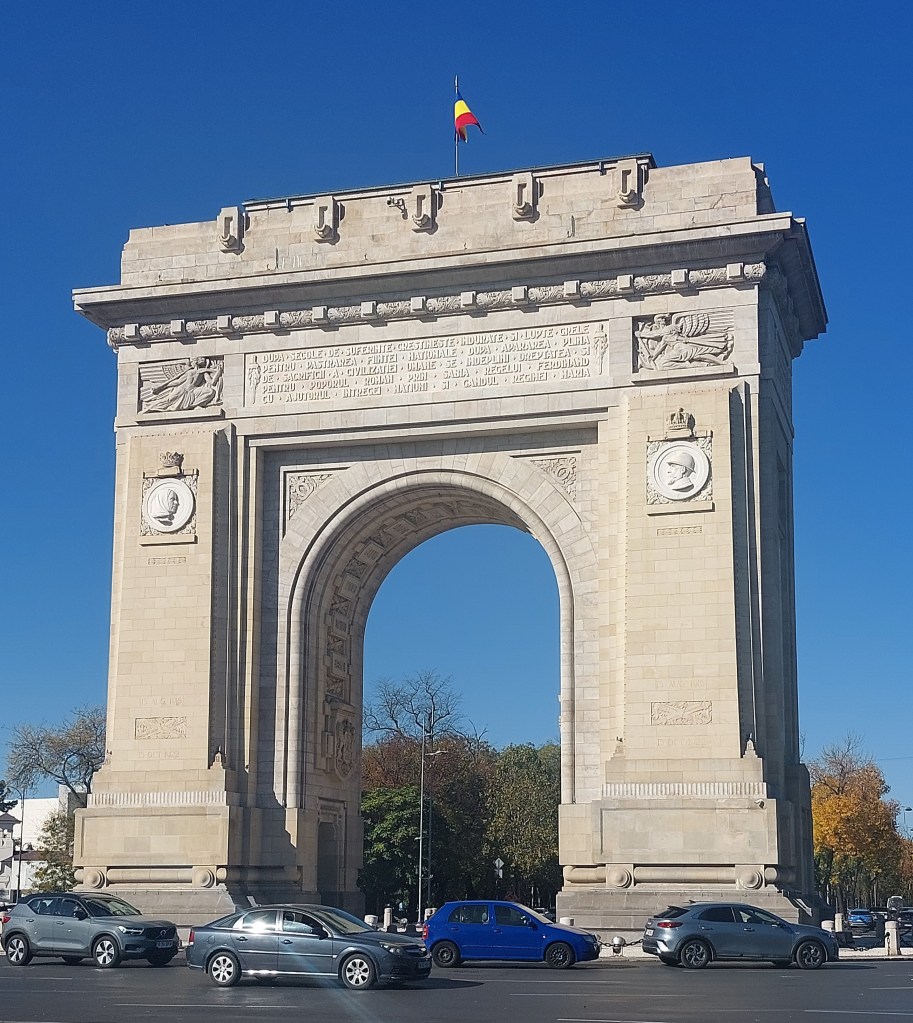
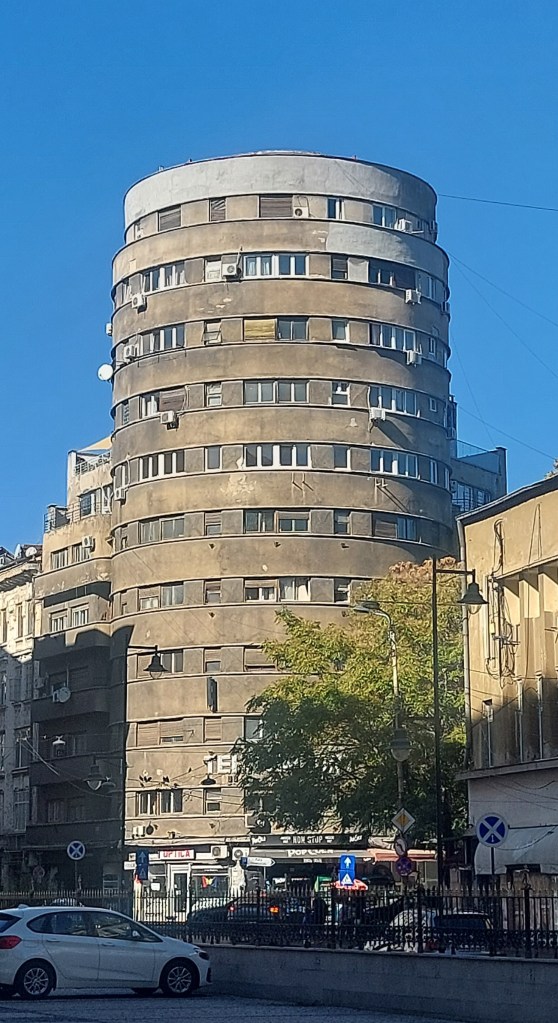
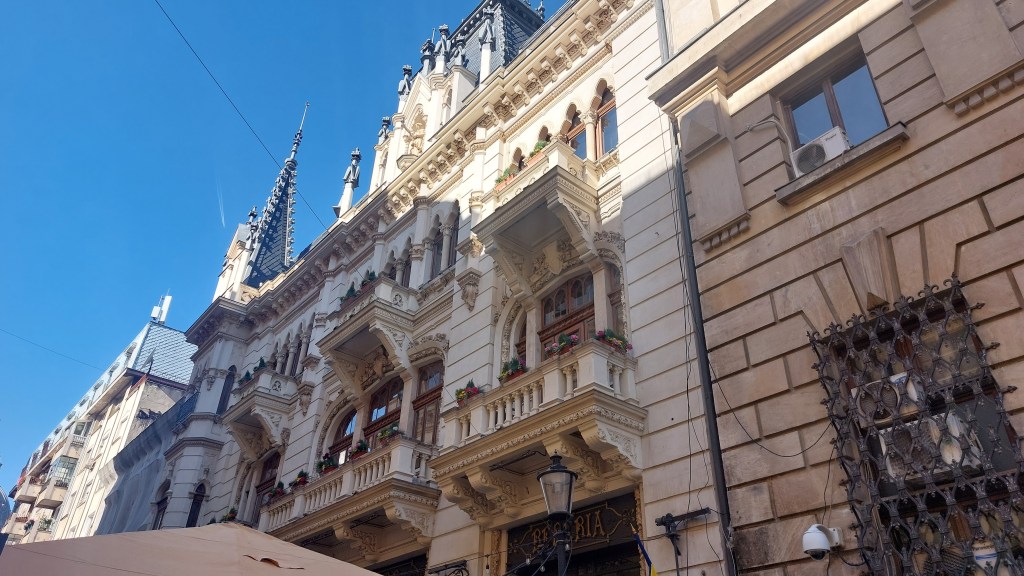
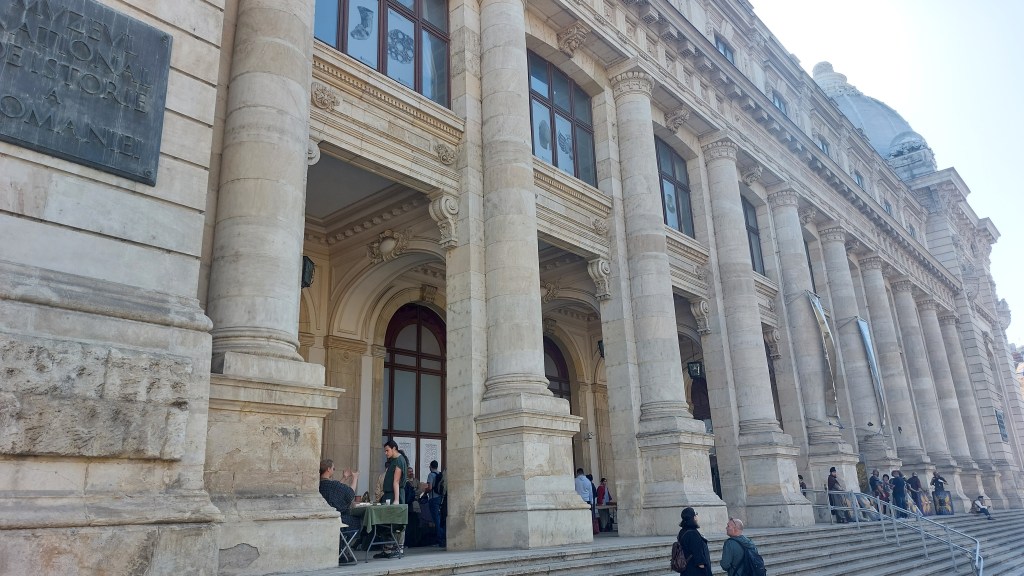
We also saw the key sites of Bucharest. Bucharest does not have the prettiness of many European cities, however, it has lots are different styles – Ottoman, French (in the 19th century French architects were invited to the city), and of course, Soviet. It has a really walkable centre and (again) a slight edgy grunginess which I rather like, and there really is something different on almost every street.
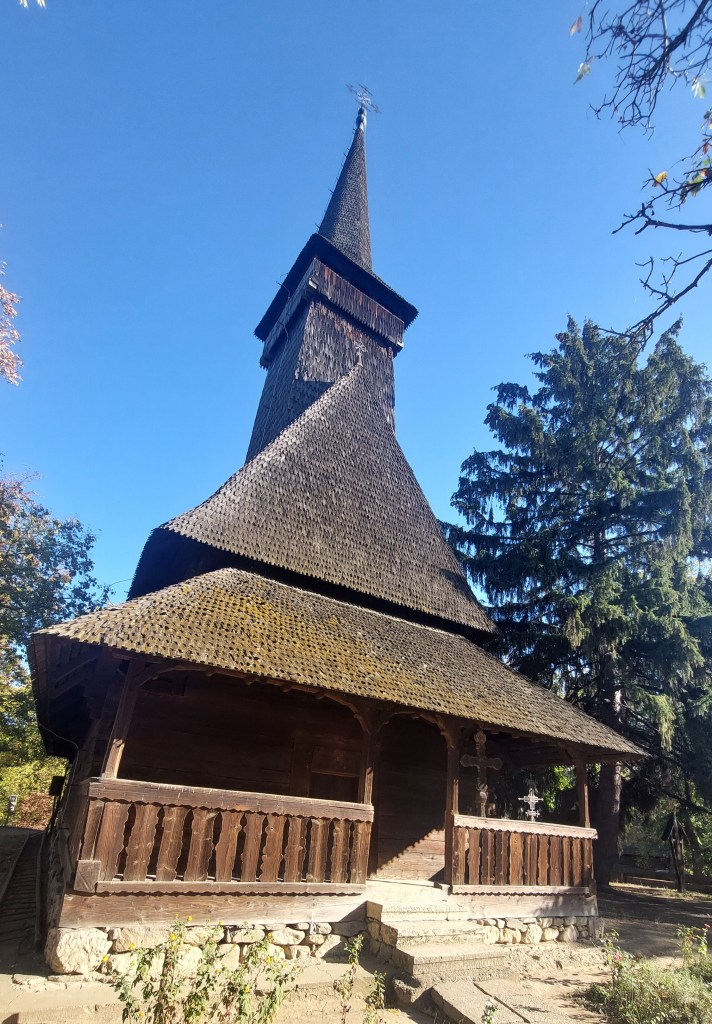
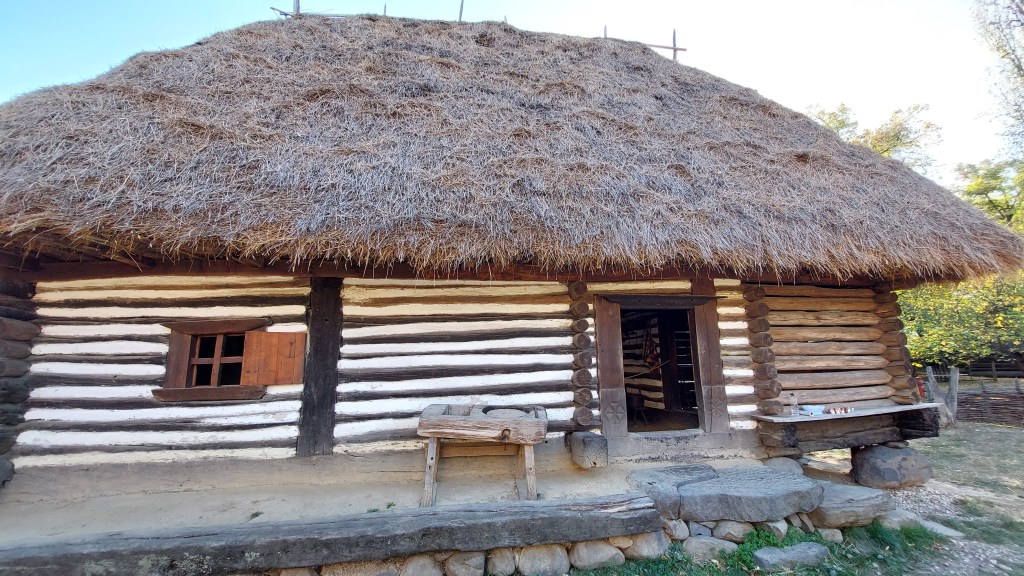
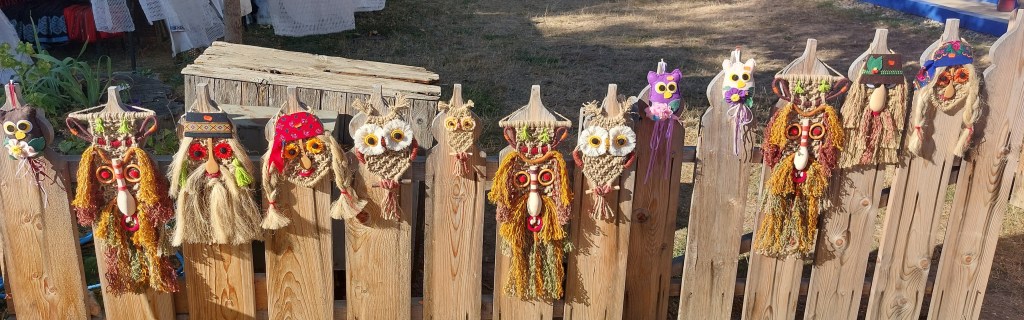
After the tour, I took the metro slightly north of the city centre to visit the Open Air Museum. This was one of those slighly odd communist things, which I rather enjoyed – the museum is a collection of buildings moved from all over Romania to give people an idea of types of historic homes and churches that exisited from the 17th century onwards. It is evidently very popular with local people as, it being a Sunday, it was rather busy and supplemented by a craft fair doing an excellent trade.

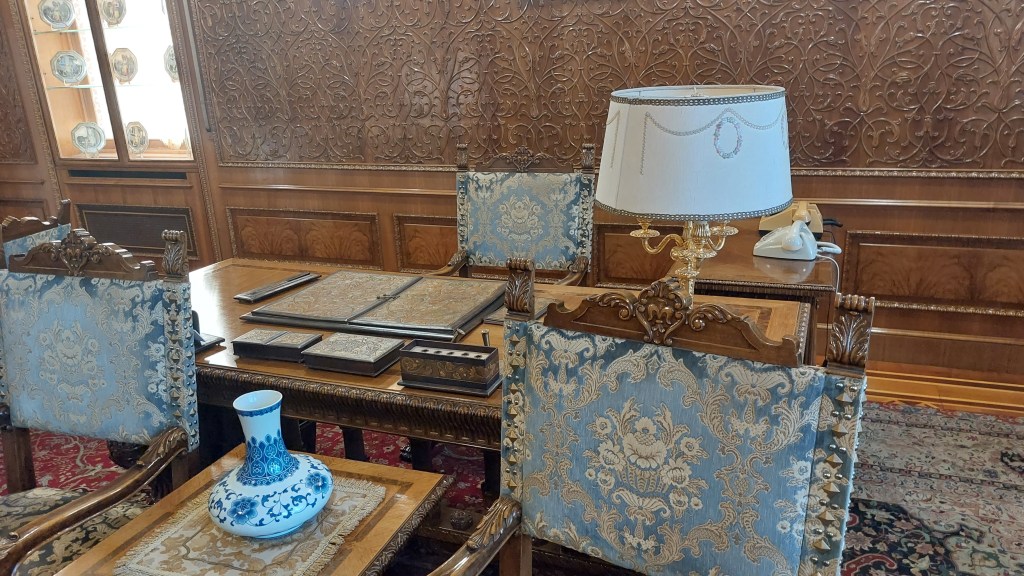
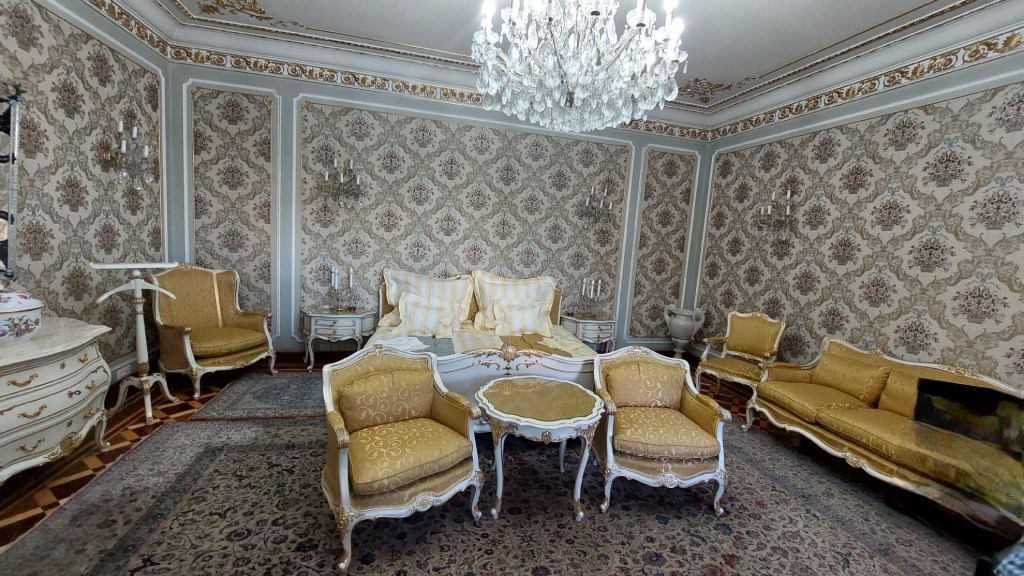
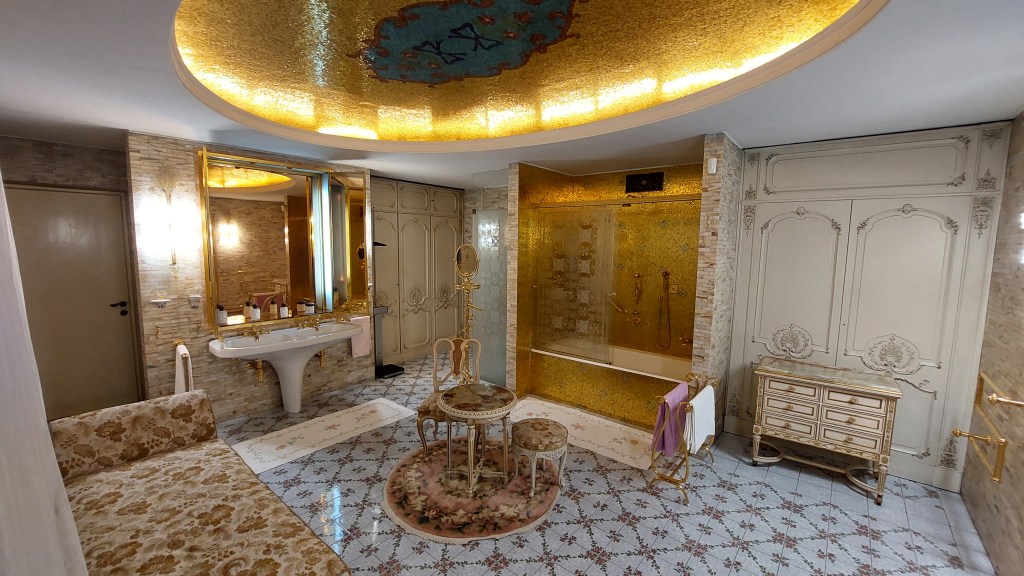
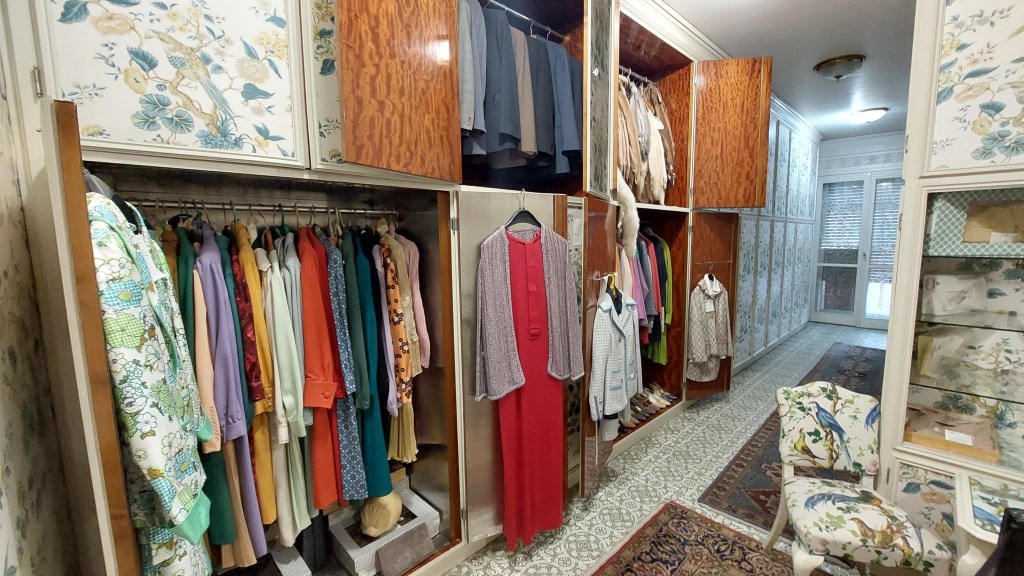
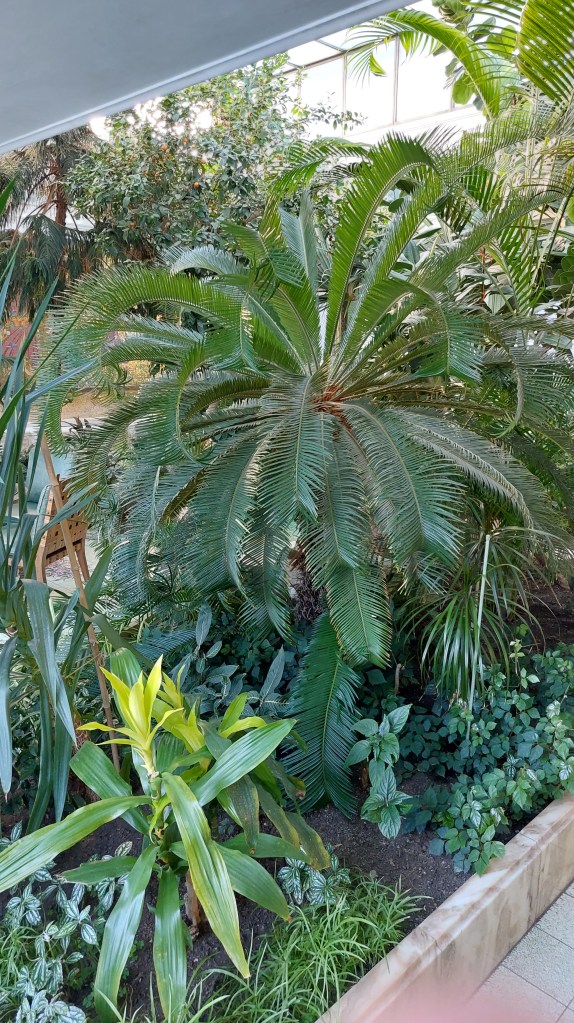
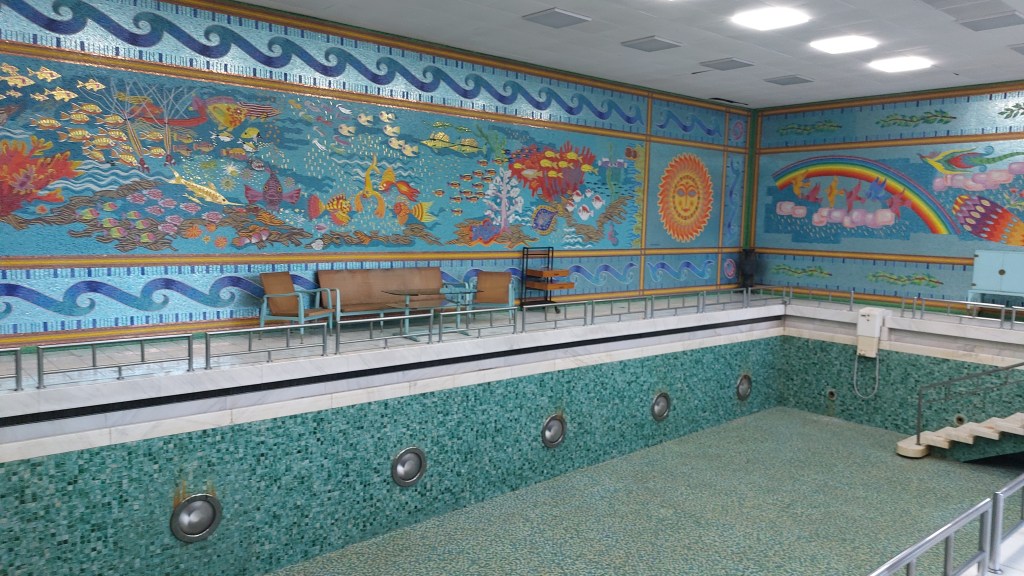
A walk through the park (ah the colours of autumn) brought me to a guided tour of the palace/home of the Ceausescus. I use the term “guided tour” loosely as he was perhaps the most uninterested guide I have ever come across. Now I accept that walking people around the same rooms x times a day is dull, but surely he could have mustered some enthusiasm! Anyway, it is certainly a rather strange place – imagine what is effectively a large 1970s house, split into suites of 3 rooms (office, bedroom, and bathroom) for each family member, but all decorated to emulate Versailles. Odd. Very odd. It was something of a shock when people broke into the house after the revolution that this was how the Ceausescu family were living. However, I would rather aspire to a dressing room of this size (makes my Mum’s 11 FULL wardrobes seem quite reasonable) and a pool (complete with mosaics) in my next home:
I then headed back into the centre to hear the nuns and for dinner. So far, my favourite Romanian food discovery is zacuska, which is a sort of auberginey/tomatoey spread and is delicious. I also (having skipped lunch and just been very excited at the prospect of desert) had a dark chocolate and drunken cherry cake for pudding and was defeated by it! I only managed half and felt I let myself down (dishonour on me, my family, and my cow).
It was a late return to the hotel, but I am pleased with what I have managed to achieve today. One day in Bucharest was not really enough, and I am glad that I have more time in Romania. Again, I am going to have to recommend Bucharest for your next short break desitnation – it’s a fascinating place, very navigable. It also helps that Romanian is a latin based language (apparently its a latin language with a slavic accent) so actually with my almost fluent (*cough*) French, I could generally work out what was being written/said. That being said, almost everyone speaks English. Anyway, I’m off to Transylvania tomorrow to see what Dracula is up to for Halloween.
3 responses to “Stage 3.8 – Bucharest (Romania)”
-
What fun, Dracula for Halloween. I hope you have a sharpened wooden stake ready.
I do not have 11 wardrobes, 4 at last count although one has your stuff in.LikeLike
-
I am counting single waredrobes: 2 in your room, 2 in the small bedroom, 3 in the guest room, 2 in “my” room, and at least 2 garment boxes worth in the garage.
LikeLike
-
-
Another great blog, Kathryn!
Of course, part of Moldavia got hived off from Romania by the Soviets and is now the independent country of Moldova (and the eastern bit of that is now a separatist state supported by Russia, known as Transnistria).
BTW, there must be several Romanian open-air museums of traditional buildings (houses, water-mills, churches, etc.) as I visited one in Transylvania…
Bucharest is not typical of the rest of the country, just as London is not typical of England, so I hope you enjoy the next stage of your tour of Romania even more!LikeLike


 Travels with Kathryn
Leave a reply to dilymy Cancel reply