Yesterday, I set off on something I have never done before, no, not 3 countries in 4 days (although that is also going to happen), but a “private tour.” One of the downsides of travelling in low(ish) season is that not many other people come, and therefore, I could not join other small group trips. Also, due to what I wanted to see in Albania, North Macedonia, and Kosovo, I could not rely on public buses, and I did not want to drive. Therefore, a private tour it is!
I was picked up by Daniel in his white SUV (electric) at exactly 9am and drove the 1.5h to Berat. Berat is known as the town of 1001 windows, and it gets its name for having retained a collection of Ottoman houses that are spread on each side of the banks of the Osumi River. The town is divided into 3 parts, the right side of the river was reserved fo Christians, the lower left side for Muslims and was where the bazaar took place from the 14th century up until the 1900s, and the upper Kalaja/fortress which is a village like ancient neighbourhood perched on top of the hill.
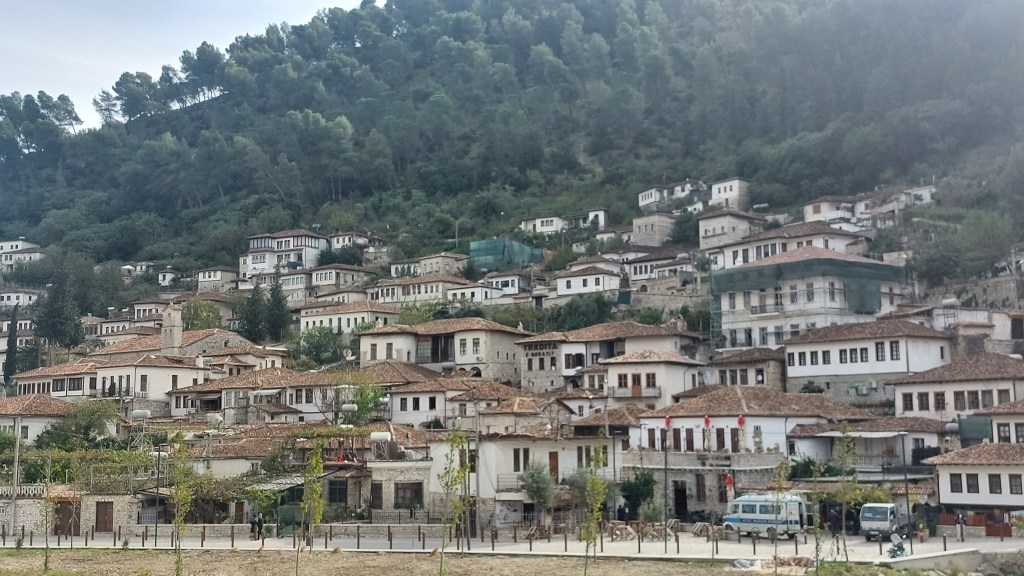
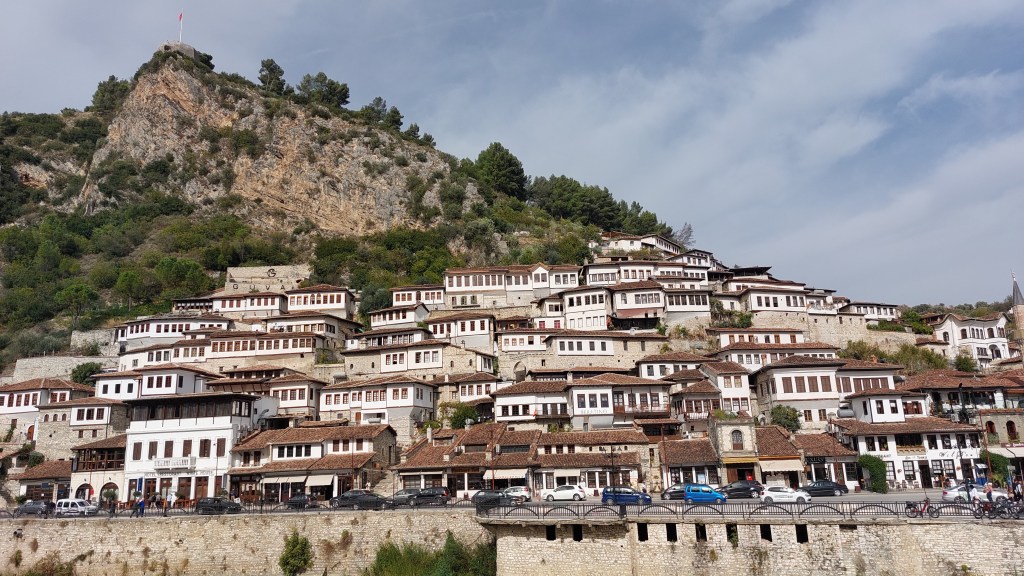

The name 1001 windows comes from the Ottoman style homes where the ground floor was built window-less and thus used for storage, whereas the upper floor (usually only 1) would have a number of windows to let in light and ventilation as it whipped around the mountain (it was very windy in Berat!).
The legend tells us that the town was built here because 2 brothers fell in love with a beautiful blond maiden and, as men do, decided to have a fight as to who could have her (much more sensible than asking her opinion!) and as one brother was a master of the sword, and another a master of the mace this fight lasted for some days without a winnner. God looked down from his window in the sky, decided they were being idiots and transformed 1 brother into one side of the valley – Mount Shpirag (which looks like it has sword slashes cut into it) and the other brother into the other side – Mount Tomott (which looks like it has had chunks taken out of it by a mace). The girl (as though this was her fault!) was transformed into the white city of Berat, and her tears formed the Osumi River. It’s absolute rubbish, but we do love a good story.
In the muslim side of the city, ruins of the Pasha (or ruler’s palace) remain as do a couple of mosques and what was described as merchants accomodation with stabling below. Essentially, a caravanserai(!). Berat was never a major trading city, but it was on a key Roman road linking Istanbul/Constantinople to Rome.
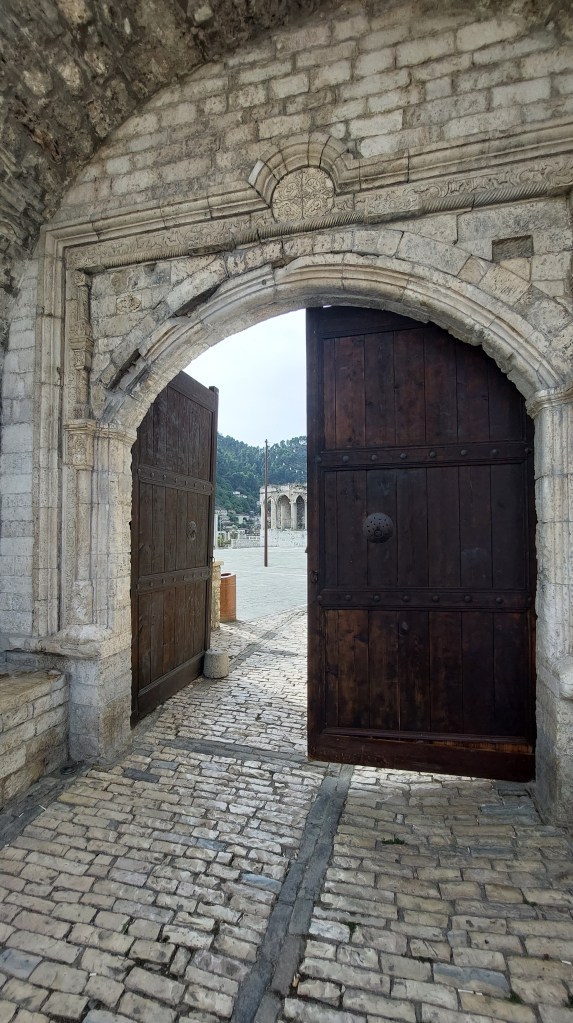
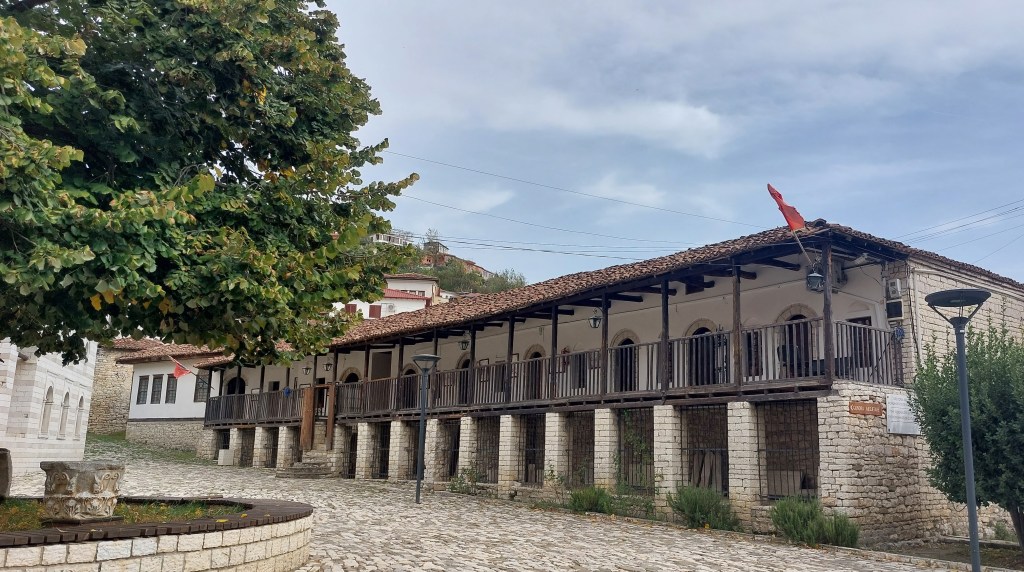
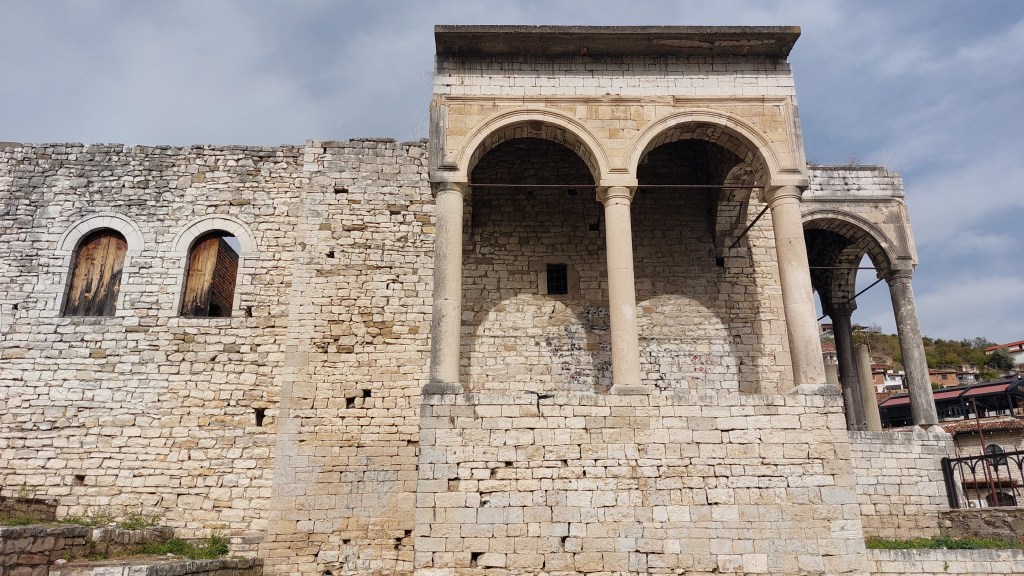
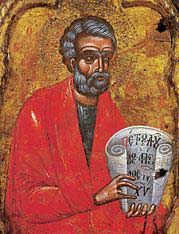
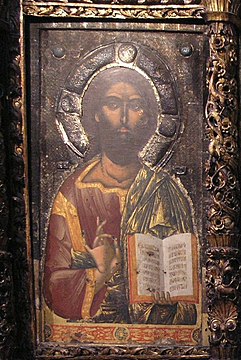
We then, having the aid of a car, drove up to the fortress, which I was rather pleased about as I am not sure I would have enjoyed the walk! Our first stop was the Onufri museum housed in the Church of the Dormition of St Mary, which dates back to 1797 (although built on the foundations of an older church). The church contains rather faded frescos painted by Onouphrious Argytes, who was a 16th-century priest and the most famous Albanian Orthadox painter of his time. After training in Italy, he opened a school of painting in Berat and was considered to be an expert in his use of colour and painting of fabrics (although in my humble opinion, his faces were a little samey). There is a hope that these frescos will be restored, but it is an expensive job for a relatively poor country. Unfortunately, no photos were allowed in the church, so I have borrowed a couple from Wikipedia for you to see what I mean:
Behind the iconastsis (which made me feel very daring) was hidden a 6th century codex painted in silver on purple paper. This is one of only 7 purple codexes in the world and was hidden at some point in the 14th century and uncovered and presented to the Albanian National Arcives in 1971. Unfortunately, it is not on display and I expressed surprise at the Communists not simply destroying it, but apparently although they did destroy certain religious buildings or put them to other uses, generally religious artefacts were preserved as they knew they had value.
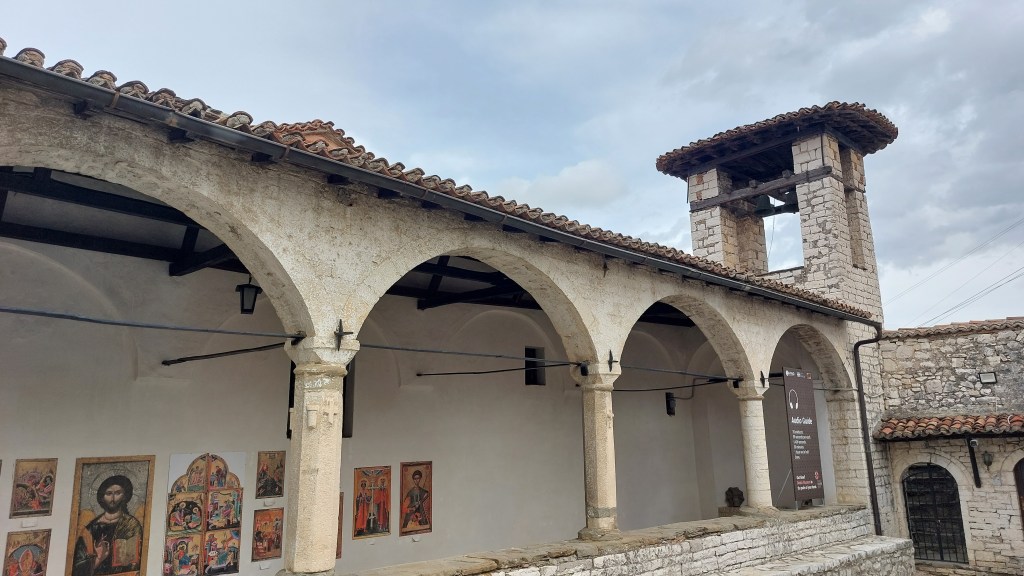
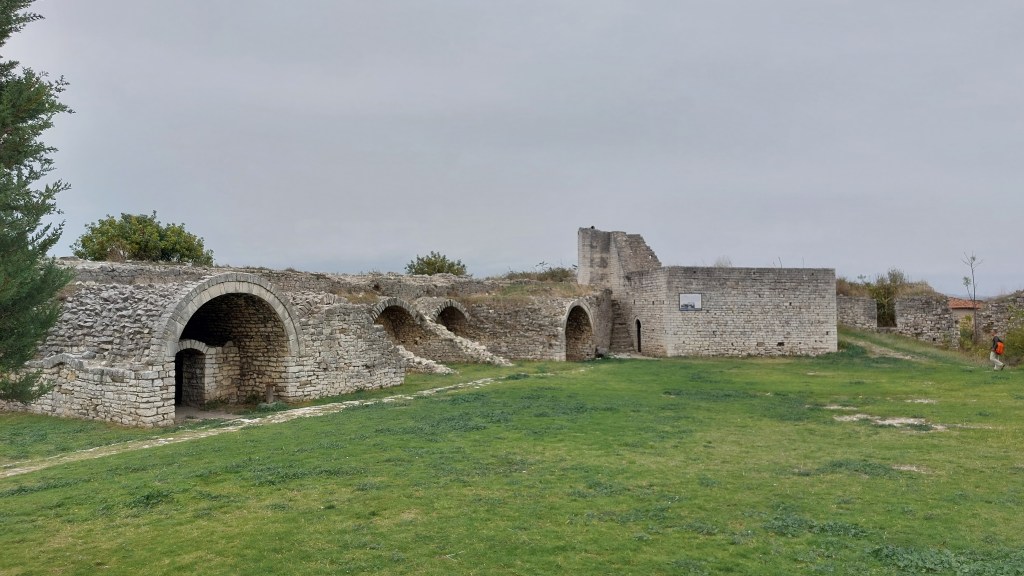
After a wander around the Kalaja, we stopped for a lunch where I was treated to byrek (again, but it is so delicious), rissoles, and a classic Albanian caserole called tave kosi which is a baked dish of lamb, rice and a yogurt sauce. It sounds a bit odd, but it is really nice. Note to self – must take more photos of food!
Another thing I must take photos of (although its hard to remember when you are deep in chat) is the scenery. Albania really is stunning – Anna, you were right about how lovely it is here. Green fields, rolling hills and mountains peaking over the top – delightful.
From Berat, we drove a couple of hours across the border into North Macedonia and for our stop for tonight (as it was 6pm and raining heavily by this point) of Ohrid. I am pleased to report that I did get a stamp in my passport on entry, and there were not any problems with the fact that I did not have an Albanian entry stamp. It is like the system is actually electronic…
Lake Orhid is a 34km long, 200m deep, and 3 million yeaars old and is shared between North Macedonia and Alabnia. Apparently, in Summer, its delightful boardwalk is thronged with bathers. However, it is not quite so appealing in the rainy darkness when we arrived or the rainy greyness this morning… I admit I have been very lucky with the weather up to this point in my journey and it did give me an opportunity to crack out the long sleeves, pack-a-mac and umbrella to walk down to the lake this morning:
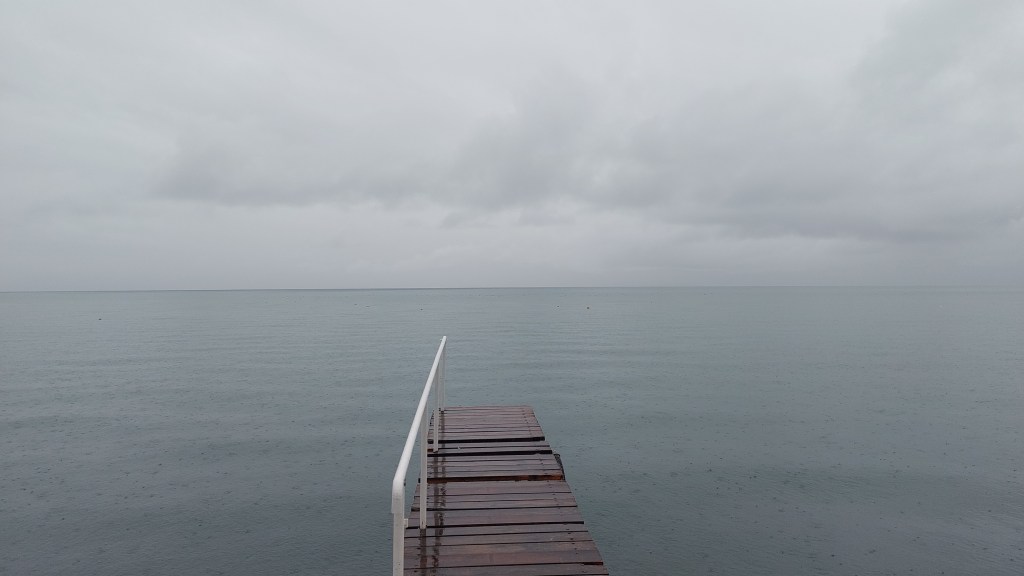
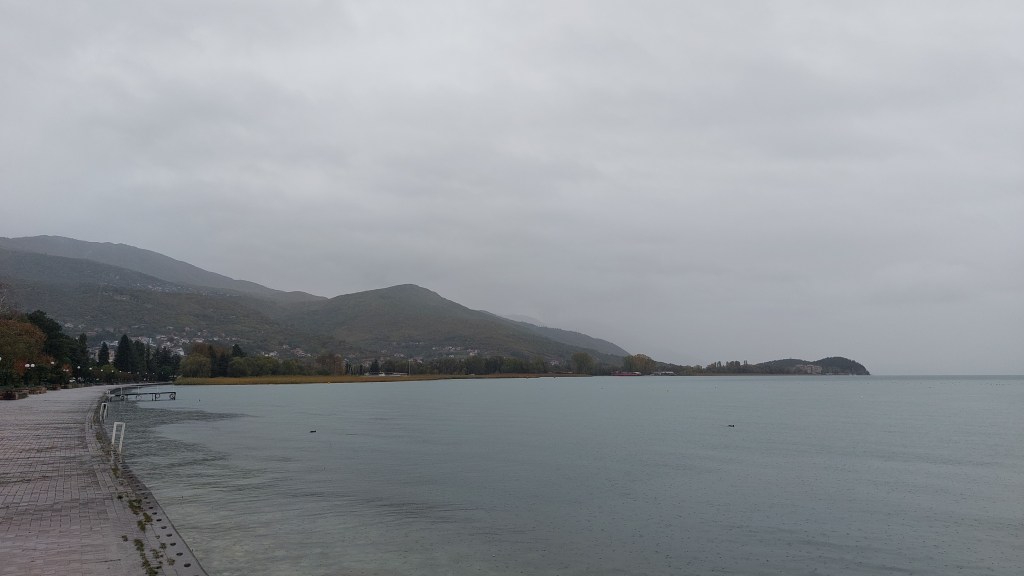
Anyway, we started our explore by driving up to the fortress. Orhid dates back to Greek times, but was the capital of the first Bulgarian Empire between 990 and 1015 then fell to various empires: the Byzantines, Serbian and finally the Ottoman Empire in 1395 and other than a brief recapturing by Skanderbeg (who we learnt about in my last post) it remained part of the Ottoman Empire until 1912. Orhid is famous for its many churches (365 at one point) and distinct design of its Ottoman era houses.

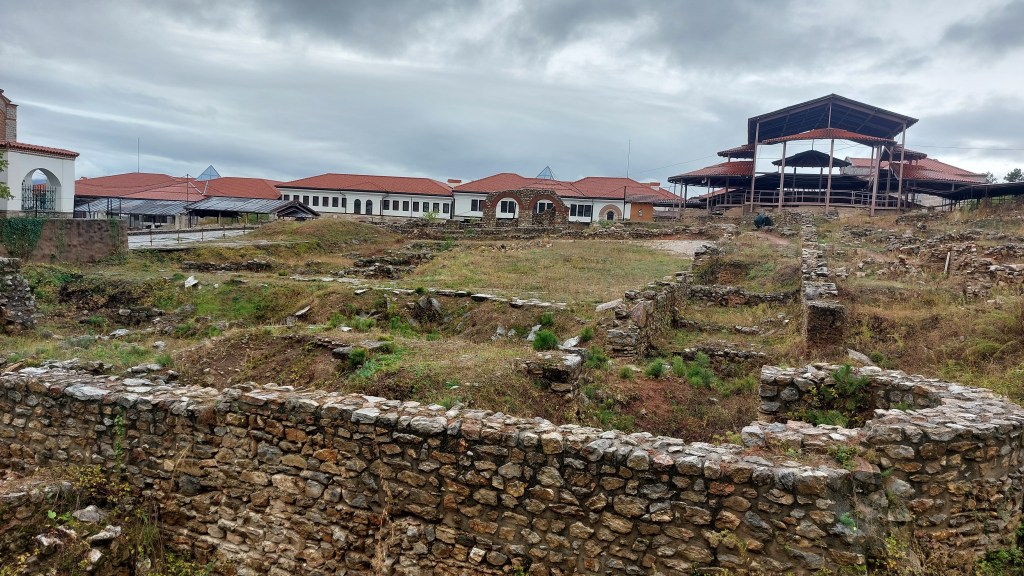
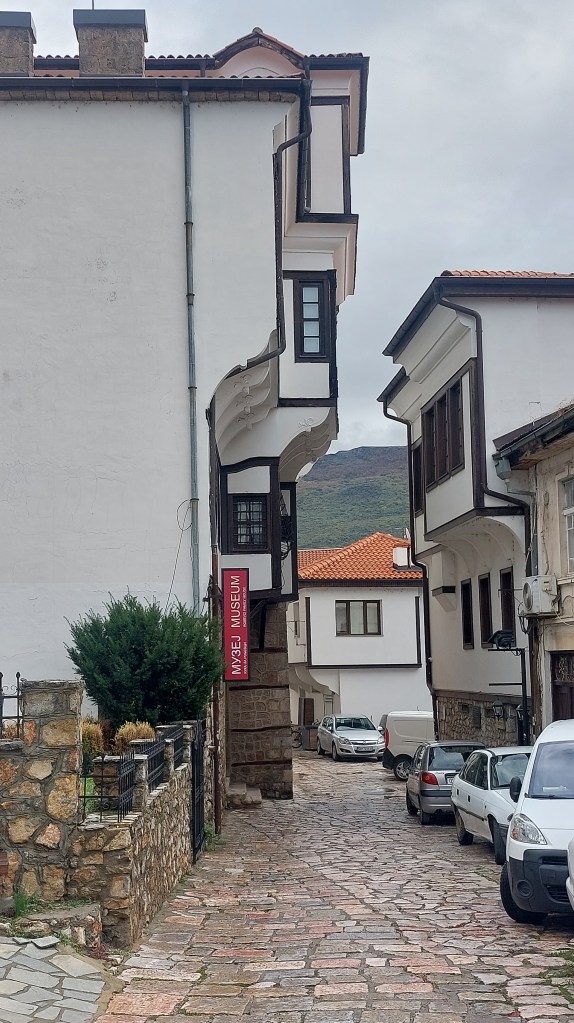
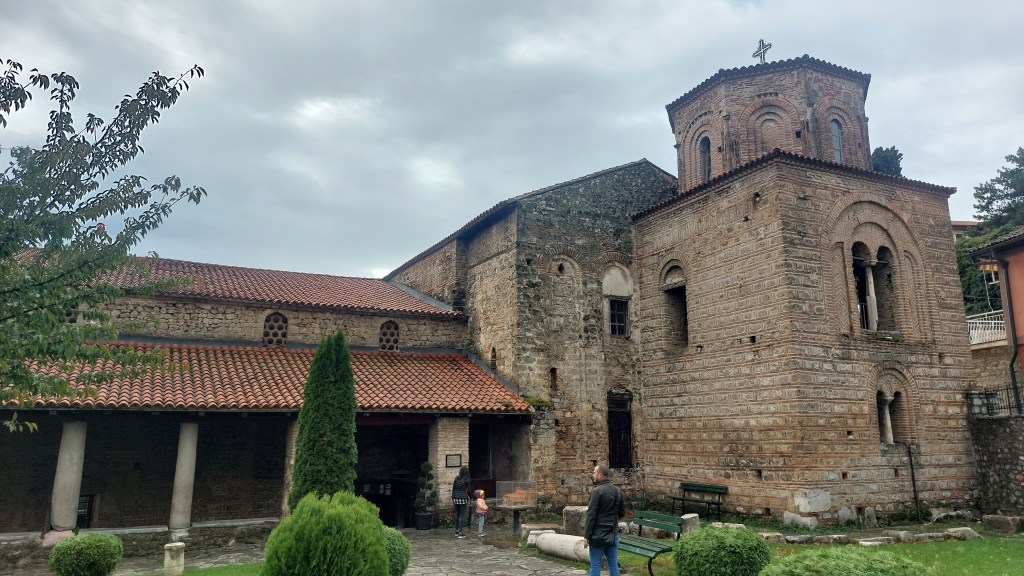
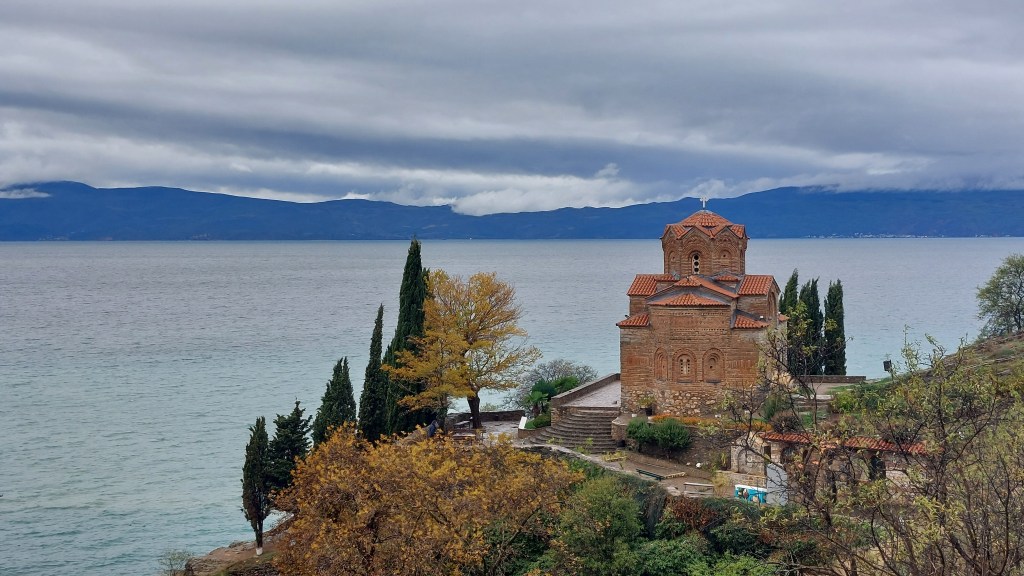
However, the big draw and according to a 2019 Lonely Planet survey one of the top 10 world views to photograph, is the church of St John at Kaneo. This 13th church is built on a clif overlooking Kaneao Beach and Lake Orhid.
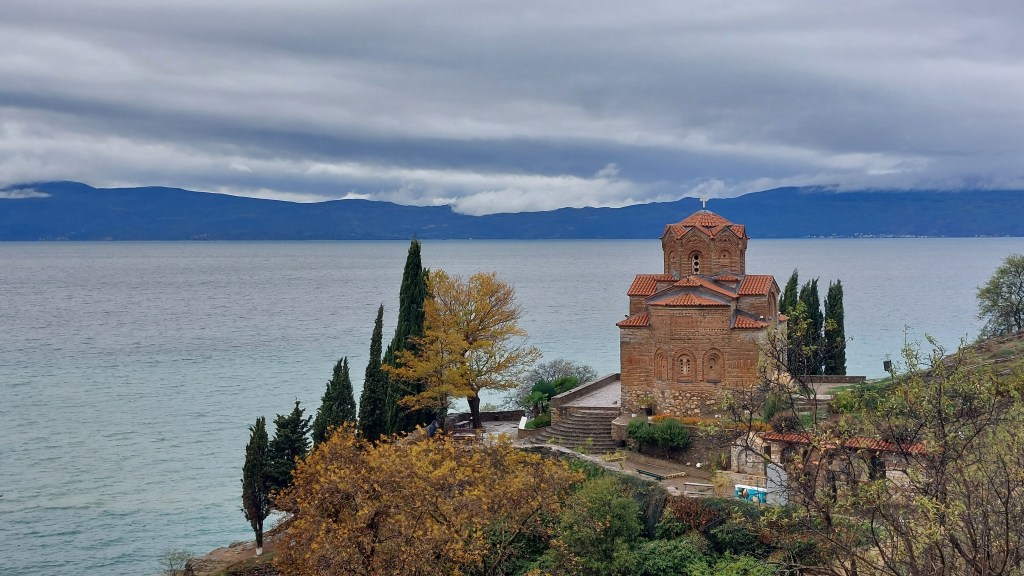
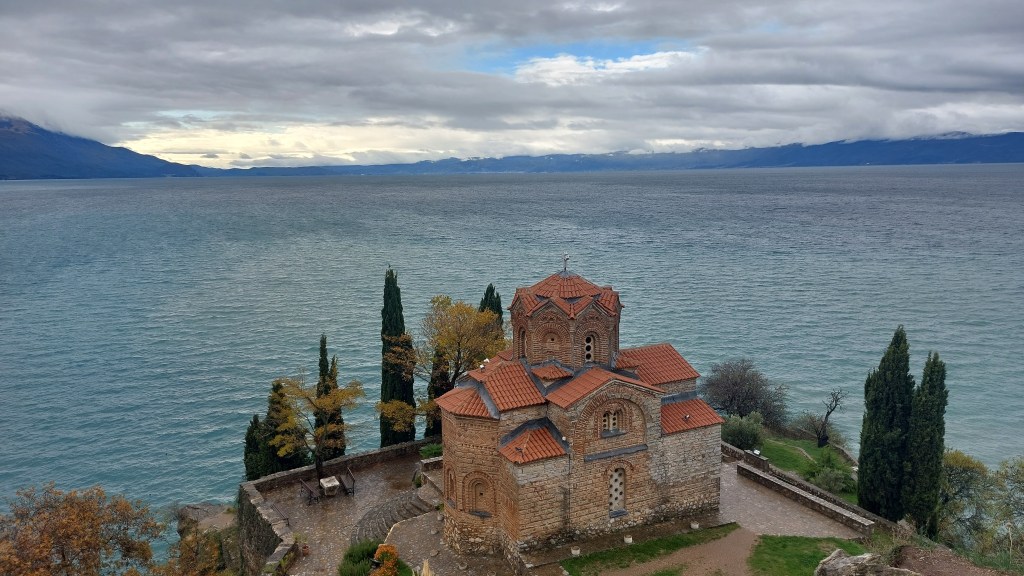
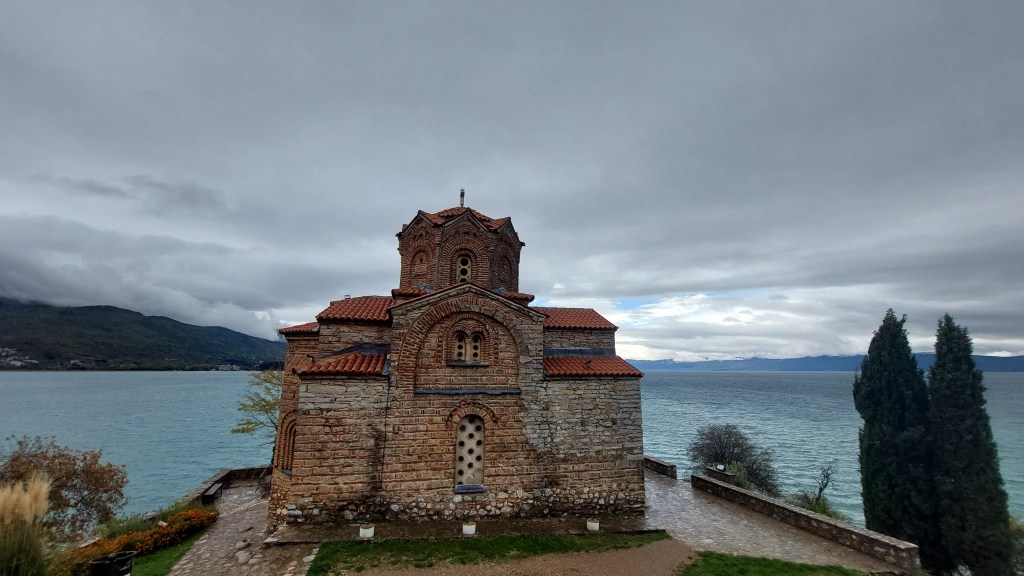
We walked around down and around the cliff, and I am sure this would be a lovely place to come for your summer holidays, but I would rather enjoy the clouds, mountains, and getting sprayed with waves. Maybeit’ss the Britishness coming throug, i.e., who needs sunshine to have a nice time?
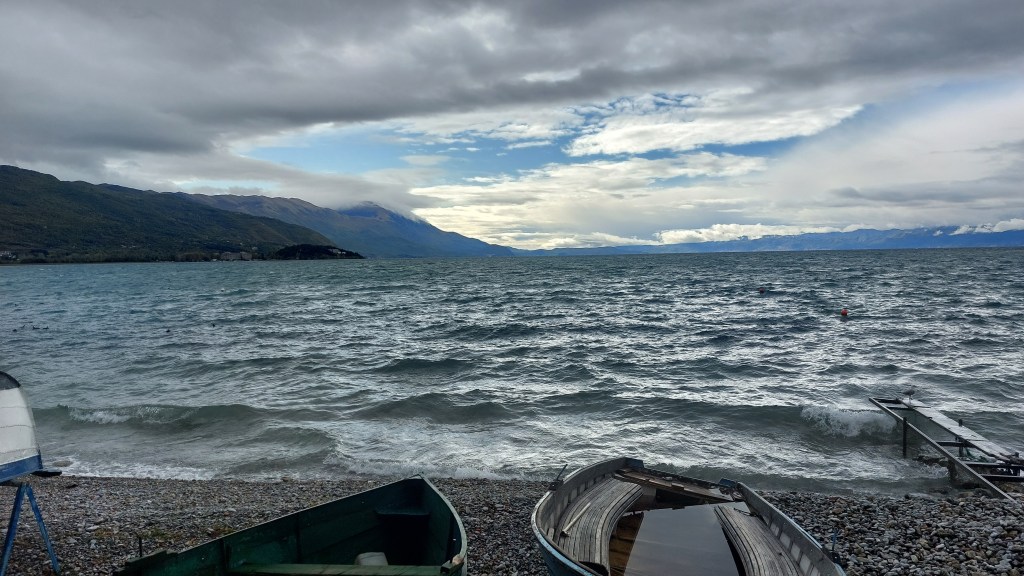
Anyway, we drove on over the mountains (in the pouring rain) and in a couple of hours reached Skopje just as the rain was clearing up. Skpoje is the capital of North Macedonia and dates back to the 2nd century, but it became an important trading centre during the Ottoman era (it was taken from the Serbian Empire by the Otomans in 1392). After WW2, the city and what is today’s North Macedonia became the Socialist Republic of Macedonia within Yugoslavia. After this the city developed rapidly until an earthquake in 1963 destroyed much of the city, and the only “old” part that remains are in the Ottoman bazaar (which was the one of the largest in the empire) and the stone bridge across the Vardar River.
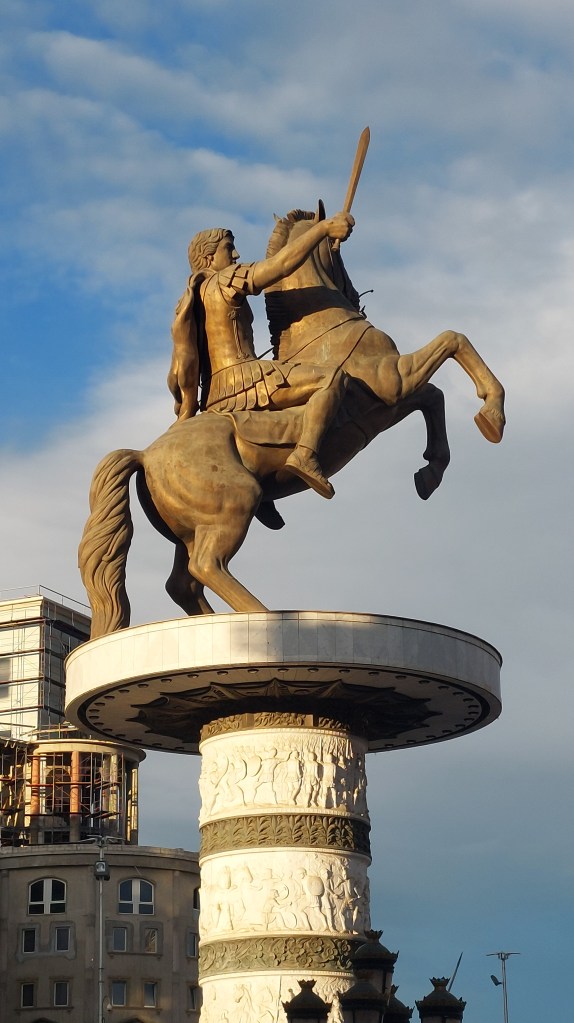
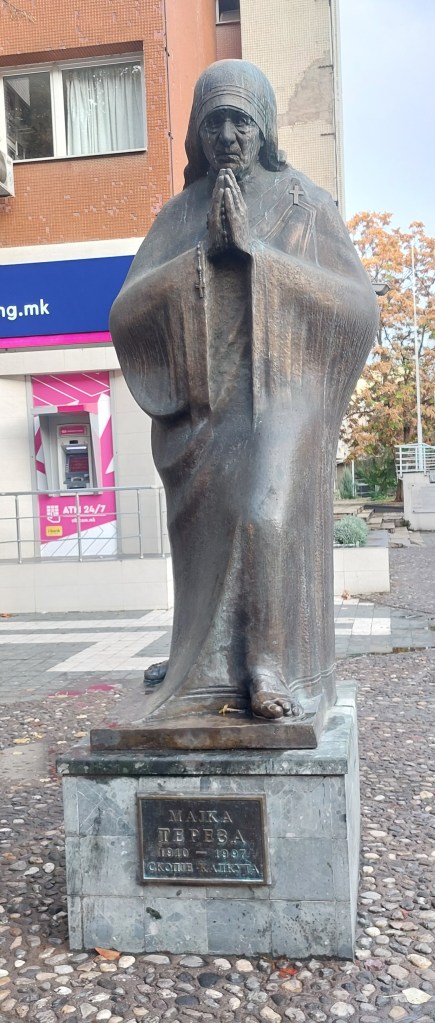
Much of recent building works show a captial that is trying to create a sense of national identity. For example, the main square has monuments to Mother Theresa (which makes sense as she was born in Skopje), Alexander the Great (who was Macedonian, but from the part of the Macedonia which is in Greece), Georgi Pulevski (a 19th century Bulgarian who came up with the idea of Macedonian being a seperate language to Bulgarian, rather than a dialect as it was previously considered), and Karposh (who was murdered by the Ottoman’s for having taken part in the Central Balkan 1680s uprising). Even the name North Macedonia is relatively new, and just in my lifetime this country has been Yugoslavia, The Former Yugoslav Republic (or FYR) Macedonia, The Republic of Macedonia and now: The Republic of North Macedonia (to settle the dispute with Greece as Macedonia is part of Greece).
So, having got that a little clearer in my mind, I could set off to see the main sites of Skopje:

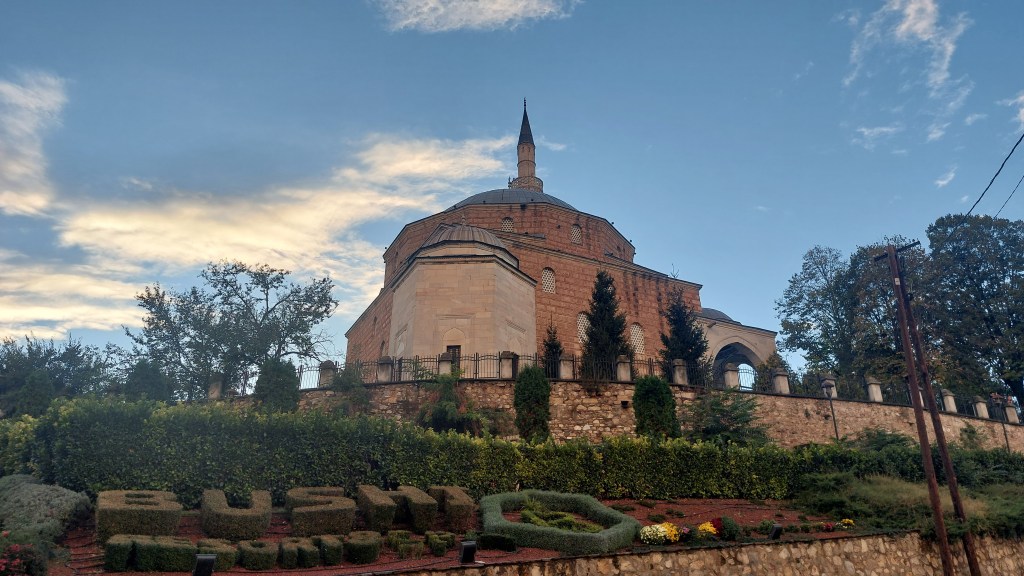
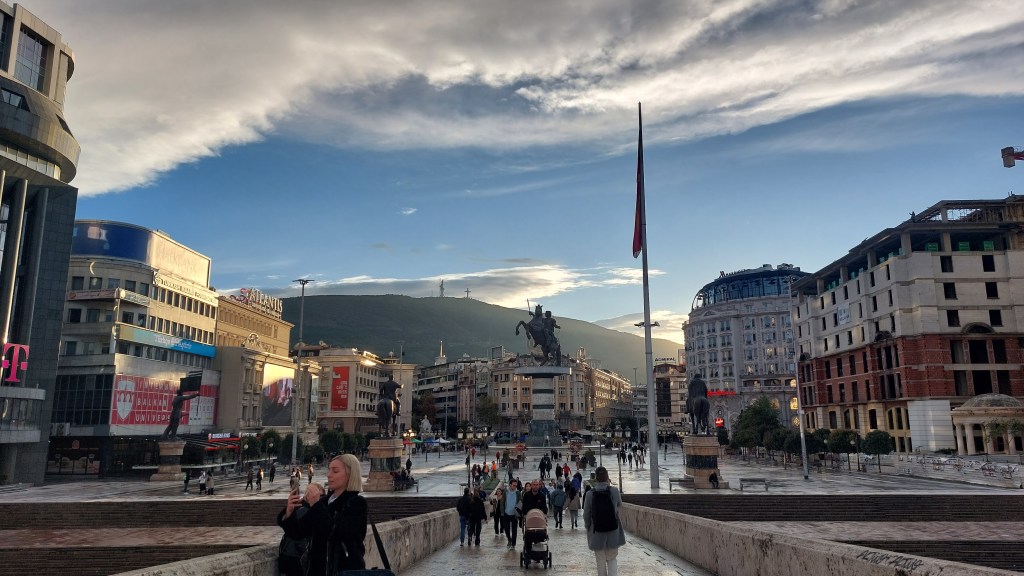
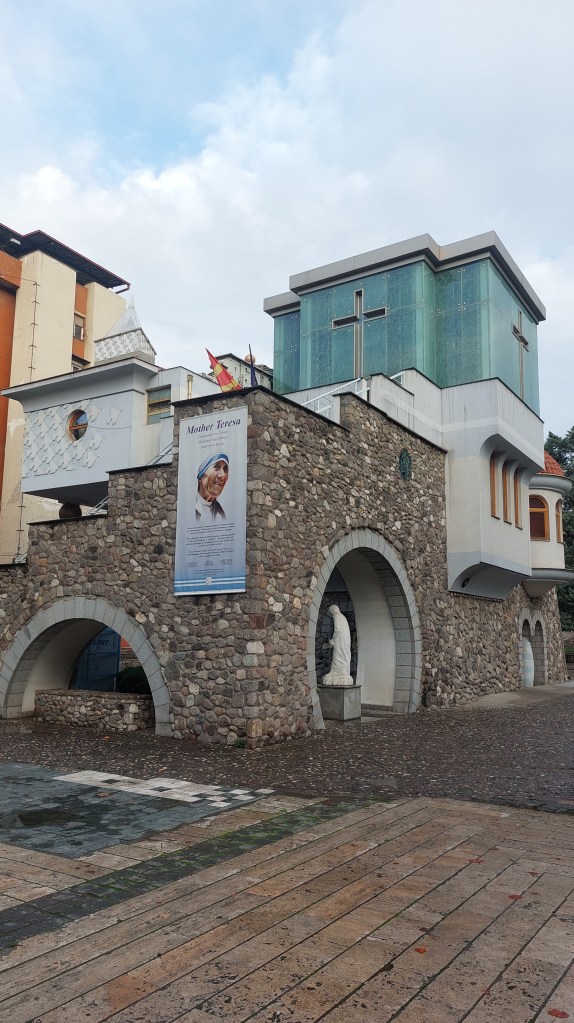
Skopje’s most famous person (as she is Albania’s) is Mother Theresa. Unfortunately, the house she was born in was destroyed in the earthquake, but a memorial house has been built as well as a small site where the actual house stood.
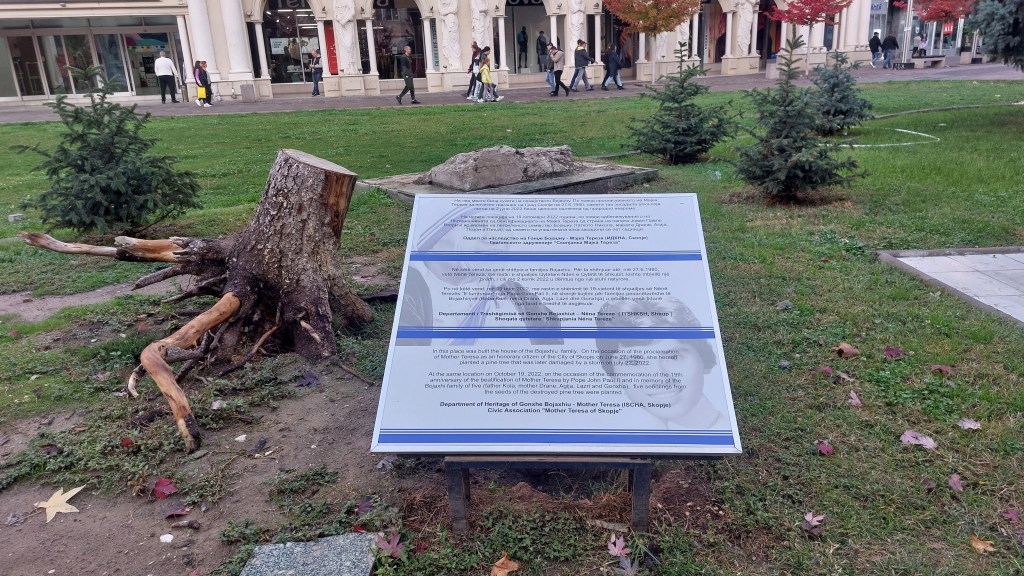
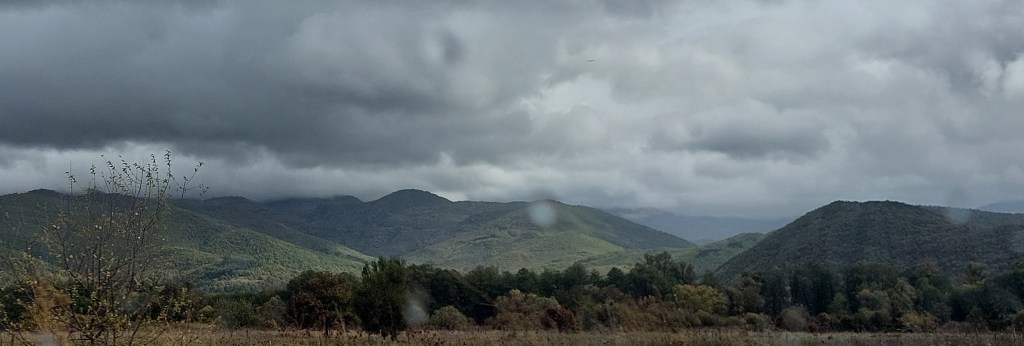
After a wander around the baazar (lots of tourist tat), it was time for dinner and bed. As I suspected, I knew this was going to be a whistlestop tour of Albania, North Macedonia, and Kosovo (where I am going to tomorrow). But it has given me a little taster, and I can see why Ohrid is such a popular holiday destination and Skopje for city breaks – both are beautiful and so cheap! Also today has been the first day where I have paid the price of travelling in low season, but I have still been able to appeciate these places, and the scenery has beautiful (photo below) and I do like not having to deal with hoards of tourists… Its also forecast to be sunny in Kosovo, so fingers crossed!
One response to “Stage 3.11 – Berat (Albania), Ohrid and Skopje (North Macedonia)”
-
Keep it up Kathryn!
Around Ohrid is where my niece used to go (maybe still does) each summer to participate in the buoyant festival culture, which she loves. My generation is perhaps too afraid to launch ourselves into the unknown like that…
But you are bridging that divide (although rather too late in the year for meeting up with Tamsyn!).
BTW, we are now watching the Netflix series about the fall of Constantinople – and it is great! A wonderful mix of well researched factual history, terrible hammy acting and very suspect invented dialogue…
LikeLike


 Travels with Kathryn
Leave a reply to Keith Black Cancel reply