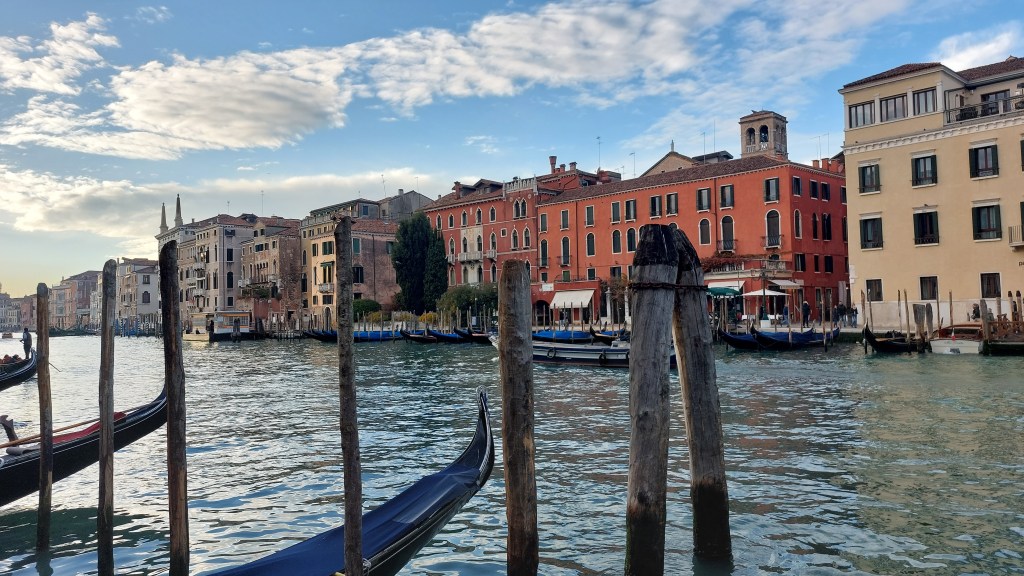
I have wanted to come to Venice for a long time. What has stopped me? Well, first, I had this girlish notion that I would come with someone I was in love with. Secondly, I was worried that it would not live up to EPCOT’s Italy pavilion/the Venice casino in Las Vegas. Well, the time has come, and I am here, giving up on my Prince Charming and accepting that Disney is not real life (either when it comes to Prince Charming or versions of real places).
I left Trieste this morning on the fast train (delightful) and arrived at Venice Main station at 11.15am. It was then an easy change to Venice Santa Lucia,which is on Venice Island.
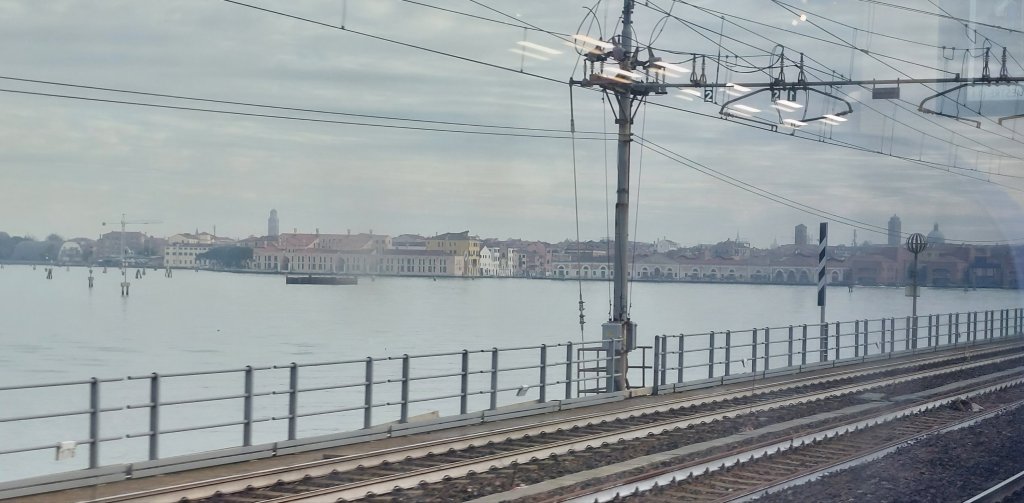
I am in a rather basic hotel, but as Maurane (who needs Prince Charming when one has the love of a friend) is arriving later I have really confused them by asking for extra sheets and towels and I have had fun this evening by splitting the beds to make two twins. Anyway, having dropped off my bags, I set off.
Venice is made up of 126 islands and 472 bridges. According to tradition, Venice was founded on 25 March 421AD when the inhabitants of the mainland moved to the lagoon so as to escape the barbarian invasions. With the increase in population, the settlement of the islands became stable, and by the 7th century Venetia Martima was a Byzantine province under the government of a Doge (which comes from Latin “dux” which is a military duke) appointed by the Byzantines. The first Doge was elected in 697 and governed Venice under Byzantine overloardship, but as Byzantine power declined the Doge was recognised as an independent title by the Holy Roman Empire in 1002 and also confirmed by the Byzantines. During the Middle Ages and Renaissance, the Venetian Empire was a major financial and martime power, a staging area for the Crusades as well as an important centre of commerce. It is considered the first real international financial centre, reaching its prominence in the 14th century and making Venice very wealthy. The Doge’s and their government (more below) held power until 1797 when Venice fell to Napolean, and in 1866, it became part of the kingdom of Italy.
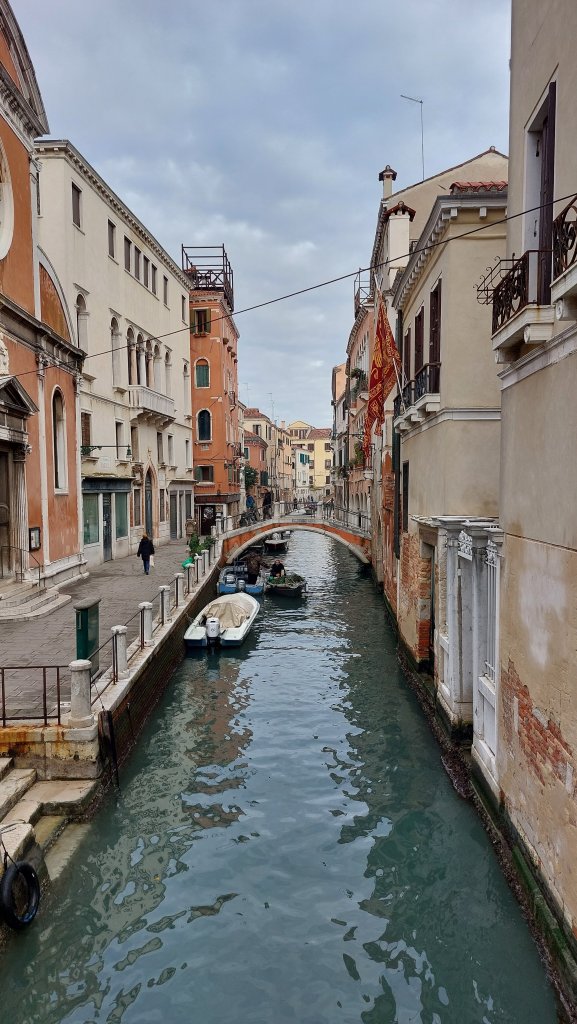
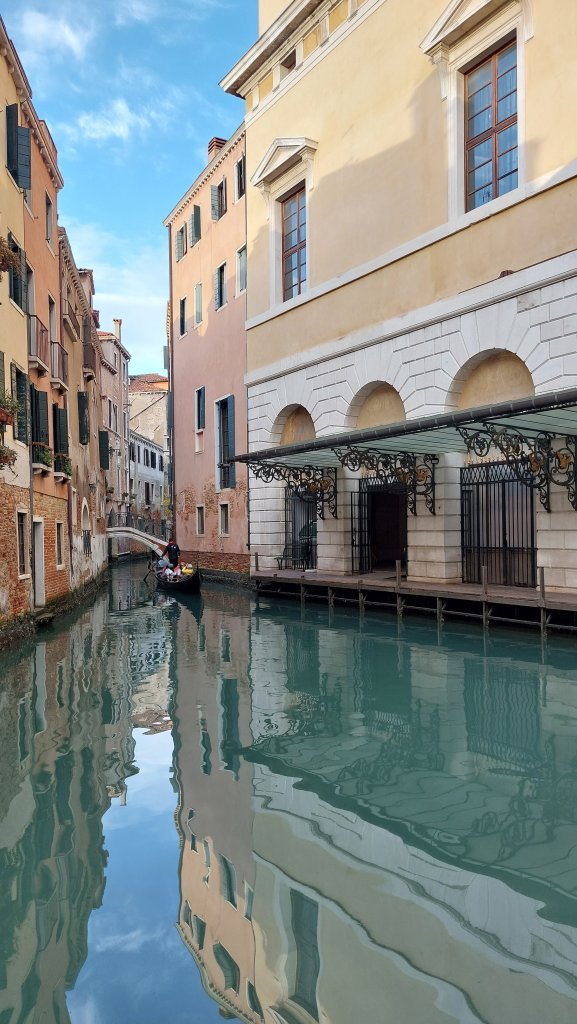
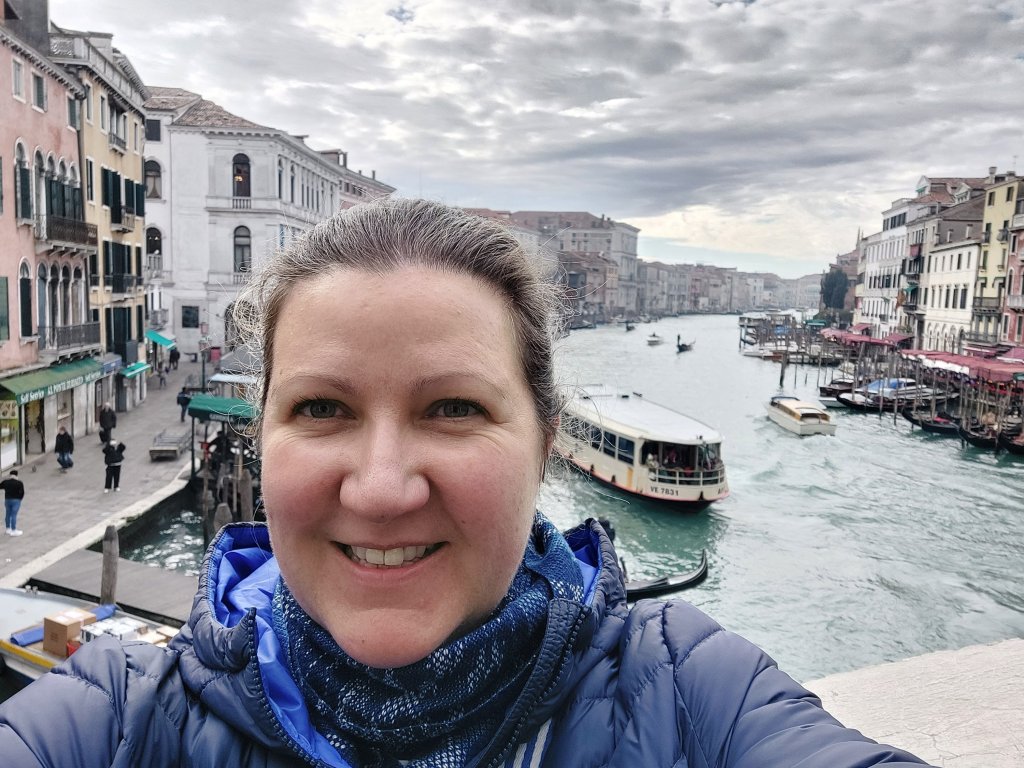
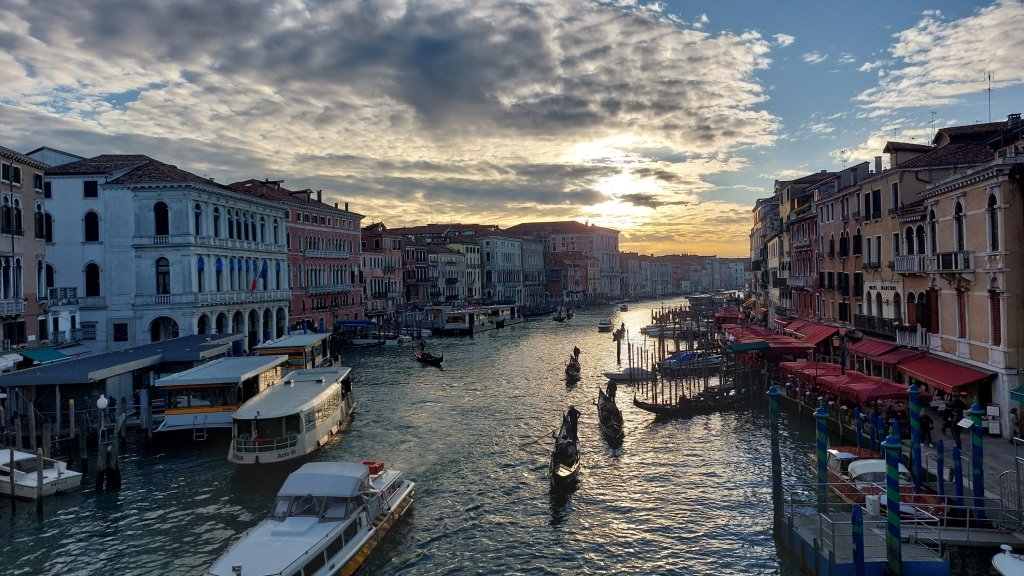
Venice is in some ways just like I imagined, and in others, not at all. The views of the canal, bridges, and small streets are just as I pictured. However, ground level has a slightly grungy feel, which we know I like, and it makes me feel like I am in a real place and not Disney! It is as difficult to navigate as I had read, and you just have to Google Map and hope (at one point, I was navigating by the angle of the sun and smell of water). I would certainly recommend NOT coming in high season, as even though it is midweek and winter/off-season there are still plenty of tourists and with the narrow streets/bridges coming head on with a tour group is somewhat horrendous. I also took many, many, many pictures, so here is just a small selection:

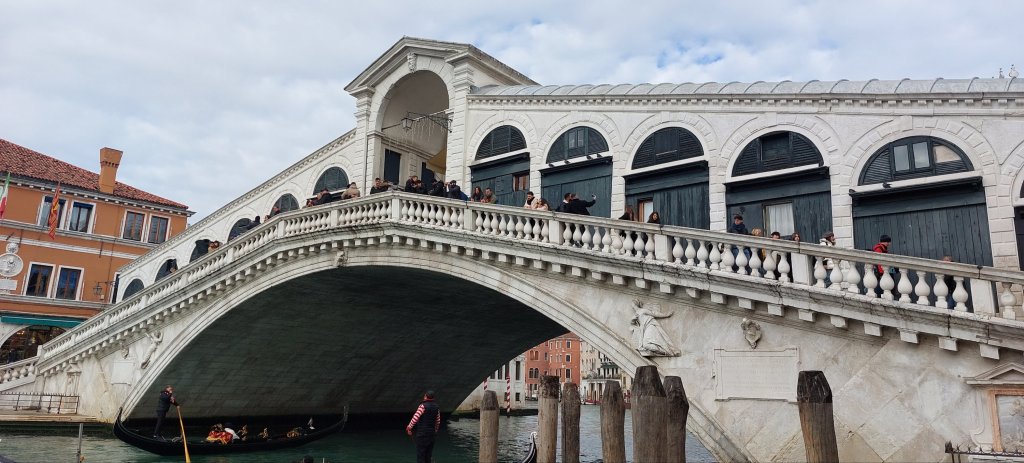
My first stop was the Rialto Bridge. This is the oldest of the 4 bridges crossing the Grand Canal and the first wooden floating bridge was built in 1173, but as the Rialto market on the eastern bank became more important, a more stable structure was needed and a wooden bridge was built in 1255. During the 15th century, shops were built along the sides of the bridge, and the rent from these shops helped to pay for its maintenance, although evidently not enough as it collapsed on more than 1 occasion. My favourite story is the collapse of 1444 when it collapsed under the weight of a crowd rushing to see a wedding (must have been very fancy!). The current stone bridge was built in 1591 and has the same design of covered ramps on each side of shops. You can tell you are in tourist land now, as trying to get a photo from the top of the bridge requires sharp elbows!
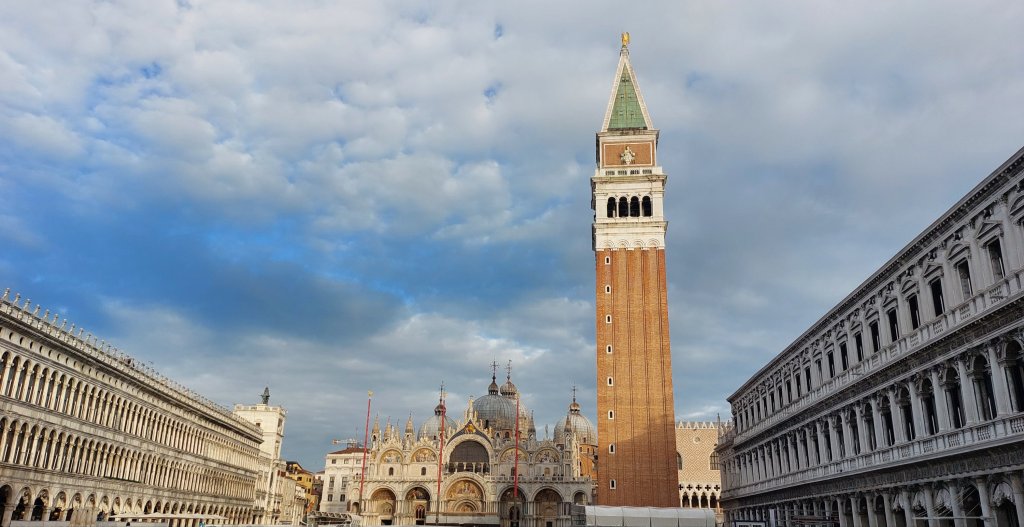
From here, it is only a short walk to St Mark’s Square, which really did live up to my expectations. It is HUGE. It is actually 2 squares, the main square in front of St Mark’s Basilica, and then an extension in the southeast corner out to the water. It really does feel like something straight out of a film set, probably because it often is…
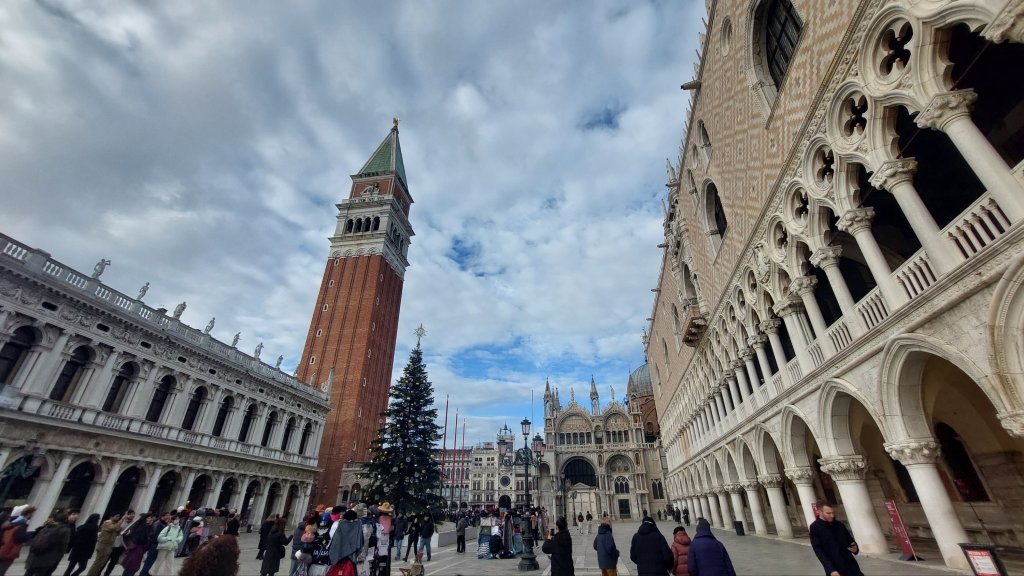
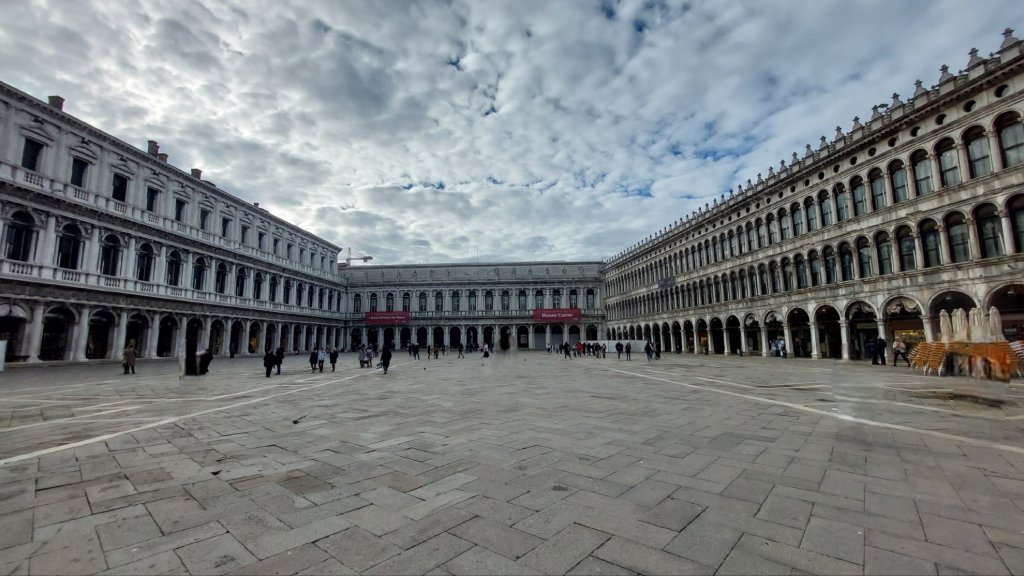
Now, I had read online that the queues for the Doge’s Palace and St Mark’s Basilica can be incredibly long. However, this being low season I decided to risk it and forgoe the expense of a skip-the-line tour/ticket and was just prepared to wait. Well, having found the correct entrance, I walked through the queing area and was straight in. Hurrah. So, the Doges were the supreme authority of the Republic of Venice and were both head of state and head of Venetian oligarchy. The Doges were elected for life through an incredibly complex system of voting whereby originally 11 (and later 41) electors were chosen from the full assembly, and each elector wrote a candidate’s name on a voting slip. All names were discussed and analyzed, and every elector gave their reasons for considering or rejecting that name. Finally, they proceeded to a vote whereby a ballotta (small ball) was placed into either a “yes” or “no” urn. None of this first passed the post business. The Doge had a mainly ceremonial role. Power was mainly shared between an incredibly complicated number of bodies and individuals (which I am not sure I quite understand – more reading is needed!).

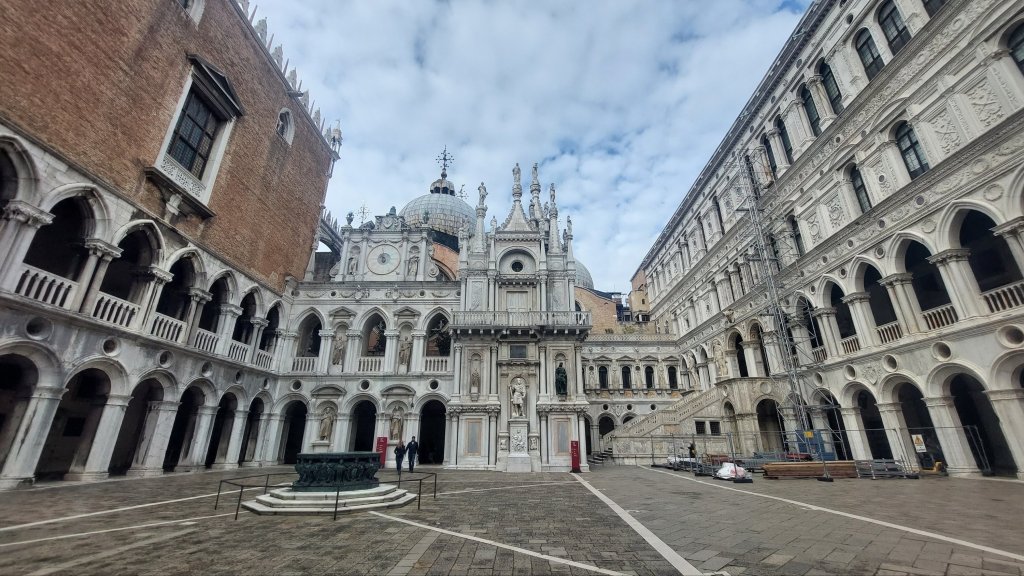
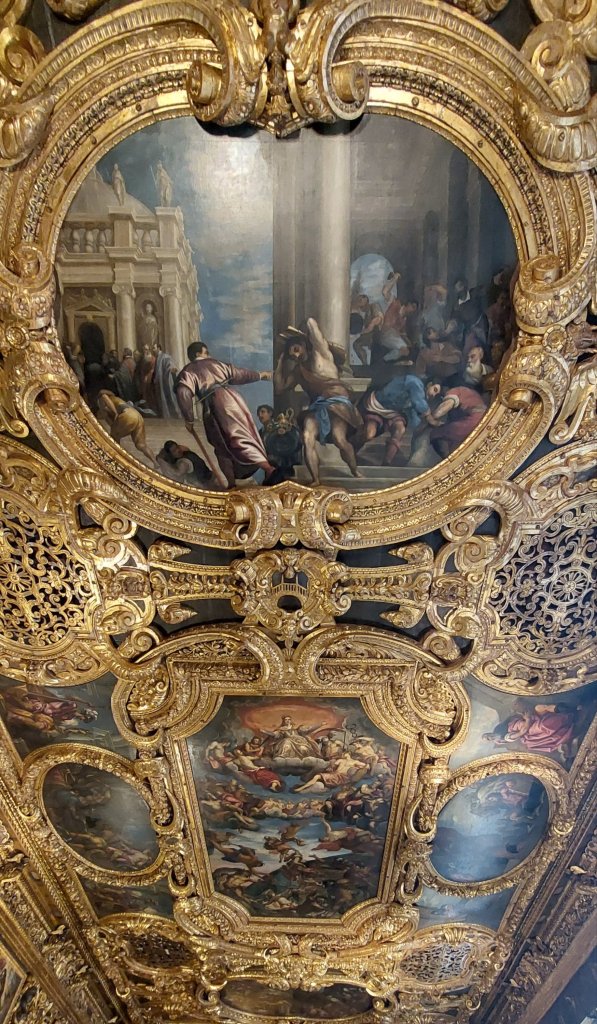
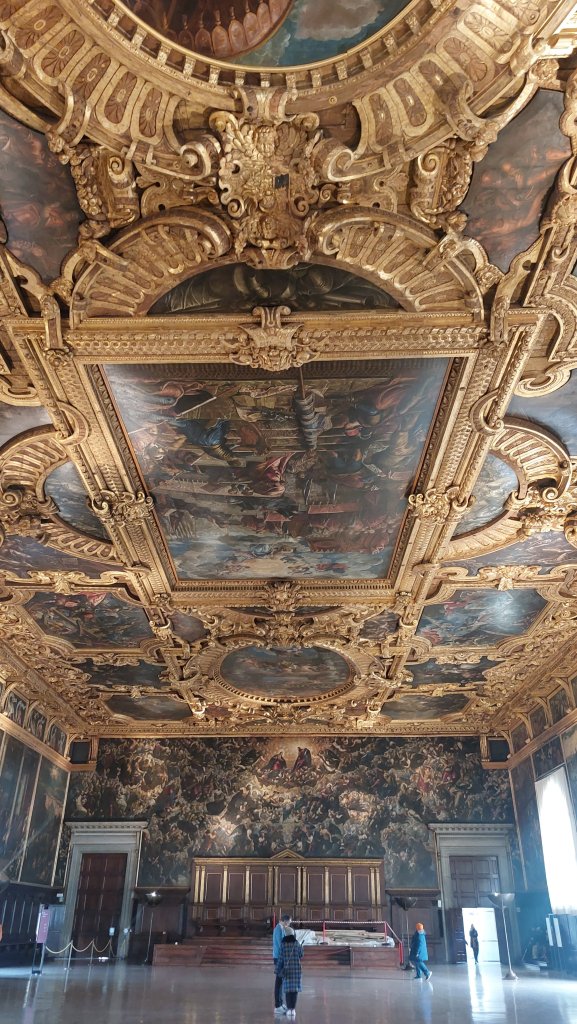
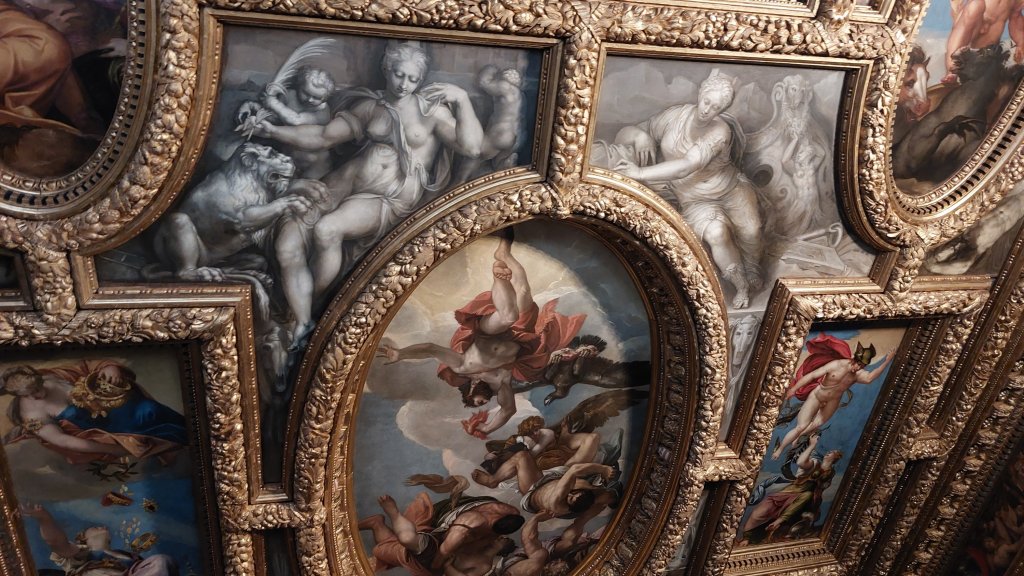
The Doge’s palace was built in 1340 and extended and modified in the following centuries. It contains both the Doge’s appartment as well as the administrative rooms. The administrative rooms (which have been restored) are awe-inspiring, and one can get quite overwhelmed by the sheer overdecorated nature of particularly the ceilings:
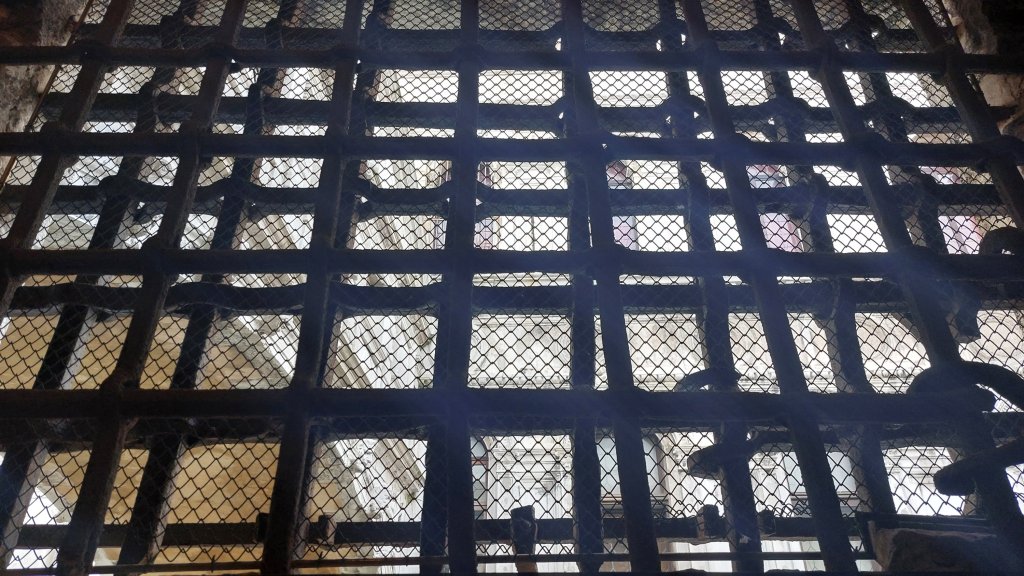
However, perhaps my favourite part of the tour was crossing the Bridge of Sighs into the prison building (I always enjoy a prison visit on holiday). The prison has 3 floors, and you descend down below the line of the water, and as you do, it gets colder and colder. How Giacomo Casanova managed to escape (the only person who ever did), I know not – apparently, he made a hole in the ceiling and lowered himself down which didn’t seem possible from my visit today (maybe a re-read will help!)


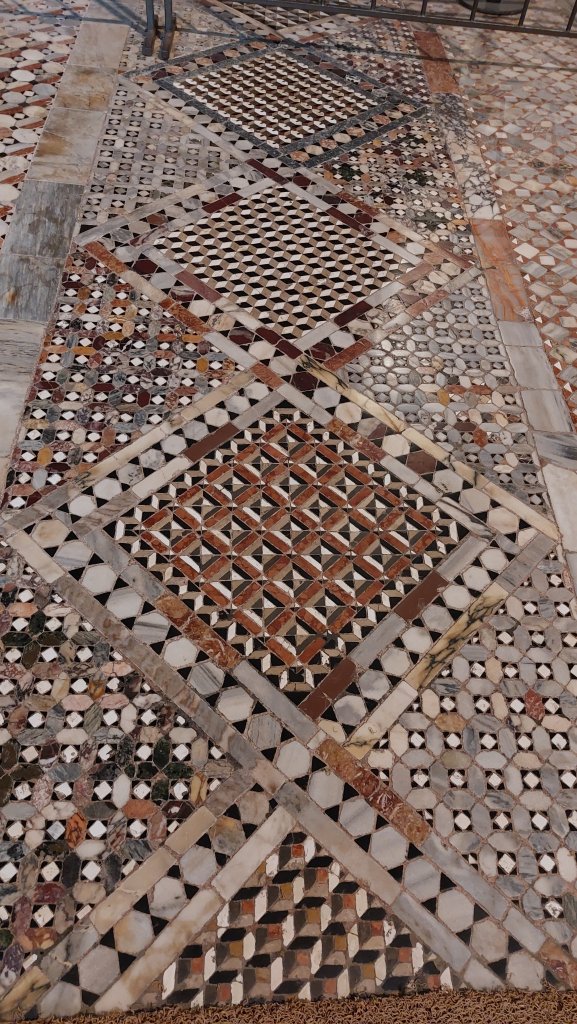
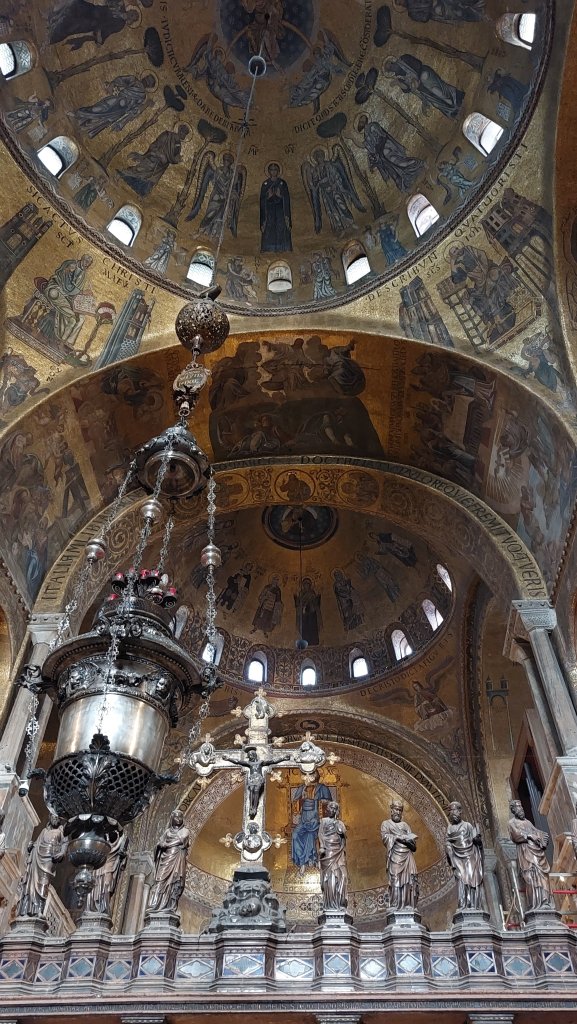
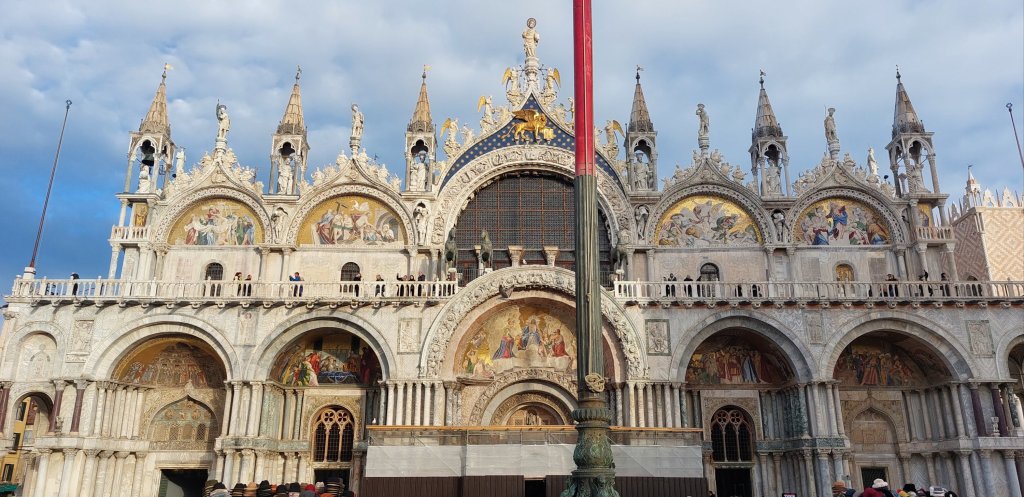
Continuing my excellent success in not waiting to enter key tourist sites, I also walked straight into St Mark’s Basilica. According to my guidebook, this 9th century “profusion of domes and over 8,000 square metres of luminous mosacis, Venice’s cathedral is unforgettable.” Now I have to be honest, having seen many (many) Byzantine churches on this trip I was a little meh about the interior (sorry). There are some very nice mosaics, but I have seen better, and they are not lit in a way to make the most of them. Maybe I needed to invest in a tour, and if we have time, I might try again tomorrow (and drag Maurane with me). What I was most impressed by was the floor (see below) made of marble from Syria, Egypt, and Palastine. The exterior is also fabulous:

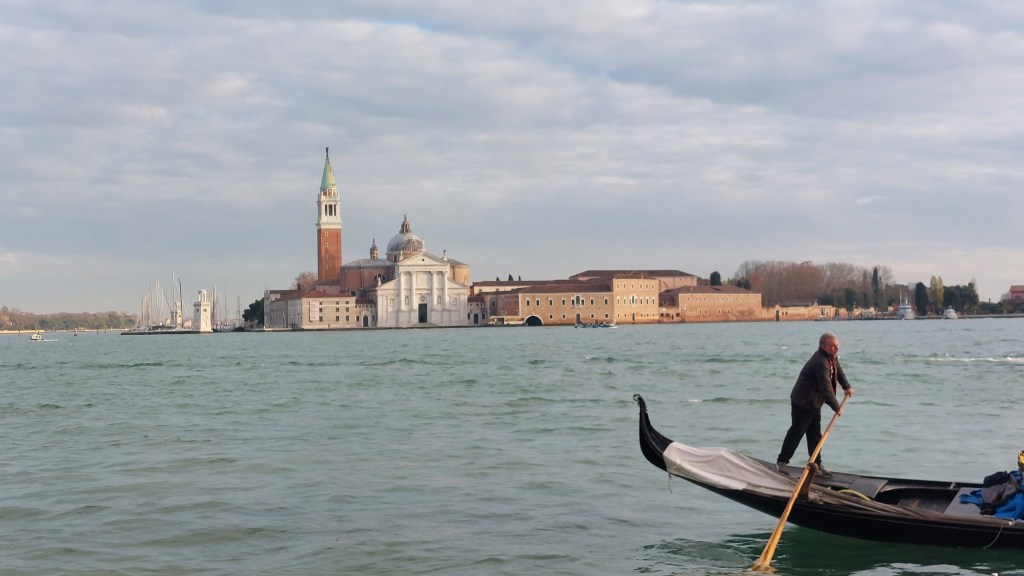
Finally, I took some photos overlooking the water – you will note the gondolas. Maurane and I had discussed doing this, but I really think that €90 for 30 minutes is too much and have instead been researching vapetto (water bus) options…

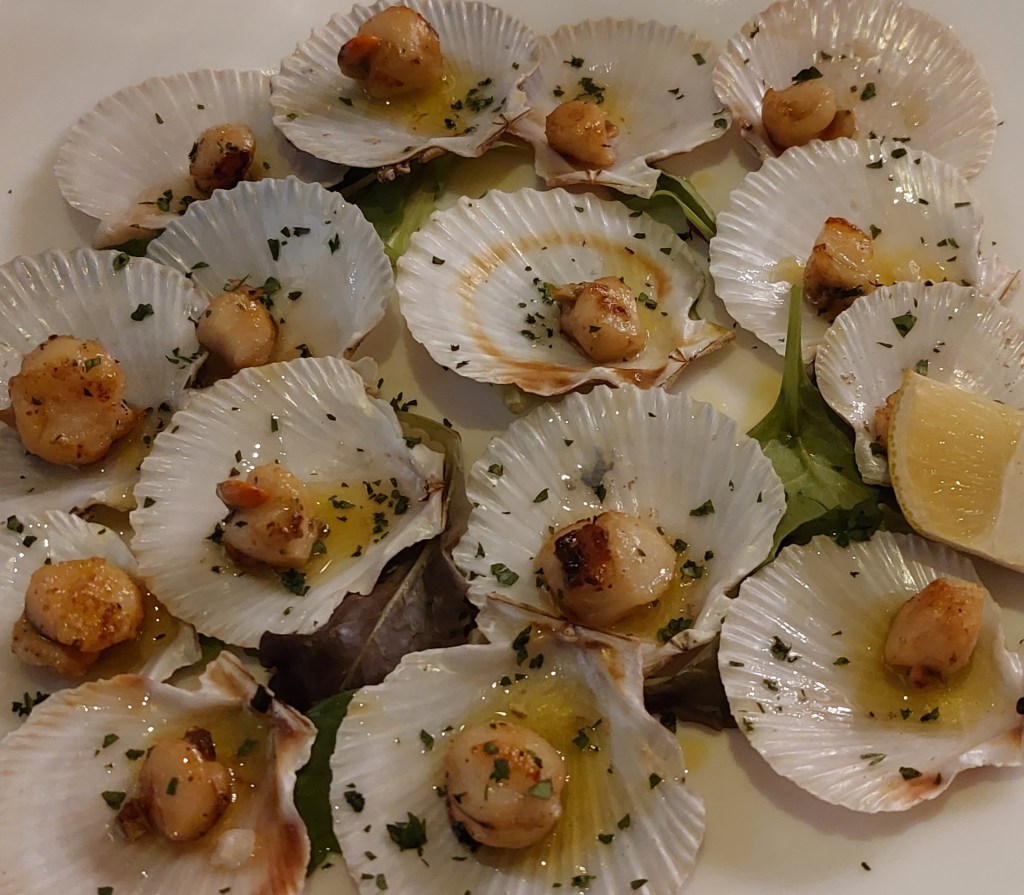
By now, I was thoroughly ready for a meal. My absolute favourite Italian pasta dish is Spaghetti Vongole, and this being a Venetian dish, I was very excited to have one. It was delicious – I also had the smallest grilled scallops I have ever eaten and a glass of local proescco. I really do know how to backpack!
Having got a little lost on route back to the hotel, I have finally made it and have showered, written this, and am now waiting to hear that Maurane has landed and is on route. Tomorrow, we have an action-packed day planned – and no one needs panic. Tomorrow, we shal be doing the ubiquitous walking tour!
5 responses to “Stage 4.1 – Venice (Part 1)”
-
I think you should go for the gondola, I’ll even send you the €. Sing your heads off…. Just one Cornetto!!!!
LikeLike


 Travels with Kathryn
Leave a reply to Anonymous Cancel reply