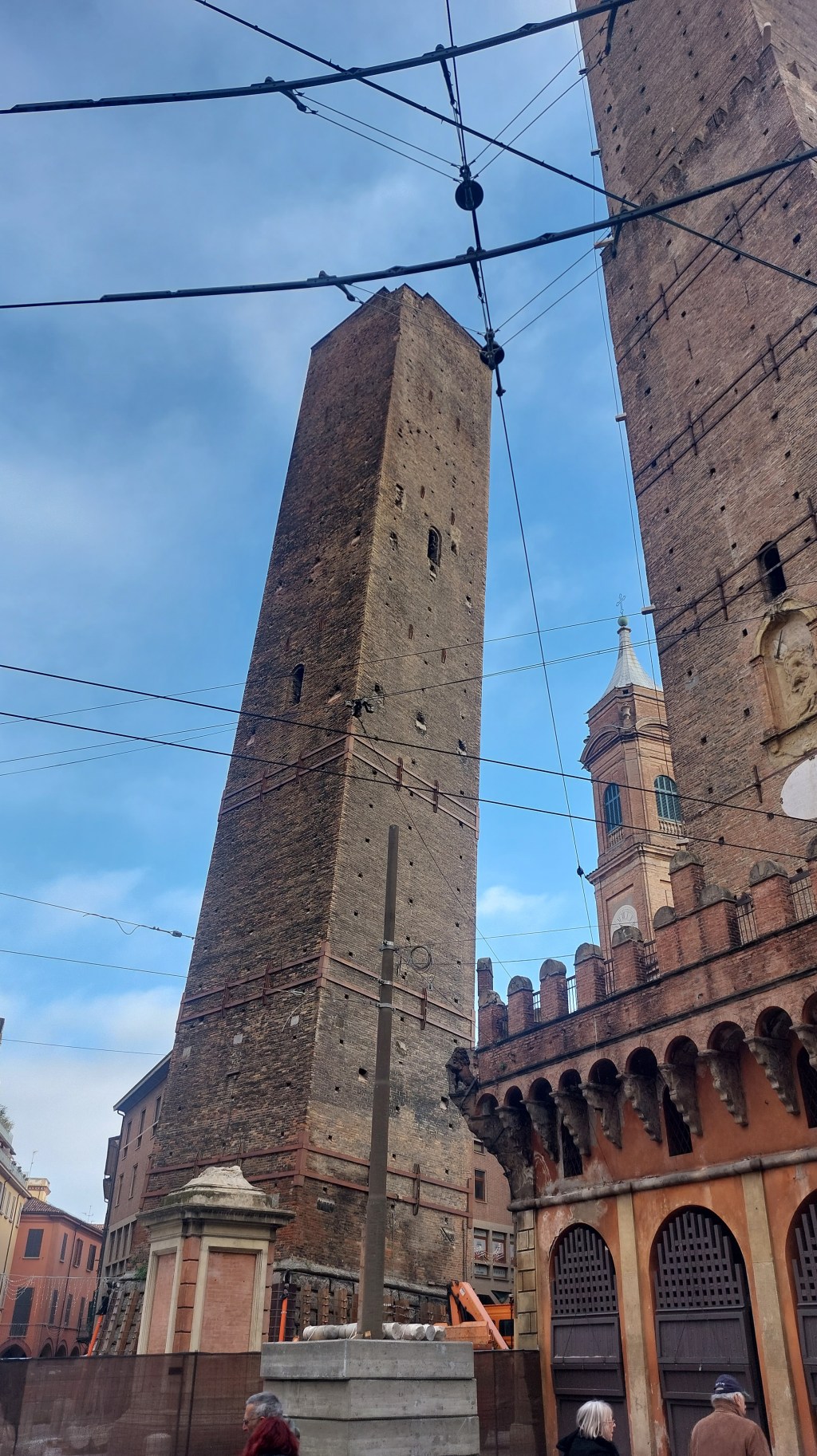
I shall open this post with a learning point (potentiallly for us all) do not visit popular Italian cities during bank holiday weekends/in December. Bologna (and the train on route there) was probably busier than Verona if you can believe it? Maybe it is because I have been travelling for a while in less “known” destinations or maybe it was leaving the crowds of London to live in Geneva has weakened my tolerance, but I am finding all these people a little challenging. In my defence, it is insanely busy, and Italian tourists walk slowly than a slow nonna on go-slow mode… I am hoping it was because of the bank holiday and for my next destinations during the week, all will be back to normal. Fingers crossed!
Yesterday, I waved off Maurane into the mists of Verona and headed to the train journey for my short journey to Bologna. Not only was it very busy, but my carriage was not there – I boarded and sat down at a random seat. This is not the done thing, as shortly after we departed a conductor came down asking everyone if they were sitting in their assigned seats and if we said no, we were found and assigned (for me just a few rows back) a seat. So, whilst a little irritating London Northwestern should look to this as opposed to my last journey with them when an 8 carriage train was reduced to 4 carriages and those of that managed to squeeze on just stood for the whole journey…
I arrived in Bologna to blue skies and bright sunshine. I dropped my bags and went off to find the city centre/fight through crowds to find the meeting point for my walking tour. It just happened to be at the leaning tower(s) of Bologna:
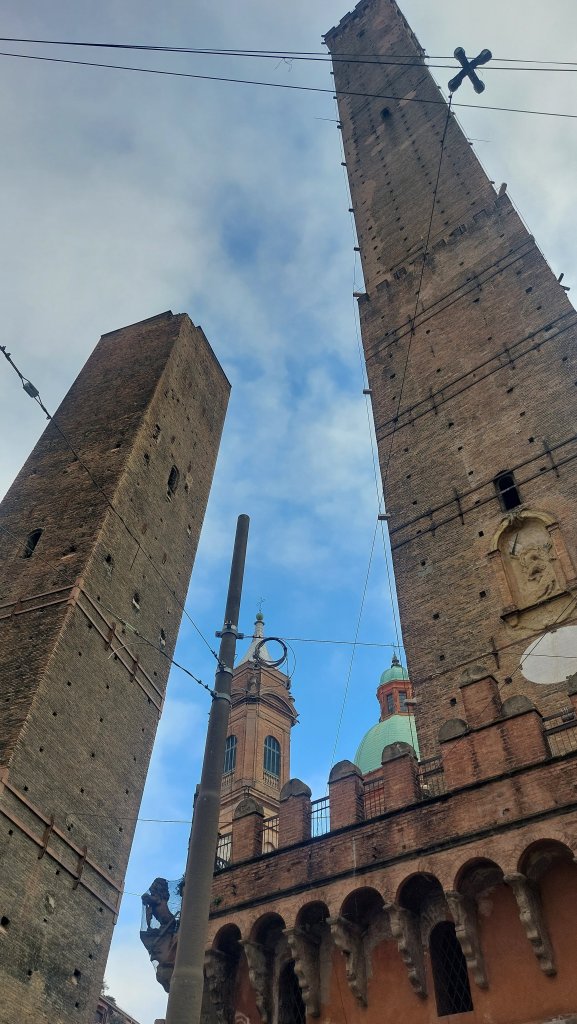

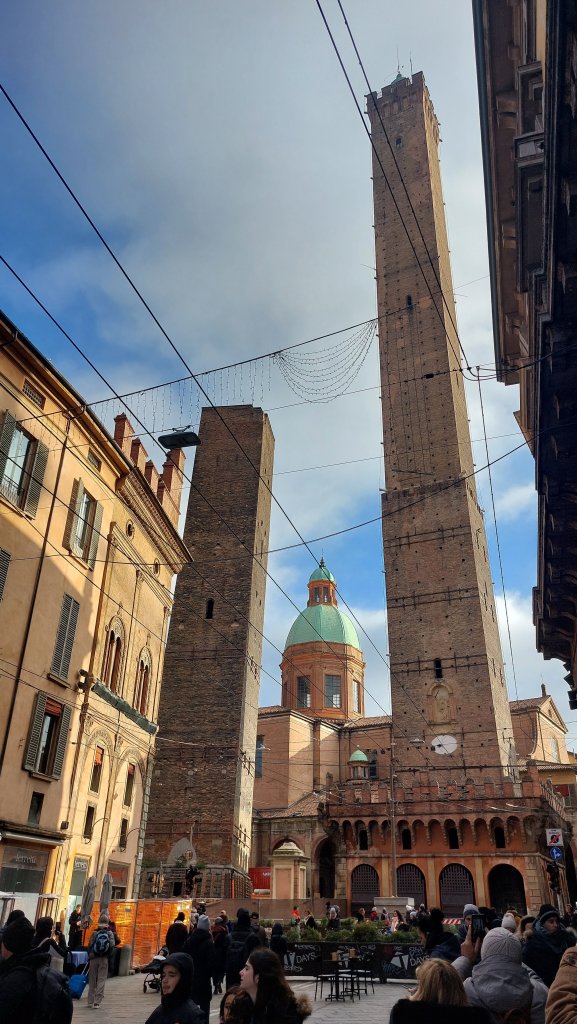
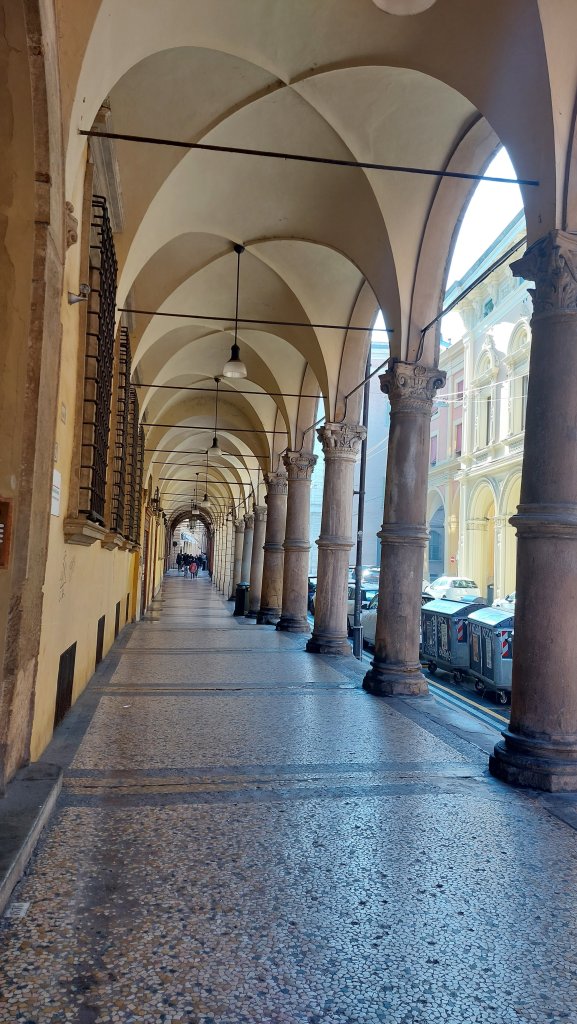
To be more accurate, these are The Two Towers: Garisenda and Asinelli and are the best known symbols of Bologna. They have featured in news recently as particularly the one tower (the shorter one at 47m) is at an unsafe lean and works are currently underway to try and prevent it falling over (as it would take with it the other taller tower, and a number of city centre medieval buildings!). There are towers like this all over Bologna. They were mainly built by private families, and although a few were tower homes, the majority are not. Simply put, they were an example of “look at me and all my money, and my tower is bigger than your tower” one upmanship! Bless.
Now, the reason for the lean. I was surprised to learn that the foundations of these towers are only 5m deep, and what this means is that the builders were unaware that Bologna has an underground network of rivers (more on water later). Apparently, what is happening is that the ground underneath the foundations is becoming unstable, and that is what is partly what is causing the lean.
I shall begin (unlike today’s tour guide who did not, and instead jumped all over the place and time, making him incredibly hard to follow) with the history of Bologna. The city was originally known as Felsina and was founded around the 6th century BC, but this city was conquered by the Romans in the 1st century and given the name Bolonia. After the fall of the Roman Empire, the city was fought over by various kings and the authority of the pope for centuries. However, during a period of relative peace in the 9/10th century, the city began to expand and became one of the main commercial trade centres in Italy, also around this time, the univerity was founded (considered the world’s oldest university in continuous operation – more on this below) and by 12th century Bologna was a thriving commercial and artisanal centre of 10,000 (which to give context was substantially larger than London at the time). However, the political instability and a number of plagues weakened Bologna, so by the 16th century, the city was in serious decline. The economy also weakened as global centres of trade shifted towards the atlantic, the traditional silk industry was in a critical state and the university was losing students (who used to come from all over Europe) due to the illiberal attitudes of the church towards culture (particularly after the trial of Galileo). This was all pretty bad for Bologna, but it means that the Renaissance failed to really touch the architecture of the city, leaving us with the distinctive towers and porticos for which the city is known. In 1860 Bologna joined the Kingdom of Italy which finally brought investment and some growth to the city, however, this was paused during the wars and during WW2 the city was severly bombed (43% of all buildings in the city were destroyed) and has had to be substantially rebuilt (although the towers were generally spared to use for targeting).
Bologna is a city of water – you just can not see any of it. In addition to the underground rivers, starting in the 12th century, 60km of canalas were dug to connect the city with the nearby rivers and also to drive water mills, e.g., to grind flour and later to industrialise the silk making process. In the 1960s/70s aal these (as well as other ancient things such as walls) were covered by roads, so you see nothing today. Also covered below the city is evidence of its industrial past, and apparently, there are large spaces that were used as bomb shelters during WW2. It used to be an option to tour this underground labyrinth, but after the 2012 earthquake, even what was opened has been re-sealed, and no one is sure if it will ever be an option again.
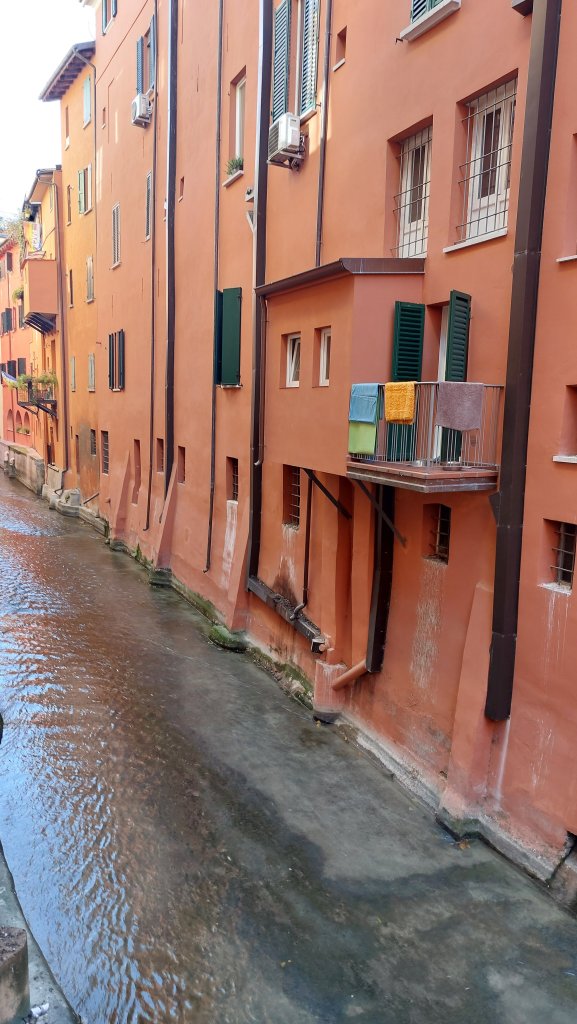
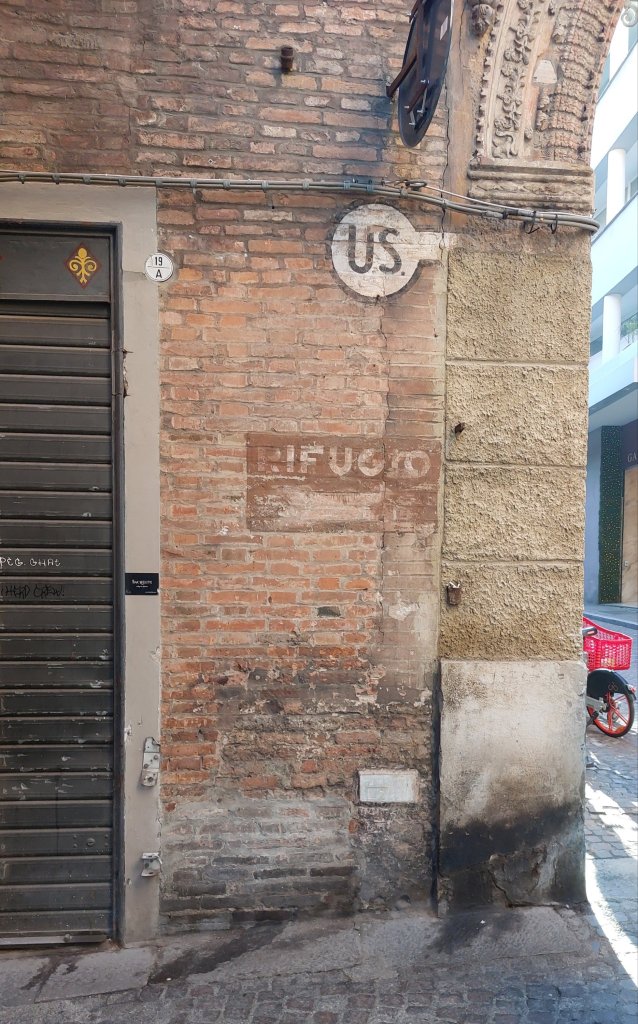
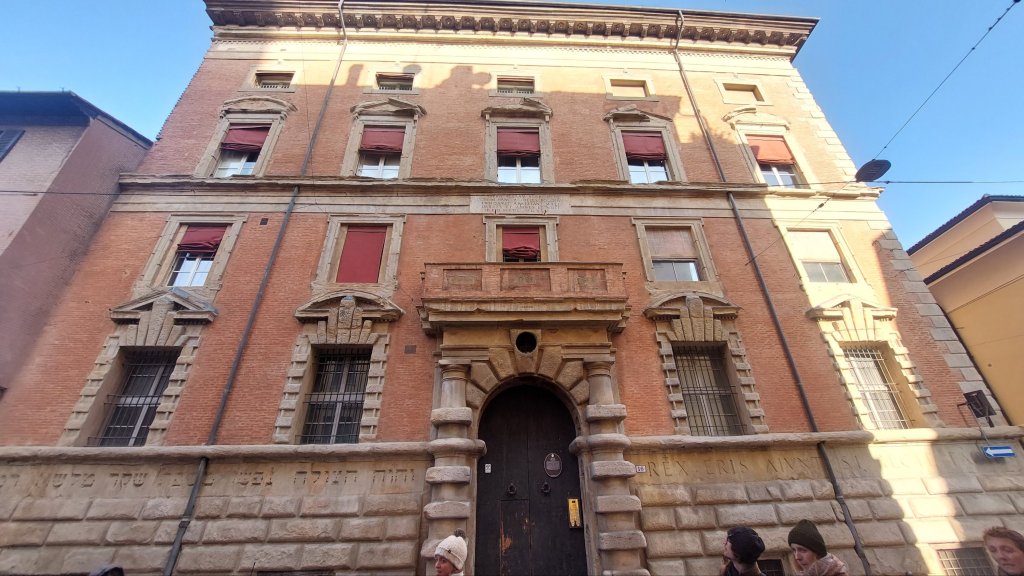
On leaving the towers, we headed into the Jewish ghetto. This was first created around 1555 following a papal bull issued by Pope Paul IV to establish a ghetto for the “protection” of the Jewish community. This was complete rubbish, particularly in Bologna, where the Jews were fully integrated and accepted into city life. However, over time, the Jewish began to be confined in the ghetto and additional rules brought in (including the requirement to wear a yellow “shaman” or veil) and various expulsions. Nothwithstanding this, some Jews remained and by 1938 the ghetto was home to 752 Jews – 84 were deported and killed in Auschwitz, however the rest were saved due to the work of one man who arranged for Swiss passports to be issued, found permits for travel and hid the Jews that remained in the underground complex (sometimes for years).
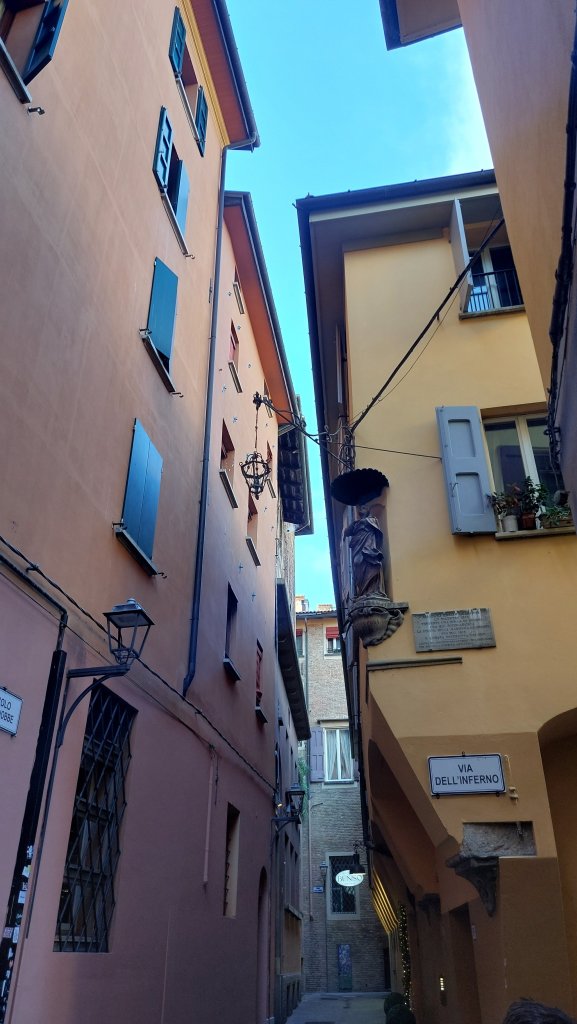
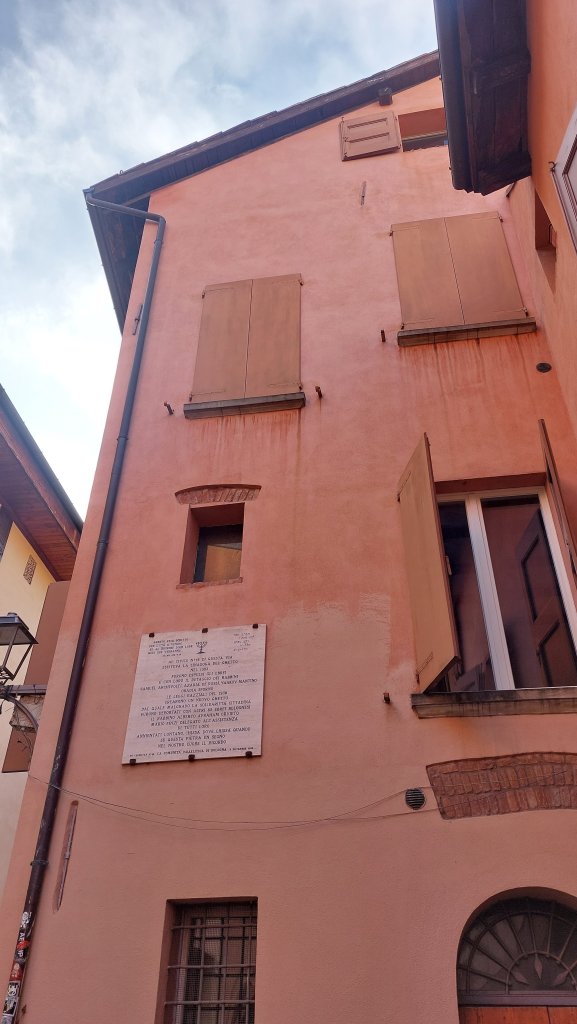
A few other interesting sites from the tour:
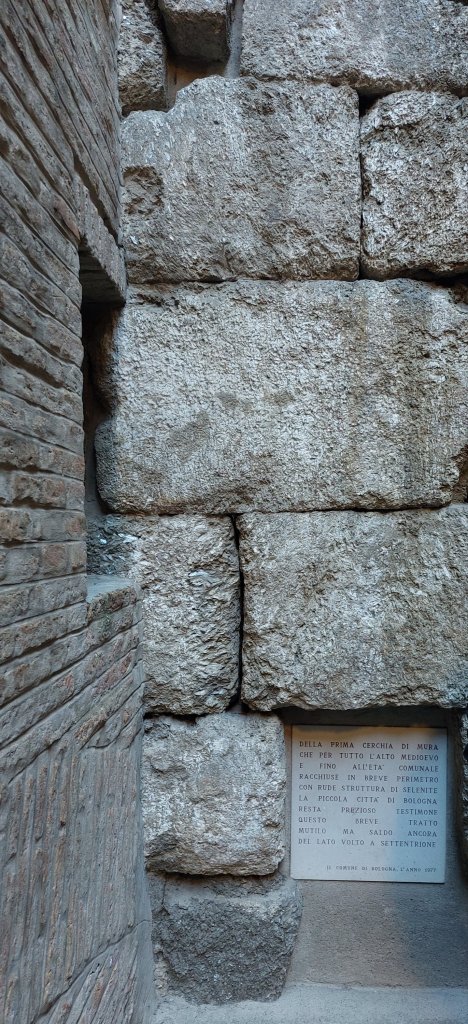

Bologna University was founded in 1088 – it originated as a centre for the study of medieval Roman law where alumni would set themselves up as professors and charge students to teach them, i.e. there were no university building(s) or examination process, just a piece of paper after a certain amount of studying. Perhaps if that was the university I attended, I would have stood in better sted later on… Later, various buildings were built, and university teaching formalised and exams created as well as a school of anatomy (which became a renowned school of medicine).
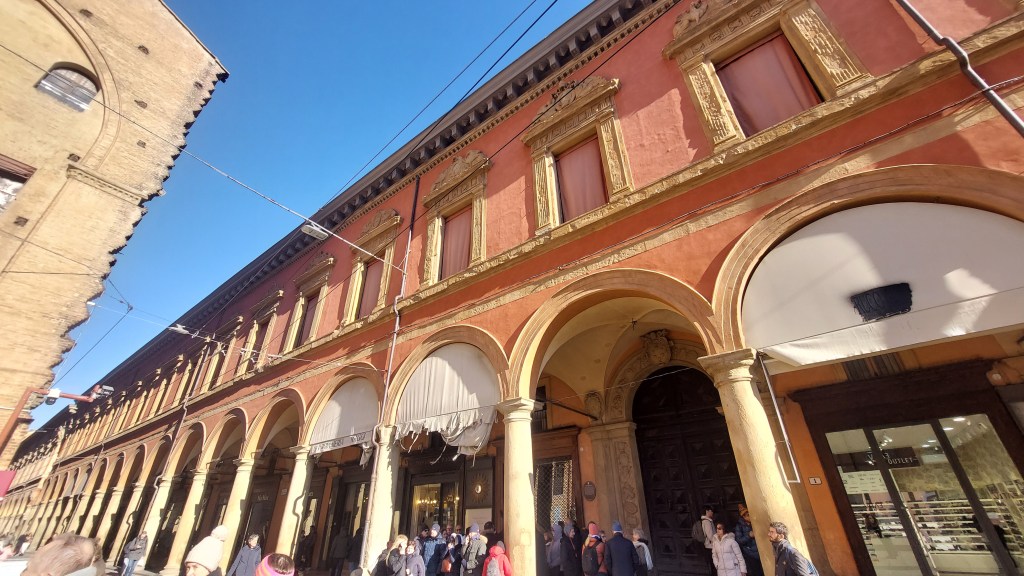
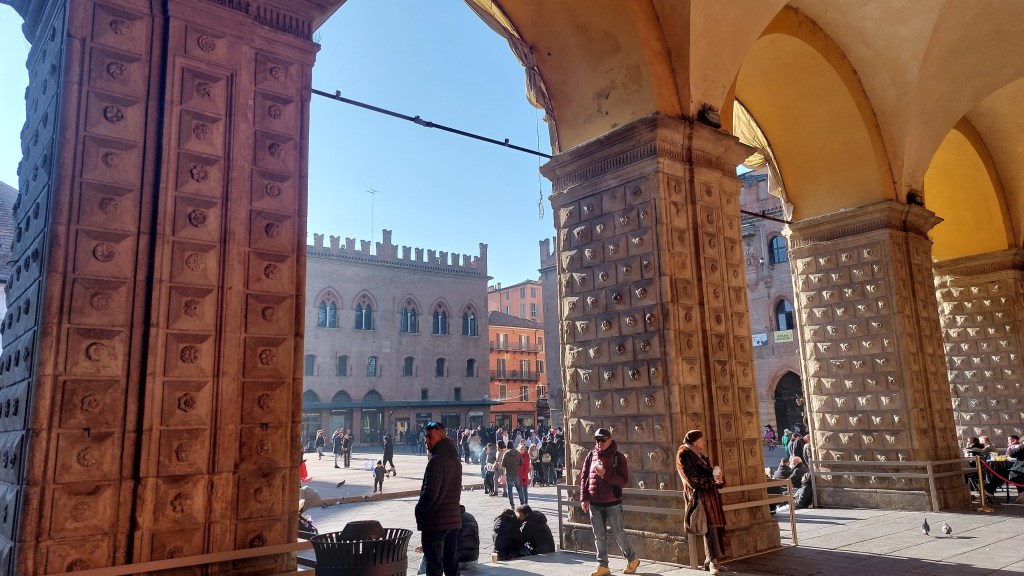
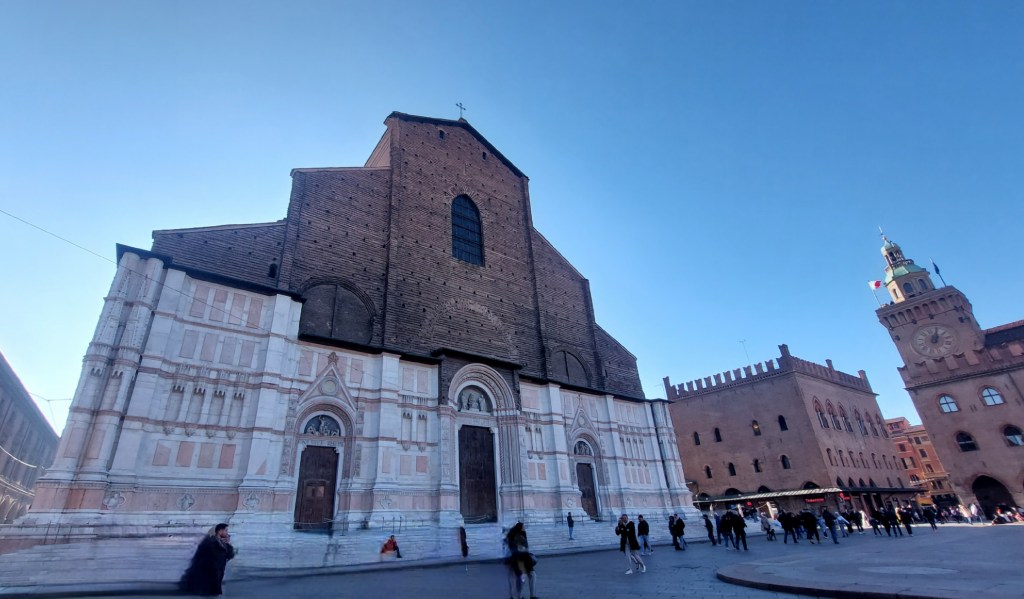
The main square of Bologna is the Piazza Maggiore, which was SO full of people I didn’t quite take as many photos as I should, but you get the idea:

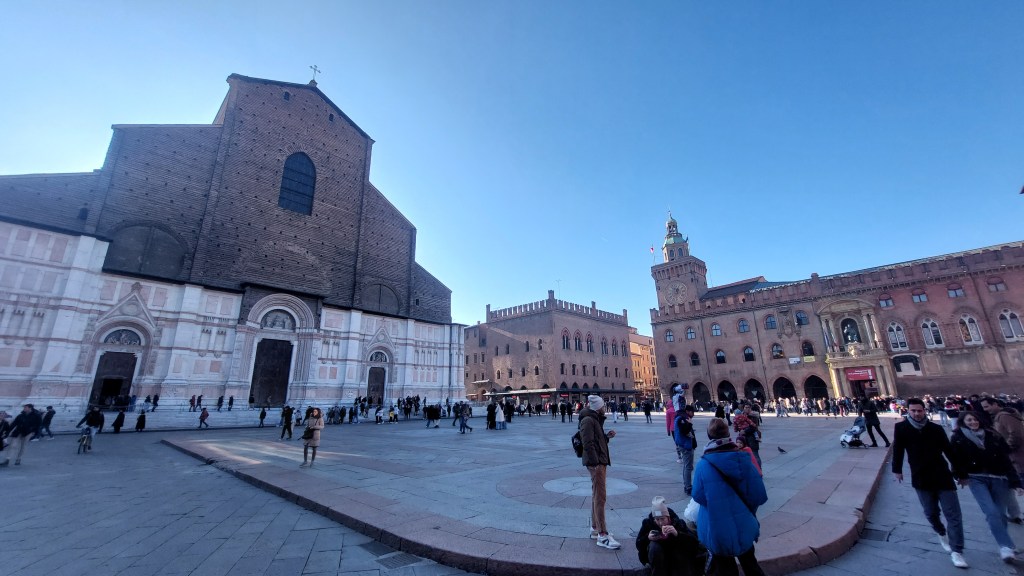
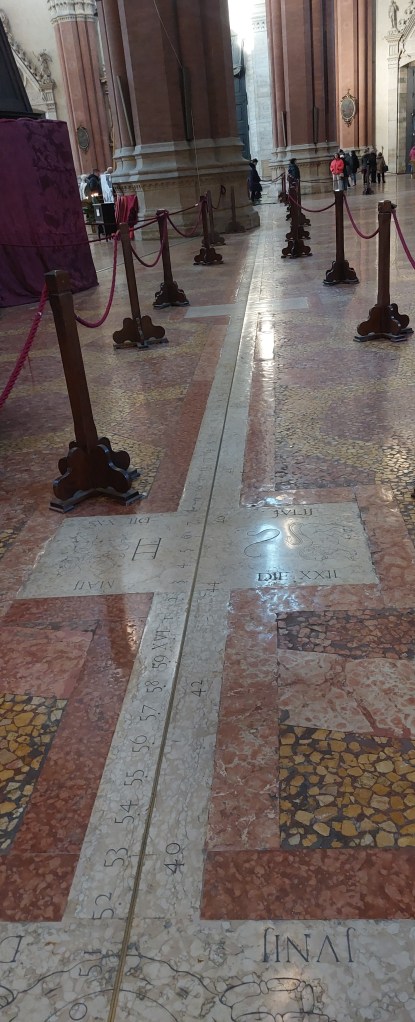
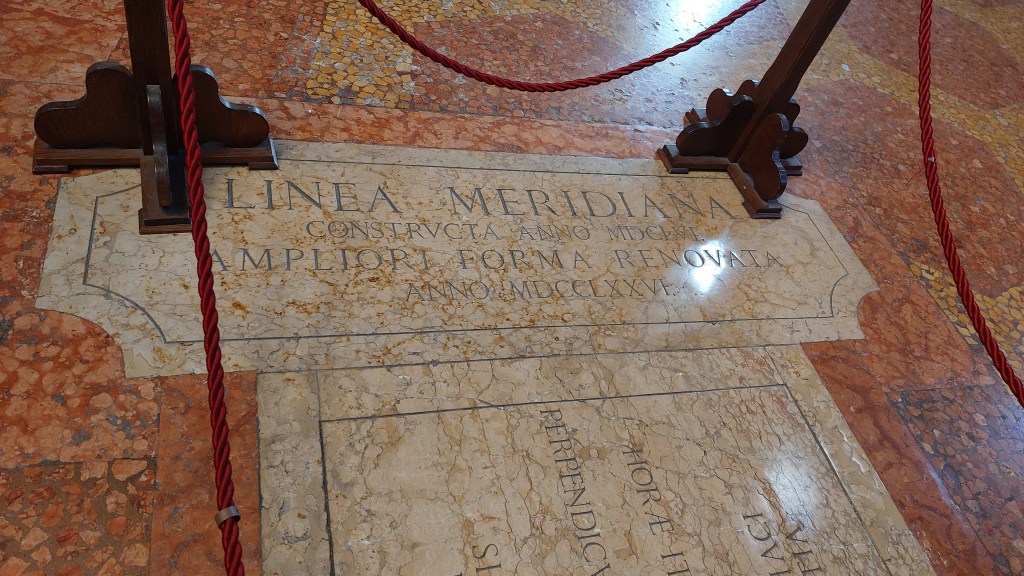
The half-finished church you can see (and below) is St Peter’s Basilica. Construction began in 1390, but its main facade has never actually been finished – originally, it was not intended to be a church and was only consecrated in 1954. From the outside it is unimpressive other than being HUGE (it was intended to be larger than St Peter’s in Rome, but according to legend Pope Pius IV blocked its construction) as well as its state of unfinishedness, but inside is a a 67.27m meridian line (one of the longest in the world) calculated and designed by Giovanni Domenico Cassini who was teaching astronomy at the University. It does not indicate time but is an astronomical instrument for the accurate measurement of sunlight. So, light comes in and projects an ellipitcal image at noon on the line, which is in a different position every day, allowing calculation of equinoxes, solstices, and the year itself. Cassini also used the size of the projected sun to attempt to verify the laws of planetary motion.
Our final stop on the tour (by which time I was losing will a little – the guide being almost incoherent by this stage) was the central market. It made me wish I was staying somewhere with a kitchen or perhaps that I had travelled with a portable stove as the pasta looked amazing as I did so many other things. In retrospect, I also should have purchased a picnic there as when the tour finished at 1.30 pm I went in search of a restaurant. I was turned away from around 10-15 restaurants. Many close at 3pm and were already full (too many people) and in ever circling desperation I ended up eating outside a vegetarian restaurant which meant I did not get to have the famous tagliatelle bolognaise, but I did get to have tortellini which is traditional (even if the filling was not).
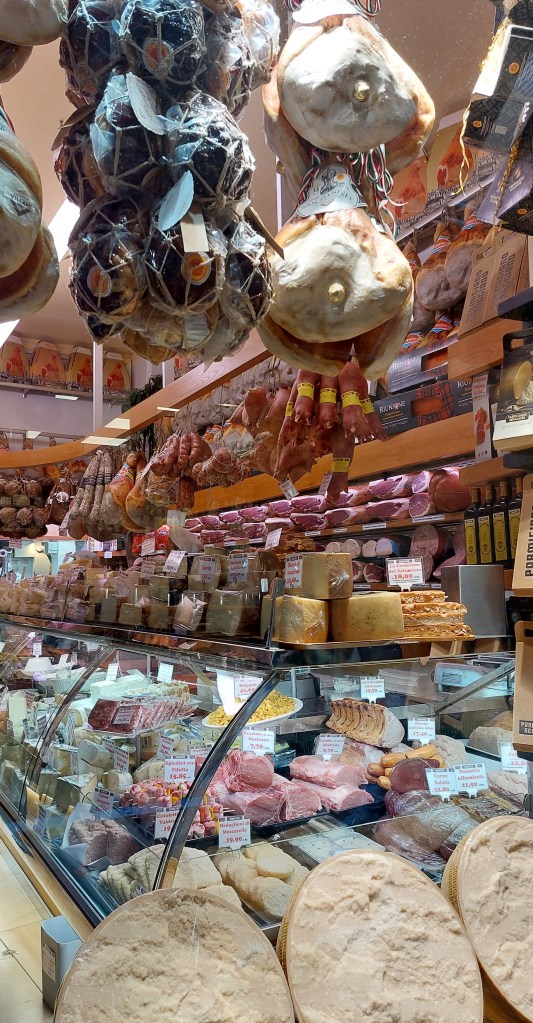
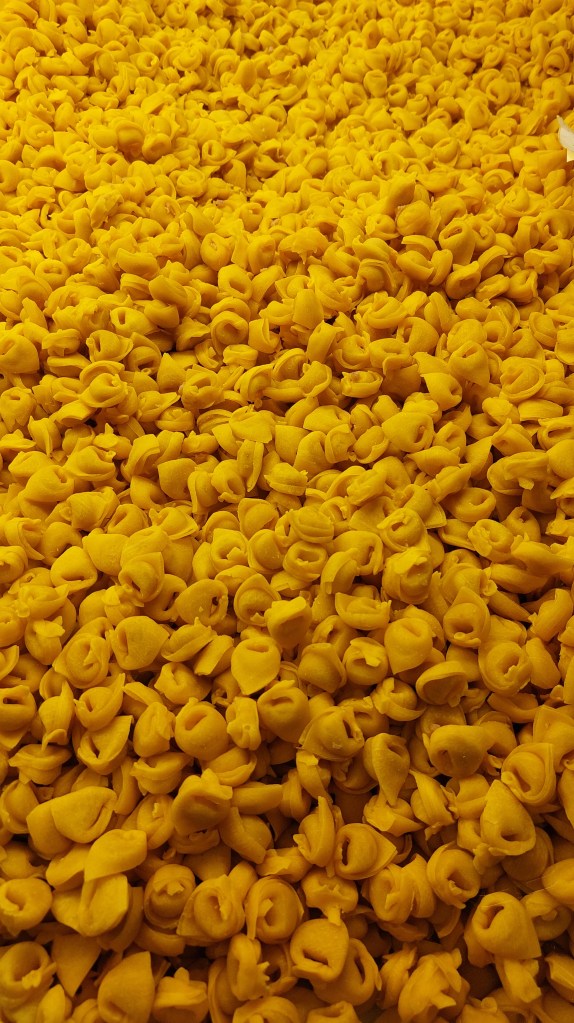
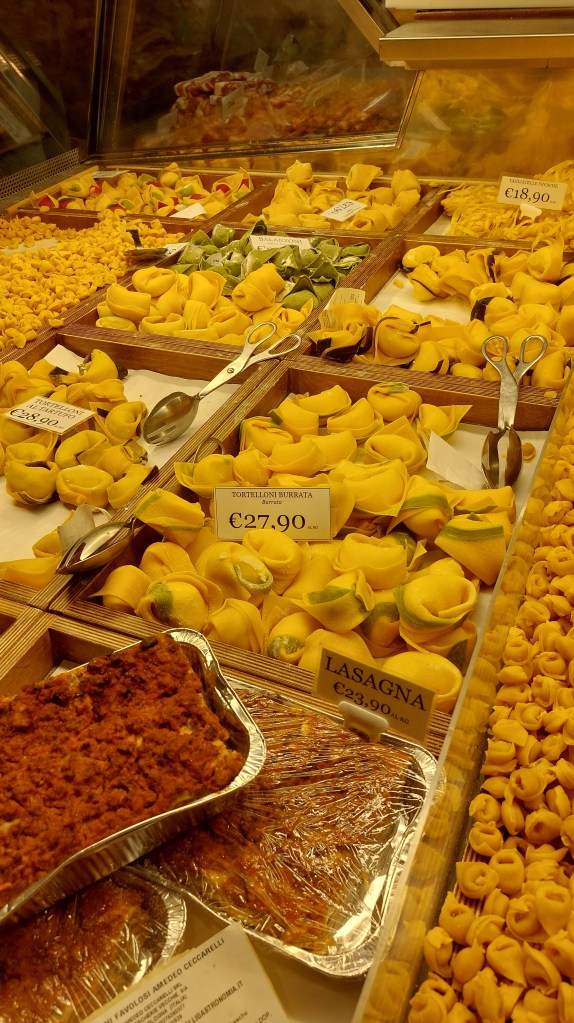
I did return for some picnic supplies (as I have a travel day tomorrow), including some delightful mortadelle, which has had a protected recipesince 1661.
I headed back to the hotel to check in, do laundry (being down to my last pair of socks!), and eat some of my provisions. I also enjoyed the fact that this is a slightly nicer hotel than the last couple of nights, so I had a bath, wore their slippers, and had an early night in my king-size bed. However, I was rudely awoken at 4 am this morning by the fire alarm – just as I had got downstairs (dressed in my coat and boots over my pjs), the alarm stopped. It then took me 3 attempts at entering my room and returning to reception as I could not get the key to work. I was a wee bit grumpy.
I am writing this on route to Genoa. So, having navigated Bologna station (the high speed trains are in an underground section some 3 floors with much walking) my train was 20 minutes late which meant on arrival into Milan I had missed my connection. However, I continue to be impressed by Trenitalia – whilst yes, they were late, people were waiting on the platform to direct us to a “quick” help desk, I waited for 5 minutes before being issued a new ticket and seat reservation for a train 30 minutes later. You see? These things can be managed. Anyway, I shall be arriving in Genoa in around an hour, so I intend to sit back and enjoy the rest of my Bologna picnic.

 Travels with Kathryn
Leave a comment