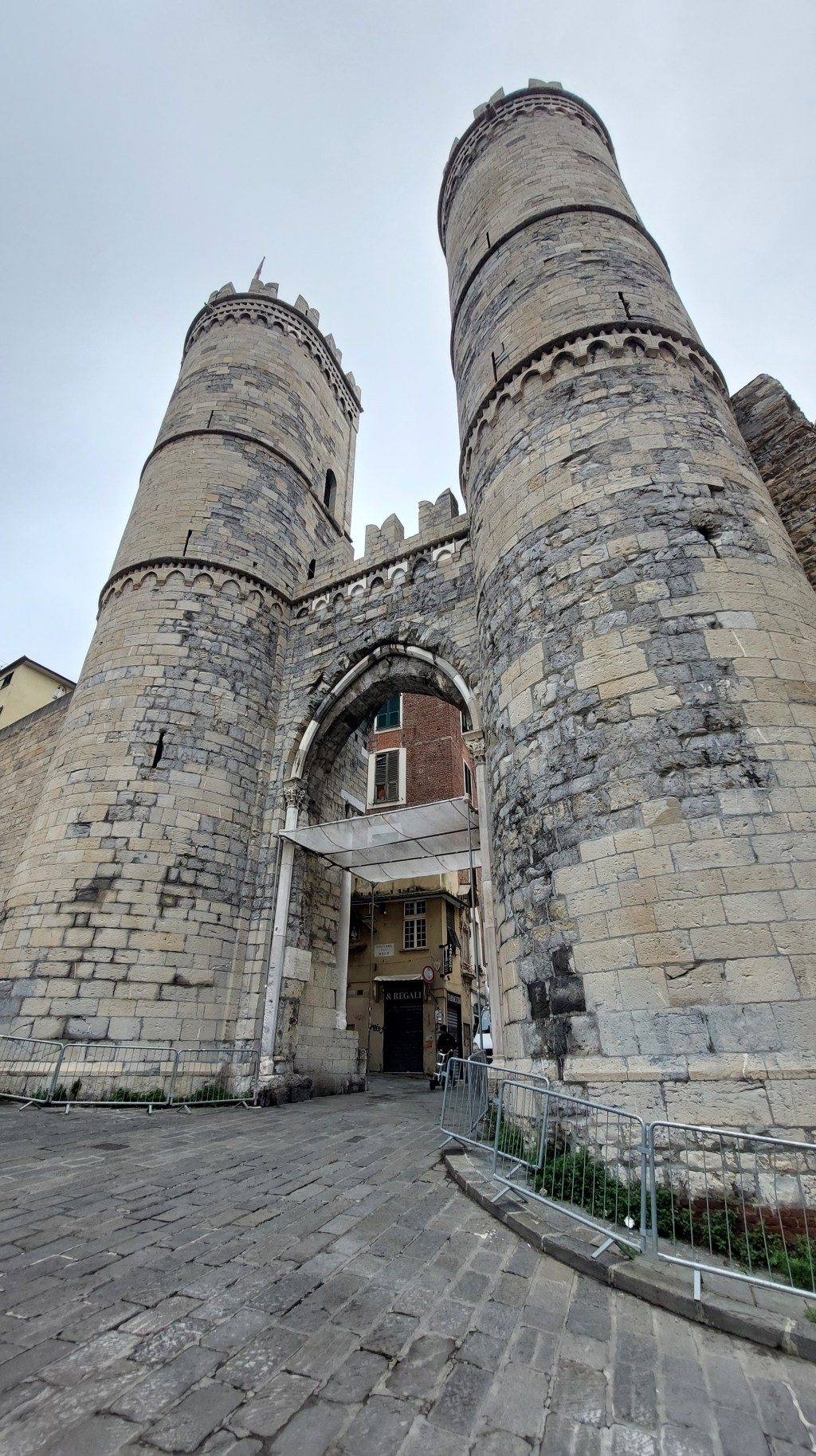
Having arrived in Genoa yesterday, it was easy enough to cross the road to check in to my hotel where I have evidently been given the disabled room – but I am not complaining as this means the room is huge! I started with what I thought was going to be a quick and easy walk to the water, but this was not to be, as there is a flyover road blocking the way, and I ended up at the actual commercial port which is the biggest in Italy and the Mediterranean and the 12th busiest in the EU. Some backtracking later, and I made it to the water:
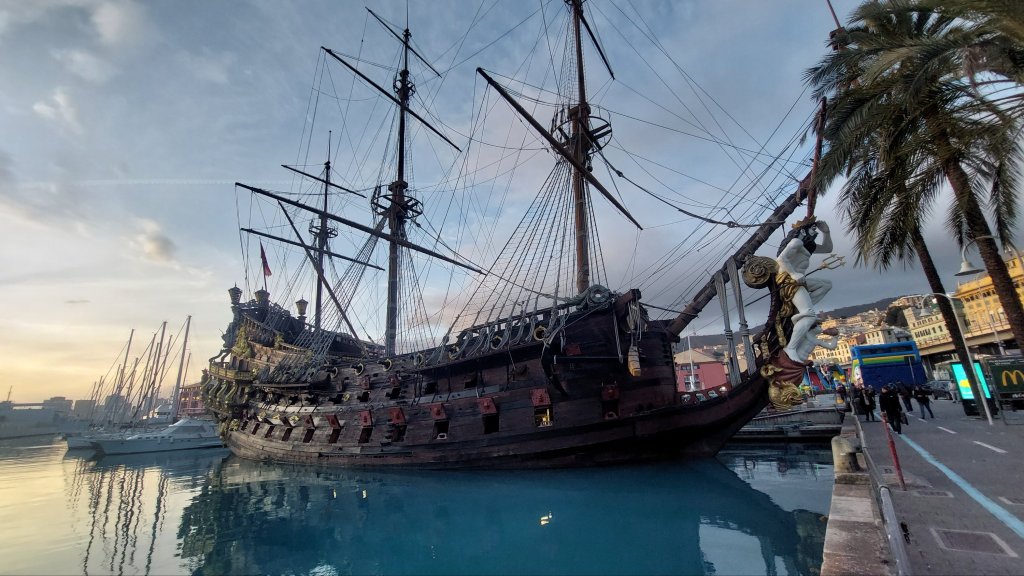
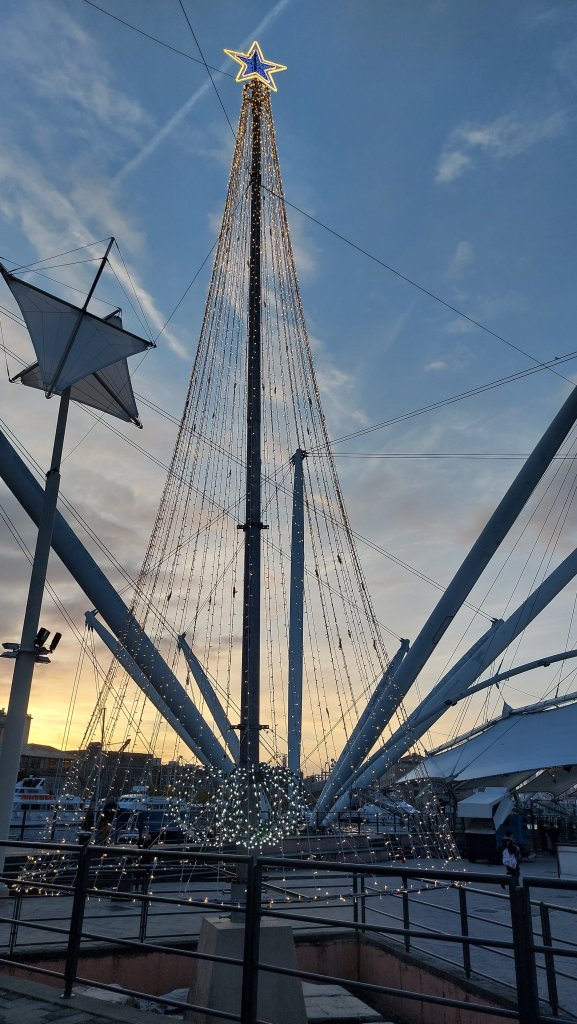
Genoa has been inhabited since around the 5th century BC so it is another “one of the oldest cities in the world” (I really need to backtrack and see how many of these I have visited on this trip). The city had an alliance with the Roman Empire, but after the fall of the Empire, the city passed to the Lombards and developed into the leading commercial centre in the Mediterranean. Genova continued to expand as an independent republic and martitime power, as did its main rival, the Venetian Republic. In the 15th century, two of the earliest banks in the worlds were founded in Genoa to keep all of this money, the Bank of Saint George (which was the oldest state deposit bank in the world until its closure in 1805) and the Banca Carige. It was the Genoese bankers who provided the Habsburgs with credit and income. From the 17th century, the Genoese Republic began to decline – the city was bombarded by France, and a plague killed how of its population in 1656, and it lost all of its Mediterranean colonies by 1742. In 1745, the Republic of Genoa declared war on the Kingdom of Sardina, which would prove disastrous by being forced to surrender to the Austrian Empire. The direct intervention of Napoleon was the final act that led to the fall of the Genoese Republic in 1796, and it was handed over to the Kingdom of Sardina governed by the House of Savoy. In the 19th century, Genoa consolidated its role as a major seaport and steel and shipbuilding centre, which made it a key target for allied bombing during WW2. What you see today is a modern (and somewhat gritty) city still maintaining its maze of medevial streets, but with a modern port. There was also substantial investment in the city in 1992 (for the 500th anniversary of Christopher Columbus’ discovery of the Americas – more on this below), including widening streets, the new harbour area and aquarium.
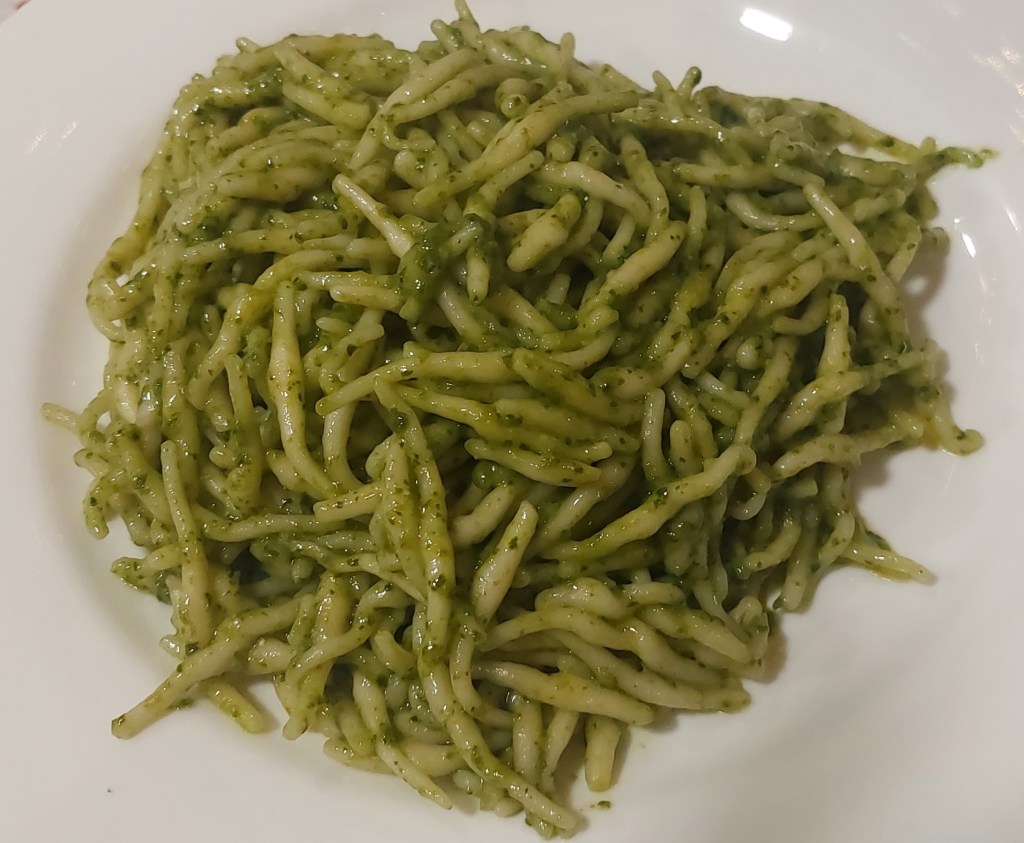
After failing to eat Bolognaise in Bologna, I was not making the same mistake when it came to Genoa’s most famous dish – Genoese pesto. The most traditional accompaniment to pesto is trofie pasta, and the pesto is made with basil from this region. Now I have eaten a lot of pesto in my time, but nothing quite like this, it tasted AMAZING, just to basilly and delicious.
On my evening wandering, I can see why Genoa gets some criticism. It is not a classical beautiful Italian city and there are some dodgy/grimy narrow streets, but I enjoyed the “realness” of it – it is an international port and the population reflects this and I walked back to my hotel via a street with a number of shops selling African waxed cotton which reminded me of home/trips to Walthamstow market. Sigh. On the subject of fabric, Genoa is credited with the invention of blue jeans – Genoa’s jean fabric was a fustian textile of meduim quality and reasonable cost, similar to cotton corduroy for which Genoa was famous and was used for work cloths. The Genoese navy equipped its sailors with jeans as they could be worn wet or dry.
I returned to my hotel and slept very well (no middle of the night fire alarms) and set off this morning on my self-guided walking. My reasons for departing from my usual free walking tour are: (i) the only tour on offer in Genoa on weekdays is 4 hours long and is run by a hostel so I was not sure of the quality; (ii) I was a little burnt by my Bologna walking tour experience which was not very good and it was just too crowded; and (iii) having booked so many hotels on Booking.com I had a number of “experience” credits so I was able to get a “paid” tour for free. I had therefore downloaded a tour with GPS tracking so it (most of the time) walked with me and talked as it went along.
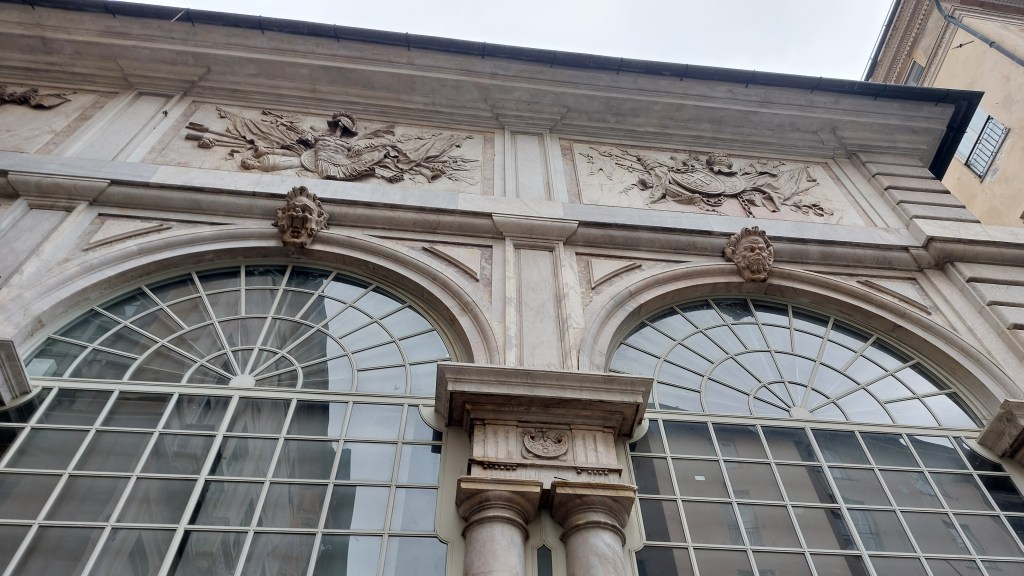
The starting point for the tour was the Palazzo Caricamento. The heavily decorated building below was built in 1260 as a the seat of government, but was later used as a customs house and prison – a famous prisoner was Marco Polo who used his time here to tell his story to his cellmate Rusticello of Pisa and later publish his travels. It was also here in 1407 that the Bank of St George was founded. After being bombed in WW2, the square itself was rennovated and in 1992 turned into a pedestarianised area (meaning I was able to actually walk around it, rather than getting stuck under the road system!)
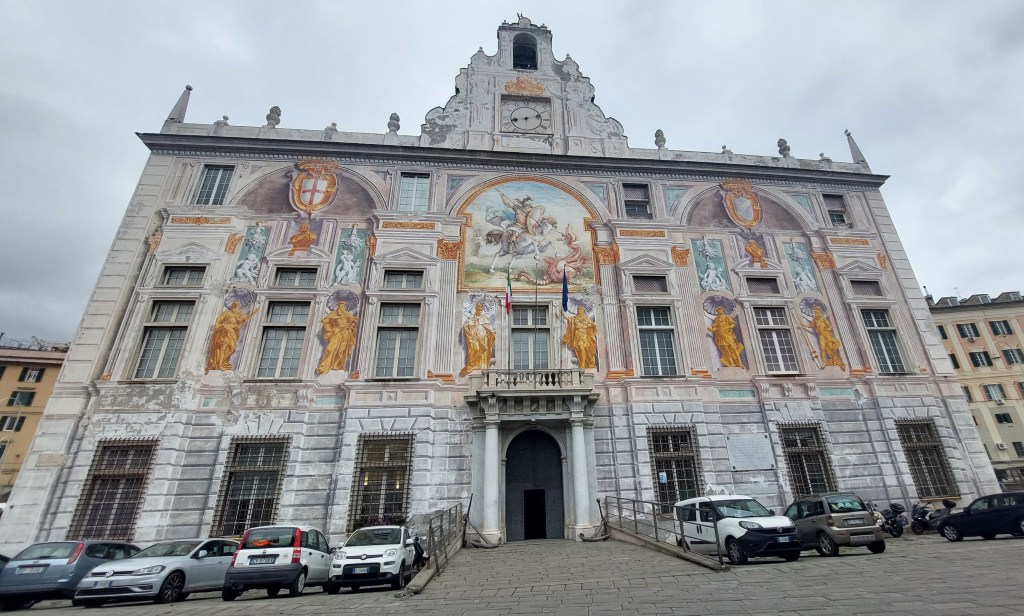
A few sites:
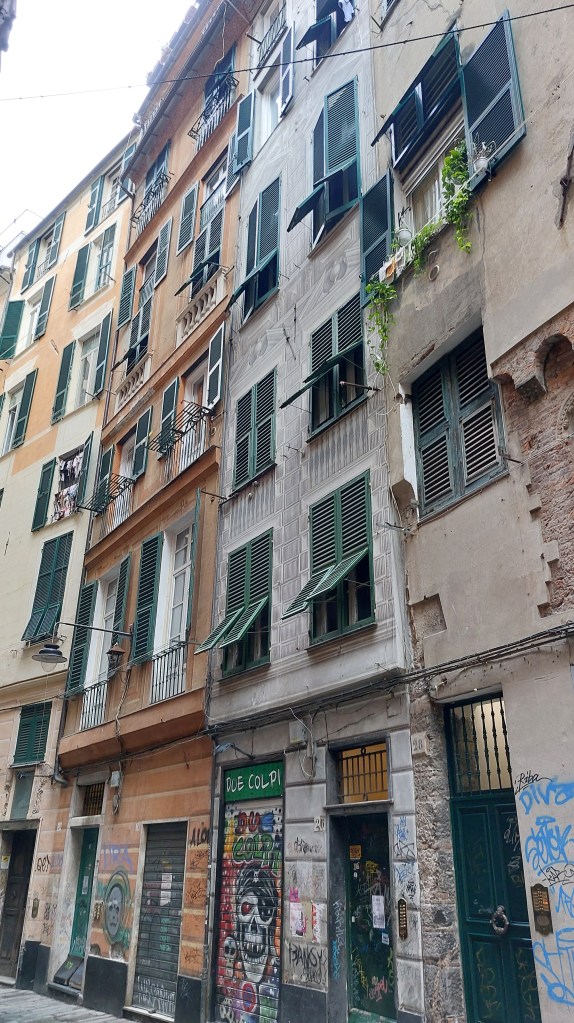
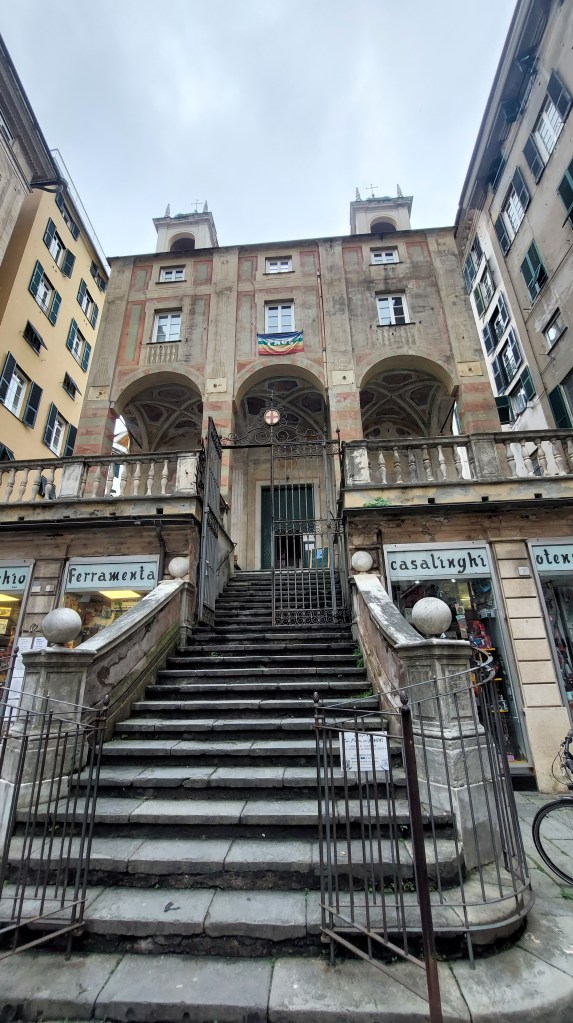
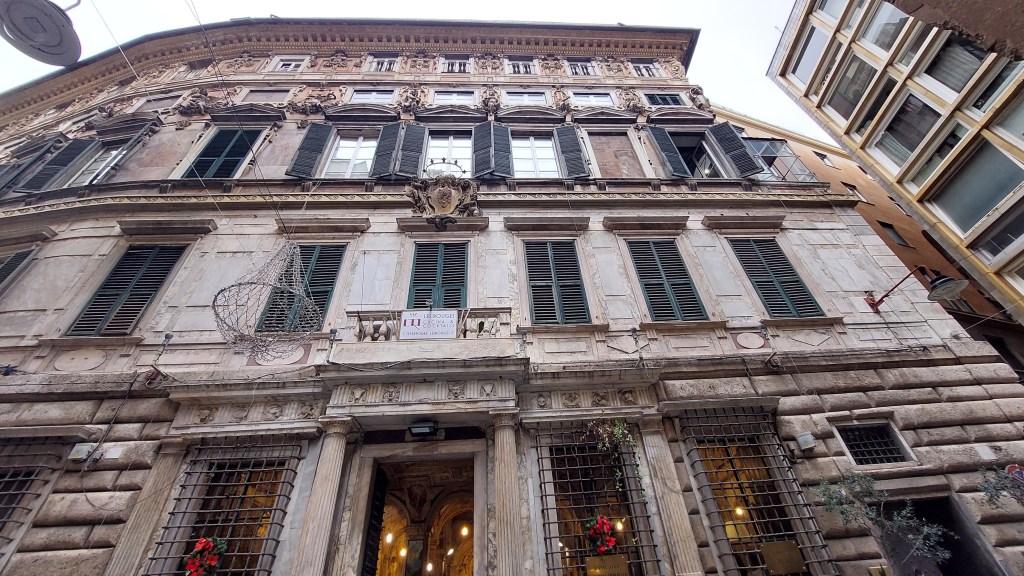
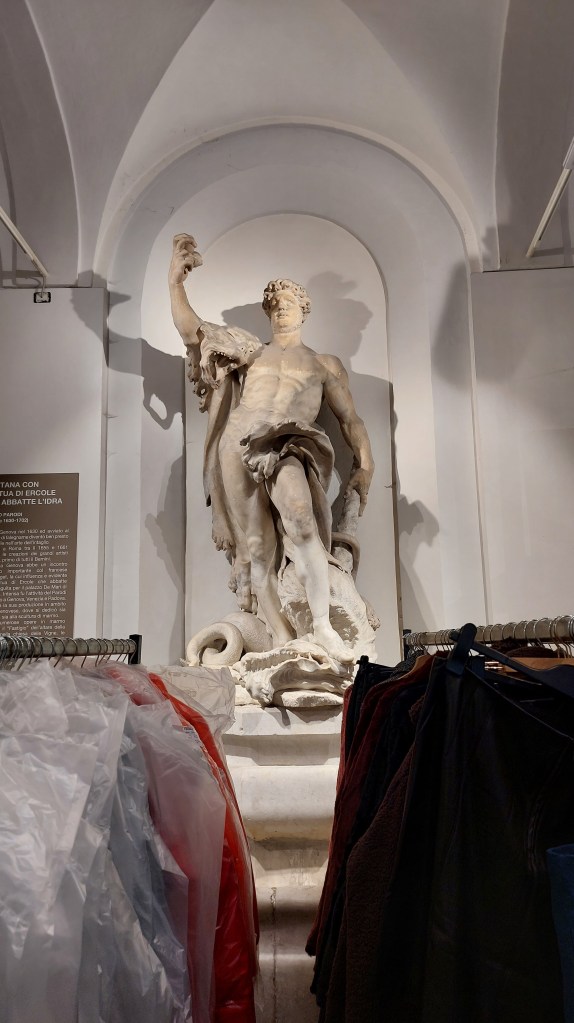
One of my personal favourites was this fountain beloe which today lives in an OVS department store. The square contains a number of mansions belonging to the Grillo family, of which this was also one. The sculpture you see below was once a patio fountain created in the 16th century by famous artist Filippo Parodi providing fresh water to the household. A little bit of a comedown, particularly as you could not get to it through the sale rail!
Another interesting fact is the Rolli hospitality system. So, in the 16th and 17th centuries, when the Genoese Republic was at the height of its power, the city needed somewhere for people to stay, and they could not rely on royal houses. The authorities created a Rolli system (which had a star system attaching to it) where the owner had to offer free hospitality and entertainment for the whole stay for an invited guest. I do not think my flat would have even amounted to a single star comparing it to the mansions of Genoa, although my entertainment (sparkling conversation, food, and tv) might score…
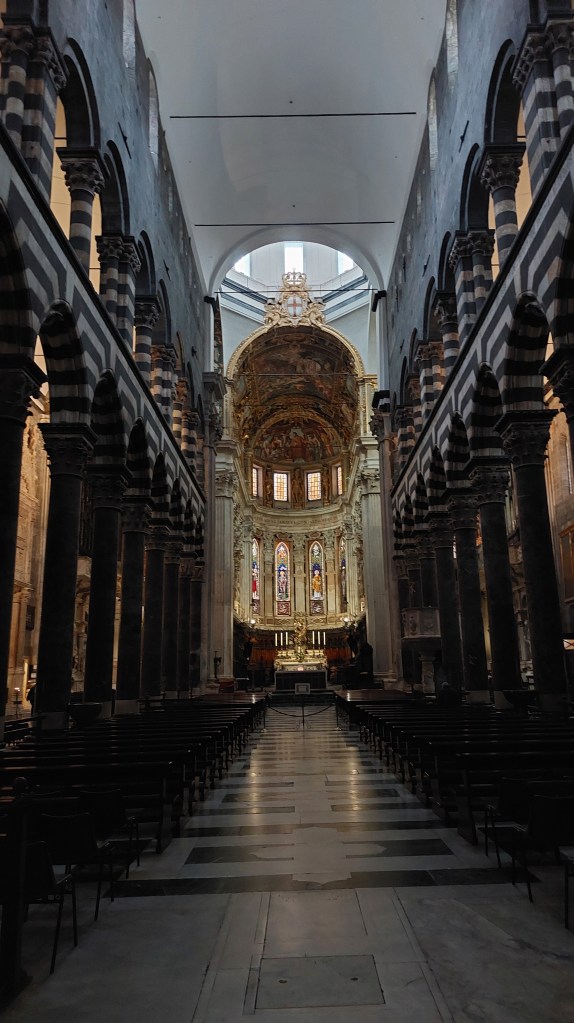
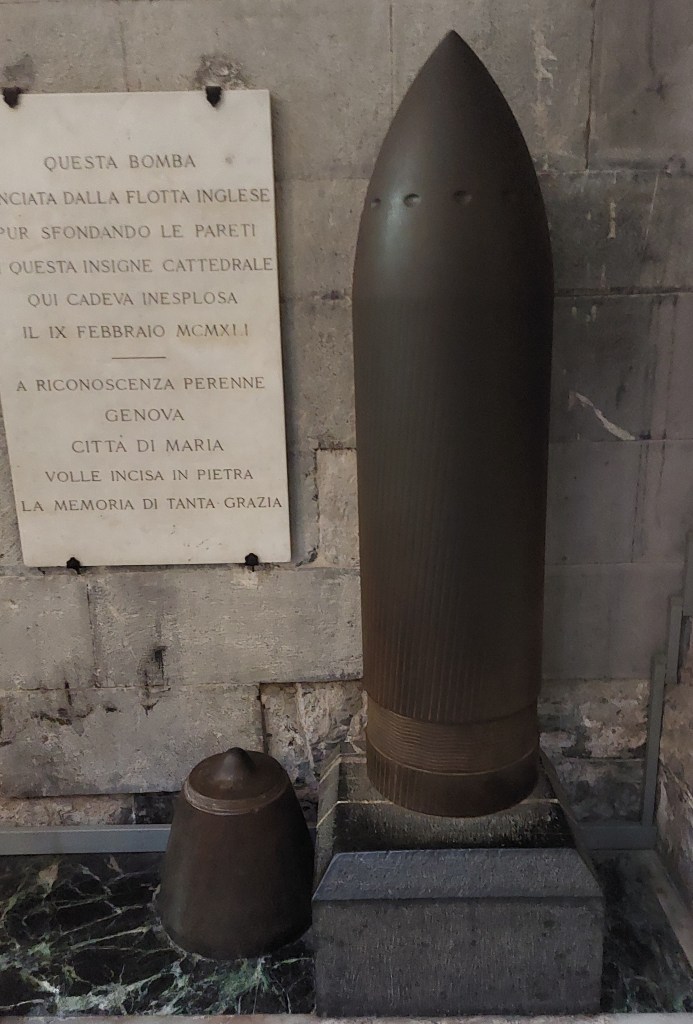
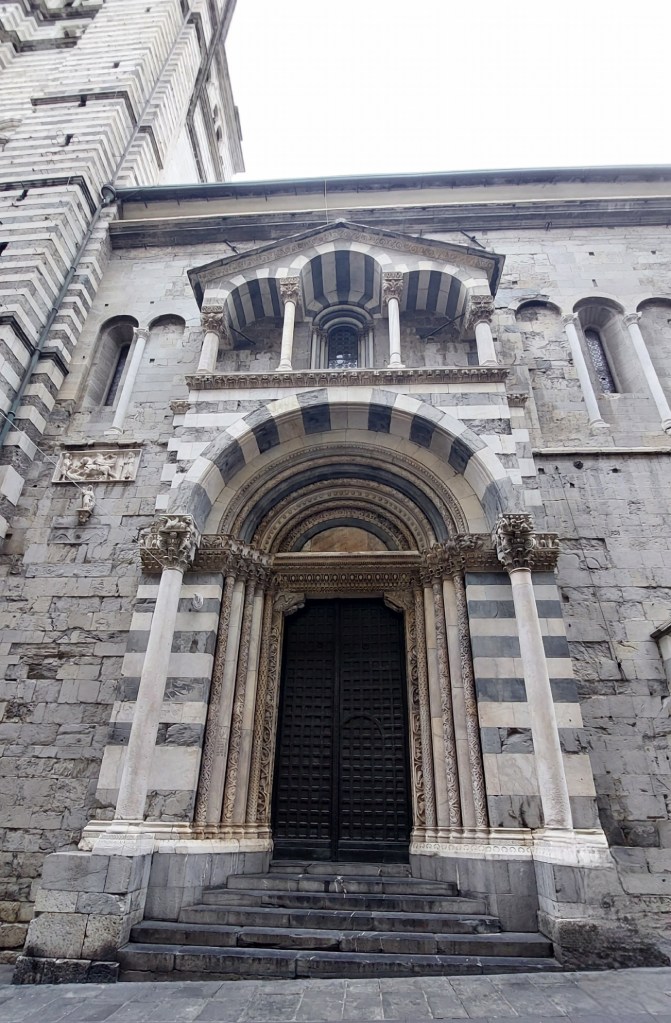
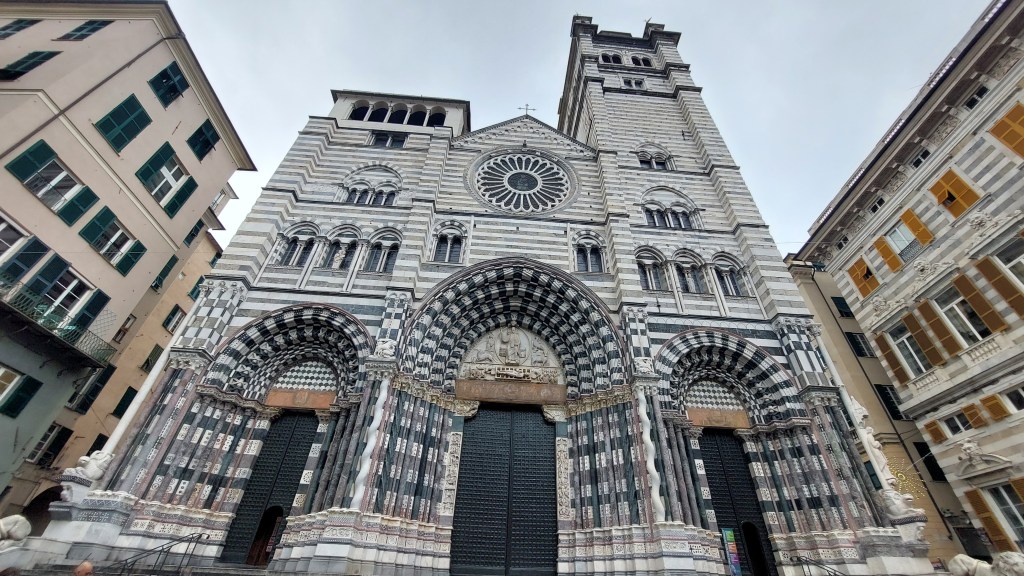
My next stop was the cathedral of San Lorenzo, which is the seat of the Archbishop of Genoa. First built in 1118, it has been enlarged many times. The guide was keen to point out the bomb which was thrown onto the cathedral by the British Navy in 1941, it did not explode and is therefore considered as a witness of the received grace on the catherdal.
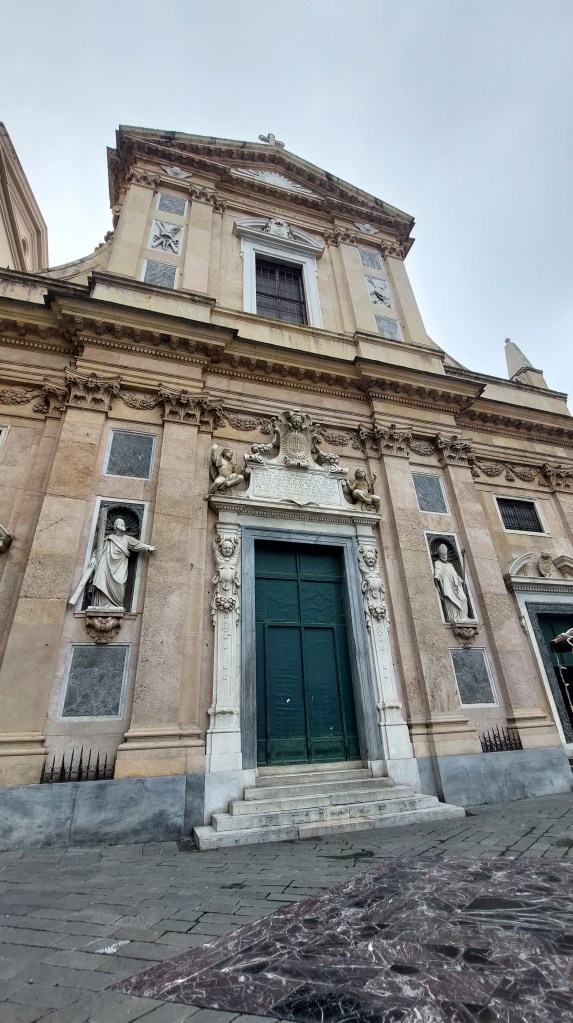
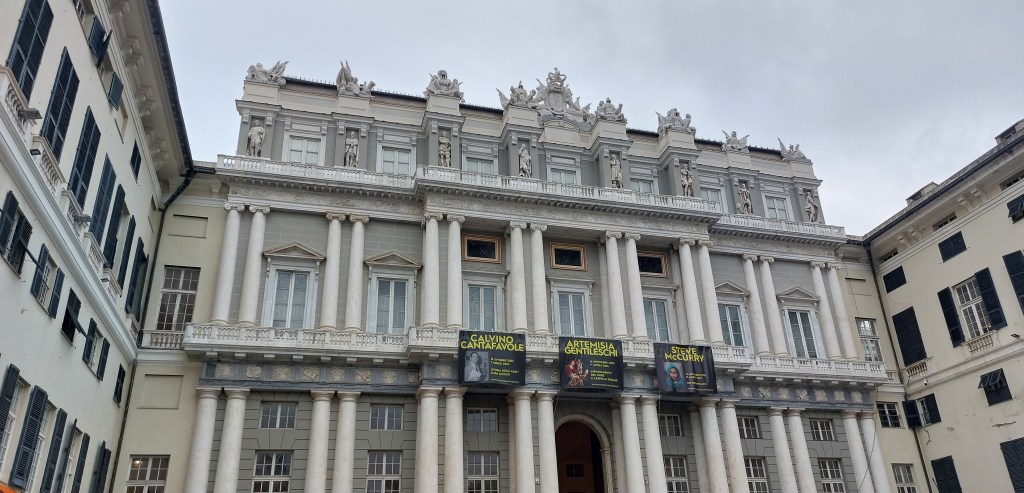
Next, I walked slightly uphill to the Palazzo Ducale. This is home to the first palace of the Genoese Doge from 1339. However, what we see today was massively rennovated in the 16th century to reflect the new Republic and reconstructed in the neo-classical style.
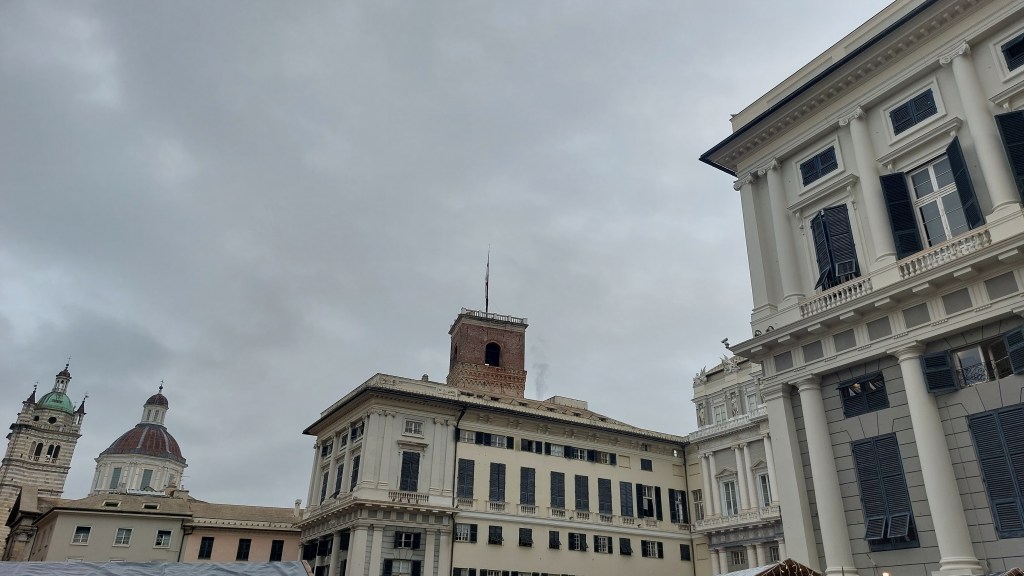
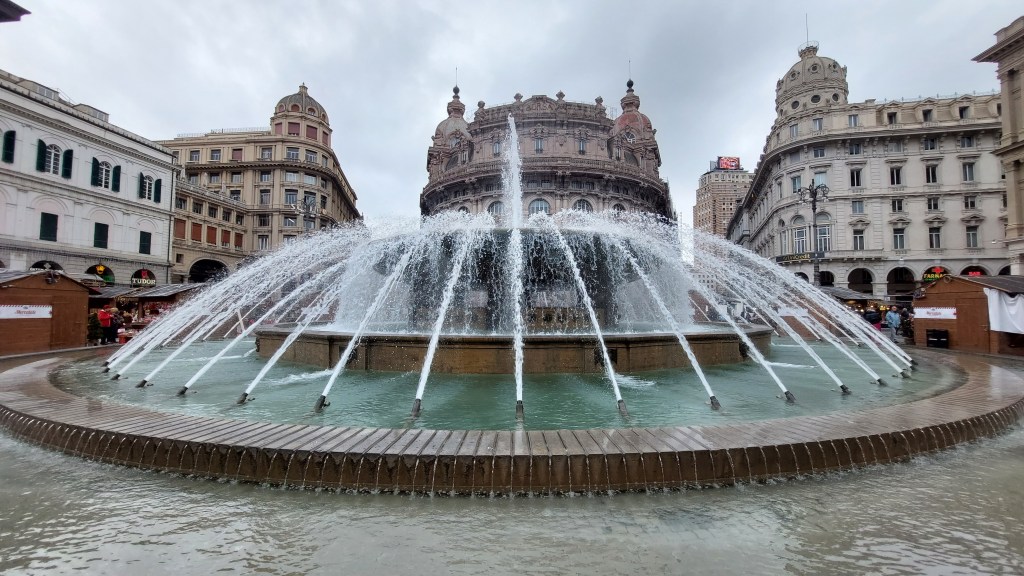
The final stop of the tour was the Piazza Raffaele De Ferrari, which is the main square of Genoa. The centre of the piazza (surrounded by an excellent Christmas food market) is a bronze fountain errected in 1936, which was most impressive and made a change from the usual marble…
So overall, the tour worked and it was nice to go at my own pace – however, I still think guided tours are the way to go as you get more information and opportunities to ask questions, so I think it will be back to normal for my next stop. Probably.
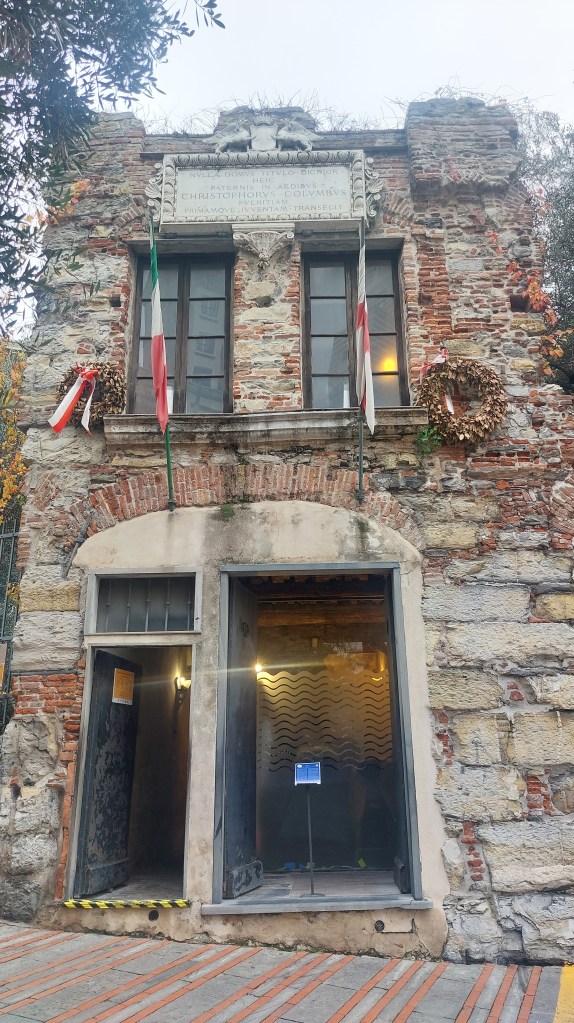
I now had a few places on my hit list, firstly Christopher Columbus’ House. Christopher Columbus is probably Genoa’s most famous resident and was born here in 1451. Whilst he probably didn’t discover America as the vikings were there some years before, he certainly was the best publicist when it came to his discovery! The house pictured below is not his actual house, but a reconstructed 18th century version.
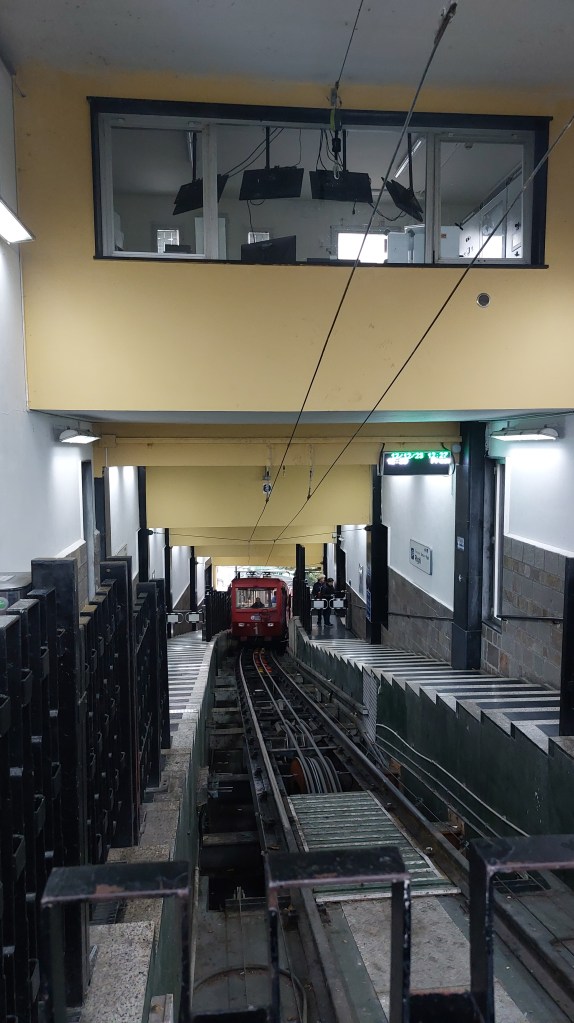
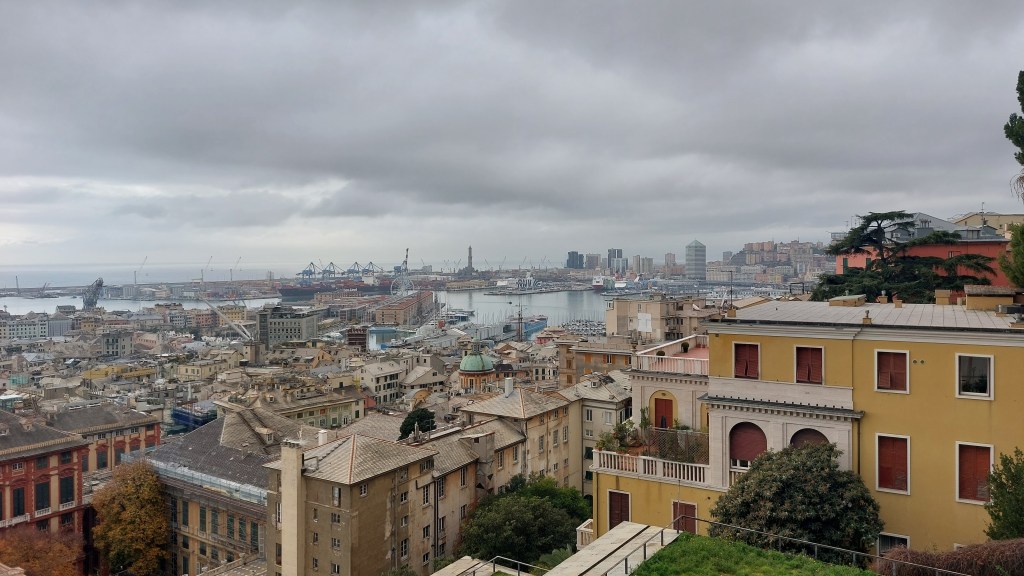
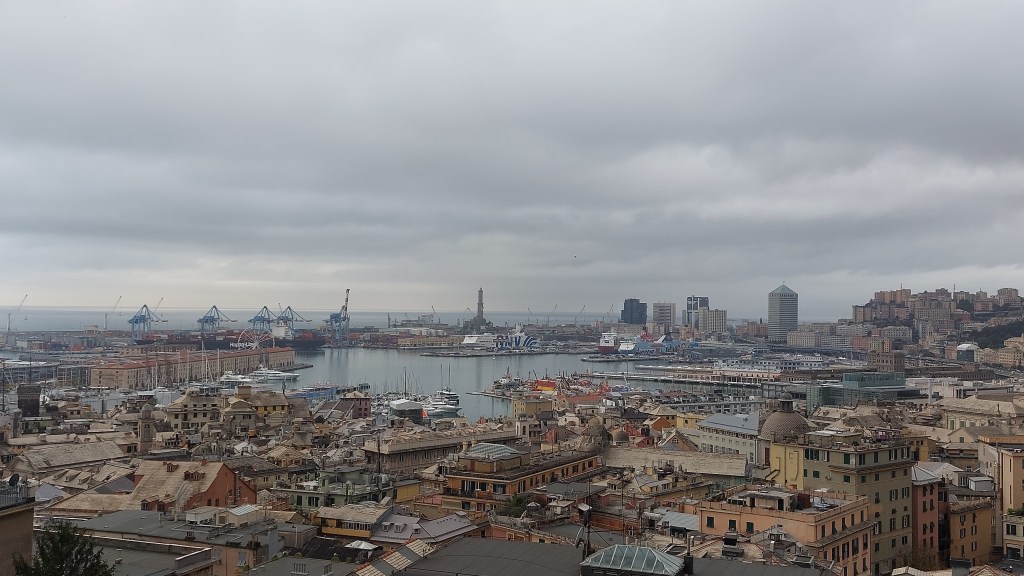
My next mission was the funicular to the top of Genoa for a view (grey though it may be today) over the city and port. Firstly, I was incredibly excited by the fact that there was funicular (trains are great, avoiding stairs is even better!), and secondly, it was free – bless the city of Genoa.
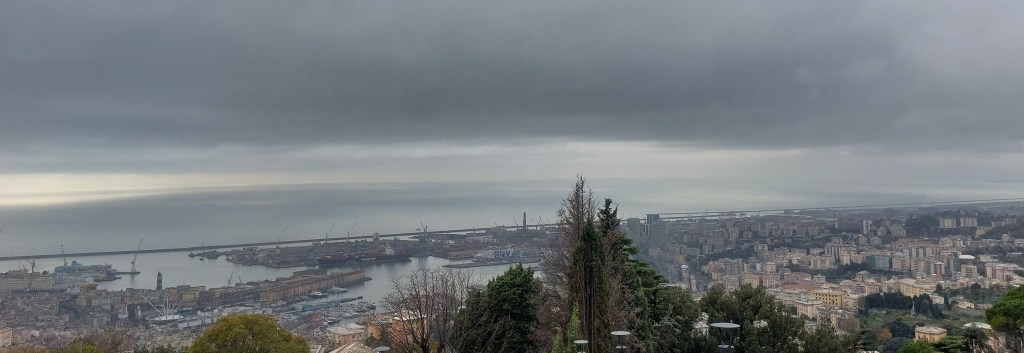
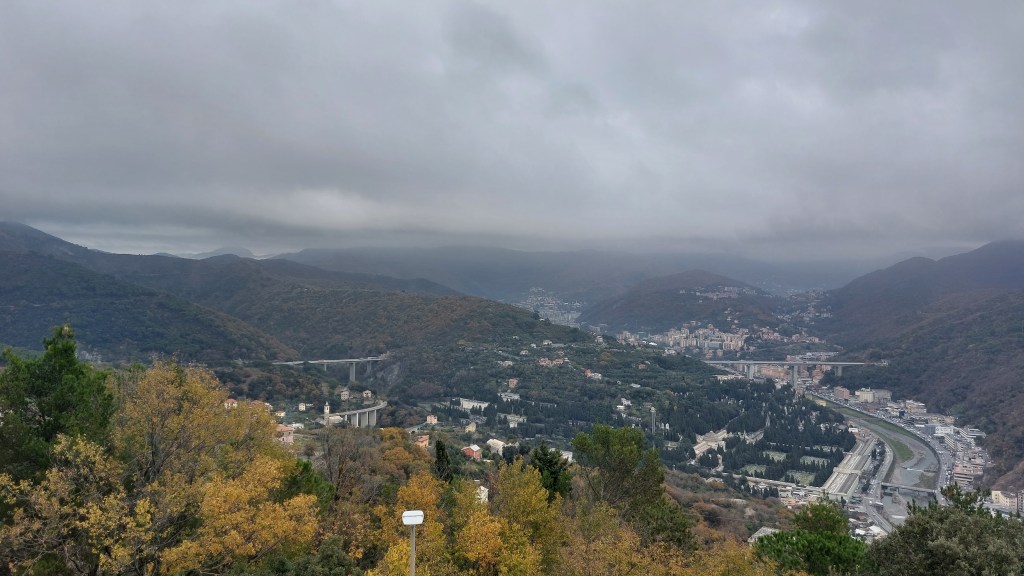
I then took the funicular down the hill to another key viewpoint, and even better, it had a free lift down to the city level. I am a fan.
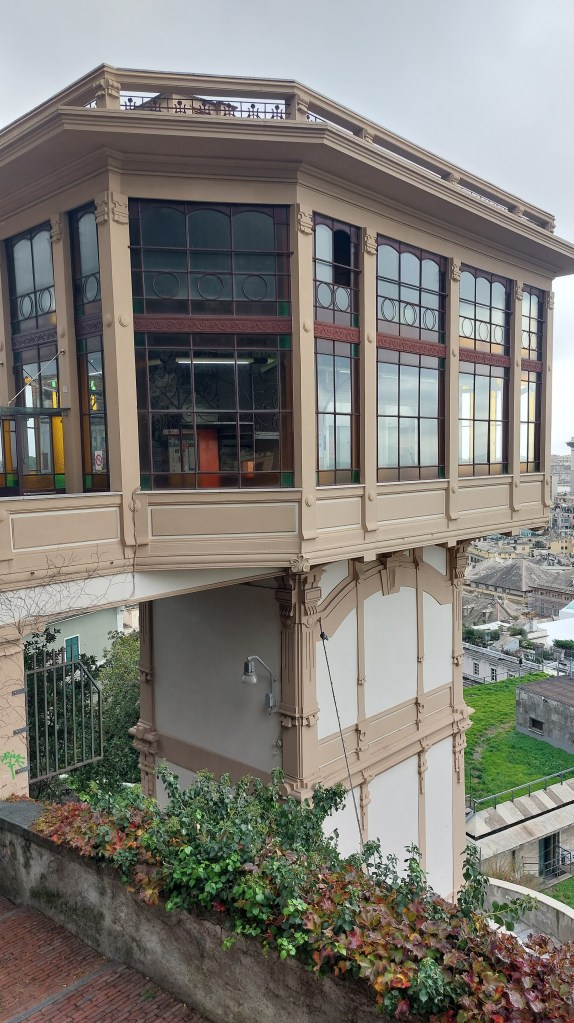
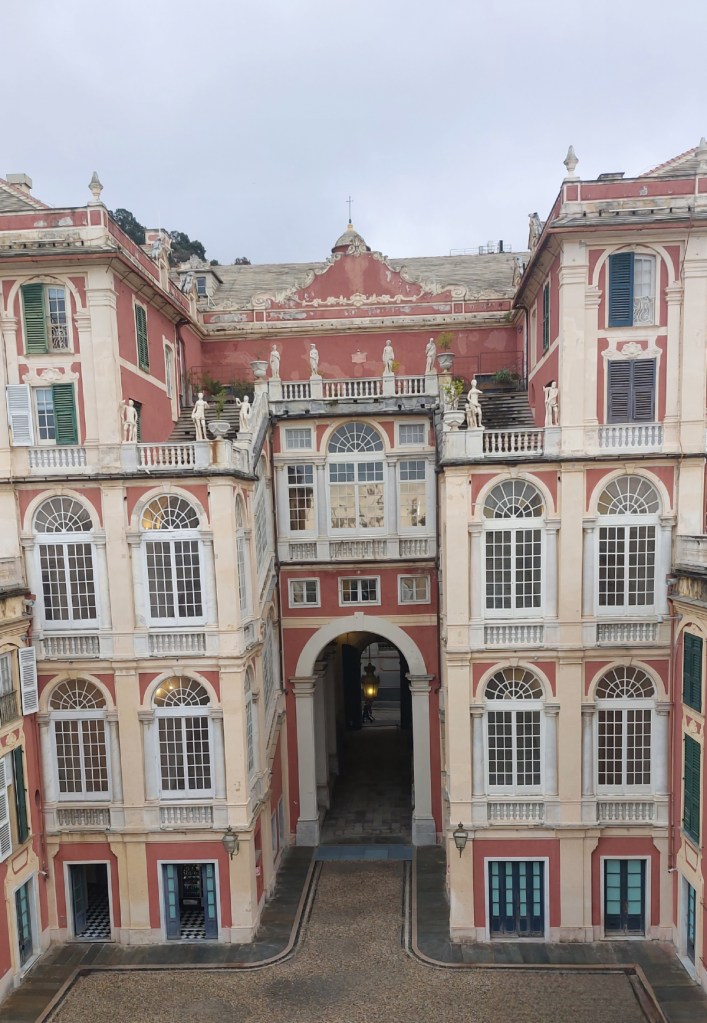
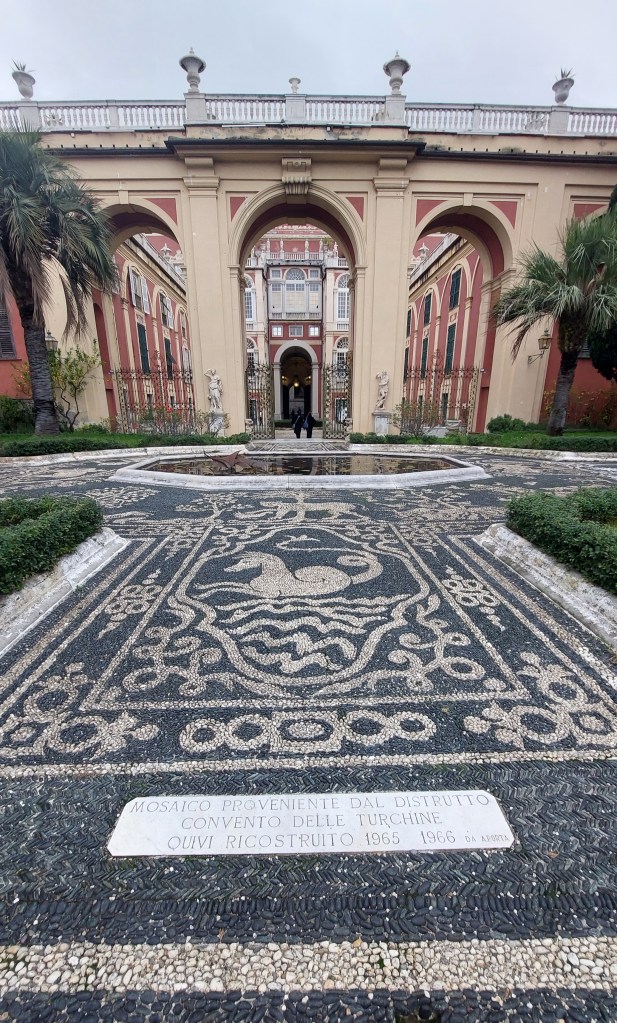
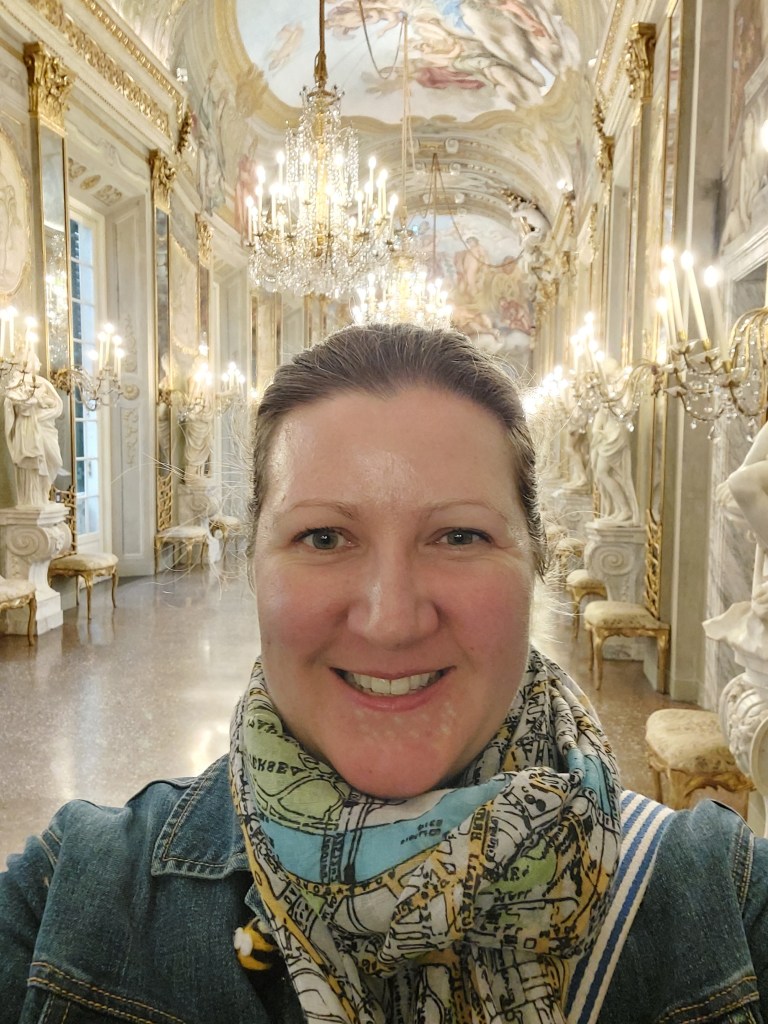
A short break for lunch (Italians are more eat out for lunch than dinner people and the restaurant was full!) and then my final stop (and the only starred attraction in the guidebook) the Palazzo Reale. There are a number of Palazzos one could visit in Genoa, but this was built by the Balbi family in 1618 and was eventually sold to the Royal House of Savoy in 1823 (who used it as a Royal residence) before being passed to the state in 1919. For me, it was worth it just for the hall of mirrors – it may be far smaller than the one in Versailles, but to have it to myself was amazing!
So that was Genoa. I have really enjoyed my time here, which I am sure has been greatly helped by the lack of tourist crowds (hurrah!). Also, I am enjoying being back in a (relatively) proper cosmopolitan city. It does have its grubby elements, but it is both a historic and a new city and I know that many people pass it by in order to make there way to cinque terre and other coastal cities and it deserves at least a day here.
Tomorrow, I am off to Turin, which is my penultimate stop in Italy and is the furthest west/closest to home I will have been on this trip before turning back east and flying to Finland. I can probably say that when I leave Italy/end stage 4, that is probably the end of my Silk Road trip and back on a “return to home” trip. I will need to come up with a better name – any suggestions, let me know.


Leave a Reply