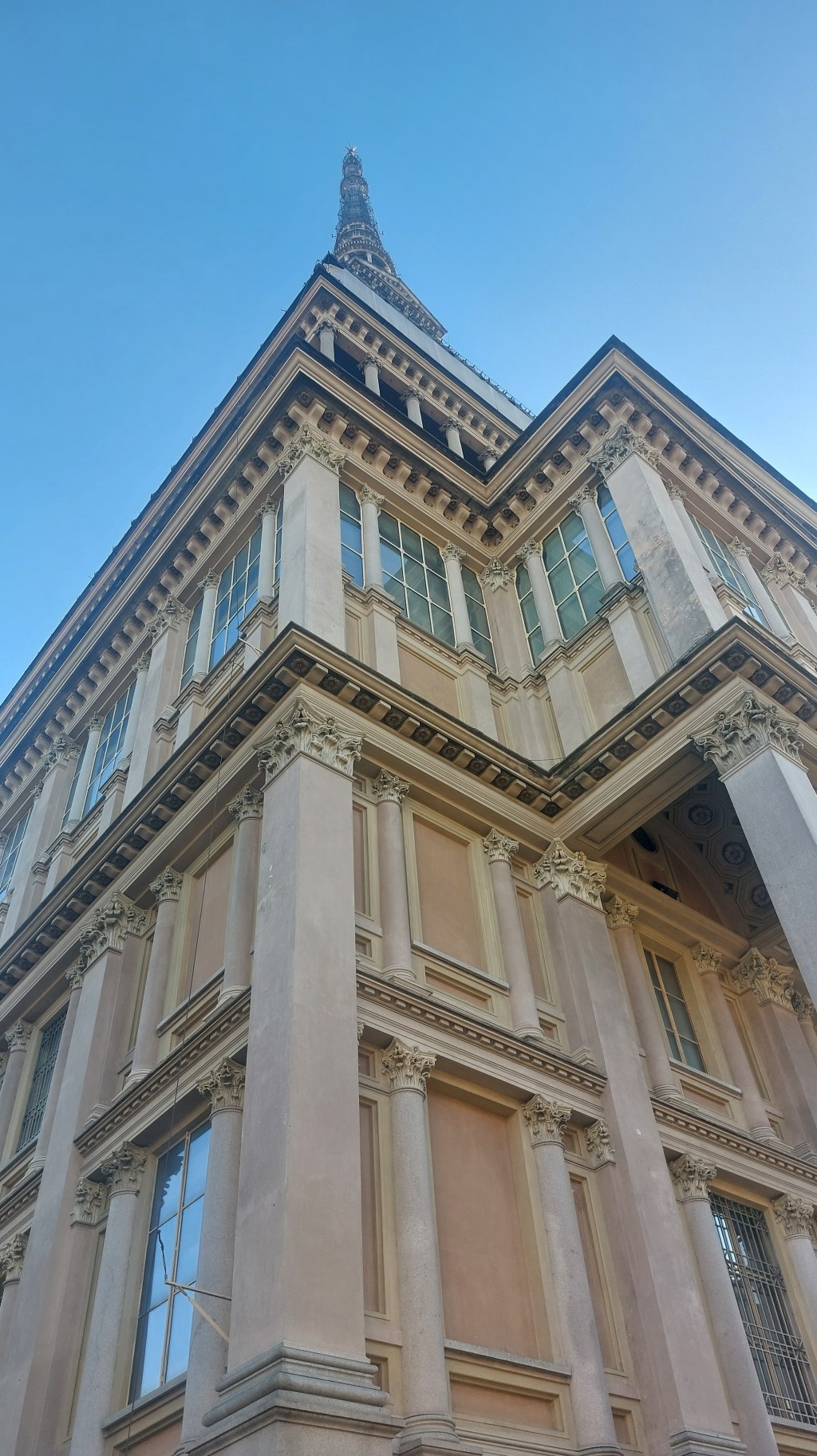
By reaching Turin, I am the closest to home I have been this whole trip. As the crow flies, I am 570 miles and 9 travel hours (by train via Paris) from London. I am also in waving distance (174km over the alps) from Geneva. So, at this stage, I could be heading for home and Christmas with my family (which could be interesting as no one is expecting me!), or I could do the obvious thing and get myself to the farthest Northeastern country in Europe – Finland. I am flying to Helsinki on Saturday…
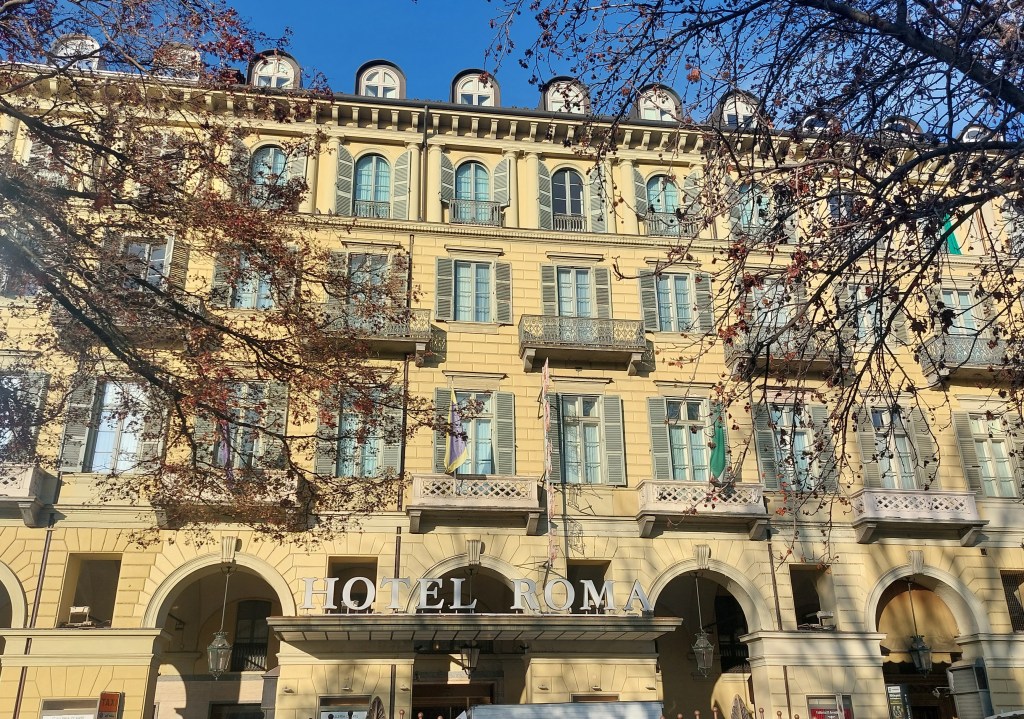
Anway, I should probably write a little about Turin, which is delightful and a much overlooked tourist destination! I left Genoa yesterday, and, travelling inland, I arrived in Turin’s main station 2 hours later (albiet on a slightly delayed train). My hotel is most convienently located, although I found out later it is also where the author Cesare Pavese committed suicide, but luckily, not my room!
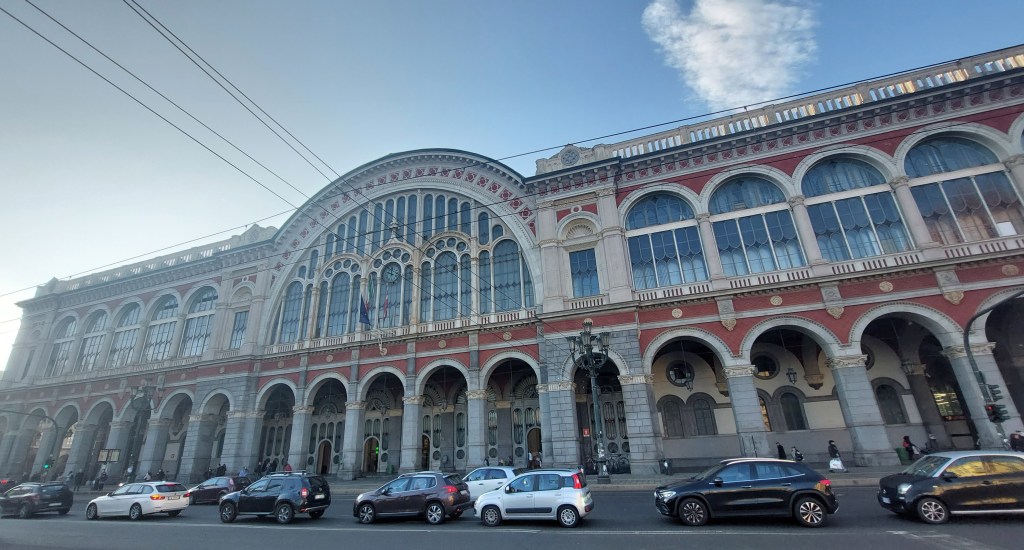
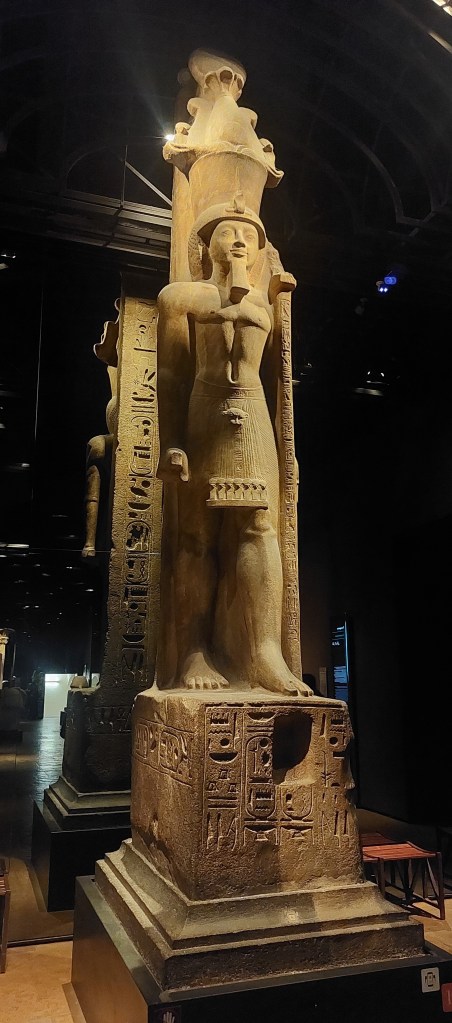
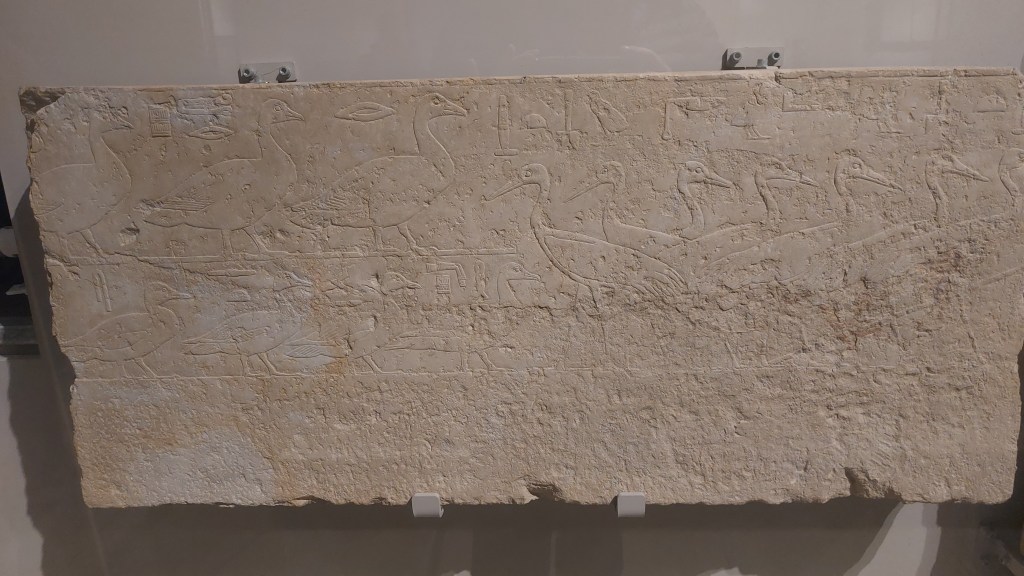
As I would be doing a walking tour the next day, and with limited time, I went out for a walk and to visit the Museo Egizo. This is the oldest Egyptian museum in the world (having been founded in 1824) to exhibit what started out as the House of Savoy’s collection (they did like collecting) and later organised their own digs and tours of Egypt. Today, it is the second largest Egyptian museum in the world (after Cairo). It does have an amazing collection – I particularly enjoyed the stacks of storage (old school museum styling) as well the very modern halls of the kings and queens displayed to quite dramatic effect (below):

Today was a beautiful day (the sunglasses are out!), and I started it with a walking tour. I am pleased to report that this tour was back up to my usual standard, and I think it helped that she was a woman of a certain age, which I found most reassuring.
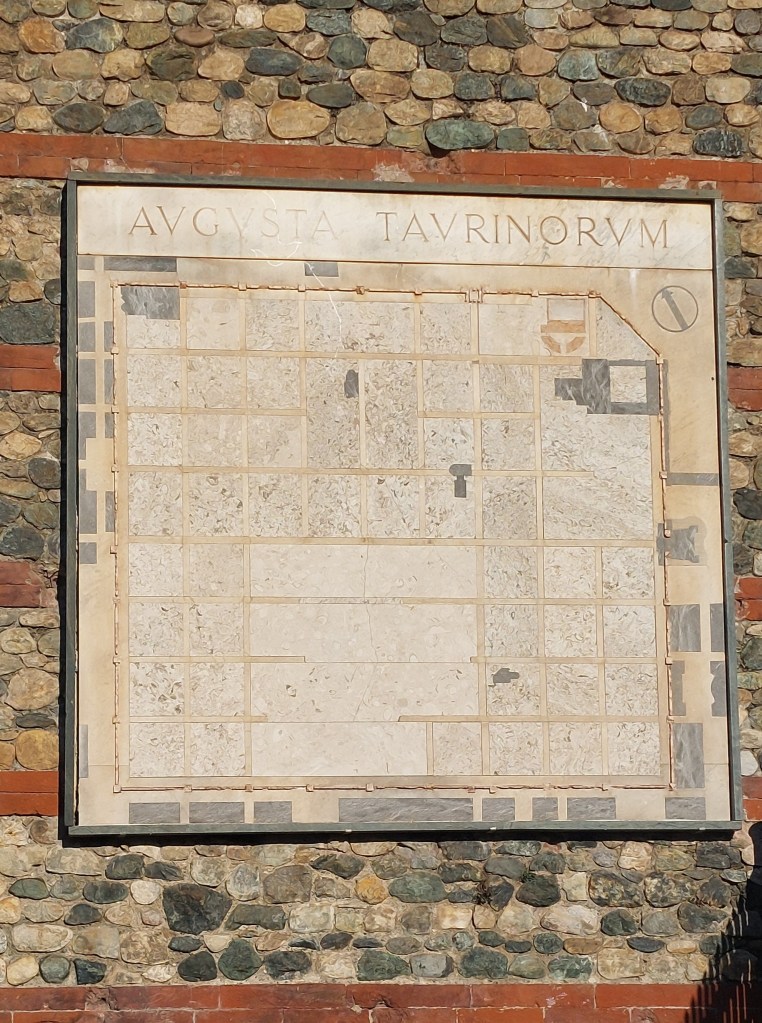
As usual, I will open with a potted history of Turin. There was an ancient tribe here who was defeated by Hannibal in 218 BC, and in 28 BC, a Roman colony was established. This was a military settlement only, and after the fall of Rome, the town was very much left as was, and it was not until the 13th century that the town was annexed by the Duke of Savoy. In 1563 Turin became the capital of the Duchy of Savoy and the city expanded in a carefully planned way (more on this below) extended the Roman design – this is why Turin is a grid rather than the more traditional Italian circular design. By the 18th century, the Dukes of Savoy acquired Sardina, and thus Turin became the capital of the Kingdom of Sardinia, and there was another redesign of the city. After annexation by Napoleon and then the fall of Napoleon, Turin became the first capital of the newly formed Kingom of Italy. During the late 19th century, there was a period of rapid industrialisation (particularly in the automotive industry), which made it a regular target for allied bombing during WW2. This industry was rebuilt after the war and today Turin employs 35,000 people in the aerospace industry, for example, all the water drunk on the International Space Station is supplied by Turin (although with slightly different recipes for US, European and Russian astronauts based on their preferences).
We started our tour walking along the Via Roma. This is a wide street leading from the train station and was created by Mussolini so he could have somewhere to do his military parades. The facades of all the buildings are exactly the same. As I mentioned above, this is the style across the centre of the city – Turin is the best example of what happens when an absolute monarchy plans a city, i.e., from the outside, everything on a street must look the same:
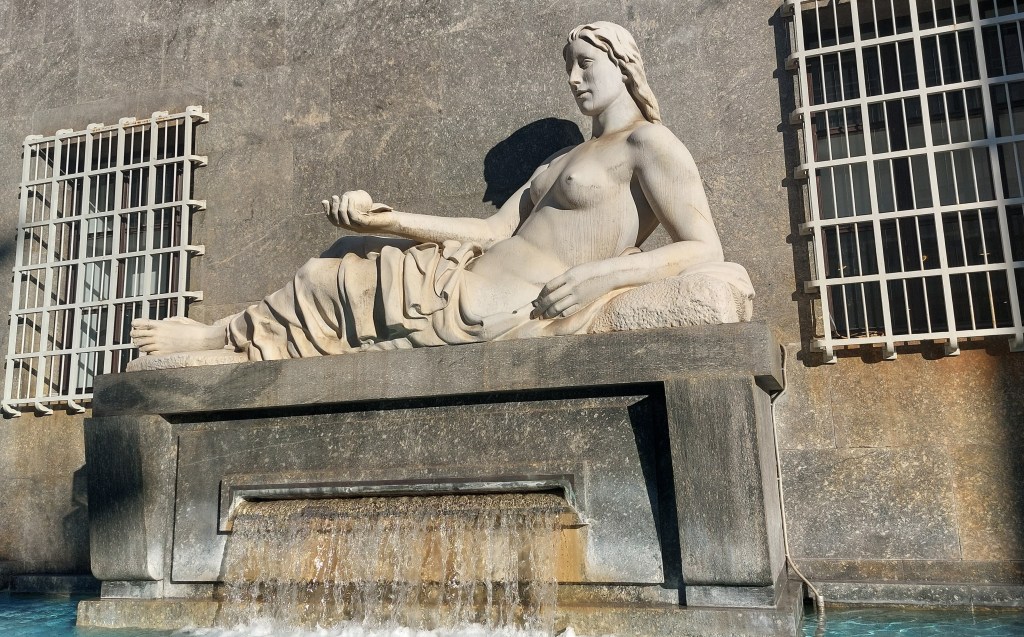
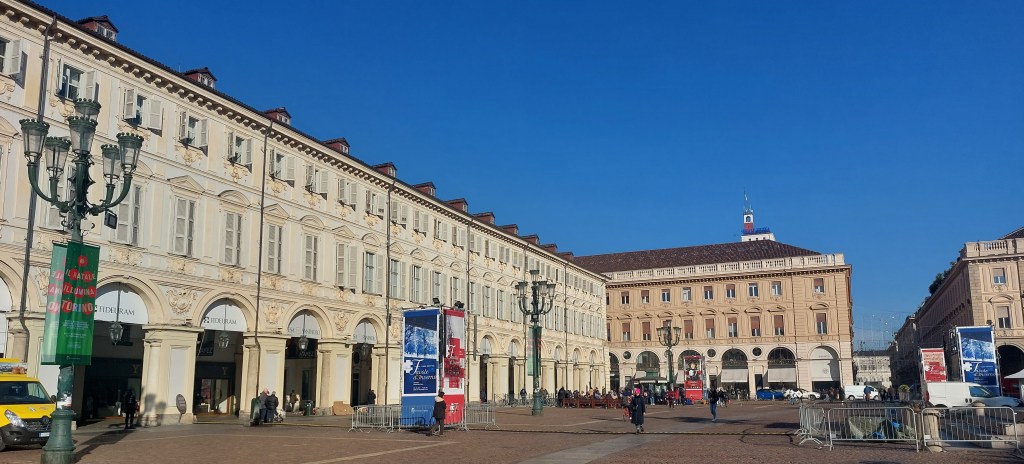
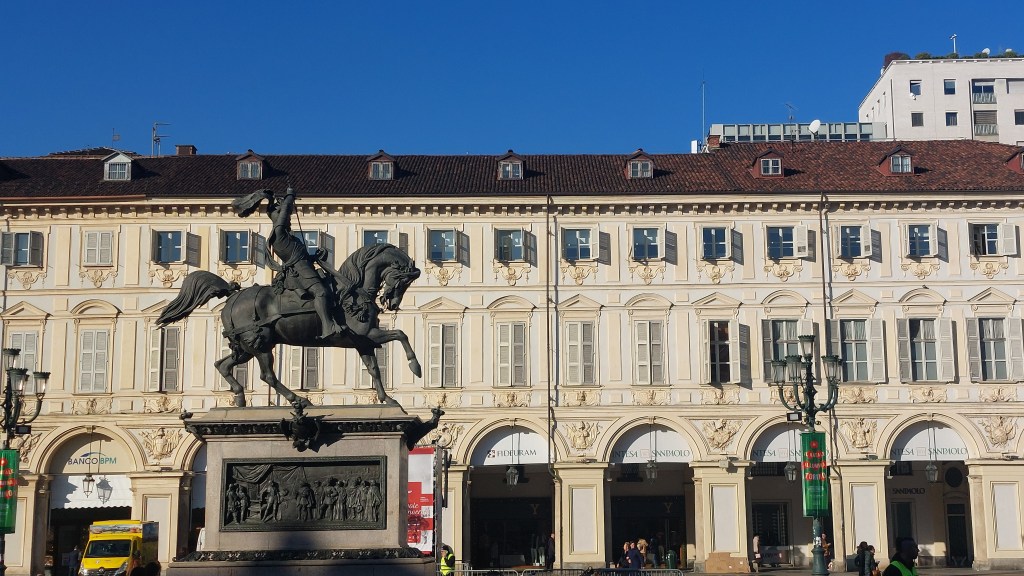
Our next stop was the Palazzo Carignano. In 1831, the rulers of House of Savoy did not have any sons, and therefore, the Duchy passed to the lesser branch of Savoy-Carignano, and this was their palace. In more modern times, the unification of the Kingdom of Italy was announced from this balcony. Whilst this is an important marker in history, also invented in this square was the first choc-ice (known as Pinguino in Italian), so that is two important historical moments.
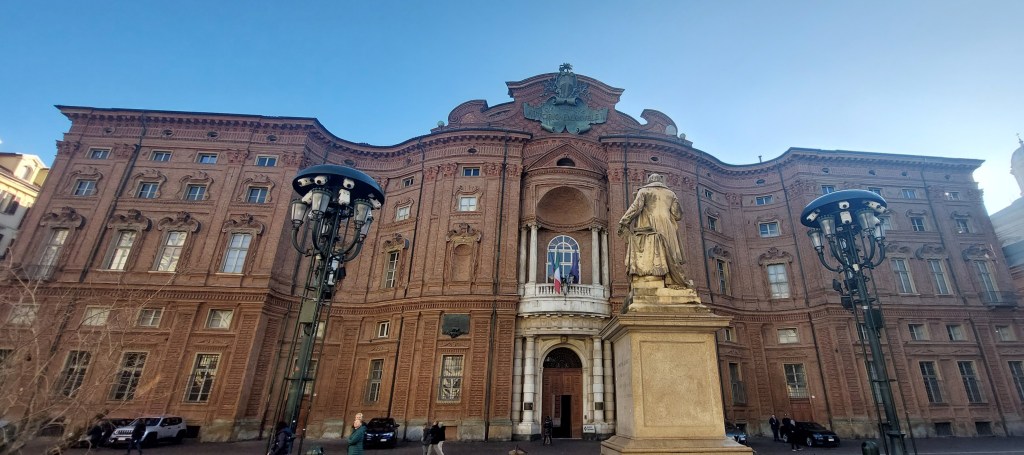
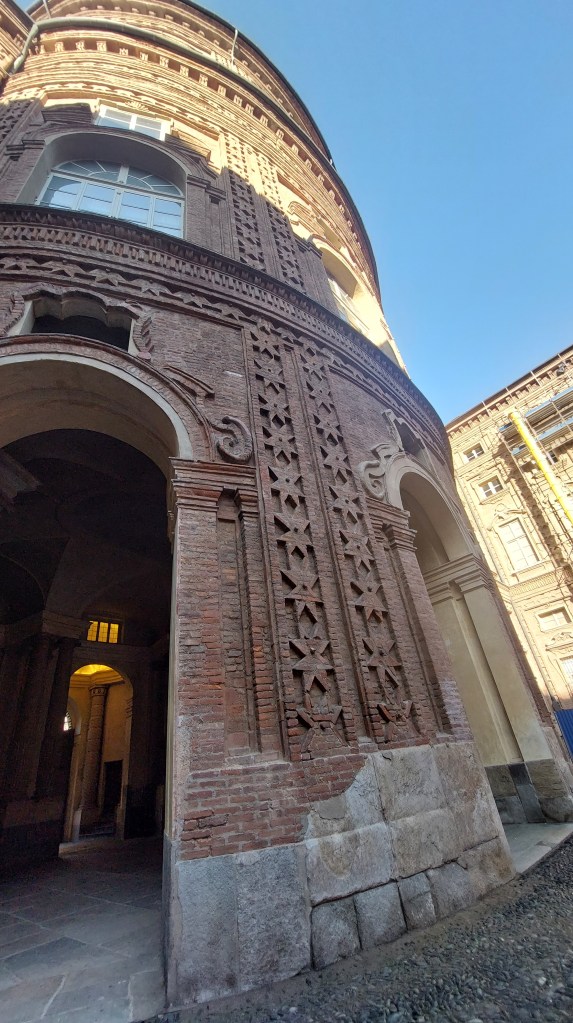
A quick aside about Piedmont (the area of Italy I am now in). It has its own language, which is an odd sounding mixture of French and Italian. There is also a culture of understated-ness, and it is not considered appropriate to display one’s wealth. For example, there are many fancy palaces within the city, but from the outside, they all have to look the same. Also, whilst there are many fancy shops along the Via Roma, all provide plain white shopping bags as no one wants to show off or display visible logos. Perhaps other parts of Italy and, for that matter, the world could embrace at least a little of this attitude…
Our next stop was Piazza Castello. This includes the Palazzo Madam (so named as it was the home for the Queen Mother). It is an interesting building, as includes a Roman tower, a medieval front, and a 19th-century back.
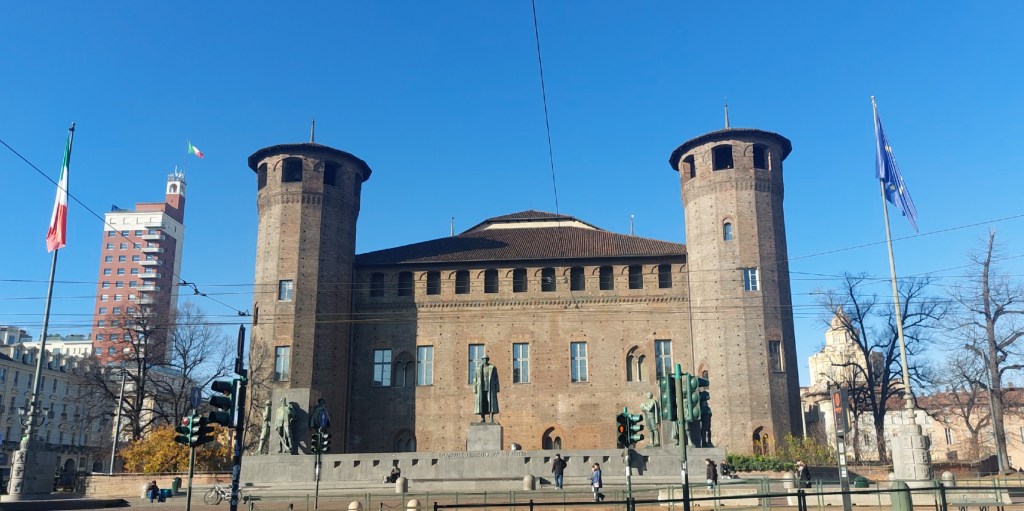

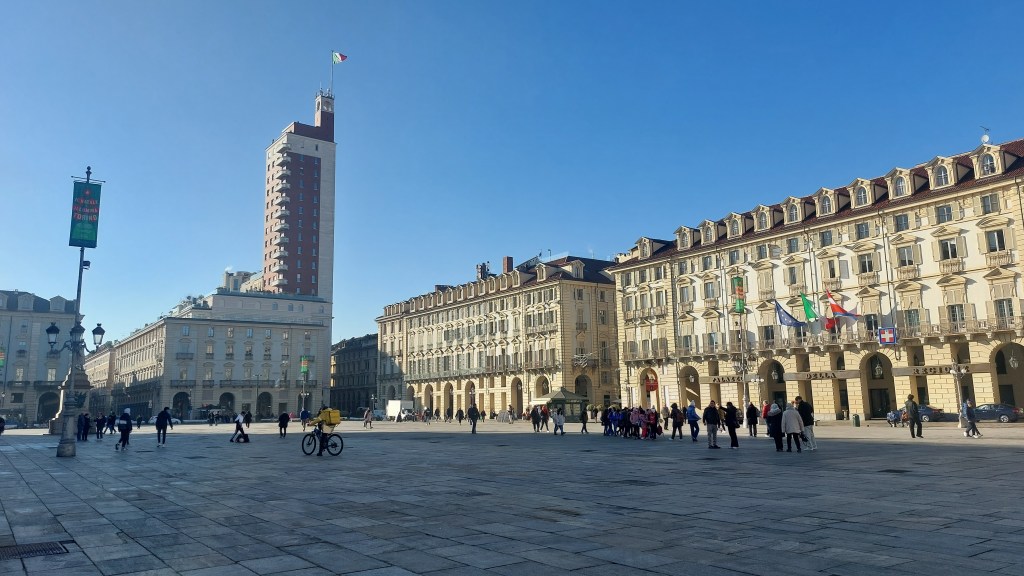
Next to the Castello is the Piazzetta Reale, which has been somewhat ruined by a tower built by Mussolini. He was not a fan of Turin as it had been the founding city of the Social Democrats, and this ugly tower was built to rather upset the cityscape – however, it is now home to some rather fancy apartments and therefore it stays… The opposite end of the square is the Royal Palace of Turin and was first built in the 16th century and later modernized in the 17th century. The palace is now home to a number of museums, its chapel contains the Holy Shroud (rarely on display) and gardens designed by the same designer as those of the Palace of Versailles.
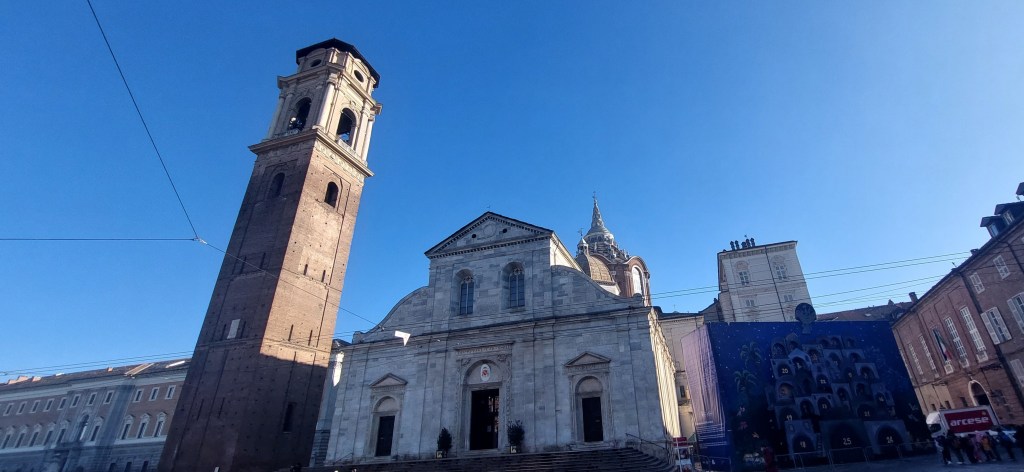
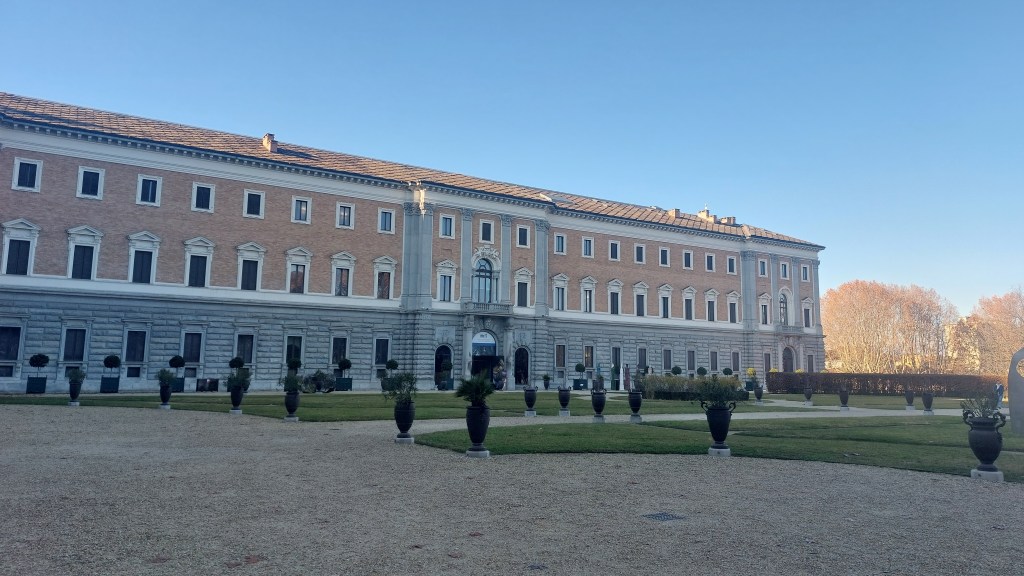
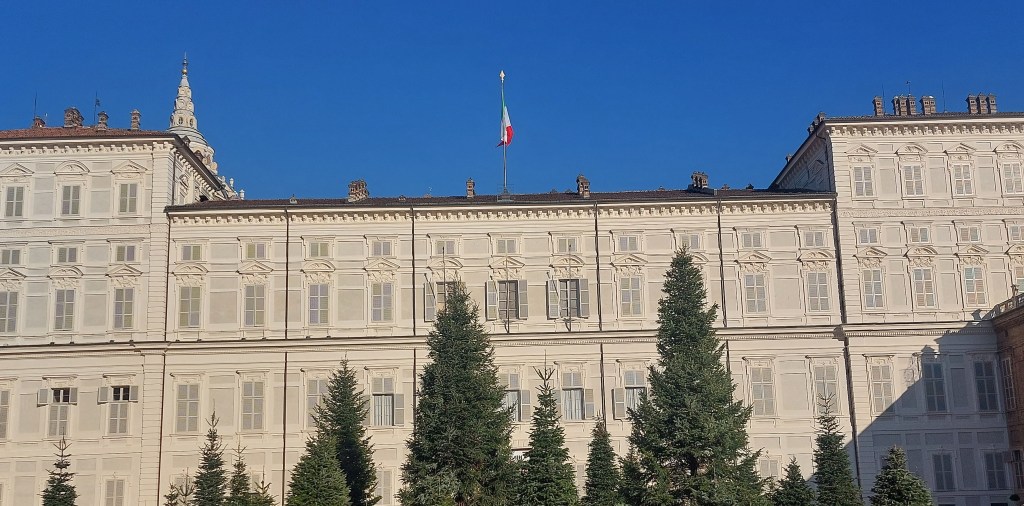
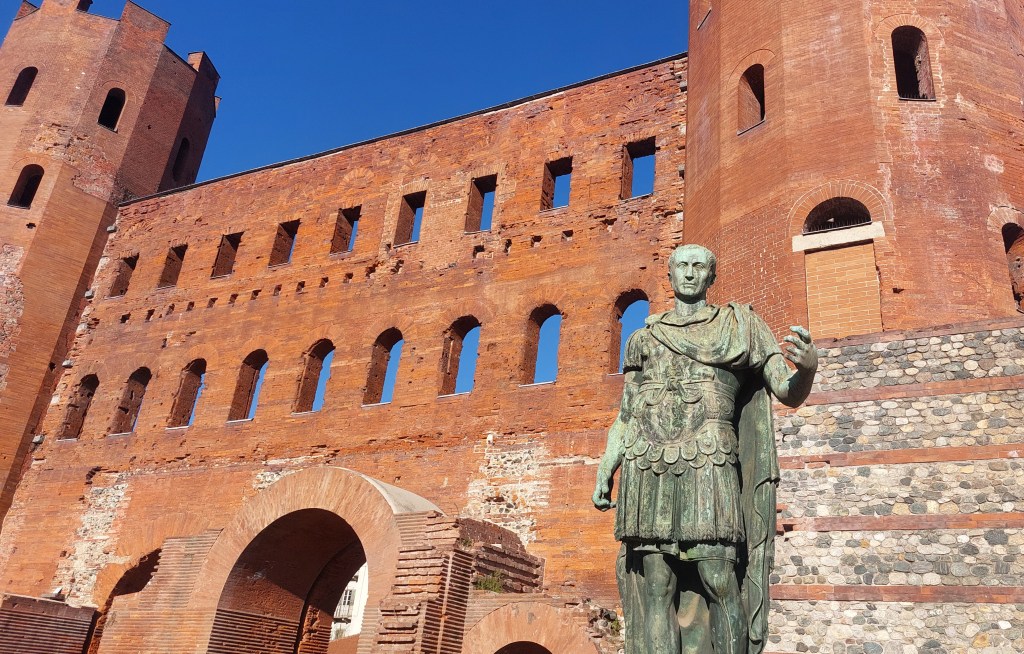
Our final stop on the tour was the remaining section of the Roman city – the gates and walls:
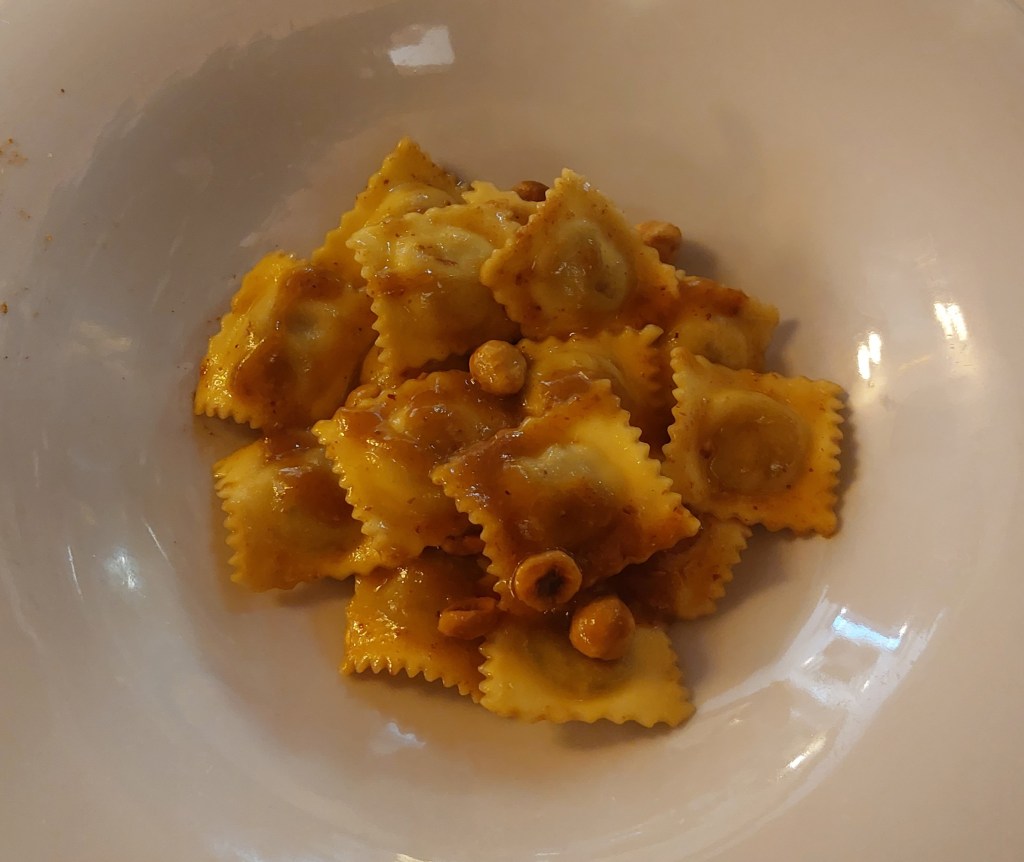
Having finished my tour (at 1.30pm) I have learnt that if I want a nice meal, I need to ensure I eat at lunchtime Italian style. I therefore headed to a traditional restaurant to have two classic Piedmontese dishes: Angalotti del Pin (a small ravioli filled with meat and vegetables) in a delicious hazelnut sauce, and Stracotto di Fassona Piedmontese (beef stewed in red wine). The pasta was amazing, but whilst the beef was lovely, it was not really to my taste.
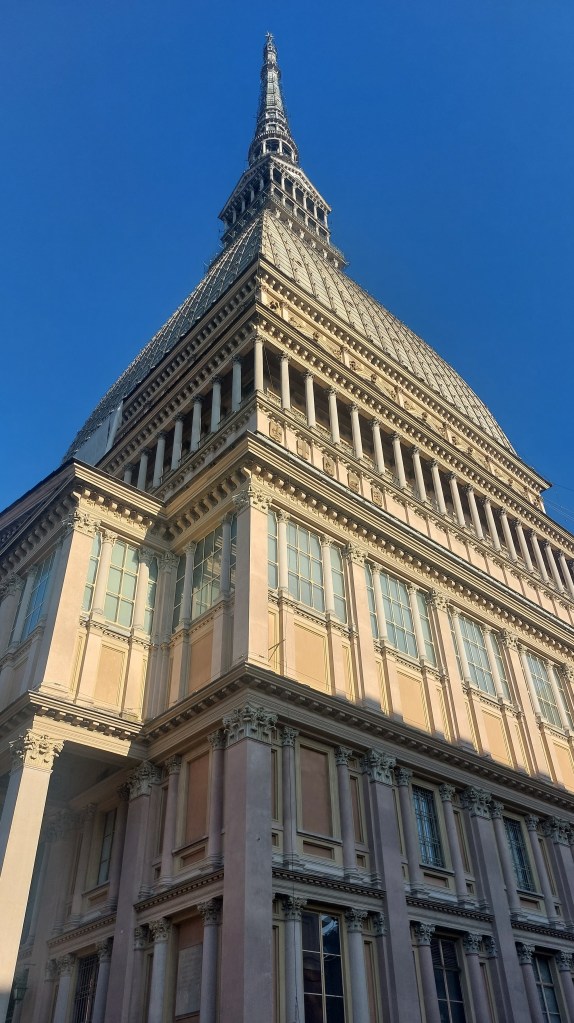
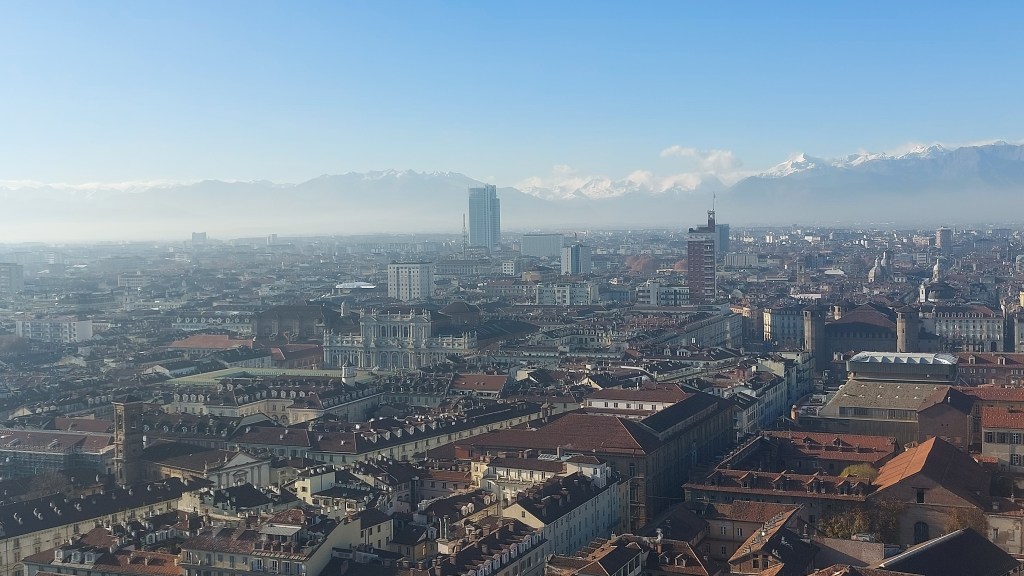
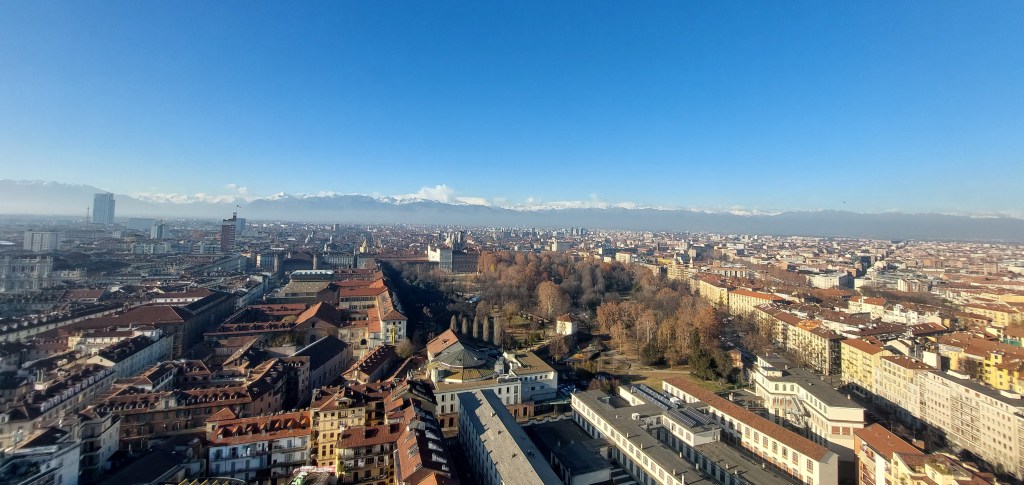
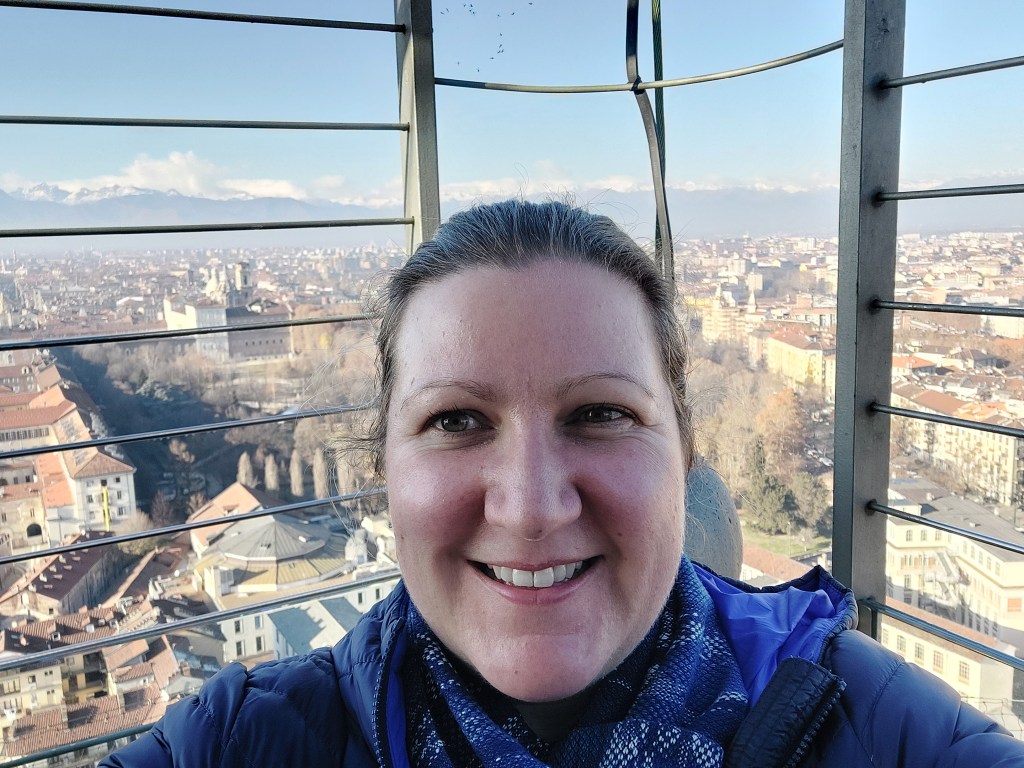
After lunch, I felt I needed a brisk walk around the Palace gardens and I also went up the Mole Antonelli (in Italian a “mole” is a building of monumental proportions as opposed to a small brown animal which confused me initially!) and its architect was Alessandro Antonelli hene its name. It was built in 1863 just after Italian unification and now houses the National Museum of Cinema, which I did not visit, instead I went up in the panoramic lift to enjoy the view:

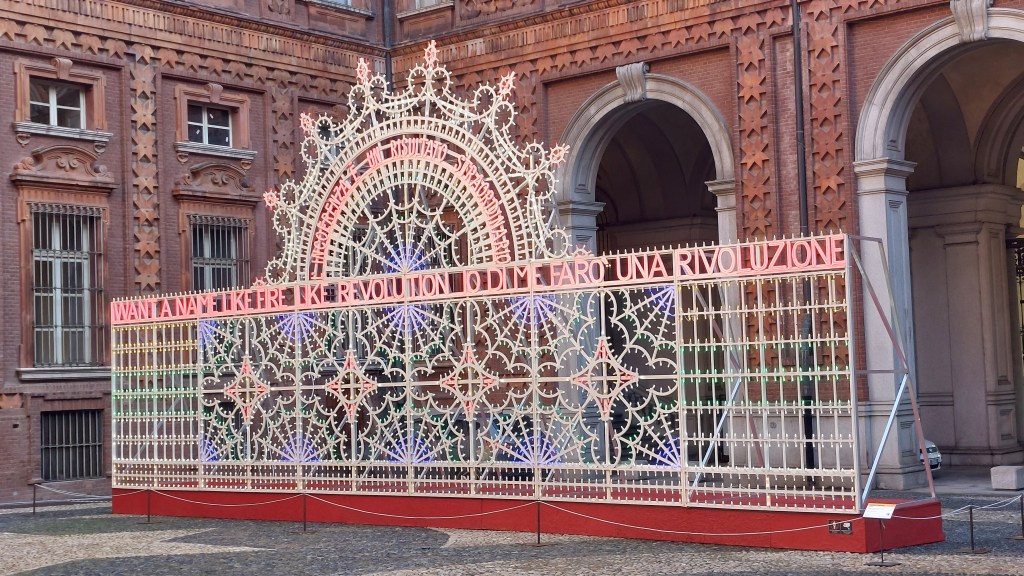
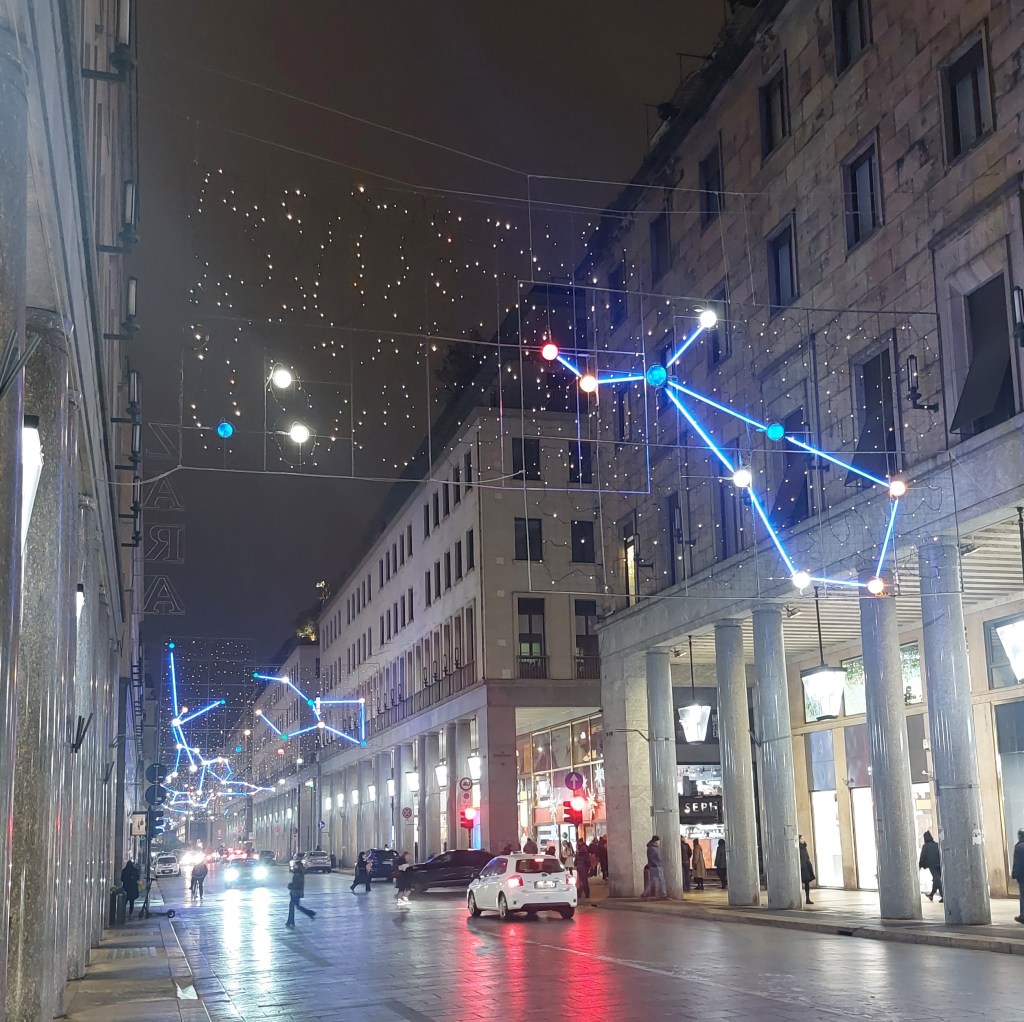
On the way back I did a tour of the lights. This is an annnual contemporary art festival in Turin as opposed to being for Christmas:

Well, that was Turin. I can heartily recommend it and am not sure why it does not make it on to more must-see lists. It has amazing architecture, world-class museums, great cusine and is just an hour from Milan by train. Come!
Tomorrow, I am leaving Turin and having a quick stop in Milan. I visited Milan earlier this year, where I learnt how young people take selfies, was scared of pigeons, and failed to see the Last Supper by Leonardo di Vinci, hence only a short stop. I tried 3 months before the date (when the tickets were released) to buy tickets and failed, so rather than need another trip to Milan, I have booked a tour for tomorrow evening specifically to see the Last Supper. I am then staying at an airport hotel ready to fly to Helsinki on Saturday for Stage 5 and my Arctic adventure. Bring on the snow!

 Travels with Kathryn
Leave a comment