After our train journey, we arrived safely into Krakow and managed to locate our hotel (it being in sight of the exit of the station building!) to check in and drop our bags. After a little research, we found a restaurant with vegetarian options (I had a meat stew in a breadbowl which seemed to contain all of the meats!) for dinner and then back to bed.


The next day (Monday), we started with, obviously, a walking tour. However, looking back, I note that Warsaw’s walking tour did not cover the history of Poland, and therefore, I have failed to illuminate you all on this. Luckily, even though Krakow’s walking tour was also not heavy on the history, as I have just finished a book giving an overview of Polish history so I am able to enlighten you: in pre-historic times Poland was settled by various tribes, but it was a tribe of Lechitic Western Polans who gave Poland its name and came to dominate the region. It was not until the 10th century that rulers (known as the Piasts) emerged and effectively created the Polish state. The Piasts were early adopters of Christianity (in 966 CE) and were known for successfully military expansion over the next centuries. In 1370 the last Piast ruler Casimir the Great died without male hiers and was succeeded by Louis I of Hungary who was part of the house of Anjou, he also only had daughters so in 1374 he made a deal with the Polish nobility to ensure the succession of his younger daughter Jadwiga to the Polish throne. Jadwiga married Grand Duke Jobalia of Lithuania, and their marriage created a personal Polish-Lithuanian union and began the Jagiellon dynesty (who we should all be rather familair with by this stage). During the 14th-16th century (unsurprisingly), this dynasty brought close ties with Lithuania and continued territorial expansion, so by 1569, the Polish-Lithuanian Commonwealth was one of Europe’s largest countries. However, from the mid-17th century Poland entered a period of decline caused by wars and deterioation of the political system (often due to the powers held by the nobles in electing the Kings of Poland/Dukes of Lithuania). Significant internal reforms were introduced in the late 18th century, but by then, it was too late, and by 1795, Poland cessed to exist having been partitioned between Russia, Prussia and the Hapsburgs. Although the Poles struggled to retain their culture and identity, it was not until 1918 after WW1 that these 3 powers were sufficiently weakened to enable Poland to regain its sovereignty. In 1939 Nazi Germany and the Soviet Union invaded Poland, marking the beginning of WW2. Millions of Polish citizens died between 1939 and 1956 through planned genocide and extermination – not just Jews, but many Poles as the Nazis intended to erradicate them and turn the Poles into a worker society to make space for true Germans. Having switched sides, the advances of the Soviet army in 1944 and 1945 forced the Nazi army to retreat, which led to the establishment of a communist satelite country in 1952 which was felt by many Poles as a betrayal of their assistance to the allied nations during WW2 in failing to support a fully independant nation. By the late 1980s, the Polish reform movement Solidarity was crucial in transitioning from a communist state to a capitalist liberal democracy which Poland has been since 1989.
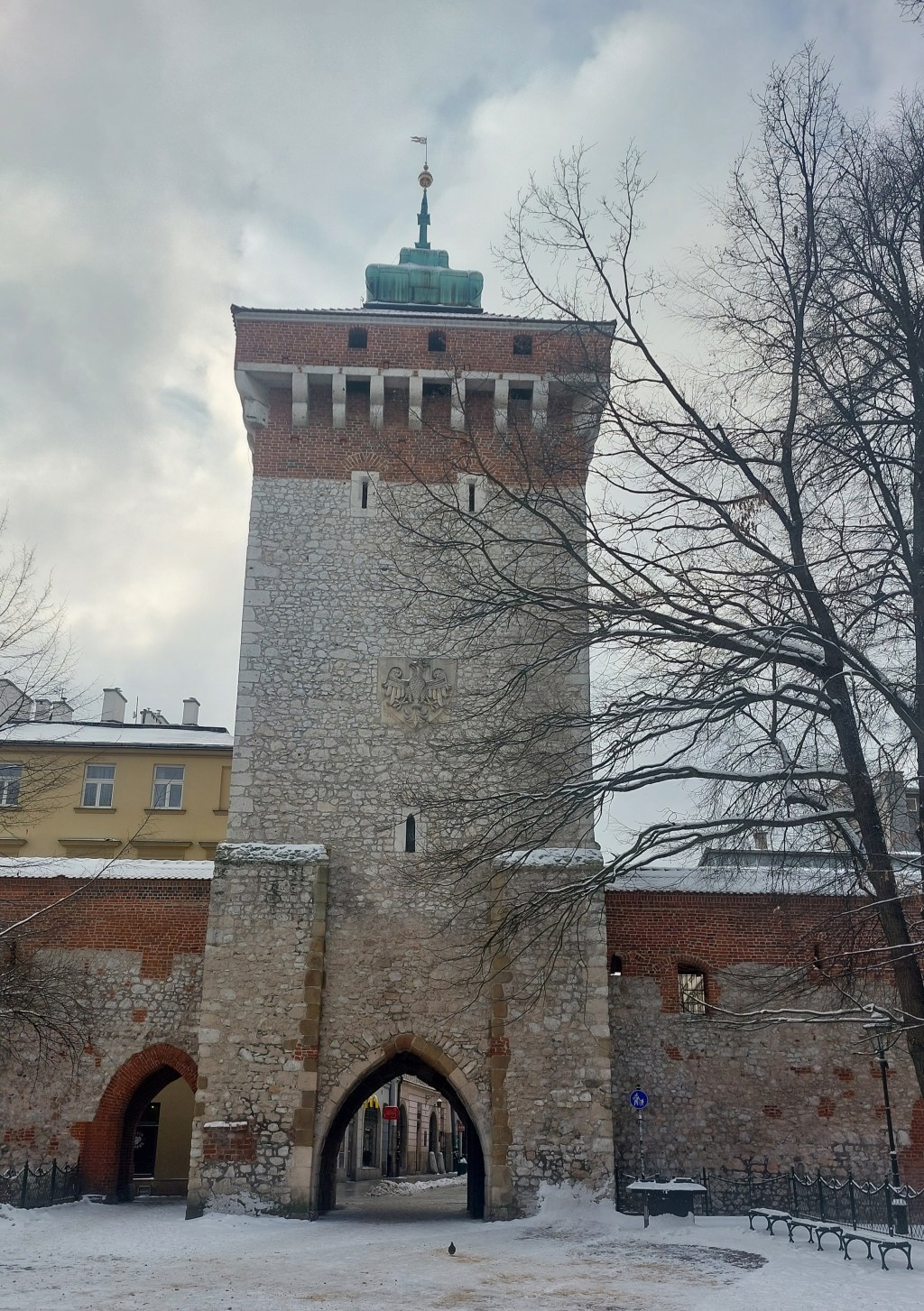
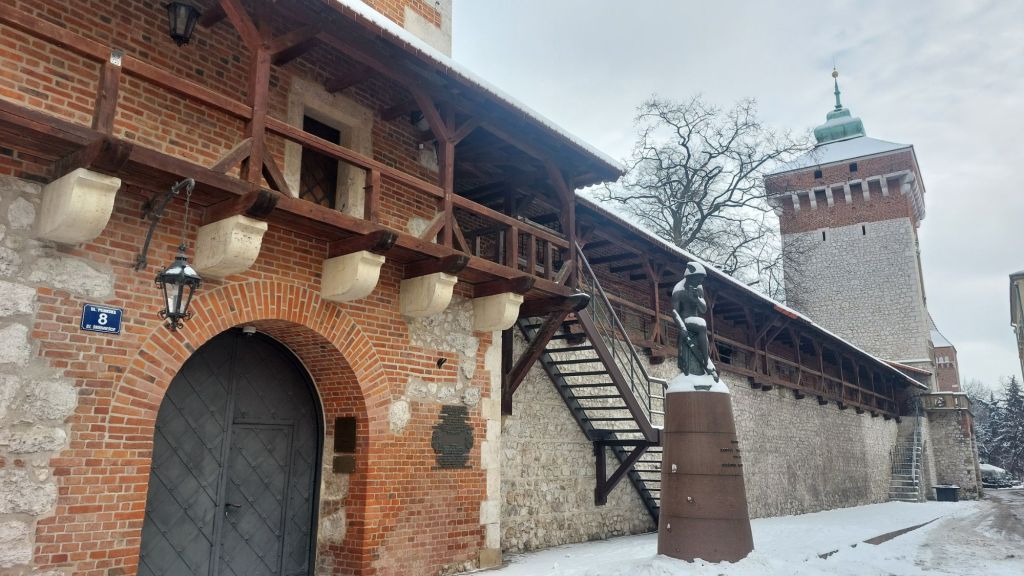
So, with that background, we can now begin our tour… We met outside what remains of the city walls between the Barbican (very similar to that in Warsaw) and St. Florian’s Gate. The walls had at one point 45 towers, and each were “owned” by a city guild who took responsibility for protecting the city from their tower. I am not sure I would have necessarily wanted to rely on the brewer’s guild… When the walls were demolished in the 19th century (to expand the city), the surrounding moat was filled in, and the green belt of the park was created. From the adoption of Christianity in the 10th century, Krakow was an important relgious centre, and St Florian became the patron saint of Krakow. St Florian was a Roman centurion credited with creating the first fire brigade (making him also the patron saint of firemen) protecting early Christians from fires started by the Romans. His body was sent here by the Pope and now lies in St. Florian’s cathedral.


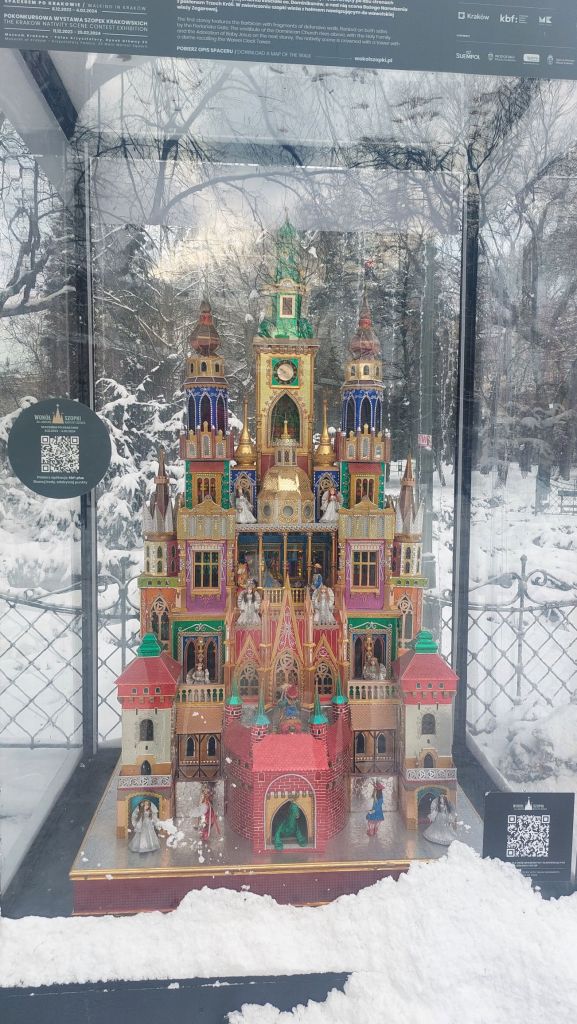
In a glass box next to the gate is a Krakow Nativity scene. These are a big thing here and there is an annual competition to build a model of the navity story but incorporating Polish/Krakow traditions such as Krakow’s dragon (more on him later), the tatar invaders and Queen Jadwiga. I should also note that in Poland, you do not take down your Christmas decorations until Candlemass on 2 February – this is something I am seriously thinking of adopting. January is miserable enough as it is without also ridding one’s home of fairy lights and tinsel!
Our next stop was Market Square. This was completely rebuilt in the 19th century following tatar raids, which destroyed the old city. It was decided to rebuild the city following the city laws of Meckleberg, which plan a central market square with roads leading from it in a grid formation – which is what we have today. During Nazi occupation, the square was renamed Adolf Hitler Platz and then quickly returned to the name of Market Square after WW2…

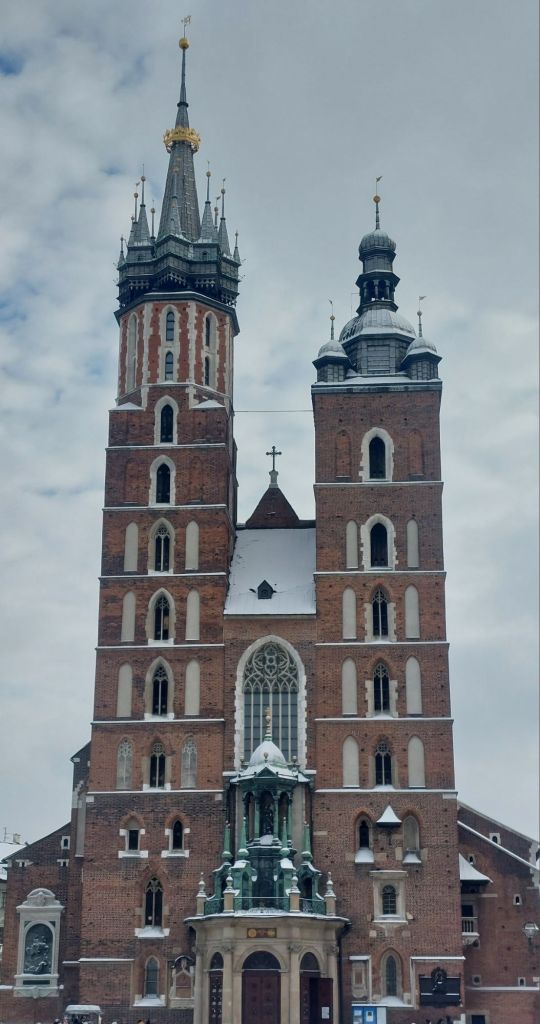
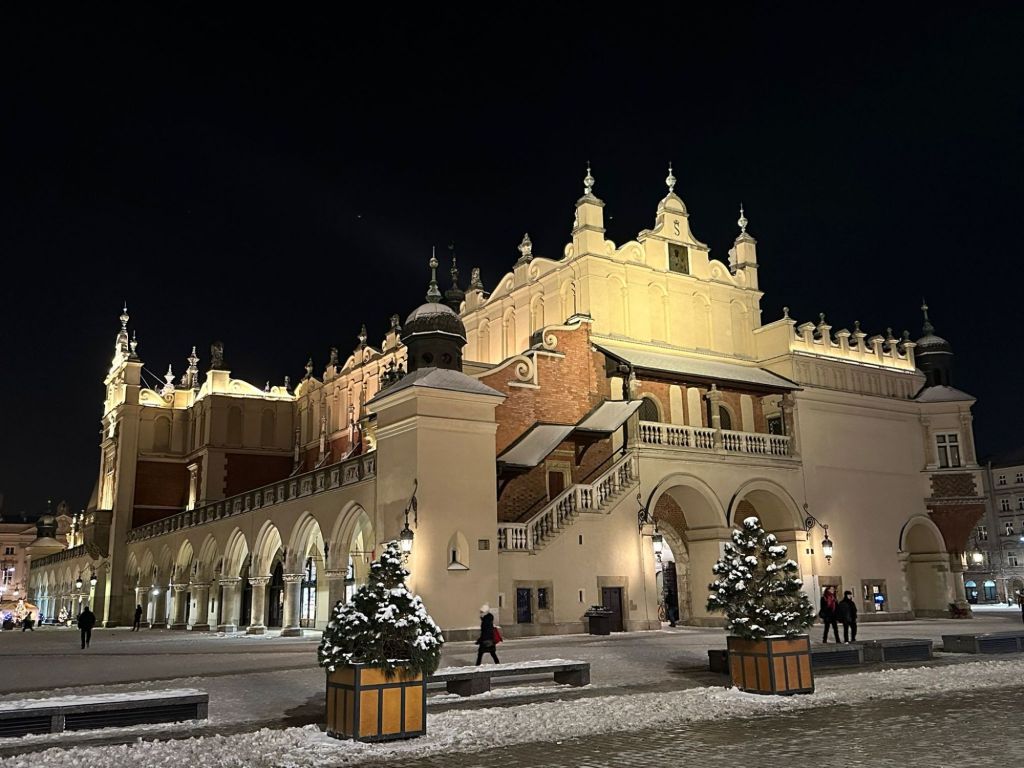
Market Square is dominated by St Mary’s Bascilica. The first church was built on this site in the 13th century, but this is a gothic church. You will see that the towers are two different heights – the story goes that each tower was built by 1 of 2 brothers who were having a competition as to who could build the tallest tower. The oldest (more experienced builder) brother was winning, but the younger brother overtook him, so in a fit of rage, the older brother stabbed his brother to death. Realising what he had done, he climbed to the top of his taller tower and jumped to his death. The city decided to leave the towers uneven to warn against the dangers of sibling rivalry…
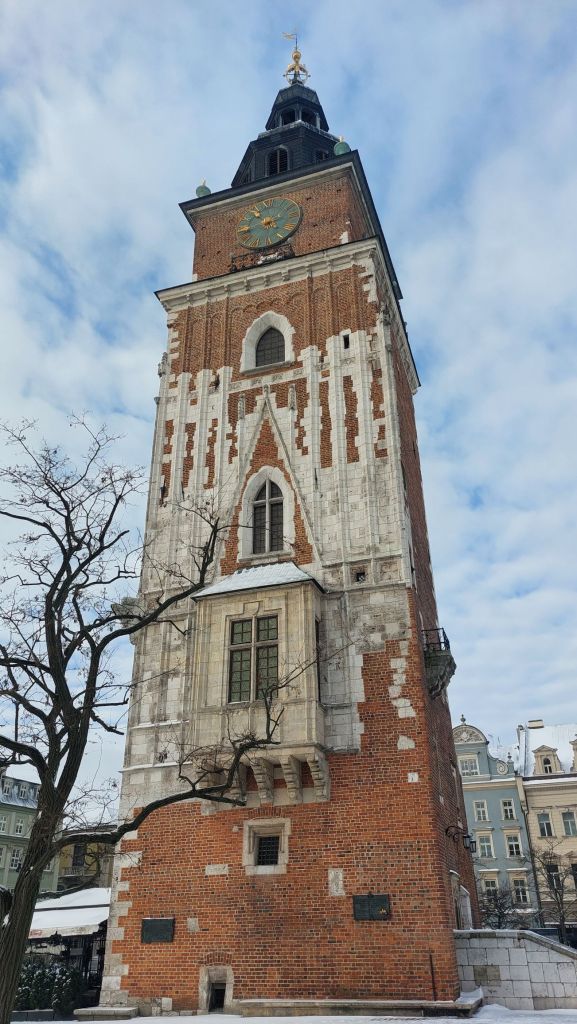
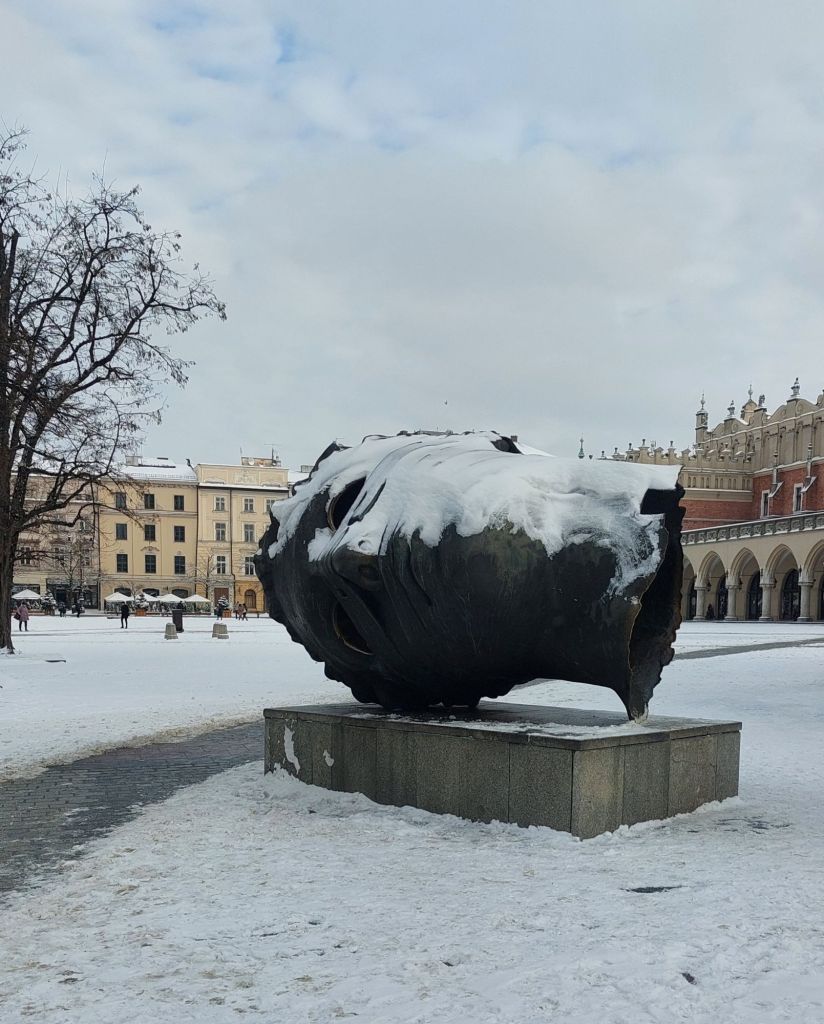
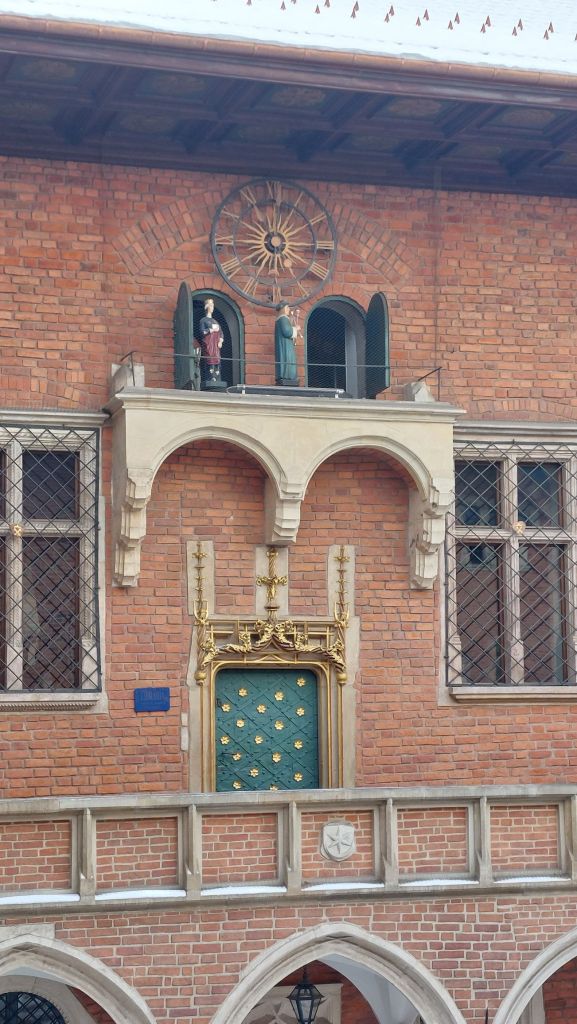
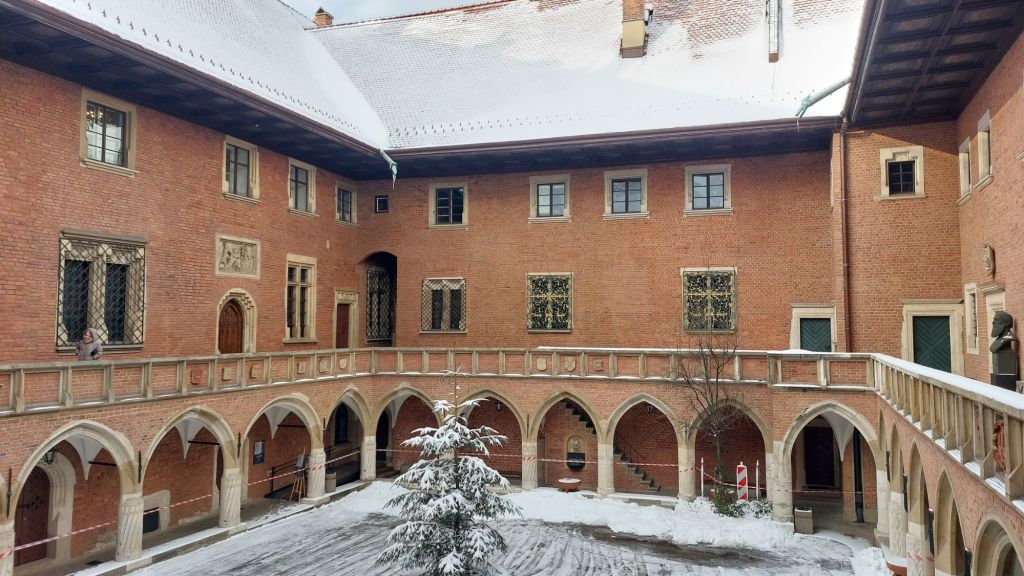
Our next stop was Krakow university, notable alumni include Pope John II (he really is a big deal here). This was the first Polish university dating back to 1364, although this building is from the 15th century. During WW2 Nazi Germany attempted to destroy Polish culture and education in an effort to turn the Polish into a working underclass for the Aryan race. In 1939, all of the university’s professors were arrested, and most died on route or in concentration camps. Today, there is a tradition whereby Poles donate international awards to the university (nobel prizes, olympic medas etc) to celebrate Polish achievement. There is also a rather impressive anamatomic clock, which includes moving figures from Polish history.
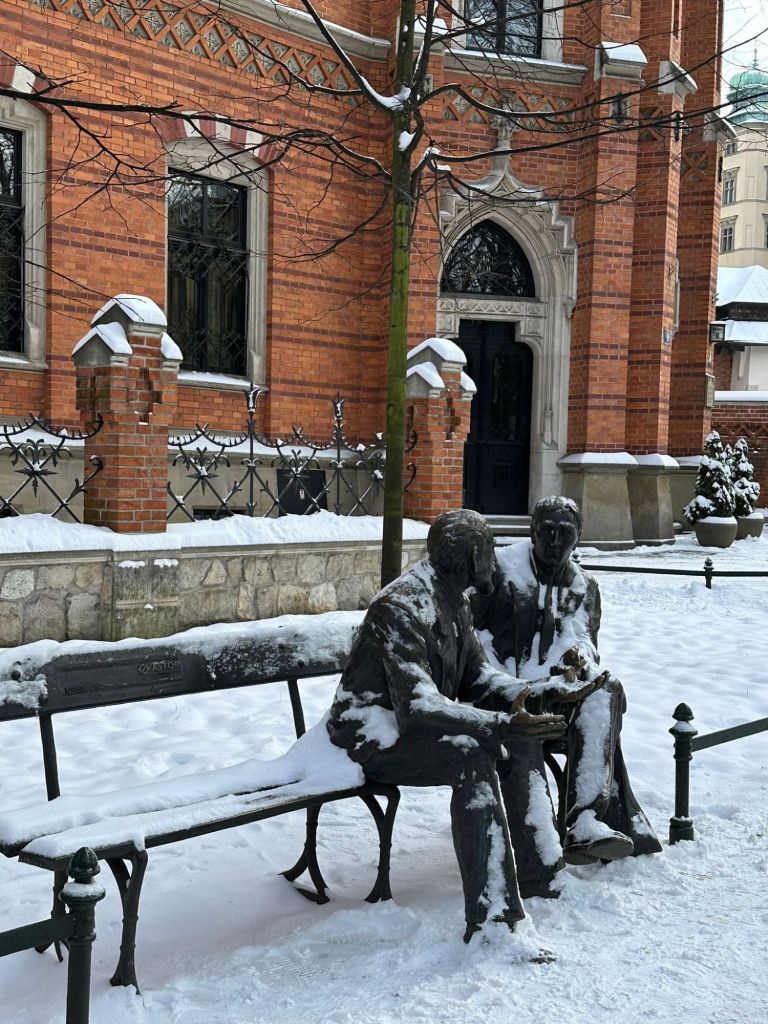
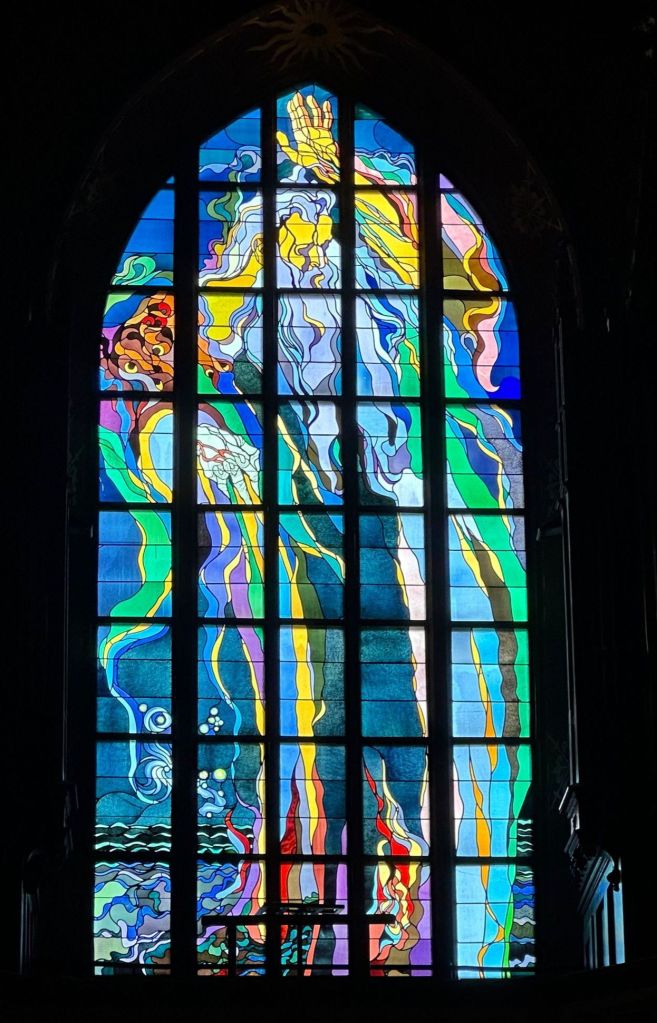
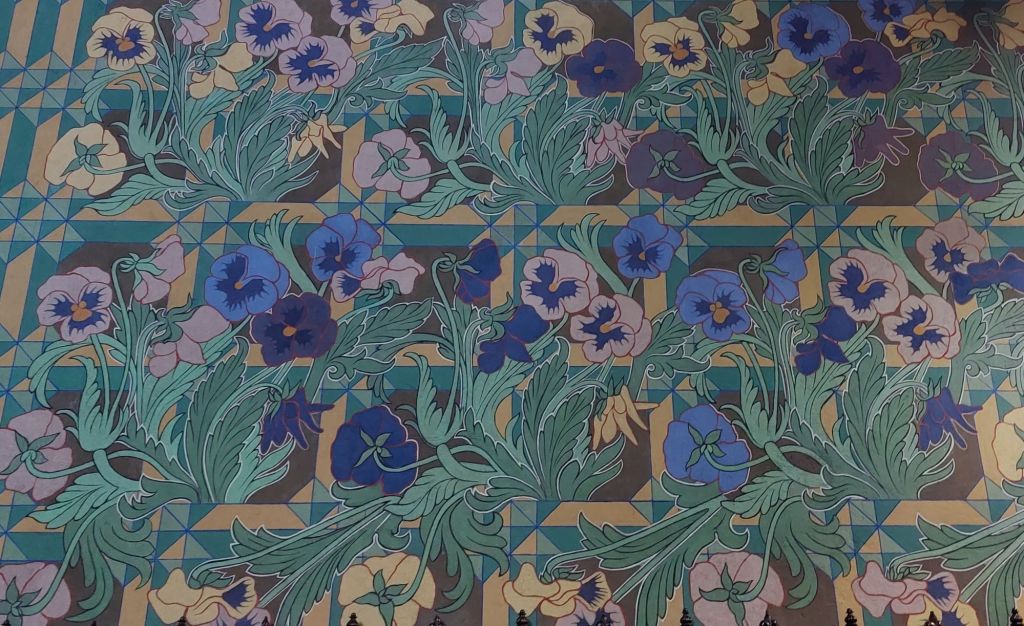
Our next stop was the Church of St. Francis of Assisi with the monestary of the Franciscan Order. This is opposite the Bishop’s Palace where Pope John Paul II used to stay. From the outside, it is a perfectly nice gothic church, but from the inside, it is decorated in Art Nouveau style – bright flowers and plants cover the walls with even brighter stained glass windows.

For our final stop, we scaled the hill to Wawel Castle (pronounced Wah-vel). This complex includes the Palace and cathdral and was home to the rulers of Poland until the partition when the Hapsburgs converted the hill into a fort.
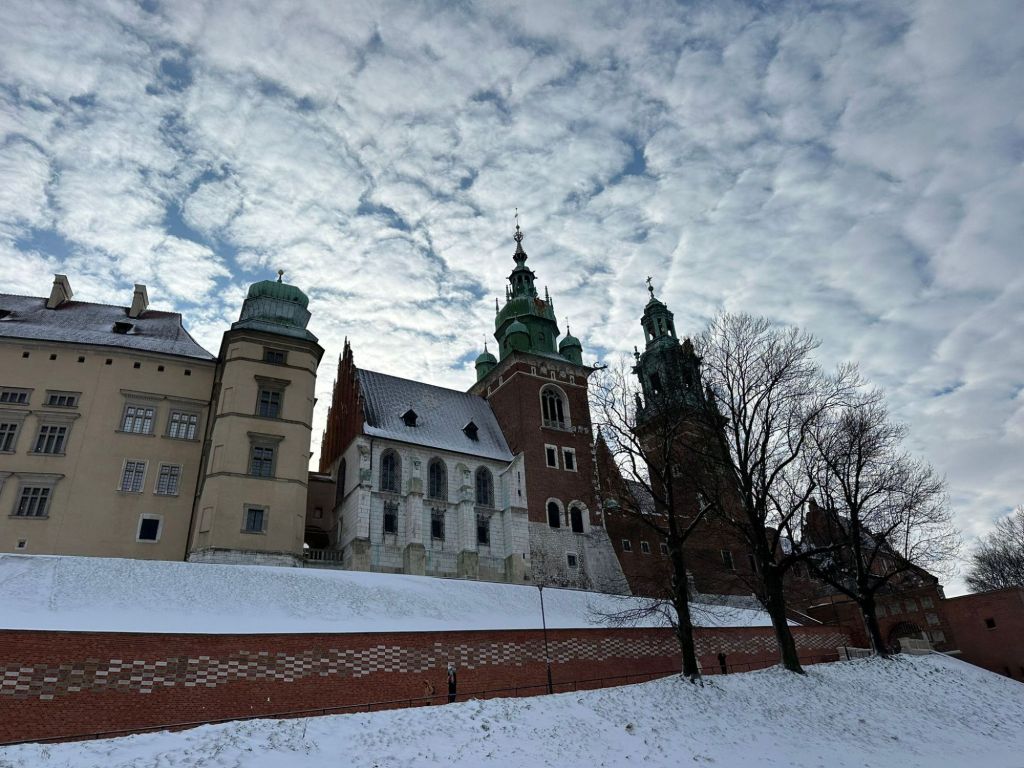
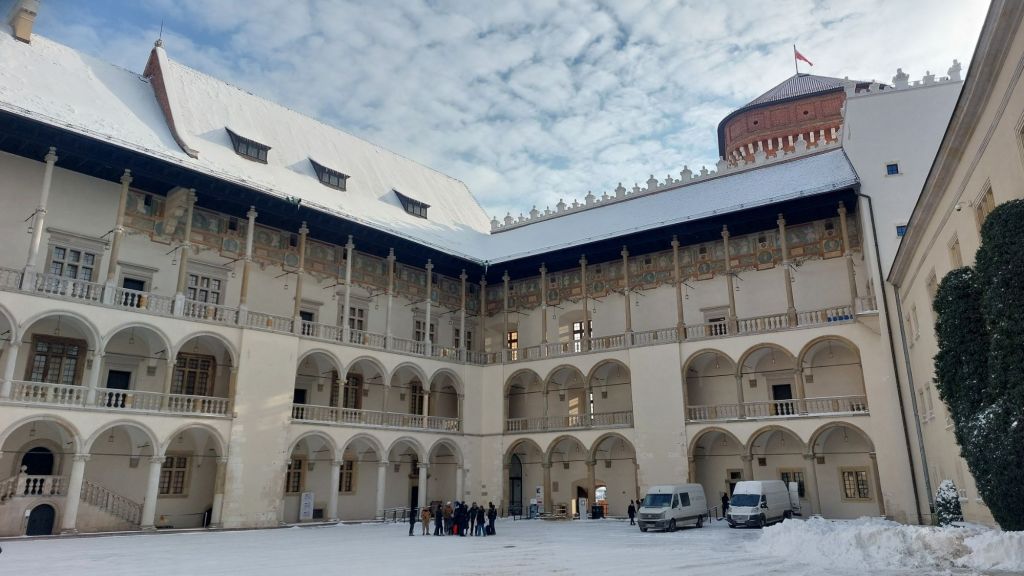
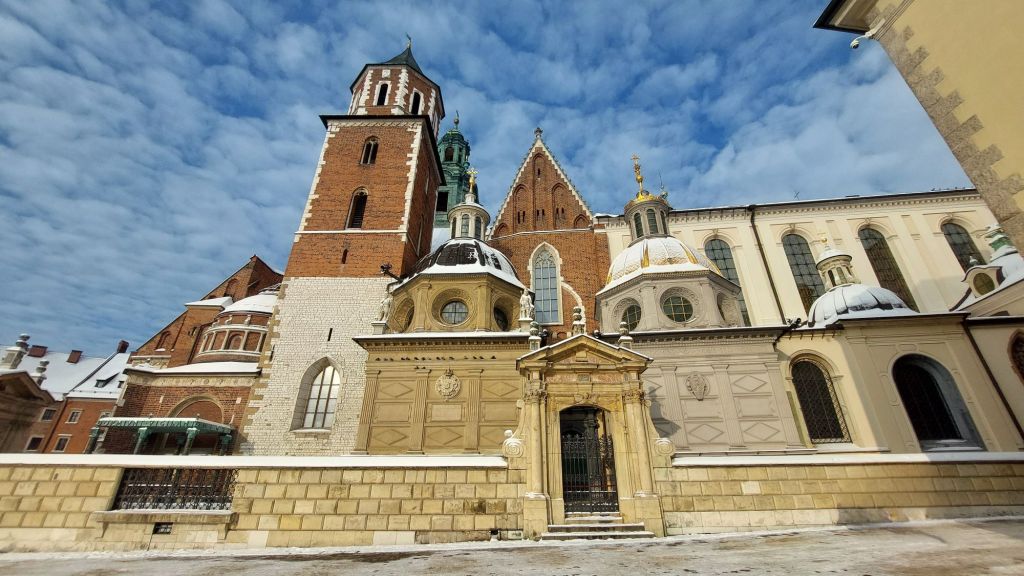
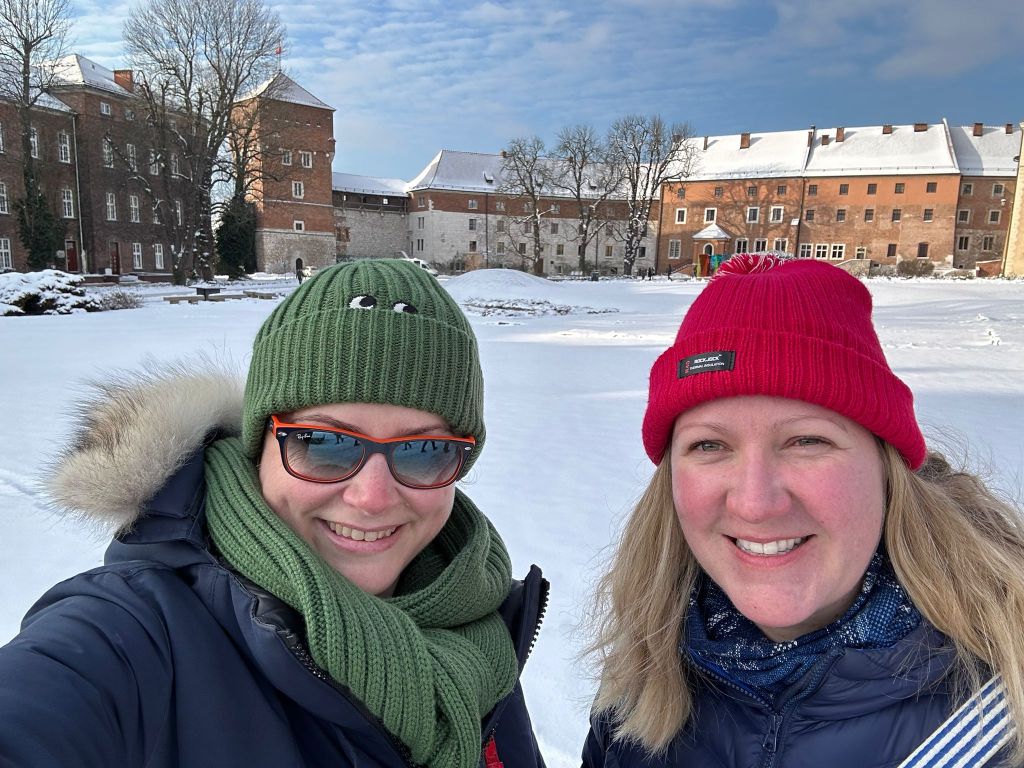
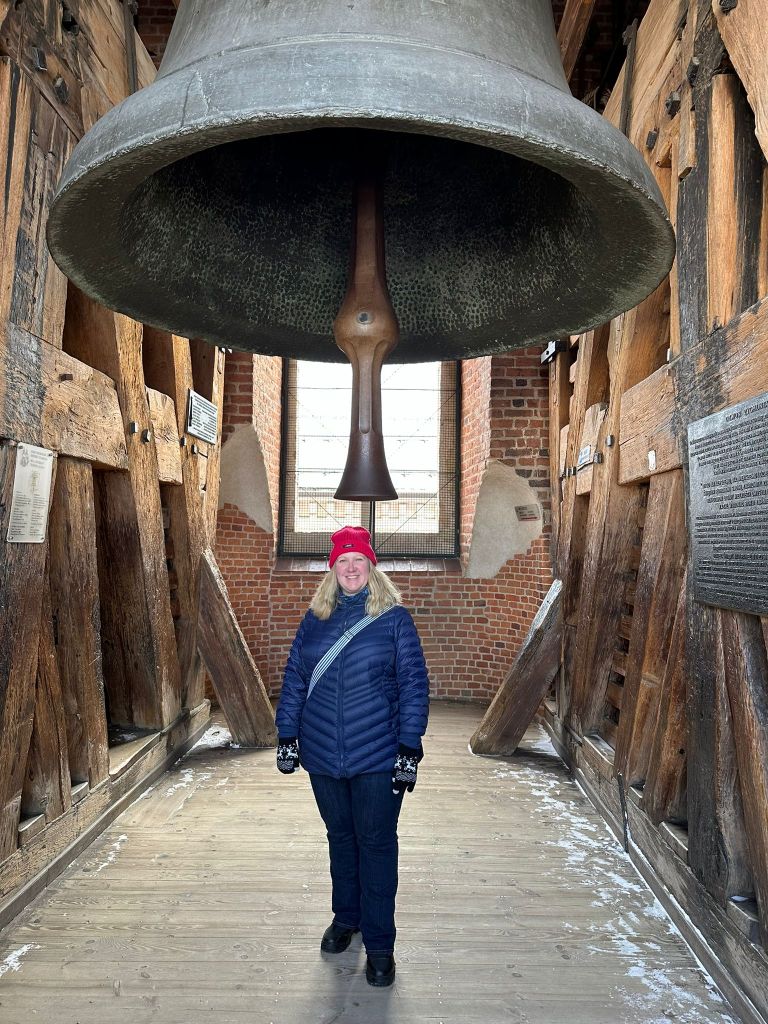
As you can see, the Cathedral is rather a mix of styles, but is where the kings of Poland were crowned and also contains the crypts of the royals (no photos allowed inside). We also scaled the bell tower to see the “Bell of the King,” which weighs 12 tonnes, and legend says that if you touch its “clanger,” you will be married within 6 months. Well, as single ladies, Steph and I both touched it, so I am sure you are already looking forward to our weddings in June this year!
Wawel Cathedral is guarded by the bone of a dragon. The story (of which there are many, but this is the one that I am telling!) goes that many centuries ago a local dragon was attacking the people of Krakow, so the king said whoever could kill the dragon could marry his daughter (sounding familiar anyone?). A shepherd left a pile of wool coated in acid, the dragon ate it (yes, I appreciate this is the unbleivable part of the story), felt sick, and so drank too much water from the river. The wool inside the dragon absorbed the wool, became heavy, and drowned in the river. Steph felt that the bone was more likely to be from a whale, I am going to believe it was a dragon.

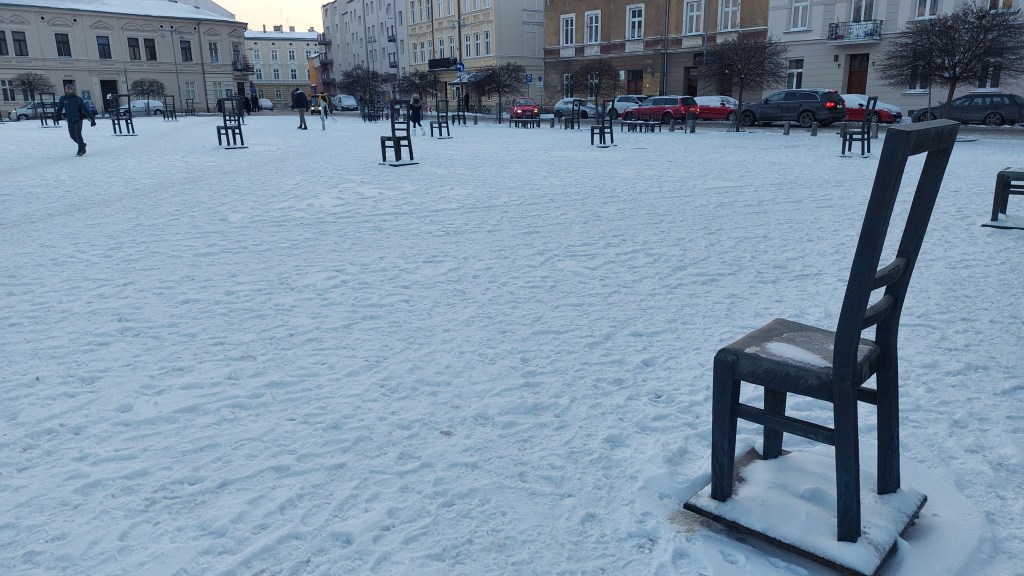
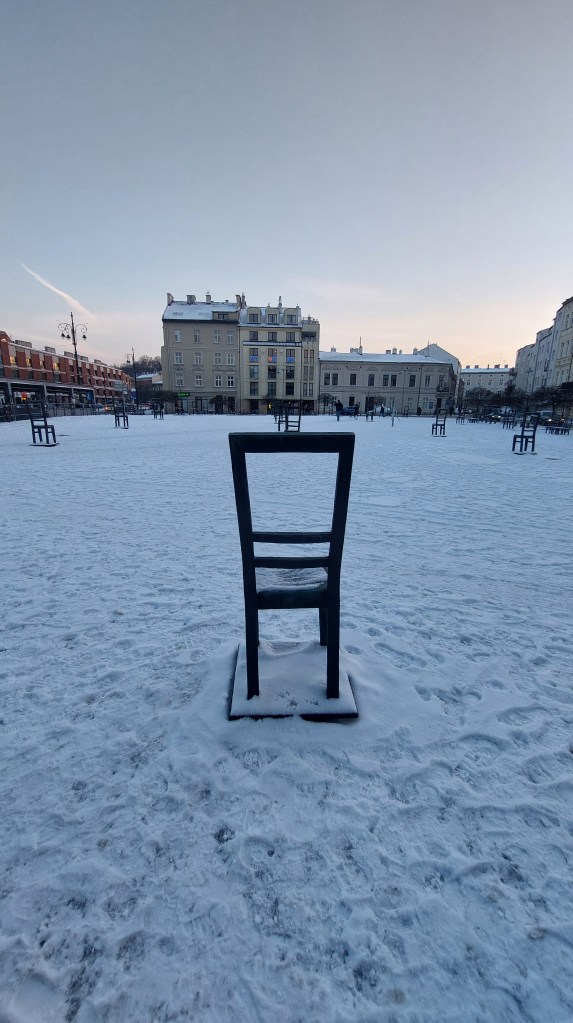
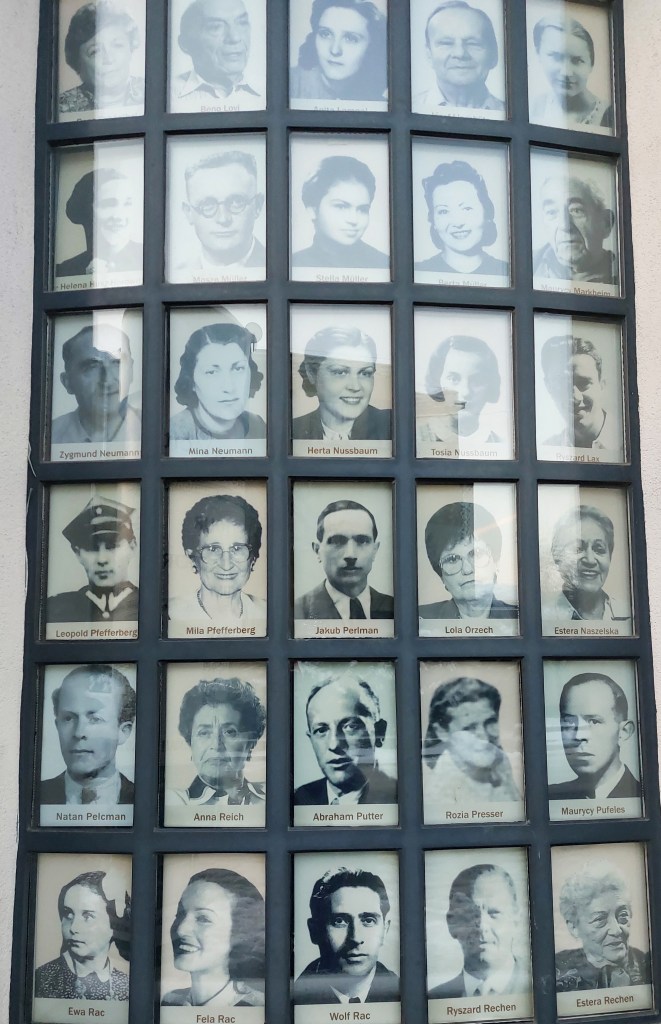
Having finished our walking tour, we headed to the Jewish area of Kazimierz. Before 1939, Krakow was an influential centre for the 60,000 -80,000 Polish Jews who had lived in this area since the 13th century. Persection of the Jews began as soon as Nazi Germany arrived in the city with forced labour beginning in September 1939. In 1940, a voluntary expulsion program began becoming forced by November 1940. In March 1941, all remaining Jews were forced to move to a ghetto in Podgorze, leaving Kazimierz. The ghetto had previously accommodated around 3,500 people in 320 buildings, so to accommodate the 16,000 Jews appartments were divided on a 2m² per person basis or by a standard of three people to one window. The ghetto was liquidated between June 1942 and March 1943, and its inhabitants deported to extermination camps in Poland. Walking around today, Kazimierz has only a few reminders of this past, but what was once the biggest open space in the Krakow Ghetto has been turned into Ghetto Heros Square. As the only open space, this was from where the ghetto’s residents were selected, deported to camps and/or exectuted. The square today has 33 monumental chairs and 37 standard chairs made of iron and bronze lined up in rows to symbolize the empty seats that the residents of the ghetto left behind.
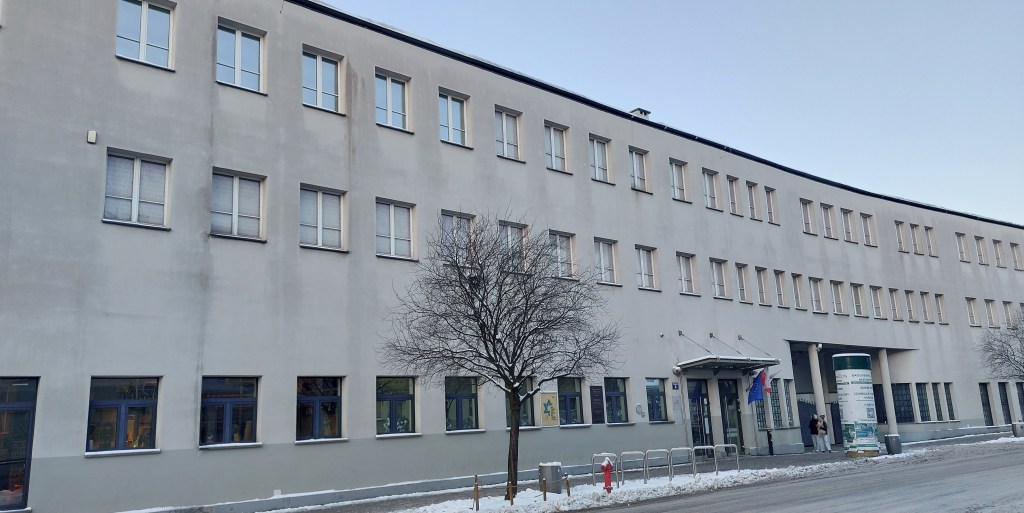
Our final stop in this area is Oskar Schindler’s Enamel Factory. I would assume most of us have watched Schindler’s List and are therefore familiar with Oskar Schindler, who is credited with saving 1,200 Jews by employing them in this factory. He life tells the story of an opportunity initially motivated by pofit who came to show initiative, courage, and dedictated to saving his Jewish employee’s lives. He is the only member of the Nazi Party to be named “Righteous Among the Nations” by Israel and is buried on Mount Zion.
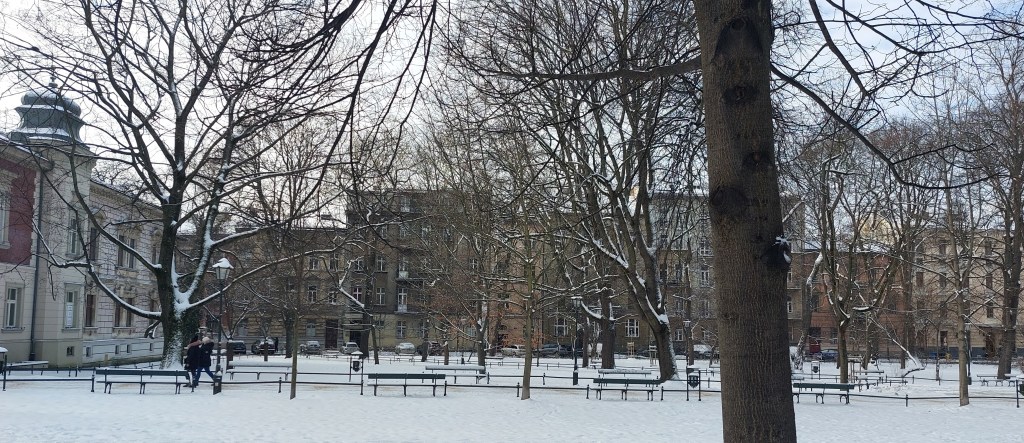
After a day of much sightseeing, we headed back to our hotel to defrost – it has been extremely cold in Krakow. You may have noticed the blue skies, which are lovely but result in it feeling even colder than the forecasted temperature. Once a more acceptable body temperature had been achieved, we headed back out for souvernier purchasing and dinner (I had a schnitzel). Back to the hotel and to pack bags for our day trip to Auschwitz tomorrow (Tuesday).
To summarise our time in Krakow, this is a beautiful city, and I would heartily recommend it for a (very reasonably priced) weekend trip. You can certainly see everything you would want to in 1/2 days before making the trip to Auschwitz- many people also recommend to see the Salt Mines, but neither of us could get that interested, but you may want to add these to your itinerary. Anyway, I am writing this on a train from Krakow to Gdansk, so I have another post to do to bring us up to date. Must crack on.


 Travels with Kathryn
Leave a reply to dilymy Cancel reply