The tour begins (properly). Let me start by introducing the participants, we have:
- Wayne – the sole man and sole Australian;
- Daliah – an Italian, but been living in the UK for nearly 50 years;
- Ann and Katie – friends who used to live next door to each other in London;
- Elizabeth – another London based lawyer;
- Eleanor – a lady from Oregon, just flown in from Mongolia;
- Fran – a South African, now living in London;
- Colette – another Brit on a world adult gap year;
- Spike – the tour leader (also British); and
- me.
I would say that whilst Colette, Spike and I are around the same age there are a few more years on everyone else, but they are all very well travelled and many have done multiple Wild Frontiers trips which I am going to take as an excellent indication. A number of us are also completing our Silk Road adventures which is another nice little element, oh, and all the Brits either live in, or haved lived in, London – well, it is a great place.
Anyway, first things first photos of the breakfast spread:
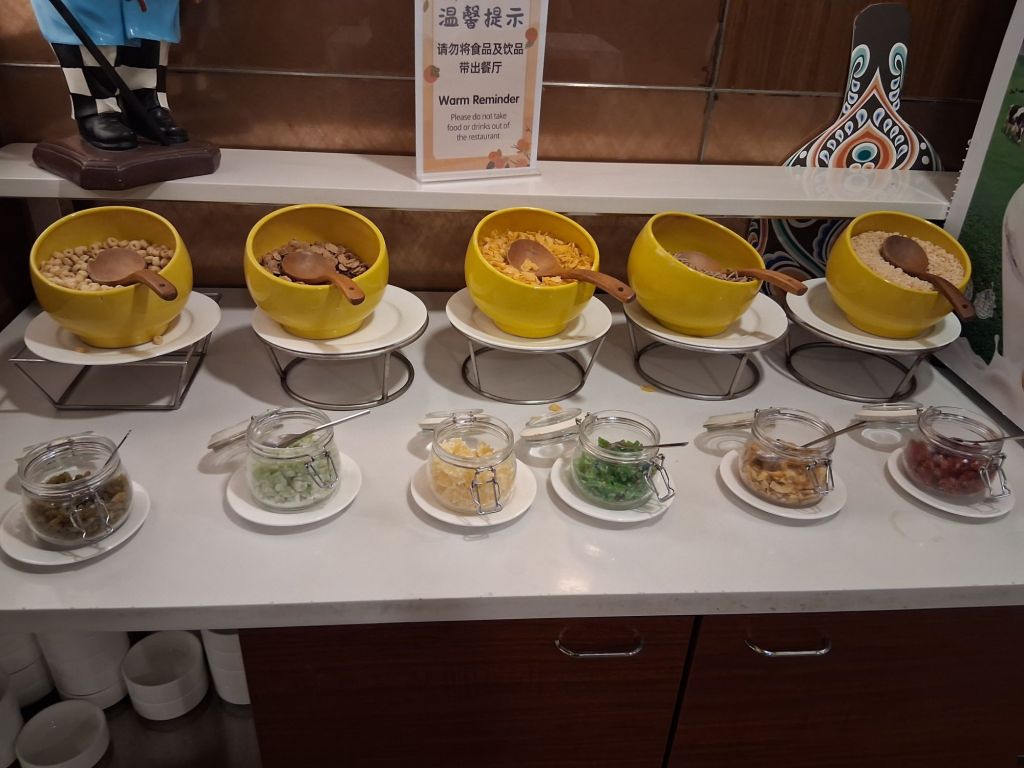
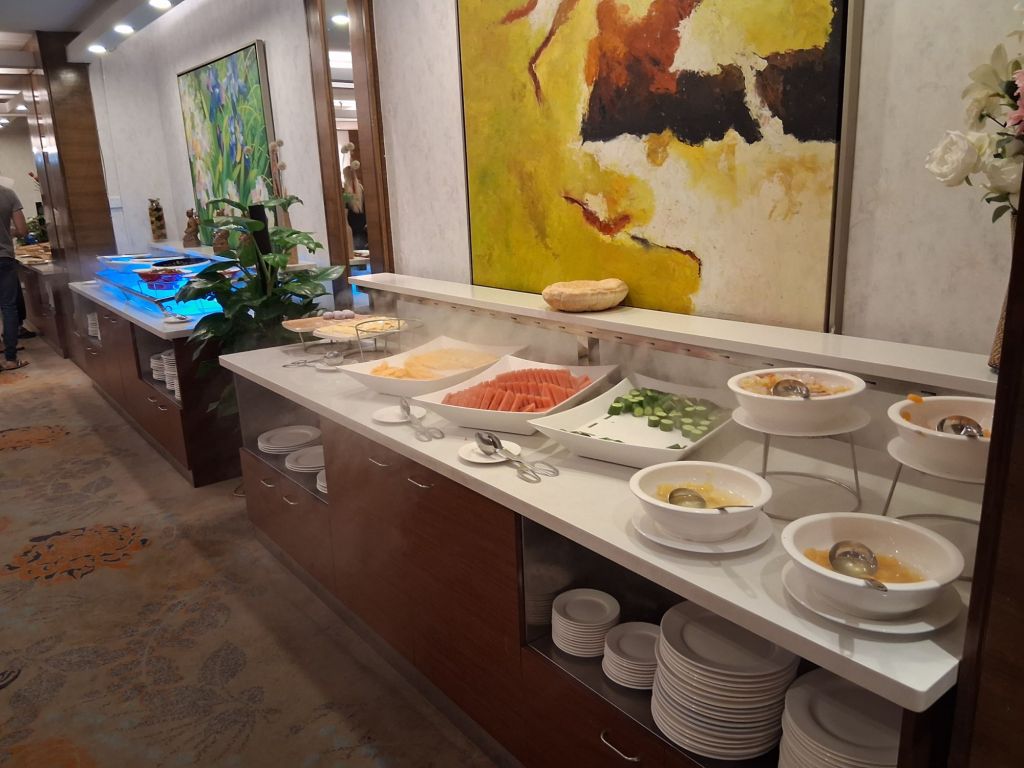
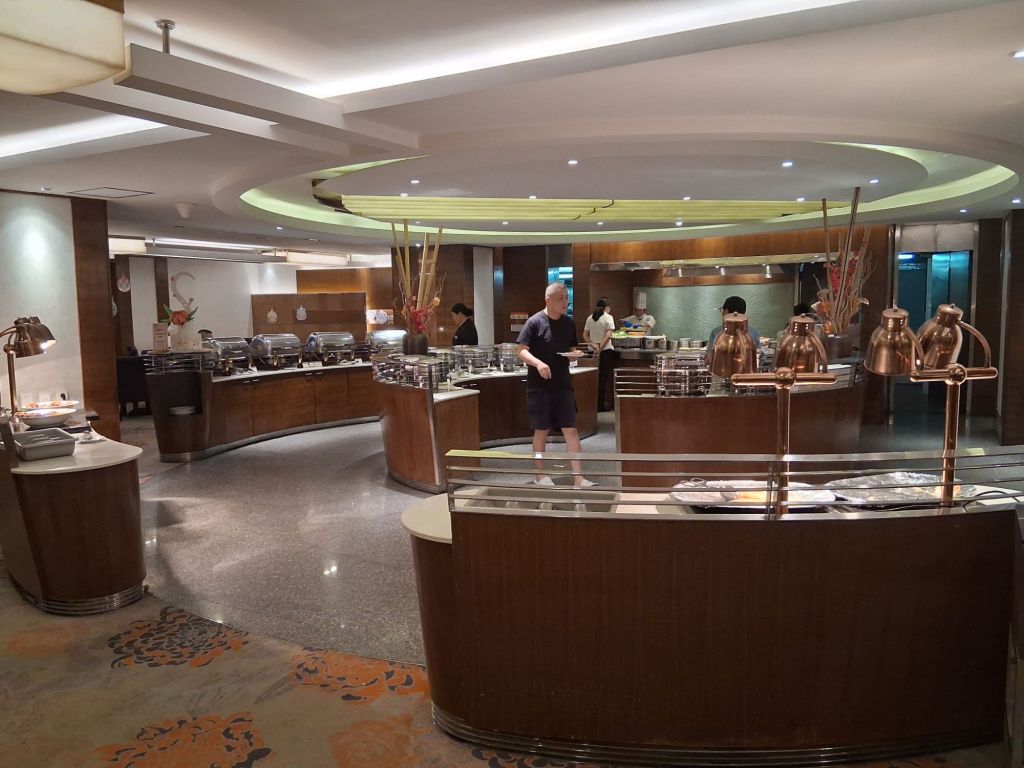
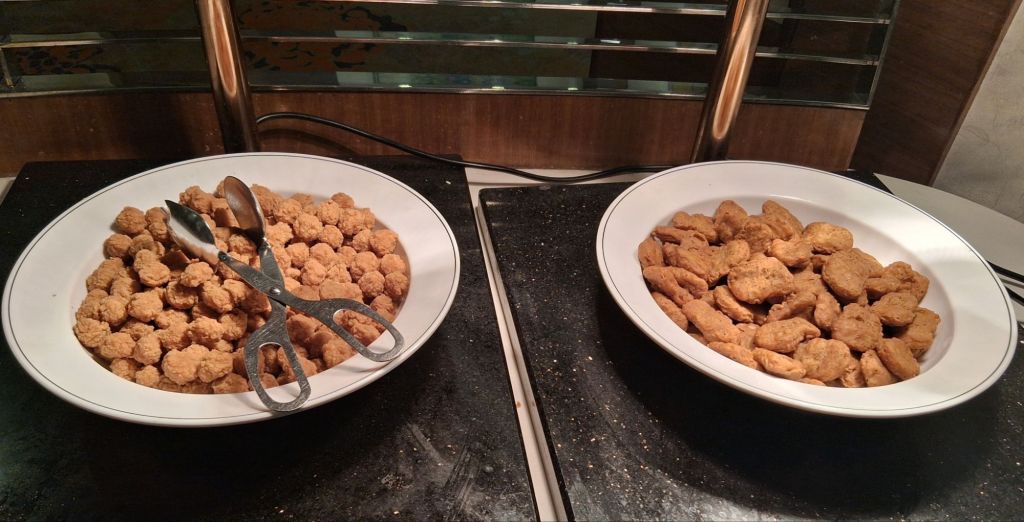
As I mentioned this tour includes all meals and on the first full day of the tour I have learnt that breakfast is going and I need to eat less at lunchtime (and probably generally) or else I am not going to be able to fit into my clothes by the end of it – and its not like I can buy any more in the land of the tiny people!
Right – let us begin our tour. This began on the bus to the Big Wild Goose Pagoda (more on that below), and even on this short bus trip I was reminded of why I do like a tour and really value a local guide. So much information in such a short amount of time, and someone comfortable to just talk about normal life. So Xi’an is considered a “meduim” city by Chinese standards with a population of only around 13 million people. The bit that we the tourists spend the majority of our time in is the ancient city within the walls, but it stretches pretty far (hence the long drive from the airport) and includes 53 universities/colleges, textile factories to the east and indusrial machinery factories to the west. Today (7 June) is a rather big day for the teenage population of Xi’an as today is the first day of exams to enter university (the equivalent of our A Levels). Obviously, China has many universities with a mixtre of public and private, with the better being mostly public. The costs are also rather more reasonable than in the UK with annual tuition being around £600 and accommodation in dorms around £60 per year – perhaps because of this in Xi’an around 60% of people attend university.
However, whilst this modern information is lovely, I am really here for the history and in particular Silk Road history. As we know, Xi’an is the traditional starting point of the Silk Road and this is because it was the capital city of the ruling Hang dynasty and at the time was one of the biggest cities in the world. The Chinese would send silk westwards along the road, and in return would be importing spices, horses and certain fruit (such as melon and pomegranates). The following Tang dynasty was when Xi’an reached its peak as a feudal capital with a population of 1 million people (which is pretty amazing when you consider this was 1000 years ago). Another little interesting snippet was the number of foreigners who came to China during this period and settled in Xi’an, some even becoming ministers to the Tang emperors. Apparently, we know this from studying the images and statutes of ancient tombs when the people have “big noses” (which is the slang for foreigners even today).
Our first stop of today was (as promised) The Big Wild Goose Pagoda (big as there is a small one).
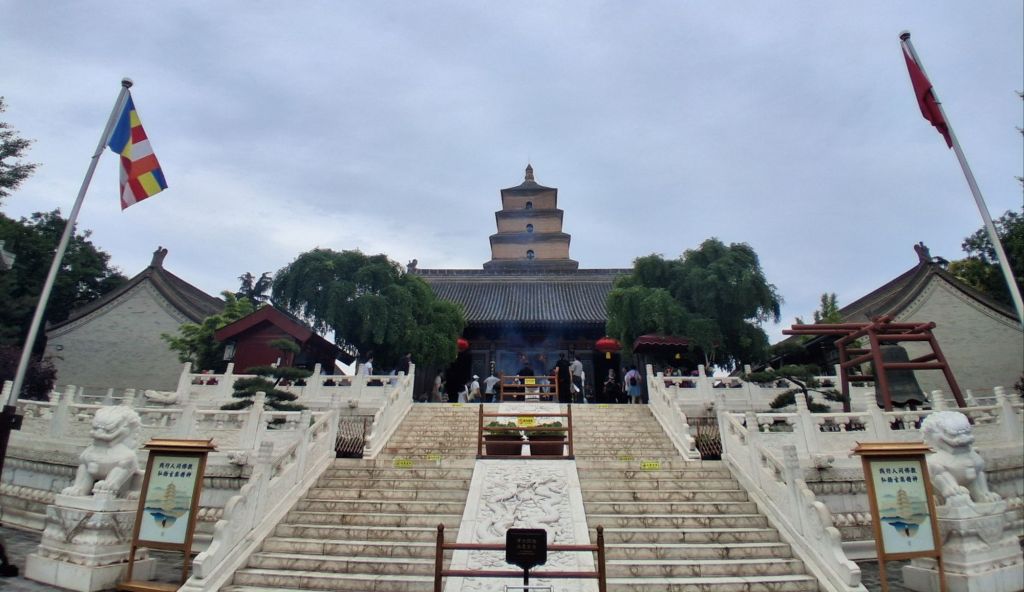
It was built by the third Emperor of the Tang Dynasty in 684AD and was a huge monestary housing some 2000 monks, but only used by the Royal family and their retainers. It was built to honour the emperor’s mother and was originally called the Thanksgiving Temple (as I suspect his mother would not have enjoyed the reference to a big goose!). However, much of what yousee today was actually rebuilt in the 1950s/1980s – the only original parts are the actual Pagoda (which has a slight 15cm lean on it which everyone is rather worried about) and the bell and drum in the bell and drum towers. Although it is a buddhist temple, the Chinese developed their own version of Buddhism which includes elements of Taoism. It was the Tang dynesty who first embraced Buddhism which is why so many sites date back to this period. Interestingly although Buddhism is the main religion in China, the fastest growing is Christianity which is put down to (mainly) American missionaries in rural parts of China.
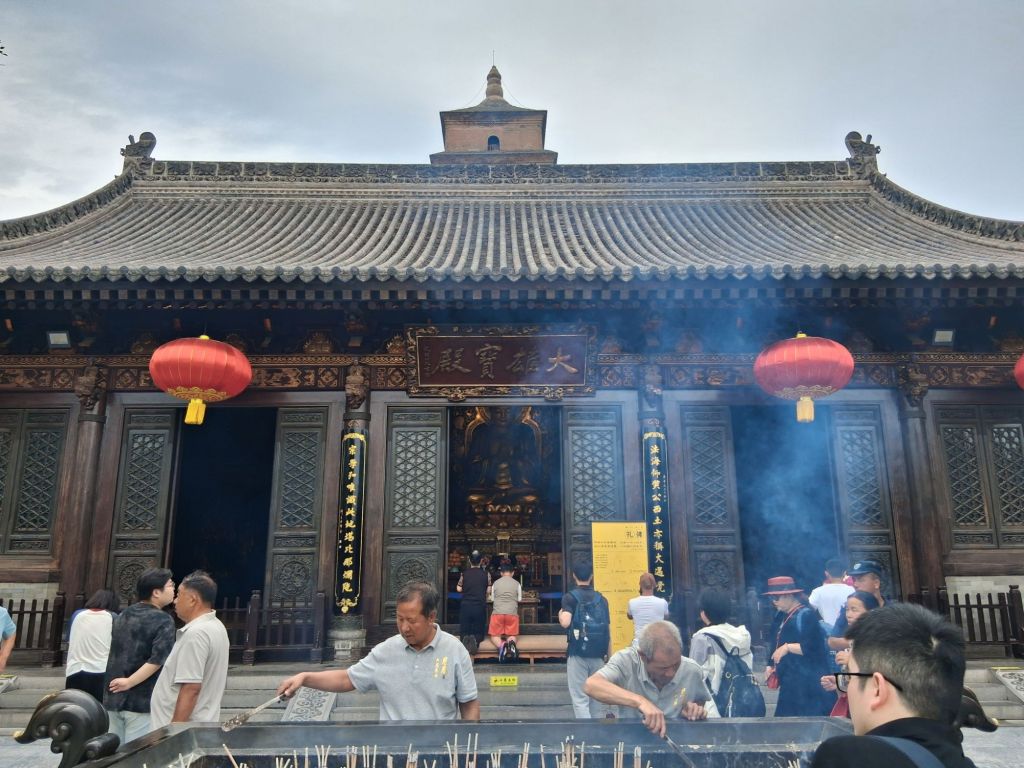
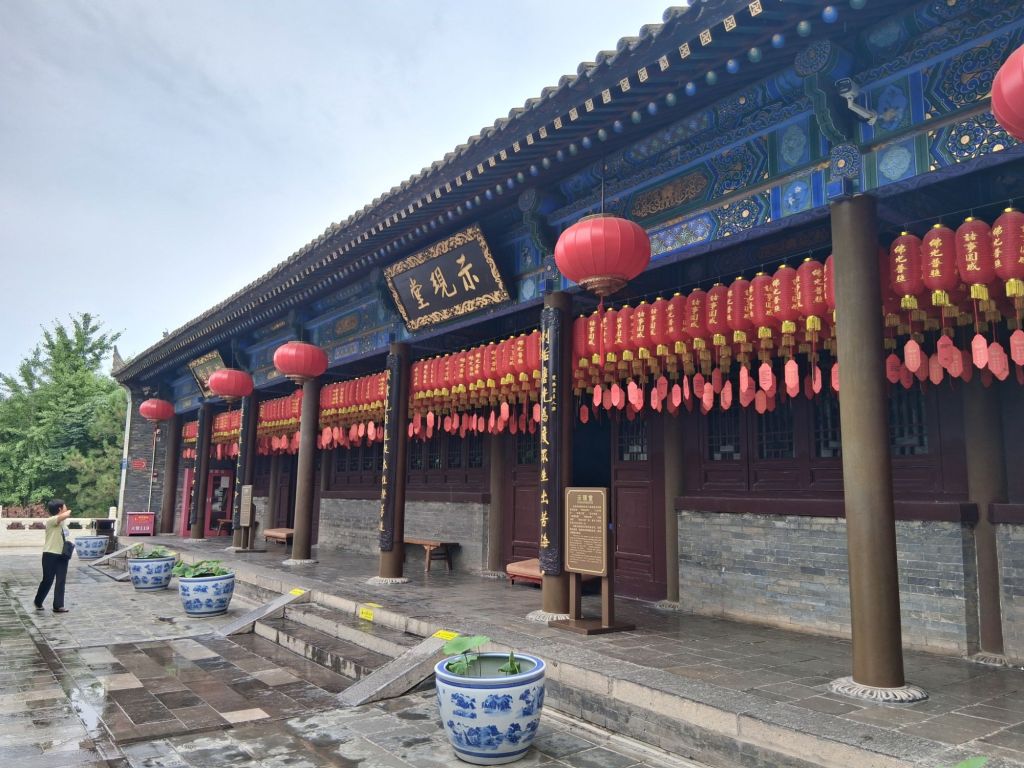
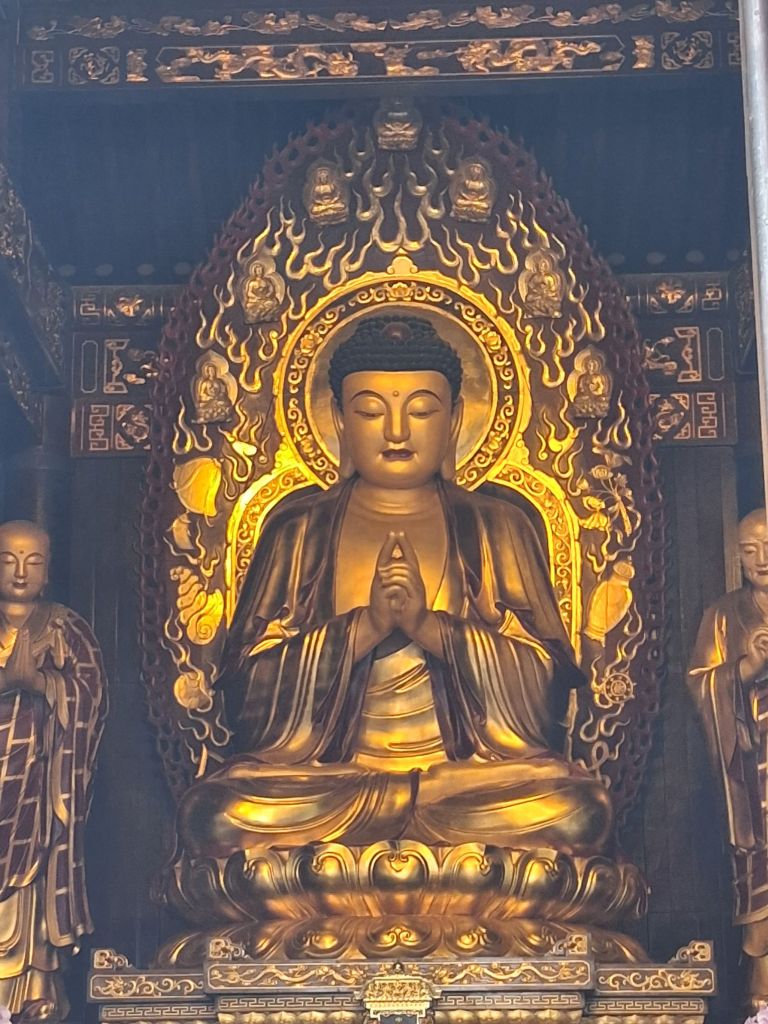
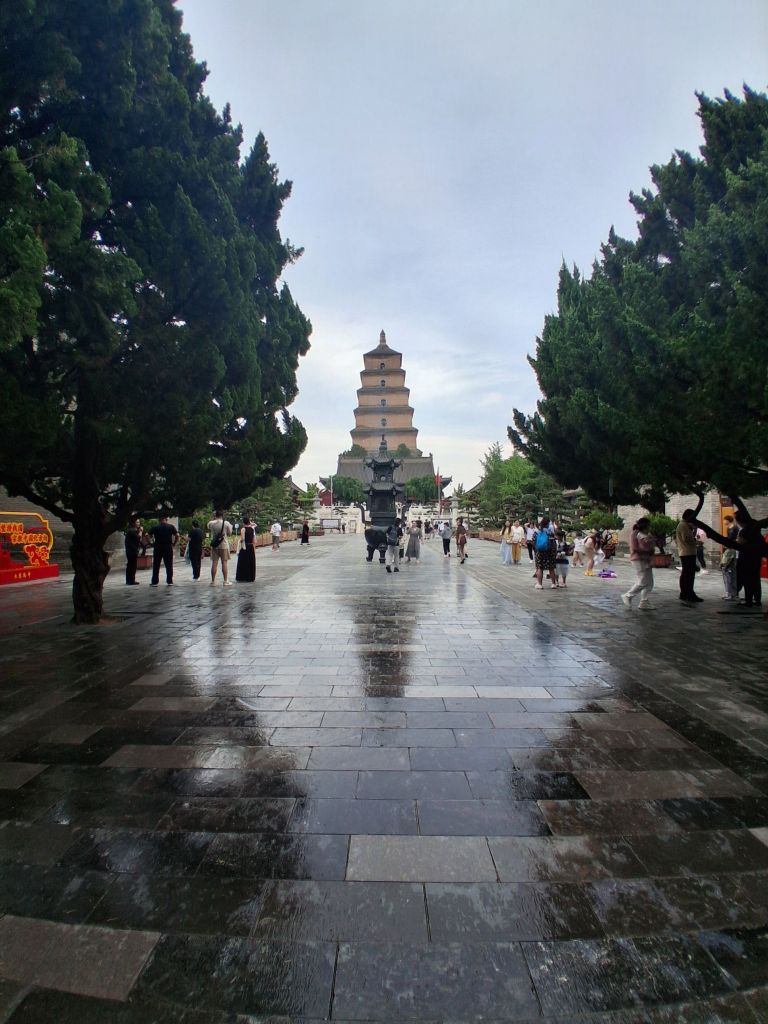
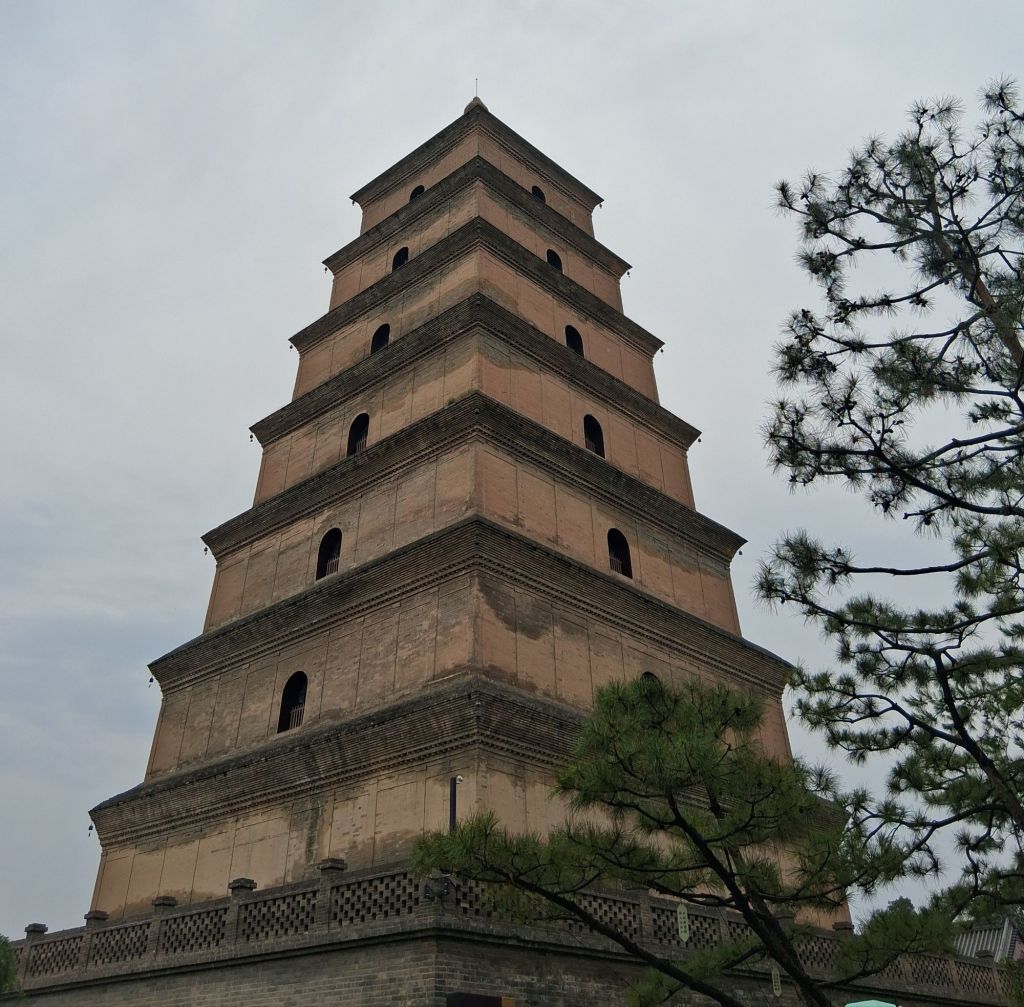
Now let me tell you the story of Xuan Zang. He is the monk credited with encouraging the Emperor to build the pagoda. He was a famous monk at the time – although from a poor family, he decided that he wanted to be ordanined as a monk as he realised when he was studying Buddhist scriptures available in Chinese, that there were many mistakes. He therefore decided to travel to the source of Buddhism (Indian) to study the original texts. In doing so, he travelled through 126 countries and for a time became the pre-eminent Chinese expert on the Western world including by writing a book. On his return to China, he led this temple for 12 years from 652 AD and the pagoda was intended to store all the information and treasures he had accumulated. Today should you wish, you can climb up the whole 64m high although this is no longer encouraged by the sustainable tour group as the lean (currently at 15cm) is apparently getting worse…
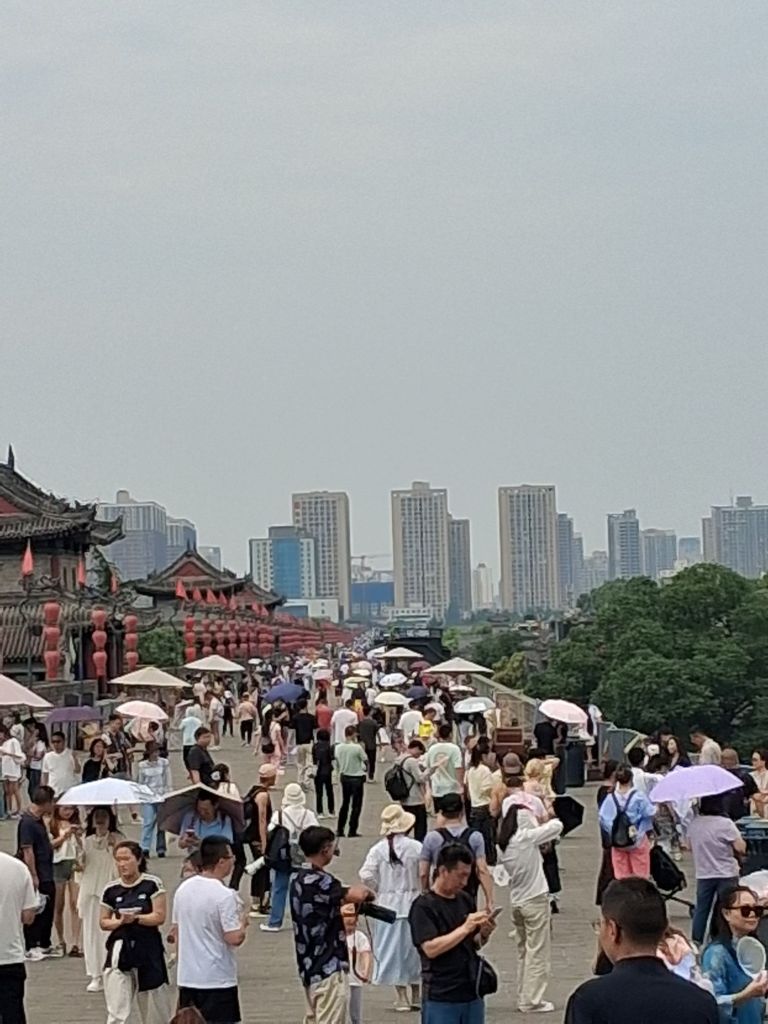
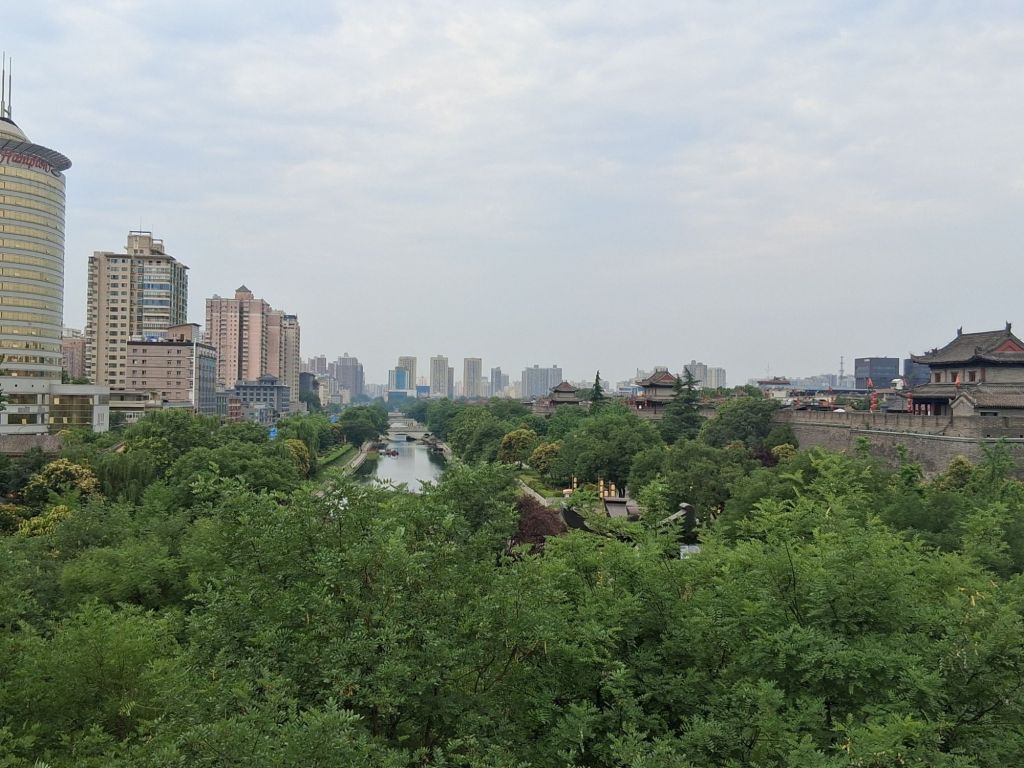
Our final stop of the morning was back to the city wall. You may be relieved to know that it turns out the information I gave you in the last post is accurate, but I did take a couple more photos for you to enjoy:
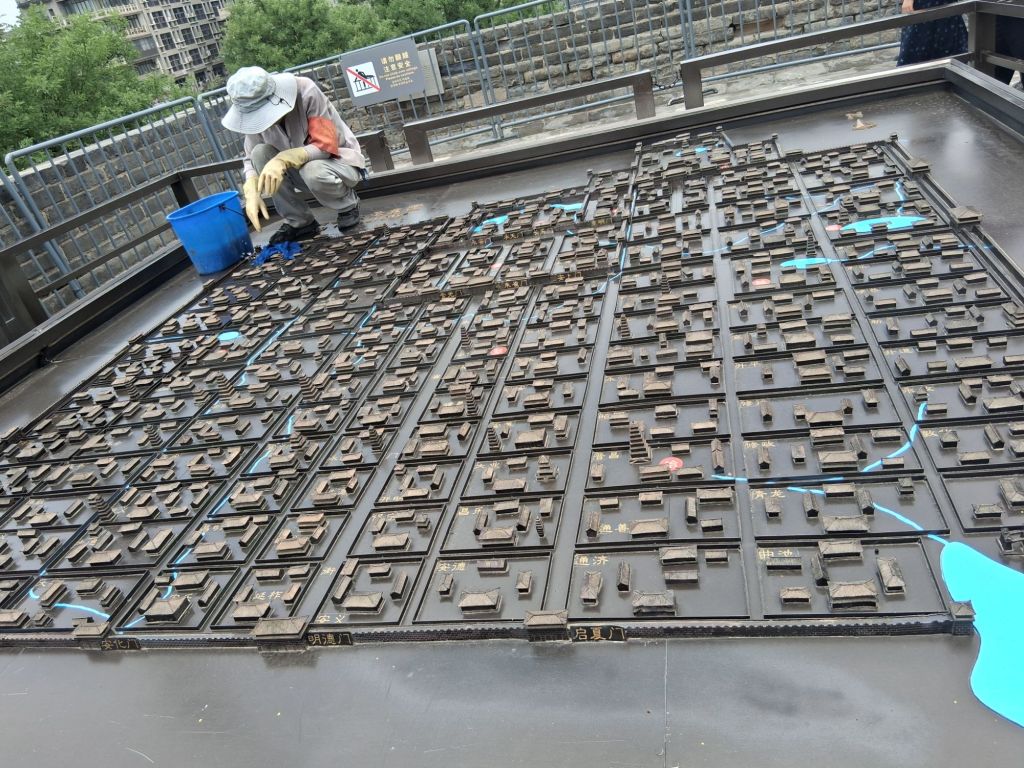
After all that sightseeing, time for a small lunch:
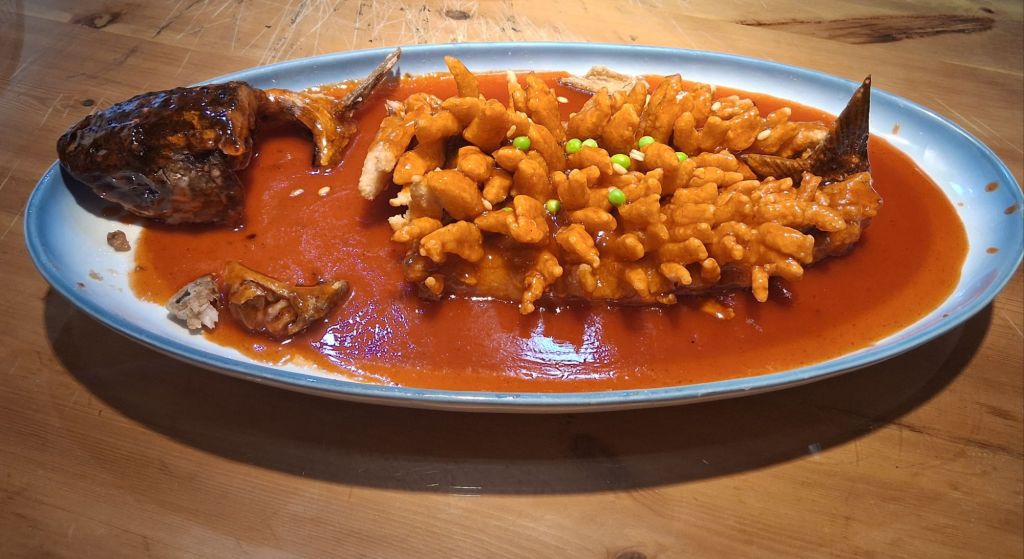
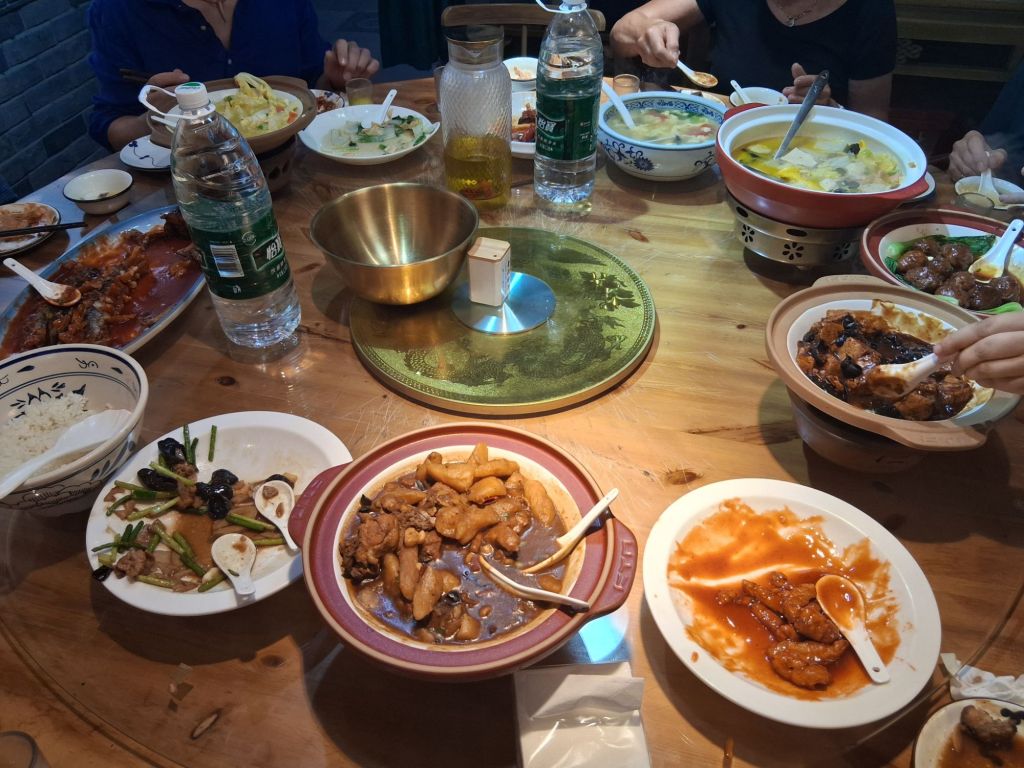
After lunch we were dropped off in what is known as the Muslim quarter, unsurprisingly this is where the majority of Xi’an’s Muslim population lives. Specifically we had come to visit the Great Mosque.
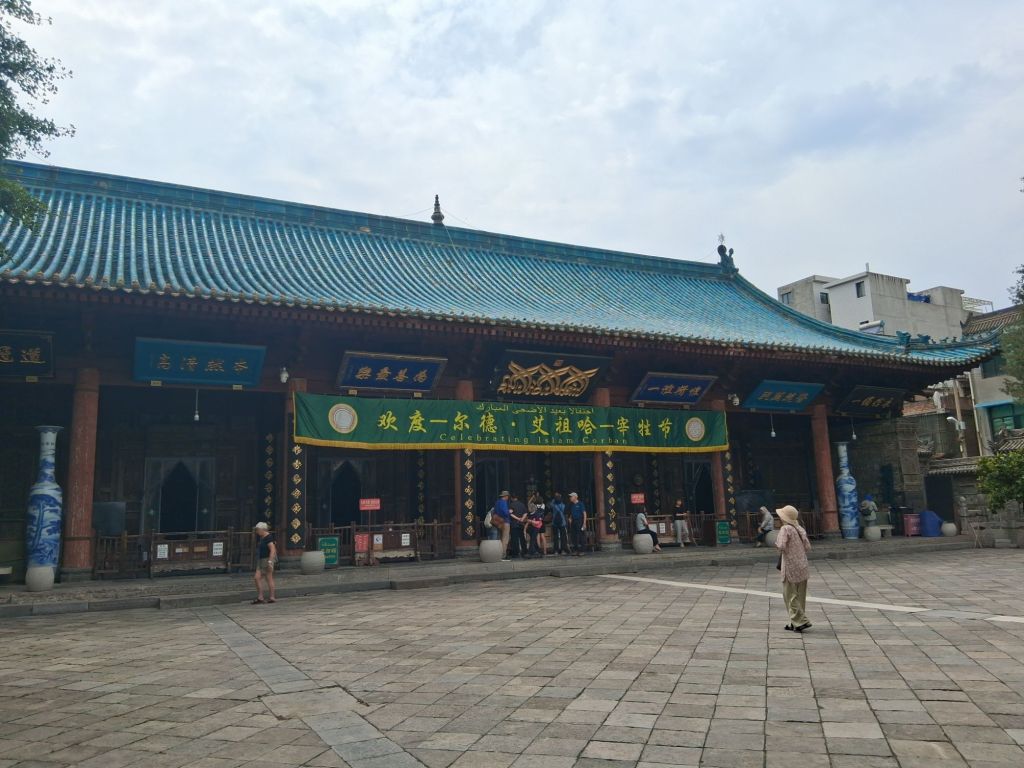
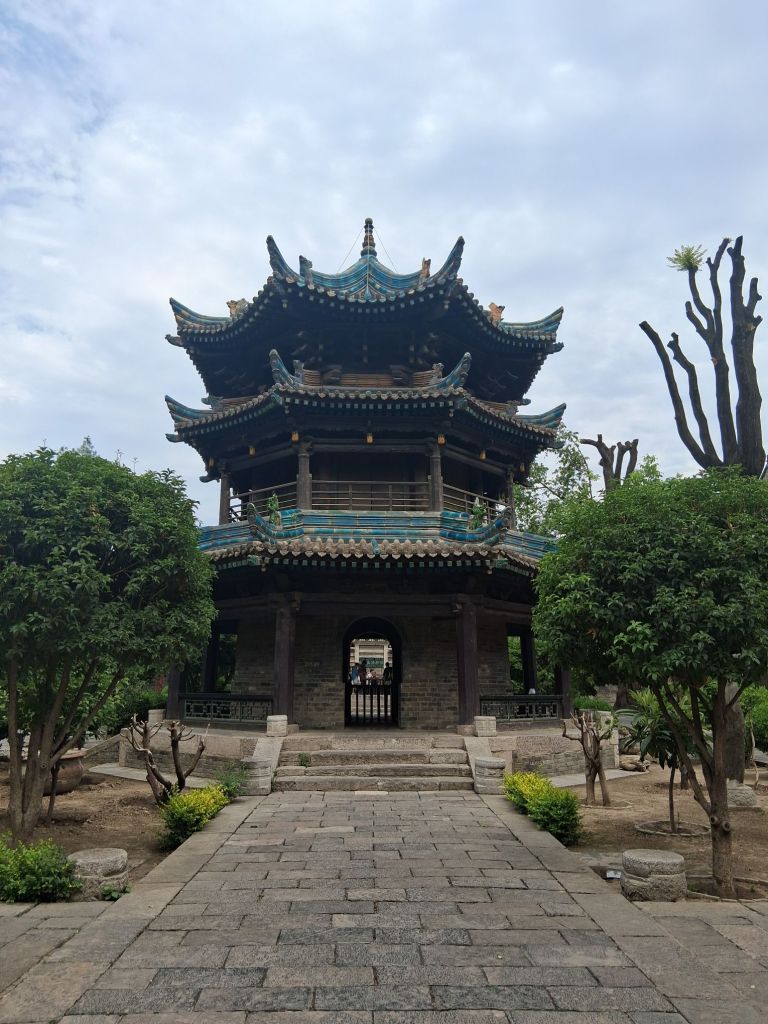
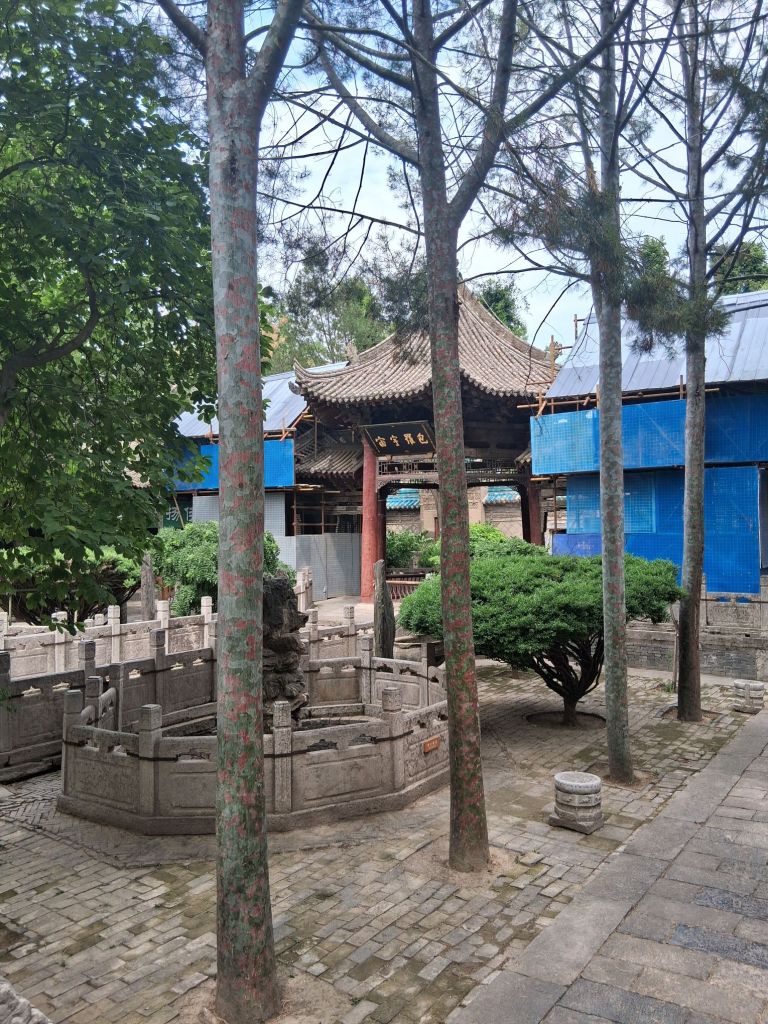
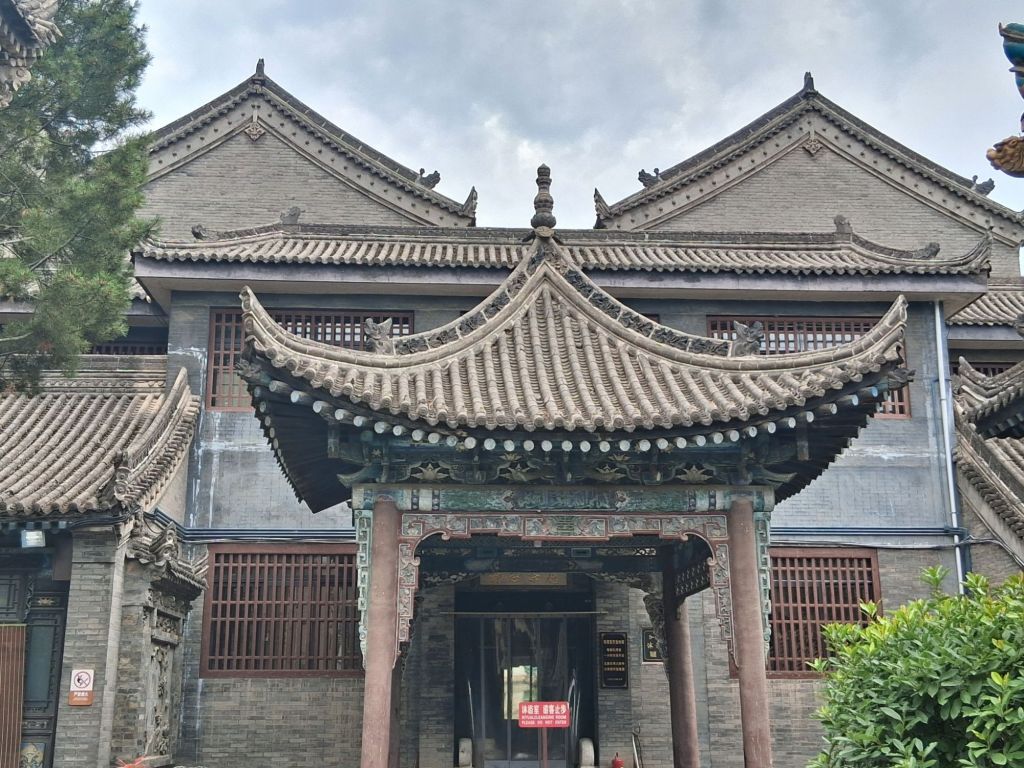
Initially, the relgion of China was Taoism, but Islam travelled along the silk road and as merchants settled in the area it became an established religion. It grew in size with the arrival of the Mongol’s (who were generally speaking Muslim, but what is particularly interesting about this mosque is that it combines Chinese and Islamic architecture.
I then took the walking option back to the hotel, to enjoy a bit more of the muslim quarter which today is a mix of food and tourist tat stalls. The vast majority of Xi’an’s tourists are from other parts of China and interestingly their ideas of appropriate tat is rather more carton-y and colourful than I would perhaps go for, and for that reason I resisted purchasing my fridge magnet at this early state of my trip. I may come to regret this decision.
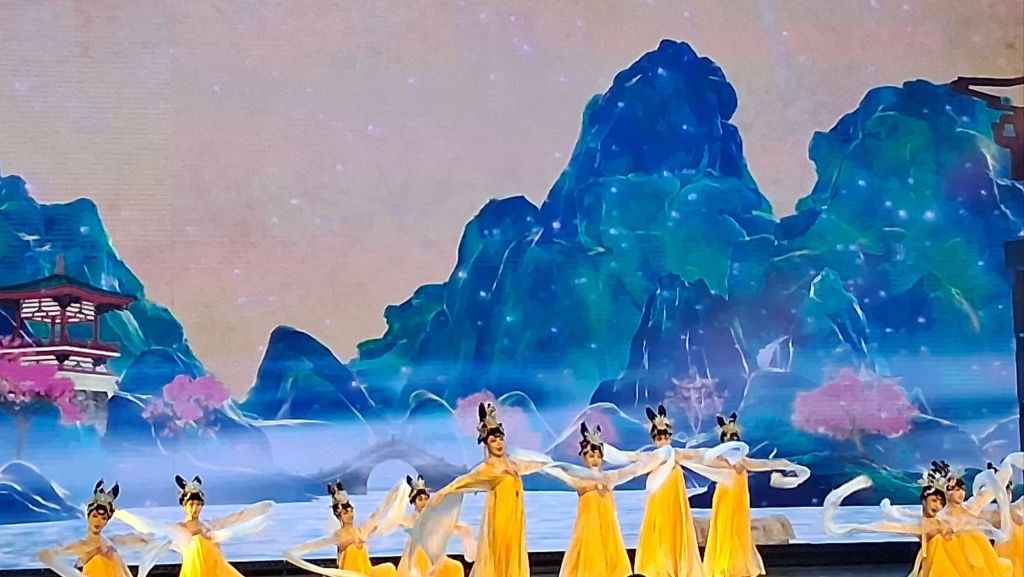
After a much needed shower, we were promised a dumpling banquet and show of Tang dynesty musical instruments, dancing and story telling. It is very easy to be snippy about these kinds of things as it is definitely put on for the tourists (although most were Chinese tourists), but it was very clear that this is a tradition that culturally they are very proud of and the musicains and dancers were obviously very talented. Effectively it was a feminist take on the legend of Empress Wu of the Tang Dynsety and I will just say, that I very much doubt that the emperor was enlightened enough to: “recognise she was very intellegent and talented in statecraft” and that they: “shared a lot of responsibilities and hardships in decision making and the running off the imperial government”. Enlightened femist thinking not really being a big thing in 600 AD.
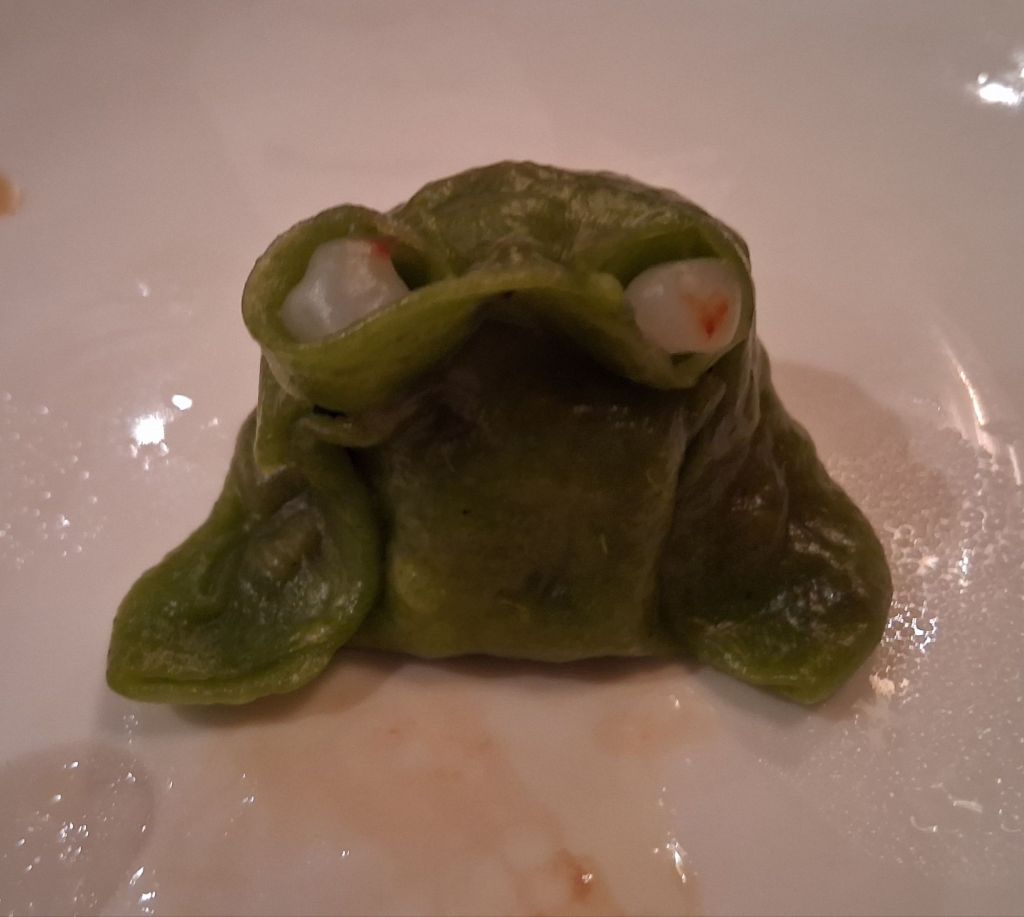
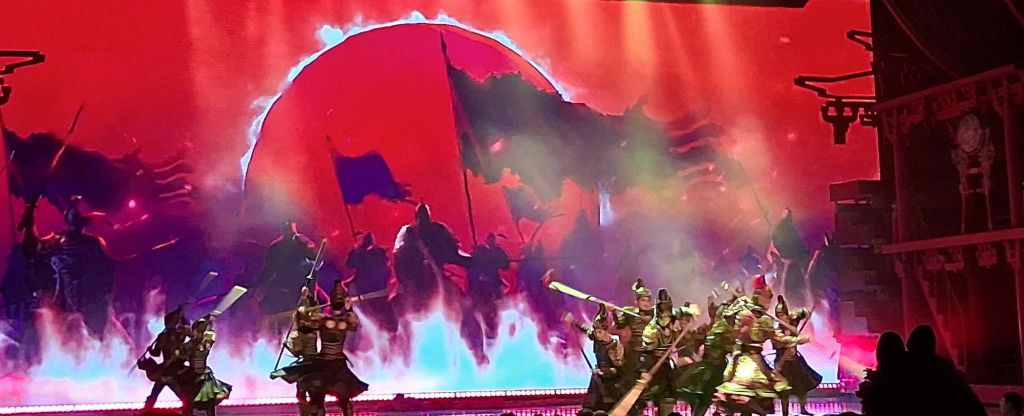
Its now Sunday and an 8am departure (no breakfast in readiness and so I could sleep ever so slightly later) to see the Terracotta Army.
You may remember in my last post I mentioned Qin Shan Huang. Now, the reason he is considered the first emperor of China is because he united the 7 states (by conquest) at the age of 39 and created a unified language, characters, currency and unit of measurement across these states which became the original China. Evidently preparing himself for a life of being very important, he started building his tomb at the age of 13 – and by his death around 200 BC it still was not finished. Famously, for the Terracotta Army as it is really only the army that to date has been excavated. The whole complex actually includes a replica of the royal palace (some 250m2) and his actual tomb. There are a number of reasons why it is yet to be excavated, firstly, the sheer size and there are also concerns about what exposing the remains to air could do – for example when pit 1 was opened in 1976 a number of the bits of soldiers were coloured, but within 3 days they had bleached down to what we can see today. Another interesting fact is that nothing was actually found in one piece – everything had been broken up and/or burned.
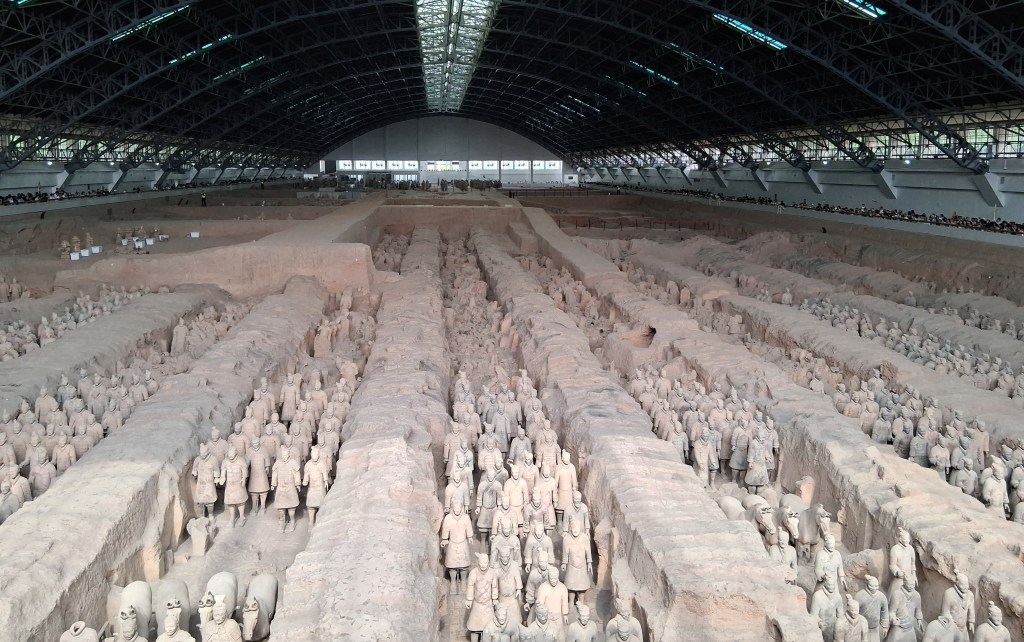
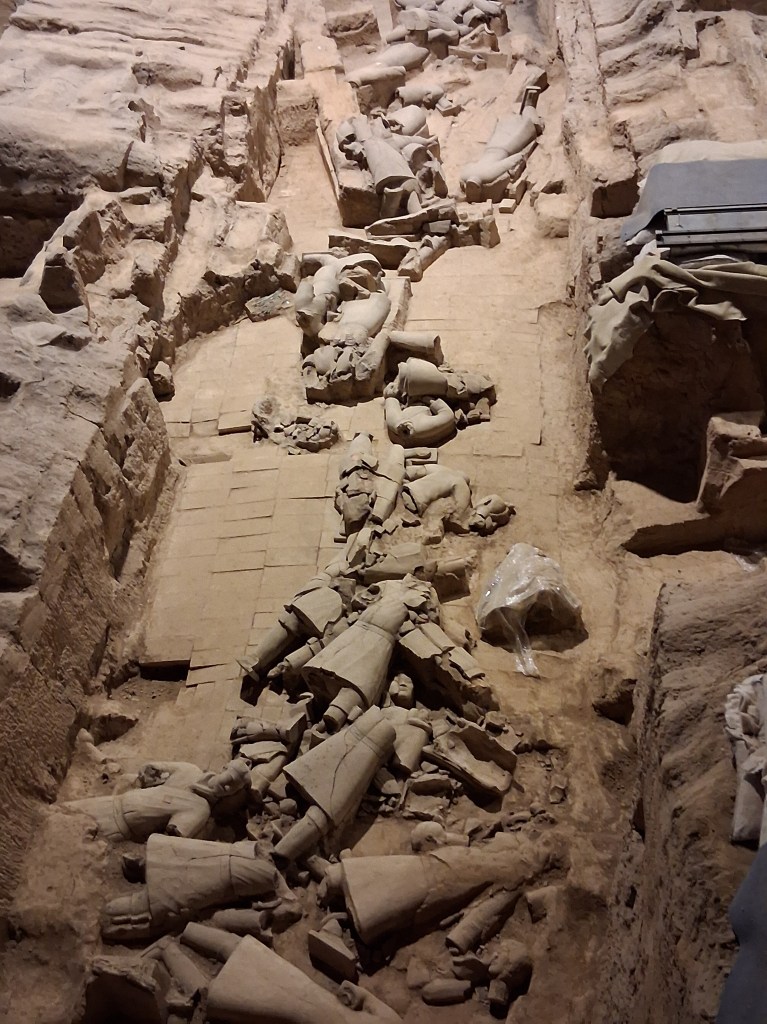
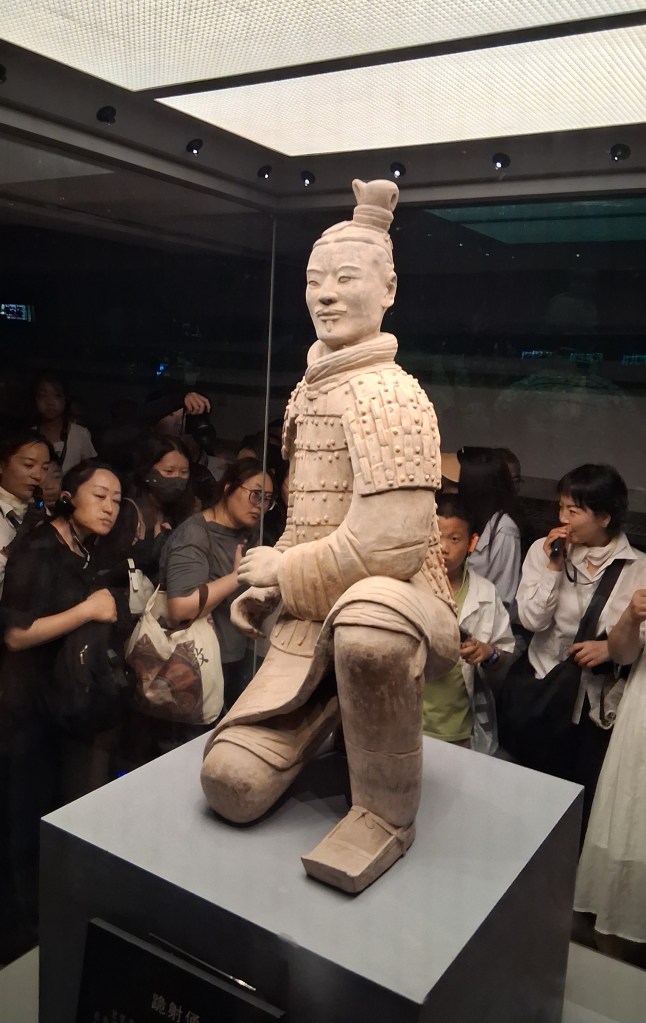
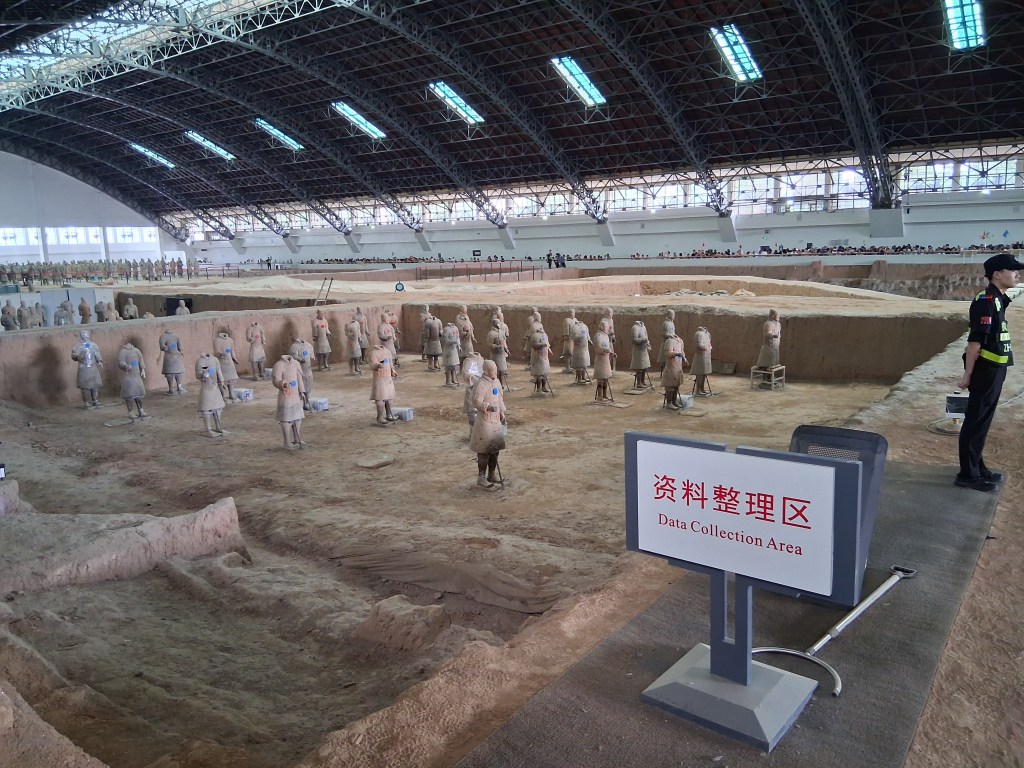
So, we started in Pit 1 – this is the one we recognise most. This is the main infranty unit of the emperors army, arranged in battle formation. When the pit was found (in 1974 by farmers attempting to dig a well) the soldiers had been covered over by raffters and then matting. So, shortly after the Emperior died (he not being the world’s most popular guy) the people who had been forced to do all this work set fire to it. Allegedly, this burned for 3 months – but it expalins the way in which the soldiers were found. In piecing them together it was soon clear that of the 1000 they have done so far, no face is the same – also interestingly they are all far taller than they culd possibly have been in real life with the shortest being 1.78cm which is far taller than the average Chinese person (then and now)!
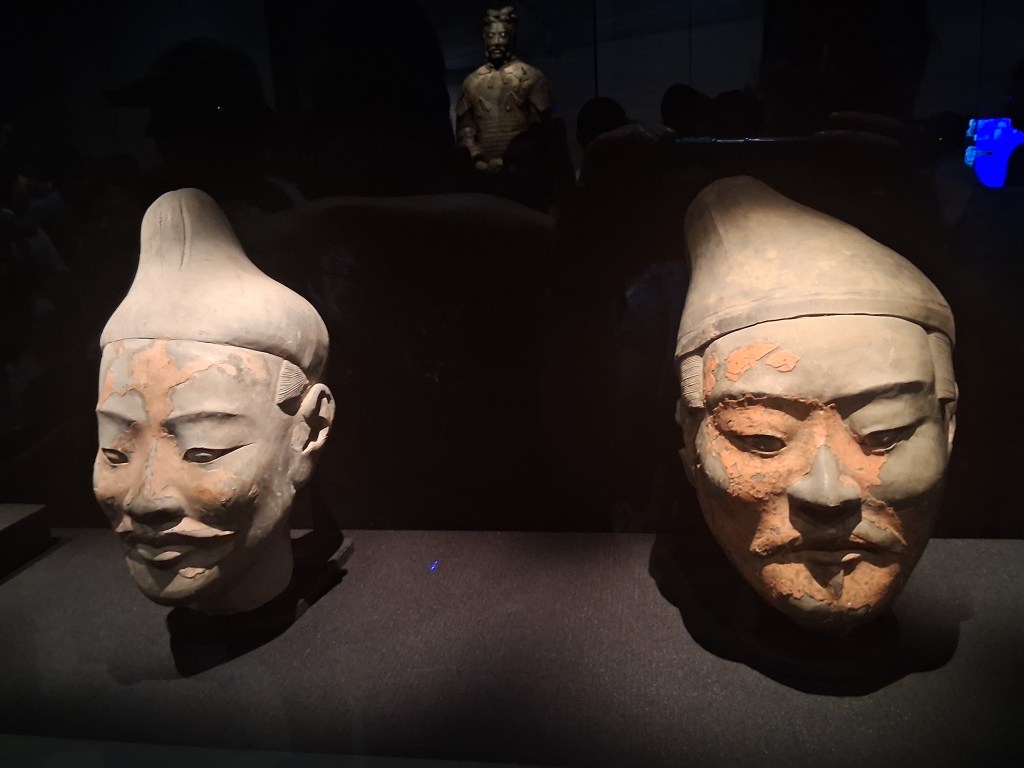
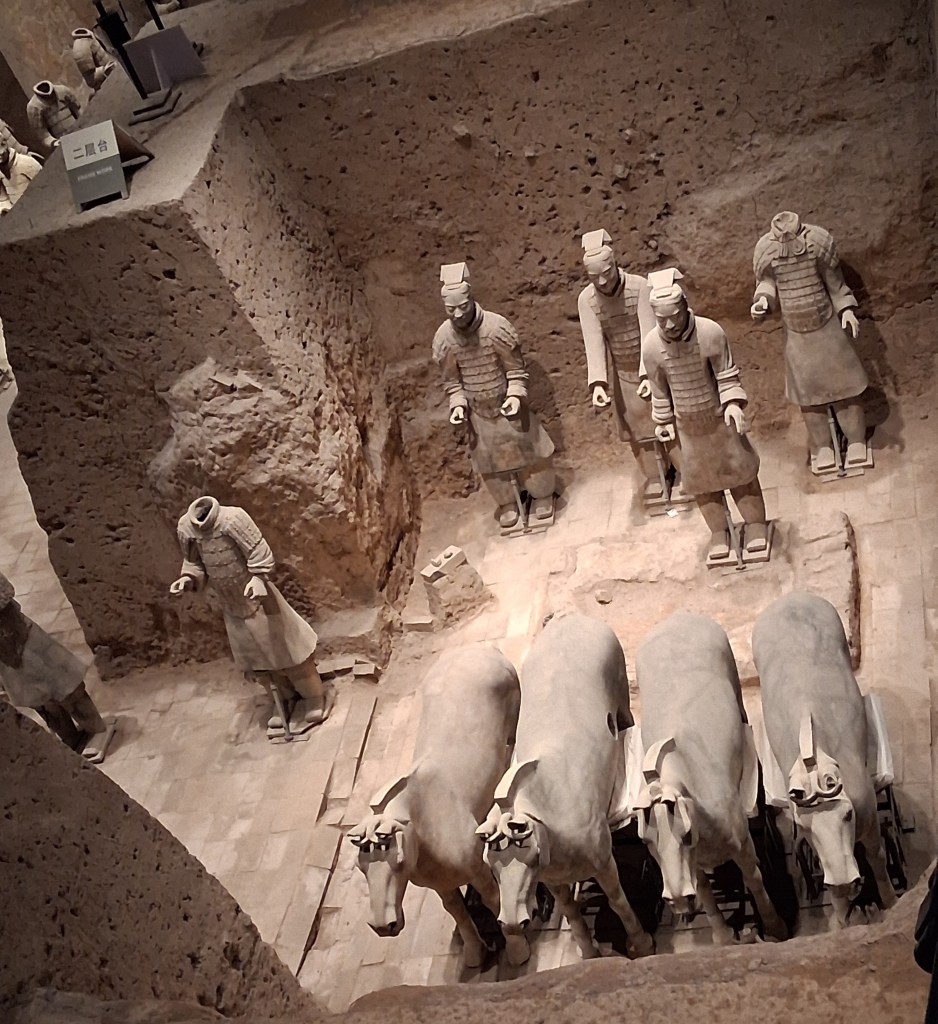
We also visited Pits 2 and 3 where again everything had been broked up and is gradually being pieced together. Pit 3 was actually found when they were trying to build a structure to cover pit 1 and is the smallest pit and replicates the command post and includes 64 soldiers, 4 horses and 1 chariot. Pit 2 is the considered to be the “most important pit” but it is also the least excavated, what has been excavated includes a chariot, horses and riders, archers and fancy weaponary.
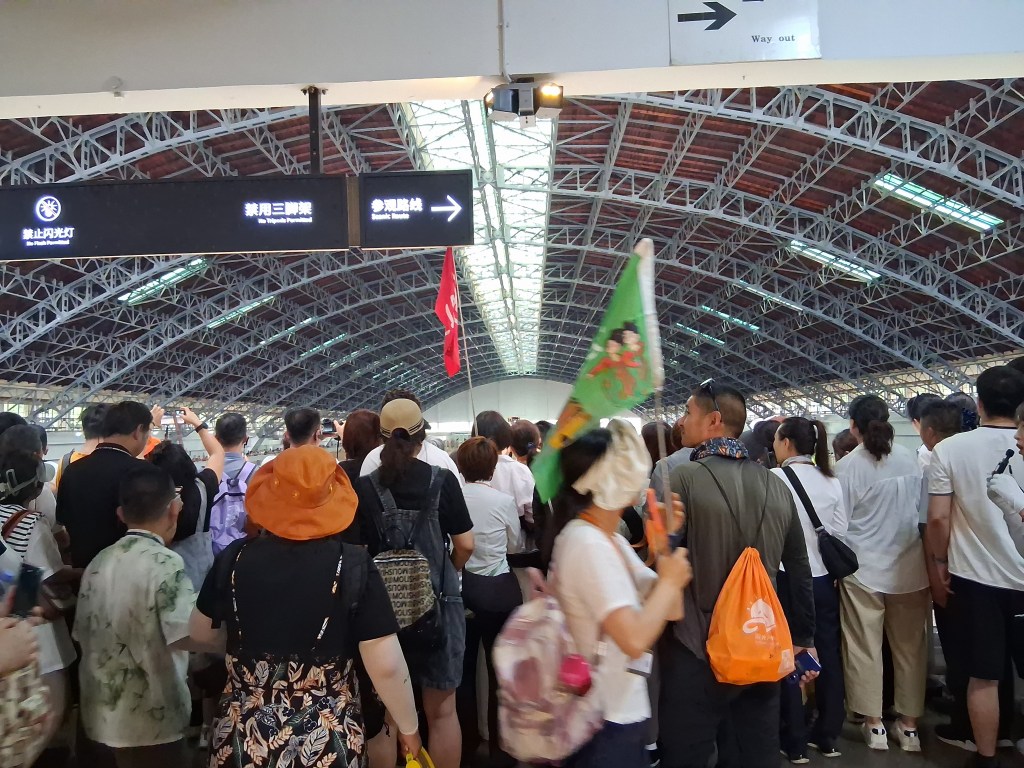
Now, this is not my first visit to the army it being part of the last tour 6 years ago. However, it was NO WHERE NEAR then as busy as it was today. It was actually rather overwhelming and required a certain amount of elbow use in order to get anywhere near to see anything – and much like the world over, if there is someone trying to shove me out of the way, it will be a tiny old lady. Why do they think I am a moveable body? I am not. Unfortunately, it does somewhat detract from how impressive this is as a site – to think that this is what people were capable of creating in 200 BC and yet, you do find yourself distracted by tour leaders yelling information at their groups using flags as weapons and pushy old ladies.
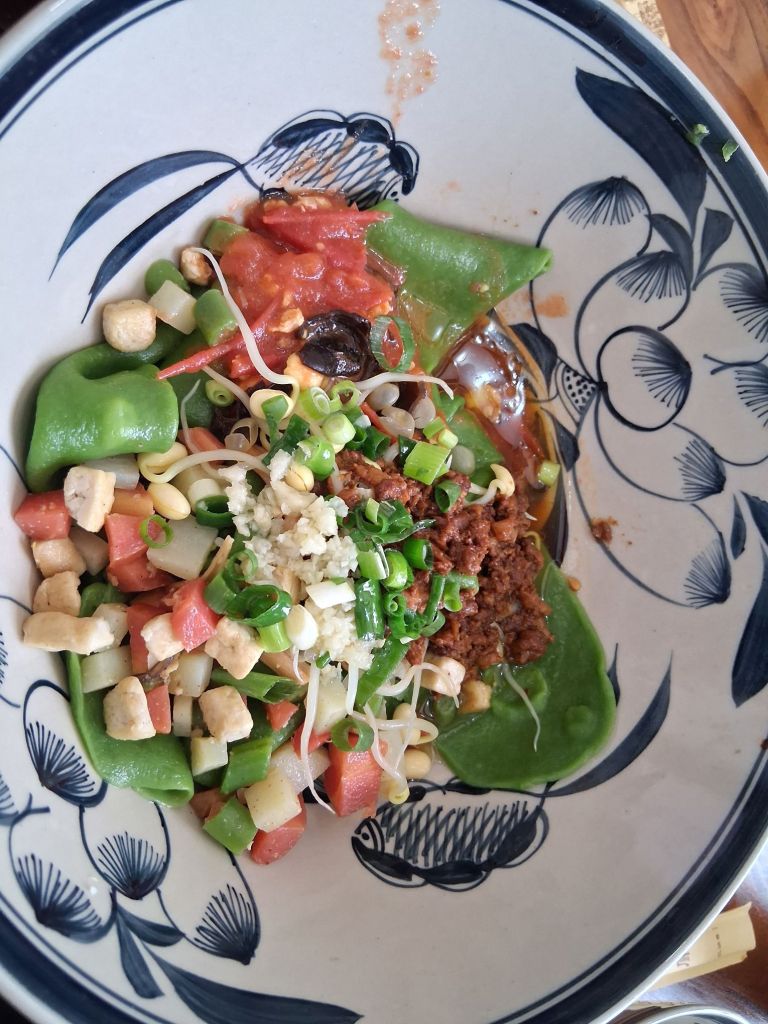
In order to recover it was a lunch of Bang Bang noodles (maybe you have seen enough food photos by now?) and off to the train station – which is like walking into a modern spotlessly clean airport and I am writing this on our fast train from Xi’an to Lanzhou. Ideally there would be a few more spare seats as we did get rather used to our oversized bus and I am now squeezed into the middle seat of a full train – the joys…
We arrived into Lanzhou 3 hours later – incidentally, this is a journey of of around 650km which would take over 7.5 hours by road. We were met of the train by our new guide Arthur (they always seem to use their “English” names and we are going tohave to try and ask for their Chinese names so we can practice!) and a short drive to our hotel. Dinner. Respond to demanding text message from my mother. Shower. Bed. We start again at 8am tomorrow morning – although (let us be British for a moment) I am pleased to say it is going to get down to 9 degrees so the jacket was worth packing!
Good night all.
Update : apparently photo of Bang Bang noodles is required…
8 responses to “Stage 7.2 – Xi’an (Part 2)”
-
-
Now added…
LikeLike
-
-
-
He was very tasty, the red bean hedgehog less so I am afraid. I’ll keep a look out for a warrior to bring back for her.
LikeLike
-
-
-
And that’s a meduim size city by Chinese standards. Just wait until I get to Shanghai.
LikeLike
-
-
medium city lol. I echo the comments on more food photos, never too many food photos. Ever
kate x
LikeLike


 Travels with Kathryn
Leave a reply to dilymy Cancel reply