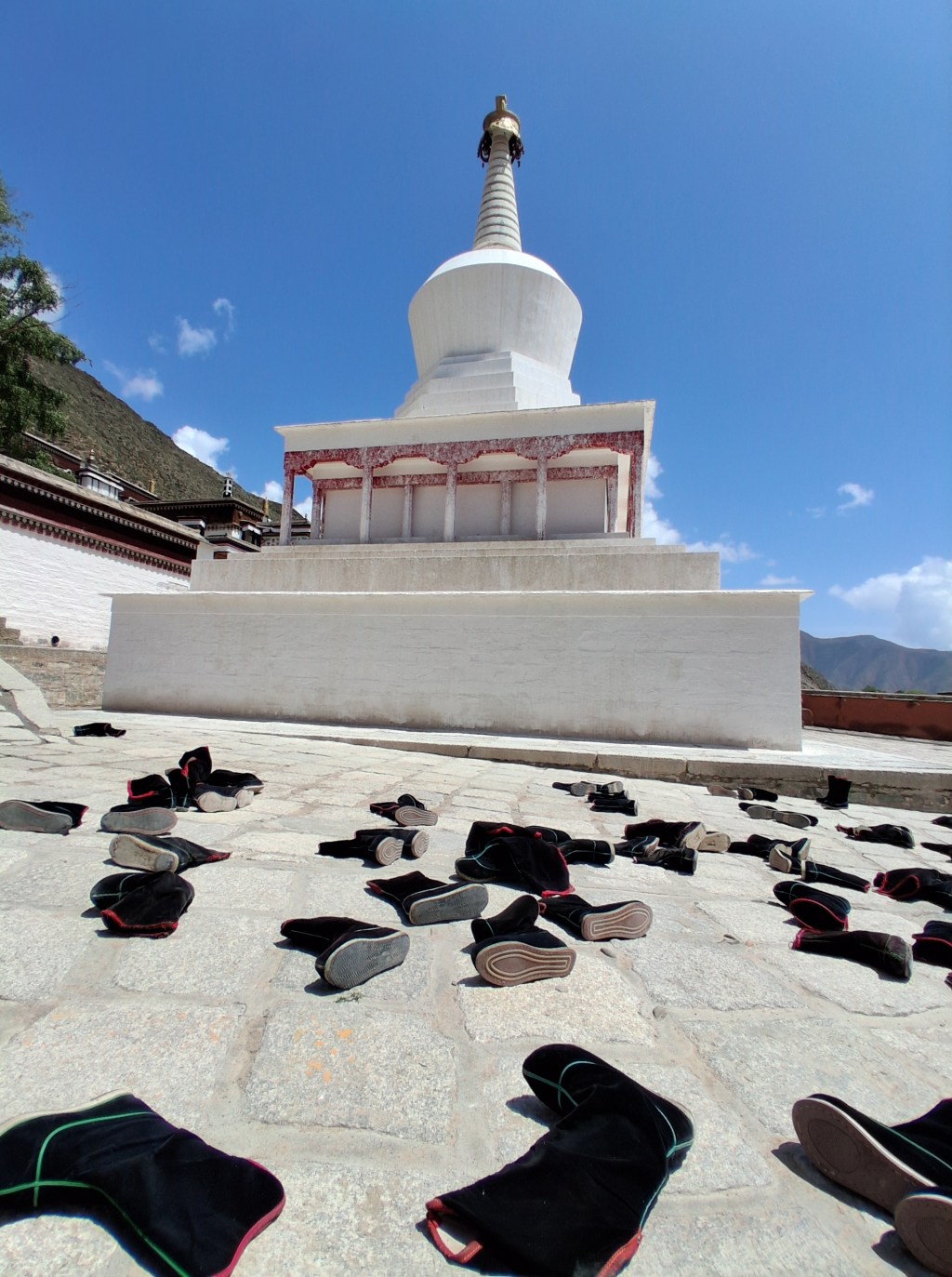
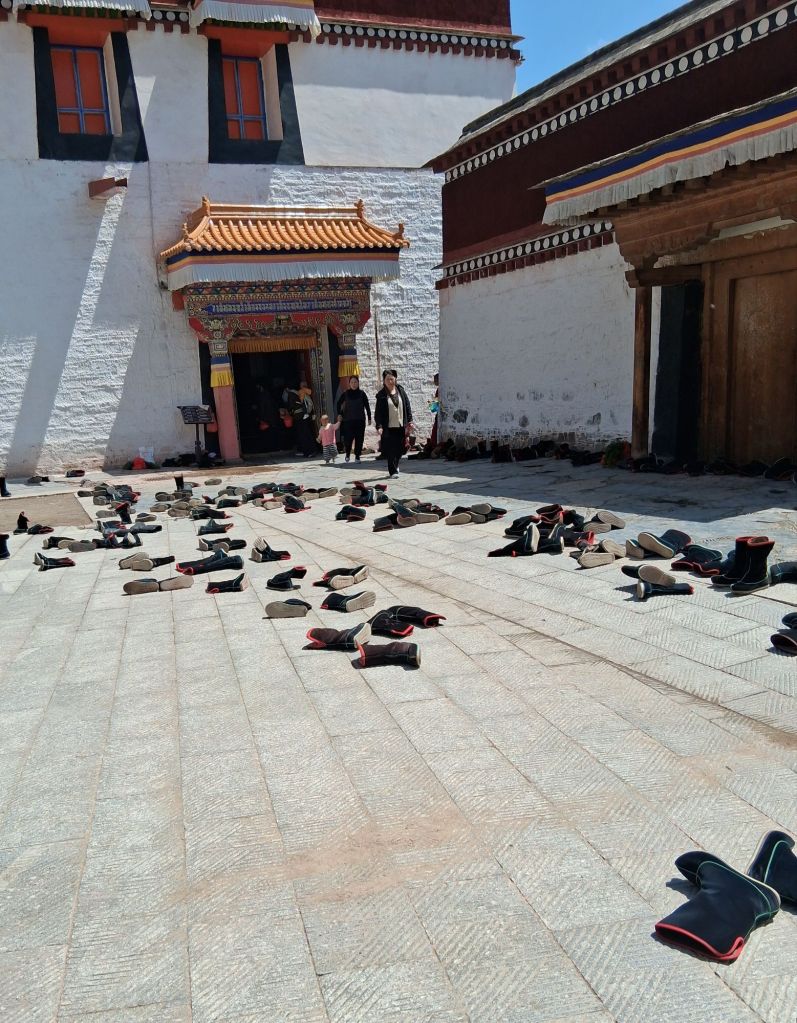
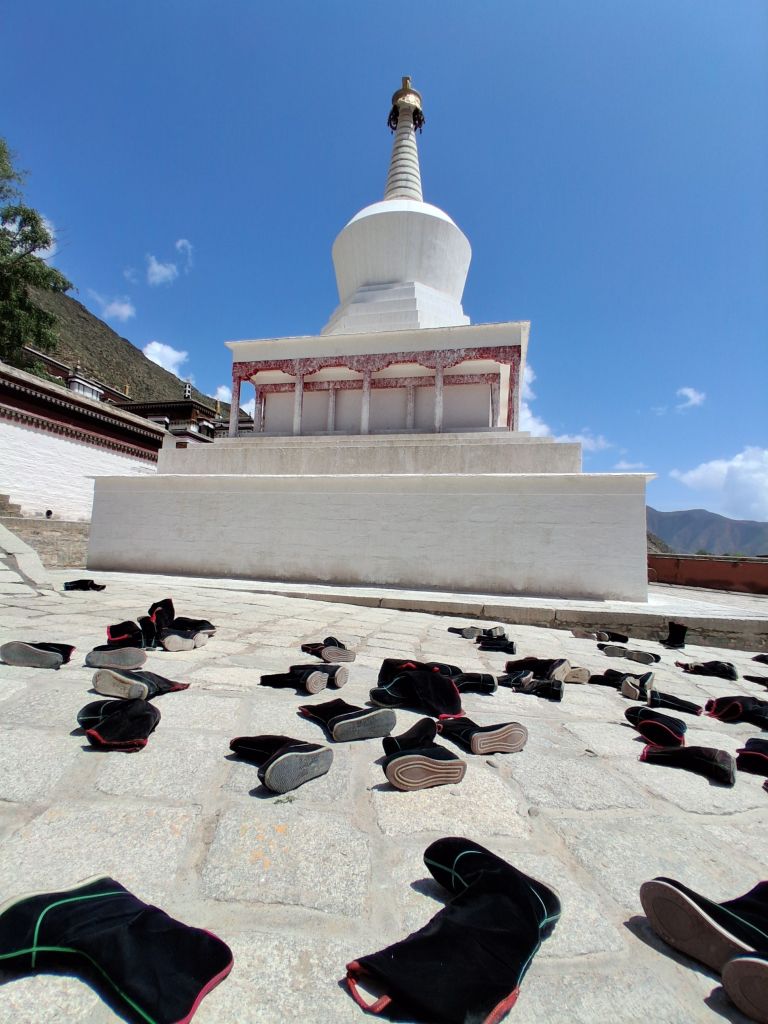
It’s day 5, and we are in Xiahe, and it’s cold – I blame myself for all the whinging about being too hot and sweaty in Xi’an. However, whilst it may be cold, it was actually a beautiful clear day, which was perfect for a visit to the Labrang Monestary. I mentioned in my last post that Xiahe is part of “greater Tibet”, well, it certainly feels like I have returned to Tibet. Most local people look Tibetan and are followers of Tibetan Buddhism – hence the fact that a town has developed around the monestary.
Without going into too much detail, and I really could, Tibet is an autonomous region within China (having been “liberated” by China in 1950), and therefore, its borders have been drawn by China. The area I currently am in is on the Tibeaten Plateau and was once part of the country of Tibet. Since the 1950s, China has adopted a policy of attempting to (through a number of policies such as the migration of Chinese Han people into Tibet) to integrate Tibet into China. From a Chinese perspective, they are bringing huge improvements and modernising Tibet such as roads, schools, and hospitals – from a Tibetan perspective, their culture and history are being overridden by their Chinese overlords. The reason for my giving you this background is to give you a sense that this town feels Tibetan, looks Tibetan, and yet inexplicably is not in actual Tibet.
As is my standard approach, let us start with a little history. Buddhism travelled from India along the Silk Road and became popular during the Tang dynesty. In Tibet, Buddhism was combined with the local Bon religion to create what is today’s Tibetan Buddhism, and hence, it is actually quite different from Buddhism practised in India. Labrang Monestary itself is surrounded by a 3km prayer walk of prayer wheels. Buddhists walk along these in a clockwise direction in a meditative style spinning the prayer wheels as they go. Of a morning, this is done with a focused speed and concentraction.

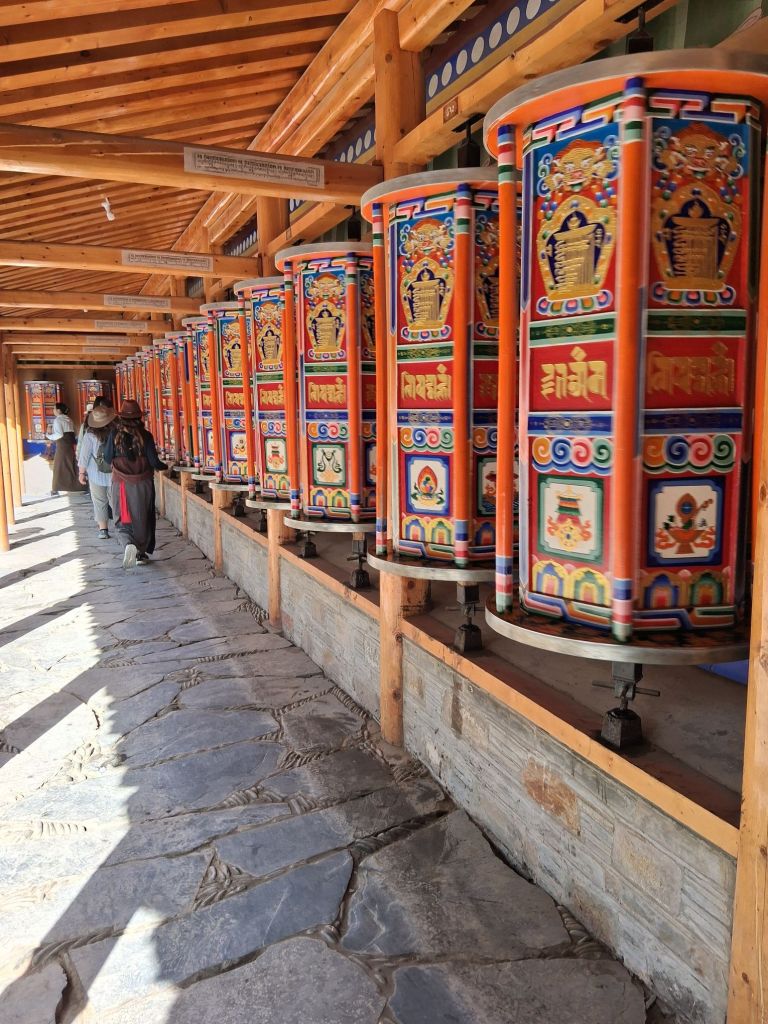
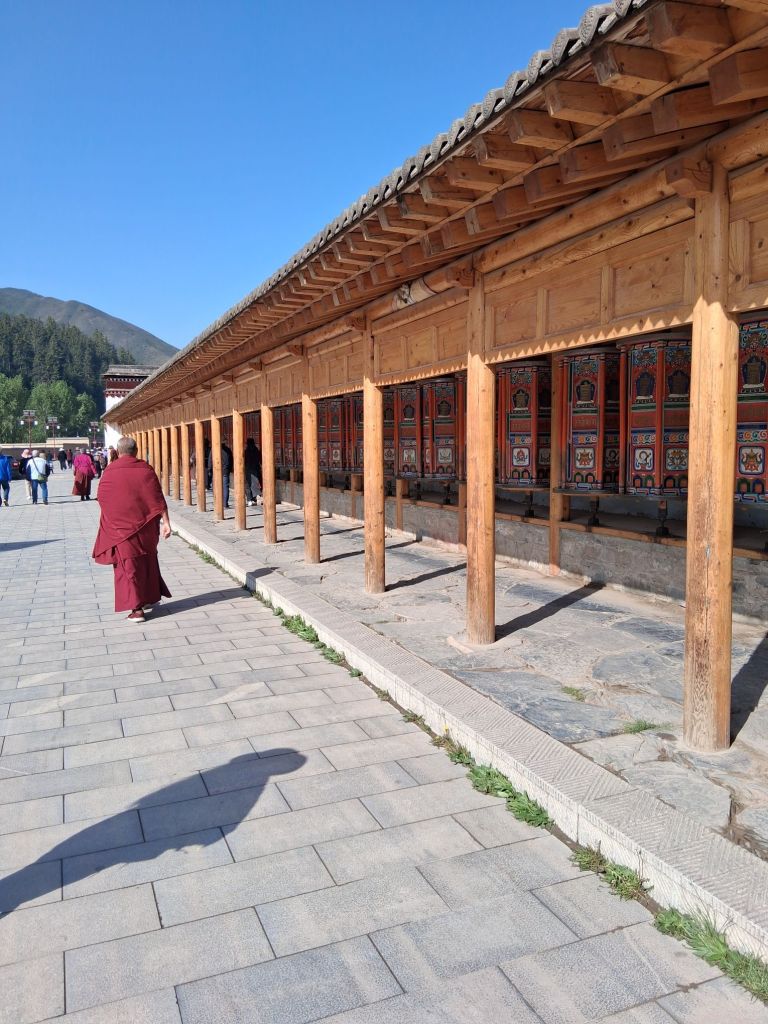
To pray, Tibetan Buddhists also prostrate themselves on the floor – push their hands forward together and back – stand – walk 4 paces and repeat. There were a number of people doing this outside some of the larger prayer wheels or following along the walk. Pilgrims do this all the way to Lhasa…
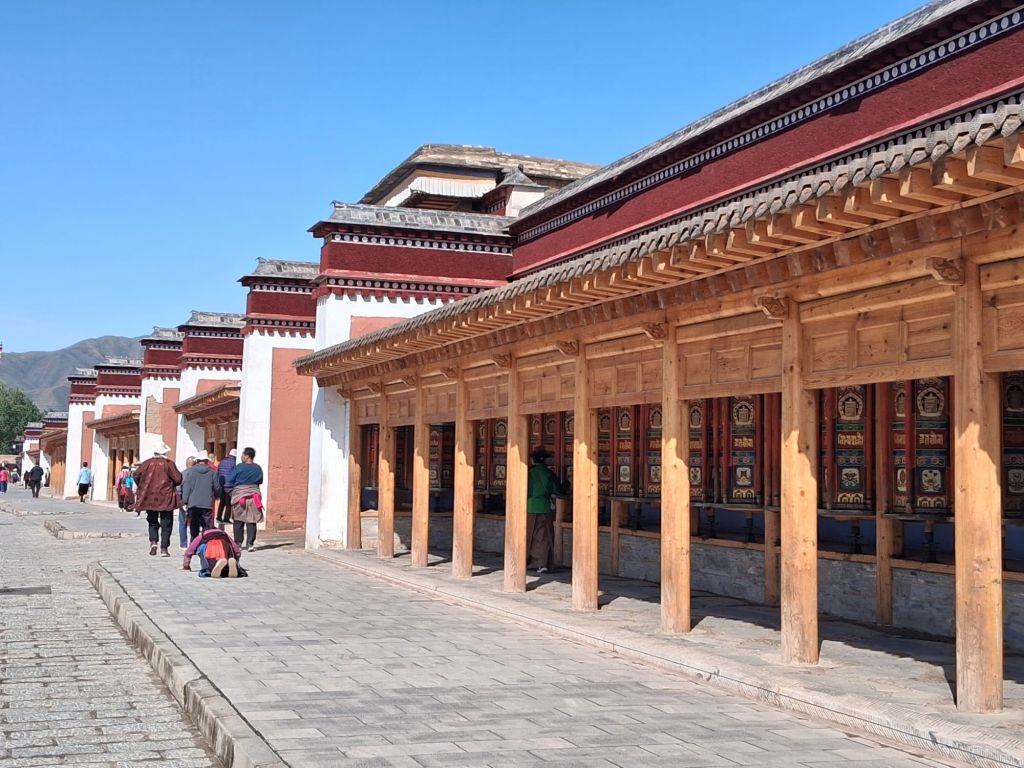
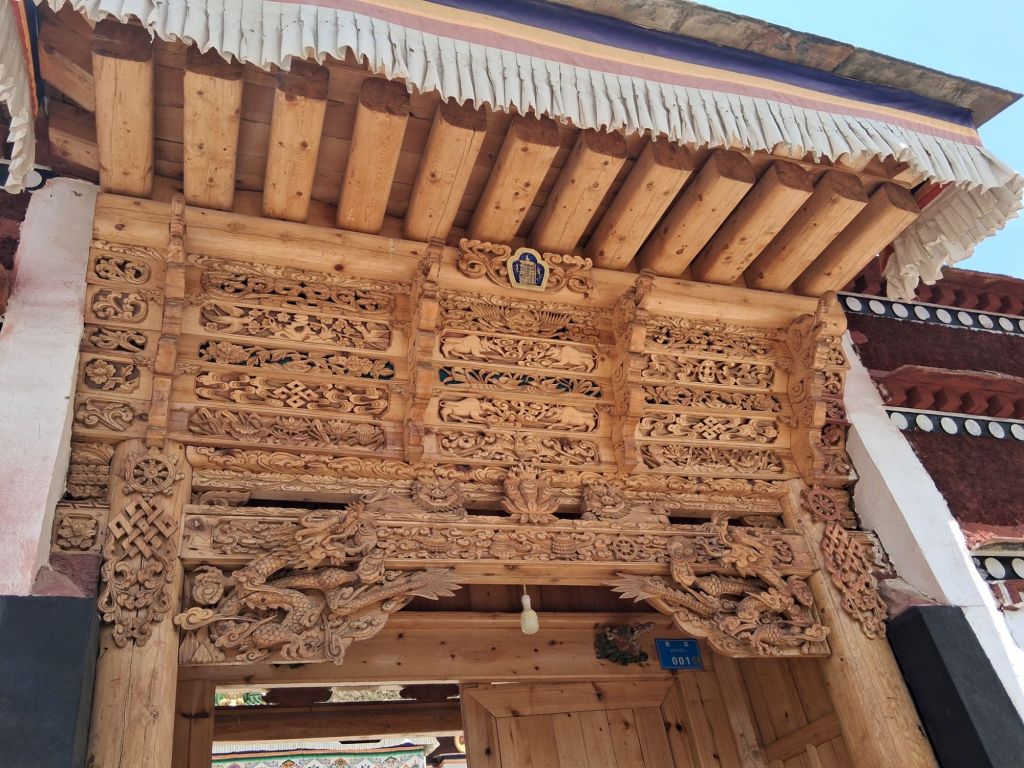
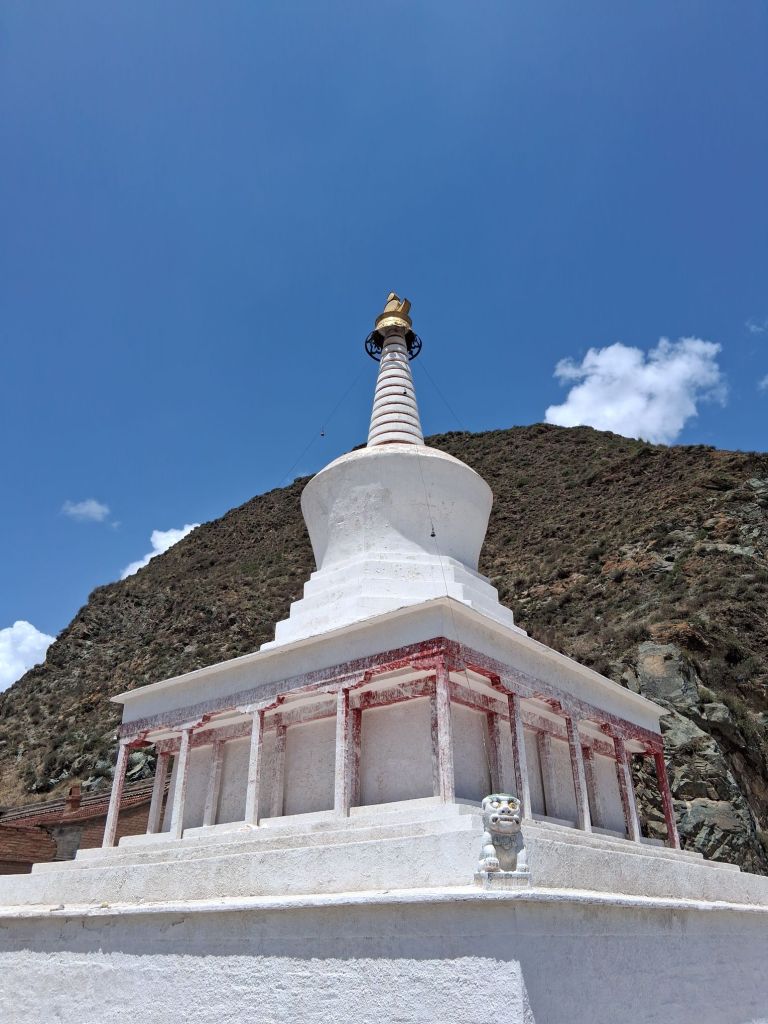
Labrang Monestary was founded in 1709 by Ngagong Tsunde who was the first generation Jamyang (a line of reincarnated living Buddhas who rank 3rd after the Dalai Lamas) and one of the 6 major “yellow hat” sect monasteries in Tibet/China. It is a huge complex, and today, there is a cap of 1,600 monks living and studying here aged between 8 and 90 (at its peak, the monestary was home to 4,000 monks). Monestaries are effectively teaching centres, and Labrang Monestary contains 6 colleges and 48 temples. The popularity of this monestary (among many things such as its lovely location and delictful decor) is the fact that it teaches both Sutra scriptures (which are considered the more basic step-by-step teaching guide) and Tantra scriptures (which are unique to Tibet and a more mix-and-match style of learning).
In order to visit inside the monestary, you have to join a guided tour, and no photos are allowed inside any of the buildings. However, our guide was excellent, giving loads of information in an organised and coherent manner. Whilst not a monk, he was obviously a practising Buddhist, and his English was impecable (learnt in Lhasa, apparently).
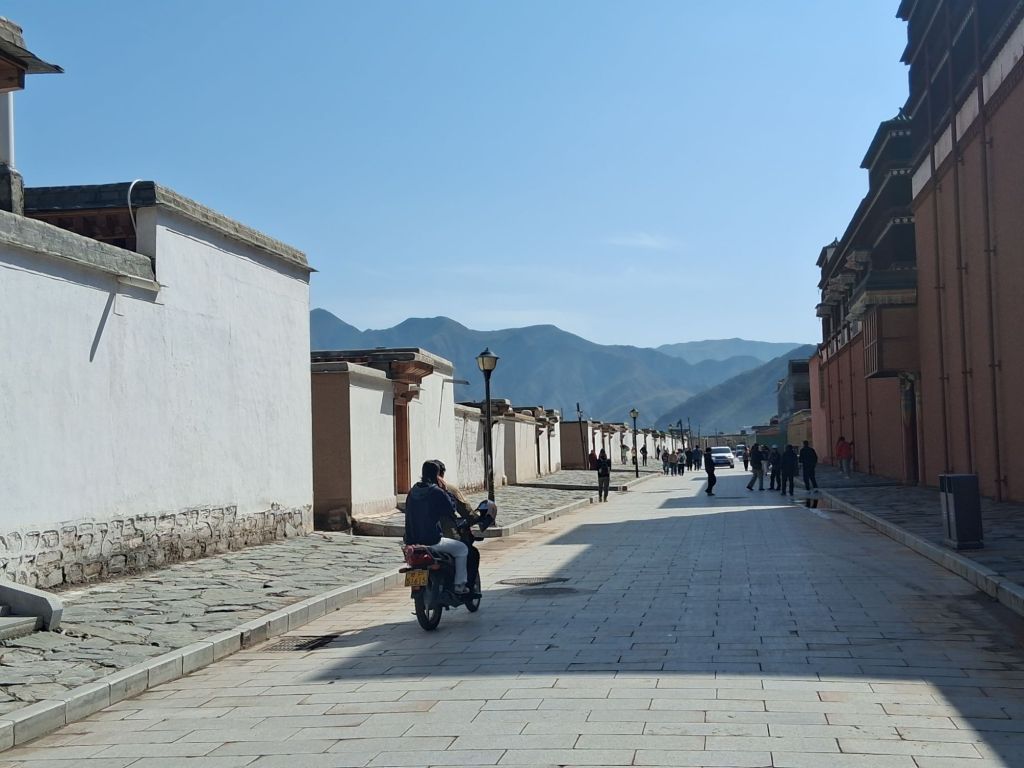
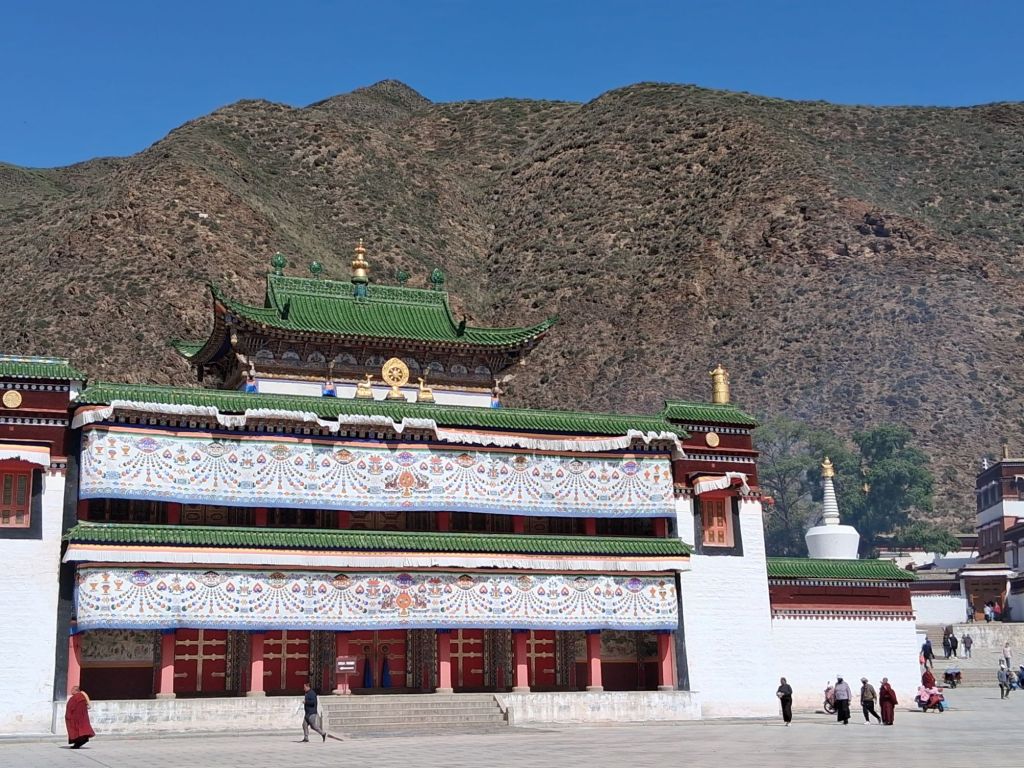
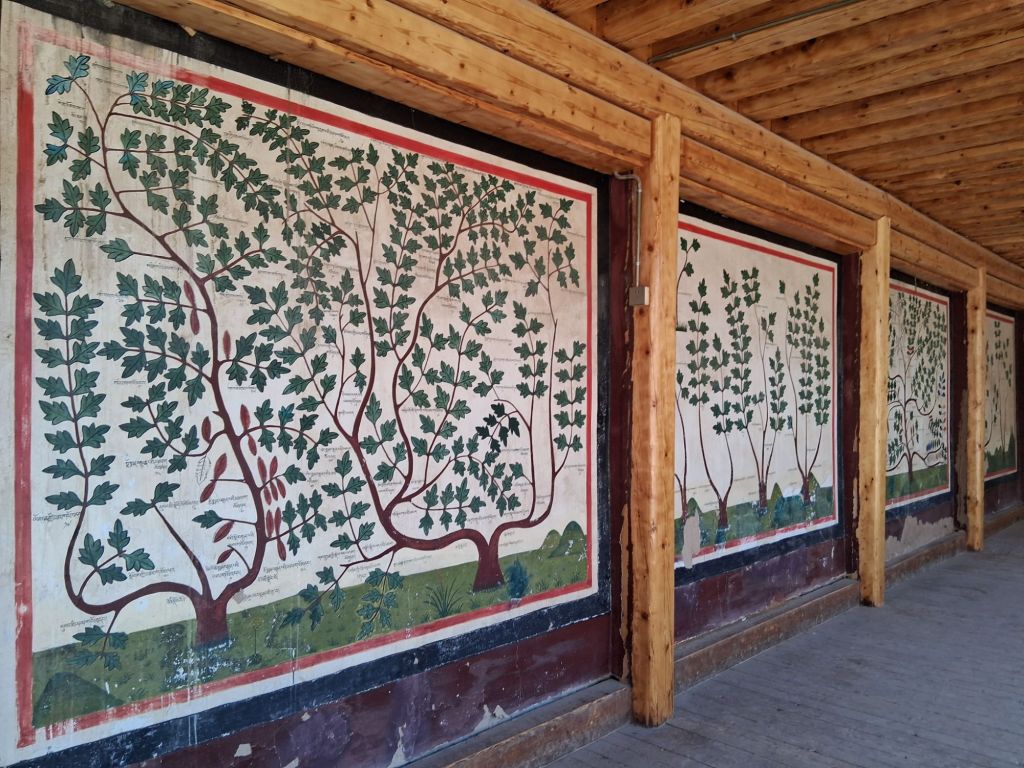
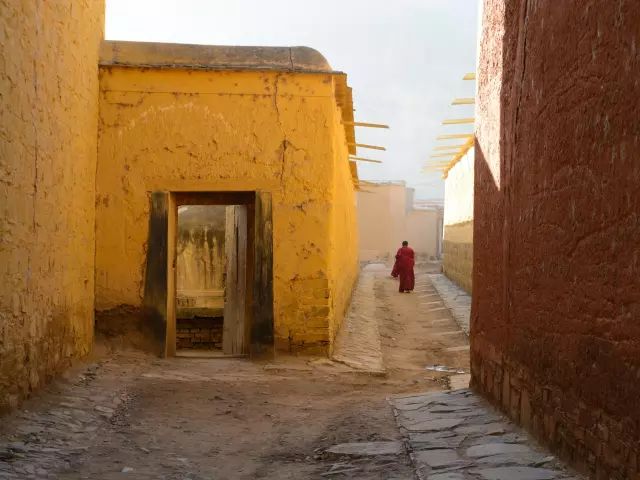
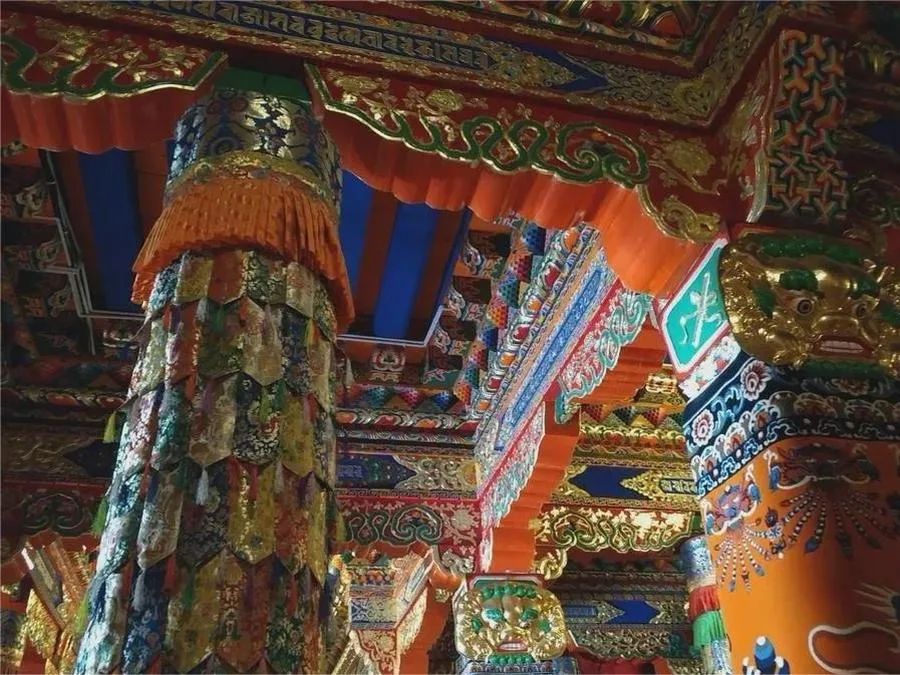
We started in the Institute of Medicine, which is renowned throughout Tibet. Effectively monks learn a mix of Tibetan/Indian/Indegiounous medcine and, after studying for 15 years, may practice at the onsite clinic. The colleges are effectively large halls with floor cushions set in rows and narrow work benches. However, every conceivable surface is decorated – huge wall paintings (murals and Thangka paintings) and amazing patchwork cyindrical pillars and draperies:
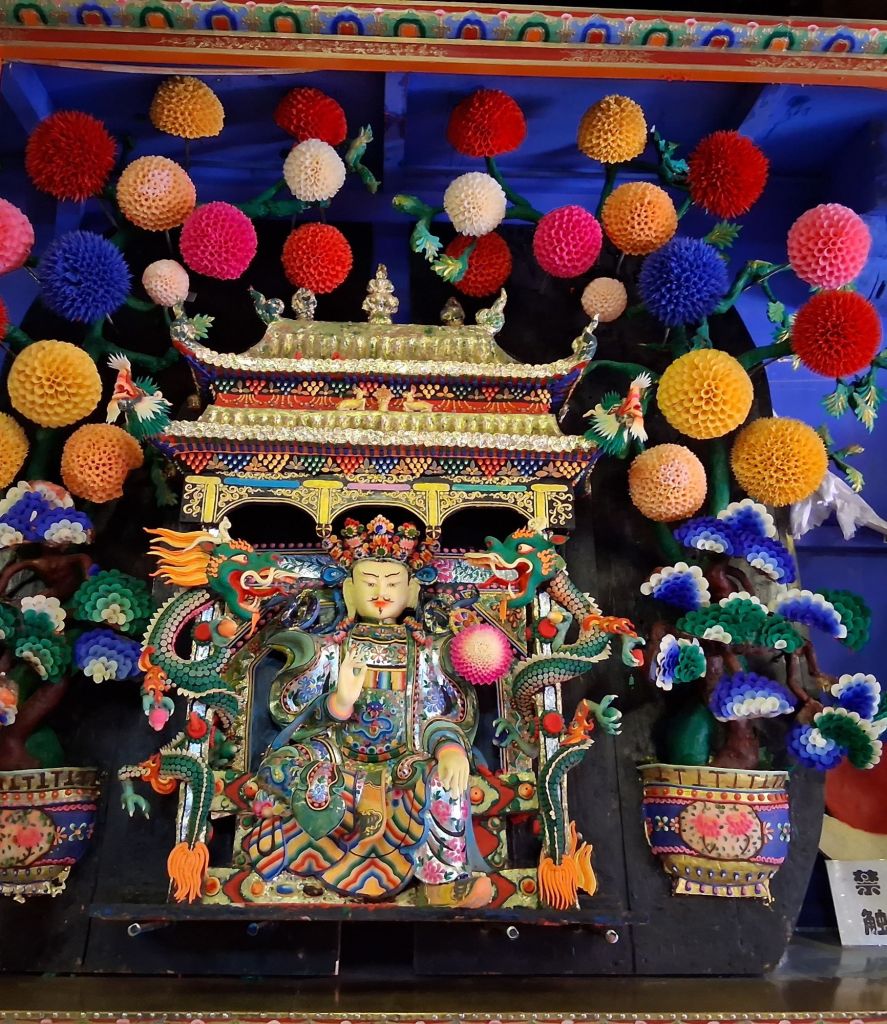
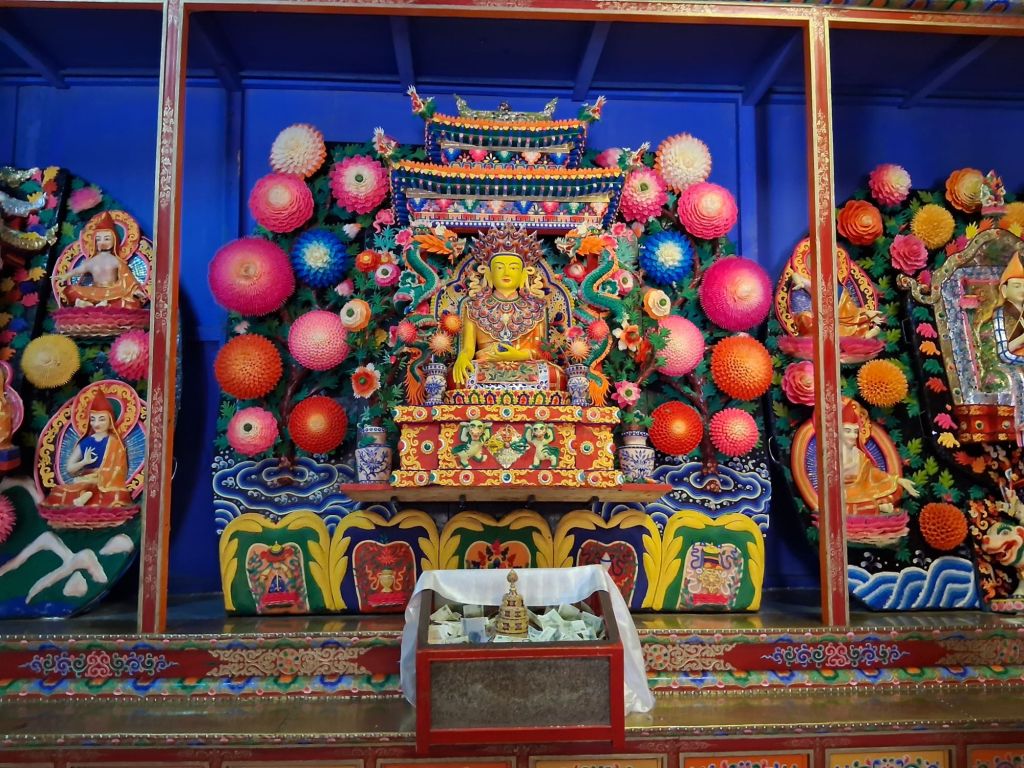
Our next stop was the art college, and here we were allowed to take photos of the amazing sculptures made entirely of butter. Yes, butter. Butter (usually yak butter) is used as the offering in most Tibetan temples as it is what people here have as opposed to the flowers in India. Each individual sculpture takes 10-12 monks 1 month to make, and they only last until the hot season, when they are melted down and mixed with herbs to make Tibetan medicine. Each year, different scultures are made, but they always recreate the sacred statue (pictured below).
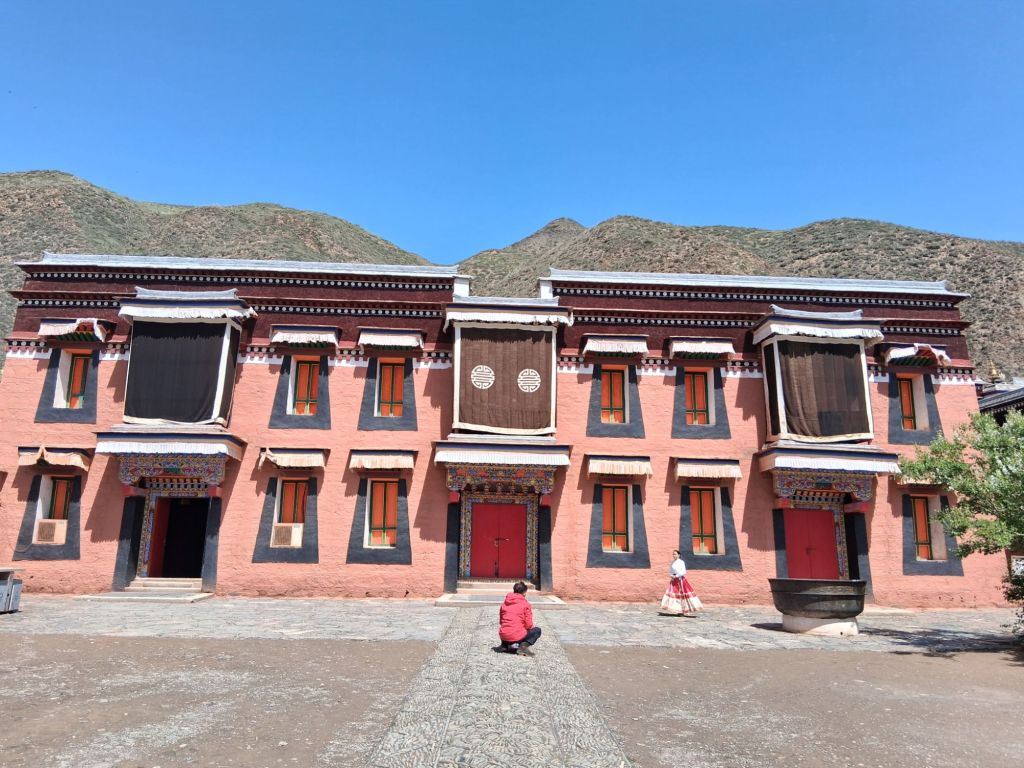

Our final stop was the Grand Sutra Hall (pictured above). This is where the monks learn how to correctly debate sacred texts – having witnessed this on my last trip, I can tell you it is far more passionate and aggressive than an English schools debate. We were able to enter the hall during mediation- this involves the monks sitting in rows chanting and it really is like being inside a beehive.
We also visited the nunnery which is attached to this monestary and is home to 185 nuns aged between 16 and 90. The nuns study alongside the monks but (obviously) live and eat separately.

By now, it’s most definitely lunchtime. I mentioned that Wild Frontiers includes all meals and whilst its nice to share and means you get to try an aray of dishes, I struggle a little with the loss of control (I know, who would have thought?!) so today it was exciting to be given a menu to choose from. I made an excellent choice with my nooodle dish, less so with the aubergines…
We then had a free afternoon to wander around Xiahe. I had great plans of walking the outer kota which takes you up the hill over the monestary, however, as I am feeling the altitude I decided that a better option would be a wander in and out of local shops instead. Whilst there are some more tourist options, shopping is very much aimed at devotees and monks – think oh I’d like nice set of prayer beads, or some butter to annoint on temples or perhaps new monk robes?
Tomorrow we return to Lanzhou (and back to the high temperatures of lower altitude) to visit the Gansu Provincial Museum which we are promised is a trove of Silk Road artefacts and then my first overnight train of the trip. I do love an overnight train. For now, I intend a re-pack and with the hope of our receiving clean towels at some point (its 5.30pm local time and although we have been housekeeped, there are a mountain of dirty towels next to the service elevator so we think this may be the problem) a shower before dinner.
Update on towels: I thought to myself, ahah, this floor has a number of made-up rooms with their doors open. I shall simply pop into one and steal towels. Off I go in my modesty sarong and slippers, successfully aquire towels, come back to my room and then realise I took the electricity key card and not the room key card (we may be 2 people to a room, but the hotel would not allow us 2 key cards). Oops. I then go down to reception in said outfit and try and explain the problem to reception via translation before 2 coach loads of tourists check in. They were not happy about my attempts to try and snaffle a second key card. I was just trying to get back into my room before I frightened anyone. We had already caused enough problems by asking for 2 key cards in the first place. I suspect I am now blacklisted by this hotel…
Finally, the answers to yesterday’s trivia question were indeed – Chad, Cyprus, Egypt and Krygzystan.


 Travels with Kathryn
Leave a reply to Kathryn Cancel reply