I awoke refreshed and ready to face the world, if somewhat bruised. The plan for today was that we were going to be picked up by our guide Anji at 9.30am for a city tour of Ulaanbaatar. But first, breakfast. This was an interesting little adventure. On an arrival yesterday a marble clad door (with no handles) was pointed out behind reception as being where breakfast was served and we had been offered a set time of 8.30am, which we agreed to. We go downstairs at our appointed time, she bangs on the door, and a young man unbolts it, and we are in what is evidently the street facing bar that just happens to also provide breakfast. We sat down, and nothing happened, but having been China trained, we knew to expect this and managed to lure him over, and he comformed that breakfast was being prepared. We awaited our traditional Mongolian breakfast:
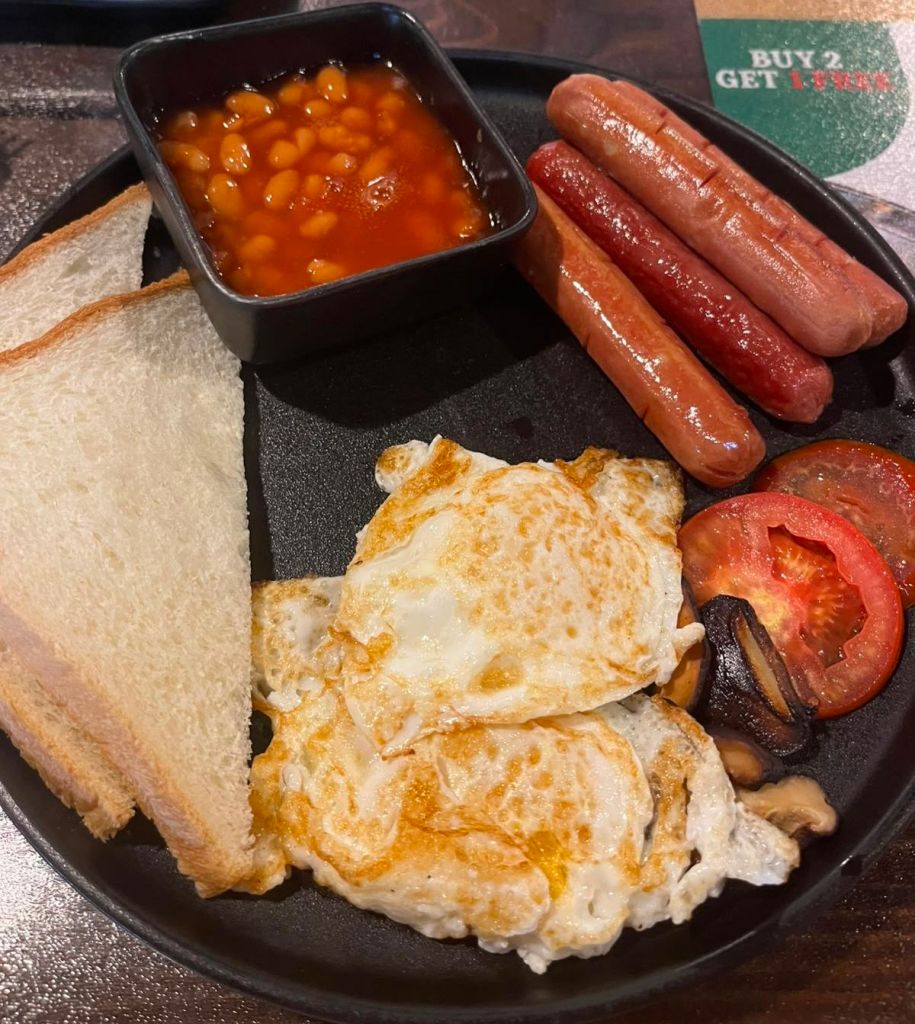
But you know what, perfectly fine and set us up nicely. In another success – the hotel is rather basic, so no sign of any offer to do laundry, but I asked reception and she said we should ask the lady dowstairs. This turns out to be what I assume is hotel laundry who did both my and Colette’s smelly travel/horse riding clothes and deliver them back to our room for about £4. A bargin.
Right. Let the tour begin. Firstly, Anji was no Mantuu. Effectively, although selling her services as a guide, she doesn’t actually know anything about any of the sites we visted (she would quote from her phone when pushed) and was more of an English speaking taxi service. However, we give her credit as today we were visiting the further out sites, and Ulaanbaatar really doesn’t have a public transport and taxis are near impossible for foreigners (you need to flag down a private car prepared to take you) so this had value. She also phoned the cultural show we wanted to go to tonight to reserve us tickets – this was also something we couldn’t manage ourselves/online.
So, let us pretend that Anji was an excellent guide who provided a detailed overview of Ulaanbaatar and all the sites we visited rather than me having had to do my own research on everything you are about to read… Mogolia is a county with a population of 3.5m making it one of the world’s most sparsley populated counties (2 people per km – wouldn’t that be nice in London?), and of that 3.5m around 1.7 million live in Ulaanbaatar. Although Mongolia is an old country, as its people (and therefore its capital) were nomadic, Mongolia did not have a capital city until 1639. Even then, this capital was a moving capital of gers which was the monestary of Da Khuree (in the south of the country). It moved at least 25 times between 1639 and 1778 after which Khuree was errected at its present location (of today’s Ulaanbaatar) and called the “City of Felt”. Post independence from China in 1911, and invasion by Russia in 1918, finally in 1924 the city was renamed Ulaanbaatar which means “Red Hero” in honour of the Communist triumph and declared independent (from China not Russia obviously). From the 1940s the Russians rebuilt the city in its own style, destroying in the process many old Russian buildings as well as Mongolian temples. Today the city is spread along Peace avenue and is a mix of decaying Russian granduer, modern tower blocks and shopping centres and the odd ger sprinkled about for good measure.
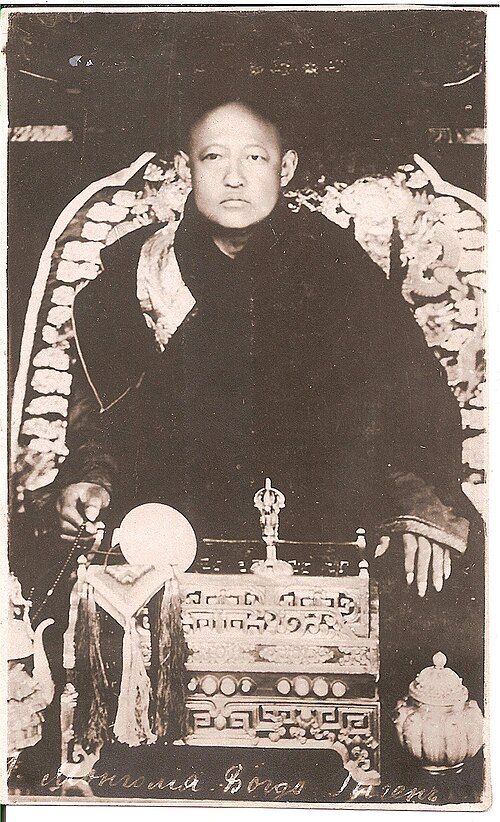
As we had our taxi service, we did not start where most people would in Sukhbatar Square (which is the centre of the city), but with a trip to the Winter Palace of Bogd Khan. Built between 1893 and 1903, this palace was home Mongolia’s last king, and eight living Budha, Jebtsun Damba Khutuktu (often called Bogd Khan) until his death in 1924 when Monglia declared independence (from China, not Russia obviously). The complex also includes the site of the summer palace, which was completely destroyed by the Russians (although they did retain the Winter Palace and 6 temples for reasons unknown). Today, the temples contain a selection of rather modern Buddhist artworks including thangka paintings and quilts.
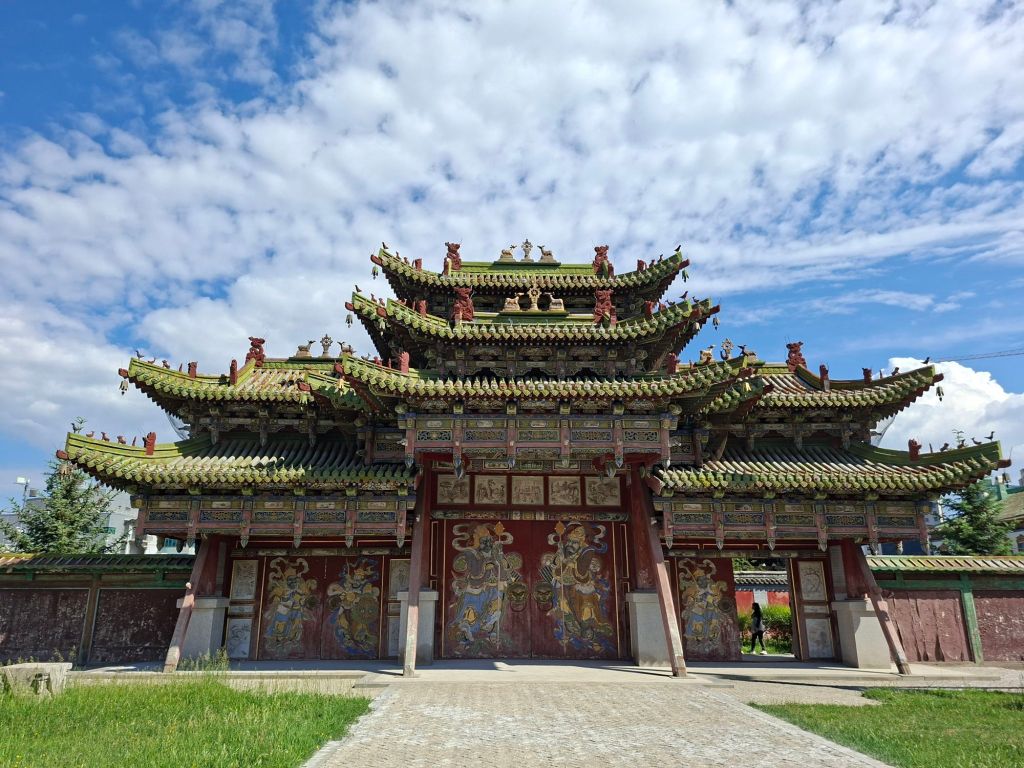
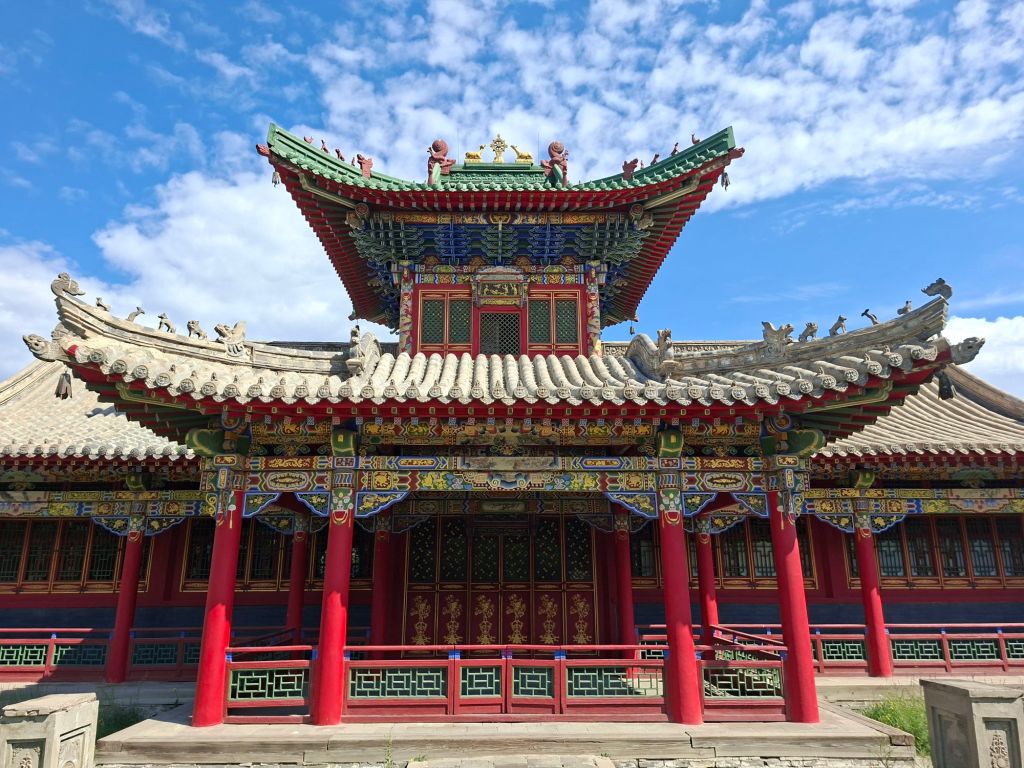
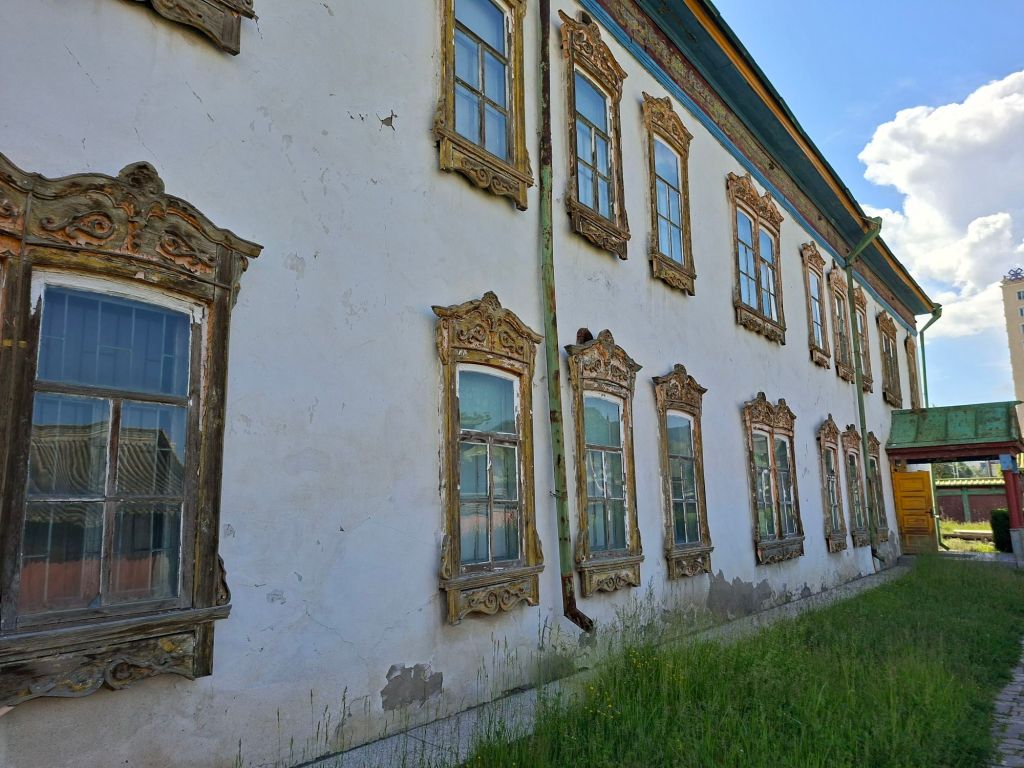
It was rather unfortunate that no photos were allowed inside the Winter Palace as the upstairs was set up as the King and Queen had lived, and a collection of gifts from dignitaries (including a ger lined with the skins of 150 snow leopards) and the Bogd Khan’s personal collection of stuffed animals – why anyone would stuff a puffer fish is beyond me.
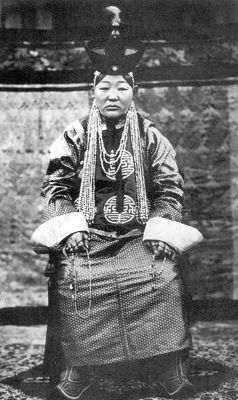
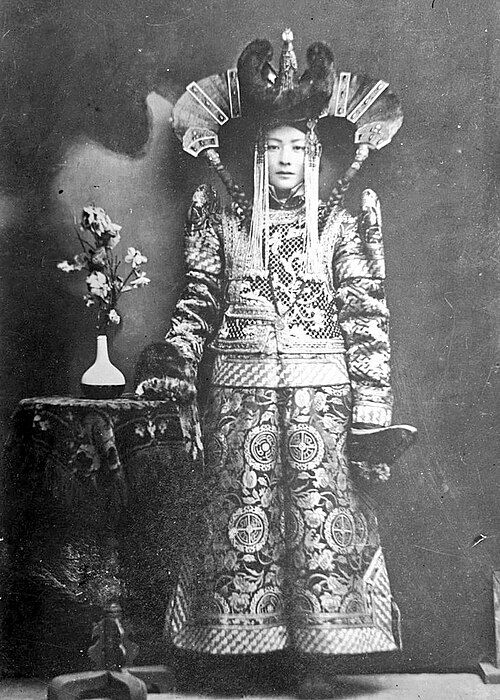
I was interested to learn more about Bogd Khan’s wives. His first wife (who pre-deceased him by just 1 year) Tsendiin Dongogdulum, the Ekh Dagina and considered to be a manifestation of White Tara. White Tara is an important female Buddha as Taras are considered “she who saves” in Tibetan Buddhism (which is practised in Mongolia), and White Tara expresses maternal compassion, offers healing, longevity and purification. All rather delghtful. His second wife (who he married in 1923) Genepil had something of a different story, having been married to the King for less than on a year at the time of his death, she returned to her family in remarried. In 1927 the government accused her of gathering material in order to stage an uprising with the help of Japan, and she was executed in 1938 (whilst pregnant).
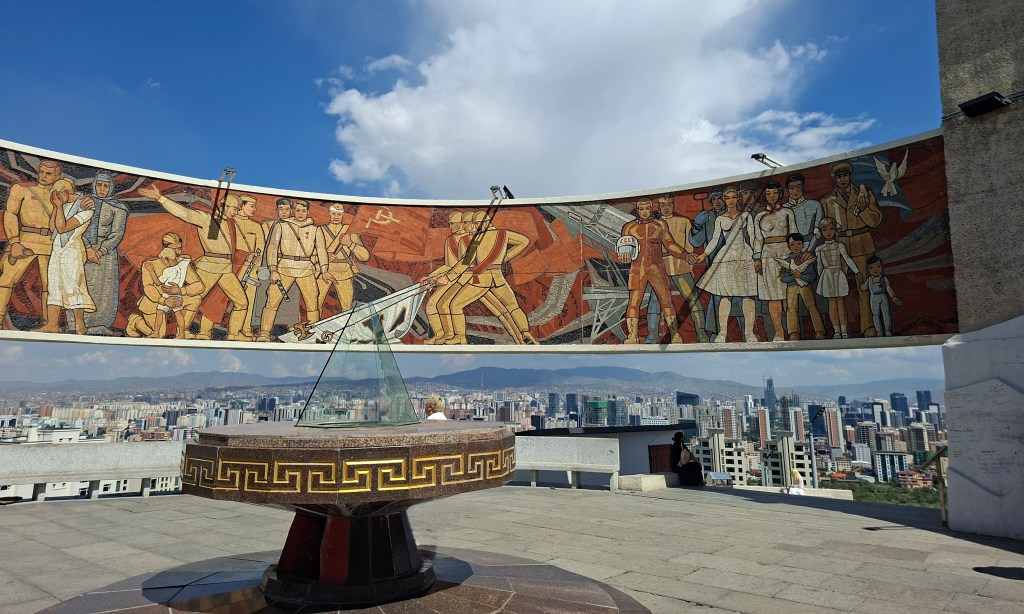
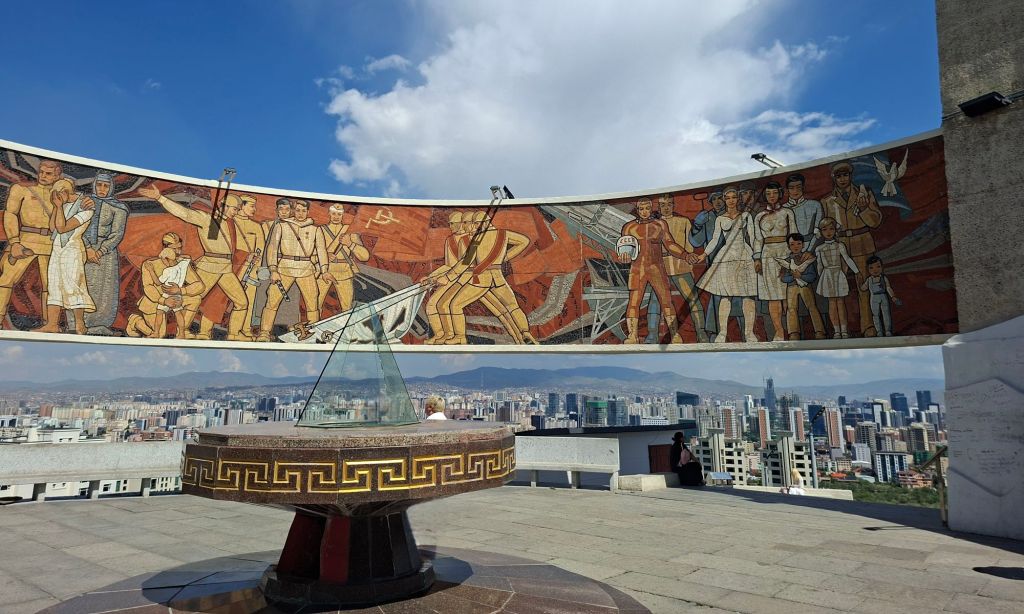
Next, it was on to climb a mountain, fine, I may be exaggerating a little, but after a steep drive up it was about 300 steps up to the Zaisan memorial. This was built by Russian soldiers to commerate “unknown soldiers and heros” (which you would never have guessed from looking at it!). Mainly, you go for the view which is pretty stunning and really gives you a sense of the geography of Ulaanbaatar which is long and thin, and it being a city of high rises hemmed in by mountains.
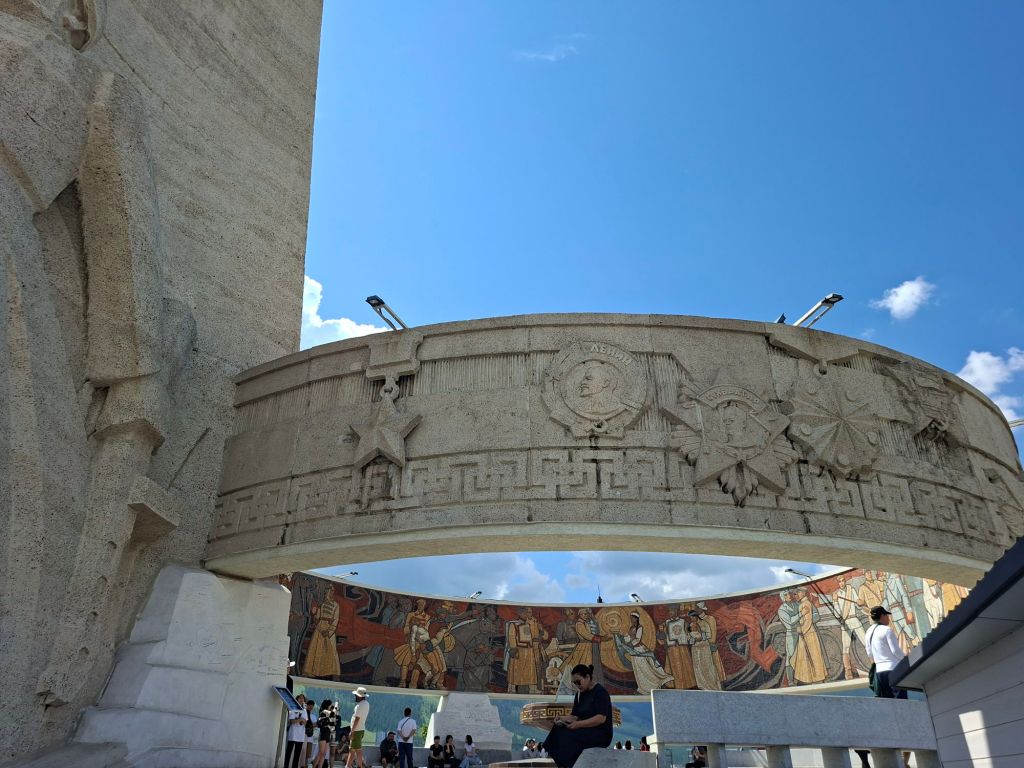
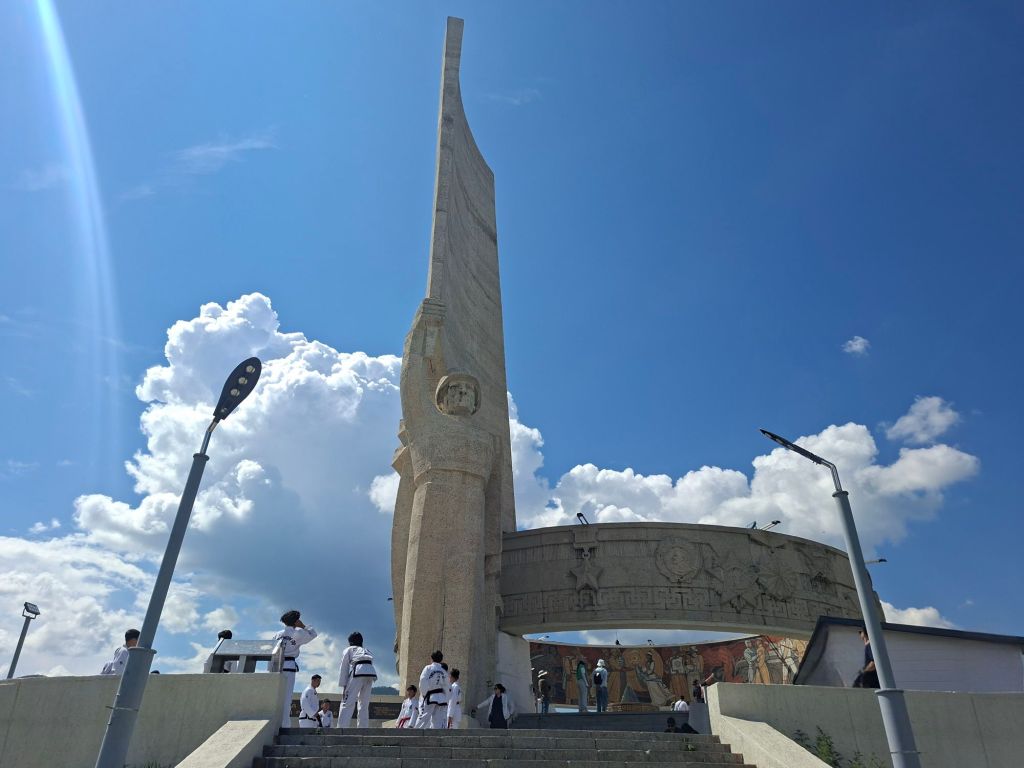
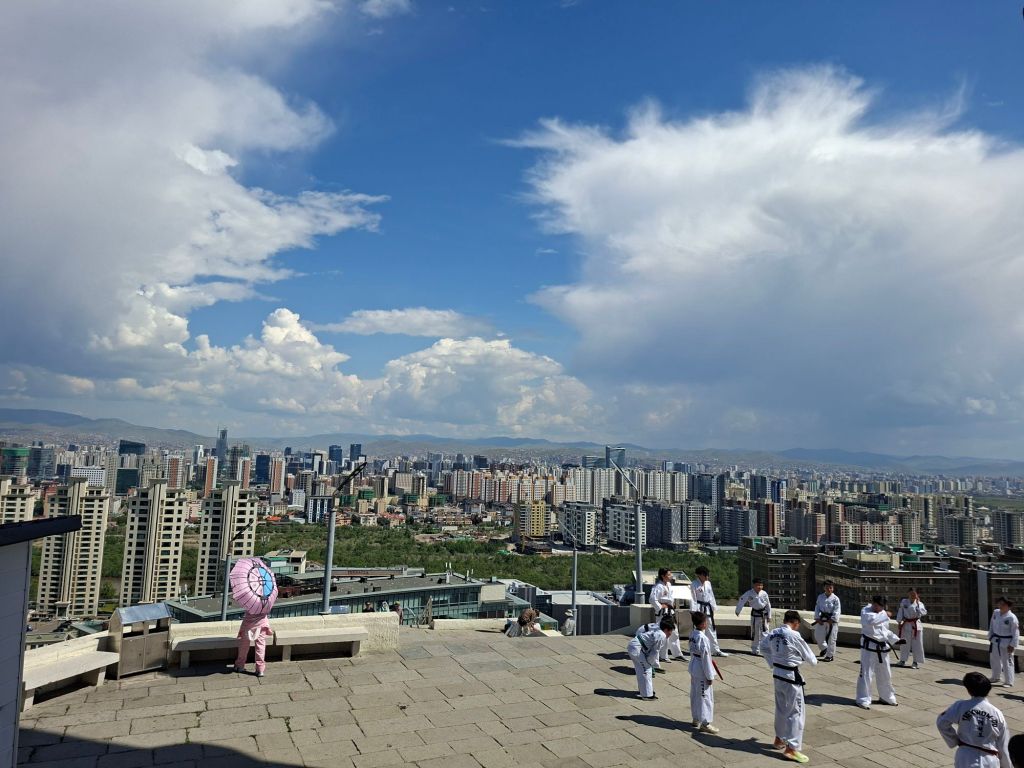
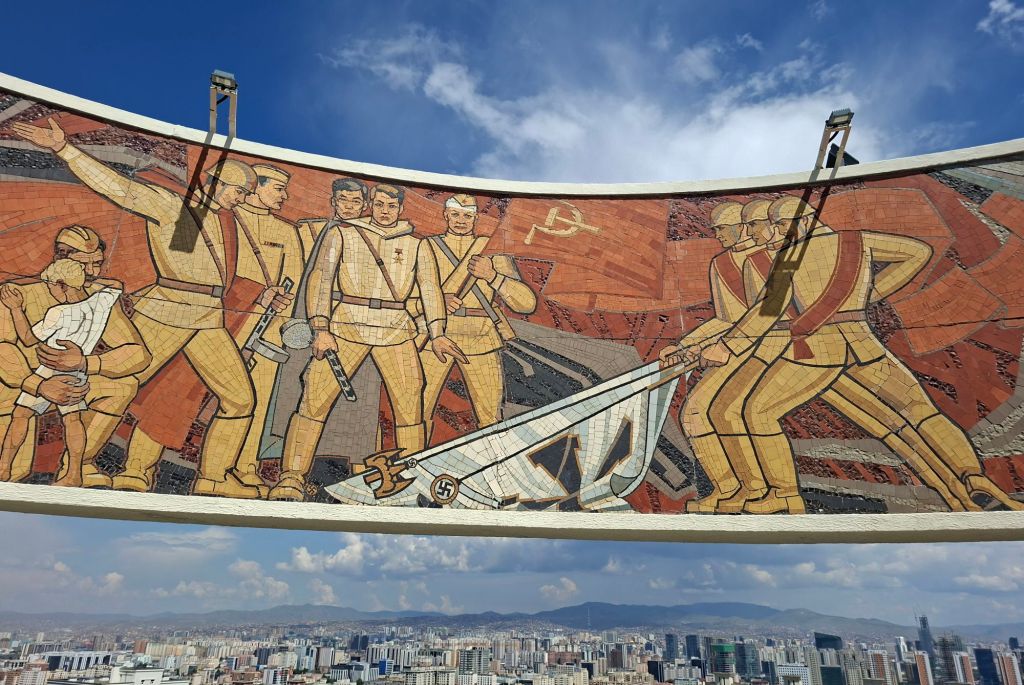
After all that mountaineering (and a drink stop) it was on to the Naran Tuul Market. I should probably use this as an opportunity to talk about Ulaanbaatar traffic. You spend much time in non-moving traffic, really the city probably needs more public transport options (there are a few buses but nothing else), but no one seems to get that stressed about it as I have experienced in other countries. There are also very few motorcycles (possibly something to do with the winters here), and these are pavement vehicles, as opposed to road vehicles. However, it is parking where I would be of no use, generally this is a slow process where after driving slowly around coming to various dead ends where people have just parked up, an attendent points out a tiny bit of space one would be expected to get one’s car in. I would have no chance at all.
Anyway, the Naran Tuul Market. This is also known as the Khar Zakh or Black Market and sells absolutely everything you may ever want, or didn’t even know you wanted. A few highlights:
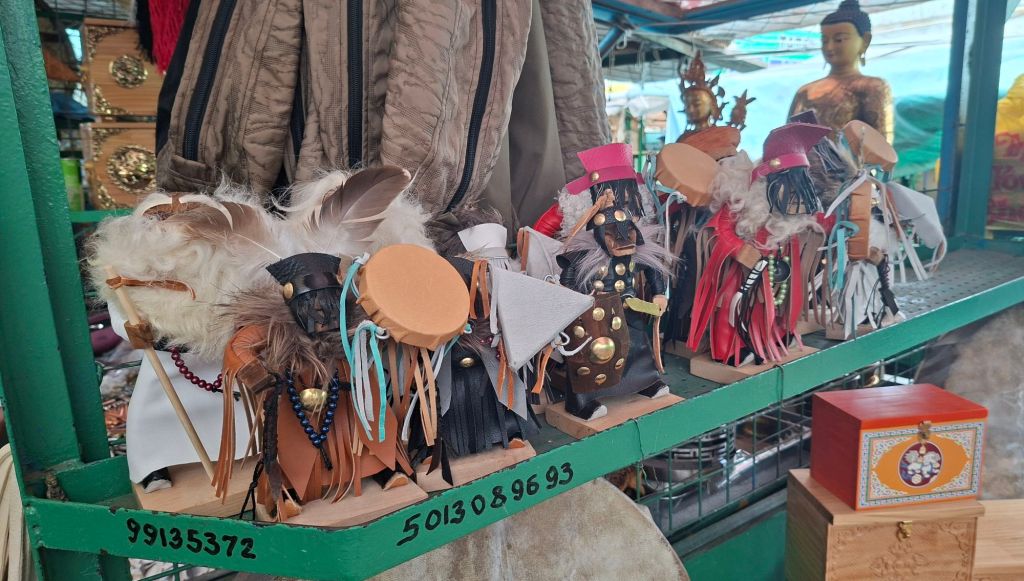
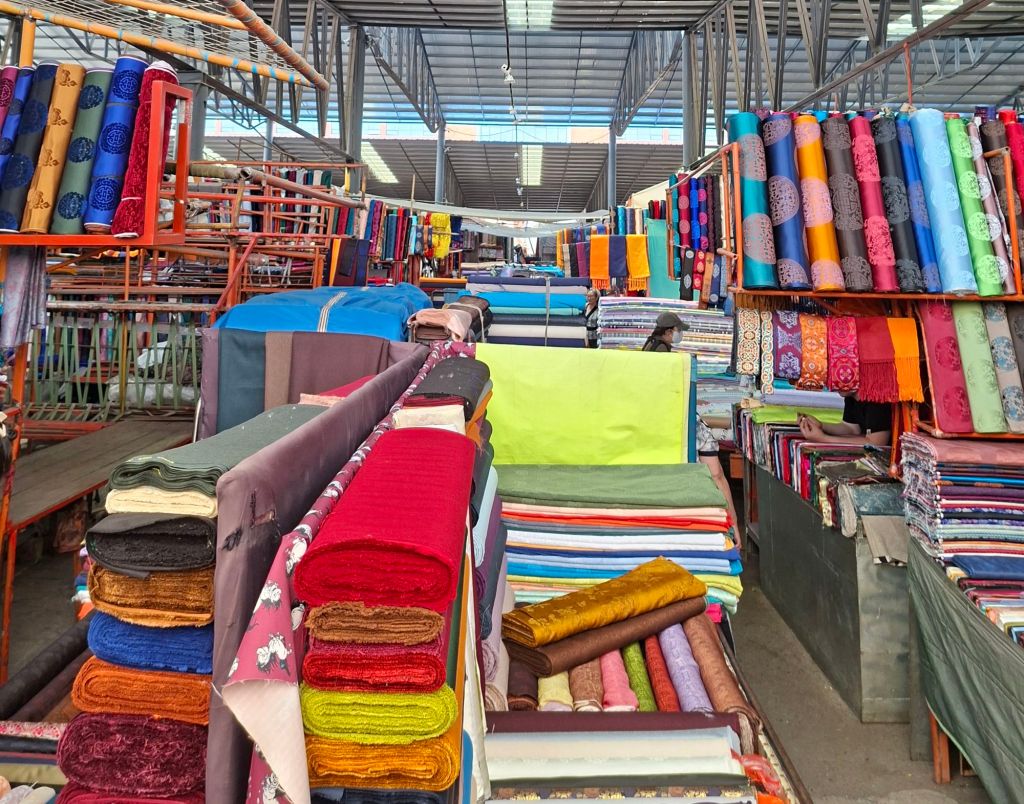
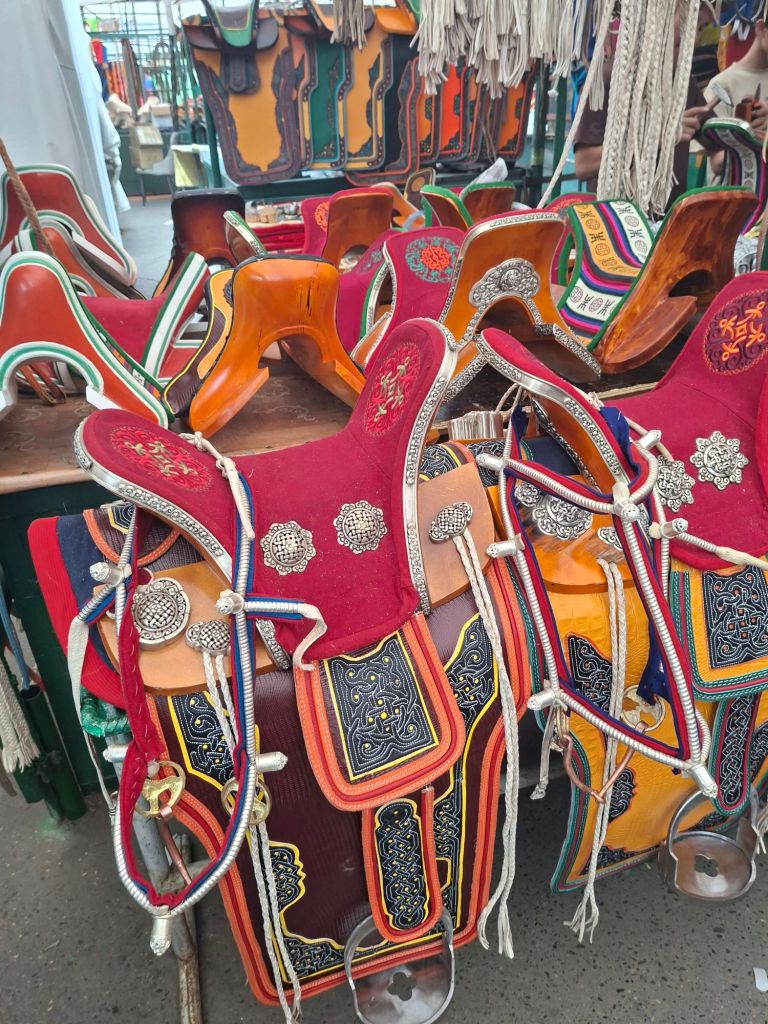
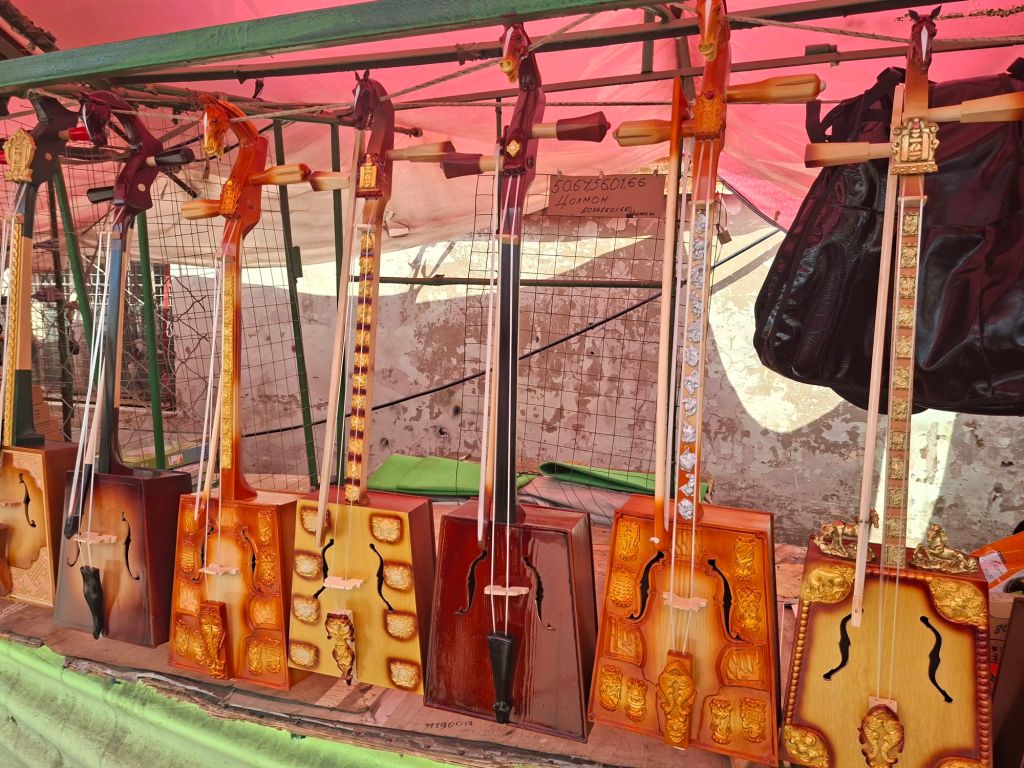
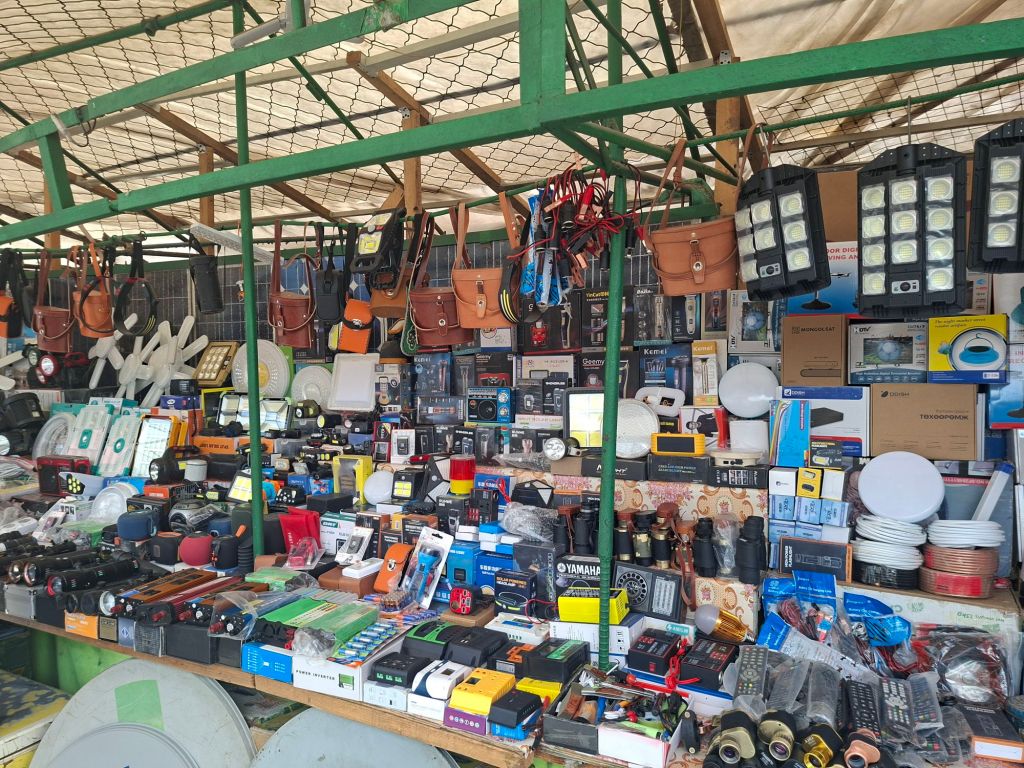
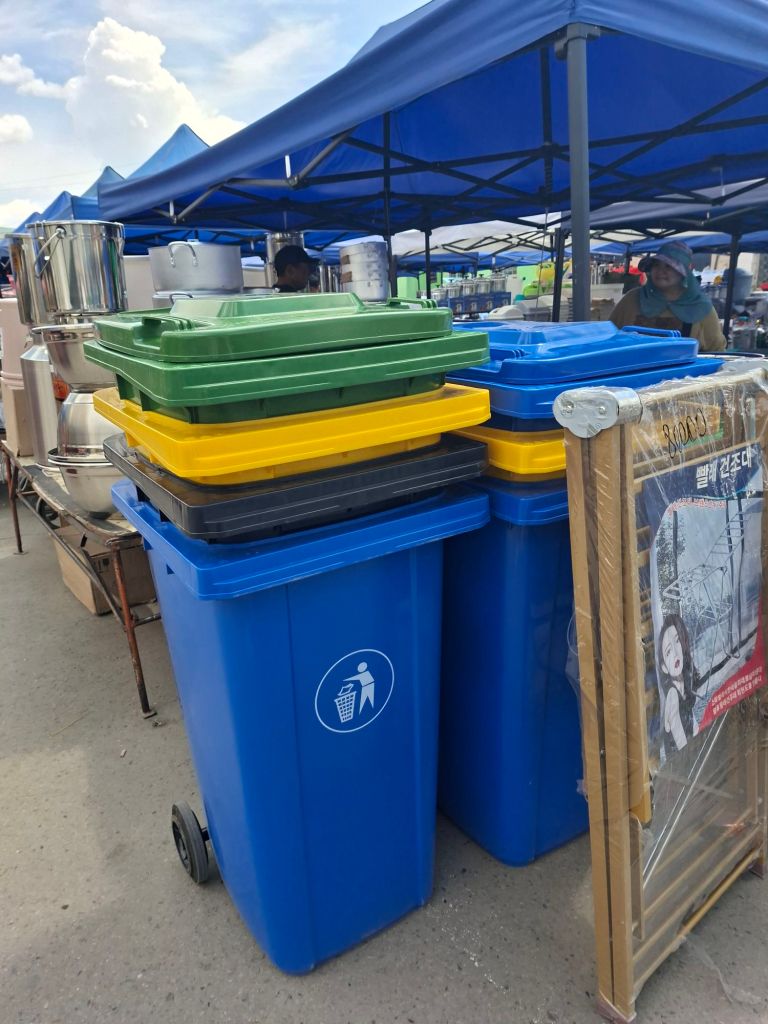
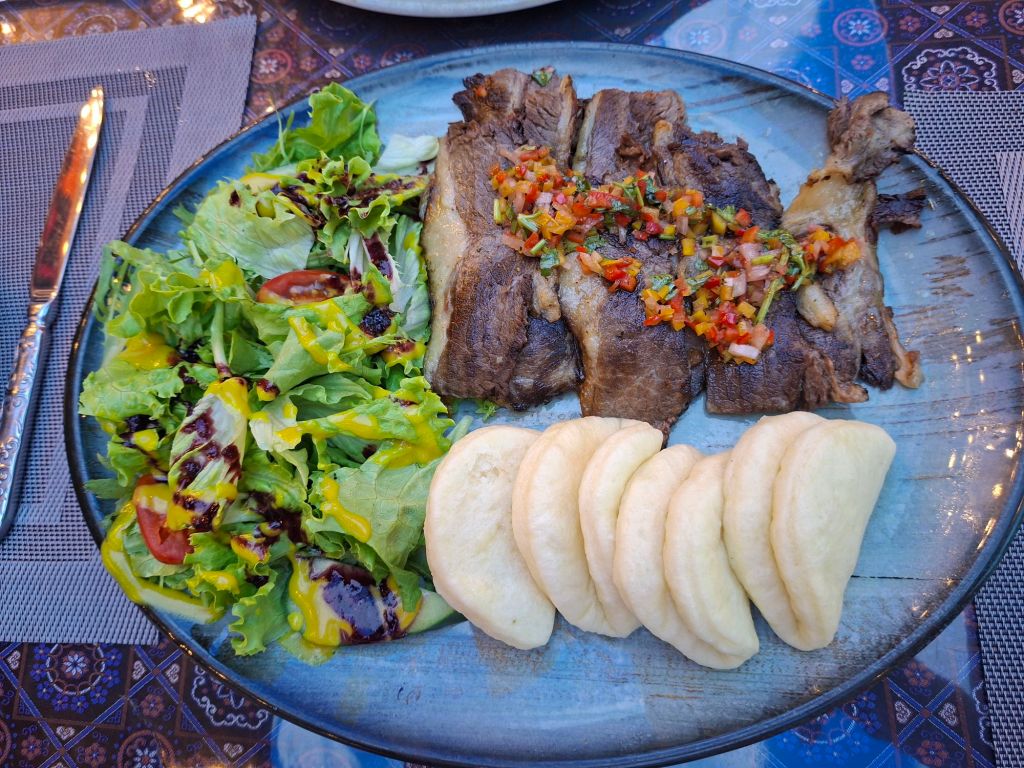
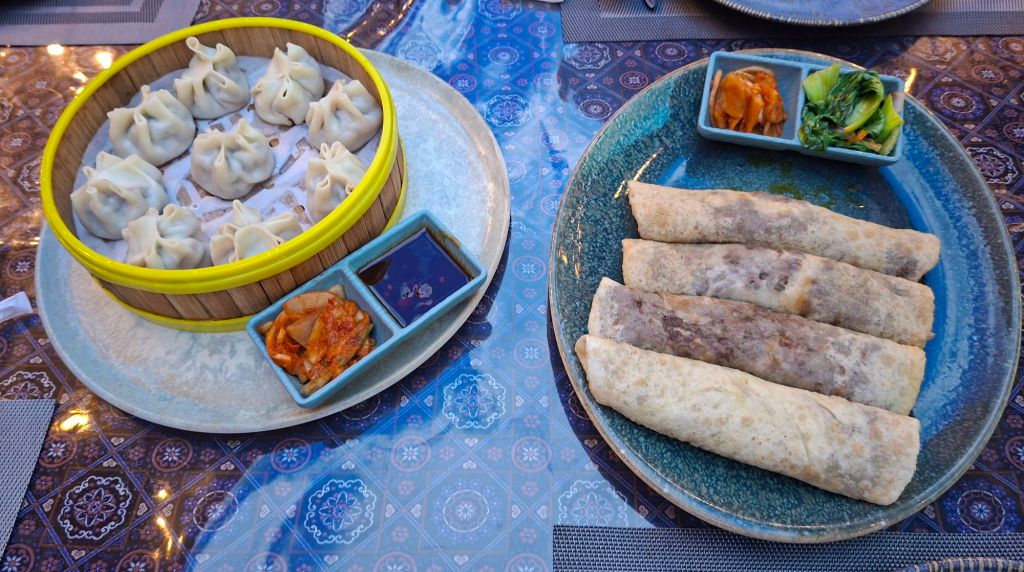
By now it was time for lunch and we were taken to obviously a tourist trap of a recent, which is part of a mini chain in Ulaanbaatar where the interiors are intended to reflect a particular city – this being Kharakorum. I rather liked it, and the food was lovely.
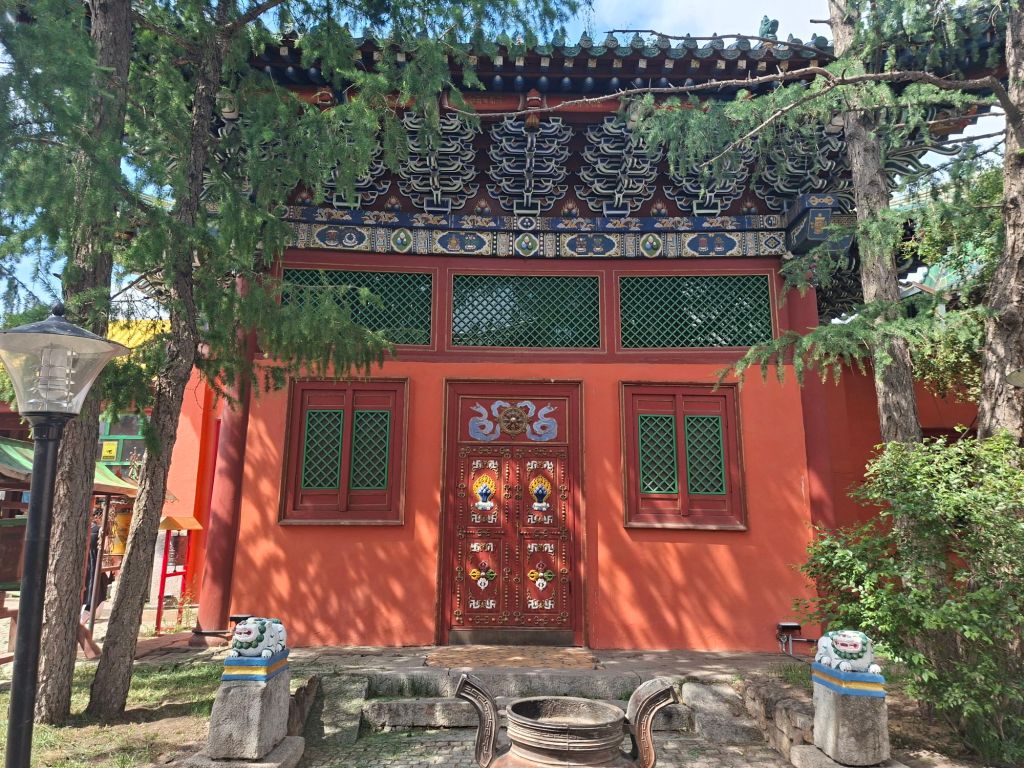
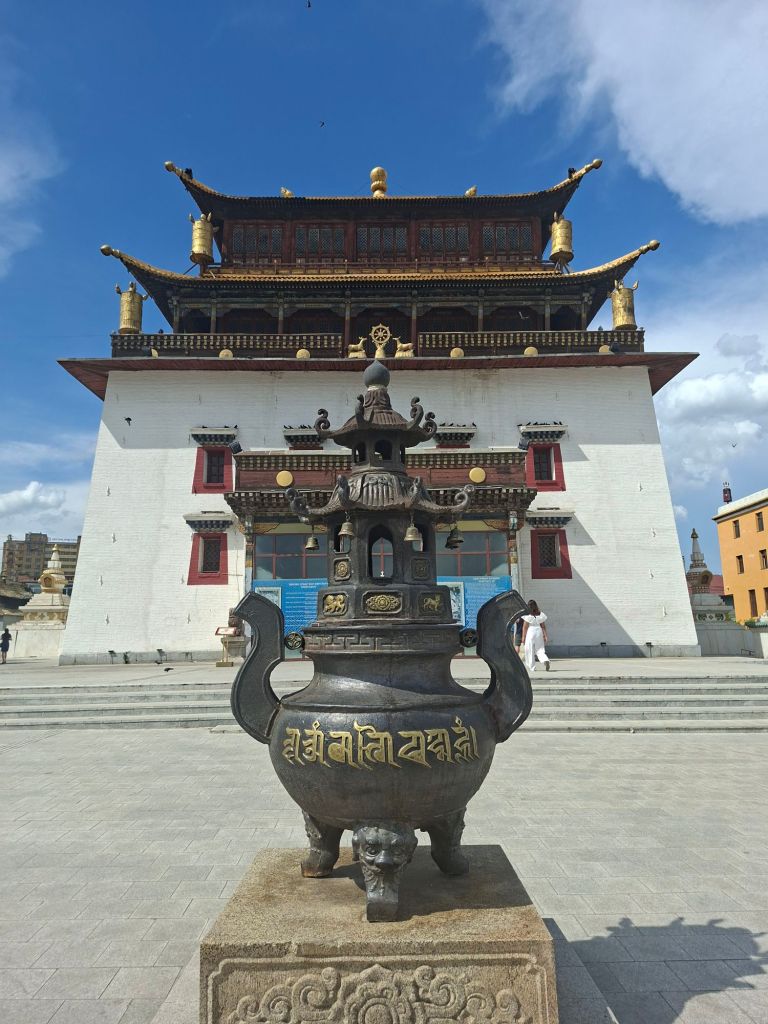
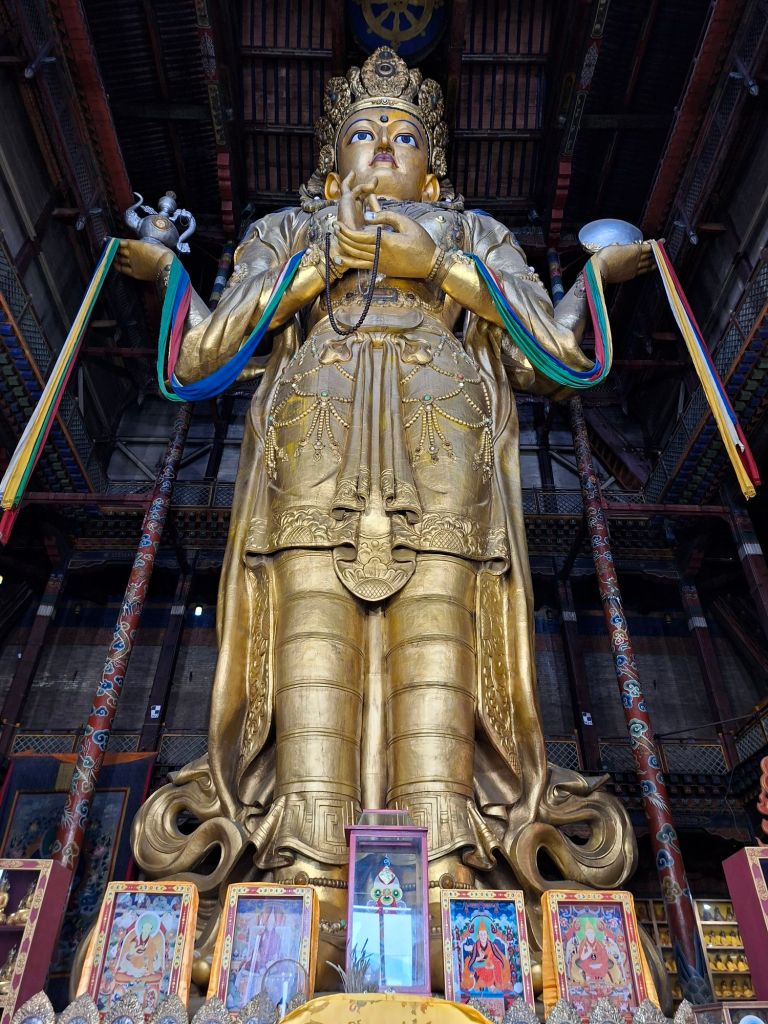
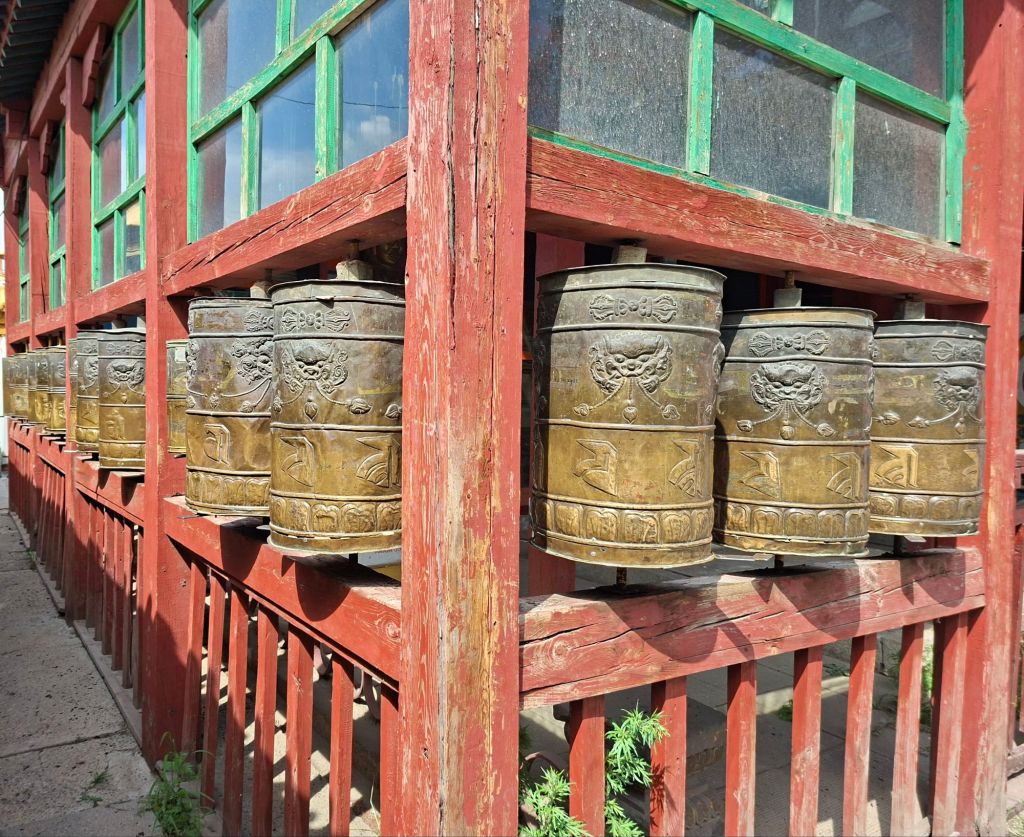
Our next stop was the Gandan Khild. Building began on this monestary complex in 1838 and, before 1937 there would have been nearly 100 temples and monasteries. However, only a few buildings have survived the purges and the only reason these did was because in 1944 US Vice President asked to see a monestary on his trip to Mongolia, so what was left was hastily opened up and it remained a “show monestary” until 1990. Today, it is a genuine working monestary and home to around 600 monks. Although we only saw one when we were there, and he was, in classic monk style, on his phone.
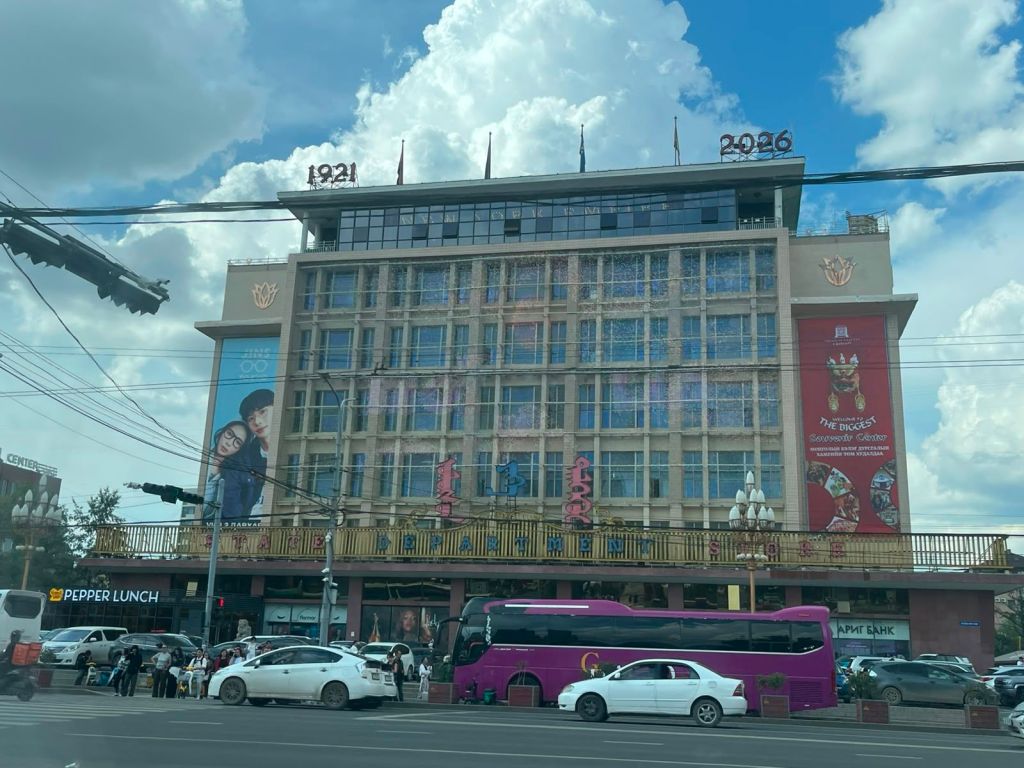
Our final stop was the State Department Store. This was established in 1921 and was then known as, literally, “The Big Shop”. I had expected this to be like a communist shop (lots of glass cases containing very little), but to be honest it was like a big fancy department store anywhere in the world – there was even a Next outlet. However, our visit was to do some pre-shopping research for when we return to Ulaanbaatar.
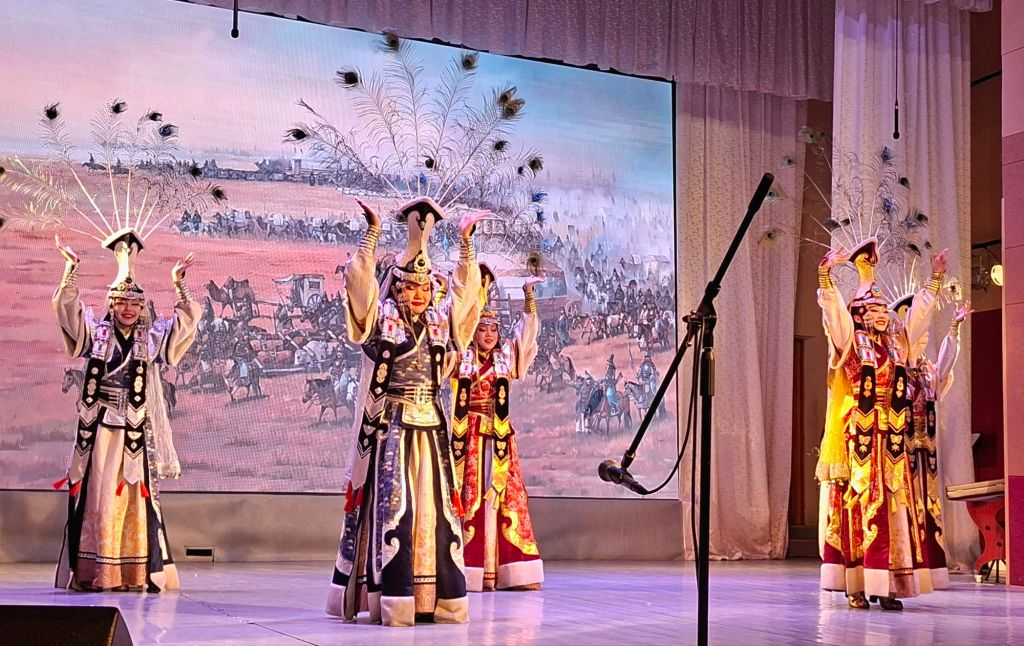
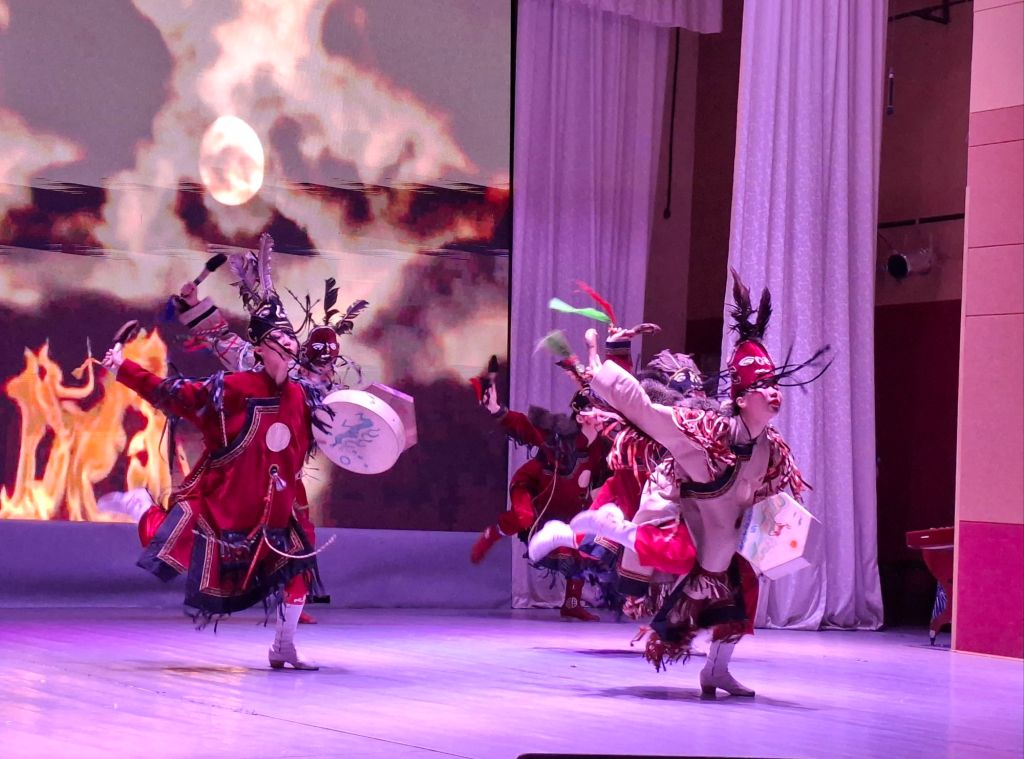
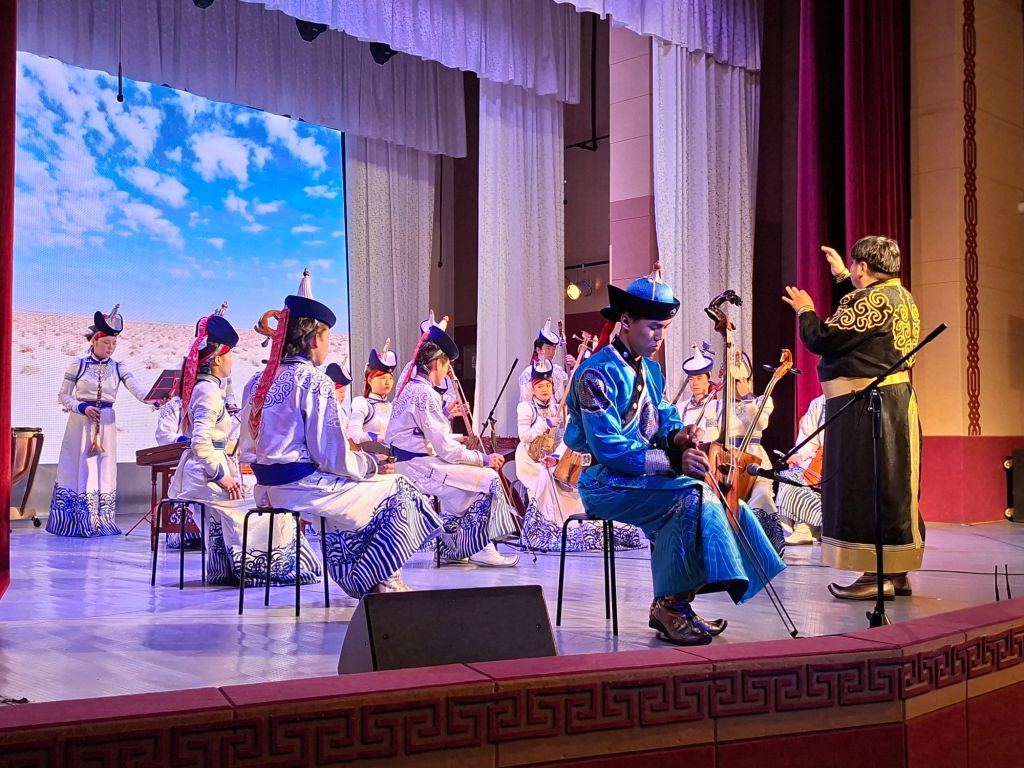
As veterans of travel in China, Colette and I both know the value of a cultural show. Yes, these are put on for tourists, but they are an excellent way to see traditional music, dance, and costumes and a way to support these arts. Tonight’s was genuinely excellent, and my first opportunity to hear Mongolian throat singing. Kublai Khan (Chenggis Khan’s grandson, and the Khan responsible for expanding the Mongol Empire into China) founded the first state orchestra in 1260 of 324 musicians. Therefore, tonight’s show included a much smaller orchestra, but using instruments that those musicians would have recognised, including:
- Morin Khur – this is a horse headed stringed instrument, played similarly to a cello, but is more viola sized. Interestingly the bow is held with one’s hand the other way round to a cello or violin.
- Yatga – a zither like instrument which rests on the floor and is played by plucking the strings.
- Yoochin – a hammered dulcimer played by striking metal strings with bamboo sticks.
- Tsuur – a vertical flute.
- Limbe – a horizontal flute.
- Shigshuur – a rattle made from carved cow horns.
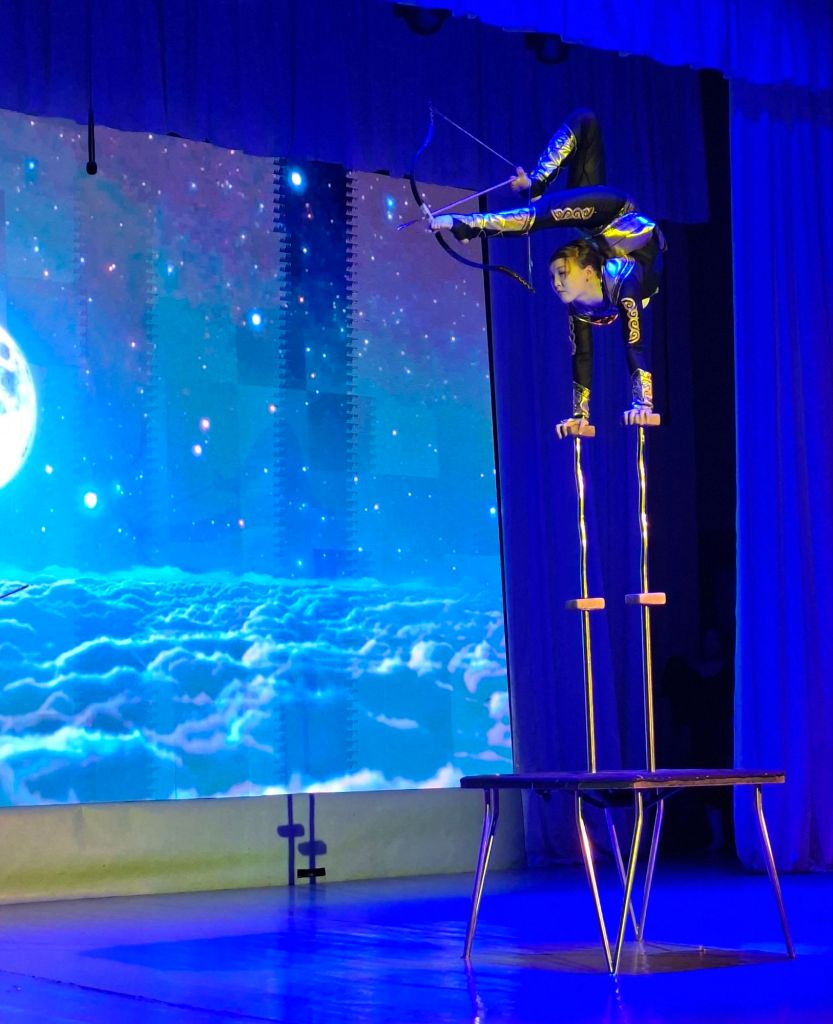
It was then back to our hotel for a nutritious meal of a cup-a-noddle (although I had managed to buy the spicest ones known to man) and my traditional in-hotel meal of a tin of sweetcorn. I am taking advantage of non-meat meals whilst we still can, as I suspect much meat will feature in the coming days.
So whilst our guide was utterly useless (a new low) we have seen a lot today, and tomorrow we are off on our own with a plan involving the 2 main museums of Ulaanbaatar which will, I suspect, involve much Chinngis Khan learning.


Leave a Reply