I woke up this morning. It was warm, it was dry, I had my first dry toilet experience – from here on I was having an amazing time, it was all magical etc. My cold also cleared up today (as I ran out of paracetamol so good timing there). Oh and an aside about drugs, I had been prescribed and took a daily anti-malaria pill – I did not see a single mosquito the whole time I was in Botswana, the only time I actualy got bitten was on the plane from Johannesburg to London. Just saying.
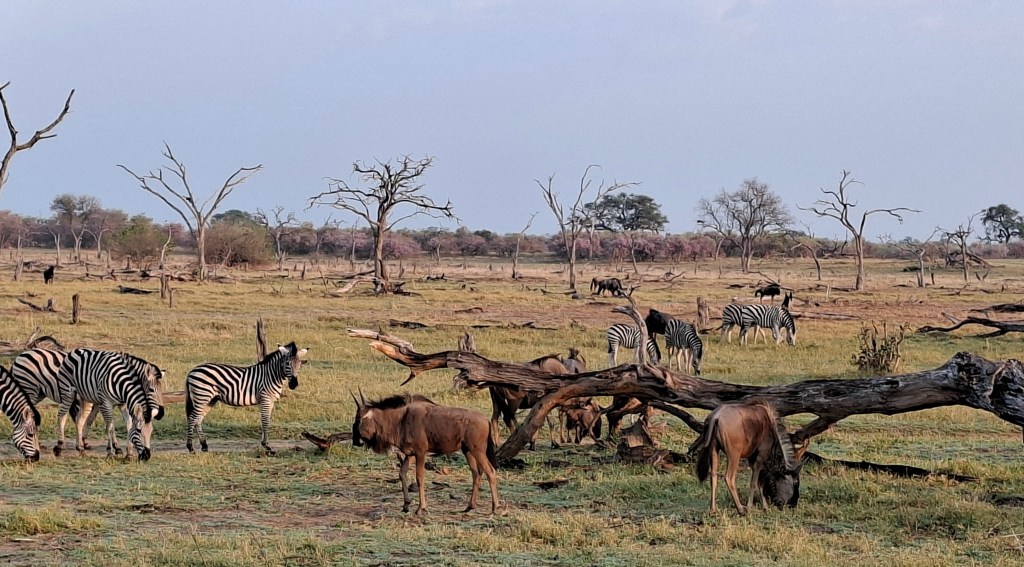
The Kwai concession is a very different landscape to Kazakina – as we set out it was open savannah with a number of dead trees This area flooded this year for the first time in 15 years and has only just dried out.
And off we went:
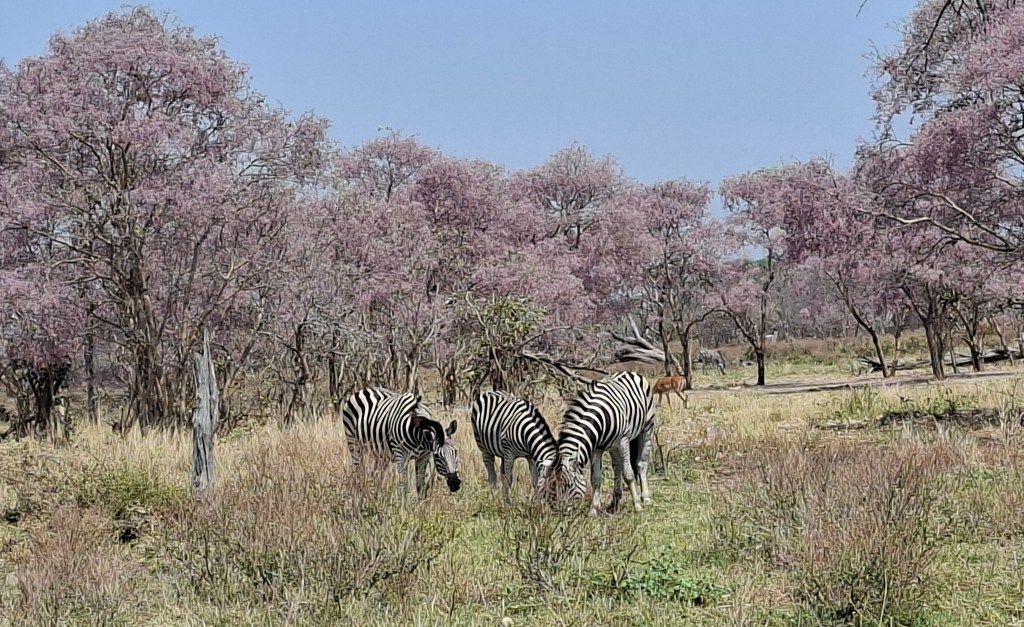
- Zebra.
- Zebras and wilderbeast.
- Black backed jackal.
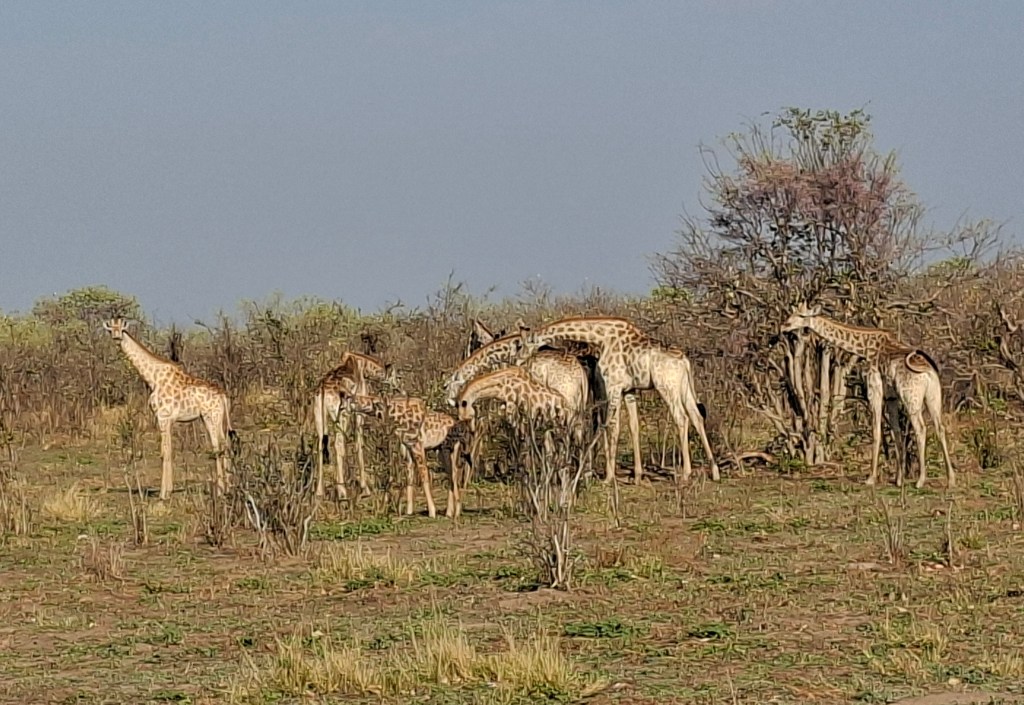
- Giraffes.
- Red billed hornbill (flying chilli).
- Ring necked dove (bird).
- Tsepi antelope – these are the fastest antelope in Botswana and they can even outrun cheetahs over long distances.
- Magpie (bird).
- Wilderbeast.
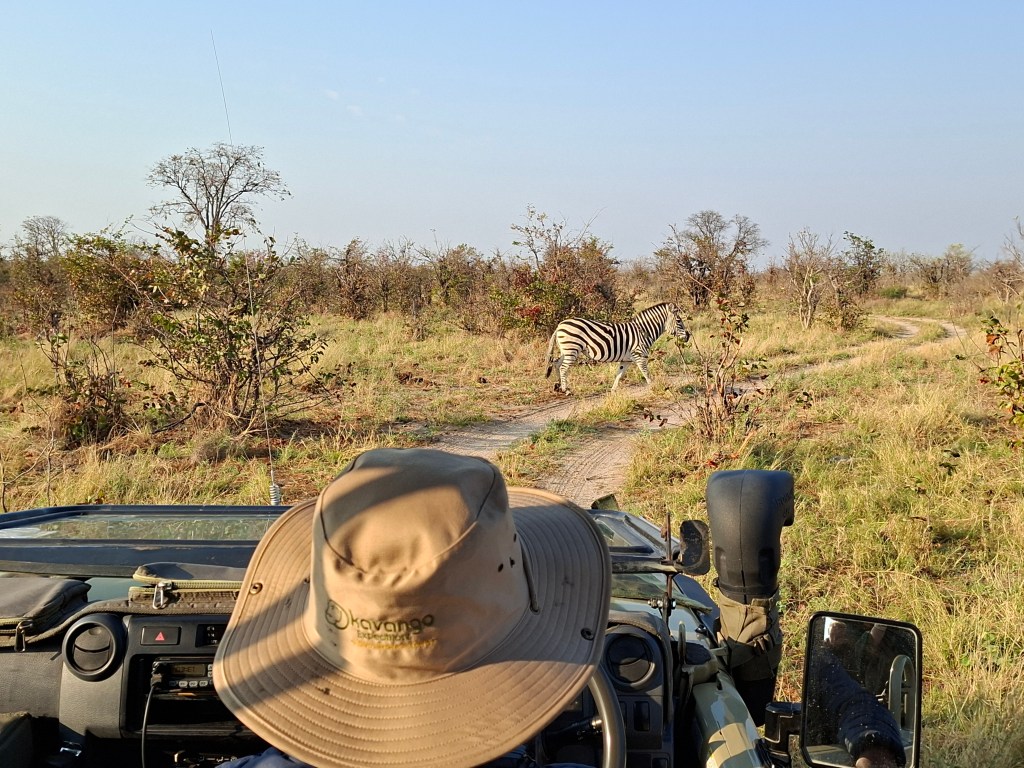
- Zebra crossing (oh the comedy).
- Giraffes and zebras.
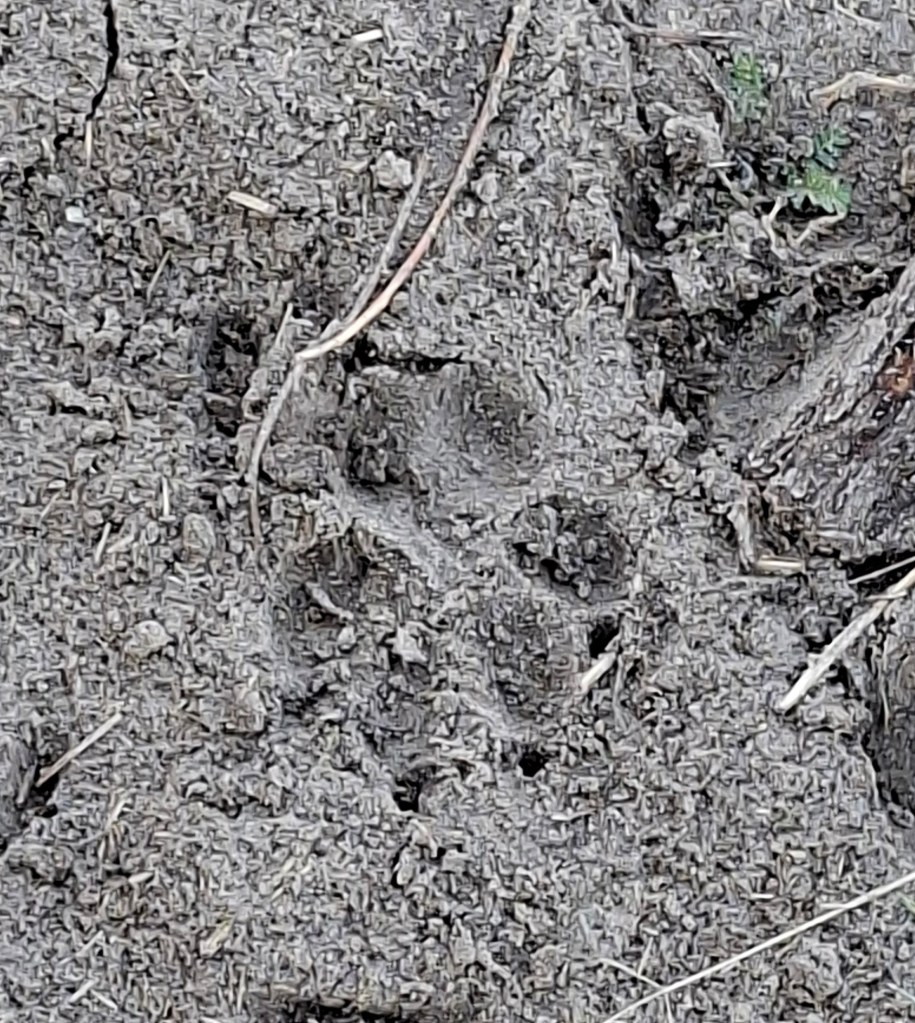
- Hyena tracks – Hyena only really come out at night, so this was probably the best we could hope for.
- Letchway antelope
- First hippo!
- Dwarf mongoose – yes, that would be the last of the 4 varieties of Botswana mongeese/mongooses.
- Lilac breasted roller.
- Wilderbeast and zebra.
- Tsepi
- Greater kudu.
- Stopped getting interested by impala at this stage…
- More Zebras.
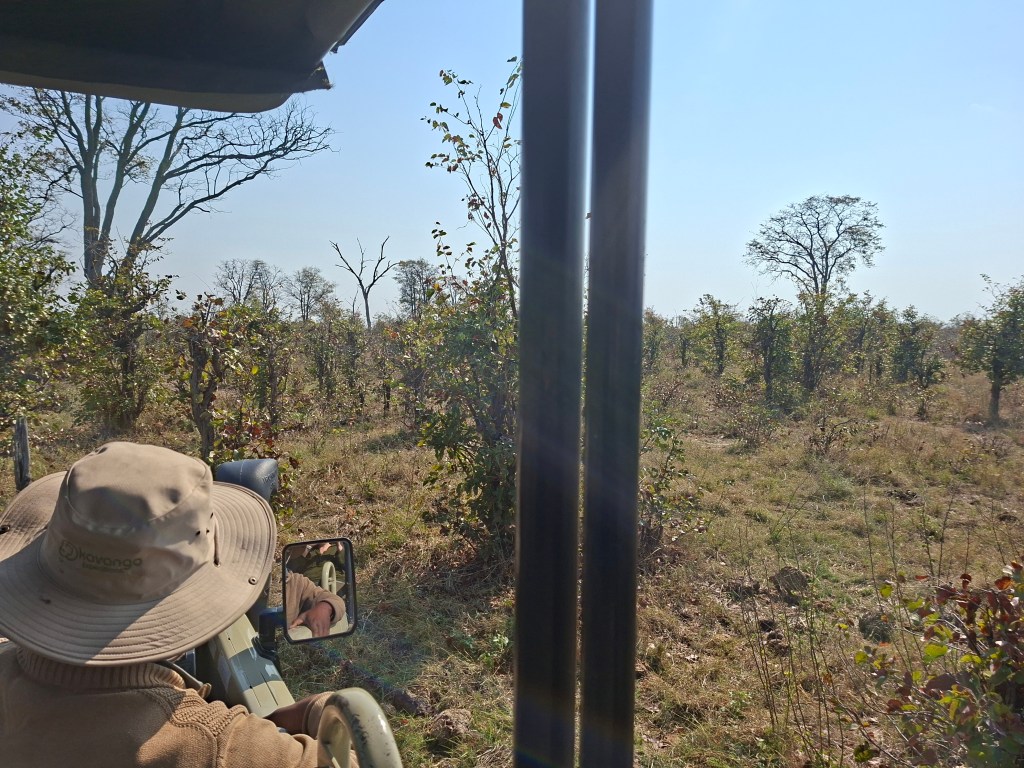
There were then rumours of a leopard, so we spent much time crashing the jeep through close trees/bushes (it is not only elephants that make space for the grazing animals), but we were unfortunately unsuccessful. I accepted this, leopards are solitary animals and effectively cats – they are not elephants.
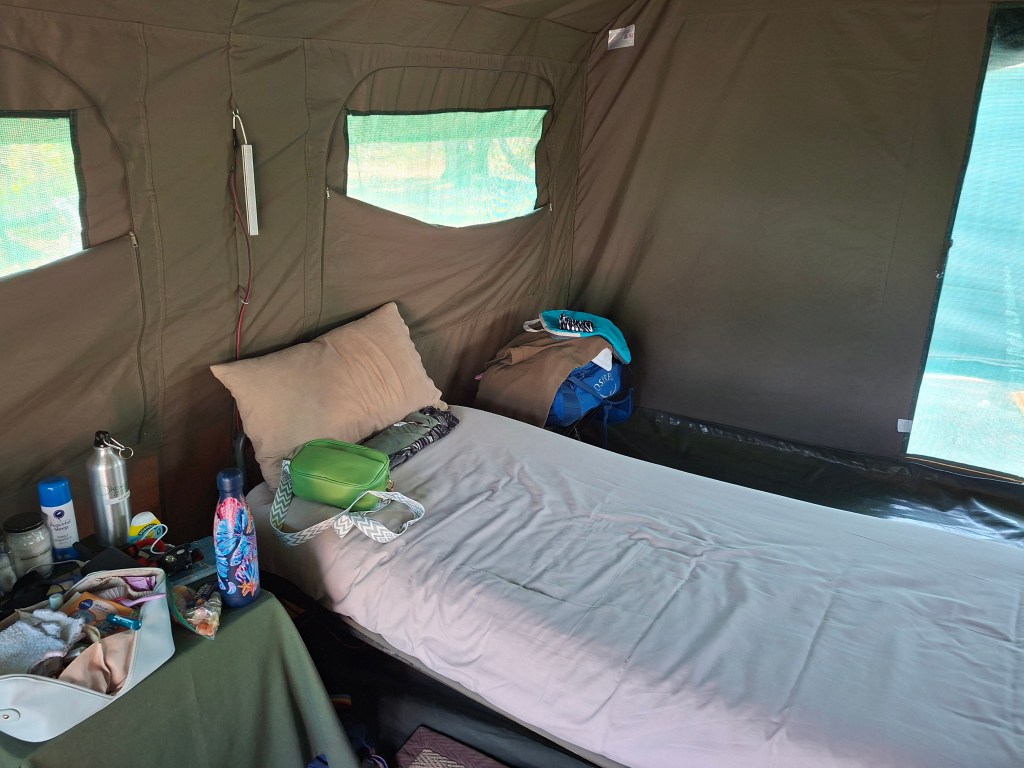
We drove back to camp for lunch of bobotie, this is a South African dish of minced beef topped with egg. When it was introduced by chef, I was not that pleased as my only other experience of bobotie was in South Africa and it was so flavoured with cinnamon it was inedible. Well, obviously chef knows what he was doing, and this was delightful (no cinnamon for a start!). Following which, because it was sunny I actually took some photos of my tent. I also had my first nap because it was HOT – let us call this a siesta. This was better, this was what we were expecting (and had the clothes for!).
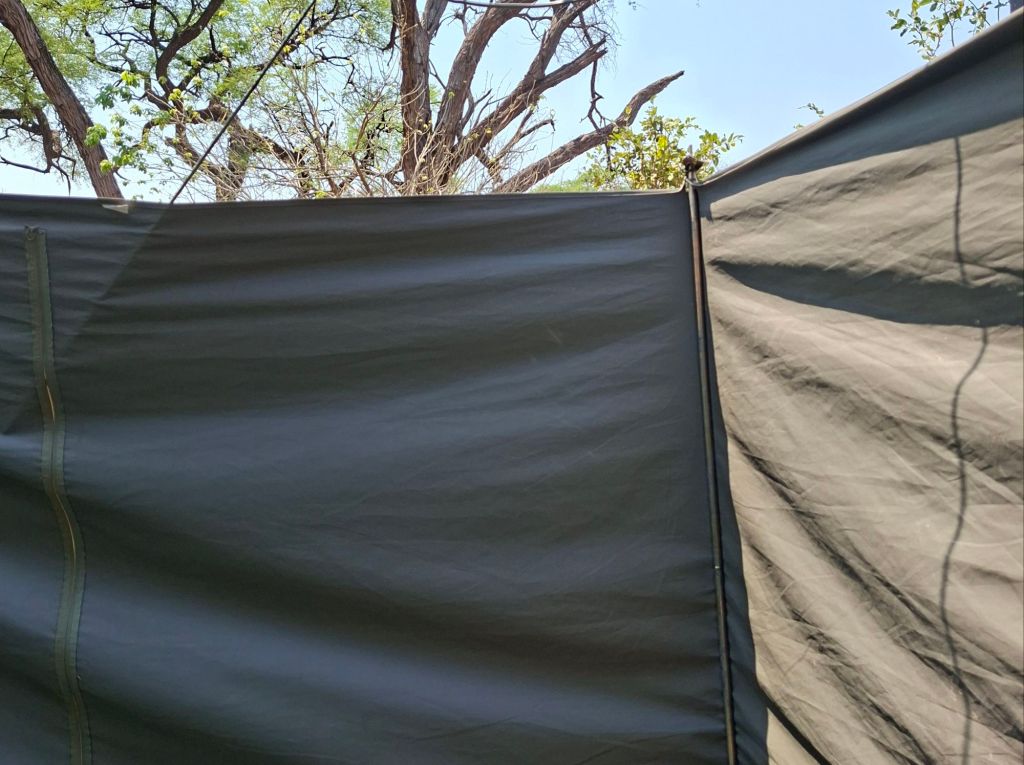
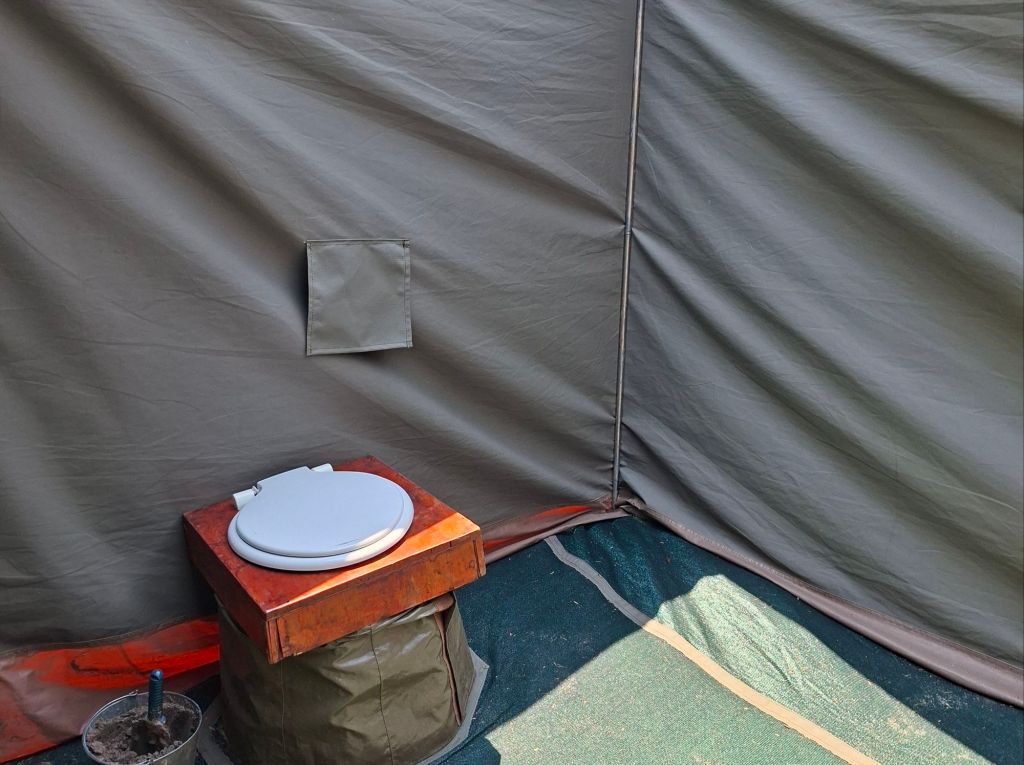
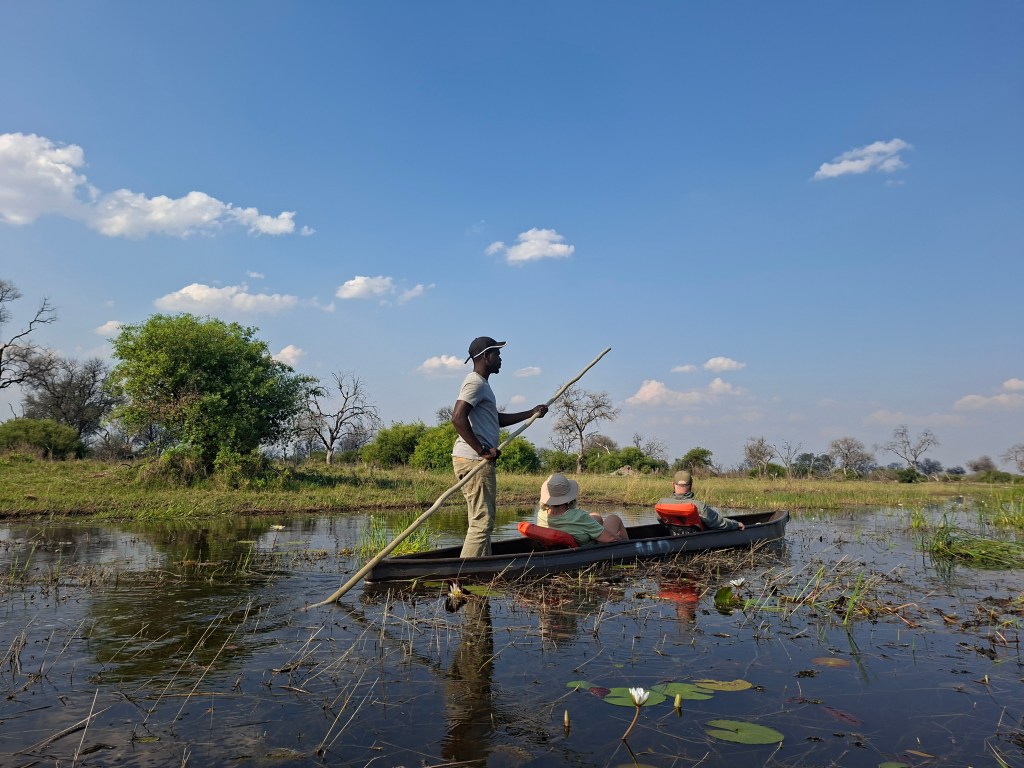
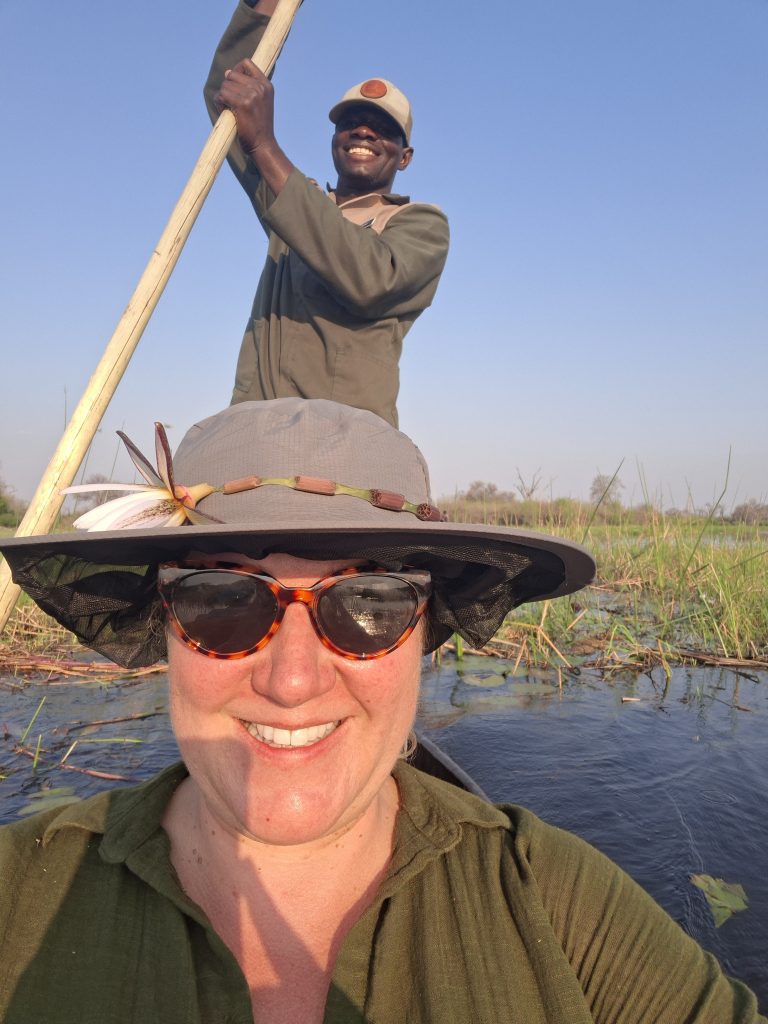
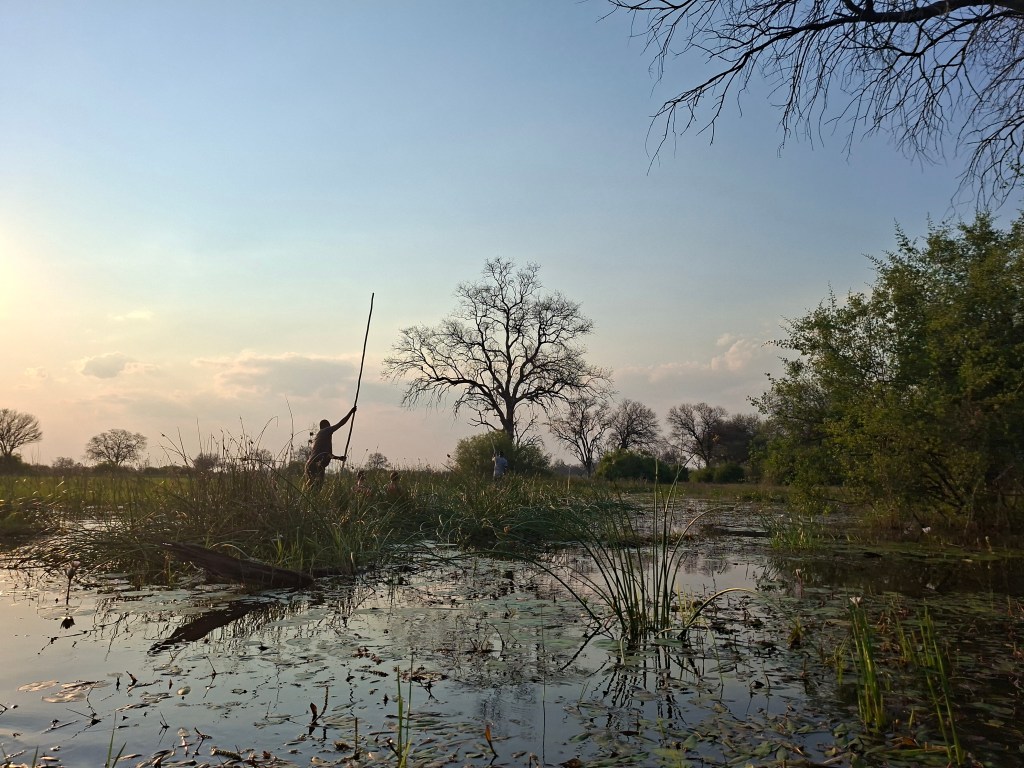
That afternoon we would be doing something a little different, a mokoro cruise. Mokoros are traditionally a dug out canoe, but the tourist versions are longer, broader, made of metal and come with seats and life jackets. There had been some concern (mostly from Mum) about whether it would be difficult to get in as we both have a tendency to fall over/in when getting in or of boats – however, no concern needed it was very, very easy. The polers (yes, this is how they introduced themselves) effectively manoeuvre the boat as you would a punt (for the Cambridge afficionados), but there is certainly a bit of push and I was surpised at how fast they are able to move the boats along in shallow water through thick vegetation.
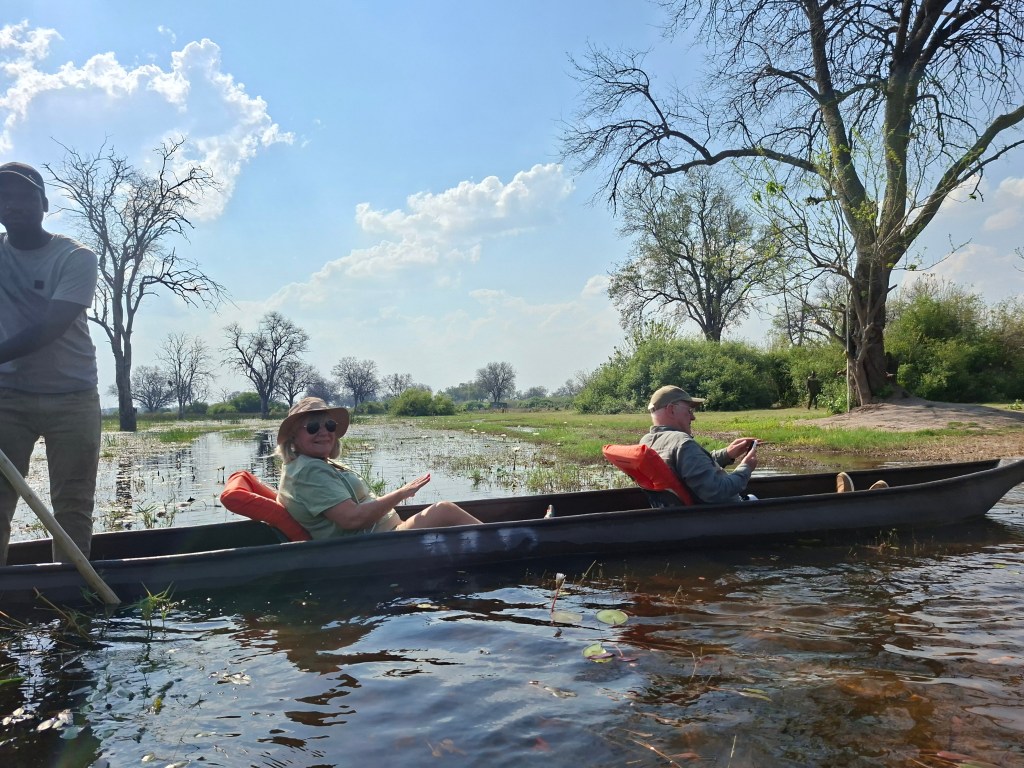
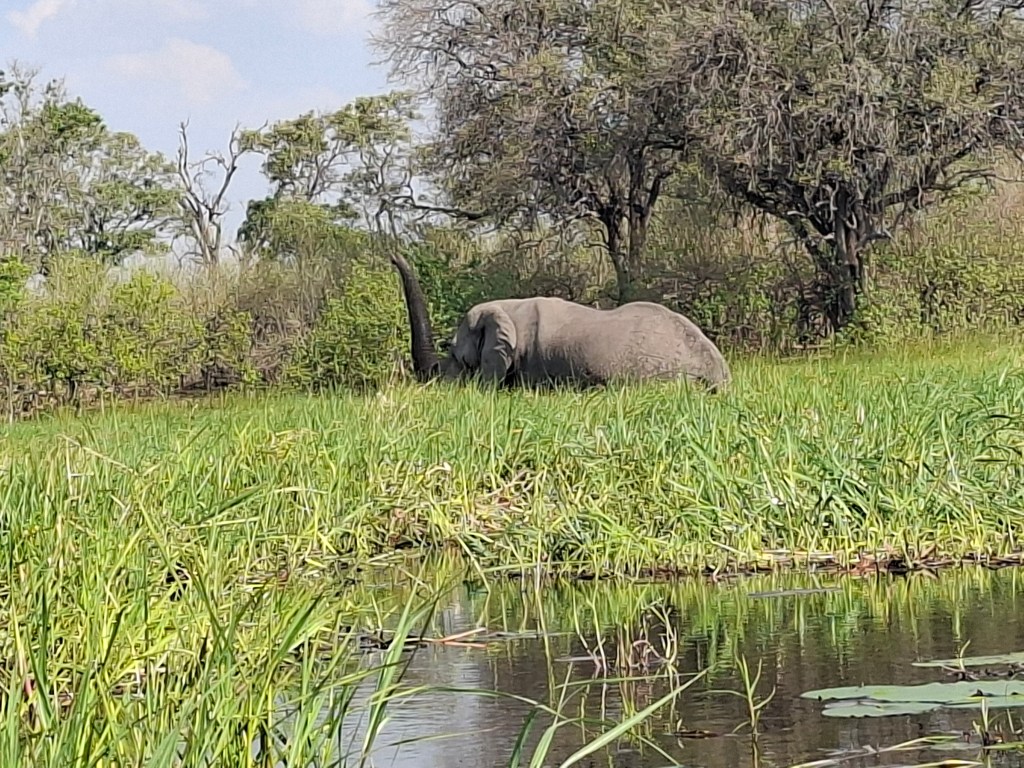
The main reason for mokoro curising is to see water animals close up and it is kind of magical. We also got really, really close to two huge bull elephants. I did not expect us to get that close, or for them to be so unbothered. The first sighting was two large bull elephants pulling up loads of waterlily roots (which they enjoy as are easy to chew as they start to get old) very loudly.
We were also propelled VERY close to hippos (which I was not so sure about as I was in the front of the mokoro!). Now hippos are notorious for being one of the most dangerous animals in Africa to humans – they are vegetarians, but will “have you” if you do not like you… They spend their days in the water (as it is too hot for their sensitive skin), and then at night they come up on land to munch no grass. You generally see hippos in small groups (called pods) of females with a single male, now I mentioned that hippos are less than discerning when it comes to mating. The dominant male will breed with all the females regardless of the family relationship, daughters, cousins, sisters whatever. However, female hippos do outlive the males by 10 years on average as the males have an unfortunate tendency to kill each other in fights for dominance, thus a lower average age.
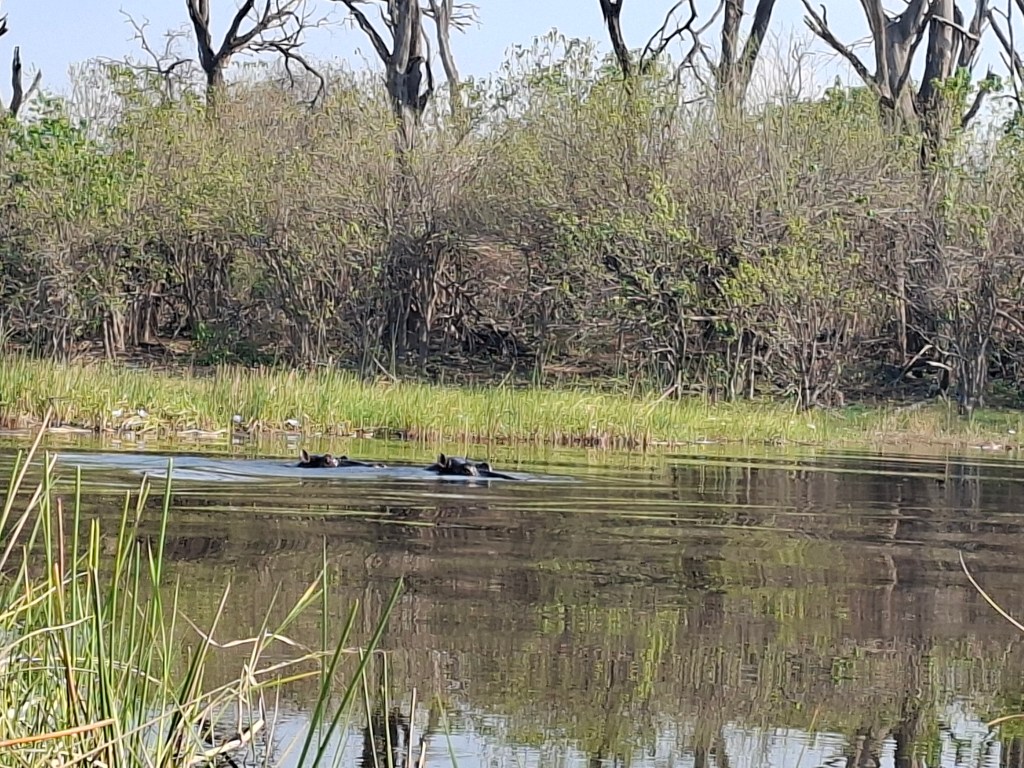
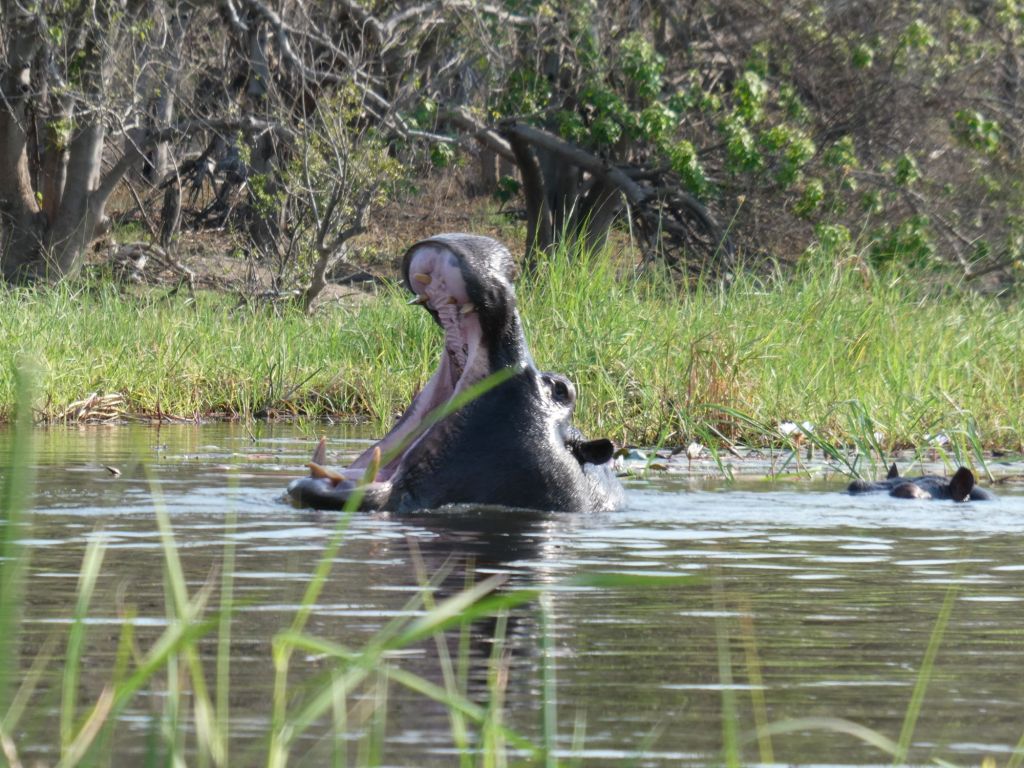
We stopped on the banks for a little break, and to see this guy up close:
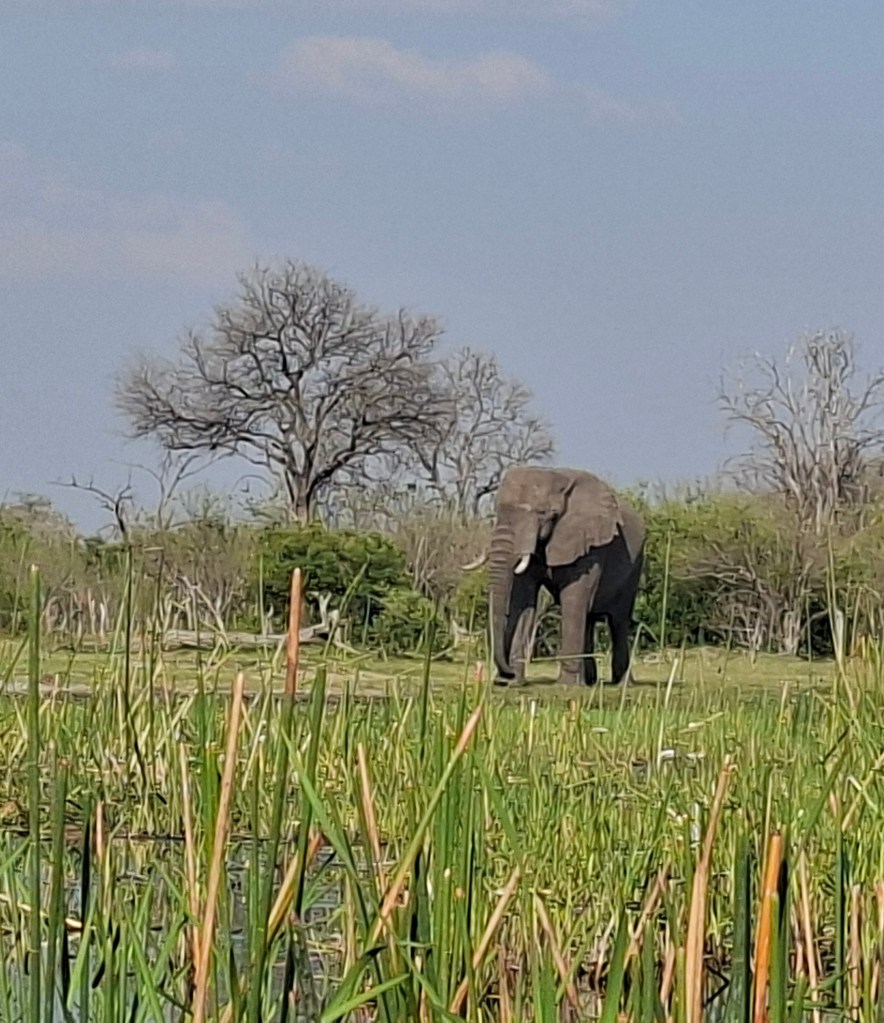
The whole thing was just magical and as we drifted back, I got a really strong wave of this is just so amazing, I am so lucky to be here – and not just because the sun had come out!
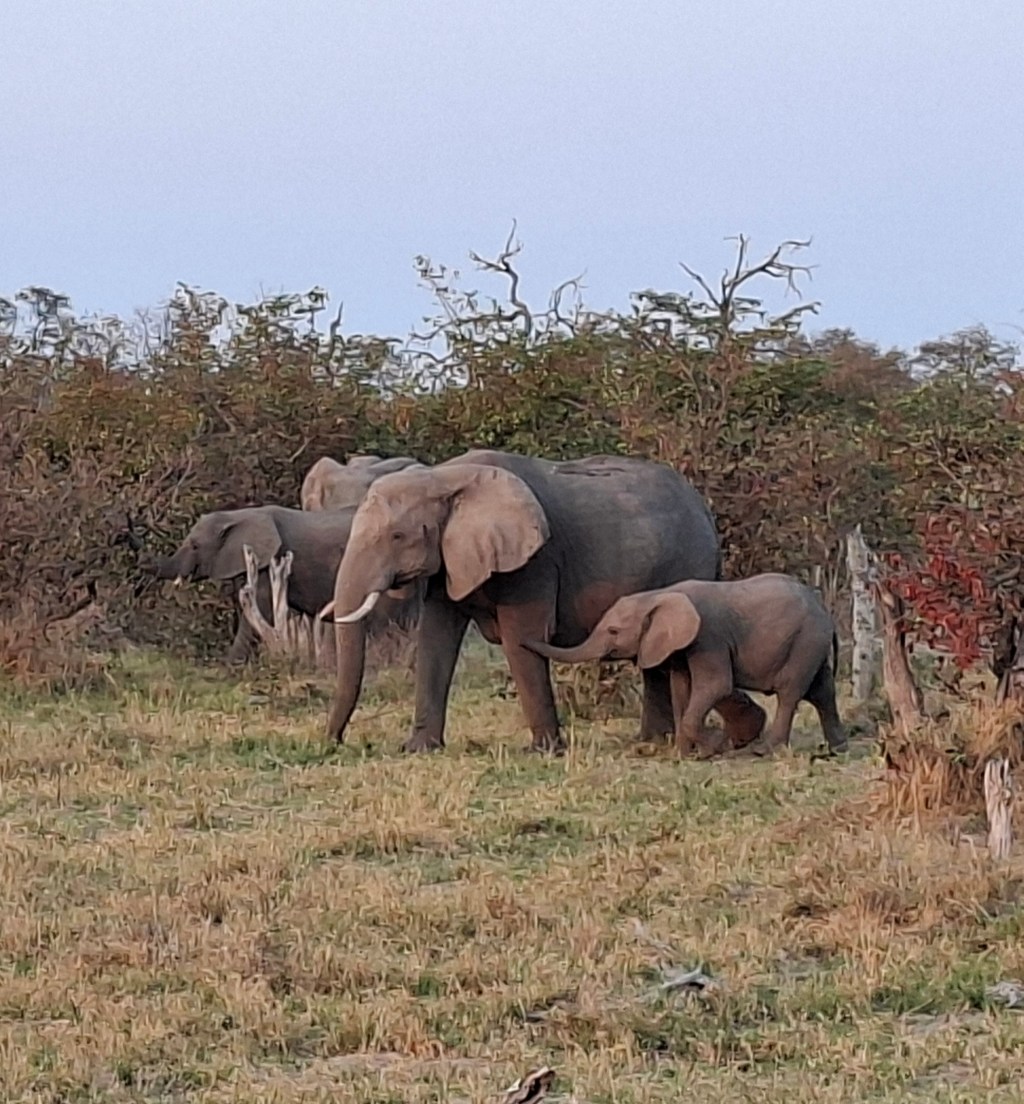
In what proved to be THE BEST day so far, on the way back we saw SO MANY elephants: the lone male we had seen in the water (recognised as the son of Rodney we had seen in the water as he had lost his tail), a huge group of over 25 elephants with babies, then finally a smaller group of males posing beautifully in front of the setting African sun.
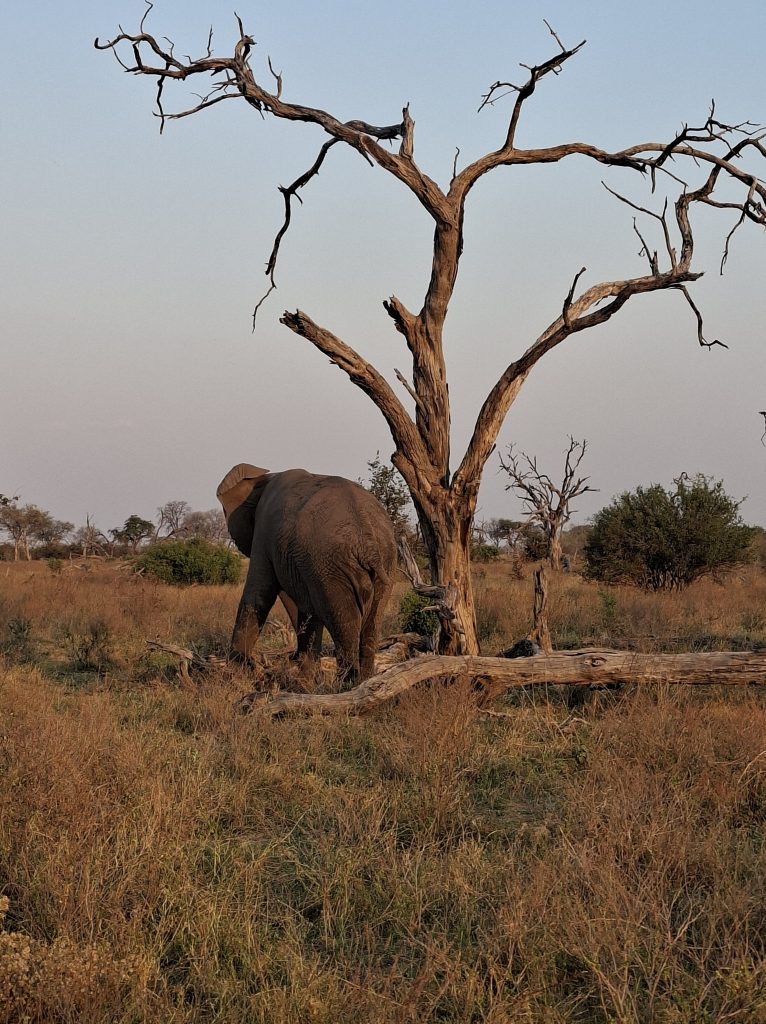
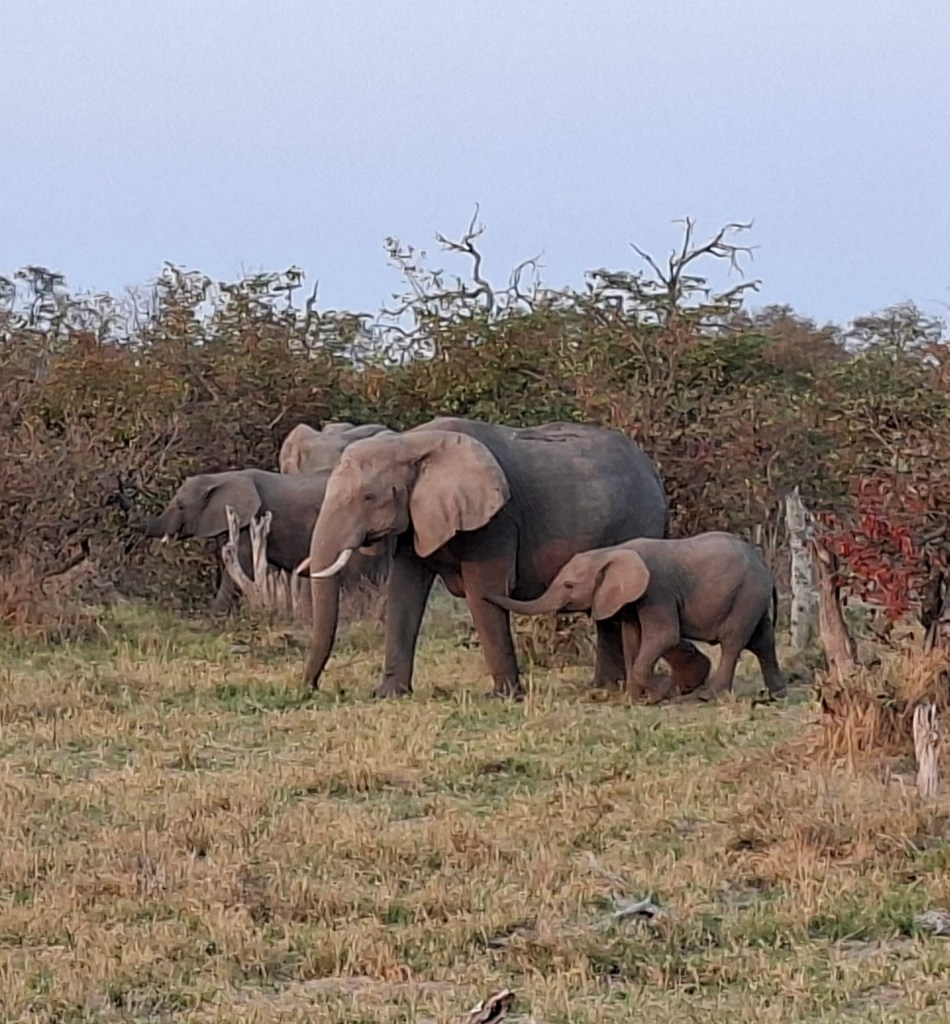
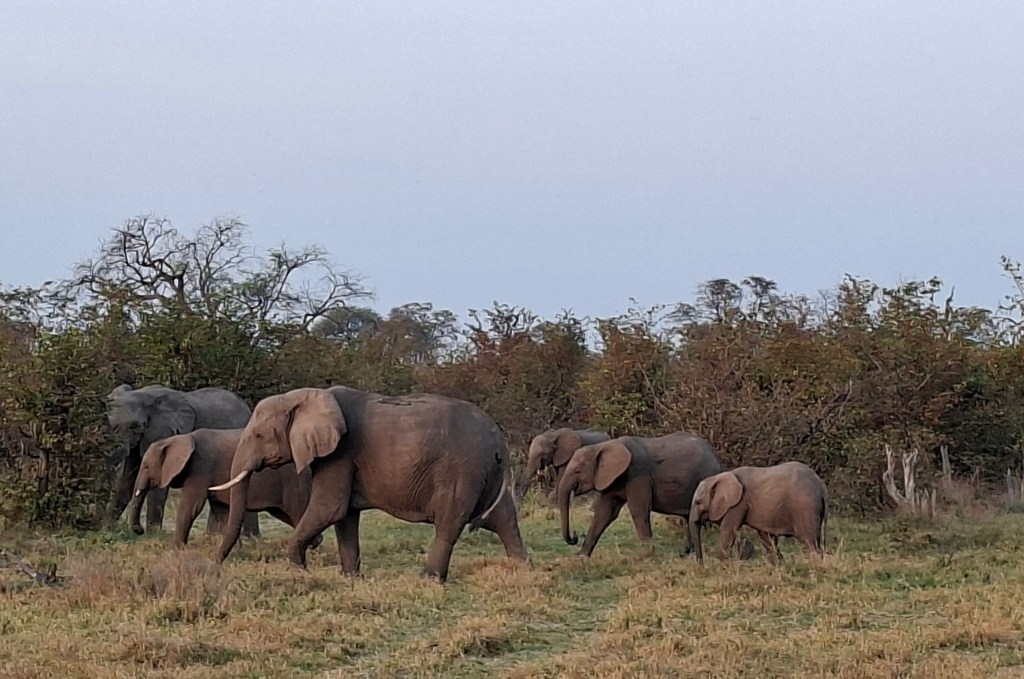
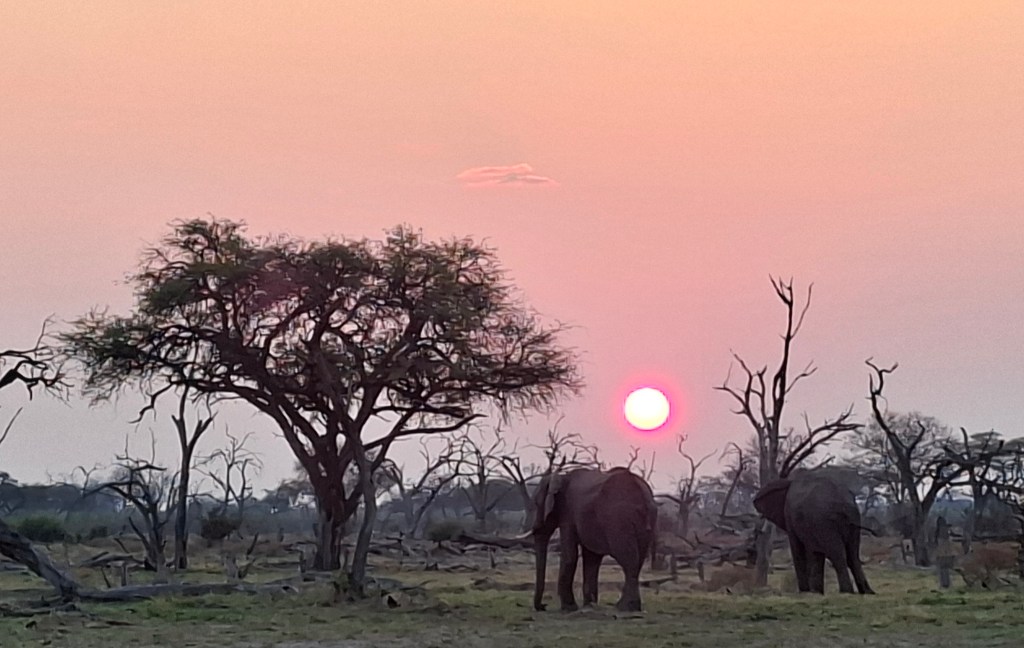
I then assumed we drove back to camp, had showers, had dinner but I have written nothing about this. Instead I wrote about how magical the day had been and topped off with SO MANY ELEPHANTS. This was why I came on safari to Botswana, it was to see African elephants in the wild in big groups – and see them we did. It was a wonderful day (I have no memory of when I was planning to get airlifted out…).


Leave a Reply