Today was a moving day, which meant a 5am wake-up. This felt particularly hard work as at around midnight I was awoken by some animal noise, and I genuinely thought I heard claws and something, probably a lion, trying to get into my tent! We had been provided with whistles and were told the ONLY blow them if there was actually something trying to get into the tent, as I lay there motionless I heard it moving off and Mum and Keith (in the tent next door) also awake. I decided I might survive. The next morning we learnt it was a hyena (not quite a lion), so although I still haven’t seen one, I have now heard it as well as seeing evidence of it.
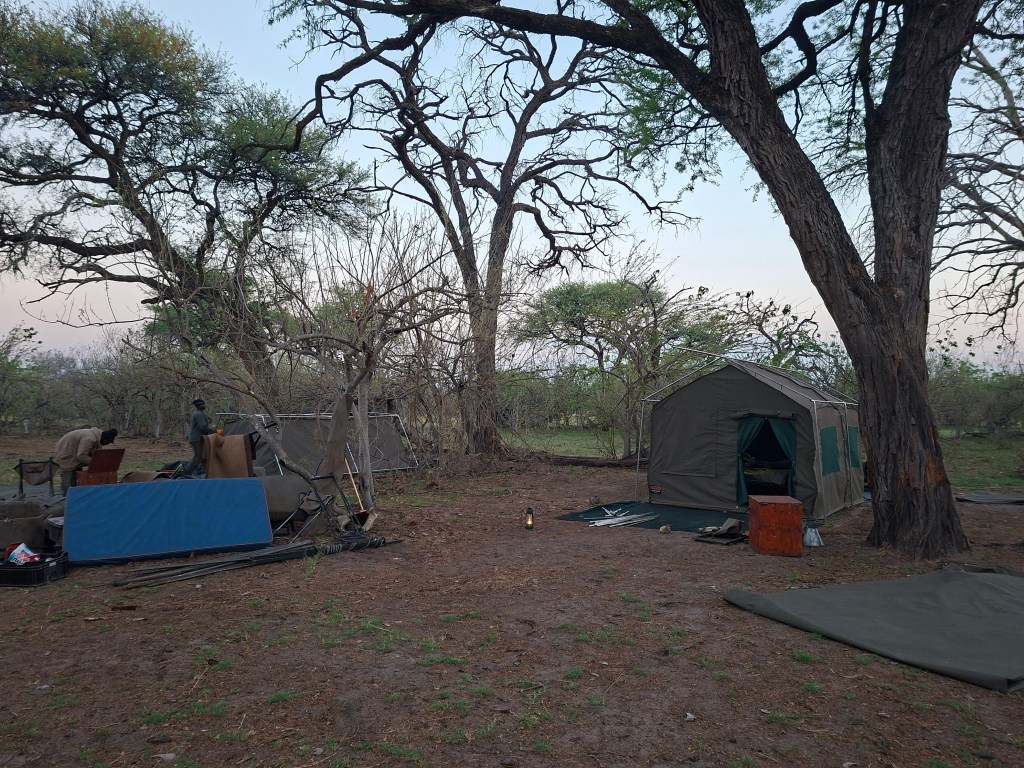
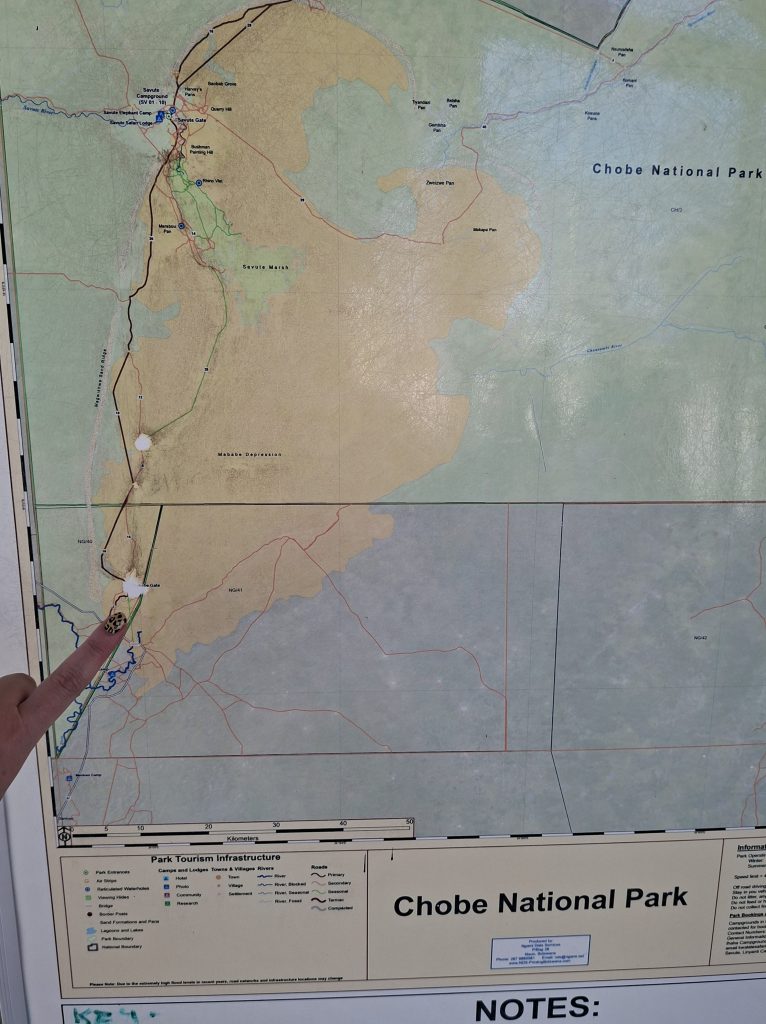
Today we would be driving from the Kwai Concession and into Savuti. Savuti is part of the Chobe National Park and would involve (taking into account stopping for animals and things like lunch) this would take around 11 hours. Pindrops of starting and end points below:
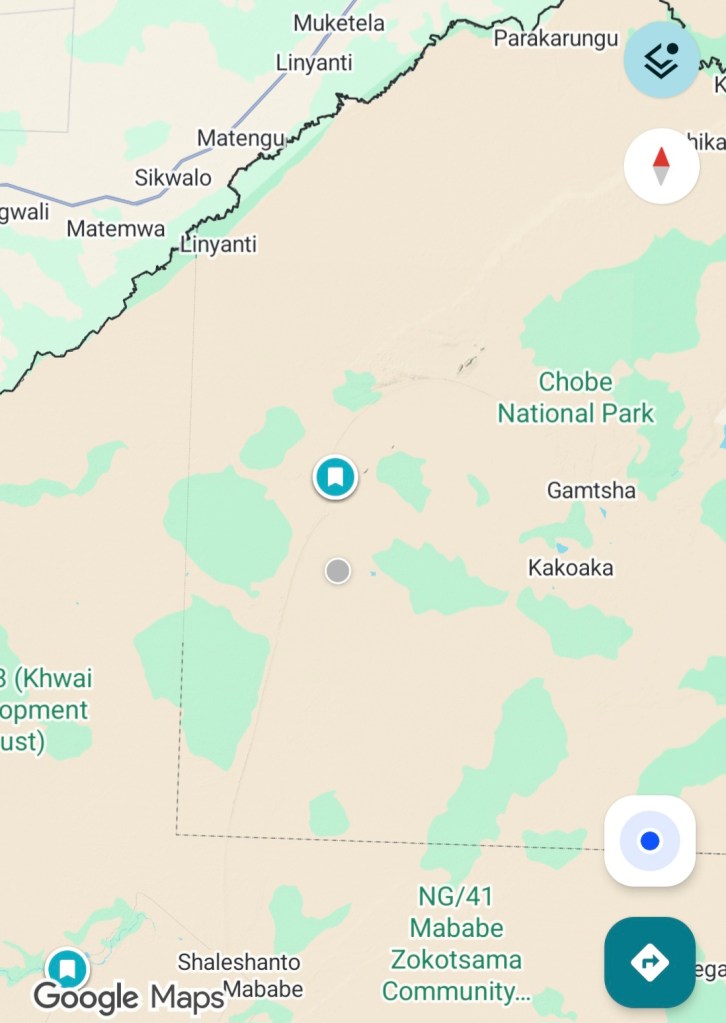
And off we went:
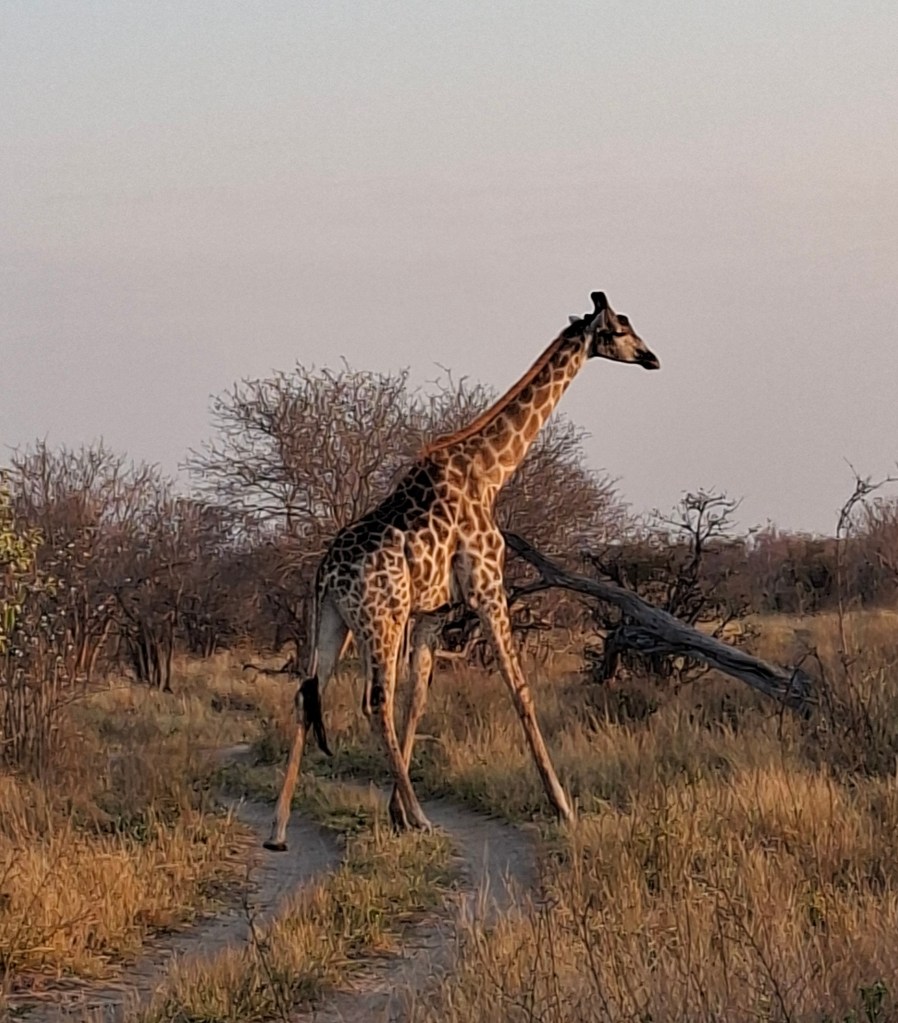
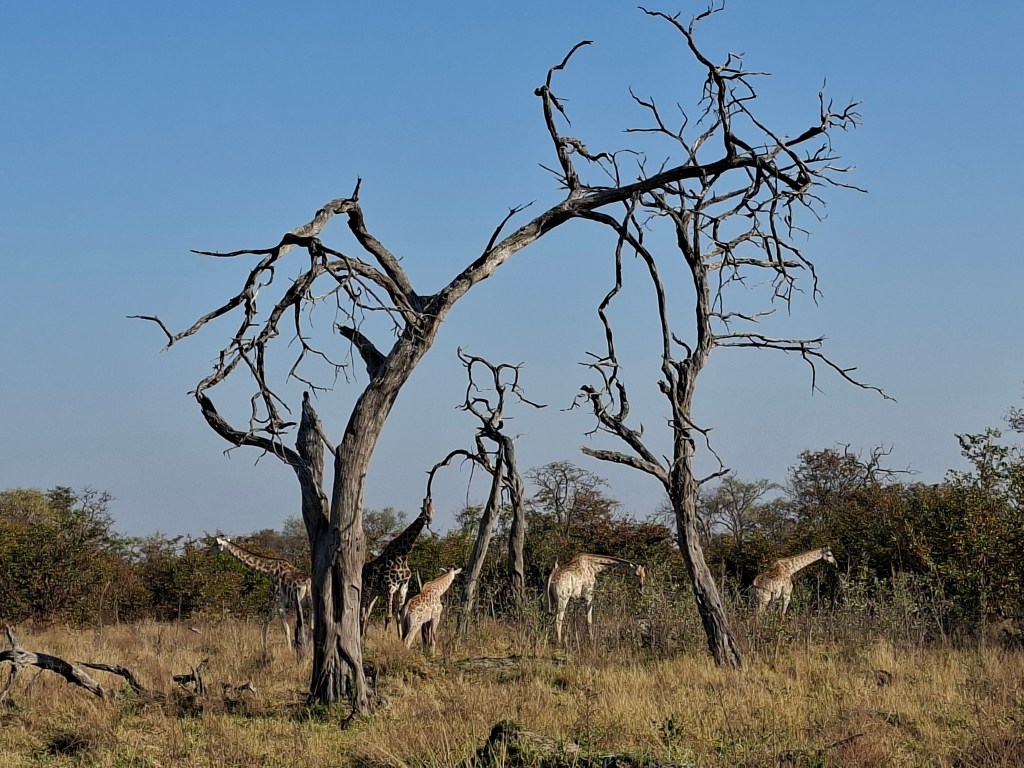
- Giraffes.
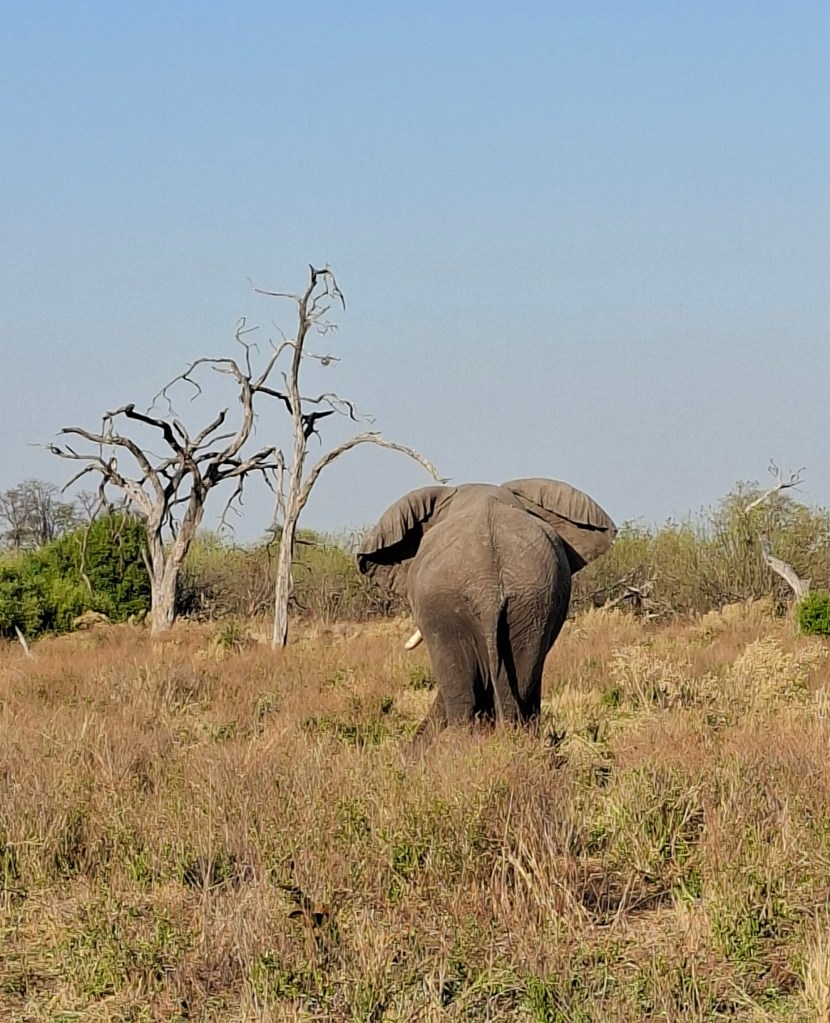
- Elephants.
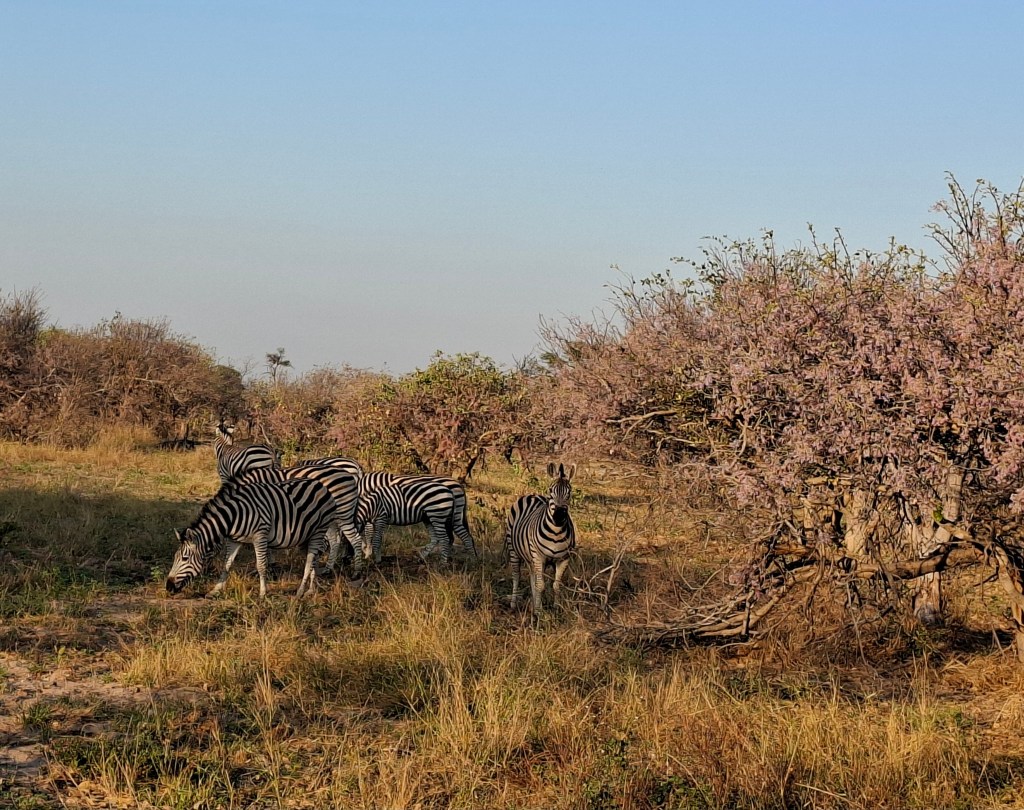
- Zebras – I learned today that zebras are the national animal of Botswana (so not just me who is a fan) as they have the black and white colours like their flag, and the patterns of their face are like a diamond which is Botswana’s main export. You will learn more about this in the history section if I ever finish it.
- A parrot.
- Tawny eagle.
- Giraffes (including babies).
- Zebras.
- Wildereast.
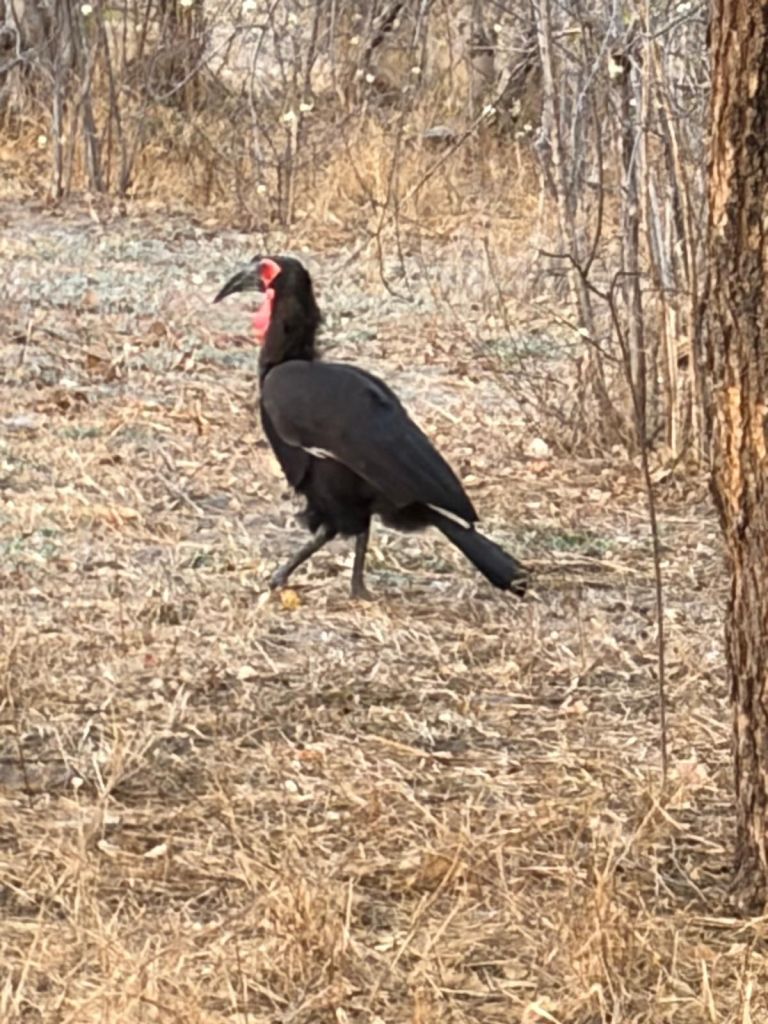
- Southern Ground hornbill – these are much larger than the other hornbills we have seen (which are Zazu sized) and have a red head. They are very endangered and did not pose nicely to have their photo taken!
- Elephant.
- Toilet seat antelope.
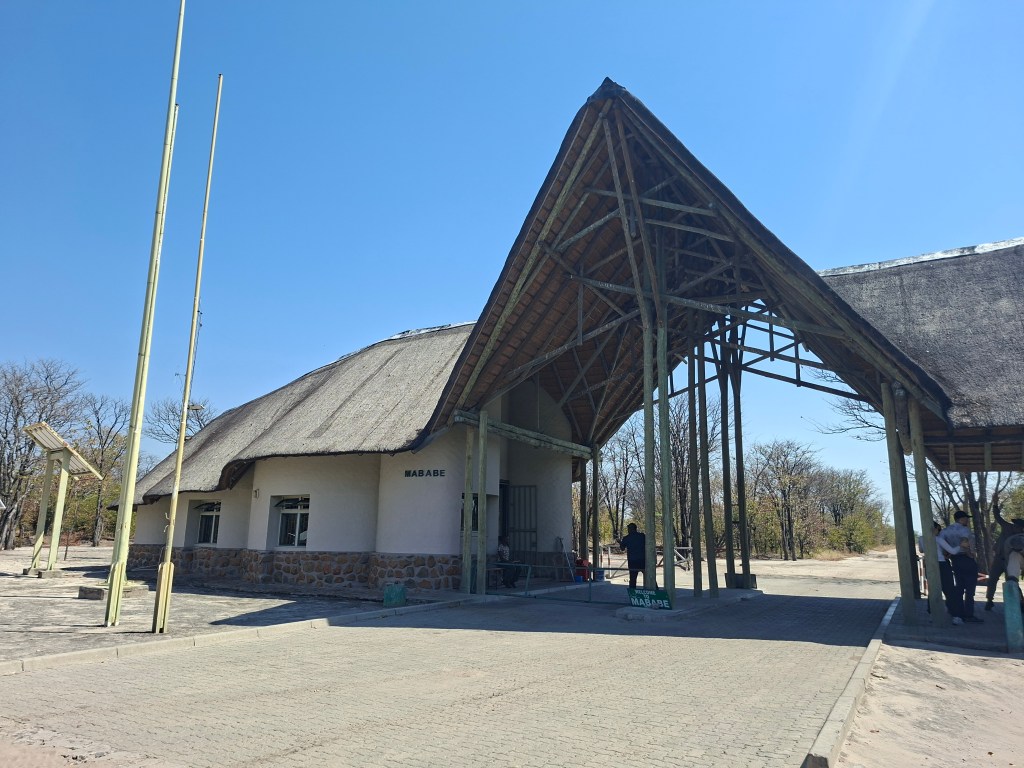
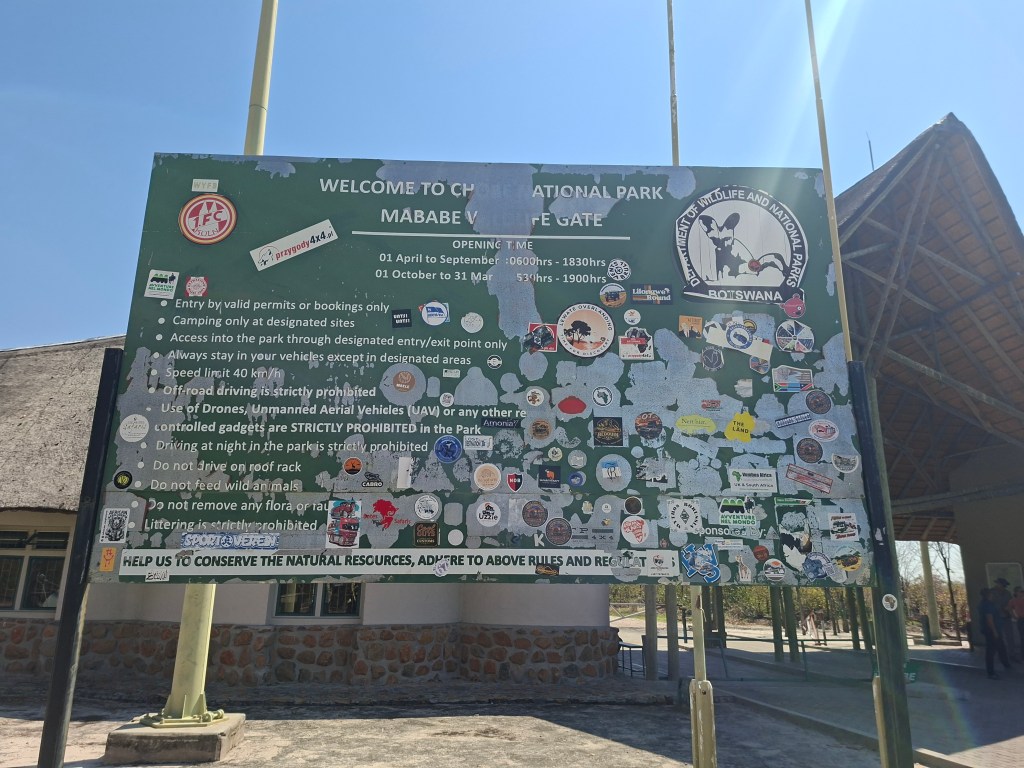
After a 10am stop for tea and wees, we started our drive north towards Savuti. We entered Chobe National Park via the Mababa Gate. Chobe National Park is 11,700km2 and contains four different ecosystems: the Savuti marsh, the Linyanti marsh, the dry hinterland and Chobe waterfront. We would be spending the rest of our time on safari within this National Park. It also claims to have a population of between 50,000 and 120,000 elephants – bring them on!
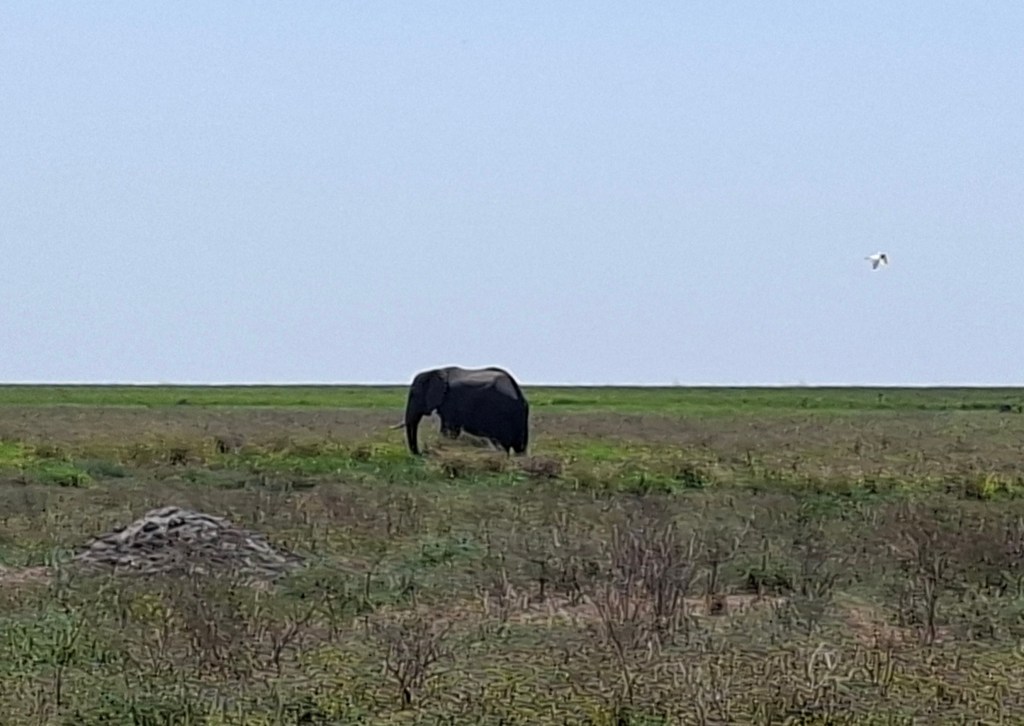
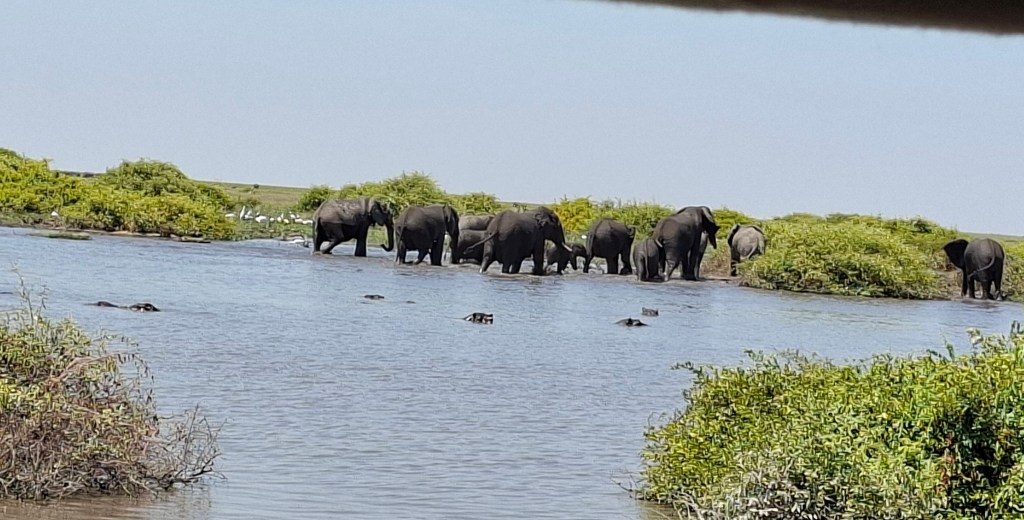
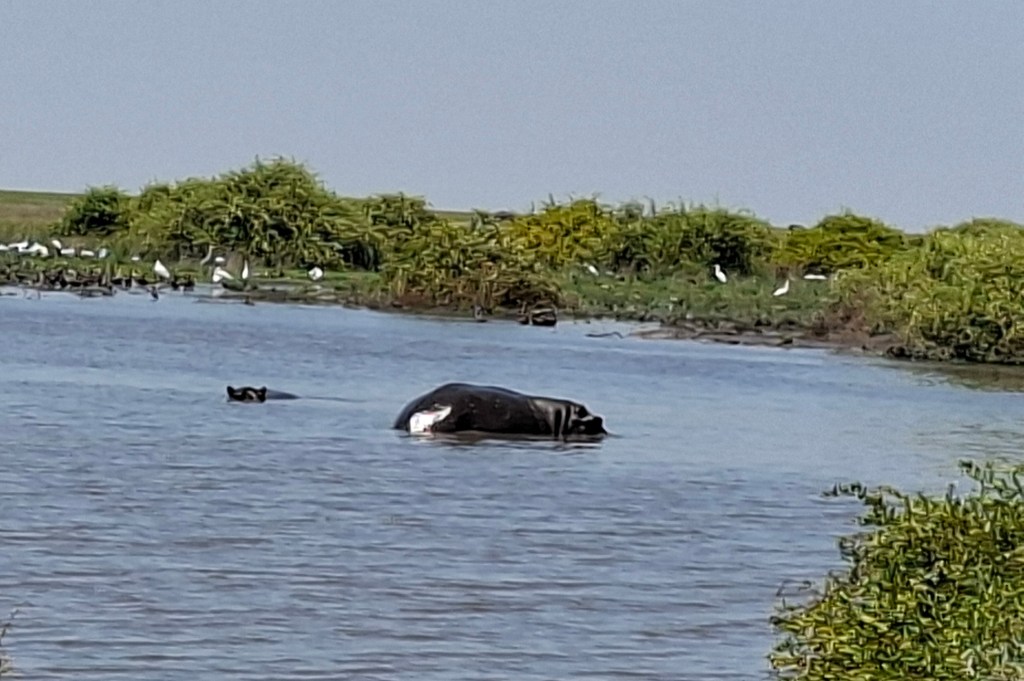
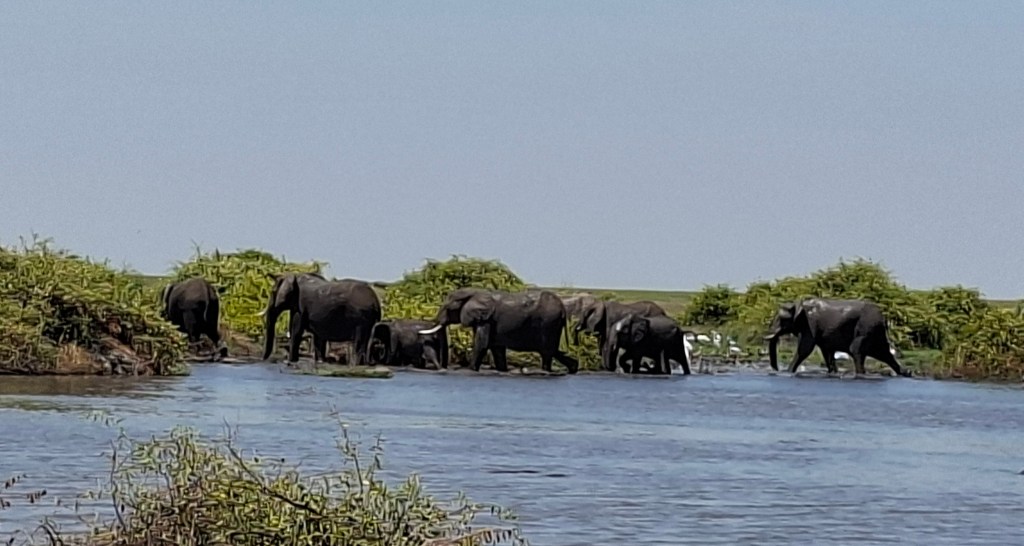
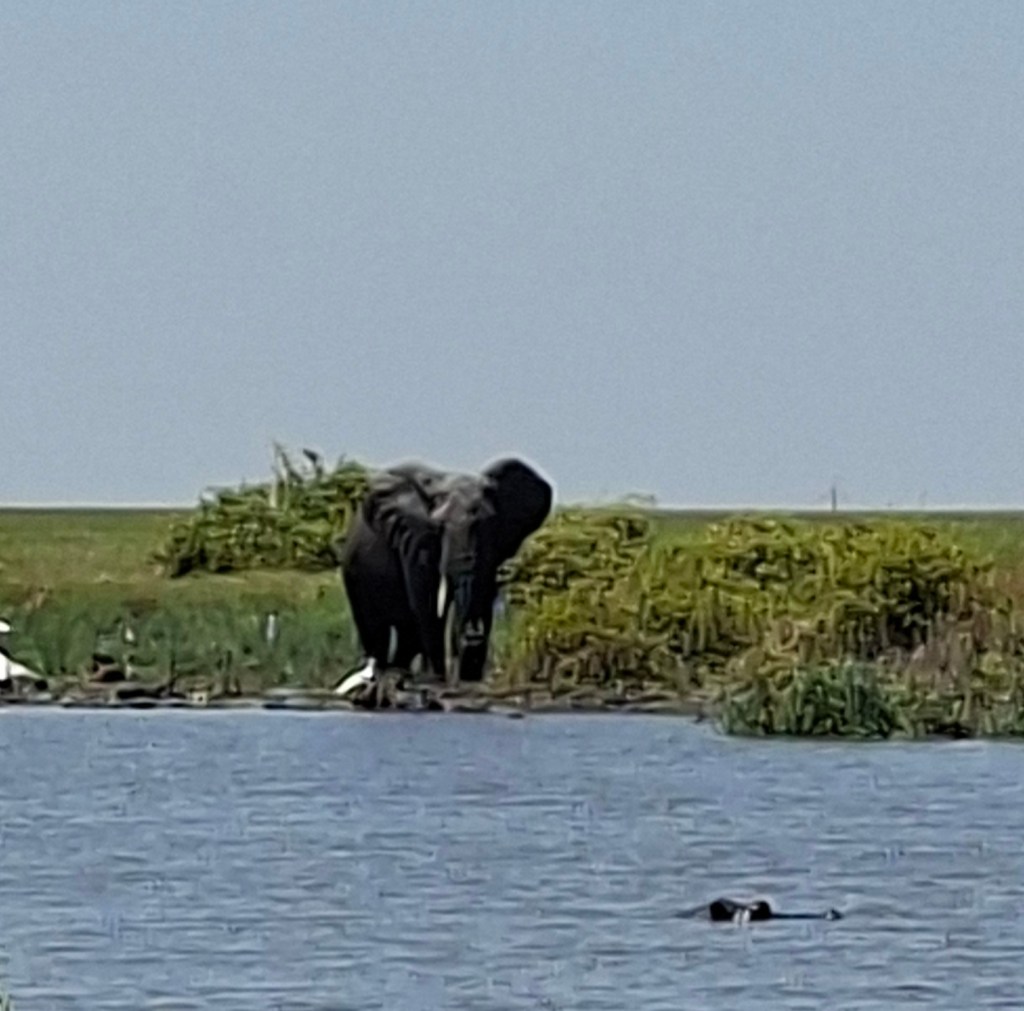
On entry into Chobe National Park, the first thing I noticed was the lovely smell – this comes from something called purple pan weed. I feel it does it something of a disservice to call it a weed. As soon as we came through the gate, we started seeing elephants – lone elephants and then a whole herd of elephants enjoying the watering hole (along with a few submerged hippos).
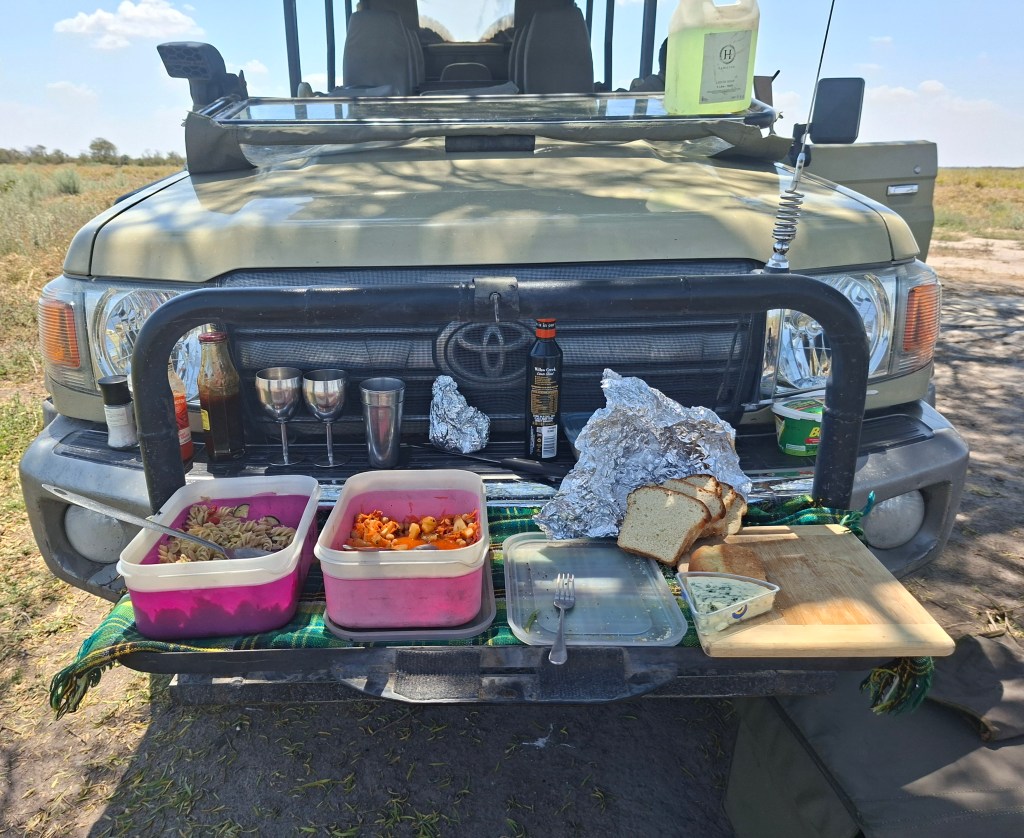
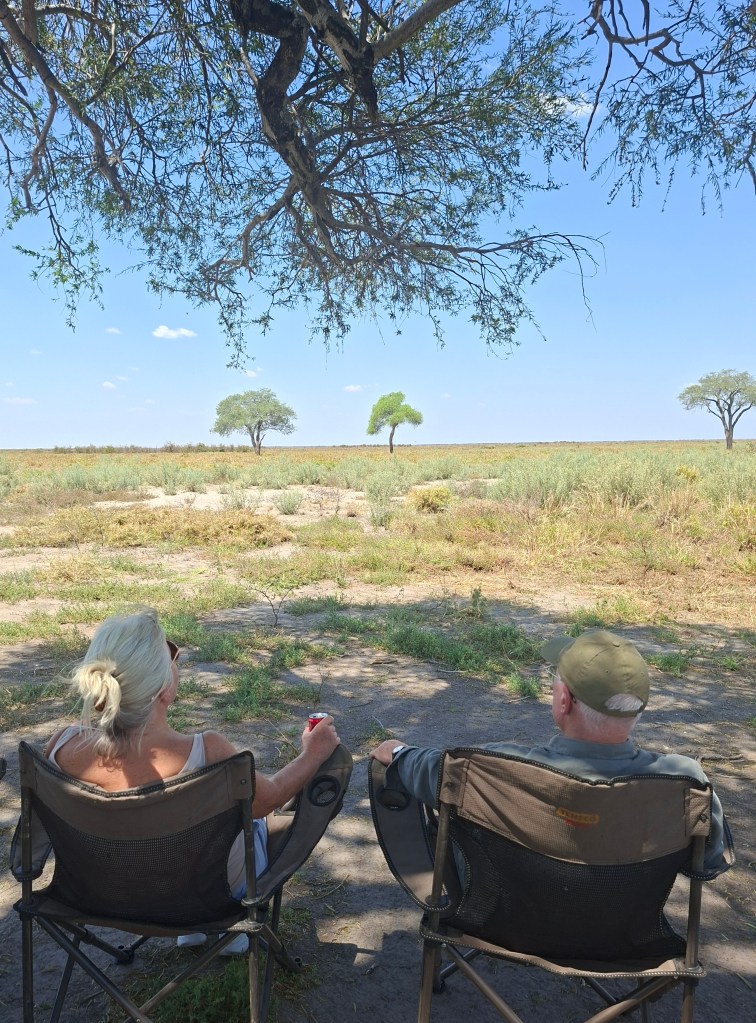
Following this abundance of elephants, there was then nothing much to see as it was rather hot by this point, and animals do have the good sense to hide during the heat of the day. We managed to find some shade to do our own hiding and to eat lunch.
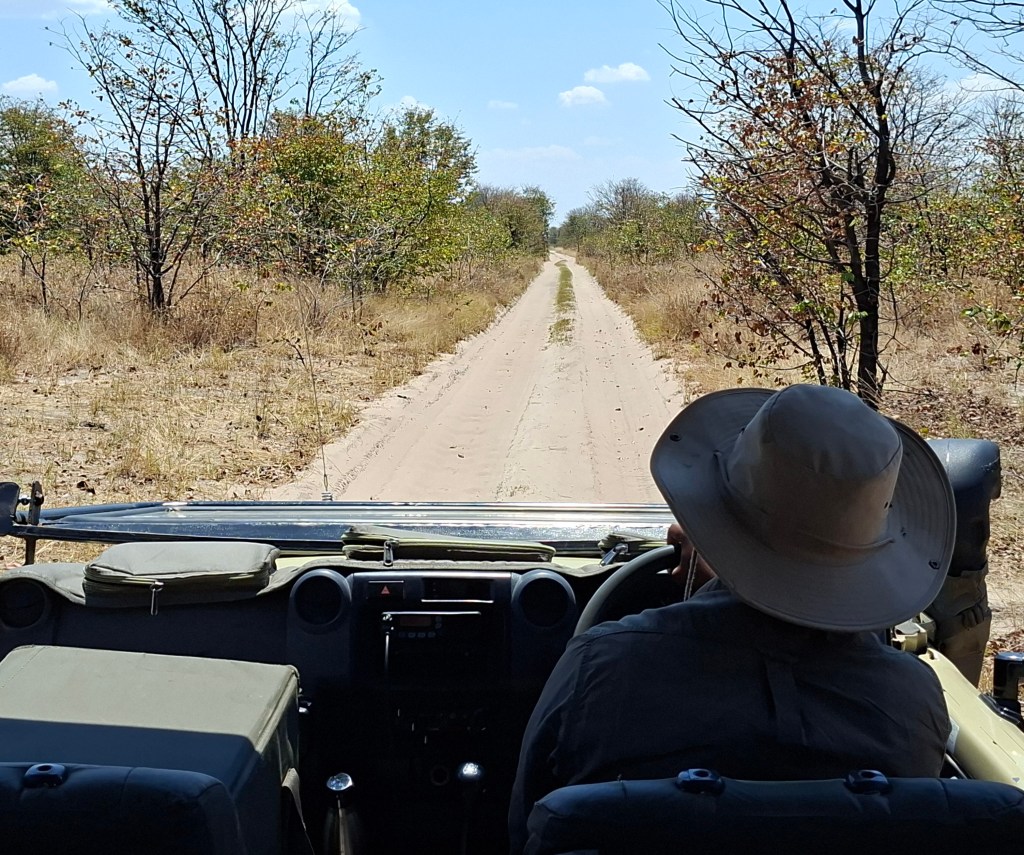
We then headed to another watering hole, Savuti has a number of “fake” watering holes where water is pumped (powered by soar panels) as the river has now completely dried up and without it many, many animals would not survive. You can see it is the place to be as we watched warthogs, giraffe and steenboks all taking advantage of a drink.
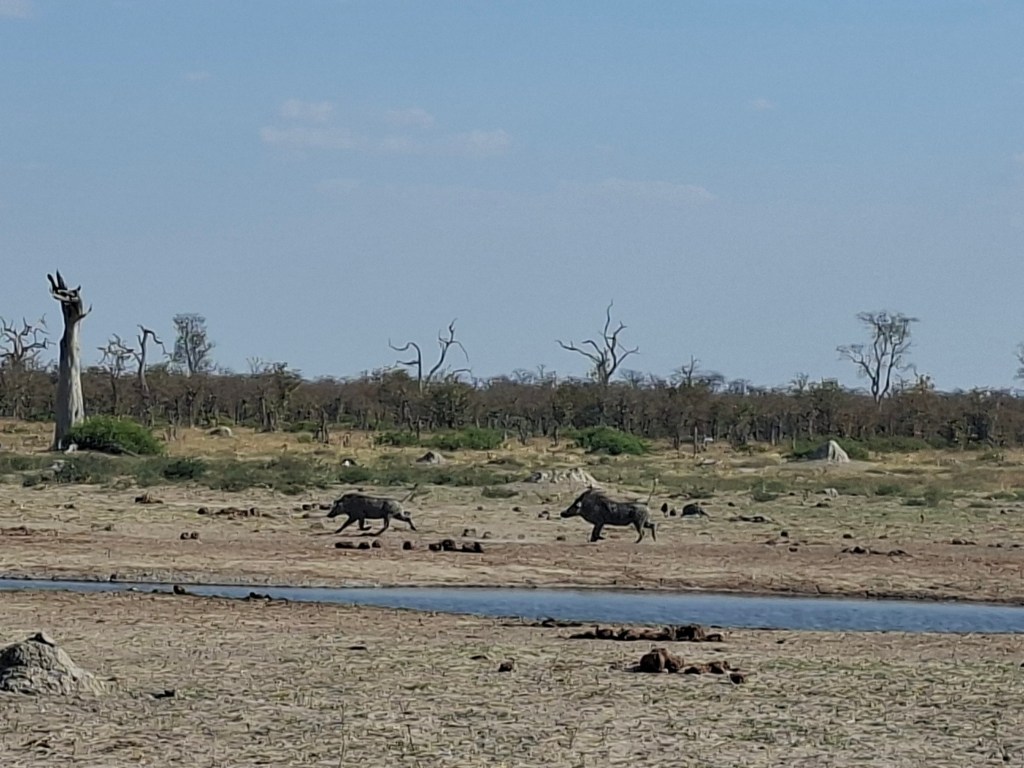
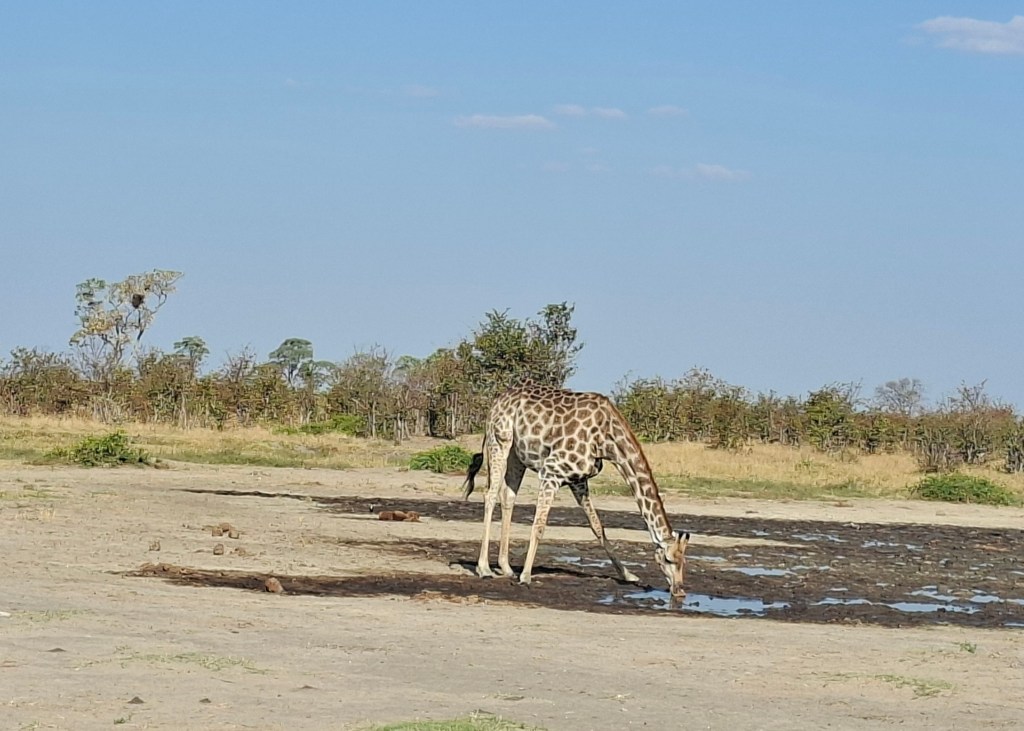
As we drove on we started to see our first non-flat land, and this is the start of Savuti proper. As it cooled down we saw:
- Kudu.
- Impala (yes, I decided I would list my first Chobe impalas).
- First BIG male kudu.
- Kori Bustard.
- A “push” to try and find wild dogs, this meant whizzing past elephants.
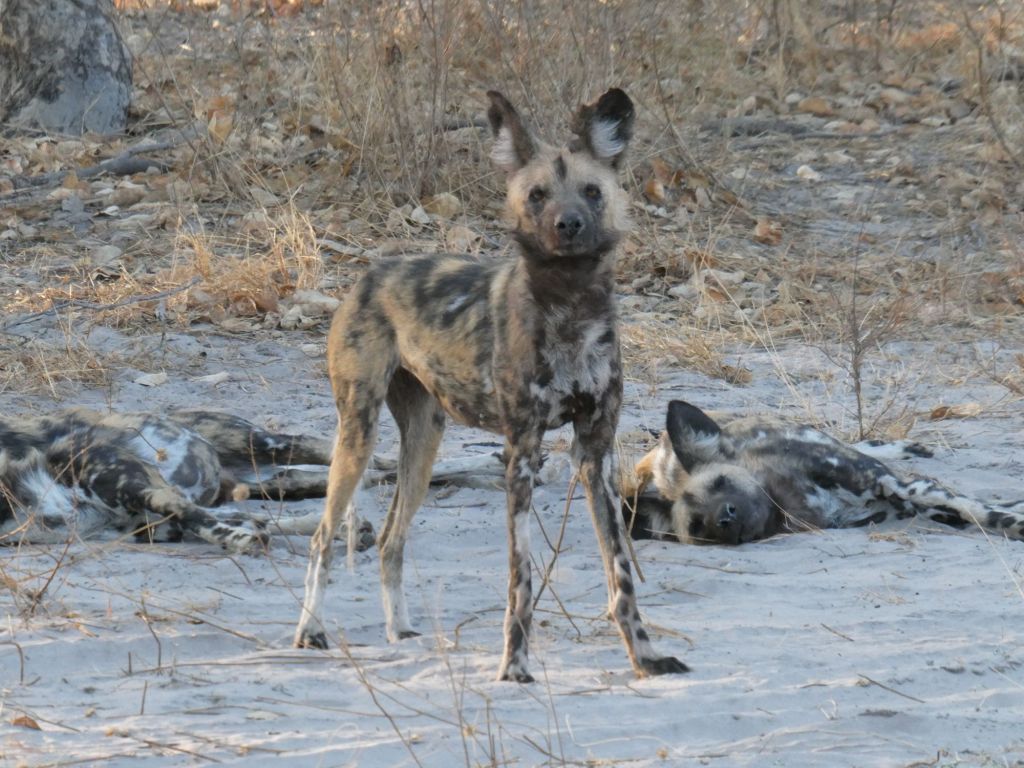
- WILD DOGS found – this was a huge group of 16 including 7 puppies. Groups like this are made up of an alpha female and male, but what makes them different from most other animals in Botswana is that it is the females that are pushed out when they come of age. Only the alpha female has puppies (up to 19 in a litter!) who are then raised by the group
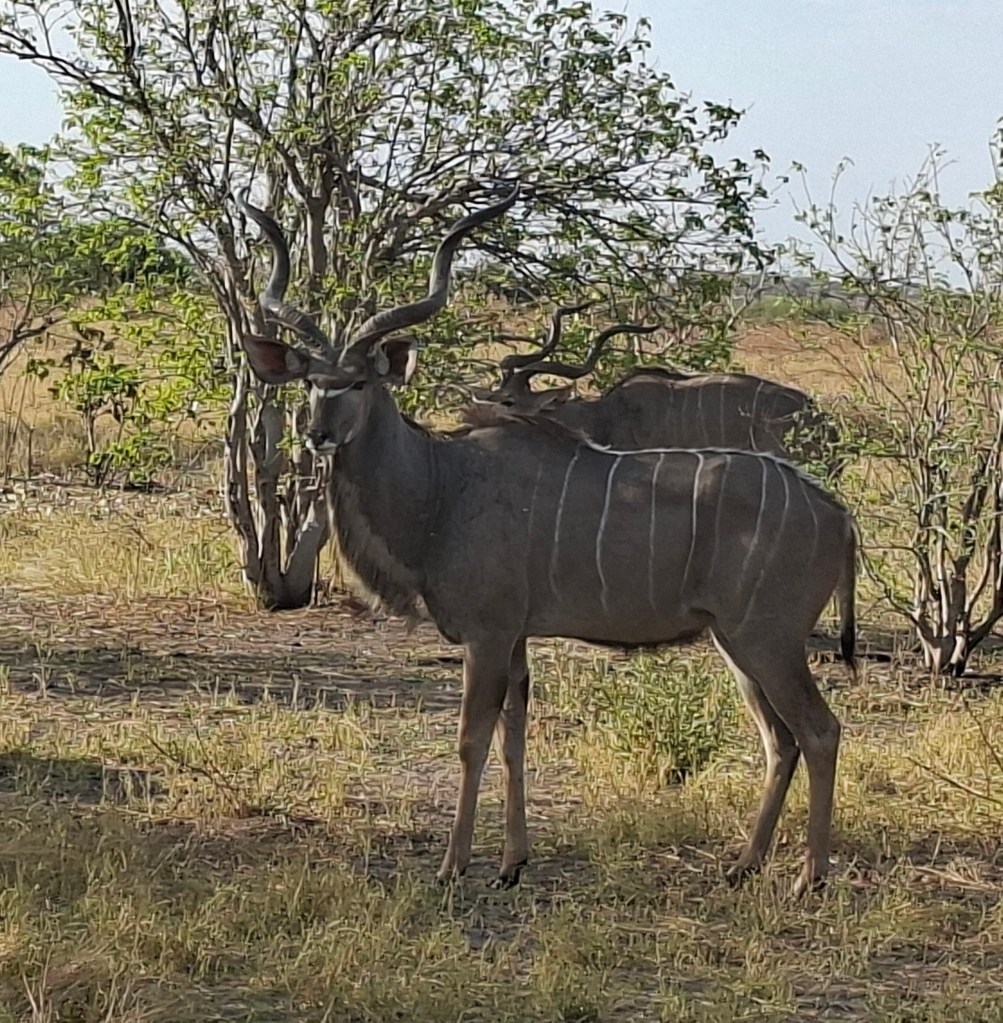
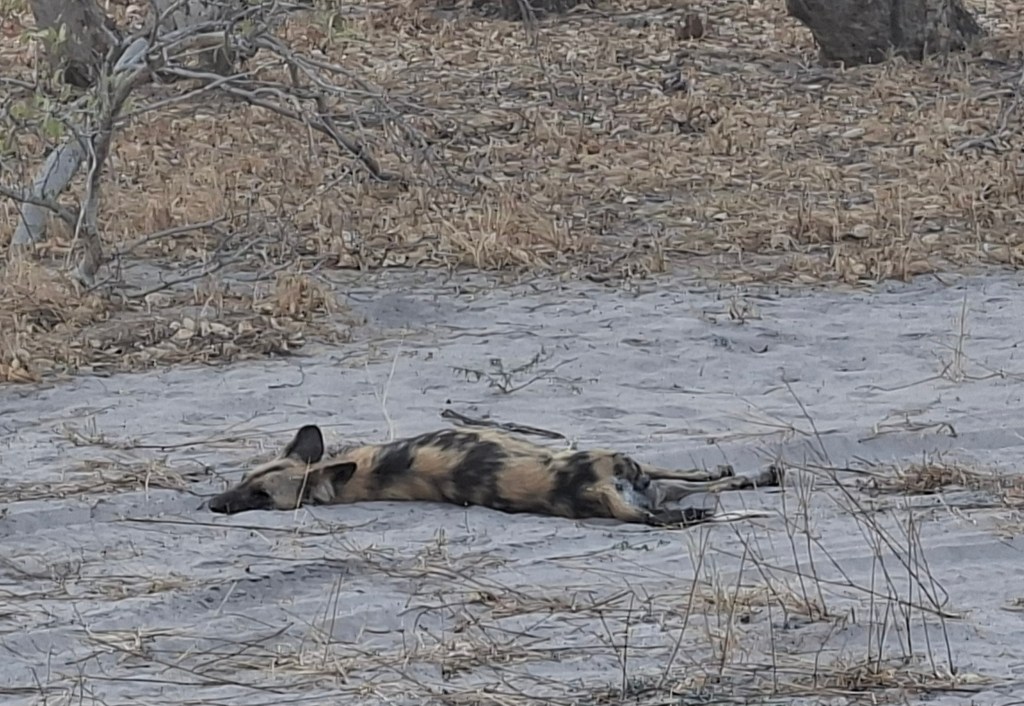
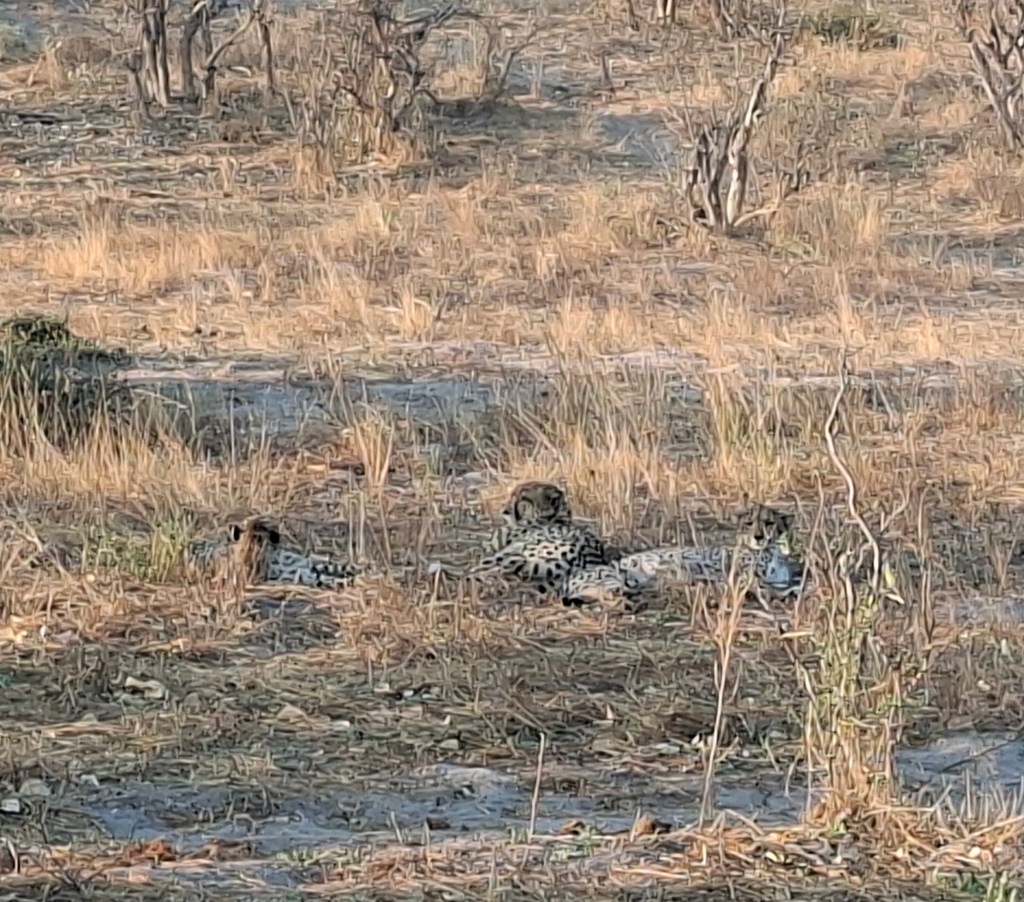
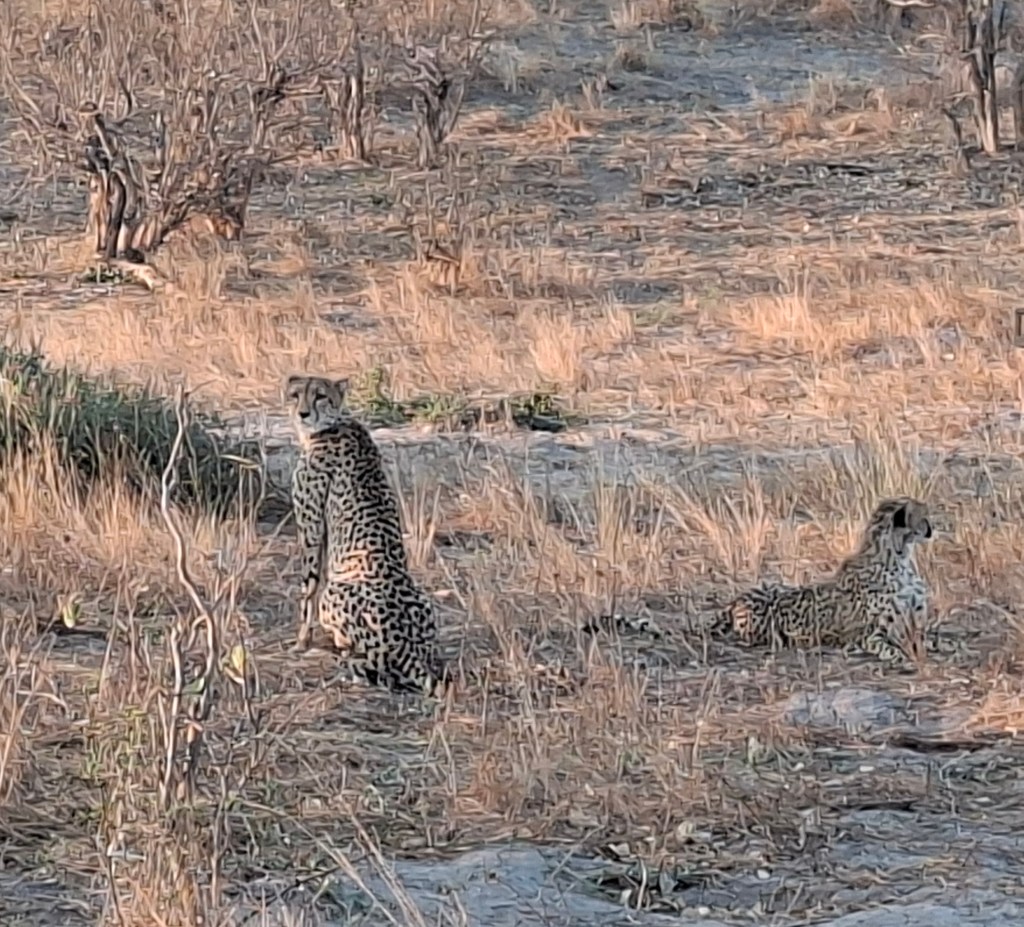
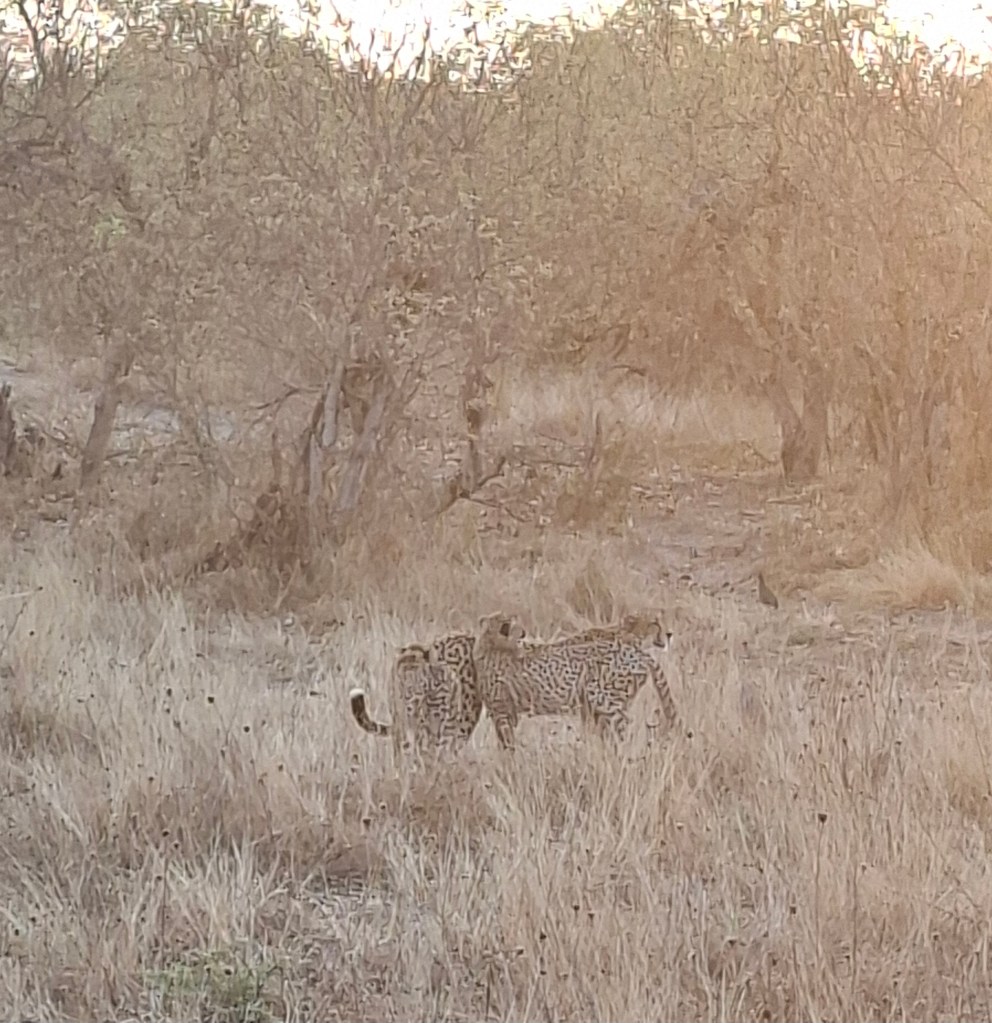
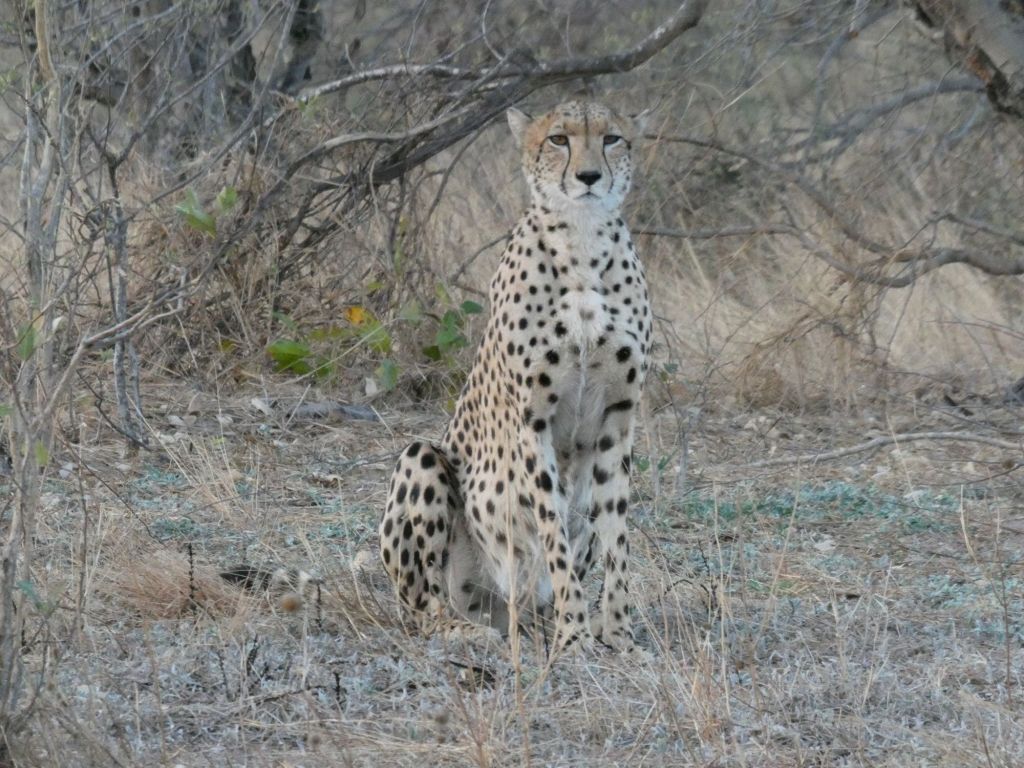
Obviously, we assumed the wild dogs were going to be the highlight of the day (particularly for Keith) but then we heard rumours of a cheetah. It is incredibly rare to see cheetahs as they generally hide (not that I blame them) but there she was, a mum and two babies. I was a bit shocked on arrival by just how many jeeps there were, but there were more than there should be as a jeep had got stuck in the sand so there was someone attaching a rope and trying to pull it out whilst other jeeps shielded the people from the line of sight of the cheetahs. However, back to looking at the cheetahs the cubs are around 9/10 months old so being taught skills by their mother and she is obviously experienced to have got both cubs to this stage.
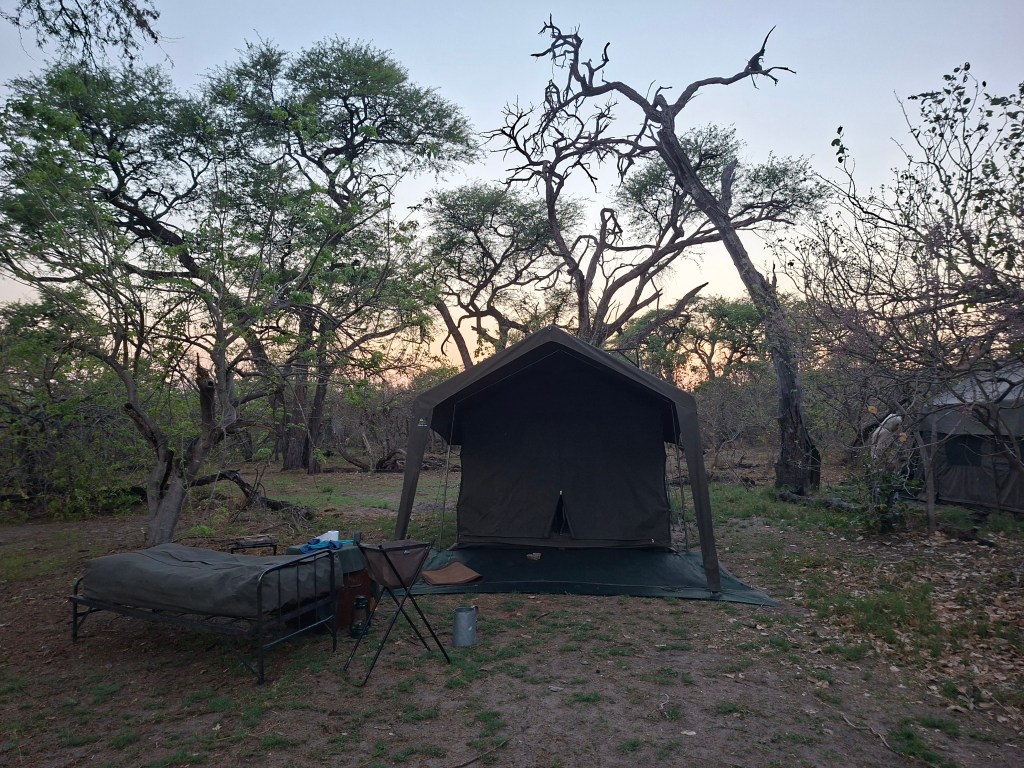
We arrived into our new camp just as it was going dark, the team had a much easier time of it now the weather is nice and we had a lovely spot on a hill overlooking the (now dried up) riverbed. We also got to luxuriate in the new, clean sheets which had been delivered by the “support” van Excitingly, we were obviously on a route for the animals, as that evening during pre-drinks we had a leopard walk right through camp behind the tents. I carefully stood behind Issac, I am no fool. Tonight’s dinner was lentil soup, fish and chips with corn on the cob, and a malva pudding. All in all, an excellent day.


Leave a Reply