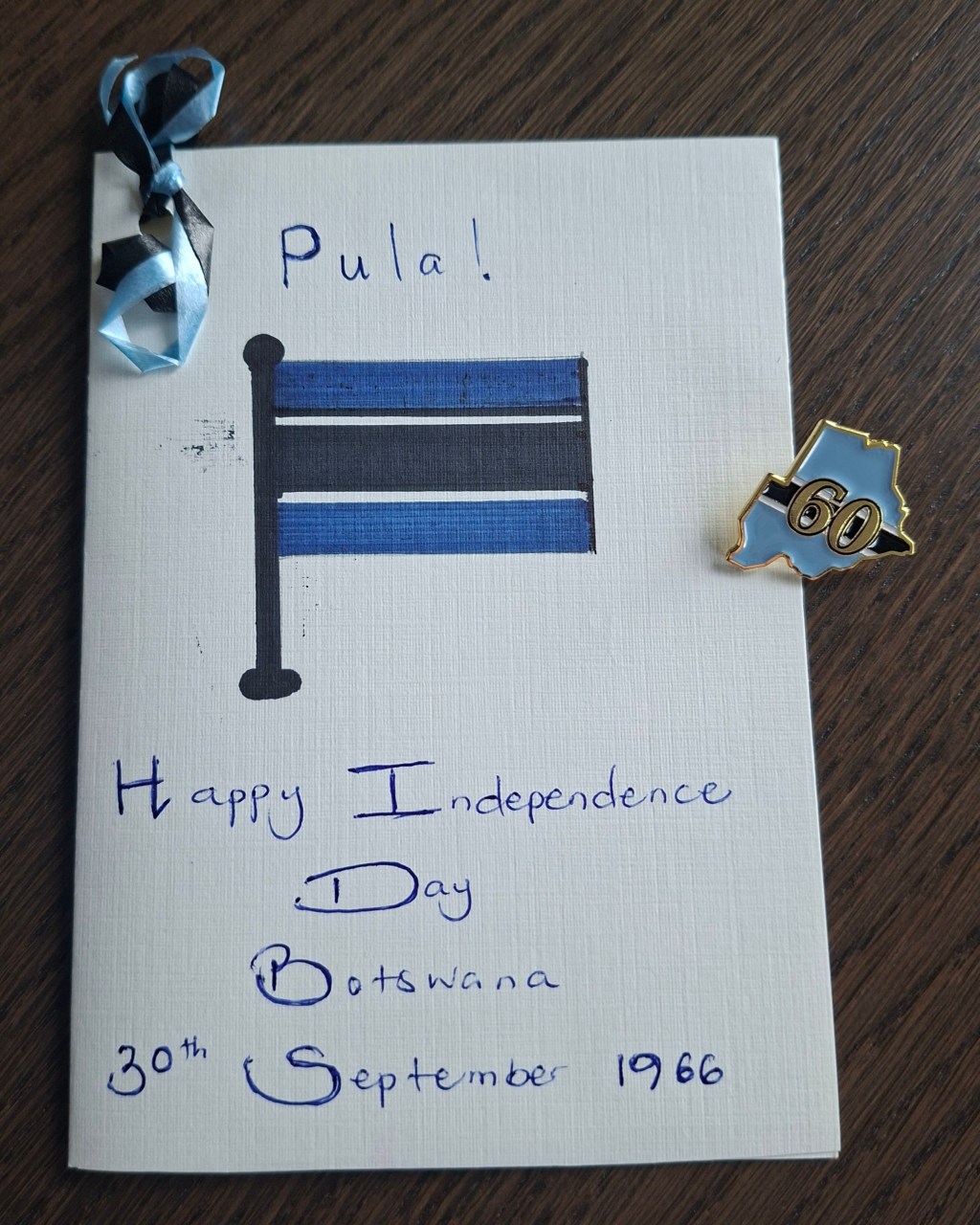
As promised, as the focus of this trip was going to very much rooted in the current day. Therefore, I thought I would do a dedicated post with a high-level overview of the history of Botswana which now I have returned I can finally finish.
In classic white-European focus, it has been quite challenging to get hold of history books dedicated to Botswana. You can read general summaries online and in the guidebook, but anything specialist seems to not be readily available. However, I procured some reading material and read what I could in advance. I am rather embarrassed to say that my starting point was the book/film The United Kingdom which is about the marriage between the first president of Botswana, Seretse Khama and his White British wife Ruth. However, since then I am pleased to report I have done a little more reading and will therefore start at the beginning:
Pre-Colonial and Early History
The earliest known inhabitants os what is today Botswana lived around Lake Majgadikgadi (which no longer exists) around two million years ago. These early inhabitants are unrelated to the current groups that live in Botswana, but there was migration into the area and a number of small groups lived along the lake and virtually all permanent bodies of water had human settlement by 20,000 years ago. These were hunter-gatherer extended family groups who inter-married and traded. Around 2,000 years ago the first Tswana people (who are considered the first Botswanian people) settled in villages (10-15 houses) and agriculture developed along with cattle and sheep grazing.
In the 7th century the Taukome people arrived and settled, their possession of glass beads indicates early connections to the Indian Ocean trading. Numbers of livestock increased signticantly, as did cattle raiding. Around 10th century the Tswana people organised themselves into a tribal government and cattle became a central part of society in the region, and numbers of cattle denoted status.
In the 11th century, the Kingdom of Mapungubwe was formed to the east of present day Botswana and projected their influence across the region. They forced many people to abandon their settlements around this time as they were cut off from major trade routes. The modern Tswana, Khalagari and Sotho people began to settle in around the 12th century. The Kingdom of Zimbabwe replaced Mapungubwe Kingdom in the 13th century and controlled many tribes that existed in today’s Botswana. Their influence fell in the mid-15th century and the area was split between various tribal groups.
15th to the end 18th Century
The first Tswana state was formed in the mid-18th century but during the Difaqane (a period of conflict and displacement in southern Africa) the Tswana people were subject to raids by many groups and opted to retreat instead of fight. This triggered extensive migration and caused the Tswana tribes to be more thoroughly and establish a stronger presence in present-day Botswana. Other groups migrated into Botswana including Kwena, Ngwaketse, Kgatla and Mmanaana peoples.
European missionaries first arrived in 1816 through the London Missonary Society. A missionary called Robert Moffat set his mission station on the border of present day Botswana as a barrier against the Boers. He also published the first Setswana language book having translated the bible and other Christan texts, he also wrote a Setswana dictionary. Although today the national language of Botswana is English, Setswana is spoken by 70% of the population.
The 19th century Tswana people used several economic ideas rare in sourthern Africa including credit, service contracts and the loan of cattle to pooer people in exchange for labour. They also had private property and by the mid-19th century both married men and women were entitled to land rights.
Following the missionaries (as we did all over the world) British traders arrived in the 1830s and with the arrival of David Livingstone in 1845 this was the beginning of heavier European involvement in the Tswana tribes as they established intercontinental trade routes. In another effort to thwart the Boers, Livingstone provided firearms to the Kwena people and their chief Sechele I converted to Christianity (who then required his head men to convert).
There was conflicts between variuos groups in the region including the Afrikaners, Zules and the Boers, and the Botswana saw missionary groups as a means of refuge from invaders and in 1853 Sechele I requested a British Protectorate to end regional conflicts, but he was initially denied. The discovery of the Tati Goldfields triggered the first European gold rush of Southern Africa by 1868 and the area expanded into a regional hub becoming Botwana’s first major city, Francistown.
The Bechunaland Protectorate.
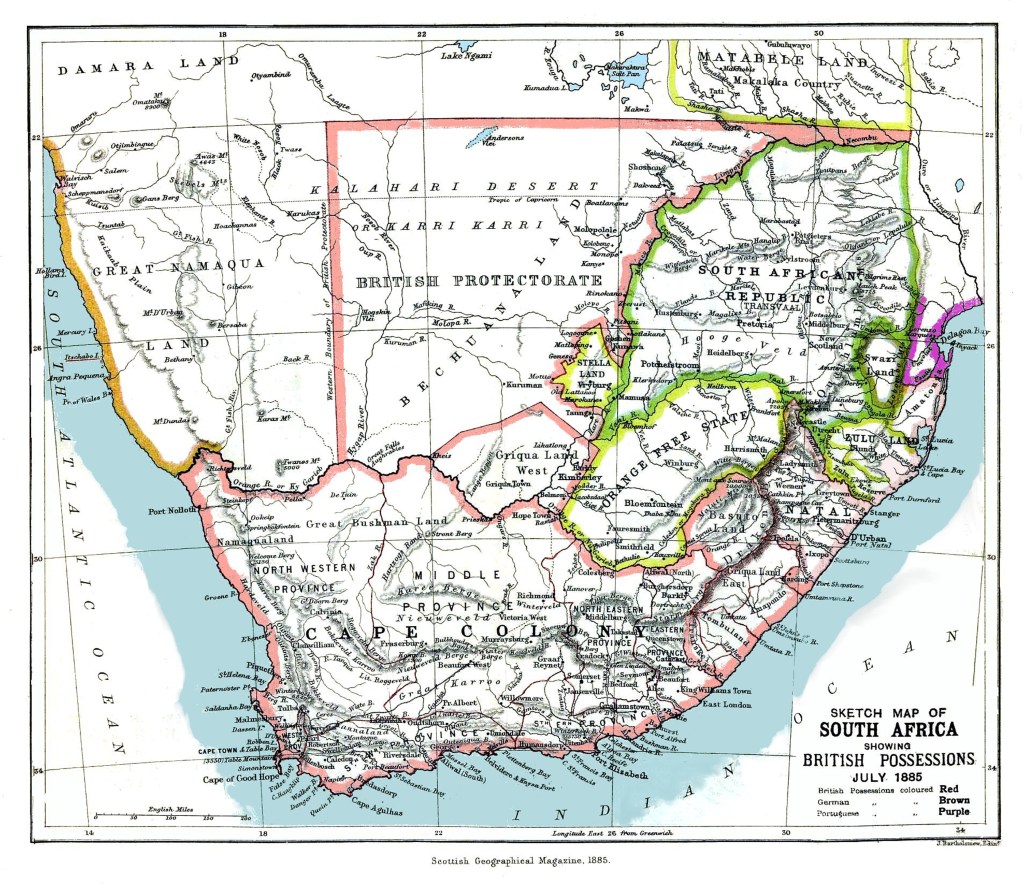
In 1885, the UK established the Bechuanaland Protectorate to prevent German and Afrikaner expansion, whilst maintaining a link between Southern and Central Africa. The Tswana dikgosi (rulers) supported British protection as they feared settler colonisation by Germany and/or absorption by South Africa and Cecil Rhodes. The Protectorate was divided into tribal reserves with eight Tswana groups being recognised, there was also a good portion of British crown land. The dikgosi still had considerable authority, with limited direct control from the UK which just assumed they would eventually absorb it into South Africa.
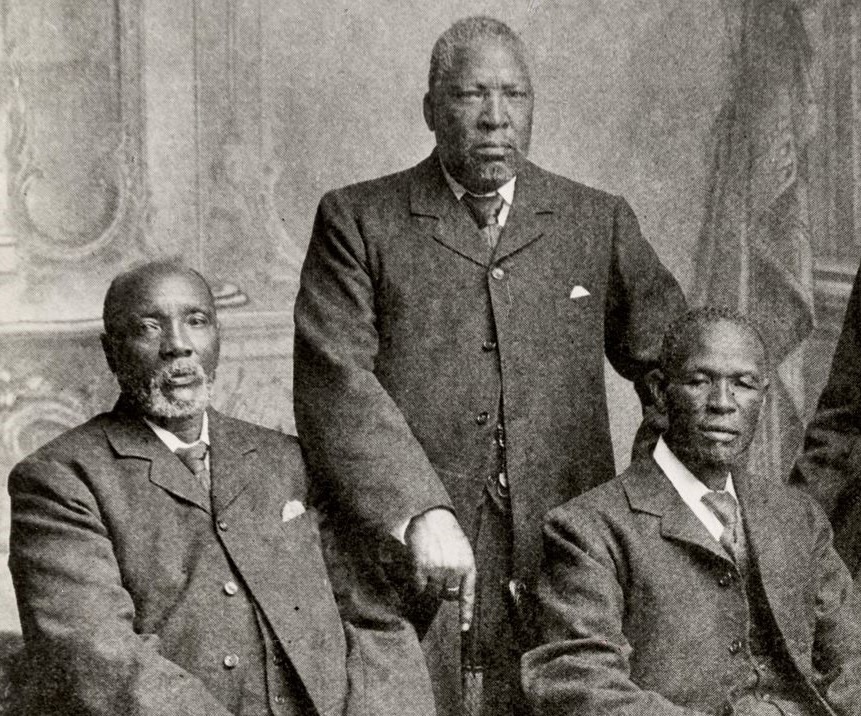
In 1895 Khama III, Sebele I and Bathoen I (the three tribal chiefs) travelled to the UK and convinced the British government not to merge Bechuanaland into the British South Africa Company. They were successful, and Botswana was under British protection until 1966. This mission was an important early example of Tswana political unity, and these three men were eventually declared the “Founders of the Nation”.
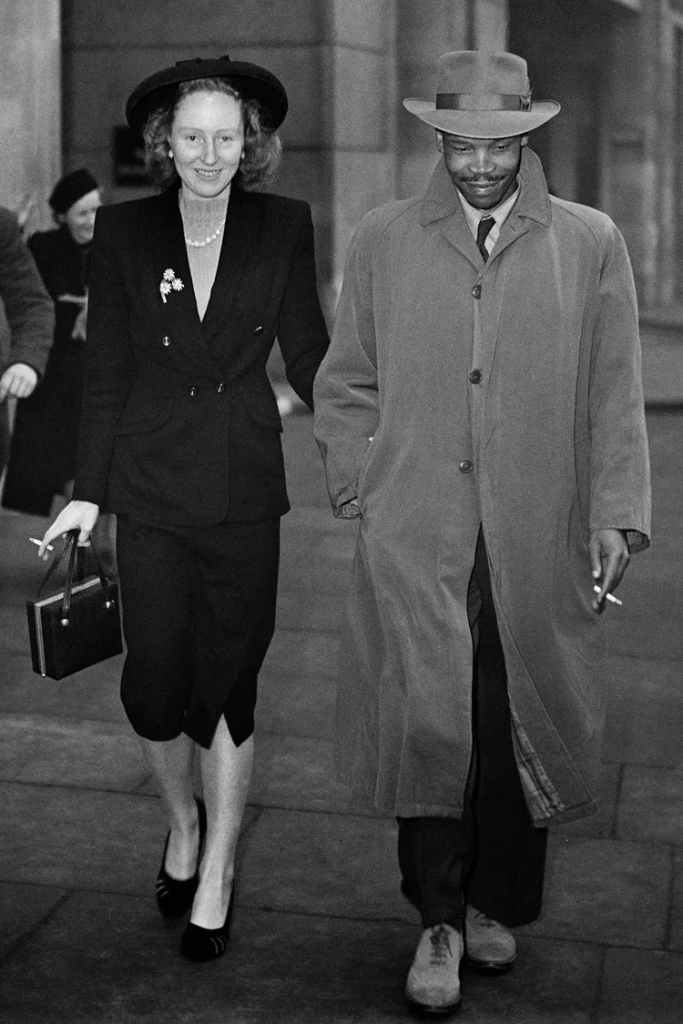
For anyone who has read of watched “The United Kingdom” you will be familiar of the history of Sereste Khama. He was heir to the Ngwato chieftainship, but when in 1948 he married the British white woman Ruth Williams it caused something of a furore. From a Botswanian perspective, Khama’s uncle demanded Sersets Khama’s immediate return to Bechuanaland and annulment of the marriage – but after a series of public meetings, Khama was reaffirmed by the elders as the leaders and his wife proved similarly popular. However, the UK under pressure from South Africa and the racial politics of apartheid, banished the couple from Bechuanaland. Following public pressure, they were eventually allowed to return in 1956. The controversy weakened the authority of the UK, the chiefs and strengthened the move to words representative government. In 1966 Bechuanaland became the Independent Republic of Botswana with Seretse Kharma as its first president.
Independence to Present.
In 1966 Botswana was extremely poor, with low literacy, little infrastructure, and an economy heavily dependent on cattle farming and South Africa. Seretse Khama’s government invested heavily in infrastructure, but the discovery of diamonds in 1967 transformed the economy helping Botswana to become one of Africa’s fastest-growing economies. Today Botswana produces more diamonds than any other country other than Russia (Russia produces 1/3 of all the world’s diamonds – this is new information for me!).
Botswana’s diamond industry, along with its booming tourist industry gives the country a relatively high standard of living and the second-highest Human Development Index of sub-Saharan Africa. However, the country still has high unemployment, income inequality and one of the most severe HIV/Aids epidemics in the world (whilst we saw a number of free condom boxes, none contained any condoms). Although on its independence, it was considered one of the least corrupt nations in Southern Africa, this reputation has been tarnished by various more recent scandals including involving Seretse Kharma’s son and fourth president of Botswana, Ian Kharma being charged with illegal gun owning.
To Conclude.
This is intended as a very high level summary, and perhaps once I have read some more I will flesh it out more. However, something to write which may be of interest was the attitude of the Botswanians to us British people on independence day. From their perspective, the UK protected them from all speaking German, or even worse being subsumed into South Africa and having to live through apartheid. As a British person, we can often feel embarrassed when travelling in countries that were ruled by Britain and whilst we did not fully cover ourself in glory/obviously it was for our own gains, it is nice to think that maybe we left at least something ok behind.


