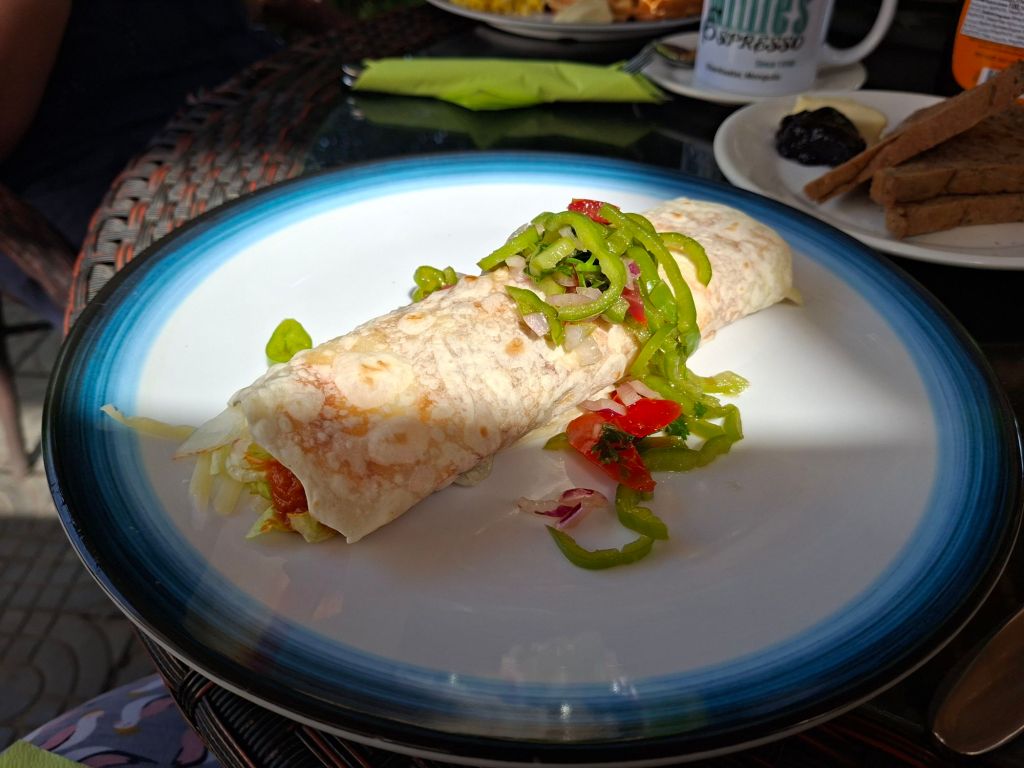
Today, we were on our own. So, although the hotel breakfast was fine, rather than have the same again, we headed to a well-reviewed place locally and again took advantage of the non-meat options and I had what was described as huevos rancheros, but was actully a sort of spicy cheese and egg burito. most enjoyable.
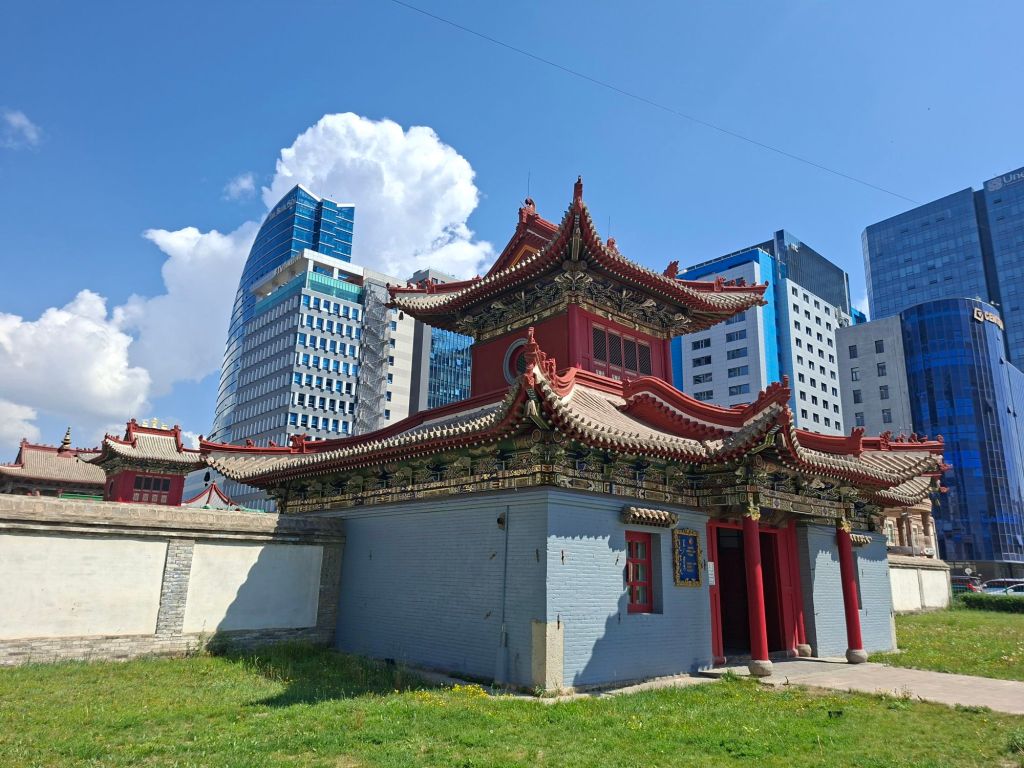
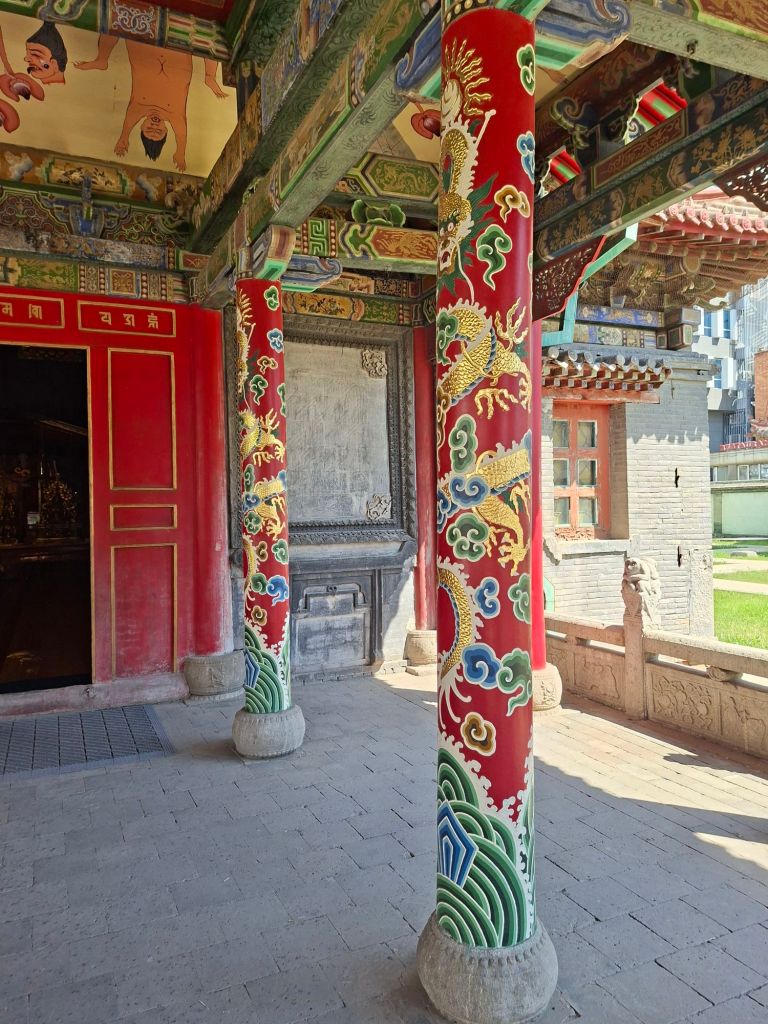
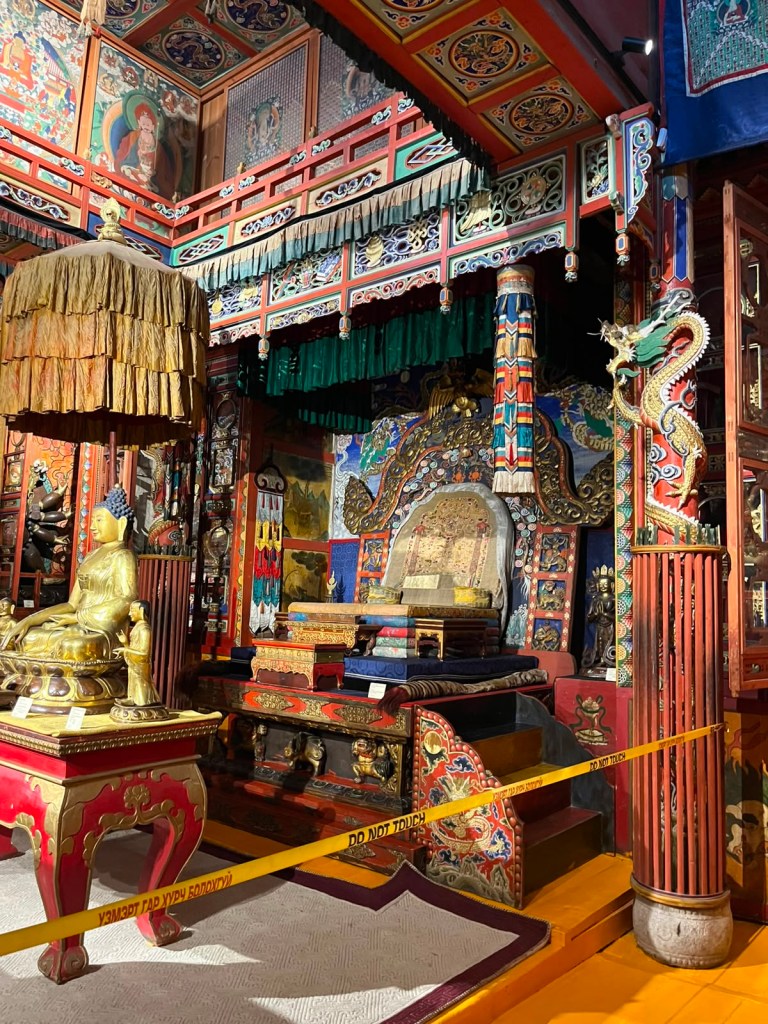
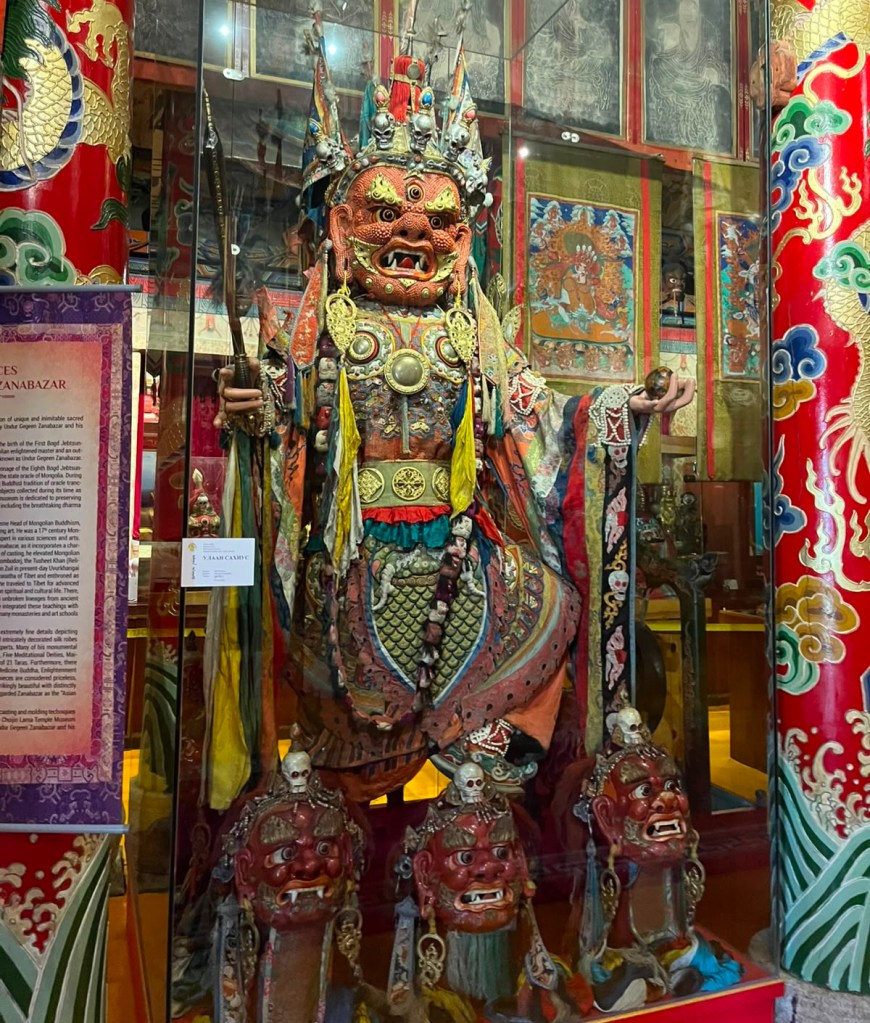
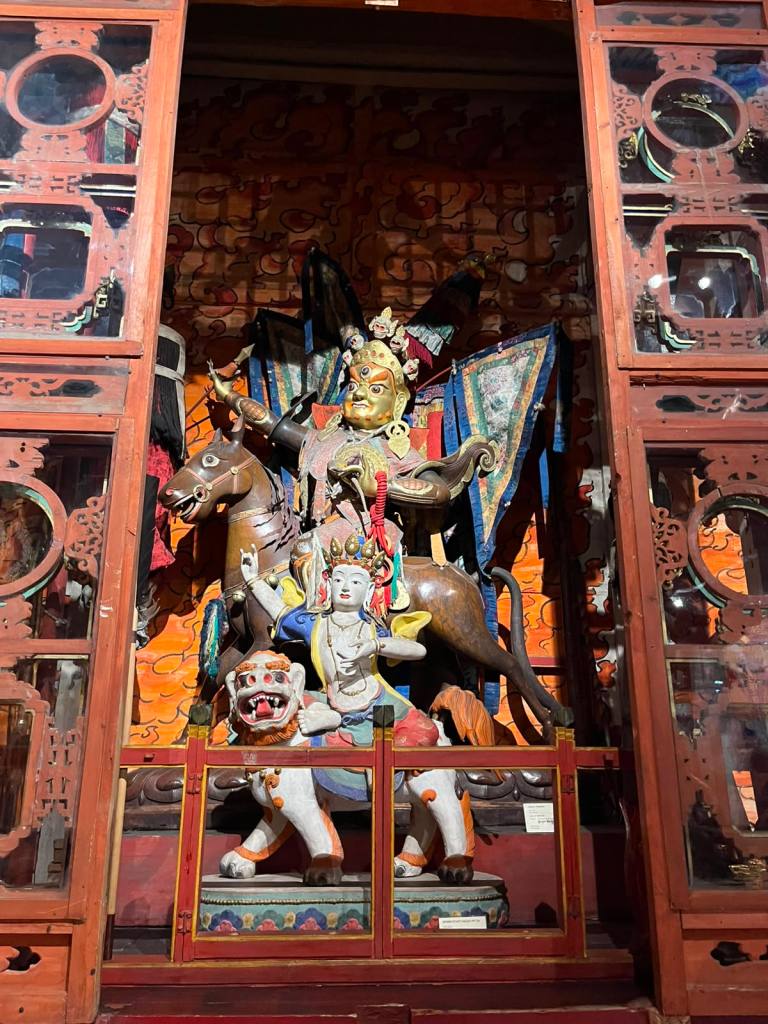
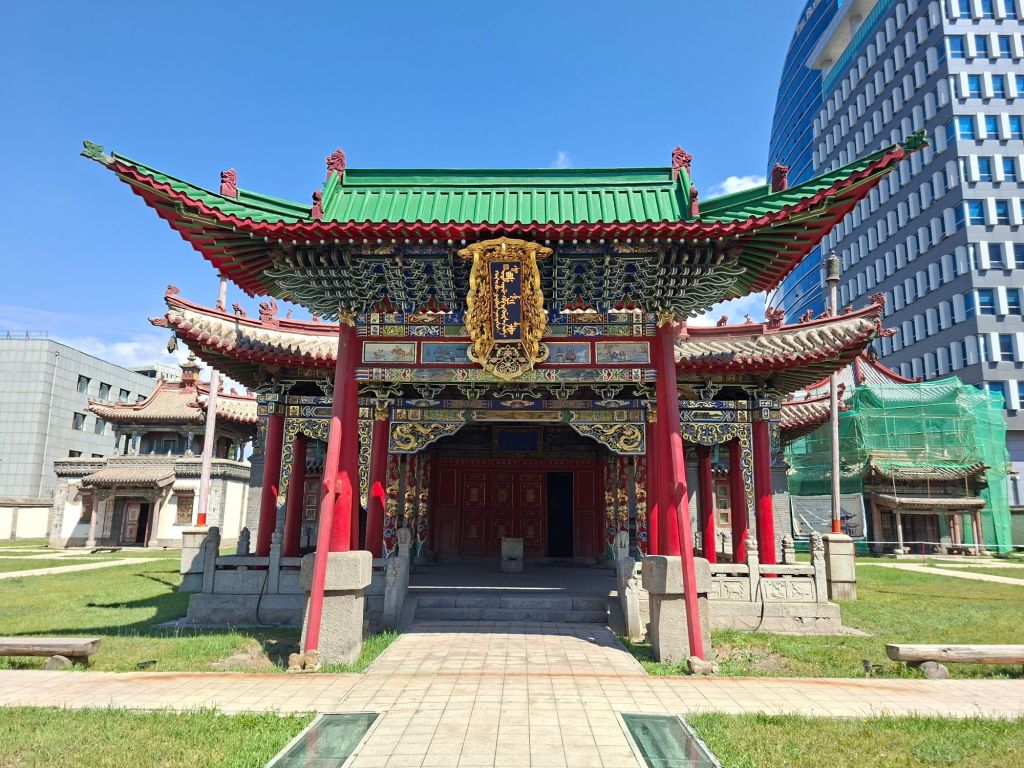
And just across the road from the Choijin Lama Temple Museum. This is actually a rather modern monestary, built between 1904 and 1908 by the state oracle and brother of Bogd Kahn (who remember we learnt about yesterday) Lusvan Haidav Choijin Lama. It was closed in 1938 and only saved from demolition in order to be turned into a museum commemorating the “feudal” was of days gone by.
An aside on entry fees and photography fees. Most museums have visited so far, charge around £5 for entry, which is very reasonable. However, if you want to take photos, this will be at least the same again, if not more. It also means you have to make a decision at the ticket office as to whether you are going to even want to take photos. Surely, it would make more sense to just increase ticket prices for everyone or at least have foreigner fee which includes photos. Anyway, here I elected not to take photos, but someone who shall remain nameless may have taken some photos whilst I attempted to shield her from view.
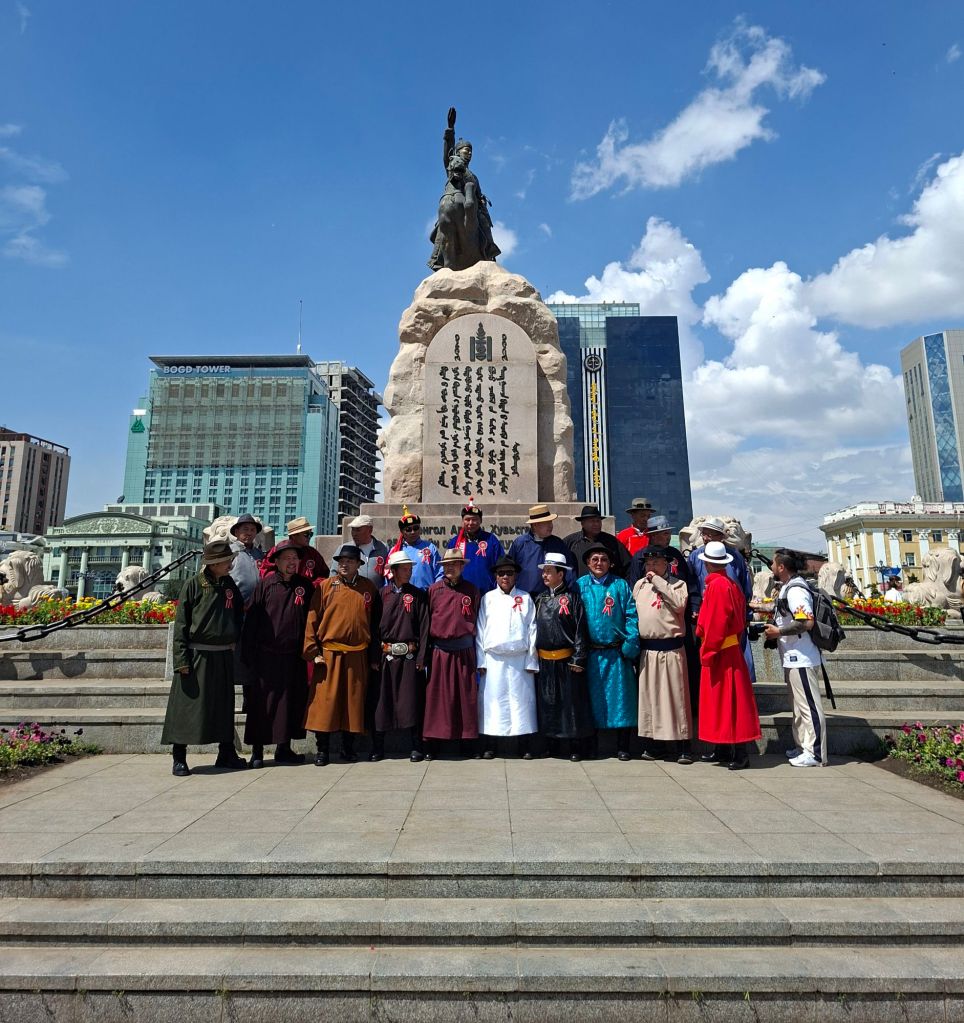
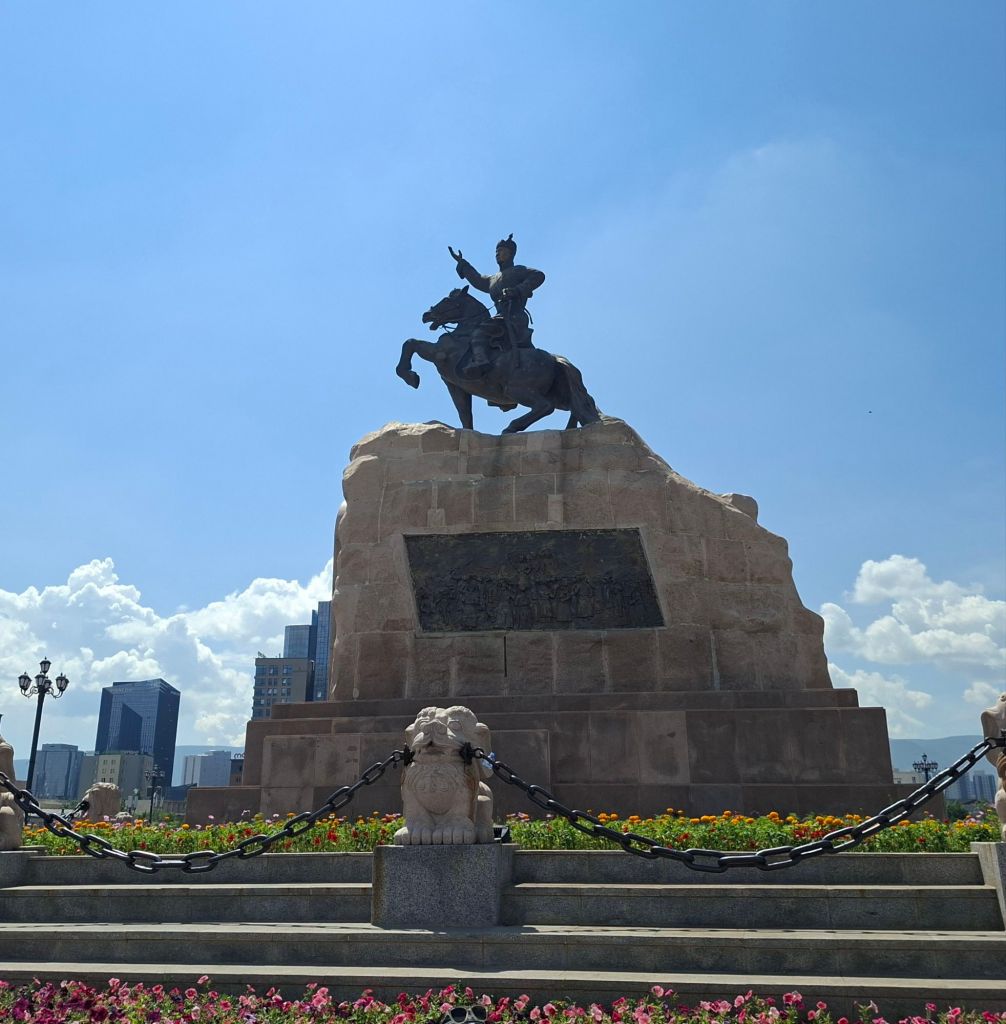
The temple is just south of the main square in Ulaanbaatar Sukhbatar Square. It is named for Damdin Sukhbatar (called the “hero of the revolution”), and it was here that he declared Mongolia’s final independence from China in 1921 (but not independence from Russia of course). In 2013, the city authorities tried to change the name to Chinggis Khan square, but Sukhbatar’s descendents won a court battle in 2016 to change it back to Sukhbatar Square (yay for the law!). He has a very fine statute in the middle of the square, which a number of people were posing in front of today in national dress. We were not quite sure why? There was also a job’s fair next to it, but that felt more inkeeping – to be independent, one needs money, to have money, one must work (communist history and all).
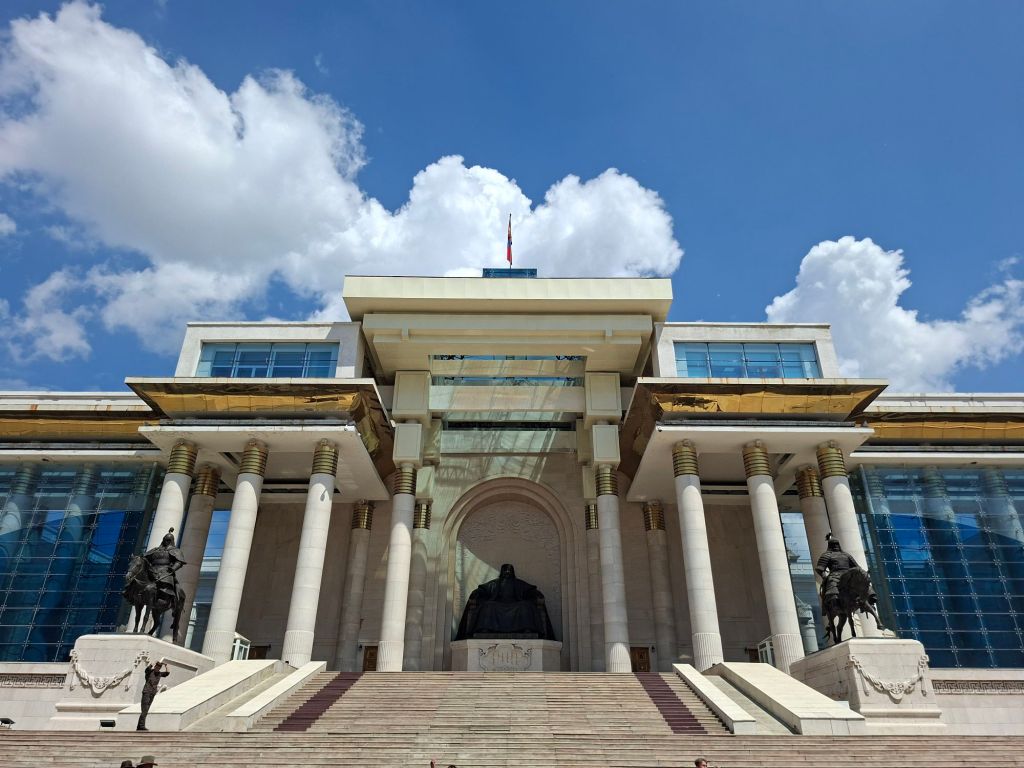
At the end of the square is a HUGE marbe construction housing a seated bronze of Chinggis Khan flanked bt his son Ogedei on one side, and his grandon Kublai on the other. I must start keeping count of the Chinggis Khan statutes I see on this trip…
Before we go on, a word on the weather. It is hot. Not like the heatwave of London hot, but still hotter than I was necessarily prepared for. It is also a dry heat and sunshine in the morning before afternoon showers (which luckily, so far, we have managed to be inside for – let us hope this continues). But in the short walk across the square and to the museum, I was a little over-warm.
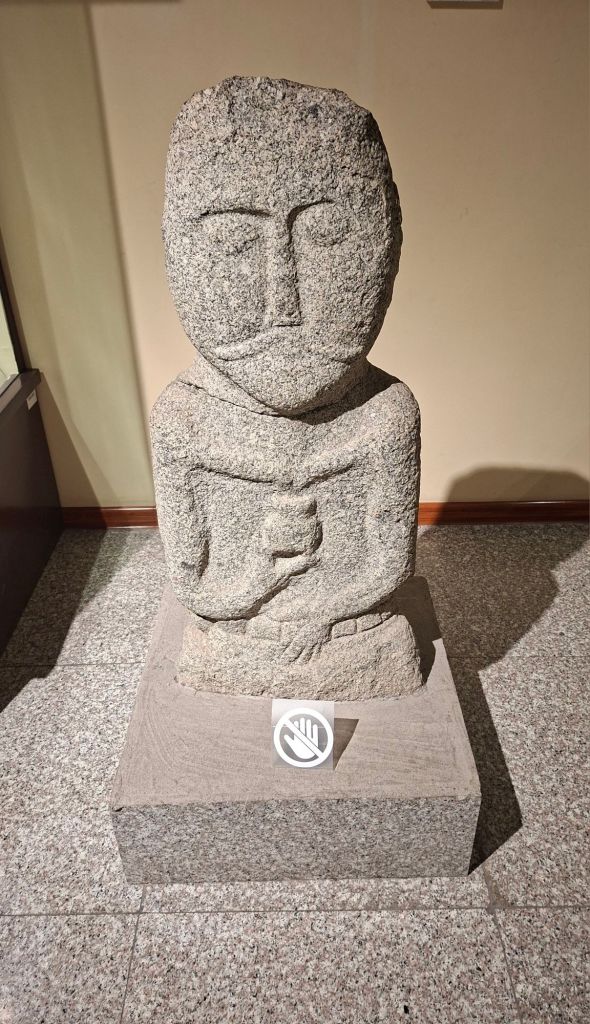
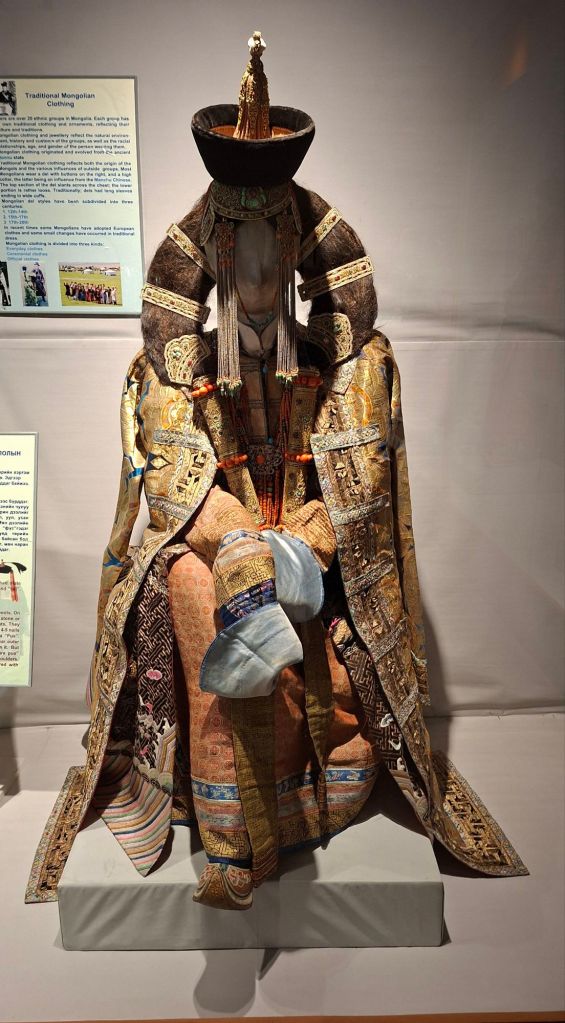
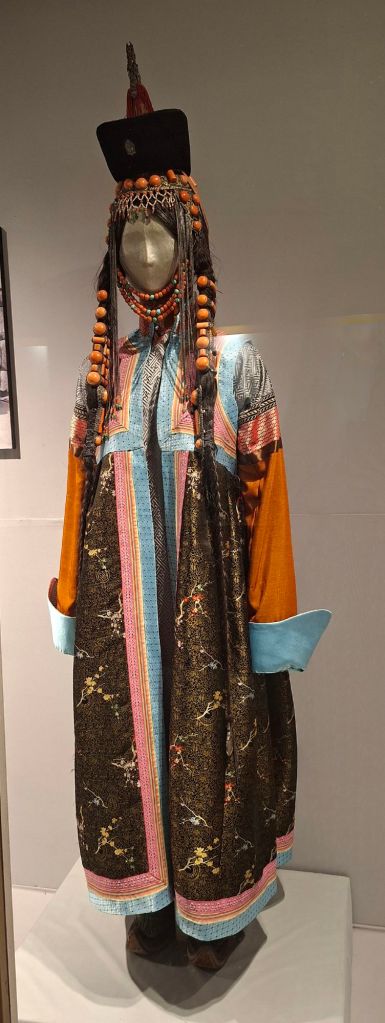
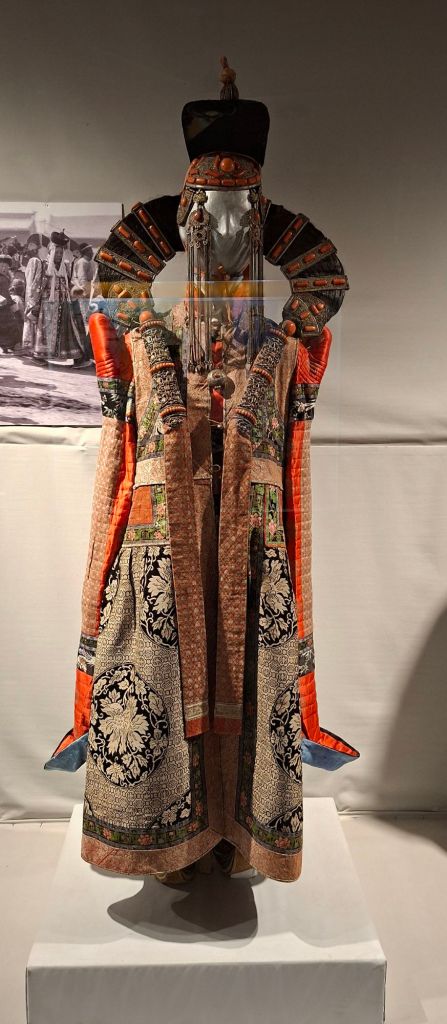
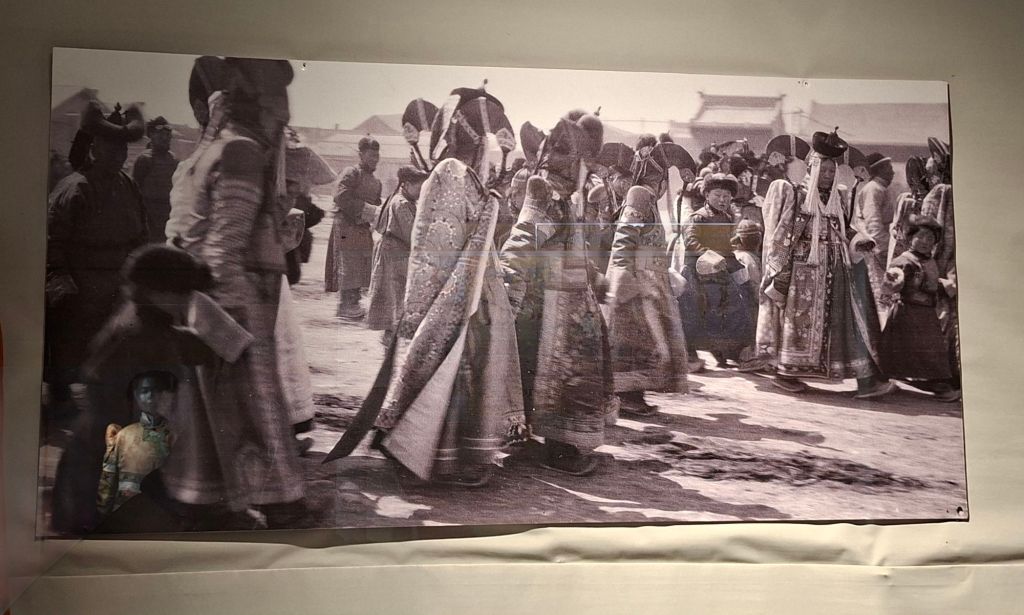
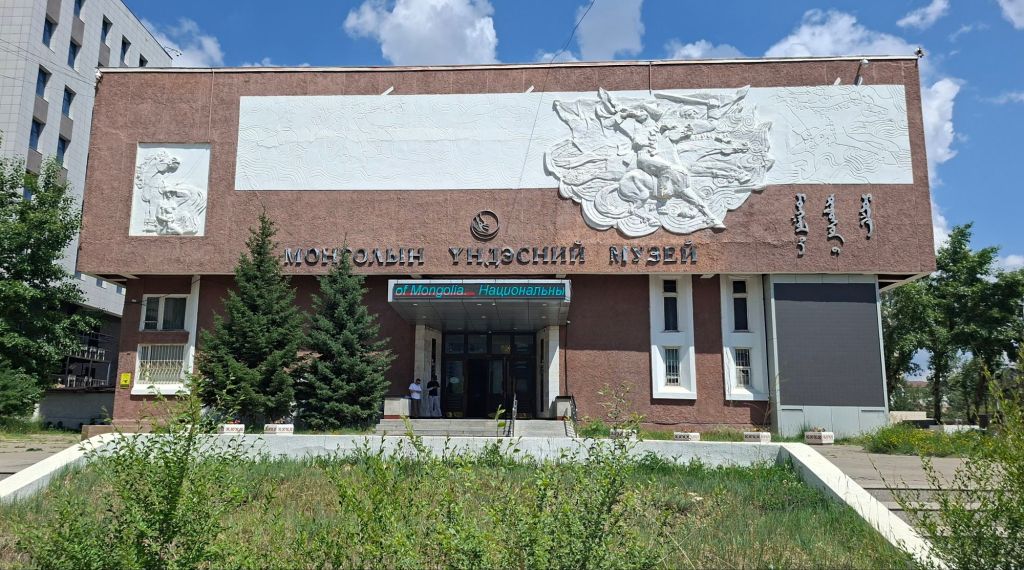
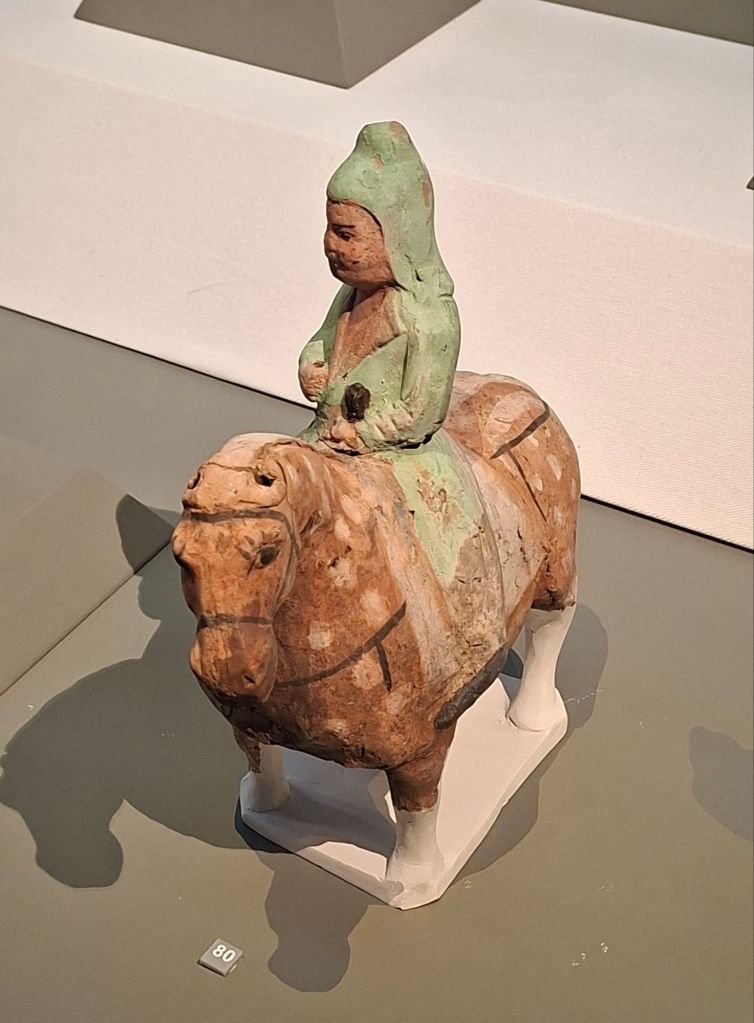
Anyway, yes, the National History Museum of Mongolia (housed in a classic Soviet style block) traces Mongolia’s history from the neolthic times to today (well, the late 1990s). Pictured below are some of my highlights, including:
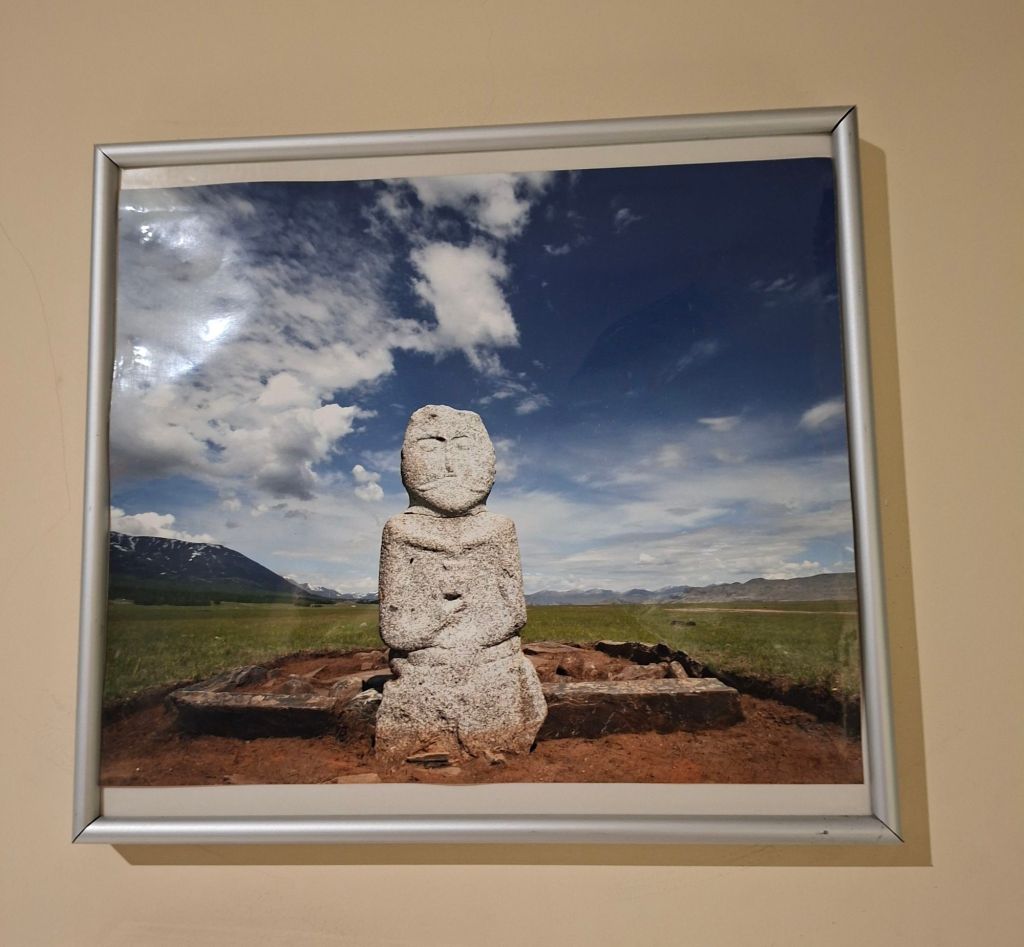
- Coffin statutes from neolthic periods. However, as photographed, it seems a shame that this one in particular has been moved from his rather lovely original location and now lives in the basement of museum opposite a headless statute.
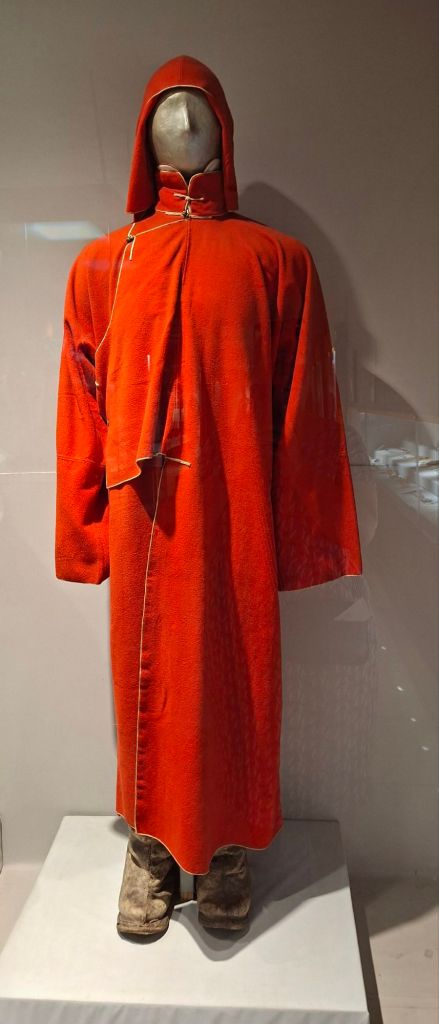
- Various examples of traditional mongolian dress. The main element being what is called a “deel” and is a long sleeve longed robe (worn by both sexes) with a high collar, folded chest flap and buttons at the shoulder. There will usually also be a broad fabric belt which forms a pocket (useful for putting things in). There are then many styles of traditional hats and boots (I really like the boots). Interestingly, traditional styles of Mongolian dress are said to have inspiredthe costume designers of Star Wars.
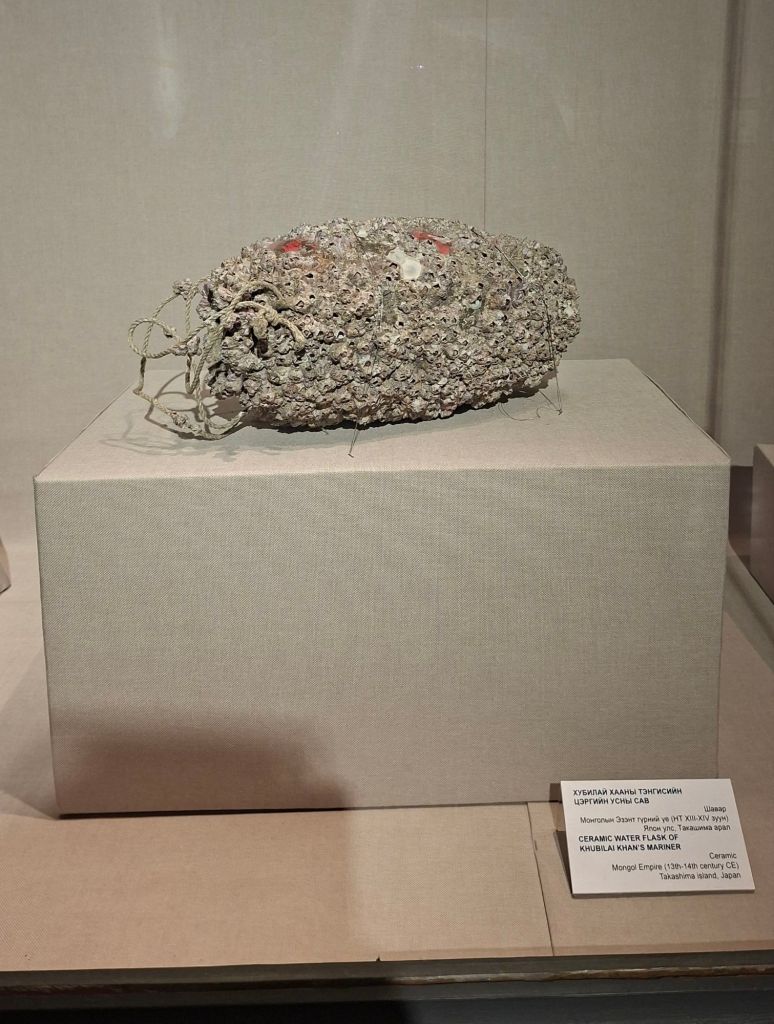
- A ceramic water flask of Khublai Khan’s Mariners. Khublai Khan is famous for pushing the empire out into China, and he had a large fleet of ships that navigated the South China Sea and various invasion attempts of Japan. Not what you necessarily associate with a landlocked country.
- Documents declaring Mongolia’s independence and a copy of their first constitution.
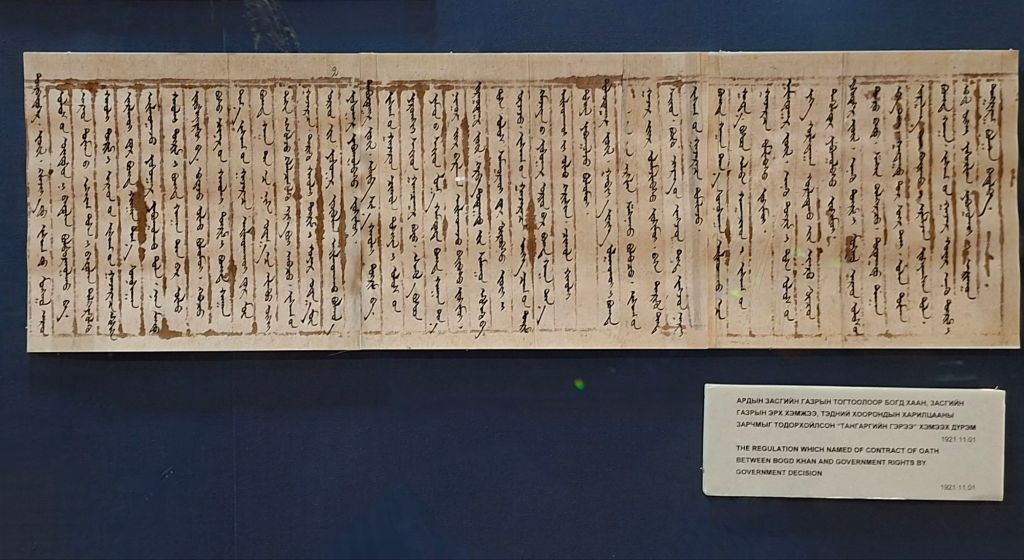
There was also an excellent gift shop where I brought a very cute beaded yurt pin badge. So far on this trip, I have purchased a felted cuddly yurt and a yurt pin badge. I feel I may need to branch out.
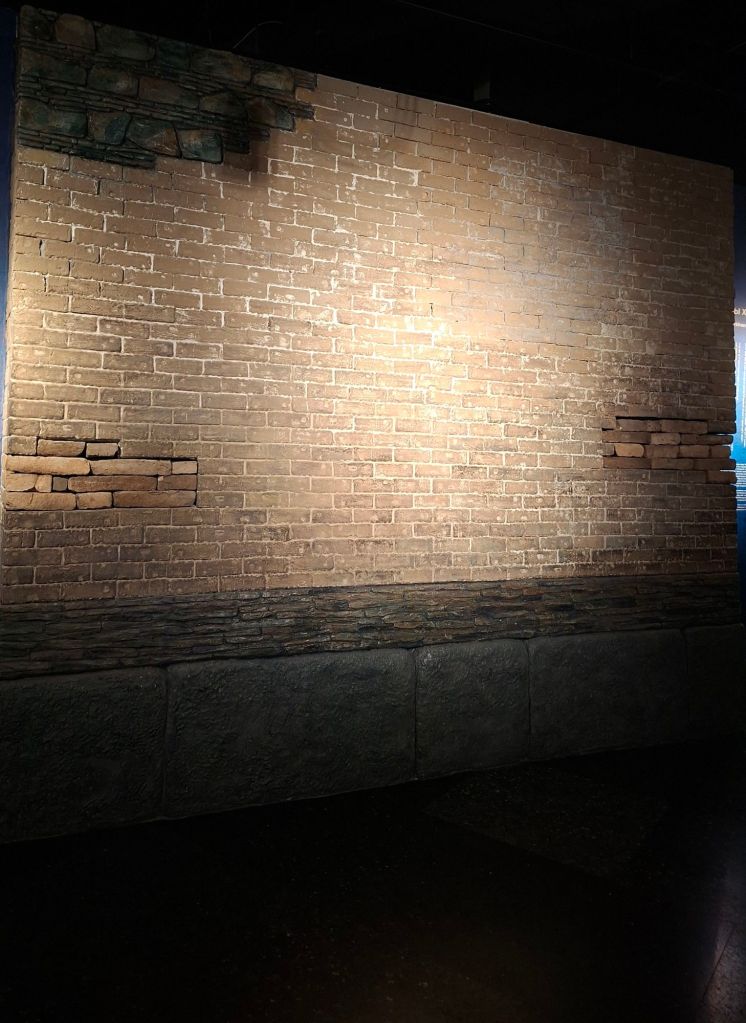
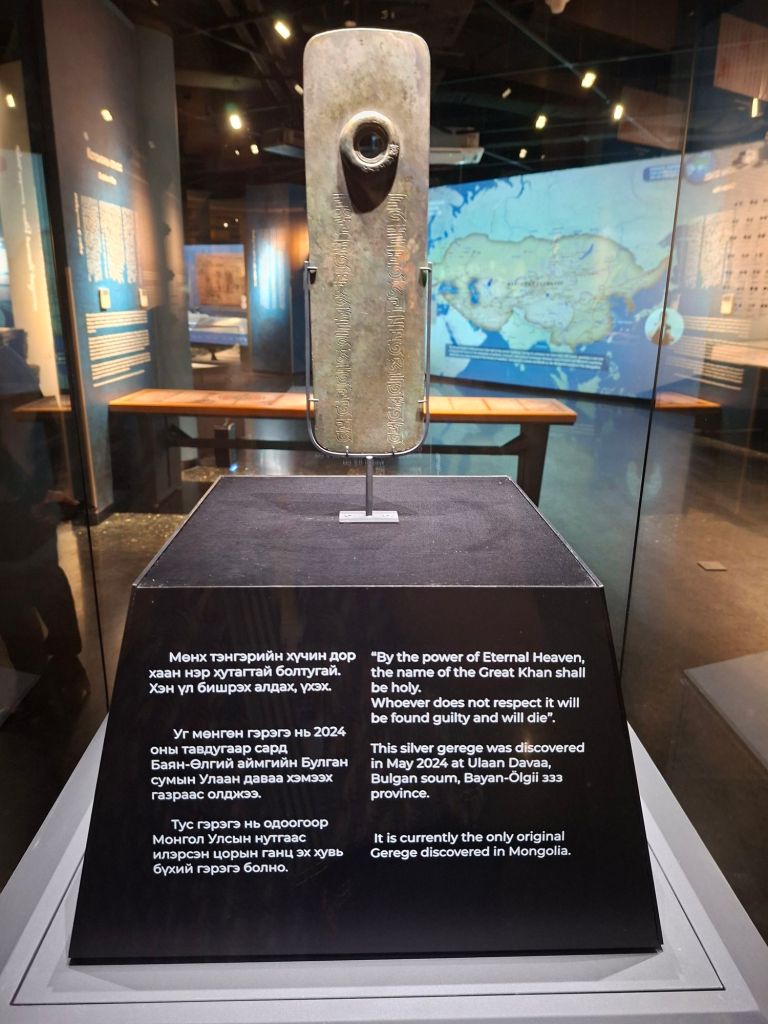
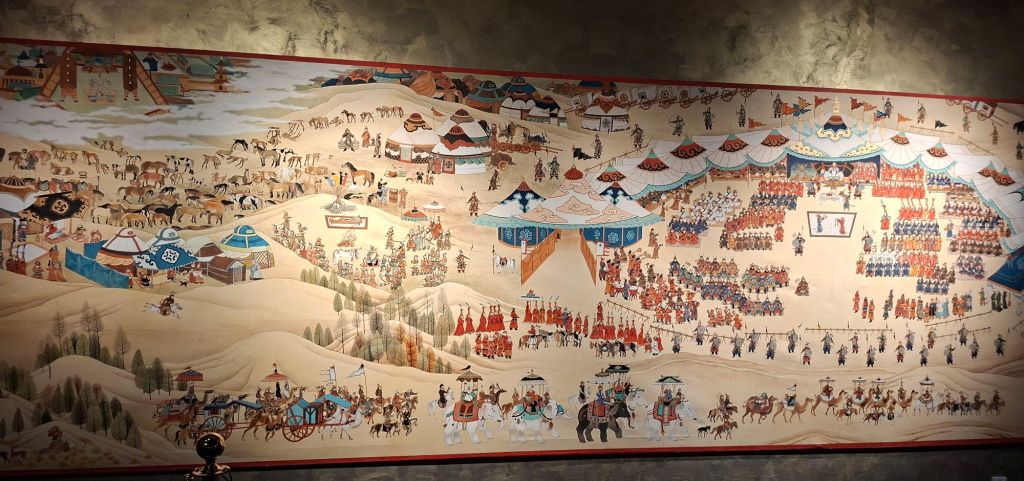
Behind this museum is the much newer and fancier Chinggis Khan museum. Whilst ultimately a history museum, it breaks down into time periods of way before Chinnggis, just before Chinggis, Chinggis, Chinggis’ immediate descendents, after Chinggis, and Chinggis’ impact on the modern era. However, we got the sense that this was very much for Monglian’s with labelling being in traditional Mongolian script alongside Mongolian Cyrillic. It took me to floor 7 of 9 to work out that the little “Audio QR” codes linked to English translations of room introductions and the main pieces. Regardless, it was an excellent collection of artefacts, and with our pre-reading and some on-site Googling, we were able to work most things out – although some elluded me, such as a replica of a wall in Karakorum…
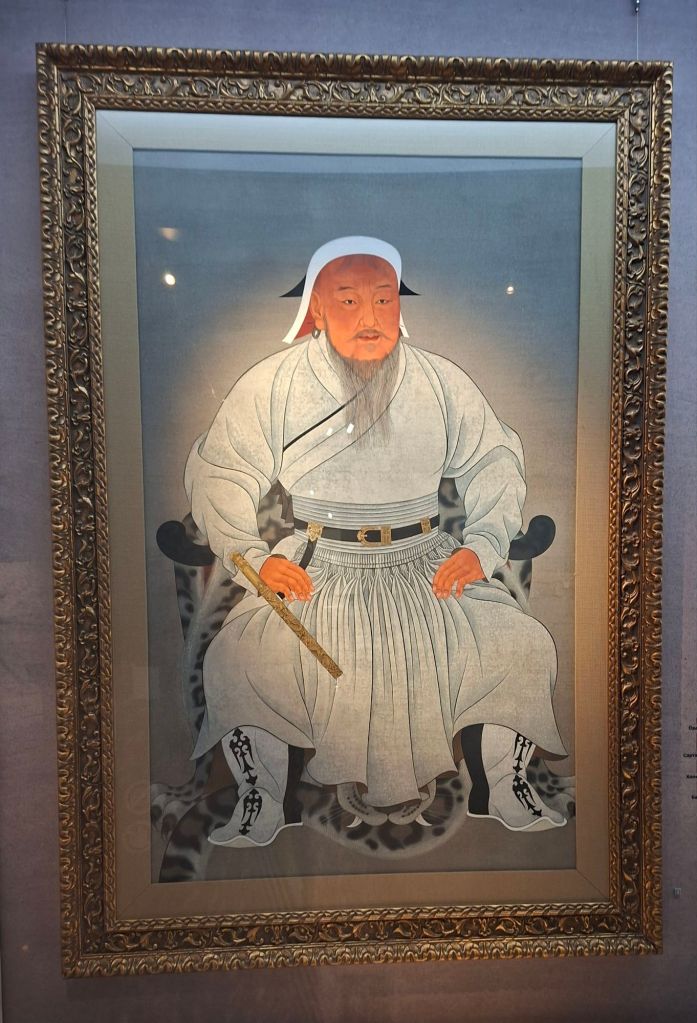
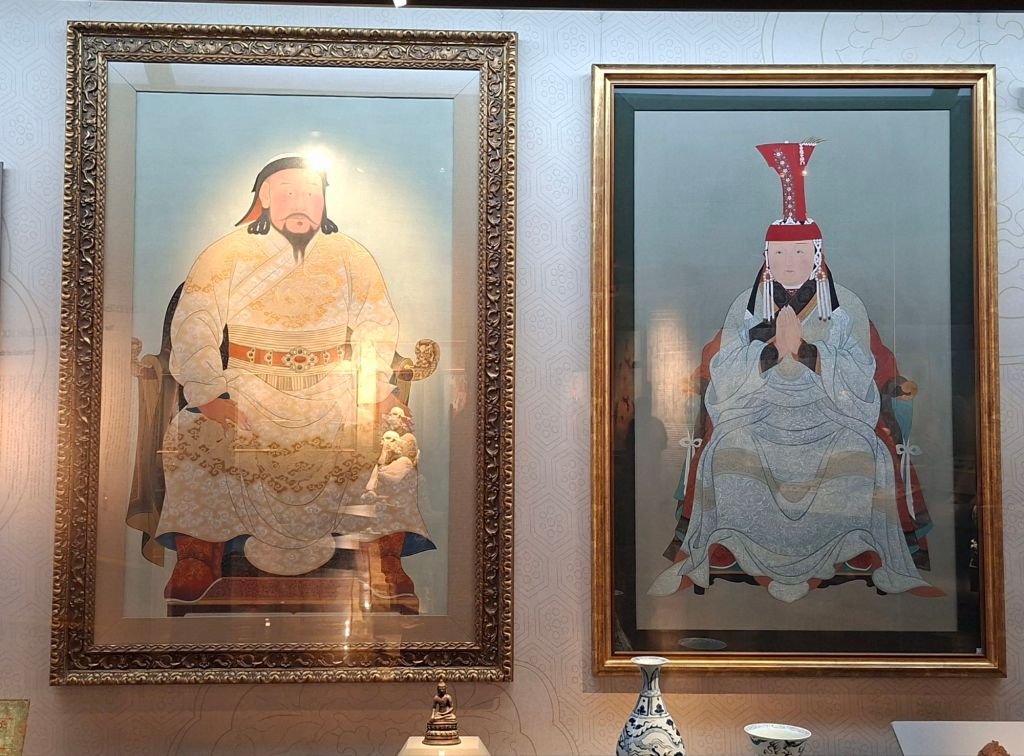
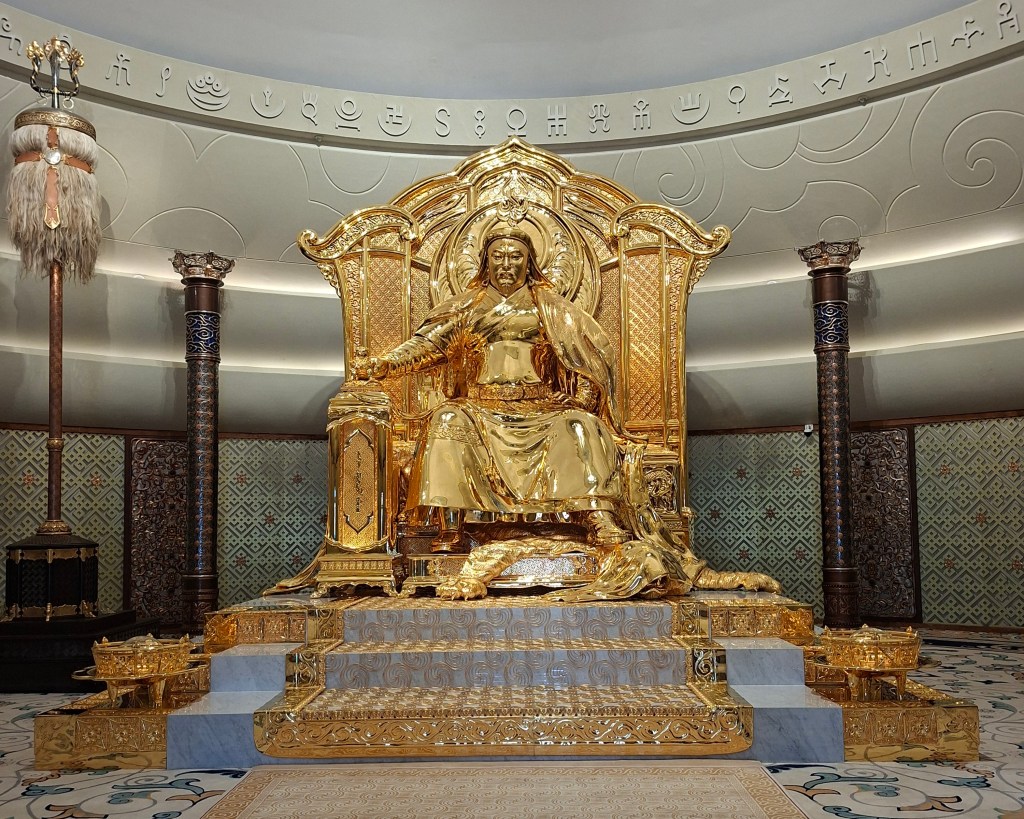
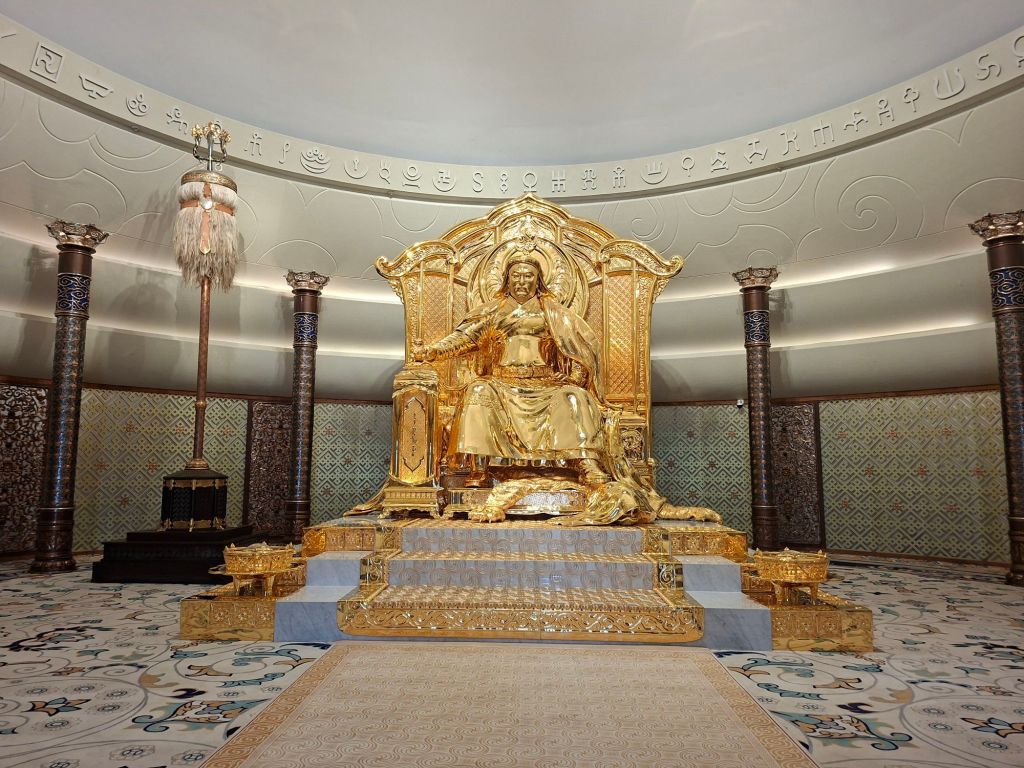
The main attraction of the museum (and requiring an additional entrance fee) is on the top floor. We doned our shoe covers and entered a huge ger, thickly carpeted and containing a seven metre statute of Chinggis Khan (as he would have looked in 1189) using 90kg of Mongolian gold. He may be smaller than Saturday’s silver statue, but very shiney and in a much fancier setting.
After all that learning, it now being 2pm we went in search of a late lunch. We located a cafe via Google maps offering a selection of options, including quiche, how Mongolian we thought? We were almost thwarted in our attempts to find it until we realised it was what had looked like a dingy bar we had walked past twice, but after venturing inside discovered it was actually a rather cute cafe. However, there was a lack of quiche, so instead I had a rather fine saghetti and meatballs. It will be only Mongolian food from tomorrow onwards, I promise.
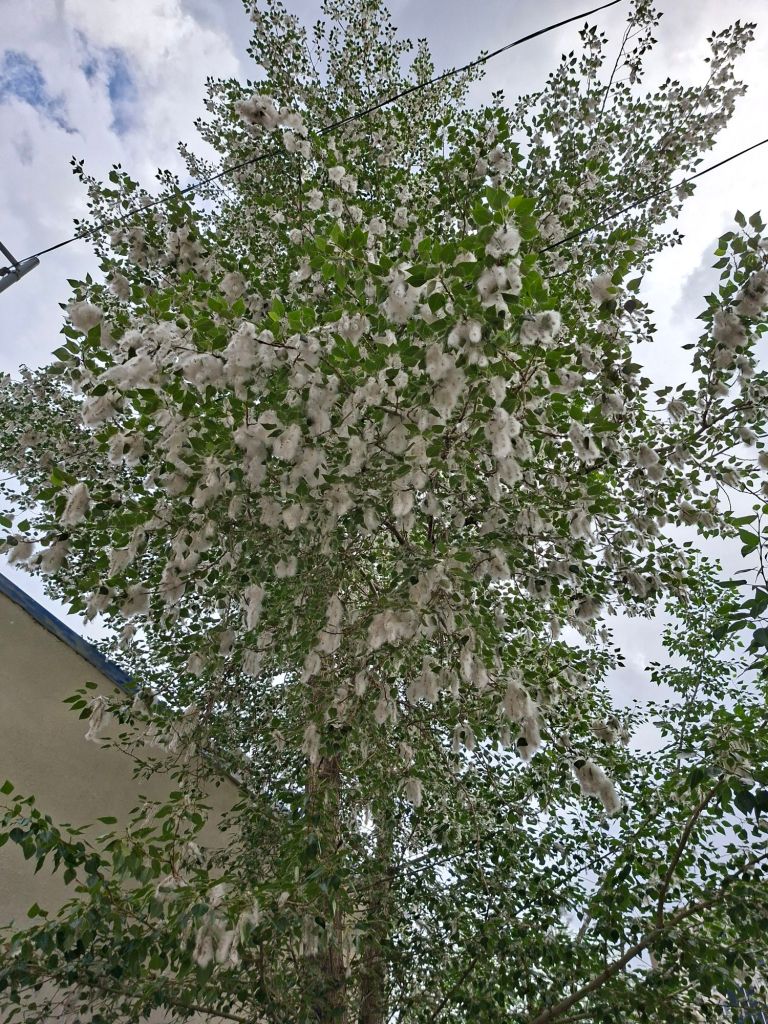
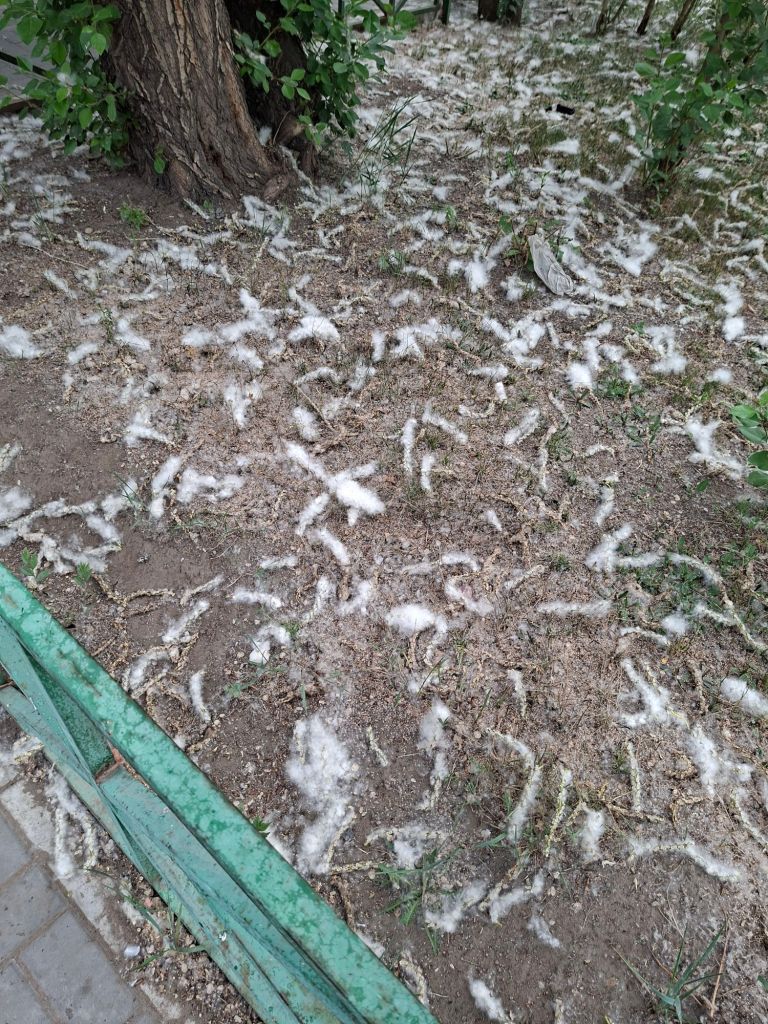
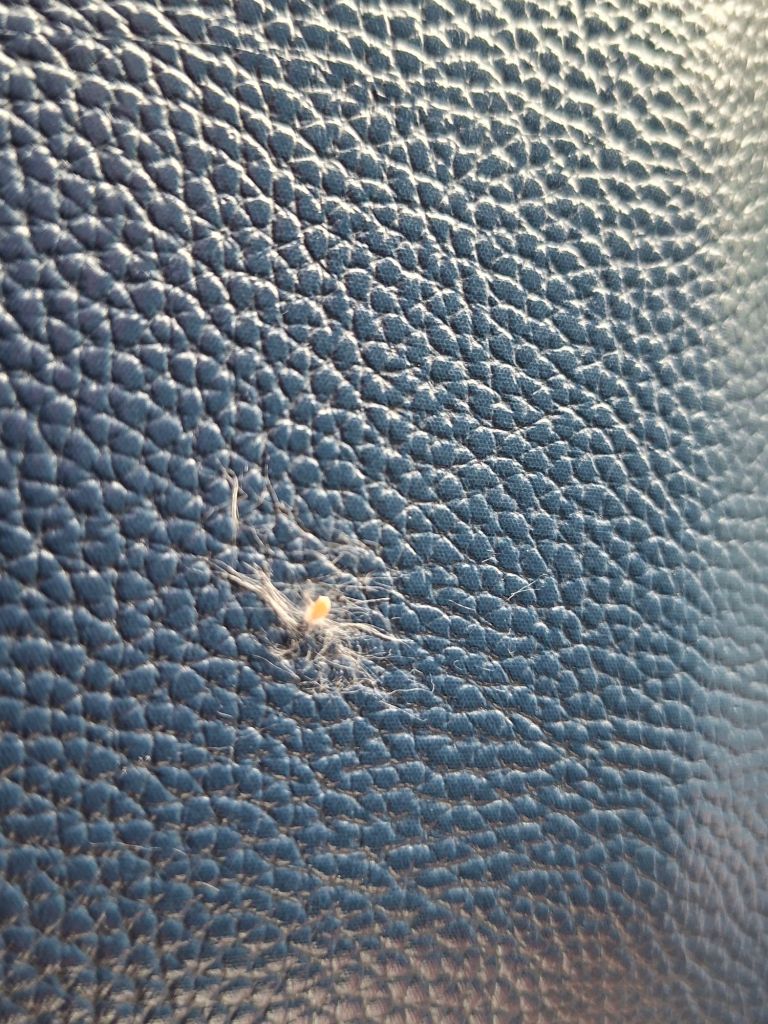
As we ate under a covered veranda, we were getting “snowed” on. Now, when I say snow, what I am actually talking about the cotton-like seeds of poplar trees (which are 75% of Ulaanbaatar’s trees). It is everywhere, in drifts and on the breeze like a snow storm. Apparently, they were planted to combat desertification and improve the local climate, but they planted only the Siberian Poplar that is famous for its fluff.
There was then a failed attempt to change some of my USD into Mongolian, which I may regret as our Intrepid guide recommended we have $200 to hand before heading out of Ulaanbaatar. Well, after this failure and then a failure to find an open ATM later this evening we shall have to use what we have or hope that people take USD. I suspect my not having a beer or habit will save me monies considering all meals are included.
Our final “attraction” of the day was the statute of The Beatles in Beatles Square. Now, I was expecting something akin to the giant gold Chinngis Khan as it was described as a much beloved local landmark. It was errected in 2008 to commemorate how Western rock music inspired Mongolia’s youth to fight for freedom and democracy during the Communist era.
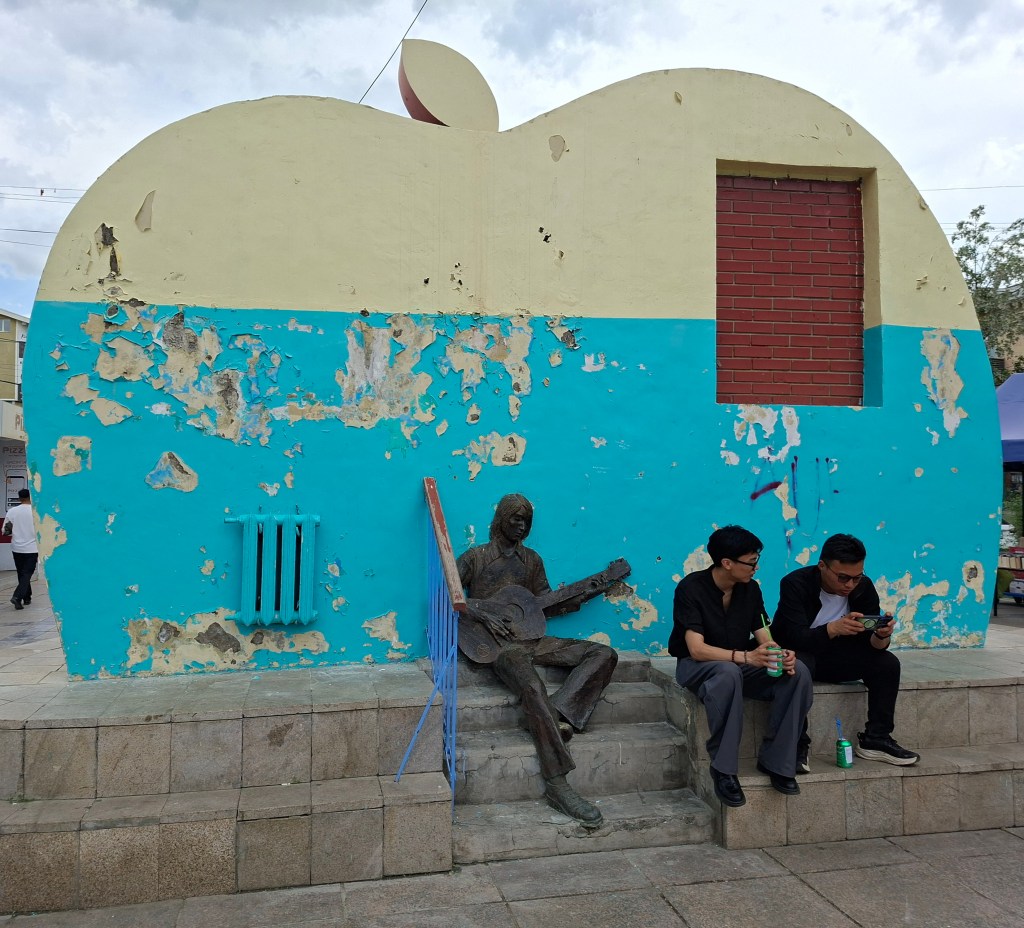
We then returned to our hotel in readiness for the Intrepid Group meeting which I shall cover in my next post, as well as the route and what is coming up in the itinerary for the next 2 weeks. Although this stay in Ulaanbaatar is coming to an end, we are returning, and therefore, I have time to reflect, but so far, I have really enjoyed my time here. I had sort of expected Mongolia’s capital to feel either like the Central Asian capitals such as Tashkent or Bishkek, or perhaps like a Chinese city. It is neither, it is its own place and far more international than any of these others. Of course, it makes sense, Mongolia has its own independent and ancient history, which I am only just starting to scratch the surface of.
3 responses to “Mongolia 1.3 – Ulaanbaatar (part 2)”
-
Why no pictures of your souvenir yurt collection? Is there a difference between yurts and gers?
How did you resist all the brightly coloured fabric?LikeLike
-
No difference between yurt and ger – ger is the Mongolian word, whereas yurt comes from the Russian.
Photos to follow.
Fabric resisted with difficulty…LikeLike
-
-
there only appears to be one Beatle in that picture and the wall looks suspiciously look it’s been shot at. Perhaps some people there like them more than others!
LikeLike


Leave a Reply