
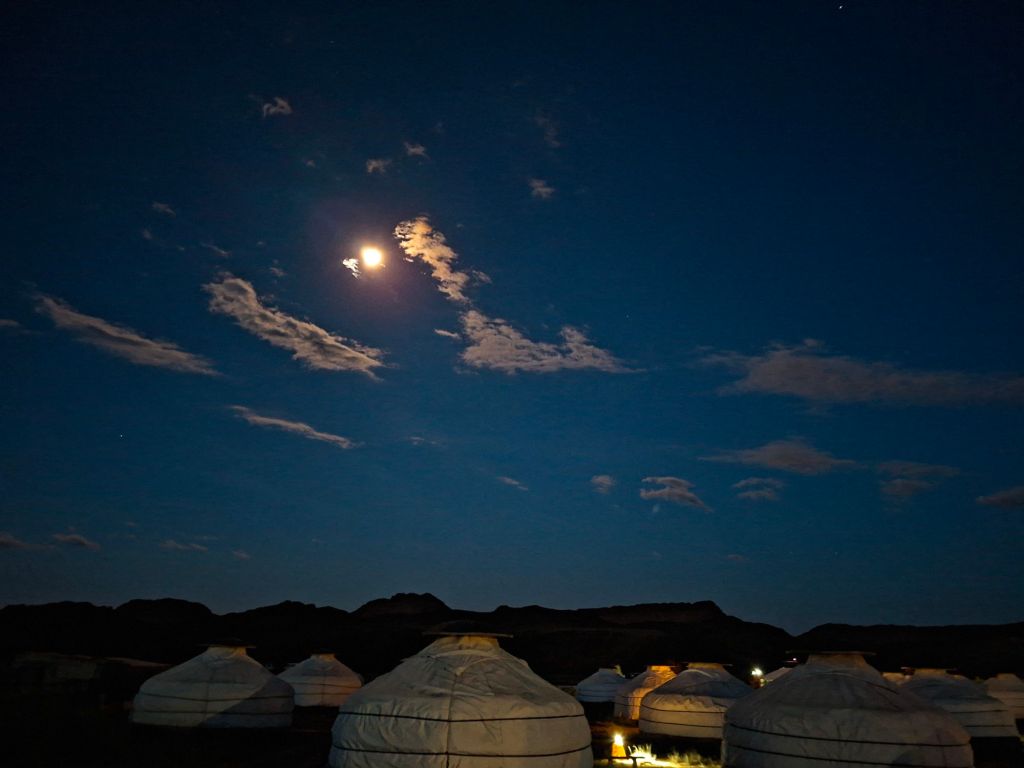
I would like to retrain my body that it does not need a trip to the toilet in the early hours of the morning, even if it means I get to take great photos:
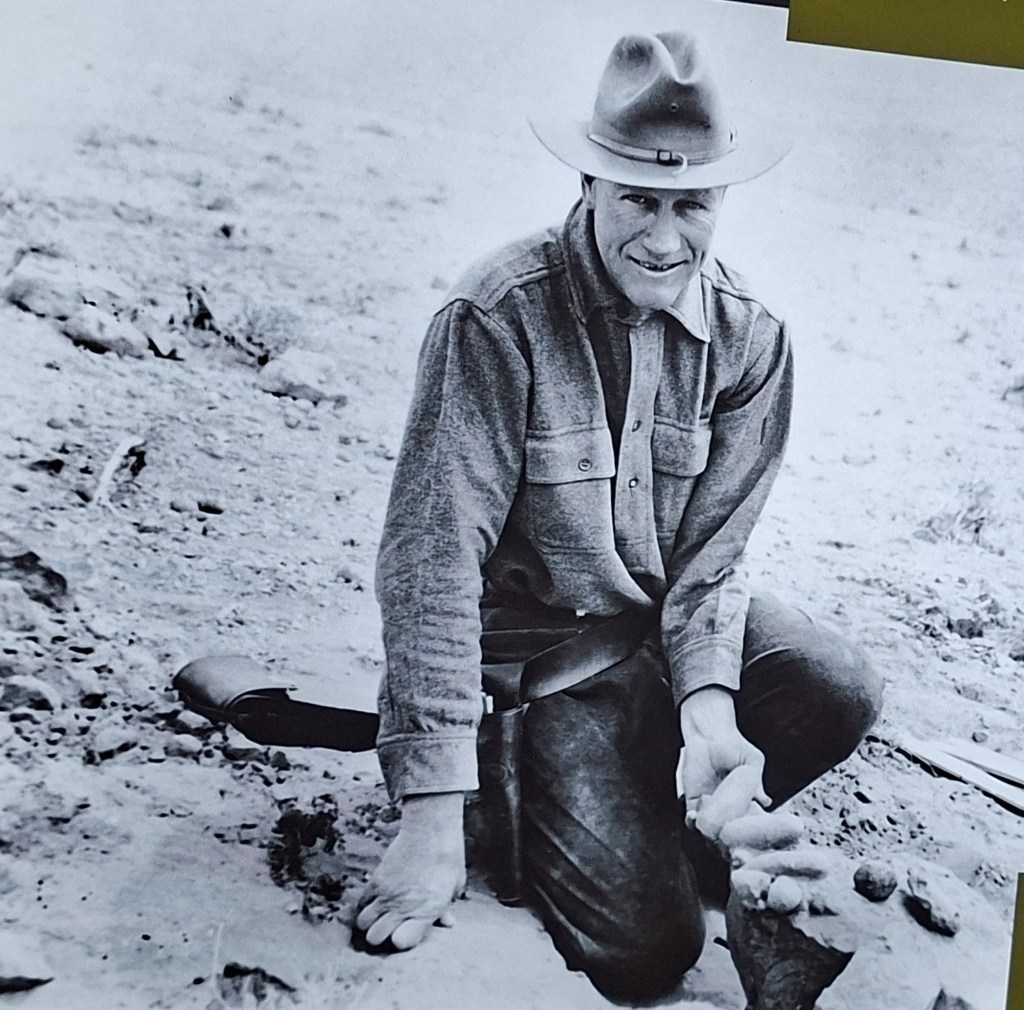
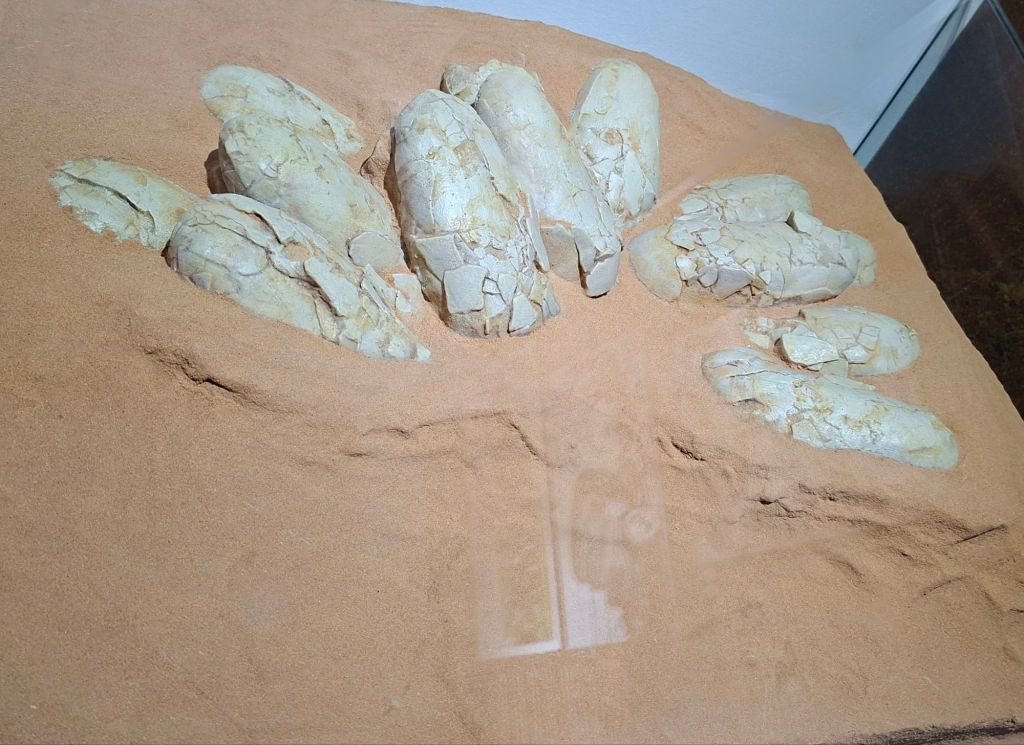
It was a 7.30am departure and a 6 hour drive to Bayanzag. However, it’s more commonly known, certainly by non-Mongolian speakers as “Flaming Cliffs”. This was the name first used by American paleontolgist (and inspiration for Indian Jones) Roy Chapman Andrews. He came here in 1922 to try and prove his hypothesis that man originated in the Gobi, instead what he found were over 100 dinosaurs. The most important discovery was the first dinosaur eggs which proved that dinosaurs actually laid eggs. The Gobi is where one quarter of all the world’s dinosaur remains have been found ever – a combination of the dry climate, the sand, limited people and maybe this is whee dinosaurs liked to hang out? Today, most of the fossils found by the 1922 expedition are displayed in the American Natural History Museum, but there is also a small Museum of Dinosaurs in Ulaanbaatar perhaps I should visit on my return?
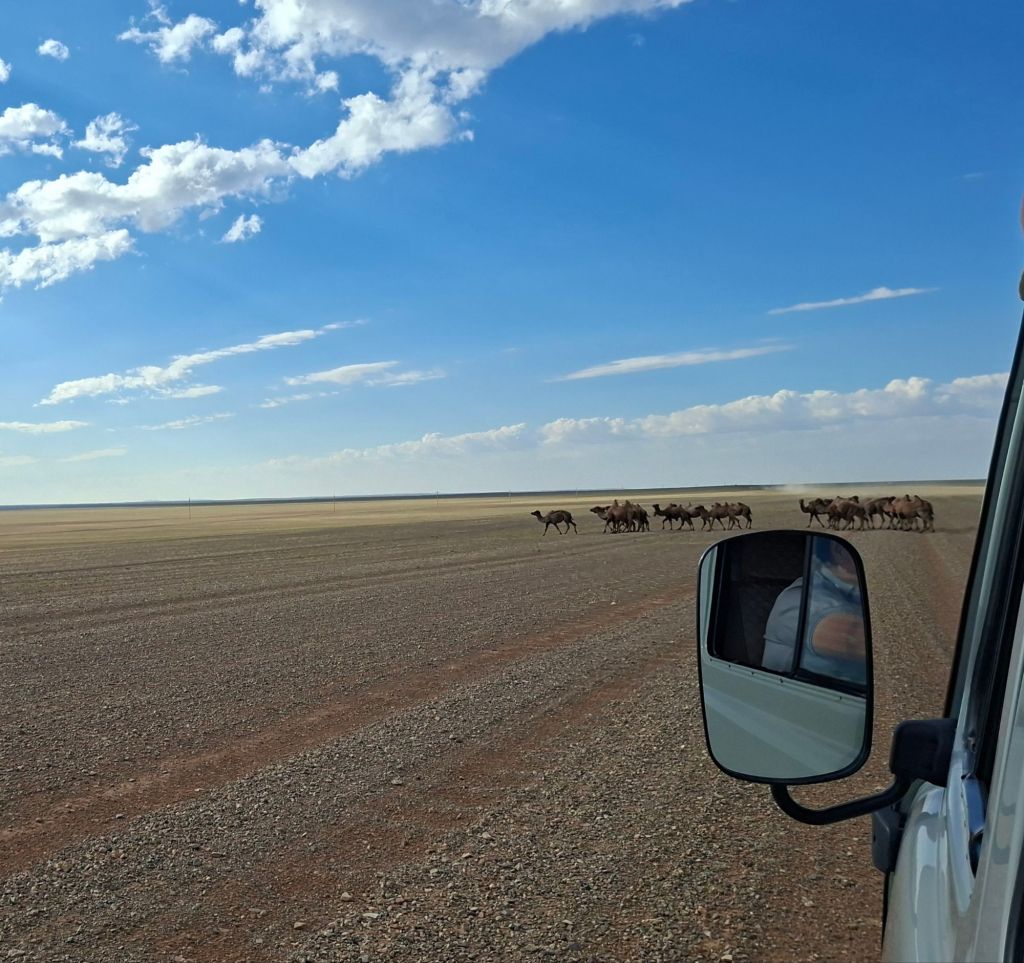
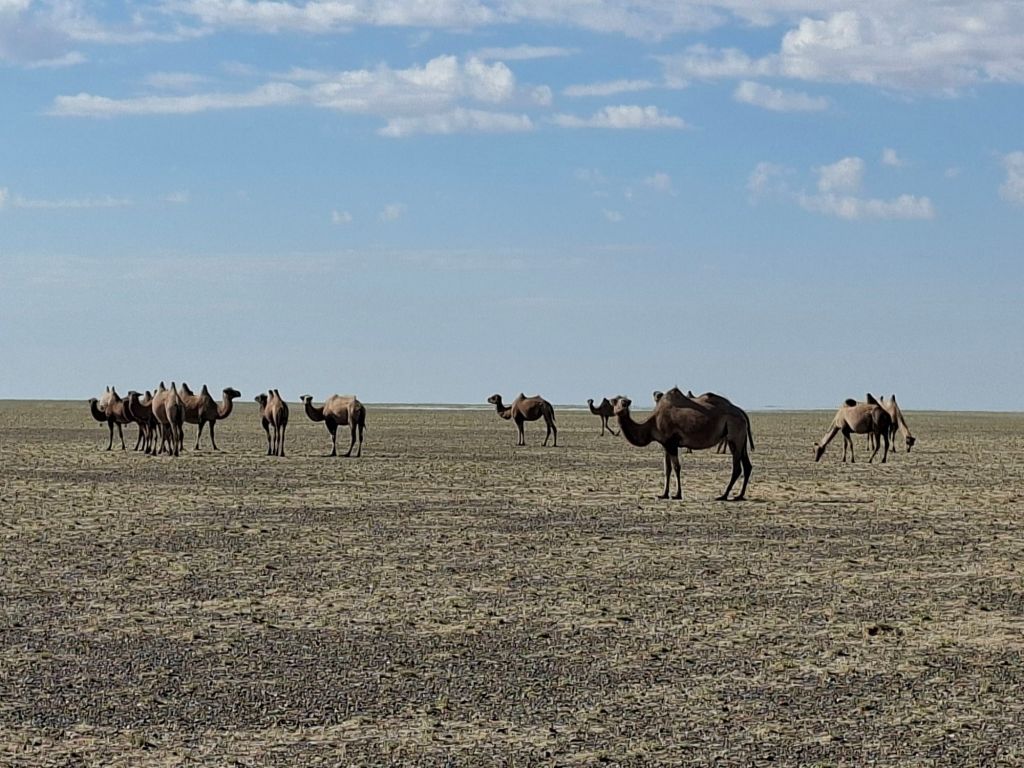
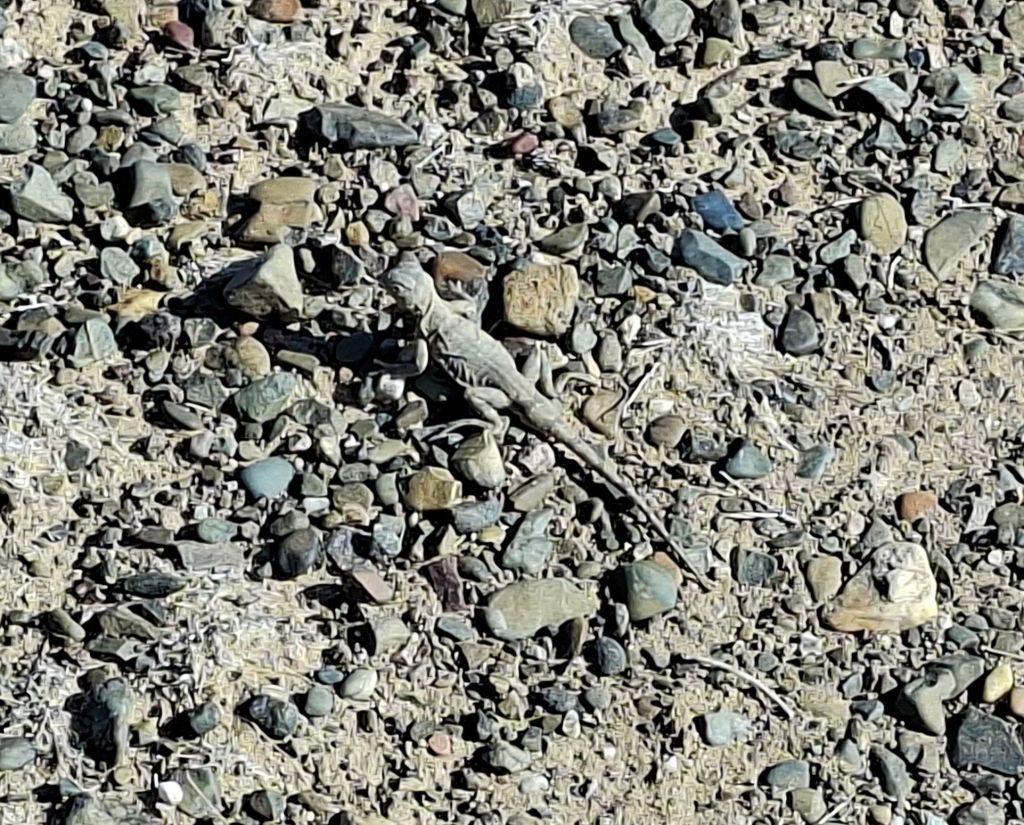
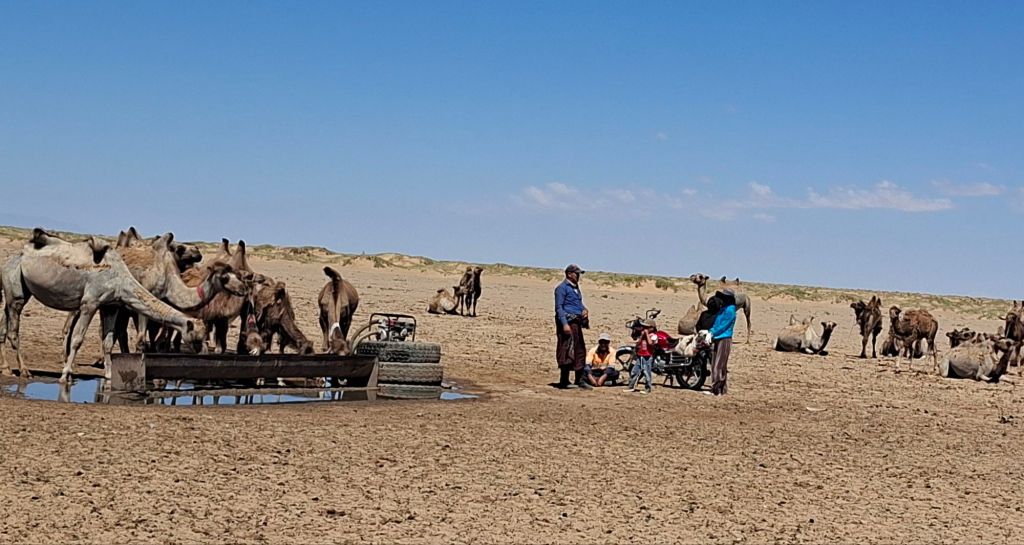
Driving today it did not take long to hit the Gobi desert proper, but even in what looks like an empty nothingness there are signs of life- electricity cables, roaming horses and our first genuine camel sighting:
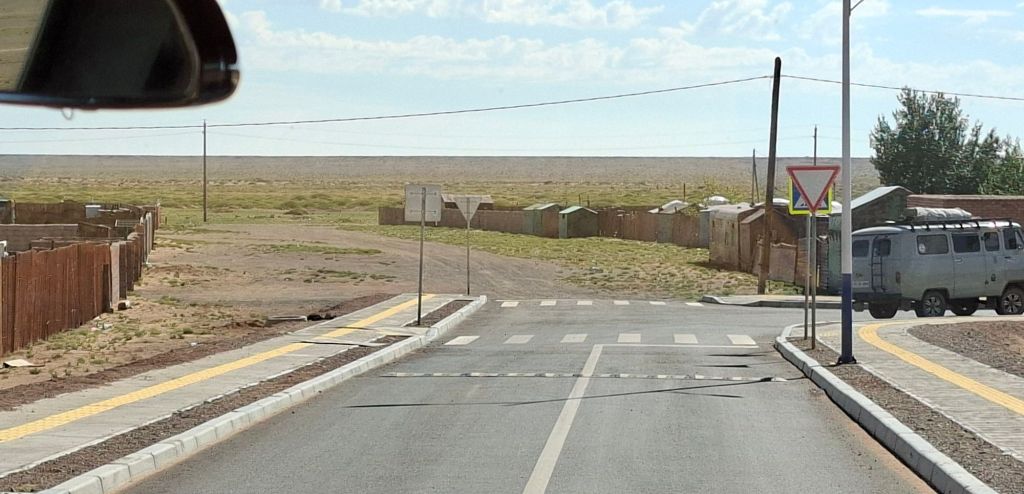
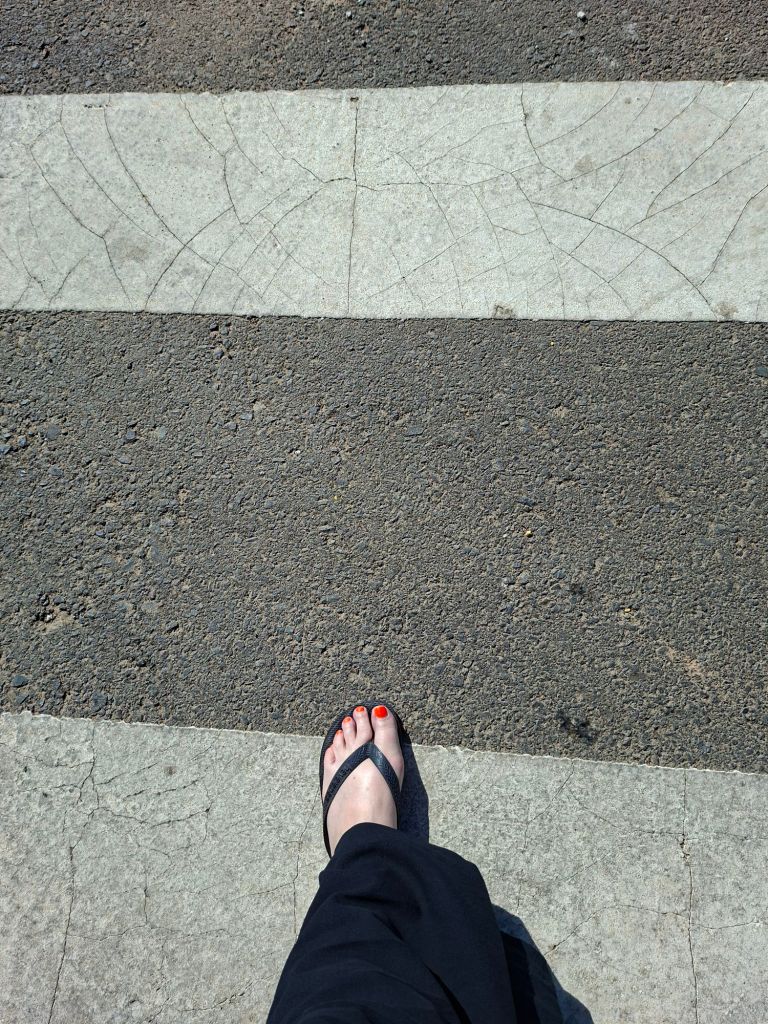
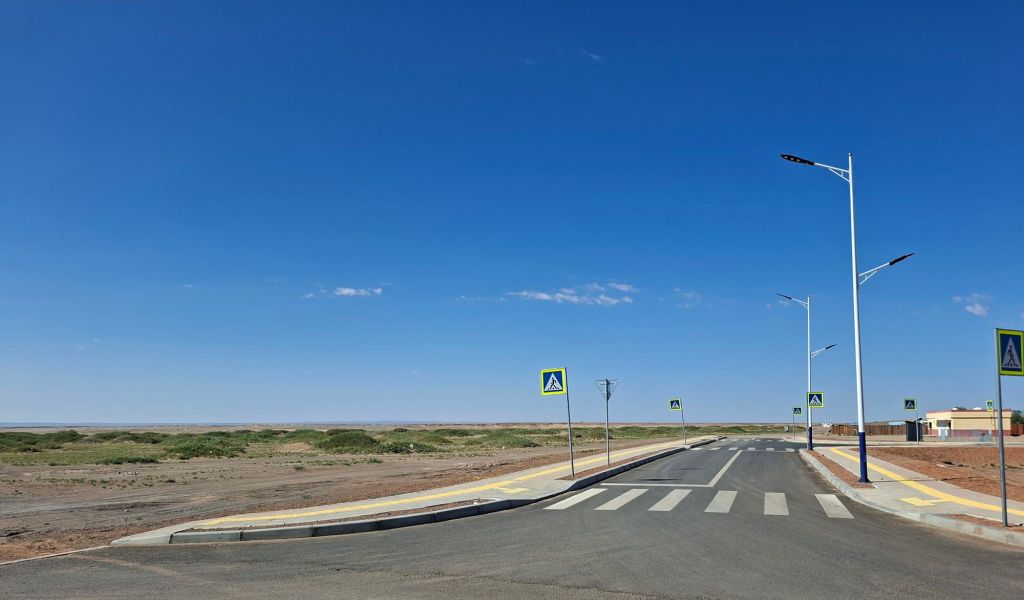
After about 1.5 hours of driving, we could see civilisation in the distance. This is the town of Mandal-Ovoo. This is perhaps the highest density of zebra crossings (with signage) I have ever seen for a circular 1km of tarmac road (with road markings and disability inclusive pavements) and a grand total of 4 people (although Wikipedia says the district population is nearly 2,000 people). They also had a supermarket, a bank, an outdoor gym, an outdoor screening area and a public toilet (which we used). There is currently another road construction project heading out of town with what looked like a bus station and sports stadium on route towards the south so I suspect in 10 years this will be a massive city. I hope they keep up the zebra crossing concentration.
We started to hit the Gobi proper and the driving got much more interesting. We were going over dunes, crunching along crunchiness and much holding on was required.
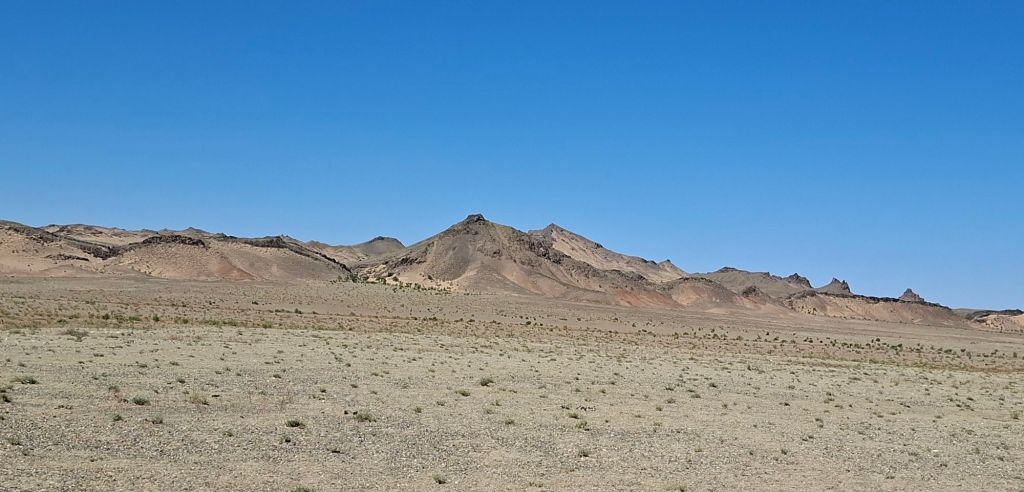
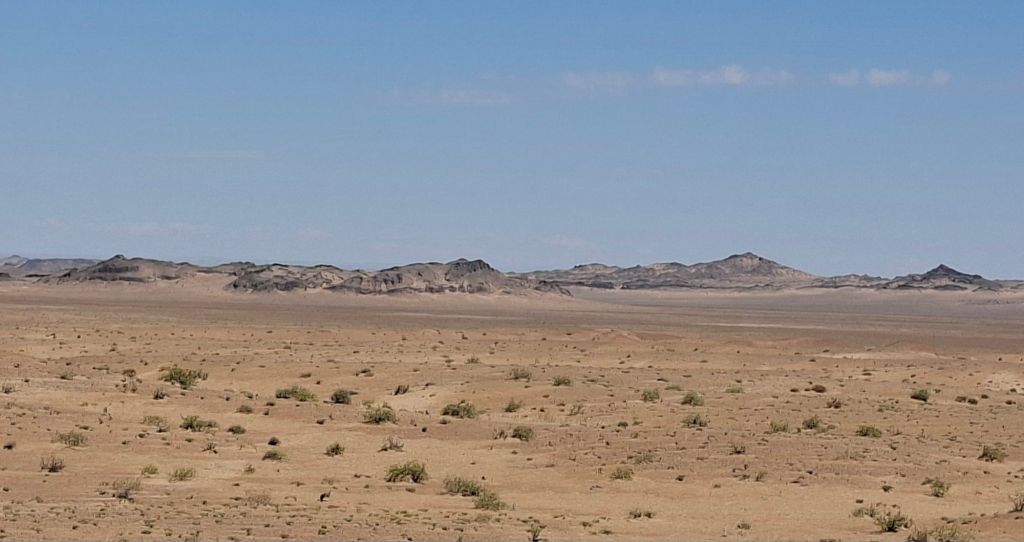
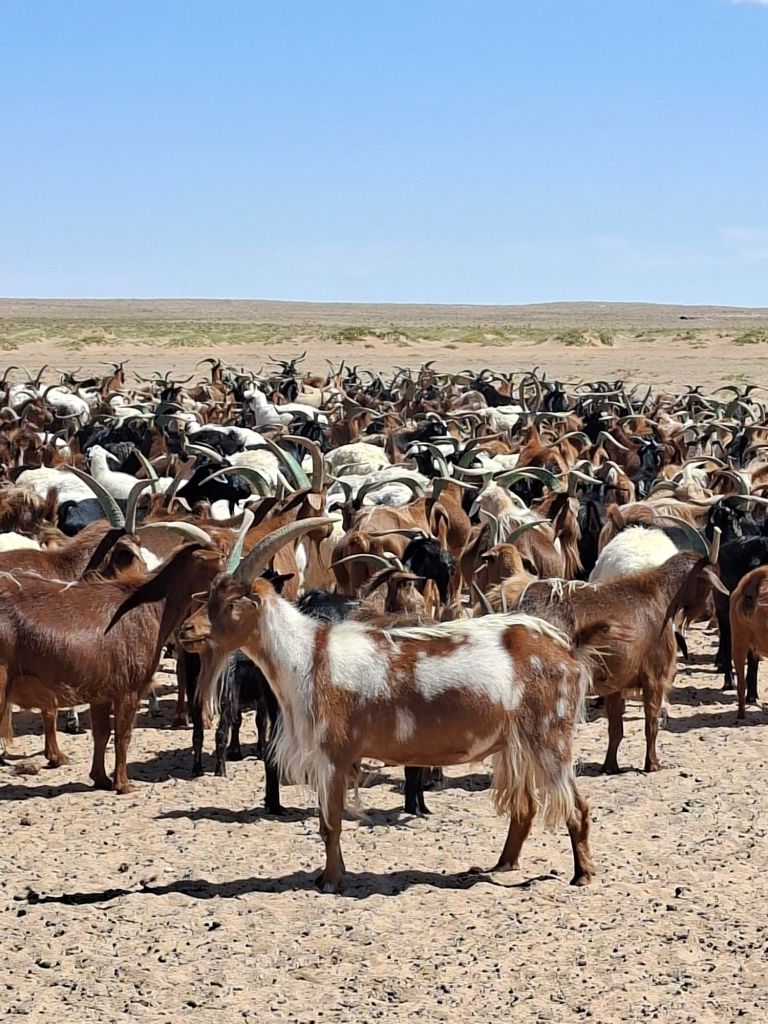
Bayanzag actually means “rich in saxaul shrubs”. I had to look up what a saxual shrub is, and then wasn’t much wiser (its a native tree), but I was then able to spot many of them as we approached camp. I can see why even the Mongolian’s now prefer to use the name “Flaming Cliffs” for this area, which sounds far more impressive than Interestingly, these are the trees being planted into the bed of what was the aral sea to try save the land from the desert.
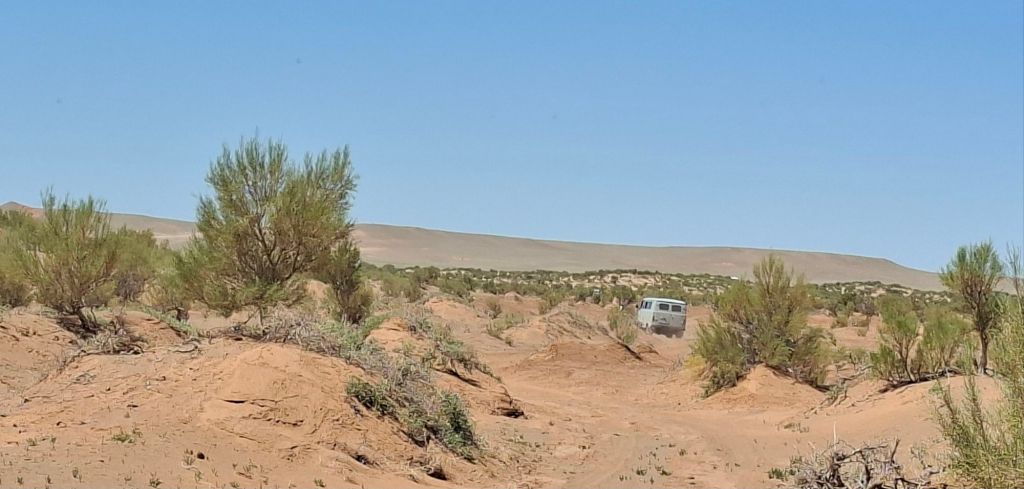
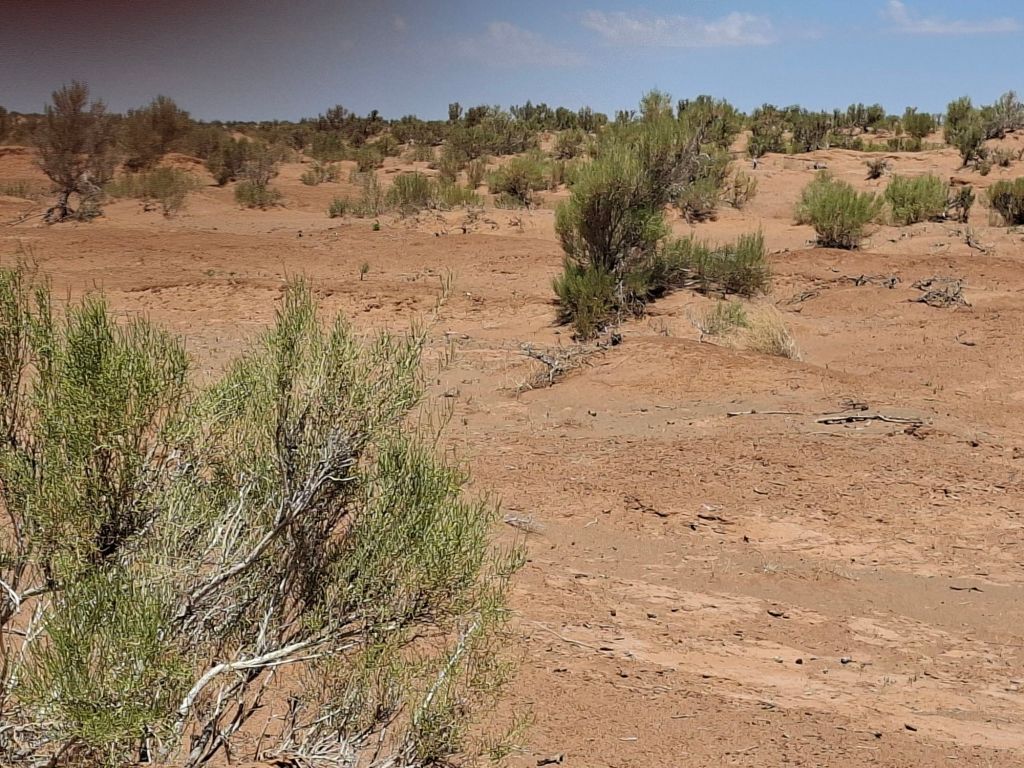
Bayanzag may not remain as it is for much longer. Due to heavy winds (from Soviet depressants of the area) and an increase in flash storms, the cliffs have been eroding at pace. We experienced a flash storm yesterday (whilst at the monestary) whereby the winds pick up and rain pelts down, it brings much needed relief (for me and the ground I suspect) but is over in a couple of minutes, and no moisture remains. Seeing places like this, and having recently experienced the heatwave sweeping across Europe, I do worry about what the world will look like in my lifetime. In the past 12 months I have been the hottest I have been in the world (China) and in London, and surely this is only going to keep getting worse. Mongolia is trying to hold back the dessert, but not even one billion trees will be anywhere near enough.
We have now arrived in camp, in time for a laundry drop off – at an extortionate cost of $1-3 per item, but we are in the desert so far better that we use industrial size washing machines and let’s be honest, my clothes are big. Let’s see if I regret giving them my feral bra from the family ger.
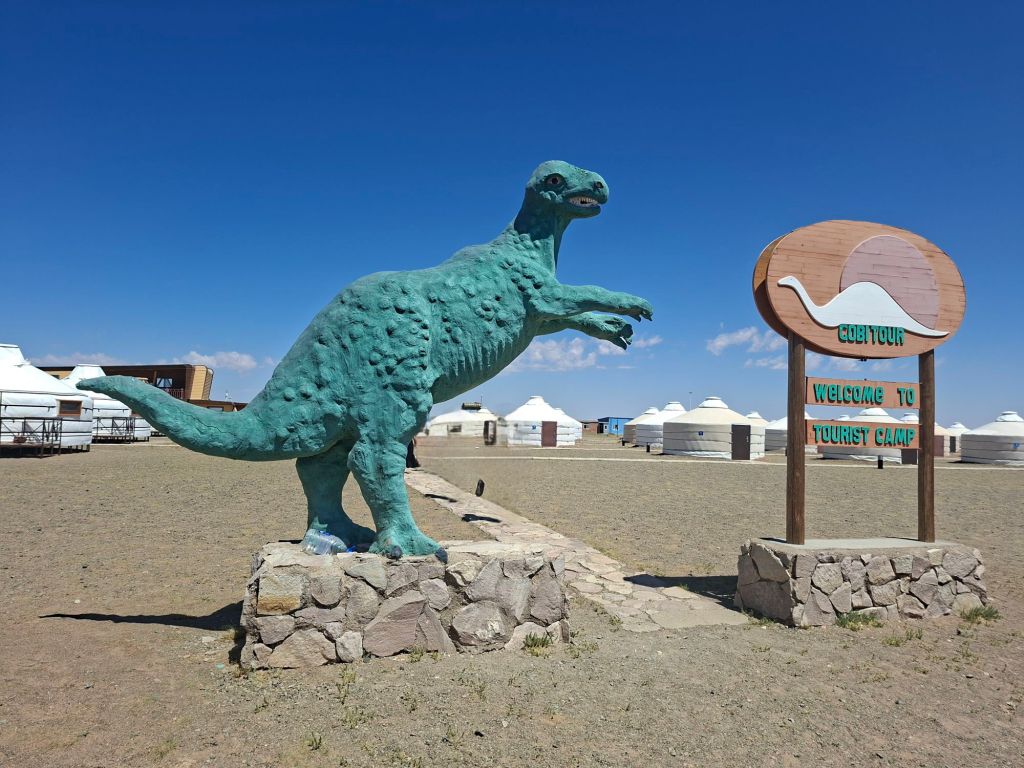
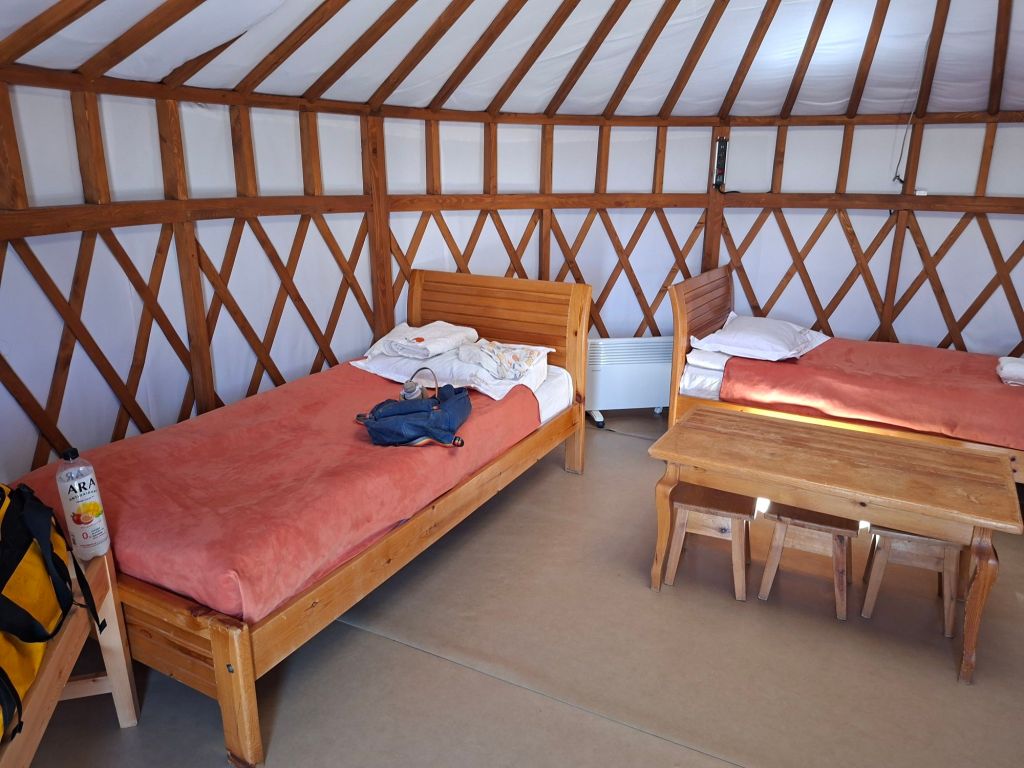
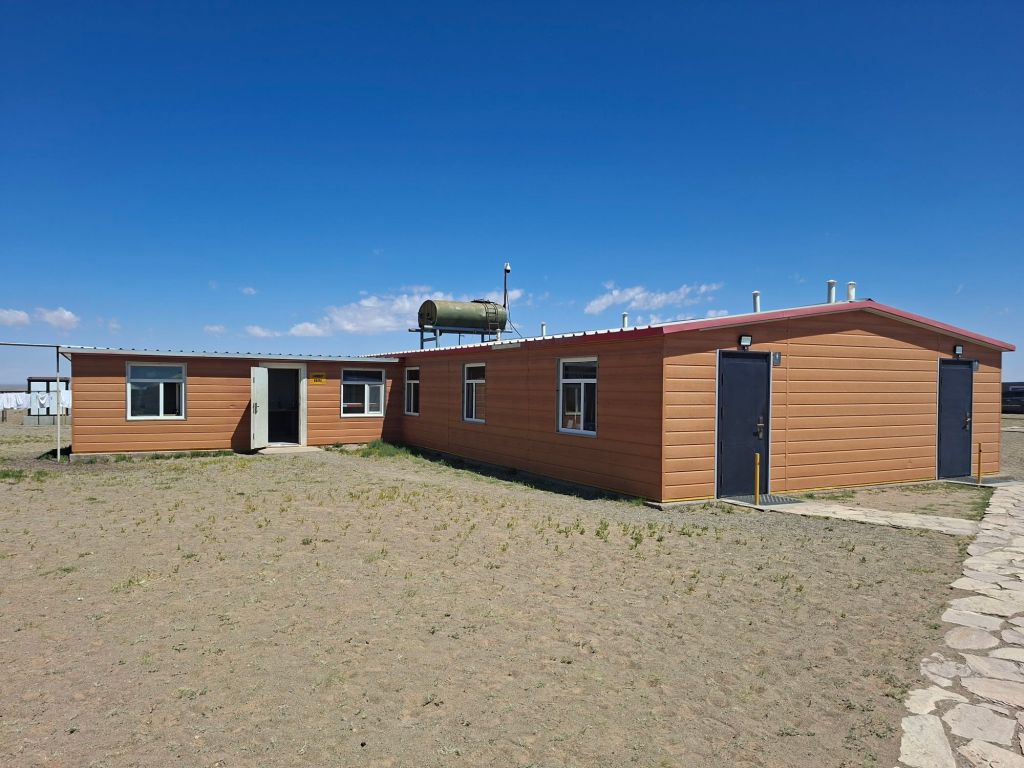
Being now an expert on Mongolian gers, I don’t think these are real gers as they have a metal door and solid walls. However, they do feel coolish inside (which you need in the middle of the desert) and tonight’s upgrade is multiple plugs/charging points. No mirror sadly.
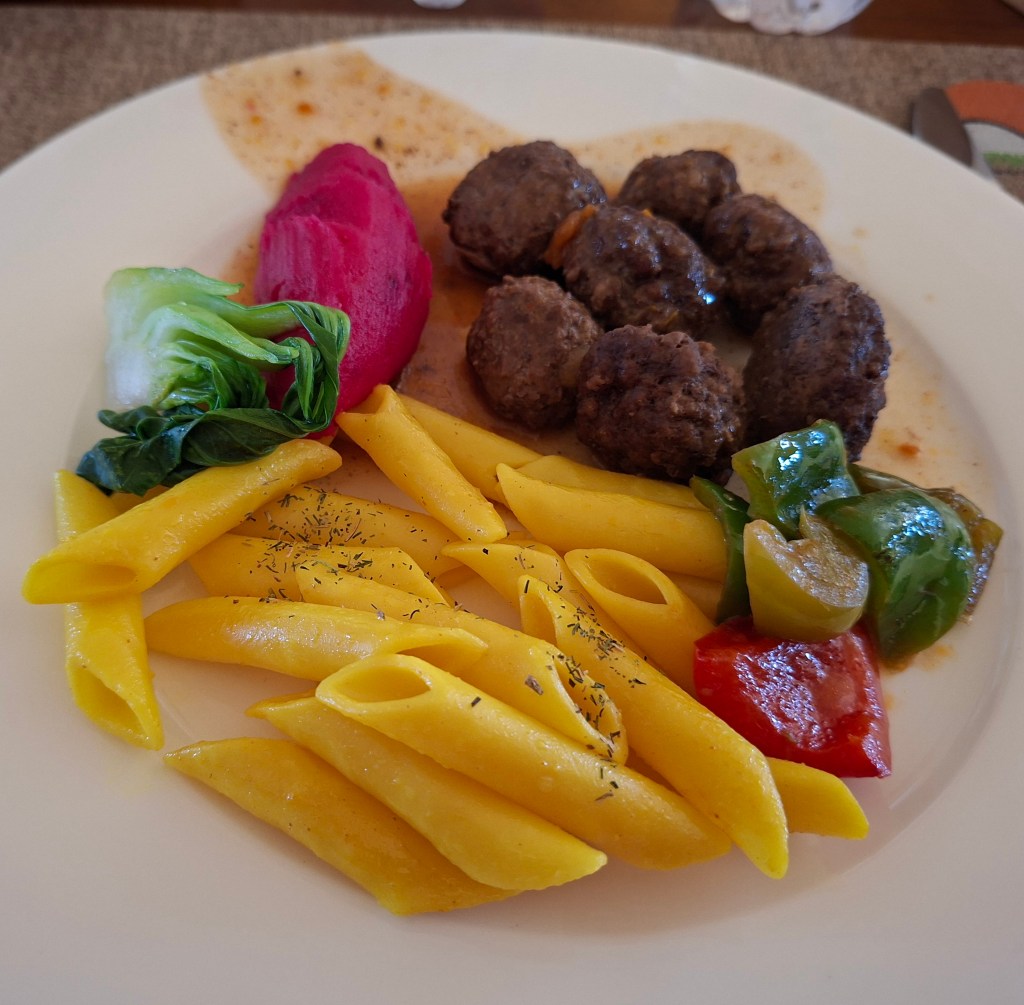
Lunch was a distinctive upgrade, four courses,and for Mongolia, a VAST amount of vegetables: a salad, brocolli soup and then meatbals with pasta, pink mash, pak choi and peppers (oh the fanciness):
We are now having some post-lunch downtime out of the harshest sun of the day before visiting the cliffs tonight when its cooler and when the light is better for photographs. Let me see what I can do. It is still pretty warm inside the gers, but way more acceptable than being out in the sun.
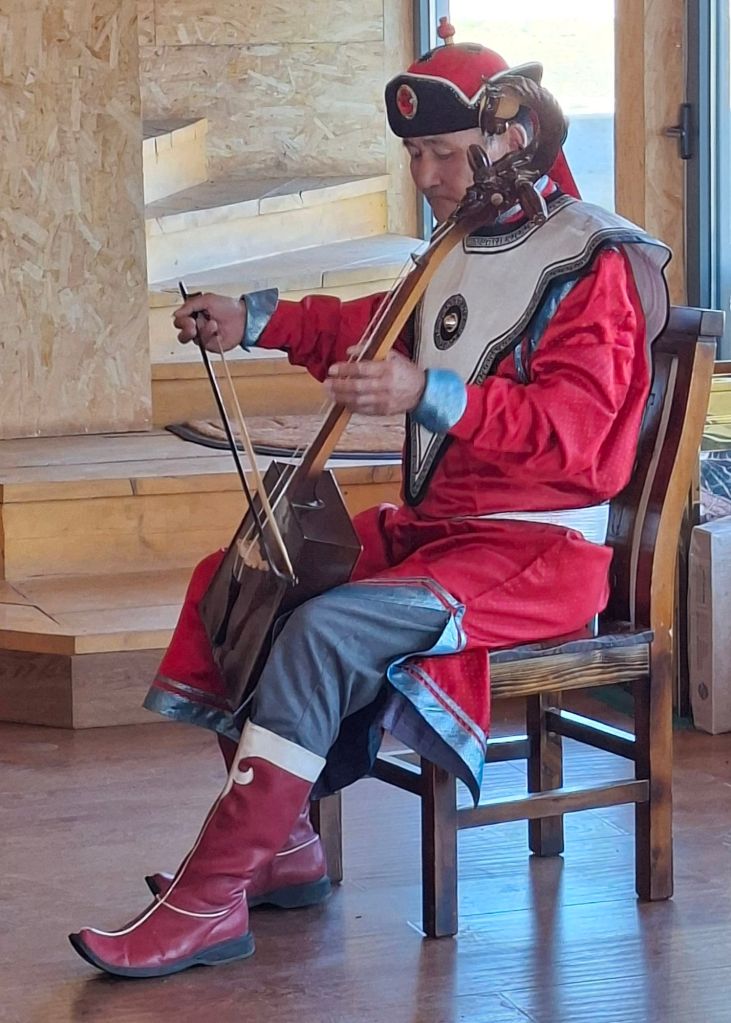
6pm and dinner time. It was another group’s tour leader’s birthday so her driver dressed up and played her the traditional birthday song on the morin khur and a few other classics (including jingle bells requiring audience participation). Our drivers need to up their game!
Another delightful meal, coleslaw to start followed by a beef stew with rice, a carrot and mini florets of brocolli (still brocolli so I shall not complain), and then it was off to the cliffs!
Firstly, I am so very pleased that we waited until 7pm as it was cool and breezy (although, yes, I know the breeze is bad from an erosion perspective). The visitor centre included a little film showing archive footage of when the team led by Roy Chapman Andrews discovered the fossils. As well as actual dinosaur eggs, there is a famous fossil of an oviraptor shielding her eggs, and two dinosaurs (a velocirptor and a protoceratops) locked in combat.
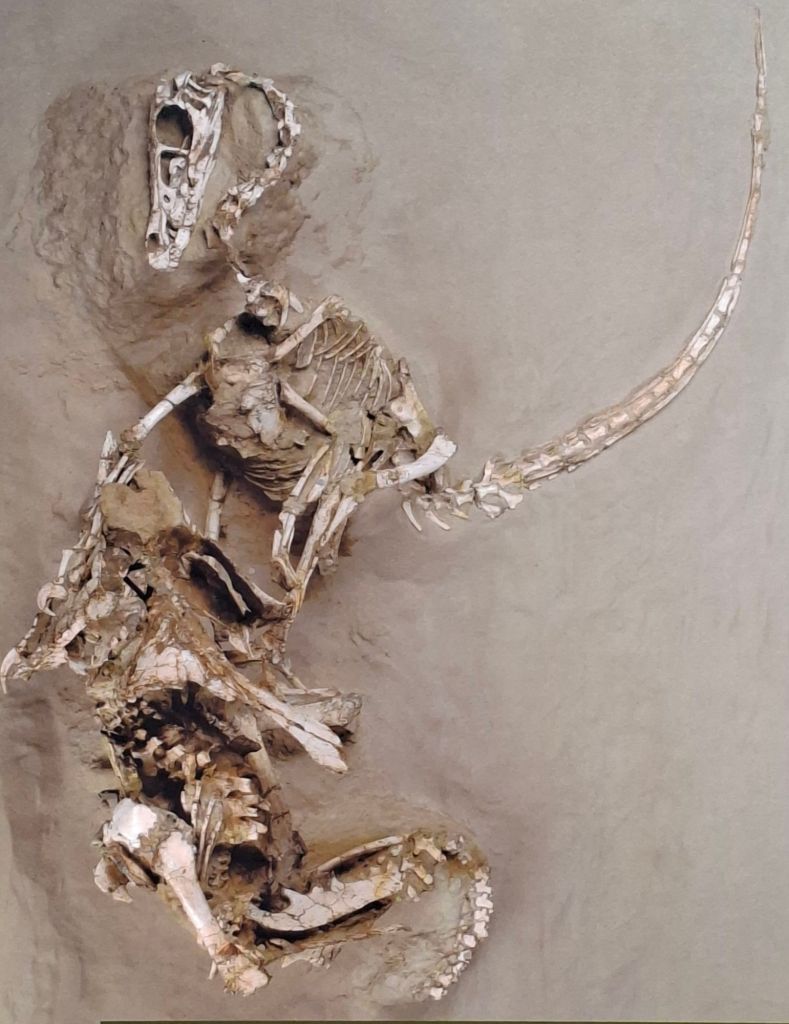
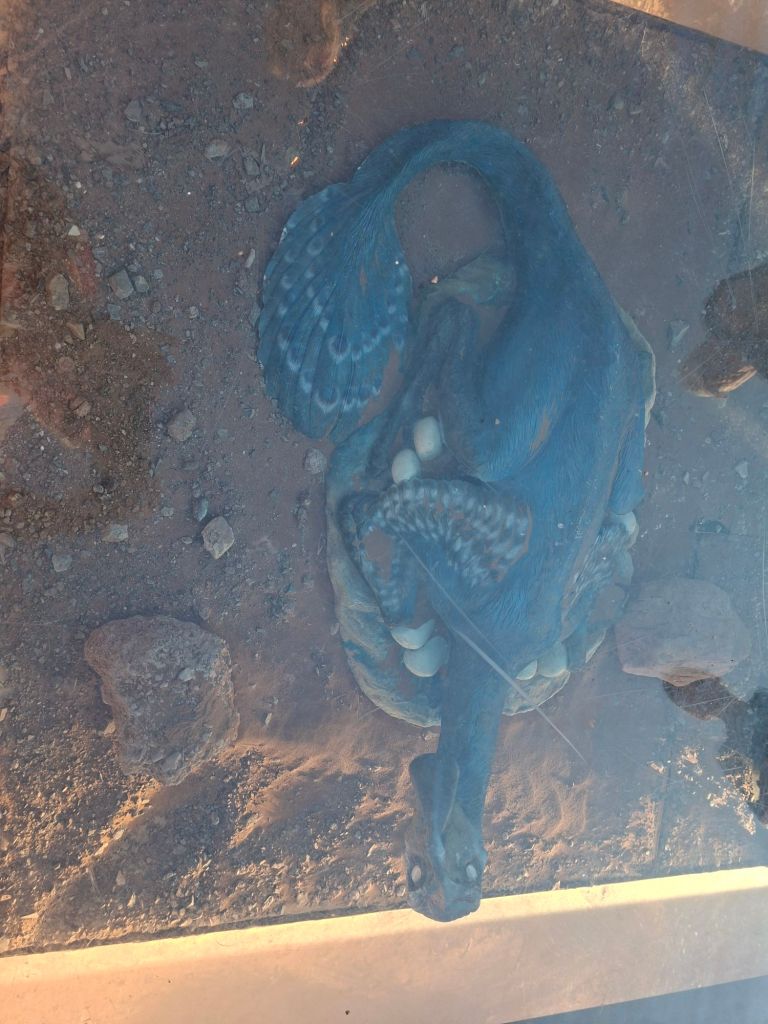
For more information on the expedition and to see some of the footage this is a short clip: Youtube
The cliffs (although I understand “bluffs” is the more accurate term) are absolutely stunning and I have provided an edited selection of my millions of photographs.
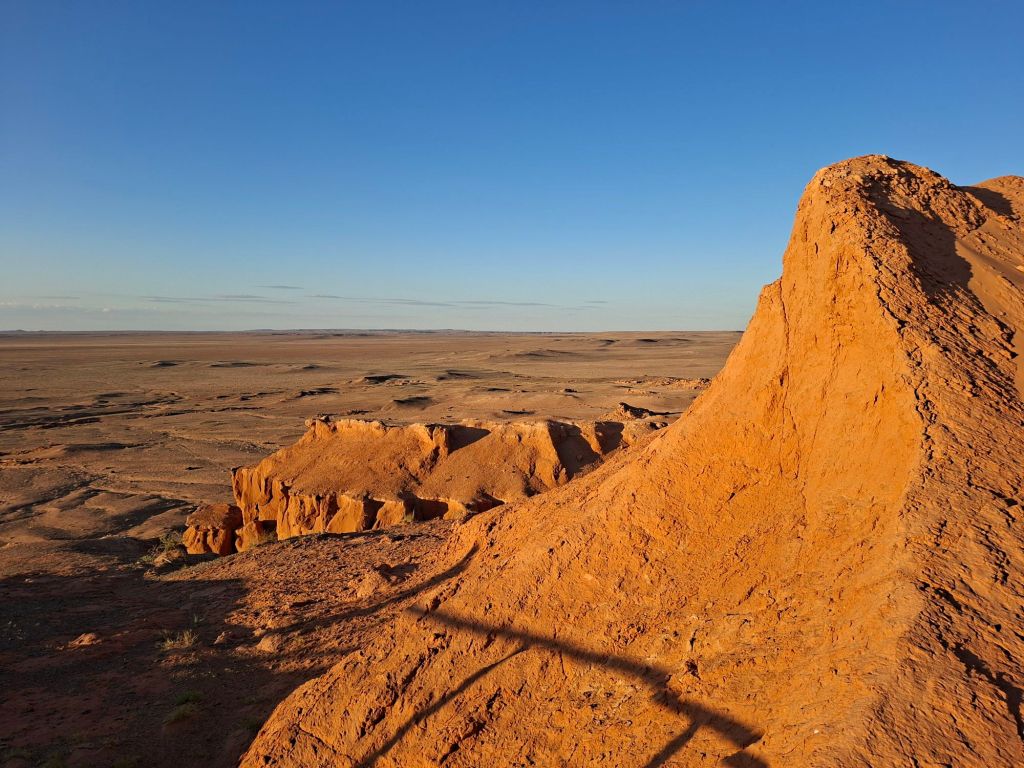
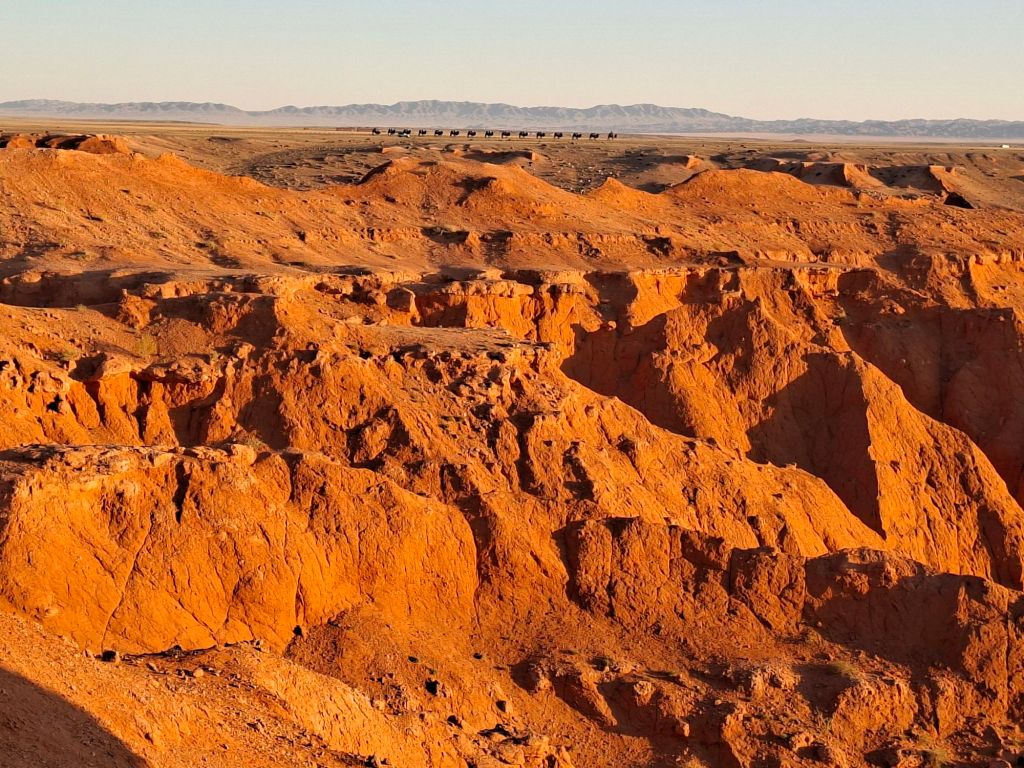
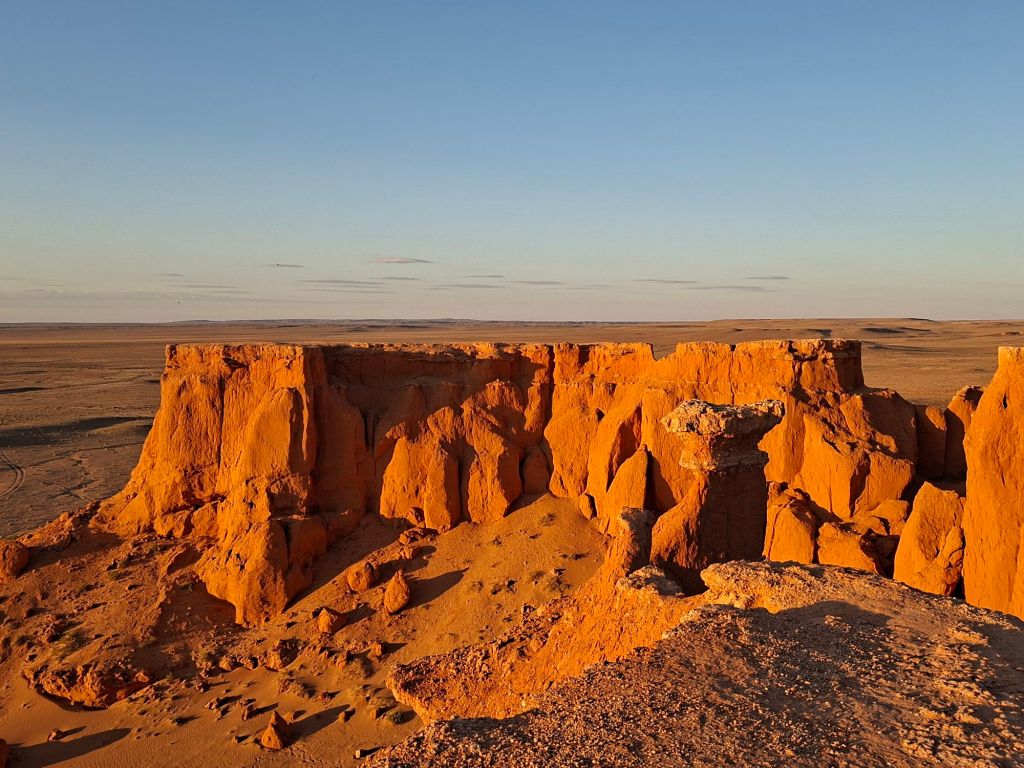
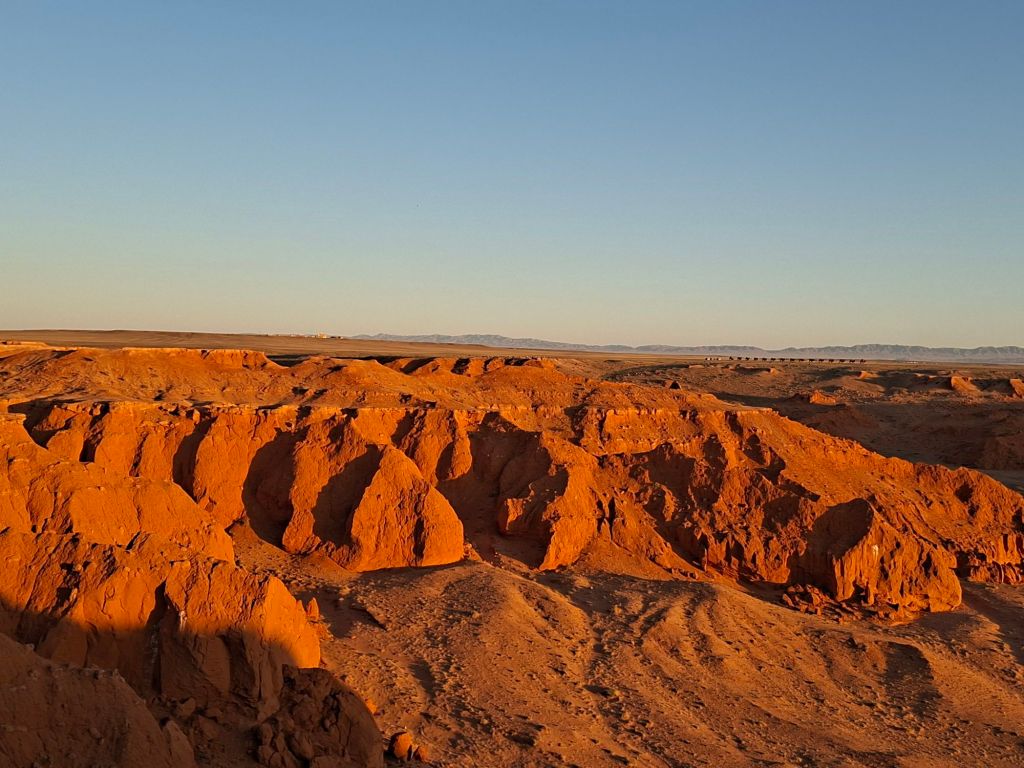
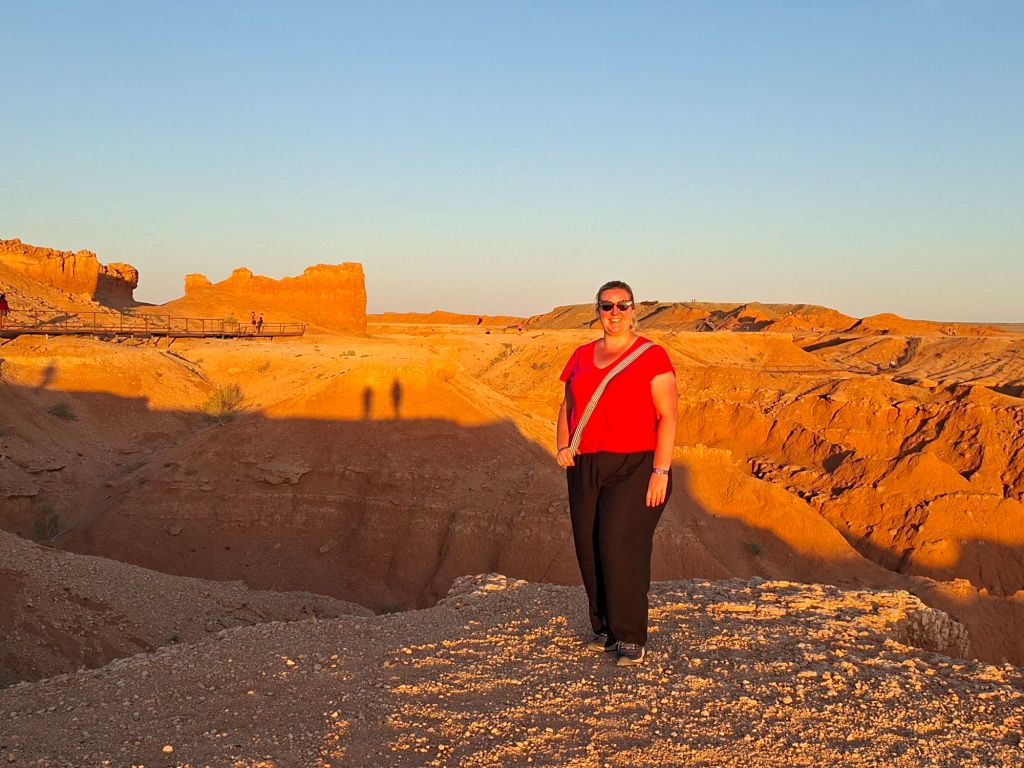
We stayed as the sun went down and then it was back to the ger for a shower, and bedtime as tomorrow we head deeper into the Gobi. Goodnight.


Leave a Reply