Another early start (to beat the heat) and we were on the road by 7.30am and heading deeper into the desert to Khongor sand dunes which are the largest in Mongolia.
Now as dedicated readers will know, I have a history with sand dunes involving a minor sobbing breakdown in China. I am hoping to hold it together this time. At the very least, I have two days to attempt them rather than trying to get to the top (and failing) for sunrise. You can relive the trauma: Dunhuang Part 2
It wasn’t long before we hit the major town of Bulgan. This is another oasis of tarmac roads with a bank, an health centre, a supermarket, even a coffee and smoothie shop (closed at this ungodly hour of a Sunday). You will be relieved to know it also had the same concentration of zebra crossings that are evidently essential in this province.
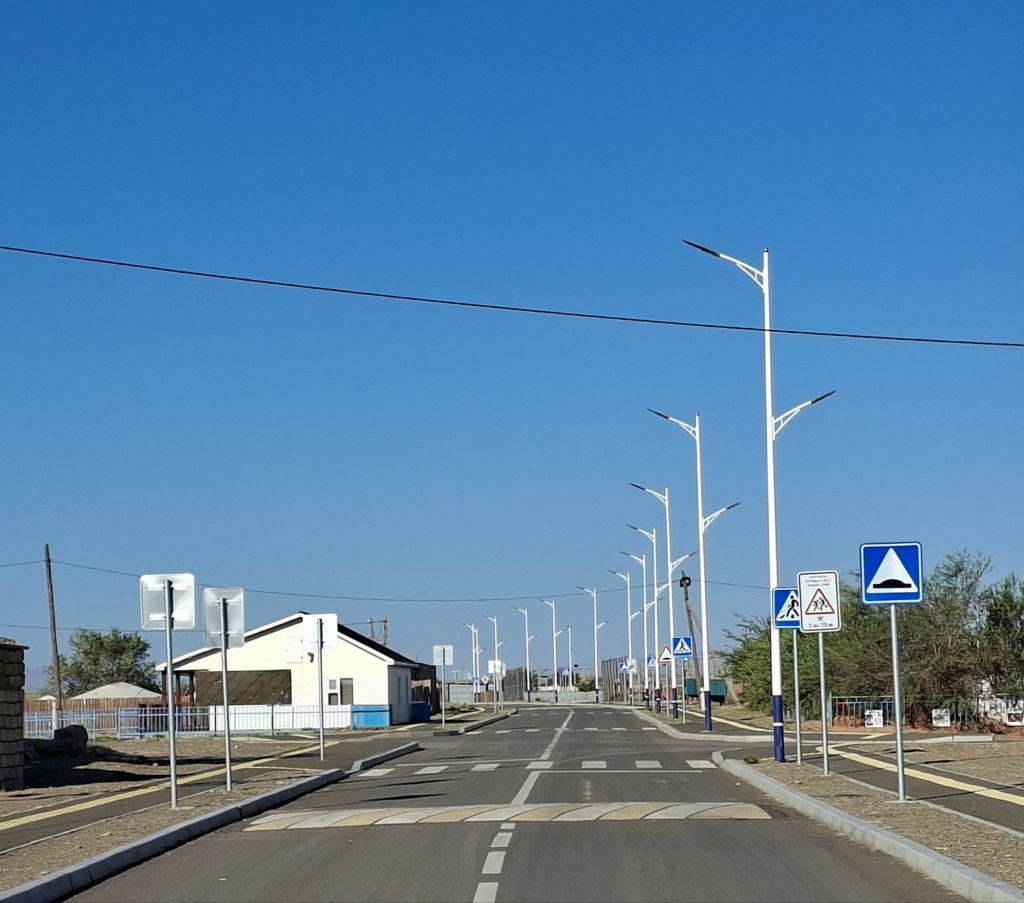
The scenery is changing again, its greener with more rolling hills which means more signs of life
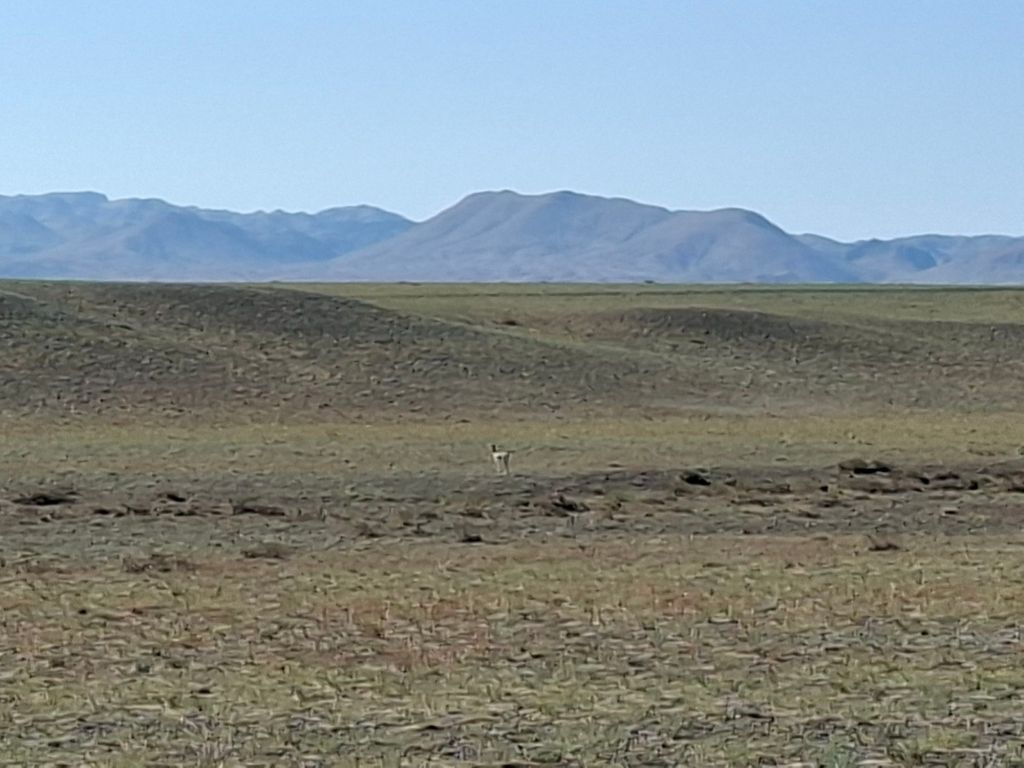
Then suddenly we were in Scotland:
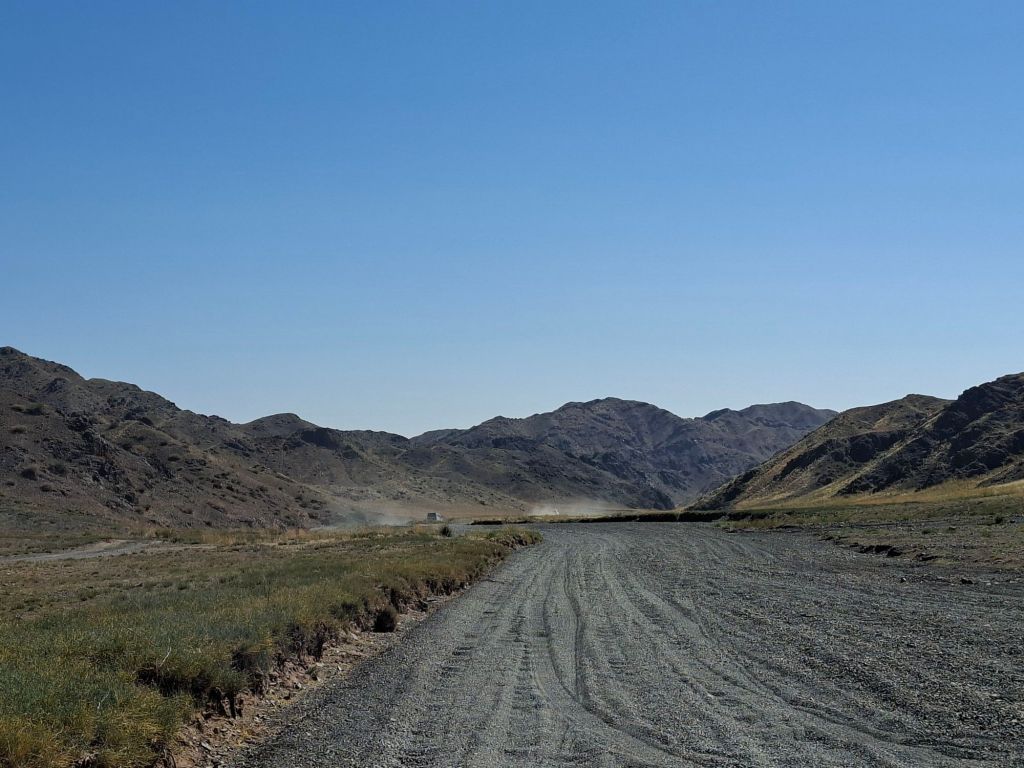
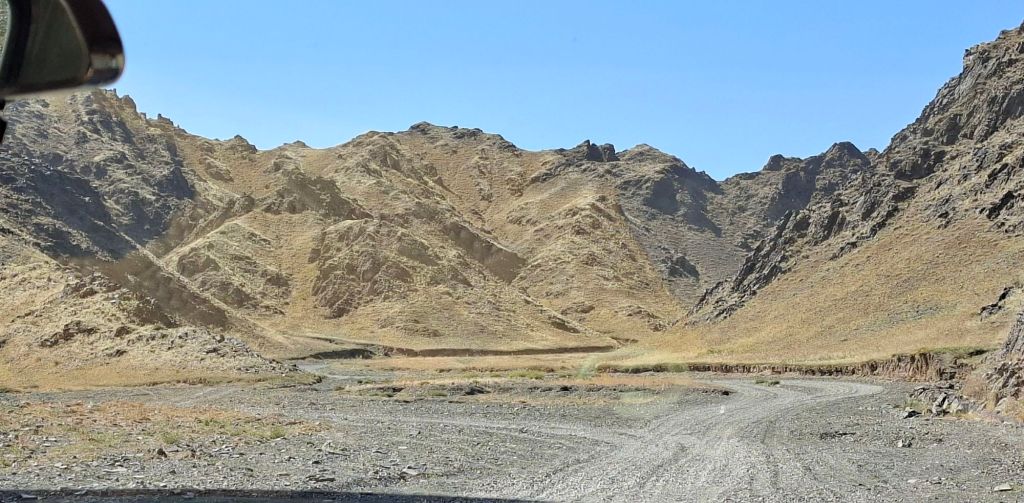
And the flatter sections give opportunity for the drivers to race. We have been with the same driver throughout who is called Khuyagaa (which I cannot pronounce) and I am delighted to report that the petrol can has now been used so the van smells much better. The three vans generally drive in a set order which made us think that Khuyagaa was the boss, turns out he’s not- disappointing. I am trying to persuade him to let me have a go at driving, so far he seems reluctant…
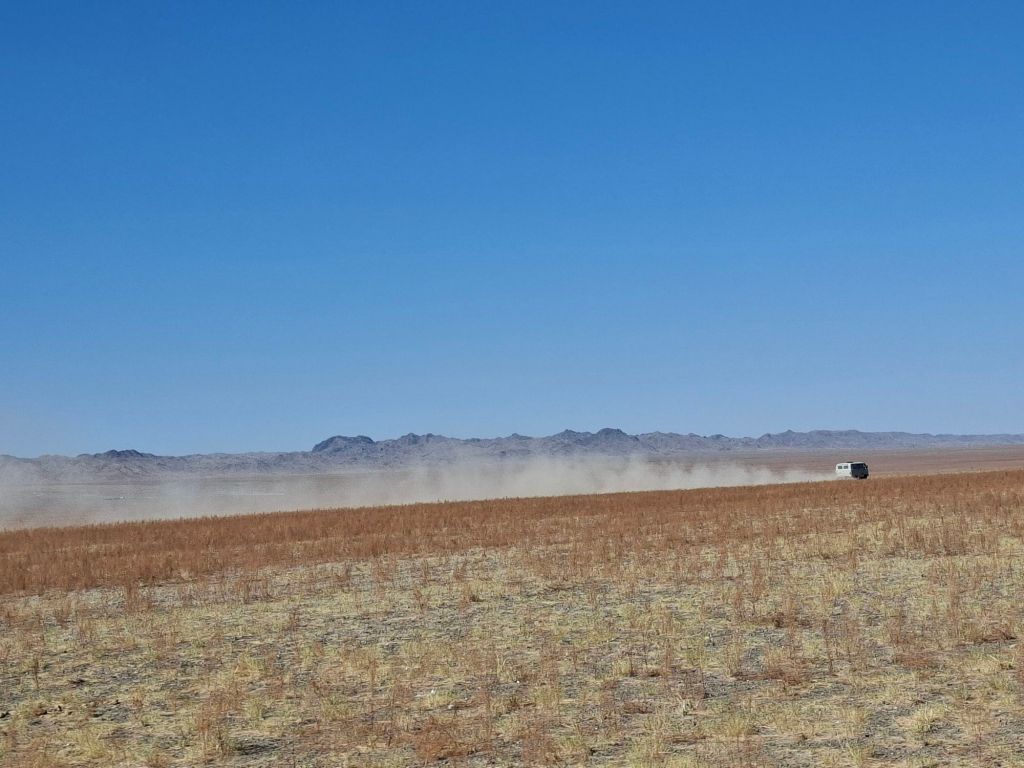
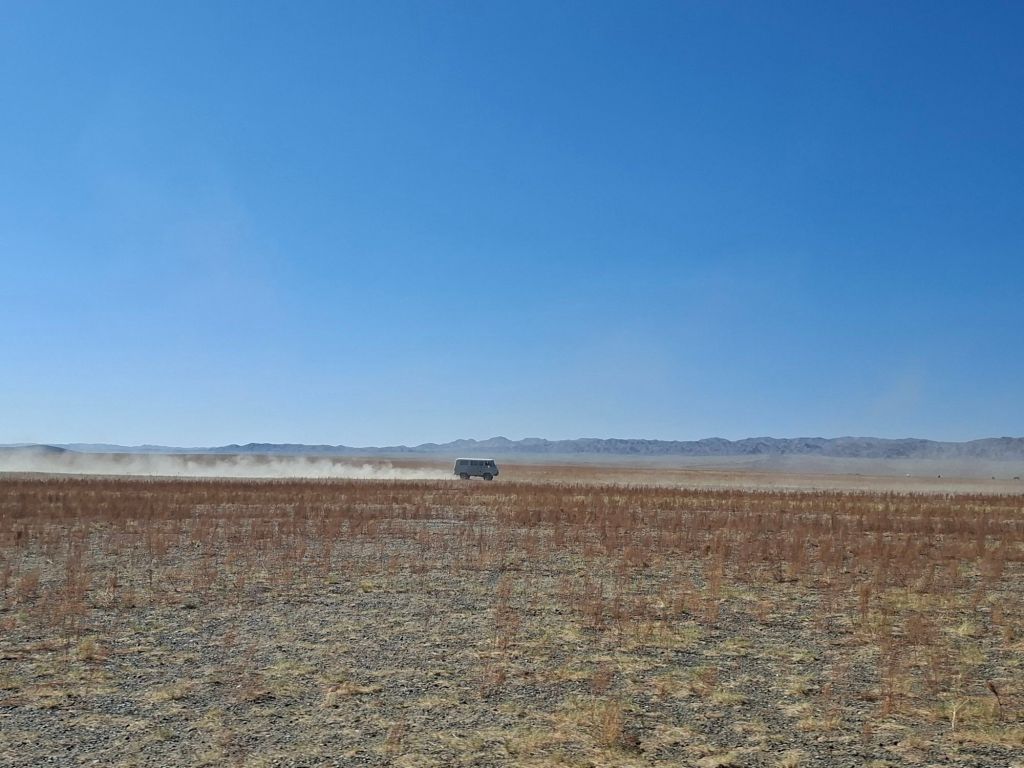
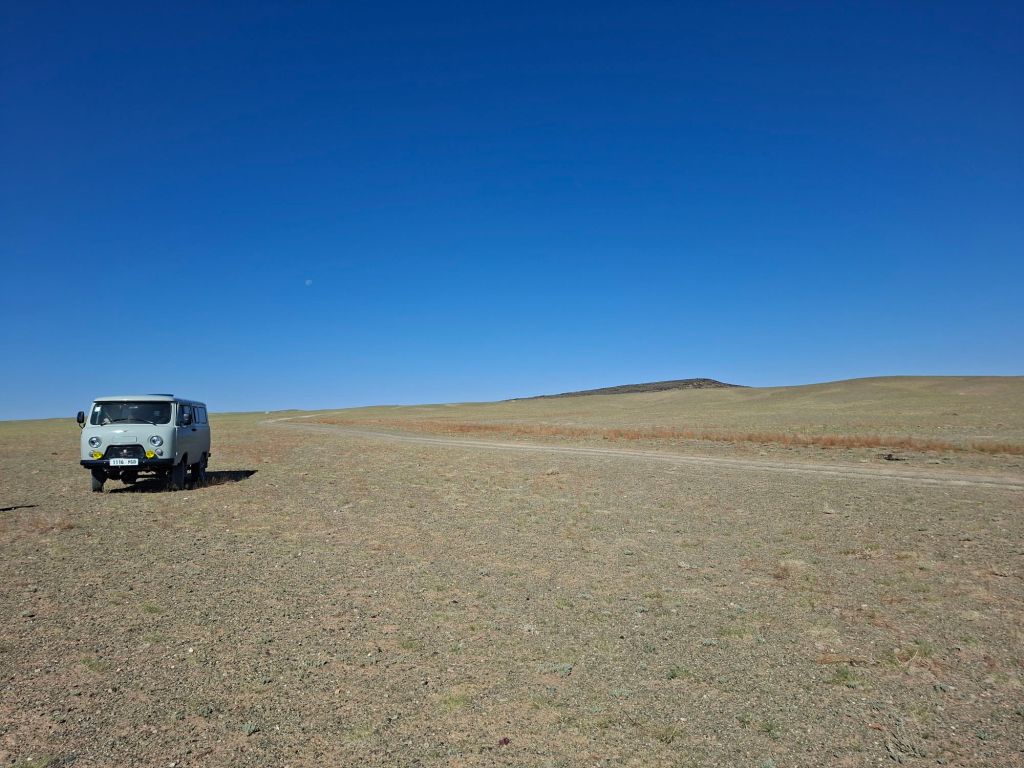
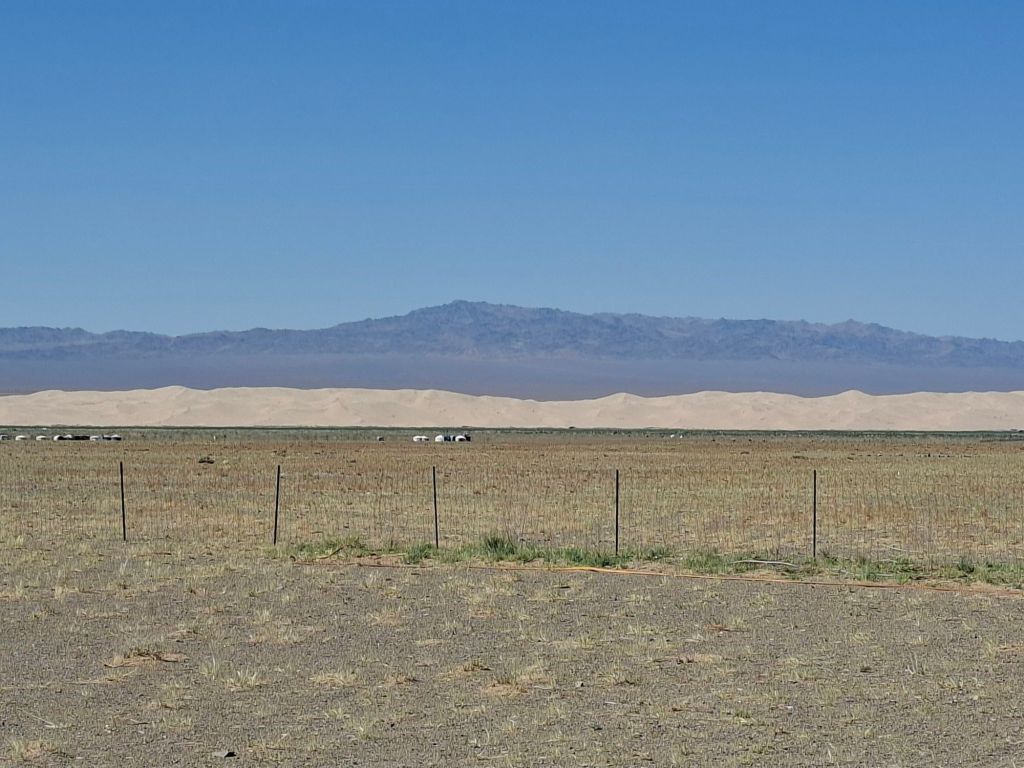
After 3 hours we got our first glimpse of the sand dune on the horizon. The Gobi desert is really not I had expected, I had expected Sahara like waves of sand. But actually until we were almost at the dune, it was mostly scrubby gravel (as pictured above).
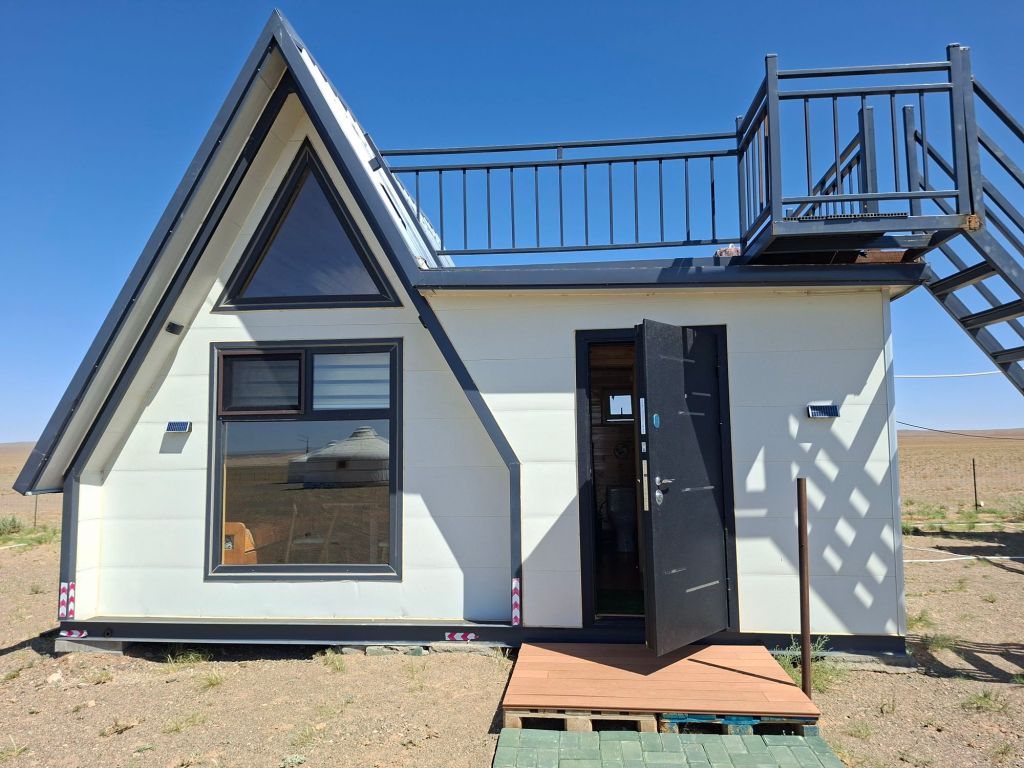
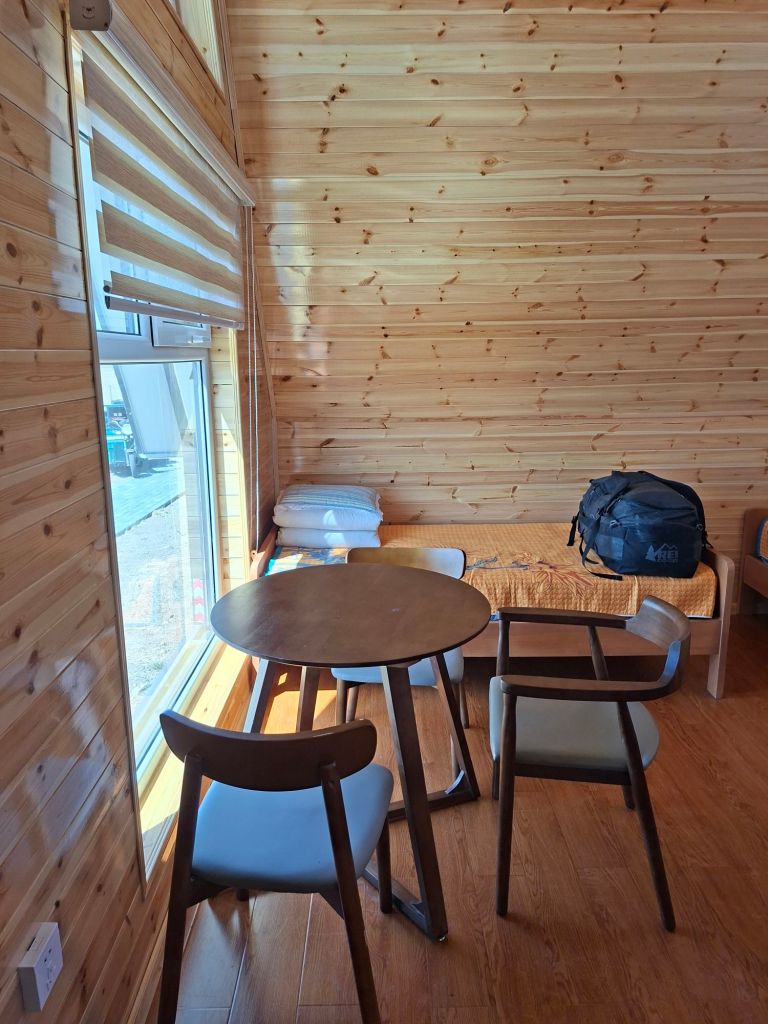
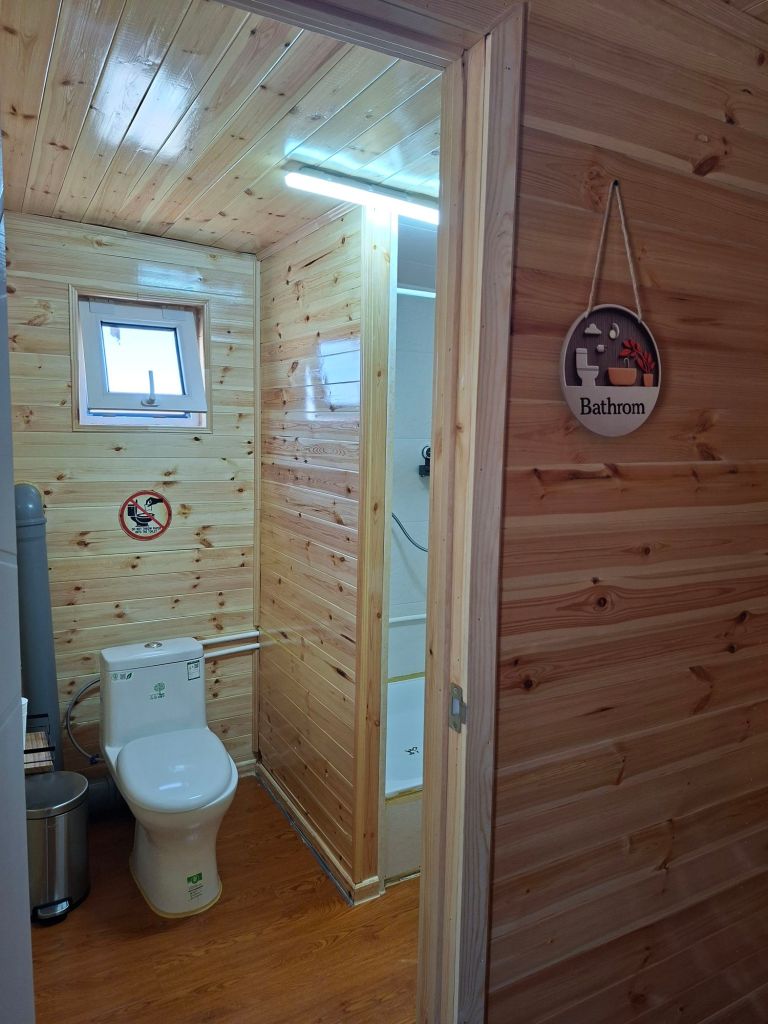
We are staying in the “Sand of Treasures” camp which is slightly back from the dunes, but its so hard to judge scale here that I was not actually sure whether it is the dunes are a 15 minute walk or 3 hours – turns out it is 5km so certainly not walkable in this heat. Colette and I have lucked out, we’re here for two nights and quite randomly (we have been told, although we like to believe it is because we’re worth it) we were allocated a little house. Not only does it have its own table and chairs, a hall stand with hanging space and a shoe rack, there is even a roof terrace – it has an ensuite! This is truly magical and not at all what we have expected in the middle of the desert.
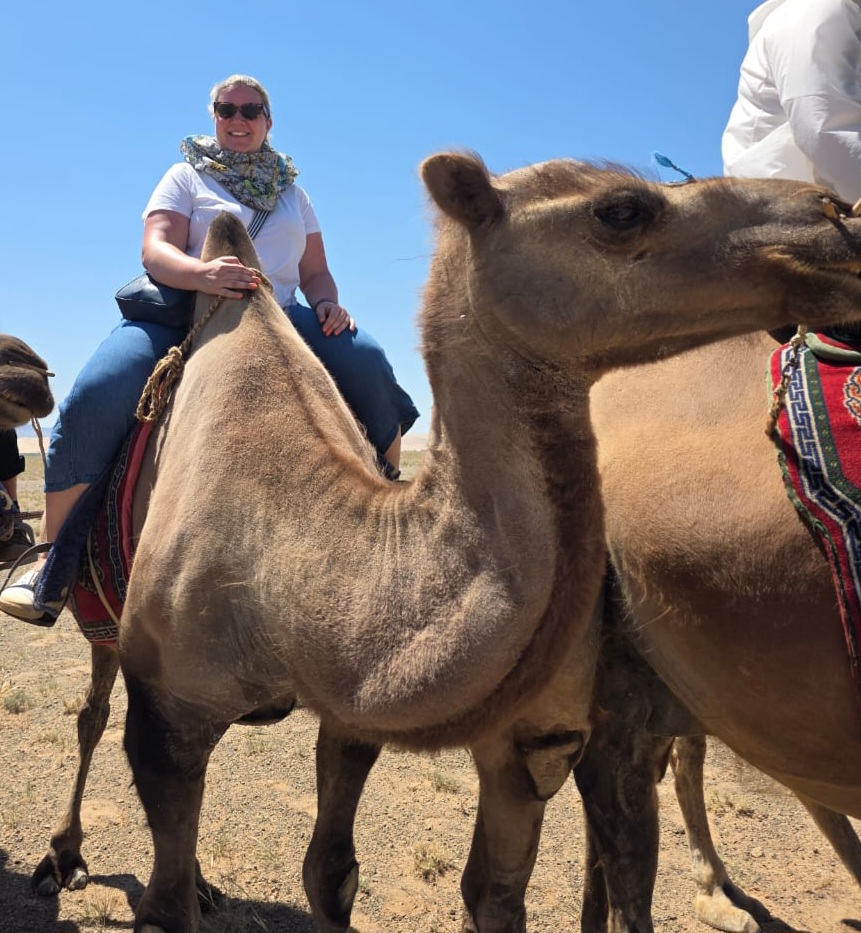
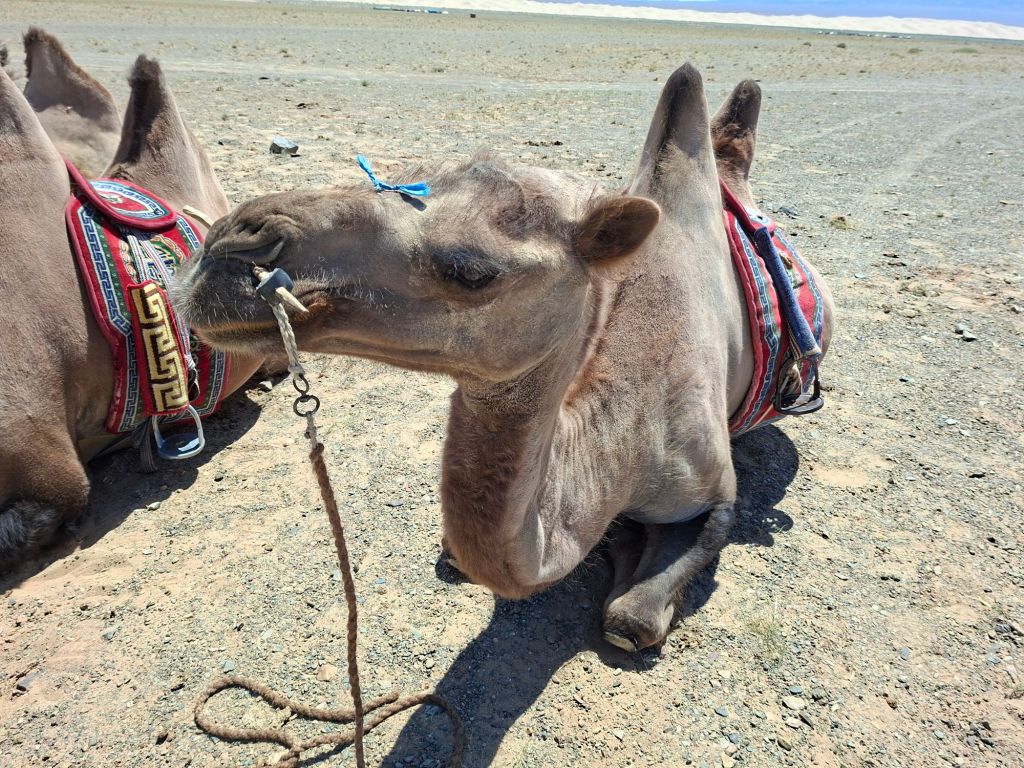
Lunch of Mongolian noodles (always a crowd pleaser) was served in the main ger, and then it we awaited the arrival of our camels for a ride into the desert, well, towards the dune anyway. In Mongolia camels have two-humps (Bactrian camels) and shaggy coats. They are the “ships of the desert” for a reason: it can go seven days without water and a month(!) without food, can carry up to 250kg of load (so they should be ok with a me), provide 5kg of wool and 600 litres of milk a year. there are 470,000 camels in Mongolia, 450 wild khavtgai camels (which live in the Great Gobi protected area n the south-west of the desert).
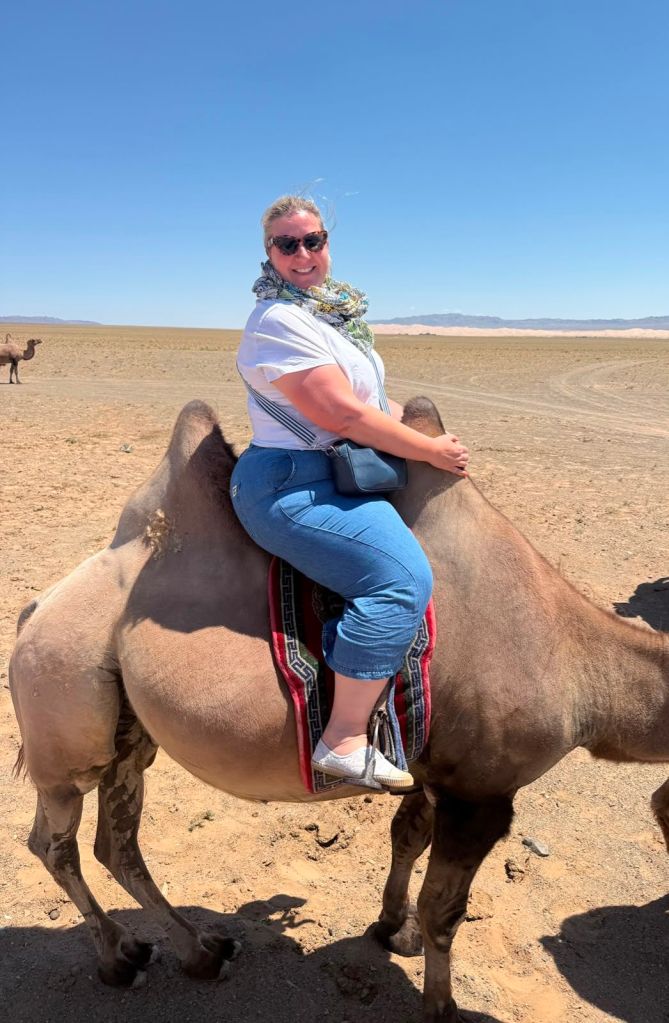
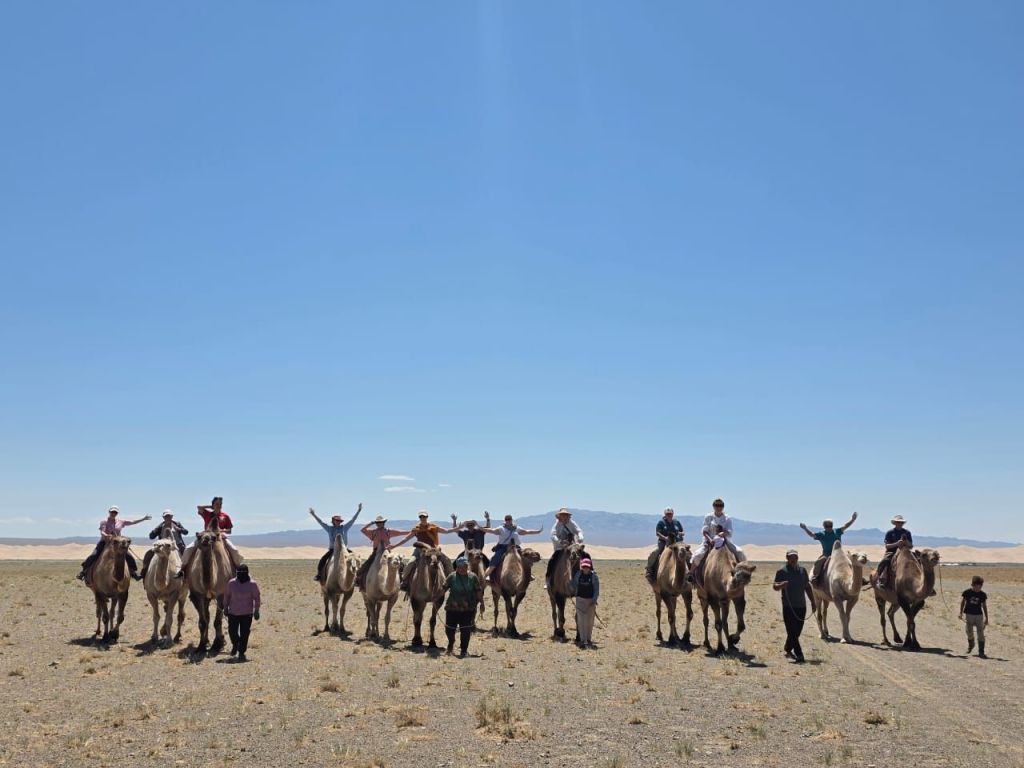
The camels were being organised by a family, and they were allocating people to camels. I did note that the wife’s favourite camel was allocated to the young Australian gym teacher, on the other hand I was allocated a camel she demonstrated had a broad gap between its humps. I appreciated the consideration. Prior to mounting my camel, I attempted to bond on the basis that my last animal ride had an unfortunate dismount, which I am still bearing the bruises from. I am pleased to report that this was an easy enough walk around in a circle for 30 minutes (mostly photo opportunities) and then I made, what I considered to be, a very elegant dismount. Yay me. Whilst I may not be a natural horsewoman, maybe I am a natural camelwoman.
Before dinner, our guide offered to teach us how to play Shagi which is anklebone horse racing (no actual horses were involved- the bones are from a sheep). How to play:
- A row of anklebones are set up in a row (this is effectively the race track).
- Players roll four anklebones, each side represents a different animal: a horse, sheep, goat, or camel. The number of bones that land on the side of the horse represents the number of spaces forward that players moves forward.
- If you managed to get each anklebone for each animal, you get to move four spaces.
- The first to cross the line wins (and then you usually get a celebratory winners song sung for you).
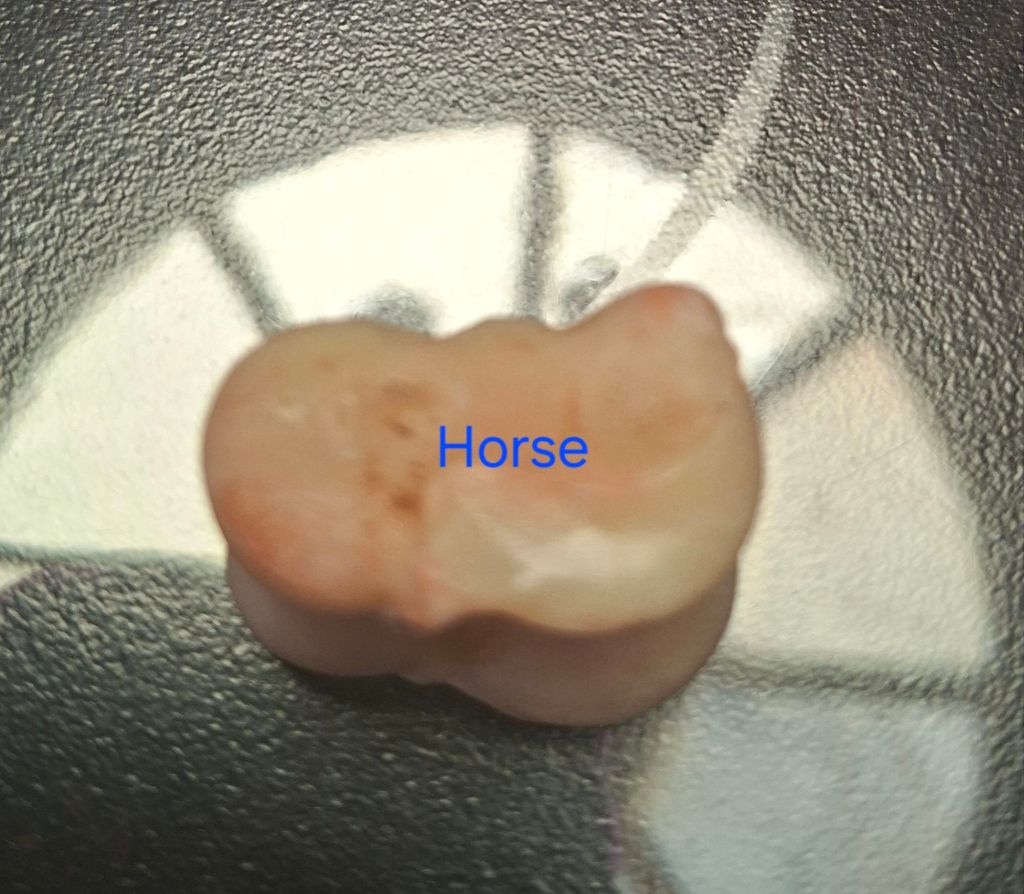
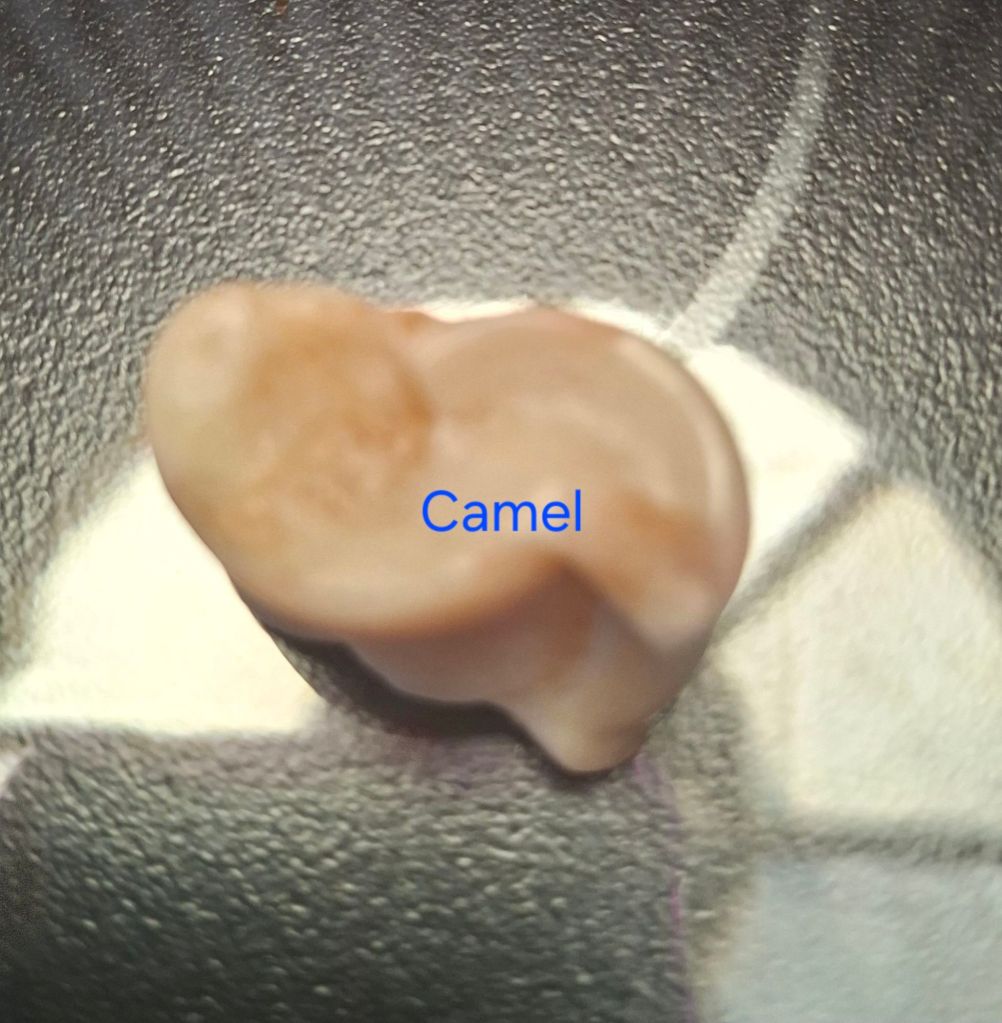
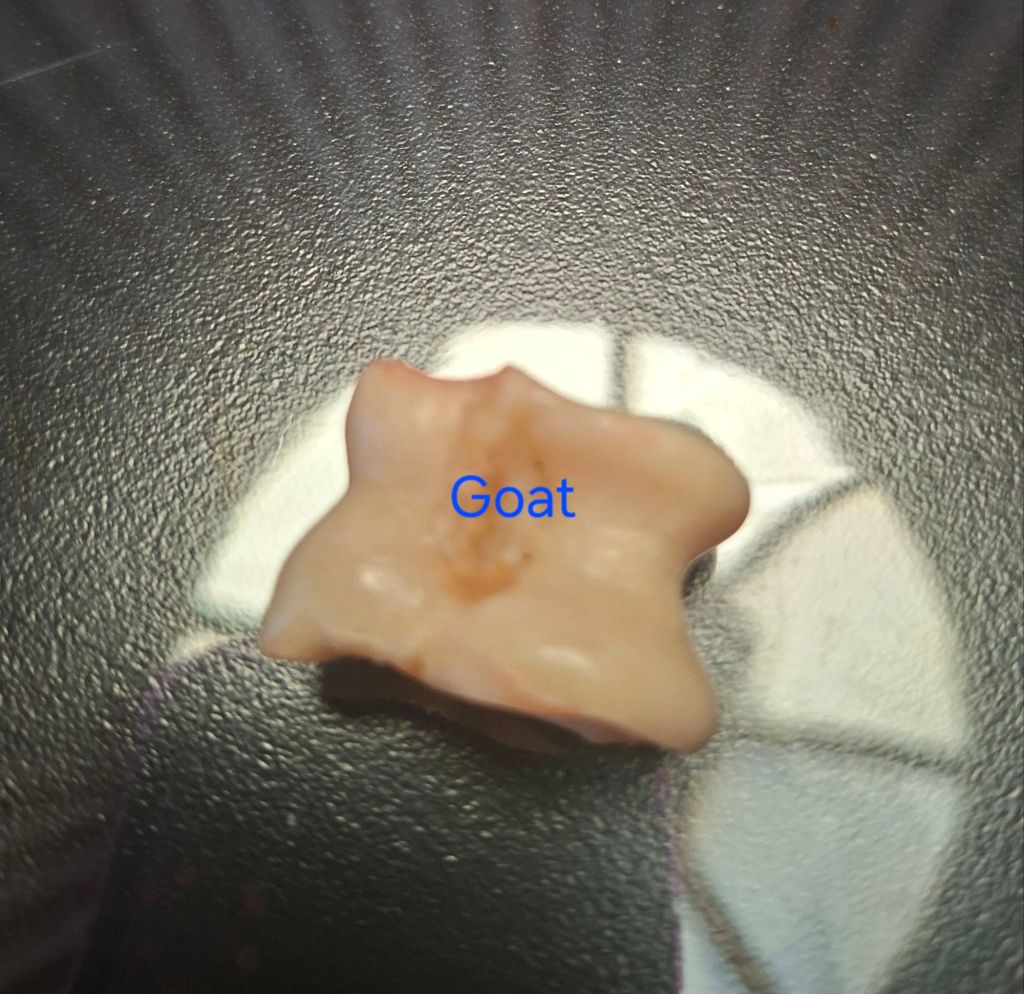
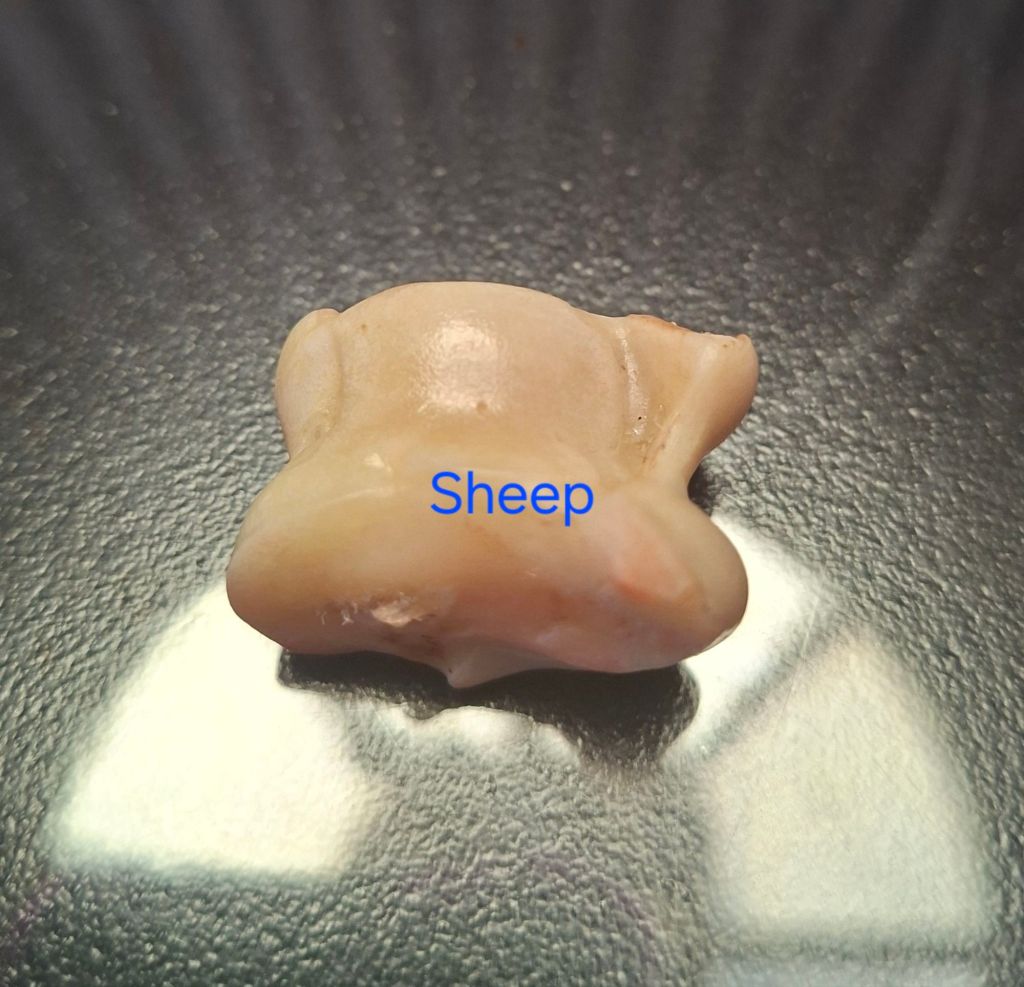
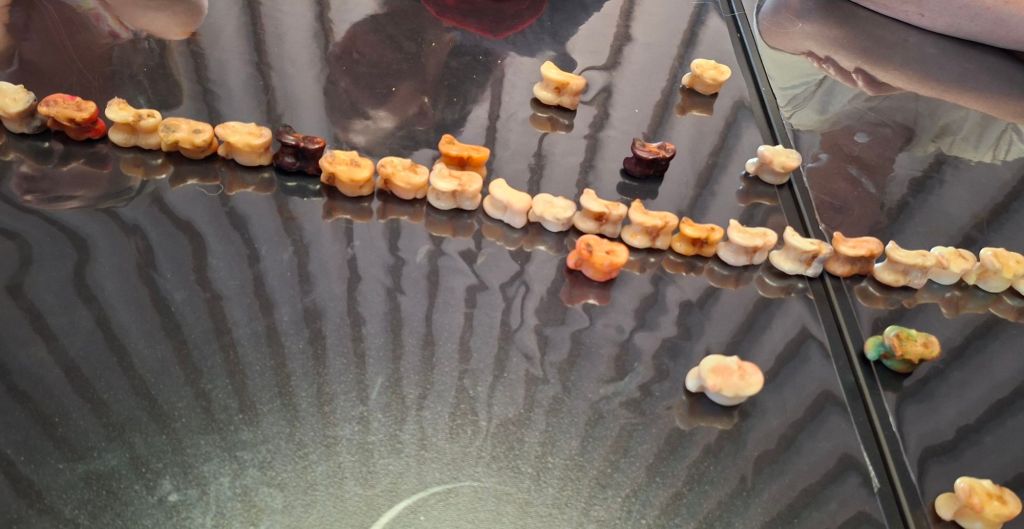
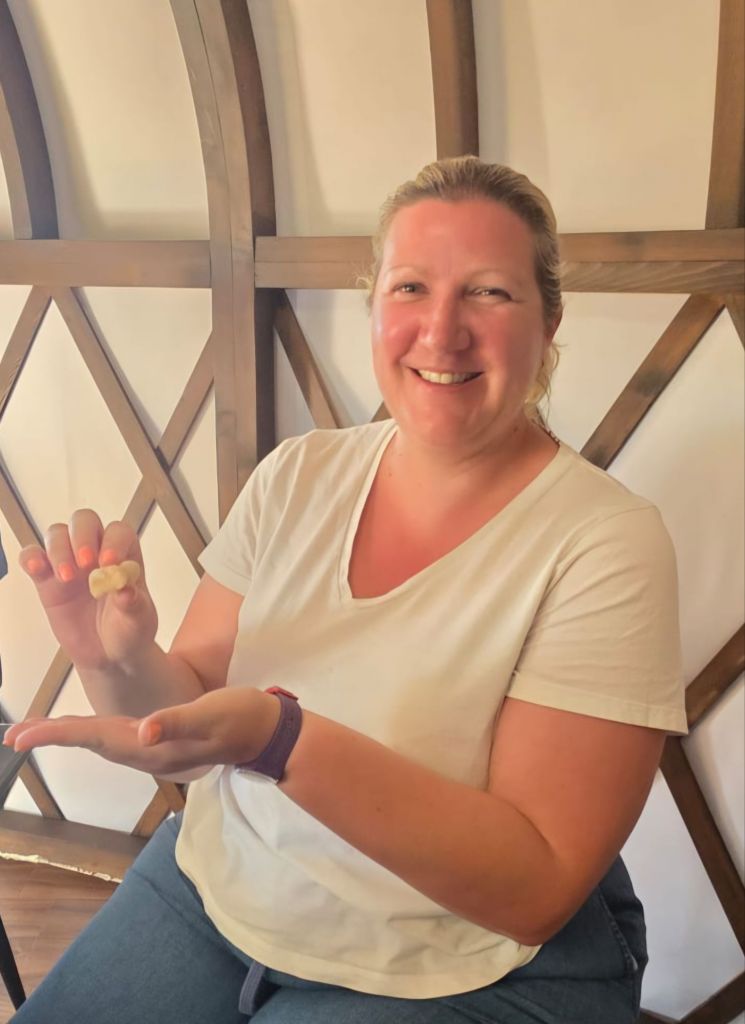
I came nearly last, but did start with a four move and then barely moved for a million turns. There were no celebratory songs unfortunately, but it did keep us entertained for 1.5 hours.
Dinner tonight was a bowl of beef and potato stew (perfectly nice, but not the most exciting meal ever). We then did a walk of the boundary, and then it was back to our delightful little house where I have done my laundry and hung it about (the joy of a private bathroom). I have then showered (more joys) and am looking forward to a lie in tomorrow – breakfast is at 8 am, but I may choose to skip it. I will probably be awake at 6am… Tomorrow, we will actually visit the dune. Will I climb it? Will I not?
4 responses to “Mongolia 1.9 – Flaming Cliffs to Khongor”
-
Hi, lots of lovely bactrian camel details there…
But I cannot imagine any camel being able to supply over 600 litres in a day! My fact checking with Google suggests that this is the average amount a camel can produce for a herder in a complete lactation period, which is over 500 days! So more like up to 2 litres per day on average, and up to 5 litres a day as a maximum.
Sorry for being a pedant, but you have met me so hopefully you won’t be surprised..
Well done for nabbing the deluxe accommodation.
And thank you for the well-chosen birthday card.
Keith
LikeLike
-
Pedant. I have corrected 🙄
LikeLike
-
-
I’m very impressed with your obviously confident camel handling and pleased that you have sustained no further animal related injuries.
Your little house looks delightful, what are all the others in?LikeLike
-
There’s a mixture – little houses, cabins and gers (some with sinks, some without). More on this later…
LikeLike
-


Leave a Reply